
Beyond Pinterest Boards: The Intention Driven Design Protocol

Start With What You Actually Feel
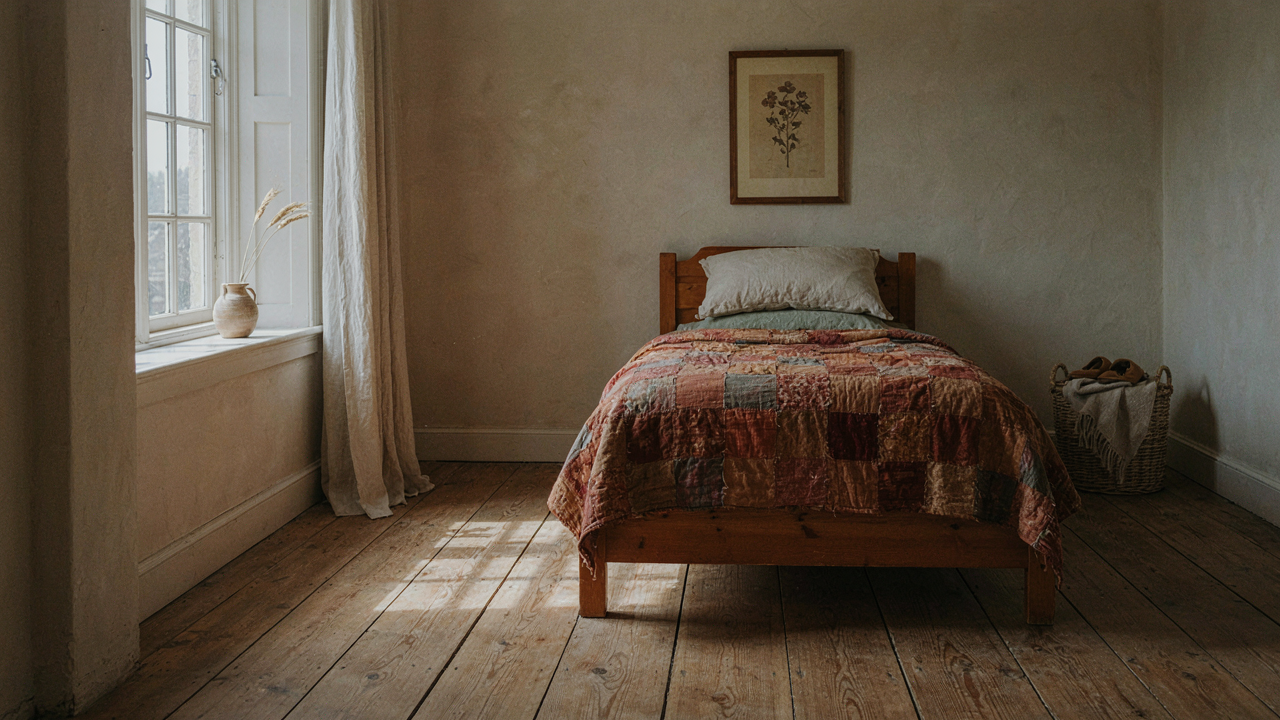
You want permission to skip the trends and do something real. Here’s the mechanism: emotion precedes aesthetics. Pinterest shows you finished rooms, but it never shows you why they work for the person living in them. A country bedroom with quilts and warm wood fails if you picked it because the algorithm showed it to you, not because it answers a question about how you want to feel when you wake up. Define that feeling first. Comfort? Safety? Solitude? Grounding? Name it before you touch a single design decision.
The reason this matters is operational. When you reverse engineer from emotion, every material choice you make afterward has logic. A quilt isn’t just a blanket; it’s textile weight and hand warmth. Warm wood isn’t just color; it’s the specific grain pattern and finish that signals time and use. Without the emotional anchor, you end up with a room that looks like someone else’s room. With it, you build something that functions for your nervous system, not just your Instagram feed.
Texture Tells The Story Your Brain Believes
Country bedroom design borrows from textile psychology, the study of how fibers and surfaces trigger neurological response. A quilted surface doesn’t feel the same as a smooth duvet because your tactile sensory cortex processes the physical reality differently. If your emotional target is safety, that rougher texture of aged linen or a pieced quilt activates a different neural pathway than smooth synthetic fabric does. Warm wood operates the same way: the visible grain and matte finish of reclaimed or hand finished wood registers as “lived in” to your perceptual system in a way lacquered veneer never will.
Match materials to the specific emotion you named. If you want grounding, choose wood that shows age through color variation and surface irregularity, not stained uniformity. If you want comfort, quilt batting weight and hand stitch visibility matter more than thread count. A rope fiber throw across the foot of the bed, exposed ceiling beams with visible knots, a quilt with irregular seaming—these aren’t decorative choices. They’re neurological investments. When you wake up in that room, your body knows the difference between intentional material and generic filling.
Quilts: More Than Just Blankets, A Legacy Investment
Find Real Quilts, Not Mass Market Copies
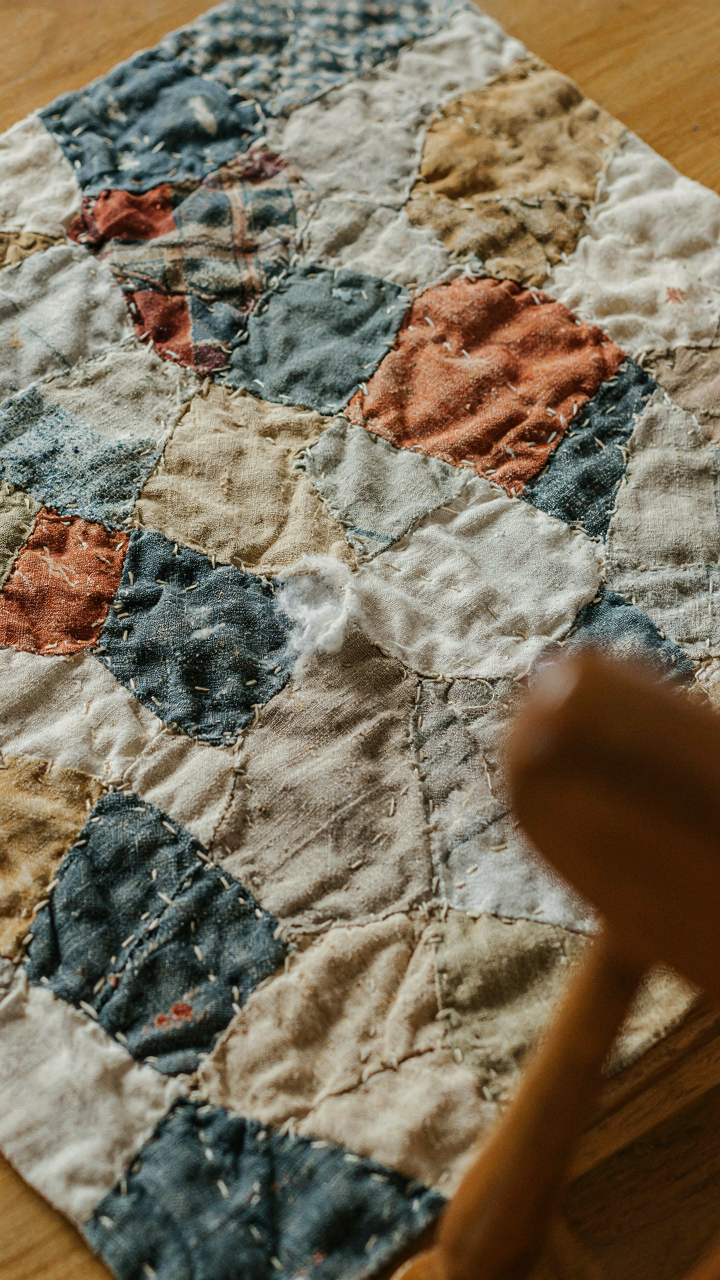
You want a quilt because you think it signals authenticity. That’s the real pull. Most people buy quilts from big retailers and call it done, missing the entire point. Hand-stitched quilts carry physical evidence of construction method. The stitch spacing, tension variation, and thread choices reveal whether human hands or machines made it. Authentic quilts show irregularity. Machines produce uniformity. This distinction matters because uniformity is cheap to replicate. Irregularity cannot be faked without the actual labor cost.

Search for quilts from estate sales, regional quilt makers, and historical societies first. These sources provide verifiable provenance and real construction quality. Ask sellers about batting material, thread type, and stitching method. Most mass market quilts use polyester batting and machine quilting. Traditional quilts use cotton or wool batting with hand quilting. Price reflects this difference. A hand-stitched quilt costs more because it requires actual time investment. That investment creates durability most modern quilts cannot match.
Layer For Function, Not Just Aesthetics
Thermal design treats quilting as an insulation problem. Air pockets determine heat retention. A single quilt creates one insulation layer. Multiple quilts create multiple air pockets between them. This compounds warmth without bulk weight. The mechanism is simple: fabric traps still air. More fabric layers trap more air. Dead air space does the work, not thread count.
Place quilts by weight and texture. Start with a lightweight cotton quilt directly over the mattress. Add a heavier wool or cotton blend quilt on top. Fold the top quilt at the foot of the bed for visual interest and access to layers. This arrangement lets you adjust warmth by adding or removing a layer. It also prevents pilling and extends quilt life by distributing wear across multiple pieces instead of one. Rotate quilts seasonally to spread usage evenly.
The Wood Whisperer’s Guide: Selecting Timeless Timber

Reclaimed Wood For Character And Longevity
You want reclaimed wood because it signals authenticity to yourself and others, and because new wood feels disposable by comparison. Here’s the actual mechanism: reclaimed timber carries density and grain variation that new lumber cannot replicate. Old growth trees, cut decades ago, had tighter rings and harder wood. Modern trees grow faster, producing softer, weaker material. The market knows this, which is why authentic reclaimed wood commands premium pricing.
- Barn Wood: Salvaged from deconstructed agricultural buildings. Dense, weathered grain with visible nail holes and saw marks. Common in the American South and Midwest regions.
- Flooring Salvage: Reclaimed hardwood from demolished homes and commercial buildings. Often heart pine, oak, or chestnut. Wider boards than modern equivalents.
- Industrial Timber: From old mills, factories, or warehouses. Thick beams with character marks. Requires structural inspection before repurposing in bedrooms.
- Architectural Salvage: Doors, trim, and framework from century-old structures. Smaller surface area but high visual impact in headboards or trim work.
- Reclaimed vs. Distressed New: Authentic reclaimed costs more but won’t fade or shrink like artificially distressed pine. The weight and hardness feel noticeably different under hand.

Reclaimed wood sustainability is real but overstated in marketing. Salvaging and milling adds carbon cost. The actual win is longevity: reclaimed timber resists warping, splitting, and woodworm damage better than contemporary stock. In a bedroom setting, this means your headboard or nightstand won’t degrade in ten years. The investment compounds.
Matching Wood Tones For Visual Cohesion
Mixing wood tones kills country bedrooms faster than mismatched metallics. The rule people skip: pick one dominant wood tone and keep it at 70 percent of visible surface area. The other 30 percent can vary, but it must share the same undertone family. Warm woods (honey, amber, reddish oak) cannot sit next to cool woods (gray pine, whitewashed ash) without breaking visual hierarchy.
Country farmhouse design actually requires tension to avoid blandness. Introduce a secondary tone that’s one shade lighter or darker than your dominant wood, not a different temperature entirely. A honey oak bed frame pairs with gray-brown reclaimed barn wood trim because both read as warm-neutral. A whitewashed dresser next to honey oak reads as confused. The mechanism is simple: your eye seeks a dominant visual anchor, and conflicting wood temperatures prevent that anchor from forming, leaving the room feeling chaotic instead of intentional.
Light: The Unseen Architect Of Cozy Cottage Style Bedroom
Windows That Actually Deliver Light
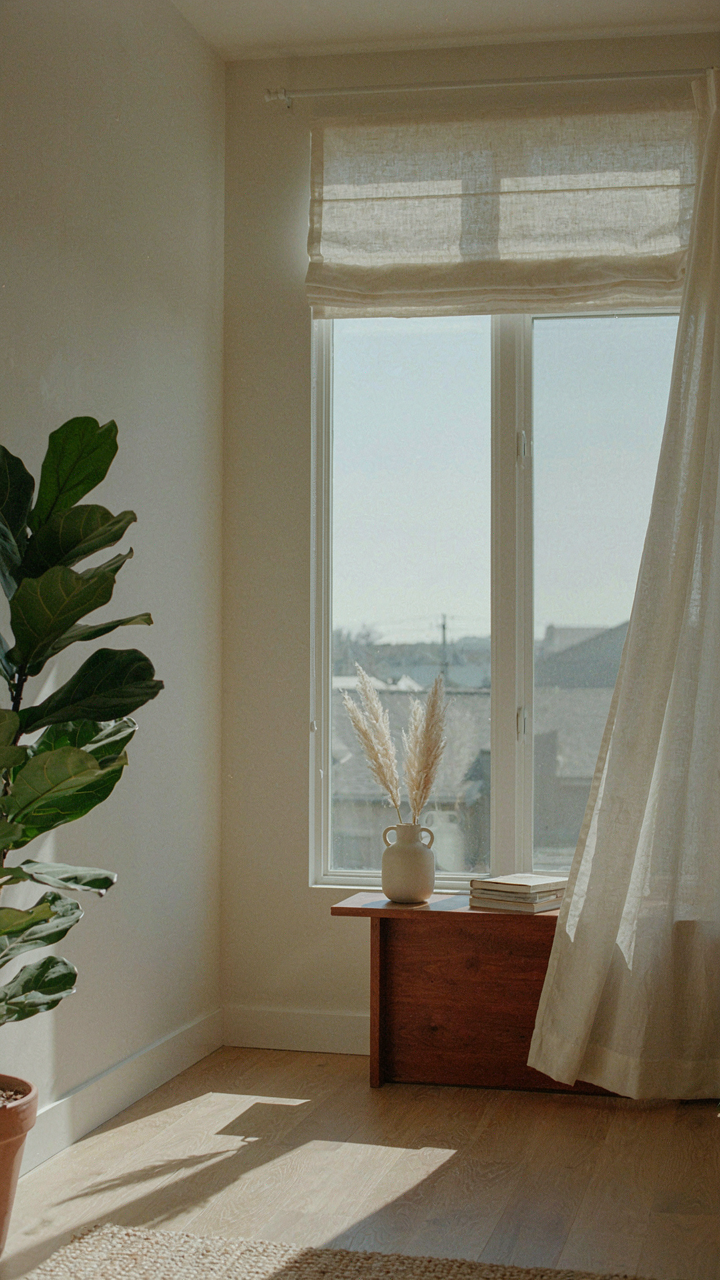
You want this room to feel intentional and designed, not neglected. Here’s the mechanism: light quality determines whether your warm wood and quilts read as intentional cottage style or just dated. Country bedrooms live or die on window placement and treatment strategy. South-facing windows deliver consistent, warm light in northern climates. East-facing windows give you morning warmth without afternoon heat gain. West-facing windows require filtering to avoid bleaching textiles and quilts. The window itself is load-bearing infrastructure, not decoration.

Forget the advice that country bedrooms need heavy curtains. That kills the whole point. Use linen or cotton Roman shades in cream or oatmeal that filter light without blocking it entirely. Mount them inside the window frame to preserve the clean sight line. Leave windows bare during daylight hours. Sheer linen panels work only if the room gets indirect light all day. If your bedroom faces south or west, install the shades and leave them closed during peak sun hours to protect quilts and wood finishes from UV damage.
Layered Warmth Without The Glare
Warm light temperature is not negotiable in country bedrooms, but the common move is wrong: most people install 2700K bulbs everywhere and call it done. That creates visual flatness. Use lighting layers. Install 2700K overhead fixtures only for task work, rarely turned on. Instead, anchor the room with two bedside lamps using linen shades on wooden bases. Position a floor lamp in the corner opposite the bed for evening reading. These three sources give you control. Table lamps and floor lamps cast directional light that flatters warm wood and quilt texture far better than overhead fixtures.
The protocol: One 2700K, 40-watt equivalent bulb per bedside lamp. One 2700K, 60-watt equivalent in the floor lamp. These create pools of warmth instead of bleaching the entire space. Dimmer switches on bedside lamps give you the final control layer. Never use daylight-temperature bulbs in a country bedroom. The mechanism is simple: your eye perceives tungsten-filament warmth as intentional coziness because it matches the light temperature of fire and candlelight. Match that or lose the effect entirely.
Color Palettes That Don’t Apologize: Farm Style Bedroom Ideas

The Case Against Watered Down Tones
You want permission to use color without looking cheap. That’s the real question here. The mechanism is simple: pastels signal restraint and apology. They’re the color equivalent of hedging your bets. Earthy tones—deep browns, rust, charcoal, forest green—work because they’re what existed on actual farms. Dirt, wood, weathered metal, dried plants. These colors have material weight. They don’t need to whisper.

The psychology here mirrors contrast in visual design. Saturation in a limited palette reads as intentional, not scattered. A farm bedroom with muted sage or baby blue feels timid because those colors lack the density of the wood and textiles around them. Deep ochre, burnt sienna, and charcoal brown anchor a space because they’re present. They occupy the room, not decorate it. Pick three dominant earth tones and commit. Don’t rotate through six soft versions hoping one feels right.
Depth Through Opposition, Not Decoration
The real mistake in country bedroom design is treating contrast as an afterthought. It’s not balance you’re after—it’s leverage. In color theory, value contrast (light against dark) creates focal points faster than hue variation. A cream linen quilt against a walnut wood frame works because the difference is stark, not because the colors are complementary in the decorative sense.
Build your palette by anchoring one deep tone—charcoal walls, dark stained wood headboard, or rich brown flooring—then layer in one warm medium tone like terracotta or rust, and finally introduce cream or off-white textile pieces. This creates visual hierarchy without clutter. The quilt becomes the focal point not because it’s fancy but because it contrasts meaningfully against the surrounding depth. The mechanism: opposition creates visibility. Visibility creates the impression of intentional design.
Furniture As Foundation: Cozy Bedroom Furniture, Not Filler
Solid Wood Over Everything Else
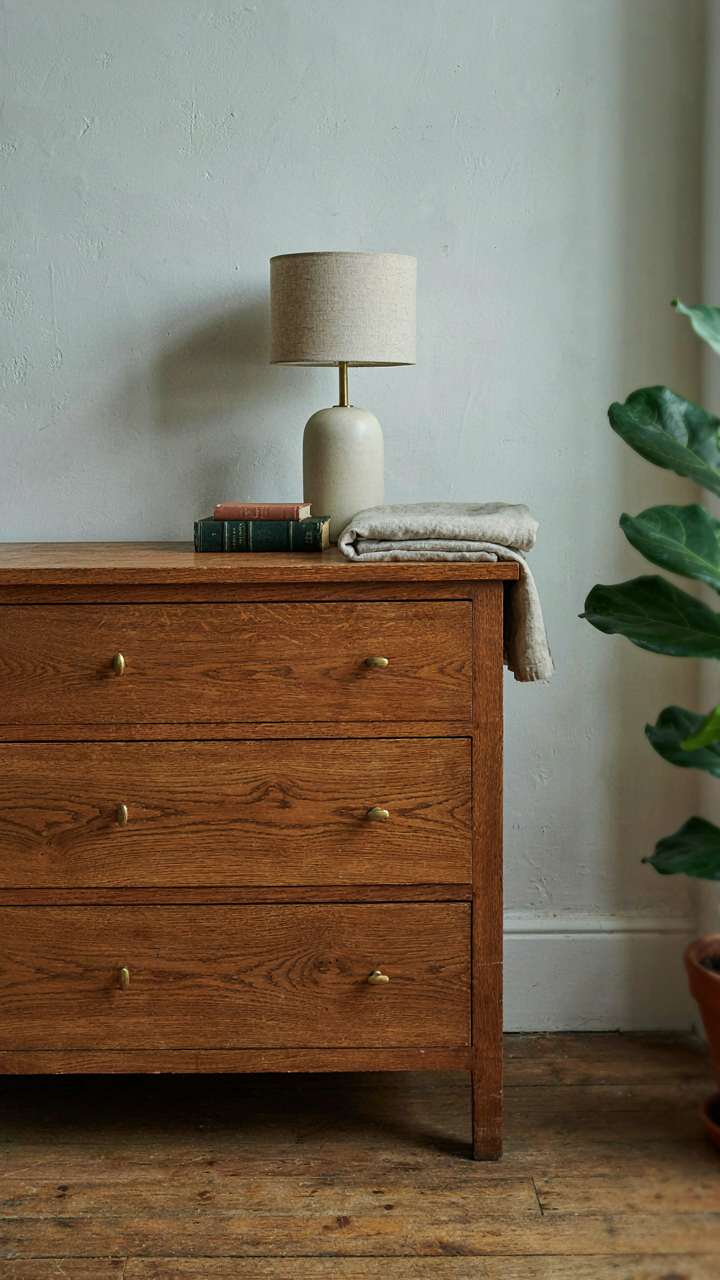
You want permission to buy expensive furniture without feeling wasteful. Here’s the mechanism: solid wood doesn’t depreciate the way particle board does. Country bedrooms work because they anchor around wood pieces that outlast trends by decades. Oak, hickory, and cherry—the woods used in farmhouse construction—have grain patterns that deepen with time and take stain consistently. Laminate copies trend faster than the trend itself dies.

The real cost calculation flips when you measure price per year of use. A solid wood dresser costs more upfront but functions identically after fifteen years. Particle board swells, delaminates, and forces replacement within five. Invest in bed frames, nightstands, and dressers built from hardwood stock. Everything else—lamps, mirrors, textiles—can rotate without breaking the foundation.
Arrange By Movement, Not Symmetry
Function determines placement in country bedrooms, not aesthetic balance borrowed from hotel design. Think in terms of traffic flow like architects do—identify the path from door to bed to windows, then place furniture to guide, not block, that path. A dresser facing the bed from across the room sounds balanced but forces you to squeeze sideways past the nightstand every morning.
Position the bed perpendicular to windows when possible to avoid glare and heat gain. Place dressers and storage along walls with outlets for lamps. Nightstands go where your arm reaches without moving your torso. This isn’t decoration strategy—it’s ergonomic routing. You reduce friction in the space by eliminating obstacles to your actual movement patterns, which means the room feels bigger and functions instantly.
Texture Dynamics: The Kinesthetic Feedback Loop

Why Your Skin Matters More Than Your Eyes
You want to feel rich without looking like you’re trying. That’s the real reason texture matters in a country bedroom. Biology gives us the mechanism: tactile input triggers the parasympathetic nervous system, the same way a weighted blanket works. Your skin has more sensory receptors than your eyes. When you touch a quilt made from natural fibers, your nervous system registers safety faster than any visual element can signal it. This is why people sleep better in rooms with physical depth, not just visual depth.

The difference between a country bedroom that works and one that falls flat is whether the textures create friction or flow. Smooth surfaces feel cold even when warm. Rough surfaces feel intentional even when crude. Country design works because it leans into honest texture—wood that shows grain, quilts that have weight, linens that wrinkle. Your body knows the difference between synthetic sheen and genuine material. Most advice about country bedrooms focuses on what to buy, not on what your nervous system actually responds to.
Natural Fibers As The Foundation
Layering wool, linen, and cotton isn’t about aesthetics. It’s about thermal regulation and tactile variation. Wool manages moisture without feeling damp. Linen breathes and softens with use instead of breaking down. Cotton provides the familiar base layer. When you stack these on top of each other in a quilt or layered bedding setup, you create what textile engineers call differential resistance—each layer responds differently to temperature and humidity. Your body reads this complexity as comfort, not as chaos.
The mistake most people make is treating a quilt like a single product instead of a system. A country quilt performs better when it’s not isolated on top of synthetic sheets. Start with a cotton base sheet. Add a linen duvet cover. Top with a wool or cotton-batting quilt. Each layer shifts the microclimate around your body in a specific way. The quilt’s job isn’t to be pretty—it’s to create tactile feedback that compounds across the stack.
The Edited Aesthetic: Classic Bedroom Design Decluttered
Every Item Earns Its Place
You want permission to keep things. That’s the real motive here. But country bedroom design works backward from what most people think: restraint creates impact, not accumulation. This comes from design principle called “curation”—borrowed from museum work, where curators remove 90% of available objects to make the remaining 10% visible. Your bedroom operates the same way. A quilt stops being special when surrounded by ten others. Wood stops breathing when buried under decorative noise.

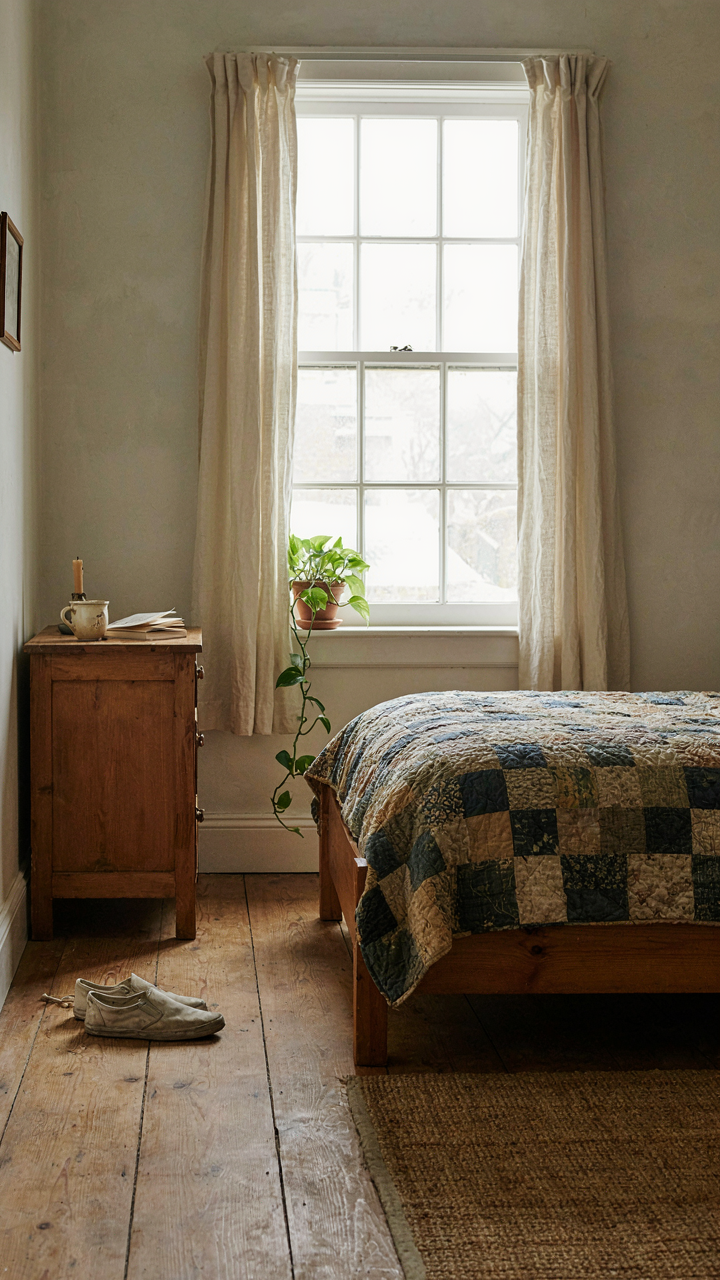
Start by identifying what actually matters in your space. A handmade quilt. Wooden nightstands. Maybe a dresser with history. Everything else competes for attention and dilutes the core elements you chose. Country style specifically demands this discipline because the aesthetic relies on authentic materials and craftsmanship standing alone. Remove items that don’t connect to your actual life or the room’s function. This isn’t minimalism—it’s intentionality. Each remaining object should answer a clear purpose: function, heritage, or genuine visual contribution.
Breathing Room Between Objects
Negative space isn’t wasted space. It’s contrast. Think of it in typographic terms: a paragraph without margins crushes readability. Your bedroom works the same way. White space around furniture and decor lets each element register. A quilt folded on a bench reads as a statement. The same quilt stuffed into a chair surrounded by throws becomes visual clutter.
Position furniture to create clear sightlines. Space nightstands away from walls slightly. Leave the wall above your headboard mostly bare. Place a single wooden accent rather than clustering three. Country bedrooms gain their calm not from what fills them, but from what doesn’t. The wood grain of a dresser needs air around it to be seen. A quilted bed needs empty floorspace to feel grounded. Measure your room, then deliberately position pieces to leave zones of emptiness between functional zones.
Beyond Adornment: Function First Decor

Objects With Real Purpose
You want your room to look intentional without feeling staged, which means you’re afraid of looking like you tried too hard. Here’s the mechanism: country design borrowed from industrial logistics—the principle of “load bearing.” Every object you place must carry weight, either physical or psychological. A quilt isn’t decoration. It insulates, regulates temperature, and tells a story through its pattern. A wooden nightstand isn’t just a surface. It’s joinery that demonstrates craftsmanship and ages visibly, proving longevity. This is the opposite of decoration that apologizes for existing.

The common advice says “mix function and beauty.” Wrong. Function comes first. Beauty follows when you stop choosing objects for how they photograph and start choosing them for what they actually do. A cast iron bed frame holds a mattress. A reclaimed wood dresser stores clothes and gains character through use. Quilts trap air for warmth, their patterns coded with regional traditions. When you select items this way, aesthetics become a byproduct of honest purpose, not a pursuit in itself.
Storage That Disappears Into The Space
Built-in storage is not about maximizing square footage. It’s about refusing to compromise. A freestanding dresser makes the bedroom feel crowded. A wall-height cabinet with quilt storage on upper shelves and lower drawers for linens vanishes into the architecture. This approach comes from naval design, where every cubic inch serves multiple functions without obvious excess. The mechanism: integrated storage reduces visual noise while increasing capacity.
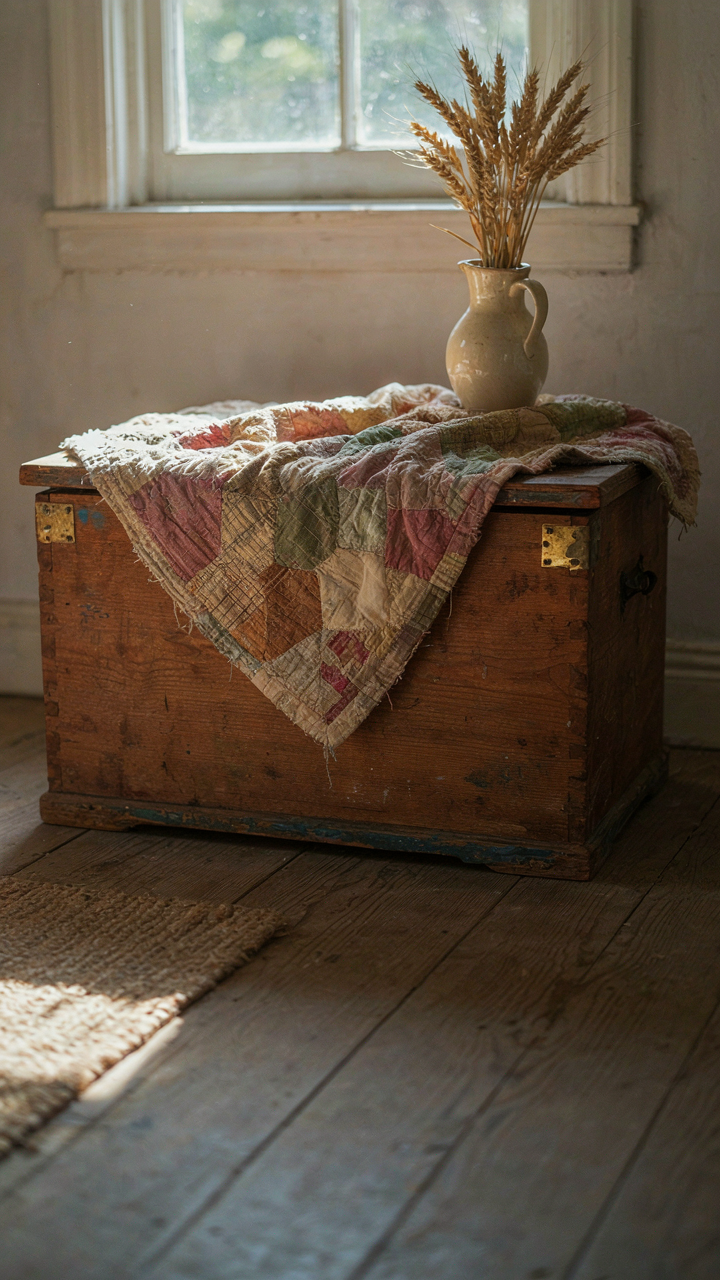
Implement this by measuring your wall dimensions first, then commissioning or sourcing cabinetry to those exact specs. Shaker-style cabinets with simple hardware work across eras and don’t scream “storage solution.” Quilt racks that hang quilts on rotation serve display and preservation simultaneously. Wooden chests at the foot of the bed function as seating, blanket storage, and a visual anchor. The result is a room that feels spacious because nothing competes for attention.
The Artisan’s Touch: Imperfection As Design
Handmade Details Signal Intention
You want handmade details in your bedroom because they broadcast wealth and taste without screaming about either—and that’s the real currency now. Handmade quilts work differently than mass production does: a maker controls every variable, bends rules deliberately, and leaves evidence of their choices visible in the stitching. This is economics applied to craft. When a quilt shows uneven seams or a slight color variation from batch to batch, that’s not a defect. That’s proof someone’s hand moved through the work.
Country bedroom design relies on this visibility. A machine quilts with geometric perfection. A human quilts with slight variations that your brain registers as intentional, not careless. Reclaimed wood furniture carries the same mechanism: nail holes, saw marks, and surface irregularities become credentials. They say this object survived use, not just production. Incorporate handmade elements by sourcing quilts from makers rather than retailers, and by choosing furniture pieces with documented provenance or visible hand-tool marks.
Natural Wear Becomes The Finish
The common advice says patina looks charming. Wrong. Patina works because it’s a time signature. Physics calls this entropy—disorder increases. A bedroom quilt that’s been washed fifty times has color shifts and fabric softness that no new quilt can mimic in one year. This isn’t nostalgia. This is readable history compressed into fabric.
Embrace patina by avoiding restoration of worn quilts and wood surfaces. Let the wood age in place. Let quilts fade with sunlight. Don’t refinish old furniture to make it look new again—that erases the evidence of its life. The mechanism is simple: your nervous system registers age as authenticity because age cannot be faked quickly. When you see a bedroom with genuinely aged quilts and weathered wood, your brain processes it as earned, not purchased.
The Only Real Obstacle Is Your Taste For The Generic
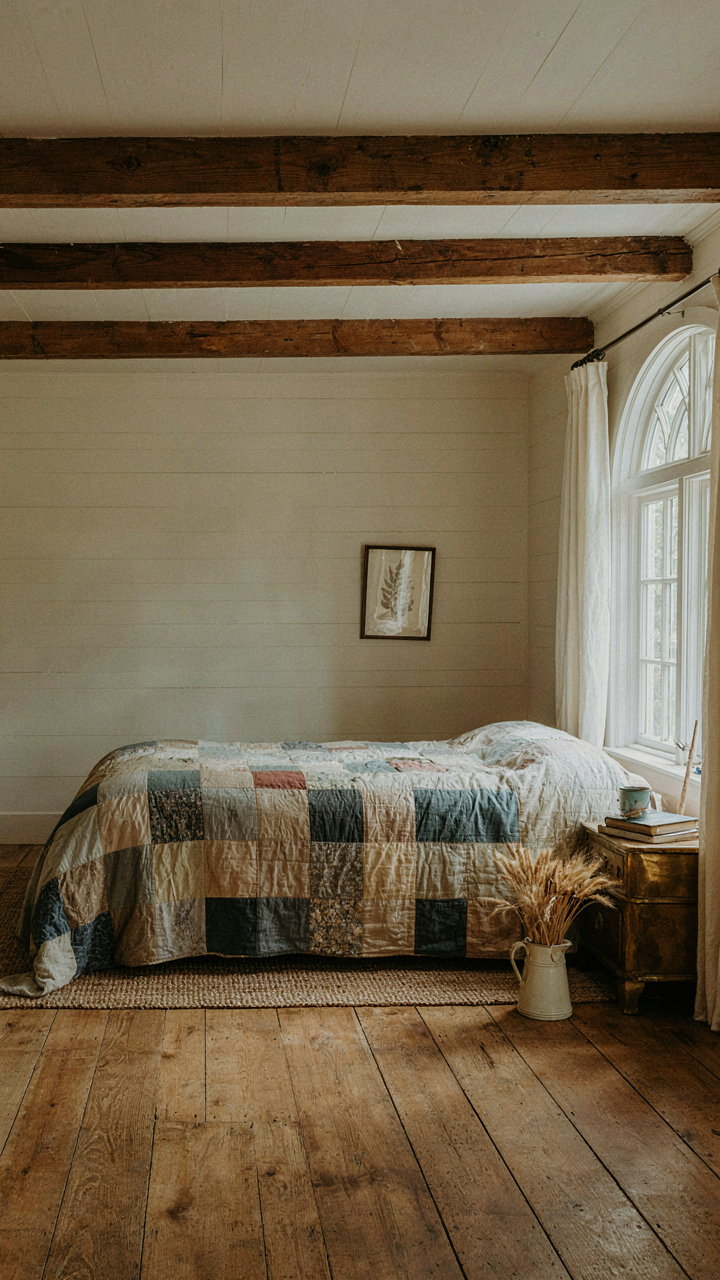
Most people won’t build a real country bedroom because they’re afraid of committing to something that isn’t trending on Instagram. They want quilts and wood beams and character, but they hedge their bets with neutral everything else. Pick one room in your home this week. Walk into it. Look at one wall. Replace one thing with something that actually moves you, not something that fits. That’s how you stop designing for approval and start living in a space you built for yourself.



