
The Folly Of Imitation: Why Authentic Grandeur Isn’t Bought
The Trap Of Surface Level Decoration
You want the status signal without understanding what made chateau bathrooms actually work. Here’s the mechanism: most people confuse materials with intention. They buy marble and gold fixtures, arrange them like Instagram screenshots, then wonder why the space feels like a themed hotel bathroom instead of lived-in luxury. The real problem is treating a chateau bathroom like a costume you wear rather than a system you inhabit.
Authentic chateau design emerged from constraint and function, not aesthetic preference. European chateaus used marble where water damage was inevitable. Gold leaf and brass fixtures oxidized and required maintenance, so only spaces worthy of that labor received them. The proportions, ceiling heights, and spatial relationships weren’t chosen for beauty alone but because those dimensions reflected how rooms were actually used. Copy the decoration without copying the logic underneath, and you build a lie.
When Imitation Becomes Architectural Theater
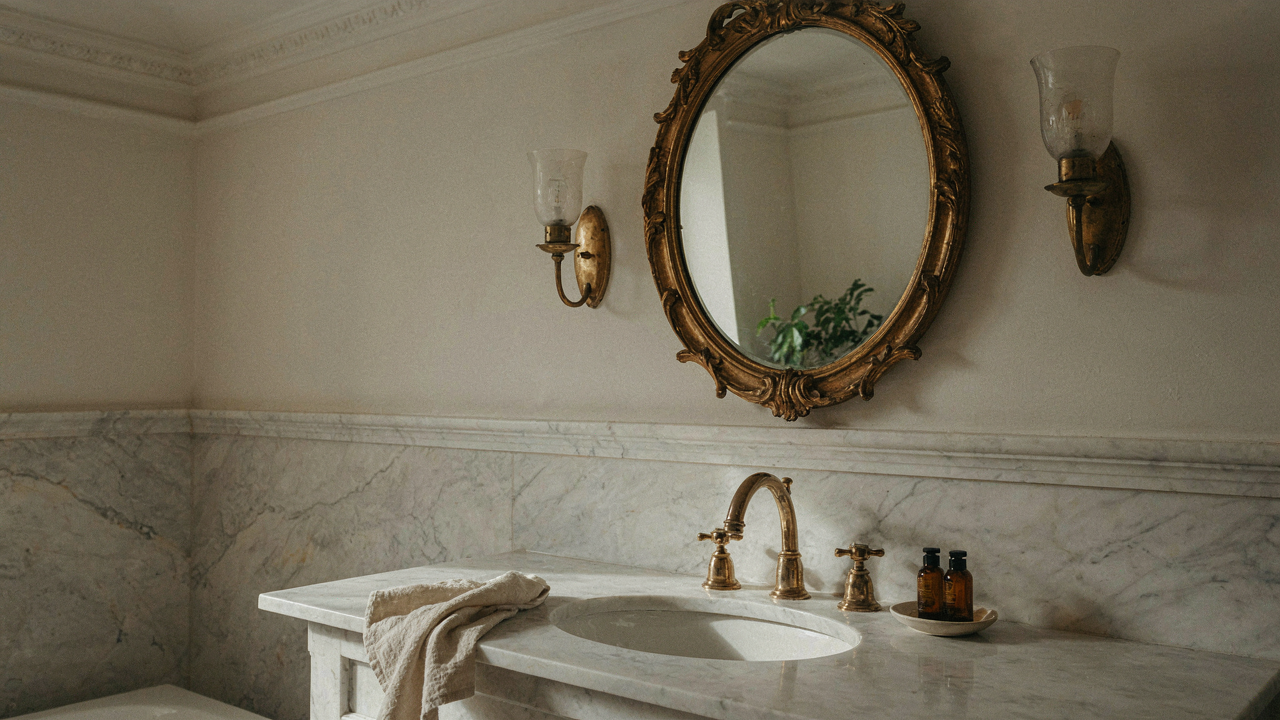
Symmetry and proportion work like load-bearing walls in classical architecture. Move one element and the entire visual structure collapses, yet most people treat placement as negotiable. They install a gold-framed mirror centered on one wall, then scatter marble accents randomly, assuming accumulation equals authenticity. It doesn’t. The chateau aesthetic depends on restraint and hierarchy that mimics how these spaces evolved historically. Copying three details from five different sources creates visual noise, not elegance.
The real failure happens when you install high-end materials without understanding sight lines and scale. A marble vanity that’s too massive for the room, gold hardware that catches light awkwardly, or bathroom dimensions that can’t support the grandeur you’re attempting all signal amateur work immediately. Authentic chateau bathrooms worked because every element had proportional relationship to the space itself. Start by measuring the actual room you’re working with, then work backward from proportion to material selection, not the other way around.
The Legacy Labyrinth: Decoding Old Money Bathroom Design
Material Restraint Beats Signal Fatigue
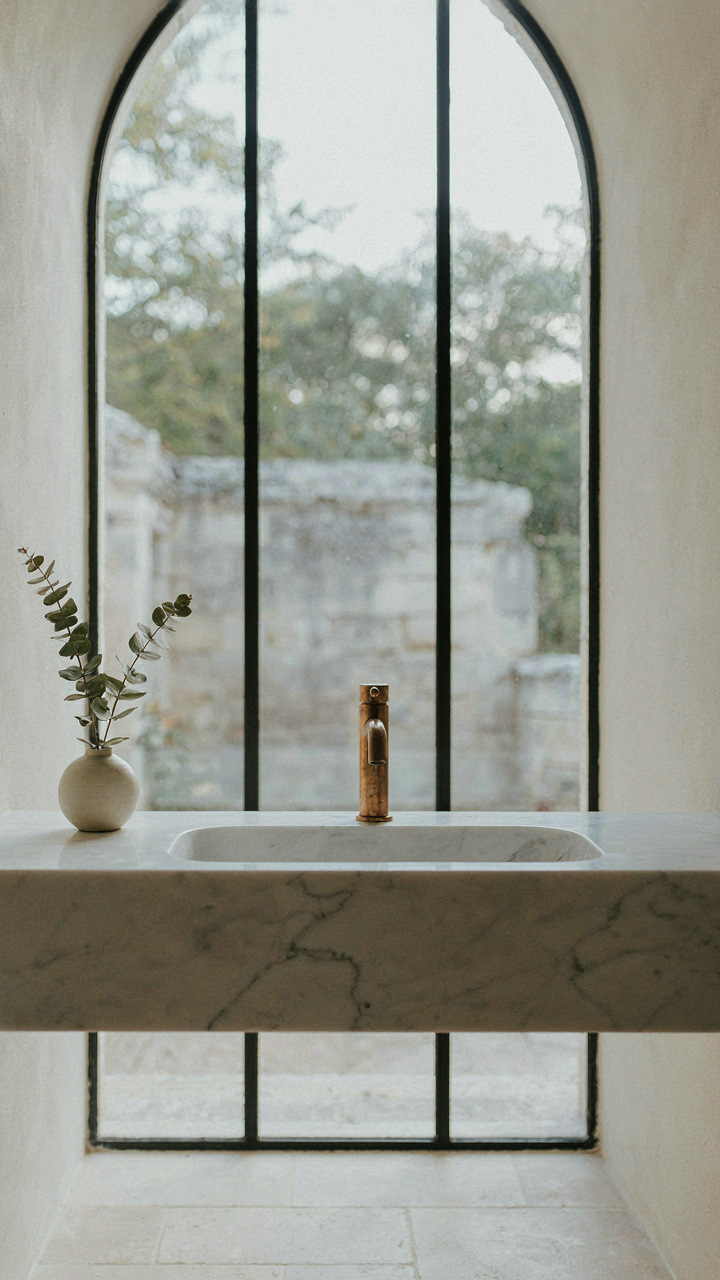
You want people to know you have money without looking like you’re trying. That’s the real tension here. Old money bathrooms operate on scarcity principle from economics: they limit material visibility to increase perceived value. A chateau bathroom doesn’t load every surface with marble and gold. It spaces them deliberately. Marble appears on the floor and one accent wall, not everywhere. Gold fixtures cluster around the sink, not scattered across every edge. Restraint reads as control. Abundance reads as insecurity.

The common advice says “add luxury materials everywhere.” That’s backwards and it fails. Chateau style pulls from European estates where materials cost actual money to move and install, so owners placed them strategically. A single marble countertop in Carrara stone outweighs five cheap marble mirrors. One bronze or brass fixture installed correctly beats ten gold-plated knockoffs. The mechanism is simple: limited material creates focused attention. Your eye lands where the owner decided it matters. That decision-making itself signals taste and resources.
Patina As Proof Of Authenticity
Age isn’t a flaw in chateau design. It’s documentation. Patina communicates that something survived time without being replaced or restored to death. A marble floor with slight wear patterns says “this house has history.” A brass fixture with oxidation says “we didn’t swap it out every five years for trends.” Builders and interior designers who understand this stop trying to make everything pristine. They preserve the natural marks that expensive materials acquire over decades.
The mechanism works through credibility. Perfection is reproducible and suspicious. A bathroom that looks brand new in the chateau style reads as a copy. A bathroom that shows minor aging in specific spots reads as genuine. You achieve this by sourcing reclaimed marble or antique fixtures when possible, or by choosing materials that patina naturally and leaving them untouched. When you install new marble, you avoid over-polishing. When you hang brass, you skip the high-gloss lacquer that prevents oxidation. Time becomes your design partner, not your enemy.
Marble: The Unspoken Language Of Enduring Wealth
Selecting Marble That Whispers Heritage, Not New Money
You want people to know you have money without looking like you’re trying. That’s the real game here. The mechanism is this: marble quality signals timeline. Old money used marble because it was the only durable material available. New money uses marble because Instagram exists. The difference lives in finish, veining patterns, and stone origin. Carrara marble from Italy carries historical weight that engineered alternatives never will. Honed finishes age visibly while polished surfaces scream recent installation.
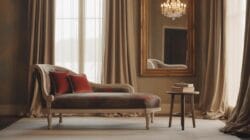
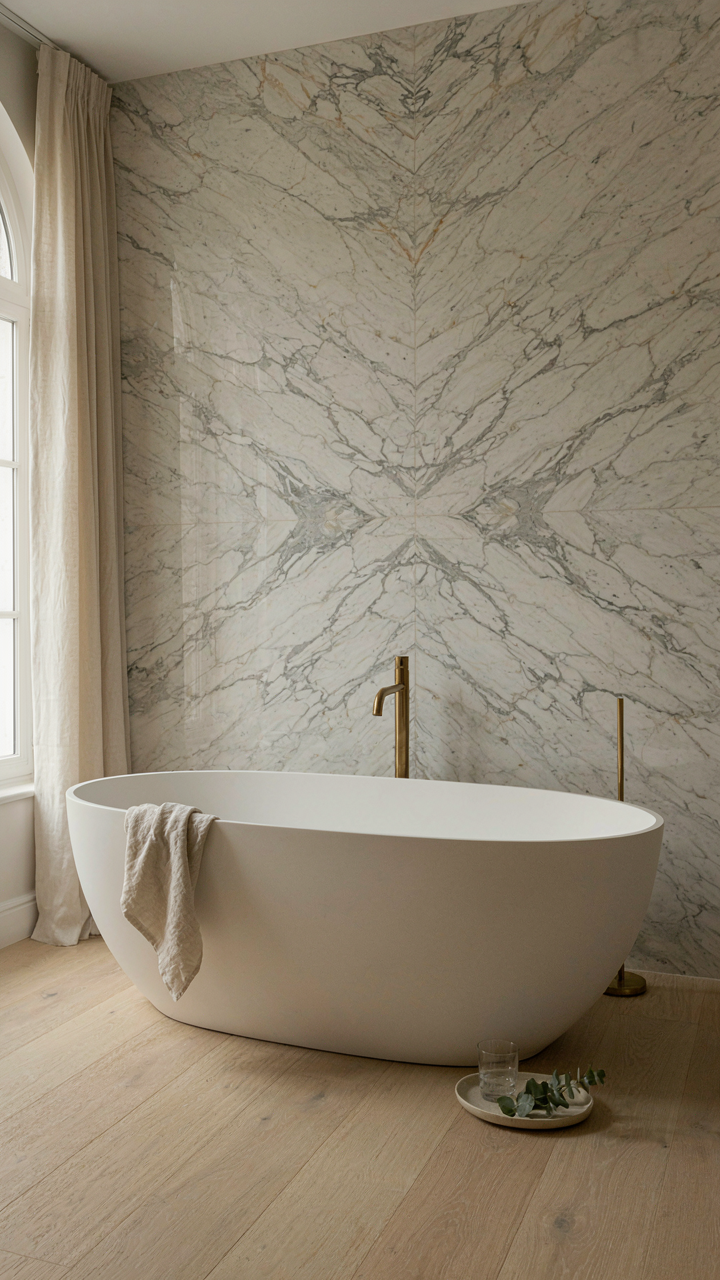
The chateau bathroom demands marble that looks inherited, not purchased last quarter. Statuary and Calacatta marbles with tight, delicate veining read as refined restraint. Heavily veined or exotic stones telegraph effort and cost awareness. Source your marble from suppliers who can trace origin and age characteristics. Avoid perfectly uniform slabs. The bathroom that looks like it survived centuries beats the one that looks like it cost six months’ salary.
Strategic Application For Timeless Impact
In architecture, load-bearing structures determine what can remain standing. In chateau bathroom design, restraint determines what reads as permanent. The mistake everyone makes is covering every surface with marble. This creates visual noise and dates the space immediately because it announces the budget. Instead, marble functions as structural emphasis: bathroom countertop, accent wall, or floor. The surrounding surfaces stay neutral. This ratio makes the marble land with weight instead of desperation.
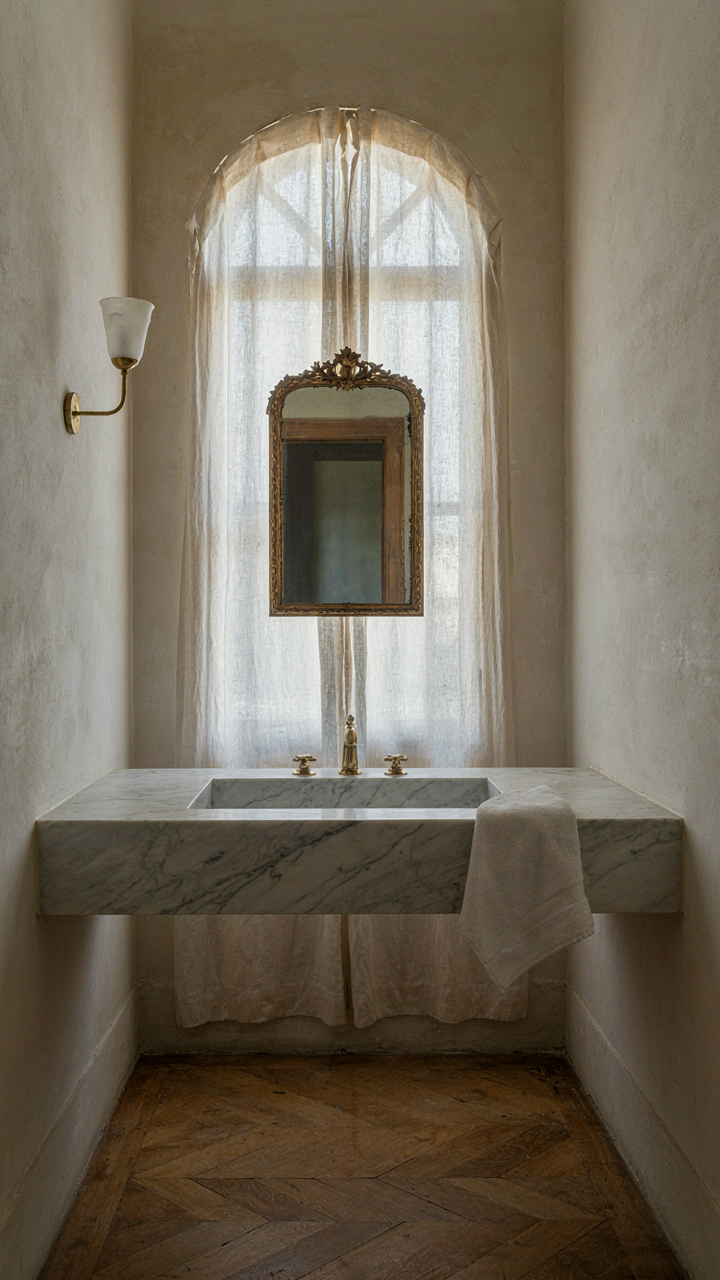
Use marble on vertical surfaces where it frames the space rather than fills it. A marble accent wall behind the vanity or around the bathtub creates the illusion of load-bearing importance. Pair it with plaster, stone, or neutral paint on remaining walls. The gold hardware then becomes the second focal point, not a competing element. This disciplined approach separates chateau bathrooms that endure from ones that read as trend-chasing in five years.
Gold: The Alchemist’s Touch In A Vintage Mansion Bathroom
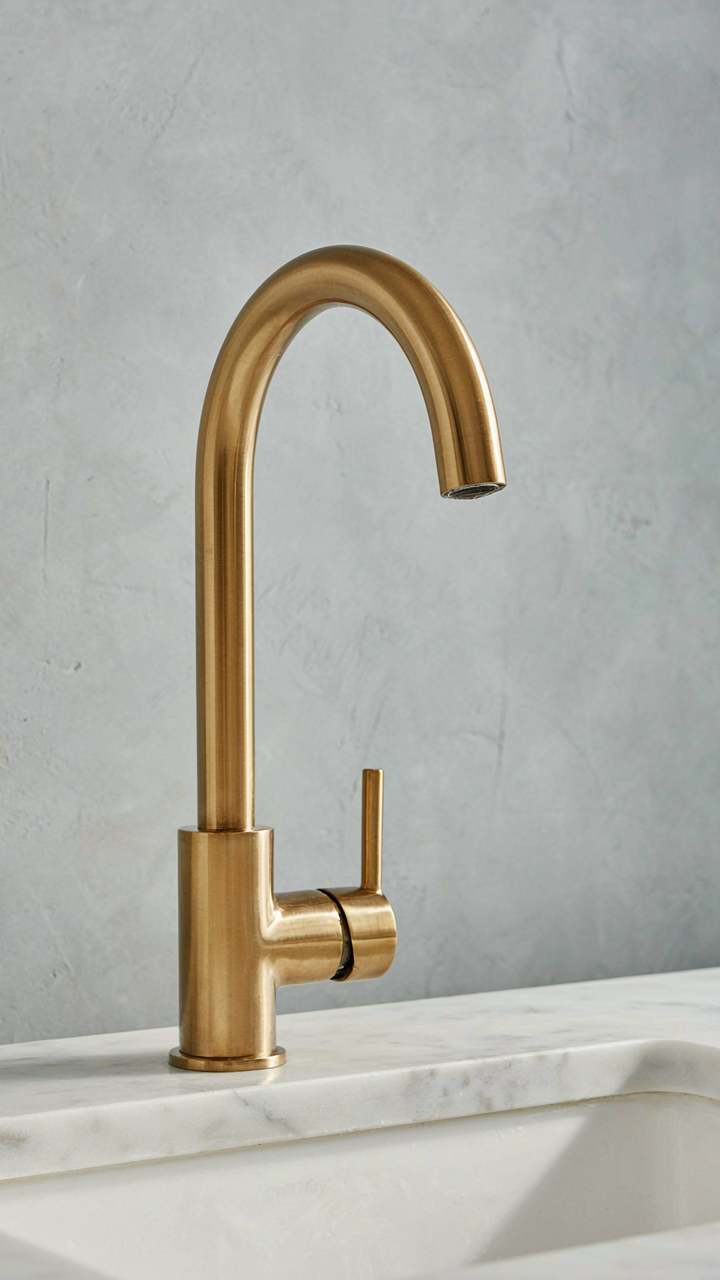
How To Add Gold Without Looking Like A Vegas Casino
You want gold in your bathroom because it signals wealth and refinement. The real mechanism is contrast. Gold only reads as luxe when it sits against something cooler and more restrained. Think of color theory from graphic design: a bright accent only pops against neutral space. Gold fixtures, frames, or hardware mean nothing if they’re competing with other warm metals, ornate patterns, and maximalist clutter. The chateau aesthetic demands restraint as the foundation, then gold as punctuation.

Restraint means choosing one or two anchor pieces for gold. A medicine cabinet frame in brushed gold works. A faucet set in champagne brass works. A mirror border in matte gold works. Skip mixing finishes. Skip adding gold to every possible surface. The homes that trigger the “this is expensive” response use gold sparingly enough that it registers as intentional, not desperate. Install gold where it catches light and draws the eye during functional use: at the sink, above the vanity, or framing the primary mirror.
Warm Metal Against Cool Stone
Temperature contrast in materials isn’t just aesthetic preference, it’s visual physics. Marble is intrinsically cool in tone, especially white and gray variants that dominated 18th-century European estates. Gold is inherently warm. Most advice tells you to “let them balance each other”—which is vague and unhelpful. The real protocol is this: use cool marble as your dominant surface, then deploy warm gold as the minority element that creates visual relief.
Statuary marble, Calacatta, or Carrara provide the cool, neutral backdrop. These stones have subtle gray or blue undertones that recede visually. Against this receding surface, brushed gold or champagne brass fixtures become focal points without overwhelming. The marble absorbs the warmth and keeps the eye from fatigue. Install gold hardware at 36 to 42 inches from the floor on vanities, where it intersects with marble counters and backsplashes. This height creates a visual anchor that feels proportional to the human figure, which is why it reads as intentional rather than random.
The “Inherited Elegance” Protocol: Crafting Your French Chateau Bathroom
Lighting As Historical Anchor
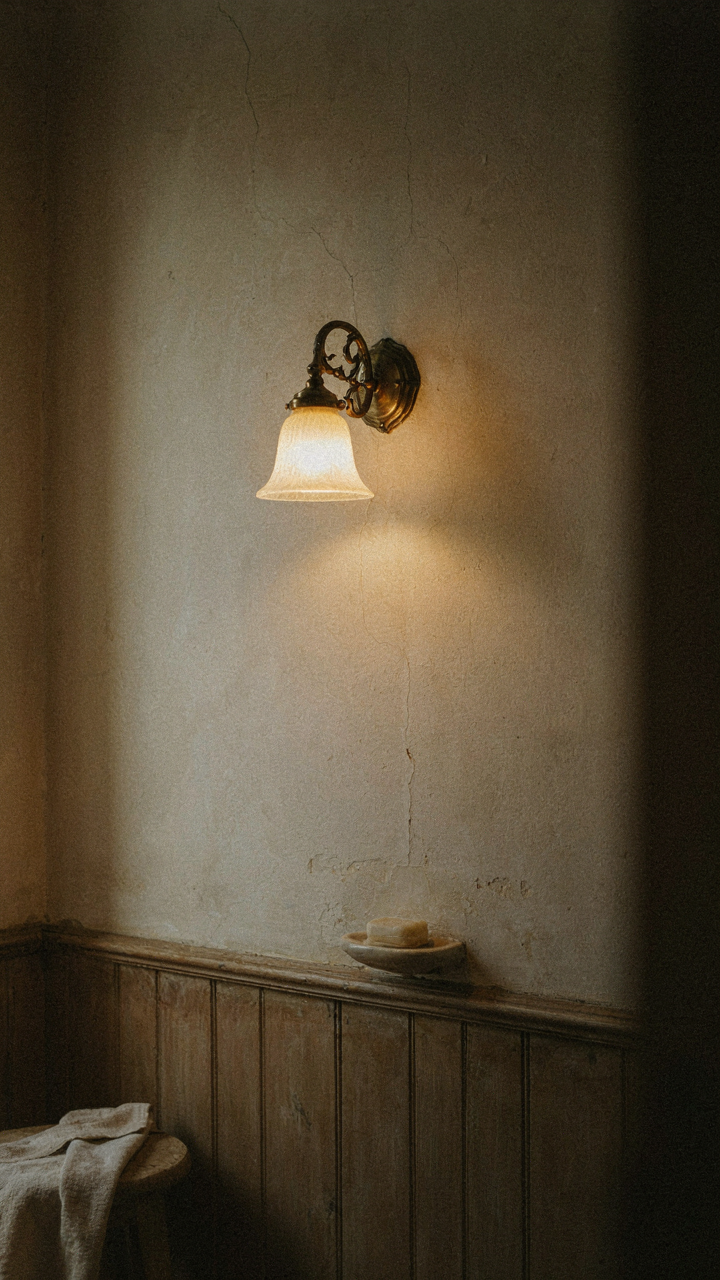
You want people to feel like they’re standing in something old, not something new you bought last month. Lighting is the mechanism that makes this work—it’s architectural psychology, not decoration. The human brain reads light quality the way archaeologists read layers. Dim, warm, diffused light signals age and authenticity. Harsh bright light signals recent construction and doubt.

Chateau bathrooms use sconces flanking mirrors instead of overhead fixtures, and they position them at eye level or slightly above. This mimics how light moved through pre-electric spaces and how candles and early gas fixtures actually functioned. Candlelight and gas lamps cast shadows. They don’t flatten the face. Install brass or bronze fixtures with frosted or etched glass that scatters light. Avoid recessed lighting entirely—it broadcasts newness and reads as sterile. The goal is controlled dimness that flatters, not visibility that exposes.
Pieces That Signal Generational Stewardship
Most people furnish with matching suites, which signals purchase, not inheritance. Real chateau bathrooms evolved over time. A vanity came first in 1890. A mirror frame was added in 1920. Hardware was replaced in 1960. This layered accumulation is what creates perceived depth and legitimacy.
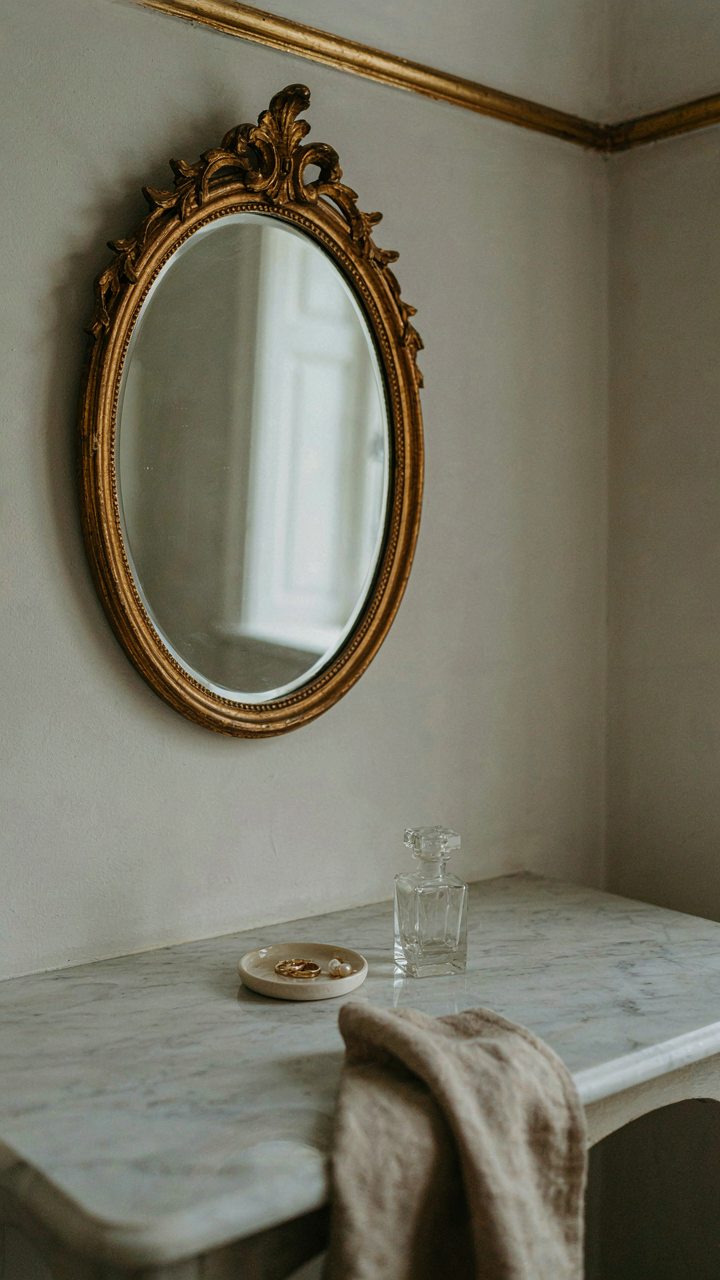
Source a marble or limestone vanity that looks original to the space, not coordinated with everything else. Add a separate ornate mirror frame in gold leaf or carved wood around a plain mirror. Install vintage-style brass or bronze hardware that doesn’t match the fixtures. The slight discord reads as historical authenticity. Use a pedestal sink or wall-mounted console alongside a separate marble-topped table for toiletries. The viewer’s brain registers: different eras, different needs, authentic living. Pieces that imply generations of ownership sit in tension, not harmony.
The Scarcity Principle: Designing Your Old Money Bathroom
Materials That Hold Their Worth
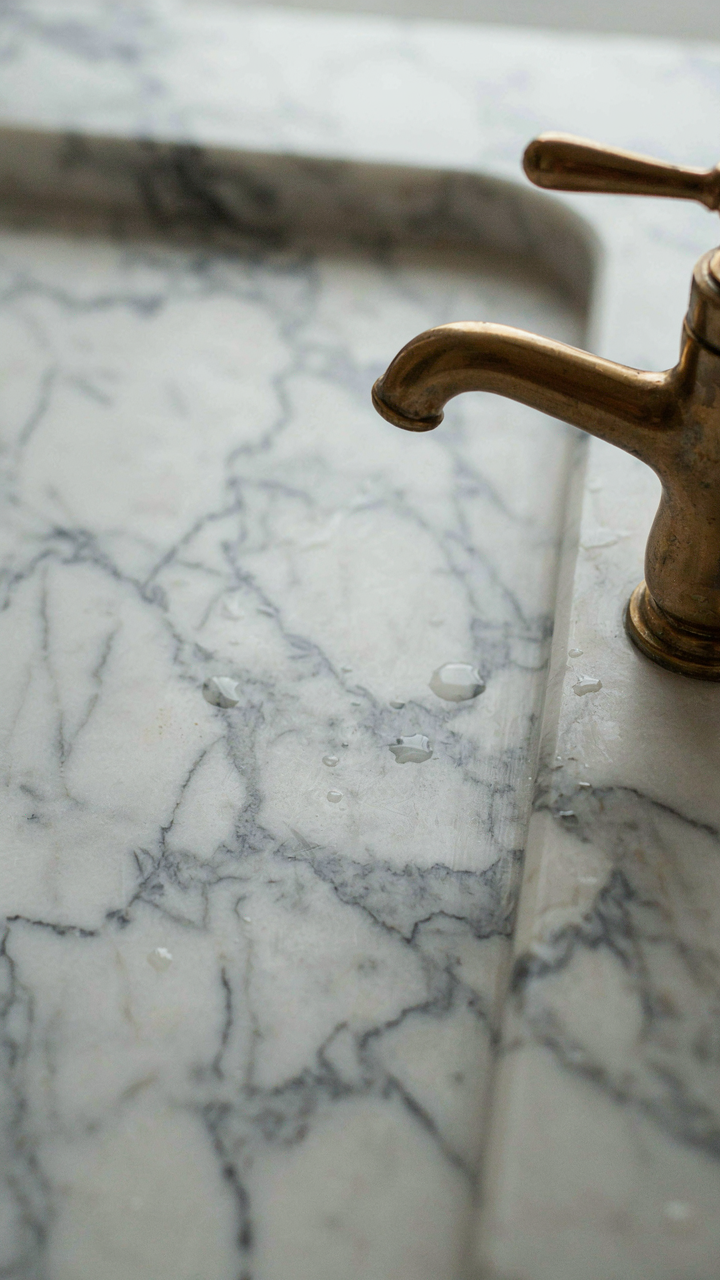
You want marble and gold because you’re betting that the bathroom won’t look dated in fifteen years. That’s the real calculation happening. Economics calls this supply and demand, but in chateau style bathrooms it means something more specific: materials that retain perceived value function as built-in insurance against aesthetic obsolescence. Carrara marble has been expensive for four centuries for one reason—it doesn’t go out of style because it was never trendy. The supply is genuinely finite. Gold leaf and brass hardware outlast trends because they’re physically durable and historically anchored to wealth, not fashion cycles.
Most people chase trendy materials because they’re cheaper upfront. That’s backwards thinking. Polished marble costs more initially but holds resale value and visual credibility across decades. Faux finishes and budget alternatives depreciate the moment they chip or fade. When you source Calacatta marble or real brass fixtures instead of engineered stone or plated hardware, you’re not being wasteful—you’re eliminating the future cost of replacement or regret. The mechanism is simple: scarcity plus durability equals stability in perceived value.
Where To Invest For Maximum Return
Marble and gold aren’t interchangeable in impact. The opportunity cost framework says your money goes where it generates the most return per dollar spent. In a chateau bathroom, that return is visual authority and longevity, not equal distribution.
- Marble on visible surfaces: Wall cladding, vanity tops, and floor tile in primary sight lines command attention and establish the room’s quality tier immediately. Budget here first.
- Gold on hardware and fixtures: Faucets, mirror frames, and towel bars require less material volume but higher visibility and touchpoint frequency. They signal intentionality through repeated daily contact.
- Ceiling treatment: Many bathrooms waste budget on ornate ceilings nobody examines. Invest in a simple coffered or tray ceiling with gold accents instead of elaborate crown molding.
- Secondary surfaces: Walls behind the toilet, shower surrounds, and storage areas can use complementary marble or tile at lower cost without sacrificing the chateau aesthetic.
- Lighting fixtures: Brass or gold-plated sconces flanking the mirror deliver more perceived luxury per dollar than any other single element in the bathroom.
The second investment rule: concentrate your spend on what people see first and touch most. A marble vanity top with gold faucet beats marble everywhere with cheap hardware. Opportunity cost in design means choosing surfaces and finishes that work proportionally to visibility, not spreading budget equally across every surface. Chateau bathrooms succeed when the hierarchy is obvious—premium materials where they matter, supporting materials in secondary zones.
Beyond Trends: Curating A Bathroom Classic Modern Aesthetic
Modern Plumbing Meets Classical Restraint
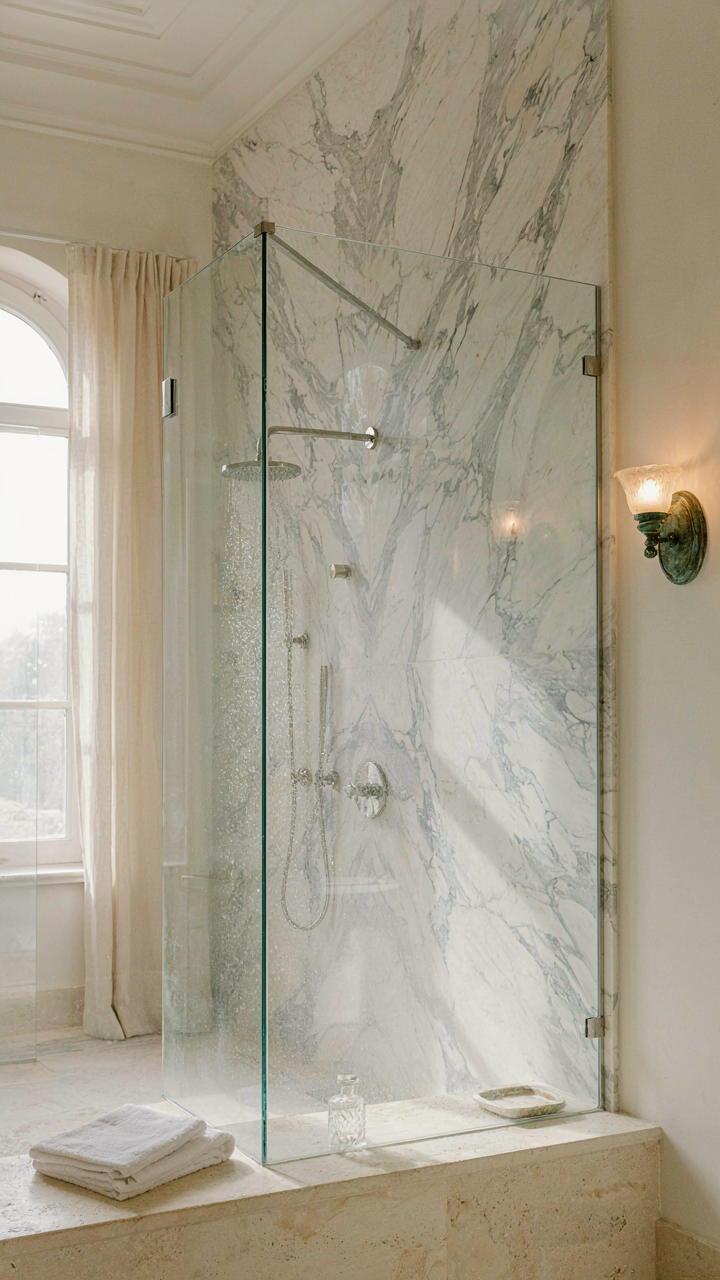
You’re worried that adding a rainfall showerhead or heated towel rack will wreck the period authenticity you paid for. Here’s the mechanism: chateau bathrooms survive because they treat utility as a separate layer beneath aesthetics, not a competitor to it. Think of it like architecture’s load-bearing wall concept. The structure carries the weight invisibly so the visible surfaces stay clean. Install modern plumbing infrastructure, radiant floor heating, and ventilation systems completely behind walls and fixtures. Let marble and gold occupy the visual plane while technology operates underneath.

The mistake most people make is trying to hide modern fixtures with faux-classical covers. You end up with cheap approximations that fool no one. Instead, embrace the boundary. Use brushed brass or oil-rubbed bronze for contemporary fixtures that read as intentional, not apologetic. Position a frameless glass shower enclosure so marble becomes the focal point, not the glass. The fixture itself recedes because it serves function, not decoration.
The Irrelevance Of Seasonal Design Trends
Everyone talks about “timelessness” like it’s a feeling. It’s not. Timelessness is the absence of signals that date a space to a specific five-year window. Chateau style bathrooms avoid this trap naturally because they reference a design language that persisted across centuries, not a moment. The problem isn’t choosing between trends. The problem is mixing reference points carelessly so the space screams “I decorated in 2023.”
Stick to materials and proportions that held value in 18th-century France and still do now: marble that ages visibly, gold that develops patina, mirrors with scale and weight, and hardware with heft. Skip accent colors that cycle through Instagram seasonality. Avoid light fixtures shaped like current design awards. Every element should answer the question: would this exist in a chateau built 200 years ago? If the answer is “yes but updated,” you’re still on solid ground. If the answer is “no, this is definitely a current thing,” remove it.
The Psychology Of Space: Your Old Money House Bathroom Layout
How Spatial Flow Dictates Grandeur
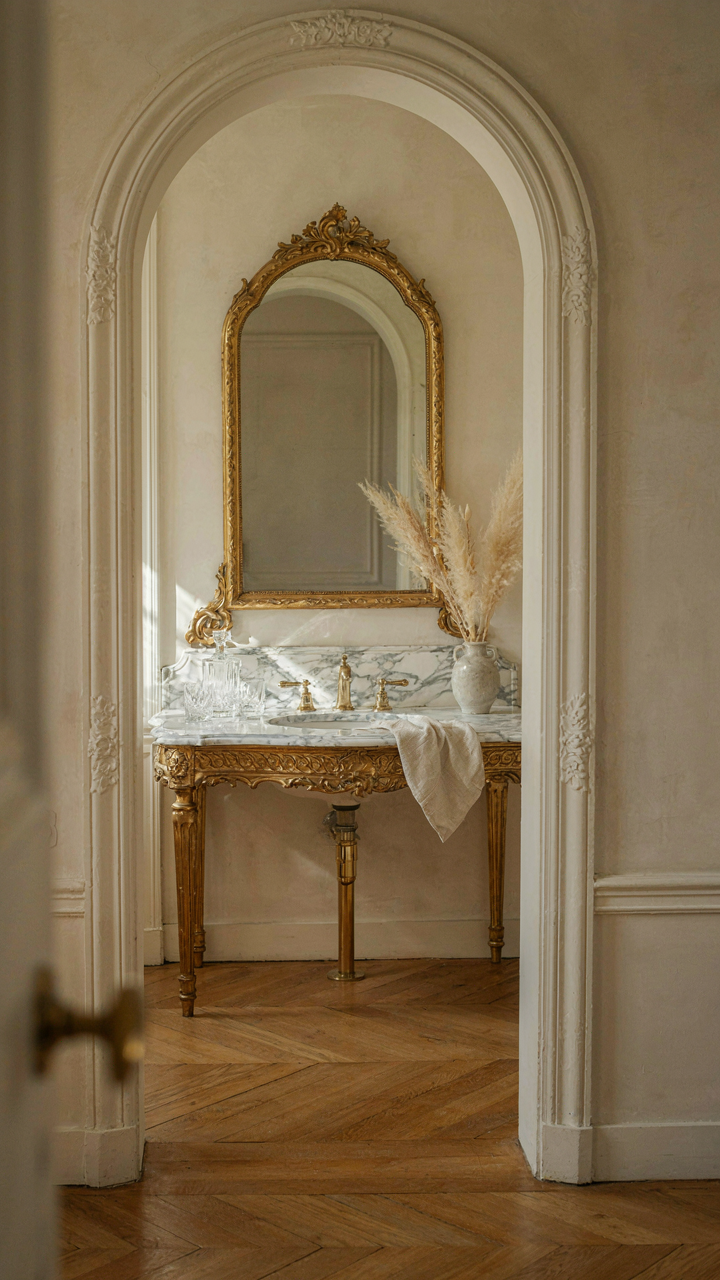
You want people to feel smaller when they walk in. That’s the real reason you care about this section. Chateau bathrooms apply the same principle architects use in cathedral design: sequence. Scale the entry narrow, compress the ceiling, then open into a tall vanity zone. This contrast manufactures the feeling of stepping into something important. Most people reverse this by cramming everything equally and wondering why the space feels flat.

The marble and gold matter less than the path your eye travels. A chateau bathroom forces you to move through zones rather than absorb everything at once. The vanity becomes the destination. Everything before it—the entry, the mirror placement, the wall height—builds toward that moment. Arrange your layout so the sightline doesn’t land on the toilet first. Position the vanity as the visual anchor the room organizes around.
Creating Focal Points That Command Attention
Focal point theory comes from visual hierarchy in classical art. A chateau bathroom needs one dominant element—usually the vanity mirror—that functions as the composition’s center of gravity. Everything else orbits that point. The common mistake is treating the vanity, tub, and toilet as equal visual weight. They aren’t. The vanity should occupy the most prominent wall, with the largest mirror, backed by the most dramatic marble or gold detailing. The tub becomes secondary. The toilet gets hidden.
Gold accents work because they reflect light toward your focal point. A plain marble vanity recedes. Add gold framing, faucet hardware, or wall sconces flanking the mirror, and suddenly that zone consumes attention. Limit your focal point to one wall. A bathroom attempting grandeur across multiple walls just fractures the space into competing zones. Marble behind the vanity. Gold where the eye naturally rests. Everything else supports this hierarchy, not competes with it.
The True Obstacle: Your Fear Of Not Being Born Into Grandeur
The Mental Permission You Actually Need
You’re reading this because you think marble and gold won’t feel authentic in your space unless you inherited the bloodline that built the original chateaus. That’s the real block. Chateau design uses a specific hierarchy: structural restraint at the base, ornamentation concentrated at eye level and above, and materials that signaled wealth through scarcity, not noise. You already own the ability to apply this system. The mechanism is permission, not genetics.

Most people treat chateau style as a historical artifact they’re borrowing rather than a design principle they can own. They add too much, too evenly, then call it “overwhelming.” The actual move is learning where chateaus concentrated visual weight. Eye-level marble surfaces, ceiling details, and gold trim work because they’re deliberate placements, not coverage. Your bathroom doesn’t need to feel inherited. It needs to look like you understand proportion.
Intention Beats Imitation Every Time
The common advice here is backwards: “Make it feel authentic by researching historical accuracy.” Wrong. Historical accuracy killed more chateau bathrooms than it saved because people started copying furniture arrangements instead of copying the design logic. Chateau style works because it creates a focal point hierarchy. Gold accents aren’t decoration. They’re visual anchors that guide where your eye lands first, second, and third.
Build your space around intentional placement, not aesthetic completion. Choose one dominant surface for marble: a vanity wall, a full accent wall, or a floor. Place gold trim at the transition points between materials, not scattered everywhere. Your vanity lighting, faucet finish, and mirror frame become the gold detail system. This is what separates amateur recreation from owned design: you’re installing a rule set, not copying a picture.
The True Obstacle: Your Fear Of Not Being Born Into Grandeur
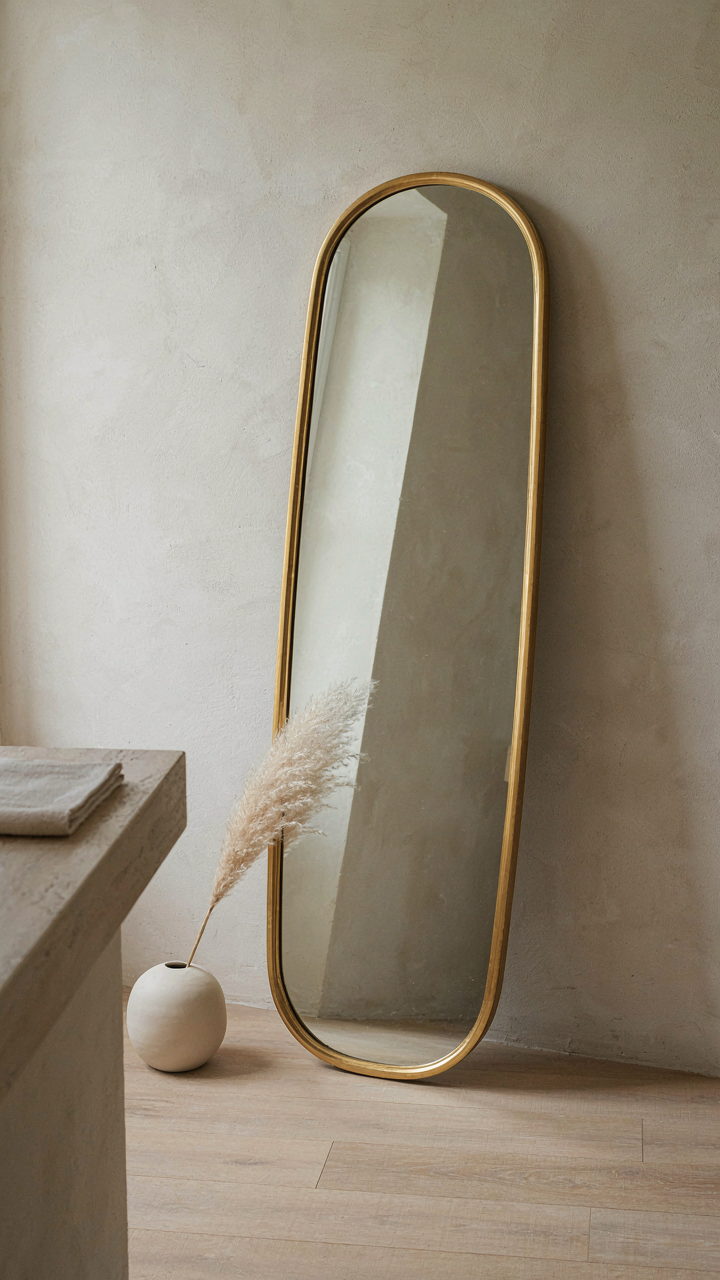
You think a chateau style bathroom requires inherited wealth or luck. Wrong. It requires one decision: stop waiting for permission to live like you already won. Marble and gold aren’t gatekept by birth. They’re available to anyone willing to spend money on what matters instead of what’s convenient. Pick one element today. A gold mirror. A marble shelf. Start building your bathroom like you’re reclaiming something that was always yours. Your bathroom’s grandeur isn’t about where you came from, it’s about refusing to apologize for wanting better.



