
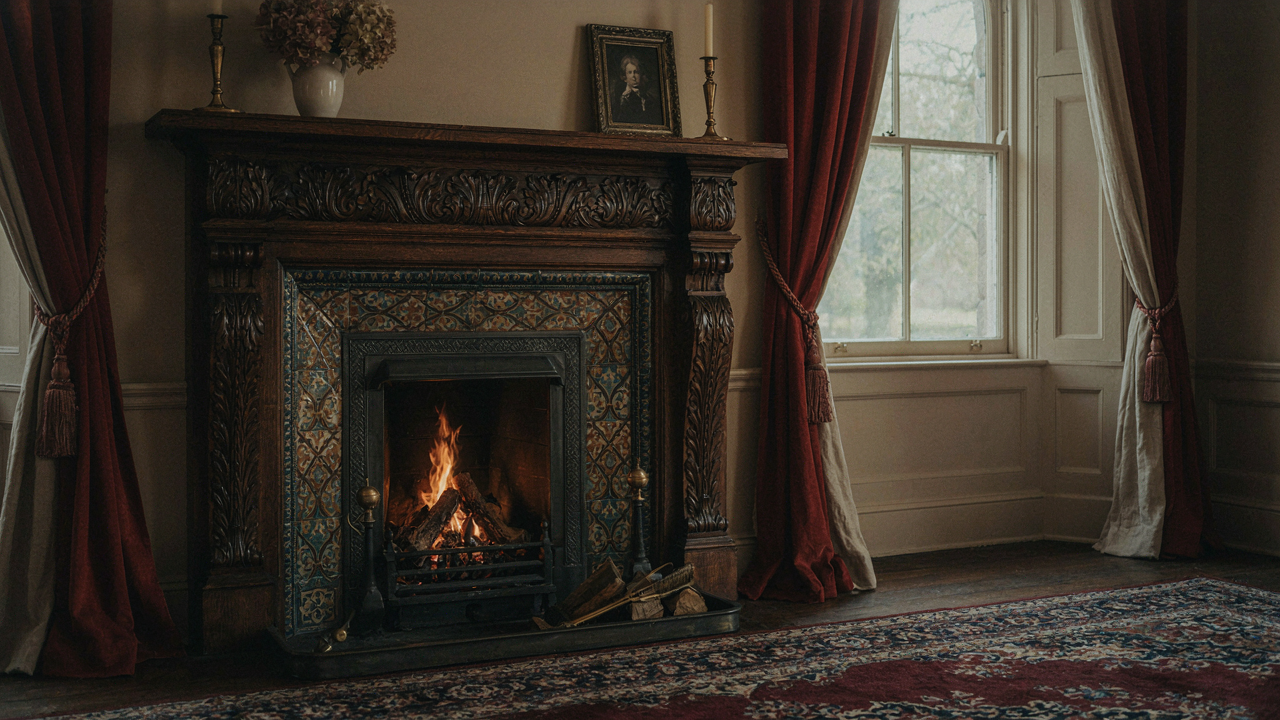
Beyond The Mantle: The Victorian Fireplace As An Engineered System
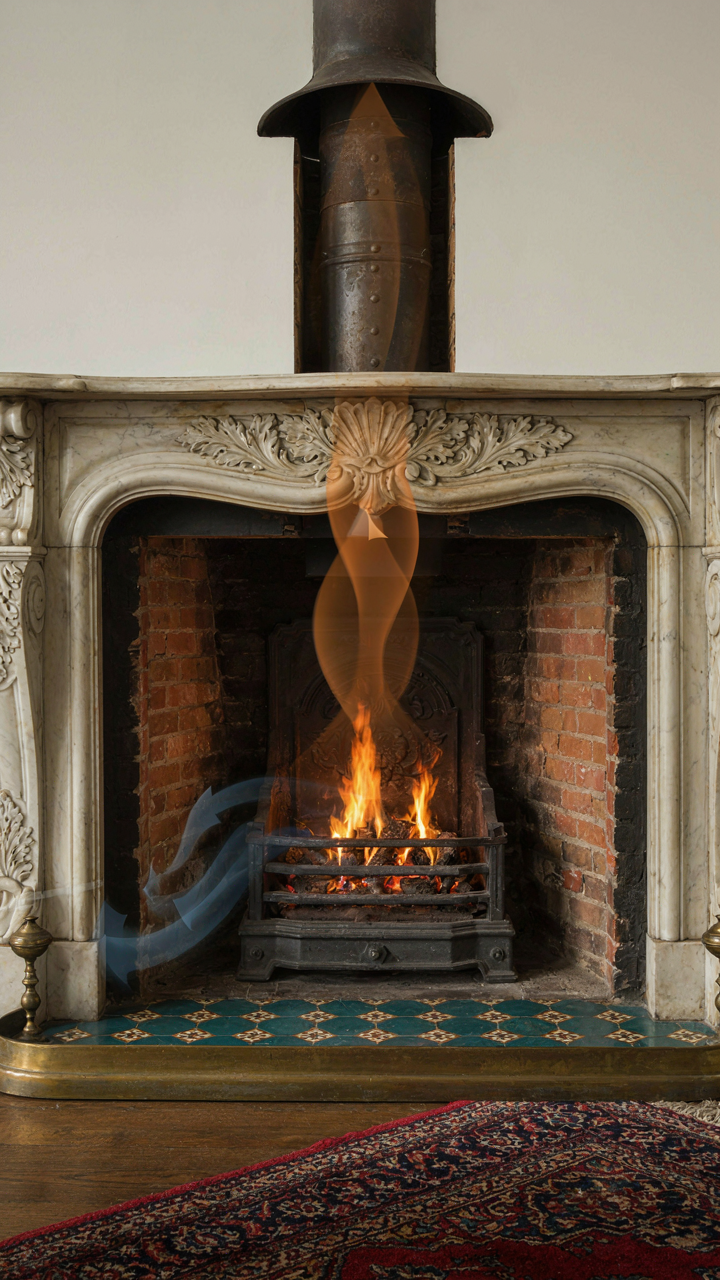
How Heat Actually Moves Through Your House
You care about this because a beautiful fireplace that doesn’t heat efficiently is expensive decoration masquerading as function. Victorian fireplaces worked because their designers understood thermal dynamics, not because they looked nice. The mechanism is simple: a fireplace is a heat distribution system. Warm air rises from the firebox, travels up the flue, and pulls cooler room air into the opening to replace it. This creates convection. The tile and carved elements aren’t just visual anchors—they’re thermal mass that absorbs heat and radiates it back into the room over time, extending warmth long after the fire dies.
The common mistake is treating a fireplace like a space heater. It’s not. A traditional Victorian fireplace loses most combustion heat up the chimney. The real heating comes from radiant energy bouncing off the firebox walls and the thermal storage in surrounding materials. Brick, tile, and stone absorb this radiation, then slowly release it. This is why mantels and hearth tiles matter functionally. They’re not ornament. They’re part of the thermal envelope. The deeper your tile bed and the higher your mantel mass, the longer the heating cycle persists after the fire cools.
Flue Design Determines Everything Else
The flue is your fireplace’s respiratory system. Breathing works through pressure differentials, and so does draft. Cold air in your room is denser than hot air in the firebox. This density difference creates natural draft—hot exhaust rises, pulls cooler air down into the firebox to replace it, fuel burns hotter, more heat rises. The cycle accelerates until equilibrium. Victorian builders knew this. They built tall chimneys with specific diameters because they understood that flue sizing directly controls draft strength.
Get flue diameter wrong and you lose heat, create smoke, or pull conditioned air from your house uselessly. Too narrow, draft suffocates and smoke backs into rooms. Too wide, exhaust cools inside the flue, draft weakens, and creosote accumulates. The standard Victorian flue was sized relative to the firebox opening—typically 10 to 12 percent of the opening area. Your tile arrangement and carved mantel frame the opening. This frame size determines what flue diameter will actually work. Measure the opening before selecting materials.
The Material Mechanism: Why Victorian Tiled Fireplace Surrounds Mattered
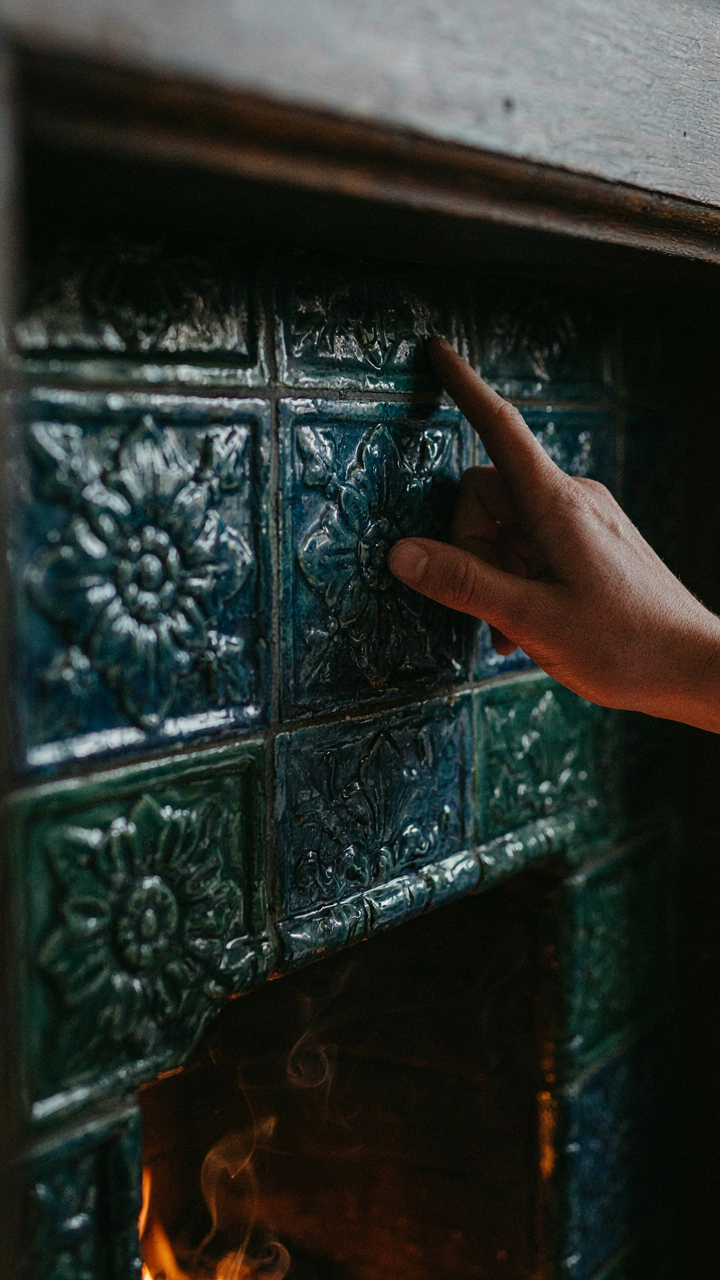
Thermal Mass Holds Heat Where It Counts
You want the Victorian fireplace to look good, but what you actually need is for it to work—and ceramic tile was the mechanism that made both happen at once. Thermodynamics governs how a fireplace releases energy: tile stores heat in its mass and radiates it slowly after the fire dies. A bare brick surround bleeds warmth into the room fast and unevenly. Glazed ceramic tile, especially the thicker decorative varieties Victorians preferred, acts as a thermal buffer that extends the heating window by hours.

The tile thickness mattered more than the pattern. Victorian manufacturers typically produced surround tiles between three-eighths and half an inch thick—substantial enough to absorb fire radiant heat without cracking from thermal shock. This wasn’t aesthetic choice dressed up as practicality. The tiled surround converted a fireplace from a brief heat event into a sustained one, making the room measurably warmer longer without burning more fuel.
Endurance Under Repeated Heat And Grime
Forget the romantic notion that Victorians chose tile for beauty alone—they chose it because it survives daily use without degrading. Unglazed or lightly glazed ceramic tile resists soot, ash, and the corrosive byproducts of coal and wood combustion far better than painted plaster or raw stone. A Victorian homeowner cleaned the surround by wiping it down, not scrubbing it raw or refinishing it every season.
The glazed surface creates a protective barrier that traps moisture and grime on top rather than letting them penetrate and stain the body of the tile. Most Victorian tilework around fireplaces used a lead or tin-based glaze that hardened into a nearly impermeable coat. When something fails to require constant maintenance, that’s the real marker of practical design—not promises about longevity, but actual time saved.
Carved Mantels: The Victorian Home Fireplace As A Status Algorithm

How Carving Complexity Signaled Wealth
You care about this because carved mantels still broadcast status to anyone who enters your home. The mechanism is simple: carving depth and detail required time, skilled labor, and expensive stone or wood. Victorian homeowners understood economics intuitively. A shallow, machine-routed mantel took hours. A deeply carved mantel with relief work, multiple tiers, and ornamental flourishes took weeks. You paid for every hour of artisan time visible in the surface.

The carving vocabulary itself stratified neighborhoods. Gothic Revival details (pointed arches, trefoil patterns) cost more than simple geometric relief. Acanthus leaves, scrollwork, and figural elements required senior craftsmen. Thin, delicate undercutting—where the chisel creates shadows beneath carved elements—was the premium signal. A buyer walking into a parlor saw the mantel and calculated the owner’s wealth without a single conversation. The fireplace was the algorithm.
The Real Cost Of Commissioning Quality
Commissioning a carved mantel was not about picking a style. It was about vetting the artisan’s ability to execute structural detail without fracture points. Most advice skips this: the carver had to understand grain direction, load-bearing capacity, and stone brittleness. Marble preferred shallow undercutting. Sandstone allowed deeper work. Oak tolerated aggressive relief. A bad carver created weak points that cracked under mantel weight or seasonal wood movement.
The process required site visits. The artisan measured the fireplace opening, assessed wall thickness, and understood how the mantel would seat. Custom commissions ran three to six months. The homeowner paid a deposit, approved design sketches, and accepted the final piece’s timeline as non-negotiable. This friction filtered out impatient buyers. Only serious investors completed the full sequence, which meant only serious investors got quality work. The inefficiency was the point.
The Heritage Hoax: Reclaiming Authentic Victorian Fireplace Ideas
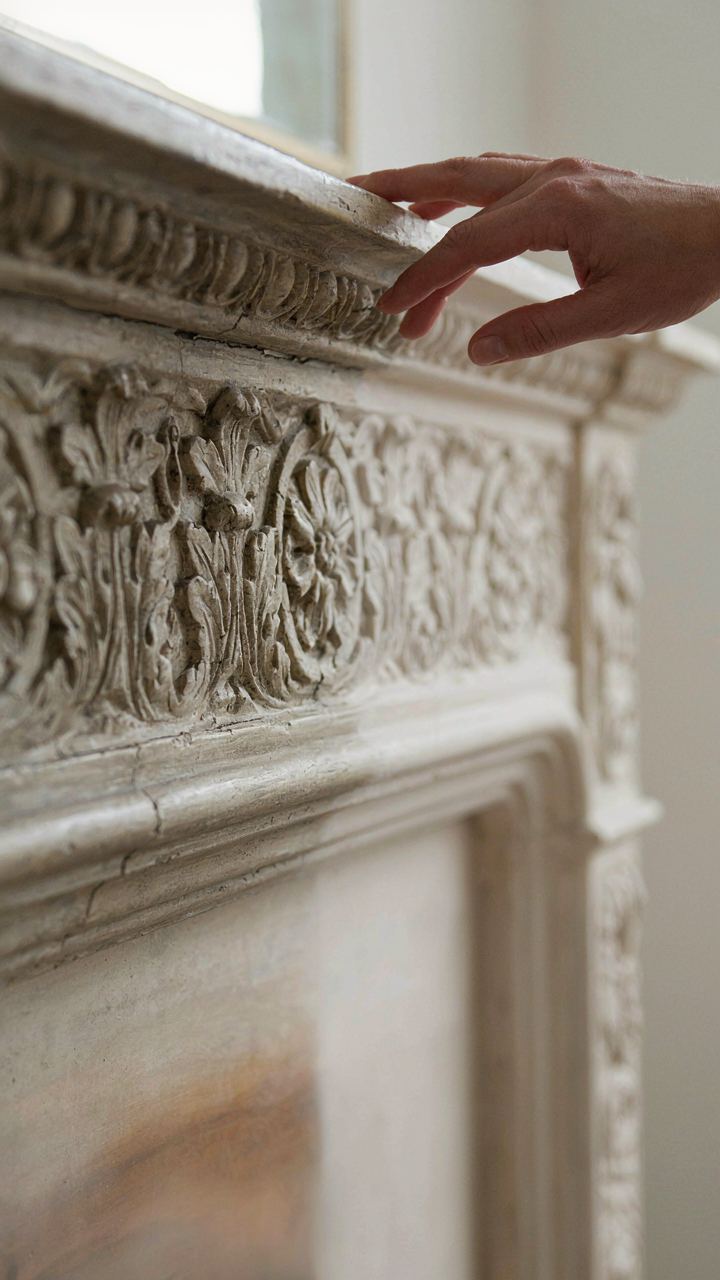
What Actually Separates Real From Fake
You want to know the difference so you don’t feel duped after spending money on something that looks period but isn’t. Here’s the mechanism: authentic Victorian fireplaces were built with labor-intensive processes and materials that modern reproduction simply doesn’t replicate because the economics don’t work. A genuine Victorian surround required hand-carved stone or timber, tile work done by individual craftsmen with no standardization, and masonry techniques specific to load-bearing hearth construction. Reproductions use molds, machine cutting, and assembly-line consistency that never existed in the original era.

The tell isn’t what you see at first glance, it’s what you feel when you look closely. Run your hand across carved details on an authentic piece, and you’ll find subtle variation, tool marks, and asymmetry that indicate human execution. Reproduction mantels have uniform depth, perfect symmetry, and edges that feel stamped rather than worked. Check the tile backing too: Victorian fireplaces often used plain tiles as infill or secondary surfaces, not always the ornamental pieces displayed. Modern reproductions deck out every surface because manufacturers assume more decoration means more authenticity. It doesn’t.
The Style Traps Everyone Falls Into
Most advice tells you to just add dark wood, ornate details, and heavy tiles, then call it Victorian. That’s incomplete and misses the actual organizing principle. Victorian fireplace design wasn’t about maximum ornament, it was about displaying wealth through material quality and craft precision, not quantity of decoration. The style evolved across the entire Victorian era (1837-1901), so a fireplace from 1850 looks nothing like one from 1890. Early Victorian pieces favored symmetry and classical proportions borrowed from Regency design. Late Victorian moved toward Arts and Crafts or Art Nouveau influences, meaning simpler lines and emphasis on material texture over carved detail.
People confuse “ornate” with “Victorian” and end up with something closer to Baroque revival or Gothic fantasy. The actual mechanism: Victorians used tile, carved mantels, and cast iron elements as separate visual statements, not blended together. Tiles worked as framing or focal points. Carvings appeared on specific zones like the mantel top or frieze area. The fireplace opening itself often stayed relatively plain to avoid competing with the surround. Before selecting pieces, identify your actual target decade within the Victorian period, then look at three original examples from that specific ten-year window to calibrate your eye.
Late Victorian Fireplace Evolution: Adapting To Modernity’s Demands
When Coal Gave Way To Gas
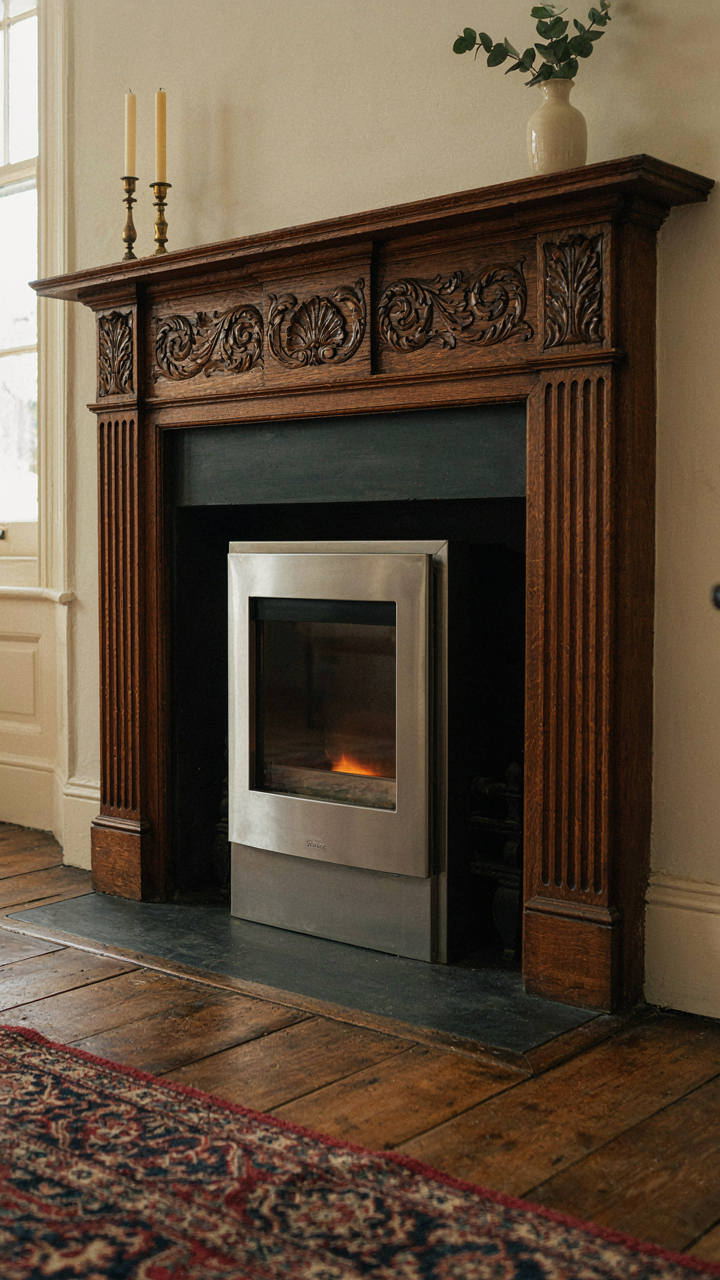
You want this section because you’re worried your fireplace will look dated. Here’s what actually happened: gas burners arrived in the 1870s and forced a design crisis. Victorian architects couldn’t ignore efficiency. A coal fireplace wasted seventy percent of its heat up the chimney. Gas burned cleaner, hotter, and required different flue mechanics. The mantel stayed ornate, but the firebox internals transformed completely.

Tile work exploded during this transition because it masked the mechanical changes happening behind the scenes. Decorative tiling on the surround became a status signal that you owned modern technology wrapped in traditional aesthetics. Carved mantels stayed massive and detailed, but they now sat above functional gas grates instead of open coal fires. The visual language stayed Victorian while the infrastructure became contemporary.
Machines Versus The Craftsman’s Hand
The economy is the operative field here, and Victorian fireplaces hit the supply-side shock that defines every design market: when production scales, individuality vanishes or gets rebranded as luxury. Early Victorian mantels came from stonemasons and woodcarvers working custom commissions. By the 1880s, factories pumped out cast stone and machine-cut timber pieces that approximated handwork without the cost. Most homeowners couldn’t tell the difference. The ones who could paid triple.
Common advice says mass production killed craftsmanship. That’s incomplete. Mass production killed affordability of bespoke work, which forced it upmarket into a status category where it became more valuable, not less. A truly carved mantel by hand meant you had money and taste. A factory reproduction meant you had taste but not money. This stratification still drives fireplace restoration decisions today. When restoring, you’re either replicating factory standards or commissioning new carved work, and the choice determines your budget by a factor of five.
The Vintage Fireplace Restoration Protocol
Knowing What You Actually Have
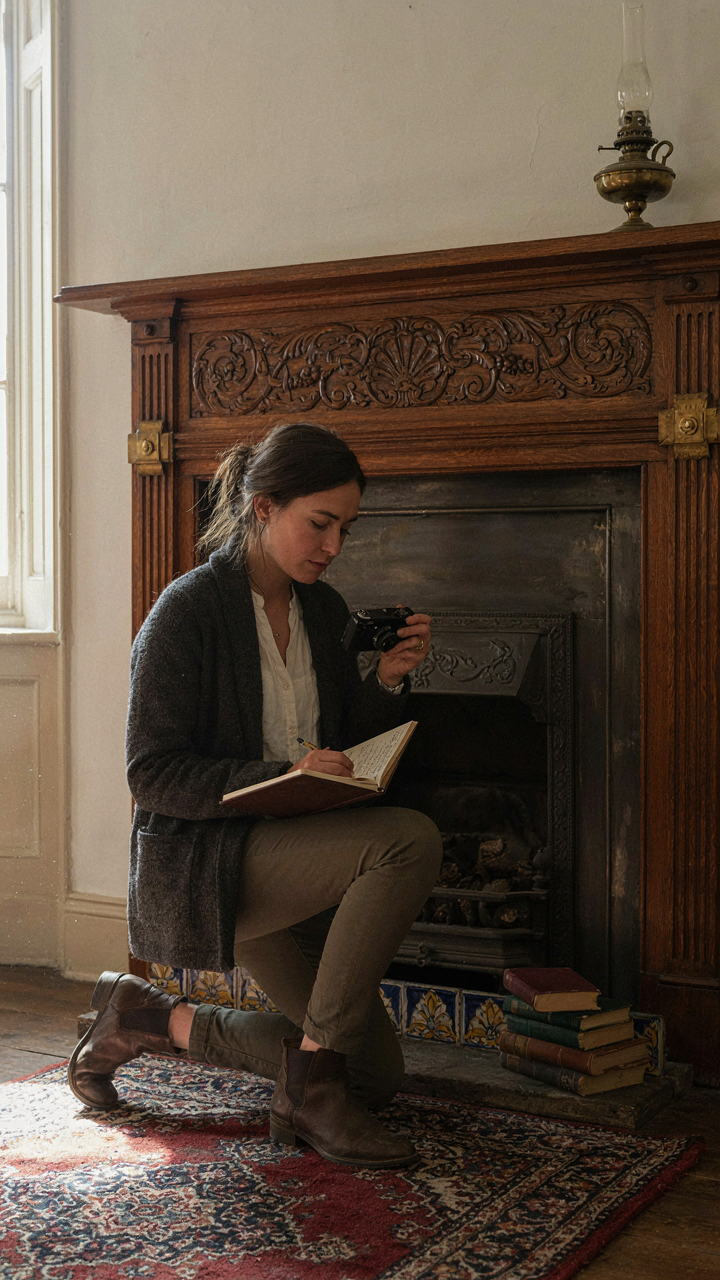
You want to restore this fireplace because it signals taste and investment. The real question is whether you’re restoring an original or a later modification. Victorian fireplaces operate on a triage system borrowed from archaeology: identify the artifact’s true age, assess what’s been altered, and decide what stays. Strip back the paint or soot and look at the construction method. Hand-carved mantels show tool marks specific to their decade. Mass-produced tiles have distinct pressing patterns. Cast iron surrounds reveal their manufacture date through joint technique.

Most restoration advice skips the brutal part: your fireplace might be a hybrid. The mantel could be original 1880s while the tiles are 1920s replacements. The hearth might be concrete poured over original slate. You need to document this before touching anything. Photograph each element close-up. Note what’s original, what’s been replaced, what’s damaged beyond repair. This inventory determines your actual restoration scope, not sentiment about what you think belongs there.
Finding The Right Materials
Authentic materials are non-negotiable because anything else becomes a lie you live with. You cannot source random Victorian tiles from big-box suppliers and call it restoration. The clay body, glaze thickness, and firing temperature differ. Original Minton, Wedgwood, or Encaustic tiles have specific characteristics. The color doesn’t fade evenly. The glaze has micro-crazing patterns. Cheap reproductions look flat and new beside real period pieces.
Start with salvage specialists who actually document provenance, not online marketplaces. Contact local historical societies for supplier lists. Auction houses that specialize in architectural salvage often have inventory records. For carved stone or marble mantels, find stonemasons experienced in Victorian-era work. For cast iron surrounds, specialized foundries can create accurate reproductions from original molds if you source them correctly. The cost difference between authentic and fake compounds over time because fake ages poorly.
Beyond Instagram: The Practicality Of Victorian Fireplaces Today
The Heat Loss You’re Not Calculating
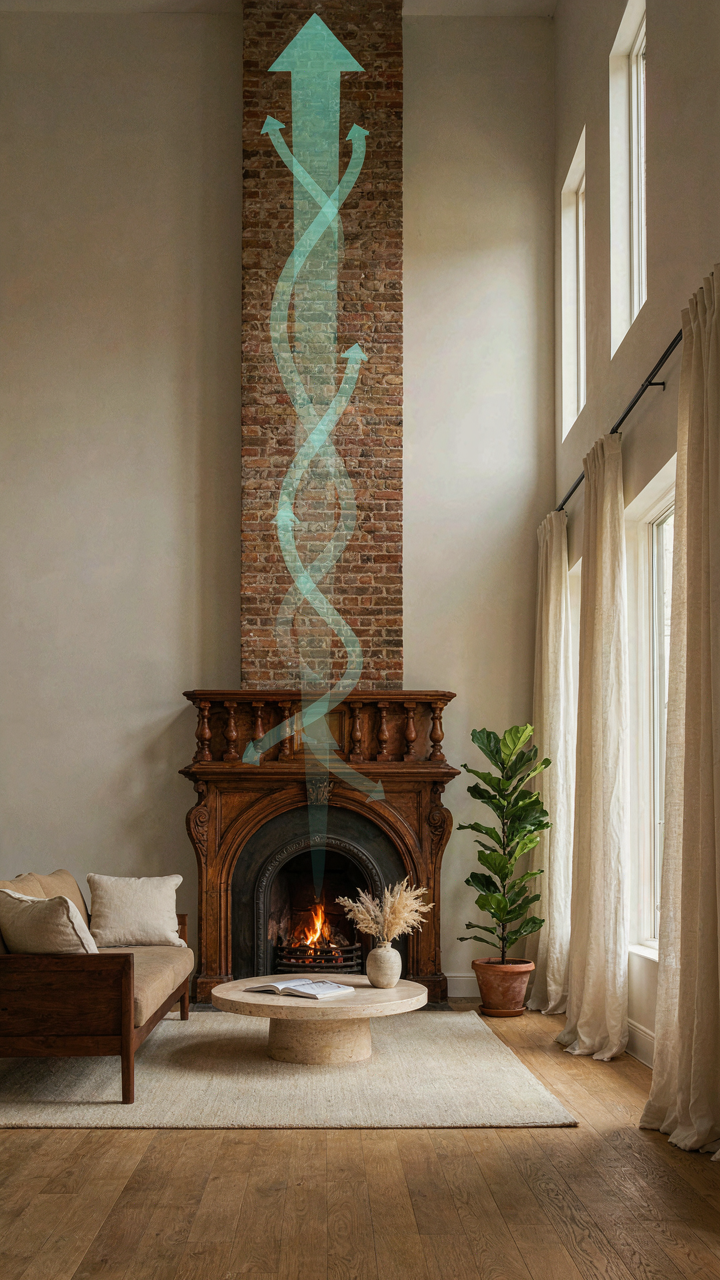
You want a Victorian fireplace because it signals taste and history to people who visit. Here’s what matters instead: thermodynamics governs whether this investment wastes money or works. In physics, efficiency means output divided by input. A Victorian fireplace’s efficiency is the heat delivered to the room divided by the energy released up the chimney. Most Victorian fireplaces operate at 10 to 15 percent efficiency. The remaining 85 to 90 percent exits through the flue.

The problem compounds in modern homes. Victorian fireplaces were designed for houses with minimal insulation and constant air leaks. They drew makeup air from cracks and gaps, which made them function as intended. Today’s weatherstripped windows and sealed walls create a different dynamic. A fireplace that pulls 15,000 cubic feet of conditioned air per hour out of your home forces your heating or cooling system to work harder. During heating season, you’re literally paying to expel your heat up the chimney while your furnace compensates. Retrofitting with a damper, glass doors, and gaskets improves this significantly, but a Victorian fireplace will never match a sealed heating system. The choice isn’t between Victorian and modern. It’s between a statement piece and efficiency.
Pairing With Central Systems, Not Replacing Them
Conventional wisdom says add a Victorian fireplace for “backup heat” or “ambiance.” That’s incomplete thinking. The real play is strategic layering: keep your central system as the primary heat source, then position the fireplace as a zone heater for specific rooms. This works because Victorian fireplaces radiate heat effectively within a 15 to 20-foot radius when properly maintained and fitted with fireplace inserts or heat exchangers that capture and distribute warm air.
Integration requires one specific move: install a blower fan system connected to ducts that channel heat from the fireplace into adjacent rooms or back to the furnace return. This is already done in high-end Victorian restorations. You’re not relying on the fireplace alone. You’re capturing its waste heat that would otherwise vent away. A damper that closes when the fireplace isn’t in use prevents reverse drafting and conditioned air loss. The central system remains the baseline. The fireplace becomes a supplement that reduces runtime on peak demand days. This dual-source approach preserves both comfort and efficiency without the guilt.
The Victorian Interiors Mindset: Fireplace As Central Command
How The Room Actually Organizes Around Heat
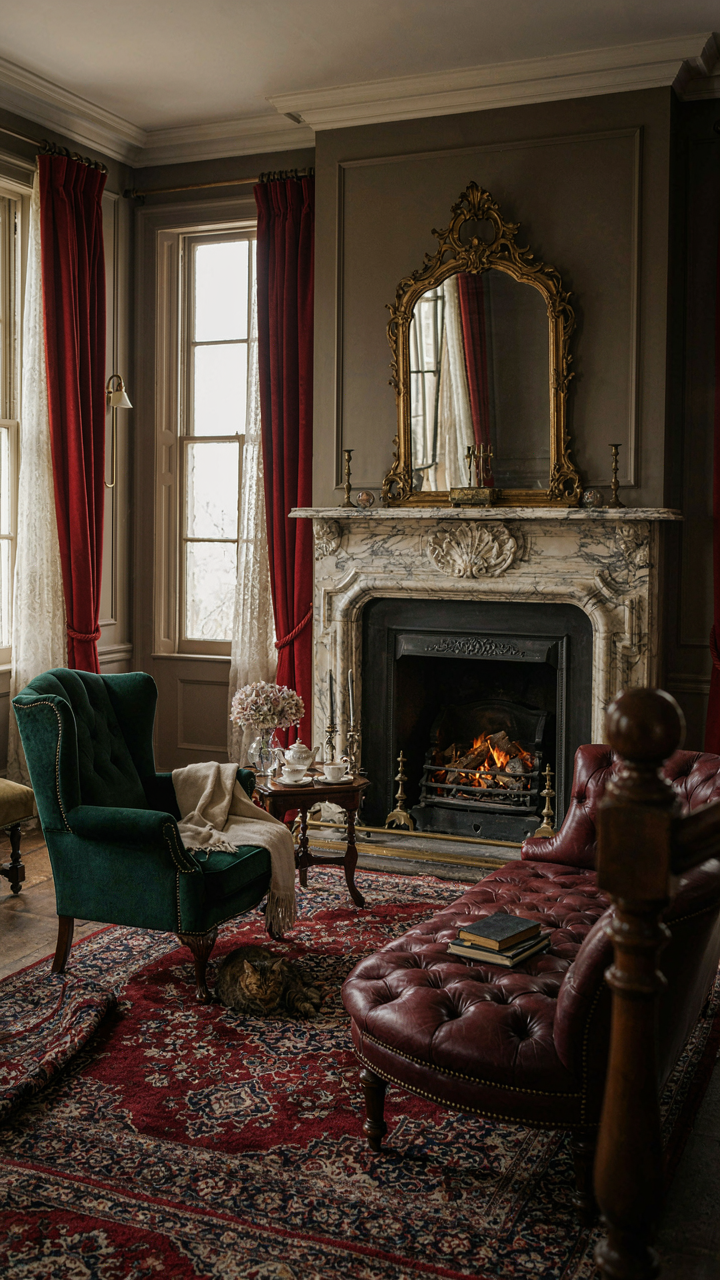
You want the fireplace to feel important because you know it signals wealth and taste. Here’s what actually happens: in cybernetics terms, the fireplace functions as a feedback loop controller. The room’s thermal mass, air circulation, and human positioning all respond to where the heat originates. Victorians understood this without the jargon. They built mantels at precise heights, positioned seating in semicircles, and used tile strategically to absorb and radiate heat in patterns that shaped how people moved through the space.

This isn’t decoration disguising function. The mantel height, the hearth depth, the tile material selection all dictate where the eye travels and where bodies sit. A carved mantel at seven feet changes sightlines differently than one at six and a half feet. Tile conducts or insulates based on density. These choices create feedback loops that either stabilize the room’s use or destabilize it. Most people add a fireplace and hope it works. The Victorian approach was to design the fireplace first, then let everything else align to it.
The Real Cost Of Each Design Choice
Every decision about tile pattern, mantel carving complexity, or hearth material represents abandonment of a different option. Economics calls this opportunity cost, and design advice never names it plainly. A limestone mantel with deep relief carving demands professional installation, takes months to cure, and commits you to a heating system that won’t change for decades. A simpler stone or cast iron alternative frees capital and flexibility for other rooms. The Victorian era saw this tradeoff clearly. Wealthier households invested heavily in fireplace permanence. Working-class Victorians used simpler tiles and stock mantels.
The tile choice creates a second layer of cost. Hand-painted Victorian tiles run 15 to 30 pounds per tile in historical replicas. Mass-produced period-style tiles cost a fraction of that. Both age the same way. Both require the same grout maintenance. But the decision to buy premium versus reproduction determines whether that fireplace becomes an asset that appreciates in perceived value or a period detail that blends into the background. Calculate what you’re paying for each visible difference, then decide if that difference justifies the expense for your actual use of the room.
Avoiding The “Period Piece” Trap: True Vintage Fireplace Ideas

When The Fireplace Actually Works
You want people to think your home has history without admitting you bought it last year. The real mechanism at play here is utility masquerading as aesthetics. Victorian fireplaces functioned first, looked good second. The tile and carved mantel caught heat and directed it into the room. Strip away that purpose and you have decoration pretending to be design.

Start by understanding heat draw. A Victorian fireplace wasn’t ornamental because Victorians were sentimental. The depth of the firebox, the angle of the throat, the flue proportions—these controlled whether heat actually entered your living space or vanished up the chimney. When you restore or replicate one, those dimensions matter more than the marble veining. Skip this and you end up with a beautiful object that radiates zero warmth.
Honest Wear Beats Artificial Patina
The common advice tells you to “add character” with distressing techniques and faux-finish treatments. That’s backward. Real Victorian fireplaces show their age because they functioned for 150 years, not because someone watched a YouTube tutorial.
- Surface Variation Without Uniformity: Authentic tile and stone developed uneven color from soot, heat exposure, and cleaning methods that changed over decades. Artificial aging makes every mark look applied on the same day.
- Grout Lines That Tell A Story: Original grouting shows settlement cracks, repointing attempts, and inconsistent joint depth. Perfectly uniform grout reads as new construction trying to look old.
- Mantel Wood With Legitimate Damage: Carved details wear differently based on how often hands touched them and where heat hit hardest. Damage clusters in high-traffic zones, not randomly scattered.
- Tile Chips That Follow Function: Broken corners and edges happen where pokers struck, where ash fell repeatedly, where temperature swings cracked glaze. Chipping concentrated near the firebox opening means something actual occurred.
- Paint Layers From Multiple Eras: Victorian fireplaces got repainted when style shifted or when smoke staining got too visible. Stripping back to an earlier finish, rather than creating one synthetic patina, respects actual use cycles.
Accept that original materials carry legitimate imperfection. A Victorian fireplace that’s never been restored shows exactly where it lived—which rooms got used, which seasons hit hardest, which repairs failed first. Replicate that specificity instead of inventing generic “distress.” Source reclaimed tile and mantel components from fireplaces that actually functioned, not reproduction stock designed to look old. The cost difference is smaller than you think and the result reads true.
Why Your Victorian Fireplace Isn’t Working For You
You’re Decorating A System, Not A Statement
You want the fireplace to feel like it belongs in a period home, but you’re treating it as a status object instead of a functional system. Victorian fireplaces weren’t designed to look good—they were engineered to heat rooms efficiently while managing smoke and draft. The tile, mantel, and proportions all served that mechanical reality. When you ignore how the system actually works, every aesthetic choice feels off.
The original intent was thermal and practical. Victorians sized fireplace openings relative to room volume and chimney draw. They chose materials like tile because it conducted and retained heat. The carved mantel sat at a specific height to avoid radiant heat damage to the wall above. Aesthetic choices followed function, not the reverse. Copy the look without understanding this sequence and you’ll end up with something that photographs well but feels staged.
Treating Components Like They Stand Alone
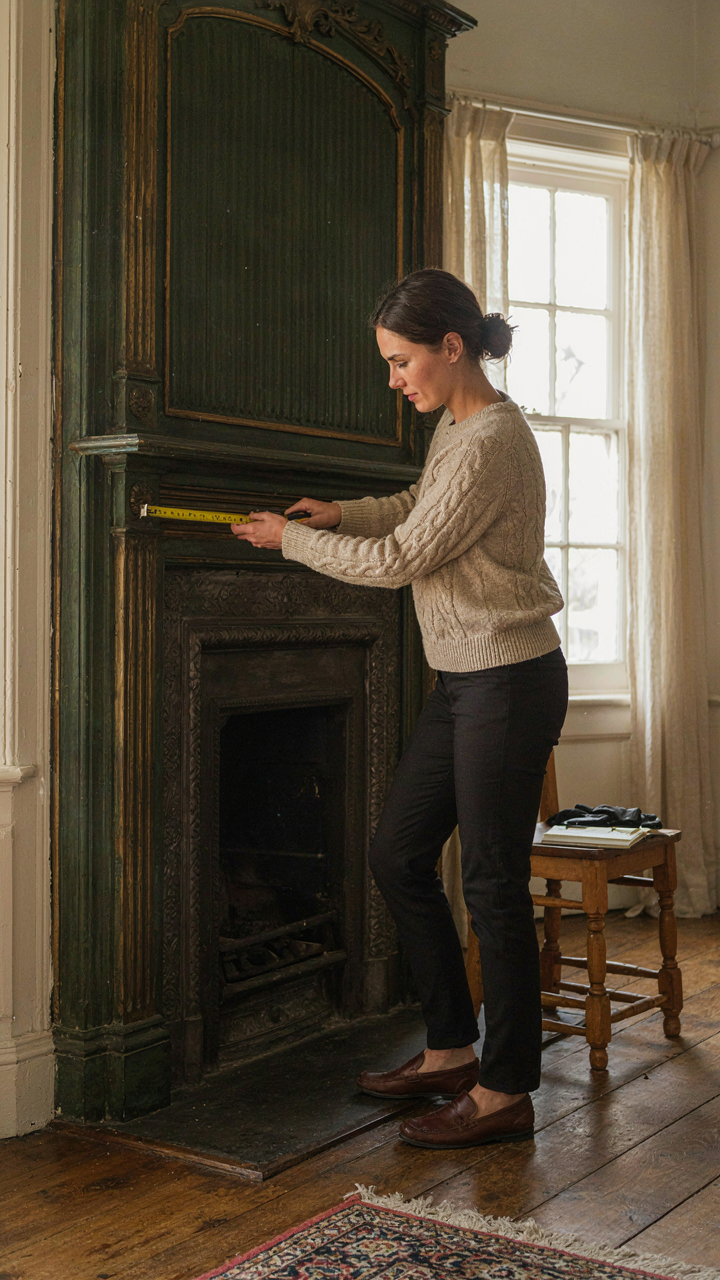
Systems thinking applies here, and most people miss it entirely. A Victorian fireplace is an assembly where tile, mantel, surround, hearth, and chimney proportions all depend on each other. You can’t optimize one piece without breaking the others. The common advice says “match your tile to your mantel style”—but that’s backwards. Both depend on the room’s scale and the fireplace opening’s dimensions first.
The mantel shouldn’t float above a surround that doesn’t support its visual weight. The tile doesn’t work as accent if it contradicts the mantel’s material palette or the surround’s structural logic. Start by measuring your actual opening, the ceiling height, and the room dimensions. Then choose proportions that align with those constraints. Only after establishing that framework do you select specific materials. This inverts how most people approach it, which is why their fireplaces feel borrowed rather than integrated.
The Real Problem Isn’t Finding A Victorian Fireplace; It’s Your Inability To See Beyond Surface-level Aesthetics
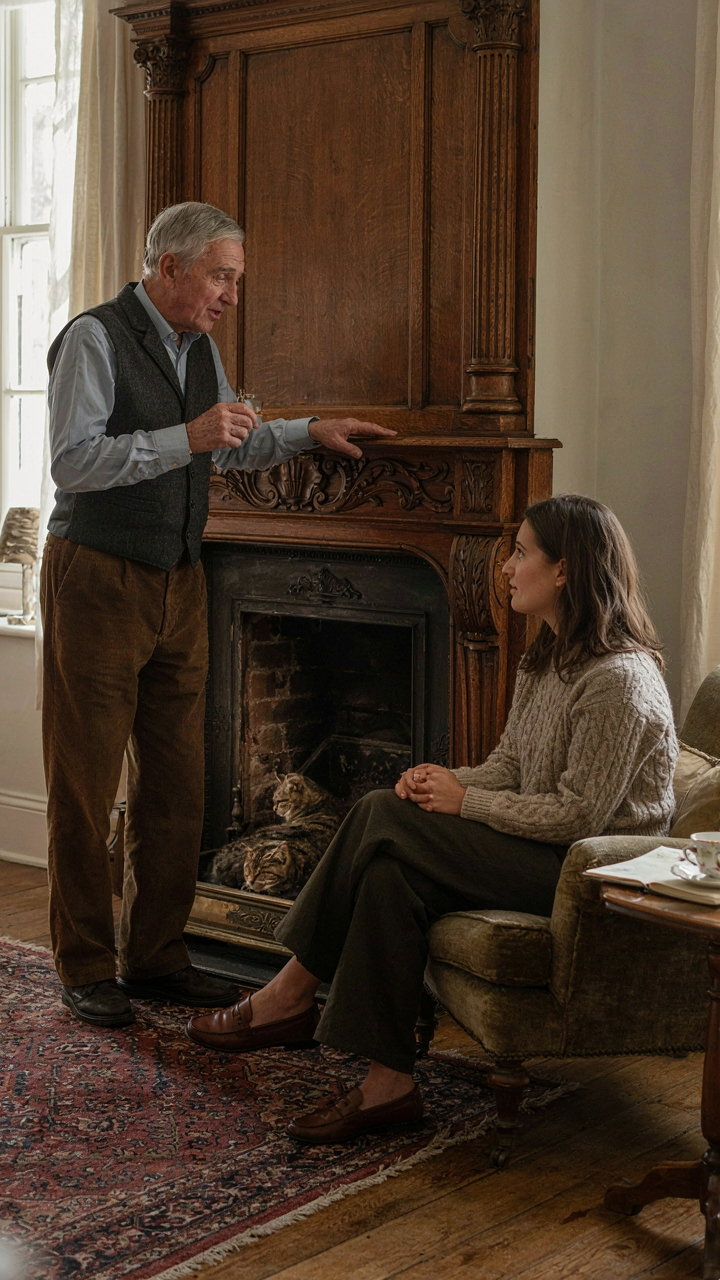
You chase tile patterns and carved mantels because they’re easy to copy. Real design lives in the tension between what you inherited and what you actually need. Stop collecting aesthetic references. Walk into three Victorian homes this month and ask the owners what broke, what they’d change, and why they kept it. That single conversation beats a thousand Pinterest boards. Your fireplace becomes timeless when it solves a problem, not just looks like one.



