
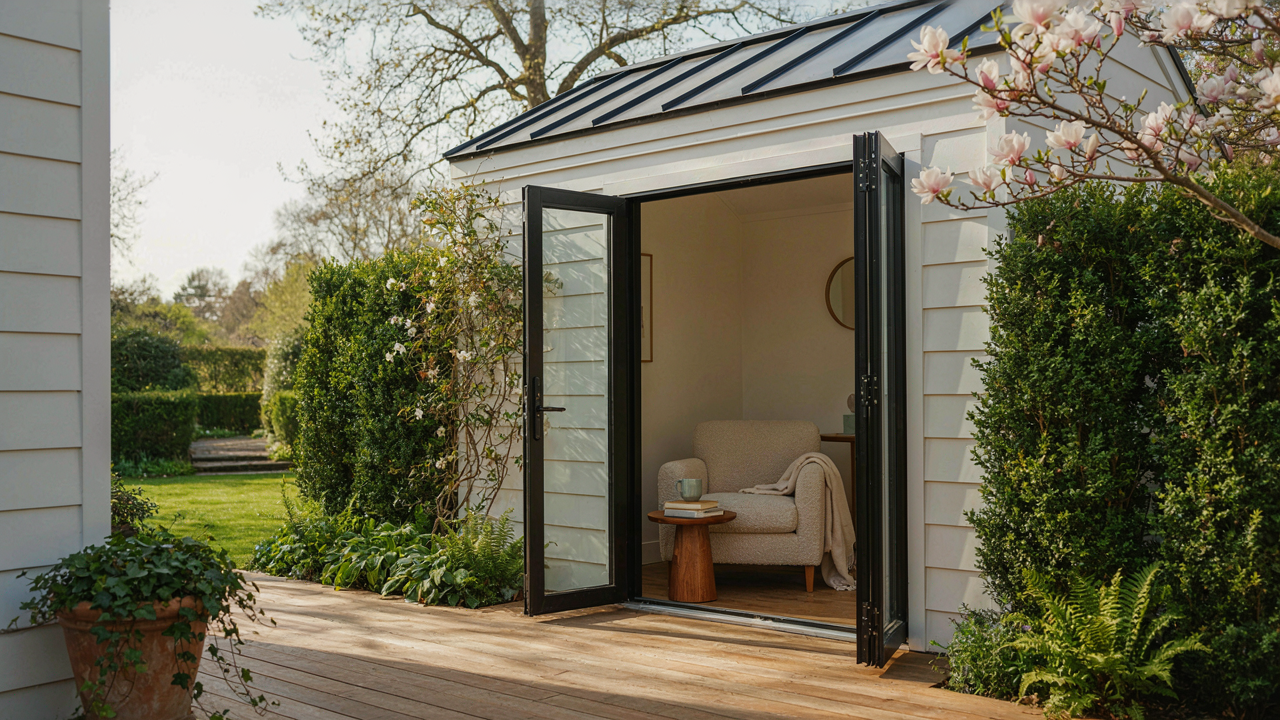
The Myth Of The Silent Sanctuary: Why Your She Shed Fails
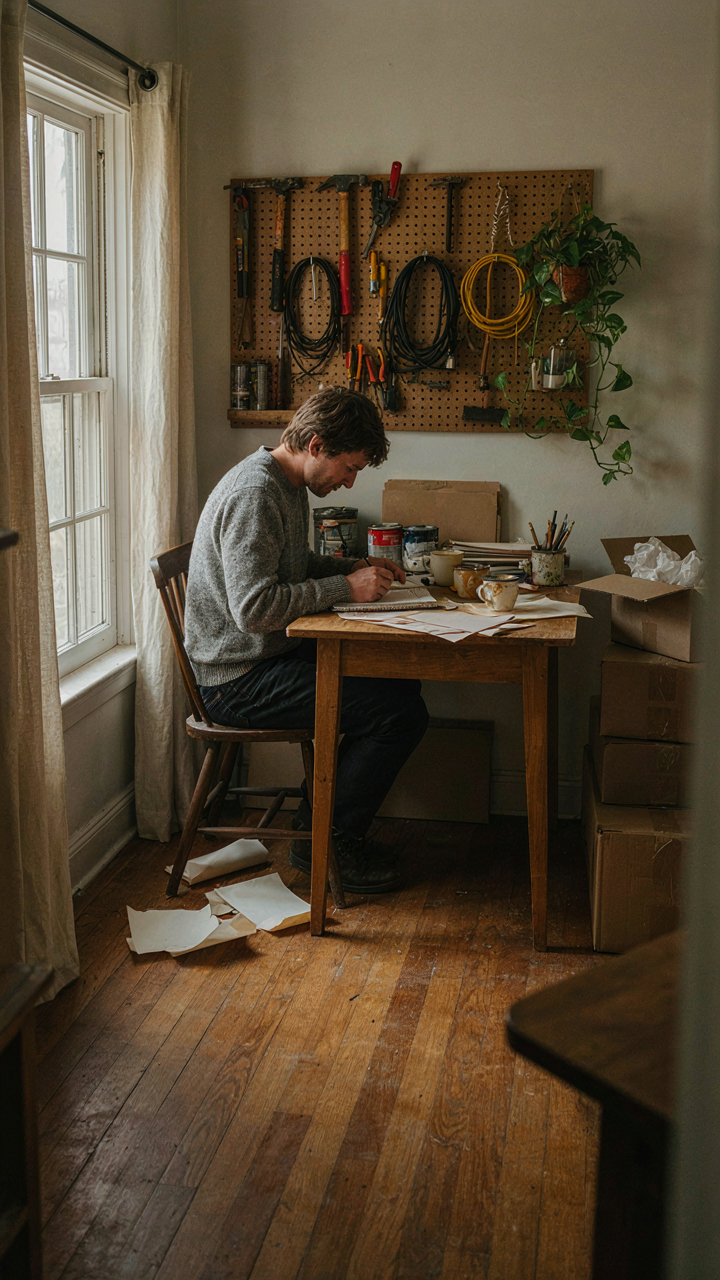
Distractions Live In Your Head, Not Your Address
You want the she shed to fix your focus problem so you don’t have to admit your actual work isn’t structured. The mechanism is simple: location is a variable, but your internal state is the constant. Moving to a detached structure changes nothing if you bring the same attention patterns with you. The shed becomes a place where you sit with the same fractured focus, just surrounded by better lighting and fewer people watching you fail.
Most people treat the she shed like a reset button. They think the act of leaving the house solves distraction. It doesn’t. Distractions aren’t created by proximity to your family or your kitchen. They’re created by work that lacks clear boundaries, unclear next steps, or tasks you genuinely don’t want to do. The shed amplifies whatever mental state you already have. If you’re avoiding something, the isolation makes that avoidance louder.
What Quiet Actually Means
A quiet work day isn’t the absence of noise. It’s the absence of context switching. The real definition is unbroken attention on a single outcome for a defined window. Most people confuse silence with focus and then wonder why a soundproof she shed didn’t make them productive. You can have complete silence and zero focus if your brain is jumping between five different projects.
The she shed works only when you define what “quiet” means for your specific work type. For deep writing or coding, it might mean no notifications and no interruptions. For administrative tasks, it might mean working through a checklist without context shifts. The structure you bring to the shed matters more than the shed itself. Set a timer, identify one outcome, remove the ability to switch tasks mid-session. That’s what quiet produces. The location is secondary.
Beyond Pinterest: Function Over Fluff In Your Shed Home Office
Your Spine Will Tell You If Your Chair Works
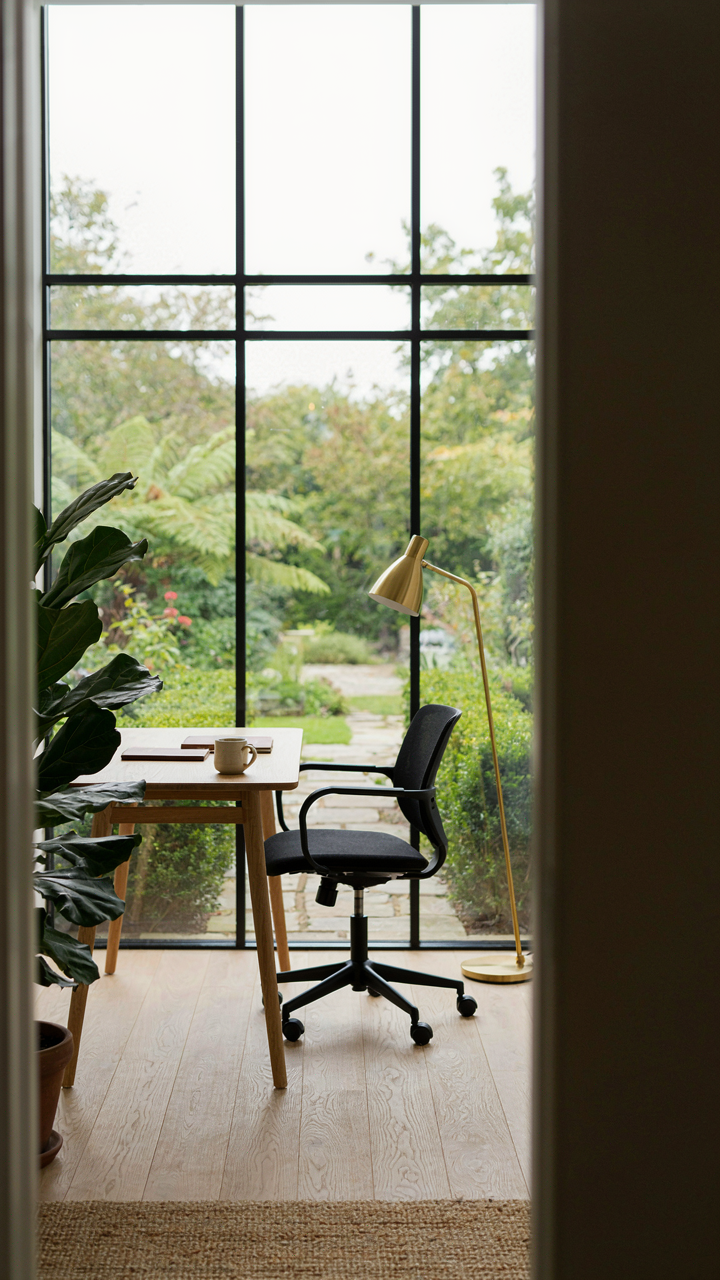
You want a shed office that looks intentional because you’re afraid it signals failure—that working from a detached structure means you couldn’t land a real desk job. Here’s what actually matters: your body is a feedback system. Ergonomics isn’t about comfort—it’s about removing the physiological noise that kills focus. A chair that doesn’t support your lumbar spine forces your nervous system to work against gravity instead of toward your work. Within three hours, cortisol rises, decision fatigue compounds, and you blame the shed instead of the setup.

Your desk height, monitor distance, and seat angle determine whether you sustain focus for eight hours or tap out after four. Measure from elbow to desk surface—should be 90 degrees when sitting. Monitor sits at eye level, 24 to 30 inches away. Your feet plant flat on the floor or footrest, not dangling. These aren’t suggestions. They’re load-bearing requirements. Test the setup for a full work day. If your lower back aches by 5 PM, the chair is wrong, not the space.
Layout That Routes Your Movement
Most advice says arrange your shed office “however feels right.” That’s how you end up with your reference materials three steps from your desk and your power outlet behind a shelf. Workflow design comes from architecture, not interior styling—specifically the concept of adjacency. Proximity determines friction. What you touch every 30 minutes lives within arm’s reach. What you access twice a week goes six feet away. What’s seasonal goes overhead or deep storage.
Map your actual work loop for one week. Where does your hand reach first? Where’s your second stop? Your third? Build that path. Put your active reference materials on a side table within rotation distance of your chair. Outlet placement matters more than aesthetics—no extension cords stretched across your workspace. Your trash, water bottle, and documents follow the same principle. Friction kills momentum faster than a bad chair. Reduce steps. Eliminate reach. Your shed office succeeds when you never stand up asking “where is this?”
The Isolation Protocol: Building A She Shed Office For Deep Work
Sound Deadening Basics
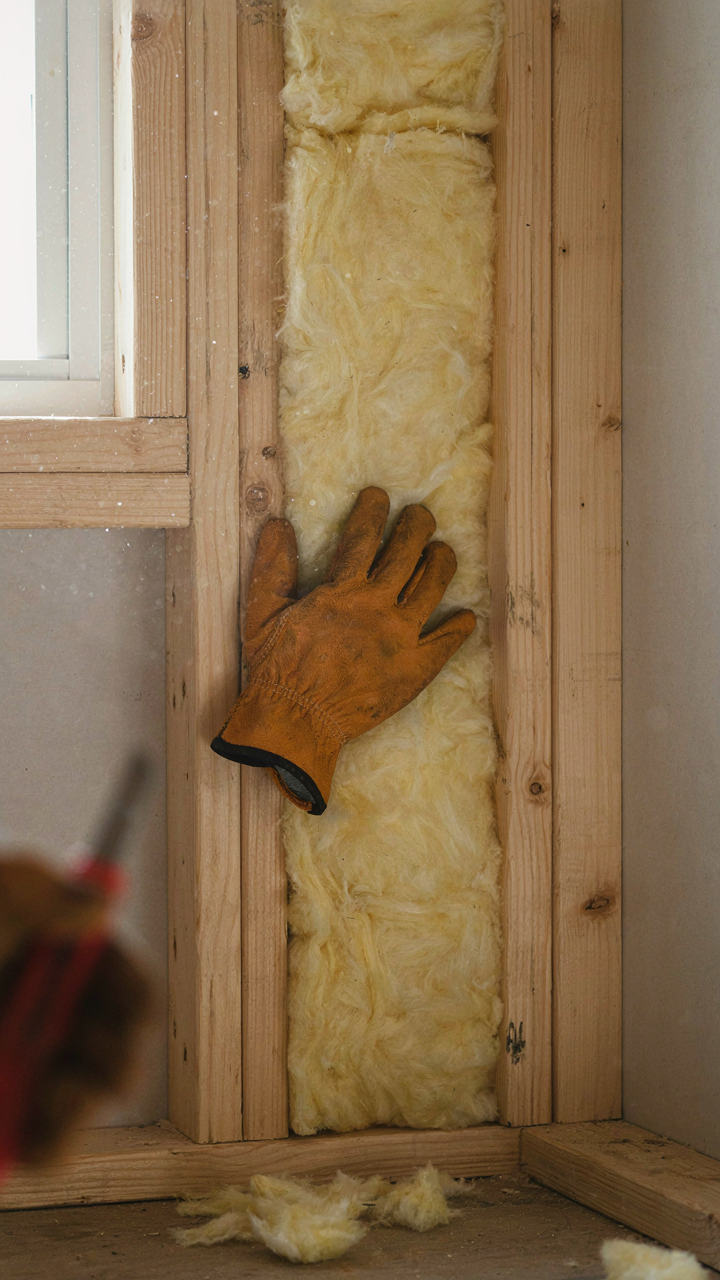
You want people to respect your work time without actually asking them to. That’s the real reason soundproofing matters. Acoustic isolation works like a physical contract between you and distraction. Fiberglass batts and mineral wool absorb sound waves before they enter or escape your space. Install these in walls during construction or retrofit them behind drywall panels. Mass and air gaps do the work. A single layer of drywall won’t stop sound. Two layers with a staggered frame and insulation between them cuts transmission significantly.

The cheapest effective addition is weatherstripping around doors and windows. Sound leaks through gaps like water finds cracks. Acoustic panels on interior walls handle mid to high frequencies. Bass frequencies need mass and distance, so position your she shed away from shared walls when possible. Door seals matter more than most people admit. A solid core or hollow core door filled with insulation performs better than a standard interior door.
Boundary Setting That Actually Works
Most people fail here because they think boundaries are soft. They’re not. Digital boundaries are harder to enforce than physical ones, which is why you set both first. Turn off notifications during work blocks. This isn’t a preference. It’s a operating system rule. Your phone defaults to interrupt mode. You must manually override it.
Physical boundaries mean people see a closed door and don’t open it. They mean you’re not visible from the main house. They mean your she shed doesn’t have a kitchen setup that invites someone to “quickly grab coffee.” The clearest boundary is the one people see before they decide to interrupt you. Write your work hours on a small sign. Post it outside. This removes the social friction of “interrupting” and replaces it with clear protocol. Your family knows when you’re working and when you’re not.
The She Shed Interior Design: Optimizing Cognitive Performance

Light Timing Controls Your Actual Work Output
You want this space to feel productive because you’re afraid working from home makes you look unfocused. Here’s what matters: circadian rhythm isn’t motivational poetry. It’s a biological protocol. Your cortisol peaks at sunrise and your melatonin rises at dusk. Misalign your lighting with this cycle, and your focus doesn’t just feel worse, it objectively tanks. The mechanism is suppression of melatonin during peak work hours through blue-spectrum light exposure.

Install full-spectrum LED panels rated 4000K to 5000K on the north or east wall of your she shed. Position them to eliminate shadows on your work surface, not to create ambiance. During winter months when natural light drops, run these panels from 6 AM to 2 PM at full brightness. By 3 PM, shift to warmer 2700K lighting to signal your body toward evening mode. This isn’t decoration. It’s a work protocol you execute daily.
Emptiness Sharpens Attention, Not Serenity
The minimalism advice floating around is half correct and half wrong. People say empty rooms feel calm. That’s not the mechanism. An uncluttered visual field reduces cognitive load, which frees working memory for actual tasks. Your brain processes every object in your peripheral vision whether you notice or not. Remove the excess and you’ve added processing power.
This means: one desk, one chair, one lamp, closed storage for supplies. The she shed office isn’t a showroom. It’s a tool optimized for output. Paint walls a neutral single tone, matte finish. Remove wall art, posters, and decorative objects entirely. Keep only items that serve function. When your environment demands zero interpretive effort, your mind stays allocated to the work itself.
The Unspoken Cost: Avoiding “Garden Office Ideas” Traps
Calculate True ROI Beyond Initial Build
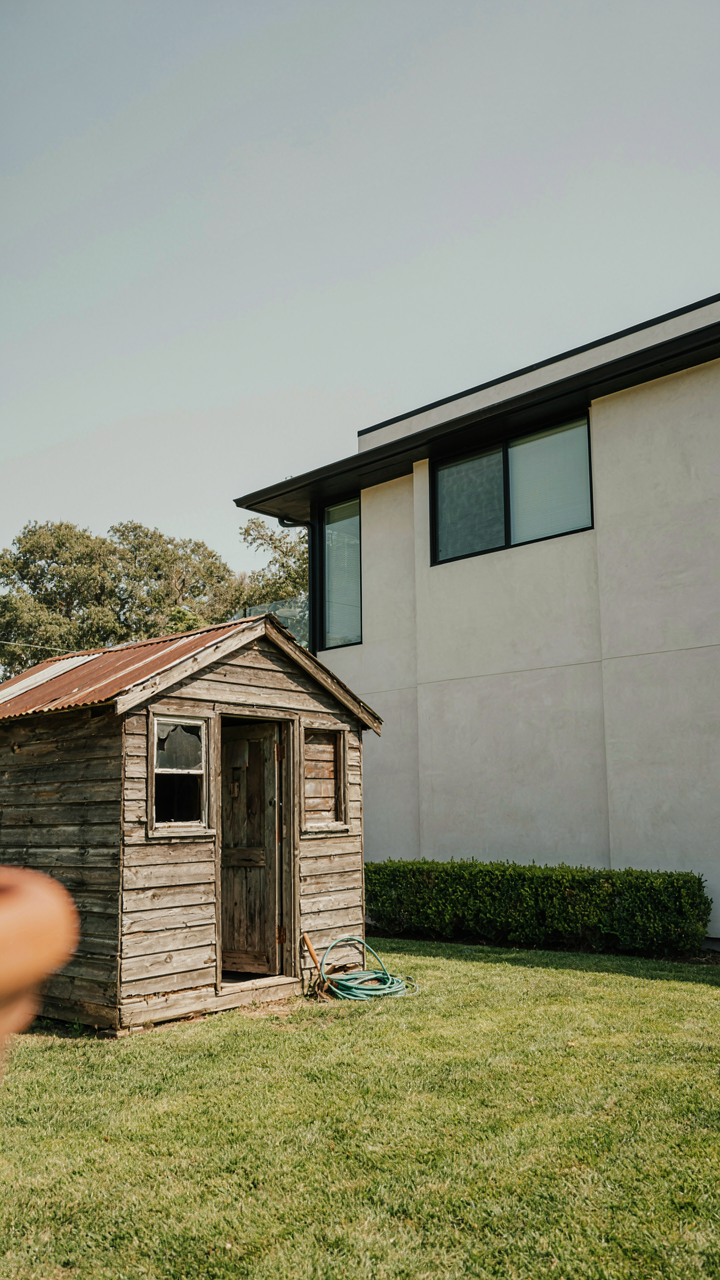
You’re mentally comparing the shed office cost to your annual rent, telling yourself it pays for itself in focus gained. That math doesn’t work. Think in terms of depreciation from economics: your structure loses value the moment you finish it, and that loss accelerates based on maintenance neglect and market conditions in your area. A 200-square-foot she shed office costs between 3,000 and 15,000 dollars to build depending on finishes and foundation work, but the real expense compounds annually through wear.

Most people isolate the build cost and stop calculating. Heating a detached structure through winter costs more per square foot than your main home because you’re conditioning dead air with no thermal advantage from adjacent living spaces. Cooling in summer follows the same pattern. Roof repairs, siding maintenance, and flooring replacement don’t get cheaper over time. You need to project fifteen-year costs, not first-year cash flow, to know if this workspace decision actually serves your financial reality.
Beware Of Hidden Maintenance And Utility Expenses
Common advice says “put a she shed office in the garden and you’ll save money on commuting.” That ignores the infrastructure problem nobody names: you now own and maintain a second building. HVAC systems in detached structures fail faster because they run harder. Electrical wiring exposed to temperature swings degrades quicker than interior office wiring. Moisture control becomes a permanent project because ground-level structures absorb water differently than elevated homes.
Run the actual numbers before committing. A single HVAC replacement costs 4,000 to 8,000 dollars. Roof repairs on a 200-square-foot structure still cost 1,500 to 3,000 dollars. Weatherproofing fails on a cycle, not a one-time fix. If your she shed office sits empty three months of the year because the space doesn’t justify the utility draw, that’s wasted money you can’t recover. Document every expense quarterly for one year, then multiply by fifteen and subtract that total from your perceived productivity gain.
Your She Shed Office As A “Thought Reactor”: Applying Cybernetics

Design Feedback Loops Into Your Space
You want to believe your environment doesn’t control your output, but it does. Cybernetics, the study of control systems and feedback loops, reveals how information moves through a system to maintain or change state. Your she shed office is that system. Most people treat their workspace as static scenery. The real move is designing it to feed data back to you constantly so you self-correct before distraction compounds. The loop runs like this: you work, the space responds, you adjust, work improves.

The physical layout should create micro-feedback. Position your desk so peripheral vision catches incomplete tasks or time signals without turning your head. A visible timer creates one feedback loop. An organized surface that forces you to notice clutter creates another. Stack reference materials where they demand attention proportional to their importance. The mechanism here isn’t inspiration or motivation. It’s information density. Your shed processes what you feed it, and you process what the shed feeds back. Close the loop by checking one variable every 25 minutes: Am I in the same posture? Have I opened a new tab? Did the light shift? React immediately.
Separate Inputs From Outputs Ruthlessly
Know what enters your shed and what leaves it. Inputs are the raw materials: books, notes, reference materials, tools, devices. Outputs are the work itself: writing, code, designs, decisions. Most people contaminate this boundary by treating inputs and outputs as interchangeable. You keep your phone on the desk where inputs blur into outputs. You scroll research and call it work. The optimal setup segregates them physically.
Create three zones: input staging, active work, output staging. Input staging is where reference material sits before you pull it into focus. Active work is the cleared desk with only the current task visible. Output staging is where finished work moves before leaving the shed. This isn’t about aesthetics. It’s about preventing your brain from context-switching. Your visual field should reflect what phase you’re in, and your eyes should confirm that immediately. Move one item out of your active zone every time you complete a task segment. That action is the protocol.
Powering Your Productivity: Essential Shed Office Utilities

Internet That Doesn’t Betray You
You want reliable internet because interruptions destroy momentum faster than anything else, and momentum is what separates actual work from performative busy-ness. Internet reliability maps onto signal strength in telecommunications: you need either a direct line or consistent amplification, no middle ground. Most people default to wireless because it’s convenient, then blame their connection when their upload fails mid-meeting.
- Ethernet cable (wired connection): Direct line from modem to workstation eliminates interference. Speeds remain stable regardless of distance. Best option if your shed is close enough to run cable from your router or modem.
- Mesh WiFi system: Multiple nodes eliminate dead zones. Covers larger shed footprints reliably. More expensive upfront but removes the need for physical cable runs through your yard.
- WiFi extender or booster: Budget option that amplifies existing signal. Works adequately for small sheds within 50 feet of your main router. Performance degrades with distance and obstacles.
- Mobile hotspot (4G/5G backup): Secondary connection for outages. Keeps you working when primary internet fails. Set it up before you need it, not during a crisis call.
- Outdoor antenna: Boosts weak external signals into your shed. Requires clear line-of-sight to tower. Useful if your shed sits far from the main house or in a coverage dead zone.

Test your actual speed during peak hours before declaring victory. A wired connection outperforms wireless in every measurable way, but only if the cable run is practical. If you’re running wireless, position your router at shed height and eliminate metal obstacles between router and workspace.
Climate Control Keeps Your Body Producing
Your shed’s temperature doesn’t matter to anyone but you, which is exactly why most people ignore it until their focus collapses. Sustained work requires stable internal body temperature. When your environment swings between hot and cold, your nervous system spends energy regulating instead of thinking.
In winter, a small space heater with a thermostat costs less than your monthly coffee budget and doubles your usable hours. Most sheds lack insulation, so heat escapes fast. In summer, a portable AC unit or even a strategic window fan eliminates the heat-induced fog that kills afternoon productivity. Humidity matters too: condensation on screens and surfaces corrodes equipment and makes wood swell. A simple dehumidifier in damp months prevents this decay. Layer your climate solutions instead of betting on one fix. Test what you have first. If you’re too cold or too hot during your first week, fix it immediately. Don’t wait three months to admit the space isn’t working.
Security For Your She Shed: Protecting Your Work (And Sanity)
Locks And Barriers That Actually Work
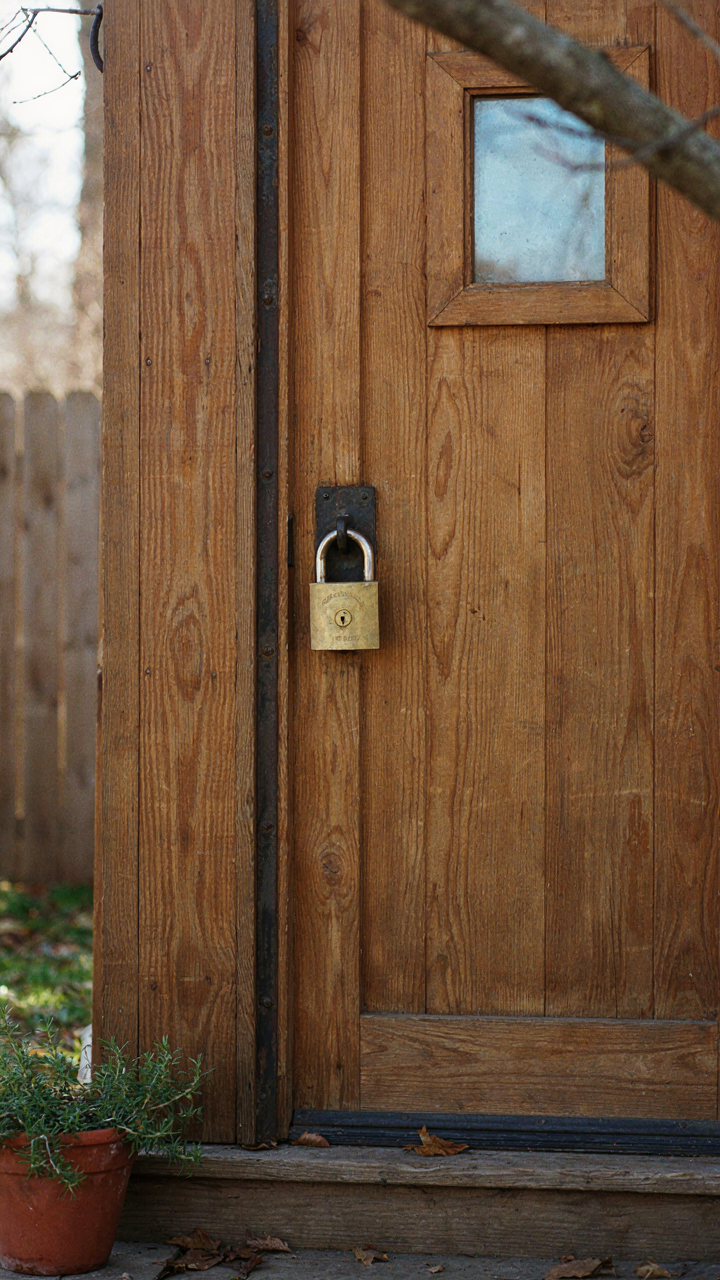
You want to feel safe out here because interruption kills focus, and focus is what you’re paying for with this space. Physical security isn’t about paranoia. It’s about friction. Every barrier you add forces someone to make a conscious choice to enter rather than drift in. A keyed deadbolt on the she shed door costs thirty dollars and stops casual intrusions cold. Motion-sensor lighting outside eliminates the “I didn’t see you there” excuse. If you share property lines, a fence or hedge creates psychological boundary. The mechanism is simple: visibility plus effort equals fewer interruptions.

Windows need treatment too. Frosted film or curtains prevent line-of-sight distraction from the outside world and stop people from seeing whether you’re “available.” If your she shed has windows facing a driveway or path, they become an open invitation. Standard blinds work. Thermal film serves double duty by insulating and blocking sight. Install them before you start working out there regularly. The goal is to make your space feel enclosed, not transparent.
Network Isolation And Data Containment
This section isn’t about fear of hackers scaling your she shed wall. It’s about preventing accidental data leaks and keeping work files separate from personal browsing. Think of your network architecture like compartmentalization in military operations. Your work devices should operate in a distinct segment. Use a separate Wi-Fi network for work equipment if your primary router supports guest networks. This prevents login credentials from being cached across devices meant for personal use. Don’t share passwords between your personal phone and work laptop. The she shed becomes a controlled environment only when you control what can access what.
Store sensitive work files locally on encrypted drives, not cloud services with loose permissions. Use your device’s built-in encryption: BitLocker on Windows, FileVault on Mac. Before you leave the she shed each day, log out of work accounts completely. Sounds tedious. It’s the single action that prevents backdoor access if someone takes your device. Require a strong password to wake your computer from sleep mode. This adds seconds of friction that compound into months of protection.
The Real ROI Of A She Shed: Beyond The Instagram Photo

Productivity Gains Over Aesthetic Appeal
You want proof that the she shed office is worth the investment because spending money on something that looks nice but produces nothing is expensive denial. The mechanism is friction removal. Economics calls this “transaction cost reduction”—every interruption, every shift in environment, every decision about where to work drains cognitive resources before you even start working. A dedicated she shed eliminates that friction entirely. You don’t negotiate with housemates about noise. You don’t relocate your setup. You sit down and work.

Track actual output, not feelings. Measure deep work hours per week before and after the shed. Count completed projects or deliverables. Monitor how many times you restart a task versus sustaining focus. These metrics reveal whether the space is doing its job or just looking good on video calls. The shed succeeds when your work hours compress and your output expands simultaneously.
Mental Friction Into Focus Metrics
Reduced mental friction converts directly into focus time. Psychology researchers call this “cognitive load”—the total mental effort required to execute a task. Every environmental distraction increases cognitive load before you produce anything. A she shed office isolates you from competing stimuli, which means your brain allocates processing power to actual work instead of filtering noise. The result is measurable: longer uninterrupted sessions and fewer attention resets per day.
Implement a baseline tracking system now. For two weeks, log your daily focus blocks, interruptions, and completed tasks from wherever you currently work. Then repeat the measurement for two weeks inside the she shed. Compare the numbers directly. If focus blocks increase by 30 percent or more and interruptions drop to near zero, the space justified itself. If nothing shifts, the problem isn’t the environment—it’s your work system.
The She Shed Is Not Your Escape; It Is Merely Another Canvas For Your Self-deception

You don’t need a better office. You need better work habits. The she shed becomes another procrastination device the moment you treat it like a motivational poster instead of a tool. Stop designing the perfect space and start designing the perfect output. Your environment doesn’t create discipline. You do. Build your shed office, sure, but know this: a beautiful room won’t save mediocre work.



