
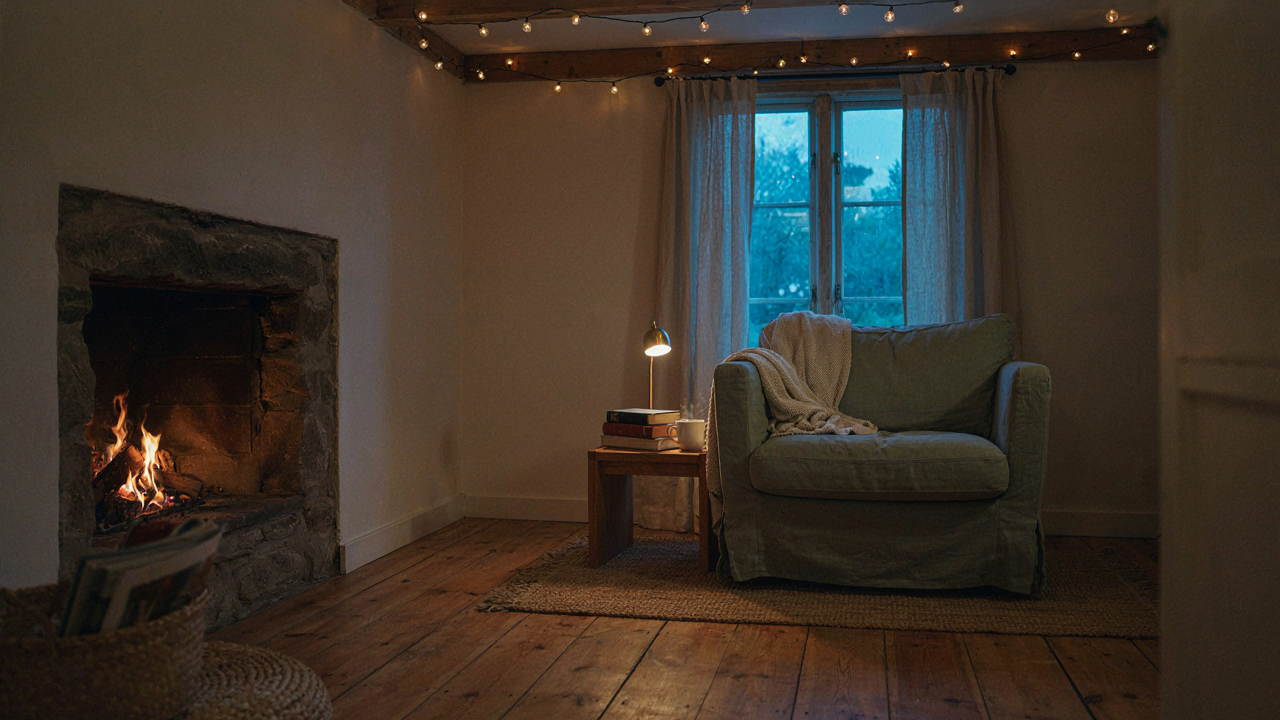
Why Your Current Shed Lighting Fails You (and How To Fix It)
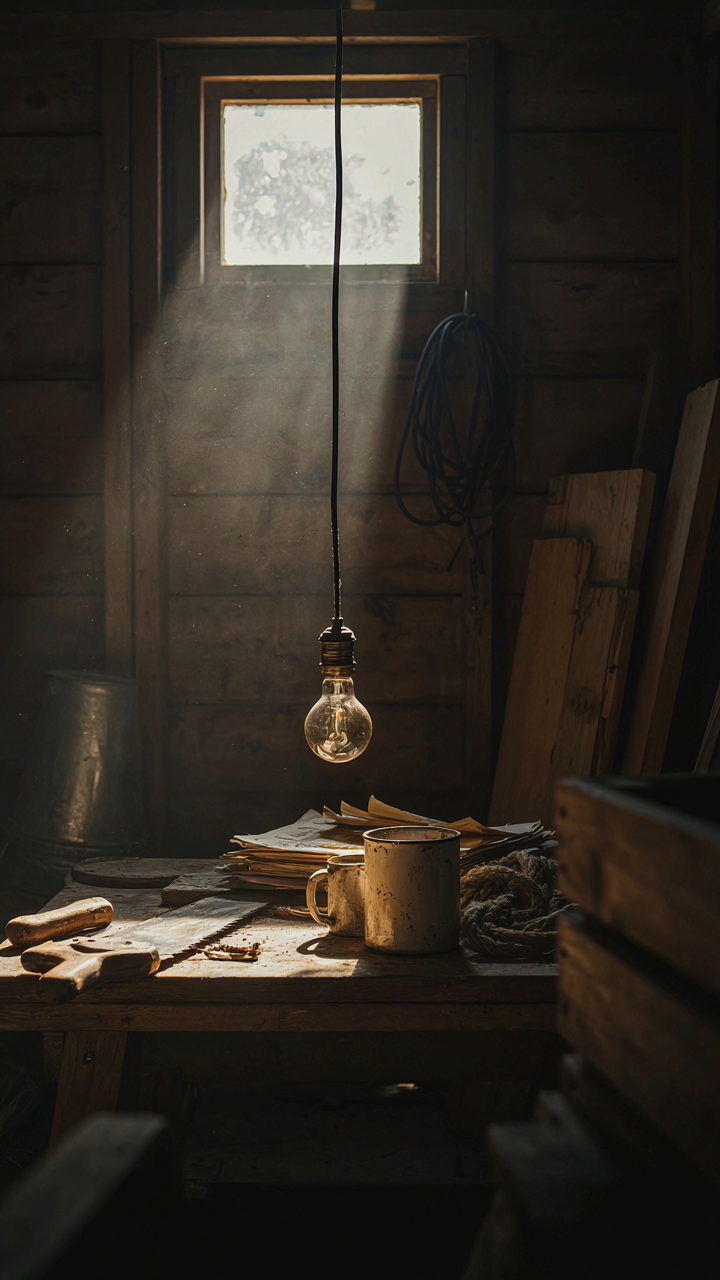
Overhead Lighting’s Harsh Truth
You picked a single overhead fixture because you wanted to avoid thinking about lighting design. Here’s the mechanism: overhead lights create a shadow cone directly beneath them, which flattens faces and makes small spaces feel institutional. This happens because the light source is above eye level and spreads downward at a steep angle, leaving your work surfaces and seating areas in shadow pools.
Standard ceiling fixtures work in warehouses and garages because function matters more than usability. In a she shed, you’re not moving inventory. You’re sitting, reading, crafting, or hosting. Overhead-only lighting forces your eyes to adapt constantly between bright ceiling areas and dark task zones. This creates visual fatigue, not coziness. The fix is architectural: use overhead only for ambient baseline, never as your primary light source.
Targeted Light For Intimate Zones
Lighting design borrows from cinematography: key light placement determines mood and usability. A key light is the dominant source that sculpts space and guides attention. In a she shed, your key lights should originate from corner positions or wall-mounted fixtures at eye level, not above. This breaks the institutional overhead pattern and creates pools of visibility where you actually work or sit.
Install task lighting at 42 to 48 inches above your work surface if you’re reading or crafting. Position ambient lights on walls rather than ceilings to bounce light off surfaces instead of blasting it downward. A single wall-mounted sconce on each side of a seating area creates balanced illumination without shadows on faces. Layer these sources so you control which zones light up based on the activity. This protocol transforms the space from generic storage area to functional retreat.
The Circadian Coziness Protocol: Syncing Shed Lights To Your Soul
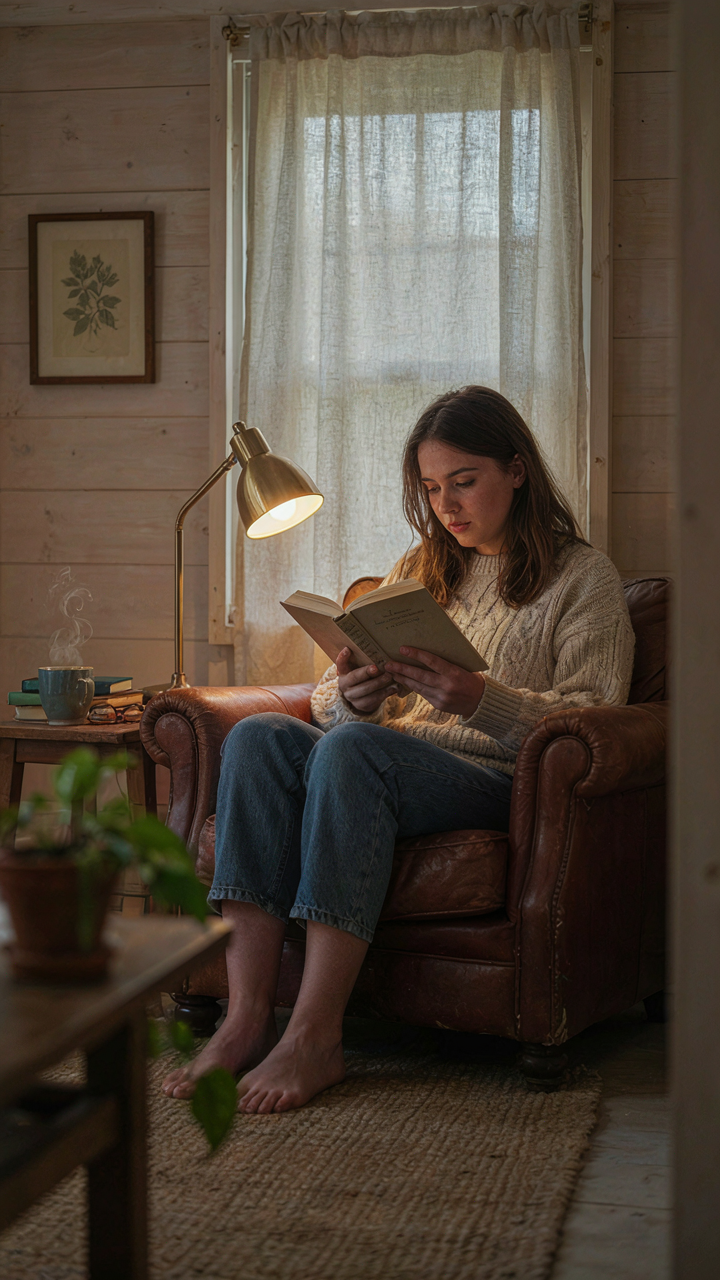
Warm Light Cues For Evening
You want this space to feel intentional because it validates the money you spent and the time you carved out. Here’s the mechanism: your circadian rhythm responds to color temperature, not brightness. Warm light (2700K or lower) signals your body to produce melatonin. This is biology, not opinion. A shed lit at 5000K at 9 PM actively fights your nervous system’s wind-down. You need bulbs that shift, not stay static.

Install dimmable warm-white bulbs rated 2700K maximum. Pair them with a simple dimmer switch you can dial down as evening deepens. Edison-style bulbs create this effect naturally because their filament design mimics low-temperature firelight. The goal is not pretty. The goal is a light source that doesn’t sabotage your body’s ability to relax. Position these fixtures to avoid direct eye contact, angling them toward walls or task surfaces instead.
Blue Light Avoidance Strategies
Most advice tells you to buy blue-light filtering bulbs and call it solved. That’s incomplete. Blue light after sunset is the actual problem, not a problem that special bulbs fix halfway. The mechanism is straightforward: wavelengths under 500 nanometers suppress melatonin production. Your shed needs an architecture that eliminates blue wavelengths entirely after dark, not one that reduces them.
Never use cool-white or daylight-temperature bulbs in your shed’s evening lighting scheme. This means no 4000K, no 5000K, no “bright white” labels. Avoid LED strips without warm-color-temperature specifications. Smart bulbs give you control, but only if you actually set them to warm tones and keep them there. The rule is simple: if you cannot set it to 2700K or lower and keep it there without thinking, it will drift toward blue. Install a separate circuit or zone for your evening lights so you never accidentally flip on cool-white fixtures at night.
Beyond Bulbs: Shed Lighting Ideas From A Cybernetic Perspective

Light Output Responds To Your Presence
You want the shed to feel intentional, not like you’re managing it. Cybernetics—the study of control systems and feedback loops—maps directly onto shed ambiance. A feedback loop means the lighting responds to what you actually do in the space, not what you predicted you’d do. Most people buy static fixtures and call it done. That’s lazy. Real control happens when light intensity adjusts based on occupancy, time of day, or activity level, then you observe the result and tweak the system.

Motion sensors paired with dimmable LED fixtures create the foundational feedback loop. You enter the shed, light rises to usable levels. You sit still for twenty minutes, light drops to ambient. You move again, it responds. This isn’t automation for comfort’s sake. It’s a measurement system that shows you how the space actually functions versus how you assumed it would. Install a motion sensor on a standard dimmer circuit, set the baseline low, and adjust the threshold weekly based on your actual usage patterns.
Mood Calibration Without Guesswork
Adaptive control for mood states sounds abstract until you accept the real mechanism: different tasks demand different color temperatures and intensities, and you can’t predict all of them in advance. Forget the advice that says “warm light for relaxation, cool light for focus.” That’s incomplete. Color temperature matters, but intensity adaptation matters more because it directly changes how your nervous system responds to the space.
Tunable LED systems let you shift from 2700K to 4000K while simultaneously adjusting brightness in 10 percent increments. Start with 50 percent intensity at 2700K when you enter for evening use. If you’re reading, push to 75 percent and 3000K. If you’re doing detail work, jump to 80 percent and 3500K. After two weeks, you’ll know which exact combination prevents eye strain and matches your actual evening routine. That data becomes your protocol. Program it into a smart bulb or use manual dimmers to replicate the same settings each night.
Shed Lighting Ideas Interiors: Sculpting Space With Shadow
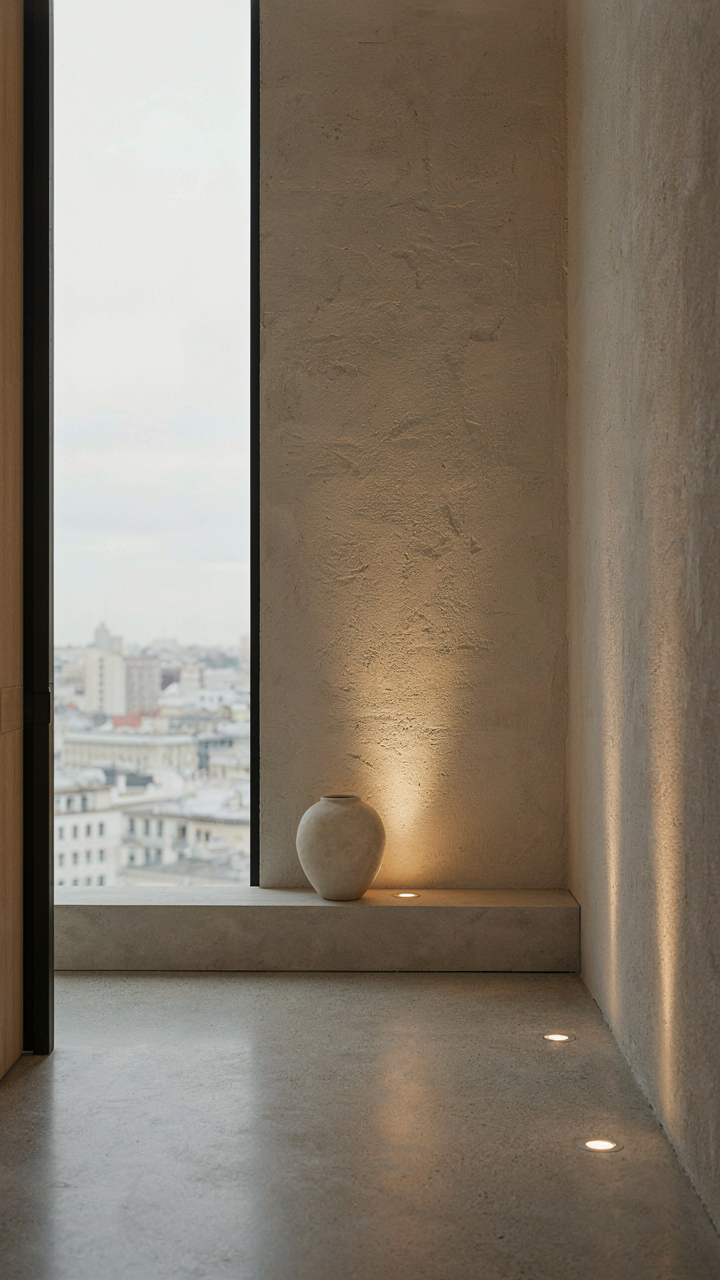
Uplighting For Perceived Height
You want your shed to feel bigger than it is. That’s the real driver here. The mechanism is borrowed from architecture: uplighting exploits the eye’s natural tendency to perceive height as spaciousness. Light that travels upward toward the ceiling tricks your brain into thinking the room extends further than it does.

Standard advice says “put lights everywhere.” Wrong. Directional uplighting from corners or base edges creates visual lift without flooding the space. Position fixtures low on walls, angled upward. The light hits the ceiling and bounces, stretching your perception of vertical space. This costs nothing extra in wattage but doubles the perceived volume of your shed.
Dimmer Switches As Essential Tools
Every light in your shed should sit on a dimmer. Most people treat dimmers as optional mood accessories. They’re actually the control mechanism for whether your space works at all for evening use.
- Brightness scaling: Dimmers let you match light levels to time of day and activity. Bright for tasks, low for relaxation. One fixture becomes five without installing anything new.
- Energy efficiency: Running lights at 50 percent brightness cuts power consumption and extends bulb life. This is physics, not preference. Lower voltage means lower strain.
- Mood without fixtures: A single dimmable overhead light transforms from harsh workbench lighting to ambient evening ambiance with one slide. No additional wiring required.
- LED compatibility: Not all dimmers work with LEDs. Buy dimmers rated for your bulb type. Cheap dimmers on LEDs create flicker and hum. Verify compatibility before installation.
- Switch placement: Install dimmers at entry points and near seating areas. Multiple dimmers on the same circuit create zones. You control each area independently without additional circuits.
Dimmer switches cost fifteen to thirty dollars and take ten minutes to install. The ROI is immediate: your shed becomes usable for seven extra hours per night. Install dimmers first, add fixtures second.
Shed Interior: The Art Of Layered Illumination
The Three Light Sources You Actually Need
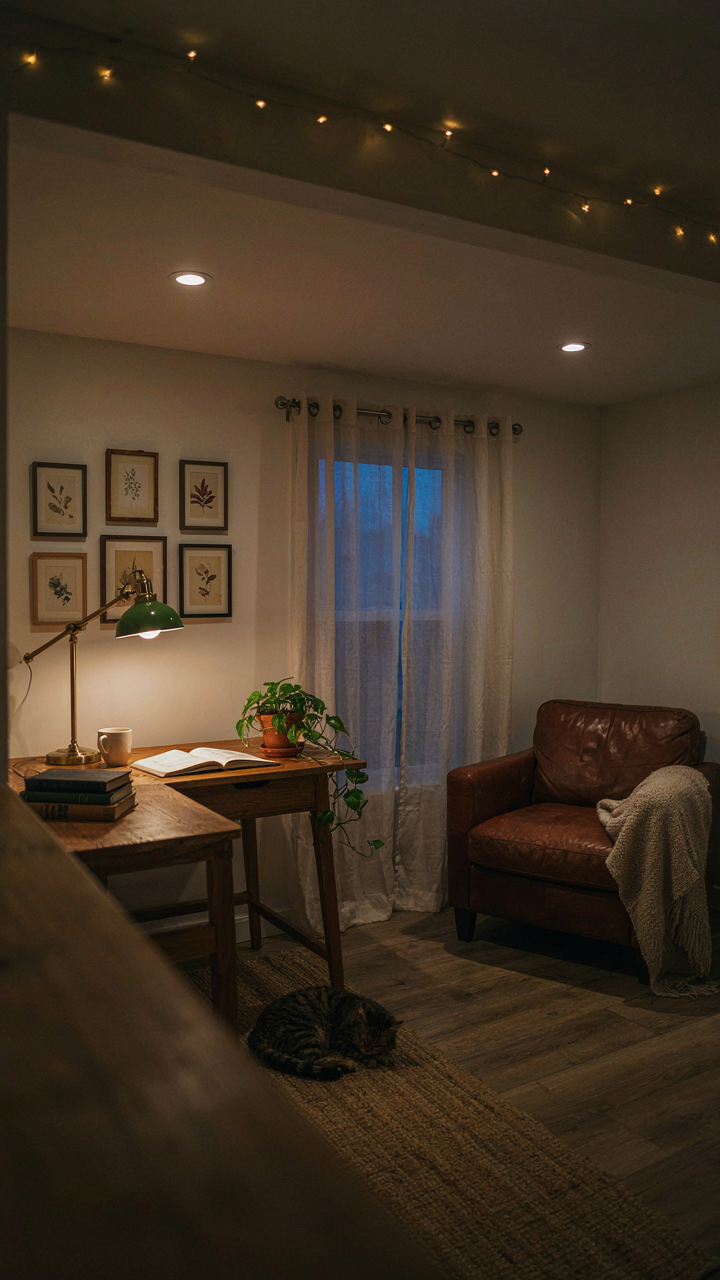
You want your shed to feel intentional instead of like a garage at midnight. The real mechanism is borrowed from architectural lighting design: layering. In architecture, designers stack ambient (base), task (functional), and accent (directional) light to create depth and control mood without adding fixtures randomly. Your shed needs the same hierarchy.

Ambient light is your foundation. A single overhead fixture or distributed ceiling lights set the baseline so you’re not working in shadow. Task lighting—a desk lamp, under-shelf strips, or pendant over your work zone—handles the specific activity and prevents eye strain. Accent lighting, the overlooked third layer, actually changes how the space feels. A wall-mounted sconce or directed lamp creates visual interest and makes the shed feel designed rather than thrown together. Most people skip this entirely and wonder why their space feels flat.
Portability Solves The Problem Everyone Denies
Common advice says hardwire everything for a finished look. That’s wrong for a she shed that does multiple things. Your needs shift. Today you’re reading a book in a chair. Tomorrow you’re organizing storage or working on a project. A fixed lighting plan locks you into one use case and makes you resent the space.
Portable lamps give you control without renovation. Plug-in floor lamps, USB-rechargeable desk lights, and battery-operated clip lamps move to where you actually are. Smart bulbs in standard lamps let you adjust color temperature from warm (evening) to cool (task work) without touching anything. The mechanism is autonomy: you set light behavior based on the moment, not the architect’s guess. Place at least one high-quality portable lamp in your shed before committing to permanent fixtures.
Shed Lighting Ideas Outdoor: Extending The Evening’s Embrace
Guide Guests Without Announcing Them
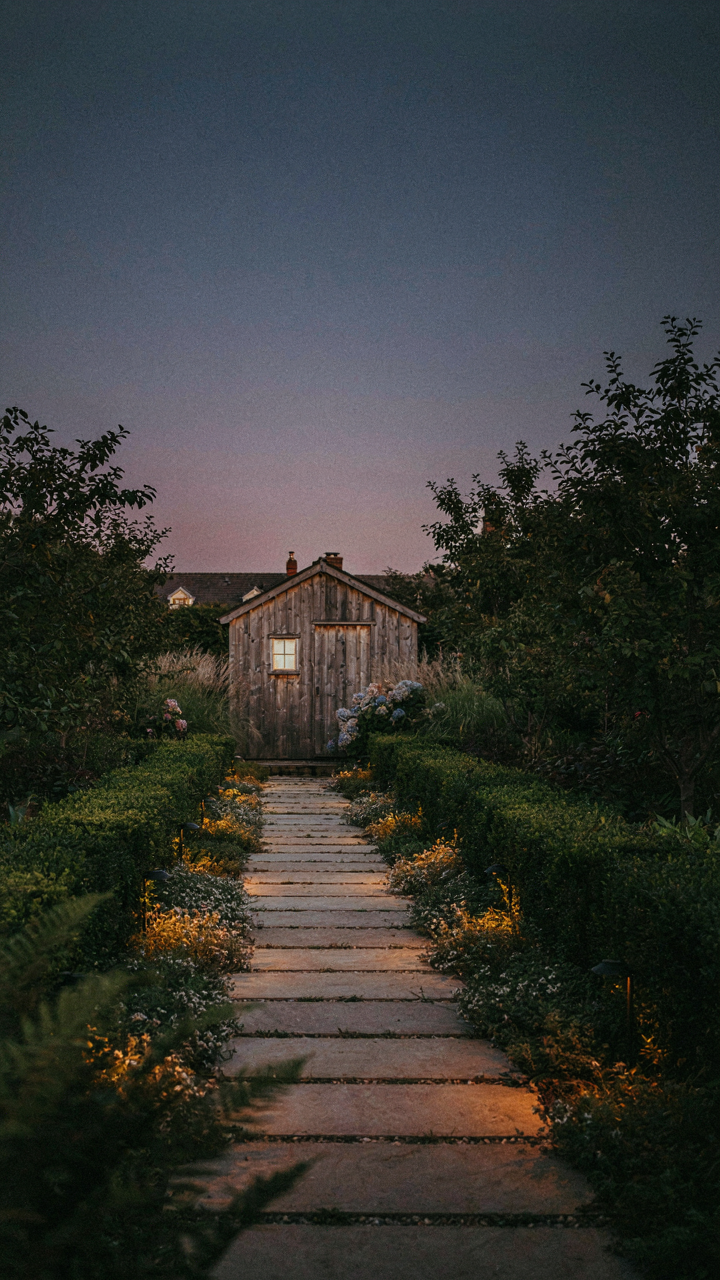
You want outdoor lighting that makes your space feel intentional and controlled, not like a stadium. The mechanism is contrast: your eye follows light ratios, not raw brightness. Low-level pathway lighting works because it creates a visual hierarchy. Your brain reads subtle light gradients as “safe passage,” not glare. This is borrowed from wayfinding design in architecture. You’re not illuminating the path. You’re defining it through strategic absence of light everywhere else.

Install 2 to 4-watt LED path lights along approach routes at ground level, spaced 4 to 6 feet apart. Angle them downward at 45 degrees so light hits the ground, not eyes. This keeps the ambient environment dark while making the actual walking surface readable. Warm color temperature (2700K) prevents the clinical feel of brighter outdoor installations. The illusion of a guided journey forms without any harsh shadows or visible fixtures dominating the visual field.
Blend The Structure Into Its Setting
Most people add lights to sheds as an afterthought, mounting them on walls like the building is a billboard. That’s wrong. Real integration means the shed recedes into the landscape at night, not stands out. You’re using light to define the structure’s edge, not announce it. Recessed or semi-recessed fixtures mounted under eaves or along base trim create a soft glow that reads as ambient light bouncing off surfaces, not a light source itself.
Use 2700K LED strip lighting mounted horizontally along the shed’s base or soffit line, diffused through frosted covers. Keep output between 200 and 400 lumens per 10-foot run. The light should reach the ground and surrounding vegetation first, then your eye catches the lit environment instead of the fixture. This creates depth perception at night. When you step outside, the shed feels like part of the evening, not lit against it. Test placement before final installation by running temporary fixtures at dusk to confirm the light distribution doesn’t spill into neighboring properties or blind interior sightlines.
How To Light Up A Garden Shed: Avoiding Common Pitfalls
More Light Isn’t The Solution
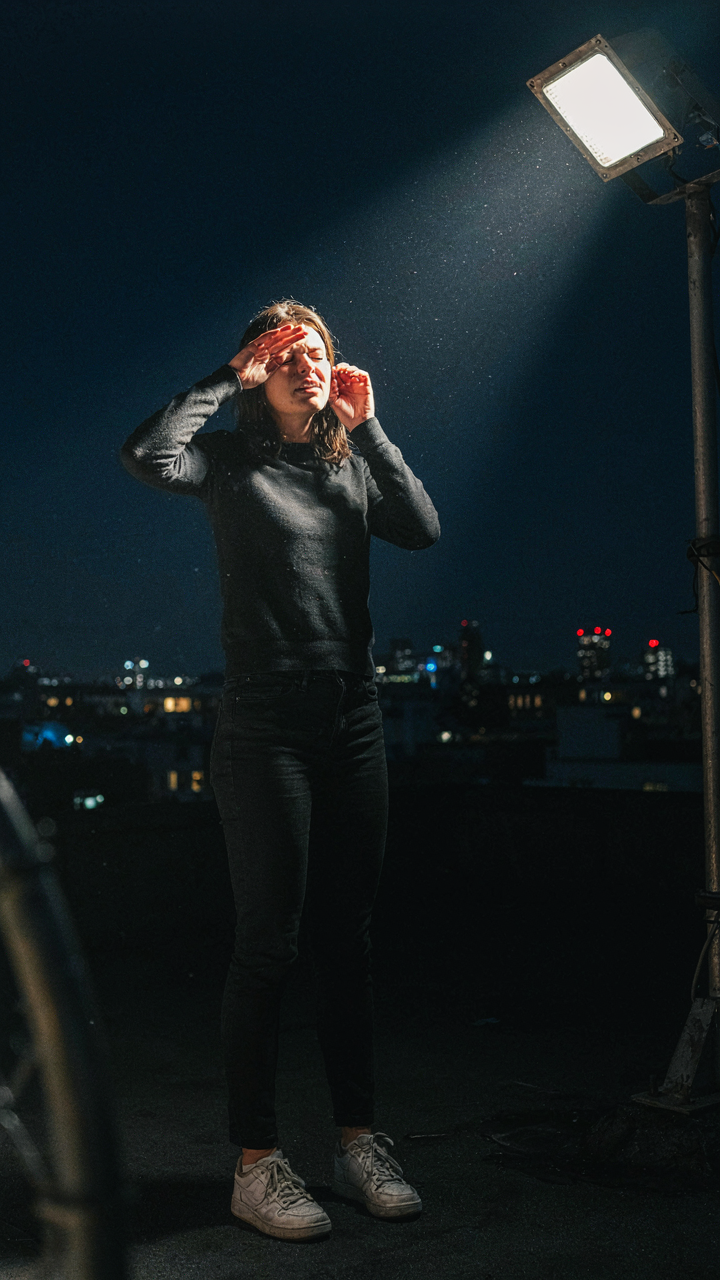
You want your she shed to feel safe and welcoming at night because you’re afraid it’ll feel unsafe or abandoned otherwise. That’s the real fear driving the overlighting instinct. The mechanism is simple: your eyes adapt to whatever baseline you set. Blast 500 lumens into a 100-square-foot space and your pupils shrink. An hour later, 200 lumens feels dim. You’ve trained your nervous system to demand brightness it doesn’t actually need.

Overlighting kills the entire purpose of a she shed. The space becomes harsh, fatiguing, and pulls your attention outward instead of inward. You lose the separation from the main house that makes it valuable. Excessive brightness also bounces off walls and creates glare, which strains eyes during reading or detail work. The fix is counterintuitive: start low. Use 100 to 150 lumens as your baseline. Add focused task lighting where you actually work. Your eyes will recalibrate within minutes, and you’ll find the space feels larger and more intentional.
Placement That Blocks Sightlines
Strategic placement isn’t about aesthetics. It’s about optical physics applied to your shed’s boundaries. Light travels in straight lines until it hits a surface. If your light source sits at eye level on a north-facing wall, the beam travels across to the south wall, then out through windows to the neighbor’s yard. You’ve created a beacon when you meant to create a retreat.
Mount your primary light source high, centered, and angled downward. This keeps the beam contained within the shed’s footprint. Use diffusers or frosted shades to scatter light evenly instead of letting it punch through windows in a concentrated cone. For accent lighting, position sources behind or beside seating areas, not between you and the exterior walls. This keeps the interior visible and the exterior dark, which preserves the psychological boundary your she shed needs to function as a sanctuary.
Shed With Lights: The Unseen Power Of Luminary Psychology
Light Pools Shape Emotional State
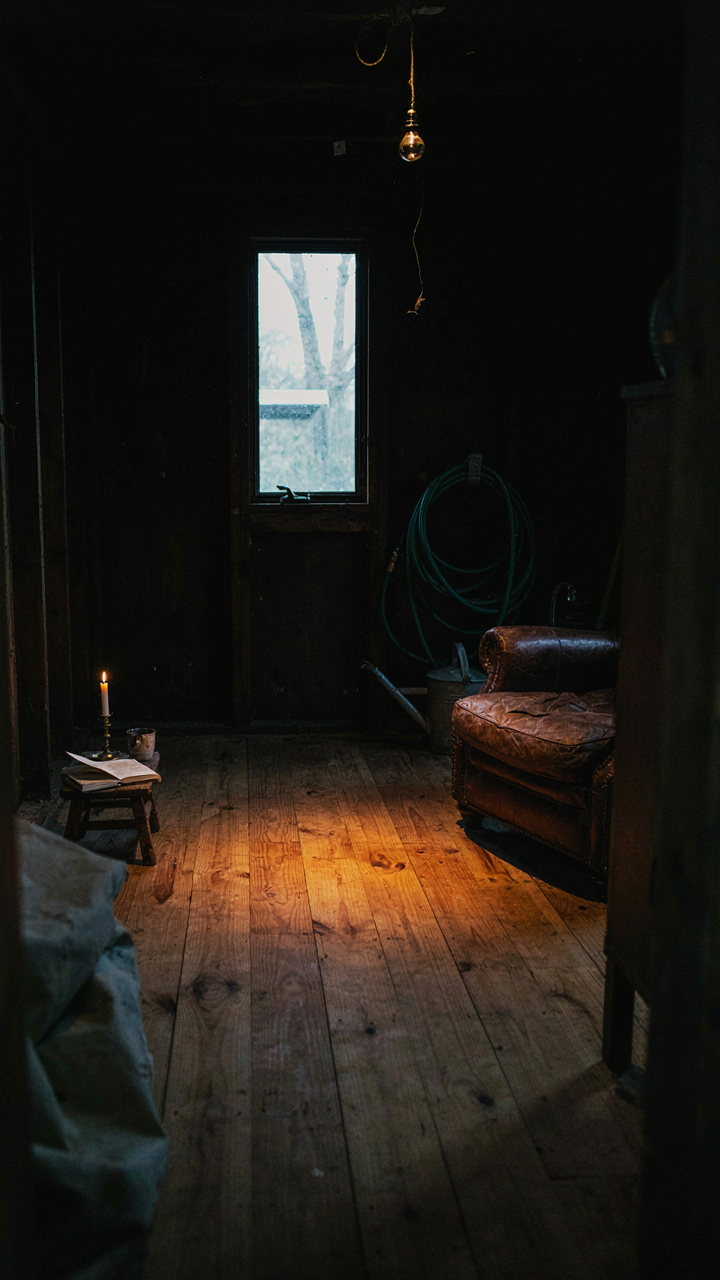
You want this section to validate that your shed matters. Here’s what actually drives the effect: light pools work because they create containment. Your brain reads a bounded area of brightness surrounded by darkness as a safe perimeter—a psychological mechanism borrowed from architecture and spatial cognition. Designers call this “prospect and refuge.” A shed with pooled lighting signals refuge: you’re visible to yourself but obscured from the outside world.

The emotional shift happens because contrast triggers attention. When light concentrates in specific zones—over a reading chair, along a workspace, near seating—your nervous system recognizes defined territories. This isn’t mystical. It’s neurological. Pools of 2700K to 3000K warm light on task areas combined with softer ambient lighting in corners create layered visual depth. The brain interprets layering as intentionality, and intentionality reads as control. Control triggers relaxation.
Darkness Makes Light Work
The common advice here is wrong: “add more light sources.” That’s backward. Contrast is the mechanism, not accumulation. A shed flooded with uniform brightness erases the very psychological benefit you’re after. Darkness isn’t absence. It’s an active design element that amplifies how your brain processes the lit zones you’ve created. Think of it as signal-to-noise ratio applied to illumination.
A single well-placed 40 to 60-watt equivalent fixture (warm LED) casting light on one functional zone, with the rest of the shed darker, produces more emotional impact than three mediocre sources spreading light evenly. Position overhead task lighting to create a gradient—bright where you work or rest, progressively softer toward edges. This forces your visual system to focus inward, collapsing your attention span to the immediate environment. Narrow attention equals presence, and presence is what makes a space feel like an escape.
The True Measure Of A Shed’s Coziness Isn’t Its Brightness, But Its Ability To Disappear When The Moment Calls For It
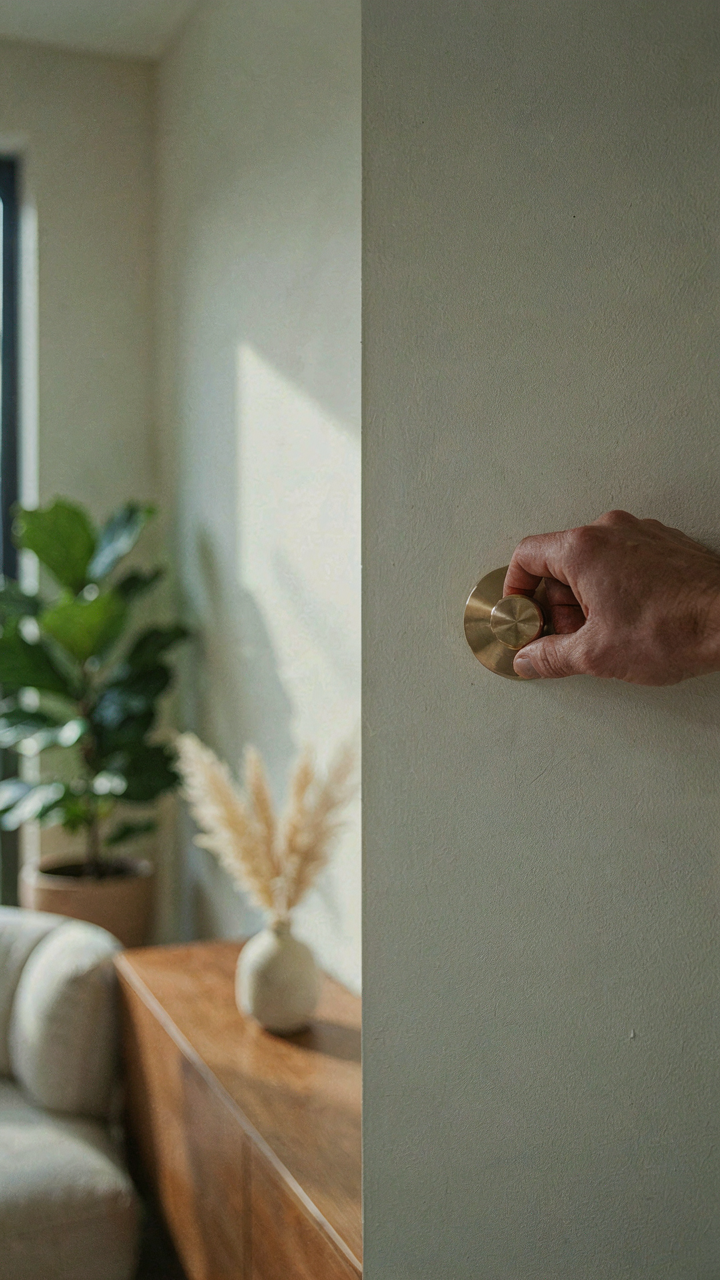
Most people treat lighting like a volume knob: crank it up and call it done. Wrong. The shed you actually use has lights that vanish into the background. Buy a dimmer switch today. Pair it with warm bulbs. Test it tonight at different levels. You’ll discover that the moment matters more than the setup. Control your light, and you control the entire experience. The best shed lighting isn’t the brightest one in the neighborhood, it’s the one that makes you forget you’re looking at a light at all.




