
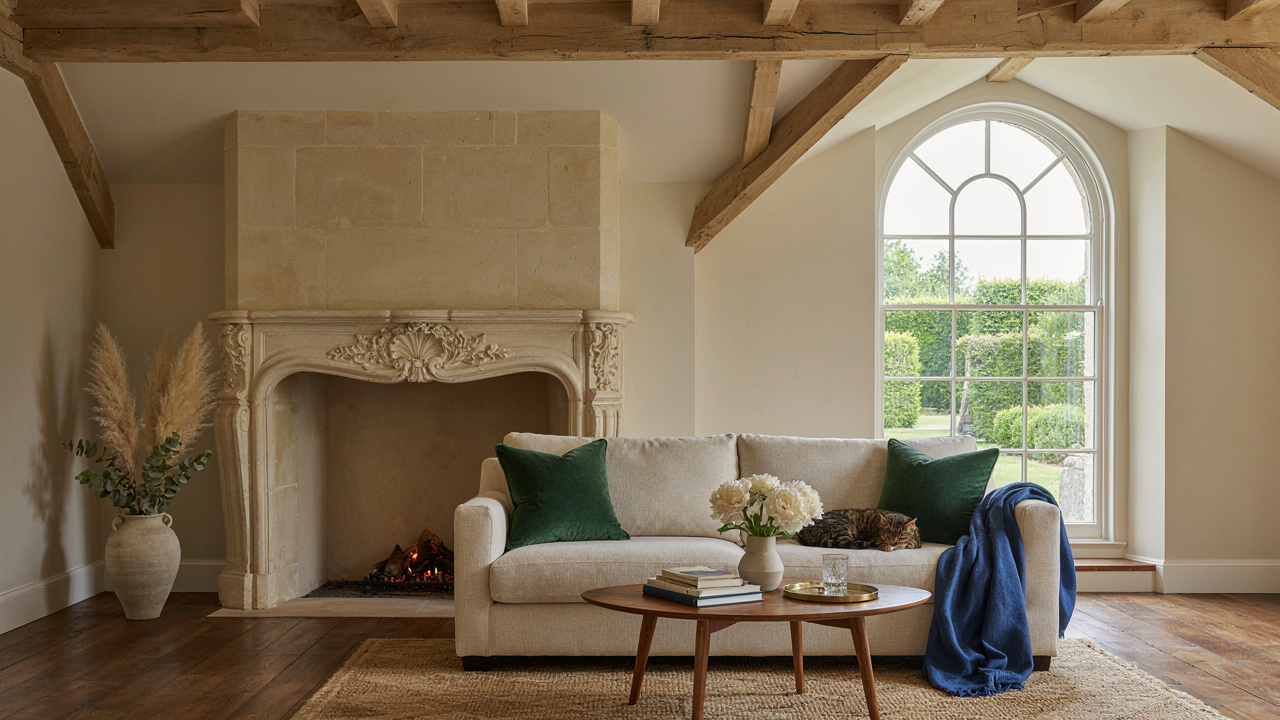
The Unseen History Of French Country Fireplaces: More Than Just Stone
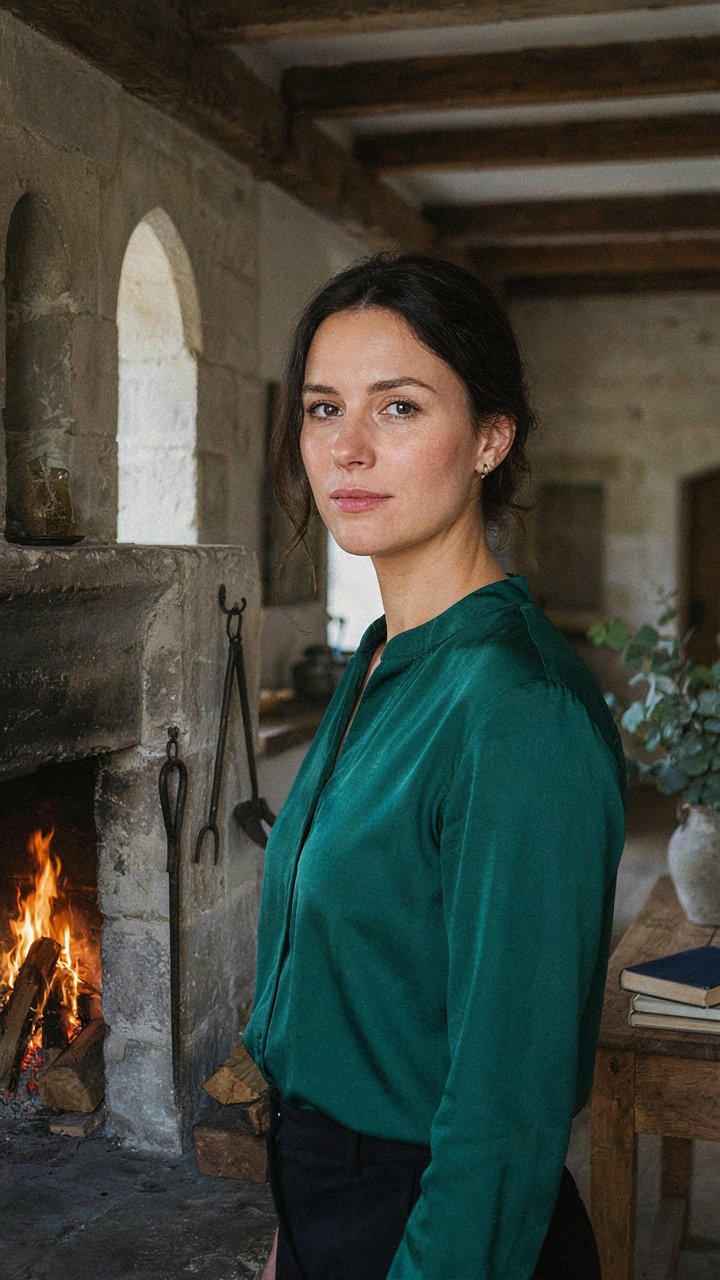
Where The Fireplace Came From And Why It Mattered
You want this section because you’re betting that understanding history makes your design choice feel less arbitrary. Here’s the mechanism: French country fireplaces weren’t designed for aesthetics first. They were engineered solutions to survival. Medieval and Renaissance France had brutal winters. Hearths in rural homes needed to heat entire structures while minimizing smoke. Stone—especially limestone from the Loire Valley and Burgundy regions—became the default material because it retained heat longer than brick and didn’t crack under repeated thermal stress.
Different regions developed distinct fireplace proportions based on local stone availability and room dimensions. Northern French fireplaces ran deeper and narrower to contain heat in cramped spaces. Southern variants sat wider and shallower because homes caught more ambient warmth. Normandy favored thicker mantels to support heavy decorative objects. Provence kept them slender. The design wasn’t about taste. It was pure problem-solving given the constraints of geology, climate, and construction labor available in each area.
When Decoration Became The Real Job
Function shifted to spectacle around the 17th century. As central heating and cooking technology improved, the fireplace stopped being essential for survival and became real estate for status. The mantel transformed from a functional ledge into a display stage. Limestone mantels grew taller, wider, and more carved because the family’s wealth now announced itself through how much expensive stone they could afford to have shaped by craftsmen.
This pivot changed everything about how the fireplace was built. Masons stopped optimizing for heat and started optimizing for symmetry and ornamentation. The limestone mantel became the anchor point for identity, not utility. Families commissioned custom carvings. Mantels grew elaborate moldings. What remained constant was the material itself—limestone held its value aesthetically and thermally, making it the rational choice even when heating was no longer the primary function. When decoration becomes the job, the best materials win twice.
Limestone Mantels: Decoding The Material Myth
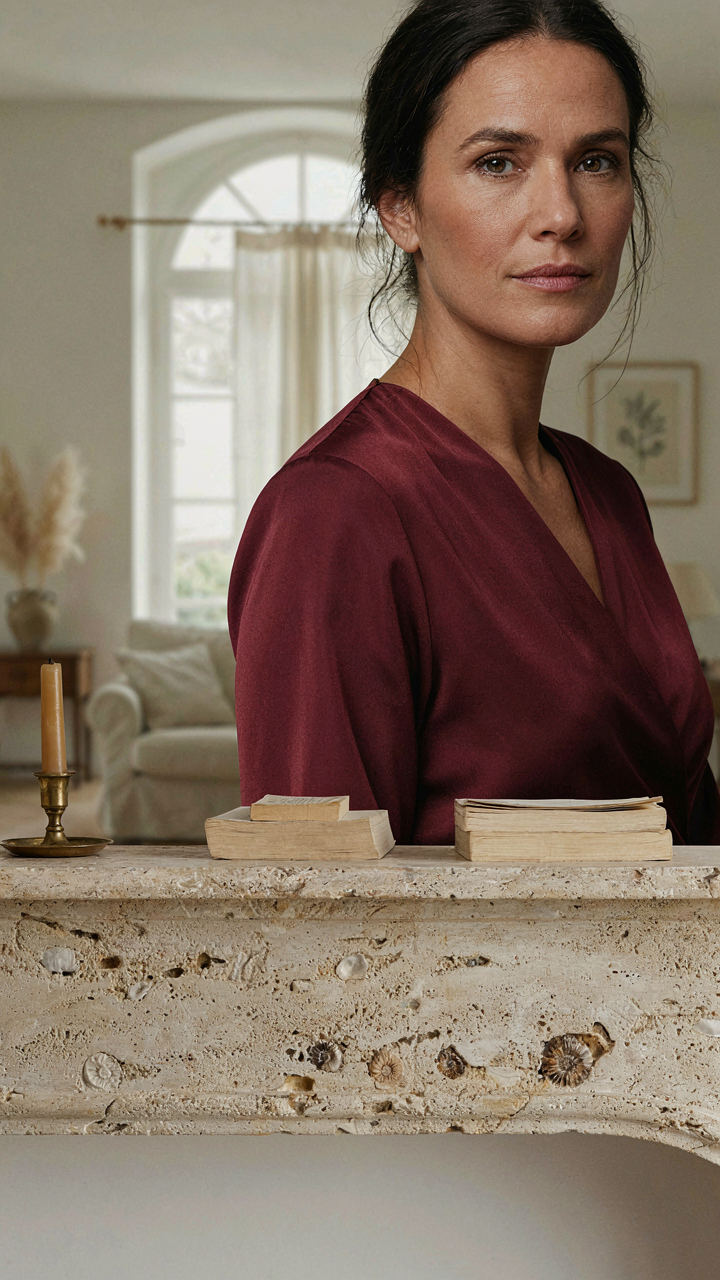
What Limestone Actually Is
You want limestone because it signals authenticity and permanence, but you’re probably buying based on visual mood boards instead of material science. Limestone forms from accumulated skeletal remains of marine organisms compressed over millions of years. This isn’t abstract. The composition determines everything about how your mantel performs. French country fireplaces traditionally used local limestone because it was available and worked, not because it was exotic or precious.

Limestone exists in distinct types based on its origin and density. Oolitic limestone contains small rounded grains and tends toward lighter color and higher porosity. Fossiliferous limestone retains visible shell fragments, which creates visual texture but also weakness lines. Chalk limestone sits at the softer end of the spectrum. Travertine limestone forms from hot springs and carries striations from mineral deposits. Each type behaves differently under heat, moisture, and mechanical stress. Your mantel choice determines your maintenance protocol before you ever light a fire.
Why Fragility Is The Actual Threat
Everyone says limestone is fragile, then they install it anyway without understanding what that means. The mechanism is chemistry, not delicacy. Limestone is calcium carbonate. Acid breaks it down. Water carries acid. Soot carries acid. Your fireplace produces both constantly. The mantel doesn’t crack from being too soft or ornamental. It erodes from chemical exposure over years.
Durability isn’t about how hard the stone is. It’s about porosity and finish. Dense limestone with a sealed surface resists erosion far longer than porous limestone left untreated. French country mantels age visibly because owners intentionally leave them unsealed for that aesthetic. You’re choosing accelerated aging as a design feature, not accepting a material weakness. The protocol is clear: decide whether you want a working fireplace that ages or a preserved surface. You cannot have both without active maintenance.
The Proportionality Protocol: French Country Fireplace Mantle Scaling
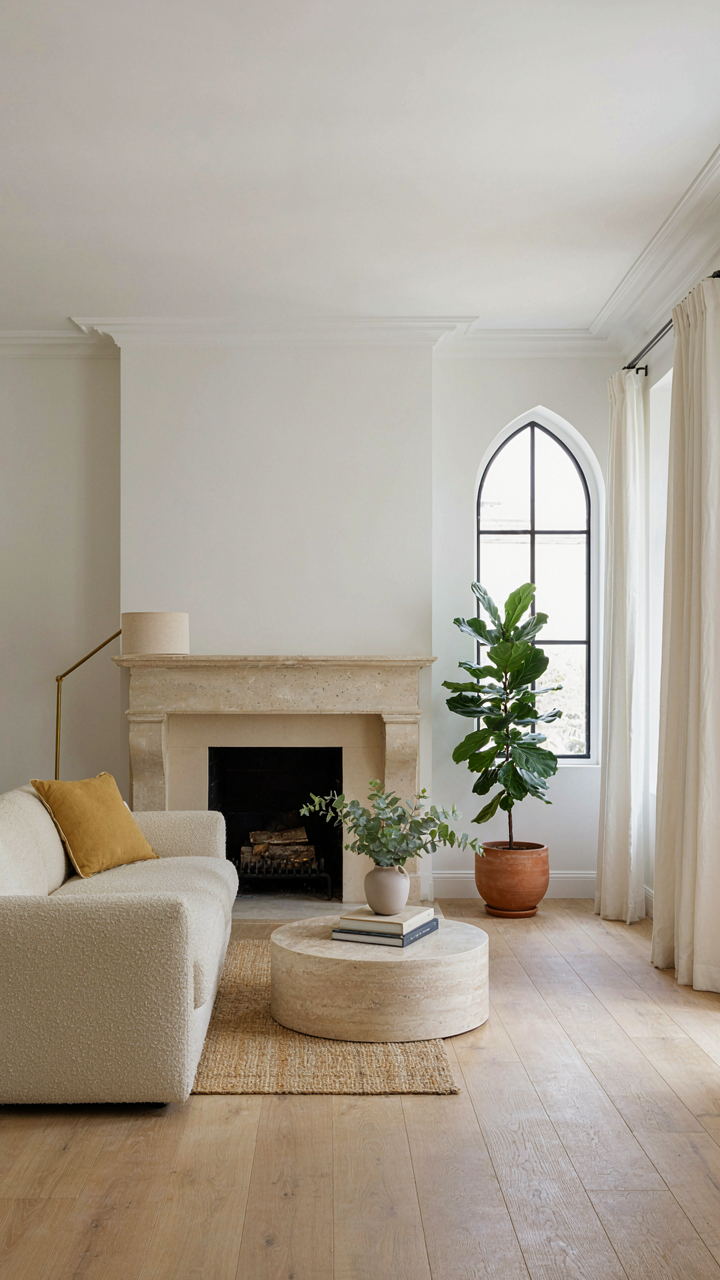
When The Golden Ratio Stops Being Decoration
You want your mantel to look intentional, not like you guessed at the dimensions. Most people assume French country design is about rustic feel, then slap a limestone shelf on the wall at whatever height feels right. Wrong. The mechanism is borrowed from architecture: the golden ratio (1.618:1) governs visual weight distribution, and a French country fireplace mantel must obey this same math or it reads as off-balance, no matter how authentic the limestone.

A properly scaled mantel should occupy roughly 60 to 65 percent of the fireplace opening’s width. The overhang on each side follows the golden ratio in reverse: depth of the mantel (front to back) relates to its width using that same 1:1.618 proportion. This isn’t aesthetic preference. This is your eye detecting mathematical harmony or its absence. When limestone mantels in French country homes feel “right,” the proportions have already solved the equation before you consciously notice.
Ceiling Height Dictates Everything Else
Room volume changes how a mantel reads. A 12-foot ceiling demands a deeper, wider mantel than an 8-foot ceiling in the same size room because visual weight scales with available vertical space. French country farmhouses varied in proportion, but the core rule was consistent: mantel height should sit at 48 to 54 inches from the floor in standard rooms, accounting for sight lines from furniture at typical eye level when seated.
When ceiling height exceeds 10 feet, increase mantel projection by half an inch for every additional foot. This compensates for how distance compresses visual perception. A limestone mantel that dominates a cottage bedroom will vanish in a grand foyer without depth adjustment. Measure your ceiling height, calculate room volume, then scale mantel depth accordingly. Skip this step and you’re decorating blind.
Beyond The Mantel: Integrated French Country Stone Fireplace Design
What The Hearth Actually Does
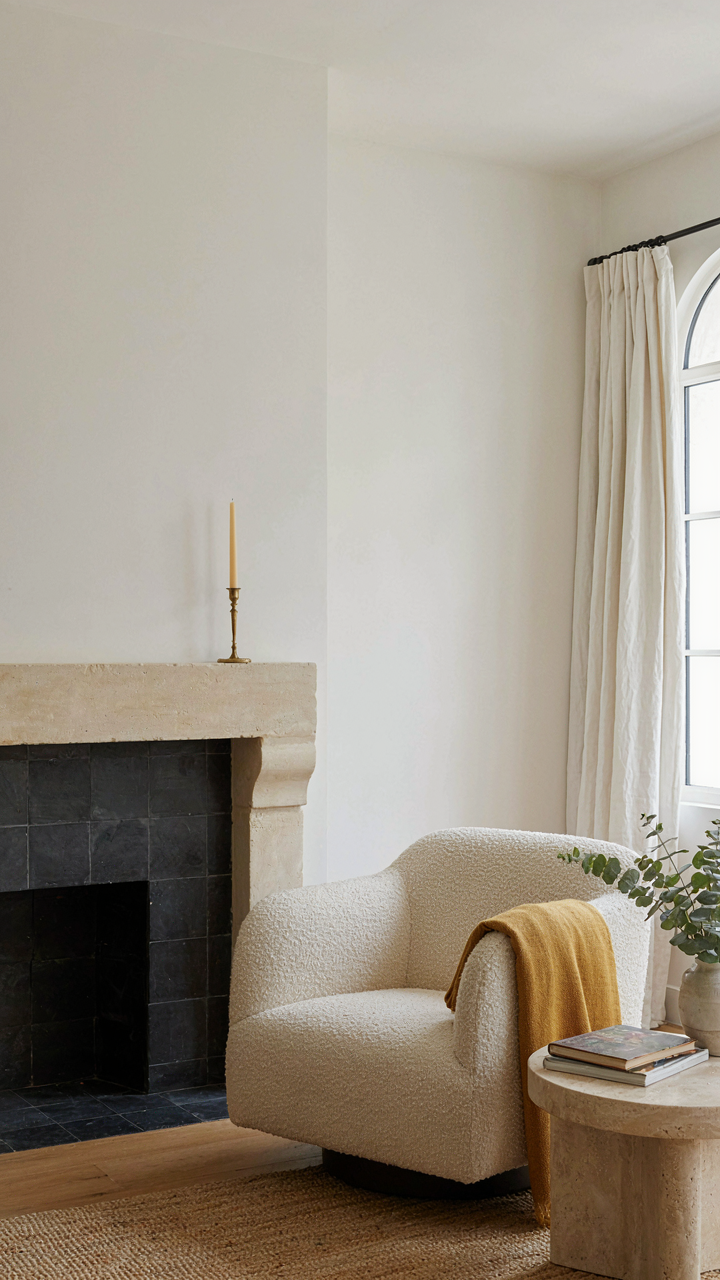
You want the mantel to look expensive without admitting you’re obsessed with signaling wealth through restraint. Here’s what nobody says: the hearth is load-bearing infrastructure, not decoration. In structural terms, it’s the foundation plate of your entire fireplace assembly. The hearth absorbs thermal shock, protects your floor from ember damage, and distributes the weight of stone above it. Limestone, sandstone, and slate all perform differently under heat cycling. Most people choose based on color alone and wonder why their hearth cracks within five years.

The functional role determines material choice first, aesthetics second. French country hearths traditionally used local stone because it was thermally stable and readily available, not because it looked good. Slate handles temperature swings better than limestone because of its denser grain structure. Limestone looks more refined but demands thicker material and better sub-base preparation to avoid stress fractures. Your hearth needs at least four to six inches of properly set stone, sitting on a concrete pad that extends beyond the fireplace footprint by at least two feet. Shortcut the base and you’re guaranteeing failure within a decade.
Surround Weight And Visual Anchoring
The stone surround around your firebox isn’t there to frame a pretty opening. It’s load-bearing theater that makes the entire structure feel intentional rather than tacked on. Design uses the term “visual weight” to describe how mass communicates stability. A heavy surround signals permanence; a thin one signals that your fireplace might blow away. French country surrounds work because they layer stone thickness strategically. Thicker courses at the bottom, thinner ones climbing toward the mantel, creates the optical illusion of ascending ease while the actual structure is doing the opposite.
Most advice says to match your surround to your mantel material for “continuity.” That’s lazy. The real move is contrast through proportion. If your mantel is thick limestone, your surround should feature thinner ashlar blocks or a mix of stone sizes that create visual rhythm without competing for attention. The surround’s job is to make the mantel look deliberate by framing it with organized weight below. Measure your fireplace opening first, then design the surround to fill exactly three-quarters of the wall space around it, leaving the remaining quarter for negative space that forces the eye toward the mantel itself.
European Fireplace Ideas: Adapting, Not Copying, Authenticity
Study The Pattern, Not The Picture
You want the aesthetic without the work of understanding why it exists. That’s the trap. French country fireplaces didn’t emerge from decoration magazines. They emerged from limestone availability, regional climate needs, and centuries of trial that eliminated waste. Biology calls this pattern-matching across systems. A French limestone mantel works the same way: it solves specific problems in specific contexts, then gets replicated because it works, not because it looks right. Most designers copy the surface. You need the logic underneath.

The mechanism is substrate adaptation. Limestone became dominant in French regional fireplaces because it was local, thermally stable enough for heat cycling, and workable with period tools. The form followed material constraint, not aesthetic preference. When you transplant a limestone mantel into a climate with different humidity, different stone availability, different heating patterns, you’re ignoring the system that created it. You need to reverse-engineer what the material was actually solving for before you can make it function in your space.
Material Ecosystems Over Isolated Elements
This is where most advice breaks down. Designers treat fireplaces as standalone objects and pull materials from mood boards. Systems thinking says everything connects. Your mantel limestone doesn’t sit alone. It connects to your hearth stone, your mortar composition, your wall finish, your room humidity, your chimney draft pattern, and your heating load. Change one, the others fail silently until cracking starts or smoke behaves wrong.
Map your actual constraints first. What limestone type exists regionally near you, or what’s economically feasible to import. What’s your seasonal humidity swing. What’s your primary heat source and how much thermal stress does the mantel face. Then build backwards to mortar composition, backing materials, and adjacent finishes. The cohesion isn’t visual. It’s mechanical. French country fireplaces lasted centuries because every material in the stack was chosen to move the same direction under stress, not to look period-correct.
The Cottage Fireplace Conundrum: When Less Isn’t More
Scale Without Pretense
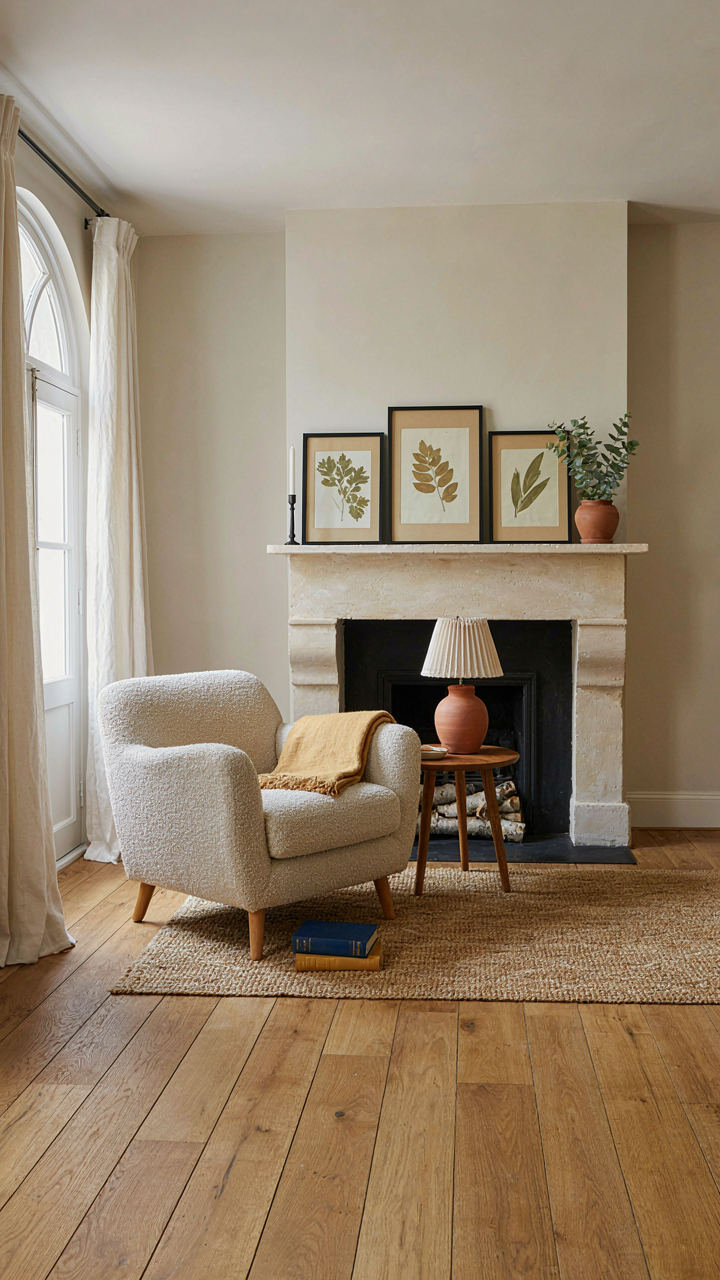
You want the fireplace to feel authentic, not like you’re playing house. That’s the real fear driving this section—that a small cottage fireplace looks cheap or undersized. The mechanism is simple: proportionality beats absolute dimensions. A limestone mantel scaled to the room’s actual size outperforms an oversized statement piece jammed into a cottage space. French country cottages never fought their dimensions. They worked inside them.

Miniaturization happens when builders treat cottage fireplaces like reduced versions of grand ones. Wrong approach. A cottage fireplace needs a mantel width between 36 to 48 inches for most cottage spaces, not the 60-plus inches designers push on larger homes. Limestone thickness matters more than span—a solid 6-inch depth reads substantial even on a narrow opening. The hearth depth should match the mantel’s visual weight, not shrink proportionally. This ratio prevents the fireplace from disappearing into the wall.
Asymmetry That Actually Works
Borrowed from architectural theory, French country design uses asymmetry as load-bearing—it distributes visual weight unevenly but intentionally, creating rhythm instead of monotony. Perfect symmetry in a cottage reads sterile. Intentional imbalance reads lived-in.
The standard advice here is wrong: don’t mirror everything around the mantel. Real French country cottages built fireplaces off-center because walls weren’t always plumb, rooms weren’t always square, and function trumped symmetry. You can replicate this without the construction accidents.
- Offset the hearth edge: Extend one side 3 to 6 inches past the firebox opening, leaving the other side flush. This breaks bilateral symmetry without looking accidental.
- Mantel height variation: Position the mantel 48 to 54 inches from the floor rather than the standard 60 inches. Lower heights feel more intimate and less formal than centered, symmetrical placement.
- Limestone block staggering: Lay blocks in a running bond pattern (offset rows) instead of stretcher bond (aligned). This creates movement and depth across the facade.
- Uneven shelf placement: If adding shelves above the mantel, place one at 12 inches and another at 18 inches rather than equidistant spacing. Breaks the grid intentionally.
- Angled surround edges: Angle the limestone surround inward slightly on one side, keeping the other vertical. Creates shadow variation and visual tension without chaos.
The goal isn’t randomness—it’s controlled irregularity that mirrors how cottages actually age and function. When you asymmetrically distribute visual elements, the eye stops scanning for mistakes and starts registering character. Before installation, mock up the placement on cardboard cutouts and photograph from the room’s main viewing angle. This single step prevents $3,000 removals and reinstalls.
French Fireplace Ideas: The Art Of The Imperfect Finish
When Patina Becomes The Point
You want your fireplace to look like it’s been there for 200 years because you believe authenticity signals taste and money. Here’s the mechanism: patina is visual proof of time investment. Limestone develops a natural patina through exposure to smoke, mineral deposits, and oxidation. This process cannot be rushed without looking false. Artificial aging attempts to compress centuries into weeks, and the eye catches the fakery immediately because the degradation pattern doesn’t follow how physics actually works.

Real patina on limestone mantels forms unevenly. Smoke stains concentrate where heat rises. Water deposits leave mineral rings at specific heights. Dust accumulation follows air current paths, not random distribution. To build genuine-looking aged surfaces, you expose limestone to controlled smoke exposure over months, apply diluted mineral solutions that mirror natural water flow, and allow dust to settle in functional patterns. The fireplace then reads as lived-in rather than manufactured.
Hand Carved Details That Signal Craft
Generic advice says carving adds character. Wrong framing. Carving demonstrates the stonemason’s constraint and cost. Hand-carved details on a French country limestone mantel cost three to five times more than machine-cut profiles because labor cannot scale. This is why the work matters visually. Each carved detail contains visible variation in depth and line weight. Machine tools produce identical repetition. Human hands produce controlled inconsistency.
Traditional French country mantels feature carved corbels, egg-and-dart molding, or floral medallions cut into limestone by hand. The variation in these details is not a flaw—it’s the evidence. When selecting or commissioning a limestone mantel, examine the carving under angled light. If every line is perfectly uniform, a CNC machine cut it. If line weight varies slightly and relief depth shifts imperceptibly, a person shaped it. Order your mantel only after confirming the carver can produce this human inconsistency deliberately.
French Country Limestone Fireplace: Investment Or Expense?
The Resale Question Nobody Answers Honestly
You want to know if this fireplace pays for itself when you sell. That’s the real question hiding under all the design talk. Here’s the mechanism: limestone fireplaces read as “established” and “expensive” to buyers, but they don’t move the needle on appraisal value the way kitchens or bathrooms do. A French country fireplace signals taste, not equity.

What actually happens is this. Buyers in markets that care about European aesthetics—specific zip codes, specific demographics—will notice the fireplace and feel the house fits their image of itself. They’ll rationalize paying slightly more because the work feels already done. But a professional appraiser values the structure, not the styling. The limestone mantel costs four to eight thousand dollars installed. You’ll recover maybe twenty to thirty percent of that in perceived value, not actual price increase.
Limestone Maintenance Costs Are Front Loaded, Not Back Loaded
Everyone says “limestone is porous, so seal it”—that’s the lazy answer. The real economics work like a debt payment schedule. You pay heavy on the front end, light on the back. A professional limestone seal runs four hundred to six hundred dollars and holds three to five years. After that, resealing becomes routine maintenance: two hundred to three hundred dollars per application.
The trap is thinking this stays cheap. Water damage, heat stress from fires, and natural settling crack limestone over fifteen to twenty years. A single crack repair starts at three hundred dollars. Full section replacement of a damaged mantel section runs one thousand five hundred to three thousand. Calculate the actual cost per year for the first decade: seal, minor cleaning, one or two small repairs. Now compare that to the zero maintenance of a cast stone mantel that lasts indefinitely. The decision reverses when you factor in real time horizons.
The Real Obstacle Isn’t Finding The Right Mantel; It’s Your Fear Of Designing Outside The Accepted Style
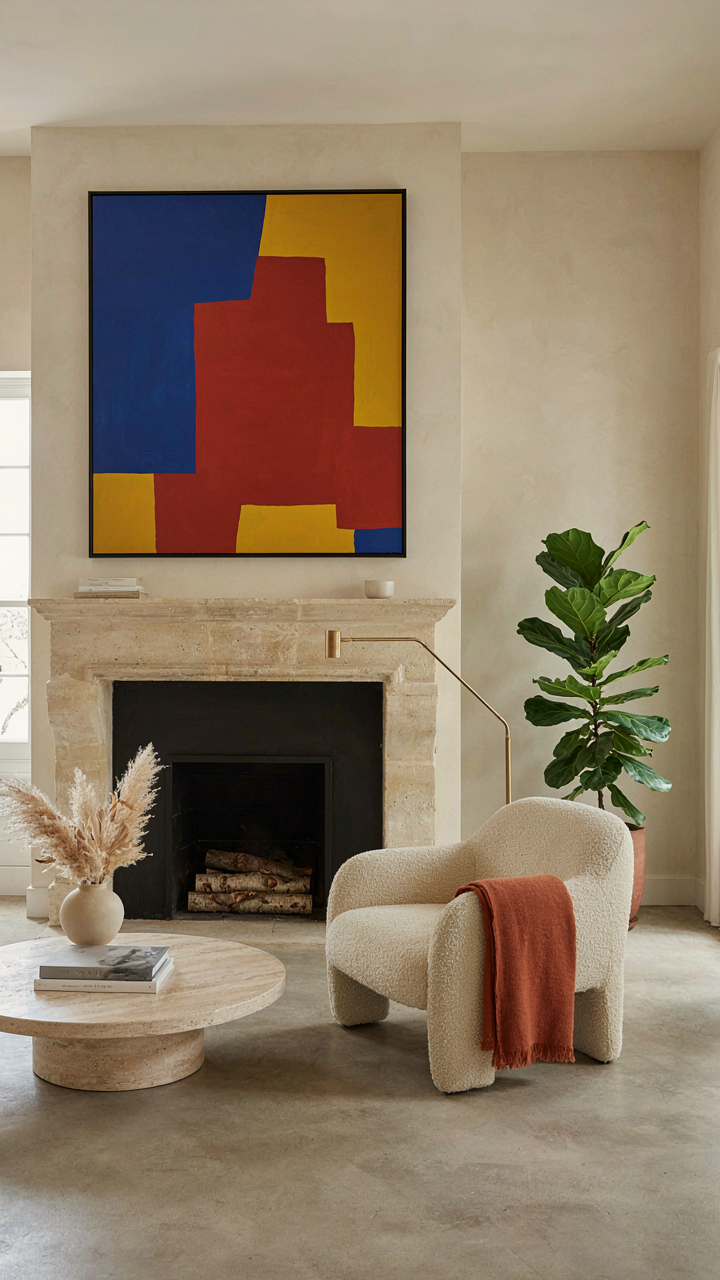
You’re stalling because you think there’s a “correct” French country fireplace. There isn’t. Limestone mantels work with rustic wood, modern art, minimalist décor, or maximalist chaos. Your real move today: screenshot three fireplaces you actually love, regardless of category. Notice what you’re drawn to. That’s not inspiration. That’s permission. Stop waiting for a designer to validate your taste and build the room you want, not the room you think you’re supposed to want.