
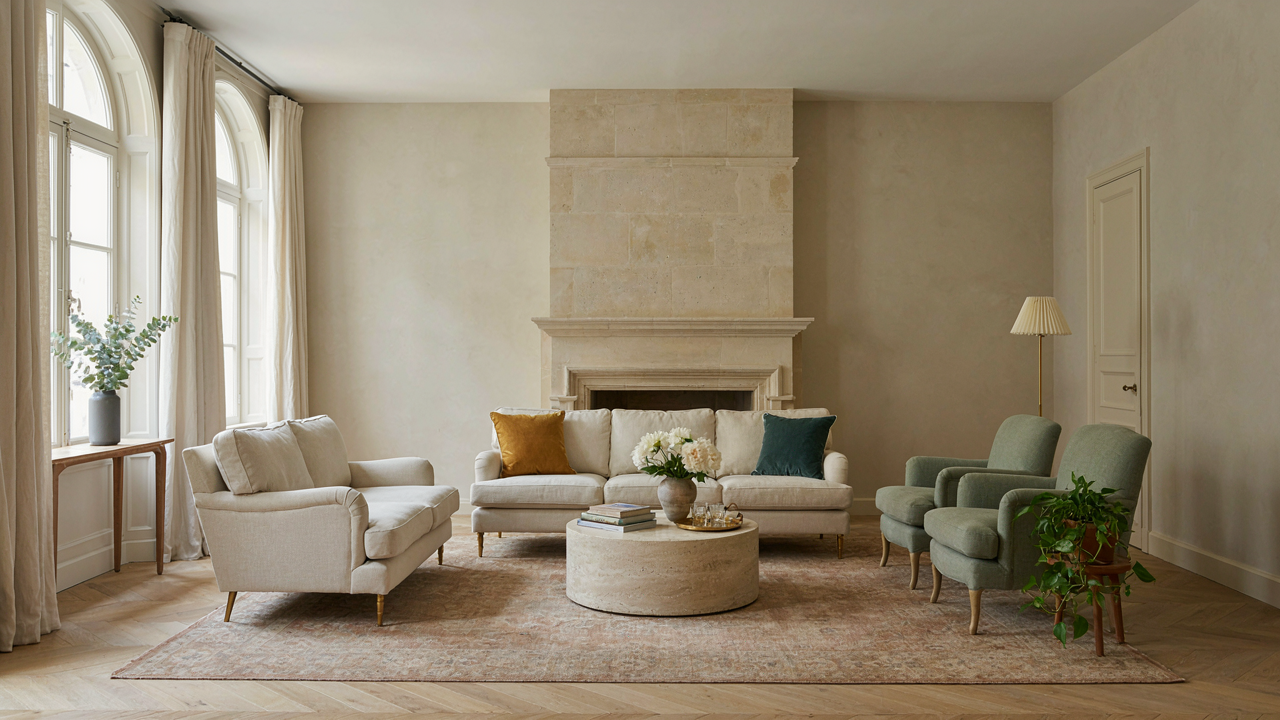
The Provincial Paradox: Why “Simple” Carvings Outlast Trends
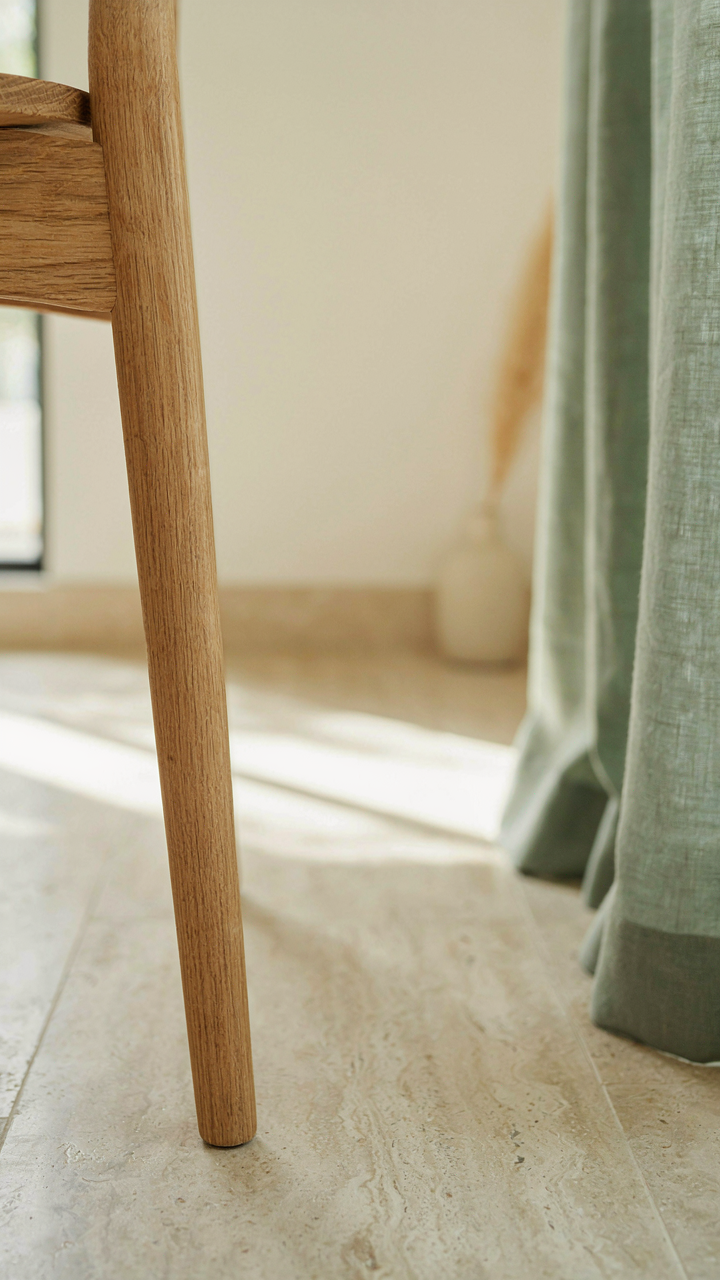
Rejecting Excess In Rococo Furniture
You want to believe that restraint is timeless because you’re afraid of looking foolish with ornate pieces that feel dated in five years. Here’s what actually happens: Rococo furniture, which emerged in 18th-century France as a reaction against the heaviness of Baroque, used carving as a status display mechanism. Curves multiplied. Gilding thickened. Asymmetry became the point. Provincial furniture rejected this entirely.
Provincial pieces carved only where structure needed reinforcement or where the human hand would touch the wood. A chair back got carved because it bore weight and needed grain interruption to prevent splitting. A table leg split decoratively not for show but because the wood’s cellular structure demanded relief at stress points. Provincial craftsmen understood that ornamentation without mechanical purpose signals desperation, not sophistication. This principle outlasts fashion because it obeys material reality, not taste cycles.
Function As The Root Of Form
Carving in French provincial furniture follows an engineering logic: cuts follow grain direction to strengthen joints, not to impress. A mortise and tenon connection at a chair’s frame gets carved molding because that joint experiences shear stress. The carving redistributes force. Excess carving on a Louis XV piece does nothing except collect dust and telegraph insecurity about the object’s actual value.
When you select provincial furniture with carved detail, you’re selecting pieces where every incision solves a problem. The acanthus leaf on an armrest’s scroll isn’t decorative: it marks where the wood changes grain direction, preventing the arm from cracking under repeated stress. This is why provincial pieces survive 200 years of use while overwrought Rococo settees split and splinter. Strip the carved ornament from a provincial table leg and the structure remains intact. Carving that earns its place through function will always outlast carving that exists for effect alone.
Beyond The Gilt: Decoding Real French Provincial Decor

What Separates Hand Carved From Factory Fraud
You’re afraid you’ll buy expensive trash and look like you don’t know the difference. The mechanism is simple: machine-carved pieces use consistent depth and identical repetition across all motifs, while hand-carved work shows natural variation in depth, pressure, and spacing. A carver’s hand moves differently each stroke. Machines don’t.

Run your finger across carved details. Real hand carving has slight irregularities in groove width and depth. The chisel marks won’t be uniform. Factory pieces maintain robotically consistent patterns because they’re literally cut by rotating bits following predetermined paths. Genuine 18th and 19th century provincial furniture shows the carver’s personality in the work.
The Real Cost Signal Nobody Admits
Most advice says check for quality wood and solid joinery. That’s incomplete. The actual predictor of authenticity is the carver’s willingness to waste material. Hand carvers cut into solid wood, removing chips that could’ve been sold. Machine cutting maximizes yield. Look at underbelly and back panels. Authentic provincial pieces show rough chiseling marks and wood loss patterns that prove hand work happened where nobody sees it.
Cheap imitations sand everything smooth and uniform, even hidden surfaces. They carve shallowly because depth costs machine time. Real provincial carving penetrates 0.5 to 1 inch depending on the motif. Press your fingernail into carved recesses. If it stops shallow, it’s factory work masquerading as provincial craft. Depth equals labor investment equals authenticity signal.
The Craft Protocol: More Than Just Sawdust
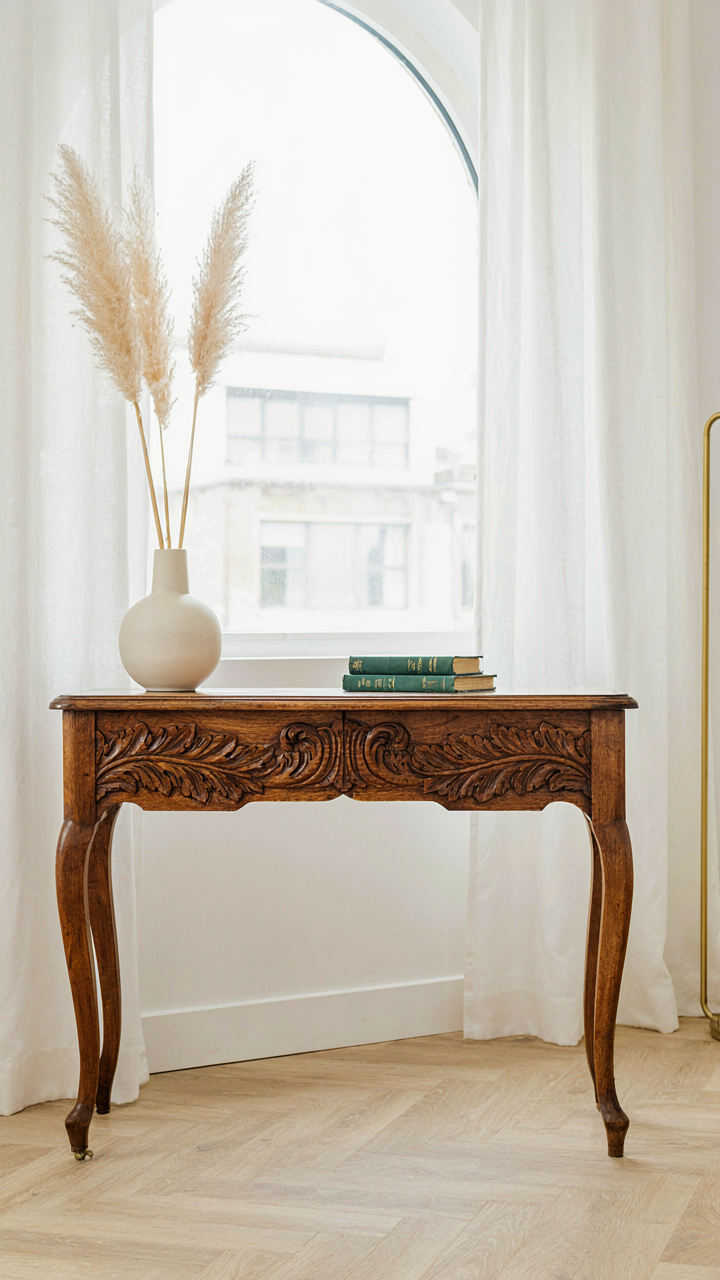
Hand Carved Versus Machine Stamped
You want hand-carved details because you think they signal quality to visitors. The real mechanism is simpler: hand carving removes material unevenly, creating shadow variation that machine stamping cannot replicate. A chisel leaves depth inconsistency. A stamp delivers uniform compression. Authentic French provincial pieces from the 18th and 19th centuries show carving that follows wood grain unpredictably, not symmetrically. This irregularity is the fingerprint of hand labor, and it’s optically irreplaceable.

Machine-stamped details exist to solve a cost problem, not a quality problem. They work when consistency matters more than depth perception. Modern reproduction pieces often use stamping because it’s fast and requires no skilled labor. The stamped relief sits shallower and reads flatter under side lighting. If you examine a legitimate Louis XV or Louis XVI piece, the carved acanthus leaves and shell motifs show inconsistent undercutting that reveals where the craftsman adjusted for wood hardness and grain direction. This cannot be faked by industrial tooling.
Wood Selection And Structural Reality
Material choice determines whether a piece lasts 30 years or 300 years. French provincial makers used oak, walnut, and chestnut because these woods resist movement and don’t warp under temperature and humidity shifts. Softwoods like pine were used for secondary structure, never primary frames, because they swell and contract too much. Modern reproductions cut corners by using pine for everything or mixing woods carelessly, which causes joints to fail and details to crack.
Dense hardwoods age by becoming harder and more stable, not softer. A walnut frame from 1780 is tougher today than the day it left the workshop. This matters tactically: if you’re buying for actual use rather than display, verify the core structure is hardwood and the carving sits on solid material, not veneer over inferior stock. Check underneath and inside drawers where manufacturers stop pretending. The wood itself is the load-bearing protocol that determines whether your investment survives your children.
The Silent Language Of French Painted Furniture
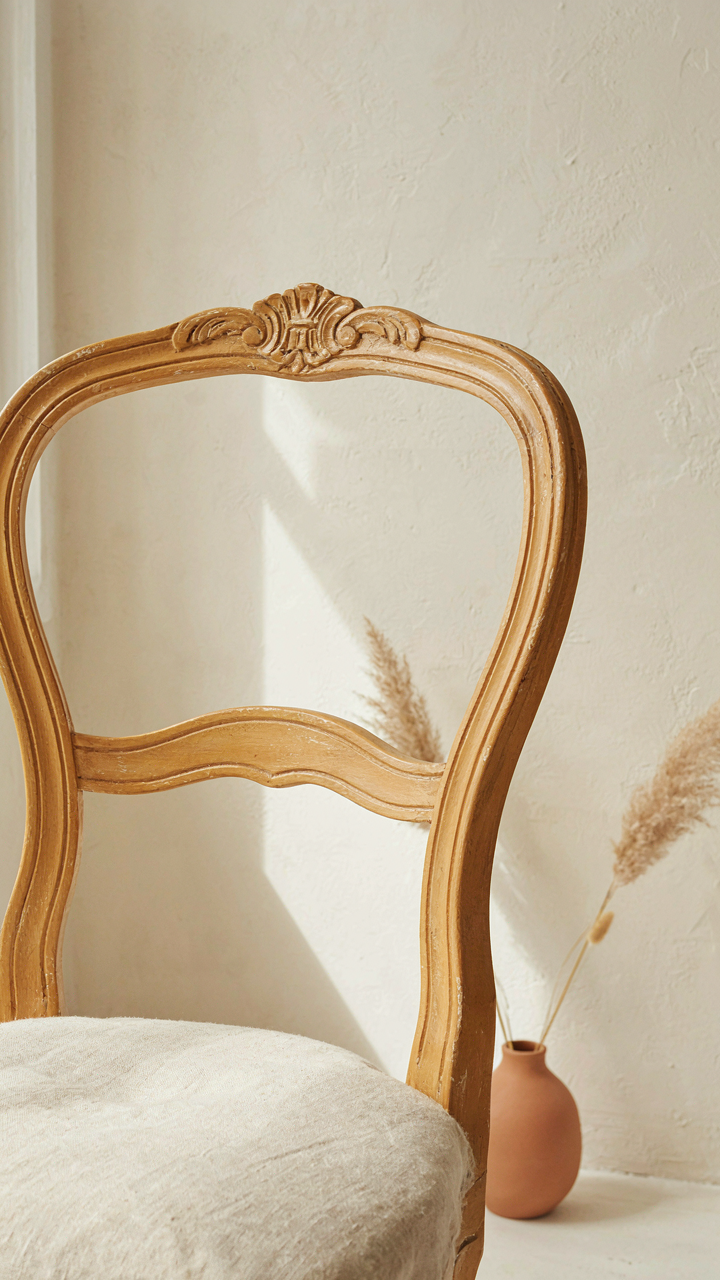
When Paint Tells The Truth
You want patina because it signals you didn’t buy this last week from a catalog. That’s the real mechanism at work here. In painting theory, patina operates like erosion in geology: it’s the visible record of time applied unevenly across surfaces. French provincial furniture uses this principle deliberately. Paint worn thin at armrests and drawer edges proves movement and use. Sellers fabricate this, but genuine wear patterns follow physics, not aesthetics. The wood underneath shows through where hands actually gripped.

Authenticity lives in inconsistency. A chair painted in 1780 didn’t weather uniformly. Sunlight faded exposed surfaces. Kitchen heat damaged the back legs faster than the front. Cracking follows wood grain and humidity cycles, not random decoration. Real patina stops where a cloth hung or a wall stood. When you see this specificity, you’ve found furniture that earned its appearance through actual friction with human life, not a paint job designed to look old.
Depth Through Deliberate Restraint
The common advice says layer multiple colors for richness. That’s wrong. French provincial painters used color scarcity as a tool for depth. They started with a base coat, usually cream or light gray, then applied a secondary color selectively to recessed areas and molding. The contrast creates visual depth without muddiness. Too many colors flatten the piece. One accent color on carved details outperforms a rainbow.
Examine the pigments historically available in provincial France. Ochre, umber, and terre verte dominated palettes because they mixed well and aged predictably. These earth tones recede naturally, so furniture painted in them reads as larger and more integrated into a room than bright secondaries would. Apply your secondary color only to carved zones and inner panels. Leave flat surfaces bare of the accent shade. This restraint makes carved elegance legible from across the room.
Investing In Permanence: The French Provincial Bedroom
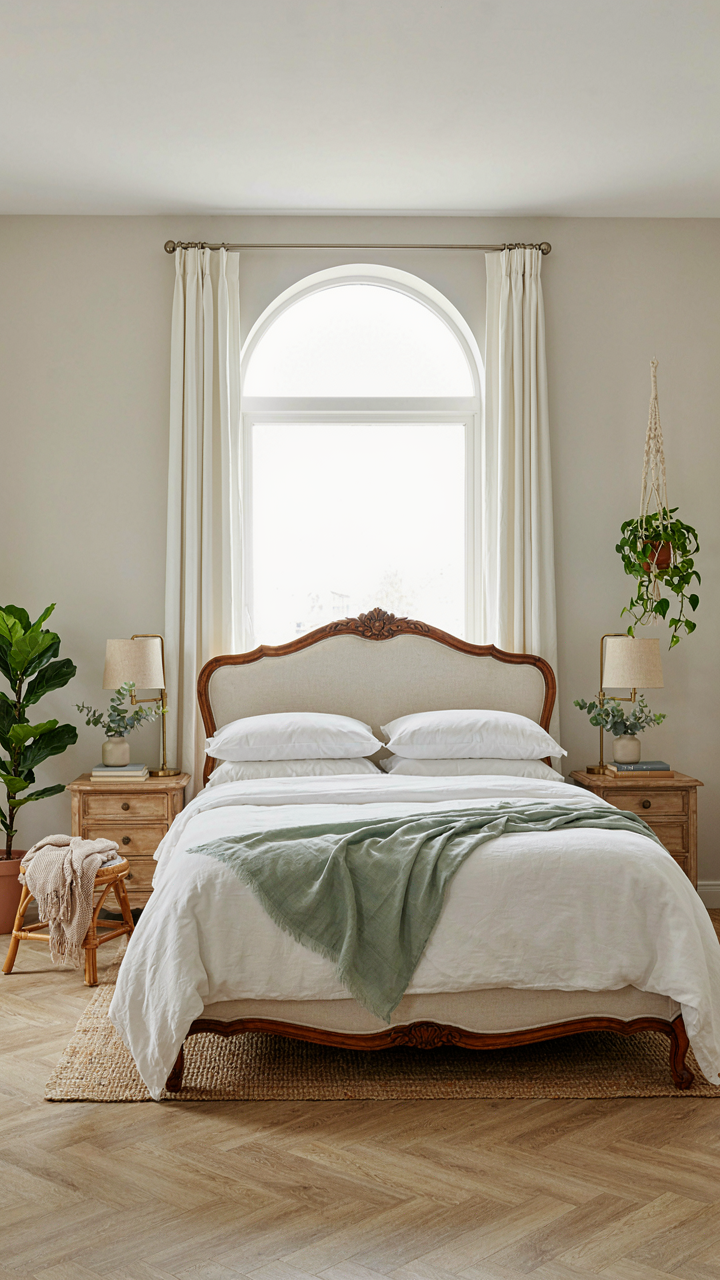
The Room That Holds Its Value
You want this space to say something about you without screaming for attention, which means you’re buying security disguised as taste. The mechanism is simple: French provincial furniture resists trend death because its design logic runs deeper than fashion cycles. Proportions, joinery, and material selection follow structural principles that don’t expire. A Louis XV fauteuil from the 1750s still functions identically to one made last year because the angle of the backrest, the curve of the legs, and the relationship between seat height and depth solve ergonomic problems that haven’t changed.

The bedroom amplifies this because you live in it alone. No guests cross-examine your choices here. You sleep eight hours a night in a room built on curves, hand-planed wood, and upholstery that actually breathes. French provincial bedroom furniture typically features lighter woods than its formal cousin—cherry, walnut, fruitwood—paired with carved panels that break up visual weight without demanding anything from you. The bed frame holds its structure through mortise-and-tenon joinery, not fasteners that loosen over decades. This is why the investment argument works: the piece doesn’t deteriorate into disposability.
Built To Outlast You
The assumption that you’ll replace bedroom furniture every seven to ten years is industrial marketing, not reality. Solid wood frames with hand-carved details can operate for two centuries if you don’t abuse them. French provincial construction uses wood movement as a feature, not a liability—panels float in grooves so seasonal expansion and contraction never crack the casing. The finish isn’t polyurethane; traditional approaches used oil and wax that repair themselves through regular maintenance rather than peeling and requiring replacement.
Heirloom status isn’t romantic sentiment. It’s arithmetic. A three-thousand-dollar bed frame that lasts ninety years costs thirty-three dollars annually. A twelve-hundred-dollar particle-board frame lasting eight years costs one hundred fifty dollars yearly. You’re already paying the heirloom price through replacement cycles; French provincial simply bunches those payments into one decision. The mechanism: buy once, maintain systematically. Oil the wood annually. Tighten joints if they shift. Reupholster the headboard when fabric wears, not the frame. This keeps the piece active indefinitely.
The Mimicry Trap: Why “French Style Bedroom” Fails
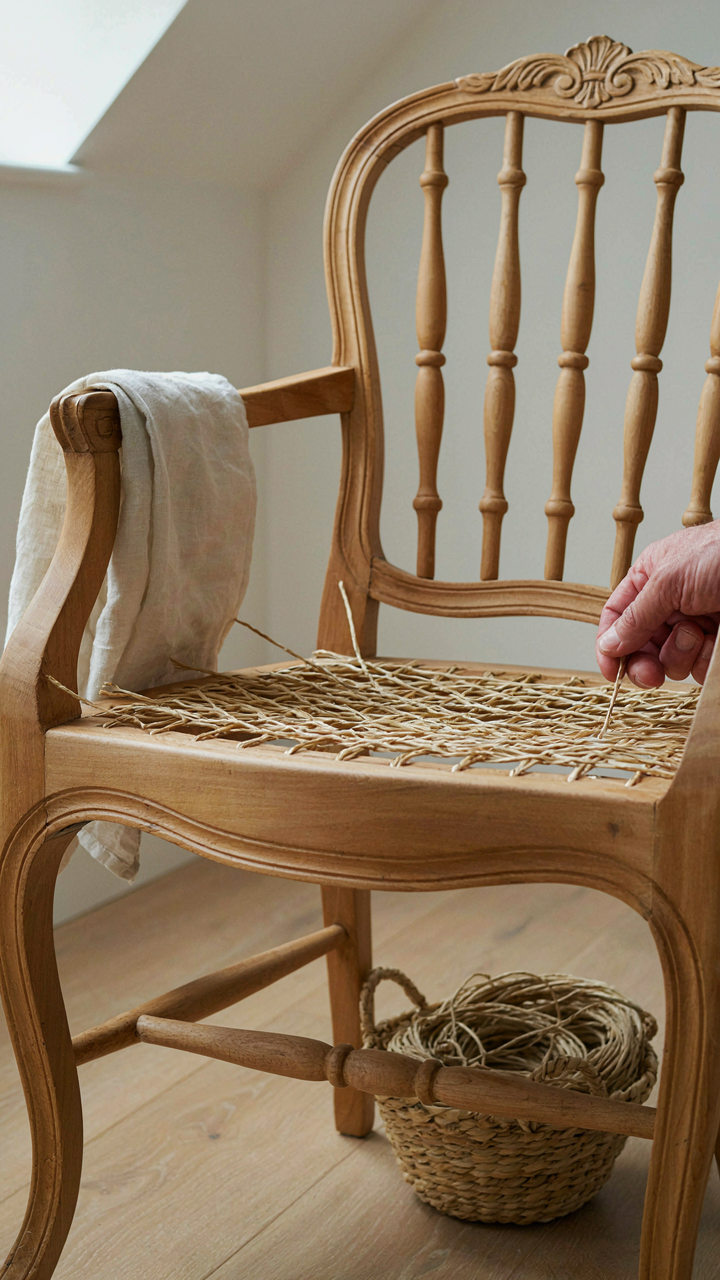
Authenticity In Provincial Decor
You want the shortcut to looking cultured without doing the work. Here’s the mechanism: French provincial furniture wasn’t designed for aesthetics alone—it solved specific problems for specific people in specific places. Trying to recreate it without understanding those constraints produces visual noise, not rooms.

Provincial furniture emerged from rural French workshops between the 17th and 19th centuries. Craftsmen built pieces from available local wood, using hand tools and repetitive joinery. They carved details not for decoration but because carving disguised the grain inconsistencies of regional wood. A reproduction “French provincial” bed made from engineered veneer and mass-produced hardware copies the surface without the logic underneath. The object fails because it carries none of the original constraints that made the design what it was.
Beyond Superficial Trends
Common advice says “just add curved legs and some floral upholstery” to get French provincial style. That’s lazy framing. Real provincial pieces reflect regional availability—Normandy favored oak and apple wood, Provence used walnut and cherry. Materials dictated joint types, which dictated proportions, which dictated what a carving could actually do structurally.
When you select a piece, trace backward to its origin region, not forward from a mood board. A Lyonnaise chair has different joinery and wood than a Breton piece. The rush seat isn’t decorative—it’s functional and replaceable. The turned spindles on a dining chair connect to chairmaking traditions specific to that valley. Purchase or commission from that constraint set, not from what Instagram calls French provincial this season.
The Evolutionary Design Principle Of The French Chair

Where Nature Meets Hand Carving
You want this section to validate your taste. Here’s what actually matters: French provincial chairs work because their carved forms mimic biomechanics—the study of how bodies move through space. Carvers didn’t consciously apply this field; they observed human posture over generations and encoded it into wood. The curved back support, the angled seat, the leg proportions—these solve a specific problem your spine has. They’re not decorative solutions dressed up as functional ones.

The carved details on provincial chairs follow skeletal and muscular logic. Cabriole legs curve outward like a flexed calf. Splat backs rise at angles that match spinal curves. Armrest scrolls support the forearm at its natural resting angle. These weren’t accidents or aesthetic choices. Craftsmen in Provence and Normandy built chairs through trial and error, kept what worked, discarded what caused pain. The carving served as both ornament and structural reinforcement—the grooves and curves distributed weight more evenly than flat planes could.
The Seat That Actually Lasts
Most furniture advice separates comfort from longevity. That’s lazy thinking. A French provincial chair endures precisely because its ergonomic design reduces structural fatigue on materials. The seated human body exerts concentrated force on four points: two legs bear most weight, the back receives secondary load, the seat itself distributes pressure. The best provincial chairs angle their back rails slightly rearward, which shifts your center of gravity backward and reduces shear stress on the seat joints.
The depth of the seat matters more than people admit. Shallow seats look proportional but force your spine into a slouch. Proper provincial seating is eighteen to twenty inches deep, creating a geometry where your thighs support your weight rather than the backrest alone. The carved front edge of the seat isn’t decorative—it’s an ergonomic detail that reduces pressure on the back of your knees. Without this edge radius, circulation cuts off, your legs go numb, and you abandon the chair. With it, you can sit for hours. Measure before buying: depth, back angle, arm height relative to seat. These determine whether the piece becomes functional furniture or expensive decoration.
Asymmetry Of Value: French Provincial Style Vs. Mass Market
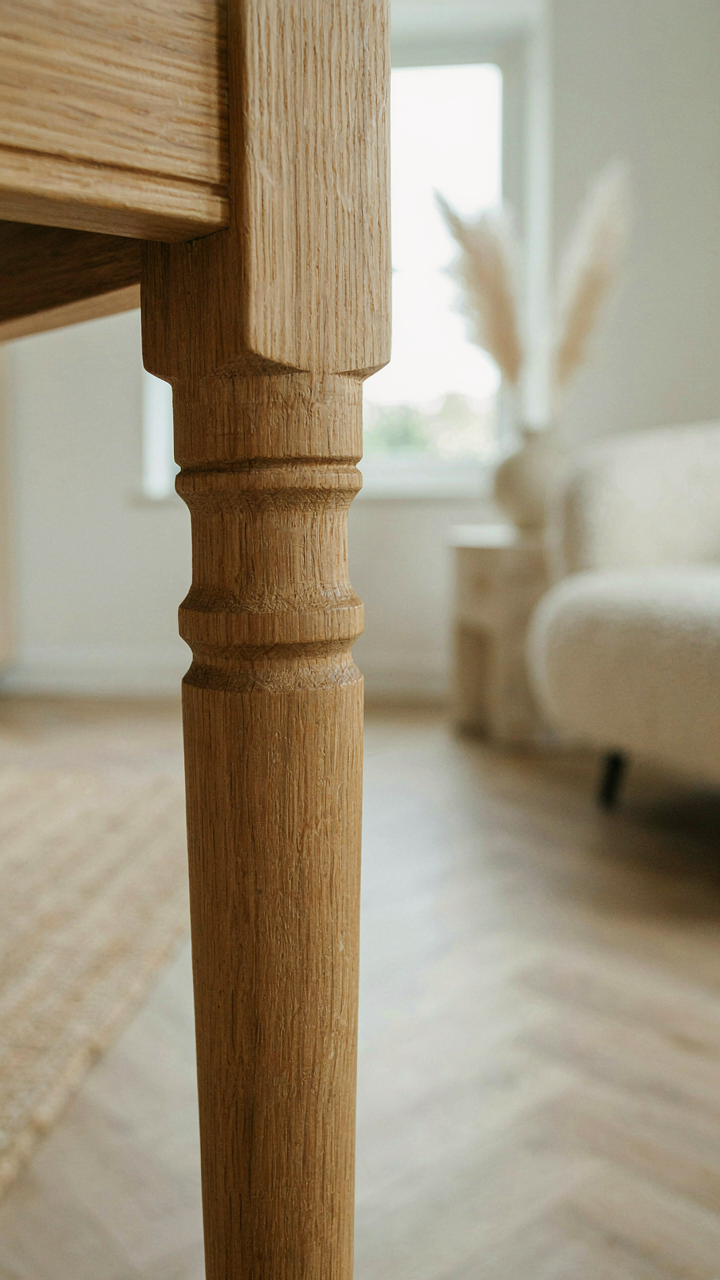
What You Actually Pay For
You’re reading this because you suspect cheap furniture is a trap, and you’re right to be paranoid. The mechanism here borrows from economics: diminishing returns. A mass-produced copy costs less upfront but deteriorates faster, forcing replacement cycles that compound the real expense over a decade.

Authentic French provincial furniture uses mortise-and-tenon joinery, hand-selected wood that seasons properly, and finishes applied over weeks rather than hours. A reproduction uses dowels, particle board veneers, and polyurethane sprayed in minutes. The price difference isn’t markup. It’s the difference between a system designed to fail and one built to outlast you.
- Joinery quality: Mortise-and-tenon joints on provincial pieces distribute stress across grain, resisting the warping that kills cheap furniture within three to five years of regular use.
- Wood selection: Authentic pieces use solid hardwoods like oak, walnut, and cherry, graded for figure and stability before construction begins, not plywood layered with veneer.
- Finish depth: Hand-rubbed oils and waxes on genuine provincial furniture develop patina and protect wood from moisture and UV damage far longer than single-coat factory finishes.
- Hardware authenticity: Original brass, iron, and bronze hardware resists corrosion and wear, while plated pot metal on reproductions flakes and leaves marks within months of handling.
- Structural integrity under stress: Provincial pieces accommodate wood movement through design, preventing the cracking and splitting that happens when modern glues lock wood too rigidly.
The real cost of a reproduction emerges when you move it twice, spill water on it once, or simply sit on a chair regularly. That’s when the economics flip: you’ve paid three times by year seven because you bought something four times.
Patience Compounds Into Equity
French provincial furniture enters your home as an expense. It leaves as an asset. The distinction matters because most people treat furnishings as disposable, so they never see what actually builds wealth in a room.
A legitimate provincial piece gains value because scarcity increases while supply depletes. Pieces made in the 18th and 19th centuries are finite. Reproductions multiply endlessly. When you own the finite thing, market logic works backward: time makes it worth more, not less. A well-maintained Louis XV-style fauteuil from the 1920s costs less at auction than reproduction furniture cost new fifty years ago, yet original pieces consistently appreciate.
The compounding happens in two channels: actual resale value, where authenticated provincial pieces hold 60 to 80 percent of purchase price after fifteen years, and cost-per-year utility, where a single chair amortizes to pennies daily if used for sixty years instead of ten. Stop thinking of it as spending. Start tracking the annual cost to own. That number collapses when the object refuses to break.

The Real Poverty Isn’t A Lack Of Carved Wood, But The Constant Craving For Temporary Validation
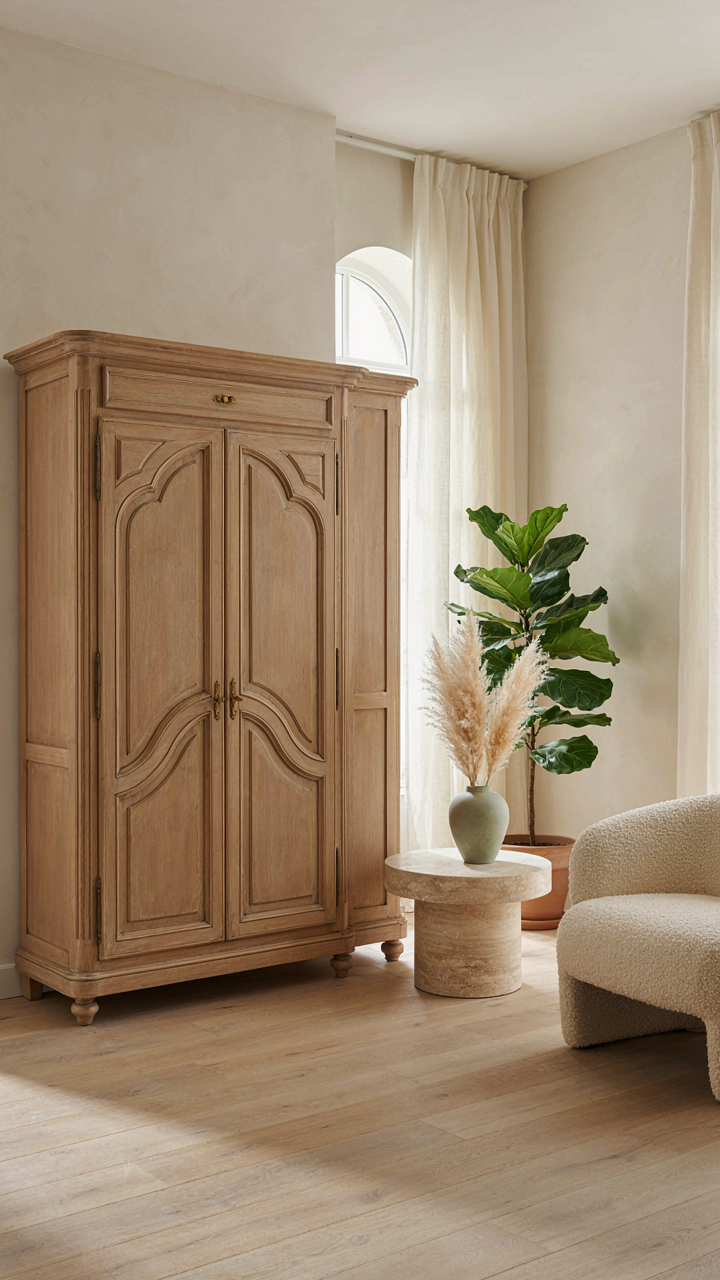
You scroll through design feeds hunting for the next piece to complete you. Stop. French provincial furniture teaches the opposite lesson. These pieces lasted centuries because they solved a problem, not because they chased trends. Buy one carved piece you’ll use daily. Not for the photo. Not for the story. For the function. The validation you’re actually after comes from living with something that works, not from owning something that impresses. That’s the only aesthetic that ages well.



