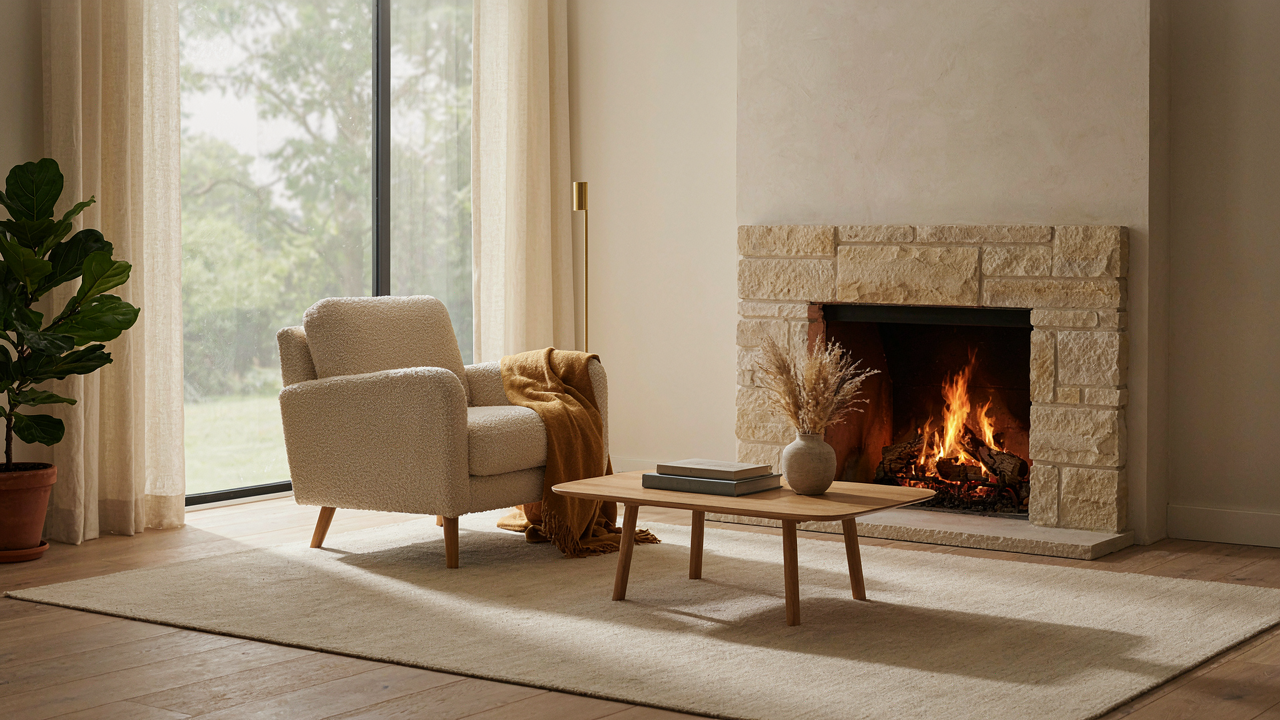
The BTU Fallacy: Why Your Cottage Fireplace Needs More Than Charm
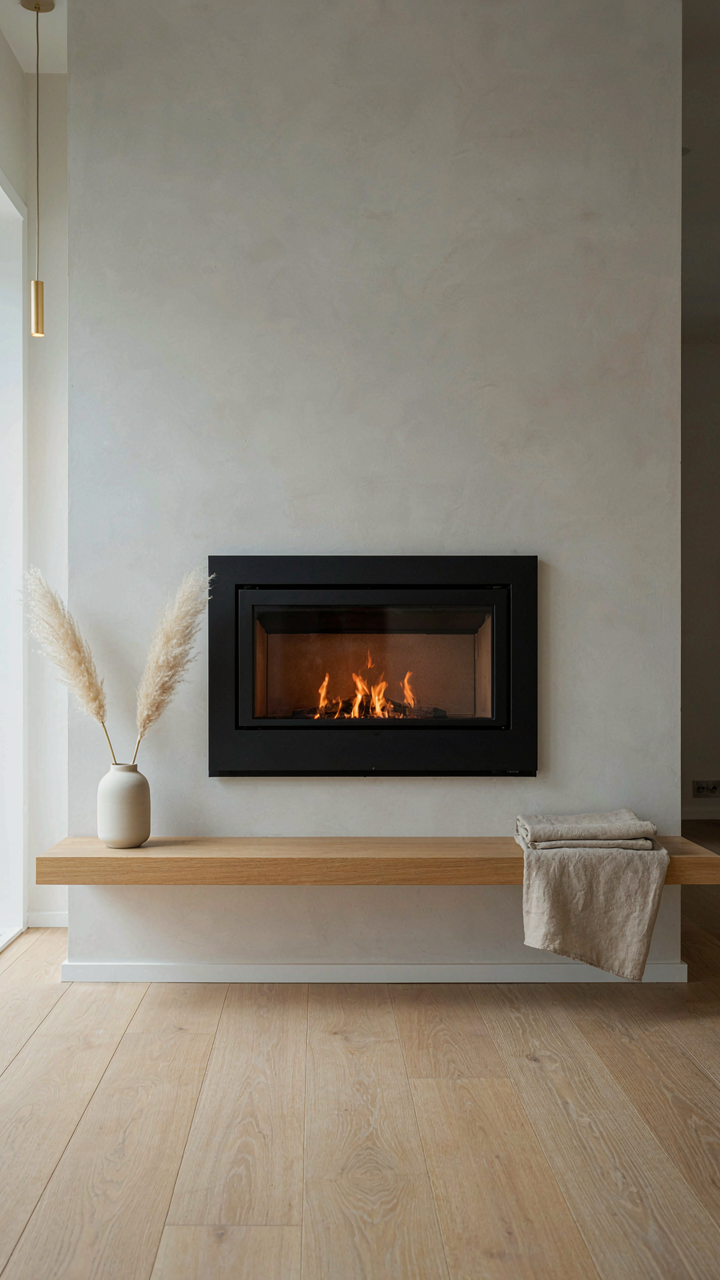
Aesthetics Won’t Heat Your Home
You picked a cottage fireplace because it looks like belonging somewhere. But charm burns zero BTUs. The real mechanism here is thermal output versus visual appeal, and they operate on completely different tracks. A fireplace that photographs well for Instagram generates between 10,000 and 15,000 BTUs on a good day. A small cottage needs 20,000 to 40,000 BTUs minimum to actually warm a 500-square-foot space. Most people choose first on appearance, then rationalize the heating gap later.
The gap exists because fireplace design prioritizes containment and draft over heat radiation. Traditional fireplaces lose 80 to 90 percent of their heat up the chimney. What remains barely extends beyond the immediate hearth. You get ambiance in front and cold hallways everywhere else. Accepting this fact early saves you from the trap of buying a showpiece that looks right but performs like decoration.
Heat Output Drives Real Selection Criteria
In thermodynamics, efficiency measures output relative to input, and most open fireplaces operate at 10 to 25 percent efficiency. That’s the actual mechanism determining whether your cottage stays warm or just looks warm. For tiny spaces, this matters because your surface area to volume ratio is already working against you. Every square foot radiates heat faster. A fireplace that underperforms becomes a liability instead of a solution.
Measure your cottage’s square footage and ceiling height first. Calculate the BTU requirement based on climate zone and insulation quality. Then work backward to fireplace type. An EPA-certified wood insert delivers 50,000 to 90,000 BTUs with 70 to 85 percent efficiency. A gas insert runs 25,000 to 40,000 BTUs at 80 to 90 percent efficiency. An open fireplace provides 10,000 to 20,000 BTUs at 10 to 25 percent efficiency. Choose the heat output you actually need before deciding what it looks like.
Wood Burning Stoves Living Room: Beyond The “Rustic” Façade
The Heat Output Trap
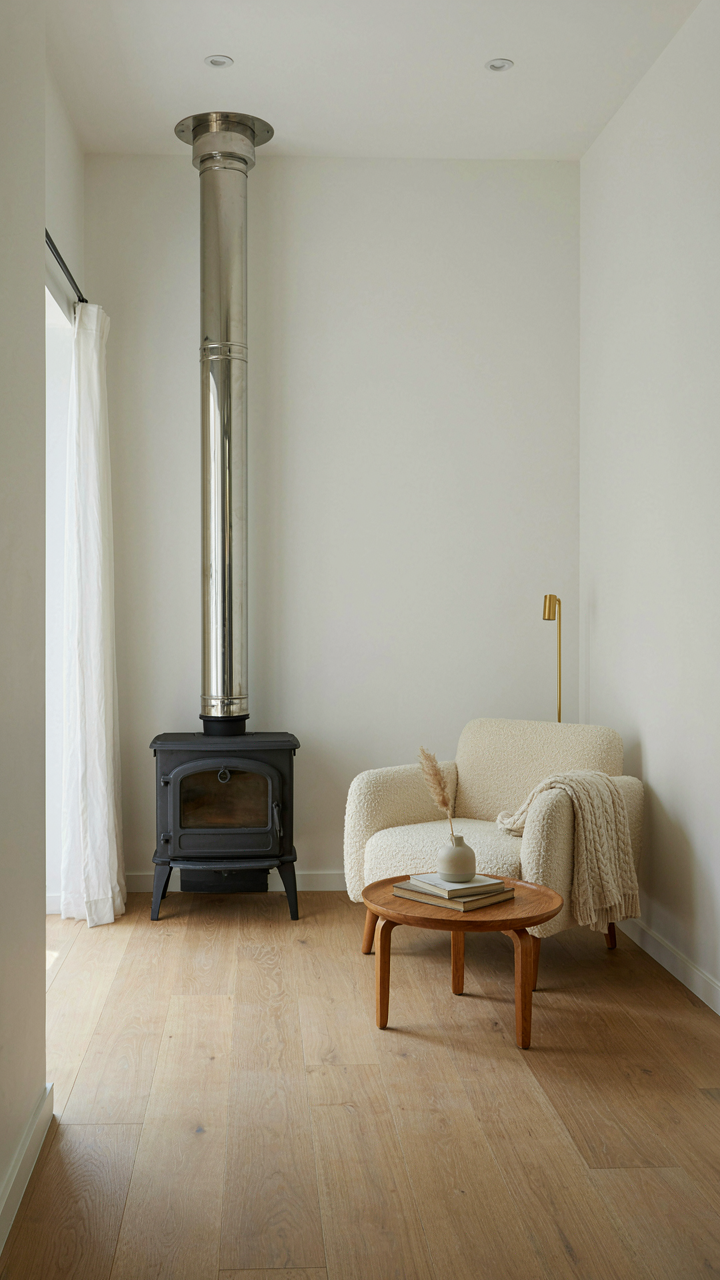
You want the fireplace to look intentional, not like you settled. The real mechanism here is thermodynamic efficiency, borrowed from HVAC engineering: a wood stove’s heat output depends entirely on mass, surface area, and draft rate. A tiny cottage demands a stove between 8,000 and 15,000 BTU per hour, not the 20,000+ units builders install in average homes. Oversizing wastes space and creates dead zones. Undersizing fails to warm the room.

The footprint question isn’t aesthetic. It’s about floor plan disruption and heat distribution. A compact cast iron stove measuring 24 inches wide radiates heat efficiently because proximity matters in small spaces. Distance kills warmth transfer. Position the stove where it creates a thermal anchor without eating walkway space, typically along an interior wall perpendicular to the entry. Measure twice, install once.
Ventilation And Draft, Not Decoration
Most fireplace advice treats ventilation like an afterthought, a code box to check. That’s wrong. Improper draft kills the entire system and creates carbon monoxide risk. The stack effect is your mechanism: warm air rises through the chimney and pulls fresh air from the room, which then pulls combustion air from outside. This pressure differential must stay balanced or the stove backs smoke into living space.
Your chimney needs a minimum height of 12 feet from firebox to cap and must rise above the roofline by at least 3 feet. Undersized flue diameter breaks draft. A wood stove requires an 8-inch or larger flue. Install a damper to control secondary air and prevent heat loss when the stove sits cold. Have a certified sweep inspect the chimney annually. Draft problems aren’t fixes you improvise.
The Micro Footprint Method For Tiny Fireplace Integration
Where Heat Actually Goes In A Small Room
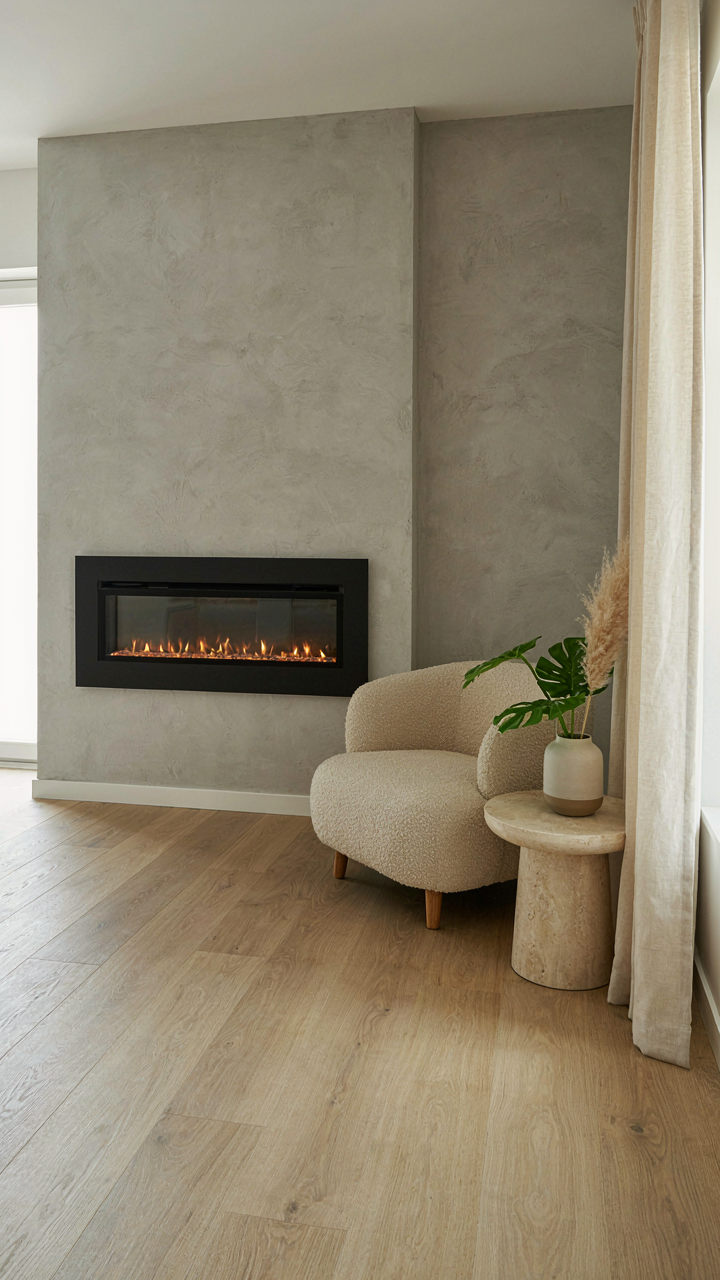
You want a tiny cottage fireplace because you’re afraid the space will feel cold and dead without one. Here’s what matters: thermal dynamics aren’t magic. Heat rises and radiates outward. In small rooms, this becomes thermodynamics’ central problem—you need to capture and retain radiant energy before it escapes through walls, ceilings, and windows. A fireplace sitting in the wrong spot wastes 60 percent of its output. Placement determines whether you’re heating the room or heating the neighborhood behind your walls.
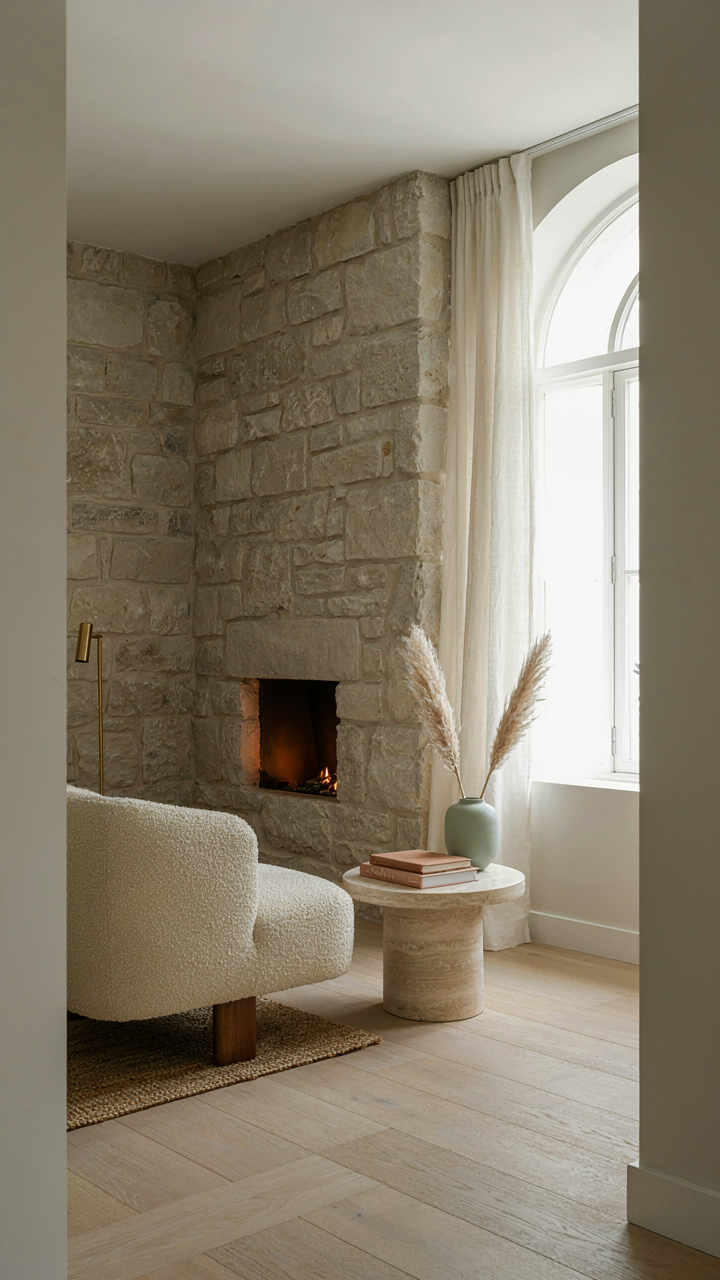
Corner placement beats center walls. Corner fireplaces use two existing walls as reflective surfaces, bouncing radiant heat back into the room instead of letting it dissipate into one open direction. Interior corners—not exterior—matter here. An exterior corner fireplace bleeds heat through masonry to the outside. Position your tiny cottage fireplace on an interior corner, ideally opposite the largest window or door. This single decision cuts your heating inefficiency in half compared to a centered wall installation.
Fitting The Fireplace Without Sacrificing Function
Most people think “tiny fireplace” means cramming a standard unit into a closet space and hoping it works. That’s backward. Real integration starts by auditing what the room actually does. A bedroom fireplace needs zero clearance from the headboard because you’re not gathering there. A living room fireplace needs sightlines and seating radius. A kitchen fireplace needs to stay clear of cabinetry and cooking zones.
Measure the functional footprint first, then select fireplace dimensions to match. A 24-inch-wide opening works for most cottage spaces without dominating the room. Mount it 12 inches higher than standard height—this opens floor space below and improves sight lines from seated positions. Surround materials should read as part of the wall, not as a competing object. Brick, stone, or plaster matching the room’s existing palette lets the fireplace recede visually while functioning thermally.
Cottage Corner Fireplace: The Unseen Space Advantage
Why Corners Matter More Than You Think
You want to look like you made a smart design choice without actually sacrificing square footage. That’s the real reason corners appeal to cottage owners. Here’s the mechanism: a corner fireplace uses two existing walls as its perimeter, so you install a firebox into dead space instead of eating into your living area. Corners are architectural voids most people ignore. A tiny cottage has no room for waste, so repositioning heat into an angle that already exists is how you gain function without loss.
Corner fireplaces work because geometry does half the work. The two walls behind the fireplace act as reflective surfaces that bounce radiant heat back into the room instead of letting it escape into wall cavities. This is basic physics applied to cottage heating: you’re using existing structure as your heat reflector. A centered fireplace on a single wall radiates in a wider angle, losing energy to side escape. A corner narrows that spread and amplifies interior warmth concentration.
Radiant Heat Flow And Wall Configuration
Thermal distribution in corners requires understanding how heat actually moves through space, not just where you point the opening. Engineering principle applies here: a corner fireplace creates what thermodynamics calls a radiant convergence zone. Two walls perpendicular to each other multiply the surface area receiving direct heat. Place your firebox opening between those walls and you’ve structured heat delivery to bounce repeatedly before leaving the room.
The firebox depth and width must match your corner dimensions or the walls won’t function as reflectors. A gap between the fireplace frame and the corner wall defeats the purpose entirely because heat leaks sideways instead of bouncing forward into your seating area. Measure your corner walls for plumb and square before ordering. If your cottage has older plaster or stone, minor irregularities actually help because uneven surfaces scatter heat more evenly across the room instead of creating cold spots. Install the firebox flush to both corners, not recessed or floating.
The Thermodynamics Of A Tiny Home With Fireplace
How Heat Actually Moves In Small Spaces
You want the fireplace to feel like it’s solving your heating problem without blowing money on infrastructure you don’t need. That’s not wrong, but most people misunderstand what a fireplace actually does thermodynamically. Heat transfer in physics operates on three mechanisms: conduction, convection, and radiation. In a tiny cottage, radiation is your fireplace’s only real advantage—it shoots infrared energy directly at objects and people in the room, not at the air itself. The air around a fireplace often stays cold while the wall behind it bakes. This matters because your instinct is wrong: a fireplace doesn’t heat a space efficiently by warming the room temperature. It heats you.
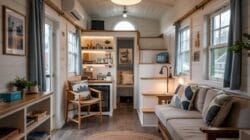
The practical implication flips conventional wisdom. A fireplace in a 200-square-foot cottage doesn’t raise ambient temperature meaningfully if doors open to other rooms or drafts exist. What it does is create a zone of thermal comfort through radiation. Position it where you actually sit. A fireplace on a wall opposite your seating area wastes its output heating empty space and the exterior wall behind the chimney. Measure the radiant distance before building—most people find effective warmth extends 8 to 12 feet from an active firebox, depending on its size and opening depth.
Stopping Heat From Abandoning The Space
The conventional advice says insulate everything equally. That’s incomplete and wastes money in a tiny cottage. Your enemy isn’t uniform heat loss—it’s specific leak points that dwarf general insulation gains. A tiny fireplace generates heat in one spot; if that heat escapes through the chimney, the exterior wall, or gaps around the hearth, the room never accumulates warmth. Chimneys are thermal highways. Hot air rises and exits through the flue whether you’re burning a fire or not. The stack effect in a small, tight space is stronger, not weaker, because the volume differential is pronounced.
Seal the chimney when the fireplace isn’t in use—a damper or cap that actually closes prevents convective loss during the seasons you’re heating. Insulate the exterior wall behind the chimney with rigid foam or reflective barriers to stop conducted heat from transferring outdoors. Most people ignore this wall entirely and wonder why the fireplace doesn’t warm the cottage past the immediate zone. The hearth itself needs thermal mass—stone, brick, or tile that absorbs radiant heat and releases it slowly after the fire dies. Without it, warmth vanishes the moment flames drop. Install the hearth to extend at least three feet into the room; this absorbs and re-radiates heat back inward instead of letting it dissipate into the floor structure below.
Shed With Fireplace: Turning Utility Into Warmth
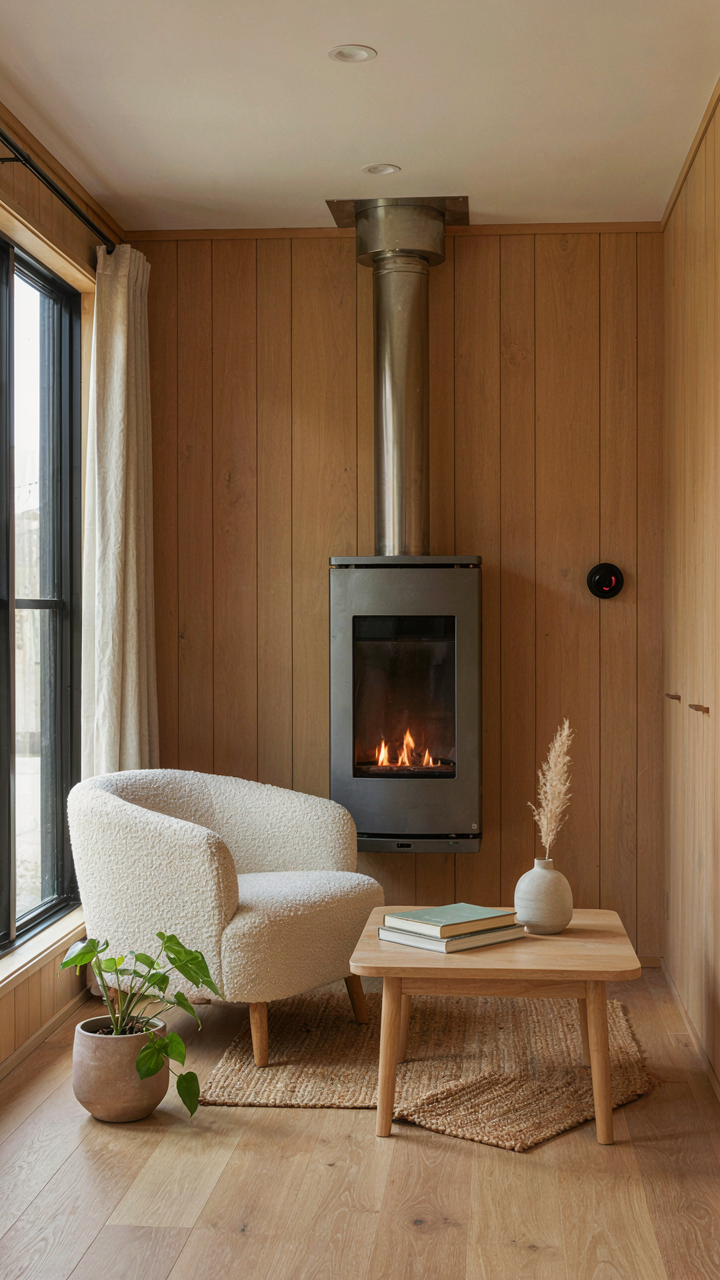
Converting Shed Space For Heating Efficiency
You want a shed fireplace because you’re tired of wasting money heating dead space or sitting in the cold when you’re working outside. Here’s the mechanism: a shed fireplace works like a thermal battery in reverse logistics—instead of storing energy centrally and distributing it outward, you generate heat at the point of use and contain it in a small, already-insulated envelope. Sheds have walls. Use them.
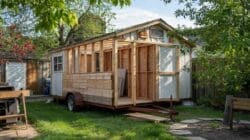
The real mistake people make is treating shed heating like cottage heating at scale. It isn’t. A shed doesn’t need to warm 800 square feet. It needs to push 10 to 15 degrees above ambient in a 100-square-foot space. A small wood stove or even a direct-vent gas unit does this without oversizing. Insulation matters more than fireplace size. If your shed has gaps in the roof or single-layer walls, no fireplace solves that first.
Detached Structure Safety Protocol
Detached structures change the safety calculus because you lose the building envelope that ties into your home’s ventilation system. A shed fireplace must have independent clearance from combustibles—no exceptions. The rule is simple: maintain at least 3 feet of clearance from the stove to any wall, shelf, or stored item. More matters if you’re using wood. Metal conducts heat; wood doesn’t, but proximity still kills.
Ventilation for a detached shed fireplace requires either a proper chimney system or a direct-vent unit that exhausts outside. You cannot run an open-hearth fireplace in a sealed shed—carbon monoxide accumulates fast in small, tight spaces. Install a battery-powered CO detector anyway. Check your local building codes before you install anything. Some jurisdictions require permits for shed structures with heating appliances.
She Shed With Wood Stove: Beyond The Hobbyist Fantasy
Heat Output Matches Room Volume, Not Vibes
You want a wood stove in your she shed because you think it signals something about who you are—self-sufficient, grounded, capable. The real mechanism is thermodynamics: a stove’s heat output must correspond to the cubic footage it needs to warm. Most people skip this math entirely and buy based on aesthetics.

A standard wood stove produces between 40,000 and 90,000 BTU per hour. A 200-square-foot she shed with 8-foot ceilings holds 1,600 cubic feet of air. A 60,000 BTU stove overshoots this space significantly, making the room oppressively hot near the stove and creating dead zones. Size down. Measure your space, calculate the volume, then select a stove rated for that capacity, not the one that looks best in photos.
Wood Supply, Storage, And The Access Problem
- Seasoned hardwood requirement: Wood must cure 6 to 12 months before burning. Pine and softwoods produce excessive creosote buildup. Stack your supply in a covered outdoor structure, elevated off the ground, with airflow between rows.
- Winter accessibility: A cord of wood weighs roughly 5,000 pounds. If snow accumulates, hauling becomes a friction point that kills actual use. Position your storage within 20 feet of the shed entrance on level ground.
- Chimney clearance zone: Maintain at least 3 feet of clearance from the chimney pipe to any combustible material—roof edges, tree branches, overhangs. Code violations create liability and fire risk that insurance won’t cover.
- Ash disposal logistics: A wood stove generates ash that needs removal every 1 to 3 days during use. You need a metal bucket, a shovel, and a designated outdoor dumping spot. Plan for this friction or the stove becomes a chore.
- Local ordinance verification: Some jurisdictions restrict wood burning within certain distances of property lines or ban it entirely in fire seasons. Check your county and municipality rules before installation.
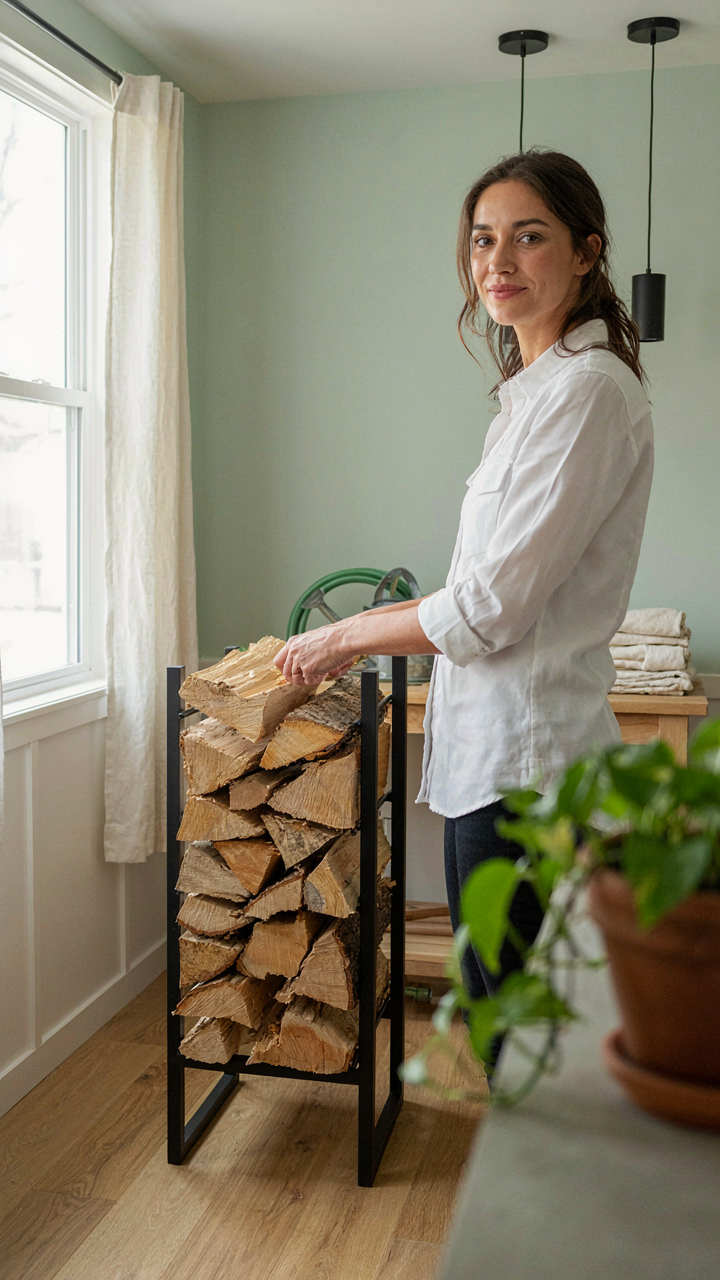
The common mistake is assuming you’ll move wood from storage to stove as needed. You won’t—not consistently, not through winter. You’ll rationalize skipping burns, then abandon the stove. Build a covered woodshed adjacent to your shed with a sloped roof and open sides for airflow. Stack wood in early fall. Keep a two-week supply indoors in a metal stand to avoid dragging wet logs across your floor every time temperatures drop.
The Biomass Efficiency Protocol: Fueling Your Cottage Fireplace
Which Fuel Burns Hottest For Your Space
You want to feel like you made the right choice without doing the math. Here’s the mechanism: thermodynamics doesn’t care about your intuition. Wood produces roughly 8,000 to 9,000 BTUs per pound when fully seasoned. Pellets deliver 8,000 to 9,500 BTUs per pound with less moisture variability. Coal generates 12,000 to 15,000 BTUs per pound but requires a grate designed for it. Most cottage fireplaces use wood because it matches the aesthetic, not because it’s optimal for output.
The real bottleneck isn’t fuel type. It’s moisture content and combustion efficiency. Wet wood wastes 40 to 50 percent of its energy as steam. Seasoned wood with 15 to 20 percent moisture content burns hot and clean. Hardwoods like oak and maple outperform softwoods because they contain more dense cellulose. If your cottage fireplace has no chimney damper or draws poorly, even premium fuel wastes heat up the flue before warming your room.
Acquiring And Storing Fuel The Right Way
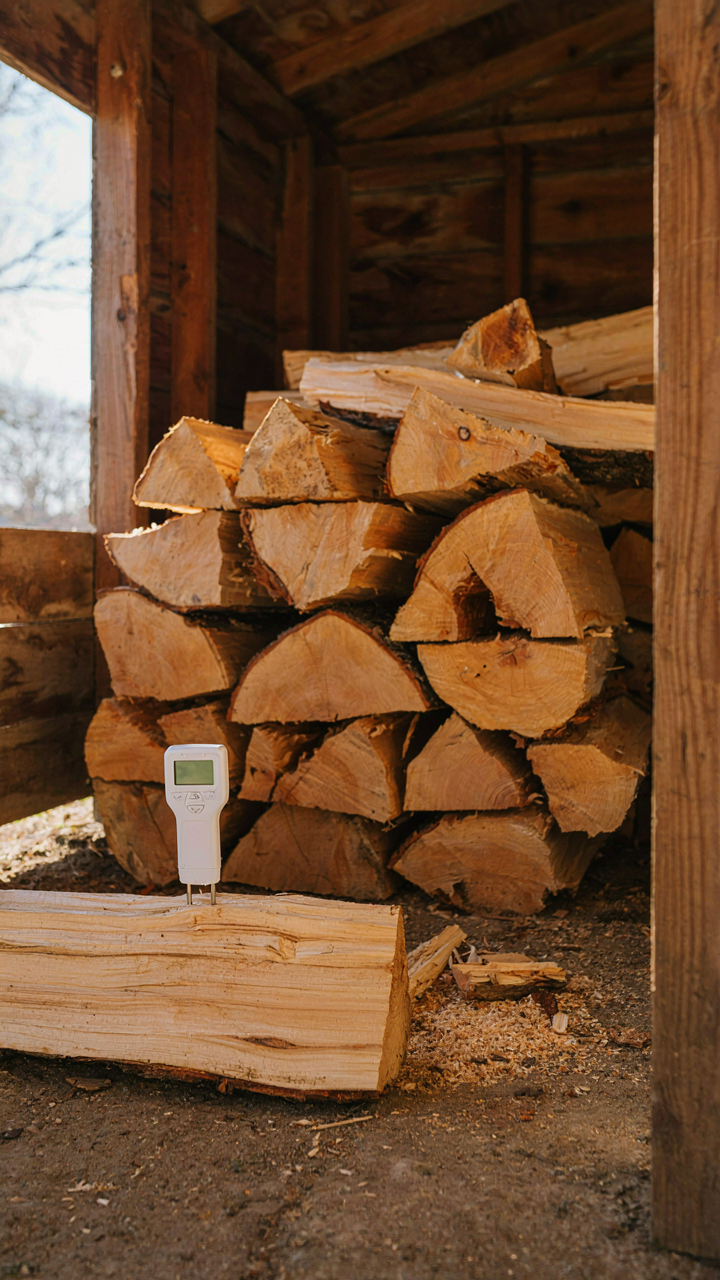
The standard advice is to stockpile cord wood and cover it with a tarp. That’s incomplete and creates a moisture trap. Proper storage requires air flow underneath, protection from rain from above, and exposure to sun and wind on the sides.
- Seasoned hardwood: Source from local suppliers 6 months before use. Stack on pallets or concrete, never directly on soil. Moisture wicks upward from ground contact and negates seasoning work.
- Pellets: Store in food-grade plastic bins with tight lids in a dry location. Pellets absorb moisture instantly and become useless when hydrated. One wet storage season ruins an entire winter supply.
- Coal: Buy bagged anthracite from heating suppliers. Store indoors in a moisture-controlled space. Coal oxidizes slowly but requires stable conditions to maintain BTU output.
- Delivery timing: Place your order in spring or early summer. Fuel prices spike 30 to 50 percent in fall when demand surges. Early sourcing also ensures adequate seasoning time.
- Space calculation: A cottage fireplace burns 2 to 4 cords of seasoned wood per heating season depending on use frequency. Measure your actual space and calculate backwards from your heating needs, not forward from available storage.
Store seasoned wood in a three-sided structure with open sides facing prevailing wind. This reduces rain exposure while maximizing air circulation. Moisture content below 20 percent is non-negotiable. Test it with a moisture meter before burning. Stacking properly means your fuel dries instead of rot, and your cottage fireplace performs at rated efficiency instead of smoking.
Cottage Core Fireplace: A Lesson In Environmental Economy
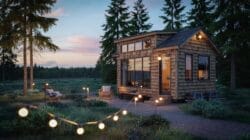
The Math Behind Your Fuel Choices
You want the aesthetic without the guilt. Here’s the mechanism: ecology operates on input-to-output ratios, and your tiny cottage fireplace is a heat engine with a measurable efficiency rate. Most traditional open fireplaces convert only 10-15% of fuel energy into usable warmth. The rest exits up the chimney. You’re burning wood to heat the outside air.
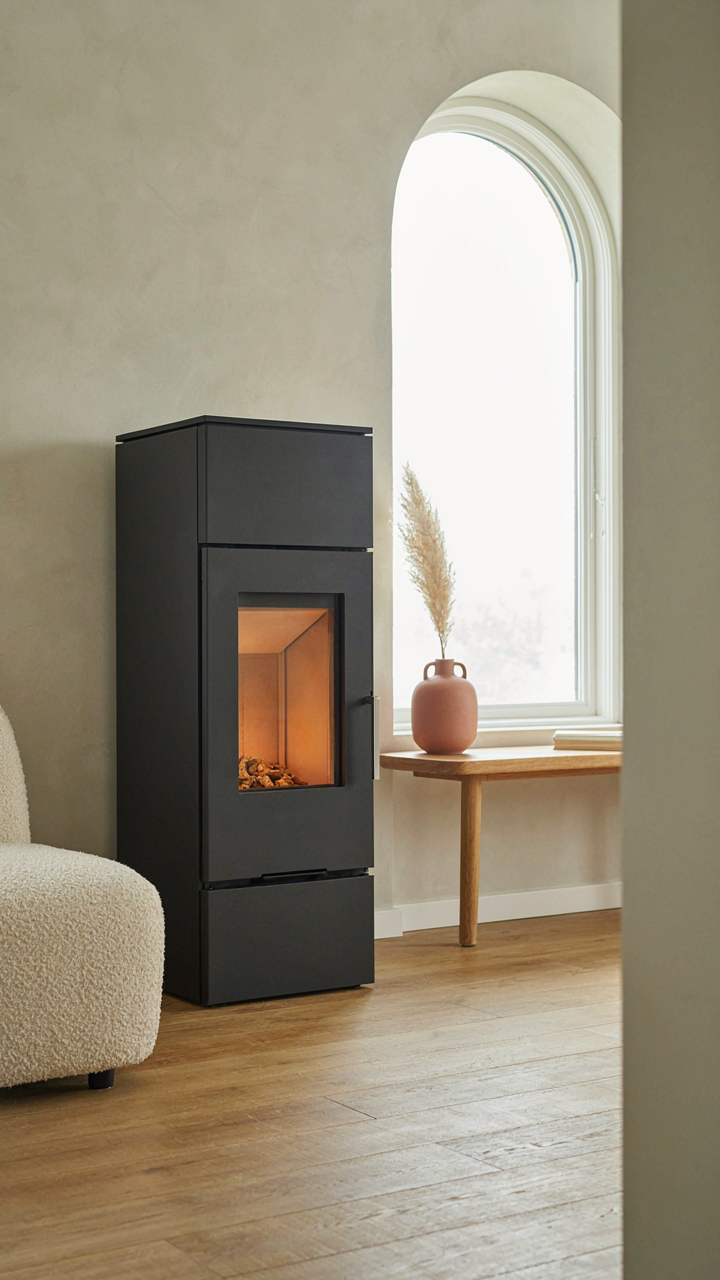
Closed combustion stoves flip this math. Cast iron or steel box stoves push 60-80% of fuel energy into the room. Wood inserts in existing fireplace openings recapture heat that an open hearth wastes. The choice between open fireplace and enclosed heat source isn’t aesthetic. It’s thermodynamic. Pick the stove. The cottage charm survives the efficiency gain.
Emissions Reality And What Actually Works
The common advice is dead wrong: burning “seasoned hardwood” does not solve emissions problems in tiny spaces. Moisture content matters, but incomplete combustion in low-oxygen environments creates creosote buildup and particulate pollution regardless. A wood stove with proper draft and secondary combustion chambers reduces emissions by forcing fuel to burn hotter and longer in a controlled chamber, not by hoping your wood is dry enough.

Electric heating paired with clean grid power eliminates this problem entirely in most regions. Pellet stoves offer a middle path: compressed sawdust burns at higher, more consistent temperatures with lower emission output than cordwood. If you’re heating a tiny cottage with a fireplace, measure the actual air quality impact before romanticizing the fuel source. Install a stove insert with a flue damper to control draft and temperature, ensuring complete combustion every time you light it.
Small Space Interior Design: The Functionalist Fireplace
Heat Generation Dictates Layout
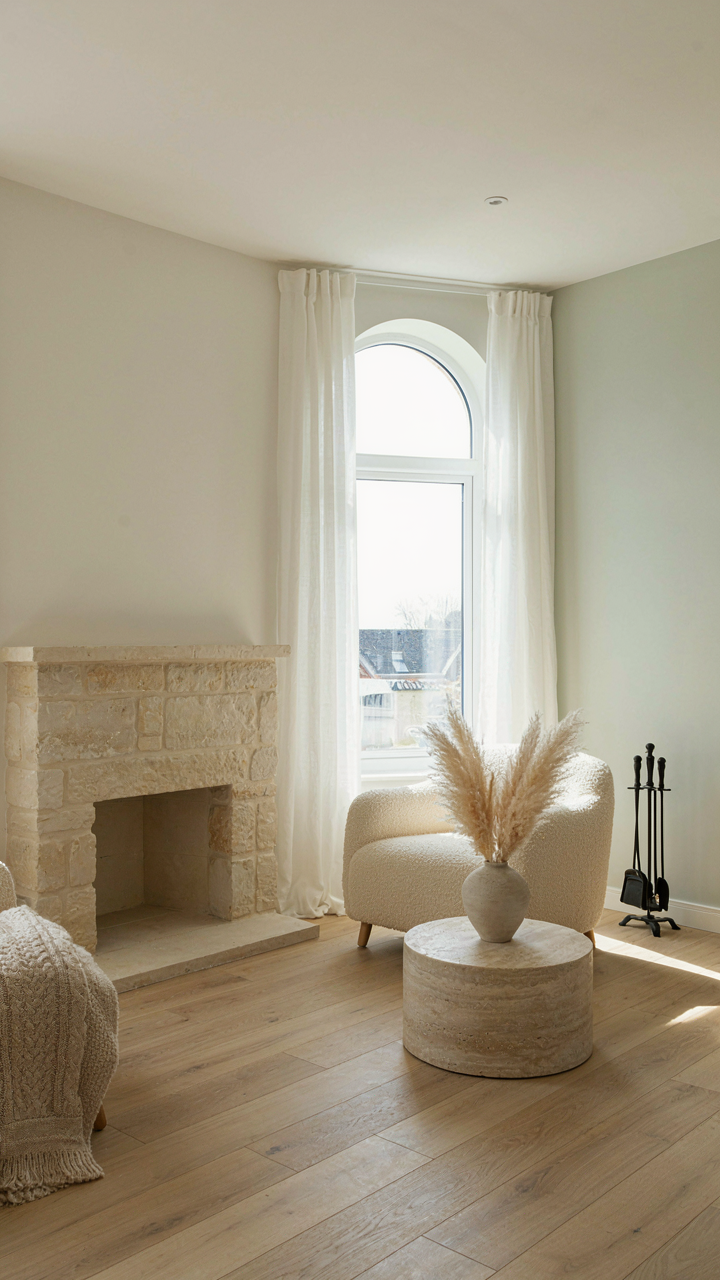
You want a tiny cottage fireplace to look intentional, not like a space heater someone shoved into a corner. Here’s the mechanism: in architecture, thermal mass is the term for how materials absorb and release heat. Your fireplace IS thermal mass. Everything else in the room arranges around its heating radius, not around aesthetic preference.
A fireplace in a small cottage generates effective warmth in roughly a 12 to 15-foot radius depending on the opening size, flue design, and whether you’re burning wood or have a gas insert. Furniture placement, seating angles, and traffic flow follow this thermal footprint first. The visual composition serves the heating job, not the other way around. This flips the typical interior design order on its head.
Surfaces Over Decoration
The common advice tells you to “style your fireplace mantel” with vases and candles. That’s backwards for functional small spaces. A tiny cottage fireplace that works pulls double duty: it heats and it serves as a thermal conductor through the surrounding walls.
Keep the mantel empty or use it for tools and fuel storage. Hard surfaces like stone, tile, or properly sealed brick around the fireplace absorb and radiate the heat into the room. Every object you place there becomes an insulator blocking that transfer. Clear surfaces mean faster, more even heat distribution into a small square footage. Function beats Instagram aesthetics every time in a 200-square-foot room where temperature matters more than decoration.
The Real Obstacle Isn’t The Size Of Your Cottage, But Your Willingness To Confront Inefficient Assumptions About Warmth
Most people think a tiny cottage fireplace problem is a space problem. It’s not. You’ve accepted that small means sacrificing warmth or aesthetics, so you settle for whatever fits. Stop. Walk into your cottage right now and measure the wall you’ve been ignoring. Pick one surface. Commit to a fireplace style that actually matches how you live instead of how you think small spaces should look. Your cottage doesn’t need a smaller life. It needs you to stop apologizing for it.