The Bare Minimum Protocol: Eradicating Visual Noise For A True Lake House Bedroom

Stop Keeping Things You Don’t Use
You want the lake cabin bedroom to feel restful because you think that proves you’ve escaped. The mechanism that actually works is scarcity, not abundance. Apply the one-year rule ruthlessly: if you haven’t used an object in twelve months, it doesn’t belong. This isn’t about minimalism as aesthetic. It’s about friction. Every item you keep demands a decision your brain makes unconsciously. Remove the item, remove the tax.
The one-year rule works because lake cabins operate on seasonal use patterns. Summer clothes don’t belong in winter storage. Winter gear doesn’t belong in summer drawers. Stack seasonal items in labeled containers outside the bedroom. Keep only what serves the current season and what you actually reach for. This eliminates the visual weight that makes a room feel stuck.
Furniture That Earns Its Space
Most lake cabin bedroom advice suggests filling space with “cozy” furniture. That’s wrong. Every piece should solve a specific problem or enable a specific activity. A nightstand exists to hold a lamp and water. A dresser exists to store clothes. A bed frame exists to elevate the mattress. That’s it. Ornamental furniture creates visual clutter and wastes square footage in a space that’s typically smaller than a primary bedroom in a primary home.
Choose pieces with clean lines and minimal ornamentation. Wood frames with simple joinery photograph better and age better than furniture with fussy details. Metal legs create visual lightness compared to solid skirts. A single well-chosen piece beats three mediocre ones. The lake cabin bedroom should feel edited, not decorated.
Light As The Primary Decorator: Mastering Natural Illumination In Lake House Bedroom Ideas

Windows That Vanish Into Function
You want people to notice the view, not your taste in curtains. That’s the real tension here. The mechanism is simple: window treatments should transmit light, not block it or announce themselves. Linen or cotton in neutral tones work because they diffuse without filtering color. Motorized cellular shades disappear when raised and control heat load scientifically. Avoid heavy drapes, decorative rods, or patterns that compete with what’s already outside.

The goal is architectural honesty. A lake cabin bedroom lives or dies on what the windows reveal. Sheer fabrics let dawn light hit the bed without glare. Roman shades in white or greige stack tight to the frame when open, taking zero visual space. Mount treatments inside the window casing, not outside it, so the frame itself becomes the statement. This is not minimalism as aesthetic choice. It’s clarity as strategy.
The Mirror As A Borrowed Tool
Landscape architecture uses “borrowed scenery”—capturing distant views to extend perceived space beyond property lines. Your bedroom mirror does this work indoors. A large mirror opposite the window duplicates natural light and the view simultaneously, making the room feel deeper and brighter without adding fixtures. This isn’t decoration. It’s physics applied to real estate perception.
Place the mirror where it reflects water or tree line, not the ceiling or blank wall. Lean it against the wall rather than hanging if the cabin allows it—impermanence signals respect for the rental or the structure’s original purpose. A second smaller mirror on an adjacent wall catches morning light from the east-facing window and bounces it across the bedroom at different angles throughout the day. The result is consistent illumination without electrical overhead work.
The Failsafe Palette: Monochromatic Discipline For Lake Cabin Bedroom Serenity
Beyond Beige: Nuanced Natural Tones
You want a lake cabin bedroom that feels effortless, which really means you’re afraid of making a wrong choice and looking like you tried too hard. The mechanism is constraint. Monochromatic design doesn’t mean one flat color. It means controlling saturation and value within a single hue family so nothing fights for attention. This is how you build depth without chaos.

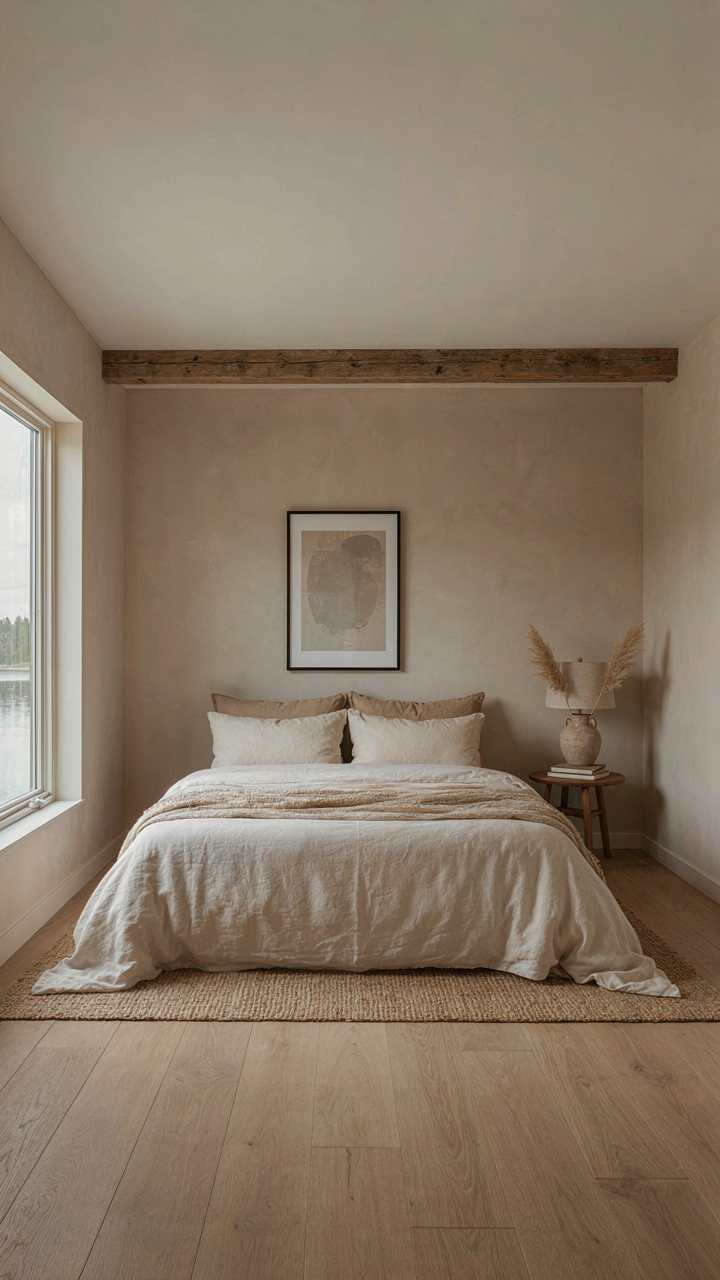
Natural tones work because they’re already desaturated by nature. Taupe, warm gray, soft greige, and muted tan sit on the value spectrum between white and brown. The trick is picking one base and then layering in lighter and darker versions of it. Your walls become the foundation. Your bedding, trim, and larger furniture occupy the midtones. Your accents and shadows handle the extremes. This prevents the visual noise that kills serenity.
Water Hues, Wood, And Stone Discipline
Monochromatic design borrows from color theory in architecture: the principle of atmospheric perspective, where receding objects appear lighter and cooler. Your lake cabin bedroom applies this by using water-inspired grays and blues as a secondary accent layer, never the dominant force. Stone and wood aren’t decoration here. They’re the tactile proof your palette is grounded in actual place.
Introduce water hues through textiles and art, not paint. A linen throw in soft slate gray. A framed print with cool undertones. Wood and stone anchor the scheme because they carry warm and cool simultaneously. Reclaimed beams, a stone fireplace accent, or slate nightstands read as part of the natural palette rather than competing colors. The action step: choose your base tone first, identify one cooler accent shade from the water or sky you see from the cabin, then source all furnishings within that narrow band.
Texture Over Trend: The Tactile Language Of A Rustic Cabin Decor Ideas
Materials That Earn Their Weight
You want texture because you think it signals taste. The real reason is simpler: your nervous system responds to tactile friction before your brain even registers what you’re looking at. Texture is a physics problem in interior design. Rough surfaces scatter light and absorb sound instead of bouncing it around like a shoebox. This makes a room feel intentional instead of hollow.
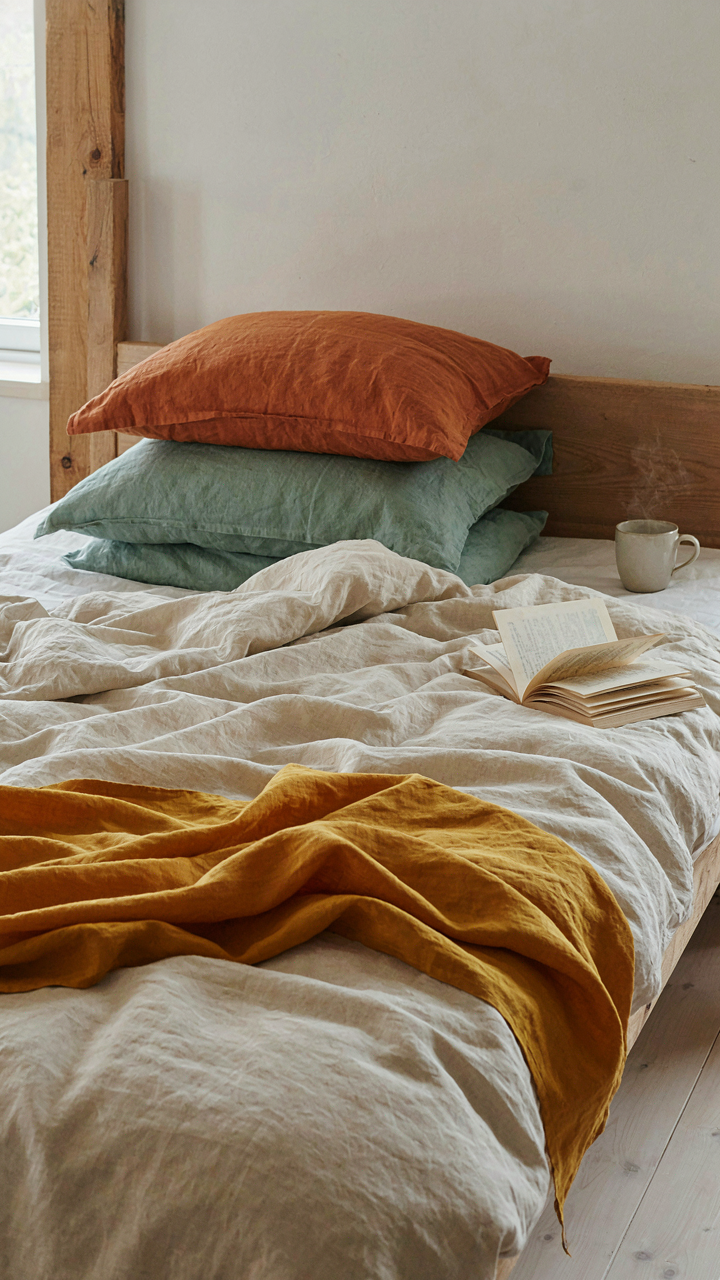
- Linen: Wrinkles naturally and softens with use. Works for curtains, bedding, and upholstered headboards without looking precious or requiring constant maintenance.
- Raw Cotton: Breathes better than synthetics and develops character over time. Sheets and throw blankets age visibly, which cabin spaces reward rather than hide.
- Unfinished Wood: Left unsealed or with minimal stain, it accepts natural weathering. Nightstands, shelving, and bed frames show their grain without varnish gloss.
- Wool: Dense fiber that insulates and resists pilling when quality is decent. Rugs and throws anchor a room and perform functionally in cooler lakeside air.
- Stone and Concrete: Cold to touch, permanent, and require no trend refresh. These materials outlast fashion cycles and pair logically with water proximity.

The mistake most people make is mixing too many competing textures. One rough element per zone. Unfinished wood nightstand. Wool rug below. Linen bedding on top. Each material does one job without fighting for attention. This prevents the room from feeling like a texture showcase instead of a place to sleep.
Depth Without Visual Noise
Layering works like stacking transparency sheets, each one adding information without obscuring what lies underneath. You’re building depth, not accumulation. A cabin bedroom needs visual rest, not a catalog spread.
Start with the bed as your anchor layer. Then add a single throw blanket in a different texture. A small area rug defines the floor zone without carpeting the entire room. One wall-mounted shelf or floating nightstand breaks the plane. A single framed photograph or small mirror adds dimension without multiplying objects. The rule is simple: each layer must justify itself by adding either function or genuine visual separation, not just filling empty space.
Strategic Void: Applying Negative Space Principles To Camp Interior Design
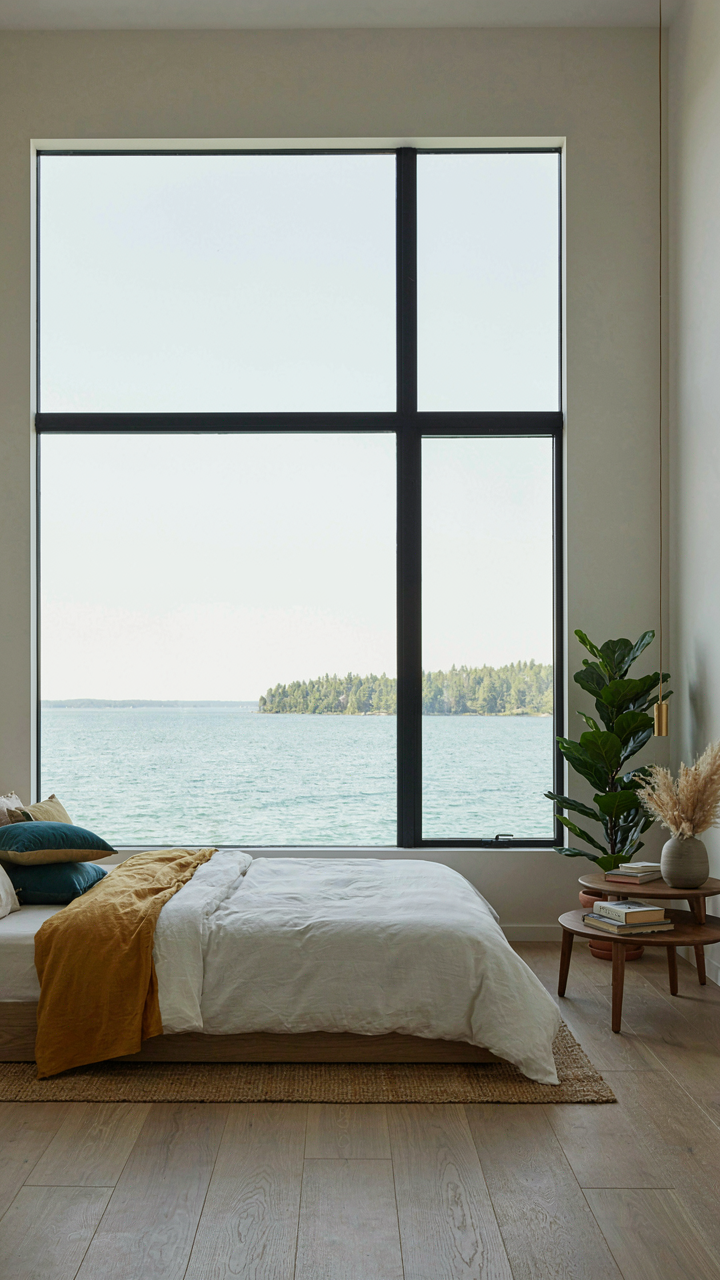
Ma: The Power Of Designed Emptiness
You want your lake cabin to feel intentional and calm, not cluttered like everyone else’s rental. Here’s the mechanism: Japanese aesthetics borrowed the concept of “ma”—negative space as active design, not failure. It’s borrowed from spatial philosophy, where emptiness functions like a load-bearing wall in architecture. A lake cabin bedroom with deliberate void actually reads as more expensive and controlled than one stuffed with objects.

Ma forces a trade-off. You remove something instead of adding something. Pick one wall completely bare except for a single window or door frame. Leave the floor space around the bed open on at least two sides. The pause teaches your eye where to rest. Your brain interprets this as luxury because it mirrors how wealthy people design: they remove rather than accumulate.
Breathing Room: Creating Visual Breaks
Stuffing every corner kills the point of a cabin bedroom. Breathing room means hard edges of empty floor and wall, not “open concept” marketing speak. A corner stays empty. A wall beside the dresser stays clear. This isn’t about minimalism as ideology—it’s about function. Visual breaks stop the eye from scanning frantically, which triggers low-level stress your body registers even if you don’t.
The mechanism works like this: place furniture, then remove 30 percent of what you planned. Leave one corner of the room without a chair, lamp, or basket. Leave the wall above the nightstand blank. These unfurnished zones create visual relief. Your mind processes the space as larger, calmer, and more intentional. The negative space becomes the design itself, not a gap waiting for decoration.
The Un Adorned Bed: Redefining The Lake House Master Bed Aesthetic
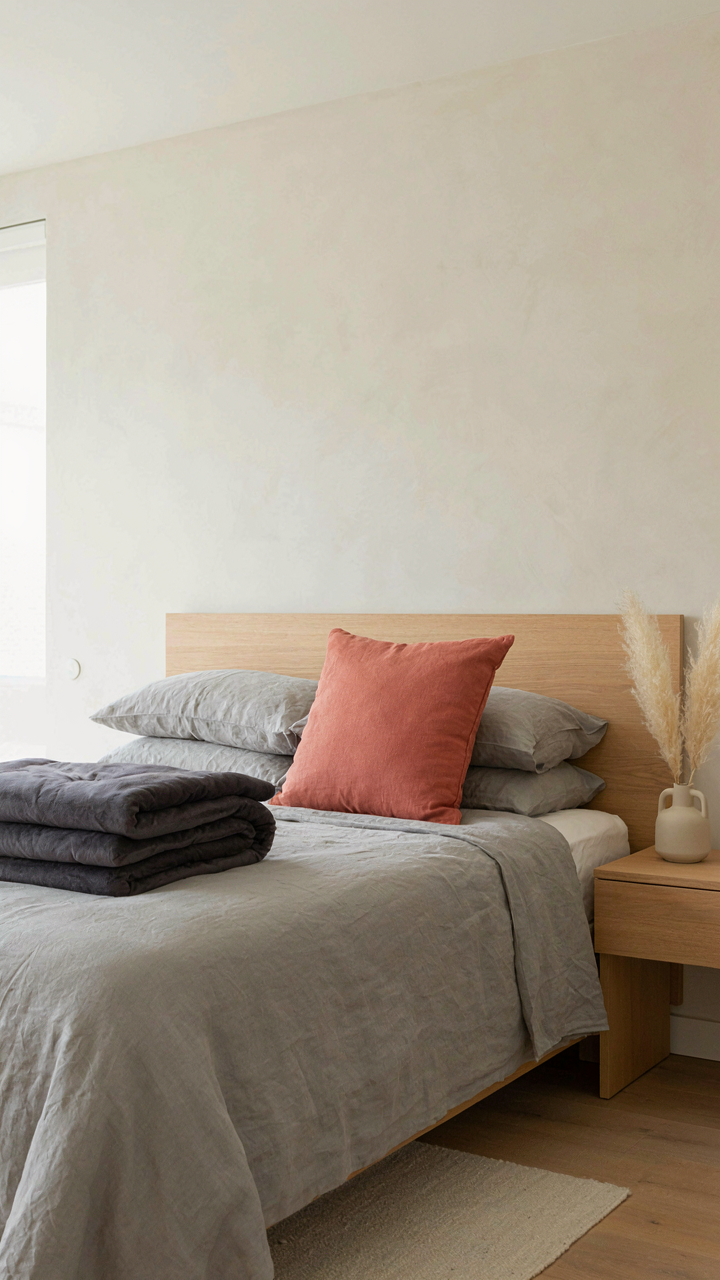
Quality Bedding Beats Decoration Clutter
You want the bed to signal that you have your life together without screaming for attention. The real mechanism: constraint forces intentionality. When you strip away the throw pillows, the decorative blankets, the staged layers, you’re left with one choice that matters—the sheets and the mattress. Lake cabin bedrooms work because they exploit this constraint. A 300-thread-count sheet won’t cut it here. Linen performs better in humidity fluctuation. Cotton blends designed for durability outlast tourist-grade synthetics. The bed becomes honest because there’s nowhere to hide poor execution.

Pick one quality set of sheets in a neutral that matches your cabin’s foundation color—cream, gray, stone. Buy a backup set. That’s the entire strategy. A weighted blanket or a single premium throw in a complementary tone adds warmth without visual noise. The bed stops competing with the lake view and starts supporting sleep. Simplicity isn’t absence of comfort. It’s the removal of everything except what actually functions.
Headboards That Vanish Into The Room
The mistake most people make: they treat the headboard as the focal point. It isn’t. In architectural terms, we’re looking at negative space rather than positive form. The headboard should recede. A simple wood frame that matches your cabin’s existing trim becomes part of the wall structure, not furniture sitting against it. Metal frames disappear if you choose matte black or weathered finishes. Upholstered headboards absorb sound and temperature but require maintenance in humid lake environments. The best headboard is the one guests don’t consciously register.
Flush-mount or built-in designs work harder than standalone pieces. Your headboard should align with window placement or architectural breaks in the wall. If your cabin has exposed beam work, let the headboard sit beneath or between existing structure rather than fight for visual dominance. The bed frame itself becomes secondary. The focus returns to the person in the bed and what they see through the windows.
Bringing The Outside In: Curated Nature For Lakehouse Interiors
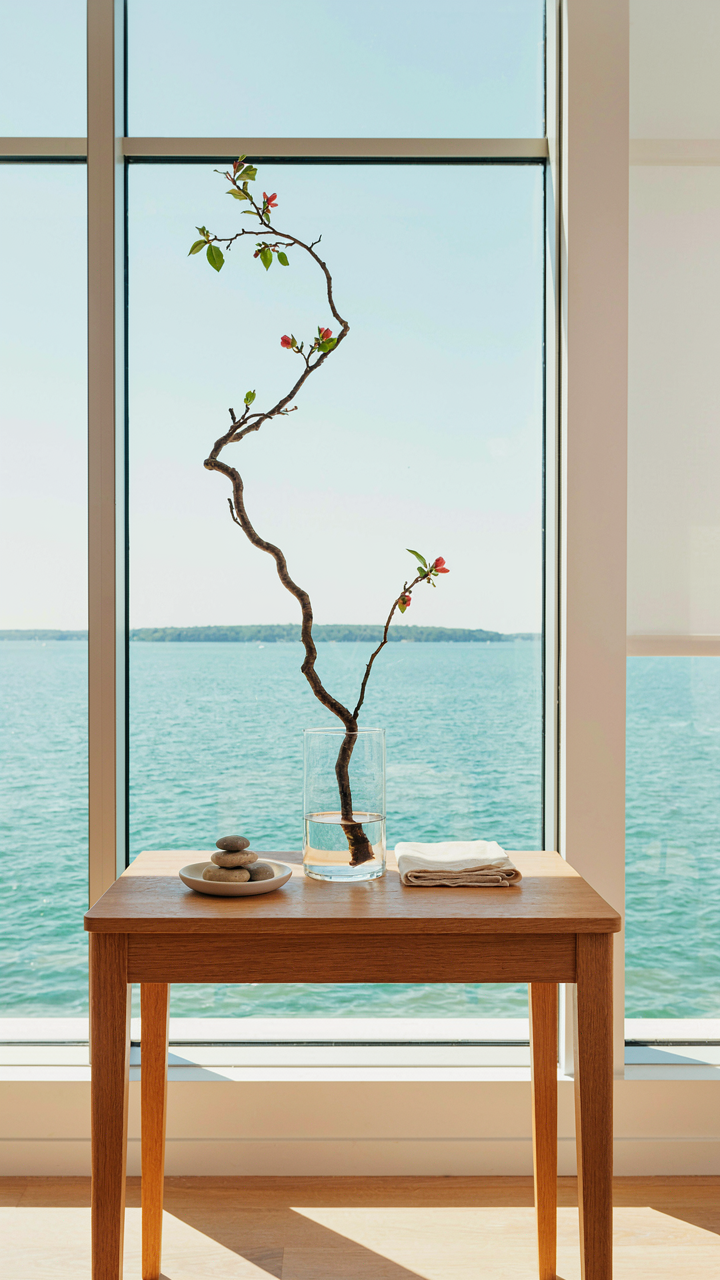
One Object, Maximum Impact
You want your lake cabin bedroom to feel authentic without looking like you’re trying too hard. That’s the real game here. The mechanism is constraint: one strong natural element beats five weak ones because it forces the eye to stop and register something real instead of scanning past visual noise.

A single branch arrangement in a clear glass vessel does more work than a shelf full of driftwood. The branch becomes a focal point because nothing competes with it. Stones placed on a nightstand work the same way. Choose one type, stack or group them, and leave negative space around them. Your brain registers intention, not clutter.
The Window As Frame
Treating your window like a framed artwork is visual strategy borrowed from composition photography. Your window functions as the primary subject, and the bedroom furnishings become the negative space that makes it land. Stop filling sills with trinkets.
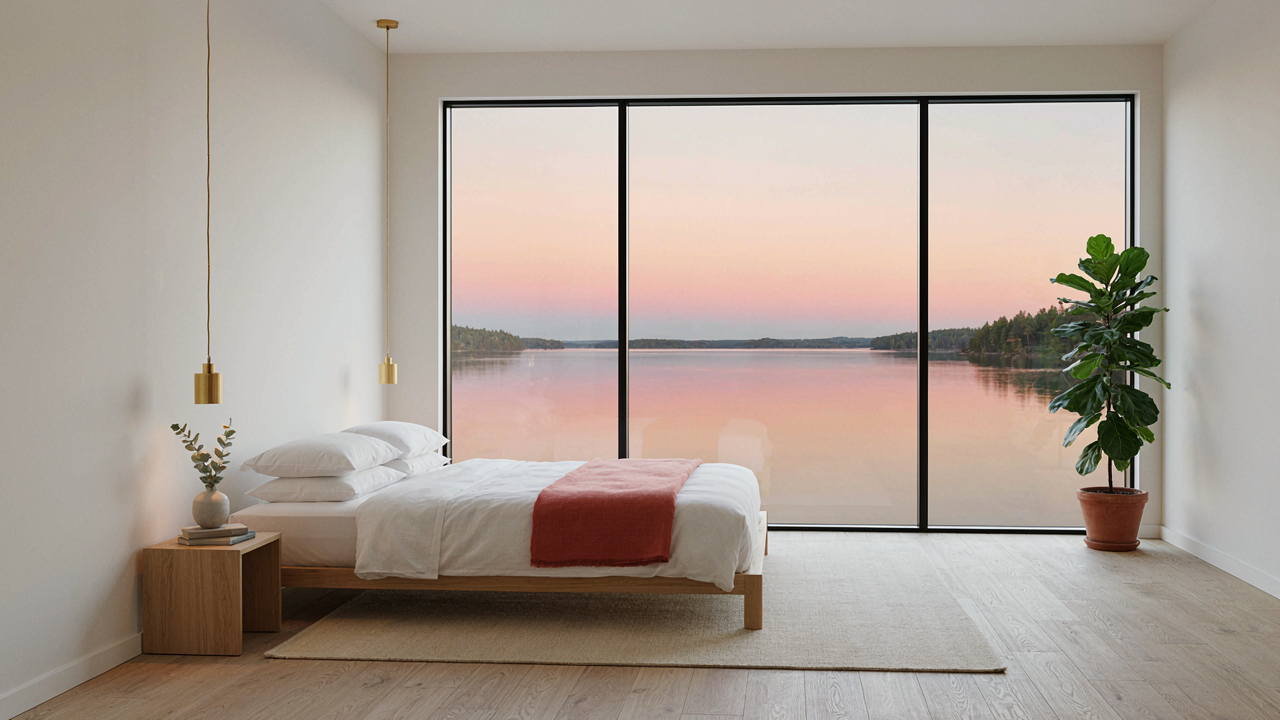
Clear the window frame completely. No plants, no decorative objects. Let the water, sky, and treeline exist as the only visual content. Position your bed or a chair to angle toward the view, not away from it. The lake becomes part of the room’s design rather than something you glimpse accidentally. This is the cheapest, most effective move in a lake cabin bedroom.
Defying The Generic: Crafting A Unique Lake House Decorating Ideas Narrative
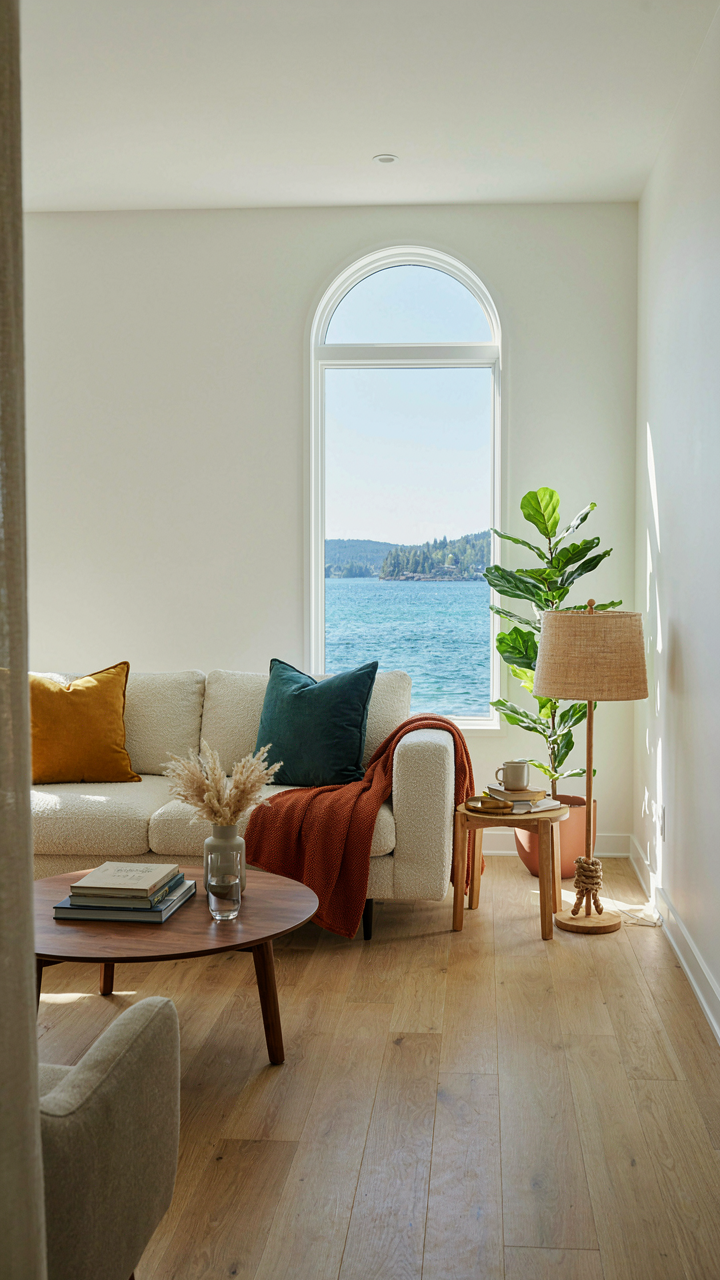
Objects That Actually Mean Something
You want your lake cabin bedroom to feel authentic because you’re afraid it looks like everyone else’s. That fear is rational. The mechanism at play here is signal versus noise. In economics, signal is information that reveals truth about quality or taste. Noise is everything else cluttering the message. Most lake cabin bedrooms are noise. They’re filled with mass-produced “rustic” pieces that prove nothing except that someone shopped the same catalog as five thousand other people.

Personal artifacts work because they carry provenance your eye recognizes instantly, even if you can’t name it. A hand-carved wooden bowl from a local craftsman, a weathered oar from an actual boat you owned, pressed wildflowers in a frame from a specific summer—these objects have a story embedded in their form. They’re not trying to convince you of anything. They just exist. When you build a lake cabin bedroom around things you’ve actually collected or inherited, you’re not decorating. You’re documenting a life. That distinction changes everything about how a room feels to occupy.
Intention Over Trend Cycles
The common advice here is backward. Design blogs tell you to pick a “timeless style” like farmhouse or minimalism, then fill your lake cabin bedroom with those aesthetic markers. That produces the opposite result. You end up with a room that follows the current definition of timeless, which will feel dated in seven years when the definition shifts. Real timelessness doesn’t come from following a style. It comes from making every decision based on function and personal use, not on what design magazines validate this season.
Build your lake cabin bedroom around what actually happens there. If you read before bed, prioritize light and seating over a statement headboard. If you wake early and watch the lake, position the bed toward the view. If you spend mornings there with coffee, add a small table that fits that ritual. The constraint is specificity to your life, not adherence to an aesthetic category. Rooms built this way look intentional because they were. When you return in five years, the decisions hold up because they weren’t borrowed from a trend cycle. They were made from requirements.
The Real Obstacle Isn’t Finding The Right Decor; It’s Escaping The Societal Pressure To Fill Every Empty Space
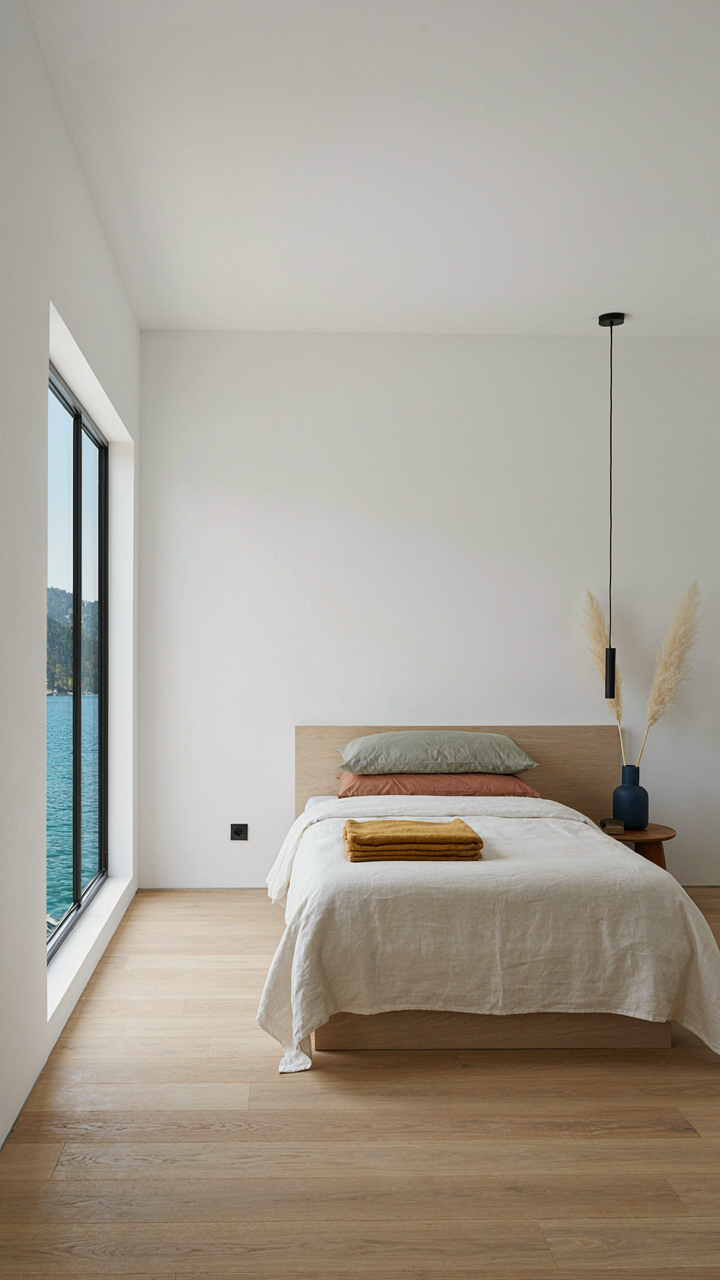
Your lake cabin bedroom doesn’t need more stuff. It needs you to resist the urge to fill silence with objects. Walk into your space today and remove one thing that doesn’t serve rest or memory. That single act breaks the pattern. Most people fill voids because emptiness feels wrong. It doesn’t. A bare wall isn’t a problem waiting for solution. It’s permission to breathe.