
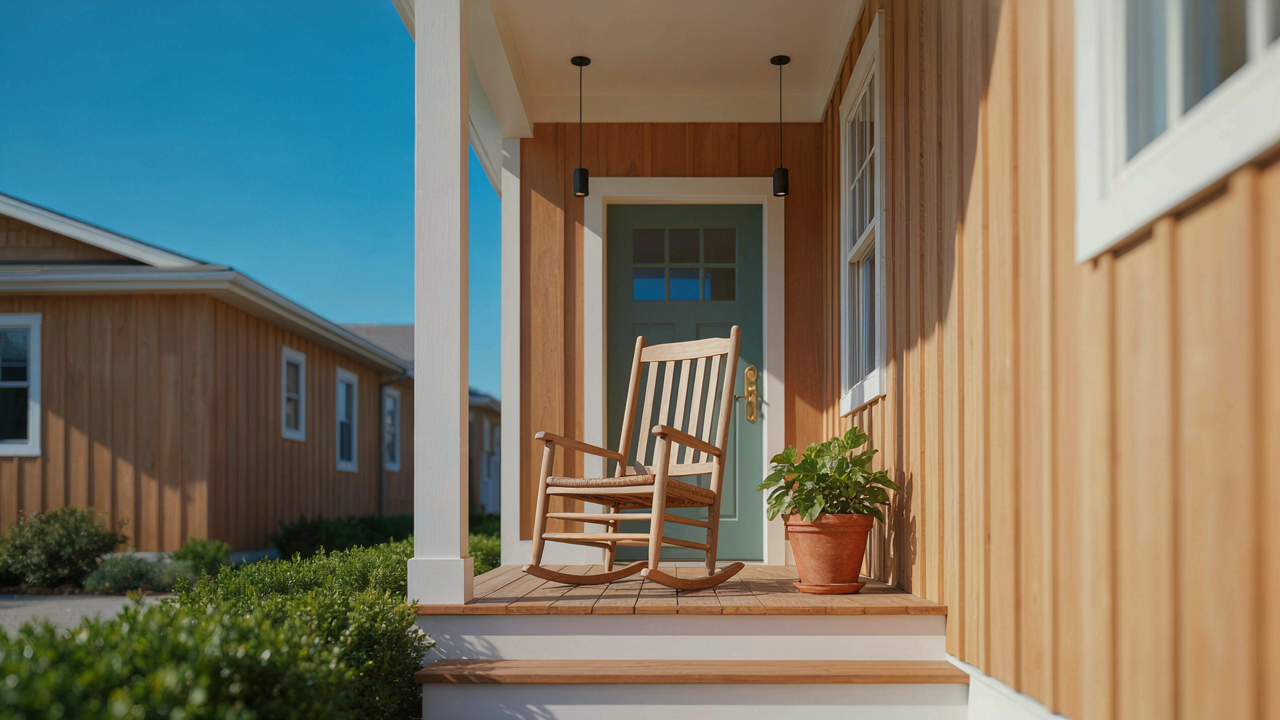
Beyond The Welcome Mat: The Tiny Farmhouse Porch As A Strategic Buffer

The Sight Line You Control
You want people to see your life on your terms, not stumble into it. A tiny farmhouse porch works like a defensive perimeter in military strategy: it’s the controlled zone between your interior and the outside world. The porch forces a deceleration. Visitors land on boards, not your threshold. Delivery drivers stop at railing, not door. You gain the seconds needed to decide what gets seen and what stays hidden.
This mechanic matters because farmhouse properties sit close to roads or neighbor lines. Without the porch buffer, your front door opens directly into view. The porch reframes the approach angle. It narrows sightlines through purposeful placement of posts, railing depth, and overhang shadow. A three-foot-deep porch with a four-foot rail height blocks ground-level viewing from vehicles passing thirty feet away. You choose what the exterior world accesses visually.
The Pause Before Entry
Everyone says a porch creates a welcoming feeling. Wrong. A porch creates a friction point where outdoor chaos stops and indoor order begins. Think of it as an airlock. The tiny farmhouse porch works because it breaks the directness of entry. Mud, weather, road salt, and social energy all decelerate before crossing your threshold.
A porch forces a protocol: wipe boots, set packages down, let children shift mental states. This isn’t sentiment. It’s maintenance. Farmhouse properties historically sat on working land where animals, equipment, and weather debris moved constantly. The porch was the compromise zone where transition happened before interior floors faced damage. That mechanical need still applies whether you’re managing livestock or urban dirt tracked through your neighborhood.
The Minimalism Paradox: Less Stuff, More Impact On Your Tiny Farmhouse Porch

Perceived Spaciousness Through Restraint
You want people to think your porch is bigger than it actually is. That’s the real reason you’re reading this. The mechanism is visual weight, not square footage. Remove everything that doesn’t anchor the space, and the eye travels farther before hitting a boundary. Farmhouse porches historically worked this way by necessity, not style. Early farmhouses had minimal seating because people didn’t gather there for leisure. They used porches for function: shoe removal, tool storage, transition from work to home. That functional emptiness created the visual perception of openness that modern design now chases.

The tactical move is brutal subtraction. Count what you have now. Remove 60 percent. Keep only pieces that serve two purposes: seating plus storage, or visual anchor plus function. A single wooden bench, not three chairs. One side table, not a collection. Empty space between objects matters more than the objects themselves. When each item stands alone rather than crowded against others, your brain perceives the porch as larger. This is why a sparse farmhouse porch feels more welcoming than a cluttered one.
Single Anchor Point Strategy
The design principle here is called focal hierarchy, borrowed directly from landscape architecture. A focal point is the element that captures attention first, controlling where the eye lands and how it moves through a space. On a tiny farmhouse porch, you have one slot for this. Competing focal points shrink perceived space because the eye fragments and ricochets. Most people fill their porches with multiple competing elements: a chair, a planter, a swing, a rug, a bench. The result is visual noise and a smaller-feeling porch.
Choose one anchor. A traditional farmhouse swing, a solid wooden door, or a potted plant mass on a stand. Everything else becomes supporting cast. Your second bench becomes a prop. Your additional planters stay low and grouped. Your rug doesn’t compete for attention. This discipline costs nothing and returns immediate spaciousness. The porch stops feeling cluttered because there’s nothing cluttering it. One focal point pulls the eye inward deeply, then releases it. That psychological pause makes tiny feel intentional rather than cramped.
The Curated Narrative Protocol For Your Tiny Farmhouse Exterior
What You Actually Place Matters More Than How Much
You want people to think your porch means something about who you are. That’s the real reason you’re reading this. The mechanism is constraint: a tiny farmhouse porch forces you to stop decorating and start editing. Every object either strengthens your story or weakens it. There is no neutral.

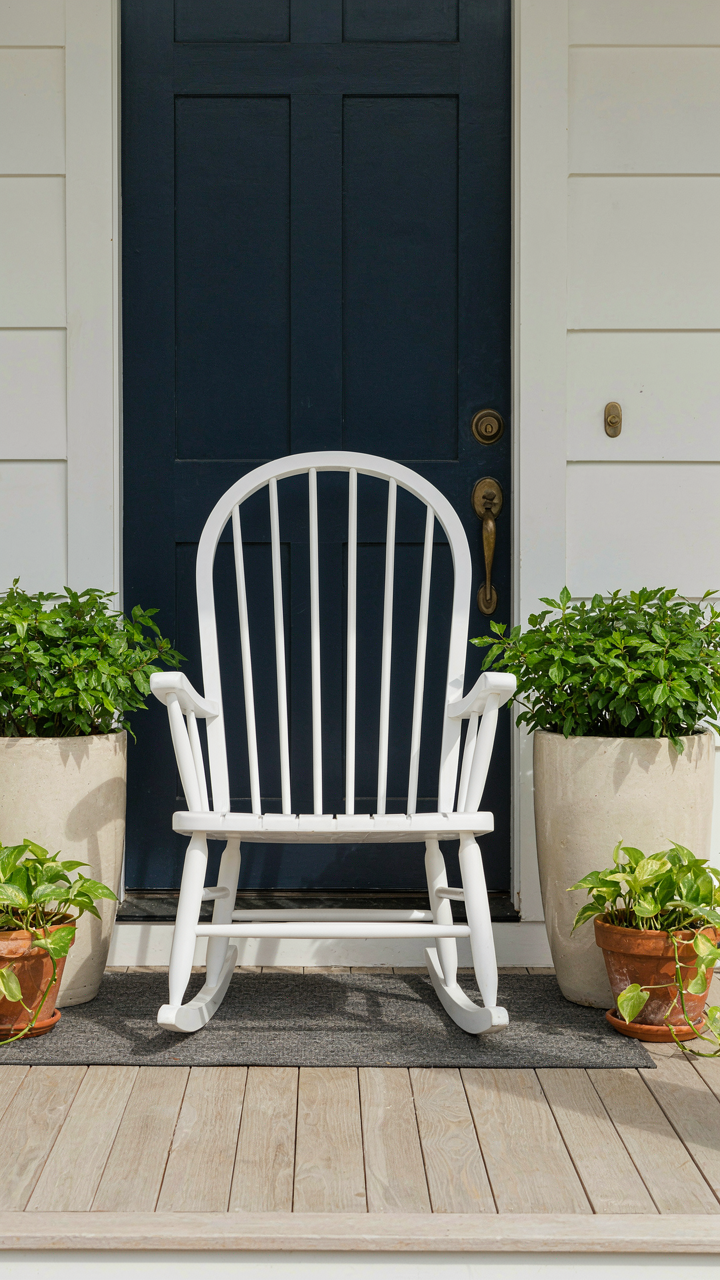
Most porch advice tells you to “layer” and “add texture.” That’s backwards. Start by removing everything. Then ask what single piece of furniture, one planter, or two accessories would make someone understand your porch’s purpose in under five seconds. A rocking chair says rest. A farm bench says work. A side table says function. Pick one narrative, not three competing ones.
The Grammar Of Arrangement
Design borrowed from architecture uses the principle of “axis”—a central line that organizes space. Your tiny farmhouse porch operates on the same rule: create one visual line, not scattered clutter. If your porch is four feet wide, the axis is obvious. Everything orients toward the door or out toward the yard. Nothing sits at an angle unless it serves the central path.
Objects placed off-axis look accidental. Objects aligned create intention. A planter positioned symmetrically on either side of the door reads as deliberate. The same planter moved six inches left looks like you haven’t thought about it. Your porch’s credibility depends on proving you made decisions, not that things accumulated. Arrange objects in multiples of two or position one item dead center—these are the only two arrangements that don’t confuse the eye.
Functional Aesthetics: When Your Tiny Farm House Porch Works Harder

Furniture That Earns Its Square Footage
You want your porch to look intentional, not cramped—and that requires pieces that do more than one job. Here’s the mechanism: every item on a tiny porch either serves multiple functions or it’s stealing space from something that matters. A wooden bench with hinged storage underneath holds boots, gardening tools, or seasonal items while providing seating. A small side table with a shelf underneath functions as both plant display and tool storage. Vertical coat hooks double as plant hangers. The rule is direct—if furniture only does one thing on a tiny porch, it’s a luxury you don’t have.

Farmhouse design tradition supports this approach because rural spaces historically demanded efficiency. A piece of furniture that sat idle cost money and space neither existed. Choose pieces with exposed frames, simple joinery, and open undersides rather than bulky enclosed designs. Metal frames paired with wood tops keep visual weight down while maintaining durability. Reclaimed barn wood or salvaged materials fit the farmhouse aesthetic while proving the piece has actual utility history. This isn’t about being precious with materials—it’s about selecting items that look like they were made to work.
Storage Built Into The Design Itself
Most advice tells you to “find storage solutions,” which is vague and useless. The real problem is that tiny porches treat storage as an afterthought instead of the primary structural decision. Integrate storage into the porch itself through built-in benches along walls, open shelving that forms a visual frame, or a potting bench that anchors one end. These aren’t accessories you add later—they’re the skeleton of how the porch functions. A wall-mounted cabinet with both open shelves and closed doors manages visual clutter while keeping essentials within reach.
The farmhouse porch traditionally served as a working zone between outdoors and indoors. Hooks for coats, racks for tools, and benches for sitting happened as one design decision, not separate purchases. Build your storage to match this logic: determine what actually lives on your porch (boots, garden supplies, seasonal items, seating), then design the structure around those specific needs. Measure twice, build or buy once. When you skip this step and add random shelves later, you end up with a cluttered space that feels smaller than it is.
The Signal Amplification Method For Small Cottage Homes Porches
Architectural Elements As Status
You want people to know you have taste without saying it out loud. That’s the real mechanism here. Farmhouse design borrows from semiotics, the study of signs and meaning. Your porch becomes a sign. Every detail broadcasts a message about intentionality.

Columns, railings, and trim work function as visual anchors on a tiny porch. They stop the eye and create perceived depth. A single tapered column or paired brackets demand attention. These aren’t decoration. They’re information density compressed into a few square feet. Farmhouse style pulls from classical proportions but strips the pretense. What remains is pure signal.
The mistake most people make is adding too many elements to a small porch, thinking more detail means more impact. It doesn’t. A tiny farmhouse porch with restraint reads louder than a cluttered one. Choose one architectural feature to emphasize. A substantial railing, exposed beams, or board and batten siding. Let it work alone. The space around it amplifies its presence.
Material choice reinforces the signal. Reclaimed wood communicates differently than pressure treated lumber. Stone or brick bases anchor columns with weight and history. Your porch materials tell people whether you understand farmhouse as a design language or just copied Pinterest. Specificity creates credibility.
Color Psychology For Impact
Most small porch advice skips the real reason color works: contrast is attention. Dark colors on tiny surfaces read as deliberate, not timid. Pale, washed tones on a compact space disappear into the background.
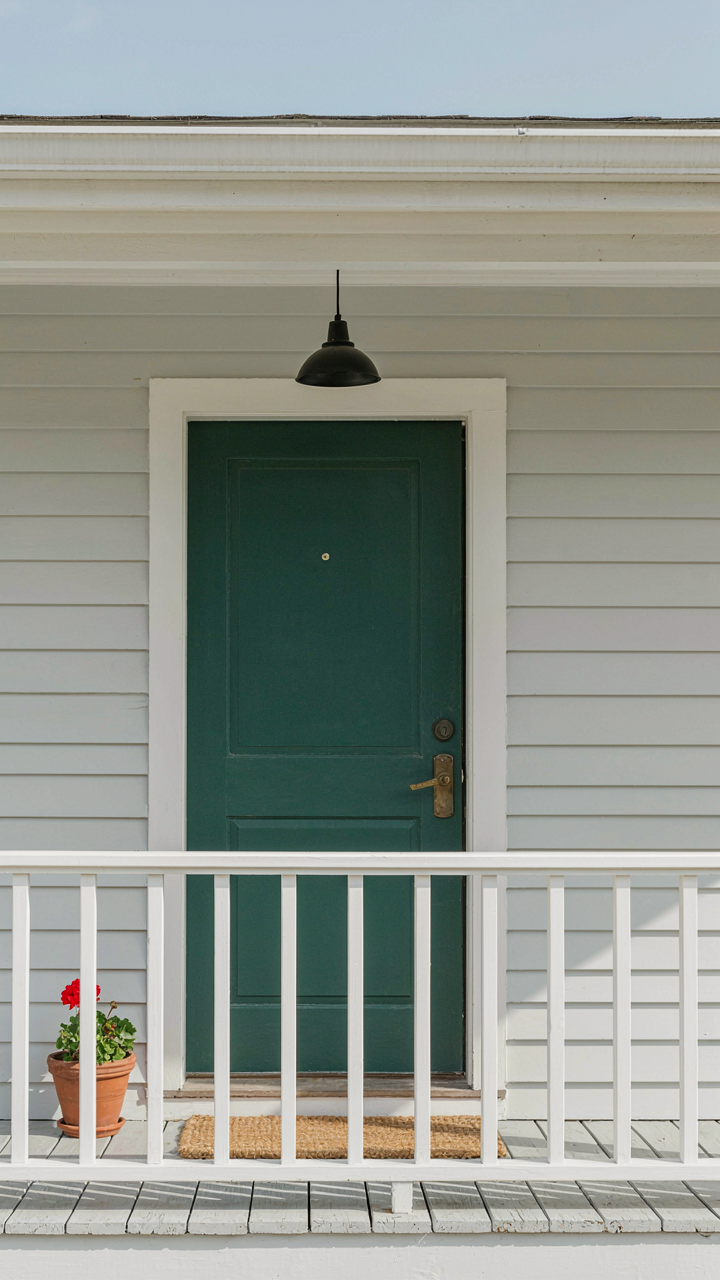
Farmhouse palettes have narrowed to predictable combinations: white trim, black doors, muted grays. This is consensus. It’s also safe and forgettable. A tiny porch has permission to hold one bolder choice without looking overwrought. Deep forest green, charcoal, or muted sage on the door or trim creates focal weight that larger porches struggle to achieve. The smaller the surface, the more concentrated the psychological impact of saturation becomes.
The second color layer matters as much as the first. Your porch door color should contrast visibly against siding within six feet of viewing distance. Paint the door a shade three to five levels darker or lighter than surrounding walls. Test this physically before committing. Phone photos compress color and lie about actual impact. Stand ten feet away in midday light and assess whether the door registers as intentional or accidental. If you squint and lose the door, the color choice failed.
Resilience Engineering: Applying Biological Principles To Your Small Rustic Farmhouse Porch

How Natural Systems Stay Standing
You want your porch to outlast you without constant repair. Here’s what nobody says plainly: biology solves durability problems engineering hasn’t. In ecology, resilience means a system absorbs shock and returns to function without collapse. Your tiny farmhouse porch needs the same trait. Instead of building rigidly, you build to flex, drain, and shed stress naturally.
Old farmhouses survived centuries because their porches mimicked how trees handle weather. Wood moves with humidity shifts rather than fighting them. Water drains down and away, not pooling in joints. Foundation settling doesn’t crack everything because posts sit on stones with air underneath, not concrete that traps moisture. The mechanism: materials work with their environment, not against it. When you fight material behavior, you get rot and failure in ten years.
Materials That Adapt To What Hits Them
Real adaptation isn’t about picking trendy materials. It’s about choosing what actually performs under the specific conditions your porch faces. Rain direction, freeze cycles, sun exposure, wood movement—these aren’t variables to ignore. They’re inputs your porch design absorbs.
- Pressure-treated lumber for support beams: Resists moisture infiltration in below-grade or exposed positions where untreated wood fails within years in wet climates.
- Galvanized fasteners and hardware: React slower to oxidation than plain steel, extending fastener life through multiple freeze-thaw seasons.
- Composite decking in high-traffic zones: Doesn’t absorb standing water like solid wood, preventing rot at joints and reducing maintenance cycles.
- Breathable finishes over water-sealant: Allow trapped moisture to escape rather than trapping it under a film that peels and accelerates decay underneath.
- Stone or gravel drainage base: Moves water away from foundation rather than pooling against wood posts and encouraging wicking into support structures.

The counterintuitive move: accept that your porch will change. Seasonal wood movement isn’t a failure—it’s the system working. Build connections that allow that movement. Sliding rather than fixed posts, spaced rather than sealed floorboards, staggered rather than rigid rooflines. The moment you lock everything rigid, you’ve started the failure clock.
Beyond The Instagram Filter: Real Charm For Your Tiny Home Cottage
Stop Performing For Strangers
You want your porch to look like someone else’s idea of rustic so people believe you live authentically. That’s the trap. The mechanism is simple: staged perfection requires constant maintenance and kills the actual comfort of the space. A tiny farmhouse porch succeeds when it works for the people using it, not the people scrolling past it. Real charm emerges from utility, not curation. Your porch exists to serve function first. Everything else follows from that constraint.
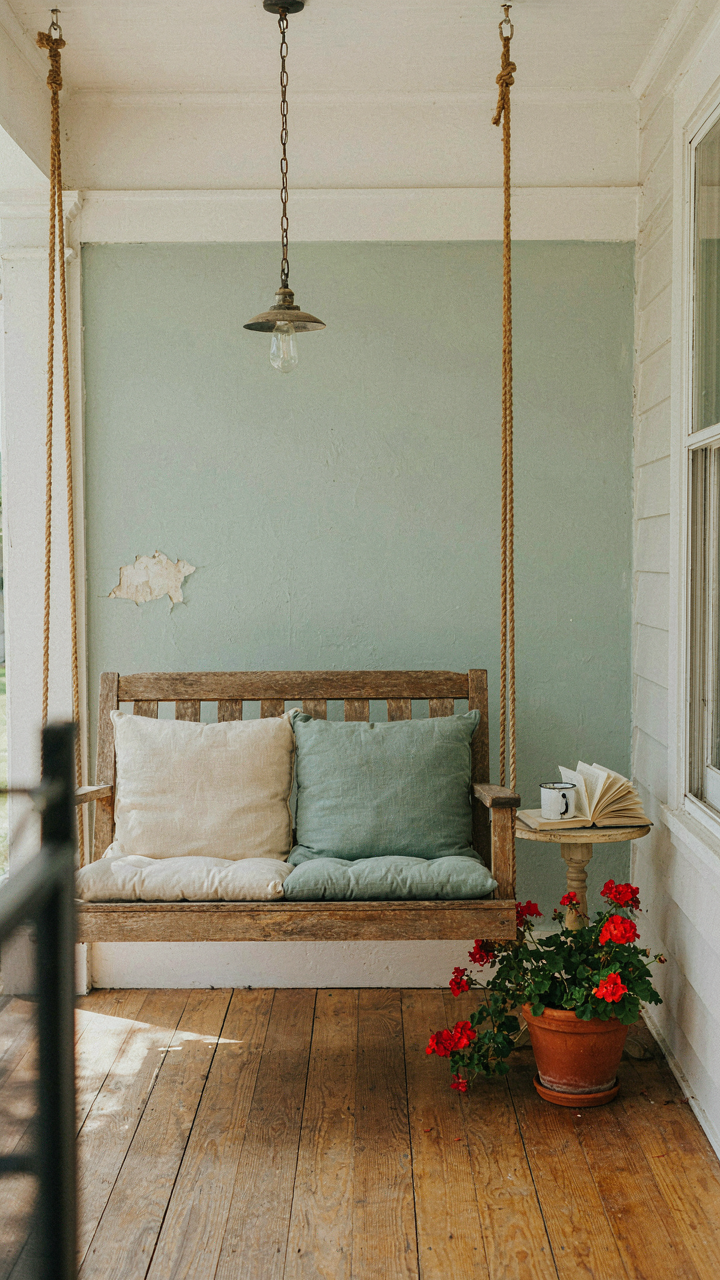
The best tiny porches show wear patterns, faded paint, and honest materials. These elements communicate that someone actually lives here and uses this space daily. Weathered wood tells the story of seasons. Rust on metal proves time has passed. These aren’t flaws to hide. They’re proof of authenticity that no filter can replicate. The moment you stop performing for Instagram, your porch becomes a place instead of a set.
Damage And Neglect Build Legitimacy
Most design advice treats imperfections as problems to solve. Wrong. Imperfections are the foundation of farmhouse aesthetic because they signal honest use over careful staging. In architecture, this principle mirrors the Japanese concept of wabi-sabi, but applied to porch design: beauty emerges from incompleteness and the visible marks of time. A peeling coat of paint on a beam isn’t an error. It’s documentation. The gap between boards isn’t poor craftsmanship. It’s proof the wood moved through seasons naturally.
Intentionally preserving flaws is different from neglect. Neglect means a broken step you avoid. Preserved imperfection means keeping a step that’s worn uneven but still functional. The distinction matters. You’re not abandoning maintenance. You’re choosing which battles to fight. Let the paint peel on the outer wall where it won’t affect structure. Keep the boards that support your weight solid. The visible history of a tiny farmhouse porch is the only decoration it actually needs.
The Loft House Design Principle: Verticality On A Tiny Farmhouse Porch
Stack Elements For Visual Height
You want your porch to feel bigger than it is. That’s the real reason you’re reading this. The mechanism is borrowed from architecture: compression and release. When you stack visual elements vertically instead of spreading them horizontally, you create the illusion of more volume. A tiny porch has no width to work with, so height becomes your only asset.
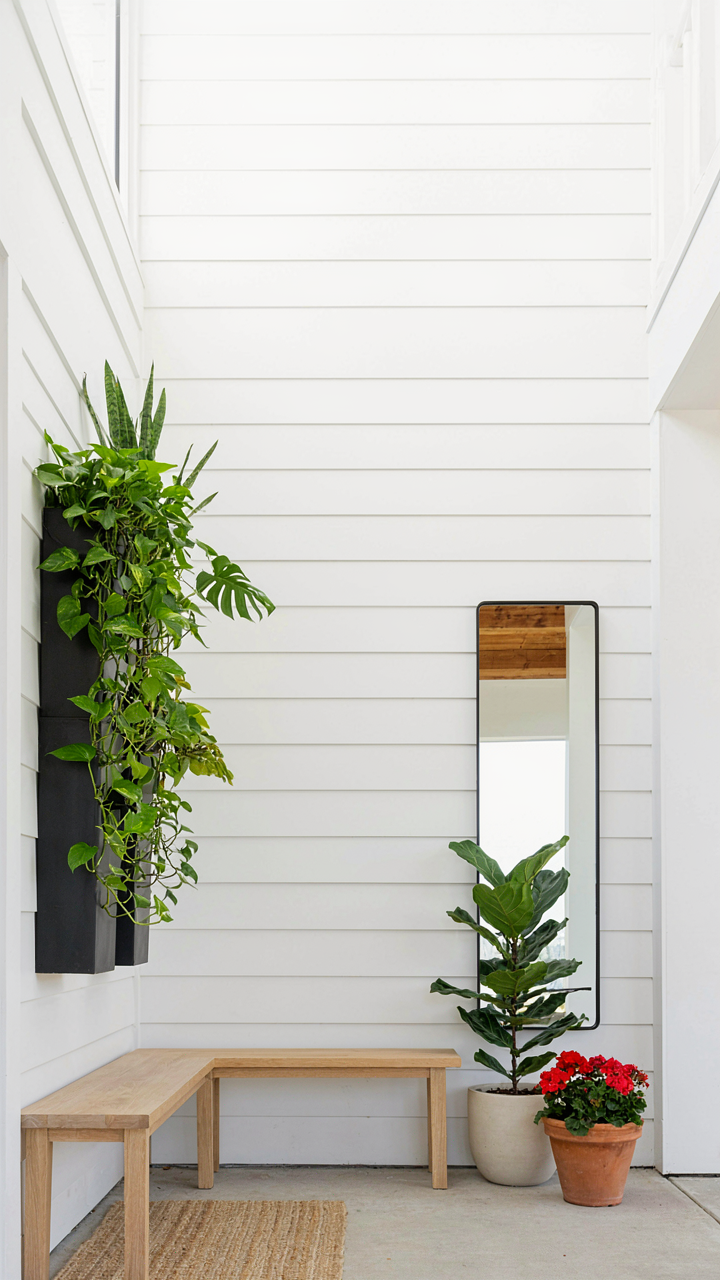
Farmhouse porches traditionally used vertical railings and post structures because they needed them structurally. You exploit this. Install a wall-mounted planter above eye level, then another below. Use tall, narrow planters instead of wide shallow ones. Position a mirror vertically behind seating to push the space upward. Stack baseboards or shiplap in ways that guide the eye up and away from the ground plane. The actual square footage stays the same. The perceived depth expands.
Overhead Architecture Matters
This is where most people fail. They think “overhead solutions” means hanging a plant and calling it done. Wrong. The overhead zone is real estate that directly impacts how cramped a space feels. Using physics terms: load distribution. A small porch is already dense with people and furniture. When you move visual weight up, you redistribute the psychological load away from the ground where congestion lives.

Install a pergola or lattice structure that doesn’t block light but creates articulation. Add a ceiling fan on a low profile mount. Run thin cable railings from top to side instead of full balusters. Paint the ceiling a lighter shade than the walls. Place a pendant light that hangs only 18 to 24 inches from the ceiling rather than dangling low. These moves aren’t decoration. They define the spatial container and make the porch breathable.
Lighting As Authority: Illuminating Your Farmhouse Tiny House Exterior

Security Through Controlled Visibility
You want lighting on your porch because you’re afraid of what you can’t see, and you’re right to be. This isn’t about feeling safe—it’s about removing the actual conditions criminals exploit. Security operates on a simple principle from environmental design: eliminate shadows and hidden approach vectors. A tiny farmhouse porch gives you an advantage most suburban homes don’t have. The scale is small enough that two strategically placed fixtures control the entire entry zone instead of requiring four or five.
The mechanic is straightforward. Mount one fixture above the door at eight to ten feet high, angled downward at 45 degrees. Add a second fixture at the porch edge, mounted lower, pointing outward toward the yard perimeter. This creates overlapping coverage with no dark pockets where someone can stand unseen. Most people waste money on wall sconces that look period-correct but cast light backward into the house. That serves ego, not function.
Perception Built Into Design
Light shapes how people decide whether to approach your porch or walk past it. This is perception design borrowed from retail environments, where merchants engineer every lumen to trigger specific behavioral responses. On a tiny farmhouse porch, your goal is opposite: you control who feels invited. Warm light reads as habited and maintained. Cool light reads as industrial or abandoned.
Choose fixtures and bulb temperature based on the message you’re sending, not on what looks “farmhouse.” A 2700K warm white bulb in a vintage-style lantern signals occupancy and care. Your porch becomes a threshold people cross knowingly, not accidentally. The visual authority you build through consistent, correct lighting reduces friction for guests and friction for you—no more “Are they home?” hesitation at the door.
The Unspoken Cost: Why Your Tiny Farmhouse Porch Demands More Than Money
Time Investment For Maintenance
You want to believe a tiny porch requires minimal upkeep because it’s small. It doesn’t work that way. Farmhouse porches sit at the boundary between weather and shelter, which means they degrade faster than any other part of your home. The mechanics here come straight from thermodynamics: thermal cycling—repeated expansion and contraction from temperature swings—destroys materials faster than steady conditions ever could. Your tiny porch experiences more cycles per year than your interior walls because it’s exposed on all sides.
Wood flooring on a farmhouse porch moves constantly. Paint cracks. Caulk fails. Metal railings rust. The smaller your porch, the fewer square feet buffer the damage, so the visual degradation compounds faster. Weatherproofing isn’t a one-time fix. You’re committing to inspection cycles every spring and fall, repainting every three to five years, and replacing caulk annually in freeze-thaw climates. This schedule doesn’t shrink because your porch is tiny.
Energy Expenditure For Upkeep
Everyone frames this as “elbow grease,” which is vague nonsense. What they mean is physical labor at a specific intensity level, sustained over hours you didn’t budget for. A tiny porch still requires full-body work: pressure washing, scrubbing, sanding, staining, sealing. These tasks don’t scale down proportionally with square footage. You can’t half-sand a board. You can’t partially pressure wash a surface.
The hidden cost emerges when you calculate what you’re actually trading. A weekend spent prepping and staining your porch is a weekend unavailable for income work, family time, or rest. If your porch is visible from the street—which most farmhouse porches are—the social pressure to maintain it amplifies the perceived urgency. The work becomes maintenance, not optional improvement. Establish a maintenance calendar tied to seasonal weather patterns, schedule tasks in blocks of four hours or less, and rotate responsibilities if you’re not doing this alone.
The Only Porch That Truly Welcomes Is The One You Actually Use
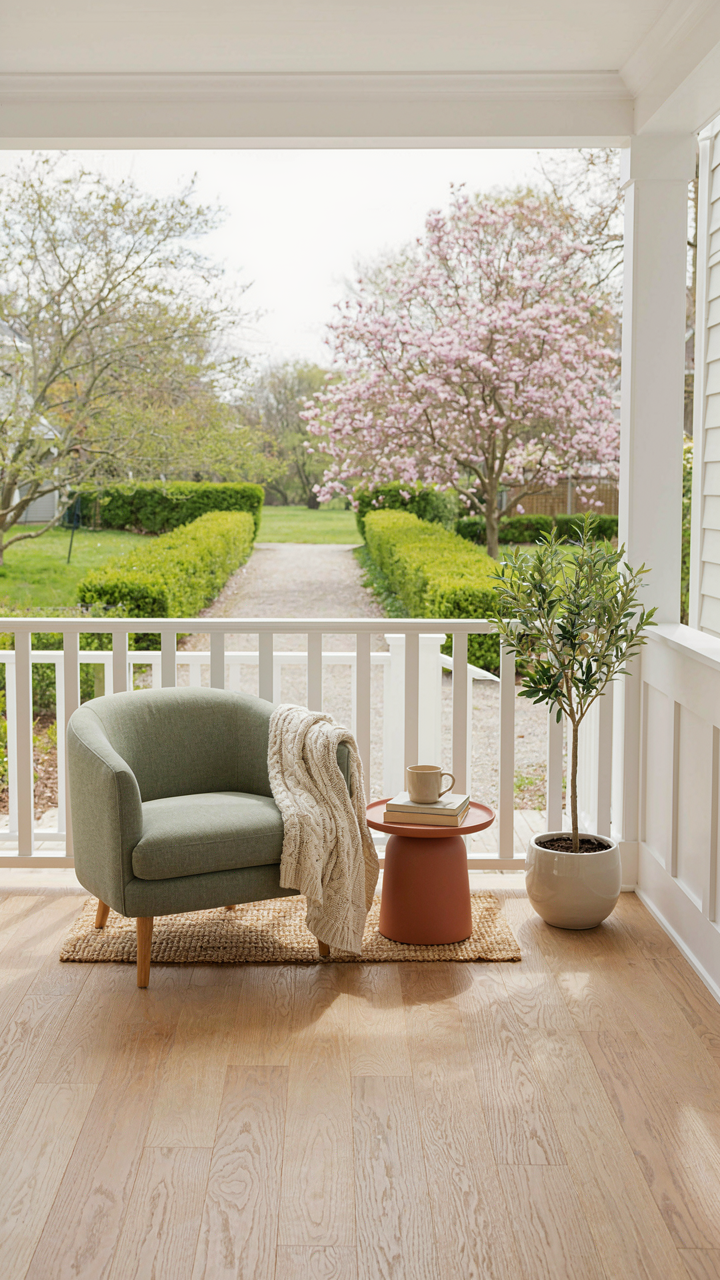
Most people design a tiny farmhouse porch and then abandon it. They build the aesthetic, snap the photo, move on. But a porch only matters when you sit on it. When you drink coffee there. When neighbors stop by and actually linger. So pick one thing from this article. One chair, one planter, one detail. Install it this week. Stop planning the perfect porch and start building the one you’ll actually use. A porch that gathers dust is just expensive scenery.



