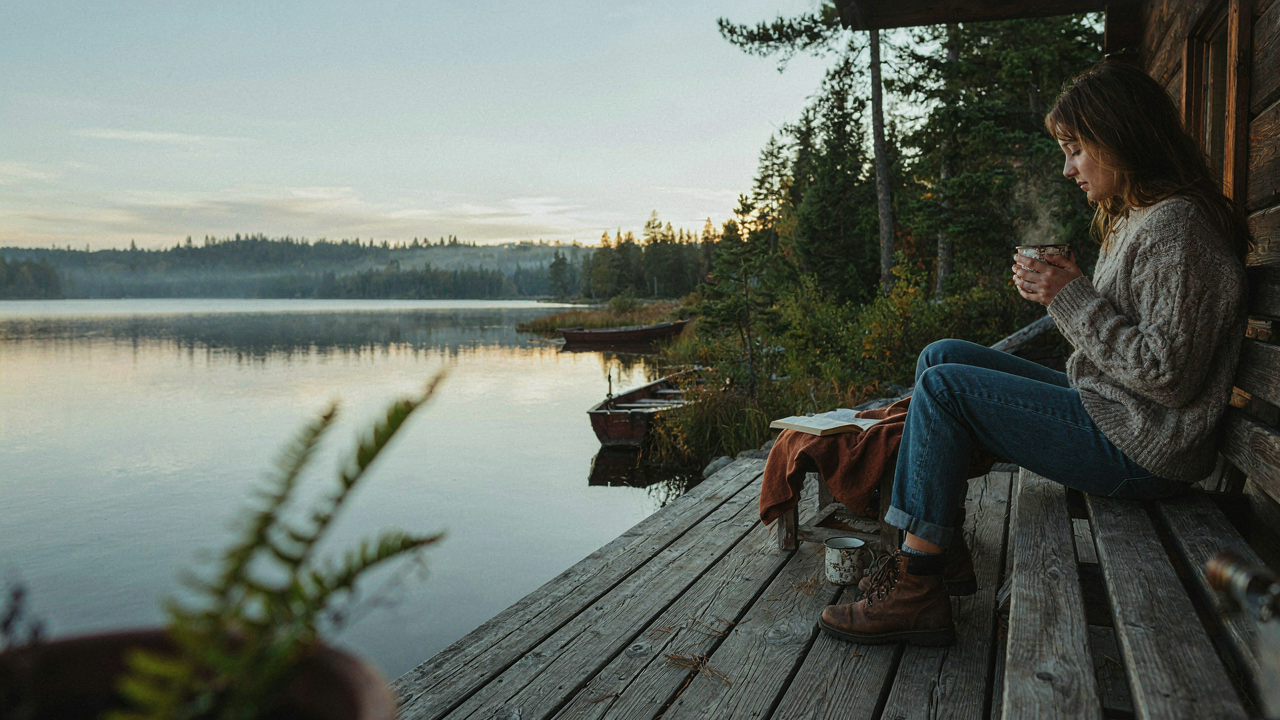
The Digital Detox Deck: Reclaiming Your Attention
Sightlines That Enforce Stillness
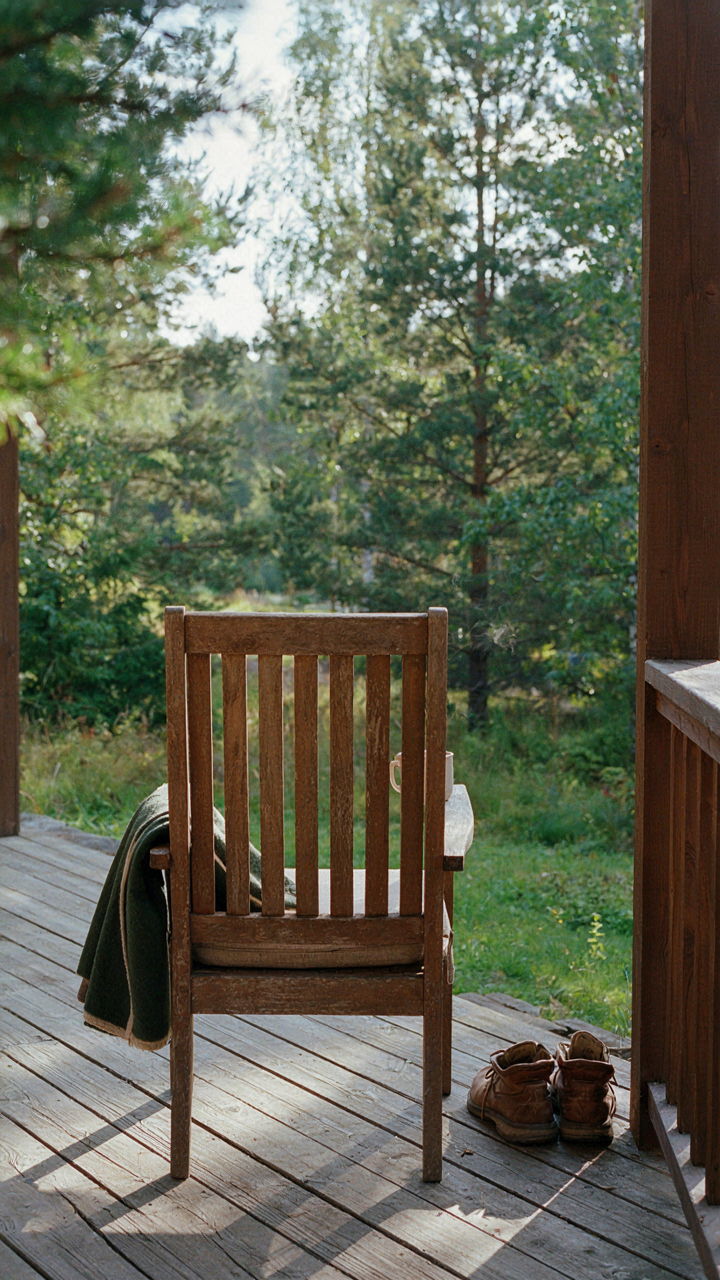
You want permission to be bored without feeling guilty about it. The real mechanism here comes from architecture, specifically the concept of “prospect and refuge”—your porch needs clear sightlines outward but zero visual pathways back to devices. When your eye can travel across the treeline or toward water without landing on a phone, your brain stops treating your pocket as a valid destination.
Most porch designs fail here because people treat furniture placement like interior design. They don’t. A porch is a threshold. Position seating to face away from the cabin entrance, not toward it. Kill overhead coverage on one side so weather and light shifts demand your attention instead of your screen. The goal is to make staying outside easier than going back in.
Friction Points That Kill The Habit
The advice to “just put your phone away” is useless. You need physical distance with a cost. Friction isn’t punishment—it’s a reset button. Leave your device inside, in a specific drawer, not just on a table. Make retrieving it require a deliberate decision, not a habit loop.
Weather becomes your ally here. A porch exposed to wind or rain naturally creates a barrier to casual phone checking. People don’t scroll in discomfort. Design your porch so sitting outside is materially different from sitting inside. Add a blanket rack, position a fire pit, or orient seating low enough that standing up to grab your phone breaks the comfort state you’ve built. The friction point works when crossing it feels like giving up.
The Stoic’s Rustic Porch: Embracing Imperfection
Weathered Wood Tells The Real Story
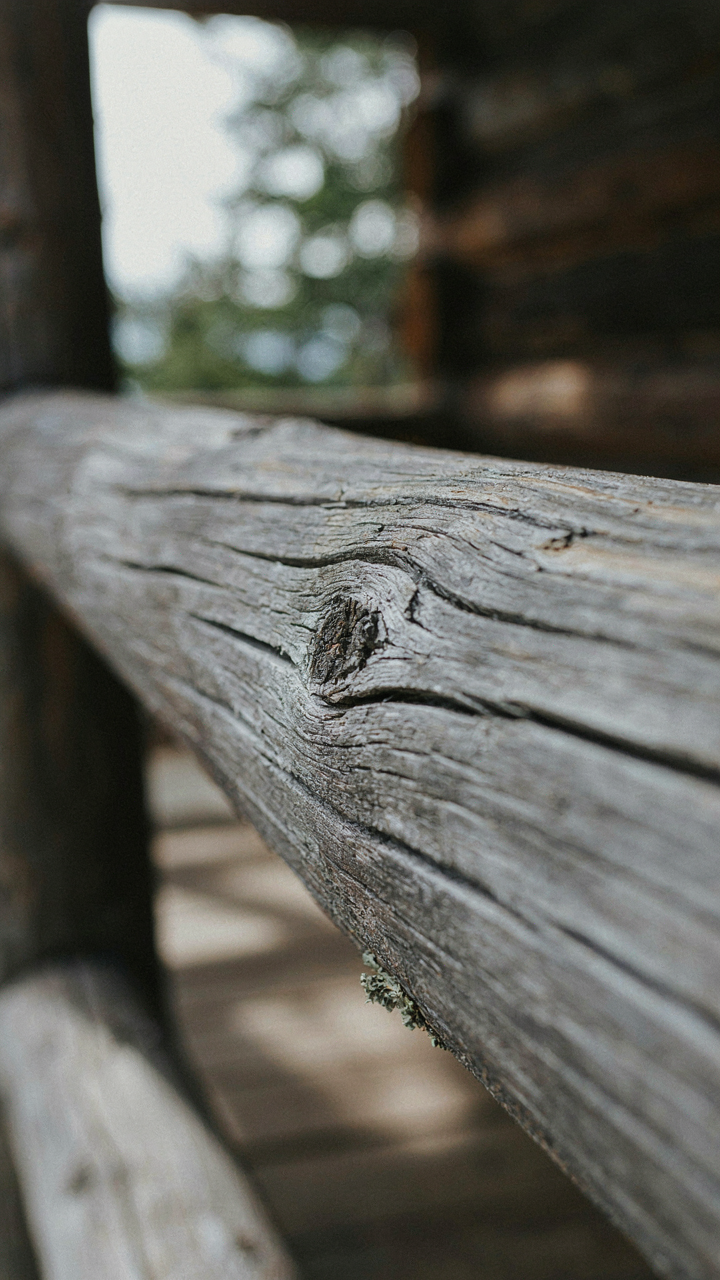
You want weathered materials because they signal you’re not trying too hard, that you’ve transcended the desperation of newness. But the real mechanism is simpler: decay is honest feedback. Weathered wood, stone, and metal on a cabin porch document time passing. They don’t pretend. This is why rustic design endures where polished finishes date themselves in five years. The patina is information, not decoration.

Weathering happens through exposure. Rain, UV light, temperature swings, and wind strip away surface treatments and reveal grain structure. Wood grays. Metal oxidizes. Stone develops micro-fractures that catch light differently. These changes aren’t damage you’re hiding—they’re the porch’s actual operational record. A beam that’s cracked and silvered has survived seasons. This earned appearance costs nothing to maintain and reads as authenticity to anyone paying attention.
Build Around What The Porch Does
Most cabin porch advice starts with how it should look. That’s backward. The porch’s job determines material selection, layout, and durability requirements. A porch that shields your entry needs different coverage than one where you sit for hours. A porch exposed to afternoon sun needs different materials than one under trees.
This is industrial design principle applied directly: form follows function, not the other way around. A functional porch is already beautiful because it doesn’t waste resources on decoration. A low-maintenance bench made from untreated cedar outperforms a stained one because you’re not fighting the wood’s nature. A roof overhang sized to your region’s rainfall protects better than aesthetic proportions do. Build the porch to work first, then live on it for three years. The imperfections that emerge are exactly where your design succeeded.
The Biophilic Log Cabin Front Porch: Nature As Your OS

Sight, Sound, Touch, Smell, Taste As Design Variables
You want this space to feel meaningful because you’re tired of spending money on things that don’t actually change how you feel. Here’s the mechanism: your nervous system doesn’t care about aesthetics. It responds to sensory coherence. Biophilia borrows from neurobiology the concept of “stimulus congruence”—your brain settles when environmental inputs match patterns it evolved to recognize. A cabin porch works because it clusters multiple sensory channels toward one signal: you’re safe, you’re outside, but you’re still held.

Sound design kills generic porches. Running water from a small recirculating fountain masks road noise and creates acoustic depth. Cedar or untreated wood decking produces texture underfoot that registers as different from interior flooring. Sight lines matter less than sight layering—plants at varying distances create depth perception that actually triggers parasympathetic activation. Touch the railing, smell the wood, taste the air clarity at elevation. Stack sensory inputs deliberately, not by accident.
Layered Plantings Work Because Succession Does
Most cabin porch advice treats plants like decoration. They’re not. Permaculture uses succession—the principle that ecosystems build complexity over time by layering different species with different maturation rates and functions. Apply this to your porch: plant fast-growing natives (sedges, low shrubs) that establish in one season, then add slower perennials (native grasses, flowering understory plants) that take two to three years to mature. This prevents the dead gap between installation and visual payoff.
Choose plants native to your specific elevation and microclimate, not your general region. A plant thriving 2,000 feet upslope won’t perform on your south-facing porch. Understory species—things that naturally grow beneath tree canopy—require less maintenance because you’re working with their evolved preference for dappled light and protected conditions. Water them less. They survive better. Observe how plants cluster in the forest around your cabin. Replicate that density and species mix on your porch, and you’ve outsourced the design work to millions of years of trial and error.
The “Opportunity Cost” Cabin Front Porch: Maximizing Real Engagement
Activities That Actually Return Your Time
You want your porch to feel intentional because leaving it blank feels like failure. Here’s the mechanism: economics defines opportunity cost as what you give up when you choose one thing over another. Your cabin porch isn’t a stage for decoration. It’s real estate for activities that generate actual engagement or rest, not Instagram potential. Every square foot committed to low-use seating is space stolen from what matters.

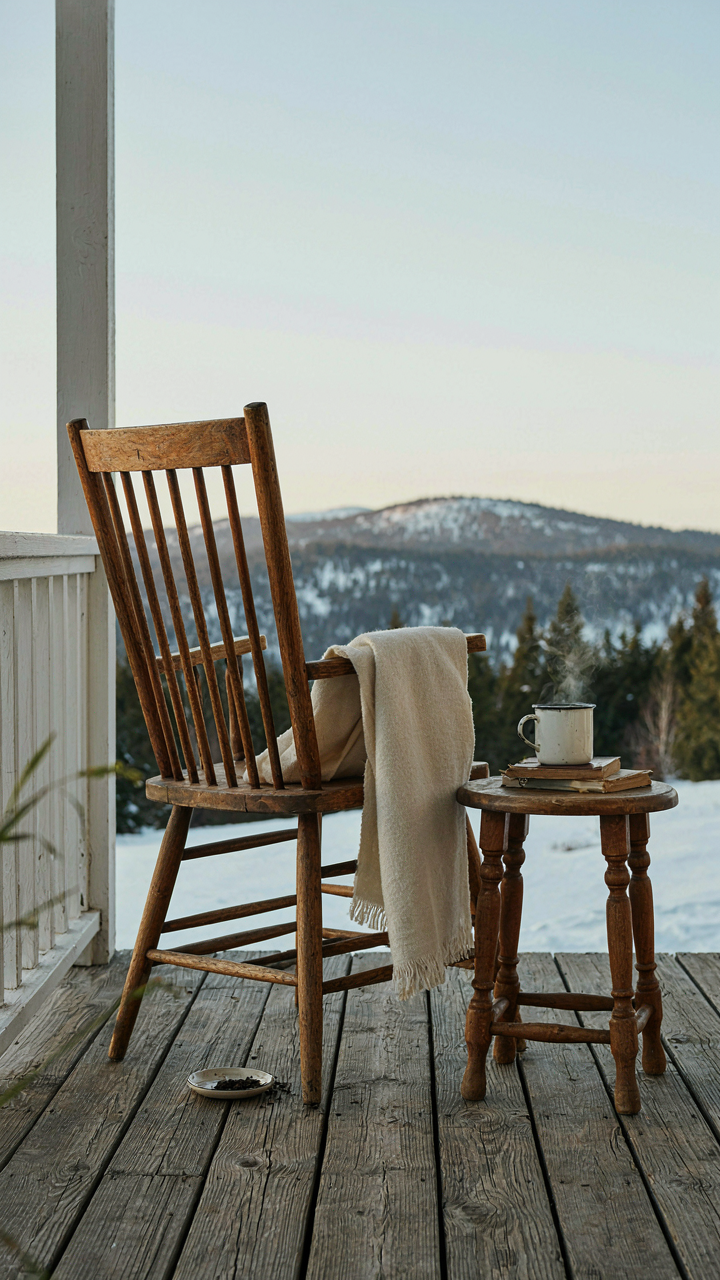
The common advice about porch design skips this entirely. It focuses on aesthetics instead of utility. A functional porch channels you toward specific actions: morning coffee with a view requires a small table and one proper chair, not five mismatched rockers. Evening conversation needs acoustic isolation and proximity, not sprawl. Reading demands shade and wind protection. Fishing prep needs work surface and tool access. Define the actual activity first. Then size and furnish backward from that single purpose.
Removing The Decor That Doesn’t Work
Most cabin porches carry dead weight: hanging plants that dry out, decorative railings that trap leaves, accent lighting installed for effect but never turned on. These aren’t enhancements. They’re maintenance obligations disguised as charm. Strip the porch to its load-bearing function and stop.
The real filter is this: does it solve a problem or create one? Weatherproof decking material reduces rot risk and maintenance time. A gutter system above the porch prevents water damage. A solid roof overhang extends usable months. Those decisions compound. Decorative elements compound in the opposite direction: they demand cleaning, seasonal swaps, and mental overhead. Remove anything that demands regular attention without returning proportional engagement or protection. What remains is your actual porch.
The Minimalist’s Cabin Porch: Declutter For Clarity
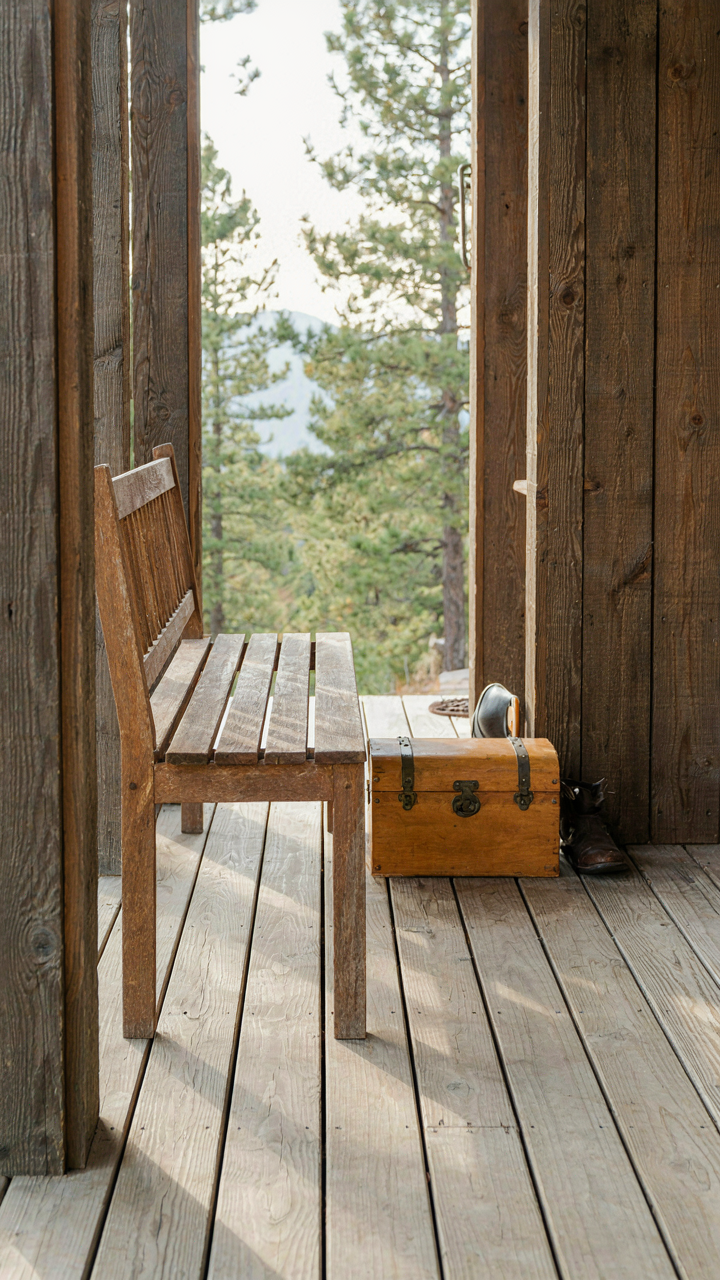
Furniture That Earns Its Space
You want the porch to feel open because you’re afraid it’ll become a junk collector’s yard like everyone else’s. The real mechanism is constraint: furniture that serves zero function becomes invisible clutter within weeks. Borrow from industrial design’s concept of “form follows function” and apply it ruthlessly. A chair without a table wastes the view. A table without seating purpose becomes a catch-all. Every piece must solve a specific problem: conversation, reading, eating, or weather protection. Nothing else stays.

Two items maximum per zone. A bench and a side table for the seating area. A storage box doubling as a footrest if you need it. The porch isn’t a living room annex. It’s a transition space with one job. When you remove options, decision fatigue drops and usage goes up. You actually sit there instead of walking past it.
Clear Sight Lines Through Smart Storage
Storage doesn’t mean visible shelves or decorative baskets. That’s aesthetic theater masquerading as organization. Real storage solves the mechanism of visual noise: if you see it, your brain processes it as clutter regardless of how neat it sits. Install a weatherproof cabinet or bench with interior compartments. Position it against the wall farthest from seating. This keeps the sightline from your chair clear to the tree line or landscape.
Vertical storage breaks the horizontal sprawl that makes porches feel cramped. Wall-mounted hooks for jackets or blankets hang items without consuming floor space. A single lidded trunk holds cushions, blankets, and seasonal items out of sight. The rule is simple: nothing lives on the porch floor except furniture legs. Everything else gets stored behind cabinet doors or inside sealed boxes. Open space creates the illusion and reality of calm.
The “Work Banned” Rustic Porch Ideas: Enforcing Boundaries

Physical Cues Signal Non Work Zones
You want permission to stop working without feeling guilty. Here’s the real mechanism: your brain treats spaces as containers for behavior. Design the porch as a physical barrier using environmental psychology—the same principle architects use to control foot traffic and attention. A porch that looks nothing like your office removes the mental permission to check email. Weathered wood, visible stone foundations, and open-air sightlines contradict the enclosed, task-focused geometry of work environments. This isn’t decoration. It’s behavioral architecture.

The separation works because your nervous system recognizes unfamiliar sensory data as a context switch. Rough textures, variable lighting, and ambient sound from nature activate different neural pathways than drywall and artificial light. Install a threshold your body recognizes: a step down, a change in flooring material, or a visual break created by posts or railings. The porch becomes a deliberate exit point. You cross it and your brain receives a signal that the ruleset has changed. No rules from inside the cabin apply here.
Rituals Lock The Boundary In Place
Most advice tells you to “be intentional.” That’s vague nonsense that doesn’t work because intention alone doesn’t reprogram habit. Behavioral psychology shows that rituals work through repetition and sensory anchors. Create a specific sequence you repeat identically every time you step onto the porch: pour coffee into the same mug, sit in the same chair, face the same direction. The repetition embeds the context. Your body learns to shift state automatically because the ritual signals “we’re in a different mode now.”
The ritual must involve a physical action, not just a mental note. Light a lantern. Unfold a specific blanket. Ring a bell. Close a door behind you with intention. These actions create what therapists call a “container for transition”—a moment where your mind actively releases work and settles into rest. Do this the same way for three consecutive visits and your nervous system will begin the shift before you consciously decide to relax. The porch stops being a location and becomes a protocol.
The Analog Advantage: Tools For Real Interaction On Your Cabin Porch

Games, Books, And Conversation Starters
You want permission to stop feeling guilty about unplugging. The real mechanism is friction. Digital devices remove friction from distraction. Analog tools add it back. When you pull out a board game instead of a phone, you’ve created a commitment threshold. The person across from you can’t ghost the interaction without making it obvious. That’s the advantage.

Board games work because they enforce turn-taking. Books work because they demand sustained attention. Conversation starters work because they replace algorithm-driven small talk with intentional topics. The porch becomes a container where boredom can’t be outsourced.
- Strategy board games: Require 45 to 90 minutes of uninterrupted focus. Examples include Catan, Ticket to Ride, or 7 Wonders. Creates natural pacing for weekend time.
- Paperback novels or short story collections: Shared reading experience where you discuss chapters or stories. Creates natural conversation hooks without forced prompts.
- Card-based conversation decks: Questions organized by depth level. Moves past weather talk into actual exchange without feeling manufactured or awkward.
- Field guides or regional history books: Cabin-specific material tied to location. Generates relevant discussion grounded in the place you’re inhabiting.
- Pen and paper games: 20 Questions, Hangman, word association games. Requires zero setup and works during casual porch time without formal commitment.
The porch conversation doesn’t compete with Netflix. It competes with your phone sitting on the armrest. The moment you establish a game or shared book as the baseline activity, devices become the interruption, not the default.
Skills That Demand Your Hands
Crafts aren’t about making something pretty. They’re about creating a reason to stay put. Economics calls this “increasing the cost of exit.” You can’t leave a half-finished woodblock print without abandoning a material investment and incomplete thought. Your hands stay busy enough that idle scrolling becomes friction instead of relief.
Sketching, whittling, knitting, or leatherwork all work for the same reason. They’re portable. They’re forgiving enough for beginners. They produce visible progress. A cabin porch is the ideal setting because natural light is free, interruptions are sparse, and the pace of work matches weekend time. You’re not racing. You’re occupying your attention system with something that requires presence. The secondary benefit is the object you finish. But the primary mechanism is the anchor.
The Spartan Log Cabin Porch: Enduring The Elements For Resilience
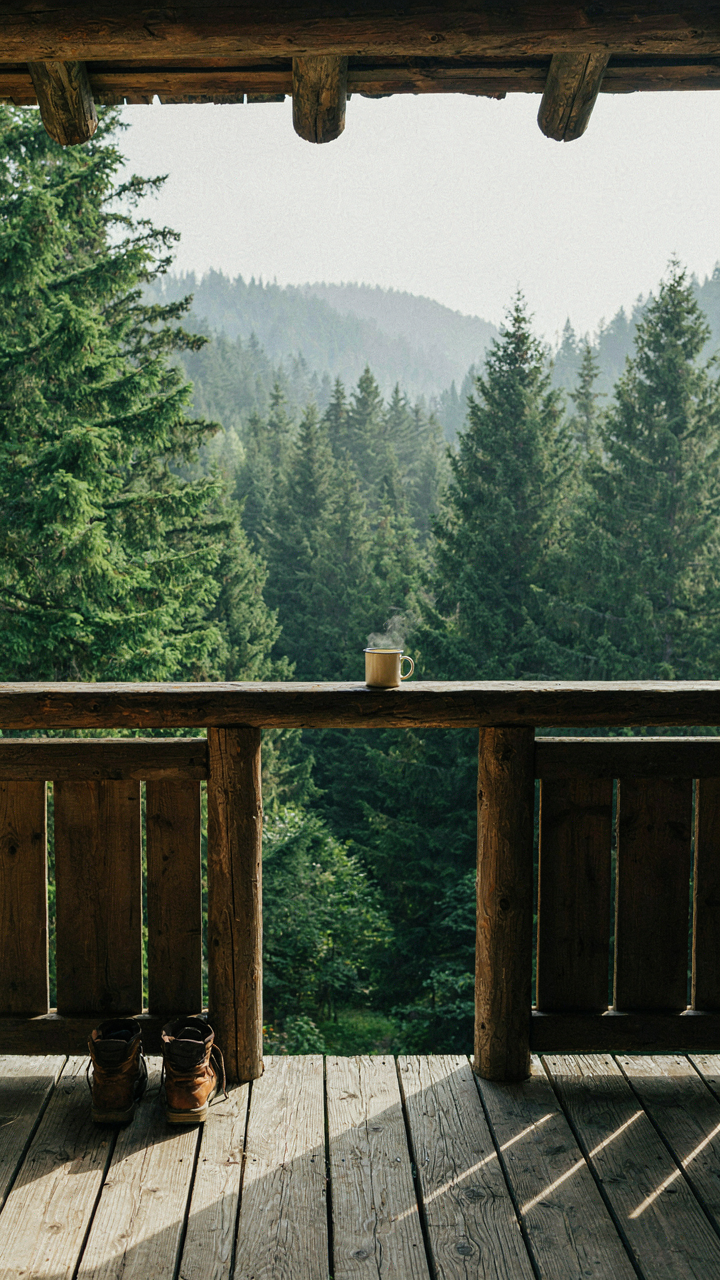
Weather Exposure Over Protection
You want a porch that looks intentional, not like you’re hiding from nature. Here’s the mechanism: most people design porches as barriers. They build roofs too deep, walls too solid, railings too ornate. The spartan approach inverts this. You’re not blocking weather—you’re orchestrating it. Use naval architecture thinking here: ships don’t avoid water, they channel it. Your porch design channels wind, rain, and seasonal change instead of fighting it.

Exposed beam ends tell the story of wood grain darkening over decades. Open siding lets air flow through without trapping moisture that rots structures from inside. A shallow overhang (18 to 24 inches) sheds rain from the deck but leaves most of the porch face to the elements. This accelerates weathering visibly, which is the point. You’re designing for observation, not preservation. The porch ages honestly. Check your roof pitch: 6/12 or steeper sheds water fast. Shallow pitches pool debris and look apologetic.
Raw Comfort Without Ornamentation
Forget the cottage-core fantasy of cushioned seating and ambient lighting. Raw comfort means a bench that won’t rot in 15 years and a clear sightline that rewards you for sitting there. A simple 2×12 pressure-treated or locust wood bench anchored to the deck frame outlasts any cushioned chair by a generation. Metal hardware rusts in a pattern you’ll recognize each season—it becomes a clock.
The best spartan porches have one focal point: a view, a fire pit visibility, or the path to the forest. Strip everything else. No decorative railings. No plants in pots that need attention. A thick wooden railing (4×4 posts, horizontal 2×6 rails) serves two functions: structure and grip. When your hands know where to land, you stop thinking about being on a porch and start noticing what’s beyond it.
The Porch Doesn’t Slow You Down; Your Discipline Does
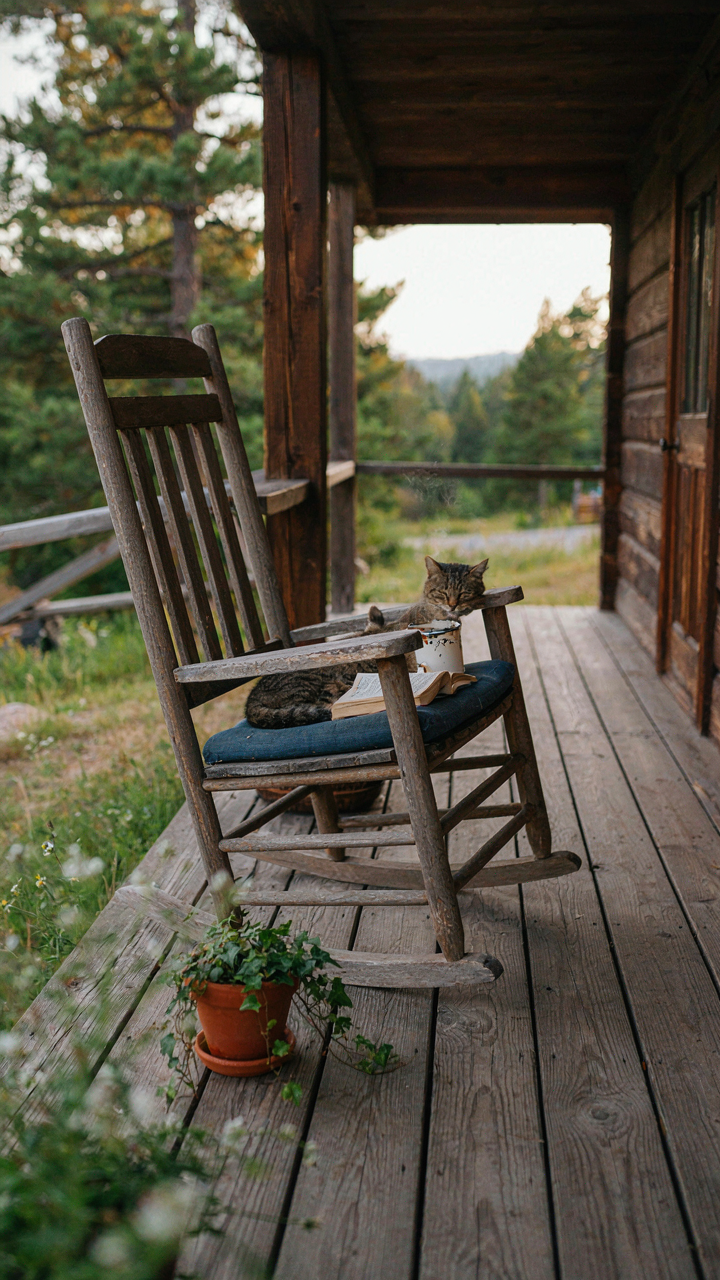
Your cabin porch becomes what you protect it as. Most people build the space then immediately fill it with noise, screens, obligations. You won’t. Pick one cabin porch idea that matches your actual life, not your fantasy self. Commit to it for two weeks. The porch doesn’t create slowness. You do. Everything else is just furniture.