

The Cottage Hearth Fallacy: Beyond Fake Comfort

Aesthetics Versus The Heat You Actually Need
You want the feeling of belonging to something slower and more real than your current life. That’s the real reason you’re here. But cottagecore aesthetic has inverted the cottage hearth from a functional heat source into a prop for Instagram narratives, stripping it of the one thing that made it matter: actual warmth and survival utility.
The hearth isn’t decoration. It’s infrastructure. A functional cottage hearth operates on thermodynamic principles—heat radiates from a contained fire, moves through a room via convection, and the mass of the chimney and surrounding stone holds that warmth for hours after the fire dies. When you optimize for looks instead of these mechanics, you get a pretty fireplace that wastes fuel and leaves you cold.
The Hearth As A Metabolic Engine
Think of the cottage hearth through systems biology: your house needs a central energy converter, just like your body needs a metabolic core. The hearth isn’t just where fire happens—it’s the biological and social hub that regulates temperature, cooks food, and anchors the daily rhythm of the home. Strip away the romantic language and you’re looking at a heat-generating system that shaped human settlement patterns for eight thousand years.
The mechanism is straightforward. A well-built hearth creates thermal mass through stone or brick, absorbs heat during the day, and releases it slowly at night. It centralizes work: cooking, heating, light, and gathering all happen at one point instead of spreading energy across multiple rooms and appliances. This isn’t sentiment. It’s efficiency. To build one that functions, you anchor the fire box deep into the chimney, size the opening to your room’s volume, and use dense materials that hold temperature—not marble or thin stone that looks good but performs poorly.
Fuel Mastery: The Ignored Core Of Cottage Fireplace

Wood Selection Determines Everything
You want a cozy fireplace because you think it projects taste. The real reason you care is that a cold, smoking hearth broadcasts incompetence. The mechanism is simple: wood species and moisture content control burn temperature, flame duration, and heat transfer efficiency. Hardwoods like oak and ash release more BTUs than softwoods like pine. Softwoods contain more resin and sap, which creates creosote buildup in the flue instead of useful heat in your room.

Most people grab whatever wood sits nearby. This mistake costs you warmth and money. Hardwood burns slower and hotter because its dense cellular structure requires more energy to ignite but releases that energy over longer periods. A cord of properly dried oak generates roughly twice the usable heat of green pine. The choice you make at the wood pile determines whether your fireplace becomes a heat source or an expensive decoration.
Seasoning Transforms Raw Wood Into Fuel
Thermodynamics teaches us that energy release depends on moisture removal. Think of seasoning like a heat engine’s compression ratio: the drier the fuel, the higher the combustion efficiency. Wood cut fresh contains 50 to 60 percent water by weight. This moisture absorbs heat energy during burning instead of releasing it into your room. Seasoned wood drops to 15 to 20 percent moisture, freeing that energy for actual warmth.
The timeline matters more than most admit. Wood needs 6 to 12 months of air exposure in a dry location before it burns efficiently. Stack it with space between pieces to allow airflow. Cover the top to shed rain while leaving the sides open to wind. After the seasoning period ends, test readiness with a moisture meter or the knock test: properly dried wood sounds hollow when struck. When moisture levels drop below 20 percent, the wood ignites cleanly and burns hot enough to minimize creosote and maximize the heat reaching your fireplace.
The Chimney Protocol: Airflow & Efficiency Secrets

How Smoke Moves Through Your Stack
You want your cottage to feel warm without watching heat disappear up the chimney. Here’s the actual mechanism: chimneys work on draft, a pressure differential created by buoyancy. Hot air and smoke are less dense than cold air outside, so they rise naturally—but only if the system is designed to let them. This isn’t magic. It’s fluid mechanics applied to your hearth.

The draft depends on three variables: chimney height, temperature difference between inside and outside, and the cross-sectional area of the flue. A taller chimney creates stronger draft because the column of hot air has more distance to generate pressure. A greater temperature difference amplifies buoyancy force. A flue that’s too wide loses velocity; too narrow and you choke the flow. Most cottage hearths fail because people ignore this balance, building chimneys that either pull too hard or not at all.
Sealing The Path Where Heat Escapes
Common advice says “just insulate the chimney.” That’s incomplete. The real problem is air leakage at the hearth opening and around the chimney structure where it passes through floors and the roof. Cold air infiltrates through these gaps, mixing with rising hot air and killing draft efficiency. You lose heat two ways: convection up the flue and conductive loss through uninsulated masonry.
The protocol is straightforward. First, seal the hearth opening with a damper or plug when the fire isn’t in use. This stops cold air from feeding back down the chimney into your cottage. Second, insulate the chimney from the outside by wrapping the exterior stack or installing a chase around it. Third, ensure the flue liner fits snugly with no gaps where air can bypass it. You measure success by feeling whether cold drafts enter the room when the fire dies, not by guessing.
Wood Burning Stoves Living Room: Beyond The Open Fire
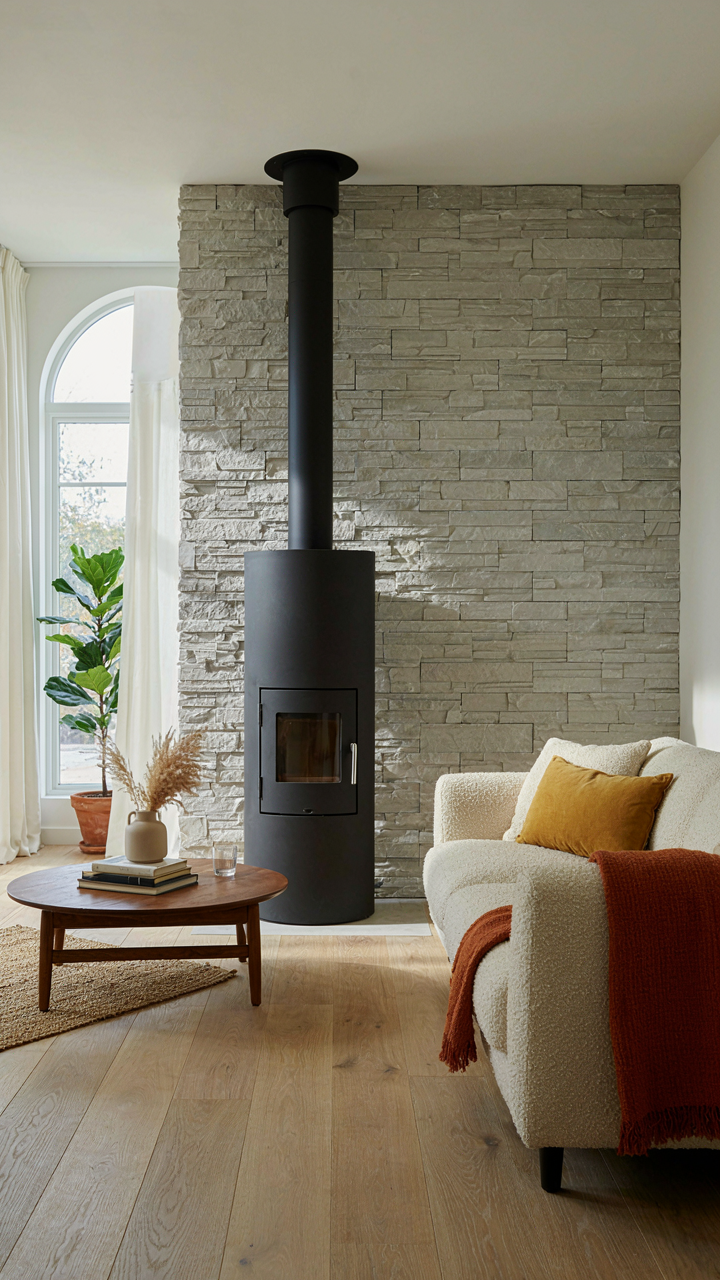
Why Enclosed Chambers Beat Open Flames
You want a wood stove because you think it looks better than a fireplace. That’s not the real reason to choose one. The actual mechanism is thermodynamic efficiency. An open fireplace pulls warm air from your room up the chimney while radiating heat only to objects directly in front of it. A wood stove encloses the combustion chamber, forcing hot exhaust through a longer path before venting, which transfers more energy into the room instead of the atmosphere.
The enclosed chamber creates a feedback loop. As the stove body heats, it radiates warmth across the entire living space rather than funneling it upward. This means you need less wood to maintain comfortable temperatures, which cuts your fuel costs and your time spent managing the fire. The door also lets you control airflow, which determines burn rate and flame intensity. You adjust dampers to regulate oxygen supply, not guess like you would with an open hearth.
Heat Distribution: The Physics That Matters
Thermodynamics classifies heat transfer into two categories: radiant and convective. A wood stove excels at both, while an open fireplace relies almost entirely on radiation. Radiant heat travels in straight lines from the hot surface to you, warming whatever it touches. Convective heat rises and circulates through the room’s air, which is why a stove warms a full space instead of just the wall opposite the flames.
The stove body acts as a thermal battery. Hot metal radiates outward while simultaneously pulling cooler air across its surface, which heats and rises naturally. This cycle repeats continuously without fans or active intervention. The result is passive room-wide temperature gain instead of localized warmth. Place your stove on an interior wall, and the heat transfers through that wall into adjacent rooms. Position it on an exterior wall, and you lose efficiency to outdoor cold. The location determines how effectively that enclosed chamber converts wood into usable household warmth.
Building A Thermal Battery: Storing Heat, Not Losing It

How Mass Holds Temperature
You want a cozy fireplace that doesn’t fade the moment you stop feeding it wood. That’s the real ask here, dressed up as aesthetics. Thermal mass is physics applied to architecture: the ability of a material to absorb, store, and release heat over time. A cottage hearth without thermal mass is just expensive theater. The fire burns hot for two hours, then you’re back in the cold.

A fireplace pulls heat from flame and radiates it into the room. But most of that energy vanishes into air, which has almost no capacity to hold it. Thermal mass intercepts that radiation. It absorbs the heat, stores it in its molecular structure, and releases it slowly for hours after the fire dies. Think of it as a battery that charges during the day and discharges at night.
- Brick: Absorbs moderate amounts of heat and releases it steadily. Common in cottage hearths because it’s affordable and works adequately for small rooms.
- Stone: Higher density than brick means faster absorption and longer heat retention. Granite, slate, and limestone all perform differently based on porosity.
- Concrete: Dense thermal mass that works well in hearth bases and surrounds. Modern but effective. Absorbs quickly, releases predictably over 4 to 8 hours.
- Clay and Ceramic: Traditional material with moderate thermal capacity. Slower to heat than stone but maintains warmth in confined spaces like small cottage rooms.
- Iron: High density and thermal conductivity. Acts as a heat bridge, warming up fast and releasing energy rapidly. Best used in fireplace grates and structural elements.
The mass needs surface area exposed to the fire’s radiation. A thin veneer of stone won’t work. You need at least four to six inches of material directly facing the hearth opening to capture meaningful heat. Anything less is decoration pretending to function.
Material Performance Under Real Conditions
Don’t buy the myth that all stone performs the same. That’s lazy marketing. Stone performs based on density, porosity, and thermal conductivity. Granite is dense and conductive, which means it heats fast and radiates heat back into the room quickly, but it cools faster than porous stone. Slate is denser than granite and retains heat longer, but it’s also harder to work and more expensive. Limestone is porous and heats slower, but it holds warmth for extended periods because the heat soaks into the material instead of bouncing off it.
Brick and concrete split the difference. Brick is traditional because it was affordable and available. It stores a moderate amount of heat and releases it over three to four hours at room temperature. Concrete stores more heat per unit of mass than brick, but it’s visually harder to integrate into a cottage aesthetic without looking industrial. The real decision comes down to what you’re actually trying to do: maximize heat retention, or maintain the cottage character. You cannot optimize for both without accepting compromise on one dimension.
Cottage Witch: Mastering The Ritual Of Fire

The Three Stage Build
You want to feel competent around fire because incompetence around heat sources is actually dangerous, and admitting that feels weak. The mechanism is simple: fire requires graduated fuel sizes because combustion needs oxygen flow, and dense logs starve it. You build upward through stages, not sideways into a pile.

Start with tinder. This is material that ignites from a spark or small flame without requiring external heat maintenance. Dry grass, paper, bark stripped from dead branches, or char cloth work because they have high surface area and low ignition temperature. Tinder alone burns hot but brief, maybe thirty seconds. You need kindling staged above it before you light anything.
Reading Flame As Feedback
Flame intensity tells you whether oxygen or fuel is the limiting factor, which comes from combustion chemistry. A weak yellow flame means insufficient oxygen reaching the fuel. A clean blue or white flame means you’ve got oxygen surplus and complete combustion happening. Most people miss the signal entirely and just keep adding wood until the fire either roars or dies.
When the flame drops to yellow and smoke increases, you’ve blocked airflow. Pull logs apart slightly to create channels. When you see clean flames at the base of your fire, heat is being captured efficiently and the burn is sustainable. Adjust by spacing, never by dumping fuel, because the fire tells you what it needs if you read the color.
Cabañas Rústicas: The Ancient Art Of Hearth Placement
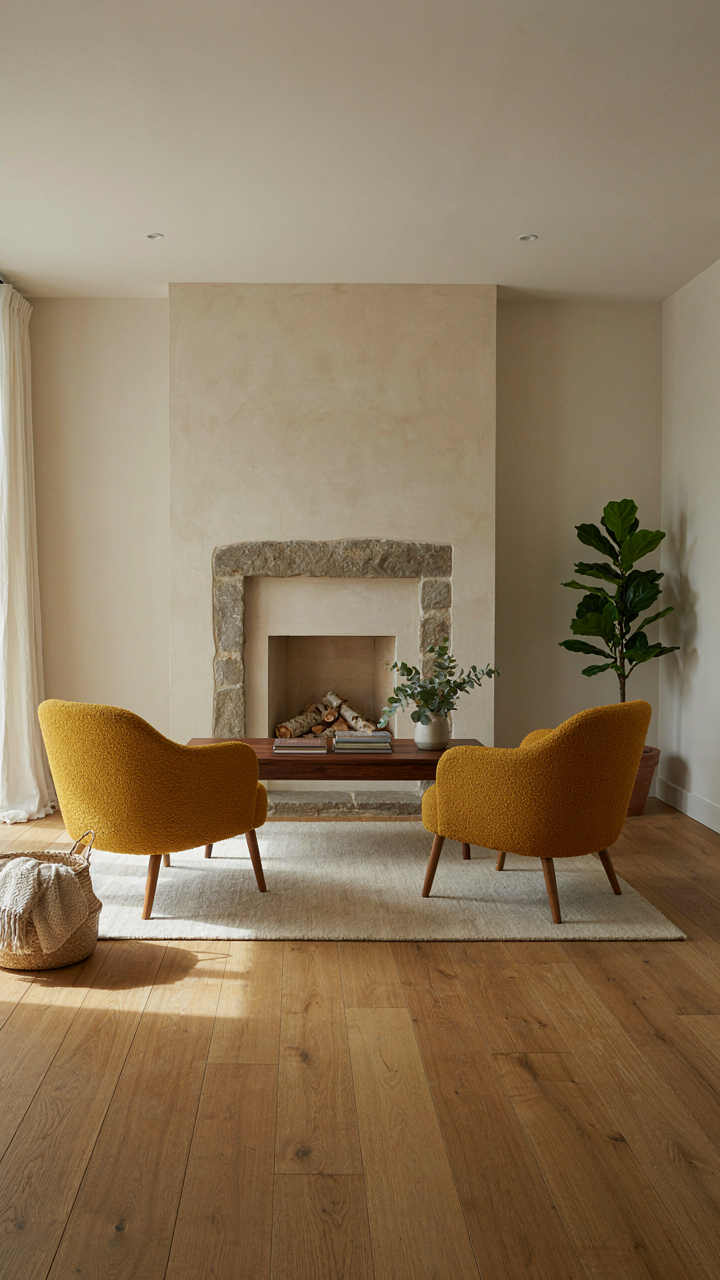
Where Heat Actually Goes In A Room
You want the hearth centered because it looks balanced and makes you feel like you’ve nailed cottage design. That’s not the mechanism. Heat rises and moves toward the coldest wall in the room. Placing your hearth on an exterior wall wastes 40 percent of its output heating the outside. Interior placement forces radiant heat to work the room before it escapes. Thermal dynamics dictate this, not aesthetics.

The second variable most people ignore is room geometry. A hearth in a long rectangular cottage sends heat to the far end inefficiently. Place it one-third into the space from the entry, not dead center. This creates natural convection paths and reduces dead zones where cold air stalls. The stone or brick mass itself becomes a thermal buffer that moderates temperature swings through the evening.
Stacking Heat With Season
Passive solar design in architecture uses cardinal orientation to capture free energy from the sun. A cottage hearth works the same way, but inverted. Winter sun enters south-facing windows and hits thermal mass near the hearth, storing that energy. The hearth then radiates stored heat at night when windows lose warmth to cold air outside. East-facing hearth placement captures morning sun without afternoon overheating. This layered approach cuts firewood consumption by a measurable margin because you’re leveraging two heat sources instead of one.
The fireplace opening itself matters here. A hearth with low clearance above captures rising heat and forces it back into the room rather than up the chimney. The depth of the firebox determines how much radiant surface area reaches your seating area. Shallow fireplaces project heat better than deep ones. Set your seating zone where radiant angles from the firebox naturally concentrate, typically 8 to 12 feet out, angled at 45 degrees to the opening. This is where heat concentration peaks, and it’s where you spend those fireside hours.
The Wood Burning Stove: A Self Reliant Powerhouse
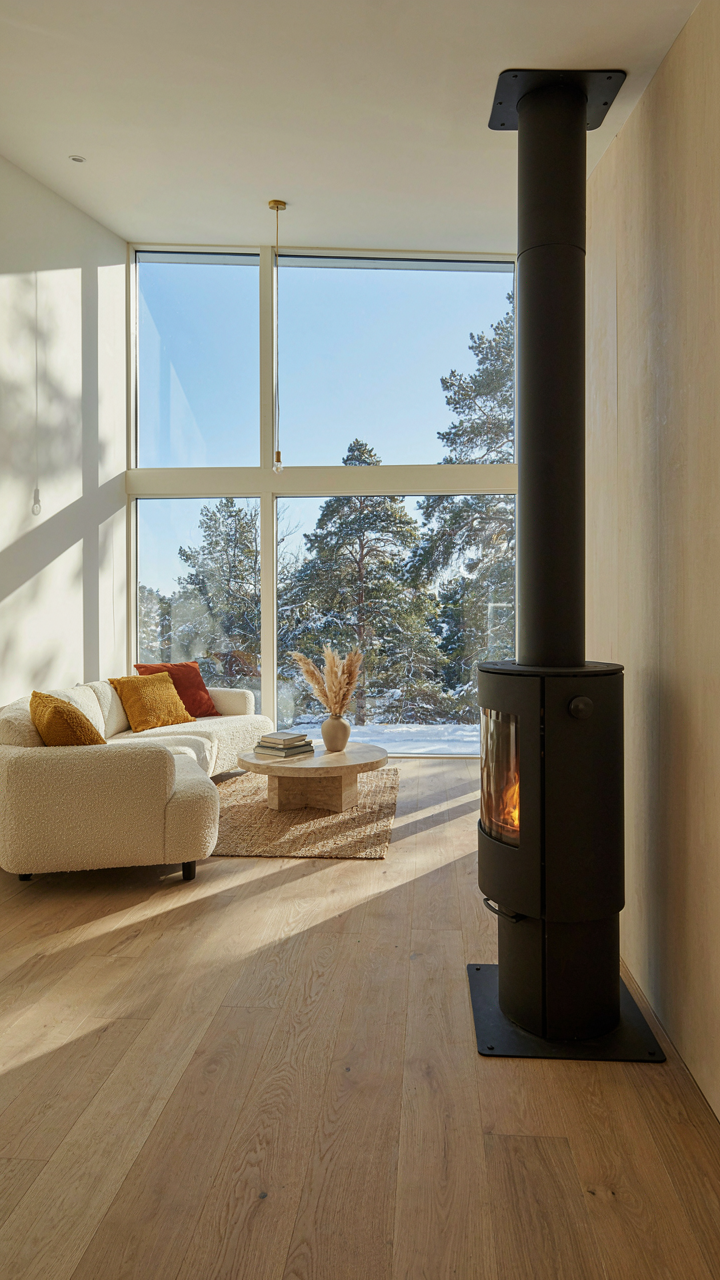
Matching Heat Output To Your Space
You want a wood stove because it feels like control, like you’re not dependent on the grid. That matters. Here’s the mechanism: heat output is measured in BTUs, and the stove’s efficiency depends on matching that output to your room’s volume. Oversized stoves waste fuel and overheat the space. Undersized stoves run constantly and deliver uneven warmth. Most cottages range from 800 to 2,400 square feet, which typically requires stoves rated between 40,000 and 90,000 BTUs. Calculate your room’s cubic footage first: length times width times ceiling height. A rule from thermodynamics applies here: thermal equilibrium requires proportional energy input. Your stove is the energy source; your room is the system seeking balance.

Stove manufacturers publish heating capacity for specific conditions. A stove rated for 1,500 square feet assumes standard insulation and eight-foot ceilings. Older cottages with poor insulation need higher BTU output. Modern, well-sealed cottages need less. Walk the space. Feel the drafts around windows and doors. Measure wall thickness. If you’re unsure, select the stove one size down rather than up. You can run a smaller stove harder. You cannot run an oversized stove cooler without choking the draft and creating creosote buildup inside the chimney.
Professional Installation Protects Your Structure
The common advice is wrong: DIY stove installation will not save money if your cottage burns down. Code compliance exists because uninsulated stoves radiate heat to nearby wood framing, which ignites at around 300 degrees Fahrenheit through prolonged exposure. A certified chimney sweep or HVAC professional performs the installation according to the National Fire Protection Association’s standards. They verify clearance from combustible materials, install proper chimney liner, and ensure adequate makeup air so the stove doesn’t create negative pressure in your cottage.
The installer checks three critical points: stove placement demands at least 36 inches of clearance from unprotected walls, the chimney liner must be class A rated and properly sized to the stove’s flue collar, and the hearth pad must extend 16 inches in front and 8 inches on each side of the stove door. After installation, request a written report documenting clearances and materials used. Schedule annual chimney inspections. Creosote accumulation creates fire risk, and cracks in the liner allow heat and gases to enter wall cavities where they cause hidden damage.
Beyond Instagram: Real Cottage Living Rooms, Real Heat

Furniture Placement That Moves Air, Not Blocks It
You want the hearth to feel like the center of your life. That’s the real reason you’re reading this. Here’s what actually matters: heat moves through convection, and your furniture either channels it or kills it. Think of your room as a thermal circuit. Heavy seating pushed against exterior walls or close to the fireplace opening starves the rest of the room. Low-back chairs and benches placed perpendicular to the hearth let warm air rise and circulate instead of pooling dead in one corner. Distance matters too. Furniture sitting more than eight feet from the firebox receives almost no radiant warmth, no matter how the room feels in photos.
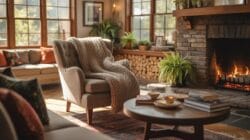
The cottage hearth works best when you stop treating furniture as decoration and start treating it as airflow equipment. Arrange pieces to create a gentle path for heat to move deeper into the room. Avoid blocking vents or chimneys. Large upholstered items should sit at angles rather than parallel to walls, which opens up the space for convection loops. A wingback chair positioned to one side of the hearth, not directly in front of it, traps less heat while still being useful. The room warms faster and stays warm longer when air can move freely around the fire.
When Clutter Masquerades As Comfort
Most advice on cottage living rooms treats clutter as virtue. It isn’t. The difference between functional layering and thermal dead weight is deliberate choice, not volume. A room packed with throw pillows, stacked books, draped blankets, and decorative items absorbs heat like a sponge absorbs water. Those objects lower the effective temperature by creating micro-pockets of stagnant air. Real coziness comes from strategic placement of usable items: one good blanket on the arm of your chair, a side table for your drink, reading material within reach. Everything else is friction.
Functional space around a hearth means removing items that don’t serve the evening. Surfaces stay clear except for what you actually use while sitting by the fire. This isn’t minimalism posturing. It’s thermodynamics. When air moves unobstructed through the room, radiant heat penetrates deeper and the space feels warmer at a lower actual temperature. You save fuel, you spend less time managing the fire, and you sit in genuine comfort instead of performing it. Remove one category of decorative clutter this week and measure the difference in how long the room holds heat after the fire burns low.
Peaceful Home & Cabins In The Woods: The Elemental Advantage

Why Fire Holds Your Attention
You want permission to slow down without feeling like you’re wasting productivity. Here’s the mechanism: your nervous system tracks unpredictable movement. Fire produces it in real time. Neuroscience confirms the brain’s threat-detection circuits activate during flame observation, which paradoxically calms the amygdala once it classifies the threat as contained. This is why staring at fire works when scrolling doesn’t. Your attention isn’t forced. It’s captured and held by a biological pattern-matching system older than language.
A cottage hearth operates like a controlled variable in an attention economy drowning in infinite stimuli. The flame’s behavior stays bounded within physical laws you can predict. No algorithm adjusts the content. No notification interrupts the rhythm. This predictability combined with visual complexity creates what researchers call “soft fascination,” distinct from the dopamine spike of novelty-chasing. Twenty minutes of genuine flame observation produces measurable decreases in cortisol and heart rate variability improvements that match formal meditation protocols.
Hearth As Operating Base
The hearth functioned as the literal thermal and social hub before centralized heating existed. This wasn’t romantic nostalgia. It was infrastructure. In pre-industrial dwellings, the hearth determined room layout, meal preparation, tool work, and family gathering because heat radiated only so far and light only so bright. Cold rooms existed as storage or sleeping chambers. The main living space organized around fire necessity.
Modern cottage design resurrects this logic but misses the mechanism. Placing a hearth in your home doesn’t automatically create the self-sufficient dwelling advantage. You need to arrange your work, cooking, and rest zones around actual heat output and light radius. This means keeping your primary living area compact enough that a single heat source matters. It means meal prep happens close enough that you use radiant heat for cooking. It means evening activities cluster within the light cast by flame. When your home’s utility systems depend on the hearth’s output rather than treating it as decoration, the dwelling becomes genuinely self-sufficient by design rather than by aspiration.
The Hearth You Avoid Is The True Source Of Your Power

Most people don’t build a cottage hearth because they’re waiting for the perfect design. They’re scared of commitment. A fire demands something from you. It needs tending. It asks you to show up. Start today. Move one chair closer to where your hearth will be. That’s it. That single shift breaks the spell of perfectionism and teaches your body what warmth actually costs. The hearth you build will reflect the person you became while building it, not the person you were before.