
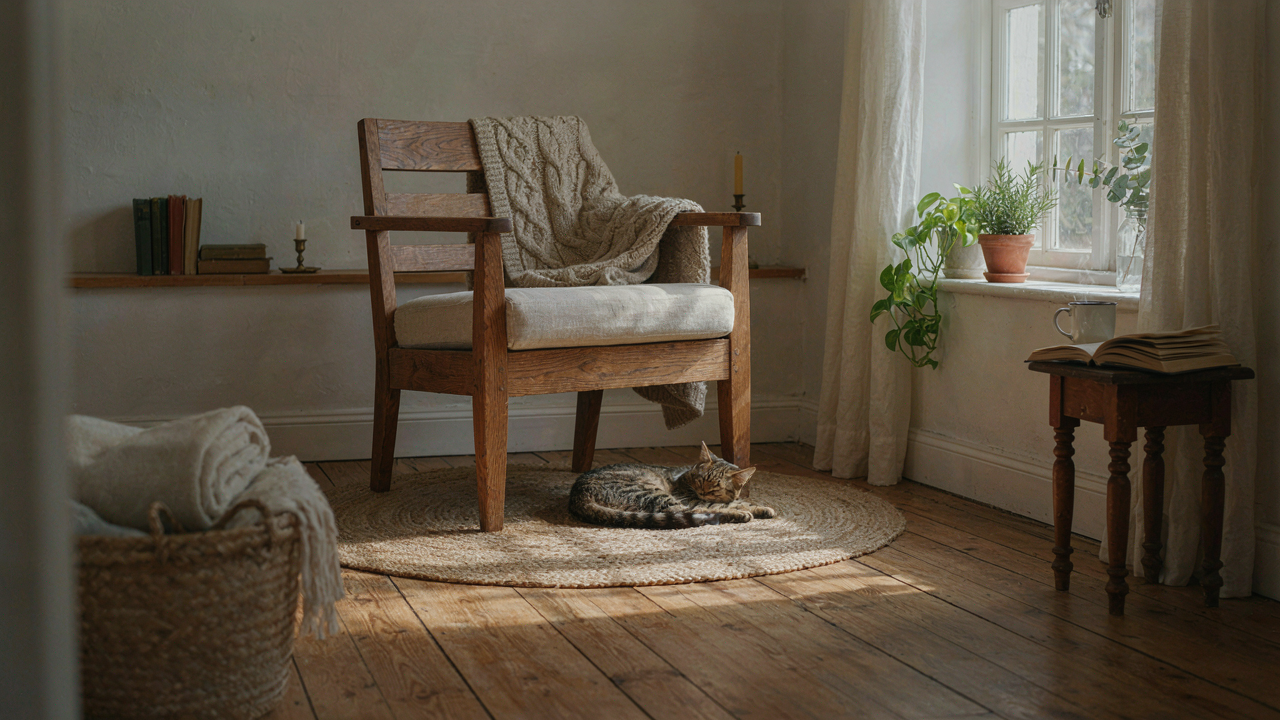
The Curated Chaos Fallacy: Why “Collected” Isn’t “Cluttered”
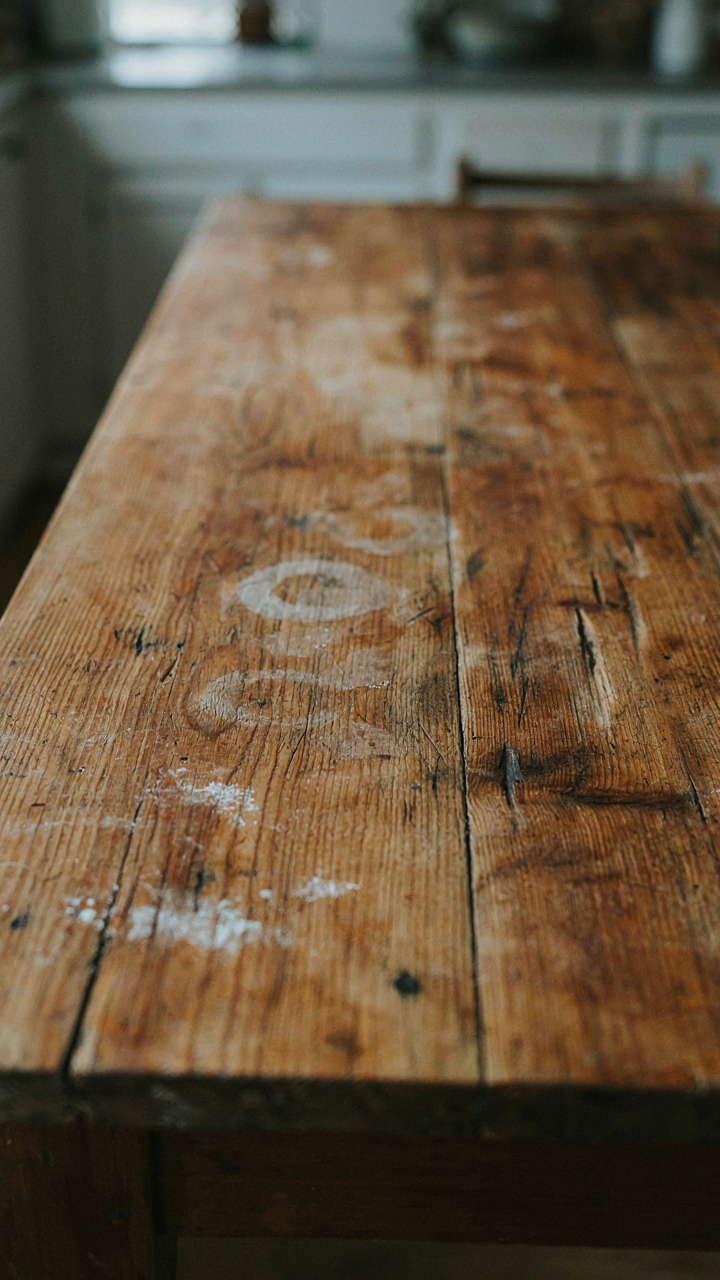
Real Wear Beats Fake Distressing
You’re worried people will think your room is just old stuff you couldn’t afford to replace. Here’s the mechanism: authentic patina comes from use over time, and your eye recognizes this faster than your brain can articulate why. Manufactured distressing attempts to compress decades into a factory process, which fails because it applies damage uniformly instead of concentrating wear where hands and friction actually occur. A real piece shows scuffs on edges, fading on exposed surfaces, and darkening in crevices. A distressed copy shows cosmetic scratches that don’t follow logic.
The difference isn’t subtle to people who’ve lived around objects. A hand-planed farmhouse table from the 1920s has grain tearout on the underside where the plane caught the wood fiber direction. The top has circular rings from decades of elbows, water rings, knife marks that cluster near where people actually sat. You cannot replicate this through sanding and stain application. When sourcing cottage pieces, inspect the back and underside first. Authentic wear tells a story of function, not decoration.
Rooms Evolve, They Don’t Theme
The common advice says to “pick a cottage style aesthetic and commit to it.” This is backward. Thematic design is fragile because it depends on every piece playing a predetermined role. Real cottage interiors happened because people bought what worked, kept what lasted, and replaced what broke. Your room should function this way instead of looking curated for a magazine shoot.
Functional evolution means you buy a side table because you need a side table, not because it matches your “farmhouse vision.” You keep the walnut dresser from your aunt because it holds clothes well, not because it coordinates with existing pieces. This approach creates authenticity automatically because you’re solving real problems, not constructing aesthetics. Buy pieces that solve immediate needs first. Aesthetic cohesion emerges naturally when every object has earned its place through utility, not theme.
Beyond Beige: The Unapologetic Power Of A Green Painted Hutch
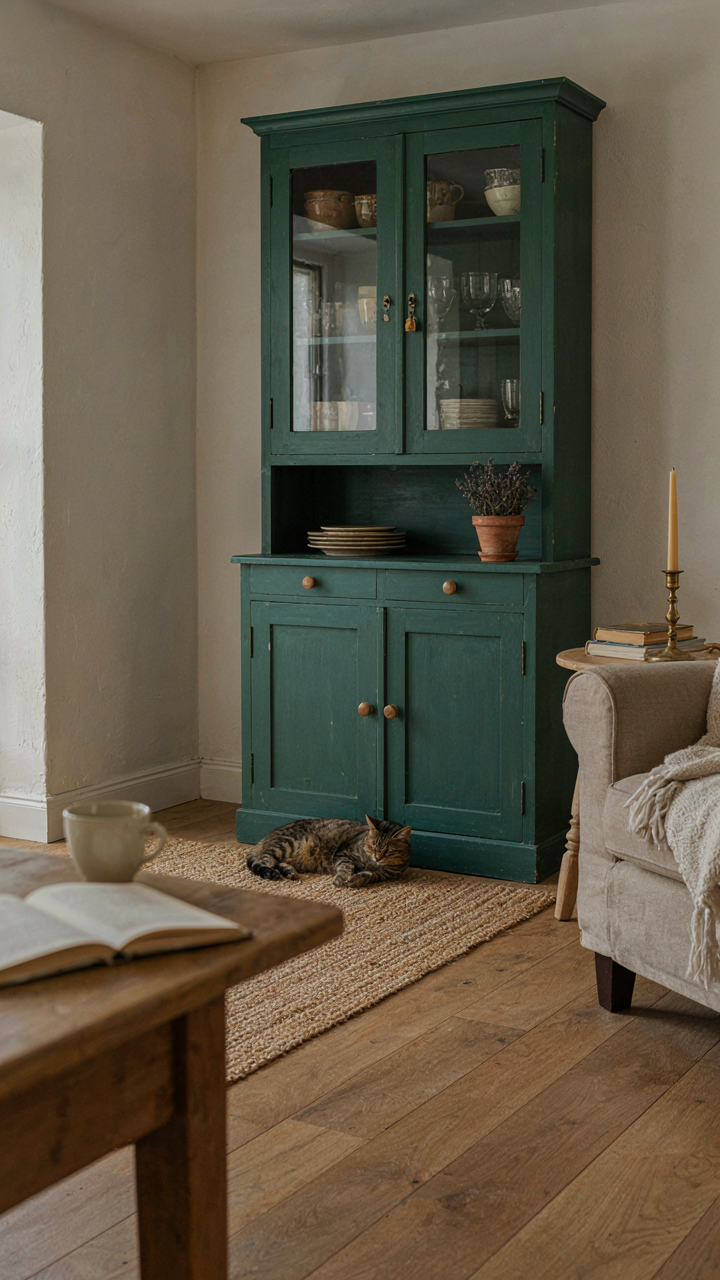
Bold Functional Anchors In Cottage Interiors
You want permission to stop playing it safe. That’s what this comes down to. Most people treat cottage style like a museum where nothing can touch anything else, which is exactly backward. Think of cottage interiors through the lens of load-bearing walls in architecture: some pieces carry structural weight, others fill the gaps. A green painted hutch isn’t decoration. It’s a load-bearing element that stops a room from collapsing into beige chaos.

The consensus says start neutral and add color slowly. That’s fear dressed as advice. A painted hutch forces the room to organize itself around it. The piece commands sight lines, anchors furniture placement, and creates immediate visual hierarchy. Without it, you end up buying ten small things that add up to nothing. The hutch decides what matters.
When A Green Painted Hutch Defines, Not Just Accents
Most people get this wrong: they think a painted hutch means the whole room pivots to match it. False. The hutch defines the room’s tolerance for color and material mixing, not its palette. Cottage style works because it stacks periods and finishes without apology, but only if one element draws the line. That’s what the green does.
A green painted hutch tells you exactly which woods work in that space, which textiles won’t compete, which walls stay neutral. It’s a constraint that creates freedom. Paint it a real green—not a timid sage, but something with actual presence like deep forest or muted olive—and every decision after that becomes clearer. The rest of the room arranges itself around permission already granted.
The Scarcity Principle: How Tiny Cottage Spaces Demand Real Utility
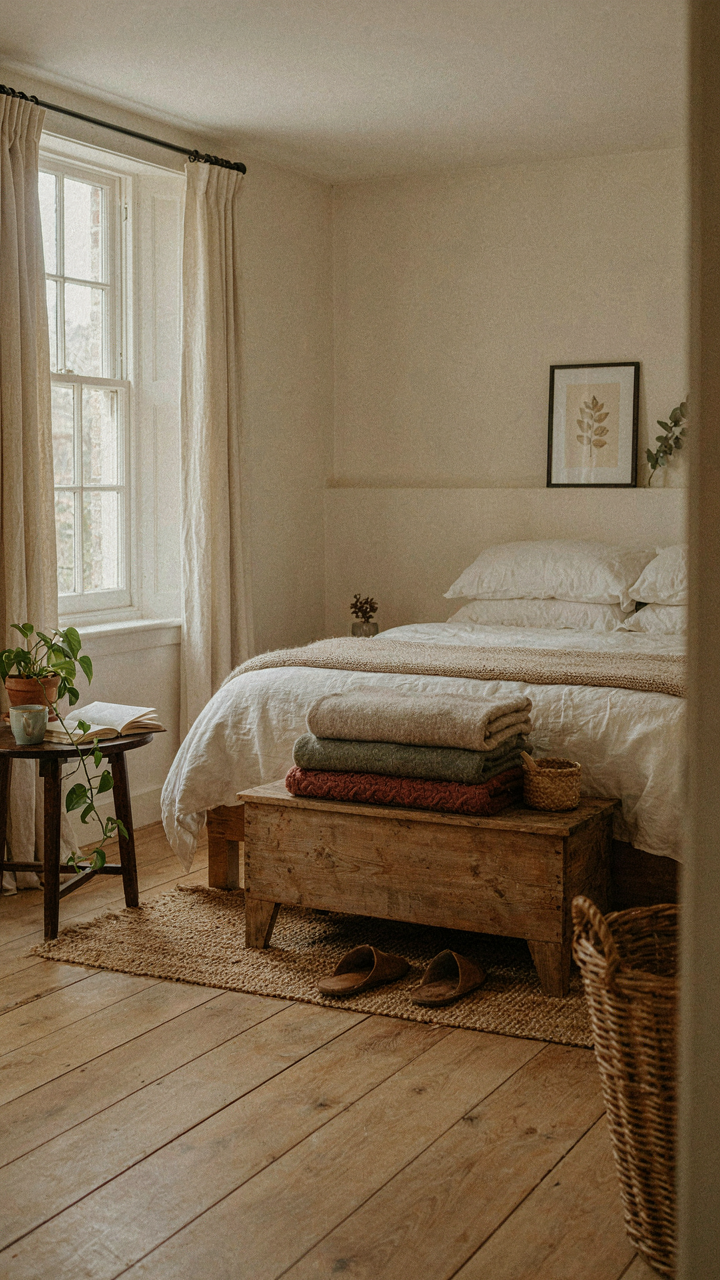
Pieces That Earn Their Floor Space
You’re hoping that small square footage lets you skip hard choices about what matters. It doesn’t. Economics calls this the scarcity principle: when resources are constrained, every unit must produce measurable output or it disappears. Cottage furniture works the same way. A chair that only sits is a liability in a 400-square-foot room. A chair that stores blankets underneath, nests with another, or converts to a side table is the only rational choice. Dead weight gets ruthless.

The common advice says “pick multipurpose pieces.” That’s incomplete. You need furniture that compounds utility without sacrificing the primary function. A storage bench at the foot of a bed doesn’t just hold linens—it creates a visual anchor, defines the room’s edge, and eliminates the need for a separate dresser. A farmhouse table with drop leaves collapses when you’re eating alone but expands for guests without requiring a second table in storage. The mechanism is subtraction through stacking functions, not buying more.
Decoration Without Utility Gets Cut First
Cottage style traditionally embraces collected objects because farmhouse living had actual reasons to keep things around. A butter churn wasn’t pretty; it worked. A spinning wheel earned its corner. Modern cottage design borrows the aesthetic without the function, and that’s where rooms fail. Decorative filler consumes square footage that serves nothing. It reads as clutter because it is clutter, regardless of how intentional it looks.
Strip every piece back to its core question: does this hold something, sit something, or hold something while sitting something? If the answer is no, it’s taking rent. Replace those dead items with one strong functional piece. A vintage apothecary cabinet isn’t decoration—it’s medicine storage that happens to look collected. A reproduction Windsor chair with a rush seat isn’t a museum prop—it’s seating that pulls double duty in a hallway or corner. Function first. The cottage look follows naturally.
The Provenance Protocol: Your Furniture’s Story Is The Only Style Guide
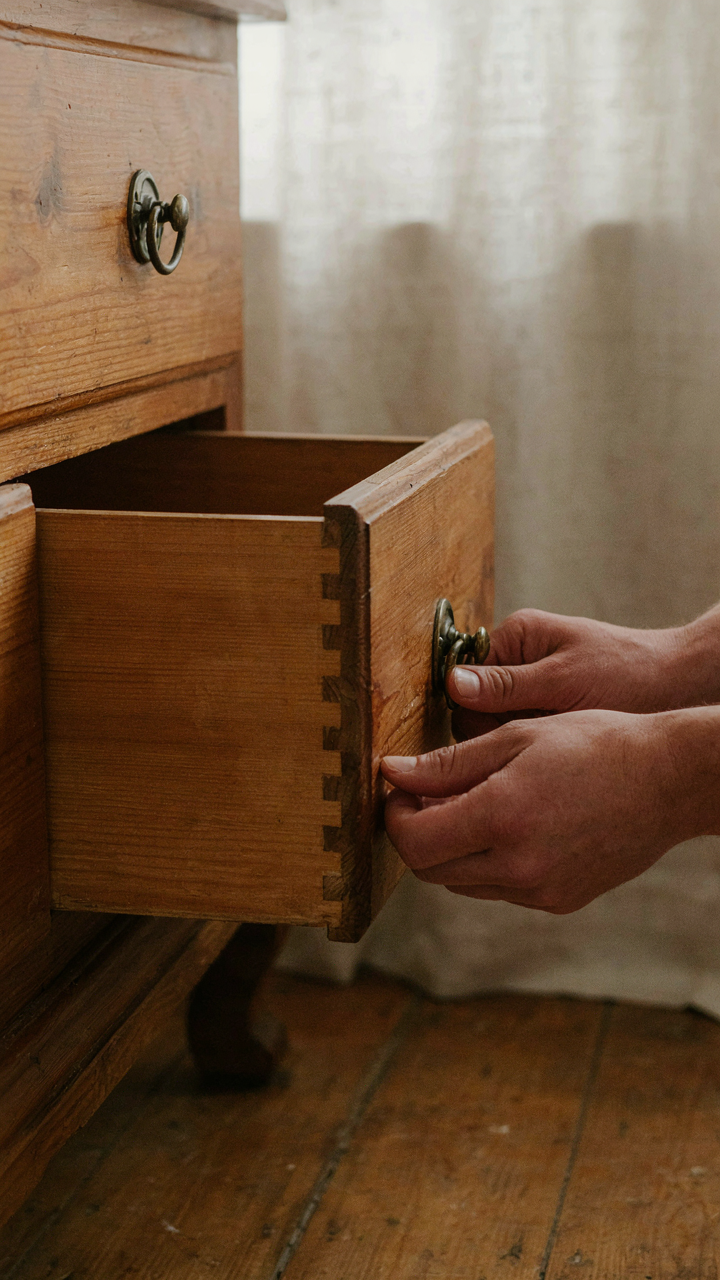
History Beats Trends Every Time
You want permission to buy old furniture without feeling like you’re behind on design. Here’s the mechanism: new furniture has no defense against obsolescence because it was built to trend, not to last. Vintage and antique pieces survive because their makers prioritized construction over fashion cycles. A piece with real history—dovetail joints, solid wood frames, hand-planed surfaces—doesn’t need a style justification because its survival is the justification.

The common advice says to “mix old and new.” That’s incomplete. The real move is inverting the ratio. Anchor your room in legacy pieces—the sofa from 1960, the dresser from the 1920s, the table someone actually used for decades. New pieces should fill gaps only. This forces intentionality. You stop buying filler and start buying with constraint, which is where taste actually develops.
Where Legacy Pieces Actually Live
Finding authentic cottage furniture means knowing that estate sales, auctions, and local antique dealers operate on different supply chains than retail stores. Estate sales are the clearest source because you see the piece in situ—you know its age, wear patterns, and structural reality before buying. Auctions create competition, which inflates prices but guarantees you’re bidding on verified goods. Dealers curate stock and provide provenance data, though at a markup. Online marketplaces cast wide nets but require verification skills you build through repetition.
- Estate Sales and Liquidation Events: Direct access to entire collections when homeowners downsize or pass. You inspect pieces before purchase and negotiate on volume. Timing and location require research but yield authentic finds.
- Regional Antique Markets and Dealer Cooperatives: Multiple vendors in one location let you compare quality and pricing across similar eras. Dealers often have documentation or can articulate a piece’s construction method and regional origin.
- Local Auctions and House Sales: Institutional auctions provide authentication and competitive pricing. Catalog photos and condition reports reduce surprises. Regional preferences affect what surfaces, so local auctions yield pieces suited to your climate and culture.
- Facebook Marketplace and Craigslist: Direct seller transactions eliminate middleman markup. Requires verification—ask for construction details, request close-up photos of joints and finishes, inspect before payment. Time-intensive but cost-effective for budget builds.
- Architectural Salvage Yards: Reclaimed wood, original hardware, and built-in components come from demolished structures. These pieces carry genuine age and prove cottage authenticity through actual use history rather than reproduction styling.
The sourcing process itself becomes your filtering mechanism. You stop scrolling catalogs and start investigating. When you hold a drawer with original hardware and feel dovetails, you know what real construction feels like. That tactile knowledge transfers to every future purchase decision.
Why Your Cottage Kitchen Isn’t A Showroom: Tools As Decor
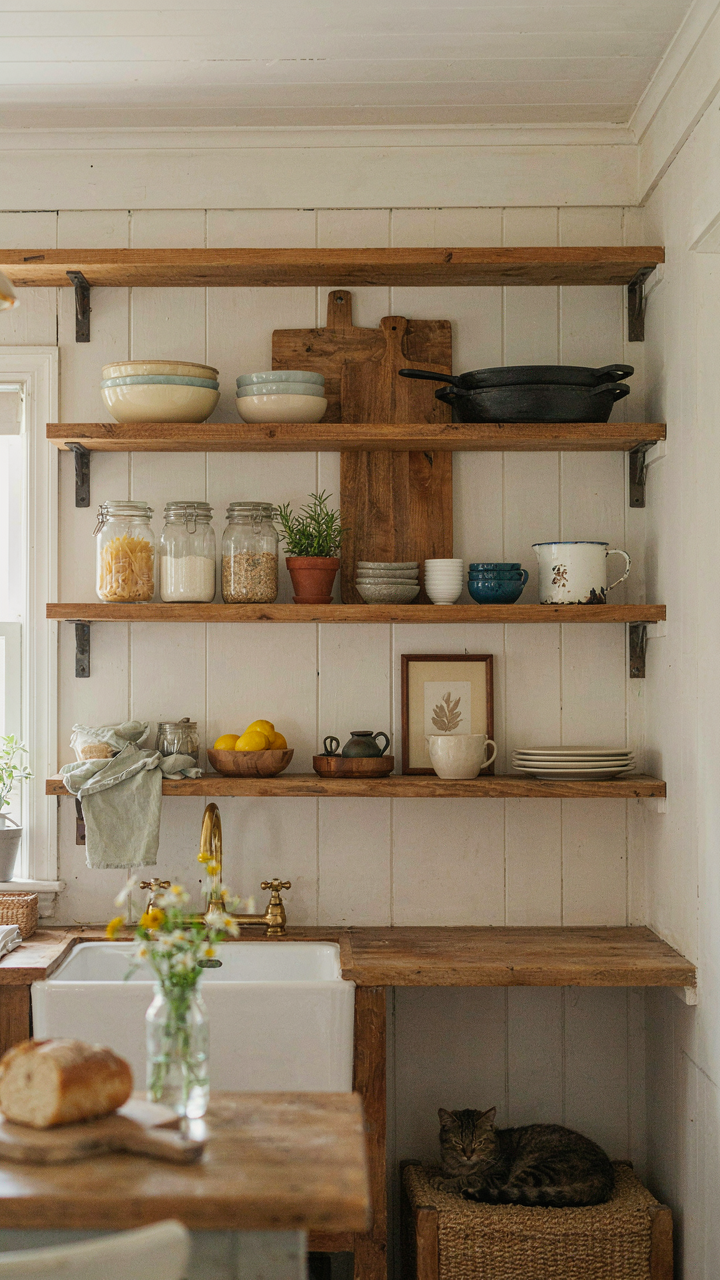
Open Shelving Solves The Frequency Problem
You want people to think you live this way naturally, not that you staged your kitchen. Here’s the mechanism: open shelving works in cottage kitchens because it forces you to keep only items you actually use. This isn’t about aesthetic restraint. It’s inventory management disguised as design. When everything shows, you stop buying redundant tools. Daily-use items live on shelves, not hidden. Bowls, cutting boards, cast iron, measuring cups. The objects earn their place through function first, appearance second.

Cottage kitchens borrowed this from working farmhouse kitchens where cabinet space didn’t exist. Necessity came first. The aesthetic followed. Display what you reach for multiple times a week. Mugs you drink from. Jars you refill. Cookbooks you reference. If an item sits unused for three months, it doesn’t belong on a shelf. It belongs in a cabinet or gone. The shelf becomes a filtering system for actual living.
Utilitarian Objects Build Visual Weight Without Trying
The common advice says to “style your shelves with intention and balance.” Wrong. That’s gallery thinking applied to a kitchen. Real cottage kitchens don’t balance anything. They accumulate. A well-worn wooden spoon resting in a ceramic crock. Cast iron hanging from hooks. Glass jars of grains and dried goods. These objects have texture, weight, and honest wear. They occupy space because they work. The visual interest comes from variety of material and use pattern, not from curating a mood board.
Utensils become decor when you stop treating them as separate categories. A copper pot isn’t decoration; it heats food and ages beautifully. A wooden rolling pin isn’t a prop; you use it weekly. Wire baskets hold produce and communicate abundance. Metal whisks rest against stone walls. Clay bowls stack visibly. Let utilitarian objects sit where they perform. Hang frequently used items from rails or hooks. Store daily tools in clear containers. The kitchen declares what you actually cook and bake, which is more honest than any design choice.
The Ergonomics Of Charm: Comfort Over Country Shabby Chic Decor
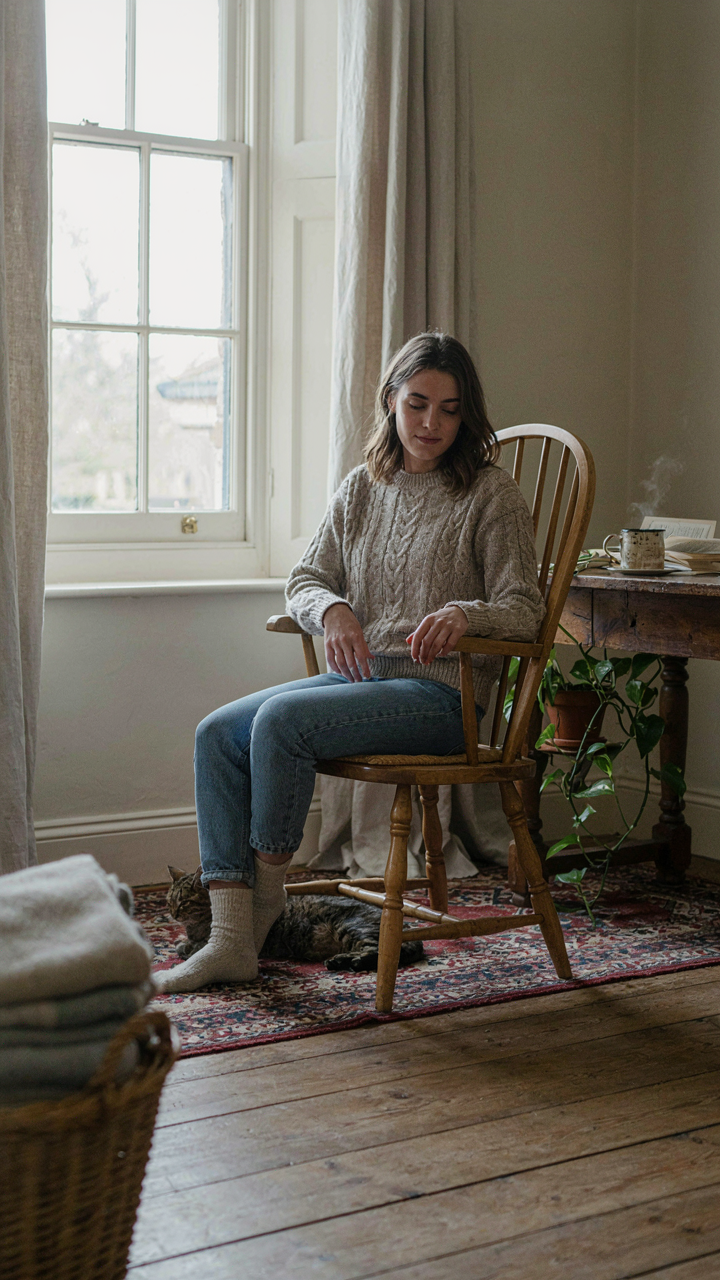
Seating That Survives Daily Use
You want cottage style to look effortless, but you’re actually terrified of buying furniture that looks good in photos and destroys your back by week three. Here’s the mechanism: comfort is load-bearing. Your body remembers pain faster than your eye remembers aesthetics. A chair that looks period-correct but forces you into a forward slouch will be abandoned, and abandoned furniture kills a room’s authenticity faster than anything else.

Cottage seating demands that you stop treating ergonomics and vintage character as enemies. Windsor chairs, ladder backs, and bentwood designs work because their proportions evolved from actual human bodies sitting for hours, not from Instagram aesthetics. Seat height between 16 and 18 inches, backrest recline between 100 and 110 degrees, and arm height slightly below elbow when seated—these aren’t optional details. Test every piece in a showroom. If your lower back touches the chair before your full weight settles, that piece fails the function test regardless of its hardware or finish.
Wear That Means Something
The cottage industry of artificial distressing has built a whole market on the lie that scuffs equal character. Wrong. Fake distressing is visual noise masquerading as history. Real wear patterns tell a story because they appear where bodies and objects actually collide with furniture.
Genuine patina concentrates on armrests, seat edges, and high-traffic zones where hands and weight naturally land. Manufactured distressing spreads evenly across surfaces like someone took a chain to the whole piece. When you’re selecting vintage or reproduction cottage furniture, look for asymmetrical wear, darkening in crevices, and compression marks in fabric. These don’t come from a factory technique. They come from decades of use. If the distressing looks applied rather than earned, the piece is selling you a feeling, not built quality.
The Entryway Equation: Function First For Front Room Ideas Entryway
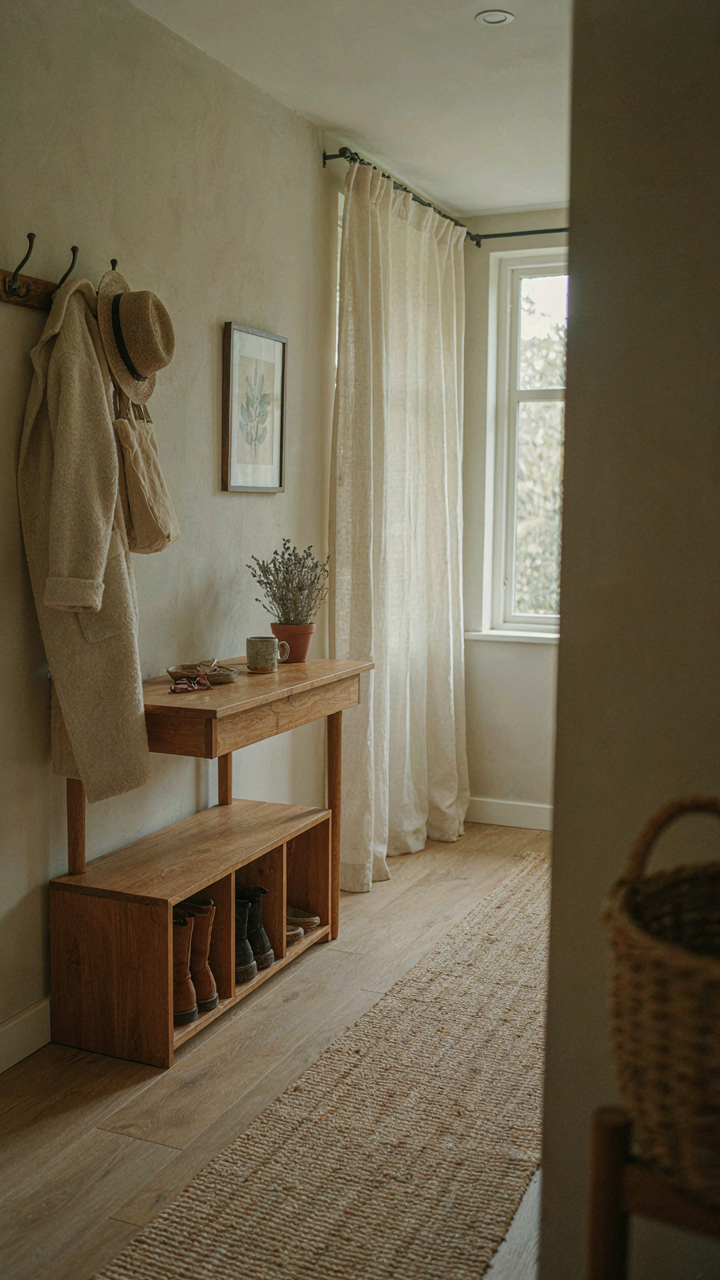
Where Your Stuff Actually Goes
You want your entryway to look collected and intentional because you’re afraid it reads as chaotic instead. The mechanism is simple: cottage style doesn’t hide function, it integrates it. A key drop, shoe storage, and coat rack aren’t decorative add-ons. They’re the structural load-bearers that determine whether the space works or fails. Without these three anchors, everything else you place there becomes visual noise masking dysfunction.

The distinction matters because cottage furniture emerged from spaces where room count was limited and every surface earned its place. A hall table held keys, mail, and gloves. A bench stored boots underneath while serving as a seat. These pieces solved real problems first, then their form followed that solving. This isn’t about filling space with small tables and hooks. It’s about identifying the specific friction points in how you actually use your entryway, then stationing furniture to eliminate them.
Utility Rewires The Entry Before Anything Else
Most design advice treats entryways like galleries where you arrange pretty objects. Wrong. Entryways are transaction zones. You enter holding things: keys, bags, coats, shoes. You exit the same way. The space either catches these items or they scatter through your home. Cottage style furniture solves this by being deliberately placed exactly where these transactions happen.
A narrow console with a drawer under it isn’t charming because it’s rustic. It functions because the drawer stops keys and mail from living on top. A ladder-back chair with a rush seat and a small shelf beneath it captures coats and shoes before they hit the floor. A wall-mounted coat rack with pegs spaced at different heights accommodates actual human reach points, not decorator symmetry. These pieces work because they sit at friction points you already navigate daily. Install them at elbow height, sight line height, and reach height. That’s the protocol that separates collected cottagecore from cluttered corners.
The Blue Willow Decorating Deception: Authenticity Trumps Thematic Overload
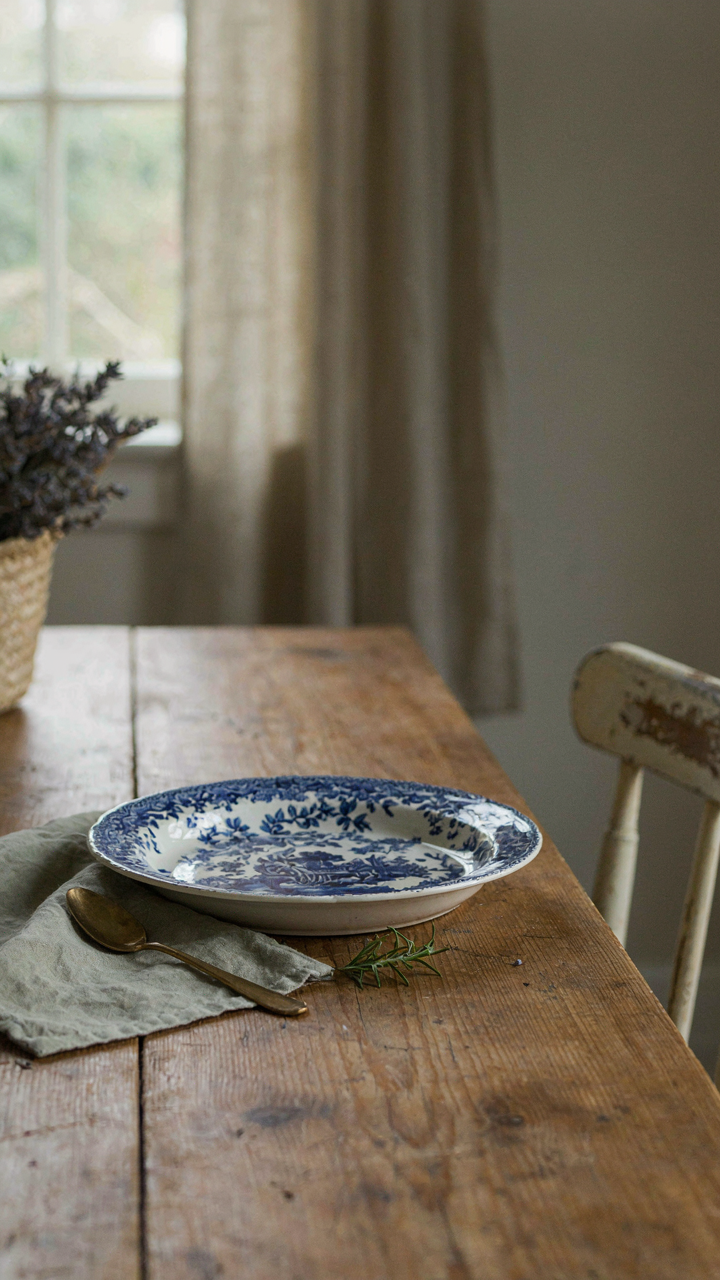
When One Pattern Becomes A Cage
You want Blue Willow in your cottage room because it signals you know what you’re doing. That’s the fear underneath: if you don’t commit fully to the theme, people will assume you lack taste. Here’s the mechanism that nobody states plainly: Blue Willow works precisely because it’s sparse in real collected homes. The pattern originated in English pottery during the 1780s as a cheap imitation of Chinese export porcelain. When you see it dominating an entire room, you’re looking at a decorated space, not a lived-in one.

The common advice says “lean into the pattern.” That’s wrong. Real cottage rooms use Blue Willow as punctuation, not the entire sentence. A single serving dish. Two teacups on an open shelf. A transfer-printed platter hung above a dresser. The pattern gains power through restraint because scarcity creates focus. When Blue Willow competes with five other matching patterns and a coordinated fabric line, it becomes decoration. When it appears alone among ordinary ceramics and textiles, it becomes character.
Let Collections Breathe Into Shape
Most design writing tells you to choose a direction and commit. That’s the inverse of how collected cottages actually develop. Systems thinking from ecology teaches us that stable environments resist imposed order and instead organize through repeated small interactions over time. Your cottage furniture should work the same way. You don’t start with a mood board and buy matching sets. You acquire pieces because they function or appeal, and the coherence emerges retroactively from the constraints you actually live within.
The tyranny happens when you decide the room’s identity first, then hunt for pieces that fit it. You end up forcing a farmhouse aesthetic or a Victorian cottage aesthetic onto space that doesn’t need ideology. Instead, place what you use. Keep what looks right next to what you already own. Notice the patterns that emerge naturally, then add one or two pieces that strengthen those patterns deliberately. The mechanism is constraint-driven evolution. Your collected cottage doesn’t become authentic because you designed it. It becomes authentic because you didn’t force it into a category before the pieces earned their place.
The Adaptive Design Playbook: Borrowing From Permaculture For Cottage Interiors
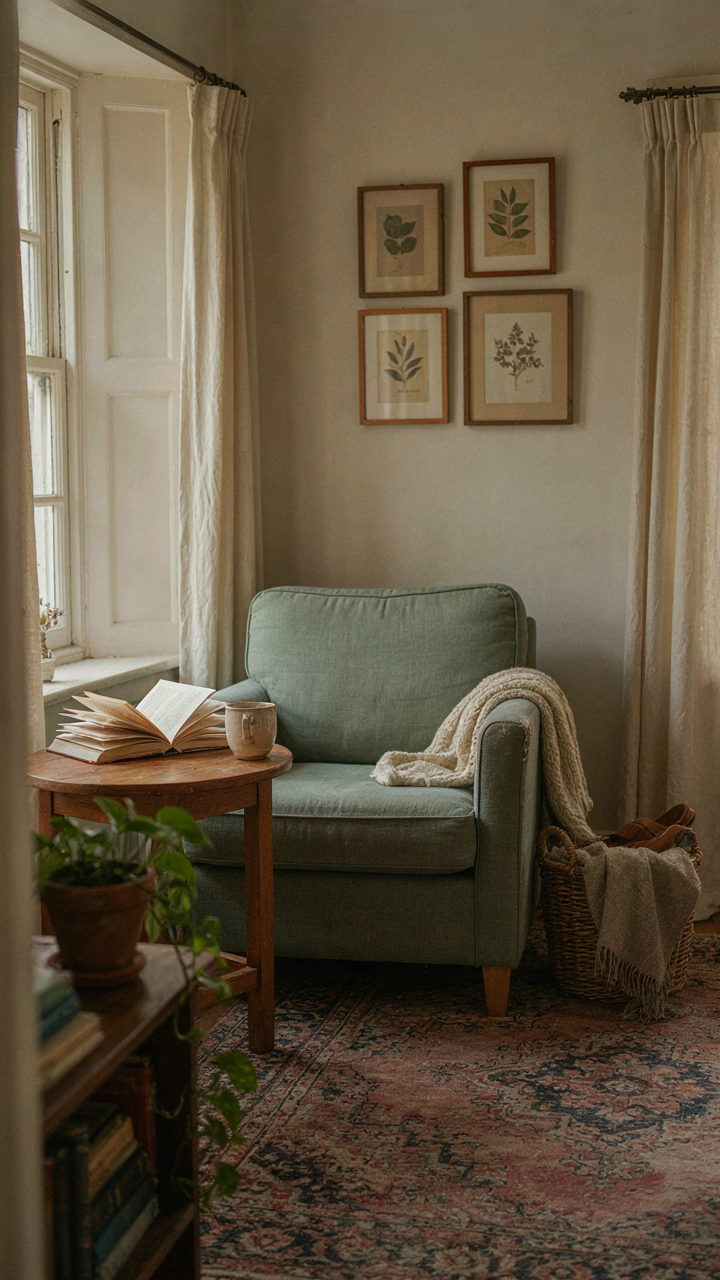
Placement That Works Without Thinking
You want your room to feel intentional without admitting you arranged it for laziness. The real mechanism here comes from permaculture’s zone system: high-use zones sit closest to energy input, reducing friction. In cottage furniture placement, this means your most-touched pieces—side tables, seating, reading chairs—occupy the paths you already walk, not the gaps you fill afterward.
Permaculture zones eliminate wasted motion. Apply this to cottage rooms by mapping your actual movement patterns first, then positioning furniture accordingly. A cottage bedroom doesn’t benefit from a nightstand tucked two feet away if you habitually set items on the dresser. Place your highest-friction furniture where you already go, not where design tradition suggests it belongs. This compounds over months into a space that feels collected rather than arranged.
Pieces That Earn Their Floor Space
The generic advice tells you to look for “multipurpose furniture.” That’s lazy thinking. Permaculture guilds stack specific functions into relationships that amplify each other—not random clustering. A cottage ottoman with hidden storage doesn’t just sit there; it becomes seating, a footrest, a surface for a lamp, and storage in one object without compromise.
- Storage benches at the foot of beds: Provide seating, hide blankets and off-season linens, and anchor the room’s visual weight without consuming wall space.
- Drop-leaf tables: Expand for dining or work, collapse to console size, fitting tight cottage footprints without permanent spatial commitment.
- Ladder shelving with baskets: Hold books, display items, and contain clutter simultaneously while remaining visually open compared to solid cabinetry.
- Hutches and buffets: Original cottage pieces that store dinnerware, linens, or decor while doubling as display surfaces and room dividers.
- Nesting tables: Stack to save floor space when unused, separate into functional clusters during entertaining, adapting instantly to room needs.
The separation between “nice to have” and “load-bearing” furniture determines whether a collected room reads as curated or cluttered. Every piece in a tight cottage space must carry more than its visual weight. Function stacking isn’t about owning fewer things—it’s about owning nothing that doesn’t work harder than its footprint demands.
Blue Farmhouse Interior: When “Rustic” Becomes “Relevant”
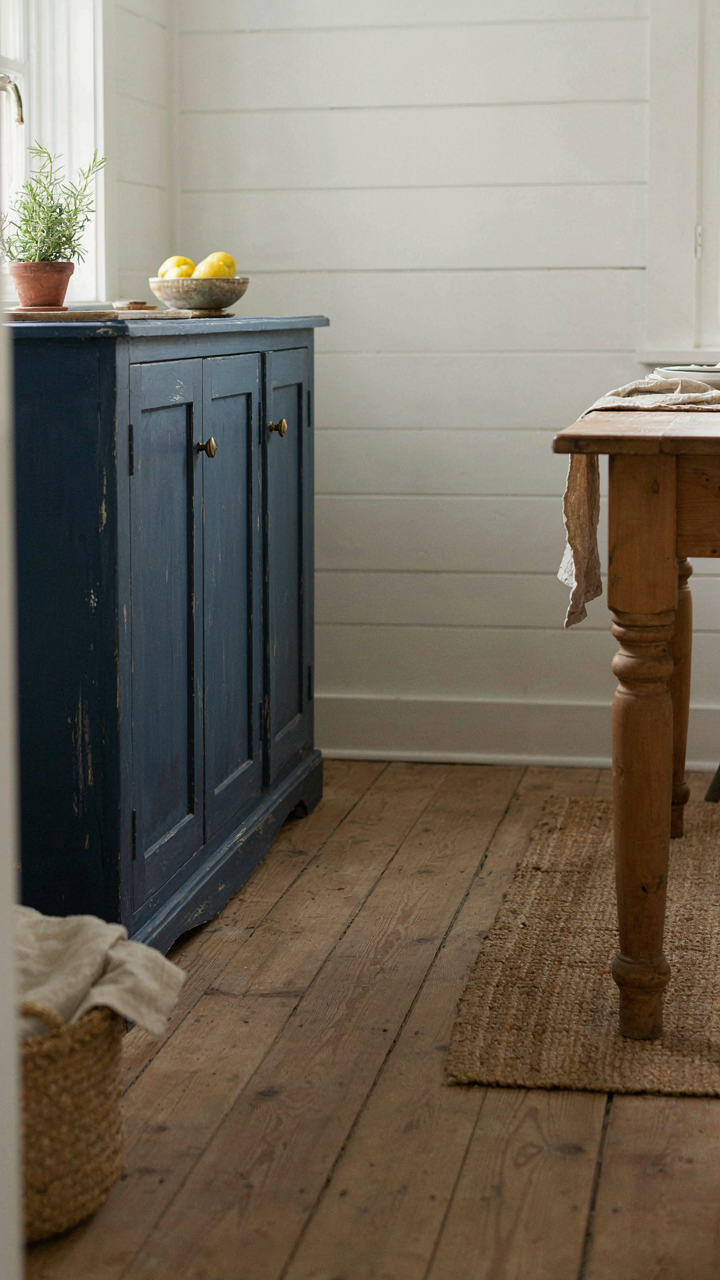
Color As Structural Decision, Not Decoration
You want blue farmhouse furniture because it signals taste without trying too hard. But here’s what actually matters: color functions like load-bearing walls in architecture. It carries weight in a room. It determines what else can exist beside it. Blue in farmhouse interiors works because it solves a real problem—it bridges the gap between authentic rusticity and livable comfort without sliding into either extreme.
The mechanism is simple. Blue dampens visual noise. Paired with worn wood and linen, it makes collected pieces read as intentional rather than accidental. Deeper blues (indigo, slate, navy) anchor heavier farmhouse pieces like Windsor chairs or refectory tables. Lighter blues (chambray, periwinkle) work on smaller items—upholstered stools, painted cabinet doors—where you need visual relief but don’t want to sacrifice coherence. The color creates a visual contract that ties disparate objects together, which is the entire point of collected rooms.
Heritage Over Trend Translation
The common advice here is wrong: “Choose blue because it’s timeless.” That’s lazy. Blue farmhouse interiors aren’t timeless—they’re specifically rooted in the color palettes of 19th-century rural European and American working farms, where indigo dyes were reliable and affordable. When you pick blue, you’re inheriting a material history, not following a trend cycle.
This matters because authenticity in cottage interiors isn’t about feeling old. It’s about working with materials and color choices that made sense under actual constraints. Indigo faded predictably in sunlight. It masked stains on textiles and painted surfaces. Slate blue mixed easily with available pigments. When you source furniture in these blues—rather than contemporary “farmhouse blue”—you’re aligning with how these pieces actually behaved in lived spaces. Your room reads collected because the color choices reflect function, not Instagram aesthetics. Test this: place one piece in a trendy powder blue next to an indigo-stained piece. One looks borrowed. One looks earned.
The Real Obstacle Isn’t Finding The Right Piece, It’s Shedding The Need For External Validation
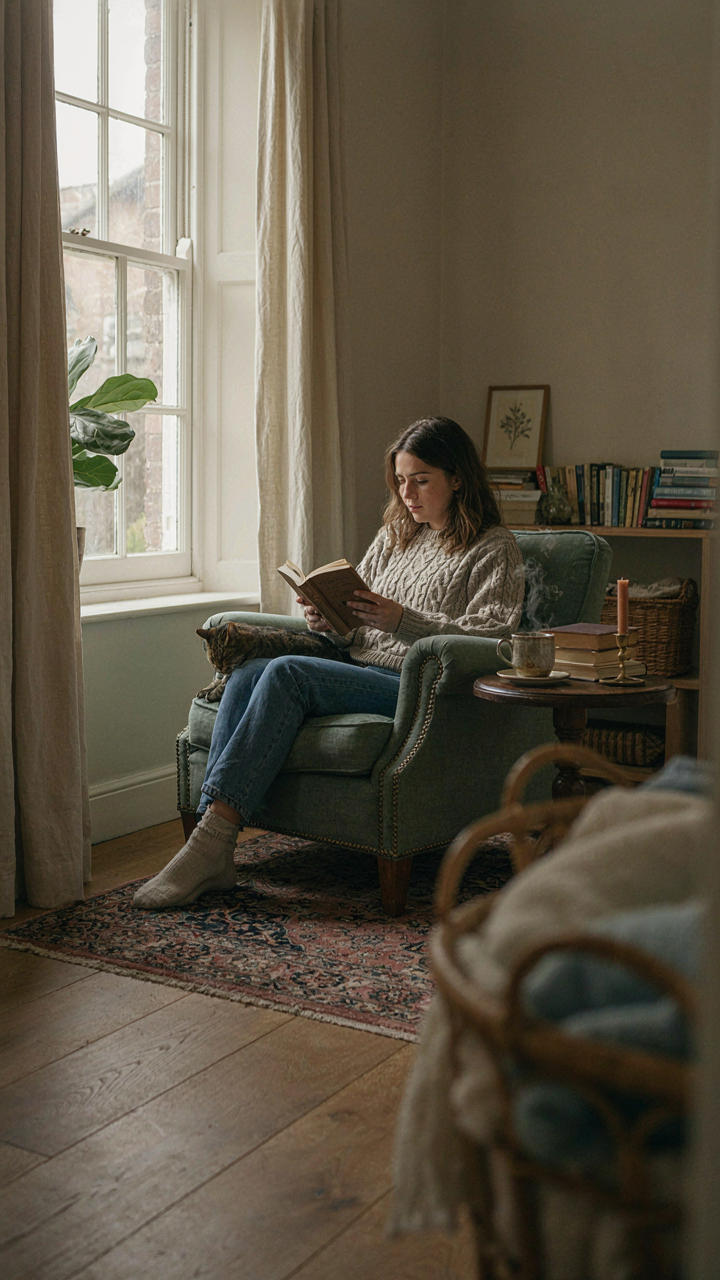
Most people don’t struggle with cottage style furniture. They struggle with trusting their own eye. You’ve already collected pieces that matter to you, but you keep second-guessing the arrangement because some interior design algorithm hasn’t validated it yet. Stop waiting. Pull a chair into the light today and sit in it. Does it feel right? That’s your only metric. The cottage aesthetic won. You just need to stop apologizing for what you already know you like.