
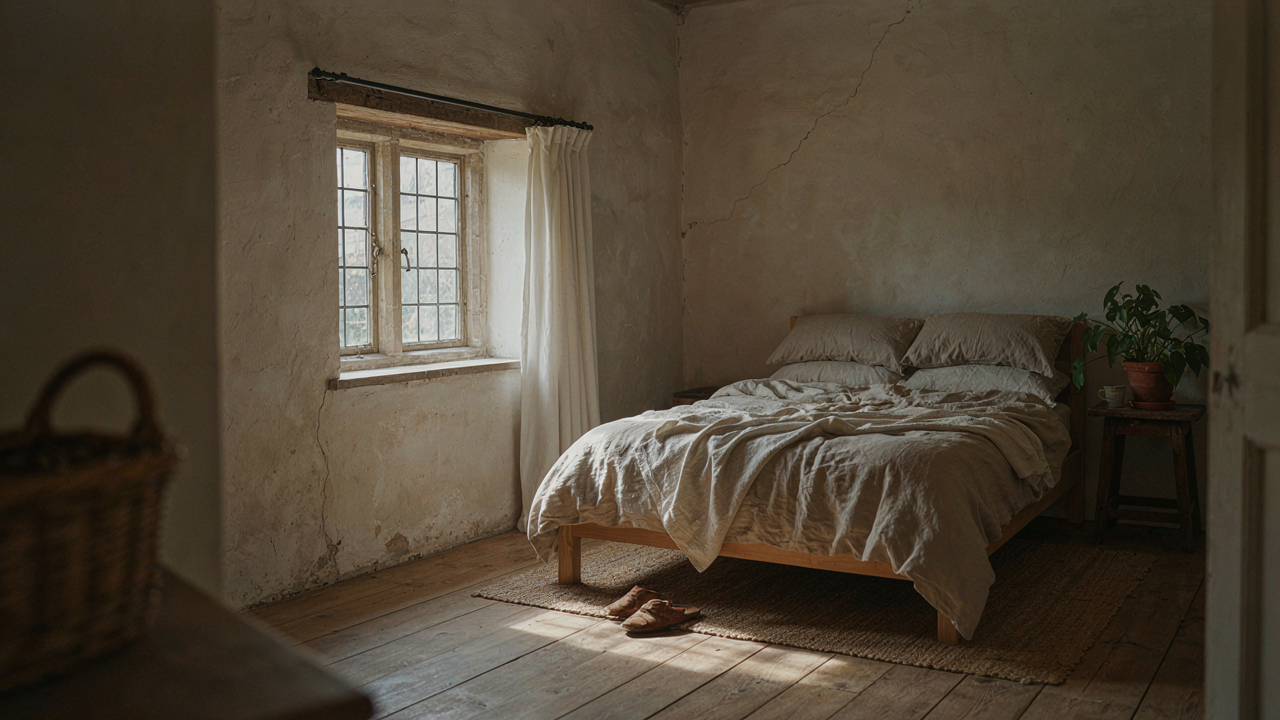
The Myth Of The “Perfect” Cottage Bedroom: Why Authenticity Trumps Replication (English Cottage Bedroom Ideas)
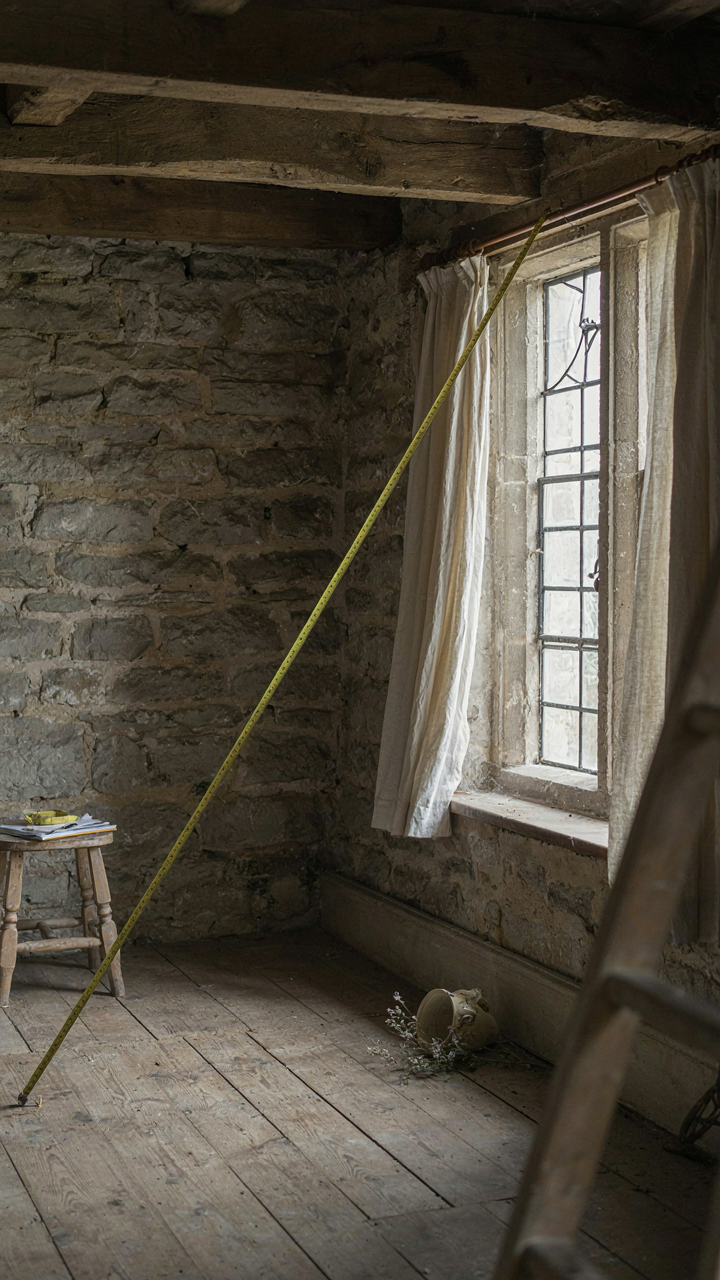
Instagram Made You Believe A Lie
You want permission to buy the aesthetic without doing the work. That’s the real pull here. The mechanism is simple: social media shows you curated cottage bedrooms stripped of context, and your brain treats them as instruction manuals instead of what they are—finished products of someone else’s constraints and taste. A cottage bedroom that works lives inside a specific building with specific light, specific walls, and a specific person sleeping in it. You can’t replicate that by ordering the same linen set.
The common advice tells you to “find inspiration online and recreate it.” That’s lazy. What actually happens when you try: the room feels borrowed. It looks right but doesn’t function for how you move through space or what you actually need at 2 AM. The difference between a bedroom that photographs well and one that feels settled is whether it solves your life, not whether it matches a Pinterest board.
Start With What Your Room Demands First
Your cottage bedroom is not a blank canvas waiting for your vision. It’s a structure with load-bearing walls, window placement, ceiling height, and thermal characteristics already baked in. The design follows from these facts, not from mood boards. A north-facing room with low ceilings needs different material and color choices than a south-facing room with beams. Ignore the room’s actual properties and you’re fighting physics.
A cottage bedroom that carries quiet character does this work invisibly. You notice the bed placement makes sense for the light. The materials feel right because they suit the wall texture and the moisture level in the air. The color doesn’t fight the stone or the timber. Start by mapping your room’s constraints, then build the design outward from there. This produces something that settles into place instead of sitting on top of it.
The “Quiet Character” Protocol: Unearthing The Soul Of A Cottage House Bedroom

Material First, Aesthetics Second
You want the bedroom to feel authentic without looking like you tried too hard, and that fear of inauthenticity is exactly what ruins most cottage bedrooms. The mechanism here is simple: materials have inherent character that design choices cannot manufacture. Stone, lime plaster, timber, and brick speak through their age and imperfections, not through styling choices layered on top. When you prioritize what’s already there over what you add, the room communicates restraint instead of effort.

English cottage bedrooms built before 1920 relied on local materials because transportation was costly and time-consuming. That constraint created visual coherence across regions. Flint walls in Norfolk looked different from Cotswold stone, but both communicated place rather than personal taste. Start by identifying what materials your cottage actually contains, then build outward from those. Strip back coverings. Expose what’s underneath. The patina you find is already doing the work.
The Weight Of Honest Wear
The common advice says to embrace imperfection as “charm,” but that’s lazy framing that lets people avoid the real work. Imperfection only reads as character when it’s the result of function and time, not when it’s performed or faked. This is archaeology thinking applied to interiors: authentic wear tells you how a space was used. A cottage bedroom wall with paint loss reveals previous generations’ choices. Floorboards with different wood tones show traffic patterns and repairs.
When you see damage or wear, resist the urge to restore it to pristine condition immediately. Photograph it first. Understand what caused it. Some marks should remain because they’re evidence of the building’s actual history. A water stain on plaster near a window isn’t a flaw to hide behind new drywall, it’s information about how that room performs seasonally. The protocol: document, understand, decide which marks stay based on what they communicate about the space, not on whether they look polished.
The Ecology Of Comfort: Applying Biophilic Principles To Your English Country Bedroom
Natural Patterns Mirror Nervous System Calm
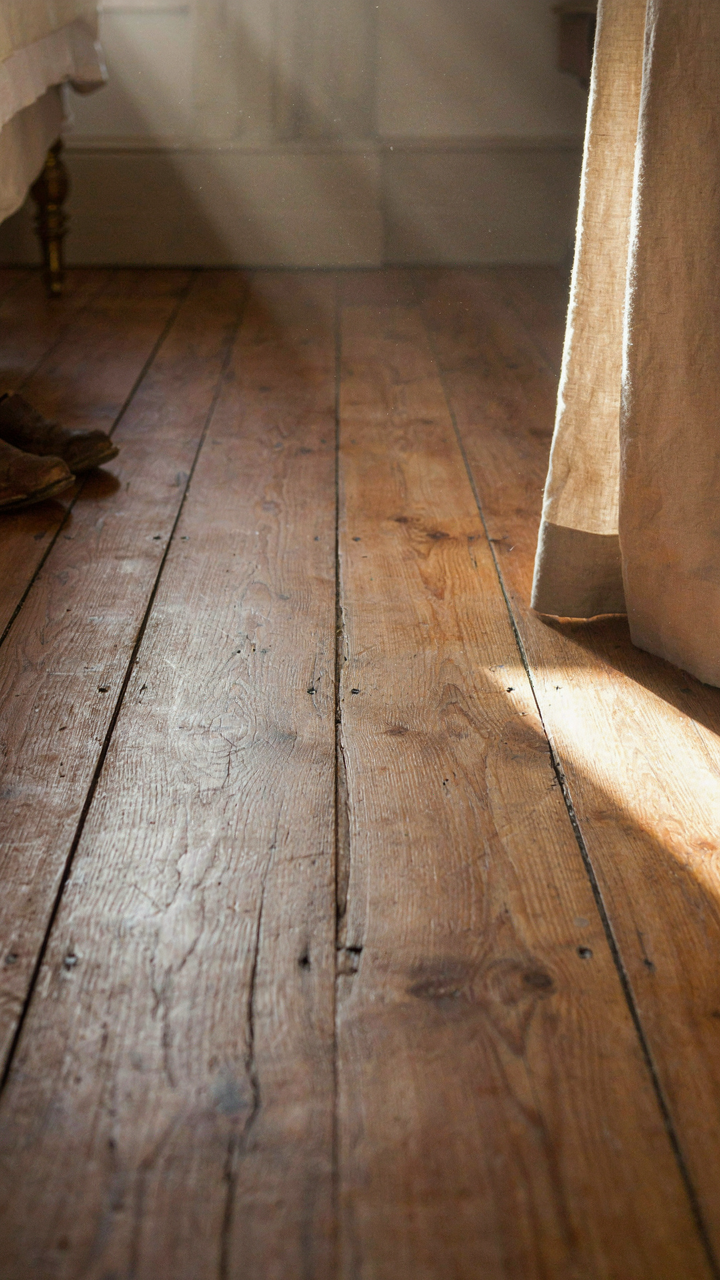
You want this room because you’re exhausted by control. Your brain runs on pattern recognition, and when it finds patterns in nature instead of screens, it stops working so hard. Biomimicry—the field that studies how organisms solve problems—applies here: fractals are the organism’s design language, and your bedroom needs fractal distribution, not symmetry. English cottages already have this built in through age and accident, but most modern restorations strip it out for clean lines.

Incorporate irregular wood grain, uneven plaster texture, and the natural wear patterns of old materials. Stone, exposed timber beams, and hand-made ceramics all carry fractal complexity. Avoid perfectly matched paint colors or uniform wallpaper patterns. The randomness of a cottage’s original structure—uneven floorboards, walls that aren’t square, plaster with visible repair marks—creates the visual complexity your nervous system recognizes as “safe.” This is the opposite of what interior design magazines tell you to do.
Light And Air Work As A System
Treating light and air as separate problems wastes the mechanism that actually makes rooms feel alive. They’re symbiotic: air flow determines how light moves through space, and how light enters determines which walls stay damp or dry. Cottage bedrooms stayed comfortable for centuries because windows, doors, and wall thickness created natural convection without engineering.
Position your bed to catch morning light from the east without direct afternoon heat. Use heavy linen or cotton curtains that regulate temperature while allowing air to circulate behind them. Paint interior walls in matte finishes that absorb light and reduce glare. Add texture through rough plaster or lime-based finishes that naturally manage moisture. When air moves freely through the room and light enters gradually rather than floods, your body’s circadian rhythm stays coherent, and the room feels restful instead of staged.
Beyond Shabby Chic: Cultivating A True Cottage Bedroom Design Aesthetic
The Difference Between Patina And Damage
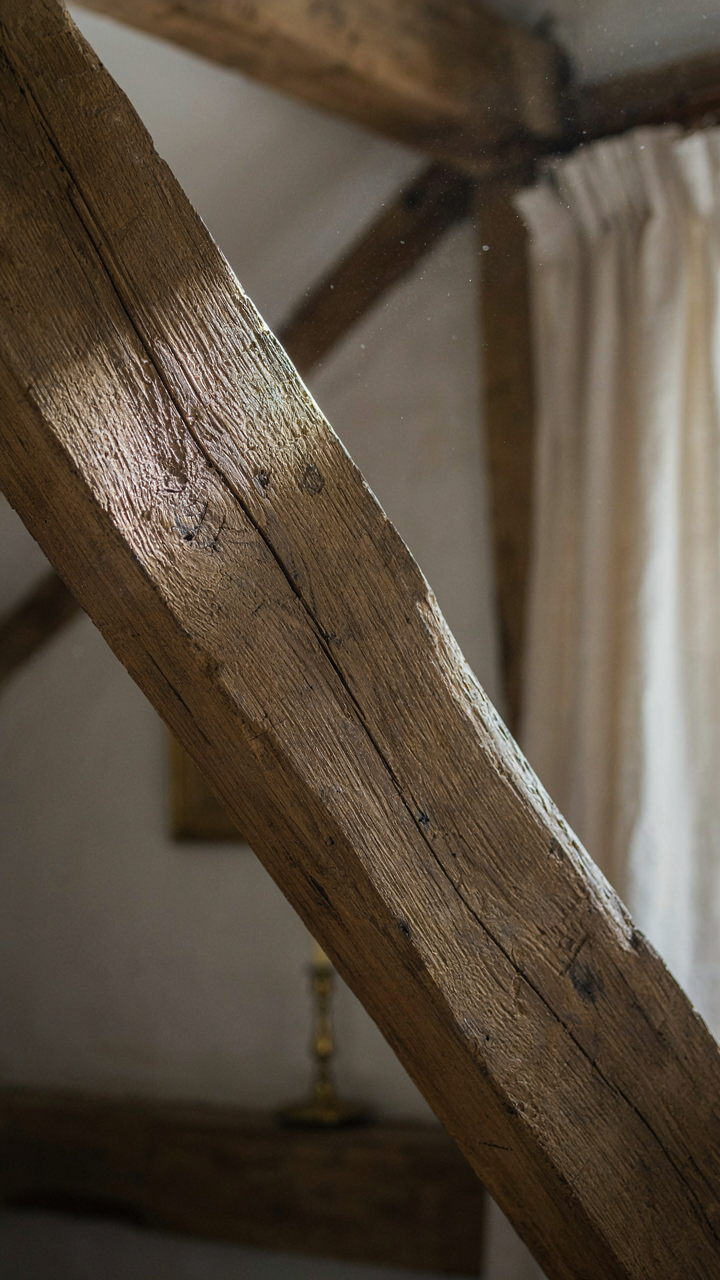
You want to believe your bedroom looks authentically lived-in instead of like you bought everything at an estate sale yesterday. That’s status anxiety dressed up as taste. The mechanism that separates real cottage design from the mass-produced “distressed” knockoff is material honesty: genuine patina happens because a piece actually endured use over decades. A hand-planed wooden beam shows tool marks and compression from real labor. A floorboard worn soft in high-traffic zones tells a structural story. Manufactured distressing does the opposite—it announces that someone paid extra to pretend time happened.

The practical difference matters because authentic wear carries visual weight that fake aging never achieves. A bed frame with legitimate wood movement—slight gaps where humidity shifted the grain, darkening in corners from decades of dust and light—reads as substantial. A reproduction frame with artificial gouges and paint-chipping techniques reads as costume. Study what you’re buying before it enters your room. Run your hand across surfaces. Real damage has logic to it. It accumulates where physics demands it, not where a design team guessed it would look romantic.
Materials That Survive The Decade
Most advice about cottage bedrooms treats durability like an afterthought, something you hope happens. Wrong framework. Think in terms of material strain—the load a substance absorbs before failing. A cast iron bed frame can take 50 years of daily use and still function. A particle board frame painted to look vintage lasts maybe eight years before joints separate and joints collapse. Linen curtains fade predictably and remain functional. Polyester “linen-look” fabric pills, discolors unpredictably, and creates visual chaos as it degrades.
The cottage bedroom works because the original builders and inhabitants chose materials based on what actually lasted, not what looked correct in a magazine spread. Solid wood furniture—oak, ash, elm—ages visibly but doesn’t fail structurally. Stone or fired clay tiles on floors gain character from foot traffic instead of wearing thin. Real plaster walls develop micro-cracks that add depth; they don’t bubble and peel like drywall covered in inferior paint. When selecting pieces for your room, ask one question before purchasing: will this material improve or degrade in ten years? Build backward from that answer.
The Principle Of Scarcity: Curating A Cozy Cottage Bedroom Aesthetic
Eliminating Visual Noise Ruthlessly
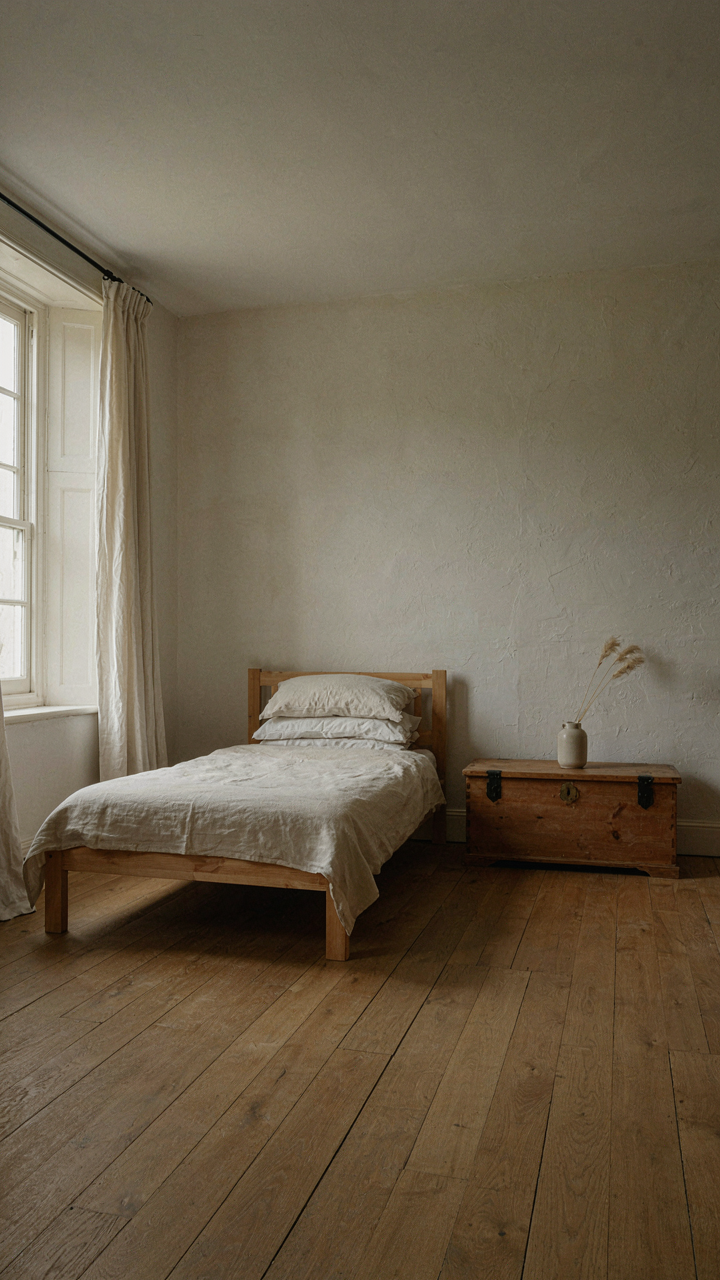
You want permission to keep fewer things because it feels safer than admitting you own too much. The mechanism is scarcity in economics: constraint creates value. A cottage bedroom works the same way. Every object competes for attention. When nothing dominates, everything blends into background static. The human eye stops processing. The room stops working.

Most advice tells you to declutter gradually. That’s incomplete. Scarcity demands removal first, then curation. Strip the room to walls and bed frame. Remove every decorative object, textile, and piece of furniture. Then add back only what changes how the room functions or how you feel in it. This is ruthless because it requires you to actually decide what matters instead of keeping options open.
Every Object Must Earn Its Place
An object earns its place through use or through disruption. Use is obvious: a bedside table holds your lamp and water glass. Disruption means it stops you mid-thought. A well-placed antique mirror catches light differently than a blank wall. A single framed landscape print makes you look at it. Objects that simply exist but don’t create either response are visual weight masquerading as decoration.
Traditional cottage bedrooms succeeded not because they were full but because every piece served constraint. A wooden chest stored blankets. A shelf held the few books the household owned. A mirror provided practical function and occasional visual break. When you audit your bedroom, each item must answer one question: does this change what happens in this room? If not, it doesn’t belong there. Keep a written list of what stays and why. This forces honesty.
The Unseen Details: Crafting An English Country Style Bedroom Beyond The Surface
What Your Room Actually Hears
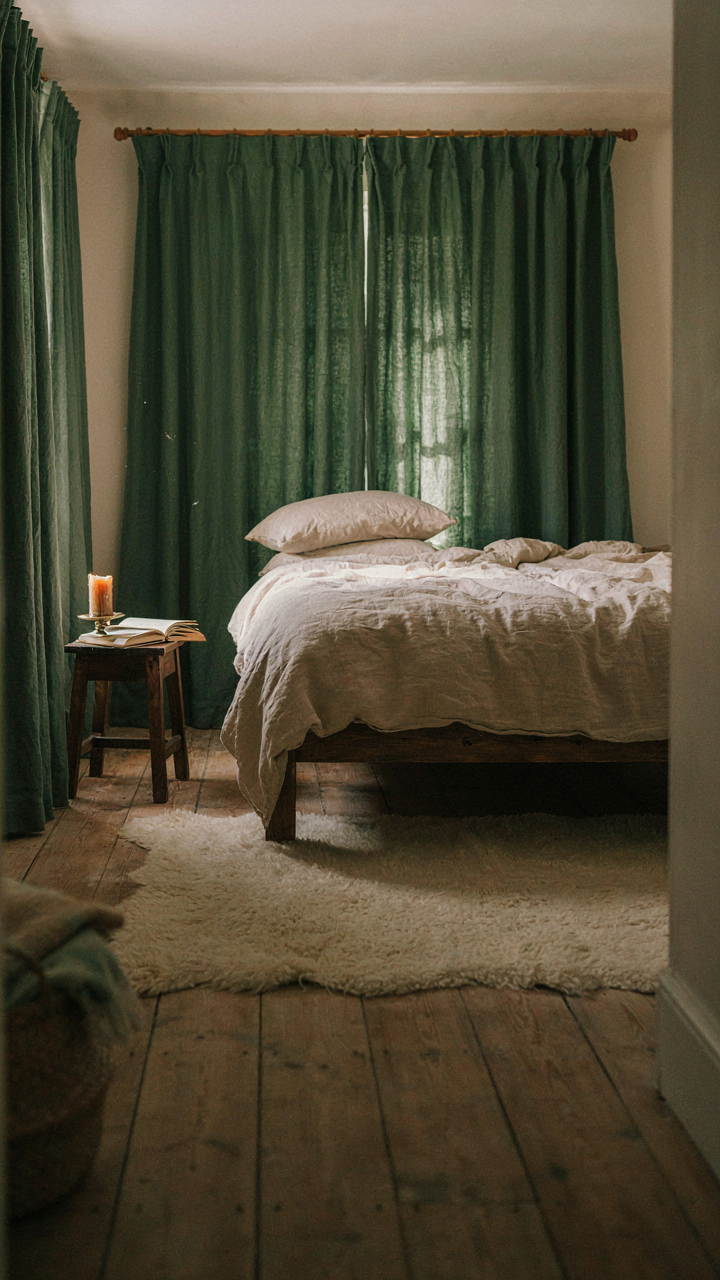
You want this room to feel expensive without looking like you tried. That’s the real mechanism here. Sound control separates a bedroom that merely exists from one that feels intentional. Hard surfaces bounce noise back into the room. Soft materials absorb it. English cottages used heavy wool blankets, thick curtains, and stone walls not for aesthetics but for acoustic necessity in older homes where walls carried every sound from adjoining spaces.

Layer your textiles deliberately. Use wool curtains that reach the floor, not just to the windowsill. Place a wool rug under the bed frame. Add a quilted headboard with genuine batting inside. These absorb mid and high frequency noise while solid furniture pieces handle low frequency rumble. The quiet that results feels like protection, not emptiness.
How Light Moves Through Intention
Lighting design borrows from stage lighting’s core principle: direction and intensity shape perception more than brightness does. English cottage bedrooms don’t fight darkness with high lumen output. They invite light to enter strategically and fade where shadows belong. The mechanism here is layering: ambient light provides baseline visibility, task light serves function, and accent light creates depth and scale.
Start with a single warm source near the bedside for reading. Add diffused overhead light controlled by a dimmer switch, never bright. Place a floor lamp in a corner to create shadow separation between walls and furniture. Use fabric lampshades that soften output. The result isn’t “cozy.” It’s visual hierarchy that makes the room feel larger and more composed than it actually is. Test this: walk in at dusk and notice how your eye moves. That movement, not the brightness level, determines whether you relax or remain alert.
Reclaiming Utility: The Functional Beauty Of Cottagecore Bedroom Vintage
Furniture Serving Double Duty
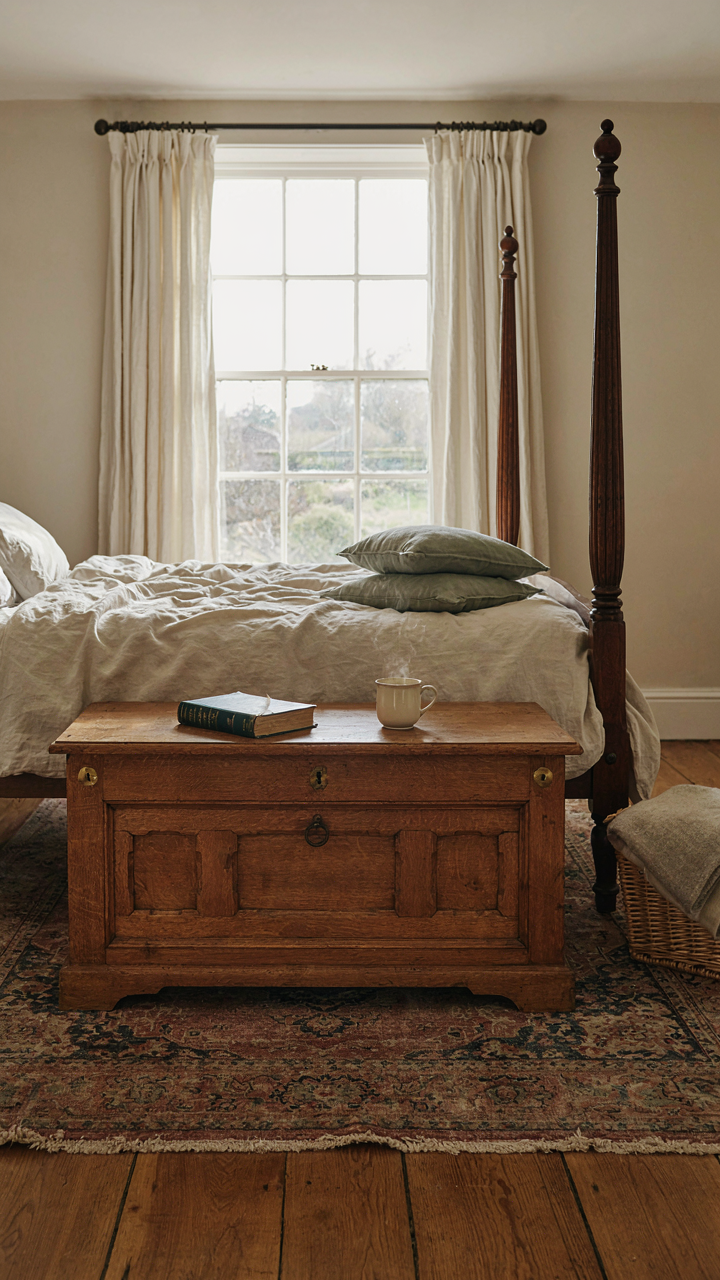
You want permission to buy less and feel like you’re doing it on purpose. The real mechanism is constraint. Economics calls this “production efficiency”—getting two outputs from one input—and a cottage bedroom enforces this naturally. A blanket chest becomes storage and a seating surface. A bedside table holds a lamp and doubles as a small desk. This isn’t minimalism dressed up as charm. It’s the actual solution cottages developed because space was scarce and money scarcer.

Victorian and Edwardian cottage interiors didn’t separate function into different rooms. A bedroom held work, storage, and rest in the same square footage. Modern cottagecore misses this. It decorates around single-purpose furniture then wonders why the room feels cluttered. Build your room backwards: identify what needs to live there—clothes, reading, grooming, occasional work—then choose pieces that absorb multiple tasks without looking compromised.
When Aesthetics Follow Problem Solving
The common advice says pick a style first, then fill it with pretty things. Wrong. Aesthetics in working cottages emerged from solving real problems. A worn wooden ladder leans against the wardrobe because it’s faster than a stepladder. Linen storage baskets stack because they breathe and organize better than sealed boxes. The look people pay for now was the efficient answer then.
Start with what your bedroom must do. How do you dress? Do you work from bed sometimes? Where does laundry sort? Do you read before sleep? Once you answer these, the aesthetic choices become tactical, not decorative. A small secretary desk isn’t cottagecore because it’s quaint. It’s there because you need a writing surface that vanishes when closed. Let utility write the brief, then select the pieces that solve it.
The English Country Cottage Bedding Manifesto: Texture Over Thread Count

Natural Fibers First
You want thread count because it signals quality to guests who will never sleep on your bed. Here’s what actually matters: natural fibers breathe, regulate temperature, and age better than synthetics. Cotton, linen, and wool have cellular structure that manages moisture. Synthetics trap heat and degrade faster. The mechanism is physics, not marketing.
- Linen: Creates wrinkled texture that reads intentional in cottage settings. Softens with every wash. Breathes aggressively in summer, insulates reasonably in winter.
- Cotton sateen: Smooth finish with durability. Weave catches light subtly. Works year-round without the aggressive drape of pure linen.
- Wool blankets: Regulate temperature through microscopic air pockets. Naturally fire-resistant. Pair with cotton sheets to avoid itching directly on skin.
- Hemp blends: High durability and breathability. Takes dye unevenly, which reads as authentic rather than flaw. Stiff initially, softens significantly.
- Linen-cotton blends: Combine linen’s texture with cotton’s softness. Reduce wrinkle severity while preserving the cottage aesthetic. Best compromise for high-traffic bedrooms.

The tactile foundation of a cottage bedroom rests on fiber choice, not thread density. Guests notice how sheets feel against skin in the first thirty seconds. Natural fibers deliver that sensation consistently because their structure doesn’t flatten. Start with 100% linen or linen-cotton blend sheets, add a wool blanket in winter, and stop measuring thread count.
Layered Textures Build Depth
Contrary to minimalist advice, cottage bedrooms thrive on controlled texture stacking. This isn’t decoration, it’s sensory contrast. Your brain registers difference between surfaces. A smooth cotton sheet under a chunky linen throw under a quilted coverlet creates intentional complexity. Each layer does different work.
The protocol is simple: base layer stays smooth and temperature-responsive, middle layer adds weight and visual interest, top layer handles seasonal temperature or pure visual composition. Cotton sateen sheets, linen throw blanket, quilted or patchwork coverlet in natural tones. Stop at three layers. More creates visual chaos that reads cluttered, not collected. The bed becomes tactile focal point rather than visual mess through restraint.
Intentional Aging: Designing For An Evolving Cottage Interior Bedroom
Materials That Improve With Time
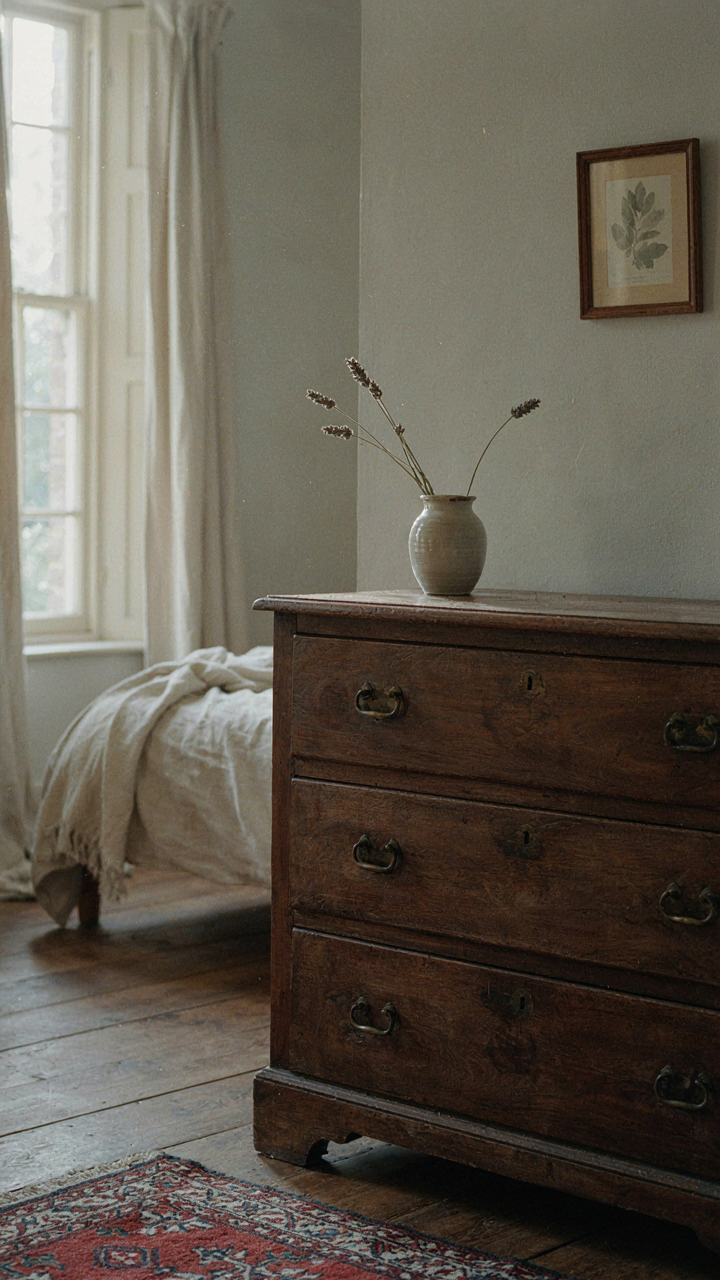
You want your bedroom to feel timeless because you’re afraid of it looking dated in five years. That’s not a design problem, it’s a status anxiety problem. The real mechanism is material degradation: some materials break down visibly, others develop character. The difference is predictability.

Solid wood darkens and patinas from light exposure and handling. Linen softens after repeated washing, acquiring a lived-in texture that cotton never reaches. Wrought iron oxidizes into deeper tones. These materials telegraph age as desirability, not decay. They follow a legible trajectory. The cottage bedroom built on engineered veneers or synthetic fabrics follows the opposite path: they look worse as they age because the process is visible failure, not transformation.
Space That Shifts Without Losing Itself
Most advice says to leave room for change. That’s vague and useless. The mechanism comes from biology: a living system maintains identity while its components turnover. Your bedroom needs structural constancy paired with tactical flexibility.
Paint color, textiles, and accessories shift. The bones stay fixed. Thick plaster walls, timber beams, solid furniture frames, and window proportions remain constant across decades. This is why authentic cottage bedrooms survive renovation cycles: the permanent elements are genuine enough that swapping in new bedding or repainting doesn’t destabilize the space. Start with real architectural elements that can’t be undone, then layer temporary choices on top of them.
The Anti Decorating Playbook: When Less Is More For English Cottage Bedroom Ideas
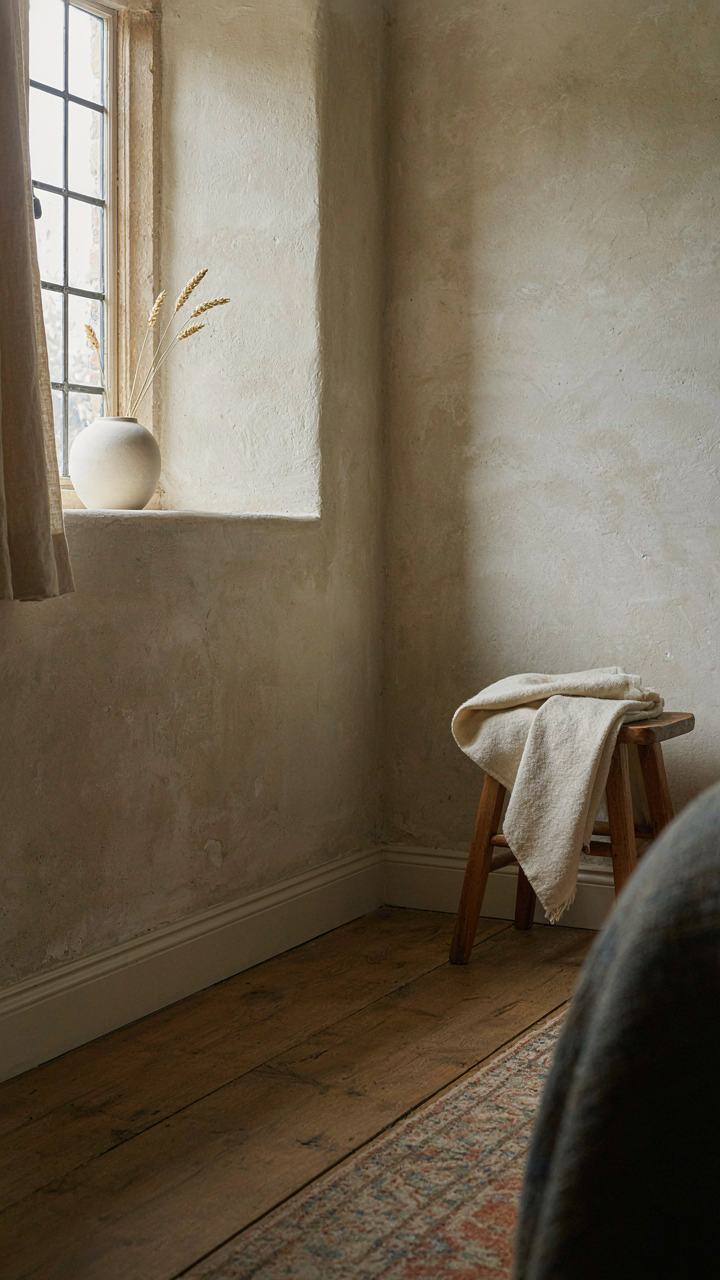
The Cost Of Clutter You Don’t See
You want permission to stop buying things. That’s what this is really about. The mechanism at work here is constraint, borrowed from economics. In an English cottage bedroom, constraint is your material scarcity, not abundance. The cottage tradition emerged from limited resources, not aesthetic choice. Every object occupied space in a room that was already tight. This forced a brutal filter: only what serves survives. Modern decorators invert this. They add until the room feels “complete,” which is backwards.
Most advice tells you to curate thoughtfully. That’s incomplete. The real move is to stop treating curation as decoration and start treating it as subtraction. An English cottage bedroom earns its character through what it refuses, not what it contains. Remove the thing before you consider replacing it. Notice what you actually reach for. That’s the only metric that matters in a cottage bedroom.
The Geometry Of Breathing Room
Empty wall space functions like white space in typography. Both do the same work. Typography uses white space to make text readable; bedrooms use empty walls to make objects visible and memorable. A cottage bedroom with bare plaster or simple paint between furnishings creates visual rhythm. The eye needs landing zones, not constant stimulus. When every surface holds objects, nothing stands out. The eye finds nothing to rest on.
- Single focal point per wall: Choose one object per wall surface that justifies its space. Let other walls remain empty or feature only basic architectural detail.
- Negative space as material: Treat blank wall area the same way you treat wood or stone. It’s a design element, not wasted opportunity waiting for more stuff.
- The visual weight rule: Heavy or decorative objects need empty space around them to read properly. Crowd them and they become noise instead of character.
- Breathing room for wood beams: In cottages with exposed beams, the beam structure is already visual content. Additional wall decoration competes with architecture.
- Silence in corners: Leave at least one corner of the room completely empty. This teaches the eye to appreciate restraint and anchors the entire room’s proportions.
The goal is not minimal in the modern sense. It’s functional. A cottage bedroom with carefully placed emptiness reads as intentional, settled, lived in. It signals that someone edited the room rather than accumulated in it. Place your final object, then stop adding. The absence of clutter becomes the defining characteristic of the space.
The True Quiet Character Isn’t A Style You Buy; It’s A Discipline You Apply
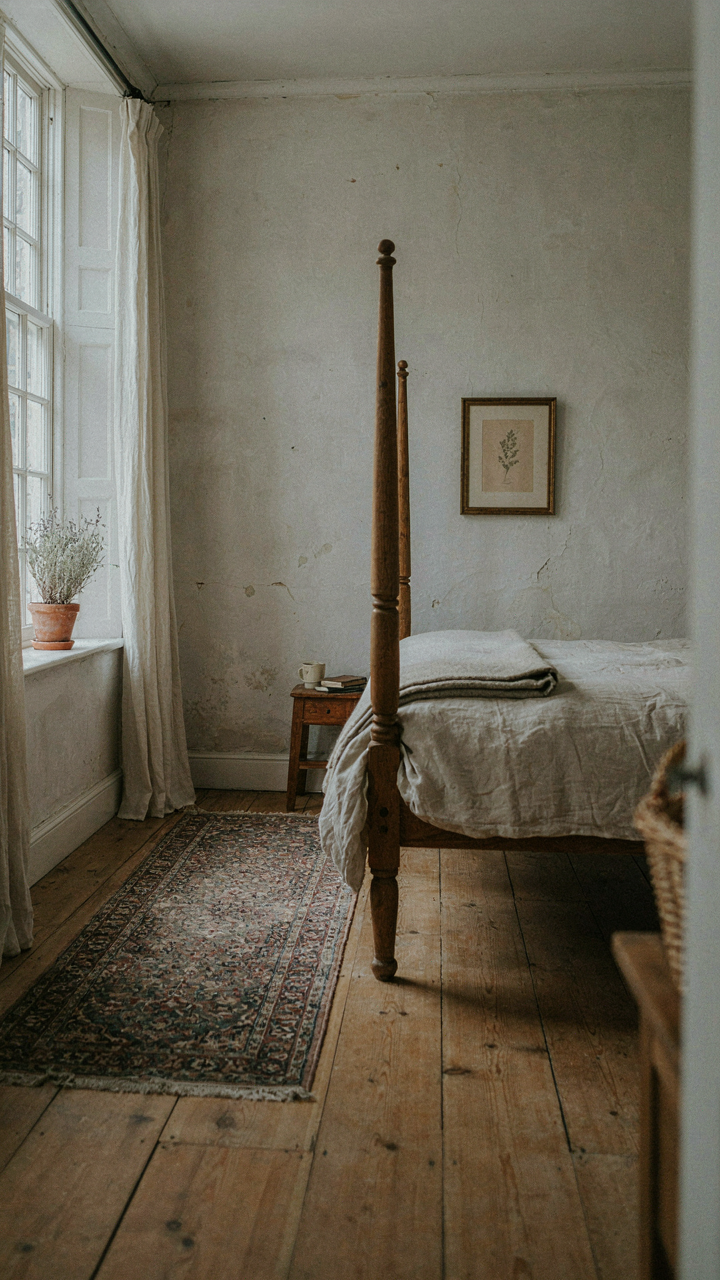
Most people treat an English cottage bedroom like a Pinterest board. They chase the aesthetic and ignore the constraint. But quiet character lives in what you remove, not what you add. Pick one piece of furniture in your room right now that doesn’t serve you. Remove it today. You’ll feel the difference immediately. A room with purpose always beats a room with stuff.