

The Reclaimed Wood Fallacy: More Than Just A Desk

Wood As Neural Anchor, Not Backdrop
You want reclaimed wood because it signals you’ve made it. Stop. The real mechanism here is neurological, not status-based. Wood triggers parasympathetic response in the brain. Biophilia research shows humans process natural materials differently than synthetics, lowering cortisol during focused work. A reclaimed wood desk isn’t decor. It’s a biological tool that conditions your nervous system to treat the space as a sanctuary, not another screen station.
The farmhouse aesthetic sells this hard, but the science is what sticks. When you work eight hours daily at a desk, the material beneath your hands shapes your cognitive output. Reclaimed wood carries texture variation and grain pattern that living wood still holds. Your brain registers authenticity. Synthetic finishes don’t trigger the same response. Choose reclaimed specifically because the irregularities keep your parasympathetic nervous system engaged without distraction.
Material That Survives Real Work
Most farmhouse desk advice skips this entirely. Reclaimed wood isn’t prettier. It’s harder. Old-growth timber from 100-plus-year-old structures has density modern lumber can’t match. Tighter grain means it resists dents from keyboard trays, monitor arms, and the daily abuse of actual work. A soft pine farmhouse desk looks right but fails functionally within two years under real load.
Reclaimed wood’s durability isn’t aesthetic merit. It’s structural property. Antique barn wood, salvaged from beams, has already weathered temperature swings and time. It won’t cup, warp, or split like kiln-dried modern lumber does when your office temperature fluctuates. Your desk must handle eight-hour workdays without degradation. Source reclaimed wood with confirmed origin and inspect for structural integrity before purchase. The higher cost reflects material that performs, not just appearance.
Farmhouse Office: The Productivity Paradox

Rustic Minimalism For Cognitive Load
You want a farmhouse office because it signals you’ve escaped the corporate grind. The mechanism is different. Your brain processes visual noise as threat. Reclaimed wood desks work not because they’re trendy but because they eliminate the cognitive tax of modern materials and their associations.

Minimalism borrows from signal theory in information design. Signal-to-noise ratio determines how much mental energy you waste filtering irrelevant input. A farmhouse desk with minimal ornamentation, visible wood grain, and honest joinery creates visual clarity. Your eye doesn’t hunt for focal points. The room stops competing for your attention. You work harder because you’re not defending against distraction at the neurological level.
Timeless Design Over Aesthetic Cycles
Most advice says build a farmhouse office to look “warm” or “inviting.” That’s incomplete. The real advantage is immunity to trend collapse. Trends demand periodic replacement. Timeless work requires one decision, made once, then never revisited. Reclaimed wood desks age into themselves rather than aging out.
Farmhouse design emerged from constraint, not aesthetic choice. Rural carpenters built with available materials and honest construction. No veneer. No hidden fasteners. The style survives because it solves a problem that hasn’t changed: durability plus simplicity equals less cognitive friction. You commit the desk to your office, then stop thinking about whether it looks dated. Build your workspace around materials that become more valuable with use, not less. Keep a reclaimed wood desk maintained with minimal finish, and it requires no replacement cycle.
The “Deep Work” Blueprint For Modern Farmhouse Home Offices
Remove The Clutter That Kills Focus
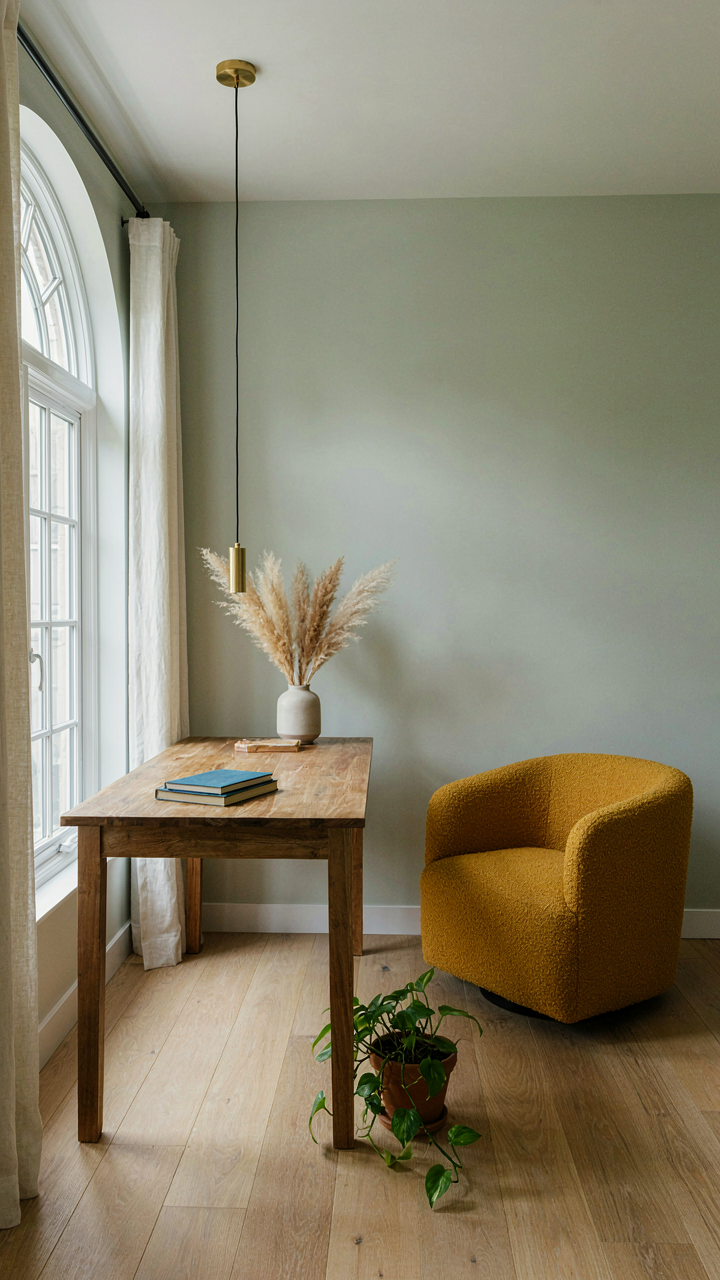
You want a farmhouse office because you think rustic aesthetics solve productivity problems. They don’t. The real mechanism is this: your brain treats visual noise as threat-level input. Every object demands processing. A reclaimed wood desk works not because it looks good, but because it reduces the number of competing signals your nervous system tracks while you work.

Most farmhouse offices fail here by confusing “rustic” with “crowded.” Exposed beams, vintage signs, stacked books, decorative baskets, dried flowers, mason jars—all of it registers as data your brain must parse. The farmhouse style becomes camouflage for hoarding. Strip it down instead. Keep only objects that serve function or anchor focus.
Design Separate Zones For Different Brain States
Deep work requires environmental boundaries. Think of this in terms borrowed from behavioral psychology: context-switching costs. Your desk zone should signal “output mode” to your nervous system. Your break corner signals recovery. A farmhouse office with reclaimed wood allows you to build these zones without sterile commercial furniture breaking the aesthetic.
Position your desk away from traffic paths, windows with street-level views, and household movement. Use the wood itself as a psychological anchor—reclaimed materials ground attention because they carry weight and age. Place a separate chair or low table across the room for breaks. The distance and orientation signal mode shifts to your brain. This protocol matters more than the design style itself.
Beyond Instagram: Real Farmhouse Office Ideas That Work
Desk Placement Beats Desk Aesthetics
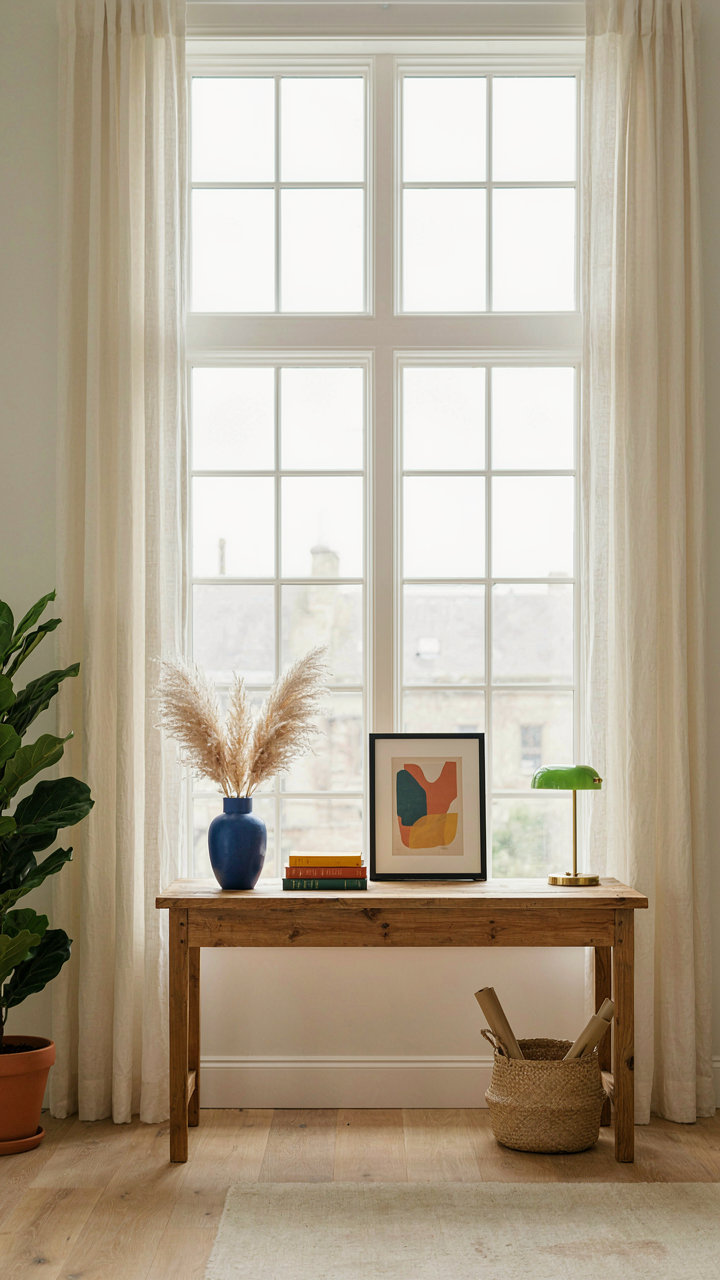
You want the farmhouse office to look a certain way because you think it’ll make you feel productive. It won’t. The mechanism is spatial ergonomics: your body’s relationship to light, distance, and movement determines output velocity, not wood grain. Position your desk perpendicular to windows, not facing them. This kills glare on screens and keeps natural light at your side without the cognitive drain of brightness in your vision.

Reclaimed wood desks are heavy. Use that weight strategically. Place the desk where you won’t move it, which means near outlets, away from foot traffic, and positioned so your dominant eye gets ambient light without direct sun. The farmhouse aesthetic survives this constraint. A weathered barn beam desk works just as hard in a corner as it does center-stage, and corners often beat open layouts because they reduce decision points during focus blocks.
Tools That Disappear Into Work
Most farmhouse offices fail because they confuse texture with texture-as-distraction. A farmhouse office should trigger zero conscious thought about its appearance during actual work. This isn’t about minimalism. It’s about cognitive load management: fewer competing visual stimuli mean your prefrontal cortex stays allocated to output, not aesthetic appreciation.
A reclaimed wood desk paired with a single monitor arm, a notebook, and a desk lamp creates a work surface that doesn’t demand attention. The wood’s history is a bonus, not the point. Real farmhouse offices use industrial filing cabinets or simple steel shelving because they work. They hide cables in conduit or clips, not to look polished, but because visible cables create micro-stress responses in your nervous system every time your eye catches them. The mechanism is removal of friction, not addition of charm.
The 3 Tiered Focus Protocol: Engineering Your Home Office Farmhouse

Physical Space As Neural Anchor
You want this space to feel special so you have permission to do serious work there. That’s the real reason. But the mechanism is neurological: your brain treats environmental consistency as a signal to enter focus mode. A reclaimed wood desk paired with specific lighting, wall color, and furniture arrangement creates what neuroscience calls “contextual priming.” Your nervous system learns to recognize this exact sensory configuration and shifts into concentration automatically. You’re not decorating. You’re building a trigger.

Farmhouse design accelerates this because its aesthetic is inherently minimal and functional. Heavy wood, neutral tones, and sparse ornamentation reduce visual noise without feeling sterile. A reclaimed wood desk with simple hardware becomes a focal point instead of a distraction. Your eyes land there. Your body positions itself the same way each session. The routine compounds. Within two weeks, entering this room signals your brain that shallow work stops here.
Screen Real Estate And Signal Filtering
The common advice tells you to “minimize distractions.” Wrong framing. You need to engineer which signals reach your attention in the first place. Digital minimalism isn’t about willpower. It’s about removing the option to fail. The reclaimed wood desk creates physical boundaries. Now make your digital environment match that principle.
- Single monitor placement: One screen positioned at arm’s length perpendicular to your desk reduces the urge to split focus or tab-switch. Farmhouse desks work here because their reclaimed wood surface is substantial enough to support deliberate spacing without clutter.
- Phone in another room: Not in a drawer. Another room. The extra friction of walking to retrieve it breaks the automaticity of checking. Your desk becomes a phone free zone by design, not discipline.
- Browser bookmark purge: Delete saved tabs unrelated to current projects. Every visible shortcut is a competing attention vector. Keep your browser as empty as your farmhouse walls.
- Notification toggle: Turn off all non essential alerts across every device before sitting down. Slack, email, calendar, news. Everything silent. Batch check these in designated windows outside focus blocks.
- Timer visible on desk: Use a physical kitchen timer or desk clock you can see without unlocking anything. Farmhouse offices often feature a simple clock on the wall or desk for this exact reason.
Reclaimed wood desks have a built in advantage here. Their surface texture and weight create psychological “stickiness.” You feel anchored when you sit at solid wood. That same neural reward system that responds to environmental consistency fires when you touch the desk itself. Your fingers on aged grain becomes part of the focus ritual. Pair this with the five tools above and your concentration becomes structural, not motivational.
Modern Farmhouse Office: Bridging Old World Craftsmanship With New World Output

The Cable Problem Nobody Names
You want a reclaimed wood desk that looks intentional and untouched, but you’re actually terrified of having cables visible because it breaks the fantasy you paid for. Here’s the mechanism: farmhouse design trades visual clutter for perceived permanence. The desk itself says “I built things that last.” Cables say “I’m plugged into 2024 and it shows.”

Run power and data through the desk substrate, not across it. Reclaimed wood desks with thickness allow boring holes on the underside or rear. Route everything through conduit that matches the wood tone or disappears into shadow. This isn’t decoration. It’s infrastructure that lets you use the desk without sabotaging its purpose. The tech stays functional. The aesthetic stays intact.
Sitting In Old Wood, Moving Like New
Farmhouse furniture design comes from manual labor contexts where people spent ten hours a day at benches, not typing. Ergonomic principles from occupational medicine apply here: neutral spine alignment, forearm angle, monitor height. Your reclaimed wood desk is beautiful and immovable. The wood won’t flex. The frame won’t adjust. You adjust around it.
Measure your desk height when empty. Most reclaimed wood pieces sit between 28 and 32 inches. Pair it with a chair that gets you to 90 degree angles at the elbow and hip. Add a footrest if your feet dangle. Keyboard tray underneath keeps wrists neutral. Monitor arm on an adjustable stand solves height mismatch without touching the desk. The old frame stays untouched. Your body stays functional.
The “Economic Efficiency” Of Your Farmhouse Home Office Design

Cluttered Space Costs More Than You Think
You want to believe your mess doesn’t matter because admitting it does means you’ve wasted money and time already. Here’s the mechanism: economics calls this opportunity cost, and your farmhouse office bleeding it everywhere. Every square foot of wasted desk surface, every drawer stuffed with duplicates, every visual distraction pulls focus and productivity simultaneously. A cluttered farmhouse workspace doesn’t just look bad. It compounds inefficiency into your daily work output.

Reclaimed wood desks marketed as “rustic” often hide poor ergonomics and undersized surfaces. Sellers exploit the farmhouse aesthetic to move inferior pieces. You end up buying again six months later when you realize the desk can’t hold your actual workflow. The real cost isn’t the first purchase. It’s the replacement, the lost work hours, and the mental tax of working in dysfunction. Most people measure only dollars spent, not time or output lost.
Strategic Pieces Return What You Invest
Furniture selection in a farmhouse home office works like capital allocation in business. You deploy resources where they generate the highest output return. A single large reclaimed wood desk built for depth and surface area outperforms two cheap pieces combined. The wood itself ages visually while functioning better structurally. You stop replacing it.
A solid farmhouse desk becomes infrastructure, not decoration. The right piece eliminates the hidden costs: no wobble that breaks focus, no surface cramping your workflow, no buyer’s remorse pushing you toward replacement. Invest in one authentic reclaimed piece that supports actual work before adding accent furniture. This approach compresses decision fatigue and spending into one deliberate act.
Office Inspiration: The Art Of Deliberate Scarcity

What Actually Belongs On Your Desk
You want permission to buy less because you’re afraid a sparse desk means you’re unprepared or unsophisticated. The real mechanism is this: every item on your surface competes for your attention. Cognitive load in design works like bandwidth. A reclaimed wood desk surrounded by ten objects fractures focus across all of them. A reclaimed wood desk with three objects gives each one oxygen.

Start by identifying what you actually use during a work session. Not what you might use. Not what looks intentional. What your hands touch. Everything else leaves the desk surface. This isn’t minimalism as aesthetic. It’s minimalism as performance engineering. Your brain processes visual input whether you’re conscious of it or not. Clutter isn’t just messy. It’s a constant, low-level drain on executive function.
Negative Space Runs The Room
The common advice says add plants and let them breathe. Wrong target. The room breathes when your eye has somewhere to rest. Empty space on and around your reclaimed wood desk isn’t wasted real estate. It’s the absence that gives everything present weight and clarity.
Farmhouse design historically used spare interiors not because builders lacked resources, but because utility demanded it. Farms operated on principle: every object serves. Visual whitespace works the same way in your office. It forces intentionality. When you see bare reclaimed wood grain without competing visual noise, you notice the material itself. The desk becomes an object again instead of a platform for clutter. Position your desk so at least one side faces an empty wall. The psychological effect is immediate.
Farmhouse Homes: Extending The Ethos To Your Workspace

Light That Aligns With Your Biology
You want this section to confirm that your farmhouse office is “healthier” than a corporate cube. The real mechanism is circadian rhythm regulation. Your body doesn’t run on clock time—it runs on light exposure. Biology governs this: photosensitive retinal cells detect wavelength and intensity, then signal your hypothalamus to regulate cortisol, melatonin, and alertness cycles. Farmhouse design’s obsession with south and east-facing windows isn’t romantic nostalgia. It’s functional positioning.

Reclaimed wood desks placed perpendicular to natural light sources work because you catch indirect illumination without screen glare. Morning light in particular—blue wavelengths between 460 and 500 nanometers—suppresses melatonin production and peaks cortisol naturally. This matters more than your desk material. Position your workspace so primary light enters from your non-dominant side. If you work three hours in dim artificial light, your circadian timing shifts measurably. Farmhouse offices that fail do so because occupants prioritize aesthetics over window placement.
Temperature As A Performance Variable
Everyone frames thermal comfort as preference. That’s wrong. Physics demonstrates that metabolic efficiency and cognitive output decline outside a narrow band. Your brain allocates resources to thermoregulation when ambient temperature drifts from 68 to 72 Fahrenheit. It’s not about feeling cozy—it’s about resource allocation. Reclaimed wood has thermal mass: it absorbs heat during warm hours and releases it slowly, stabilizing the microclimate around your workspace. Stone foundations and exposed beams do the same work.
Farmhouse construction typically features higher ceilings and thicker walls than modern homes. This creates thermal lag, meaning temperature swings happen gradually rather than abruptly. Your focus improves because your nervous system isn’t constantly compensating for fluctuations. Draft elimination matters more than insulation choice. Seal gaps around windows, doors, and baseboards before decorating. A 2-degree variance every 30 minutes costs you concentration. Install a simple humidity monitor—maintain 40 to 60 percent relative humidity—and your reclaimed wood stays stable while your work output remains consistent.
The Unspoken Truth About Farmhouse Office Aesthetics

Material Honesty Beats Visual Performance
You want this space to signal competence and taste without trying too hard. The real mechanism is this: authentic materials create cognitive dissonance with cheap imitation. Your brain registers wood grain, tool marks, and weight as signals of durability before you consciously notice them.
Reclaimed wood communicates differently than stained plywood. The color variations, nail holes, and surface wear are data points your eye processes as genuine. This isn’t psychology, it’s basic information theory. Genuine materials carry more information density than uniform, mass-produced surfaces. When you sit at that desk daily, your nervous system knows the difference.
Craftsmanship Compounds Over Time
The common advice says buy farmhouse pieces for aesthetic value. That’s incomplete. True craftsmanship outlasts trends because it solves the actual problem of functional furniture through better joints, material selection, and construction methods.
Hand-jointed reclaimed wood desks don’t need replacement cycles. A mortise and tenon joint outperforms pocket-hole construction not for style points but for structural integrity. The desk remains stable after ten years because the maker understood wood movement and stress distribution. Trends cycle every three to five years. A well-built desk from actual craftspeople functions the same way in year twelve as year one, which means you stop replacing it and start using it as your actual work surface instead of another consumer commitment.
The Real Obstacle Isn’t Finding The Right Desk, It’s Your Inability To Design An Environment That Demands Your Best Work
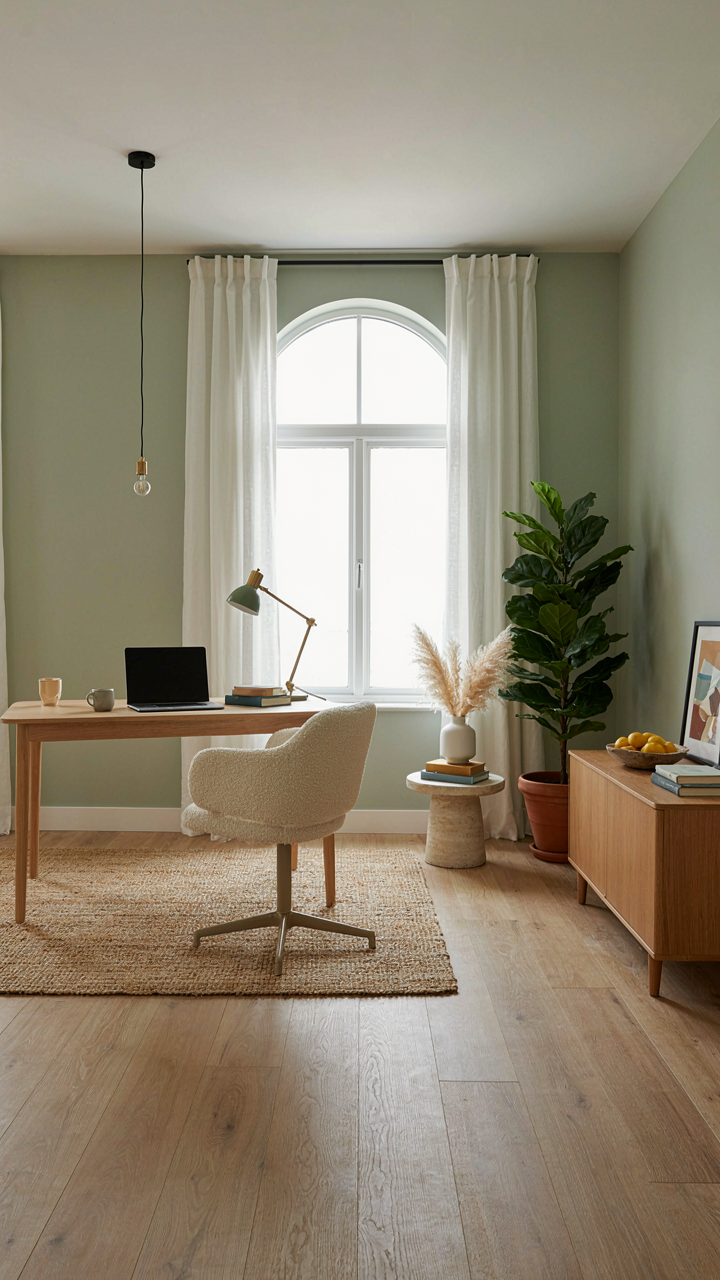
Most people buy a reclaimed wood desk and expect their productivity to follow. It won’t. Your environment either pulls mediocrity out of you or excellence. The desk is just wood. What matters is whether you’ve stripped away every distraction and arranged every element to eliminate friction between intention and action. Today, identify one thing in your workspace that doesn’t serve your work. Remove it. Your environment doesn’t motivate you. It either gets out of your way or it sabotages you.



