The “Guest Experience” Fallacy: It’s Not About Them

The Real Reason You Care About This Room
You want visitors to leave thinking you have your life together. That’s the actual motive here, not hospitality. The mechanism borrowed from economics is signaling: you’re using your guest bedroom as a status display, a tangible proof that you operate with intention. This isn’t cynical. It’s how humans work. Once you name it, you can design for what actually matters instead of chasing generic “warmth.”
A farmhouse guest bedroom signals competence because it requires restraint. You can’t fake it with clutter or half-measures. The room either says “I prepared this space deliberately” or “I threw some things in here.” Your guests won’t consciously register the difference. Their nervous system will. That distinction drives whether they relax or feel like a burden.
What Unpreparedness Actually Costs You
Most people think a guest room fails when it looks bad. Wrong diagnosis. It fails when it creates friction. Missing hangers. No place to set luggage. One dim lamp. A mattress that sags. These aren’t comfort issues. They’re competence failures that force your guest to problem-solve in your home, which triggers a specific social anxiety: the feeling that they’re imposing.
The hidden cost is relationship damage that feels invisible. Your guest doesn’t complain. They just remember feeling slightly awkward, slightly unwelcome. They stay shorter. They invite you back less. They tell other people “it was fine” instead of “they’re great hosts.” Preparation removes friction before it creates resentment. That’s the protocol: audit your room through the lens of a stranger who hasn’t slept well in weeks, then fix every minor friction point before they arrive.
Beyond Instagram: Modern Farmhouse Guest Room Utility

The Bed Isn’t The Room
You care about this because you want guests to feel welcome without admitting you’re anxious about judgment. The mechanism is simple: a bed is furniture. A bedroom is a system. Most people design the first and hope the second works. In farmhouse spaces, this failure shows immediately because the aesthetic demands restraint, which means every piece must earn its place through actual use, not decoration.

The bed frame anchors everything else, but the real work happens in the margins. A nightstand with a drawer, not a shelf. A reading lamp with an arm that moves. A chair that holds clothes before laundry day. These aren’t staging props. They’re the infrastructure that keeps a guest from stacking their suitcase on the floor or draping shirts across a ladder because there’s nowhere else to put them. Function breeds comfort, and comfort makes people want to return.
The Hidden Convenience Layer
Economics teaches the concept of revealed preference: people’s actions show what they actually value, not what they say they value. A farmhouse guest room’s revealed preference is storage depth, not surface appeal. Most designers focus on what guests see when they walk in. The real test is what guests need after they’ve unpacked.
Install a closet rod at standard height, but add a lower rod eighteen inches below. Place hooks at varying heights on the back of the door. Use under-bed storage boxes that slide out smoothly, not bins that catch on carpet. Add outlets on every wall, not just behind the nightstand. Guests never photograph these details. They notice them at three in the morning when they need to charge their phone without moving furniture. This is where a room stops being a concept and starts being livable.
The “Zero Effort” Guest Bedroom Protocol
Remove The Ask Friction Point
You want guests to feel welcomed without you having to perform hospitality theater every five minutes. That’s the real motive here, and it’s valid. The mechanism is simple: design the room so guests answer their own questions before they ask them.

Guests interrupt because information gaps exist. A guest who doesn’t know where towels are asks. A guest who doesn’t know if the WiFi password is written somewhere asks. A guest who can’t find a phone charger asks. Each question is friction that makes you look unprepared and makes them feel like burdens. Eliminate the questions by making answers visible and accessible before they’re needed.
The Visible Information Strategy
Common advice says “just tell guests where everything is.” That’s incomplete. Telling works once, then they forget, then they interrupt anyway. The real move is environmental design: place information where the question naturally occurs.
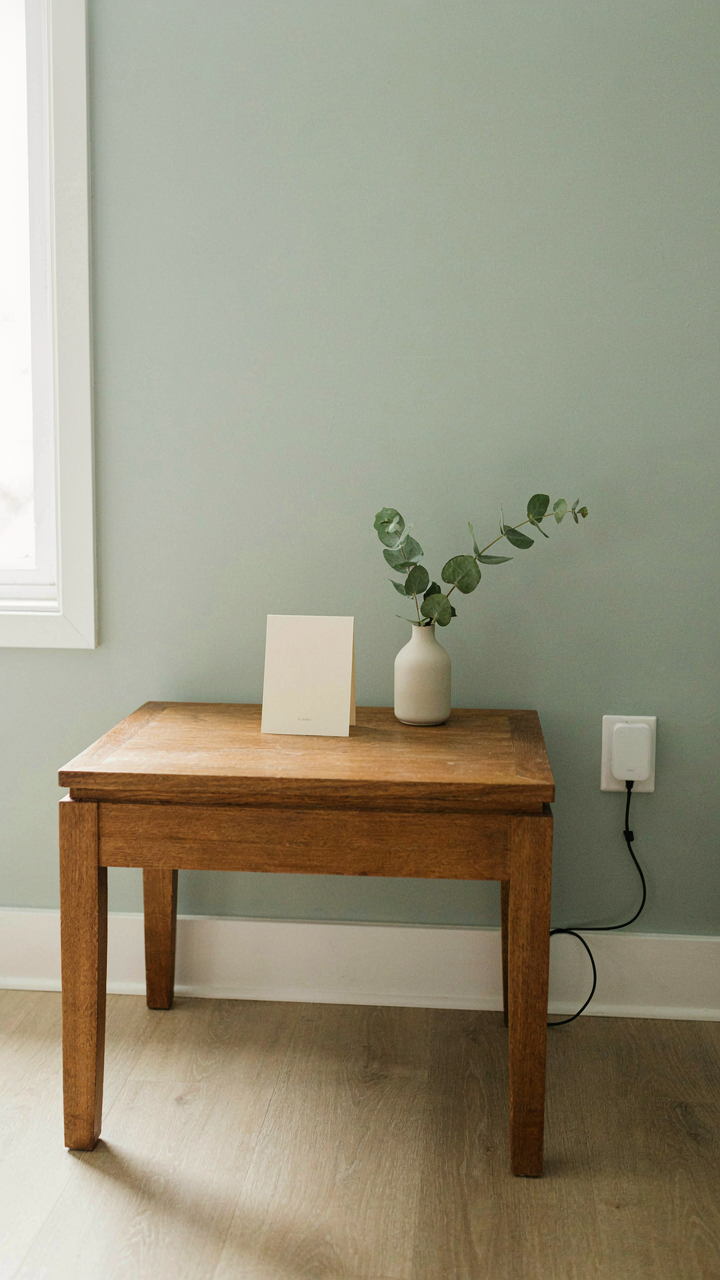
Post WiFi credentials on a card on the nightstand, not shouted during check in. Mount phone chargers to the wall near outlets, already plugged in. Leave a printed sheet listing checkout time, thermostat controls, and parking details on the desk where guests sit to process arrival. Write your cell number on the same sheet in case of genuine emergencies. This converts your role from answering service to host with boundaries. Guests reference printed material without feeling like they’re bothering you, and you’ve just bought yourself back hours of mental overhead.
Farmhouse Bedroom Comfort: The “Sufficient Minimum” Principle

What Actually Serves A Guest
You want your guests to feel cared for without spending money on things they’ll never notice. That’s the real tension here. Comfort isn’t luxury. It’s the absence of friction. In design, we call this “constraint satisfaction”—you solve for a specific problem with the minimum resources required. A guest doesn’t need ten pillows. She needs one pillow that doesn’t go flat at 2 AM. She doesn’t need expensive sheets. She needs sheets that don’t bunch or pill after one wash.

The farmhouse aesthetic actually makes this easier because restraint is built into the style. Real farmhouse design emerged from necessity, not preference. People kept what worked and discarded what didn’t. A solid headboard, adequate lighting, a temperature you can control, and genuine linens cover ninety percent of actual guest comfort. Everything beyond that is decoration disguised as hospitality.
Strip Away What Doesn’t Earn Its Space
The common advice says to decorate a guest room to feel “warm and inviting.” That’s vague enough to justify clutter. What you actually need is to remove anything that creates maintenance burden, visual noise, or practical problems for someone sleeping in an unfamiliar space. A throw pillow that slides off the bed every night is a failure, not a feature. Decorative baskets that guests worry about moving are obstacles.
Start with the bed and work outward. Everything else is secondary. Remove nightstands that are too small to hold a phone and water glass. Remove lamps that don’t have three-way switches or adequate brightness. Remove wall art that hangs at angles or pictures of strangers. A guest room with four items that function perfectly beats a guest room with fifteen items that mostly work. The protocol is simple: if it doesn’t solve a real problem or provide genuine rest, it leaves the room.
Guest Room Design: Applying Military Logistics
Anticipate Every Guest Movement
You want your guests to feel welcome because a bad guest experience reflects on you. The real mechanism is simple: eliminate friction points before they become complaints. Military logistics calls this “supply line anticipation”—positioning resources where demand happens, not where it’s convenient for you. A farmhouse guest bedroom works the same way. You map the guest’s actual path through the room, then remove every moment of uncertainty or searching.

Start at the door. Guests enter and need three immediate answers: Where do I put my bag? Where’s the bathroom? Where’s the light switch? These aren’t small details. A dedicated luggage rack or cleared floor space near the entry costs nothing but prevents guests from dropping bags on the bed. A wall-mounted hook for a jacket gives them a landing spot before they settle in. The light switch should be within arm’s reach of the entry, not across the room.
Water, Power, And Essentials Within Reach
This isn’t about decoration. This is about removing the need for your guests to ask you where things are. Place a water pitcher and glass on the nightstand before they arrive. An outlet near the bed for phone charging should be standard—most farmhouse bedrooms have poor outlet placement, which forces guests to choose between a dead phone and an awkwardly routed cable. Add a small lamp on the nightstand, not overhead lighting alone.
Towels should hang on a visible rack or chair, not hidden in a closet. Stack fresh towels visibly so guests know they can use them without asking. A small basket with basics—tissues, a phone charger, lip balm—positioned on the dresser signals that you’ve thought about their needs. The mechanism: guests shouldn’t have to interrupt their comfort to retrieve necessities. Design the room so essentials are visible, within arm’s reach, and immediately usable.
Modern Farmhouse Guest Bedroom: The Deceptively Simple Toolkit

Stock The Room So Guests Never Ask
You want guests to feel autonomous—that’s the real reason this matters, because dependent guests create friction and mental load for you. The mechanism here borrows from supply chain logistics: eliminate the critical path bottleneck. Your guest shouldn’t need to hunt you down for a phone charger, an extra blanket, or information about checkout time.
- Phone charger with common connector types: Place a dual-USB or multi-port charger on the nightstand. Include both Lightning and USB-C cables. Guests shouldn’t search your house for compatibility.
- Extra blankets and pillows in the closet: Stack them on a shelf within arm’s reach. Farmhouse bedrooms run cool at night. Temperature control eliminates the midnight complaint.
- Basket with essentials: Include travel-size toiletries, pain relievers, antacids, mints, and lip balm. Pre-load it so guests find what they need without asking.
- WiFi password written on card stock: Post it on the nightstand or desk. Verbal WiFi passwords get forgotten or misheard within seconds.
- Small notepad with checkout instructions: State the time, parking details, and any house-specific protocols. Written clarity prevents miscommunication.

The goal is zero friction between guest need and guest solution. When a guest has to ask for something basic, you’ve failed the design. Stock abundance, not scarcity. Make the room function like a hotel suite, not a spare bedroom.
The Charger Placement Architecture
The charger location matters more than people admit, and the reason is behavioral science meets practicality. Guests charge devices at night, which means the charger must sit between the bed and the outlet without requiring them to crouch or reach past furniture. Nightstand placement isn’t optional, it’s the only logical spot.
Outlets in farmhouse bedrooms are often scarce or positioned poorly due to older construction. If your outlet is behind a dresser or low on the wall, install an additional outlet or use a power strip to move electricity to the nightstand height. The guest won’t plug in a device if the charger lives three feet away or requires contortion. Physical proximity drives behavior.
Farmhouse Guest Room: The Unspoken Rules Of Privacy

Your Guest Space Needs Walls, Not Just Rooms
You want guests to feel welcomed without feeling like they’re living in your business. The real mechanism here is territorial psychology: humans need to know where their domain ends and yours begins. A guest bedroom isn’t just a place to sleep. It’s a psychological boundary that lets people decompress without performing. The farmhouse aesthetic actually works against this if you’re not intentional. Open sightlines, shared hallways, and thin walls create surveillance, not sanctuary. Your guests will sense it and stay guarded the entire visit.

The physical room itself enforces this boundary better than any conversation ever will. A solid door with a working lock does more than a friendly speech about “making yourself comfortable.” Guests need control over light, sound, and access. Install blackout curtains or lined drapes that actually block early morning sun. Use a door that closes cleanly without gaps. The room temperature should be adjustable without leaving the bedroom to fiddle with a hallway thermostat. These aren’t luxuries. They’re the minimum infrastructure for privacy. When guests can’t control their environment, they’re not relaxing. They’re managing discomfort.
The Architecture Of Respect
Borrowed from hotel design: create what planners call “transition zones” between guest and host space. This means the guest room should not directly face your master bedroom, connect to your ensuite, or sit on the main hallway where guests watch you move through your morning routine. Awkward positioning forces constant negotiation about who belongs where. Distance matters. A guest bedroom on a different floor, or at the far end of a hallway with a bathroom not shared with the family, changes the entire dynamic. Guests stop timing their showers around your schedule. They stop apologizing for noise.
The unspoken contract is this: you provide them a closed door and they respect yours. Design the room so neither side has to think about the other. This means the guest room has its own dedicated bathroom when possible, or at minimum a clear protocol about bathroom access hours that you establish once and never discuss again. Storage matters too. Empty drawers and closet space mean guests aren’t living out of a suitcase. They unpack. They settle. They actually rest instead of staying in visitor mode the entire time. Respect is enforced by design, not personality.
Guest Bedroom Decor: The Subtle Signals Of Respect

The Details That Say You Prepared
You want guests to feel special without broadcasting how hard you tried. Here’s the mechanism: humans detect effort through asymmetry. If everything looks styled, it reads as performance. If nothing seems considered, it reads as indifference. The sweet spot is deliberate choices that dissolve into the background.

This means a fresh bar of soap on the nightstand beats a basket of toiletries. A single framed print that actually belongs in a farmhouse beats a gallery wall of aspirational art. A working lamp with a linen shade beats recessed lighting. Guests notice what serves them, not what serves your image.
Materials Built For Years, Not Seasons
Most farmhouse advice peddles trend rotation dressed as timelessness. Wrong. Real farmhouse guest bedrooms use materials that age into character instead of decay into obsolescence. This borrows from material engineering: fatigue strength is the capacity to withstand repeated stress without failure. Your guest room’s fatigue strength depends on what you actually put in it.
Linen curtains, wool blankets, solid wood furniture, cast iron fixtures, and natural fiber rugs handle guest traffic across years without deteriorating into visual noise. Cotton sheets degrade fast. Particle board dressers become wobbly and dated simultaneously. Trendy paint colors demand repainting within five years. Choose materials that develop patina instead of showing wear. The final test: if something requires replacing within three years, it doesn’t belong in a guest room meant for longevity.
Modern Farmhouse Guest Room Ideas: Beyond The Aesthetic Trap

The Real Cost Of Trend Chasing
You want your guest room to look current because you’re afraid it already looks dated. Here’s the mechanism: trends in farmhouse design move fast because they’re built on Instagram visibility, not function. Shiplap, Edison bulbs, and reclaimed wood have already cycled through peak adoption. You chase them by installing expensive finishes that feel stale within three years. The room then demands another refresh, another investment, another round of obsolescence.

The farmhouse trend itself emerged from early 2010s design media as a reaction to minimalism and industrial aesthetics. It gained momentum through social platforms, not because it solved a real problem. By chasing the current iteration, you’re building on borrowed time. Your guests don’t care if your nightstand matches this season’s palette. They care if they sleep well and the room functions.
Utility Over Appearance
Build the room around what your guests actually need, and the aesthetic handles itself. A guest bedroom fails when comfort takes a backseat to style. This means: a mattress that doesn’t collapse after two nights, blackout-capable window treatments that actually block light, temperature control that works, and outlets where people actually need them. These aren’t fancy. They’re non-negotiable.
Farmhouse design elements that last are the ones that serve a purpose first. Shiplap works because it’s durable and easy to repair, not because it looks rustic. Solid wood furniture outlasts particleboard regardless of trend cycles. A reading chair earns its space by being genuinely comfortable, not by fitting a mood board. When you design around utility, the room ages like function, not like fashion.
The Ultimate Obstacle: Conflating Comfort With Performance Art

Most people design guest bedrooms for Instagram, not humans. They layer aesthetic on top of aesthetic until the room screams “don’t touch anything.” Stop. Your guests need to actually rest there, not perform gratitude for a Pinterest board. Pick one farmhouse element that genuinely serves them—a quality mattress, good lighting, functional storage—and build around that. Everything else is decoration masquerading as hospitality. A guest who sleeps well doesn’t care about your shiplap.