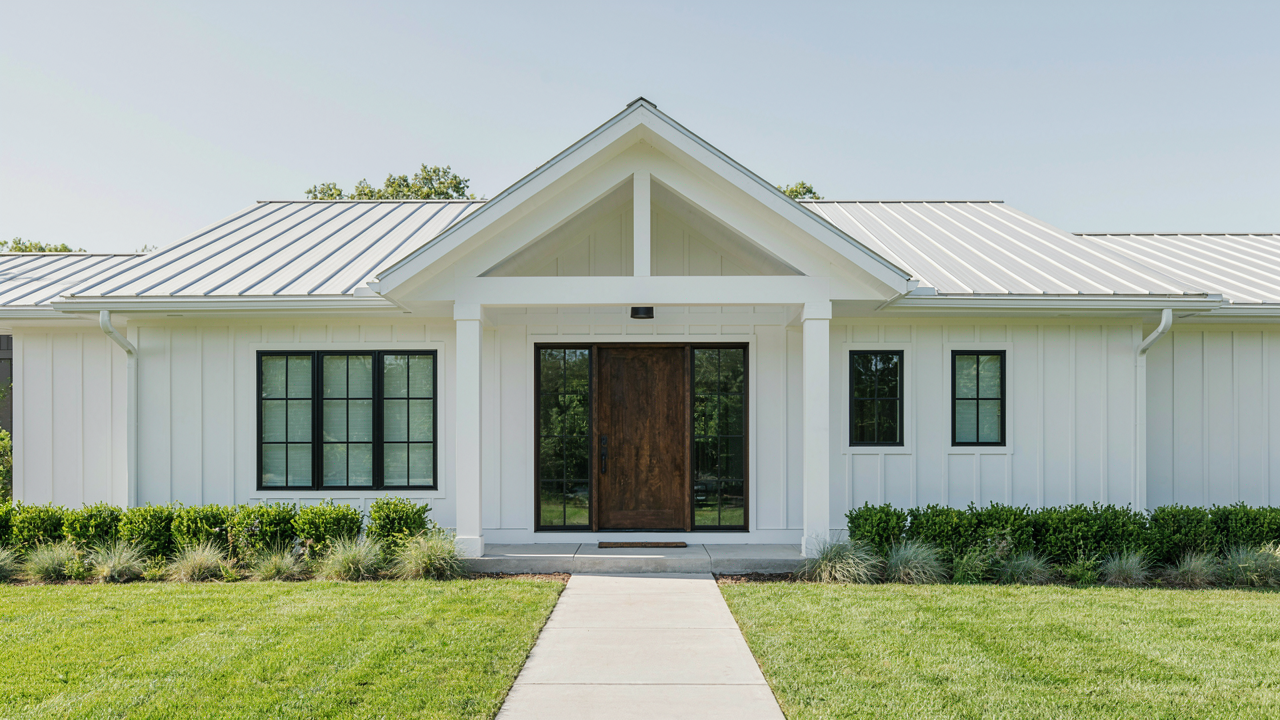
The Illusion Of Authentic Farmhouse Aesthetic

What “Farmhouse” Actually Meant
You want to believe your front door signals taste and restraint, not just wealth. The mechanism is status anxiety dressed as nostalgia. Real farmhouse doors weren’t designed by anyone. They were built by necessity. A 19th-century farmer needed a door that sealed against weather, lasted decades, and cost almost nothing. Timber came from the property or nearby mill. Glass was expensive, so farmers used it sparingly, usually one or two panes maximum. Hinges were forged iron. The door hung heavy because it had to perform.
Modern farmhouse design inverts this logic entirely. We now add expensive materials to signal simplicity. Reclaimed barn wood costs three times more than new timber because buyers pay for the story of authenticity rather than its function. Warm timber and glass combinations work on a farmhouse door not because farmers chose them for beauty, but because those materials solved problems. Weather damage to timber, repairs over decades, and the gradual replacement of broken window panes all left visible traces. We now pay premium prices to manufacture those exact traces from the start.
The Mass Production Problem
The farmhouse front door industry doesn’t make doors anymore. It makes farmhouse-shaped objects. Consider the economics: a genuine antique door shows inconsistency because one carpenter built it differently than another. Nails sit at different depths. Wood grain varies wildly. The finish is imperfect. Mass production cannot replicate this without destroying the cost advantage that makes production possible. So manufacturers choose the inverse path. They standardize everything except the aesthetic surface.
A production farmhouse door uses engineered wood veneers over MDF cores, then applies hand-scraped texture to the surface. The texture is applied uniformly across thousands of units. Real hand-scraping leaves no two doors identical. The warm timber tone comes from stain applied in a controlled spray booth, not from 80 years of sun exposure and weathering. When you order a farmhouse front door today, you’re ordering consistency designed to appear inconsistent. The mechanism that determines whether your door actually performs like a farmhouse door is material depth, not surface treatment. Pick doors where the core material matches the visible surface, not where appearance is grafted onto a hollow base.
Warm Timber: Beyond The Stain Chart

Which Wood Species Actually Lasts
You want the door to feel authentic without rotting in five years. The real move is understanding that wood species aren’t interchangeable—they’re load-bearing decisions on your facade. Think of durability like structural engineering: some materials handle repeated stress cycles better than others. White oak and black walnut resist moisture penetration and decay fungus far more effectively than pine or fir. Eastern white pine looks farmhouse but fails fast in wet climates. The heartwood of cedar and redwood contains natural oils that slow rot, but sapwood doesn’t. Pick wrong and you’re replacing the door while your neighbor’s stays intact.

Species density matters more than finish quality. A dense hardwood door with poor sealing outlasts a soft wood sealed perfectly. White oak doors cost more upfront but handle freeze-thaw cycles without warping. Walnut stays stable in humidity swings common to farmhouse locations near fields or water. Pine requires constant resealing and repainting. If your region gets heavy rain or temperature extremes, the wood species is your first line of defense. Pick based on your climate zone, not on what looks good online.
Reclaimed Timber As Structural Honesty
Reclaimed wood isn’t a trend—it’s a statement that you won’t pretend a new door is vintage. The common advice says “reclaimed wood adds character,” which misses the mechanism entirely. Reclaimed beams and planks have already survived decades of real use. Their grain patterns, nail holes, and weathering are proof of performance. When you use reclaimed timber for a farmhouse front door, you’re not buying patina—you’re buying proven durability in your specific climate zone. The wood already adapted to local humidity and temperature swings.
New timber gets kiln-dried to uniform moisture, then faces your climate as a shock. Reclaimed timber reached equilibrium years ago. A door built from reclaimed barn siding or salvaged flooring won’t cup or twist the way newly milled stock might. The cost is higher because the material has already passed its stress tests. Source reclaimed timber from buildings in your region or similar climates. Install it with stainless steel hardware and modern sealing to prevent the mistakes that made the original structure need salvage.
Glass Paneling: Light Without The Leak

Balancing Sight Lines And Privacy
You want the aesthetic of openness without strangers reading your mail from the porch. Here’s the mechanism: glass placement controls what enters your visual frame and what enters theirs. Sidelights flanking the door, or a narrow transom above it, flood the entryway with natural light while keeping the interior obscured. Upper panes stay transparent. Lower panes stay opaque or frosted. This isn’t decoration—it’s a deliberate boundary management system.
Farmhouse doors traditionally used multiple small panes rather than one large sheet, both for structural integrity and for this exact reason. The grid pattern breaks up sightlines without blocking light. Obscured or textured glass in lower panels became standard because it solved a real problem: you need daylight, not surveillance. Frosted, seeded, or rippled glass maintains this balance without requiring you to add curtains to your front entry.
U Values And Daylight Trade Offs
Thermal physics governs this decision: U-value measures heat transfer through a material, and the lower the U-value, the better the insulation. Most farmhouse regions experience genuine seasonal temperature swings, so a door’s insulation matters more than its appearance. Double-pane glass with argon fill performs significantly better than single pane, but adds cost and reduces light transmission slightly. Triple-pane approaches overkill for most climates and dims the entry noticeably.
The real trade is between light volume and energy performance. Low-E coating on glass reduces heat loss while preserving daylight, but the slight tint it adds affects how warm the wood frame appears inside. Choose a low-E coating with minimal tint if natural light matters more to your layout. If your door receives afternoon sun exposure, the coating prevents interior heat gain in summer while retaining warmth in winter. Measure your entry’s solar orientation before selecting glass type, because the same specification performs differently on north versus south facing doors.
The “Country Front Door Ideas” Paradox
When Generic Country Becomes A Liability
You want your door to signal taste and intention, not confusion about your actual design commitment. Here’s the mechanism: “country” has become a catch-all category that houses contradictory aesthetics—ranch, Victorian farmhouse, French rural, American colonial—so broad it signals nothing. Like a signal in communications theory, the wider the bandwidth, the less information gets through. A farmhouse front door that borrows equally from three different regional traditions looks indecisive, not eclectic. Specificity creates recognitional value. Vagueness reads as trend-following.

Most design advice tells you to “mix styles freely” or “honor your local heritage.” This misses the actual problem. Your door needs a thesis, not a grocery list of country elements. The difference between a considered farmhouse entry and a diluted one comes down to constraint, not abundance. When you commit to one regional approach—say, New England colonial or Texas hill country—you gain permission to refuse elements that don’t belong. That refusal is where taste lives.
Sourcing Elements That Anchor Identity
Stop looking at inspiration boards organized by color palette or mood. That approach guarantees mediocrity because it optimizes for Instagram compatibility, not coherence. Build your door around one primary material constraint and one historical reference point. If you choose reclaimed barn wood with glass panels, that decision automatically eliminates modern minimalist hardware and Victorian ornamentation. The constraint creates the style. Salvage yards, architectural salvage dealers, and local historical societies hold doors and hardware from actual regional structures—not reproductions designed for mass appeal.
The real work happens offline. Visit existing farmhouse properties in your region and photograph their front doors at different times of day. Note the wood species, hardware style, glass proportions, and how weathering affects appearance. Most sourcing happens through direct relationships: contacting local timber mills for authentic materials, finding blacksmiths or metalworkers who understand period-appropriate hardware, or working with salvage specialists who vet authenticity. The door that holds unique identity comes from specific decisions made with local context in mind, not from selecting pre-designed options based on aesthetic preference alone.
The Biometric Entrance Protocol

Symmetry And Proportion Signal Safety
You care about this because a door that feels “off” tanks your home’s resale value before anyone steps inside. Evolutionary biology offers the mechanism: humans perceive symmetry as a proxy for genetic health and structural stability. A farmhouse front door that mirrors itself vertically triggers the same neural response that made our ancestors trust a partner with strong symmetry markers. This isn’t preference. It’s pattern recognition hardwired into threat assessment.

Farmhouse doors work because they exploit this biology deliberately. A centered vertical grain pattern, equal panel divisions, and symmetric hardware placement create bilateral symmetry that registers as safe before conscious thought engages. Proportion matters equally: a door scaled to the entry’s width creates visual balance that reads as intentional design rather than accident. The timber frame itself becomes a biometric signal. Install hardware in true center positions, grain running vertical, and proportions matching the golden ratio’s rough approximation to trigger this safety response automatically.
How Humans Actually Read Entry Geometry
The common advice says make your door “welcoming.” Wrong. Make it readable. Humans scan entries for information density and geometric clarity before deciding whether to approach. A cluttered front entry with competing visual elements forces the brain to work harder, triggering mild anxiety. A farmhouse door with clean lines, clear depth perception through glass panels, and unambiguous material hierarchy reduces cognitive load and signals competence.
Optimal perception happens when a door’s proportions echo the body’s own proportions: roughly 36 inches wide and 80 inches tall creates a frame that the human eye recognizes instantly because it mirrors our own scale. Glass panels that let light penetrate without exposing interior details create curiosity without vulnerability. Timber color that contrasts moderately with wall color makes the entry the visual anchor point. The door becomes a legible threshold, not an obstacle. This clarity of information is what actually compels entry.
Rustic Front Doors Entrance: The Patina Of Purpose

When Wear Becomes Strategy
You want people to see your door and know you didn’t try too hard. That’s the real motive here. Artificial aging is the tell. Real patina comes from exposure and use, not spray-on techniques or distressing tools. In material science, patina is oxidation that protects the substrate beneath it. Your farmhouse door’s patina works the same way: visible aging signals authenticity because it requires time and weather to happen. You can’t fake the mechanism.
Natural wear on timber and metal tells a true story. Water stains, faded finish, and hardware corrosion develop across months and seasons, not weekends. Paint that peels from genuine sun exposure looks different from paint scratched by rotary tools. Buyers and visitors recognize the difference because their brains process it at a subconscious level. The door becomes honest.
Hardware That Carries Weight
Salvaged hardware transforms a door from new construction into an object with lineage. Barn hinges, cast iron handles, and antique latches carry the physical evidence of previous use. Look for hardware sourced from actual deconstructed farmhouses or period-appropriate reclaimed suppliers rather than reproductions marketed as vintage.
- Barn Door Hinges: Heavy cast iron hinges from 1800s farm buildings show tool marks and uneven surfaces. They mount directly to timber without requiring pilot holes in most cases and provide authentic weight distribution.
- Cast Iron Thumb Latches: Functional hardware from rural properties that operated gates and barn doors. These require no electronics and show deliberate patina from decades of hand contact and weather exposure.
- Wrought Iron Strap Hinges: Hand-forged hinges with irregular thickness and hammer marks indicate real blacksmith work. Salvaged versions cost more but eliminate the reproduction aesthetic entirely.
- Period Knockers And Pulls: Brass or iron door hardware from 1920s to 1940s farmhouses fits the timber-and-glass aesthetic without looking theatrical. Match the metal finish to your hinges for consistency.
- Reclaimed Deadbolts And Latches: Mechanical locks from old farm buildings work mechanically for decades more. Their weight and operation feel different from modern reproductions, signaling substance to anyone who uses them.
Integration means matching hardware finish to the door’s timber tone and existing metal elements. A shiny brass handle on dark reclaimed wood reads as costume. Dull cast iron on the same door reads as continuity. Source your hardware first, then stain the timber to complement it rather than the reverse.
Modern Farmhouse Front Doors: The Green Contrast
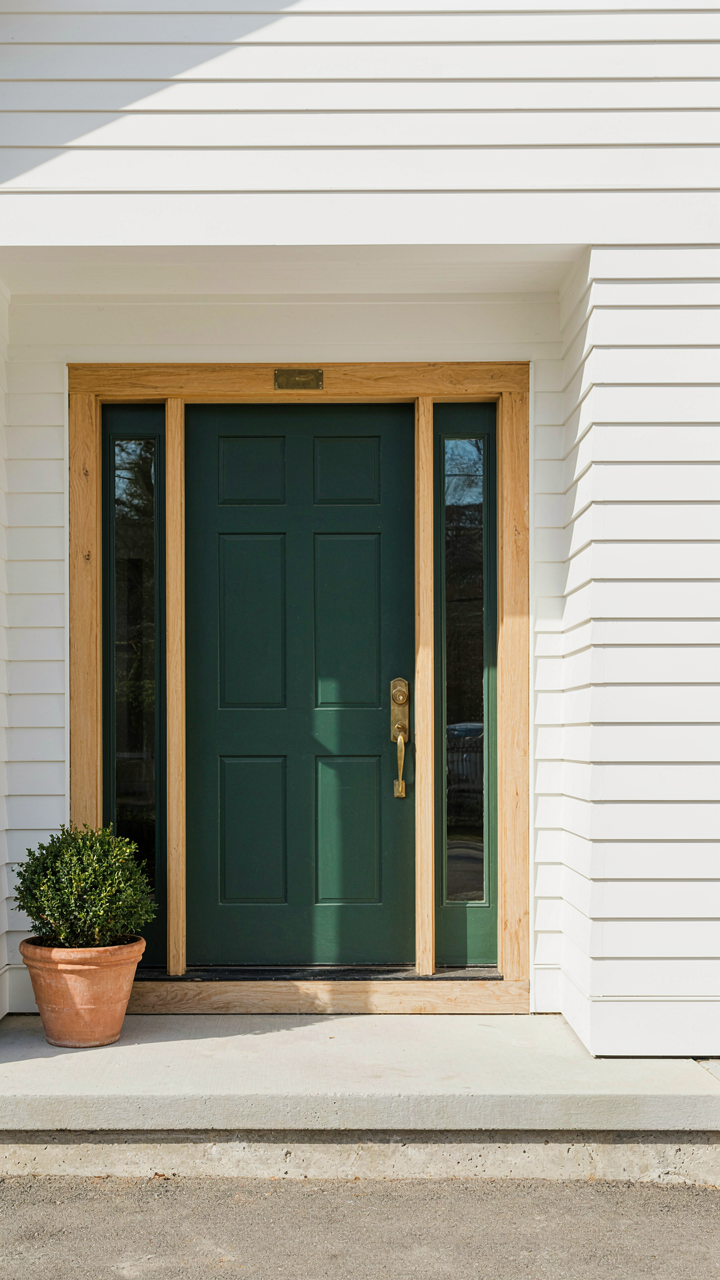
When Green Works As Your Anchor
You want the door to signal taste without screaming for attention. A bold green door on a farmhouse functions like a load-bearing wall in architecture—it carries the visual weight of the entire entry and allows everything else to remain neutral. The mechanism is contrast hierarchy. When you commit to one saturated color at the threshold, the eye stops searching. White siding, natural wood trim, and muted stonework all recede into support roles.

Deep greens work because they echo the landscape without mimicking it exactly. Forest green, sage, or even hunter green reads as intentional rather than accidental. The door becomes the focal point by design, not by accident. This matters because a farmhouse entry that tries to be interesting everywhere ends up interesting nowhere. Pick one element to dominate. Let the rest follow.
Color Pairings For Doors On White Houses
White houses need color strategy, not color guessing. The common advice says “use what feels right.” Wrong. What feels right often means what you’ve seen in three Instagram posts. Use complementary color theory instead. A white house with a green door needs supporting colors that don’t fight for dominance.
- Deep Forest Green With Black Hardware: Black hinges and handles ground the green and prevent it from floating. Creates a visual anchor that reads as intentional craft rather than decorative choice.
- Sage Green With Brass Or Copper Accents: Warmer metals soften sage without diluting it. The metallurgical warmth bridges the cool green and the cool white, preventing visual strain.
- Hunter Green With Natural Wood Frames: Wood trim around the door echoes the timber element and prevents the green from appearing isolated against white siding.
- Muted Olive With Charcoal Shutters: Shutters in a darker tone than the door create depth and prevent the entry from reading as a single flat plane. The olive softens farmhouse severity.
- Emerald With Stone Or Brick Surround: If your house has stone or brick at the entry point, emerald green deepens the complexity and connects the door to existing materials.
The pairing rule is mechanical: no more than three colors in your entry zone, and each color must repeat at least twice. This prevents the door from feeling like a random addition. When you finish the color selection, check it in three light conditions—morning, noon, and overcast. A green that works at noon can flatten in shadow.
Beyond The Generic: Cultivating Distinctiveness

Where Your Region Actually Matters
You want your door to feel authentic because a generic farmhouse door reads as insecure. Here’s the mechanism: regional architecture emerges from climate, available materials, and building codes that evolved over decades—not from aesthetic preference. A farmhouse door in the Midwest looks nothing like one in the South because the problems they solve are different.

Study the doors built before 1950 in your specific region. Pennsylvania farmhouses used heavier timber frames with narrower glass panels because winters demanded thermal mass. Texas Hill Country doors stayed simpler with wider glass because the priority was cross-ventilation and visibility across open land. Your region’s vernacular isn’t a style choice—it’s the record of what actually works there. Match that logic, not a Pinterest algorithm.
Stripping Away What Fades
Most farmhouse design advice tells you to avoid trends. That’s incomplete. The real mechanism is this: trendy elements signal a specific moment in time because they solve problems that didn’t exist five years ago. A reclaimed barn door sliding on modern hardware reads as 2015 because that’s when Instagram made it viable. A solid timber door with glass panels reads as timeless because it solves the original problem: secure entry with natural light.
Timeless doesn’t mean boring. It means the function justifies every detail. Heavy timber frames stay relevant because they perform structural work. Divided glass panes matter because they manage thermal movement. Hardware that shows its fasteners remains current because it’s honest about how the door works. When every element serves a mechanism instead of a trend cycle, your door stays relevant regardless of what design magazines publish next year.
The Real Obstacle Isn’t Finding The Right Door; It’s Overcoming Your Fear Of Originality
You’re scrolling through farmhouse door photos right now because you want permission to build something that actually reflects who you are. Stop waiting. Pull up three doors you genuinely love, not the ones Pinterest ranked highest. Notice what they share. That’s your starting point. Your front door doesn’t need to match everyone else’s to work. It needs to match your home and your nerve.