
The Visual Algorithm: Why Batten Board Walls Work (Beyond Aesthetics)
Vertical Lines Control How Eyes Move Through Space
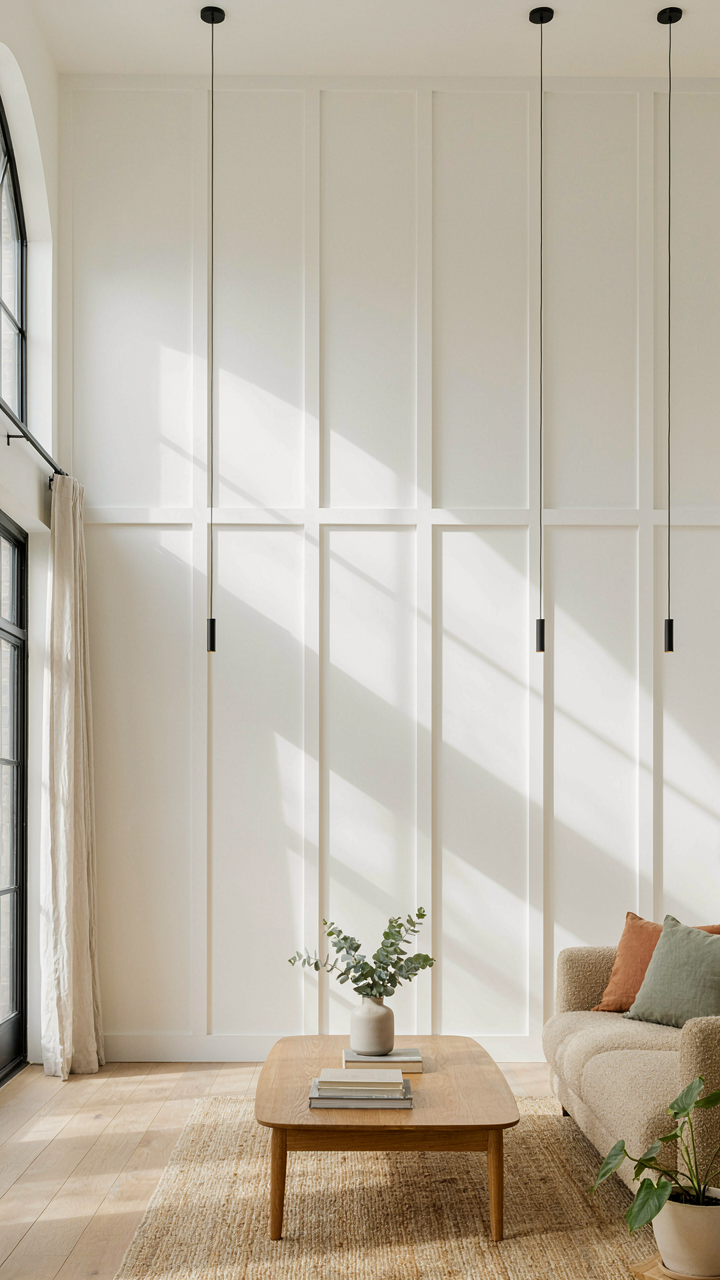
You want this to look intentional, not like you’re covering up cheap drywall. The real mechanism here is visual rhythm, borrowed straight from graphic design: battens function as leading lines that force the eye upward and segment wall space into digestible zones. A 1.5-inch batten spaced 16 to 24 inches apart creates a repeating vertical module that makes rooms feel taller because your eye travels the length of the batten before your brain registers the wall’s actual dimensions.
Farmhouse interiors pair battens with horizontal wainscoting or let them run floor to ceiling to anchor the eye. The spacing matters more than the batten width. Tighter spacing (16 inches) increases visual frequency and amplifies height perception. Wider spacing (24 inches or more) reads as modern and deliberate rather than decorative, which changes how the entire room registers. Install battens perpendicular to your longest sight line to maximize this effect and control which direction you want attention to travel.
Shadow Play Creates Perceived Depth Without Material
Most advice skips this: battens don’t add texture through their shape alone. They add texture through shadow. A 1.5-inch batten casting a quarter-inch shadow on a flat wall creates a visual break that reads as dimensional even under flat overhead lighting. This is pure contrast. The deeper the batten profile and the more directional your light source, the darker the shadow and the more aggressive the depth illusion becomes.
Farmhouse board and batten walls solve a real problem in rooms with poor natural light by creating artificial dimension through controlled shadow. North-facing rooms benefit from deeper batten profiles (2 inches or more) because they receive less direct sun. East or west-facing rooms can use shallower profiles (1 to 1.5 inches) because morning or afternoon light intensifies shadows. The shadow is the mechanism that transforms a flat wall into a textured surface without changing material composition.
Deconstructing The “Farmhouse” Myth: Raw Wood Panel Modern Application
What Farmhouse Actually Means
You want permission to use imperfect materials without looking cheap. That’s the real driver here. The mechanism is simple: farmhouse board and batten walls work because they flatten the visual hierarchy of a room. Unlike drywall, which demands perfection, board and batten forgives surface irregularity by design. The vertical battens break up wall space into sections, making minor texture variations disappear into the pattern itself. This is load distribution applied to interior surfaces, not structural weight.

Farmhouse emerged from necessity, not aesthetics. Nineteenth-century rural homes used boards because they offered better insulation than lath and plaster, and battens sealed gaps where boards inevitably shifted with humidity. The look people chase today is actually the byproduct of a practical solution to a material problem. When you install board and batten now, you’re borrowing that same problem-solving logic, not recreating a “style.” The texture you add to farmhouse walls works because the battens already acknowledge that walls don’t need to be perfectly flat to function.
The Honest Material Problem
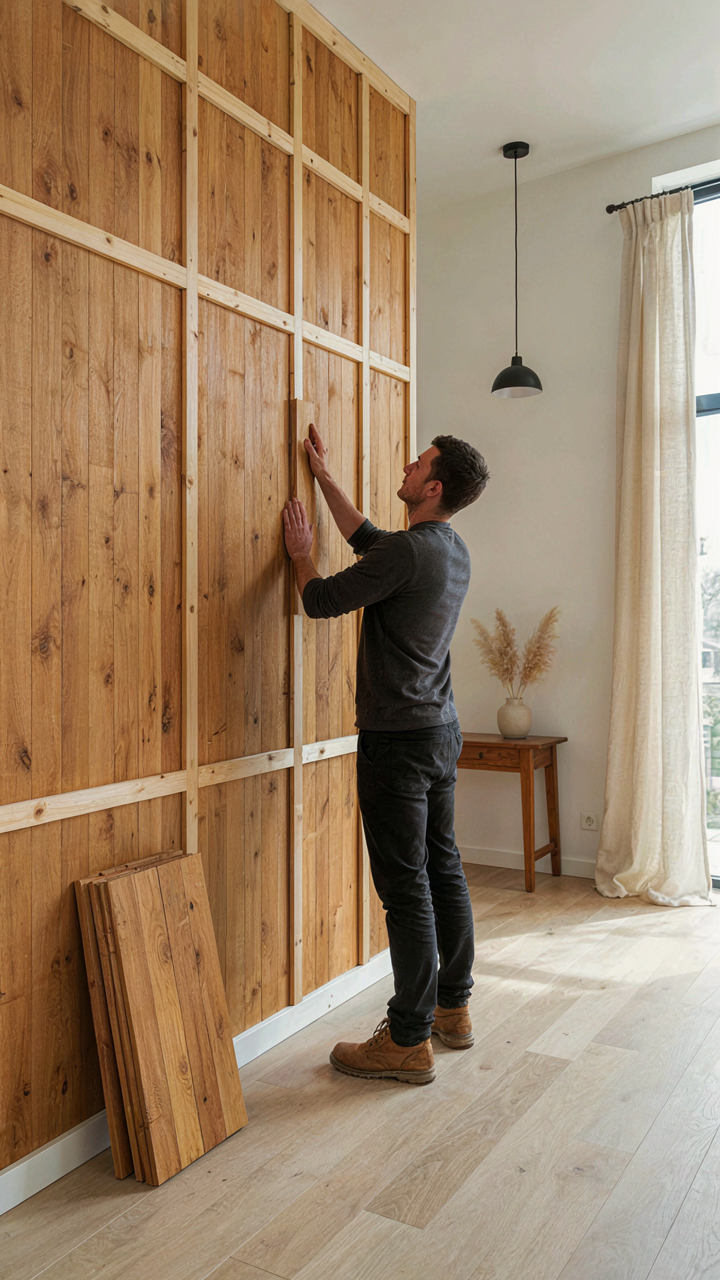
Stop pretending wood is just wood. Different species, cuts, and finishes behave differently under light and humidity. Farmhouse board and batten succeeds because the material honesty is built in. You use solid wood or authentic plywood facing, not veneers that pretend to be something they’re not. The battens serve a structural purpose, which means they’re not decoration trying to hide something ugly. They’re visible solutions to real joinery challenges.
The grain, knots, and color variation in real boards become features instead of flaws when you work with the material’s actual properties. Paint conceals nothing because there’s nothing to conceal. If you use knotty pine, those knots stay visible under most finishes. If you use poplar, the softer grain reads differently under light than hardwood does. Your texture choice in the room works with this honesty because textured paint or fabric on adjoining surfaces echoes the board’s directness, rather than fighting against it. Install boards vertically, space battens 16 to 24 inches apart depending on board width, and let wood movement happen instead of fighting it with rigid fastening.
The 3 Tiered Paneling Protocol For Dynamic Rooms
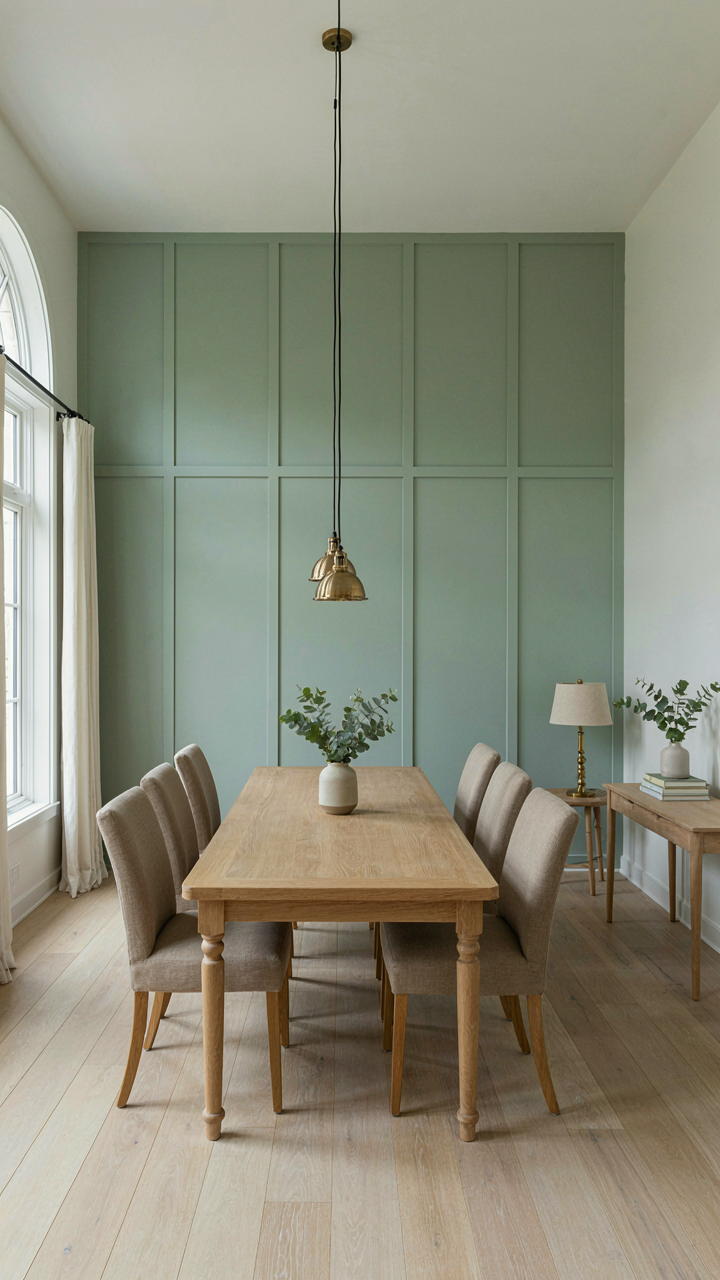
Going Full Wall With Purpose
You want full coverage because you think it fixes the room. It doesn’t. Full-wall board and batten works like load distribution in structural engineering: the visual weight spreads evenly across the entire surface, which means it either anchors the space or flattens it depending on how you install it. The difference lives in the rail placement and spacing.

Full immersion requires you to commit to proportions. Install the horizontal rails at one-third and two-thirds height, not arbitrary points. This mirrors the classical rule of thirds in composition and prevents the wall from reading as a blank backdrop. The batten spacing stays consistent top to bottom, typically three to four feet apart for residential farmhouse interiors, which creates rhythm rather than visual noise.
Breaking The Wall Into Zones
Half wall accents don’t belong in living rooms by accident. They’re territorial markers. You use them to separate seating areas, frame a fireplace, or define a reading nook without building drywall. The real mechanism: board and batten at chair rail height creates a visual boundary that the eye recognizes as a functional edge, even when the floor stays open.
Stop at 32 to 42 inches high for a half wall treatment, which positions the top rail near shoulder level when seated. This is the sightline threshold where your brain registers containment. Mount the accent board and batten on just one wall or two adjacent walls depending on the room’s traffic patterns and furniture layout. The untreated walls stay simple, creating contrast that makes the paneled zone command attention without overwhelming the entire room.
Texture As Data: The Information Theory Of Wall Paneling
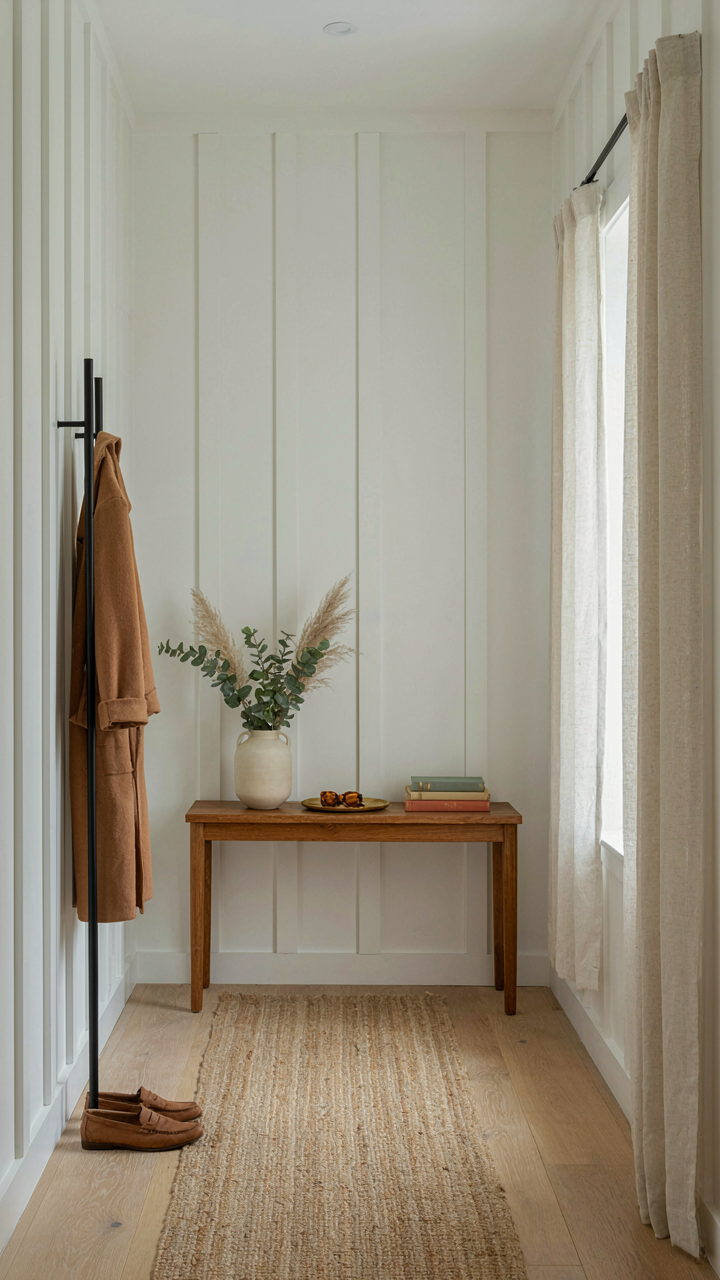
How Much Visual Information Do You Need
You want texture on your walls because you believe it signals authenticity and taste. Here’s the mechanism: texture density functions as signal-to-noise ratio in information theory. A smooth drywall wall transmits minimal data. Your brain registers emptiness. Board and batten walls transmit consistent, readable data through the vertical lines and shadow gaps, which your visual cortex processes as intentional structure rather than blank void.

The practical implication is this: more texture isn’t better. Farmhouse board and batten works because the vertical boards create predictable intervals. Your eye tracks the rhythm. Too much surface variation creates visual static instead of clarity. The spacing between battens, typically four to eight inches, sits in the optimal range where your brain perceives order without fatigue. Install boards too close together and you lose the signal. Install them too far apart and the wall reads as bare again.
Where The Room Talks Back To Itself
Textured walls don’t sit idle. They generate feedback loops between light, shadow, and perception. When you introduce board and batten, you’re not just adding surface dimension. You’re creating a system that responds to time of day, light angle, and your own movement through the room. The shadow gaps between batten strips and boards shift throughout the day, changing how the wall reads without you touching anything.
This feedback loop matters because it makes the room feel responsive and alive rather than static. Morning light hits the wall one way and emphasizes depth. Afternoon light flattens it slightly. Evening light erases most shadow definition. Your brain registers this as the wall having agency, which is why textured farmhouse rooms feel more inhabited than smooth ones. The mechanism is simple: position vertical battens to catch north-facing or diffused light to maintain consistent shadow definition regardless of time. This stability makes the visual feedback loop predictable and restful rather than chaotic.
Accent Wall With Window On One Side: Amplifying Natural Light
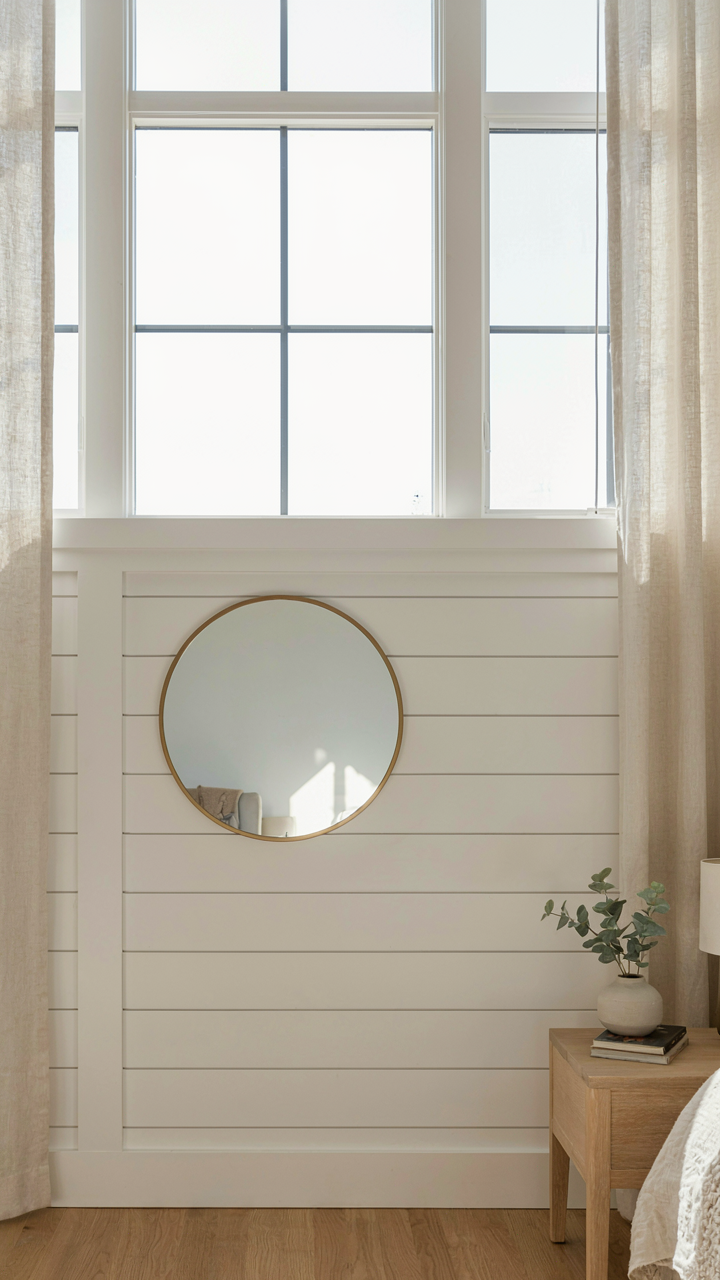
How Batten Angle Changes Light Behavior
You want the room to feel bigger without renovating. Here’s what matters: vertical battens on a windowed wall don’t amplify light—horizontal ones do. Light physics calls this reflection angle, and board and batten walls work like a prism. Horizontal battens create shadow lines that break up wall surface, making bouncing light visible rather than dead. Vertical battens swallow light into their grooves.

Install battens horizontally on the wall containing the window. Space them 16 to 24 inches apart, matching standard stud spacing for structural integrity. This spacing creates consistent shadow intervals that catch and redirect incoming light across the room’s depth. The window becomes the light source, battens become the distributor. Paint battens white or off-white to amplify this effect without gimmick.
Reflective Surfaces Placed Strategically
The common advice says “add mirrors.” That’s lazy. Mirrors work only if they reflect light back into the room’s functional zones, not into your eyes or empty corners. Placement beats size. Position a mirror on the wall perpendicular to your windowed accent wall, angled to catch morning or afternoon light depending on your window’s orientation. The mirror doesn’t create light—it redirects battens’ shadow pattern and reflected glow toward seating areas or work surfaces where people actually spend time.
Pair the mirror with board and batten in matte finish, not glossy. Gloss creates competing reflections that flatten the effect. Matte battens absorb some light while the mirror returns it, creating depth layering. Measure your window’s light arc throughout the day before mounting. Place the mirror where reflected light lands at eye level or on task surfaces—that’s where the amplification serves a purpose, not just the room’s appearance.
Beyond Paint: The Material Science Of Board And Batten

Which Wood Species Actually Survives
You want to know which wood looks best because you’re afraid your walls will rot in five years and you’ll look incompetent. The real mechanism here is density. Denser wood resists moisture penetration and mechanical wear, which is why species matter more than finish. Southern yellow pine dominates farmhouse installations not for aesthetics but for its combination of density and dimensional stability. White oak and poplar also perform, though poplar absorbs moisture faster and shows movement more visibly. Grain pattern becomes a visibility issue only after you’ve chosen a species dense enough to last.

The grain you see tells you something functional. Open grain in species like white oak means more surface area for finish to grip, but also more space for moisture to lodge if your topcoat fails. Tight grain in pine seals faster and hides minor imperfections better. Most farmhouse designs exploit this by running batten boards vertically, which channels water down and away from the grain rather than across it where moisture pools. Pick your species first based on availability and density, then align grain direction with water flow. Installation angle matters more than the wood’s visual character.
Finishing Techniques That Actually Prevent Failure
Most advice about farmhouse finishes is incomplete. You hear “primer and paint” like it’s protective magic. What actually stops degradation is this: you need a vapor barrier, not just a top coat. Paint alone traps moisture inside the wood, which swells, splits, and delaminates from the batten. The standard protocol is primer with mildew inhibitor (oil or acrylic-latex hybrid), then two coats of quality exterior paint rated for wood. The primer blocks tannin bleed from wood and creates adhesion for top coats.
The real durability play requires annual inspection and touch-up. Batten joints expand and contract seasonally, and primer or caulk eventually cracks at these points. Water finds the gap, penetrates, and you have a hidden failure site. Run paint or stain down the battens themselves, not just the field, because the batten edge is where moisture enters first. Sand lightly between coats to break gloss and improve adhesion. The mechanism that prevents farmhouse board and batten from failing is consistent topcoat maintenance on exposed edges, not the product choice alone.
Wall Paneling Ideas Small Living Room: Maximizing Perceived Volume
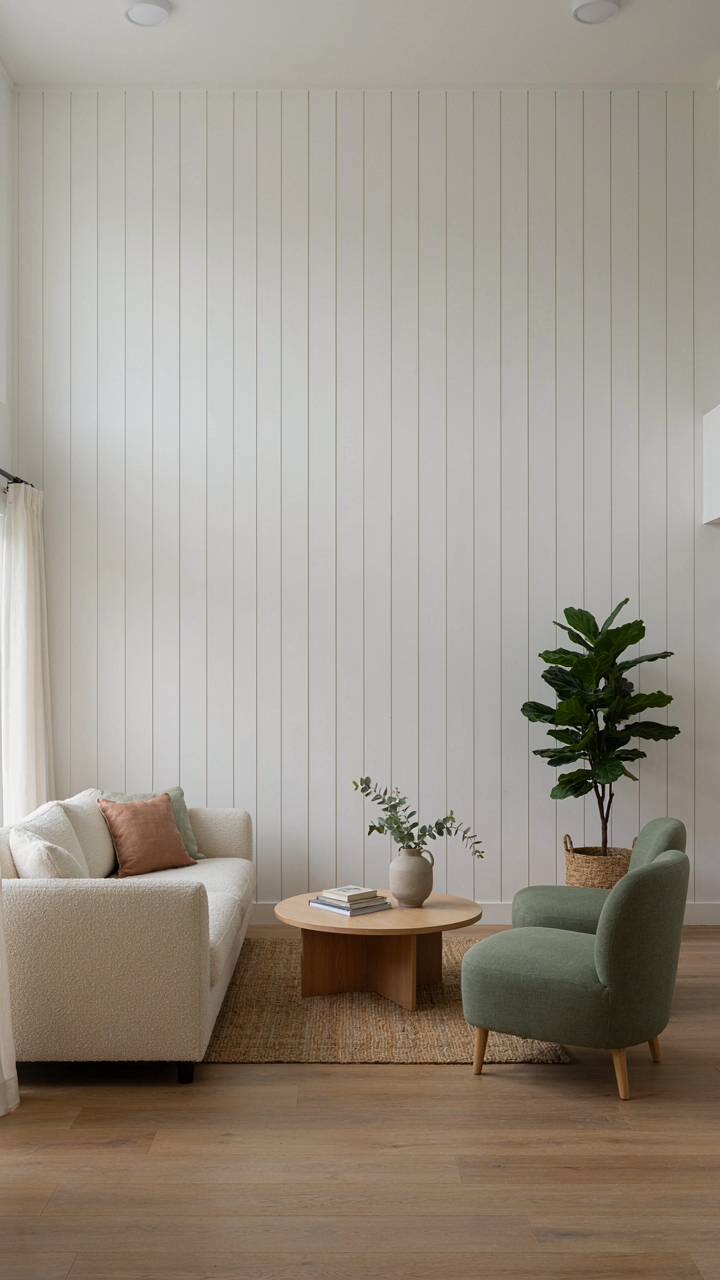
The Vertical Illusion That Actually Works
You want your room to feel bigger without moving walls or dropping money on renovation. The mechanism is simple: vertical batten lines interrupt the horizontal plane and force your eye upward, which your brain registers as increased ceiling height and therefore more usable space. This isn’t psychology. It’s geometry. A small room with ten-foot ceilings feels cramped. The same room with visual lines that emphasize height feels open because you’re using the vertical dimension you already own.

Board and batten wall paneling achieves this through pure structure. The batten strips run floor to ceiling, creating unbroken vertical channels. Unlike wallpaper or paint treatments that fake the effect, actual battens cast shadows that reinforce the illusion. Space between each batten should stay consistent, typically sixteen to twenty-four inches apart depending on wall width. Irregular spacing breaks the rhythm and collapses the effect. Install them plumb, not by eye.
Monochromatic Color Strategy For Continuity
Most small room advice tells you to paint everything the same color for seamless flow. That’s incomplete. What matters is eliminating contrast breaks, not eliminating color variation. Monochromatic schemes work because they remove the visual “cuts” that divide a space. When board, batten, and wall share the same color family, your eye travels uninterrupted.
Paint the batten strips the same tone as the wall or one shade lighter. Avoid stark white battens against soft gray walls. The contrast reads as visual noise in a confined space. Use finish consistency as your tactic. Matte or eggshell on both surfaces ensures light reflects uniformly. If you paint battens semigloss while walls stay matte, the shininess creates visual separation that cancels your space-expansion work. One unified surface treatment keeps the eye moving through the room instead of stopping at panel edges.
Home Accent Wall Ideas: The Psychology Of Focal Points

Where Your Eye Lands First
You want people to notice the room you designed, not the bare drywall. That’s the honest motive here. Farmhouse board and batten walls work as visual anchors in the same way military strategists use terrain to control movement. The paneling creates a physical hierarchy that forces attention toward a specific wall before the eye can wander. This happens because vertical lines interrupt horizontal space. Your brain registers vertical divisions as intentional boundaries, not accidents. When you install board and batten on one wall, you’ve essentially drawn a map for where attention should stop.

The mechanism is simple: contrast plus structure equals focus. A paneled wall differs from plain drywall in texture, shadow, and material weight. Your eye reads this difference as importance. The spacing between battens creates a rhythm that holds attention longer than smooth walls do. Install board and batten on the wall opposite the room’s entry point. Make it the first visual statement someone encounters. This positioning makes the focal point automatic, not negotiable.
Breaking The Visual Noise Trap
The common mistake is paneling every wall because one wall looked good. That’s not design, that’s decoration overload. Farmhouse board and batten walls only work as focal points when they contrast with their surroundings. Rooms with board and batten on multiple walls stop communicating hierarchy. They become visual noise instead of visual direction. The eye has nowhere to rest because everywhere demands equal attention. This kills the entire purpose of using paneling.
Restraint is the actual lever. One paneled wall in a room creates order. Two paneled walls in the same space create confusion. Paint the remaining walls a lighter or neutral tone so the board and batten reads as distinct, not repetitive. The wall without paneling should recede visually. This makes the paneled wall advance. Keep the batten width consistent (typically 1 to 1.5 inches on farmhouse designs) and space them 16 to 24 inches apart. This standardization prevents the wall from feeling chaotic.
Cottage Wall Art Ideas: Integrating Art With Dimensional Walls

Art Placement Relative To Batten Rhythm
You want your gallery wall to look intentional instead of like you filled empty space. The real mechanism is visual weight distribution. Battens create vertical lines that divide the wall into zones. These zones become your grid. Ignore them and your art floats without anchor. Work with the batten spacing, not against it.

Treat batten placement like a musical staff in graphic design. Each batten is a line that either grounds or destabilizes your artwork. Center paintings on the board sections between battens rather than straddling them. Stagger pieces so they respect the vertical rhythm the battens already established. The wall does the compositional work for you if you stop fighting it.
Curating Art For Textural Harmony
The common advice here is wrong: you don’t need “soft” or “muted” art to complement textured walls. Busy walls need bold, high-contrast pieces. Competing textures cancel each other out only when nothing is distinct. High contrast creates visual clarity where dimension already exists.
Choose artwork with strong edges and defined subjects. Portraits, geometric prints, and pieces with clear foreground and background elements work better than abstract washes or soft landscapes. Mount art in frames that interrupt the wall’s depth rather than blend into it. The frame becomes a visual brake that stops the eye and makes the board and batten dimension serve your composition instead of overwhelming it.
The Unseen Value: Board And Batten As Long Term Investment

How Board And Batten Moves The Needle On Resale
You want to know if this investment pays back because you fear dropping money on something purely aesthetic. Here’s the mechanism: board and batten addresses a real market signal. Buyers perceive textured walls as intentional design rather than default drywall, which signals maintenance and deliberation. That perception shifts comparable property pricing upward because it suggests the owner cared about detail work throughout the home.
- Historic Authenticity Premium: Farmhouse properties with period-correct board and batten command higher perceived value than those with flat drywall, since the treatment reads as original or respectfully restored rather than generic.
- Visual Texture As Quality Indicator: Buyers unconsciously link textured walls to older construction methods and craftsmanship, triggering an association with durability and intent that flat surfaces don’t trigger.
- Photography And Marketing Edge: Board and batten photographs distinctly in natural light, creating visual depth that standard walls lack. This matters for online listings where first impression drives inquiry volume.
- Room-By-Room Application Value: Installing board and batten selectively in high-traffic or statement rooms maximizes ROI by focusing buyer attention on intentional spaces without the cost of full-home coverage.
- Durability Story In Resale: Textured walls hide minor wall imperfections and show less dust accumulation, which translates to lower perceived maintenance burden for incoming buyers evaluating the home’s actual condition.
The economics work because you’re not just changing appearance. You’re correcting a market inefficiency where buyers undervalue textured walls until they see them. A room with board and batten reads as finished. One without reads as incomplete.
The Actual Math On Doing It Yourself
Most advice here is garbage because it ignores skill acquisition time as a real cost. The common narrative says DIY saves thousands, but ignores that your first room teaches you methods you’ll refine on subsequent rooms. A professional completes the first room at the same speed as your fifth, then charges you that rate for all five.
Your break-even point depends on room count and wall condition. If you have three rooms with reasonably flat walls and existing trim, DIY makes tactical sense because you amortize learning time across enough square footage. If you have one textured room with uneven walls and existing obstacles, a professional absorbs risk while you keep your weekend. The material cost differential between DIY and pro is negligible. The time cost is real.
Your Fear Isn’t Bad Design; It’s The Wasted Effort Of Following Diluted Advice. Master The System, Not The Style

Stop hunting for the “perfect” farmhouse board and batten wall. You don’t need another inspiration board. You need one rule: proportion drives everything. Get your vertical spacing right, and the texture handles itself. Measure twice, cut once, install with conviction. Pick up a level today and nail three boards on one wall. The system works when you do. Farmhouse board and batten isn’t a look you chase, it’s a ratio you execute.