The Authenticity Illusion: Why Your “Farmhouse” Swing Falls Flat
When Manufactured Charm Becomes The Enemy
You want people to see your porch and think you have taste, history, and roots. That’s the real driver. Here’s what breaks: farmhouse aesthetic became a consumer category around 2010, which means every manufacturer now sells the same distressed-wood-and-metal formula. Your swing looks authentic because it was designed in a factory to feel that way. The mechanism is pure signal collapse. When everyone signals the same thing, no one stands out.
Real farmhouse design emerged from constraint and geography, not intention. A 1920s Nebraska farmer bought what worked and lasted. He didn’t curate a look. Manufactured farmhouse swings reverse this: they start with the look and engineer backward to “rustic” materials. The finish is calculated. The wear is fake. You’re buying someone else’s aesthetic template and calling it character. Recognize this first. Then you can actually build something worth sitting in.
The Material Sourcing Problem Nobody Names
Reclaimed wood became a status signal the moment it hit design blogs, which means its scarcity disappeared and its price climbed. You pay premium money for barn wood that’s often kiln-dried, sanded, and refinished so aggressively it has less actual character than new lumber with authentic patina from weather. Sellers market the story, not the material. The narrative sells, not the integrity of the wood itself.
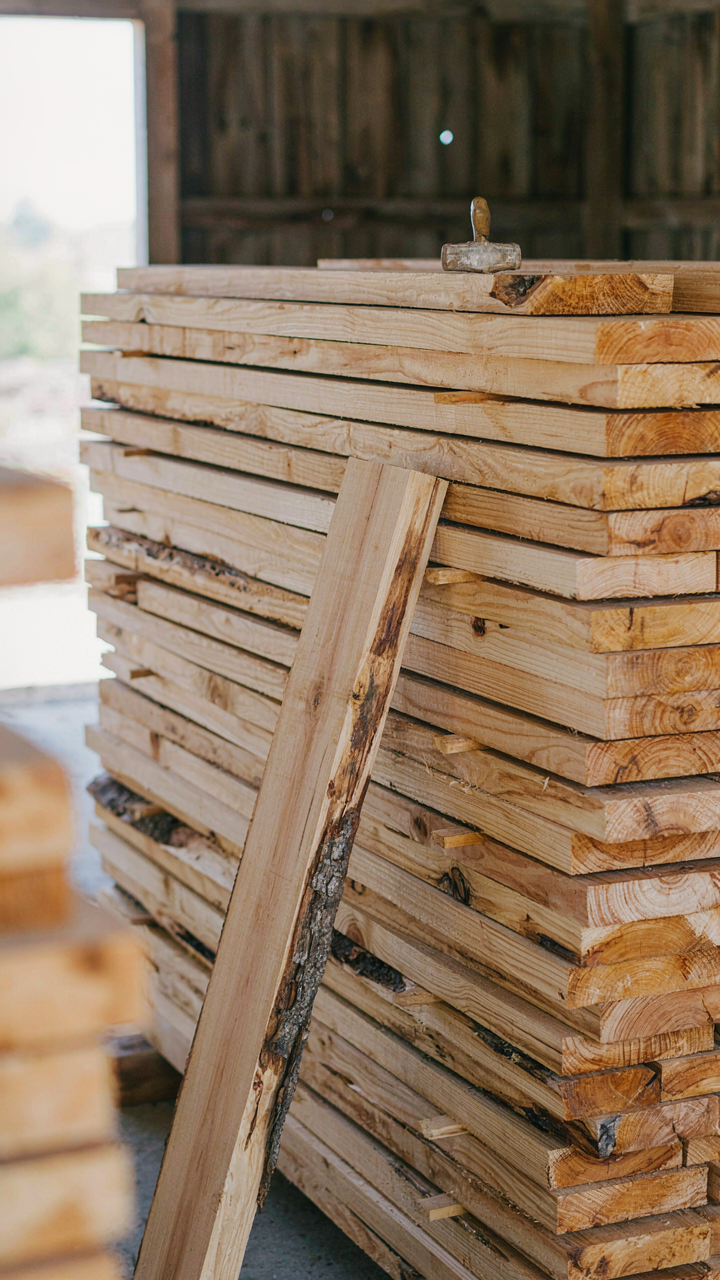
Start with wood that will actually age. White oak, hickory, or locust handle outdoor exposure without rotting and develop genuine character through seasonal cycles. Buy rough-sawn lumber from regional mills, not architectural salvage retailers. The mill marks, the slight color variation, the bark remnants on edges: these come from how the wood was processed, not how old it claims to be. Finish it with oil, not stain. Let summer sun and rain do the work your decorator can’t fake.
The Unseen Engineering: What Makes Porch Swings Last (and Impress)

How Load Gets Distributed
You want people to see your swing and assume you know something they don’t. That confidence comes from understanding what actually holds it up. Physics calls this load distribution, and a porch swing is a simple lever system where the suspension point handles all the force. The chain or rope anchors carry your weight plus the swing’s mass, converting vertical load into tension along each suspension line.

Most people buy chains rated for static weight and assume they’re safe. Wrong. A swinging motion creates dynamic load, which spikes higher than your body weight alone. When you push off or shift your weight, the suspension experiences force multiplication. This is why proper anchor spacing matters more than chain thickness. Distribute the load across multiple mounting points on the beam, and the system forgives poor material choices. Concentrate it on one bolt, and even good chain fails.
Materials That Decay Slower
Most advice stops at wood versus metal and calls it done. That misses the mechanism entirely. Decay happens at the material boundary where moisture and oxygen meet, not uniformly across the surface. A hardwood like oak resists decay longer than pine, but only if you interrupt the moisture cycle through finish and design.
Traditional farmhouse swings used hardwoods and accepted seasonal expansion and contraction as inevitable. Modern builds try to stop it entirely, which creates stress at joints. The real move is selecting materials that work together rather than fighting each other. Galvanized steel hardware outlasts painted iron because the coating doesn’t crack under wood movement. Chains last longer than rope because they don’t absorb water. When materials move at different rates, the faster-decaying one determines the whole system’s lifespan. Inspect and reseal the wood annually, replace hardware before rust shows, and the swing stays functional for decades.
The “Modern Farmhouse Porch” Paradox: Blending Eras, Not Confusing Them
When Modern Clashes With Rustic
You want the aesthetic credibility of old without the actual decay. That’s the real tension here. The mechanism at work is architectural dissonance—borrowed from design theory, it’s the friction between two incompatible visual languages occupying the same space. Most porches fail because they treat old and new as interchangeable, when the actual move is recognizing what each era communicates and why it works.

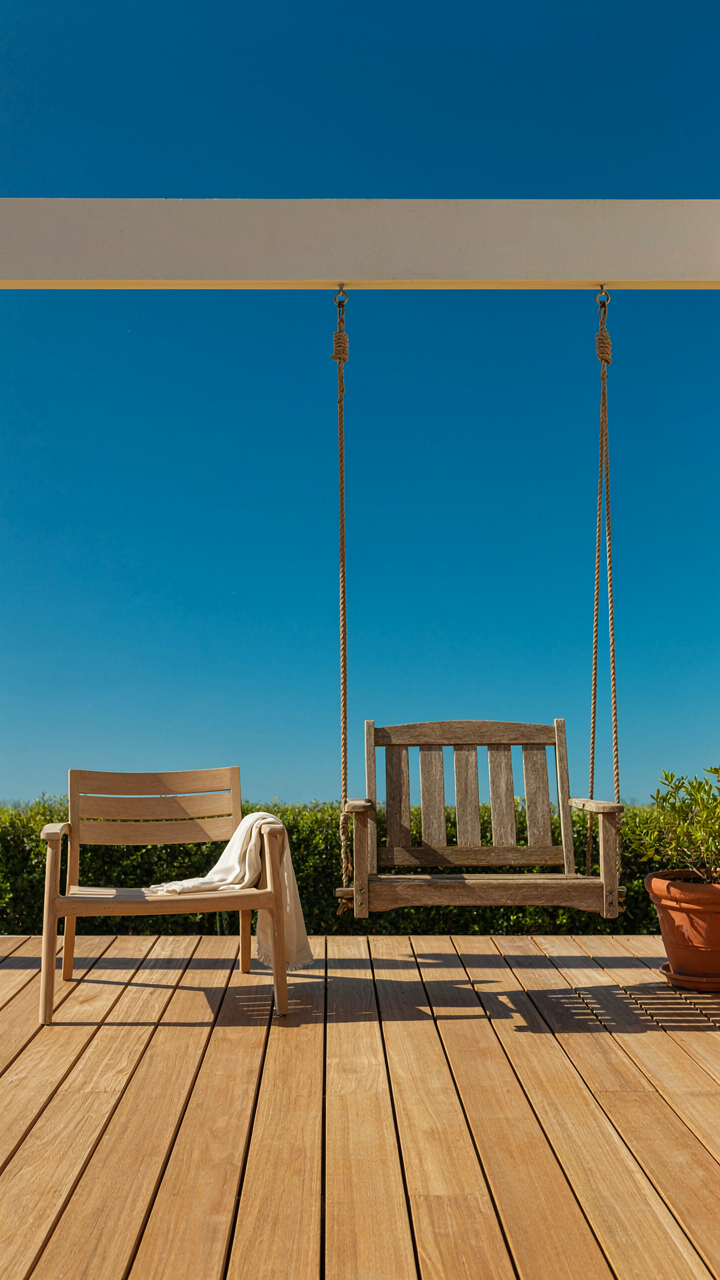
A farmhouse porch swing doesn’t live in a vacuum. It sits against siding, beneath eaves, next to railings. When you place a weathered wood swing against vinyl cladding or composite materials, the mismatch broadcasts confusion. The solution isn’t splitting the difference with “transitional” everything. It’s choosing which era owns the dominant visual weight, then introducing the other as a calculated accent. One system leads, one supports.
Strategic Contrast For Real Impact
The common advice says “blend everything smoothly.” That’s wrong. Intentional contrast works because it signals choice, not accident. Use visual opposition as the actual design mechanism. A modern farmhouse porch uses this principle: original stone or brick foundation, contemporary deck materials, then a classically proportioned swing as the focal point. The swing becomes readable because it sits within clear visual hierarchy, not muddled compromise.
Place your swing where it interrupts the eye cleanly. Hang a swing from recessed modern hardware but use rope or chain that reads as traditional. Modern deck chairs frame it, not replace it. The swing’s job is to anchor the space as intentional, not to blend into invisibility. This contrast creates the illusion of depth and intentionality that actually reads as high-design to viewers, even if they can’t articulate why.
The Anti Trend Protocol For Front Porch Swings Ideas
What Actually Lasts Versus What Sells This Season
You’re worried you’ll pick the wrong style and look foolish in three years. Here’s what nobody admits: most porch swing advice exists to move inventory, not to help you build something that works. The mechanism is simple. Trend cycles move faster than wood degrades. A swing that follows 2024 farmhouse aesthetics will feel dated by 2027. But a swing built on material durability and spatial logic stays functional and honest regardless of what Instagram decides is fashionable.

The difference between fad and principle isn’t about being timeless. It’s about separating what works from what photographs well. A wooden porch swing with proper joinery and grade lumber solves a physical problem: you need a place to sit that moves slightly, supported by your porch structure. That problem hasn’t changed in 150 years. Trends, by contrast, are solutions to a social problem: the need to signal belonging. Concrete swings, rope attachments, and color choices come and go. Load bearing capacity and wood species do not.
The Choices That Survive Seasons
A swing meant to last decades requires you to make decisions based on structural failure modes, not aesthetic preference.
- Wood Species Selection: Use kiln dried white oak or teak, not pine or popular. These resist weather and insect damage for 20+ years. Softwoods rot within 5-8 years in exposed conditions.
- Hardware Grade: Stainless steel or galvanized attachment hardware prevents rust that weakens connections. Cheap hardware fails first, forcing replacement before wood does.
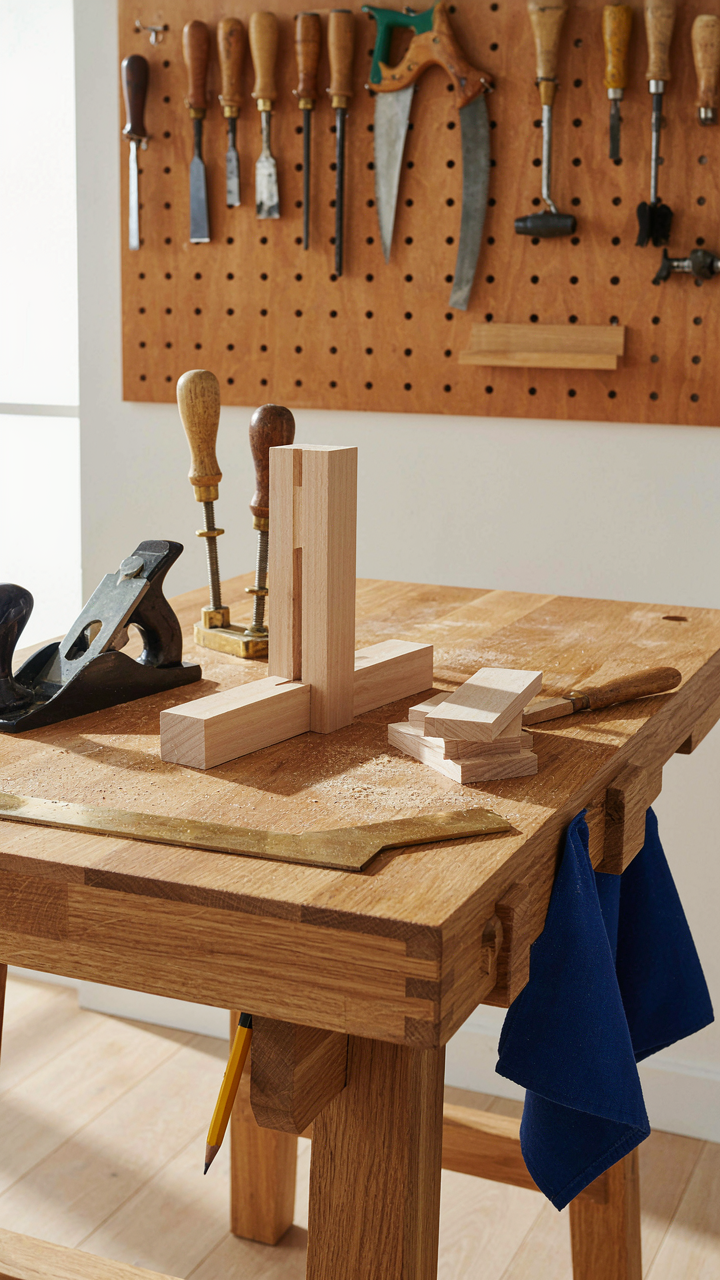
- Joinery Method: Mortise and tenon joints with wooden pegs outlast bolted construction. Bolts loosen over freeze-thaw cycles. Wood joints tighten as wood expands and contracts.
- Seat Depth and Angle: 26 to 30 inches of seat depth and a 5 to 10 degree recline angle work biomechanically. These measurements come from anthropometric data, not design preference, and won’t shift with trends.
- Suspension System: Lag bolts through existing porch framing beat hanging chains from uncertain points. Direct mounting transfers load predictably and inspectably.
Legacy swings get built by choosing based on failure patterns, not fashion cycles. Before you select colors, finishes, or arm styles, nail down the materials and mechanics that determine whether the swing will still function in 2035. The aesthetic choices you make now won’t matter if the wood cracks or the joints separate. Make the structural choice first, then pick the finish that aligns with your home’s actual condition and your maintenance capacity.
Rustic Front Porch Ideas: The Art Of Deliberate Imperfection

Patina And Weather Marks Tell Time
You want permission to stop fixing things. That’s the real draw here. Patina works because it signals authenticity in a culture drowning in artificial newness. Think of patina like geological layering in earth science: each visible stratum represents time compression. A weathered swing doesn’t look broken. It looks lived-in, which costs nothing but actually commands more respect than pristine furniture you bought last month.

The mechanism is simple. Wood exposed to sun, rain, and use develops a darkened surface layer. This isn’t decay. It’s oxidation and mineral accumulation. A farmhouse porch swing with visible weathering reads as vintage even when it’s five years old. Stop sanding it smooth. Let the grain darken unevenly. Paint cracks enhance rather than diminish the piece because they prove the wood moved through seasonal cycles. This visual evidence of time passing is what separates a swing from looking like a catalog photo.
Intentional Misalignment Over Matched Pairs
The decorator industry sells symmetry as law. Symmetry is actually the opposite of what farmhouse design demands. Asymmetry creates visual tension that holds attention longer than perfect balance. A swing hung slightly off-center on the porch, paired with a single side table instead of two, generates intrigue. Your eye stays longer on unbalanced compositions because your brain tries to resolve the tension.
Real farmhouse porches never had matched pairs anyway. Settlers added furniture as they could afford it. They kept what worked. Paint colors varied because they used different batches or brands. Embrace this. Hang your swing from chains of slightly different patina levels. Place the supporting posts at unequal distances from the porch edge. The asymmetry makes the space feel collected, not decorated. Start by removing one matching element from your porch setup this week.
Beyond The Chain: Innovative Porch Swings Hanging Methods

Rope Strength And Knot Theory For Secure Suspension
You want rope instead of chain because it looks better, not because you’ve actually calculated load capacity. Here’s the mechanism: rope fails unpredictably under sustained weight because fibers compress and slip against each other over time, while chain distributes load across linked segments that either hold or break cleanly. A proper farmhouse swing demands rope that matches the physics of your payload, not aesthetics.

Half-inch natural fiber rope (manila or sisal) holds around 1,200 pounds breaking strength, but you never use full breaking strength for suspension systems. Industry standard is a five-to-one safety factor minimum, meaning a 200-pound swing plus occupant requires rope that can take 2,000 pounds. The knot matters more than the rope type. A bowline creates a fixed loop without slipping, a clove hitch grips the anchor point, and a figure-eight follow-through distributes tension evenly across all strands.
Ceiling Joist Integrity And Mounting Architecture
Most people bolt into what looks solid without understanding joist span and load distribution, which is why porches fail under seasonal stress. Joists are wooden beams that support distributed weight horizontally, and a porch swing concentrates all its force into one or two anchor points, creating a structural fault line. You need to find the joist itself, not the drywall or soffits above it.
Locate joists using a stud finder or by probing with a finish nail until you hit solid wood, then verify spacing (typically 16 or 24 inches on center). Mount your swing to the joist with galvanized bolts, not screws, using a through-bolt that goes completely through the joist and fastens with a washer and nut on the opposite side. The swing will settle into its final position within the first few weeks, so check bolt tightness after two weeks and monthly thereafter.
The Ergonomics Of Repose: Why Comfort Is More Than Just Cushions

Your Spine Doesn’t Care About Status
You want people to think you’ve made a smart design choice. That’s not why you’re actually uncomfortable. Biomechanics reveals the real mechanism: your spine maintains a neutral curve when weight distributes evenly across the seat and backrest. A farmhouse porch swing achieves this through seat depth and angle, not material softness. The lumbar spine naturally wants to curve inward. A shallow seat forces posterior pelvic tilt, flattening that curve. Depth matters more than padding.

Seat height matters equally. Your thighs need support from hip to knee without pressure at the back. Standard farmhouse swing seats run 16 to 18 inches high. This aligns your hips and knees at roughly 90 degrees when your feet rest flat. That angle reduces muscular effort in your legs and lower back. The backrest angle should recline 10 to 15 degrees from vertical, not perpendicular. This tilts your head and shoulders back without overextending your neck.
How Support Structures Work
Common advice says more padding equals more comfort. That’s incomplete. True support means the underlying structure holds your body weight without deflection. Padding conceals poor frame geometry. A farmhouse swing needs a solid seat frame, typically hardwood or steel, that doesn’t sag under load. The backrest frame must transfer weight to the suspension points without bending. Sagging frames force your spine into compensation postures, which fatigue muscles over hours.
The suspension system itself is part of the support equation. Chains or rope distribute load across multiple connection points on your body. A two-point suspension creates uneven pressure. Four-point suspension spreads weight across your hips and upper back, reducing localized stress. Steel chains with proper gauge handle this better than rope because they maintain consistent tension and don’t stretch over time. Check that your swing doesn’t tilt forward or backward when occupied. Tilt means the frame geometry is fighting against your body’s natural alignment.
Crafting The Experience: Curating The Slow Summer Evening
What Actually Stops You From Sitting Still
You want permission to do nothing without feeling guilty about it. The mechanism is this: your nervous system doesn’t distinguish between genuine rest and incomplete tasks. A farmhouse porch swing works because it’s a designated container for slowness. The specific location signals to your brain that productivity isn’t the goal here. Friction drops when the environment itself enforces the boundary you can’t enforce alone.

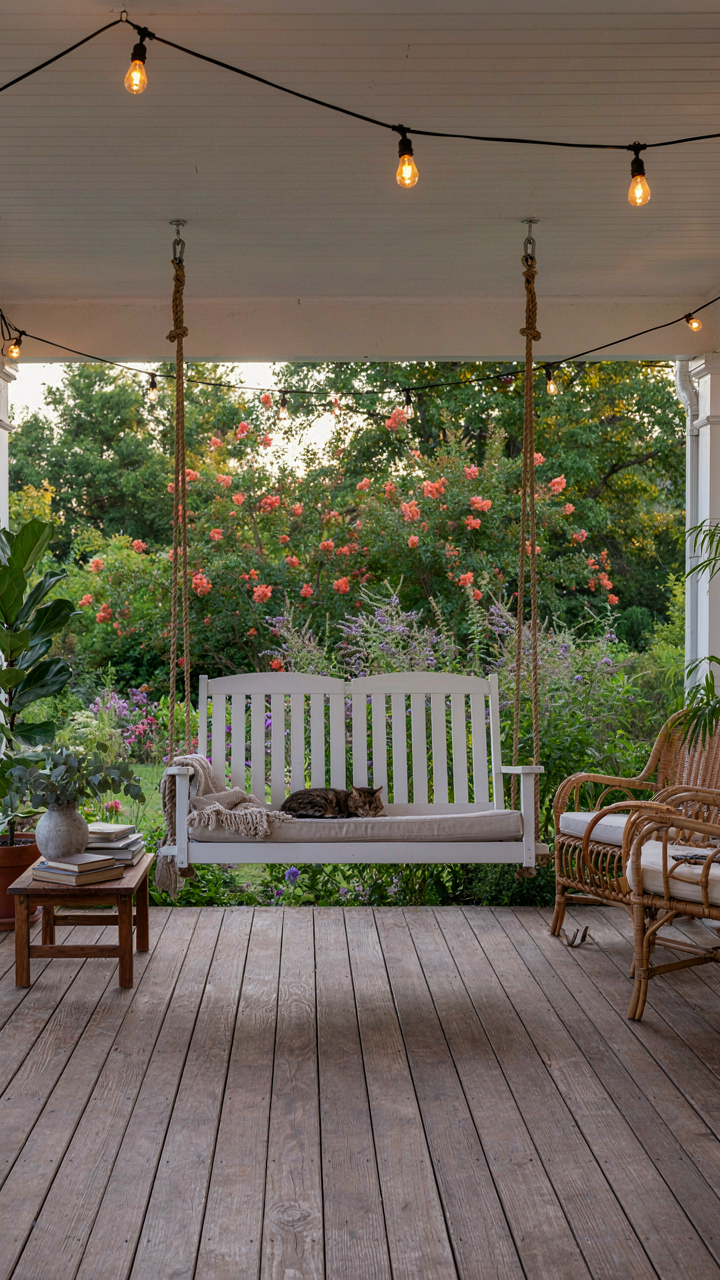
Light, sound, and scent aren’t decorative. They’re the operating system of your relaxation state. Warm amber light from Edison bulbs suppresses cortisol production more effectively than bright white fixtures. The sound of wind through wood or distant crickets masks unpredictable noise that keeps your amygdala alert. Scent hits your limbic system directly, bypassing rational thought entirely. These three elements stack into a sensory protocol that makes relaxation automatic, not aspirational.
The Nervous System Wants Constraint
Neurobiology teaches us about signal-to-noise ratios. A farmhouse porch swing operates as a noise filter. Your visual field narrows. Distractions reduce. The repetitive motion of swinging creates predictable sensory input that your brain learns to trust. Uncertainty drives anxiety. Predictability drives calm. This is why generic chairs fail where purpose-built swings succeed. The design enforces a rhythm your nervous system can anticipate.
The psychology of genuine respite isn’t about feeling comfortable. It’s about removing the requirement to make decisions. A porch swing doesn’t ask you to choose your activity level or posture. The swing’s arc, seat height, and motion parameters are fixed. Your brain offloads decision-making entirely and drops into a parasympathetic state. This is why expensive outdoor furniture doesn’t replicate the effect. Constraint, not luxury, triggers the reset you actually need.
The Real Obstacle Isn’t Finding The Right Swing; It’s Your Fear Of Designing A Space That Challenges The Herd

Most people want a farmhouse porch swing because they saw one online. They copy it. They hate it. The real move is asking what you actually want to feel when you sit down at dusk. Then build backwards from that. Stop scrolling for validation. Pick a swing today. Put it on your porch. Live with it for a week. You’ll know if it’s right. Everyone else’s opinion is noise. Your porch swing doesn’t need to impress anyone but you.