
The Illusion Of Grandeur: Why Most French Fireplace Designs Fail

Aesthetics Without Function Kills Authenticity
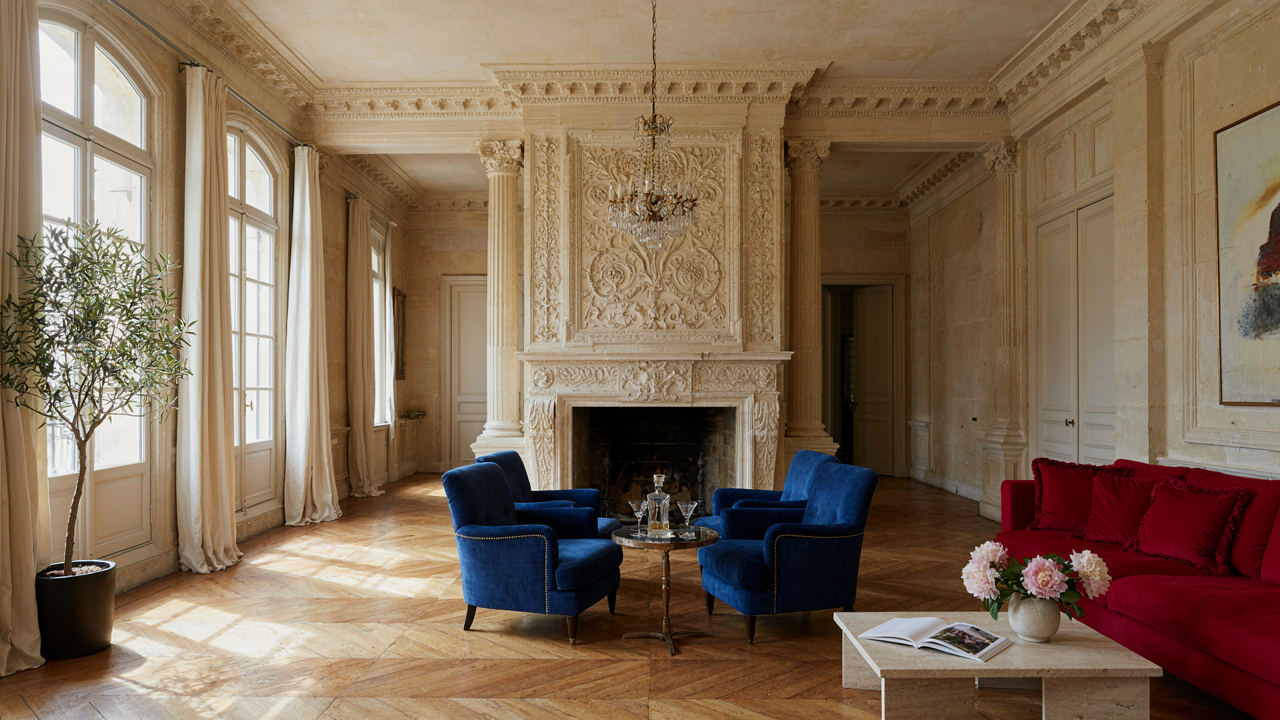
You want the status symbol without understanding what made it work. The real problem: most people treat French chateau fireplaces as pure decoration, ignoring the thermal and structural logic that determined their form. In architecture, form follows function is the foundational principle, and fireplace design obeys this ruthlessly. A carved stone surround that looks “French” but lacks proper proportions, flue design, or structural integrity isn’t heritage. It’s theater that fails the moment you light a fire.
Medieval and Renaissance French builders designed fireplaces around heat distribution, draft mechanics, and load-bearing capacity. The mantelpiece height, the throat opening, the hearth depth, the chimney angle—each element solved a specific problem. Ornamental carving came after these mechanics were solved. Most modern reproductions reverse this entirely, adding carvings to something fundamentally broken. You cannot fake structural reality.
The Trend Trap Is Not Design
Generic “French style” fireplaces flood the market because they’re easy to mass-produce and sell. The problem isn’t that trends exist—it’s that people mistake trend adoption for decision-making. Real chateau fireplaces varied dramatically by region, period, and patron wealth. A 16th-century Loire Valley fireplace looks nothing like an 18th-century Parisian one. Limestone differs from granite. Arched openings differ from linear ones. Copying a Pinterest board guarantees you’ll copy someone else’s mistake without understanding context.
The mechanism at work is selection bias in image culture. You see five fireplaces online, assume they represent “French style,” and build backward from aesthetics. Instead, study the original buildings. Examine why Fontainebleau’s fireplaces sit where they do. Learn why hearth stones are specific thicknesses. Understanding the constraint reveals the form. Copy the form alone and you’re left with carved stone that doesn’t perform.
The Scale Protocol: Mastering The Massive Fireplace Presence
When Size Becomes The Argument
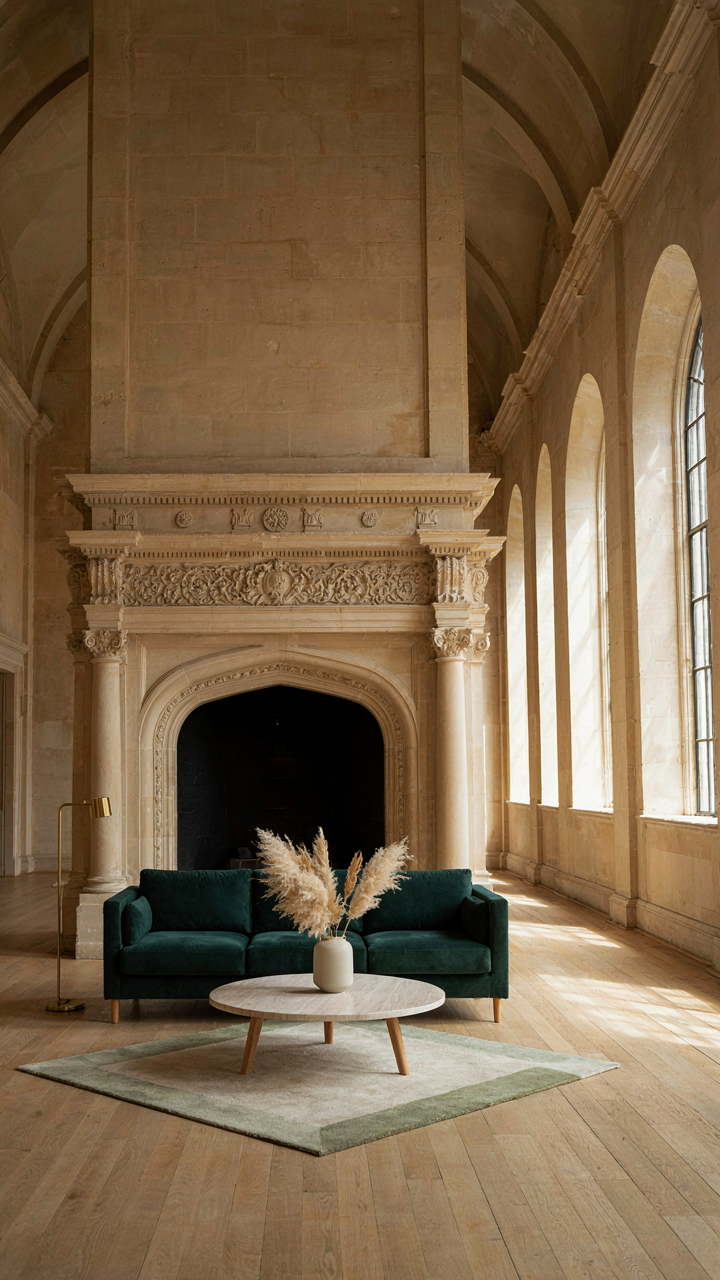
You want a fireplace that stops people mid-conversation because you need proof that you own something worth owning. Here’s the mechanism: French chateau fireplaces operate on architectural proportion, not mere dimension. A fireplace that’s too large without structural logic reads as compensation. A fireplace sized to the room’s geometry reads as inevitability. The difference is whether your eye settles or searches for the edges.

Proportion in architecture works like load distribution in engineering. The fireplace’s mass must anchor the wall it occupies without visually crushing the space. Medieval and Renaissance chateaux builders understood this instinctively. A 12-foot opening in a 30-foot-high great hall works. The same opening in an 8-foot ceiling collapses the room. The math isn’t mysterious: you calculate the fireplace opening as a percentage of wall height, typically between 25 and 40 percent for residential scale.
Dominating The Room Without Overreach
Most advice on “statement fireplaces” is wrong. The common take is that bigger automatically commands attention. The real mechanism is that proper scale creates visual rest, not restlessness. A French chateau fireplace dominates because it resolves the room’s proportions, not because it fights them.
The carved stone surround becomes your control variable. Intricate carved borders and architectural details actually shrink the perceived size of a massive opening by breaking the visual mass into readable sections. Fluted pilasters flanking the opening, carved corbels supporting the mantel, and a dentil or egg-and-dart molding at the cornice all function as visual subdivisions. Install the mantel at eye level or slightly above. Position the fireplace opening so its center aligns with the room’s visual axis. This creates symmetry that the human eye reads as intentional command, not accidental vastness.
Carved Stone: The Unseen Economics Of Enduring Value
Why Carved Stone Holds Value When Everything Else Depreciates
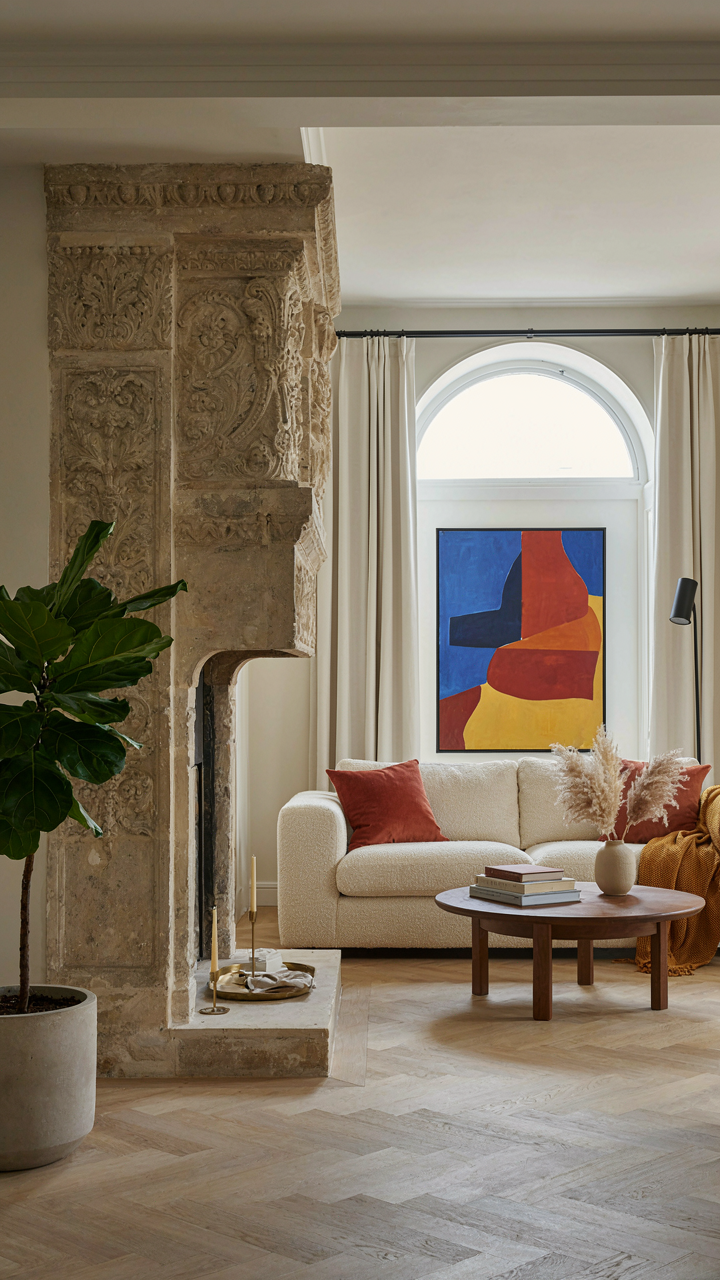
You want carved stone because you sense it signals permanence in a world obsessed with disposal. Here’s the actual mechanism: carved stone fireplaces operate like financial assets in economics terms, where scarcity increases value over time rather than decreasing it. The marble, limestone, or sandstone you source today becomes rarer as quarries deplete and hand-carving skills concentrate among fewer artisans. Unlike drywall, paint, or trends, carved stone doesn’t age into obsolescence. It ages into authority.

The math is brutal and honest. A carved stone fireplace costs three to five times more than a standard surround at installation. Within fifteen years, that premium shrinks because surrounding materials fail and require replacement while your stone remains intact. Within thirty years, the carved piece often appreciates relative to home value while everything else has been renovated twice. The investment isn’t in decoration. It’s in owning something the market literally cannot replicate at current scale or cost.
Artisanal Craftsmanship As The Mechanism, Not The Marketing
Forget the romance narrative about master stonemasons and tradition. That’s branding. The real asset is irreplaceability at scale. A carved limestone fireplace surround with hand-detailed corbels cannot be mass-produced without eliminating the source of its value. Each hand-carved element contains decisions a machine cannot make. Tool marks, proportional adjustments, and surface variations create uniqueness. Someone pays more for that uniqueness later because reproduction becomes economically irrational.
This is why you document the carver’s work during installation. Photograph details. Record the stone origin. Note the carving techniques used. These details become part of the asset’s provenance, and provenance drives value in real estate and restoration contexts. When a future buyer considers your home, they see evidence of intentional craftsmanship, not generic builder-grade installation. That evidence justifies price maintenance or appreciation when everything around it depreciates.
The White Fireplace Paradox: Subtlety As The Ultimate Flex
Restraint In Monumental Space
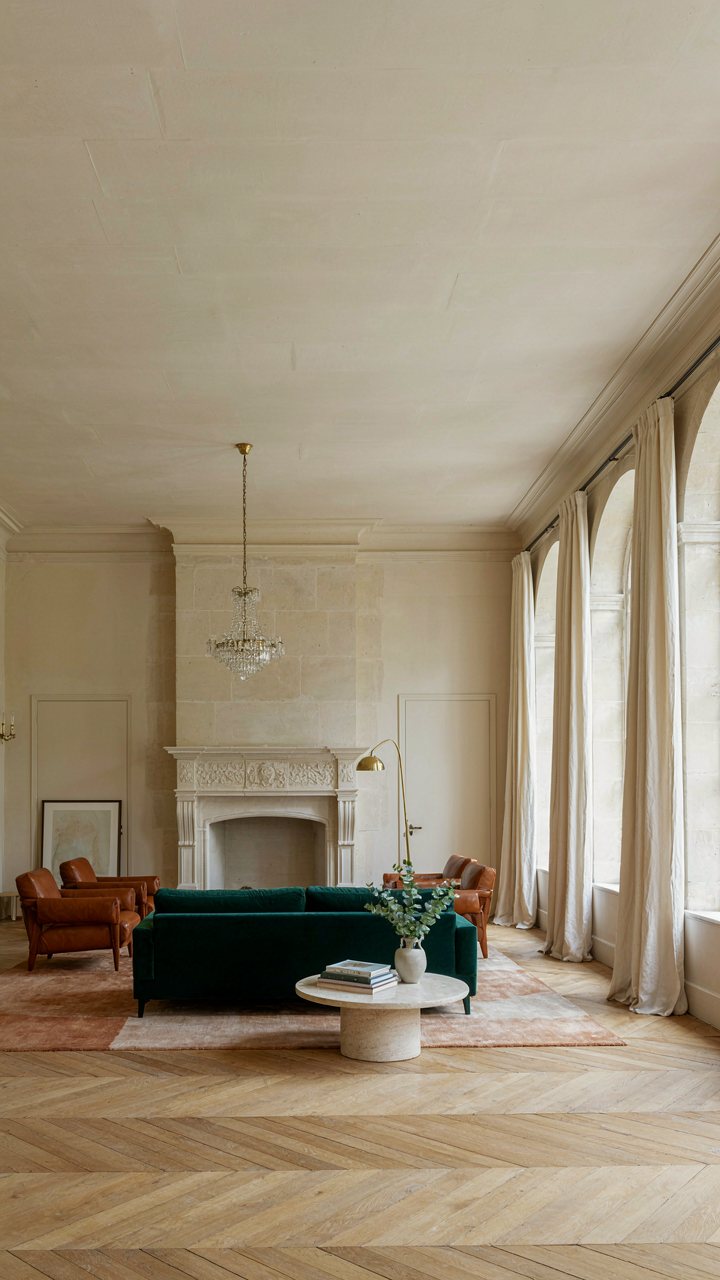
You want this section because you’re afraid a carved stone fireplace will make your space look like a museum gift shop. Here’s the mechanism: in monumental design, constraint operates like negative space in sculpture. The château fireplace works precisely because it knows what to remove. French architects understood that a 12-foot opening doesn’t need decoration screaming for attention. The stone itself becomes the statement. A pale limestone surround with minimal carving reads as controlled confidence. The eye travels across clean lines, not fractured detail. Oversized rooms demand understatement or they collapse into noise.

The mistake most people make is treating white stone as a blank canvas requiring fill. It isn’t. A white fireplace in a grand room establishes visual anchor points through absence, not accumulation. The carved details that do exist land harder because they’re isolated. Think negative space: what you don’t carve matters more than what you do. Run a single linear motif around the opening. Leave the expanse of stone untouched. This is how a French château fireplace commands a 30-foot living room without decorative excess.
Silent Authority Costs More
Achieving restraint in carved stone requires precision that lavish ornamentation masks. A fireplace drowning in rococo flourish forgives lazy execution. A clean white surround exposes every tool mark, every proportion mistake, every inconsistency in the stone face. You’re paying for invisible labor—the craftsmanship that prevents the design from reading as sparse or unfinished. The carved elements that remain must be geometrically exact. Symmetry becomes non-negotiable. A single off-center rosette or misaligned corbel ruins the entire effect.
The real mechanism at work: understatement signals resources and control. It says you didn’t need to convince anyone through ornamentation. A pale stone fireplace with two carved pilasters and a clean mantel shelf communicates wealth differently than gilded excess. French château owners understood this three centuries ago. The whitewashed or light limestone surround became the signature of old money because it required commissioning master stonemasons and accepting nothing less than precision. The payoff arrives when the room’s proportions seem to expand and the fireplace anchors space through geometry alone.
Floating Fireplace: Defying Gravity, Redefining Space
The Empty Space Around The Fire
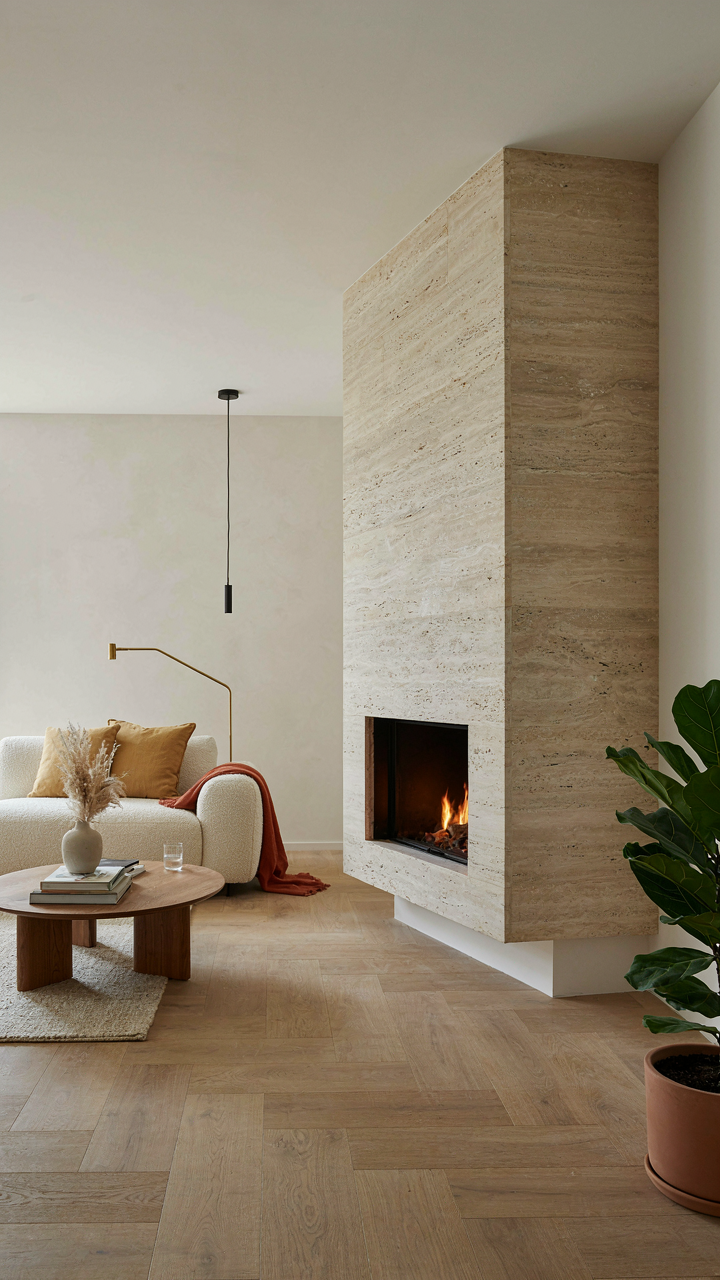
You want this because it makes your room feel larger than it is. That’s the real reason. The mechanism is negative space from art history, where the absence of an object creates more visual weight than its presence. A floating fireplace leaves the wall behind it bare and the floor beneath it open. This emptiness forces the eye to work harder, which the brain interprets as distance.

Traditional château fireplaces sit grounded, their stone footings anchored to bedrock. A floating version cantilevered from the wall or suspended on a thin steel frame does the opposite. The gap between the fireplace and the ground is the entire tactic. That gap forces viewers to process the room as deeper and more expansive than it actually is. The fireplace becomes an object in space, not a fixture of the wall.
Tension Created By The Unsupported Appearance
Physics calls this principle “unstable equilibrium.” Apply it here: the fireplace appears to defy its own weight. A stone hearth projecting from the wall without visible support creates genuine visual friction. Your eye registers the threat before your brain knows the steel bracket is there. That tension keeps the design from feeling static or decorative.
The real work happens in the construction. You need structural engineer approval and hidden steel support, typically a cantilever beam bolted deep into the wall’s frame. The carved stone exterior hides this entirely. Visitors see only the impossible: a massive fireplace hovering without visible means. This mechanism transforms a heating object into a spatial statement that rewires how people experience the room.
The Parisian Fireplace Mantel: More Than A Ledge
What The Mantel Actually Solved
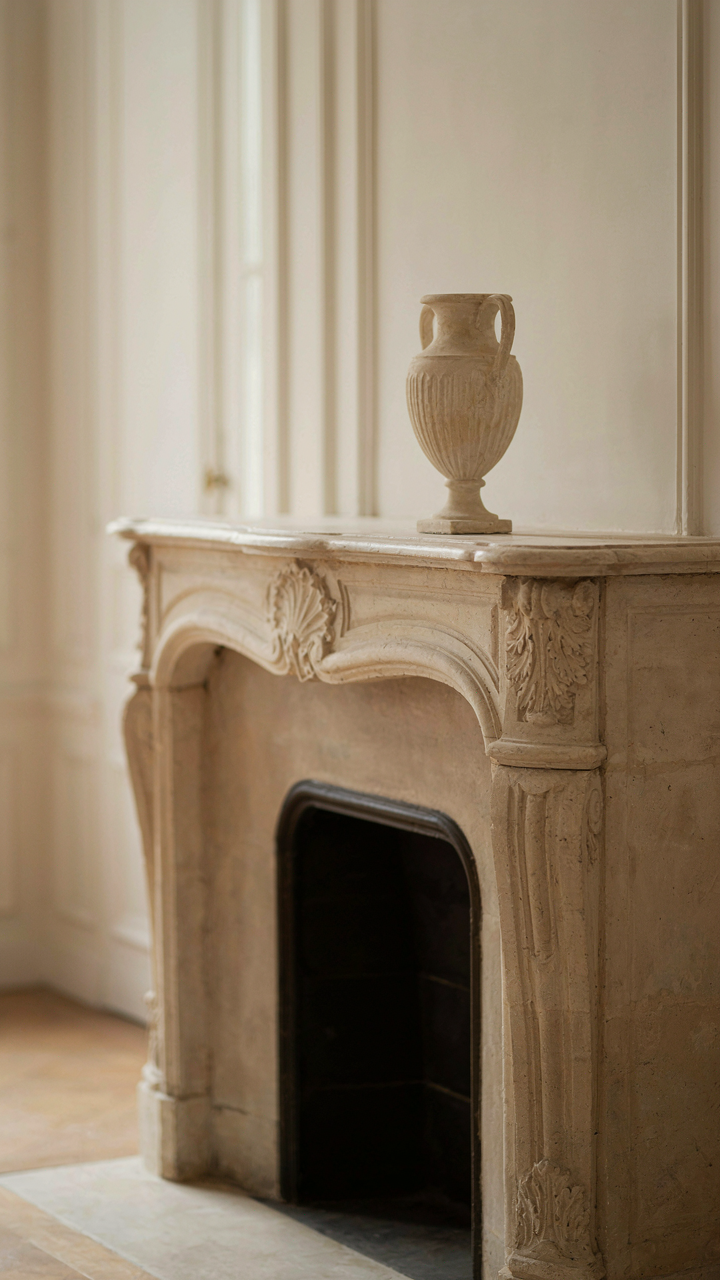
You want the mantel because it signals you understand something most people miss: old money doesn’t announce itself loudly. The Parisian fireplace mantel solved a real structural problem first, then became a display mechanism. In load-bearing stone construction, the mantel shelf had to project far enough to distribute weight from the chimney breast without cracking the wall behind it. This wasn’t decoration pretending to be function. It was function that enabled decoration.

The depth and angle of a classical mantel carving—typically projecting eight to twelve inches—came from engineering necessity, not aesthetic whim. French stonemasons carved supporting moldings beneath the shelf to reinforce the cantilever. Those carved corbels and brackets you see in photographs weren’t ornamental flourishes added later. They were structural requirements that craftsmen refined into visual language over centuries. Understanding this distinction changes how you evaluate authentic pieces versus reproductions.
Objects That Carry Weight
A mantel becomes a narrative tool only when you understand what it’s supposed to communicate. Think of it through real estate economics: the mantel occupies the highest-value horizontal surface in a room—eye level, central position, unavoidable attention. Every object you place there competes for interpretation. A single 18th-century marble bust says something precise. A cluttered arrangement of mismatched items says you don’t understand the mechanism, which defeats the entire point.
- Sculpture or Busts: Classical stone or marble pieces reference the owner’s education and aesthetic alignment with Enlightenment values. Placement matters more than quantity.
- Candlesticks in Pairs: Symmetry signals control and intentionality. Asymmetrical placement reads as accidental or indecisive, which erodes authority.
- A Single Quality Mirror or Artwork: One strong focal object pulls attention more effectively than dispersed items. The mantel amplifies whatever you choose to anchor it.
- Books in Original Bindings: Leather-bound volumes signal intellectual depth but require restraint. Three books communicate; twelve communicate anxiety.
- Architectural Elements: Small stone fragments, urns, or carved finials reference the fireplace’s own language. This creates visual coherence rather than competing aesthetics.
The objects you select must justify their presence through specific meaning, not generic beauty. Remove anything that could appear anywhere in any room. What remains is what actually belongs on a French chateau fireplace mantel—pieces that deepen the architectural narrative rather than interrupt it.
Beyond The French Mantle: Architectural Integration, Not Addition
The Fireplace As Load Bearer
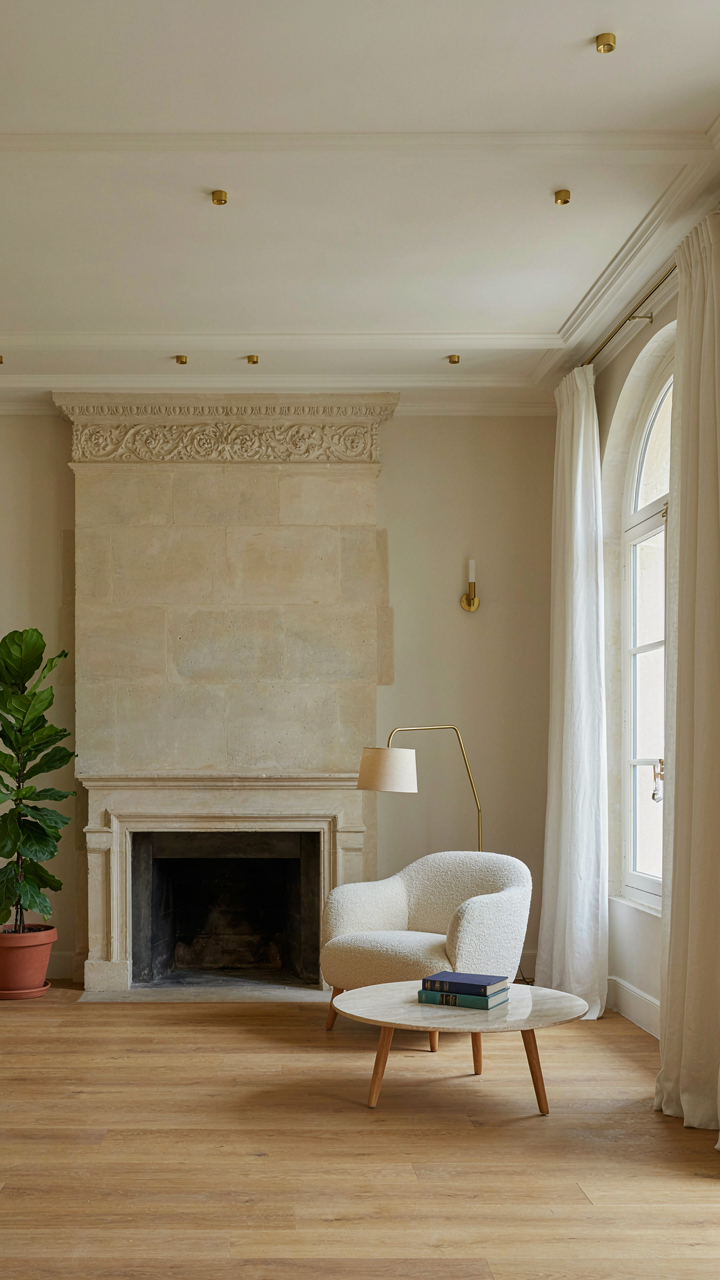
You want to drop a carved stone fireplace into your space and have it look like it belongs there. That desire is really about control, about forcing permanence into a room that doesn’t naturally demand it. Here’s the mechanism: a French chateau fireplace works architecturally because it functions as a structural anchor, not a decorative afterthought. The chimney stack rises through the floor plan like a load-bearing wall. The hearth sits on a foundation. The mantelpiece ties into the surrounding masonry. These aren’t design choices. They’re engineering facts.

The fireplace mass distributes weight downward continuously, which means placement isn’t arbitrary. In authentic chateaux, the hearth sits at the floor system’s strongest point, often where two walls meet or where the primary structural grid intersects. The carved stone front serves a secondary purpose: it hides the structural depth required for the stack and flue. When you treat your fireplace as ornament first and structure second, you create visual discord. The proportions feel off. The eye senses something is wrong because something is wrong. Position the fireplace where structural logic demands it, not where aesthetics suggest it.
Transitions That Anchor Rather Than Float
Everyone talks about seamless transitions like they’re a surface finish problem. They’re not. The real work happens in how material density and visual weight distribute across the boundary where the fireplace meets adjacent surfaces. Carved stone against drywall creates an instant hierarchy that reads as forced. Carved stone against plaster or against masonry reads as inevitable. The transition works when the surrounding wall system prepares the eye for the fireplace mass before the fireplace appears.
In chateau design, this preparation happens through wall treatment consistency. Plaster walls surrounding the fireplace receive the same finish as the fireplace surround. Stone walls integrate stone mantels and surrounds as continuous surfaces, not contrasting elements. The carved detail on the mantel echoes existing architectural moldings or cornice work in the room. The hearth material extends slightly into adjacent flooring to signal material continuity rather than containment. Build your fireplace zone by working backward from the focal wall outward, establishing finish and material hierarchy before the hearth itself appears.
The Anti Trend: Building A French Fireplace For The Ages
Why Your Fireplace Doesn’t Need To Follow Instagram
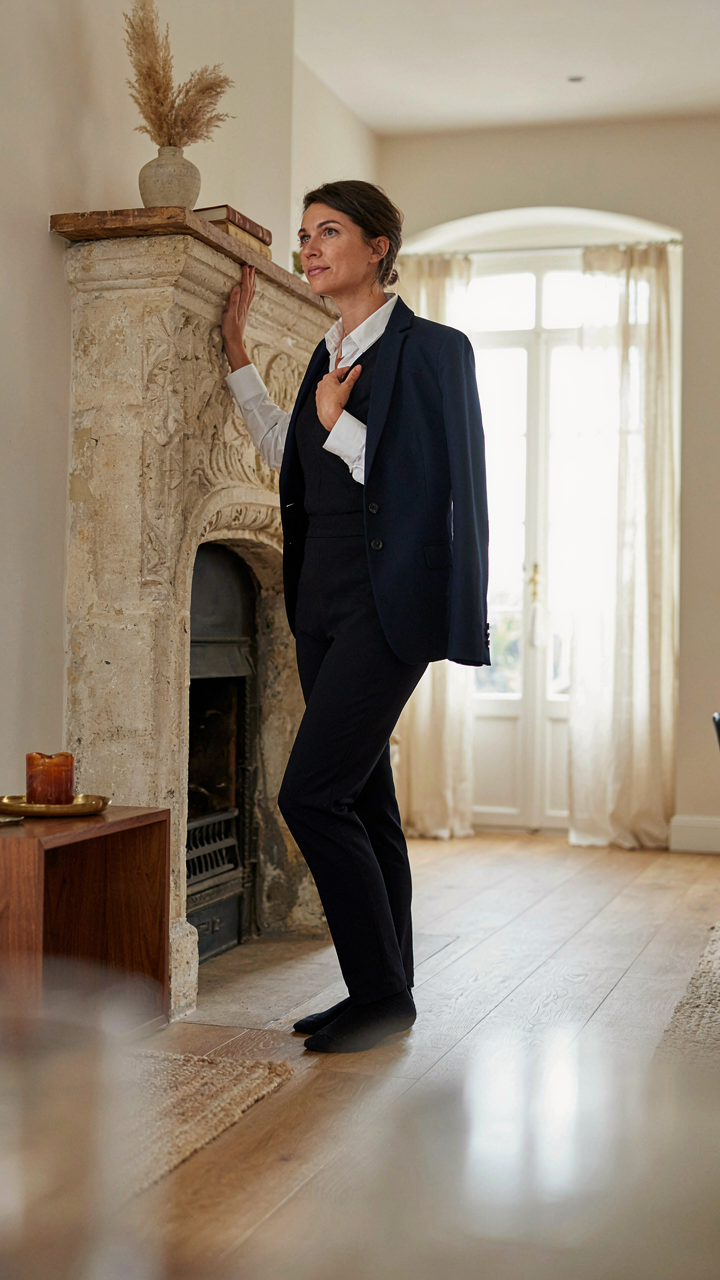
You want to know if your fireplace will look dated in five years. That’s the real question beneath all the design talk. The mechanism is simple: trends move fast because they’re easy to execute and cheap to market. French chateau fireplaces survive centuries because they ignore what’s popular and anchor instead to structural principles that don’t change. A properly carved stone mantel with load-bearing geometry works the same in 1750 and 2025.

The confusion happens because people mix aesthetic trends with functional design. Ornamental details fade. Proportions, materials, and the relationship between the firebox and surround do not. When you commit to a French fireplace, you’re not choosing a style you’ll abandon. You’re choosing a system built on material honesty and load paths that require no apology to future taste.
Stone Quality Outlasts Taste
Think of French fireplace design like structural engineering rather than decoration. In engineering, you test for failure points and eliminate them. In French chateau fireplaces, the test is time. Stone is the variable that determines longevity. Limestone and marble carve cleanly and age visibly, which means you see what you’re getting. Soft stone cracks under thermal stress. Dense stone doesn’t.
The reason most modern fireplaces look temporary is materials, not design. Manufactured surrounds use particle board, veneers, and adhesives rated for fifteen years. A carved limestone mantel rated for three hundred years demands investment upfront that returns through decades of zero maintenance. Your decision point is this: buy a fireplace you’ll replace, or buy one your children inherit intact. The cost difference is rarely what people think once you factor removal and reinstallation.
The Real Obstacle Isn’t Finding The Right Design; It’s Escaping The Mental Prison Of Imitation
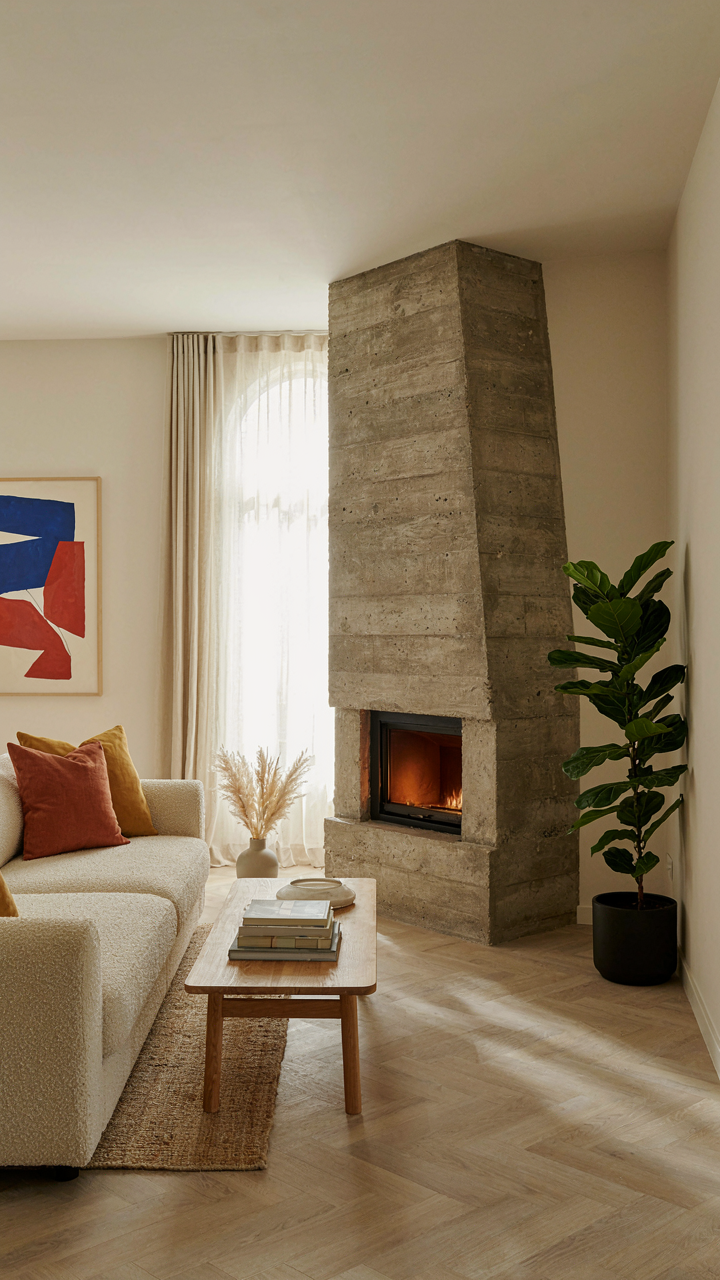
Most people stare at carved stone French chateau fireplaces and think, “I need that exact thing.” Wrong move. You need to steal the principle, not the aesthetics. A carved stone fireplace works because it anchors a room with permanence and craft. Your version might use reclaimed brick, concrete, or salvaged wood and still nail it. Stop copying Instagram. Copy the function. Pick one material you actually own access to today and sketch how it could become your room’s gravitational center. The fireplace you build isn’t the one in the photograph. It’s the one that makes people feel something when they walk in.