
The Uncurated Aesthetic: Why “Relaxed” Isn’t A Trend
The Difference Between Curated And Lived In
You want permission to stop trying so hard. That’s the real reason you’re reading this. The mechanism is simple: French country living rooms work because they document actual use, not design theory. A room that looks effortless takes discipline to create, but the discipline happens before you move in, not after. You’re buying into a narrative of ease by understanding its structure.
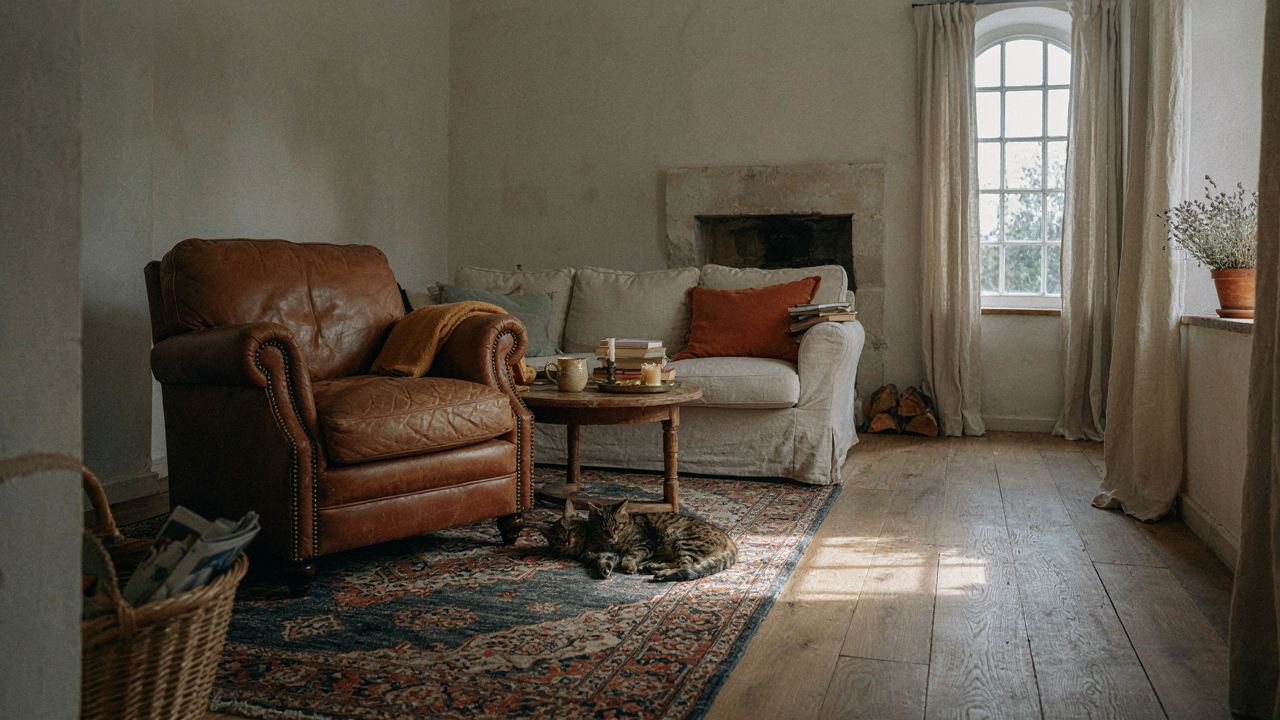
French country design emerged from rural farmhouses where furniture stayed until it broke, art hung where light was best, and textiles accumulated through seasons. This wasn’t aesthetic philosophy. It was resource scarcity and practicality. The worn leather, the mismatched wood tones, the faded fabrics—these are artifacts of time, not Instagram filters applied retroactively. Modern attempts fail because they treat this as a style to purchase rather than a system to inhabit.
The Room Tells What You Actually Do
A living room is an archaeological record. It documents which chair you sat in most, which table held your coffee, where light pooled at 4pm, what you touched repeatedly until it faded. French country rooms read like honest diaries because the French rural tradition accepted this visibility. The Provençal textile fades. The oak table develops a patina. The linen sofa slouches where bodies have weight.
This is why generic advice fails: designers tell you to “add vintage pieces” or “mix eras” without naming the actual mechanism. Authenticity isn’t about finding the right objects. It’s about letting objects become themselves through use. Your living room becomes French country when you stop treating it as a static display and start treating it as evidence of how you actually live there. The next step is removing one decorative item per week that you don’t sit with, eat near, or touch daily.
Decoding French Country Living: The Sensory Algorithm
Texture Layering For Depth
You want this room to feel expensive without announcing it. That’s the real mechanism at work here. French country design operates on a principle borrowed from geology: stratification. Just as soil depth creates stability, layered textures create visual and tactile richness that reads as intentional refinement rather than decoration.

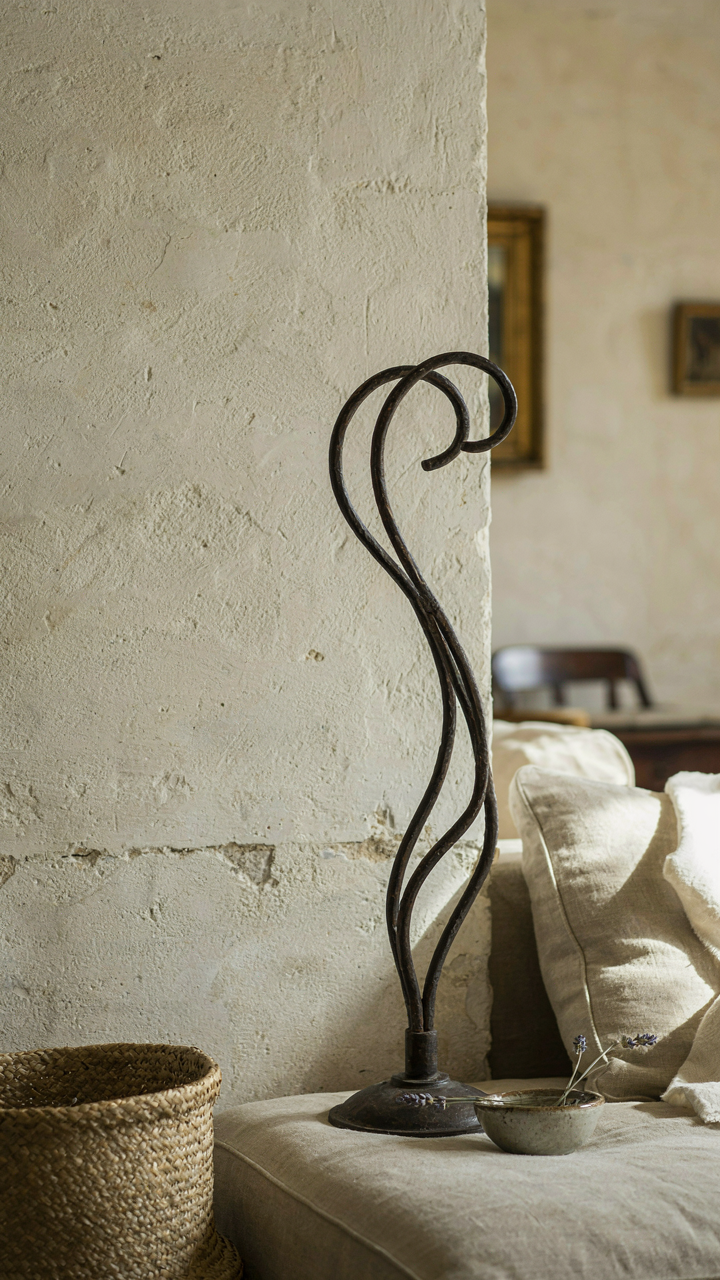
The mistake most people make is treating texture as surface treatment. They add a throw blanket and call it done. Real texture layering in French country living rooms works through material contrast at multiple scales. Stone or plaster walls become the base stratum. Linen upholstery and raw wood furniture sit in the middle layer. Brass hardware, wrought iron details, and woven accents occupy the final visible layer. Each material has different light absorption and tactile properties, which creates perceived depth without clutter.
The protocol is straightforward: identify your base texture (wall finish), then add two contrasting materials to upholstery, then introduce metal and natural fiber accents. Avoid matching finishes across categories. A rough linen sofa against smooth plastered walls with aged brass fixtures creates the depth that reads as authentic French country, not catalog assembly.
Light And Shadow Play
Lighting in French country rooms isn’t about brightness. It’s about creating visual relief through contrast. Most contemporary spaces flatten shadows with overhead fixtures. French country interiors inherited from centuries of candle and firelight, which means they’re designed around pools of warm light and defined shadow zones.
Windows in rural French homes face practical constraints: size limited by heat loss, positioning dictated by room function. This created a design where indirect natural light bounces off pale textiles and light-colored walls, then gets interrupted by dark wood beams and furniture. You replicate this by positioning task lighting (table lamps, wall sconces) to illuminate specific zones, not the entire room. Shadows on cream-colored walls become architectural detail. The fireplace becomes the primary evening light source, which means a functional mantel setup matters more than decorative accent pieces.
Place lamps at eye level from seated positions, not overhead. Use warm bulb temperatures (2700K or lower). Allow at least one-third of the room to remain in soft shadow during evening hours. This isn’t ambiance rhetoric—it’s the mechanism that makes French country rooms feel settled rather than staged.

The Imperfect Symmetry Protocol For French Living Room
Why Asymmetry Actually Works
You want permission to break the rules without looking like you don’t know them. That’s the real fear underneath this section. Here’s what nobody says plainly: French country living rooms use asymmetry as a design tool borrowed from architecture and site planning, where load-bearing walls determine visual hierarchy rather than matching bookend furniture. The rooms that feel refined instead of chaotic exploit visual weight, not mirror images.
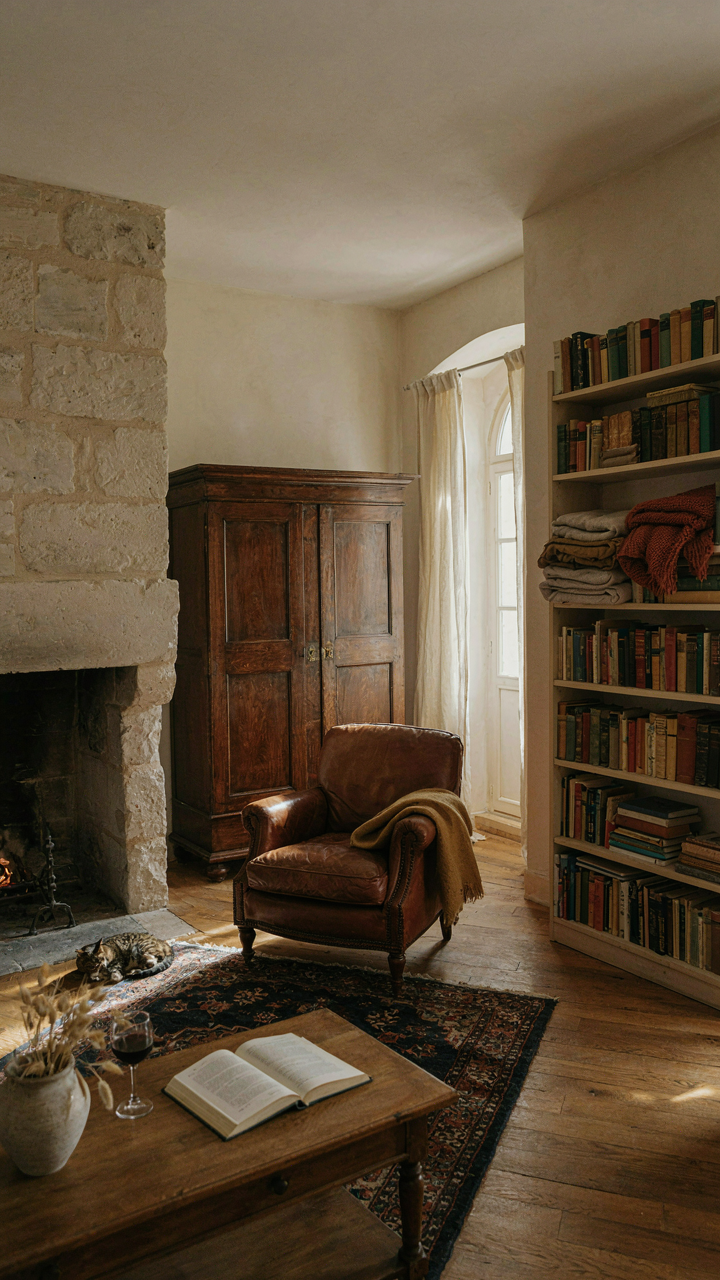
Traditional French interiors reject bilateral symmetry because the homes themselves rarely demanded it. Stone fireplaces sit off-center. Windows vary in size and placement. Architects built around existing constraints, and the interiors followed suit. When you arrange a sofa, side table, and console based on actual function and sightline, not checklist balance, the room absorbs depth. Asymmetry telegraphs intention, not accident.
Distributing Visual Mass Without Matching
A single heavy piece like a substantial armoire anchors one wall. The opposite side stays open or holds lighter, dispersed objects. This isn’t random. You’re matching visual weight across the room’s entire plane, not copying objects left to right. One large painting balances three smaller frames on another wall. One upholstered wingback chair equals two rush-seat stools and a small table grouped together.
The mechanism: inventory every object’s visual mass (dark absorbs more than light, large more than small, solid more than hollow), then place them so your eye doesn’t settle on one side of the room. A dark wooden console on the left needs counterweight on the right—maybe a tall bookshelf with lighter wood, or layered textiles that read as visual substance. Measure this by standing in the room and noticing where your attention lands first, second, third. When the answer changes based on where you stand, the weight distribution works.

Beyond The Beige: Color Theory For Modern French Country Living Room
Evolved Color Palettes
You want permission to use color without looking like you’re trying too hard. Here’s the mechanism: French country design got locked into beige-and-cream repetition because people confused “restraint” with “blandness.” Restraint means choosing one thing deliberately. Blandness means choosing nothing at all.
Traditional French country pulled from the landscape directly: ochre earth, deep forest green, dusty blue from shutters weathered by decades. These weren’t trendy. They were cheap pigments available to rural craftspeople. The constraint created coherence, not the other way around. Modern versions strip out the constraint and keep only the look, which kills the system.
Contrast As A Focal Point
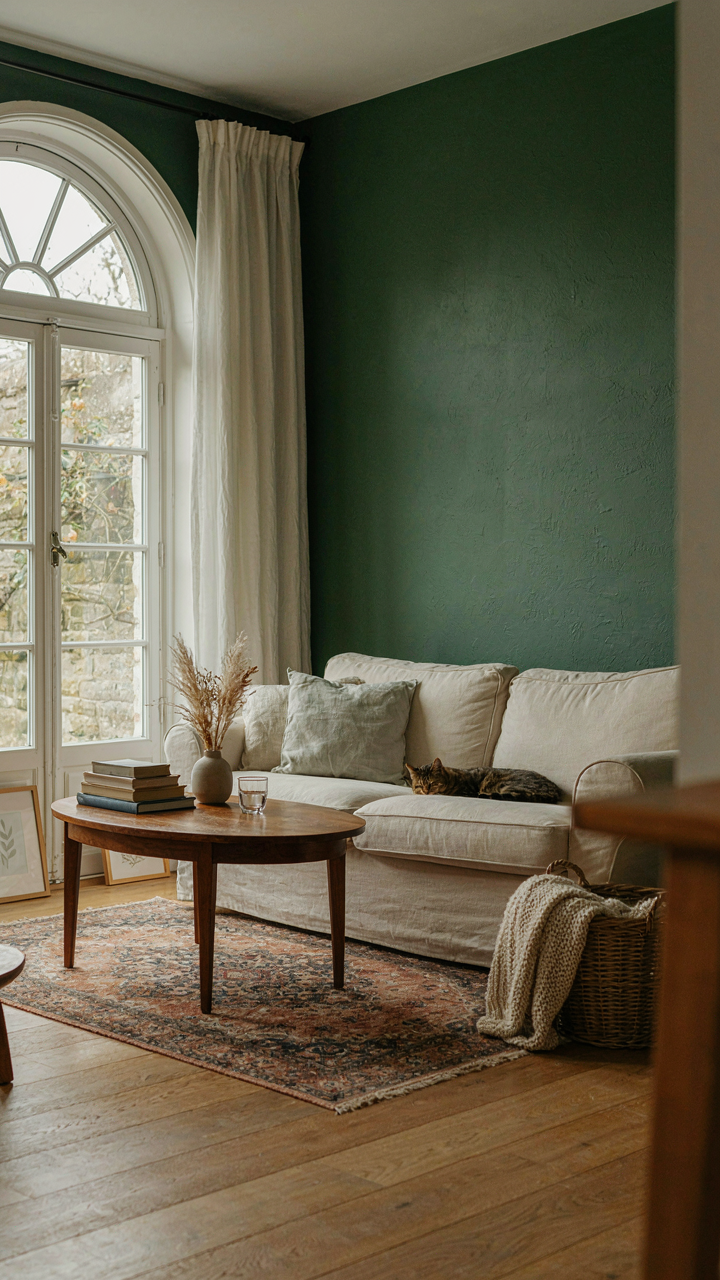
Contrast functions like tension in architecture. You need opposing forces to make any single element register. A room of uniform mid-tone walls trains your eye to see nothing. One saturated jewel-tone accent wall creates a magnetic center because it breaks the field.
French country rooms that work use contrast through value, not through clashing colors. A deep charcoal or forest green wall next to cream-colored furniture creates visual weight without chaos. The mechanism is simple: your eye moves toward whatever breaks the visual pattern first. Choose your contrast deliberately, then build everything else neutral around it. Place the saturated color on the wall that receives the most natural light to avoid making the room feel smaller.

The Evolutionary Design Principle: French Interiors Living Room

Spaces That Adapt And Grow
You want this room to feel timeless so you never have to redo it. The mechanism is biological adaptation: French country living rooms survive across decades because they’re built to absorb change without losing identity. Think of a forest ecosystem, not a museum display. The room doesn’t calcify around a single vision. It accommodates new pieces, worn textures, and shifting needs while the core framework stays intact.
This happens through restraint in the foundational layer. Walls stay neutral (cream, soft white, warm taupe). Furniture silhouettes remain simple and substantial. The system leaves room for elements to be swapped, faded, or replaced without collapse. A worn linen sofa doesn’t wreck the room. A new painting doesn’t demand a full redesign. The structure absorbs variation because nothing is precious or overly coordinated from the start.
Layering Elements Without Forced Cohesion
Everyone says to curate and edit ruthlessly. That’s half-true and half-wrong. The real move is integration through material and scale logic, not through matching or thematic purity. A French country living room combines old with new, refined with rough, without pretending they’re the same thing. The pieces coexist because they follow density and weight rules, not style rules.
Stone, wood, linen, and iron are the material anchors. A heavy wooden table grounds a room the same way a stone hearth does. A wrought iron mirror reads as belonging not because it’s “country” but because metal and mass follow the same visual language as oak beams and plaster walls. The second principle: add elements in clusters of three (throw pillows, candles, objects on a shelf) rather than distributing singles everywhere. This creates visual rhythm without looking designed. Place new items near existing ones of similar weight before positioning them elsewhere.

The Patina Paradox: Age As An Asset In French Style Living Room
Worn Beauty Works Harder Than New
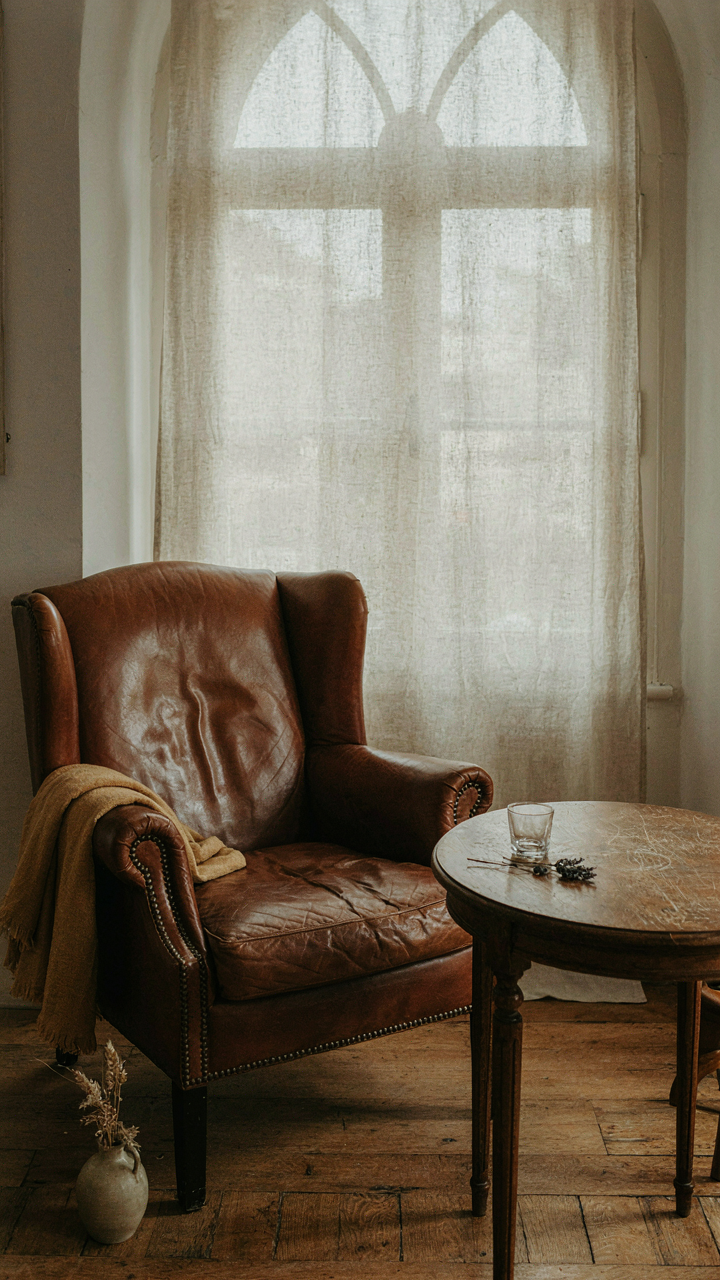
You want permission to buy old stuff instead of new stuff and call it design. Here’s the mechanism: patina signals scarcity and time investment in a way new objects cannot. In French country design, visible wear on wood, fabric, and metal doesn’t read as neglect—it reads as evidence of use, survival, and authenticity that money alone cannot manufacture overnight.
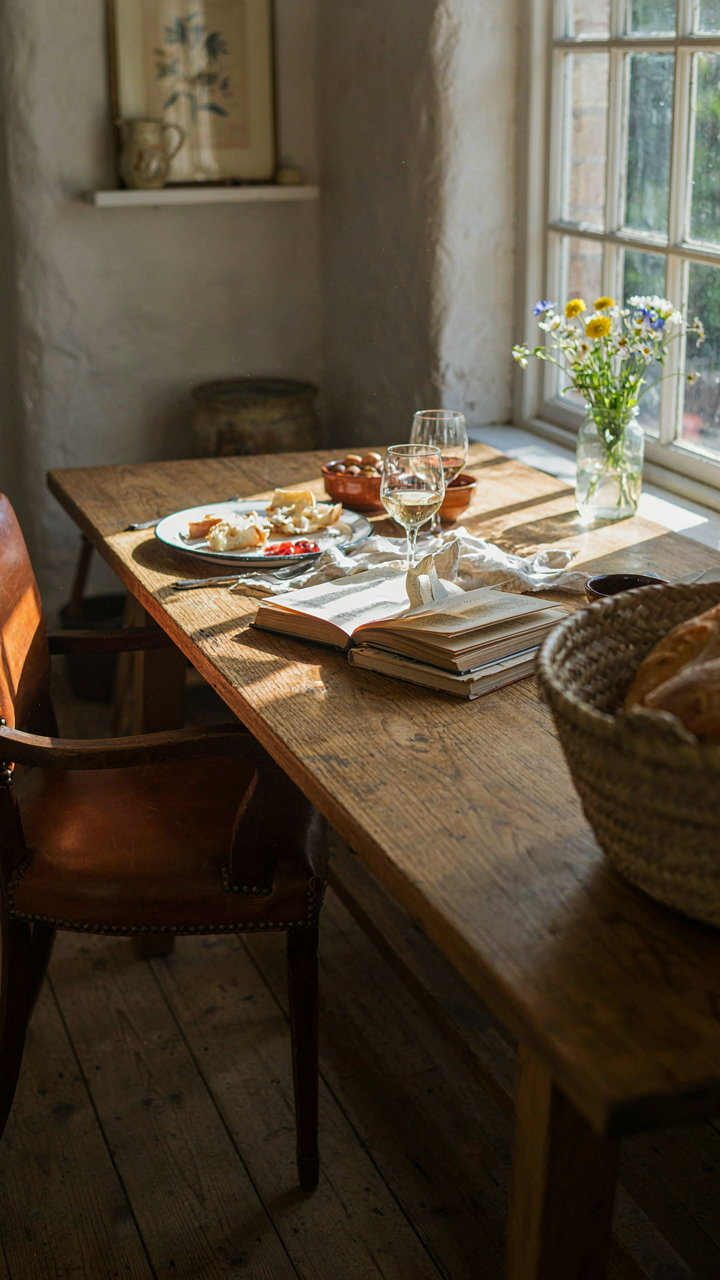
French country interiors emerged from rural necessity, not trend forecasting. Pieces were kept because they functioned, not replaced on schedule. A worn leather wingback chair or a table with surface scratches from decades of place settings communicates a history that polished reproduction furniture simply cannot fake. The wear is the content. Buyers recognize this difference instantly, which is why vintage French country pieces hold value while mass-produced “distressed” furniture depreciates.
Intentional Imperfection Over Contrived Aging
The common advice tells you to hunt for authentic vintage or artificially distress new pieces to achieve character. Both miss the point. Real French country living rooms don’t chase imperfection—they preserve it selectively. Imperfection with purpose beats random wear or fake patina applied for effect.
This means you evaluate each worn element for functional integrity and visual contribution. A linen sofa with faded fabric from sun exposure reads as lived-in. A chair leg splintered beyond structural safety reads as neglected. The distinction separates curated imperfection from actual deterioration. Source pieces already carrying honest age marks, then maintain them without restoration that erases their timeline. Apply this filter: does this mark tell a story about the object’s actual use, or does it distract from the room’s function? Keep the first, address the second. Your procurement step is simple: photograph potential pieces in natural light, identify which wear marks feel essential to the piece’s character, then decide whether that character serves your living room’s atmosphere or works against it.

Small Living Room French Country: Maximizing Micro Spaces
Mirror Placement As Spatial Architecture
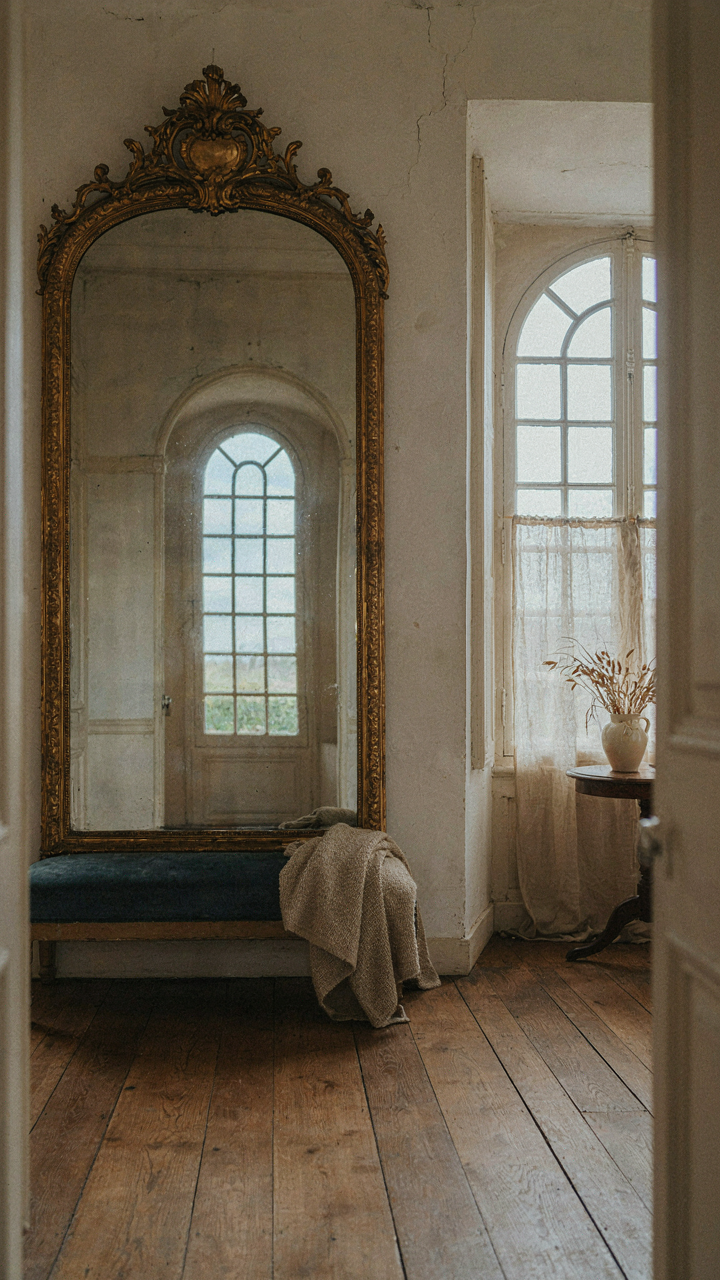
You want the room to feel bigger without admitting you live in a closet. Here’s what actually works: mirrors function like spatial compression in optics, where light bends to create perceived depth. Place a large mirror opposite your strongest natural light source, not on the same wall. This bounces light across the room and makes the space read as extended. French country rooms typically use ornate frames in gold leaf or carved wood, but the frame is irrelevant to the mechanism. The reflection itself is the tool.
Position secondary mirrors on side walls perpendicular to windows, never facing each other directly. Facing mirrors create infinite regression and visual chaos, which reads as cramped, not spacious. French country traditionally used mirrors above mantels and console tables, but the principle stays the same in small rooms. The depth created by properly angled reflection is measurable and immediate. Test placement during daylight hours and adjust until the far wall appears to recede.
Nested Furniture For Functional Layering
The standard advice about “choosing smaller pieces” misses the real constraint in micro-spaces: you need full functionality without the visual clutter of multiple items. Nesting works because it compresses multiple functions into single footprints. A round side table that nests under a slightly larger console provides surface area for a lamp, a drink, and a book without occupying three different floor zones. French country traditionally layered scale and purpose this way through campaign furniture and stacked trunks.
Select pieces that stack vertically or tuck horizontally without looking makeshift. Ottoman storage with a removable tray converts to a side table instantly. Narrow console tables that accept chairs underneath maintain walking paths while adding seating. The mechanism is simple: every item must serve dual or triple purpose without requiring rearrangement. Measure your sight lines before purchasing. A nested system fails if you can see three different furniture pieces competing for visual attention from your sitting position.

The Material Truth: Fabric And Furniture For Living Room Decor French Country
Materials That Actually Last
You want to believe sustainable choices feel like moral wins. They do. But the real mechanism is durability economics: materials that age well cost less over time because you replace them less often. French country design didn’t emerge from environmental consciousness—it came from rural necessity. Farmers and merchants bought once and lived with their choices for decades.
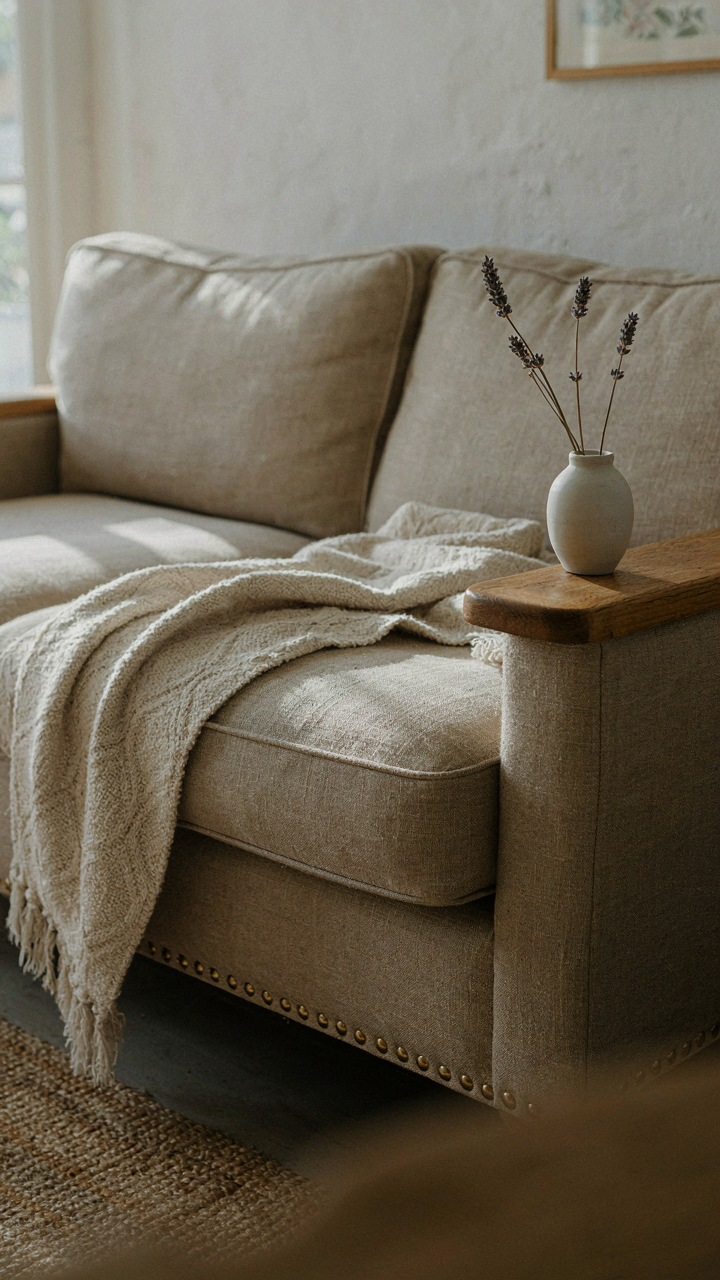
- Linen: Natural fiber that strengthens with washing. French country upholstery favors linen for sofas because it softens rather than deteriorates, creating that lived-in aesthetic that actually improves with use.
- Wool: Naturally stain-resistant due to lanolin content. Wool rugs and throws withstand heavy foot traffic in living rooms without pilling as quickly as synthetic alternatives.
- Solid wood frames: Oak, walnut, and cherry were the default in period French furniture. These hardwoods resist warping and accept repairs without replacement, unlike veneered or composite frames.
- Linseed oil finishes: Applied to wood rather than polyurethane, these finishes allow wood to breathe and accept touch-ups seamlessly. Damage blends rather than creates visible repairs.
- Natural leather: Develops patina over time instead of cracking into unusable pieces. French country seating often features leather that gains character and becomes more valuable functionally and aesthetically.
The shortcut advice says “buy quality.” That’s incomplete. Buy materials with a wear pattern that improves them. Linen softens. Leather darkens. Wool compacts. These aren’t benefits you’re hoping for—they’re the design principle itself. When you select upholstery for a French country living room, you’re choosing materials that will look better in five years than they do on delivery day.
Furniture That Supports How You Actually Sit
The common error is conflating French country with “sitting on hard wood.” That’s confusion born from museum pieces and Instagram images. Real French country living rooms prioritize deep seating because rural life meant long afternoons. The mechanism here is biomechanics: your lower back requires 4 to 6 inches of seat depth before your thighs lose support and pressure shifts to your spine.
French country sofas typically run 32 to 36 inches deep—significantly deeper than modern sectionals. This depth matters not because it looks period-accurate but because it prevents the forward slouch that happens when your feet don’t reach the floor with back support. Pair deep seating with a low-slung frame (16 to 18 inches from floor to seat) and armrests at elbow height when you recline, not when you sit upright. Add a single accent chair with a higher seat (20 inches) for variety and easier standing. The living room becomes functional for actual relaxation rather than upright perching.

French Country Apartment Decorating: Urbanity Meets Rural Charm
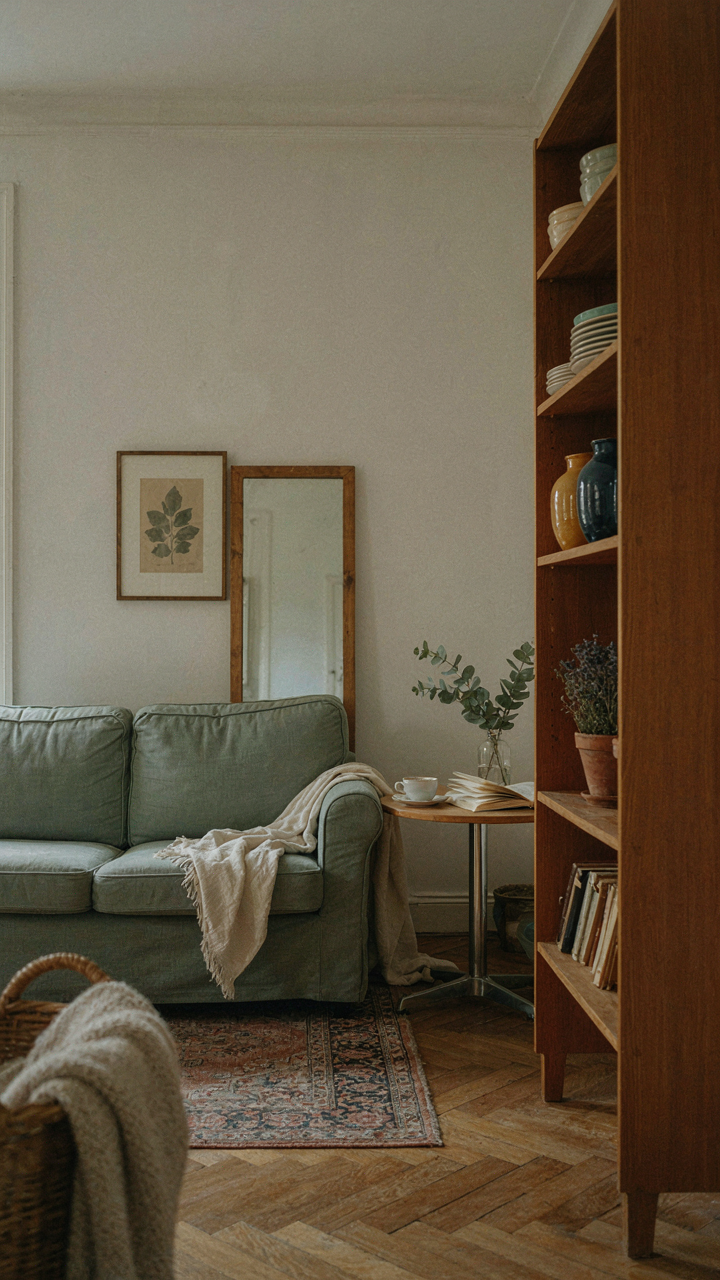
When Old Collides With Now
You want permission to keep your apartment from looking dated. That’s the real question here. The mechanism is simple: French country in apartments works because it borrows restraint from modernism while keeping warmth from tradition. You’re not choosing between styles—you’re selecting which elements survive the constraint of smaller rooms and urban living.
Apartments demand efficiency that farmhouses never did. French country pieces in urban settings need clear function. A carved wooden console becomes a credenza. Linen upholstery on a chair stays current because linen itself is neutral. The palette shrinks but intensifies—cream, soft gray, muted gold. Remove the excess and the bones of French country become architectural, not decorative.
Proportion Over Square Footage
Constraint forces clarity. An apartment with 800 square feet teaches you what actually matters in French country design faster than a manor house ever could. Scale down the pieces, not the intention. A smaller settee still reads as refined. A modest wooden table still anchors the room.
The real tactical move: use vertical space. Wall-mounted shelving with pottery. A tall mirror in a simple wooden frame. French country thrives on layering—textiles, surfaces, objects—and apartments demand you layer upward instead of outward. The same visual density fits because nothing spreads horizontally.
The Effortless Elegance Blueprint: Beyond Surface Level Decor

Stop Treating Design Like A Checklist
You want permission to stop overthinking. Here’s the mechanism: a French country living room works because it’s built on constraint, not abundance. You’re not picking from infinite options. You’re working within a narrow material palette—stone, oak, linen, wrought iron—and that boundary forces coherence. The common advice says “mix old and new” or “layer textures.” Wrong framing. What actually happens is you’re selecting from a historically validated set of materials that already relate to each other because they come from the same geography and era.
The shift happens when you stop asking “is this pretty?” and start asking “does this belong in a 19th century French farmhouse?” That’s not about authenticity. It’s about using constraint as a filter. Linen absorbs light differently than polyester. Oak ages visibly while MDF doesn’t. Wrought iron tells a story through its weight. When you limit your material choices to what would have existed in rural France before 1950, the room designs itself.
The Pattern Recognition That Replaces Taste
Taste is a myth designers sell to justify their fees. What you actually need is pattern recognition, borrowed from how radiologists read X-rays: they don’t memorize every variation, they spot deviations from baseline. Your baseline is the actual French country living room, not the Pinterest version. Study real rooms in Provence, Normandy, or the Loire Valley through museum collections and architectural photography, not lifestyle magazines. Document what shows up repeatedly: the color of aged plaster, how sunlight hits linen, the proportion of wood to wall space, where iron hardware appears.
Once you see the pattern, you stop second-guessing. A room feels off not because you lack “good taste” but because you’ve unconsciously spotted a deviation from the baseline. The mechanism is simple: spend two hours studying actual French country interiors, then you have a neural template. Anytime you’re adding something to your room, mentally overlay it against that template. If it doesn’t match the material vocabulary or spatial logic, remove it.
The Real Obstacle Isn’t Finding The Right Decor; It’s Your Fear Of Imperfection And The Relentless Pursuit Of Curated Sterility
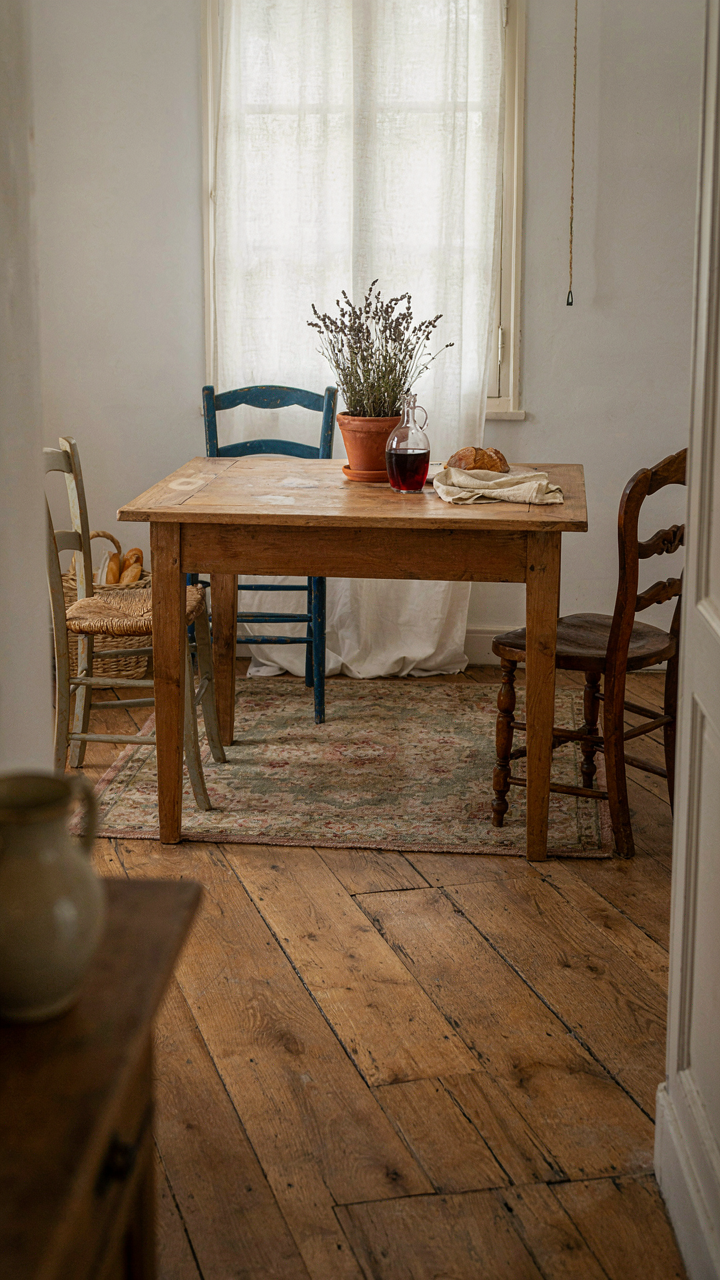
You don’t need a Pinterest board. You need permission to let your space breathe and contradict itself. French country living works because it embraces worn wood next to clean linen, mismatched chairs around one table, the visible mark of time. Stop waiting for the perfect moment to buy the perfect piece. Buy one thing today that makes no sense with anything else you own. That friction is where character lives.



