
The Unspoken Truth About Joanna Gaines Living Room Appeal

Why Her Rooms Actually Work
You want to know her secret so you can copy it and feel like you’ve got taste. That’s not happening. The real mechanism is this: Joanna’s living rooms operate on the principle of constraint, borrowed from systems thinking in design. Every element competes for visual weight, so nothing dominates. She removes the noise first, then adds back only what serves a function or tells a story. Most people reverse this. They start with stuff and try to make it cohere.
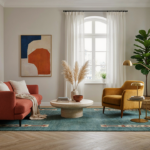
Her restraint isn’t aesthetic purity. It’s strategic removal. She uses neutral backgrounds—cream, warm white, soft taupe—not because they’re safe, but because they function as a visual circuit breaker. The walls disappear. Your eye lands on texture: a linen sofa, a reclaimed wood coffee table, a woven throw. These aren’t decorations. They’re the only competition for attention, so each one reads clearly. When you try to replicate her rooms by adding more of what you like, you’ve already lost.
The Authenticity Mechanic
Authenticity doesn’t mean “genuine to her personal taste.” It means the room doesn’t signal pretense to the viewer’s brain. Joanna builds spaces that feel lived-in on day one because she layers in objects that carry implied history. A vintage rug suggests time and use. Mismatched wood tones suggest collection, not purchase. Worn leather suggests comfort over newness.
The trap most people hit: they buy “authentic looking” items from the same store on the same day. Your subconscious registers this immediately. It reads as performance. Joanna’s rooms avoid this by mixing real vintage finds with new neutral pieces, creating temporal dissonance that your brain reads as genuine accumulation. Start by sourcing one actual vintage piece per room—a side table, a mirror frame, a rug—then build neutral surfaces around it. The single piece does the credibility work for everything else.
Why Your Joanna Gaines Living Room Design Falls Flat

Pinterest Aesthetics Over Personal Narrative
You want to feel like you have taste without doing the actual work of developing it. Here’s the mechanism: Joanna Gaines’ design approach works because it’s rooted in her specific life, family history, and the particular Texas hill country context she’s built around. When you copy the surface elements—the shiplap, the neutral palette, the layered textures—without the narrative underneath, you’re left with a room that looks correct but feels hollow. The design has no reason to exist except that it looked good in a photo.

Trends are borrowed consensus masquerading as personal choice. Gaines didn’t pioneer farmhouse design by following Pinterest boards; she built a visual language tied to specific materials, region, and values. Your living room needs a reason beyond “this is what’s popular right now.” The difference between a Joanna Gaines inspired room that lands and one that doesn’t is whether you can articulate why each element is there—not just what it is.
When Curation Replaces Creation
This advice is incomplete: simply buying curated furniture packages or following exact Joanna Gaines room replicas will cost you money and authenticity in equal measure. Economics calls this the “signaling cost”—you’re paying premium prices to borrow someone else’s taste signal instead of building your own. When you purchase pre-designed collections wholesale, you inherit someone else’s proportions, color decisions, and material choices that don’t account for your light, your space, or your actual use patterns.
Authentic design requires friction. You have to live with mistakes, edit what doesn’t work, and replace pieces that don’t earn their place. Joanna’s living rooms appear effortless because they’re documented after months of intentional selection and real living. Start by keeping one existing piece you genuinely like and build around it, making one deliberate purchase decision per month rather than furnishing an entire room at once.
The Kinship Protocol: Crafting Connection In Living Room Designs Joanna Gaines Would Approve

Where Your Family Stories Live
You want permission to keep things that don’t match your Instagram feed. That’s the real motive here. Joanna Gaines operates on a principle borrowed from architecture called “adaptive reuse”: taking existing structures and repurposing them instead of demolishing and rebuilding. In living rooms, this means scanning your family’s actual history and asking which objects carry weight. Not sentiment—weight. Weight means the piece has survived culling, moves, and time. Those objects anchor a room because they’re already proven they belong to your life.

The mistake most people make is treating inherited or old items as problems to solve. You feel obligated to display your grandmother’s chair, so you apologize for it with a throw blanket. Instead, interrogate why it’s still in your possession. Joanna Gaines living rooms often feature one or two foundational pieces that feel worn, lived-in, substantial. These aren’t accident. They’re chosen because they’ve already earned their place through use, not through design theory. The mechanism is simple: objects with authentic wear patterns establish credibility faster than anything new.
Heirlooms As Load Bearing Walls
Don’t integrate heirlooms. Replace the word. You’re installing them as structural supports for the entire room’s visual hierarchy. A Joanna Gaines living room isn’t built around a sofa from a showroom. It’s built around a single piece with history. Maybe it’s a wood coffee table from the seventies, a quilt rack, or a sideboard that belonged to someone. This piece becomes the non-negotiable center. Everything else—color, texture, new furniture—exists to amplify its presence, not diminish it.
The protocol: identify one heirloom that doesn’t need explaining to you. You know its story without rehearsing it. Measure its dominant color and material. Build the room’s palette outward from that single object. Neutral backgrounds work because they refuse to compete. Joanna Gaines’ use of cream, greige, and soft whites in living rooms isn’t about being safe—it’s about making inherited pieces read as intentional. When the heirloom stops being an afterthought and becomes the premise, the entire room restructures itself around it.
Texture As Truth: Beyond The Superficial Joanna Gaines Living Room Decor

Material Honesty: Wood, Stone, And Linen
You want texture because it signals authenticity, and authenticity signals money. The mechanism is simple: rough surfaces read as real. A Joanna Gaines living room deploys materials that age visibly, which proves they aren’t plastic substitutes masquerading as quality. Wood shows grain and variation. Stone holds its imperfections. Linen wrinkles by design. These materials don’t pretend to be something else, and that restraint is what people actually pay for.

Gaines sources reclaimed wood beams, natural stone counters, and untreated linens because they perform a specific function in perception. The exposed beam in a living room isn’t decoration. It’s evidence. A stone fireplace surround doesn’t soften a space through beauty alone. It establishes weight and permanence. When you touch linen upholstery, your hand meets resistance. That friction is the entire point. It tells your nervous system this room is made of things, not images of things.
Where Touch Meets Function
Every surface in a Joanna Gaines living room passes a tactile test first, visual test second. This inverts common advice, which treats texture as optional embellishment. It’s not. Texture is the infrastructure. A cream linen sofa isn’t soft because soft feels good. It’s firm enough that sitting registers as an act. A jute rug doesn’t look neutral by accident. Its weave creates friction under your feet, grounding movement instead of letting it float.
- Linen upholstery: Wrinkles naturally and accepts impressions from use, signaling a lived-in space rather than a staged one.
- Reclaimed wood surfaces: Visible tool marks and grain variations create depth perception that flat finishes cannot replicate.
- Natural stone fireplace: Holds temperature and shows aging through patina, proving longevity to the viewer’s brain.
- Jute and wool rugs: Provide tactile feedback underfoot, creating proprioceptive anchoring in the room’s layout.
- Unfinished wood frames: Reveal growth rings and knots, introducing controlled irregularity that breaks visual monotony.
The outcome isn’t pretty. It’s effective. When you enter a Joanna Gaines living room, you don’t think about aesthetics. You adjust your behavior. You sit differently. You move more deliberately. That shift happens because texture works on the nervous system before it reaches conscious thought. To replicate this, source materials that demand interaction, then place them where people naturally touch and move.
The Scarcity Principle In Joanna Gaines Design

What Actually Makes Things Valuable
You want permission to buy less and feel like you’re doing it right. Economics calls this scarcity: value increases when supply decreases. Apply that to a Joanna Gaines living room, and the mechanism becomes obvious. She doesn’t fill walls. She places objects so far apart that each one demands attention. The empty space around a single wooden side table makes that table worth looking at. Remove the clutter, and suddenly everything costs more in terms of visual weight.

Most design advice tells you to “edit ruthlessly” without explaining why editing actually works. Ruthless editing creates a vacuum. Your eye fills it by studying what remains. A room with seven pillows on a sofa reads as decoration. A room with one carefully chosen throw reads as intention. The difference isn’t taste. It’s basic attention economics. Scarcity forces the brain to assign value.
Curation Over Accumulation
Every piece in a Joanna Gaines living room serves a function or breaks a pattern intentionally. She doesn’t buy objects to fill shelves. She buys objects to anchor focal points. That linen sofa doesn’t need a matching ottoman, side table, and coffee table in the same finish. One statement piece does the work of five mediocre ones. The mechanism: when you own fewer things, each thing becomes irreplaceable. You stop seeing furniture and start seeing decision.
The standard play is to say “quality over quantity.” That’s incomplete. The real leverage is: fewer items force you to choose with precision, which means you stop buying to feel productive and start buying to solve problems. A curated living room doesn’t reward browsing your space. It rewards living in it. Place one excellent wooden coffee table in the center of the room, leave the corners open, and watch how the room suddenly feels larger and more considered than one packed with six mediocre pieces.
Color Palettes That Breathe: Not Just Joanna Gaines Decorating Ideas Living Room

How Light Shifts Your Entire Palette
You want permission to copy a color scheme you saw online and expect it to work in your space. It won’t. Paint chips lie because they ignore the mechanism that controls how color actually lands in a room: the angle, intensity, and temperature of natural light hitting those surfaces at different times of day. Joanna Gaines living rooms work because she designs backward from light behavior, not forward from a mood board. East-facing rooms read warm in morning hours but cool by afternoon. West-facing spaces intensify whatever warmth you put there. North light is stable but flat. South light amplifies everything.

The real move is tracking your room’s light trajectory for a full day before committing to color. Watch how cream reads at 9 AM versus 3 PM. Notice where shadows land. A warm beige that feels inviting at sunrise might look jaundiced by noon if your room gets direct western exposure. Joanna Gaines living room schemes use this data, not intuition. Test your color on the actual wall in the actual light. Observe it for at least three days across different times and weather conditions. Only then do you know if a palette will breathe or suffocate.
Restraint Reads Expensive, Not Empty
Most people assume neutral means boring. Wrong premise. Restraint signals competence and control. Joanna Gaines living rooms prove that limiting your color story to three tones maximum forces intentionality in every other design decision. You can’t hide behind color variation, so texture, material quality, and spatial proportion become visible. This is why her rooms feel curated rather than decorated.
The mechanism is constraint breeding clarity. When you remove the noise of competing colors, the eye lands on what actually matters: the weave of a linen sofa, the grain of reclaimed wood, the patina on brass fixtures. Build your Joanna Gaines living room on one dominant neutral, one secondary tone for walls or trim, and one accent color deployed sparingly. This forces you to invest in better materials because material becomes the primary visual language. Cheap fabrics read cheap instantly when color isn’t doing the work.
The Imperfect Aesthetic: Embracing The Real Joanna Gaines Living Room

When Worn Becomes The Point
You want permission to stop chasing flawless. That’s the real reason this matters. Joanna Gaines’ living rooms work because they apply wabi-sabi, the Japanese design philosophy that treats imperfection as structural integrity rather than failure. In architecture and design, wabi-sabi identifies beauty in incompleteness and age. A Joanna Gaines living room stops fighting against time and instead lets it work as a design asset. Weathered wood doesn’t need refinishing. Faded fabric isn’t a mistake.

The mechanism is inversion: most design trends optimize for newness as a signal of wealth and control. Joanna Gaines inverts this. Her spaces signal confidence through restraint and acceptance of use. A coffee table with visible grain variation and natural edge reads as intentional rather than damaged. This requires no additional cost. It requires a shift in what you decide counts as finished.
Surfaces That Show Living
The common advice says “protect your investment.” That’s backwards. Joanna Gaines living rooms patent the opposite: surfaces that deepen with patina become more valuable, not less. Linen upholstery that shows creasing, wood that develops darker tones from sunlight and hand contact, metal hardware that oxidizes—these aren’t degradation. They’re evidence of function.
Patina operates on a simple protocol: select materials that age visibly but remain structurally sound, use them directly without excessive sealing or treatment, and reframe the timeline. A neutral linen sofa that lightens and softens after three years of use isn’t declining. It’s becoming more authentically yours. This approach eliminates the treadmill of replacement that drives most interior design. You’re not buying perfection. You’re buying durability that compounds into character.
Beyond The Blueprint: Cultivating A Joanna Gaines Style Living Room

Stories Embedded In Surfaces
You want permission to stop apologizing for your space. That’s the real reason you’re reading this. Joanna Gaines doesn’t design rooms that whisper apologies. She anchors them in narrative. Think of it like archaeology: each object tells a story about how you actually live, not how you think you should live. The mechanism is simple. Objects with provenance—a weathered ladder, a vintage clock, a wooden bench from your family home—trigger recognition in your brain. They short-circuit the aesthetic judgment loop. Your eye lands on the piece, your memory activates, and suddenly the room feels inhabited instead of curated.

Gaines sources heavily from estate sales, antique markets, and reclaimed materials. These aren’t decorative choices. They’re evidence of use. A worn leather chair doesn’t need to be justified. A coffee table with visible wood grain and natural imperfections doesn’t require an explanation. This is how you build a living room that feels earned rather than bought. Start by identifying three objects already in your home with actual history attached. Place them visibly. Arrange the rest of your neutral palette around them, letting them anchor the room’s personality.
Designing For The Life You’re Actually Living
Growth in design requires the same discipline as growth anywhere else. Joanna Gaines living rooms work because they accommodate change without requiring demolition. This is the biological principle of adaptation: systems that survive are those that flex under pressure, not systems that resist it. Most design advice tells you to commit to a fixed aesthetic and never deviate. That’s false. Strong rooms absorb new pieces, accommodate shifting needs, and remain coherent without rigidity.
Neutral base layers give you the infrastructure to evolve. Natural linen, warm whites, natural wood tones, and raw textiles don’t fight against new additions. When your taste shifts or your life demands different furniture, the foundation absorbs it. This means your living room becomes a working document of your actual habits, not a museum display. Gaines’s designs in the Waco homes and her product line reflect this: core neutrality with intentional texture variation that allows personalization without collapse. Build your room expecting it to transform. Choose durable bones. Treat textiles and accent pieces as seasonal or revisable elements you can swap without guilt.
The End Of Generic: Crafting Your Legacy, Not Just A Joanna Gaines Living Room

Your Space Reflects Your Choices
You want permission to believe your taste matters. The real mechanism is this: a Joanna Gaines living room works because it signals restraint, not because restraint is objectively better. Restraint requires conviction. Most people copy instead because copying removes the weight of that conviction. You outsource the decision to someone else’s aesthetic and call it inspiration.

The moment you stop asking “What would Joanna do?” you start asking “What do I actually live in?” That shift is where design stops being consumption and starts being documentation. Your living room becomes evidence of who you are right now, not who you think you should be. That evidence matters more than matching a magazine spread.
The Mechanism Behind Mattering
Design movements die because they prioritize novelty over function. In evolutionary biology, this is called maladaptation: a trait that spreads fast but solves no actual problem. Joanna Gaines’ neutral palette endures because it solves a real problem: it lets life happen without fighting the background. The mistake most people make is treating neutrality as a finished product instead of a foundation.
Your living room has a job. It holds your morning coffee, your conversations, your kid’s fort, your partner’s bad mood. Every material choice either serves that job or distracts from it. When you choose your own direction, you measure materials and colors against what your life actually demands, not against what photographs well. Start by naming three non-negotiable things your space must do. Then choose every element to support those three things.
The True Obstacle To A Compelling Space Isn’t Taste; It’s Your Refusal To Abandon Manufactured Authenticity

You don’t need another Joanna Gaines living room idea. You need permission to stop performing for invisible judges. Every neutral palette, every textured throw, every “intentional” arrangement you’ve seen online is someone else’s answer to their own problem. Your space demands something harder: honest choices based on how you actually live, not how you think you should look living. Right now, pick one room element you added because it looked good in a photo. Remove it today. What remains reveals what matters.