The Scandinavian Cabin Bathroom: Not A Trend, A Rejection
Why Maximalism Fails The Nordic Mind
You want this style because you’re tired of proving yourself through accumulation. The mechanism is psychological constraint: maximalism demands constant justification for each object, each color, each texture. The Nordic bathroom rejects this burden entirely.
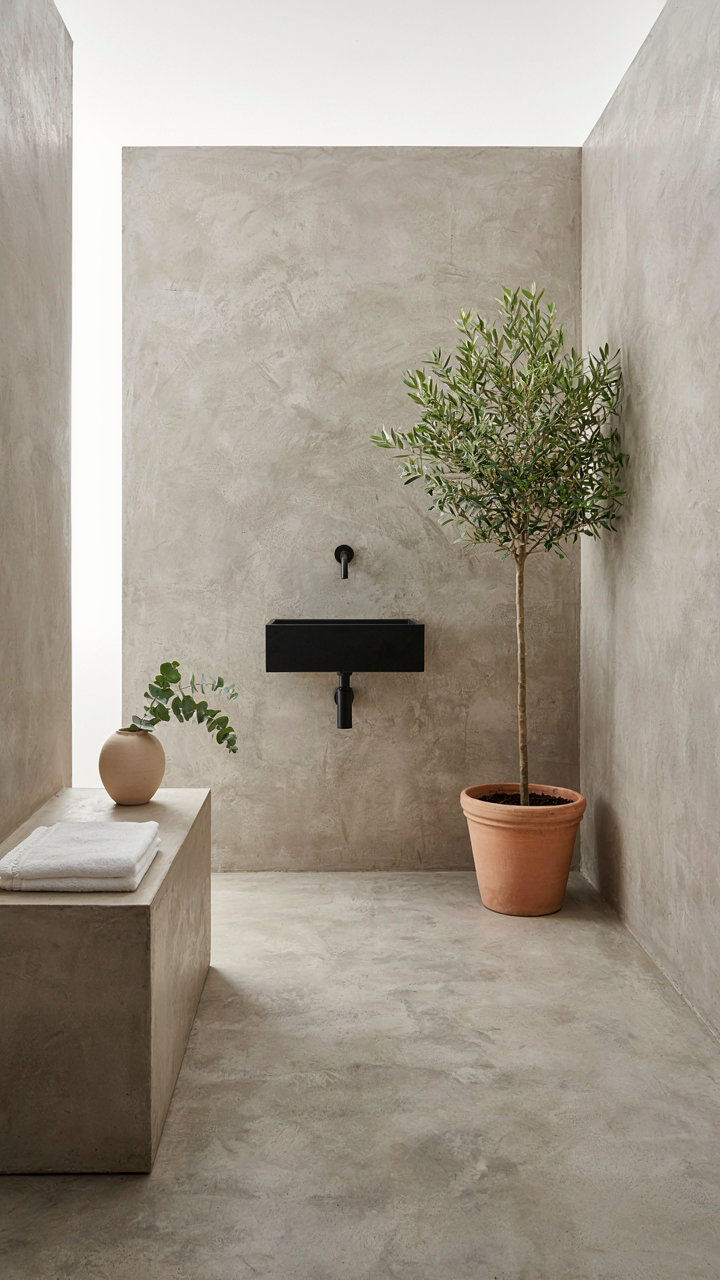
Scandinavian design emerged from resource scarcity and brutal climate. In a cabin where heating and space are finite, every item must justify its existence through function or durability, not status. Maximalism operates on addition. Nordic design operates on subtraction until nothing removable remains without breaking the system. One mirror, one light source, one finish—each chosen because the room fails without it.
Deprivation As Deliberate Strategy
Economics calls this constraint optimization. You strip away everything non-essential until the system performs at maximum efficiency. A Scandinavian cabin bathroom applies this framework ruthlessly: minimal fixtures, single material language, no decorative surplus.
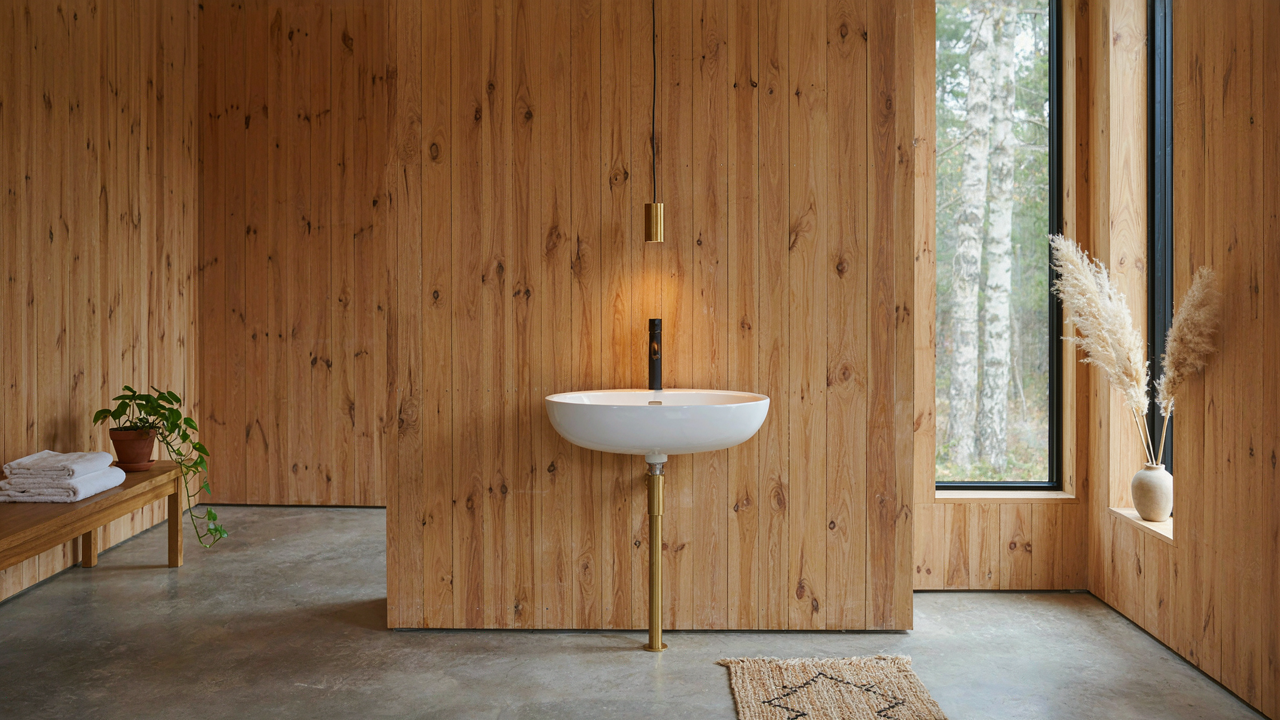
The deprivation isn’t poverty. It’s precision. Bare wood walls aren’t sparse because the owner lacks options. They’re present because wood absorbs humidity better than painted drywall, ages visibly to prove durability, and requires no replacement cycle. Concrete or stone floors aren’t austere—they’re practical heat conductors and require minimal maintenance in a climate where moisture damage is constant. Deprivation becomes the mechanism that eliminates future decision fatigue and repair costs. When you enter this bathroom and see nothing extraneous, you see the result of removing one decision at a time until only the functional structure remains.
Raw Materials: The Intentional Friction Of Natural Finish
Pine Bathroom: Sensory Grounding, Not Just Aesthetics
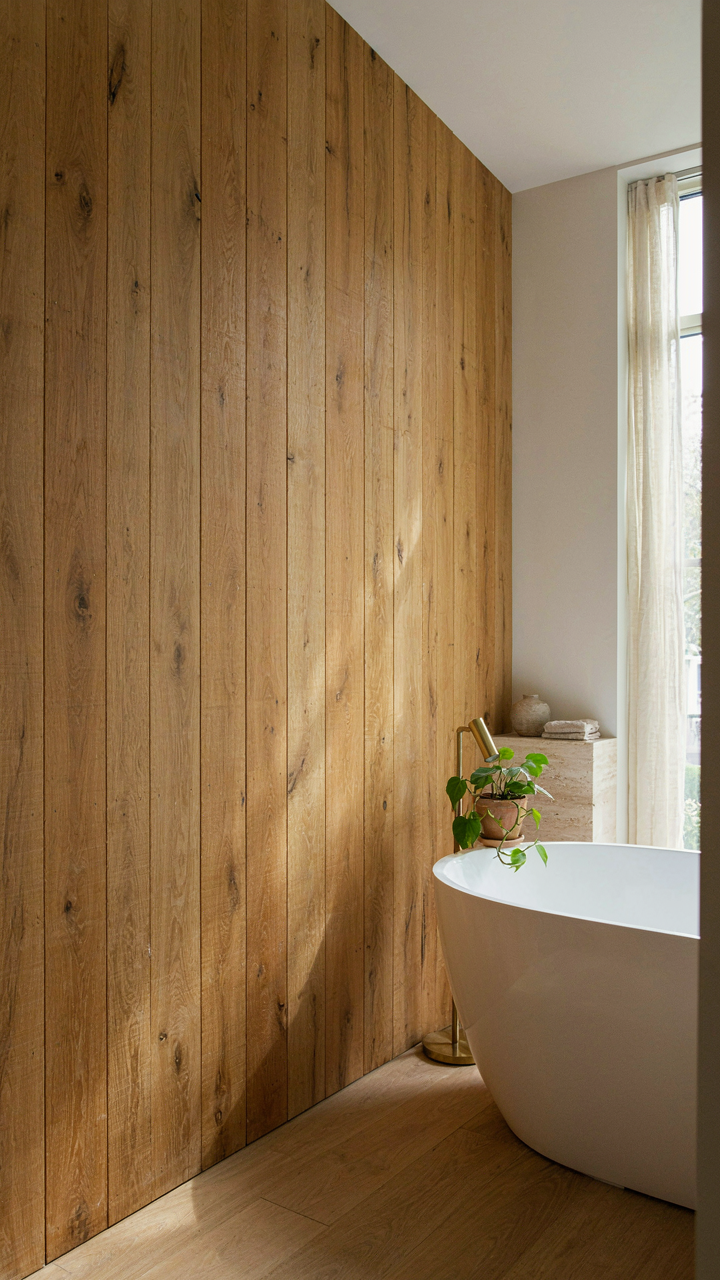
You want pine because it signals authenticity and costs less than marble. That’s the trap. The real mechanism is proprioception: your nervous system reads texture and grain as spatial information. Pine in a Scandinavian cabin bathroom grounds you neurologically. The wood doesn’t hide imperfection—it documents time. Knots, grain variation, and surface irregularity become anchors for attention instead of sources of anxiety.

Pine absorbs and releases moisture in seasonal cycles. This isn’t poetic. It’s physics. The wood swells and contracts predictably, which is why Scandinavian builders chose it for bathrooms specifically—movement doesn’t crack it like harder materials do. Unfinished or lightly oiled pine stays visibly honest about this process. You see the wood respond to humidity rather than pretend static perfection. That visibility is what creates the psychological durability people mistake for “coziness.”
Unfinished Textures And Psychological Durability
The common advice says rough surfaces hold bacteria and mold. True and irrelevant. Bacteria colonize any surface with moisture and food. The actual variable is maintenance visibility. An unfinished wood surface in a bathroom shows dirt, water marks, and soap residue immediately. This forces regular cleaning—not out of obsession, but out of honest feedback. Finished surfaces hide degradation until failure happens suddenly.
Psychological durability in bathroom design follows an economic principle: skin in the game. When you can see the consequences of neglect in real time, you act. Unfinished textures demand interaction. You oil the wood, you dry spills, you sand rough spots occasionally. This isn’t burden. It’s participation. The texture compels you to notice and maintain your own space. When you stop maintaining it, the surface tells you. That feedback loop is what makes a Scandinavian cabin bathroom feel durable rather than just expensive.
Light Dynamics: The Scandi Bathroom’s Circadian Protocol
Window Placement Over Fixture Count
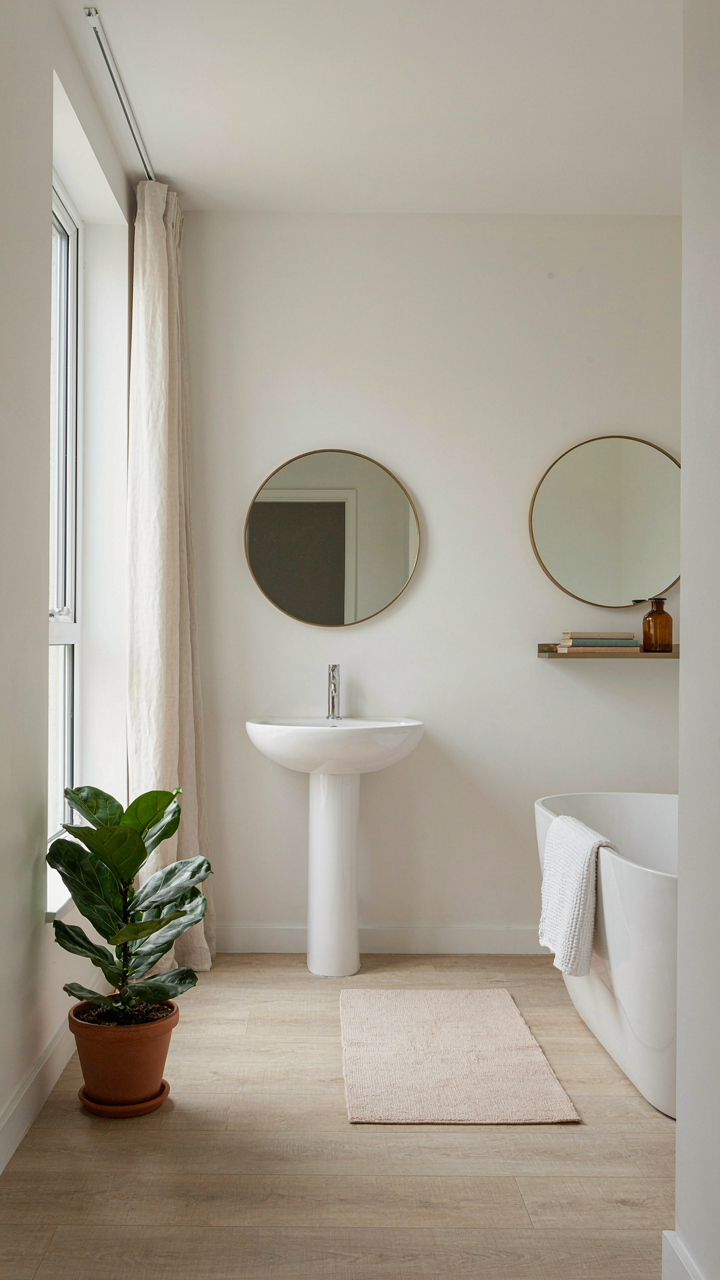
You want a bathroom that feels expensive without trying, and light is the cheat code everyone misses. The real mechanism here borrows from chronobiology: your circadian system doesn’t care about total lumens, it cares about timing and spectrum. Scandinavian cabin bathrooms win because they anchor on window placement first, artificial lighting second. A single north-facing window provides consistent, non-glare illumination all day. This beats four recessed lights fighting each other at 6 AM.

The common advice says “layer your lighting.” Wrong framing. The Scandi approach is subtractive: remove the need for artificial light during the hours you actually use the bathroom. Position your window to hit the mirror and sink zone between 7 AM and 10 AM, when most people shower or shave. Orient it away from the toilet. This isn’t about romance or mood. It’s operational efficiency that also happens to look cleaner than a bathroom drowning in downlights.
Shadows As Functional Enclosure
Enclosure in architecture means creating psychological boundaries within a space using form, not walls. The Scandinavian cabin bathroom uses shadow strategically to achieve this. Dark timber framing, recessed niches, and angled soffits don’t just look intentional—they compress the visual field and make a small bathroom feel complete rather than exposed.
Place your vanity lighting low and indirect, behind a timber ledge or into a recessed soffit. This creates shadow on the upper wall and ceiling, shrinking the perceived volume. The result is a space that feels private without claustrophobia. Install a single pendant or sconce at 18-24 inches above the mirror, angled slightly down. Avoid ceiling-mounted fixtures entirely in small cabins. They flatten the space and force you to rely on multiple sources, breaking the unified feeling the Scandi aesthetic demands. The shadow becomes the architecture.
The Scandi Bathroom’s ‘Less But Better’ Doctrine
Strip The Room Down To What Works
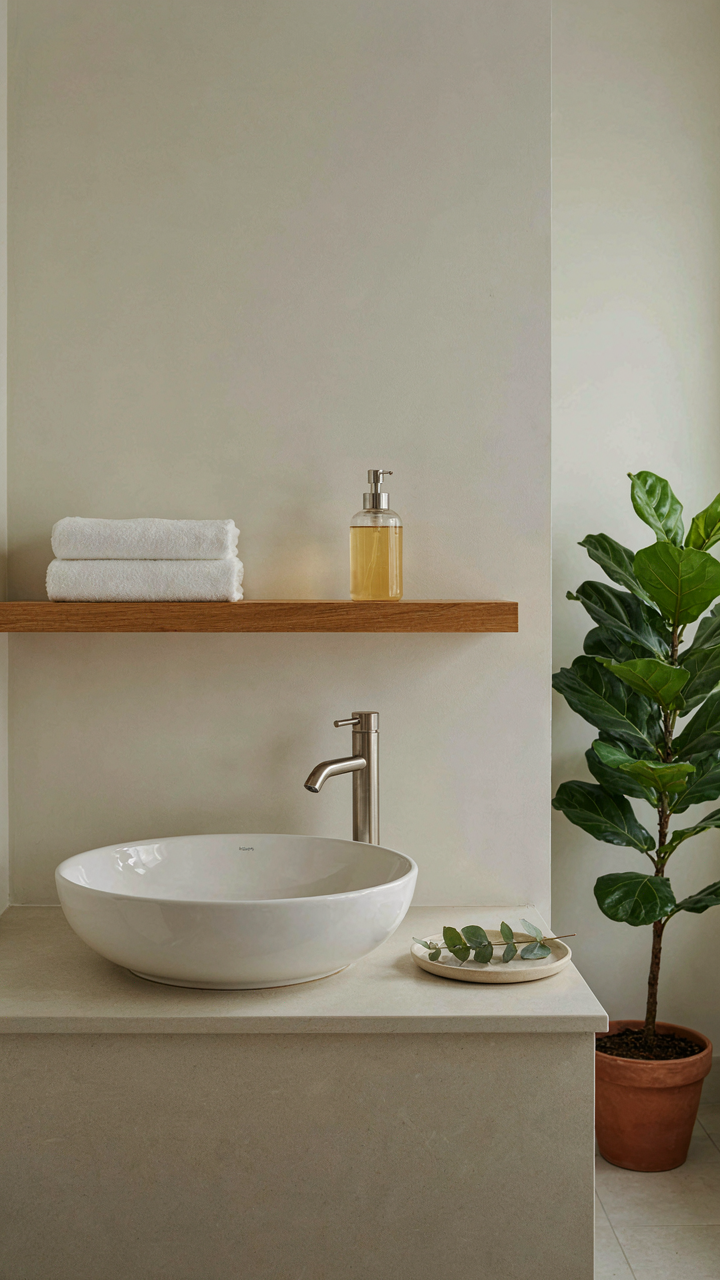
You want permission to own fewer things without feeling like you’re settling. The mechanism underneath Scandinavian bathroom design is pure constraint economics: when you remove the ability to add decoration, every object must justify its existence through function alone. This isn’t about aesthetics masquerading as philosophy. It’s about the hard choice to eliminate anything that doesn’t solve a specific problem.
Most bathrooms fail because they’re storage theaters. Shelves hold products nobody uses. Counters collect clutter that migrates nowhere. Scandinavian design strips this down by asking one question per item: does this shower caddy, mirror, or fixture do something the bathroom cannot do without it? If the answer is no, it leaves. The culling is ruthless because the alternative is a room that visually screams at you every morning.
Objects That Earn Their Place
Function is not a constraint in Scandinavian cabin bathrooms. It’s the only metric that matters. Each fixture, material, and surface must perform multiple roles or it gets removed. A towel bar isn’t just decoration. It’s heated storage. A mirror isn’t just reflective. It’s mounted to direct natural light or hide a medicine cabinet that serves actual medical storage, not aesthetic display.
- Heated towel rails: Dry towels while heating the room, eliminating the need for a separate radiator or decorative element.
- Recessed shelving: Built into walls to store essentials without protruding into the room, saving floor space and reducing visual clutter.
- Combination vanities: Sink, storage, and countertop integrated into one unit rather than three separate pieces.
- Multi-use lighting: Fixtures that provide task lighting, ambient light, and safety simultaneously without redundancy.
- Natural stone benches: Seating that doubles as design, requires no maintenance, and outlasts decorative alternatives by decades.
The protocol is simple: before installing anything, name its function. If you name two functions, it stays. If you can only name one and that one function already exists elsewhere in the room, it goes. This is how Scandinavian bathrooms stay calm instead of cluttered.
Temperature & Airflow: The Biofeedback Loop Of Cabin Bathrooms

Cold Water Exposure As Nervous System Training
You want the bathroom to feel like a ritual that makes you harder, not just cleaner. That’s the real draw. Cold plunges and contrast therapy work through a measurable biological mechanism: they train your parasympathetic nervous system to recover faster from stress. Scandinavian cabin design leans into this by keeping bathroom temperatures low and making hot water deliberate, not automatic. The contrast becomes a training tool.

Most cabins in Norway and Sweden don’t prioritize heated bathrooms because historically they were seasonal spaces. That constraint became a feature. When you step into a cold room and then into warm water, your body records a stress-recovery cycle. Repeat this daily and your nervous system adapts. The bathroom becomes biofeedback hardware. Install a simple wood-fired sauna nearby or use a rainfall shower with temperature control to engineer this deliberately.
Ventilation As Mental Reset Mechanism
Everyone says bathrooms need ventilation to prevent mold. True but incomplete. Ventilation is actually about airflow creating a psychological shift that mirrors neurological reset. The term comes from respiratory physiology: “tidal volume” measures air exchange in the lungs. Apply this to cabin bathrooms and you’re designing for actual air turnover that signals to your brain the space is alive, not stagnant.
Poor ventilation makes a bathroom feel like a box. Good ventilation, especially when you hear and feel the air moving, triggers a subtle autonomic nervous system downshift. Swedish cabin designs use passive ventilation through high and low vents rather than mechanical fans, leveraging temperature differentials between interior and exterior. This creates continuous, silent air exchange. Install vents at ceiling height and near floor level on opposite walls. Position them so air moves but doesn’t create drafts across the body during use.
Acoustic Minimalism: The Scandinavian Small Bathroom’s Silence Strategy
Sound Dampening For Cognitive Clarity
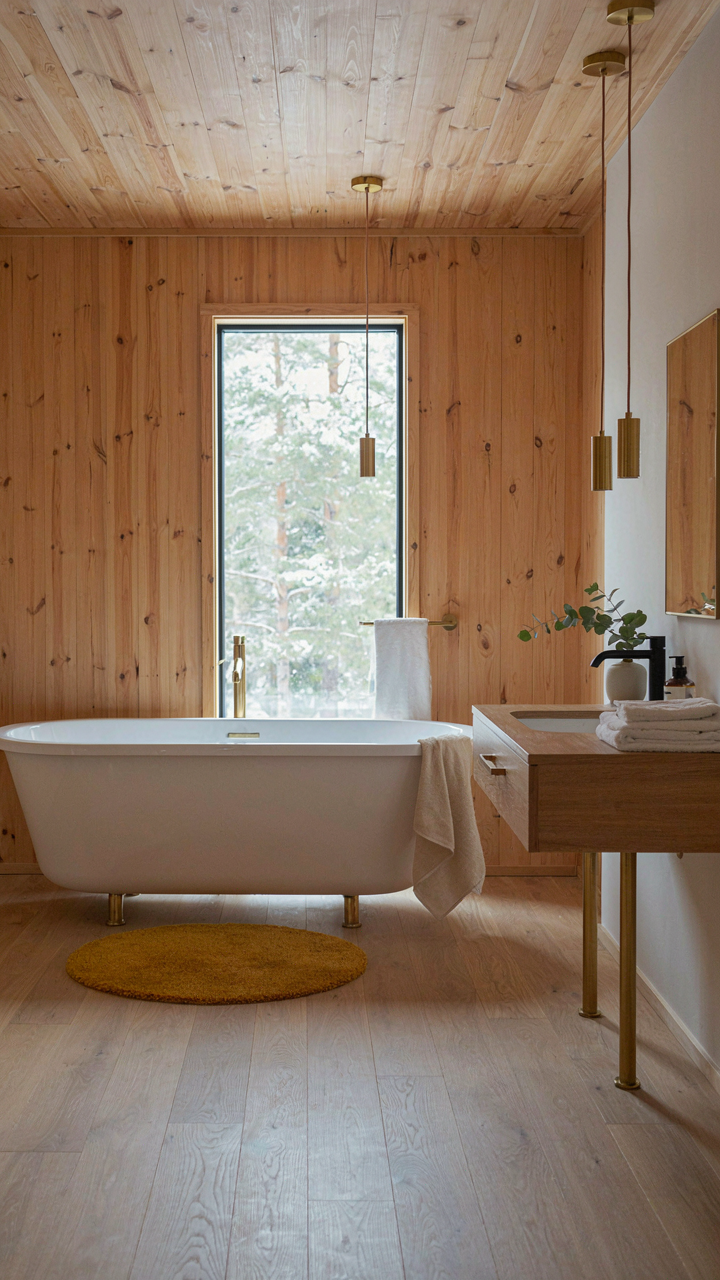
You want this space quiet because noise in a small bathroom destroys focus and triggers cortisol spikes. The mechanism is simple: hard surfaces bounce sound waves back at you, and a 5×8 foot box with tile walls amplifies every drip and exhale. Scandinavian design treats silence as a resource, not an accident. It’s built in.

The real solution isn’t soundproofing. It’s material selection that absorbs rather than reflects. Linen towels, wood paneling, and cork flooring kill sound where it starts. Most bathrooms make the mistake of treating acoustics as afterthought, slapping insulation behind walls that nobody sees. Scandinavian cabins use visible materials that work double duty: they look intentional and they actually function. Install unfinished or naturally finished wood on one wall, hang a wool rug, and choose matte ceramic over glazed tile.
Echo Reduction: Applying Architectural Acoustics Principles
Architectural acoustics borrowed its core principle from physics: sound travels in waves, and those waves need something to break their path. Apply this to cabin bathrooms by understanding that every flat, parallel surface creates standing waves where sound bounces between walls. A Scandinavian cabin bathroom solves this through geometry and material interruption, not technology.
Stagger your materials rather than create uniform surfaces. Pair smooth wood walls with textured linen curtains. Mount open shelving made from solid timber instead of glass. Keep the ceiling lower than typical bathrooms, which reduces the distance sound travels vertically. Soft furnishings—towel storage, a wooden stool, washcloths—become acoustic tools. The protocol is straightforward: identify parallel hard surfaces and interrupt them with natural, textured materials. You’re not decorating. You’re engineering silence into the room’s structure.
The Scandi Design Equilibrium: Why Balance Beats Bling
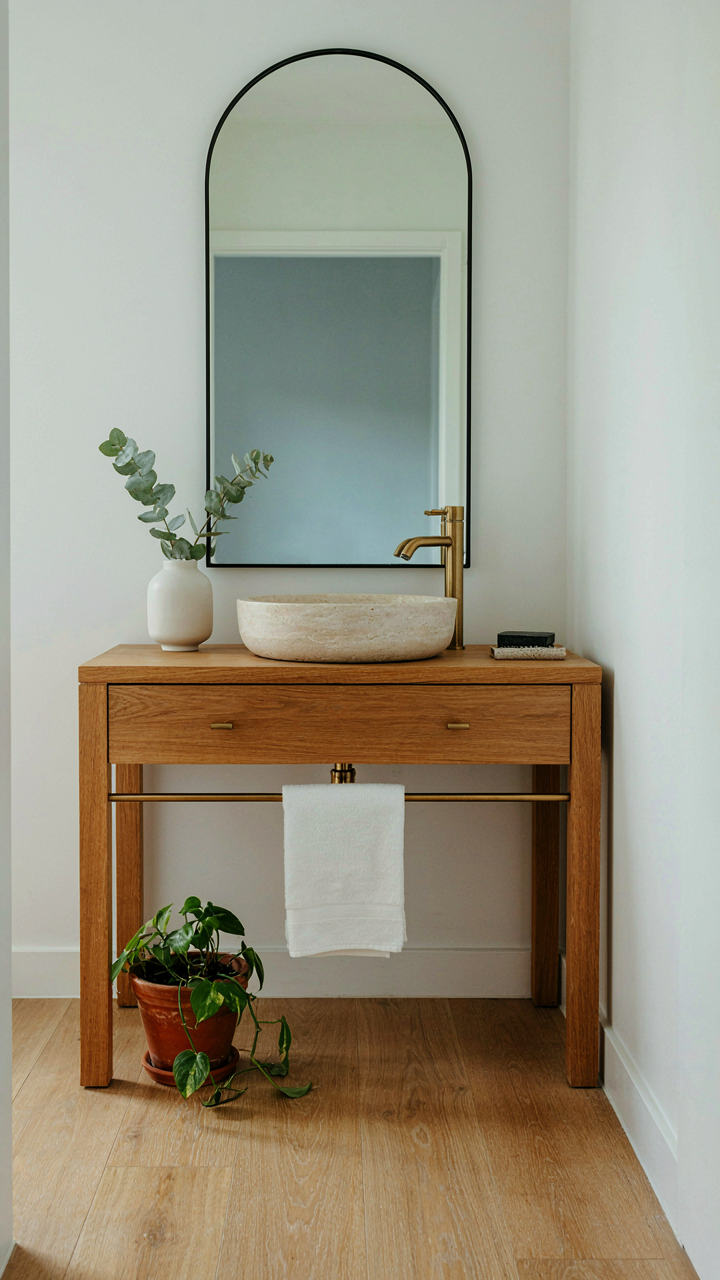
Wood, Stone, And Water In Proportion
You want this bathroom to feel curated, not accidental. That’s the real tension here. Scandinavian design doesn’t work through decoration—it works through ratio. The golden ratio borrowed from architecture and mathematics creates visual stability by controlling how much of each material dominates the space. In a Scandinavian cabin bathroom, this means wood, stone, and water surfaces occupy specific proportions rather than competing for attention.
The mechanism is simple: wood typically claims 40-50% of visual weight through cabinetry and walls. Stone handles 25-35% via flooring or a single accent wall. Water features—mirrors, the sink basin, fixtures—occupy the remaining 15-25%. This isn’t decorative theory. It’s material physics applied to perception. When you violate these ratios, the eye searches for a resting point and finds none. The space feels restless. Apply this by measuring your existing surfaces before adding elements, then adjust material placement until the eye stops hunting.
Asymmetry Mirrors Ecological Reality
Symmetry is boring because nature rejects it. Scandinavian design borrows from ecology—the study of how organisms and systems distribute resources without perfect mirroring. An asymmetrical bathroom layout feels intentional because it echoes how forests, water, and rock formations actually arrange themselves. The vanity doesn’t sit center. The mirror doesn’t hang equidistant. The storage breaks the visual grid.
This breaks the common advice that Scandinavian means minimalist-symmetrical. It doesn’t. It means organized-organic. The toilet sits off-axis. The towel rail heights vary. The wood grain runs in different directions across surfaces. You achieve this by sketching your layout with one feature intentionally off-center, then building secondary elements to balance visual weight rather than mirror position. The result feels natural because your eye recognizes the pattern—stability without predictability.
Tactical Imperfection: The Scandinavian Farmhouse Bathroom Advantage
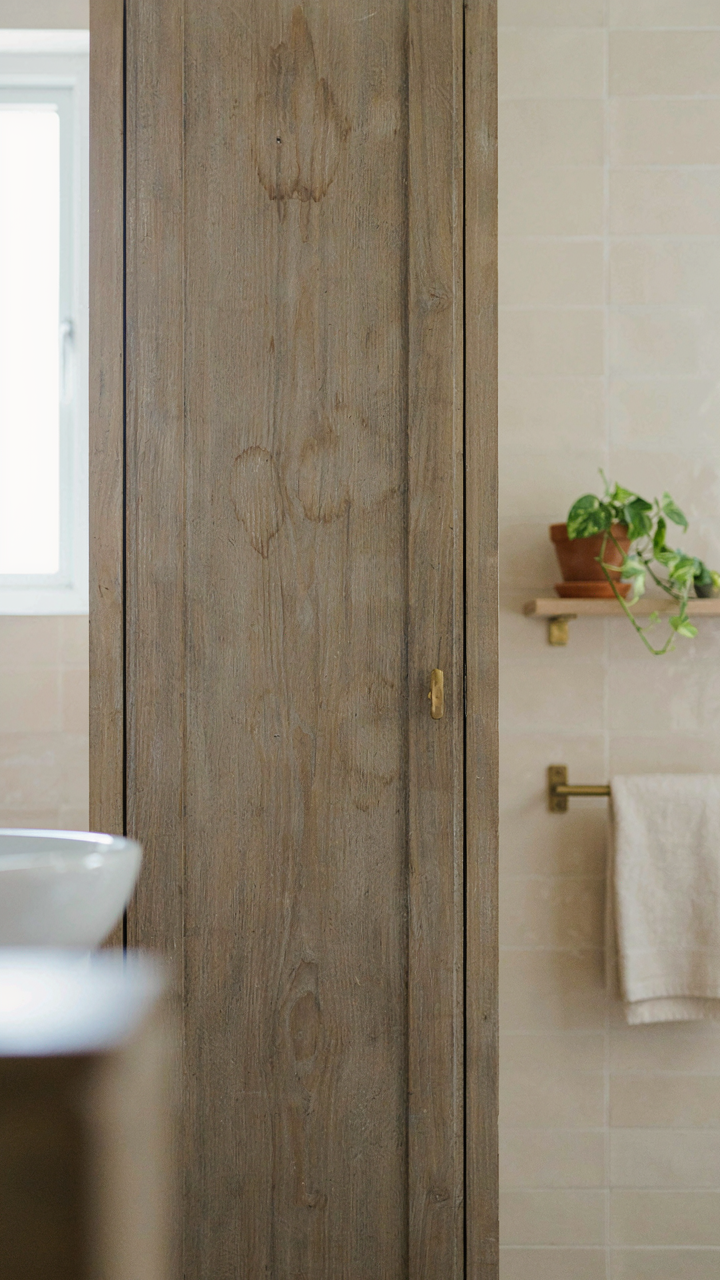
Worn Surfaces Tell The Real Story
You want imperfection to feel intentional, not like you failed to maintain something. That’s the real tension here. Scandinavian farmhouse bathrooms work because they use material degradation as a design language, not an accident. Think of entropy in thermodynamics: systems naturally move toward disorder. Scandinavian design doesn’t fight this. It frames visible wear on wood, stone, and metal as evidence of use, not negligence.

The mechanism is simple. A bathroom with fresh paint and pristine fixtures demands constant maintenance or looks neglected within months. A bathroom with weathered wood, patina on brass fixtures, and aged stone absorbs time visually. Worn surfaces actually improve with age because the design expects them to change. You choose materials that patina predictably: reclaimed wood that grays naturally, untreated steel that oxidizes, soap stone that darkens with moisture. The bathroom doesn’t degrade. It matures.
Honest Materials Beat The Performance Illusion
Most bathroom design advice says maximize durability through engineered materials and sealants. This is wrong. Engineered materials require you to hide their decline with regular intervention. Honest materials decline visibly but remain functional for decades. A Scandinavian cabin bathroom uses raw wood, unsealed stone, and uncoated metals. These materials show their history without becoming unsafe or unusable.
When you stop fighting material change, you eliminate the maintenance trap. Unsealed wood in a bathroom cabinet will weather. It won’t rot if you choose stable species like pine or spruce, which Scandinavian builders knew. The wood simply grays. Oiled stone absorbs water marks that become part of its surface. Untreated metal rusts in controlled layers. None of this requires intervention. The alternative, sealing and resealing surfaces to maintain appearance, creates constant friction between your design and time itself.
The Quiet Natural Finish Isn’t A Design Trend; It’s A Mirror. It Reveals Your Ability To Find Stillness Amidst Noise, A Skill Far More Valuable Than Any Aesthetic
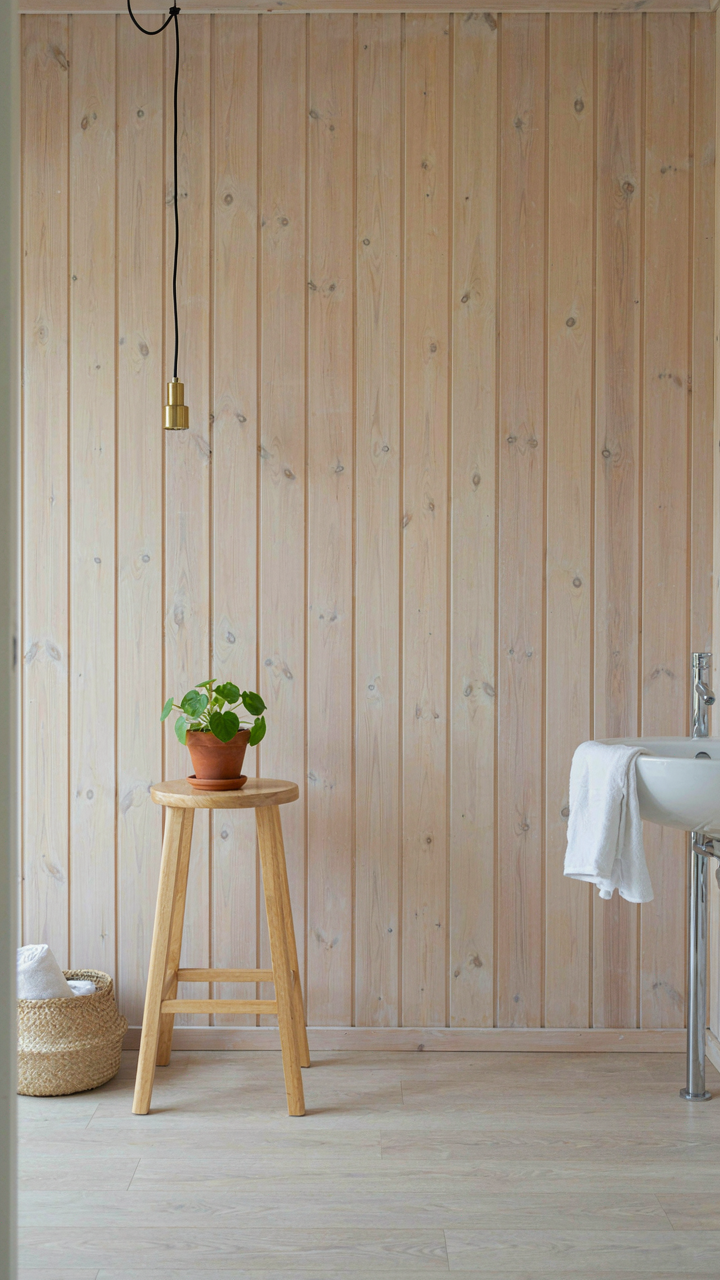
Most people renovate bathrooms to escape the world. They fail. They bring their chaos inside through color, texture, clutter. A Scandinavian cabin bathroom strips this away. Natural wood. Soft light. Emptiness. You walk in and either feel peace or anxiety. That’s the mirror. Your bathroom reveals whether you’ve learned to be still or just gotten better at hiding. Start today: remove three things from your bathroom that don’t serve function or calm. That single action teaches you more than any design rule. Design doesn’t change your life; discipline does.