The Faux Nordic Trap: Why “Authenticity” Is Your Blind Spot
What Instagram Calls Heritage
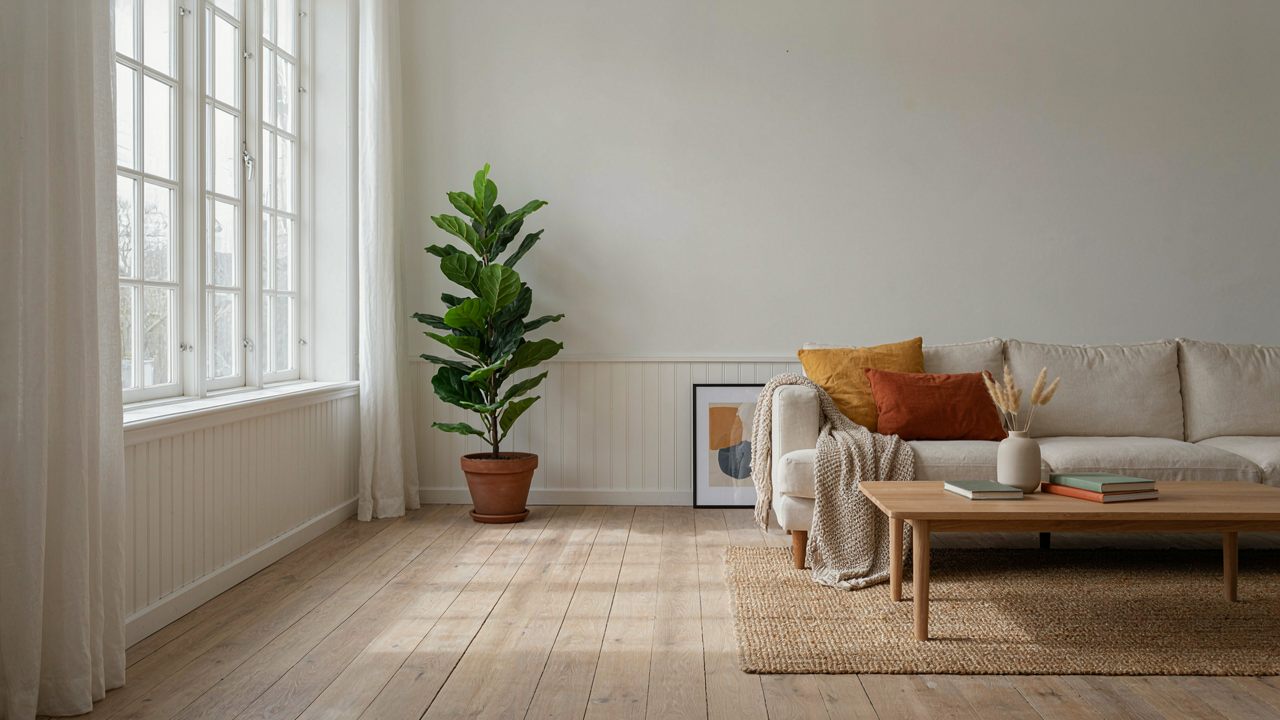
You want to believe your pale oak table and linen throws mean something because buying them feels like opting out of consumer culture. It doesn’t work that way. The mechanism is simple: marketing has weaponized the word “authentic” to sell you the opposite. What you’re seeing labeled Scandinavian farmhouse online is a curated fiction built to move inventory, not a reflection of how rural Nordic families actually lived or lived.
Real Scandinavian farmhouse design emerged from constraint and climate, not aesthetic choice. Pale oak was common because it grew locally and aged well in damp conditions. Linen dominated because flax thrived in the region and synthetic alternatives didn’t exist. The style wasn’t aspirational when it developed. It was what you built with what you had. Modern retailers strip away the function and sell the silhouette as a status marker instead.
The Commercialization Reversal
Here’s what nobody says directly: the more “authentic” a Scandinavian farmhouse product claims to be, the less connected it is to actual farmhouse design principles. This is supply chain economics in action. A manufacturer wants your money, not your education. They photograph reclaimed wood in a studio, apply Instagram filters, use words like “heritage” and “timeless,” and the narrative does the selling work instead of the object itself.
The commercialized Scandi aesthetic strips away the core logic: durability and utility. Modern versions prioritize visual consistency and Instagram-ability over longevity. A genuine farmhouse interior accepts asymmetry, worn surfaces, and functional clutter. The marketed version demands pristine pale oak, perfectly folded linens, and empty surfaces. You’re not buying design tradition. You’re buying a performance of minimalism designed to photograph well and feel aspirational. Spot the difference by asking whether each piece had a specific job in rural Nordic life or just looks good in a lifestyle feed.
Beyond Instagram: The Scandinavian House Interior Design Origin
When Form Follows What Actually Works
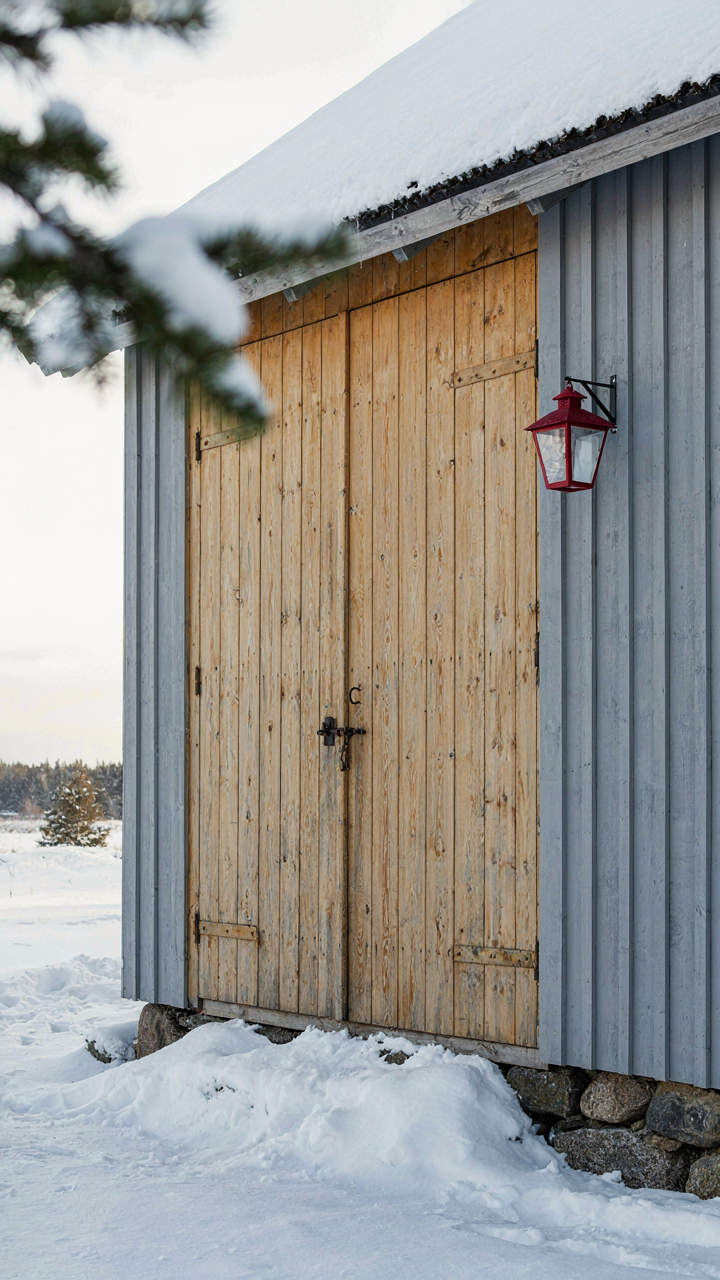
You want this style because it looks expensive and effortless. Here’s what actually happened: Scandinavian farmhouse design emerged from economics, not aesthetics. Rural Scandinavia had brutal winters, limited resources, and zero margin for waste. Every design choice solved a real problem first. Beauty came second, as a byproduct of solving it well. This is how functional design actually works.

The farms of Sweden, Norway, and Denmark operated on survival logic. Families built interiors around heat retention, food storage, durability, and light during months of darkness. Pale oak and linen weren’t chosen for Instagram appeal. Pale wood reflected scarce light. Linen dried quickly and handled constant washing. Every material and color earned its place through repeated use, not trend cycles.
Constraint Creates Clarity
Economics is the mechanism here. Limited capital forces prioritization. Scandinavian farmers had to build systems that worked indefinitely with minimal replacement. They couldn’t afford decorative elements that broke or required maintenance. Pale Oak became standard because it grows locally, ages well, and doesn’t darken a room already starved for light. Linen was the only textile that stayed intact through boiling water and repeated wear.
This principle still applies. The best design emerges from real constraints, not unlimited choice. When you force yourself to use only what serves function, the visual result becomes cohesive without trying. Modern recreations fail because they start with “what looks good” instead of “what does it need to do.” The difference shows immediately in how the space feels to live in, not just photograph.
The Pale Oak Paradox: Light As A Design Constraint

Natural Light Shapes The Room Before Color Does
You want pale oak because it signals taste and restraint, but the real reason it works is spatial. Physics calls this albedo—the percentage of light a surface reflects back into space. Pale oak in a Scandinavian farmhouse functions as active reflectivity, bouncing winter light that barely crests the horizon back into the room’s depth. Without understanding this constraint first, you pick the wrong wood tone and blame the designer.
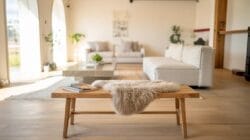
Scandinavian farmhouses weren’t built with large southern exposures. Northern latitude, thick walls, small windows—these weren’t aesthetic choices but survival mechanics. The interior had to work with limited, oblique light for eight months yearly. Pale oak solved this because it doesn’t absorb light; it recirculates it. A darker wood would darken the room further, which is why “cozy dark wood” advice fails in these contexts. You must assess your actual light hours before choosing any wood at all.
When Wood Stops Being Color And Becomes Lens
Pale oak isn’t pale because pale looks good. It’s pale because the grain structure and finish create optical depth without chromatic distraction. Light enters the wood, scatters through the grain, and exits diffused rather than absorbed. This is why varnish choice matters more than stain. A matte finish defeats the purpose entirely.
The Scandinavian farmhouse used linseed oil finishes, which cure into a semi-gloss that maintains reflectivity without creating glare. Modern polyurethane works the same way—it’s the glossiness that performs, not the product name. If your pale oak looks flat and dead, the finish is wrong, not the wood selection. Before refinishing, verify the sheen level sits between 25 and 45 percent gloss. Lower, and you’ve turned a reflective material into a light trap.
Linen Logic: Durability As The Ultimate Luxury
Why Linen Outlasts Everything Else You Own
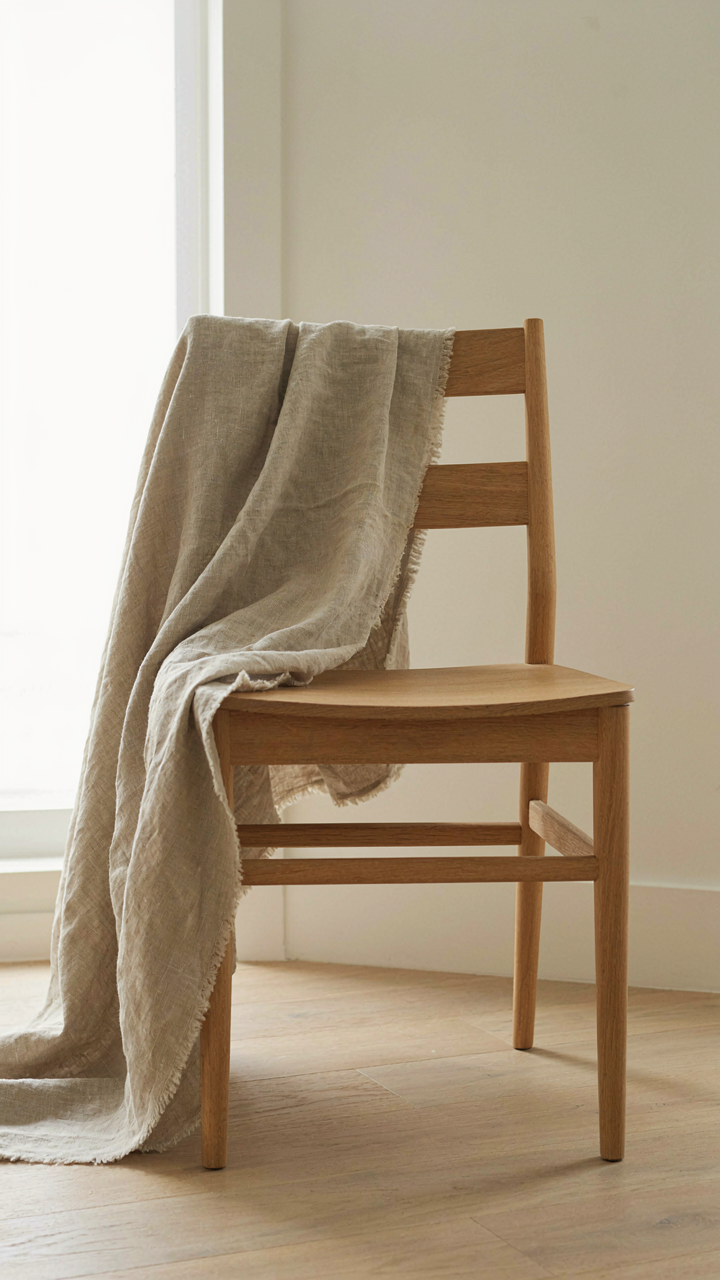
You want permission to spend more upfront and feel smart about it later. Here’s the mechanism: linen fibers are hollow and naturally resistant to degradation in ways cotton simply isn’t. Scandinavian farmers understood this centuries ago because their textiles had to survive brutal winters and constant use. Linen gets softer with washing, not weaker. The fiber structure strengthens under stress rather than breaking down like synthetics do.
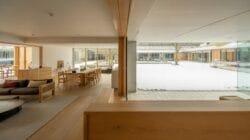
Most people think durability means stiffness. Wrong. Linen achieves longevity through a different path: the cellulose fibers bond tighter with each wash cycle while remaining breathable. A linen tablecloth or curtain from a Scandinavian farmhouse interior doesn’t fade into brittle memory. It develops character. Pale oak frames these textiles beautifully precisely because linen aging creates visual depth that matches the wood’s natural patina.
The Real Cost Math Of Buying Once
Economics teaches us about amortized cost. Apply this to scandinavian farmhouse interior textiles: divide the price by the realistic lifespan, not the aspirational one. A quality linen curtain costs three times what polyester costs. But linen lasts fifteen years while polyester degrades in five. The annual cost flips. You stop replacing, stop shopping, stop justifying new purchases to yourself.
Cheap textiles demand constant replacement cycles. You’re not saving money. You’re committing to perpetual consumption disguised as frugality. Linen breaks this trap because the investment actually accumulates value. A faded linen throw draped over a pale oak chair becomes an asset to the room’s visual hierarchy, not a failure you hide. The mechanism is simple: buy textiles that improve with time, then stop buying.
The Scandi Farmhouse Aesthetic: An Ecosystem Approach
Where Materials Come From Actually Matters
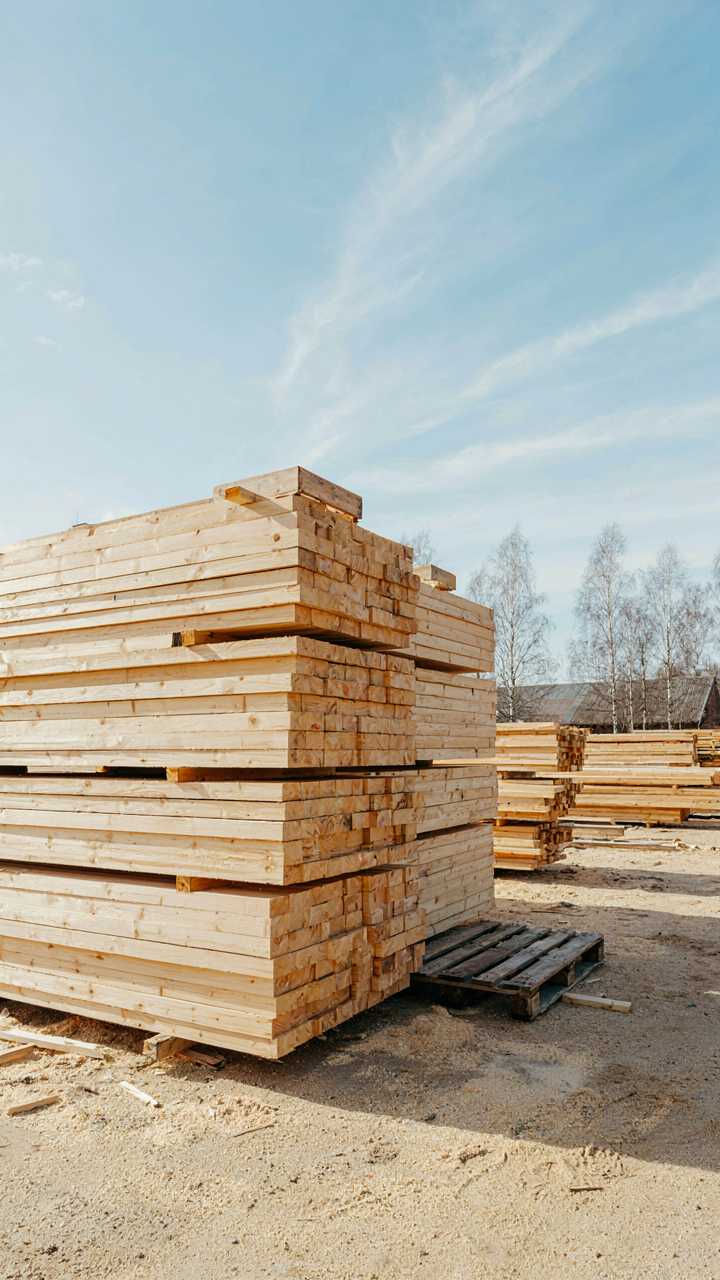
You want this style because it signals restraint and taste without trying too hard. Here’s the mechanism: Scandinavian farmhouse design emerged from material scarcity in specific geographic regions, not from aesthetic preference alone. Pale oak, linen, and untreated wood became standard because they grew locally and required no expensive finishing. The style wasn’t invented. It was what remained when transportation costs made imported materials impossible.

Sourcing matters because every piece carries embedded logistics. Pale oak comes from Scandinavian and Northern European forests where the slower growing season produces tighter grain and lighter color than oak from warmer climates. Linen originates from flax grown in cool regions. When you reverse this logic and source materials imported from elsewhere, you break the design’s actual foundation. The aesthetic collapses because you’ve removed the constraint that made it coherent.
How Pieces Talk To Each Other
This isn’t about finding beautiful objects that happen to coexist. Apply ecology’s concept of niche specialization to farmhouse interiors: each element occupies a functional role that prevents competition while creating interdependence. A pale oak table doesn’t sit alone looking noble. It anchors a room by providing the only visual mass, forcing every other element to defer to its presence.
The common advice is to just follow a color palette. Wrong. The real mechanism operates through material weight and visual load distribution. Linen curtains, light wood, and whitewashed walls exist as a system because they all recede equally. Nothing dominates except the oak. This creates rest for the eye instead of visual chaos. The setup works only when you understand that each material type occupies a specific visual frequency, and all frequencies must coexist without screaming for attention at once.
Modern Scandinavian Cabin Interior: The “Frictionless Flow” Protocol
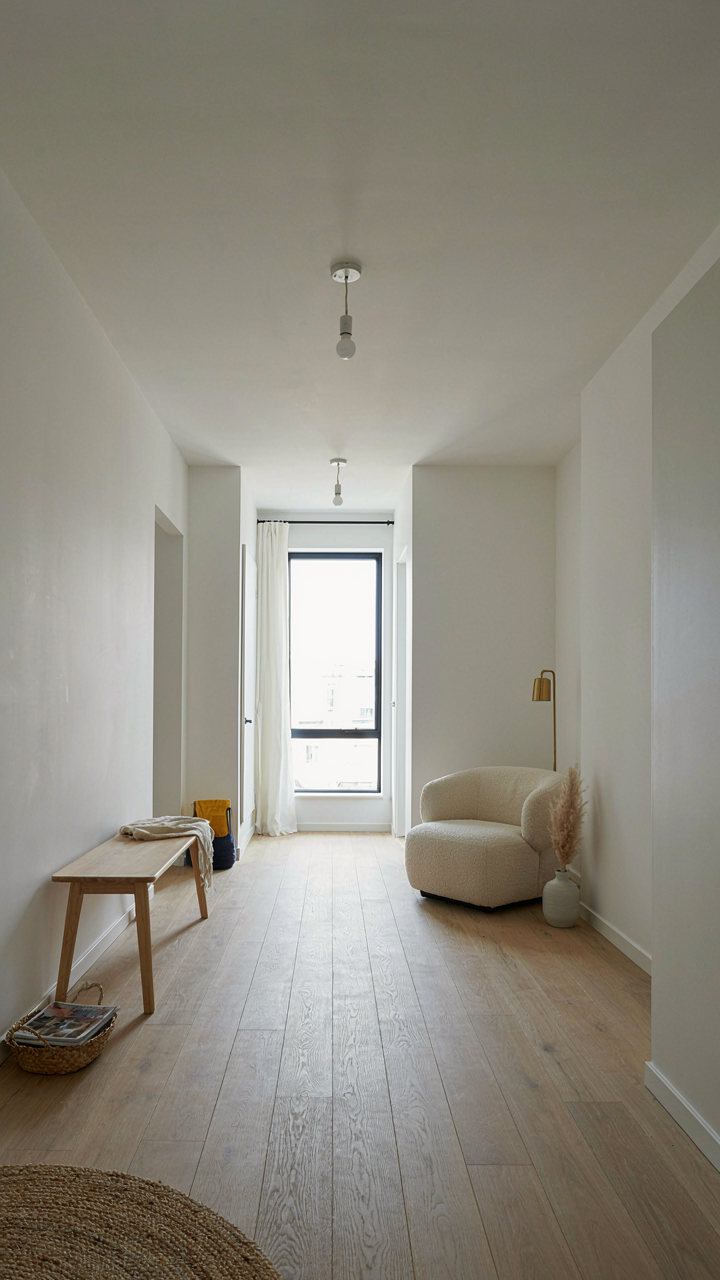
Surfaces That Stay Quiet
You want your home to feel calm because you’re exhausted and can’t admit it. The mechanism here borrows from information theory: cognitive load is the amount of mental processing your environment demands. A Scandinavian farmhouse interior minimizes visual noise by treating surfaces like a communication system. Empty space isn’t laziness. It’s design that doesn’t scream for attention.

Pale oak and linen work because they absorb visual demand rather than generate it. A wall lined with objects creates decision fatigue before you’ve even started your day. Scandinavian farmhouses historically used bare wood and fabric precisely because rural life was demanding enough without your interior competing for mental bandwidth. One shelf holds three items instead of twelve. The kitchen counter stays clear except during meal prep. This isn’t about perfection. It’s about removing the friction between you and function.
Paths Without Obstacles
Movement through space should follow physics, not decoration. The real mistake people make is treating kitchen layout and bedroom placement as separate from their daily routine. In Scandinavian farmhouse design, traffic patterns were determined by work necessity, not aesthetic balance. Your coffee maker sits where you grab it first. Your coat hangs where you exit. Your linens store where you change them.
Pale oak furniture in a farmhouse layout uses proportion to guide you. A low linen cupboard acts as a visual anchor at the end of a hallway. The dining table sits where light naturally pools. Each placement serves movement before it serves style. Remove one decision point per room. When you stop thinking about where things are, you start noticing what actually matters. That’s the protocol: eliminate friction until your body navigates without thought.
Organic Scandinavian Interior: The Biomimicry Principle
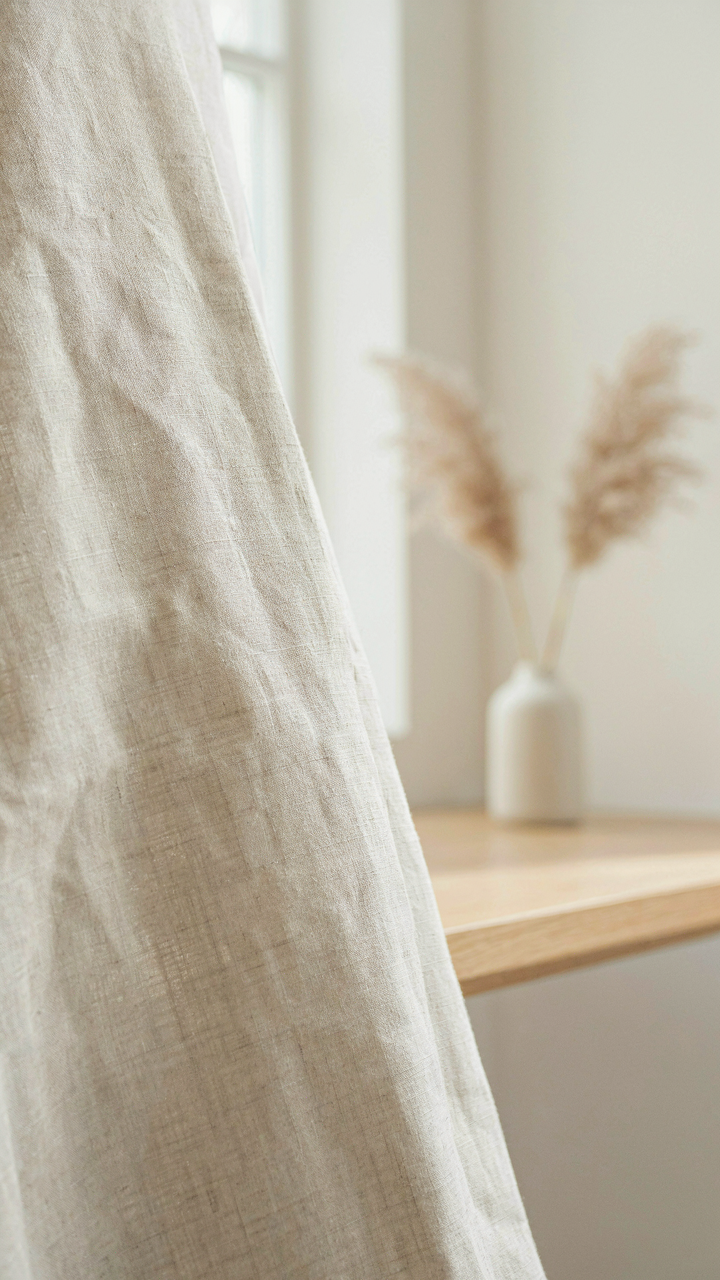
Patterns That Work Without Trying
You want this room to feel intentional without looking designed. That’s the real fear underneath. The mechanism is borrowing from biology: in nature, efficiency and beauty are the same thing because waste doesn’t survive. Scandinavian farmhouse design applies this principle directly. Pale oak grain, linen weave patterns, and layered textures aren’t decorative choices. They’re structural patterns that emerged from materials behaving under stress over decades of use.
Raw linen shows its thread structure. Pale oak exposes growth rings and medullary rays. Neither hides its construction. This honesty reads as intentional restraint because it mirrors how natural systems organize themselves. The farmhouse kitchen didn’t use linen curtains for aesthetics. Flax grew in Nordic regions, linen was practical, and the weave pattern became beautiful because repetition solved a problem efficiently. Copy this mechanism by selecting materials that show their honest structure instead of concealing it.
Efficiency Over Ornamentation
The common advice says to strip down and simplify. That’s lazy and wrong. Real efficiency isn’t about owning less. It’s about every element doing multiple jobs simultaneously. Biomechanics teaches this: organisms eliminate redundancy and stack functions. A pale oak beam in a Scandinavian farmhouse interior serves as structure, visual weight, thermal mass, and aging timeline all at once. One object, four purposes.
This stacking prevents the empty minimalist look that reads as expensive sterility. When you select materials based on functional overlap instead of visual trend, the space gains depth without clutter. Linen upholstery breathes and ages visibly. Pale oak absorbs stains that map your life into the material. Wool rugs insulate and wear into patterns showing traffic flow. The action step: before adding any element, identify at least two functions it must serve beyond appearance.
The Scandinavian Kitchen: Utility As The Core Commandment
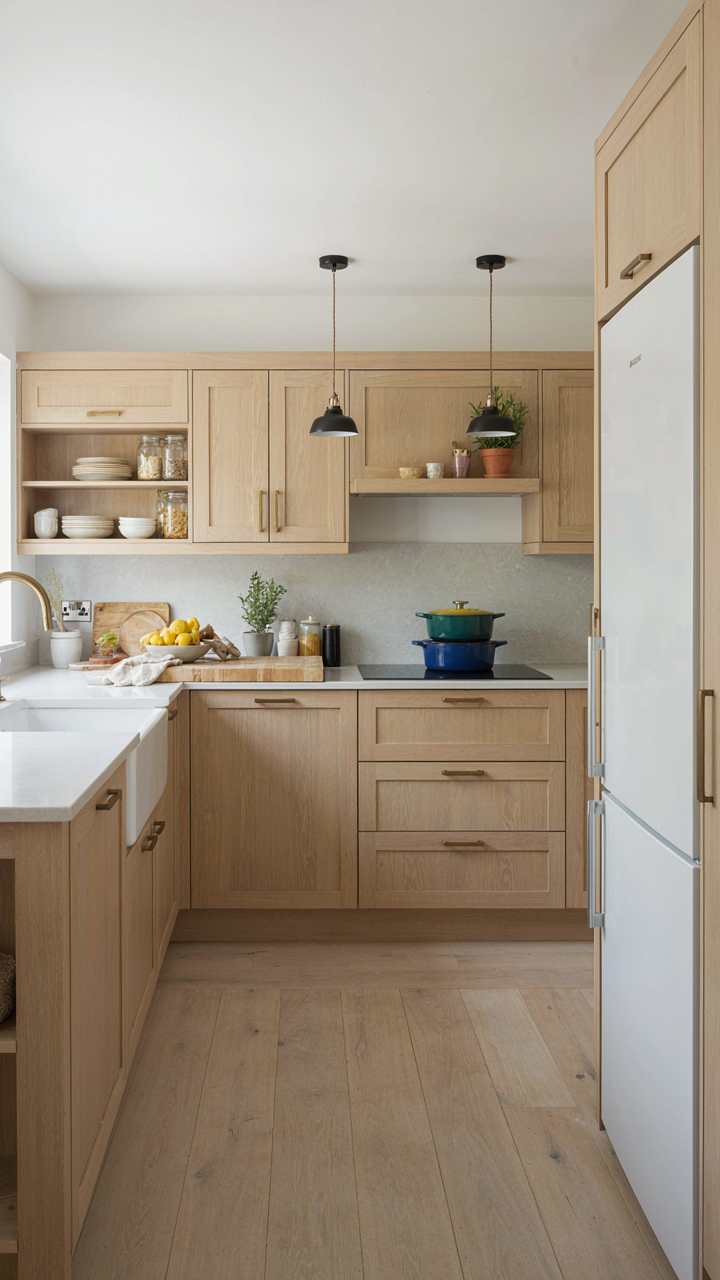
Kitchen Layout For Peak Productivity
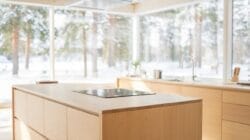
You want the kitchen to feel calm because you’re secretly worried yours looks chaotic and reflects poorly on you. The real mechanism is simple: Scandinavian farmhouse kitchens apply ergonomic principles from industrial workflow design. The work triangle—sink, stove, refrigerator—dictates movement efficiency. Pale oak cabinetry at standard heights (36 inches) and counters at 34-36 inches eliminate unnecessary bending and reaching. Distance between stations should stay under 26 feet for minimal wasted steps during meal prep.
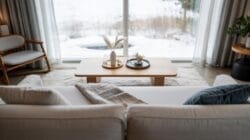
The common advice about “flow” is vague nonsense. What matters is measurable friction. A Scandinavian farmhouse kitchen reduces friction by positioning the stove perpendicular to your dominant hand’s side, placing the sink 3-5 feet away, and storing daily-use items between shoulder and waist height. Pale oak shows wear patterns clearly, forcing you to notice which zones demand repositioning. This feedback loop is what separates functional design from Instagram theater.
Essential Storage Categories And Placement
Storage in Scandinavian farmhouse kitchens operates on the inventory principle from logistics: every unit occupies a designated slot with zero ambiguity about its location or purpose. This removes decision fatigue during cooking and prevents duplicate purchases. Open shelving in pale oak displays items that earn visibility through frequency of use or aesthetic contribution. Closed cabinetry below counters houses seasonal tools, specialty equipment, and bulk supplies.
- Daily-use vessels: Bowls, cutting boards, and knives live in the closest accessible zone to prep areas. Pale oak drawers with dividers prevent shifting and damage.
- Cooking equipment: Pots, pans, and lids store near the stove in lower cabinets. Weight distribution matters—heavy items stay below shoulder height.
- Dry goods: Grains, flours, and pantry staples occupy upper closed shelves away from steam and temperature swings. Airtight containers in uniform sizes reduce visual noise.
- Serving and entertaining: Plates, glasses, and linens occupy mid-height open shelving. Their pale oak backdrop and linen placement make them functional decor.
- Cleaning and maintenance: Brushes, cloths, and supplies live in one dedicated lower cabinet. Containment prevents visual sprawl and keeps work surfaces clear.
The Scandinavian farmhouse kitchen demands one non-negotiable protocol: assign every object a specific shelf or drawer before it enters the kitchen. This means measuring your actual containers, photographing shelf depths, and testing accessibility before purchase. No provisional storage. No “I’ll figure it out later.”
Scandinavian Cottage Interior: Cultivating Deliberate Imperfection
Time And Wear As Design Currency
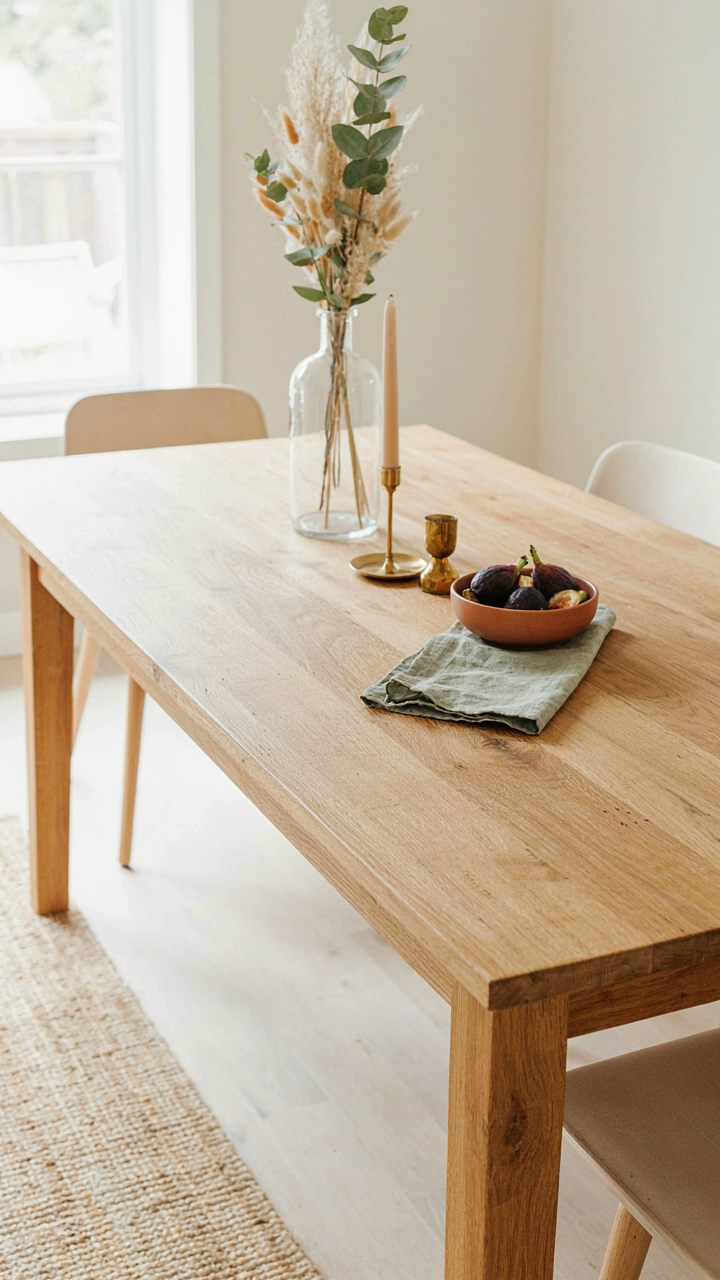
You want permission to stop refinishing everything because perfection feels sterile and you’re tired. Here’s the mechanism: wabi-sabi, the Japanese aesthetic principle, maps onto Scandinavian farmhouse design through entropy. Both systems treat visible decay not as failure but as evidence of use and time. A scratched pale oak table documents decades of meals. Worn linen shows texture that new fabric cannot manufacture.
Swedish and Norwegian farmhouses were built to last centuries with repair, not replacement. The aesthetic emerged from necessity, not philosophy. Worn floorboards, faded paint on walls, exposed wood grain darkened by age—these carry legitimacy because they cost nothing to achieve and everything to fake. Pale oak naturally develops deeper honey tones and grain visibility as it ages. This is not nostalgia. It is the material telling its history.
Objects That Carry Provenance, Not Just Purpose
Most design advice tells you to curate for “character.” That is vague enough to mean nothing. What actually matters is whether an object has a traceable reason for being in your space beyond aesthetics. A hand-thrown ceramic bowl from a local potter carries information. A mass-produced linen throw with a generic tag does not.
Scandinavian farmhouse interiors functioned as repositories of functional inheritance. Furniture and textiles moved through families. Pieces showed repair marks from previous owners. This is the opposite of the current design culture, which treats objects as disposable style assets. Source items with documented makers, visible wear patterns, or family history. A pale oak dresser with one refinished drawer tells a better story than a pristine replica. Verify the maker when possible. If you cannot trace it, question whether it belongs.
Modern Scandi Farmhouse: Decoding True Minimalism
What Actually Gets Cut
You want permission to call your space minimalist without doing the work. Here’s the mechanism: Scandinavian farmhouse minimalism isn’t about owning less stuff. It’s about owning only what performs multiple functions or holds genuine utility. Pale oak and linen work because they solve problems, not because they look restrained. A linen curtain blocks light, softens sound, and ages visibly without replacing. That’s the trade.
The common advice says “remove things until it feels calm.” Wrong. Remove things until everything left earns its place through function or daily use. Pale oak furniture in farmhouse interiors stayed because it withstands rural wear, takes finish beautifully, and fits the material palette of working spaces. A decorative object that doesn’t function gets removed. A simple wooden shelf that holds weight and displays necessary items stays. The distinction matters tactically.
The Actual Cost Of Excess
Cognitive load theory from psychology explains this: every item in your visual field taxes your attention span. A scandinavian farmhouse interior minimizes cognitive friction by eliminating visual noise. Your brain stops processing clutter and allocates that energy elsewhere. This isn’t mystical. It’s how attention works. Fewer objects means fewer decisions, less scanning, reduced mental drag throughout the day.
The real benefit isn’t feeling peaceful. It’s performance. When your environment demands nothing from your focus, you have more bandwidth for work, conversation, or rest. Pare your scandinavian farmhouse interior to pale oak, linen, and functional pieces only. Document what stays for one week. Track whether you actually use it. Remove anything unused by day eight.
The Real Obstacle Isn’t Finding The Right Shade Of Pale Oak And Linen, It’s Your Inability To Define True Value Beyond Aesthetics
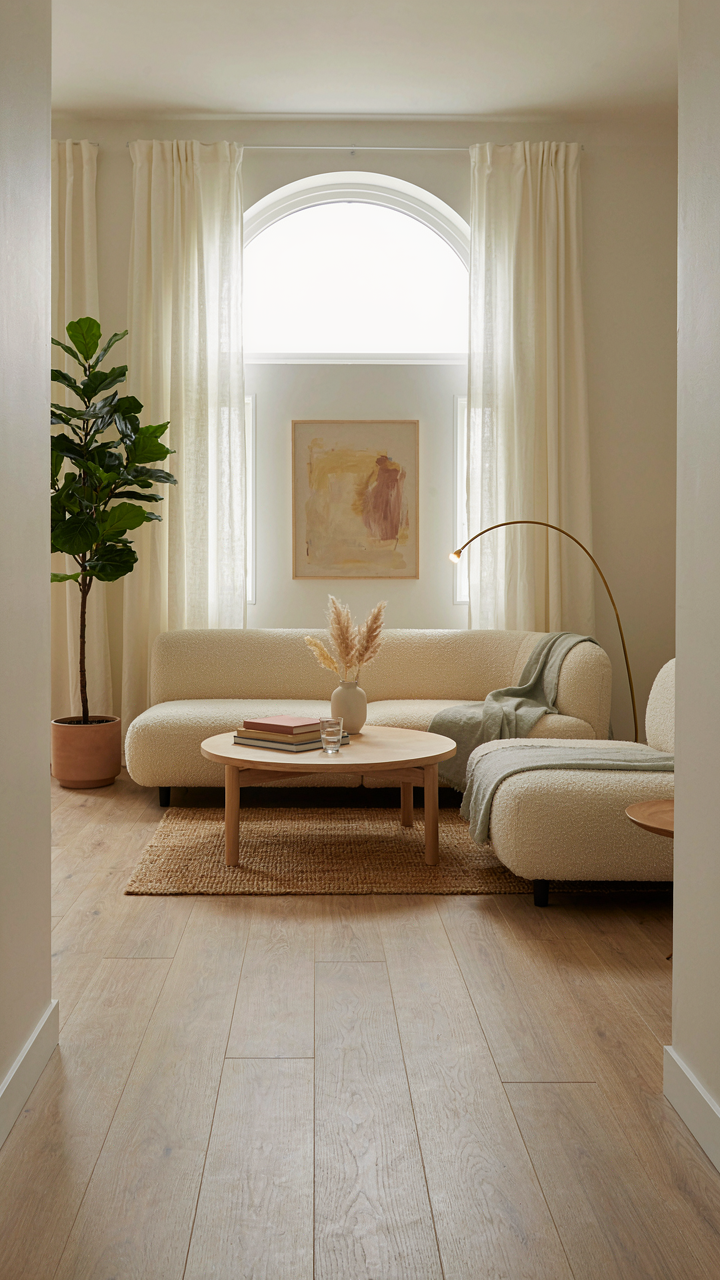
Most people chase a Scandinavian farmhouse interior because it photographs well. They buy the pale oak, drape the linen, and feel empty. The real move is backward. Stop collecting objects and start asking why simplicity actually works for you. Does it reduce decision fatigue? Does it create breathing room in a chaotic life? Name it. Live it. Then your space becomes an extension of that decision, not just a pretty backdrop. Your home should solve a problem you actually have, not broadcast a problem you invented on Instagram. Build from function first, beauty follows.