
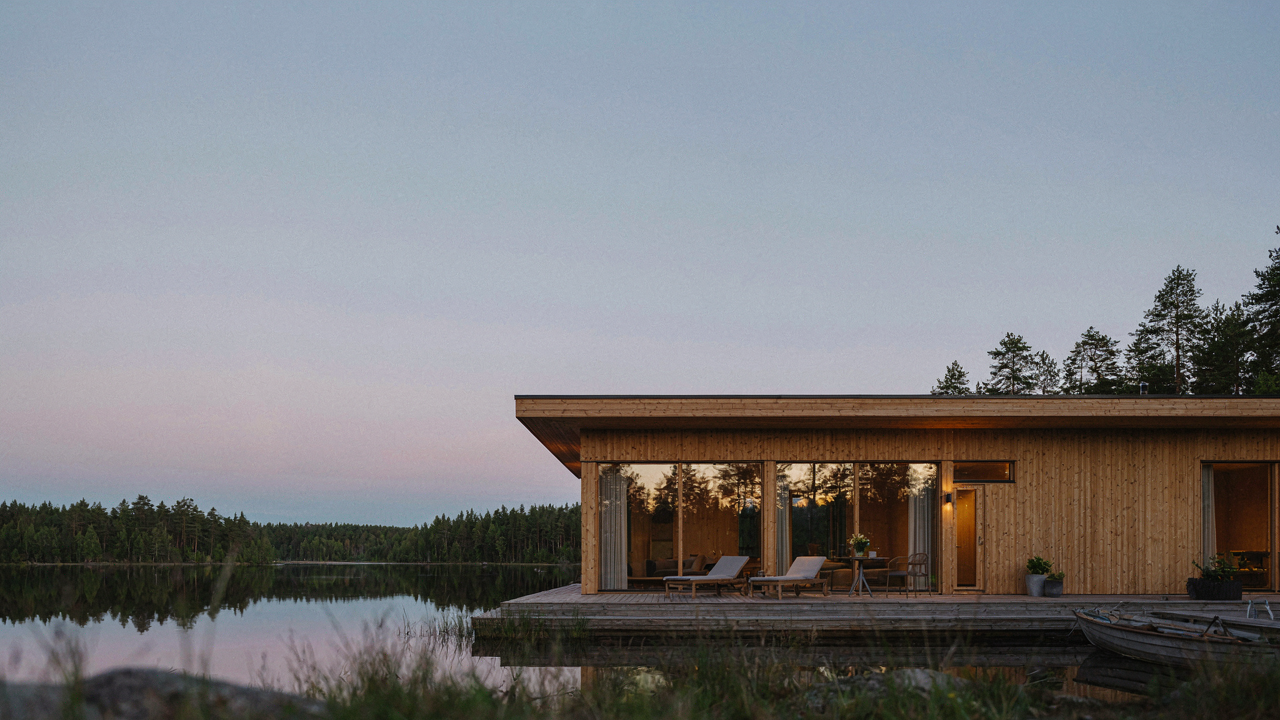
The Nordic Cabin: Beyond Instagram Filters
What Actually Matters In A Scandinavian Space
You want people to know you understand restraint. That’s the real reason you care about authenticity here. But authenticity isn’t about aesthetic purity or moral superiority. It’s a practical mechanism: spaces built to solve real problems outlast trends because they don’t depend on interpretation. A Scandinavian lake house works because every element serves function first, appearance second. That reversal is the whole point.
The Nordic design tradition emerged from scarcity and harsh climates, not philosophy. Long winters meant materials had to perform. Interiors reflected what worked, not what looked intentional. Surfaces remain simple because upkeep matters when you’re isolated. This isn’t minimalism for its own sake. It’s the output of constraint. Your lake house should mirror that logic: build for use, not for the photograph.
Materials That Function Before They Decorate
Borrowed from industrial systems thinking, load-bearing design asks what each material must carry, physically or psychologically. In a Scandinavian lake house, this means wood doesn’t exist for warmth or texture. It exists because it performs across temperature swings, handles moisture, and repairs cleanly when damaged. Everything operates as a load-bearing system.
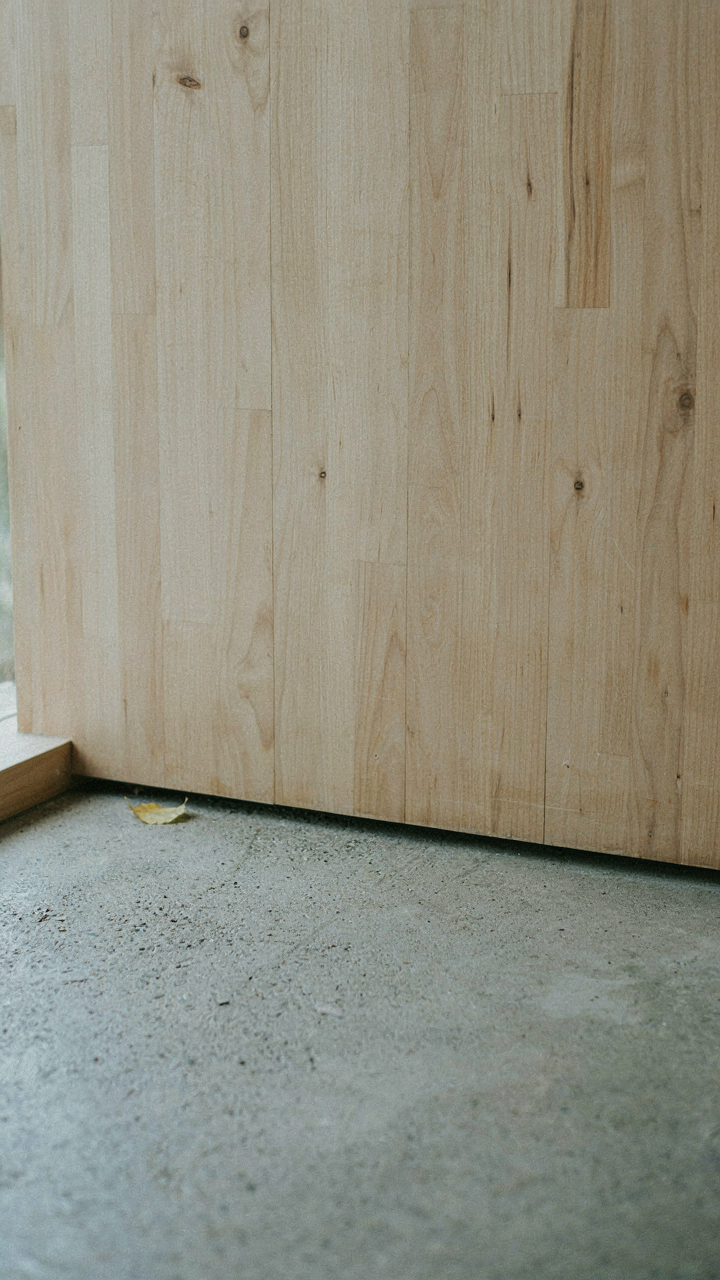
Spruce and pine dominate Nordic interiors because they’re locally abundant and predictable under stress. Birch appears in furniture and flooring for similar reasons: it’s hard enough to take repeated contact. Concrete floors work in modern Scandinavian builds because they regulate humidity and require minimal maintenance in damp conditions. Stone around fireplaces and foundations isn’t chosen for beauty. It’s chosen because it resists thermal cycling without degrading. Select materials for what they do in your specific climate zone, then accept that appearance is what results from performance.
Modern Scandinavian House: The Deceptive Simplicity Protocol
Constraint As Design Language
You want minimalism because you think it signals taste and control. The real mechanism is simpler: Scandinavian design treats constraints like an engineer treats load limits. In systems thinking, constraint forces optimization. A Scandinavian lake house doesn’t minimize for aesthetics—it minimizes because the climate and geography demand it. Fewer surfaces mean less heat loss. Fewer objects mean faster maintenance in short summers. The visual result feels intentional. It isn’t. It’s just what survives.

Norwegian and Swedish lake cultures developed this approach over centuries, not decades. Harsh winters and isolation created genuine pressure to eliminate redundancy. What you’re buying into isn’t a philosophy. It’s a solved problem. The design doesn’t feel sparse because someone decided sparse looks good. It feels sparse because anything else would fail.
Intention Over Decoration
Most minimalism advice is wrong. People think removing things makes a space feel calm. That’s not the mechanism. Removing things that serve no function stops your brain from processing irrelevant information. Decoration is a tax on attention. A Scandinavian lake house removes that tax systematically. Every object either functions or it leaves.
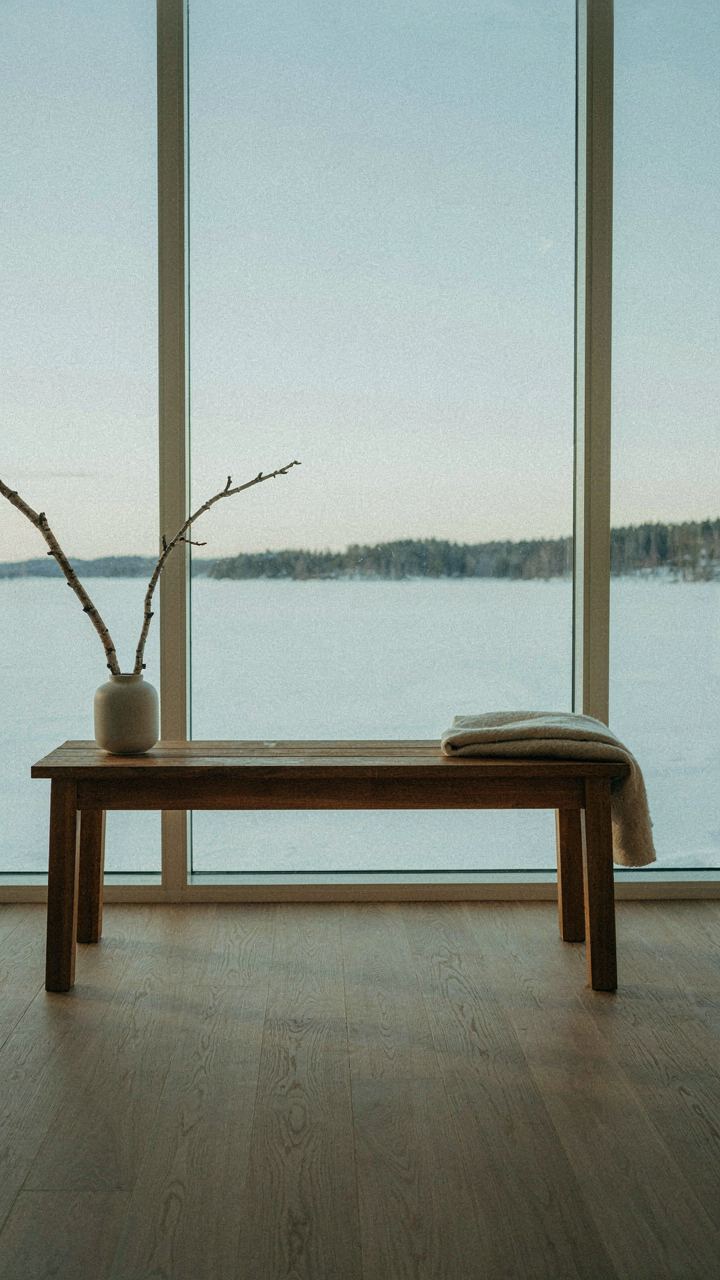
This doesn’t mean empty rooms. It means every piece earns its place through use or structural necessity. A wooden bench isn’t minimal because it looks clean. It’s minimal because it’s a bench, nothing more. White walls aren’t chosen for serenity—they reflect light and reduce heating costs in a region with minimal daylight. The calm you feel is the absence of cognitive noise, not the presence of a carefully curated aesthetic. Strip decoration entirely, then add back only what you touch, see, or need.
Modern Lake House Interior: The Sensory Deprivation Experiment

Touch Over Shine
You want the space to feel expensive without looking like you tried. That’s the real motive here, and it won’t work. The mechanism is sensory contrast. Nordic design doesn’t obsess over tactile surfaces because they’re nice to look at. It does it because texture is the only thing your body registers when everything else is stripped away.

Scandinavian lake houses use raw linen, undyed wool, and untreated wood because these materials demand your hand’s attention. When visual noise drops to zero, your nervous system reaches for tactile feedback. A sanded pine beam feels different than a varnished one. Linen that breathes against your skin registers as presence. This isn’t decoration. It’s the opposite of decoration.
Light As Architecture
Forget mood lighting. That’s interior design language for “make it dim so nobody sees the flaws.” Scandinavian lake interiors treat light as a structural element, not an afterthought. The long Nordic day and brutal winter darkness forced builders to understand one fact: how light hits a surface changes what that surface is.
Install light sources that follow the sun’s angle across the room, not fill it evenly. Use frosted glass or linen diffusers to scatter direct rays across white plaster walls. Position a single window to frame the water at specific times of day rather than flooding the room with generic brightness. The mechanism is specificity. You’re not lighting a room. You’re sculpting the hour.
Scandinavian Lake House: The Biomorphic Integration System
Materials That Belong To The Landscape
You want the house to feel like it grew there, not like you imposed taste on nature. That’s the real motive, and it works because evolutionary biology has trained your nervous system to trust what doesn’t fight its surroundings. The mechanism is material continuity: when the structural wood matches the forest’s color palette, when stone echoes the rocky shoreline, your brain reads “safe habitat” instead of “intrusion.”

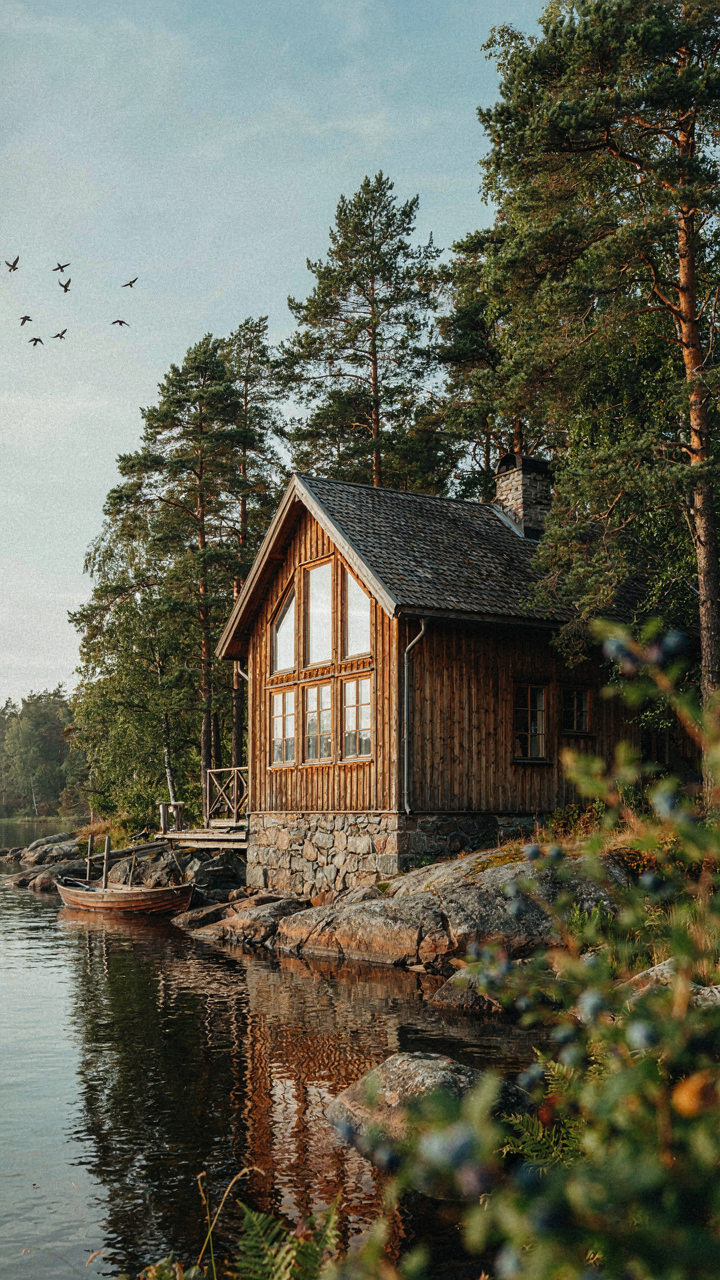
Scandinavian builders didn’t philosophize this. They used what the land provided. Pine and spruce became walls because they grew dense nearby. Local granite became foundations because it lay underfoot. The lake house doesn’t declare itself against the water. It speaks the same material language. When you source materials from within fifty kilometers of the site, you’re not being romantic. You’re triggering the neurological pattern that says this structure belongs in this place.
The Primal Comfort Of Enclosed Space
Most design advice tells you to maximize views and openness. That’s incomplete. Evolutionary biology reveals that humans evolved in environments requiring perimeter security and sight lines inward, not outward. A Scandinavian lake house resolves this by building thick walls, deep eaves, and small high windows that provide light without exposure. The psychology isn’t complicated: you feel safer when the outside presses in slightly.
The window placement becomes tactical. Low windows on the water side let you see threats approaching. High windows on the forest side provide diffused light without making you a silhouette to the dark woods. Interior spaces cluster around a central hearth or core, mimicking the cave fire that kept our ancestors alive. This isn’t decoration. It’s architecture that honors how your reptile brain assesses risk. When you enter a Scandinavian lake house, your threat-detection system disarms because the structure itself assumes the security role you would otherwise maintain.
Modern Lake House Exterior: The Unseen Fortress
Materials That Actually Survive Water
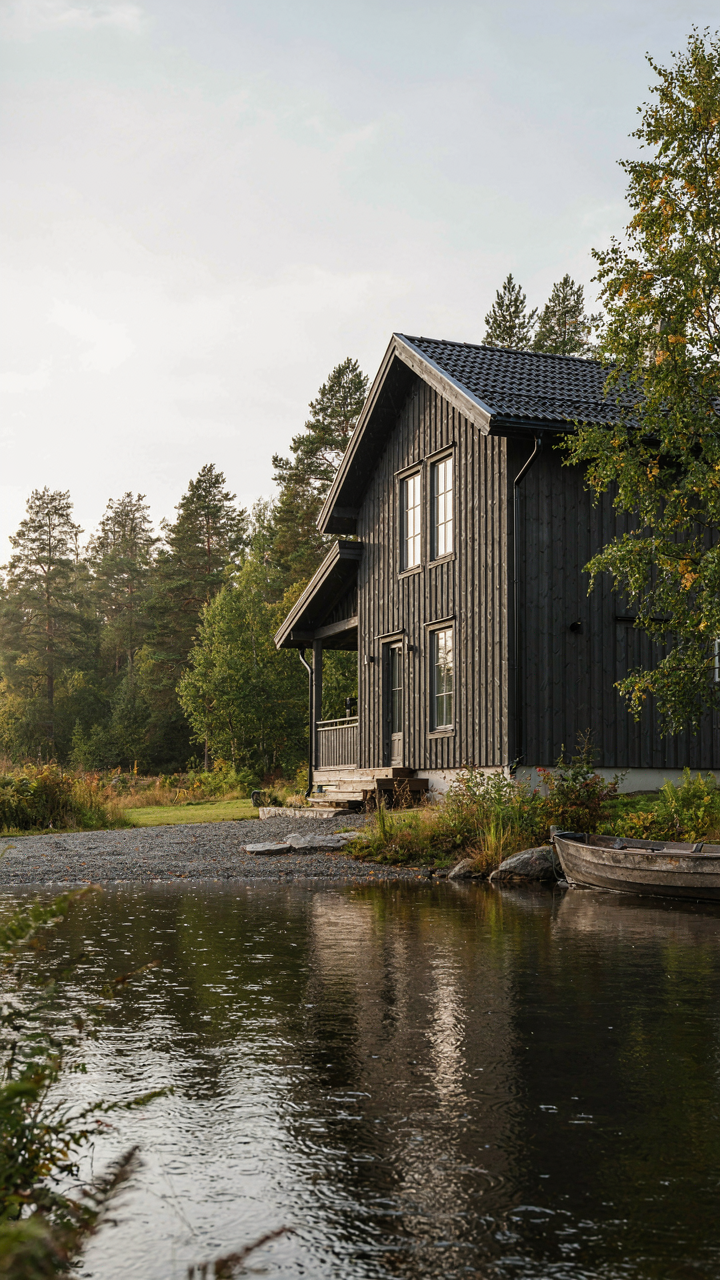
You want people to think your lake house is effortlessly maintained. That’s the real draw. Here’s what matters: Scandinavian lake houses treat the exterior like military fortification against moisture. The mechanism is simple. Water doesn’t attack wood evenly. It concentrates damage where wood meets ground, where joints trap moisture, where finish fails. Nordic builders solved this centuries ago by choosing materials that fail slowly and predictably, not catastrophically.

Untreated larch and pine dominate Scandinavian lake construction because they contain natural resins that resist rot better than other softwoods. Cedar works too, but costs more for marginal gains. The real protection isn’t the wood species. It’s the envelope system. Overhanging roofs that extend 24 to 36 inches beyond walls reduce water spray and UV exposure. Moisture moves sideways before it moves down. Sloped siding channels water. Horizontal cladding boards create deliberate drip edges at each overlap. These aren’t aesthetic choices. They’re drainage protocols.
Restraint As Structural Strategy
Most lake house advice tells you to embrace views. Build big glass. Open the space. Wrong. The Scandinavian lake house does the opposite. It treats the facade like a defensive perimeter. Fewer windows mean fewer weak points. Smaller openings reduce thermal loss and moisture infiltration at seals. A 2000 square foot Scandinavian lake house typically has one large window per room, positioned to capture specific views rather than panoramic exposure.
The understated exterior communicates something most owners miss: you’re comfortable enough to not broadcast. The architecture whispers rather than shouts. Matte paint finishes absorb light instead of reflecting it. Dark grays, deep browns, and near-blacks age gracefully in harsh UV conditions. These colors hide weathering that lighter finishes expose instantly. The volume stays modest. Pitched roofs with steep angles shed snow and water fast. Box forms dominate the silhouette. No curves, no complexity. Every surface serves a function, and the function is durability, not impression. The restraint is the strongest statement a lake house exterior can make.
Scandinavian House: The Functionalist Manifesto
Nothing Here By Accident
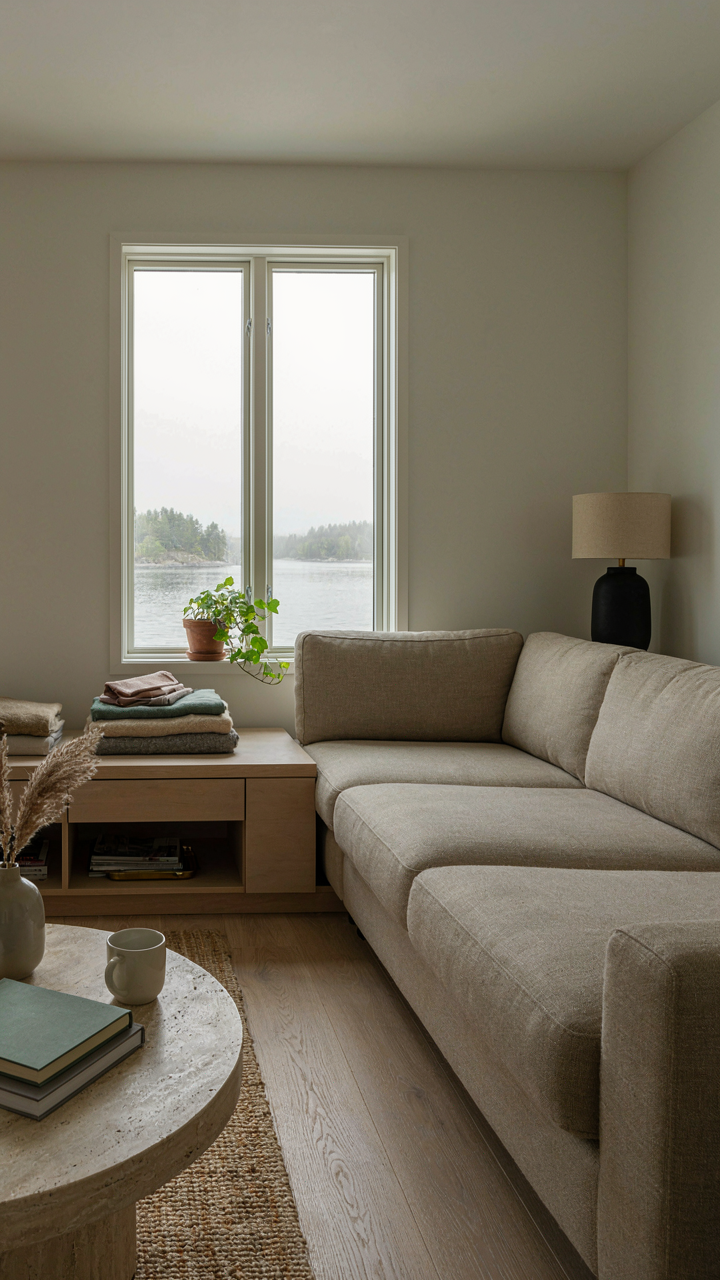
You want permission to own less and feel like you’re winning. Here’s the mechanism: Scandinavian design doesn’t eliminate objects to be austere. It eliminates objects because each one must justify its existence through use. A chair that only looks good becomes expensive clutter. A chair that looks good AND reclines AND stores blankets becomes infrastructure.

This comes from Swedish and Danish industrial philosophy, not aesthetics. Every item earns its place by solving a problem first, looking correct second. A coffee table in a lake house isn’t decoration. It’s a surface where you set your book, rest your feet, and store firewood underneath. Strip away that utility stack and it doesn’t belong in the room.
Compact Design Does Real Work
The constraint here isn’t philosophical—it’s geographic. Nordic lake houses sit on expensive land with brutal winters. Every square foot costs money to heat. This forces a decision: waste space or engineer it. Scandinavian designers chose engineering, building furniture that transforms.
A murphy bed doesn’t romanticize small living. It lets a 400-square-foot lake house sleep six people without feeling like a hostel. A modular sofa rearranges for entertaining or collapses into a single chair when you’re alone. Wall-mounted desks fold flat. Shelving climbs vertically instead of spreading horizontally. The protocol is simple: measure your space, list your actual activities, then build or buy pieces that serve multiple functions. Nothing sits dormant.
Nordic Cabin: The Stoic Sanctuary Blueprint

Embrace The Cold, Not The Comfort
You want a Scandinavian lake house because it signals you’ve escaped the weakness of needing constant stimulation. Here’s the mechanism: Nordic design philosophy borrows from Stoicism, the ancient practice of training resilience through voluntary discomfort. The cabin doesn’t coddle you. It exposes you to the season. Massive windows frame the winter landscape. Thin walls let you hear wind and water. The space teaches you that peace comes from acceptance, not insulation. This is the opposite of what Instagram sells. The real Scandinavian cabin strips away distraction until you’re left alone with your thoughts and the raw facts of nature outside.
Materiality enforces this. Untreated wood ages visibly. Stone holds cold. Metal fixtures conduct temperature. Nothing hides deterioration or softens impact. The Swedes and Norwegians built this way not for aesthetic reasons but because materials that withstand harshness without complaint become emotionally honest. You stop fighting the environment and start moving within it. Sparse furniture, open floor plans, and minimal color force you to confront boredom until you realize boredom is just your brain adjusting to depth. The cabin becomes a tool for building the mental capacity to sit still.
Silence Is The Operating System
The common advice frames digital detox as a moral choice. It’s not. It’s survival mechanics. Your nervous system runs on input scarcity. When the signal-to-noise ratio drops below a threshold, your brain naturally consolidates. A Scandinavian lake house forces that threshold by removing infrastructure. No weak cell signal. No streaming services worth watching. No algorithmic feed. The cabin becomes the container for this constraint.
- Acoustic isolation: Thick walls, double-glazed windows, and remote location create genuine silence, not the artificial kind apps promise. Your auditory system resets within 48 hours.
- No power outlets in bedrooms: Scandinavian cabins historically separated rest spaces from work spaces. The design forces you to leave devices outside the sleeping area, breaking the bedtime scroll reflex.
- Water as replacement stimulus: Lakes provide dynamic visual and auditory input that satisfies your need for novelty without overstimulating. The brain treats natural variation differently than digital change.
- Fireplace as focal point: An active fire provides something to attend to without demanding interaction. It fills cognitive space efficiently, reducing the urge to fill it with screens.
- One reading space per room: Designate a single chair for deep work or reading. The limited geography anchors your attention and prevents context-switching between locations.
The architecture enforces the habit. You can’t work from bed. You can’t watch video while cooking. The physical layout makes distraction friction-heavy and focus friction-light. Return to the same chair daily. Your brain learns the location means concentration. After a week, silence stops feeling empty and starts feeling like the default state you’d been searching for.
Lake Houses Exterior: The Elemental Harmonization Method
Water, Wood, Stone: Their Inherent Dialogue
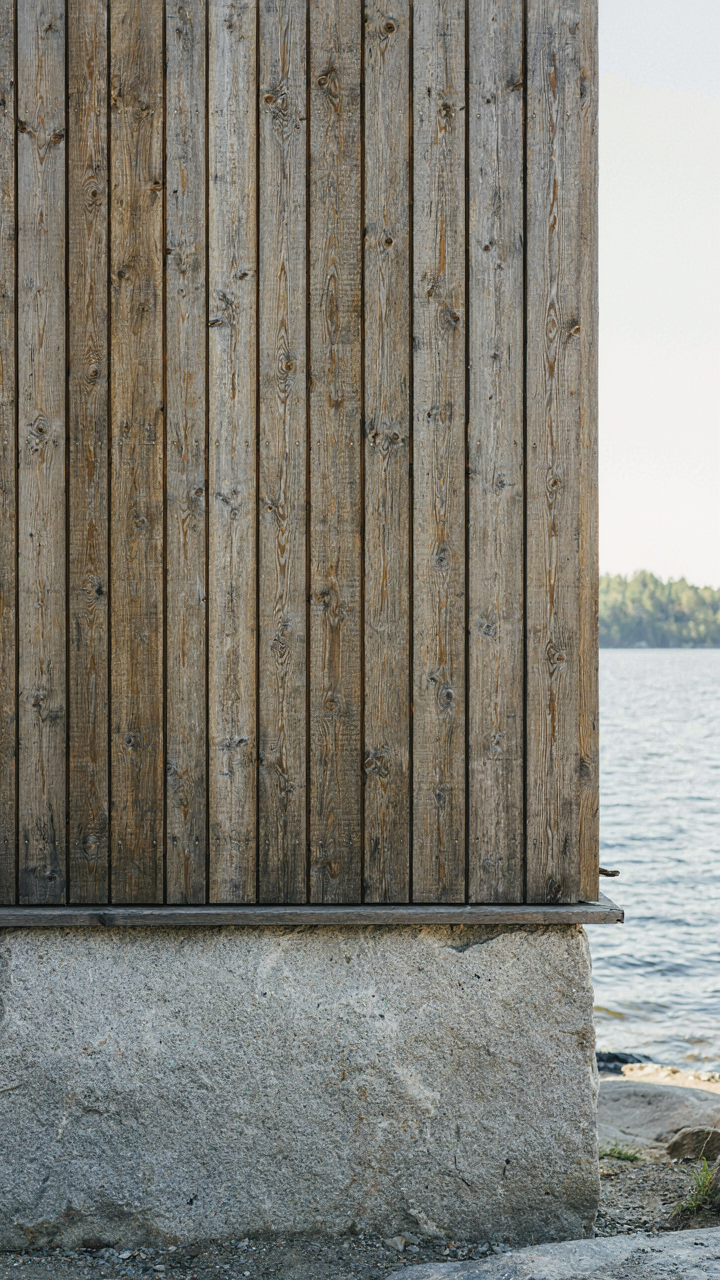
You want this to look effortless because effortlessness signals you don’t need to try. The mechanism is constraint. Water, wood, and stone aren’t decorative choices—they’re the only materials that survive Scandinavian climates without constant intervention. Borrowing from materials science, these three substances exhibit what engineers call “compatibility”: they expand and contract at similar rates, they age together rather than against each other, and they require the same maintenance rhythm. A Scandinavian lake house exterior works because the builder stops adding elements and starts removing them.

The dialogue between these materials isn’t metaphorical. Wood expands in wet seasons and contracts in dry ones. Stone provides thermal mass and stays stable. Water creates the environment that forces this relationship. You don’t choose wood because it’s warm or stone because it’s solid—you choose them because they literally talk to each other through thermal and moisture cycles. The exterior succeeds when you stop fighting the climate and build with it instead of against it.
Weathering As An Aesthetic Feature
Most exterior design advice treats weathering as degradation to prevent. That’s wrong. Scandinavian lake house design treats weathering as the actual finish itself. The gray patina on wood isn’t failure—it’s the wood’s protective layer forming. Stone darkens and develops character through freeze-thaw cycles. This isn’t sentiment. It’s cost efficiency and durability converging into what looks intentional.
The protocol is simple: select materials with predictable weathering patterns, then don’t fight those patterns. Use untreated or lightly treated wood that grays uniformly. Choose stone types local to the region—granite, slate—that darken consistently rather than stain randomly. Stop sealing and staining every two years. The exterior that requires constant maintenance looks new, which signals neediness. The exterior that ages visibly signals permanence.
Cabin Inspiration: Beyond The Picture Postcard

What Instagram Doesn’t Show You
You want the aesthetic without admitting you’re buying status through restraint. Here’s the mechanism: Scandinavian lake house design photographs well because it strips away visual noise, making any space feel curated. The hidden cost is that achieving this requires ruthless editing and maintenance that contradicts the “effortless” narrative. Every minimal room demands constant discipline to stay minimal.

The real expense hides in materials and labor, not decoration. Reclaimed timber costs more than new lumber. Large windows require custom fabrication and heating solutions in Nordic climates. Underfloor heating systems run deep. Most Instagram accounts feature recently completed projects, not year-three maintenance bills or the seasonal mold that attacks wood in high-humidity environments near water.
What Actually Lives In These Houses
Experience teaches what style guides omit. People who own Scandinavian lake houses year-round report that raw wood requires annual sealing, large glass surfaces trap interior heat unevenly, and minimalism fails during winter isolation when you need visual richness to combat monotony. The design works for seasonal visitors; permanent residents often soften it gradually over time.
The honest blueprint comes from people managing these spaces functionally. They layer practical textiles over minimal bones. They accept that weathering is not aesthetic philosophy but maintenance reality. They recognize that Scandinavian design succeeds because Norwegian and Swedish builders solved actual problems: keeping spaces warm, preserving wood from moisture, managing light during long dark winters. Copy the problem-solving, not the Instagram ending.
The Real Obstacle Isn’t Aesthetics; It’s Your Inability To Define True Solitude

Most people chase the Scandinavian lake house fantasy because they hate their actual life, not because they love minimalism. You can’t buy your way out of that problem. The real work happens before you pick paint colors. You must decide what silence means to you. What activities fill your days when no one watches. What conversations matter. Only then do you build the space around those truths. Your lake house won’t save you. Your choices will.



