
The Myth Of The ‘Farmhouse Aesthetic’: Why Your Stone Fireplace Falls Flat
Authenticity Over Pinterest Boards
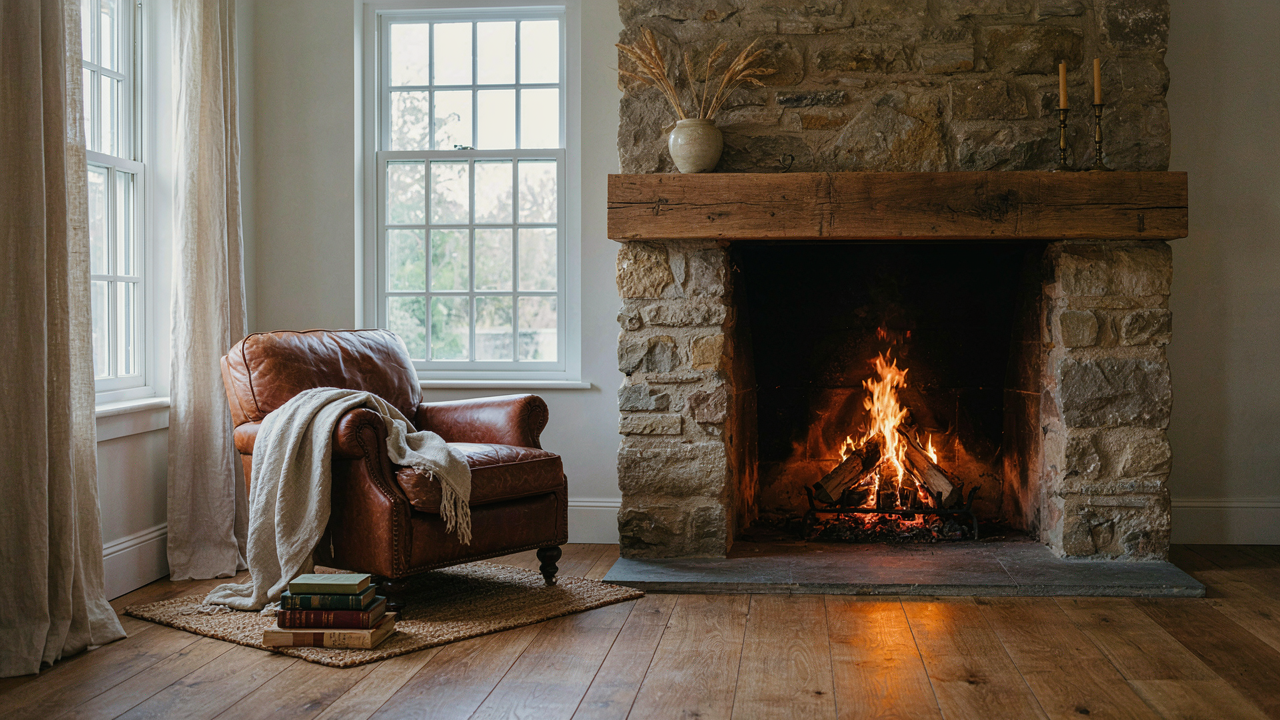
You want the fireplace to signal that you have taste and restraint. The mechanism is simpler: most people buy farmhouse because they’ve seen it curated online, then copy the styling without understanding why those specific stones worked in that specific room. The result is a fireplace that looks designed rather than lived with. Farmhouse fails when it becomes a costume instead of a structure that responds to actual geography, climate, and how you move through the space.
Real farmhouse stone fireplaces weren’t built to be photographed. They were load-bearing walls that heated rooms, used local stone because shipping was impossible, and accumulated character through use and repair. When you start with “I want the farmhouse look,” you’ve already lost. Start with the stone available in your region, the thermal mass you actually need, and the wall structure that makes sense for your climate. Then the aesthetic emerges without effort.
Material Lineage Determines Form
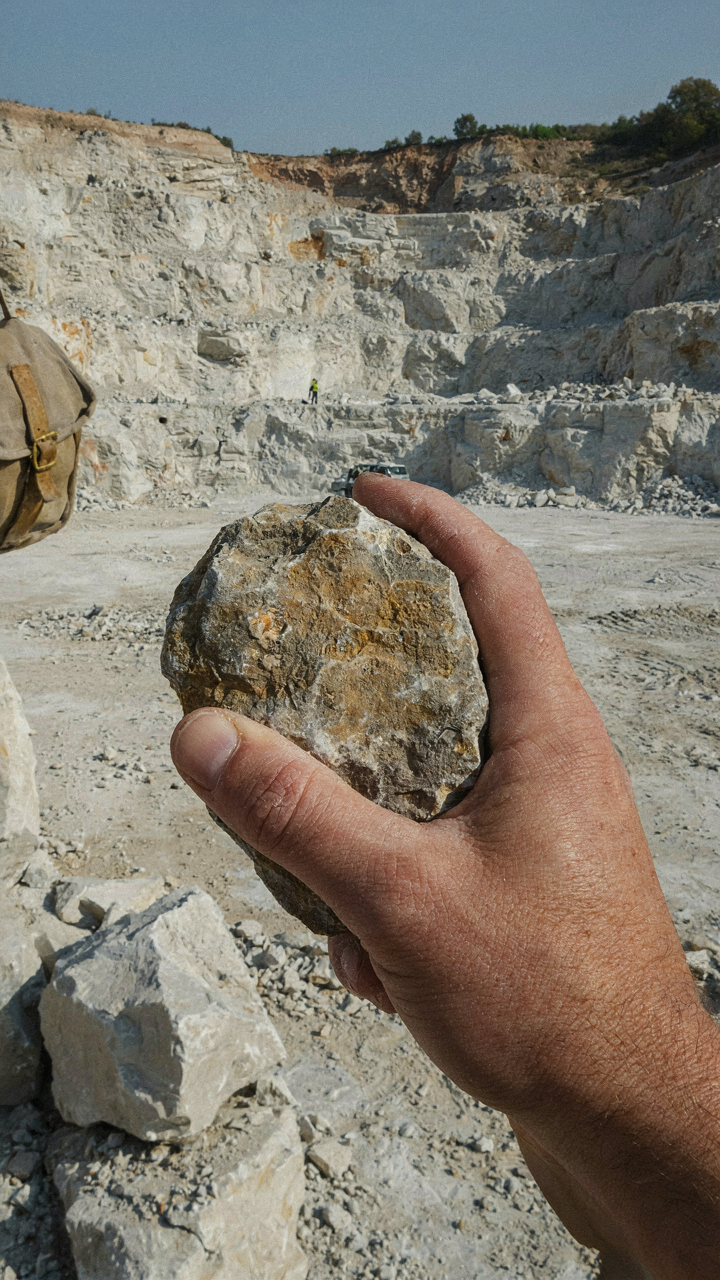
Think of material history like evolutionary biology: a stone fireplace’s current form exists because of past constraints and function, not because someone thought it looked good. A rough-faced limestone fireplace in rural Pennsylvania exists because that limestone is abundant there, breaks in usable sizes, and handles freeze-thaw cycles. A smooth granite fireplace in the Midwest signals either wealth or a recent retrofit. The face of the stone tells you what the builder could access and what the climate demanded.
Most design advice treats stone as a decorative choice. Wrong. The stone type, size, and finish are the outcome of material economics and physics from the era the fireplace was built. When you ignore that history and mix random stone types or use imported materials that wouldn’t exist in that region’s vernacular architecture, the fireplace reads as pastiche. Examine what stone was actually quarried and used in your area during the farmhouse era of that region. Source from that same lineage. The fireplace will look right because it’ll be structurally and materially honest.
Fire Place Stone: Geologic Truths Over Decorator Lies
Source Local Stone For Real Resonance
You want your fireplace to feel authentic because you’re afraid a polished, imported aesthetic will scream “I hired someone to make this look rustic.” That’s the actual mechanism at play. Local stone carries geological history specific to your region, which means the material already belongs there in a way that shipped quarried stone never will.

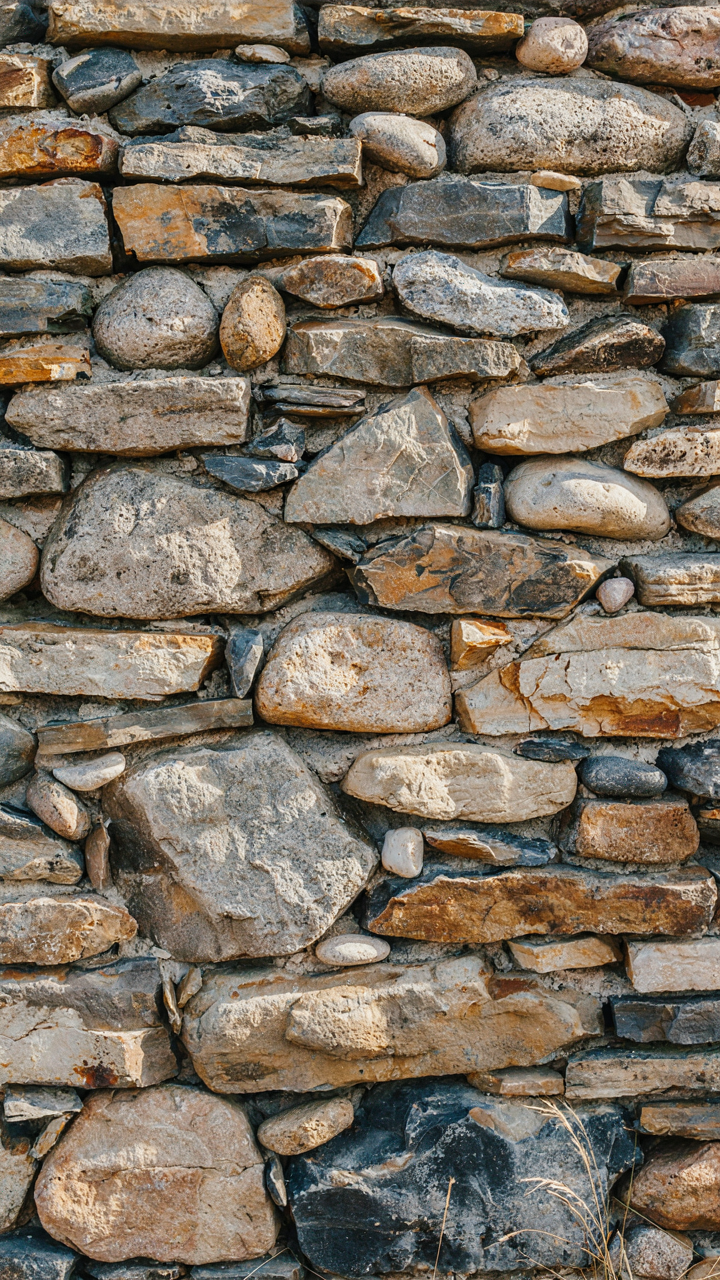
Geology operates on the principle of provenance, and in fireplace design, provenance is credibility. Stone sourced from within fifty miles of your property tells a coherent visual story because the surrounding landscape already trained your eye to accept those colors and textures as natural. Basement fieldstone, creek bed boulders, or regional quarry cuts all register as contextually correct before anyone consciously notices why.
Embrace Variation Instead Of Chasing Uniformity
The design industry pushes “consistent color palette” because consistency is easier to photograph and sell. This is wrong. Geological variation is the actual marker of authenticity in a stone fireplace. A wall where every stone matches perfectly reads as either artificially treated or chemically sorted, neither of which reflects how stone actually breaks from the earth.
Your fireplace becomes visually interesting precisely because stones vary in tone, vein structure, and weathering. A limestone-dominant wall with bands of darker shale, occasional quartz runs, and uneven ochre patches reads as real because that’s how stratified deposits actually form. When sourcing, ask your supplier to deliver mixed samples from the same geological layer rather than pre-sorted batches. This single protocol decision determines whether your fireplace looks mined or manufactured.
Rustic Fireplace Design: The Permaculture Principle
Design For Low Input, High Output Efficiency
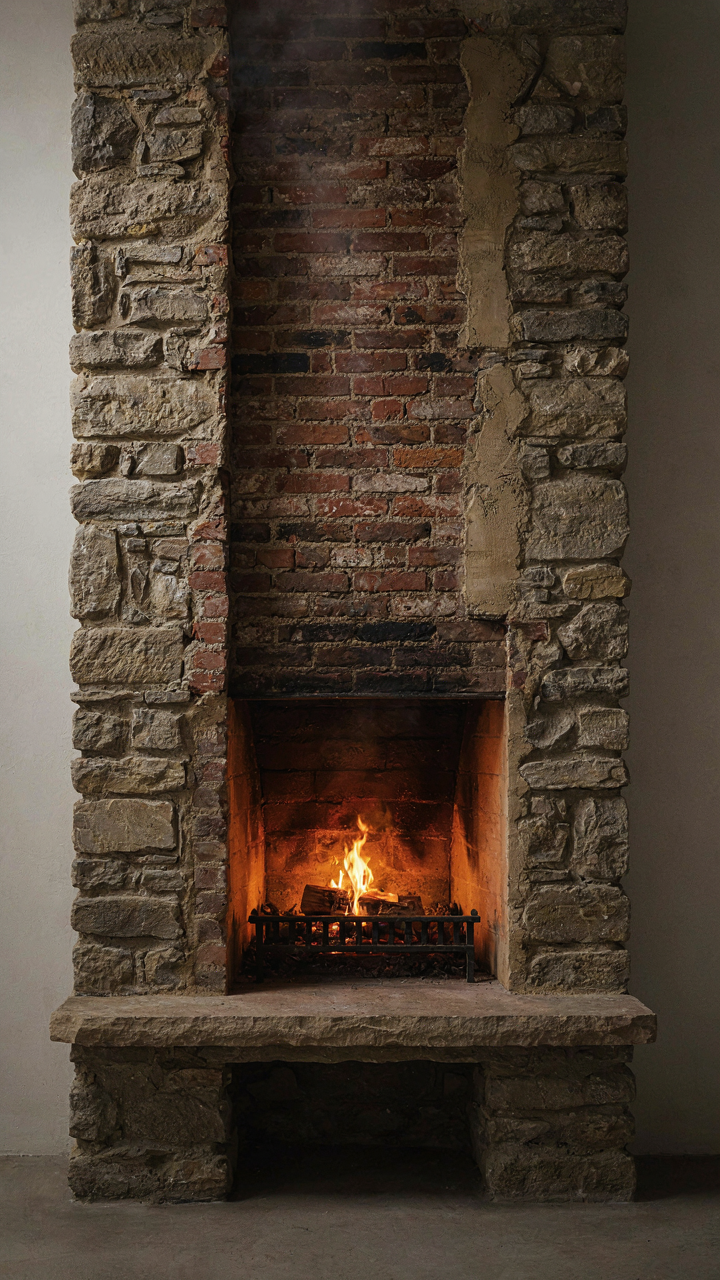
You want this fireplace to look intentional, not like you’re squatting in someone’s abandoned property. The real mechanism is thermal mass: stone holds heat and releases it slowly, reducing the work your heating system does. Permaculture borrowed this from ecology—stacking functions in one element so nothing wastes energy. A stone fireplace isn’t decoration. It’s a heat battery that works whether you tend it or not.

The difference between a fireplace that actually heats and one that just looks warm is material thickness and placement. Thick stone walls (18 to 24 inches) absorb radiant heat during burning and radiate it back into living space for hours after the fire dies. Thin facades do neither. Position the fireplace on an interior wall, not exterior. Heat that exits through outside walls is lost to the property line. Every BTU that radiates inward compounds.
Integrating Fireplace With Home’s Energy Flow
Most fireplace advice ignores airflow entirely, treating it like a static object. Wrong. The fireplace becomes a thermal anchor in your home’s convection loop. Hot air rises from the firebox, radiates from the stone mass, then cooler air beneath it gets drawn back—this circulation pattern either reinforces or fights your entire heating strategy depending on placement and chimney design.
The chimney draft must match the fireplace size and the room’s air supply. A chimney that pulls too hard draws cold air down walls faster than the stone can compensate, creating dead zones. A weak chimney lets smoke back into the room. The fireplace works as part of the building’s respiratory system, not separately. During design, confirm chimney height, flue diameter, and whether you need makeup air from outside. One miscalibration and your thermal mass becomes a liability.
Full Stone Fireplace: Structural Honesty, Not Veneer Vanity
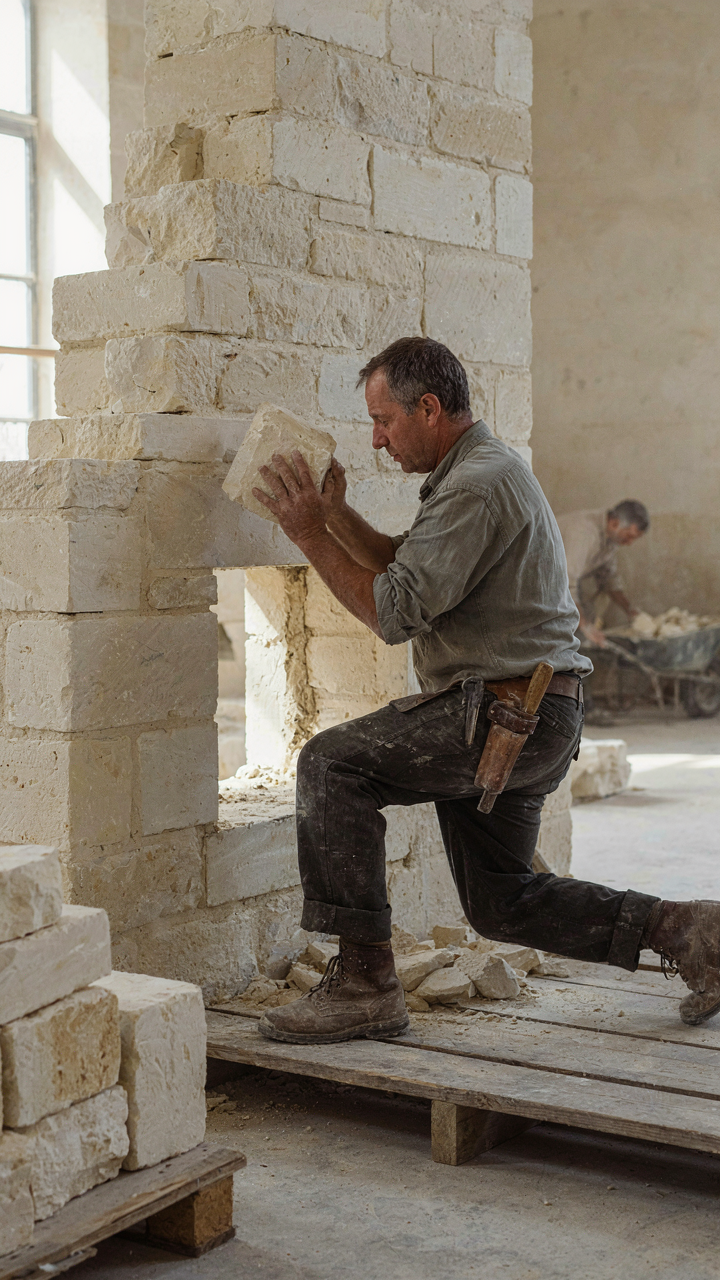
The Real Reason You Want Actual Stone
You want a full stone fireplace because you’re terrified of being caught owning a fake. The mechanism is simple: people read material authenticity the same way economists read market signals. Stone veneer sends a signal. Real stone sends a different one. A full stone fireplace—where the mass goes all the way through—performs structural work and aesthetic work at once. Veneer is surface dressing bolted to a frame. Full stone is load-bearing geometry that doesn’t apologize for existing.
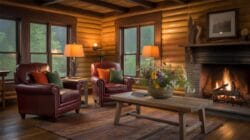
The farmhouse aesthetic trades on this distinction without stating it. Real stone fireplaces predate marketing. They exist because stone was the available material and because it held heat. That functional history is what people sense when they enter a room. They don’t know the mechanics, but they feel the difference between a wall that’s stone and a wall wearing stone like a costume.
The Price Gap Between Real And Performance Theatre
Everyone says real stone costs more. That’s incomplete. What actually matters: real stone costs more upfront but performs different work. A full stone fireplace runs fifteen to thirty thousand dollars depending on the stone, the mason, and regional labor rates. Veneer runs three to eight thousand. The markup isn’t vanity—it’s the labor density of real masonry and the mass of material itself.
The real mechanism isn’t cost. It’s permanence and failure modes. Veneer can peel, crack at the seams, and require replacement. Real stone settles with the house, develops patina, and outlasts trend cycles by decades. When veneer fails, you see the frame behind it. When real stone fails, you see history. Pick based on how long you’re staying and whether you’re building for resale or residence.
The Mason’s Manifesto: Crafting Stone Fireplace With Wood Mantel
Wood Selection For Heat Management
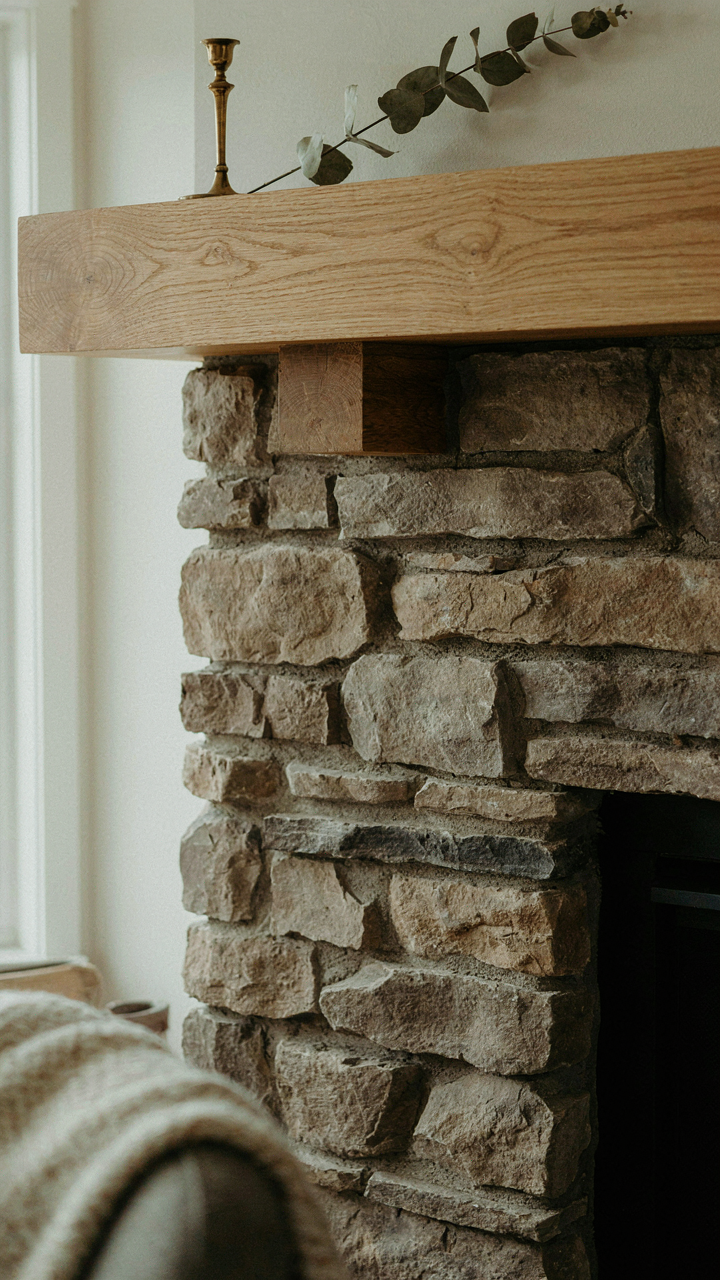
You want the mantel to look intentional and permanent, but you’re afraid it’ll warp or char. Here’s the mechanism: wood directly above stone absorbs radiant heat differently than ambient air temperature. The firebox generates sustained infrared radiation upward, and wood expands unevenly when one side faces 180 degrees while the other stays cool. This differential expansion causes cupping, checking, and eventual joint failure.

Choose species with low radial shrinkage rates. White oak and hickory resist movement better than walnut or cherry because their grain structure distributes moisture change more evenly across the wood cross-section. Set the mantel shelf at least 12 inches above the firebox opening. This distance reduces direct radiation and lets convected heat disperse before reaching the wood. Install the mantel so grain runs perpendicular to the stone face, not parallel. Perpendicular grain orientation minimizes the visible cupping that occurs from heat cycling.
Load Bearing Joinery Under Stress
Physics calls it cantilever beam theory, and your stone fireplace mantel operates under the same principle as a bridge support. The mantel extends into the stone, and everything hanging from it or resting on top creates downward force concentrated at the connection point. Most builders treat this as decorative and wonder why mantels fail at year three.
Use through tenons or lag bolts embedded 8 to 10 inches deep into the stone. Shallow pockets fail because stone won’t hold lateral load on its own. The wood joint must transfer force through friction and mechanical lock, not compression alone. Secure the mantel to the stone with epoxy designed for wood-to-masonry bonds before driving the fasteners. The epoxy hardens around the bolt or tenon and creates a unified system. Test the connection by applying 200 pounds of downward force at the outer edge before finishing. If it moves, the installation fails the load requirement and needs reinforcement.
Farmhouse Fireplaces: The Bio Rhythmic Design Model
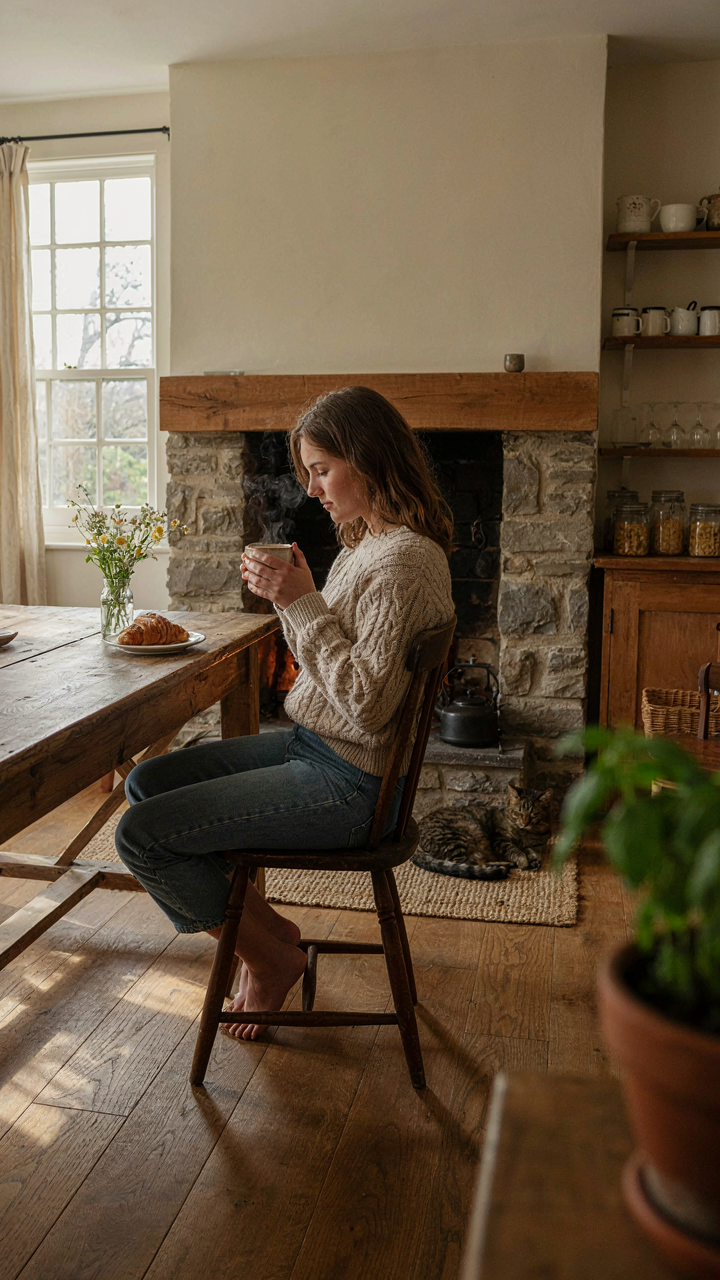
When Your Fireplace Becomes A Behavioral Anchor
You want this fireplace to feel essential, not decorative. The real mechanic here is circadian alignment: you’re designing a heat source that matches how humans actually live in a space across a 24-hour cycle, not just where they happen to sit. A stone fireplace in a farmhouse works because it becomes the gravitational center of daily movement patterns. Morning coffee near the hearth. Evening gathering at dusk. Winter evenings demand heat; summer demands its visual absence. The fireplace that ignores these patterns becomes furniture you resent paying for.

Position your fireplace where sight lines naturally converge during high-use hours. In farmhouses, this means the kitchen-to-living transition zone in winter, and a secondary viewing angle during summer months when the main living space shifts outdoors. Stone mass works here because it holds thermal residue from morning fires into evening hours, extending utility without constant feeding. The placement decision matters more than the aesthetic one. Get the behavior map right first, then build the stone around it.
Heat Retention Through Seasonal Load Shifting
The standard advice treats fireplace efficiency as a static problem. It’s not. Thermal engineering calls this “load shifting,” and stone fireplaces execute it better than any other material because mass absorbs and releases heat on a delayed cycle. A thick stone fireplace core heats slowly during the day but radiates into the evening and night. In seasonal farmhouse living, this matters. You’re not running the fireplace continuously from November through February. You’re running it on a pulse: heavy use during shoulder seasons, intensive use during dead winter, minimal use during spring.
Design your stone depth and placement to maximize this delay. A 16-24 inch stone core (not cosmetic veneer) positioned in your primary wind-wall allows heat capture during high-sun winter days and re-radiation during cold evenings. The farmhouse benefit is financial: you reduce heating demand during off-peak hours by pre-loading the thermal mass. During summer, the same mass becomes a liability unless your flue design includes a damper system that prevents reverse thermosiphoning. Stone fireplaces that ignore seasonal cycling waste energy half the year.
Large Stone Fireplace Living Room: The “Un Decorated” Approach
What Actually Belongs In Front Of Stone
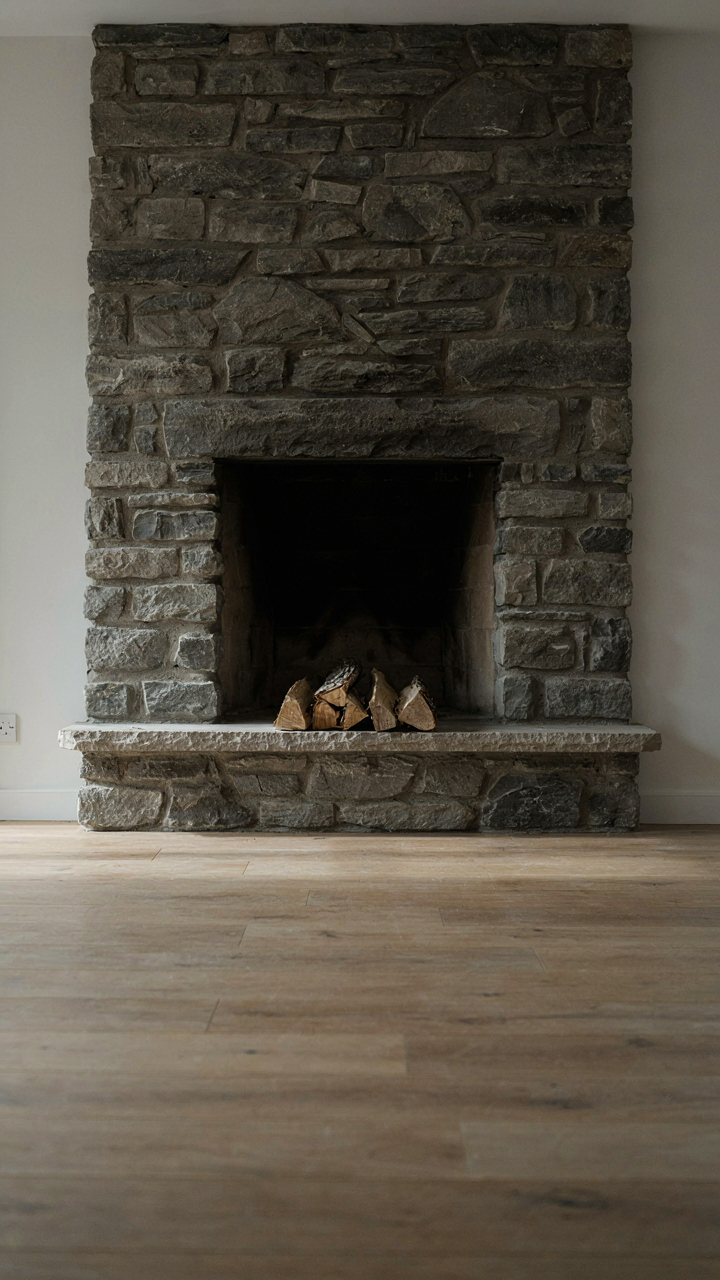
You want permission to leave it sparse because you’re afraid empty space reads as poor taste or laziness. Here’s the mechanism: a stone fireplace already dominates the visual field. Adding more pulls focus away from the material itself, which is the only element doing real work. Think in terms of signal-to-noise ratio from information design. Your stone is the signal. Everything else competes for attention and dilutes its impact.
The fireplace surround has finite visual bandwidth. A hearth rug, a wood stack, one seating piece angled toward heat—these serve the room’s function. A console table with decorative objects? Pure noise. Stone fireplaces in working farmhouses held wood and people. That’s it. Modern versions inherit that constraint because constraint is what made them matter in the first place.
Removing Everything That Doesn’t Earn Its Place
The common advice tells you to “style” the mantel or “layer” accessories around the hearth. This is wrong. A mantel stacked with objects trains the eye to scan horizontally instead of reading the vertical plane of the stone itself. You’re working against the material’s natural geometry by doing this.
Start with removal, not addition. Pull everything within six feet of the fireplace. Leave it bare for one week. Notice what you actually miss. The things you reach for—a side table for a drink, a log holder for function—those stay. Everything else leaves permanently. The fireplace stops competing with itself. The stone tells the story alone.
Fireplace Ideas Rock: The Minimalist’s Mechanism For Impact
Function First, Aesthetics Follow
You want the fireplace to look intentional and rare, not like you tried hard. Here’s the mechanism: in architecture, load-bearing structures determine form. A stone fireplace farmhouse works the same way. The stones carry heat and structure. Every design choice must solve a problem the fireplace actually has, or it’s decoration masquerading as design.

Most fireplace advice tells you to “add character” or “layer textures.” Wrong. Start by asking what the stones do. They conduct heat, age visibly, and anchor the room’s visual weight. Build around those facts, not around Pinterest aesthetics.
- Thermal mass placement: Position stone depth to absorb and release heat gradually, reducing the need for secondary heating and creating functional warmth distribution across the room.
- Chimney draft geometry: The flue size and height determine draw efficiency. Oversizing looks dramatic but wastes energy. Right-size it to your heating zone only.
- Hearth depth and slope: A functional hearth prevents ash scatter and protects flooring. This constraint creates form naturally without aesthetic forcing.
- Lintel span: Stone above the opening must support the load above without bending. This technical limit shapes the opening’s proportions automatically.
- Stone joint width: Wider joints hold more mortar but trap more dust and heat loss. Narrower joints age better and perform longer. Choose based on maintenance tolerance, not visual preference.
When you design around function, you eliminate 90 percent of the bad choices before aesthetics even enters the room. The fireplace becomes self-evident rather than decorated.
Restraint Reads As Confidence
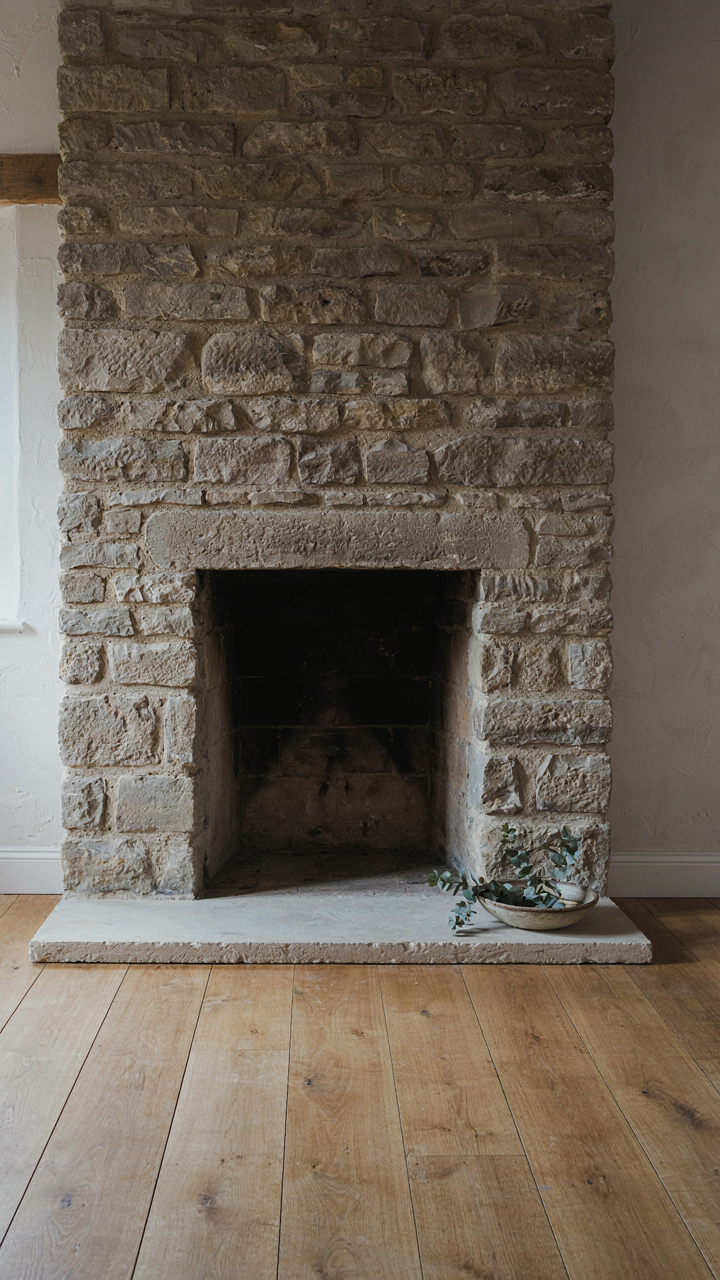
Don’t clutter the fireplace with mantels, mirrors, artwork, or accessories. The advice to “style your mantel” assumes you need help filling space. You don’t. Empty space around a stone fireplace signals wealth and control, the opposite of anxiety.
A stone fireplace farmhouse gains power from subtraction. Bare stone. Clear floor in front. No competing textures. When a guest enters, their eye stops on the fireplace because nothing else demands attention. That’s the entire mechanism. A busy mantel weakens the focal point. A clean one strengthens it. Stone ages and gains character on its own timeline without your intervention. Let it work alone.
Stone Fireplace Decor Ideas: The Deconstructive Method
Remove Everything That Competes
You want permission to leave things bare because you’re afraid bare looks unfinished. It doesn’t. The mechanism is simple: your eye seeks contrast. A stone fireplace wins when nothing else demands attention in the same visual zone. Every accessory you add splits the focal point and weakens the structure’s presence.

Start by emptying the mantel completely. Then add back one object at a time. Stop when adding the next piece makes you hesitate. That hesitation is your signal that you’ve crossed from “intentional” into “decorated.” Stone doesn’t need decor backup. It needs oxygen.
Let The Material Speak First
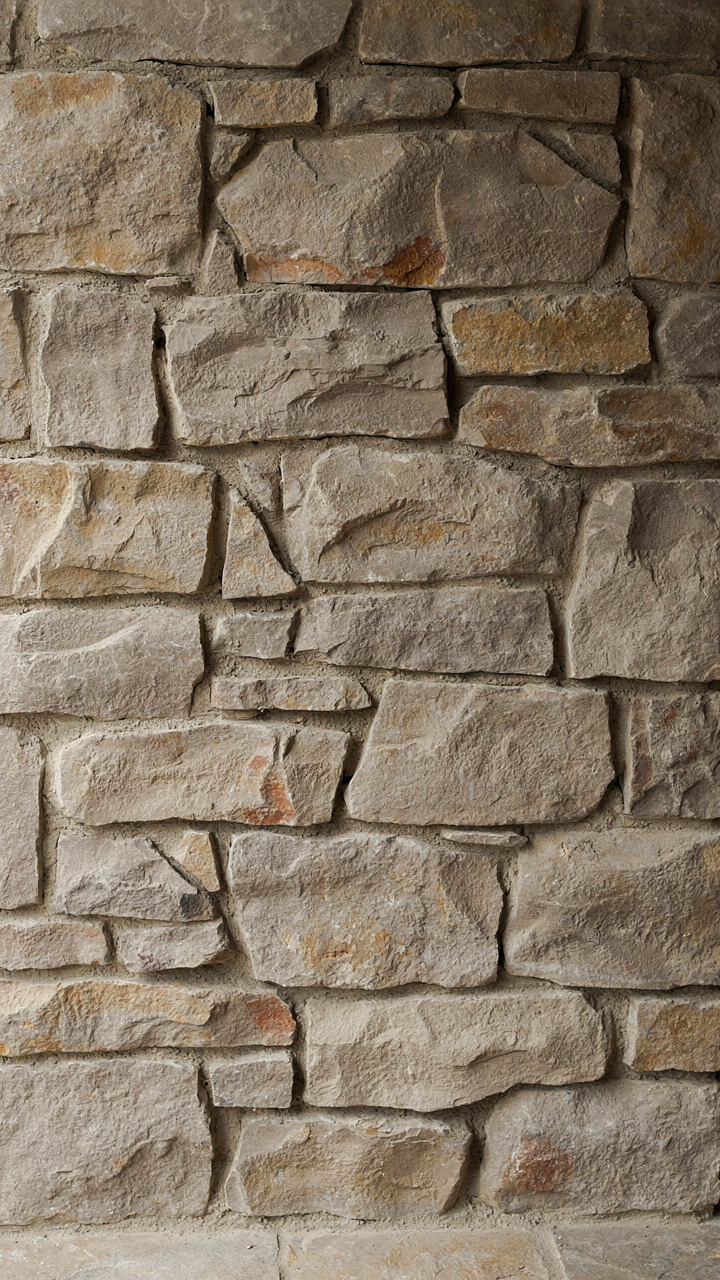
Farmhouse design borrowed from agricultural restraint, not from scarcity. The mechanism works like geology: you expose layers by removing what covers them. The stone itself carries color variation, texture, and age. Paint it, clutter it, or soften it with fabric, and you’ve buried the asset you paid for.
Raw materials don’t need interpretation. Assess your stone’s actual color range under both daylight and artificial light. Basecoat walls in neutral tones that recede. Position lighting to cast shadow on the stone face, not flatten it. The texture becomes the decor.
The Farmhouse Fireplace Isn’t A Trend, It’s An Enduring Energy Source. Stop Decorating And Start Building Resonance
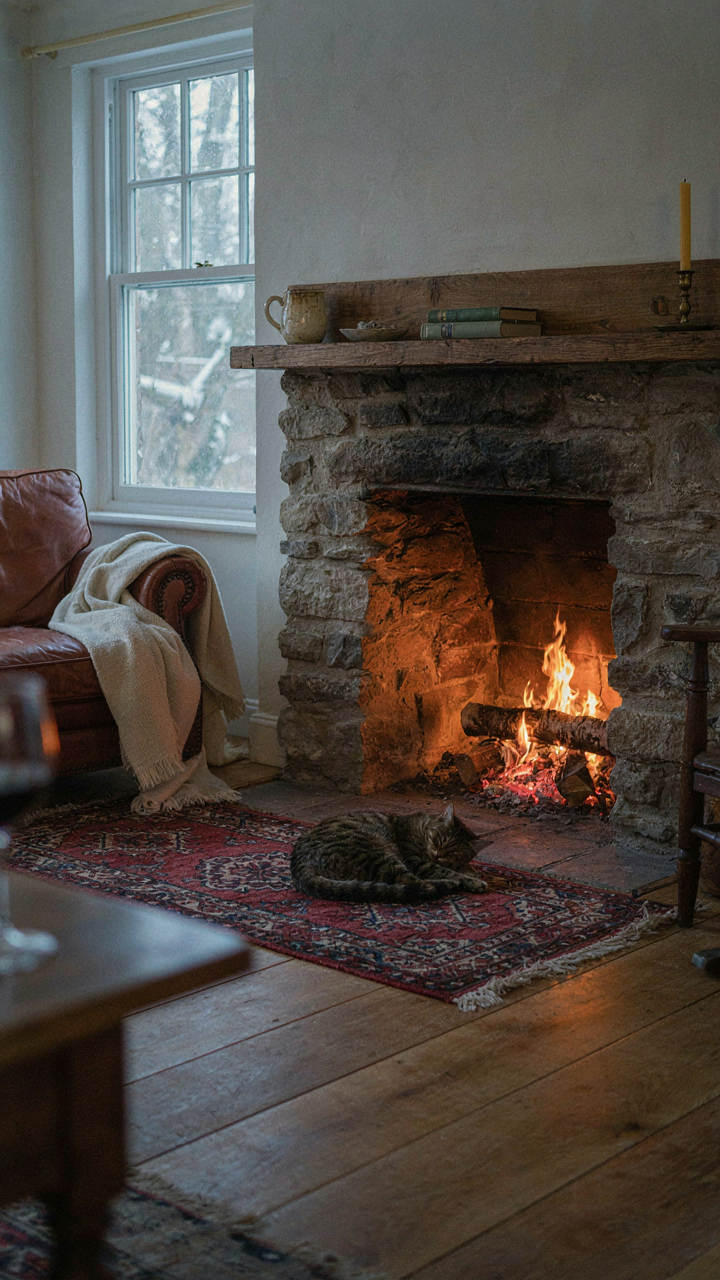
Most people treat their stone fireplace farmhouse like a photo shoot. They stack the aesthetics and forget the function. A real fireplace becomes the room’s anchor because it actually does something. It creates warmth, draws people in, and demands presence. Stop chasing Pinterest and ask yourself what your space needs to feel alive. Pull out your phone right now and sketch where your fireplace sits relative to your seating. That layout decides everything. A stone fireplace farmhouse doesn’t work because it looks good. It works because it makes people want to stay.



