
The Allure Of The Antique: Why “Victorian” Is Misunderstood
What Actually Happened In Victorian Bedrooms
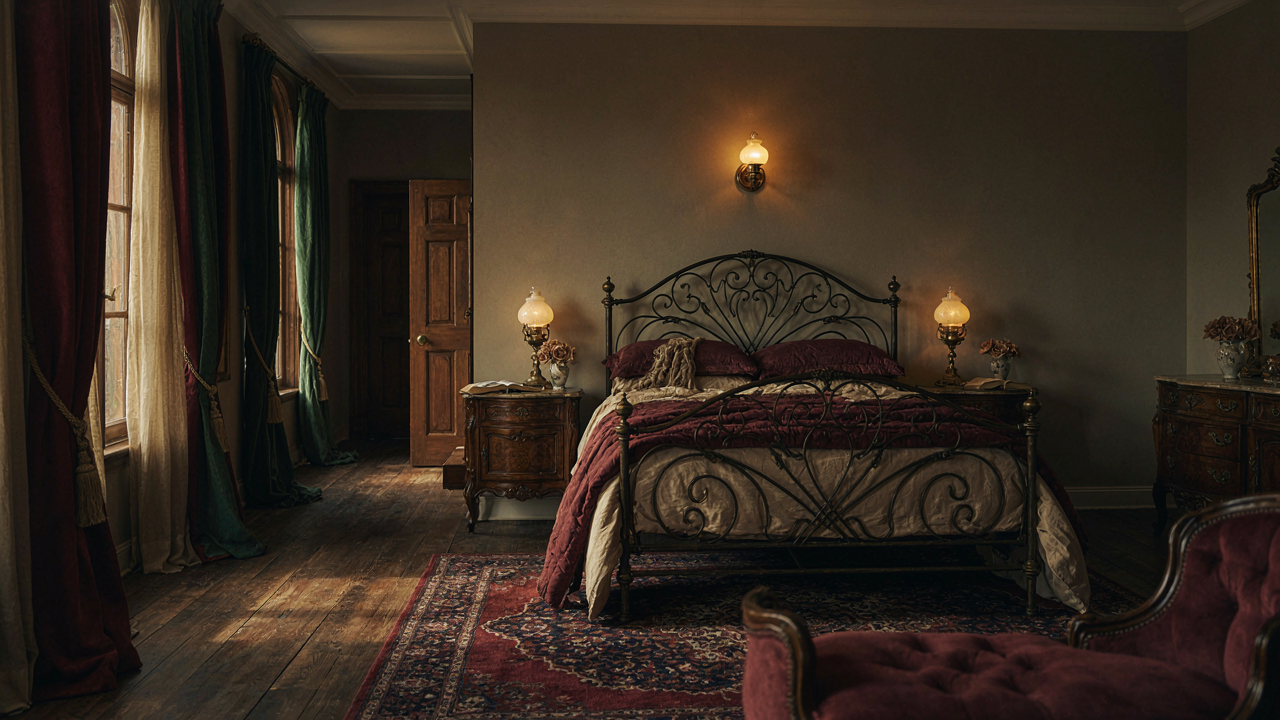
You want to feel like you’re living in a tasteful historical moment instead of a randomly decorated box. Here’s the mechanism: Victorian bedrooms weren’t designed around aesthetics first. They were designed around what money could buy and what technology had just become available. Gaslight fixtures, cast iron bedframes, and machine-made textiles weren’t romantic choices—they were status signals of access to industrial manufacturing. The ornate details came second, as a way to justify the cost.
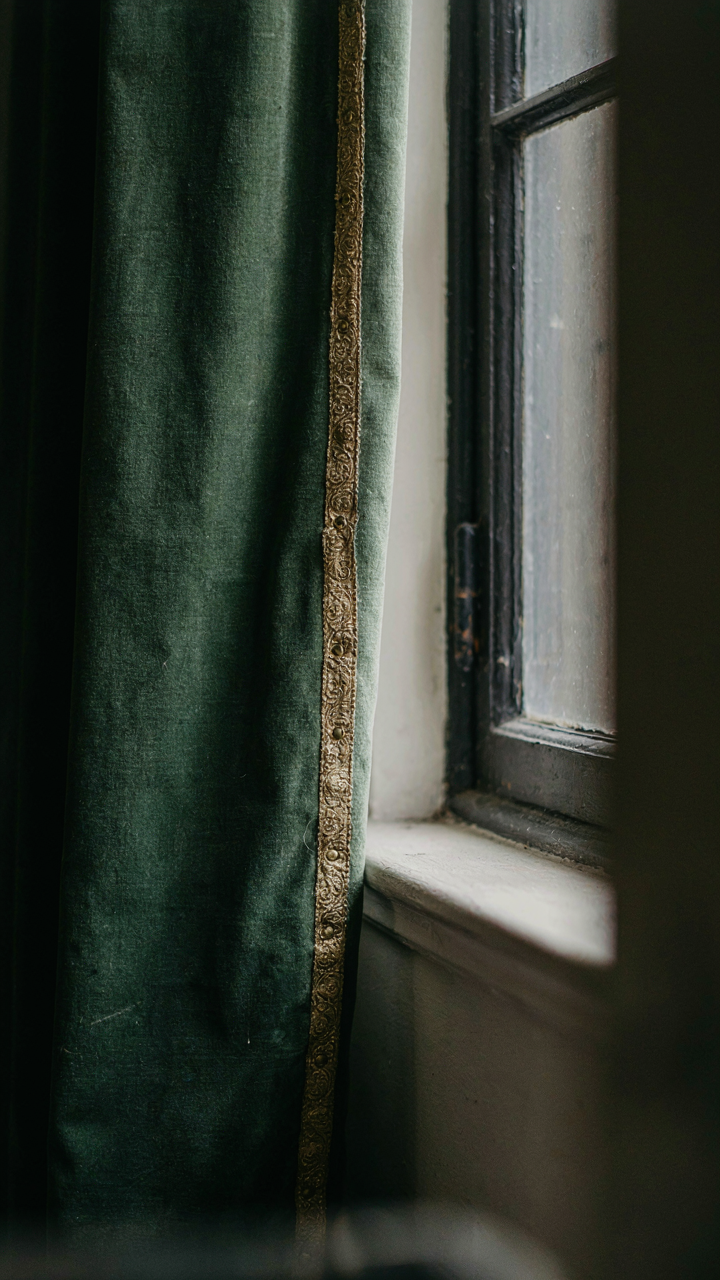
Most advice tells you to slap damask wallpaper on the walls and call it done. That misses the actual logic. Victorian bedrooms reflected a specific constraint: heating was poor, so beds needed heavy drapery and multiple layers. Furniture was substantial because it signaled permanence and wealth. The visual density came from necessity meeting industrial production, not from someone’s mood board. Understanding this distinction separates a themed room from one that actually functions.
The Pattern Behind The Pattern
Victorian design borrowed from biology—specifically, the principle of visual density as a proxy for resources. A cluttered, layered bedroom communicated that you had enough money to own excess. The real mechanism wasn’t about beauty. It was about demonstrating you could afford to heat a room surrounded by heavy fabrics, wood, and metal that required constant maintenance and care. The “romance” was a story layered on top of economic reality.
Modern reproductions miss this entirely because they cherry-pick the ornamental layer without understanding the material constraints that created it. You can’t replicate a Victorian bedroom by adding curlicues—you need to understand why those curlicues existed in the first place. Start by committing to one functional principle: heavy window treatments for temperature control, substantial wooden furniture that actually fills the room, and layered textiles that serve insulation before decoration.
Deconstructing “Ornate Romantic”: Victorian Bedroom Furniture Ideas

When Form Actually Solved A Problem
You want Victorian furniture because it looks expensive and you’re hoping it signals taste. Here’s what actually happened: Victorian designers didn’t ornament surfaces for decoration. They solved a mechanical problem through material constraint. In the 1800s, furniture makers used steam-bent wood and hand chiseling to create structural integrity where solid wood alone couldn’t span distances without sagging. The carved details weren’t ornament. They were load distribution made visible.

Industrial production changed what “ornate” meant by mid-century. Early Victorian pieces used elaborate joinery and carving to reinforce weak points in wood grain. Later pieces piled on ornamentation because factories could replicate it cheaply. This distinction separates furniture that actually works structurally from furniture that just looks busy. A genuine Rococo Revival bed frame from the 1840s has curved elements positioned where stress concentrates. A factory reproduction curls wood everywhere because the machines run.
The Gap Between Imitation And Assembly
Most advice says buy Victorian if it “feels right.” This is how you end up with veneered particleboard that fails in five years. True Victorian craftsmanship relied on selective use of exotic woods in visible areas and domestic woods in load-bearing frames. Walnut, rosewood, and mahogany appeared on surfaces because they took fine detail without splintering. Oak and ash handled the structural load underneath.
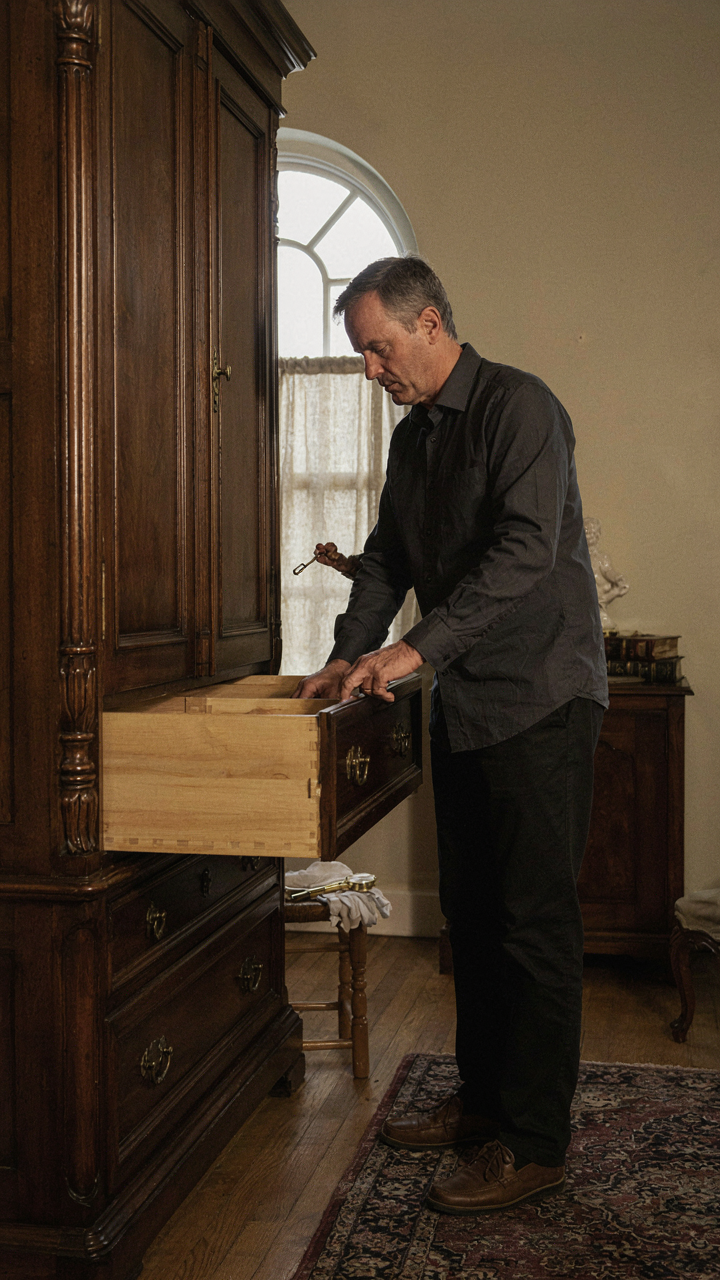
Examine the joinery, not the finish. Hand-cut dovetails in drawer sides show how furniture was actually built. Machine-cut dovetails, even on expensive reproductions, indicate the piece prioritizes speed over durability. The frame should move like a connected structure, not rattle. Run your hand along the underside of a bed frame. You should feel where craftsmen chiseled relief cuts to prevent wood movement from splitting joints. That’s the mechanism that separates a twenty-year investment from a fifteen-year storage unit.
The Material Language: Fabrics And Finishes In Victorian Master Bedrooms Decor
Why Heavy Textiles Signal Control
You want this room to feel expensive because expensive rooms feel safe. That’s the mechanism. Victorian bedrooms used heavy textiles and dark wood not for romance but for acoustic dampening and thermal regulation—practical necessities that happened to signal wealth. A room that absorbs sound feels intimate. A room that holds heat feels controlled. The Victorians understood this intuitively before psychology named it.

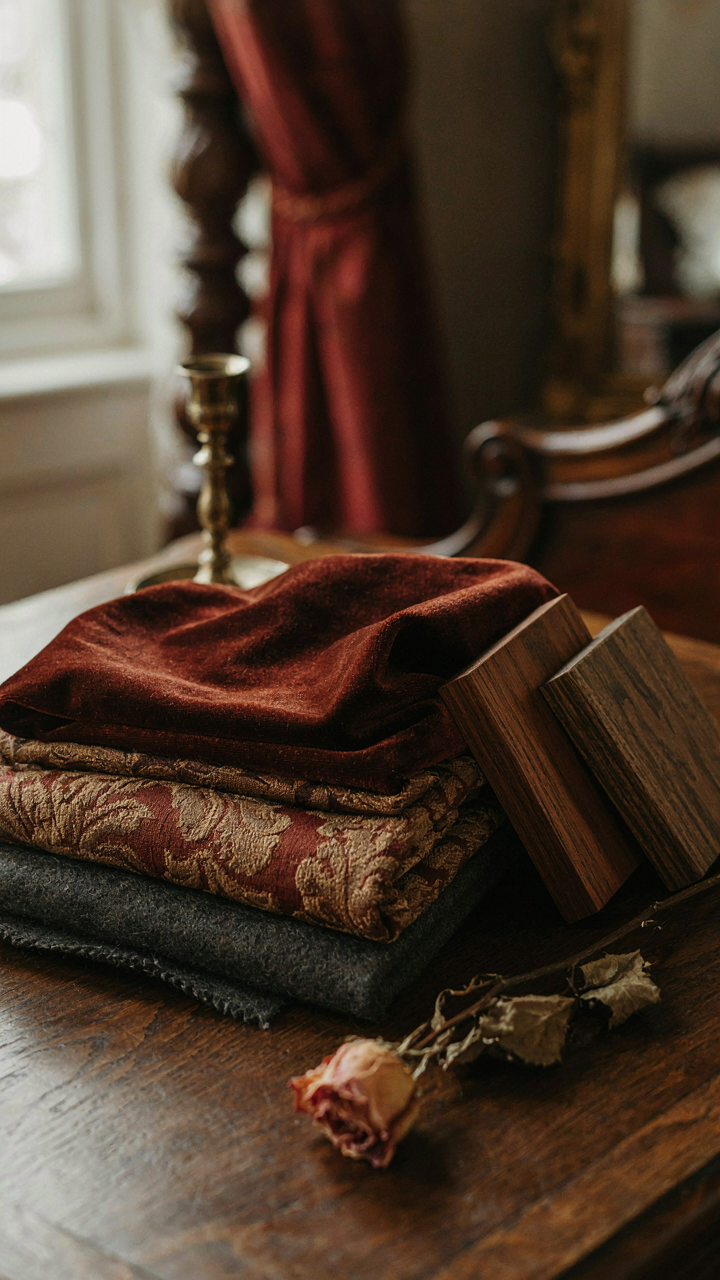
Heavy velvet, damask, and wool weren’t decorative choices—they were engineering decisions. Dark mahogany and walnut absorbed light rather than reflecting it, which made candlelit rooms feel intentional instead of flickering and unstable. Layers of drapes, bed hangings, and upholstered furniture created dead space that muffled external noise. This mattered in dense Victorian homes where sound traveled through thin walls. The material choices created a psychological barrier between the bedroom and the rest of the house.
Real Materials Versus Reproduction Shortcuts
Everyone tells you to find “Victorian-inspired” fabrics online. That’s the lazy version. Authentic Victorian master bedrooms used natural fibers with specific weights and weaves that modern polyester blends don’t replicate. Silk damask actually catches light differently than silk-look synthetics. Horsehair-stuffed mattresses and furniture felt different under your body than foam core because the material had actual density variation.
The shortcut people take is buying anything burgundy with a pattern and calling it Victorian. Real authenticity requires knowing that Victorians used linen for undergarments and bed sheets, wool for blankets, and silk or velvet for visible textiles like curtains and upholstery. If you’re sourcing period-accurate pieces, focus on pre-1901 textiles with natural fiber content. Check fibers before buying. Synthetic blends are cheaper but they feel wrong and they age wrong. Real Victorian rooms had tactile presence because the materials themselves had weight.
Lighting As An Operant System: Illuminating Victorian Homes Bedroom
When Light Was Currency
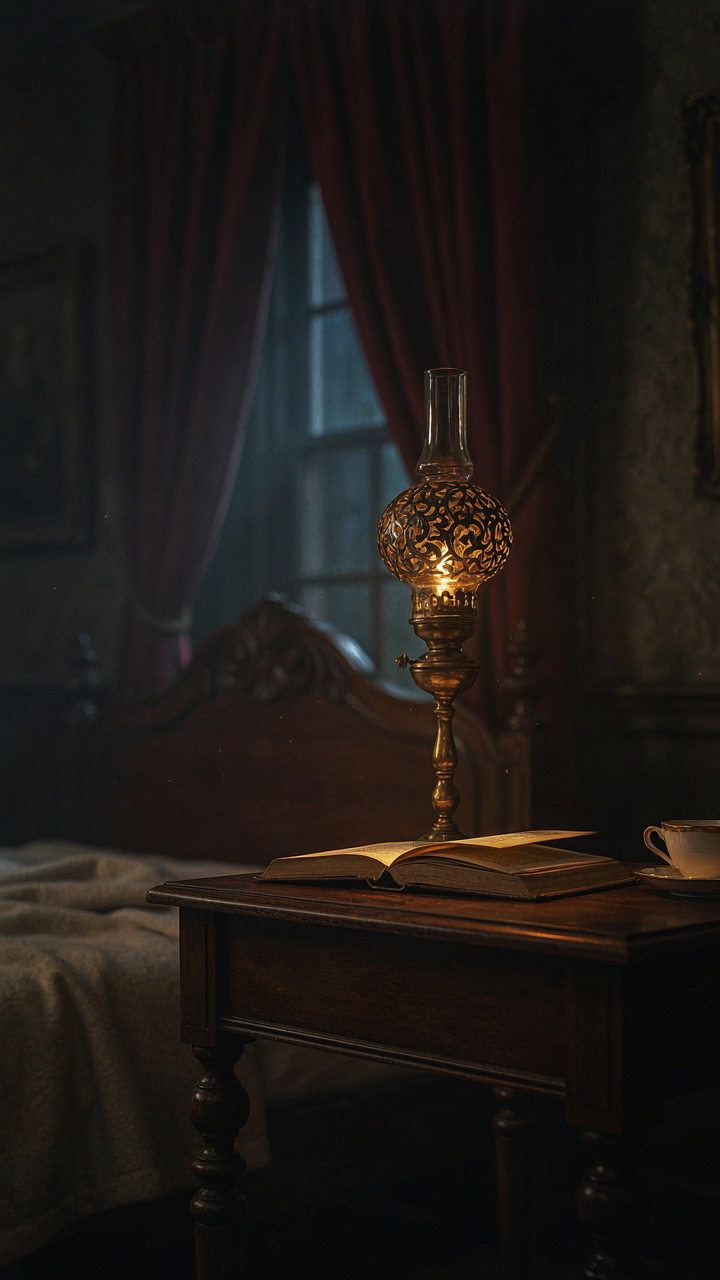
You want Victorian lighting to feel authentic because you’re tired of sterile modern bedrooms, but you’re afraid of getting it wrong and looking like you’re cosplaying. Here’s the mechanism: Victorian lighting wasn’t aesthetic choice. It was scarcity economics. Gas and candles cost money. Light was rationed. This changed how Victorians designed rooms and how light functioned as a status signal. Wealthy homes had more fixtures. Working homes had fewer. The bedroom lighting system reflected what you could actually afford to burn each night, not what looked good.

Economics teaches scarcity principle: when a resource is limited, its distribution signals hierarchy. Victorian bedroom lighting operated the same way. A gasolier or chandelier announced wealth. A single oil lamp announced constraint. The Victorians didn’t put elaborate fixtures everywhere because they couldn’t afford to light them all night. They concentrated light sources in social spaces and kept bedroom lighting minimal and practical. This wasn’t accident. This was budget mapped onto interior design. Your bedroom lighting should reflect this logic: intentional concentration over ambient sprawl.
Layering Light For Atmospheric Depth
Most people think Victorian bedroom lighting means throwing ornate fixtures at the room. Wrong. Victorians layered light by function because they had to. A bedside candle served reading. A wall sconce served dressing. A central fixture served the rare guest. Each light source solved a specific task. You layer light the same way, but you do it with intention rather than stumbling into it. The depth comes from separating light by its job, not from how many fixtures you install.
Start with task lighting at the bedside. Add ambient light at the walls using sconces positioned at eye level when sitting. Keep the central fixture subtle. Use warm bulbs or gas flame simulation. Position sconces symmetrically on either side of the bed or mirror, never randomly. Layer a reading lamp that doesn’t compete with the overhead. The mechanism works because each light source occupies a distinct visual zone and serves a distinct function. Your eye reads clarity, not clutter.
The Accumulation Protocol: Old Victorian Homes Interior Bedrooms
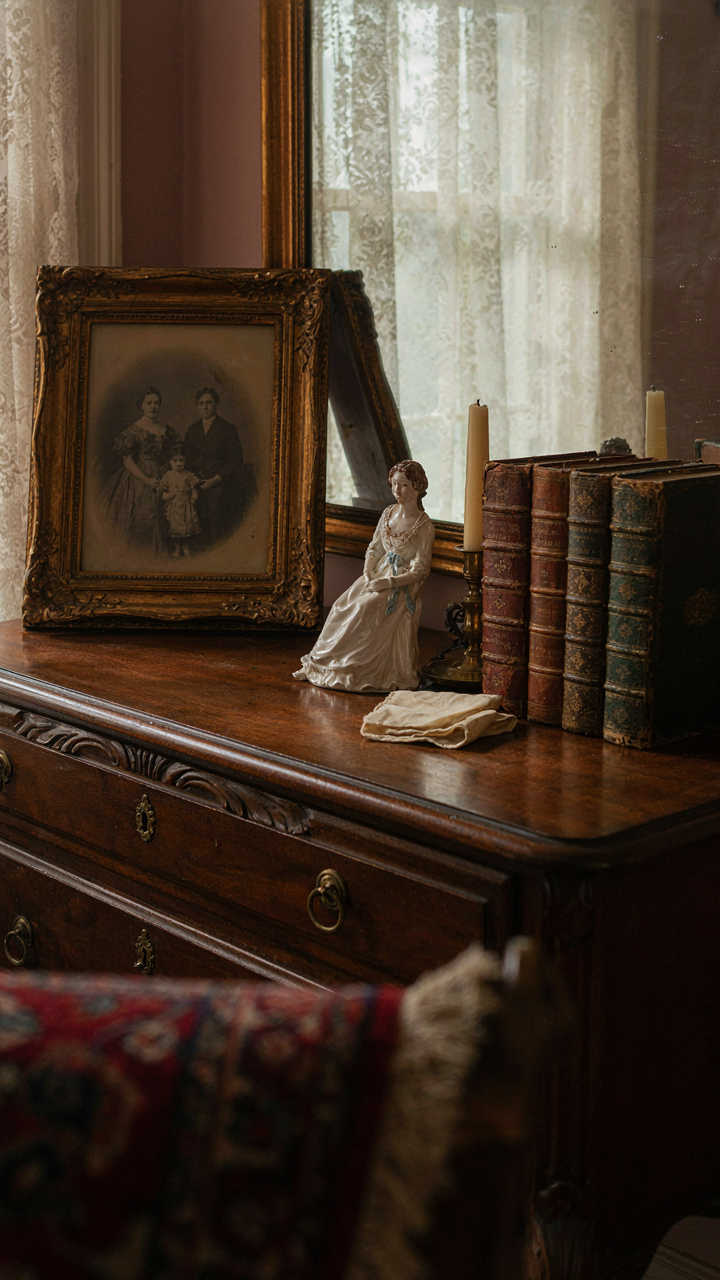
When Objects Become Organization
You want permission to fill a room without looking like a hoarder. Here’s the real mechanism: Victorian bedrooms worked because occupants understood the difference between curated density and random overflow. Biology calls this emergent order, where simple rules create complex patterns that feel intentional rather than chaotic. Victorians applied this through constraint. Every object earned placement through function or narrative weight, not impulse acquisition. The bedroom became legible because restraint operated underneath abundance.

The common advice says “edit ruthlessly” then “add Victorian touches.” Wrong direction. Start by identifying your display logic first, then stack objects within that logic. A Victorian bedroom displays three types of things: daily necessities (grooming tools, clothing storage), inherited or collected items (books, correspondence, miniatures), and comfort objects (blankets, pillows, mirrors). Each category occupies distinct zones. Clutter emerges when these zones blur and objects compete for attention without hierarchy. Your role is establishing the invisible grid that makes accumulation feel like curation.
Layers Tell The Story You Didn’t Know You Had
Victorian bedrooms function as geological strata, where older acquisitions anchor deeper layers and recent additions rest on top. Each stratum represents a decision point, a value, or a season of life compressed into objects. This is deposition in real time. Victorians understood this intuitively because their bedrooms documented decades of travel, inheritance, and relationships through tangible goods. The mechanism works because human memory attaches to physical markers. You remember the person or period when you see the object again.
The setup process demands chronological awareness, not aesthetic matching. Anchor your deepest layer with inherited pieces, foundational furniture, or objects predating your current era. Middle layers hold acquisitions from distinct life chapters: university years, early career, relationships, travels. Surface layers remain flexible for seasonal additions or current emotional investments. This stratification prevents the room from feeling like a showroom because it reads as accumulated experience rather than coordinated decoration. When you place a Victorian mirror above an inherited dresser beside travel journals from your twenties, the room narrates something true about you that matching sets cannot accomplish.
Beyond Wallpaper: Wall Treatments In Victorian Styled Bedroom
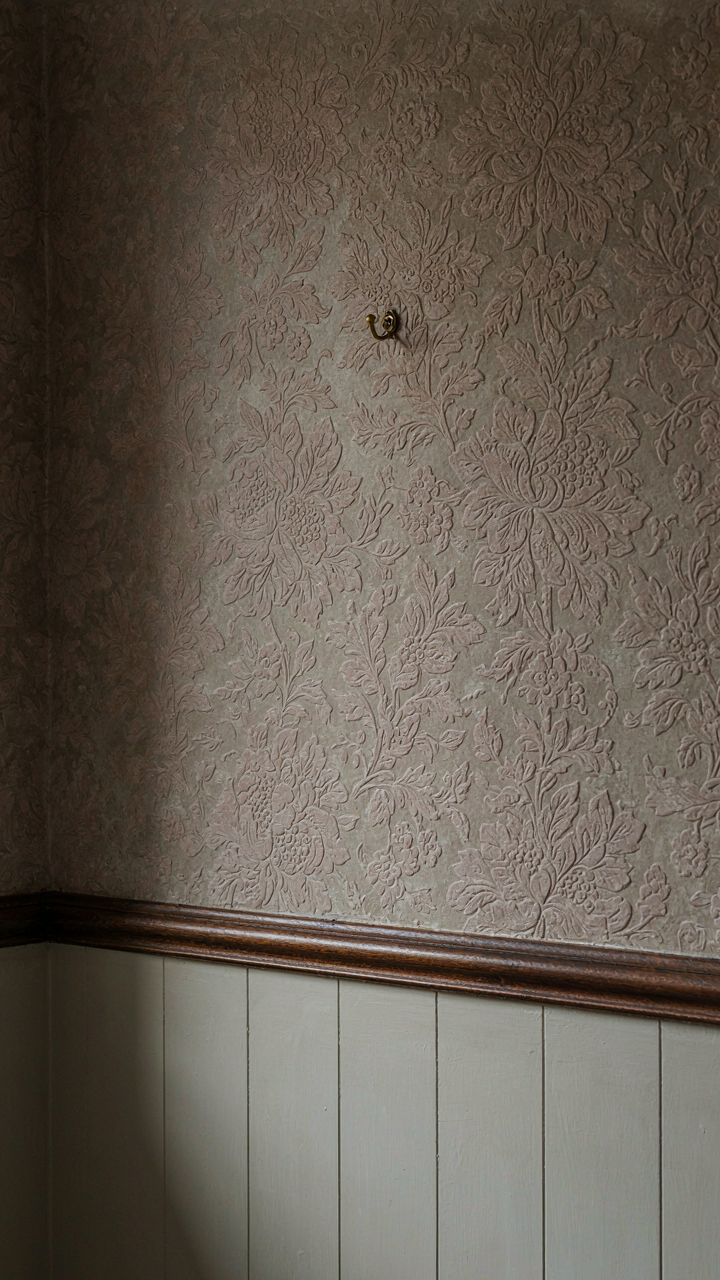
Pattern And Texture Need Load Bearing Structure
You want your walls to look expensive without admitting you’re terrified of commitment. Here’s the mechanism: Victorian walls worked because they used layering as load-bearing structure for the eye, not decoration floating on drywall. Think of it like architecture. The Victorians understood visual weight distribution. Heavy damask or floral patterns worked because they sat above dado rails, which grounded them. Without structural support—whether that’s molding, paneling, or division—a pattern reads as wallpaper you bought online, not a designed space.

The dado rail isn’t ornamental. It’s the load-bearing wall of the eye. It stops pattern from floating into nothingness and anchors it to something real. Your walls need horizontal breaks at chair rail height (around 32 inches). This divides the wall into zones. Upper walls carry busier patterns. Lower walls carry simpler treatments or paint. Without this division, you create visual chaos that reads as confused, not romantic.
Real Material Depth Versus Thin Reproduction
Common advice tells you to just find Victorian wallpaper online and call it done. That’s wrong. Modern reproductions flatten what made Victorian walls work. Genuine Victorian walls used relief wallpapers with embossed patterns, anaglypta (a thick paper composite), or plaster treatments that created actual shadow and depth. Light moved across these surfaces. Flat digital prints of Victorian patterns on thin paper create the opposite effect: they flatten the room and expose that you cut corners.
The mechanism here is shadow. Depth requires dimension. If your wall treatment casts no shadow under side lighting, it reads as printed, not constructed. Choose embossed papers, textured finishes, or actual plaster work if budget allows. If you use wallpaper, buy papers with genuine relief patterns. Run your hand across samples before purchasing. You’re looking for texture you can feel, not see in a product photo. This single detail separates a designed Victorian bedroom from a themed hotel room.
The Forgotten Details: Accessorizing Victorian House Interiors Bedroom
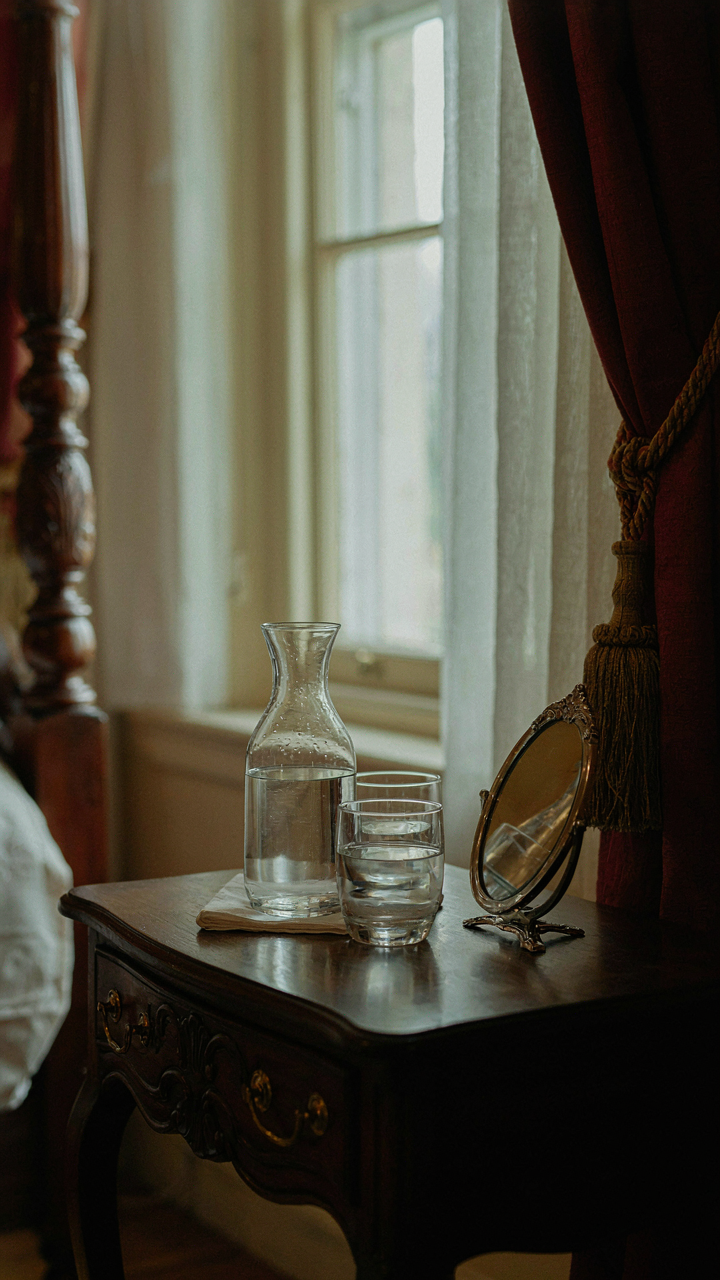
The Difference Between Decoration And Design
You want permission to buy things that look good without questioning whether they belong. The real mechanism separating a Victorian bedroom from a Victorian-themed room is restraint—the deliberate choice to exclude items rather than accumulate them. Every object in a properly accessorized Victorian bedroom solved a functional problem first. The aesthetic followed the utility. Ornate picture frames held actual portraits. Mirrors positioned opposite windows reflected light into dark corners. Bedside tables held oil lamps, not just looked expensive.

When you reverse this order and start with “what looks Victorian” you end up with clutter that photographs well but lives poorly. The distinction matters because a bedroom is where you sleep, not a museum installation. Victorian accessorizing works when each piece carries its weight functionally and visually. This means editing ruthlessly. Place objects with clear sight lines between them. Avoid clustering small items on every available surface. The room breathes when accessories anchor specific zones rather than scatter across the space.
Small Objects That Actually Matter
Three objects properly chosen outperform twelve objects placed carelessly. A Victorian bedroom depends on the precision of placement more than the volume of things. This follows the principle of signal-to-noise ratio from information design: the more items compete for attention, the weaker each individual signal becomes. A single ornate brass candlestick on a side table registers immediately. Ten candlesticks across the room cancel each other out into visual noise.
Select accessories that perform dual functions where possible. A bedside carafe held water and communicated taste. A hand mirror served grooming and reflected light. An embroidered footstool provided both seating and textile detail. Position these objects at natural interaction points: where your hand lands when you reach for something, where your eye naturally travels when you enter. The mechanism that makes Victorian accessories work is scarcity and strategic placement, not abundance.
Symmetry And Asymmetry: Balance In Victorian Bedroom
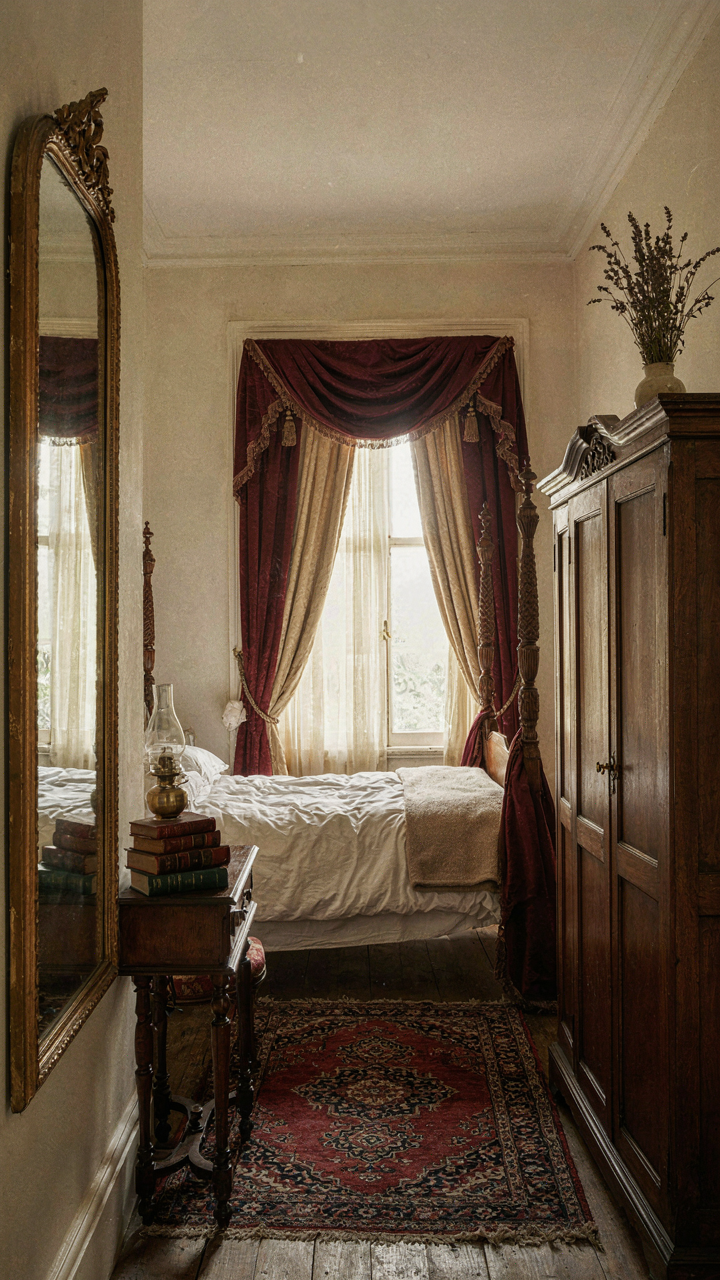
Where Visual Weight Actually Lives
You want symmetry because it feels safe. It signals control. But Victorian rooms weren’t symmetric—they were weighted. Think of it like physics: load-bearing walls distribute force unevenly, yet structures stand. Victorian designers didn’t mirror objects mindlessly; they distributed visual mass so the eye settled without tension. A heavy wardrobe on one wall needed counterweight elsewhere—not an identical piece, but something with equivalent visual density: a tall mirror, a layered window treatment, stacked furniture. The mechanism is this: your brain calculates spatial pressure, not literal matching. An ornate mahogany dresser opposite a plain wall creates imbalance because the eye has nowhere to rest on the blank side. Add a tall pier mirror or a clustered arrangement of smaller pieces and the room feels complete. This isn’t decoration—it’s visual mechanics.

Victorian bedrooms actually used asymmetry as their core strategy. The bed itself was rarely centered; it anchored one side while secondary furniture grouped on the opposite wall created equilibrium. Wall-mounted shelving, artwork clusters, and fabric drapery provided texture weight that countered heavy wooden pieces. The test is simple: stand in your room’s center and scan left to right. If one side feels heavier, move elements until your eye travels with friction, not rushing toward emptiness. This takes trial and adjustment, not intuition. Measure approximate visual density by counting vertical lines, reflective surfaces, and detailed ornamentation on each side. Aim for rough equivalence in perceived mass, not symmetrical placement.
Breaking Structure Without Losing Coherence
Everyone says asymmetrical rooms need “intentional design.” That’s backward. Most people break balance poorly because they remove rules without replacing them. Victorian rooms had rigid rules: furniture floated slightly off walls, mirrors faced seating, and layering created depth through fabric rather than scattered objects. Breaking these means choosing one constraint to violate, not discarding all of them. Off-center placement works only if the rest of the room maintains proportion. A bed positioned to one side needs the adjacent wall to feel complete—through consistent window dressing, coordinated artwork heights, or unified molding. Asymmetry without discipline looks accidental.
The actual mechanism: establish three anchor points instead of one central focal point. Your bed is anchor one. A window treatment or mirror forms anchor two. A seating arrangement or substantial furniture piece creates anchor three. These three points should form a rough triangle when viewed from above, not a line. Each anchor must have equivalent visual complexity—equal detail, scale, or materiality. A simple headboard needs an ornate opposite wall. A minimal window calls for concentrated detail elsewhere. This triangle prevents the eye from settling in one corner. Test placement by photographing the room, then drawing lines between your three anchors. If those lines feel balanced, your asymmetry works.
The Investment Mindset: Cultivating A True Victorian Aesthetic
Where To Find Real Pieces
You want the credibility that comes with owning what’s genuine instead of what looks genuine from ten feet away. Here’s the mechanism: Victorian furniture markets operate like economics—scarcity plus authenticity equals price stability. Auction houses like Christie’s and Sotheby’s catalog provenance on mid-to-high-end pieces, but most collectors miss the real supply: estate sales, specialist dealers in period furniture, and regional auction houses outside major cities.

The difference between a reproduction and an original mahogany wardrobe matters because the original holds structural integrity from period joinery, while reproductions rely on modern fasteners and veneers that fail faster. Dealers specializing in Victorian era furnishings (typically 1837-1901) can verify wood type, construction method, and hardware origin. You’re not paying for nostalgia. You’re paying for something that won’t decompose in fifteen years.
Building Assets, Not Exhausting Money
The common advice here is wrong: Victorian decor is not a personal expression project. Treat it as capital. Buy pieces that were made during the actual Victorian era, not interpretations created in 1992. Authentic pieces appreciate because supply shrinks yearly while demand from designers and collectors stays constant. A genuine rosewood settee from the 1880s costs more now than it did in 2000.
Fleeting trends in bedroom design cycle every three to five years. Victorian authenticity cycles every forty years—it goes out of fashion, then returns as collectors rediscover quality and craftspeople retire. The mechanism: real wood, hand-joinery, and period hardware become scarcer each decade, which drives scarcity premium regardless of aesthetic cycles. Start your search at local estate liquidators, then move to regional dealers if you can’t source locally.
Your Pursuit Of “Ornate Romantic Details” Is Really A Fear Of Tasteless Irrelevance
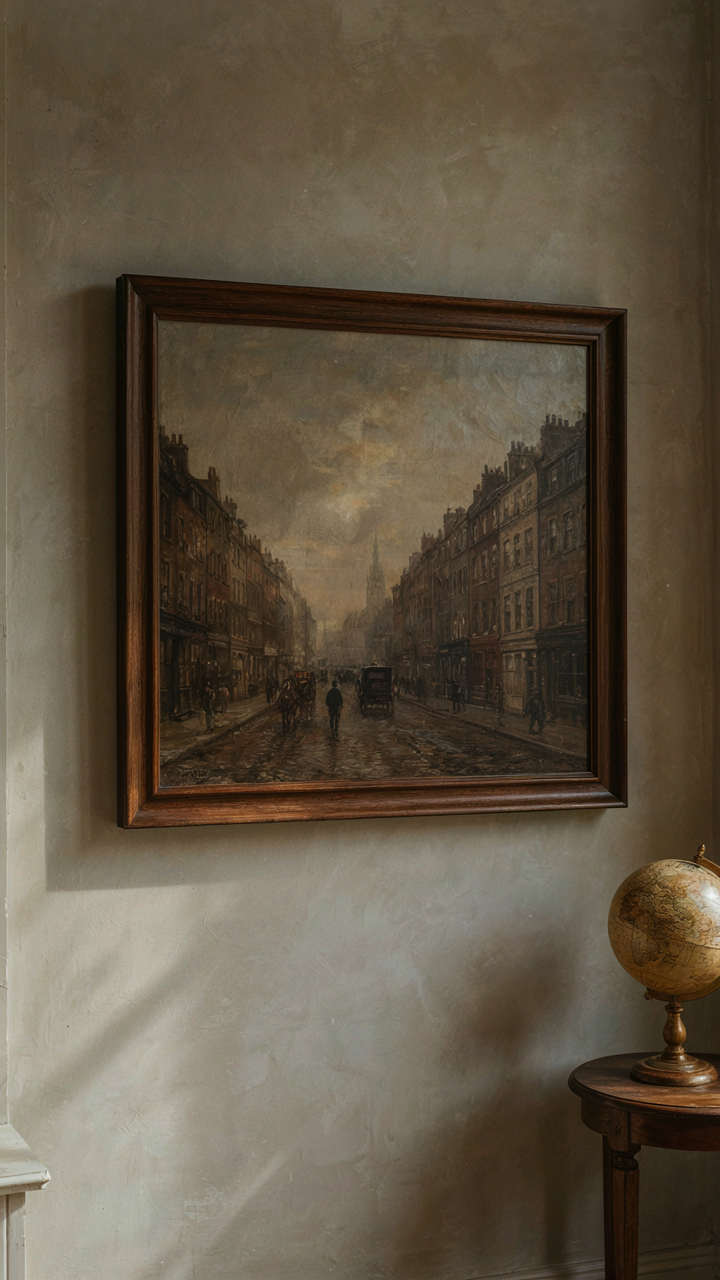
You want a Victorian bedroom because it signals that you have taste, history, culture. But that fear of being generic is exactly what makes you generic. Stop collecting velvet and wallpaper patterns. Instead, commit to one specific era—say, 1880s London—and buy three authentic pieces that actually mean something to you. Your room becomes distinctive the moment you stop decorating and start curating. Authenticity beats ornamentation every single time.



