
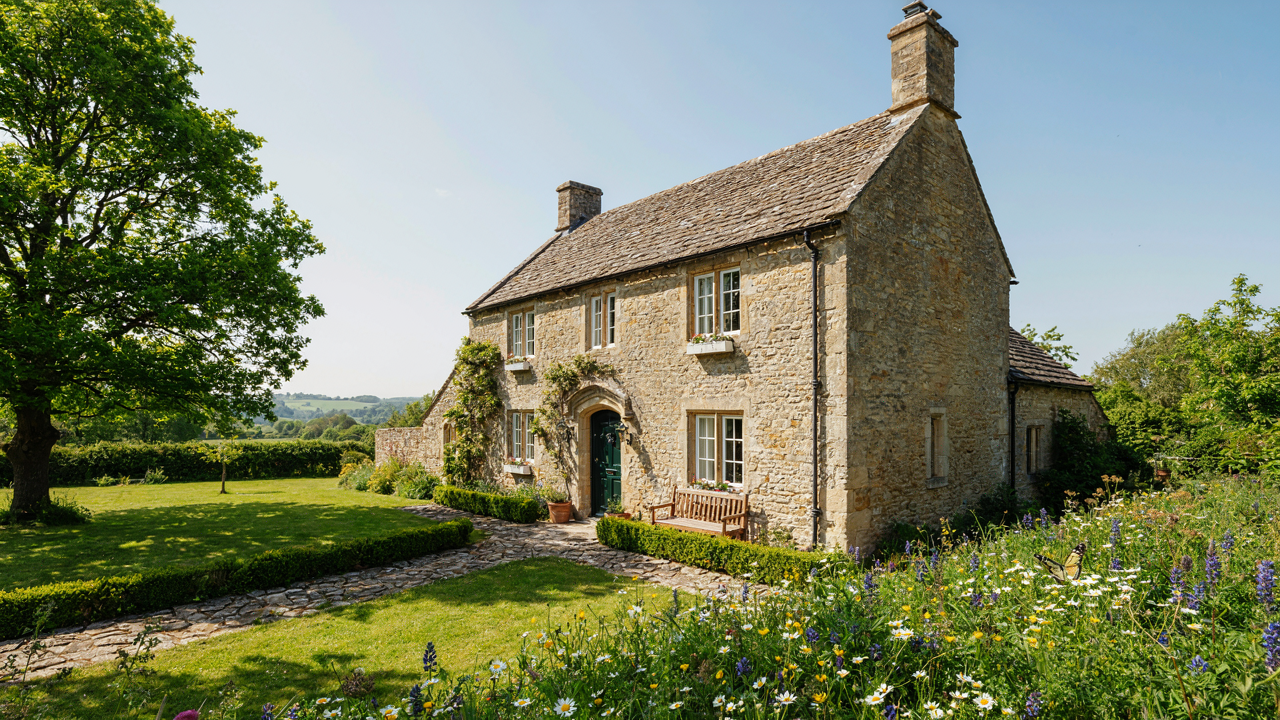
The Chimney Myth: Why Generic Designs Fail Your Cottage With Chimney

What You Actually Believe About Chimney Design
You want people to think your cottage looks intentional, not like you grabbed the first design that worked. The real mechanism: most cottage owners treat the chimney as a functional afterthought rather than a load-bearing structural and visual anchor. They copy what they see online without understanding why those designs worked in their original context. A chimney that pulls from Colonial Revival proportions fails in a 1920s Craftsman cottage because the visual weight relationship to roof pitch and wall mass is different. The materials matter less than the decision logic behind them. You’re not choosing a chimney. You’re choosing whether to think.
The gap between decent and forgettable chimneys comes down to one factor: constraint literacy. A cottage chimney works when it respects three hard constraints simultaneously—structural load paths through the wall, thermal performance in your climate zone, and visual proportion to the building’s footprint and roof angle. Most generic advice ignores two of these three. You end up with a chimney that looks copied because it was. The design didn’t originate from your cottage’s actual needs. It originated from someone else’s cottage, which is why it reads as visually dishonest even if you can’t name why.
The Real Cost Of Playing It Safe
Every uninspired chimney choice compounds over fifteen to twenty years of viewing it daily. In economics, this is called sunk cost perception: you see the mediocrity constantly and it erodes how you feel about the entire structure. More concrete: a poorly proportioned chimney—one that’s too narrow relative to your roofline or placed off-center without intention—forces you to make compensatory design moves elsewhere. You’ll add trim work you didn’t need. You’ll adjust paint colors to try to visually rebalance what the chimney broke. The actual financial cost isn’t the chimney. It’s all the corrections that follow.
The mechanism is architectural debt. A chimney designed for a different building type or era creates visual noise that demands resolution. Stone chimneys from the 1800s worked because they integrated with thick exterior walls and deep roof overhangs native to that period. Drop that same detail into a cottage with thinner walls and modern roof angles and you’ve created a tension your eye registers but your conscious mind can’t articulate. The cost isn’t money upfront. It’s years of living with a decision that requires constant mental editing.
Unmasking The True Function: Beyond Smoke And Into Storybook Cottage

The Chimney As Architectural Anchor
You want people to look at your cottage and feel something they can’t name. A chimney does that work. In design, the concept of visual hierarchy determines what the eye lands on first, and a chimney operates as a vertical anchor that halts attention and signals permanence. Most people think chimneys are functional afterthoughts. They’re not. A chimney is the argument your cottage makes about itself.

The chimney’s placement on your exterior determines whether your home reads as intentional or accidental. A centered chimney on a gable wall creates symmetry. A side chimney breaks it and signals age or addition. Cottage architecture uses this deliberately. The stone or brick rises from foundation to roofline without interruption, which creates a continuous visual path the eye follows upward. This single vertical element can make a small cottage feel grounded instead of scattered.
Visual Weight Creates Spatial Grammar
Chimneys operate according to the principle of mass and counterbalance from architecture itself. A chimney adds optical weight to one side of your cottage, which means the rest of your facade must balance it or accept asymmetry as intentional. Stone chimneys weigh more than painted ones, so they demand visual counterweight: a heavy door frame, grouped windows, or a porch structure on the opposite side.
The chimney doesn’t just exist in space, it rewrites how your eye reads the entire cottage. A wide chimney made of rough stone dominates and forces everything else into supporting roles. A narrow painted chimney becomes a detail that frames rather than dominates. The color matters here because a white chimney against dark siding recedes, while a red brick chimney against pale walls advances. When selecting materials and finish, you’re not decorating. You’re deciding whether the chimney leads or follows in your cottage’s visual narrative.
Stone Chimney Mastery: The Earth’s Enduring Statement For Your Cottage

Select Stone For Timeless Appeal
You want stone because it signals permanence and wealth without saying either out loud. Here’s what actually matters: stone performs or it doesn’t, and performance hinges on geology, not aesthetics. Different stone types have different absorption rates, freeze-thaw resistance, and structural load capacity. Granite and slate resist weather. Limestone and sandstone absorb water and fail faster in freeze cycles. Local stone outperforms imported stone because it’s already survived your climate for centuries. Match the stone to your region’s thermal swings, not to design trends.

The mistake everyone makes is choosing stone by photograph. You need to understand the stone’s origin and its moisture behavior in your specific location. Fieldstone pulled from regional quarries works because local builders proved it works over generations. Order samples, expose them to your winter conditions for a month, and inspect them. The stone that shows no visible damage or discoloration is the one that survives. This is the only vetting method that matters.
Craft Authentic Masonry Techniques
Proper stone masonry functions like a load-bearing wall system in civil engineering: stress distributes through the mass, not through individual stones. Common advice says “match old mortar” and calls it good. That’s incomplete. The real mechanism is differential movement. Stone expands and contracts at a different rate than mortar. If your mortar is harder than your stone, the stone cracks instead of the mortar. Soft lime mortar moves with the stone. Hard cement mortar doesn’t. Most modern masons use cement anyway because it’s faster, which is why newly rebuilt chimneys fail.
Authentic construction means lime mortar, proper stone coursing where larger stones support smaller ones, and a rubble-filled interior behind the face stones. No shortcuts. The cost difference between cement and lime mortar is negligible, but the lifespan difference is decades. Your mason needs to understand that mortar is the sacrificial component, not the primary structure. When moisture enters, the mortar degrades first, protecting the stone. Once you accept this, the technique becomes clear: build for mortar replacement, not stone replacement.
Brick Chimney Reclamation: Elevating The Mundane To Iconic Cottage Chimney Exterior

Pattern Bonds That Actually Matter
You want people to see your cottage chimney and feel something—authenticity, permanence, taste. The real mechanism is this: running bond looks generic because it’s the default. Most masons apply it without thinking. Break that pattern and you break the visual expectation.

Flemish bond alternates headers and stretchers in a deliberate rhythm. English bond stacks headers full-width, then stretchers. These aren’t decoration. They’re structural legibility made visible. A cottage chimney in Flemish bond reads as intentional, crafted, not slapped together. The pattern creates shadow lines that deepen with age and sunlight angle. Choose your bond based on the chimney’s prominence—a side chimney tolerates running bond, but a central stack demands visual weight through pattern.
Textures That Signal Time
Everyone says “just add texture,” then applies uniform wire-brush finish. Wrong approach. Real aging happens through differential wear, not cosmetic treatment applied uniformly.
Reclaimed brick contains natural surface variation—some faces exposed to centuries of weather, some buried, some fired harder than others. When you lay reclaimed brick, you’re not creating texture; you’re installing documented time. If new brick is your material, the texture comes from mortar joint depth and brick face selection. Vary your brick faces by 15-20 millimeters. Flush joints flatten appearance. Recessed joints create shadow. Deep struck joints aged faster because water collects and freezes. Your cottage chimney’s texture ages faster if you choose joint depth that matches regional climate patterns.
The Painted Finish Revolution: A Bold Statement For Your House With Chimney

Paint Selection For Chimney Durability
You want the painted chimney to last so you don’t have to think about it again—that’s the real reason this matters. But most people buy the wrong paint and waste money on recoats every few years. Masonry paint isn’t optional here. Exterior latex masonry paint breathes, allowing moisture vapor trapped in brick and mortar to escape without bubbling or peeling. Standard exterior paint creates a moisture barrier that accelerates deterioration on chimneys because water gets trapped behind the film and expands during freeze-thaw cycles.

Acrylic masonry paint handles the specific stress load a chimney experiences: thermal expansion from heat cycling, water infiltration from rain and snow, and salt penetration in coastal areas. Apply two coats minimum, waiting the full cure time between applications. The paint film thickness determines longevity. One coat equals five to seven years before visible breakdown. Two coats extend performance to ten to fifteen years depending on climate exposure and maintenance intervals.
Color Strategy And Visual Impact
Cottage chimneys function like a typography problem in graphic design: they anchor the eye and establish visual hierarchy on your home’s facade. The wrong color makes the entire exterior feel unresolved. The common advice that you should match brick tones or go neutral is incomplete—it ignores contrast and intention. A chimney that blends invisibly into the wall wastes its structural presence. Strategic color either unifies your exterior or creates deliberate visual separation.
- Cream And Off White: Lightens heavy brick structures and works with period cottages. Creates breathing room on facades with dark stonework or heavy timber framing.
- Soft Gray: Bridges traditional and modern aesthetics. Pairs well with both warm and cool exterior tones without competing for visual attention.
- Charcoal Or Deep Gray: Adds weight and definition. Works on cottages with light-colored walls to anchor the composition and prevent visual drift.
- Muted Sage Or Olive: Connects to landscape surroundings. Historically accurate for certain regional cottage traditions and grounds work.
- Terracotta Or Warm Rust: Enhances natural brick without mimicking it exactly. Creates intentional contrast when the main wall reads cooler or lighter.
Test colors on a full-height section of chimney for three to five days under different light conditions. Morning sun, afternoon glare, and overcast light all shift perception. Commit to samples only after observing them from the distance where most viewers see the chimney—typically from the street, not six inches away. Paint the final coat only after confirming the color performs across your site’s actual lighting conditions.
The Material Confluence: Mixing Stone And Brick Chimney For Dynamic Contrast
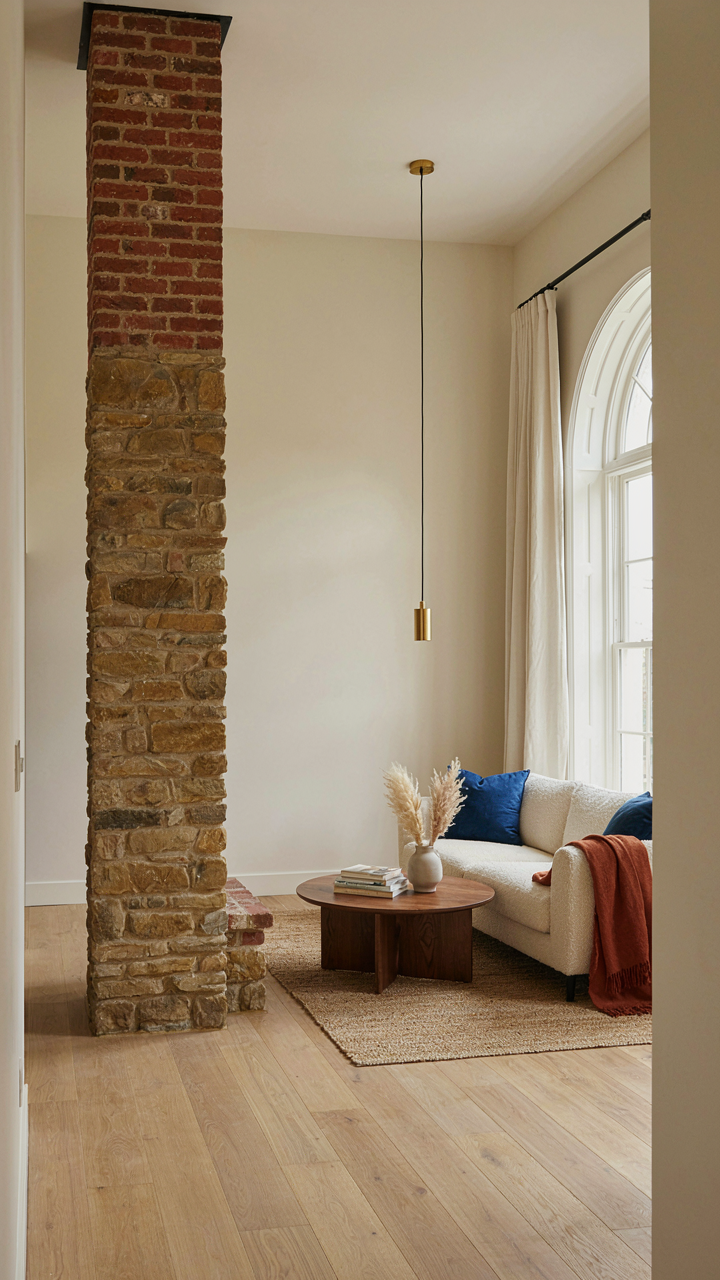
When Contrast Becomes Intentional
You want this to look effortless, like it evolved over time rather than being designed. That’s the real motive here. The mechanism is tension: stone and brick have opposing visual weight. Stone reads as static, foundational, geological. Brick reads as constructed, rhythmic, human-scaled. A cottage chimney that mixes both creates visual interest precisely because these materials fight each other. The conflict is the point, not a problem to solve. Deliberately placing them teaches the eye where to look.

The practical rule borrowed from spatial design: contrast requires proximity without collision. Your stone and brick sections need clear delineation. A coursing line, a material break at a horizontal plane, or a logical structural transition. Vague blending creates noise. Clean separation creates narrative. Most cottages fail here by letting materials fade into each other, which reads as indecision rather than intention.
The Grammar Of Material Placement
Common advice says balance materials equally. That’s wrong. Unequal distribution is more readable and historically accurate. Victorian cottages rarely split chimneys fifty-fifty. They used stone as the base or the accent, brick as the body or the frame. Establish dominance. One material owns the chimney. The other punctuates it. This prevents the eye from getting confused about what it’s actually looking at.
The placement decision drives perception of scale. A stone base grounds the chimney visually, making it feel planted into the structure. Brick rising above it reads as ascending, lighter. Stone capping a brick shaft works too, creating a finished crown that looks intentional. Test this: sketch your material zones before laying anything. Mark where the transition happens. If you can’t articulate why the boundary sits at that height, move it until you can.
The “Gravity Well” Method: How Your Chimney Design Anchors The Entire Property

Mass Creates Hierarchy Without Permission
You want your cottage to feel intentional and grounded, not like something that happened by accident. In physics, mass determines gravitational pull. On a property, the chimney operates the same way: it’s the heaviest visual object you can build, and it forces the eye to organize everything else around it. A poorly designed chimney disappears into the composition. A properly proportioned one becomes the axis that makes the entire structure read as deliberate.

Stone and brick chimneys work here because they’re actual mass, not decoration. A 3-foot-wide chimney rising from foundation to roofline commands attention through density, not height alone. When you build it off-center or align it with a gable, you’re not adding a feature—you’re establishing the gravitational center the rest of the cottage orbits around. The cottage chimney doesn’t sit on the property. It anchors it.
Scale Becomes The Invisible Boundary
Most cottage owners get scale wrong because they think it means “make it big.” That’s incomplete thinking. Scale is the relationship between the chimney’s width, the wall it sits on, and the roofline it penetrates. A chimney that occupies less than 15 percent of the wall it’s on reads weak. One that takes up 20 to 28 percent feels commanding and proportional. Anything beyond 30 percent starts looking like the house was built around it rather than the other way around.
Your stone or brick finish amplifies scale perception. Horizontal mortar joints in stone read wider. Vertical bond patterns in brick read taller. These aren’t aesthetic choices—they’re optical facts that shift how viewers perceive the chimney’s actual dimensions. When you control what percentage of wall surface the chimney occupies and what direction your material pattern emphasizes, you control whether the property reads balanced or lopsided. That’s when the design stops being decoration and becomes structure.
Beyond The Roofline: Extending Aesthetic Impact With Fire Pit Chimney Integration
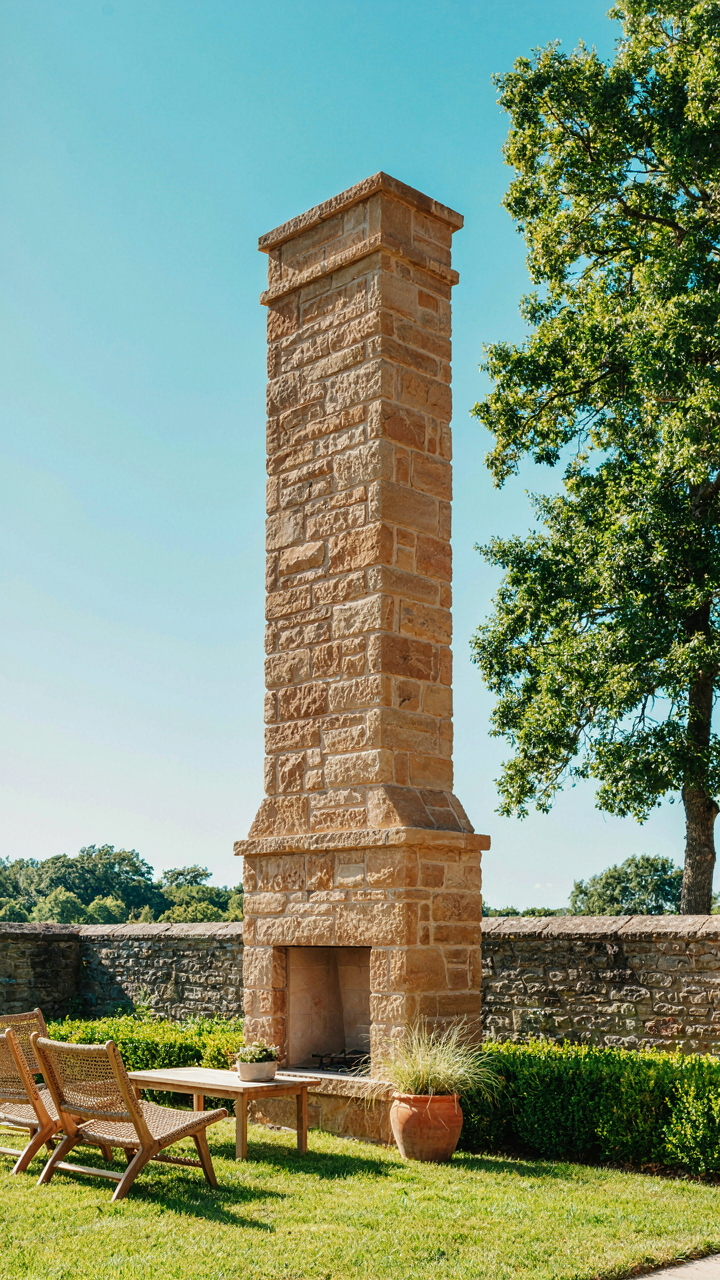
When Your Chimney Becomes The Anchor
You want your outdoor space to look intentional, not like you bolted a fireplace to a blank yard. That’s the real motive here. The mechanism is visual continuity: your house chimney establishes a material language and proportion system that already works. Extend it outward, and you’re not starting from zero. The eye tracks the vertical line of brick or stone from roofline down through your landscape. A fire pit chimney that mirrors the house chimney’s material and scale becomes a gravitational point instead of an afterthought.

The common advice is to “match materials.” That’s incomplete. Match the mortar joint width, the coursing pattern, and the stone size gradation too. These details register subconsciously. A fire pit chimney built with random-width stone while your house runs uniform courses feels broken, even if the color is identical. You’re not decorating. You’re establishing a coherent visual system that the human eye trusts because it recognizes order.
Material Translation From Structure To Ground
This is where most designs fail: people treat outdoor materials as a second language when they should be the same sentence. Your cottage chimney’s material choice dictates what belongs in the surrounding landscape. A hand-laid stone chimney with irregular coursing demands rough-faced stone in the fire pit surround and gravel or native stone for pathways. Painted brick cottages require mortar-jointed brick or rendered block around outdoor features to maintain visual weight distribution.
The material must transition, not jump. If your chimney stands in lime mortar with shallow raking joints, the fire pit chimney should use the same mortar type and jointing technique. Paint finish cottages follow the same logic: a whitewashed chimney exterior should inform the color palette of any outdoor structures. Your eye detects material honesty or dishonesty instantly. Build the outdoor chimney as if it’s one continuous structure with your house, because visually, it is.
The Impermanence Fallacy: Protecting Your Investment With Brick Sealer And Maintenance

What Actually Breaks Brick And Stone
You want to believe your cottage chimney will outlast you without intervention. That’s denial masquerading as romanticism. Brick fails through capillary action—water moves upward through the pores of masonry like a wick in a candle, carrying dissolved salts that crystallize and expand, fracturing the material from inside out. This is physics, not opinion. The damage happens invisibly for months before you see spalling or mortar loss on the surface.
Moisture is the mechanism, not the enemy. Your chimney needs proper drainage at the base, a functional chimney cap, and breathing room to release water vapor without trapping it. Painted finishes create a paradox: they seal the exterior but often trap moisture behind the paint film, accelerating deterioration. Most cottage owners paint their chimneys for aesthetics and never consider they’ve created a pressure cooker. The brick itself wants to move water through, not hold it.
Stopping Problems Before They Multiply
Deferred maintenance on masonry follows an exponential curve, not a linear one. A hairline crack that costs fifty dollars to seal today becomes a section of spalling that requires partial rebuilding in five years. The common advice says “just inspect it yearly.” That’s incomplete. You need a maintenance protocol, not a checkbox.
Start with brick sealer applied every three to five years on chimneys exposed to weather. Use a breathable masonry sealer, not acrylic or silicone products that trap moisture. Inspect the chimney cap and flashing annually—these are the barriers that actually work. Repoint mortar only when it recedes more than half an inch, and use mortar matched to the original mix, not modern high-strength cement that damages surrounding brick. The protocol matters more than the frequency.
The Icon’s Code: Cultivating A Unique Cottage Chimney Identity
When Your Chimney Stops Being Generic
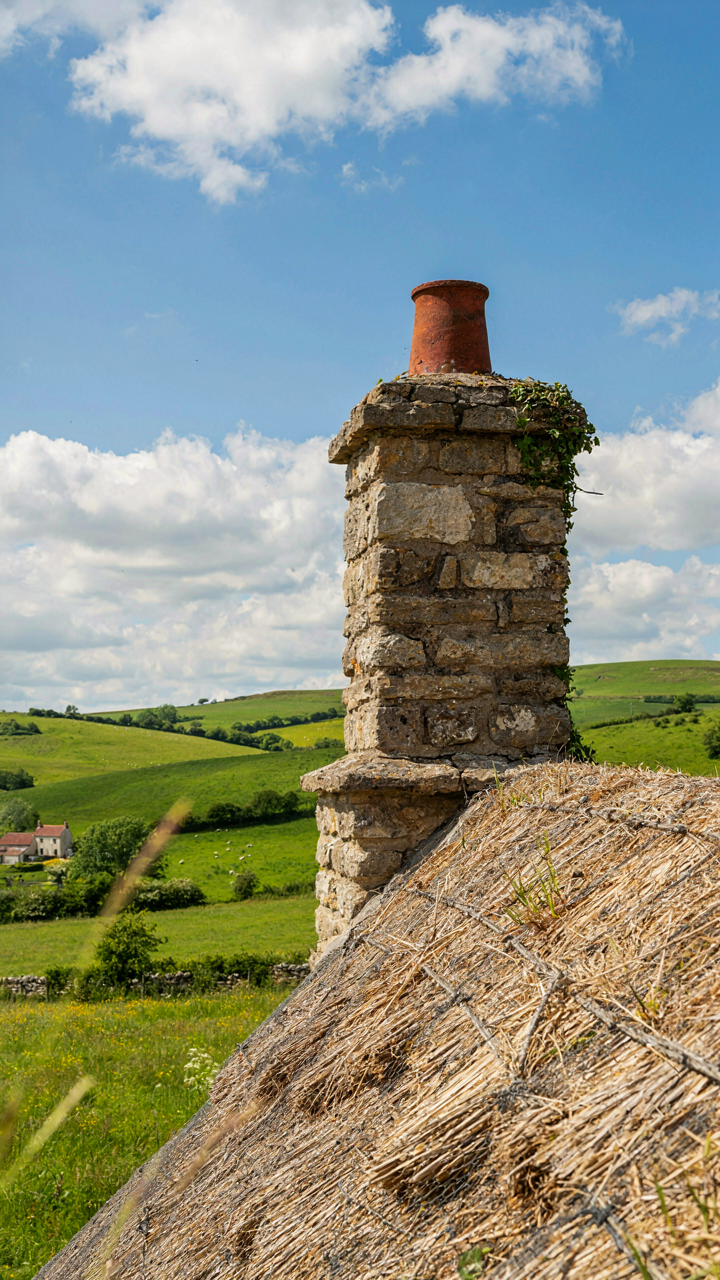
You want your cottage chimney to signal taste without broadcasting desperation. Most people treat the chimney as décor, not as a statement of actual conviction. The mechanism is simple: every design choice either reinforces the existing vernacular of your region or deliberately breaks it. Regional chimneys developed their forms because of specific materials, climate, and construction methods available at that time. A stone chimney in the Cotswolds exists because that’s what limestone demanded. A painted brick chimney in Scandinavia appeared because local clay fired pale and needed protection from freeze-thaw cycles. When you understand why a style exists, you can decide whether to honor it or subvert it intentionally.
The difference between a forgettable chimney and a memorable one isn’t complexity. It’s constraint. Choose one material. Choose one finish treatment. Commit fully. A chimney that mixes techniques or materials without historical precedent reads as indecision, not boldness. The strongest cottage chimneys either represent a specific building tradition faithfully or break from that tradition with absolute clarity about what they’re rejecting. Don’t soften the choice with compromise. Your chimney’s identity depends on the clarity of that decision.
The Chimney You Leave Behind
A cottage chimney is not temporary decoration. It outlasts your tenure in the house by decades. This isn’t sentiment—it’s about the structural and aesthetic debt you’re creating for the next owner. Your chimney choice either makes the house more valuable to restore or more expensive to correct. A well-executed stone chimney with proper mortar composition and matching materials becomes an asset future owners can protect. A poorly executed mixed-material treatment becomes a liability they’ll need to repair or replace. Think of your chimney as a document written in stone or brick. The next person reads what you committed to. Choose what you can defend after you leave.
The practical protocol: before you choose a finish or material, research three existing cottages built in your region within fifty years before your house was constructed. Document their chimney materials, mortar type if visible, any paint or finish, and their condition today. This isn’t nostalgia. It’s research into what performs under the actual climate you occupy. Your chimney solves a drainage and thermal problem specific to your location. The regional examples already proved what works. Copy the proven solution or have a documented reason for changing it.
The Real Obstacle To An Iconic Cottage Chimney Isn’t Material Choice, It’s Your Timid Vision

Most people pick safe colors and standard proportions because they fear standing out. Your cottage chimney won’t become iconic by blending in. Stop waiting for permission to go bold with that unexpected stone accent or unconventional finish. Open your design file right now and sketch one thing that makes you slightly uncomfortable. The difference between forgettable and unforgettable isn’t better materials, it’s the willingness to look different.



