The Cottage Floor Fallacy: Why “Perfect” Is The Enemy Of Character

Instagram Cottage Is Not Your Cottage
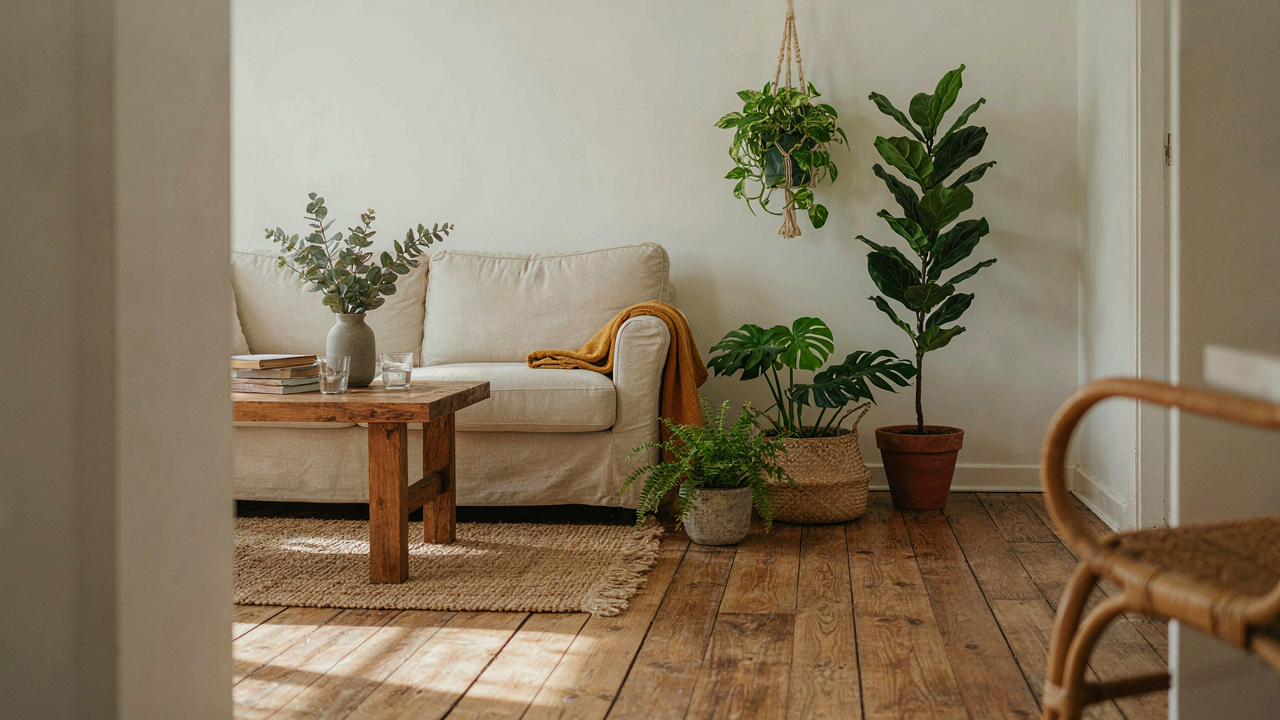
You want permission to stop chasing flawless finishes because it signals you have taste and restraint. Here’s the mechanism: Instagram cottage flooring exists in a controlled environment where every board is curated, lit, and edited. Real cottages accumulate floors through decades of use, repair, and regional material availability. The gap between the styled image and the lived-in space creates cognitive dissonance that makes you second-guess legitimate choices. Stop treating algorithmic aesthetics as design law.
The cottage flooring trend conflates two different things: historical authenticity and performance theater. A genuine cottage floor developed its character through necessity, not intention. Uneven boards, visible nails, and varied wood tones emerged because people used what they had. Mass-produced “distressed” flooring attempts to simulate this but strips away the actual mechanism that created the look: time, function, and structural compromise. The copy never matches the original because it skips the lived-in part.
Mass Production Kills What Makes It Worth Having
Engineered cottage flooring marketed as “authentic” performs a bait-and-switch. Manufacturers sand surfaces to uniform smoothness, then add artificial scratches and stains to fake aging. The result feels hollow because it lacks the structural evidence of actual wear. Real distressing happens unevenly across grain density, traffic patterns, and material fatigue. Buying pre-distressed boards means you’re paying premium prices for a costume that deteriorates into generic flatness within years.
The real mechanism is supply chain economics. Factory-consistent floors cost less to produce and ship, so marketing departments positioned consistency as luxury. They renamed it “cottage core” and sold it back to you as artisanal. Authentic cottage floors came from local mills using whatever timber grew nearby, creating subtle regional variation you cannot replicate with standardized products. If you want character, stop buying floors designed to look broken on day one and start sourcing from actual sources: reclaimed materials, local sawyers, or genuine antique stock.
Reclaiming Worn Wood: The Archaeology Of Patina
How To Distress Without Looking Distressed
You want people to believe your floor earned its scars over decades, not that you paid someone to fake it last Tuesday. The mechanism is simple: real wear follows physics, not emotion. Wood wears where feet actually land, where friction compounds, where moisture penetrates unevenly. Random gouges and surface scratches read as amateur hour. Strategic distressing targets high-traffic zones first, then adds secondary damage that mirrors how wood actually fails under load and time.

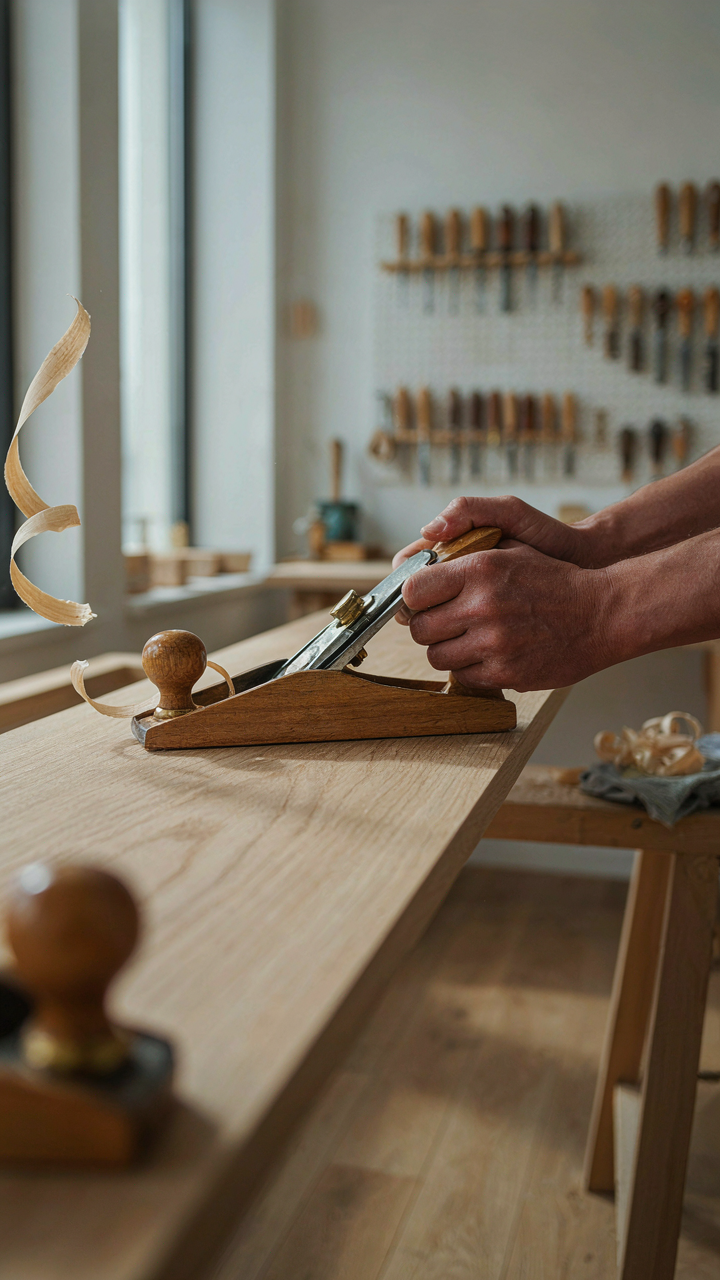
Start with the traffic pattern. Entrances, pathways between rooms, and areas near furniture legs take the most abuse. Hand-plane these zones with deliberate passes, creating subtle depth variation rather than uniform texture. Then introduce edge-breaking on board corners using a block plane or worn chisel. The key is restraint: one pass looks intentional, ten passes looks like you’re angry at the wood. Finish with selective gouges using a router or hand tools in spots where dropped objects or pet claws would naturally strike.
Building Depth Through Layered Finishes
Paint layers don’t create aged character by accident. Old cottages accumulated finishes across centuries because people repainted what was there, sometimes poorly, sometimes over incompatible surfaces. You’re borrowing from archaeology here: each stratum tells a story, and exposure of those layers reads as time passage. The mechanism is contrast. Aged wood doesn’t have one finish. It has competing finishes showing through worn patches, creating visual complexity that reads as authentic.
Apply a base stain or thinned paint to raw wood first. Let it dry completely. Sand specific areas to expose bare wood, then apply your topcoat in a contrasting tone. Where traffic is heaviest, sand through to the base layer. Where edges wear naturally, let undertones show. Use flat finishes over glossy finishes to increase the wear effect, since gloss shows disturbance too obviously. The final seal coat should be matte or satin, applied unevenly so some boards show subtle sheen variation that mirrors how old finishes wear at different rates based on foot traffic and sunlight exposure.
The Painted Board Protocol: Intentional Erosion
Color Contrast Creates Wear Legibility
You want people to see that your floors are old. That’s the real transaction happening here. But most advice on cottage flooring paint color stops at “muted tones” and calls it done. That’s lazy. The actual mechanism is contrast: paint breakdown only reads as intentional when the undercoat becomes visible and creates visual rhythm.

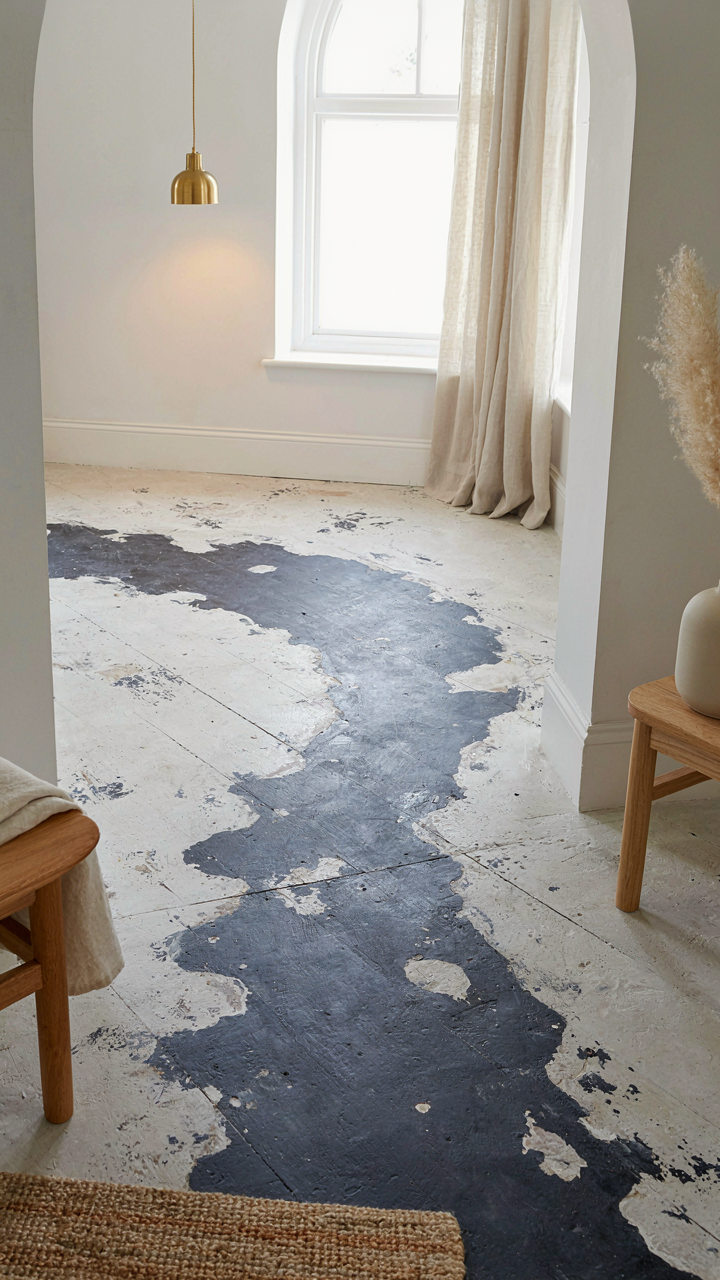
Dark base colors under light topcoats generate the highest legibility of wear. Think charcoal or forest green beneath cream or soft white. When the top layer chips, the darker substrate creates immediate visual hierarchy that reads as authentic aging. Light bases under dark topcoats produce the opposite effect and flatten the space. The contrast gap between layers is what triggers the brain to register wear as genuine rather than accidental damage.
Mechanical Breakdown Beats Chemical Aging
Forget the romanticized notion of time doing the work for you. That’s passive and produces unpredictable results. Real cottage flooring practitioners use targeted mechanical methods to accelerate paint failure in specific zones: high-traffic paths, doorways, furniture feet positions. Wire brushing, strategic sanding, and deliberate scuffing with coarse materials (120-grit sandpaper minimum) force paint removal along authentic wear patterns.
Chemical aging through vinegar or distressing solutions is theater. Mechanical methods control exactly where and how deeply the paint fails, which determines whether the worn effect reads as lived-in or staged. Use wire wheel attachments on drill tools for edges, hand-sand floor paths where feet naturally travel, and strategically strike board surfaces to mimic real impact damage. The protocol: sand pathways, wire-brush edges first, then apply paint, then repeat the mechanical breakdown on the cured topcoat for layered authenticity.
Beyond Wooden Flooring Ideas: The Stone & Tile Reframe
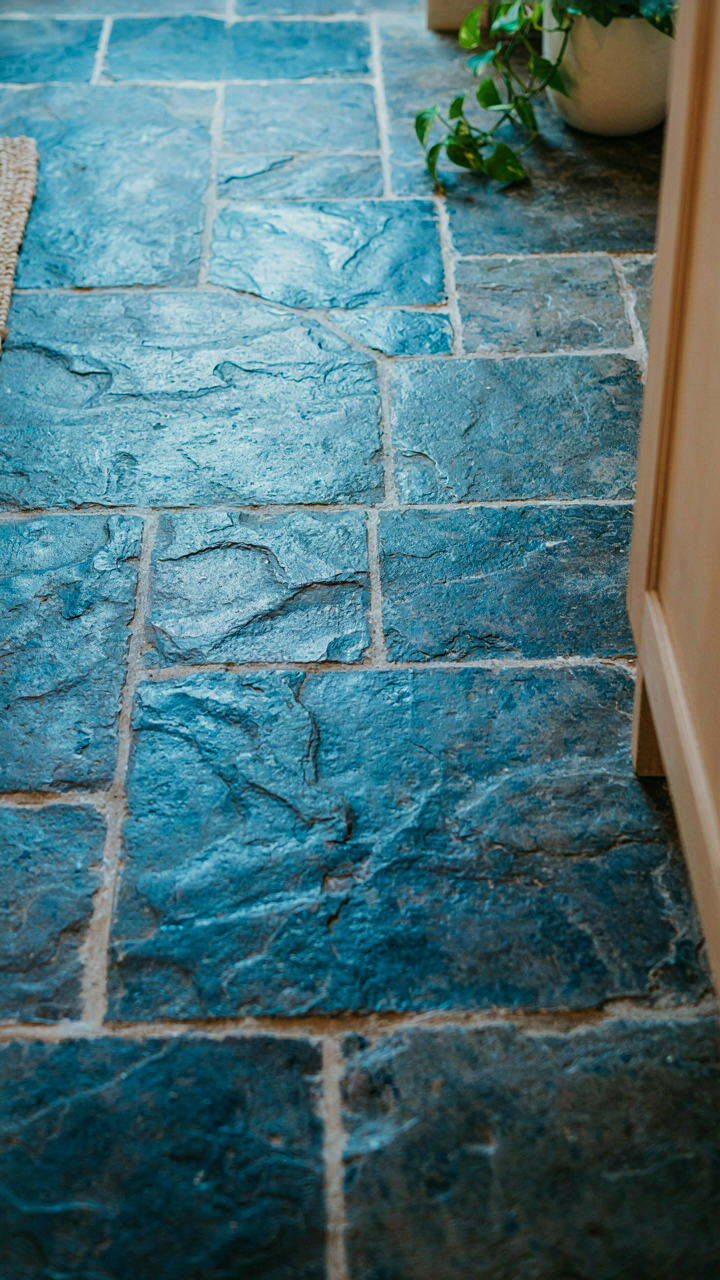
Stone Kitchen Floor: Embracing Chips And Irregularities
You’re drawn to this section because stone feels more “authentic” than wood—less likely to show you made a choice. The mechanism is simple: stone’s irregularities signal age and permanence. Kitchen stone flooring in cottage design works not because it’s perfect, but because weathering is built into the material’s identity. Limestone, slate, and bluestone all age visibly. Chips become proof of use rather than flaws. This removes the maintenance anxiety that plagues painted wood floors.

The real advantage is durability without the refinishing cycle. Stone doesn’t require sanding or resealing every five years. Spills don’t penetrate the surface. In high-traffic kitchens, this matters more than aesthetics. Uneven grout lines between stone pavers reinforce the cottage aesthetic because they’re honest—not calculated. When you lay stone, you accept its thickness variation. This acceptance is what makes it work. Install stone directly to a level subfloor, grout it with a slightly textured compound to hide inconsistency, and stop overthinking.
Old Fashioned Tiles: Irregular Grout Lines, Faded Pigments
Faded tiles aren’t a compromise—they’re the actual design. Mass-produced uniform tiles signal “renovated.” Vintage or reproduction tiles with slight color variation signal “original.” The difference isn’t subtle to anyone trained to read spaces. Cottage flooring built on this principle uses tiles with intentional imperfection: hand-pressed edges, glaze pooling in corners, pigment shifts across a run. Irregular grout lines amplify this effect by refusing the grid precision that reads as modern.
The installation technique matters more than the tile itself. Wide grout joints, sometimes left deliberately uneven, create visual texture and hide minor alignment errors. Use natural hydraulic lime mortar or period-appropriate grout formulas if you’re targeting historical accuracy. This slows installation but prevents the sterile appearance of perfectly aligned contemporary tile work. The mechanism is exposure: every imperfection becomes a timestamp. Lay tiles with mixed orientation when possible, and use grout color slightly darker than the tile to emphasize irregularity rather than hide it.
The “Entropy Maximization” Approach To Cottage Floors

When Decay Becomes The Design
You want permission to stop fighting time. Physics calls this entropy—the inevitable increase of disorder in any closed system. Apply it to cottage flooring and you get this: a floor that ages visibly isn’t failing. It’s performing its actual function. Most design advice tells you to seal, protect, and arrest change. That’s backwards. The mechanism is simple: wood moves, settles, and weatherproofs itself through surface patina and color shift. Fighting that costs money and attention. Surrendering to it costs nothing.

Worn wood doesn’t need restoration to look intentional. Painted boards don’t need flawless repainting to read as authentic. The gap between “old” and “ruined” is just narrative. Cottage design lives in that gap deliberately. A floor with visible foot traffic, paint loss at transitions, and color variance across boards communicates actual history instead of staged history. That distinction moves fast through rooms. Guests feel it before they think about it.
Designing For Desirable Decay Not Against It
Stop treating wear as an enemy that sneaks in. Design the wear pattern first. This means choosing materials that age along a specific trajectory instead of materials that hide aging. Reclaimed pine darkens predictably. Painted softwood boards lose paint at edges in a way that reads as intentional distressing if you accept it rather than sand it flat every three years. The protocol: select wood species that patina with use, paint with finishes that chip at contact points, and space boards so seasonal movement shows without creating hazards.
Maintenance becomes a single decision, not an ongoing battle. You either commit to the entropy path—accepting surface changes, sweeping more frequently because texture holds dust, touching up paint every five to seven years in high traffic zones only—or you reject it entirely and use sealed concrete or engineered products. Cottage flooring that works uses the first approach and stops apologizing for it. The floors that fail are the ones caught between philosophies, where owners resist visible aging while using materials that age anyway.
Mixing Media: Tile And Wood For Functional Authenticity

Where To Place Each Material
You want the aesthetic without the rot. That’s the real tension here—you’re drawn to worn wood because it signals time and permanence, but you need a floor that actually functions in a cottage kitchen or bath where moisture lives. Think of material placement like load-bearing architecture: you put strain where the structure can handle it.

Tile belongs in zones where water sits: under sinks, around stove bases, entry transitions. Wood thrives in low-moisture zones: living areas, bedrooms, halls. The transition line itself matters more than either material alone. A hard edge between materials looks forced. A 12 to 18-inch overlap zone where you stagger boards and tile creates visual continuity and gives you practical breathing room if moisture creeps.
Choosing For Longevity Over Romance
Common advice says mix materials for “visual interest.” Wrong starting point. You mix them because wood fails where tile survives, and tile feels institutional where wood feels inhabited. The real mechanism is material failure prevention: you’re not decorating, you’re engineering a floor that won’t demand replacement in five years.
Reclaimed or distressed wood in moisture-prone areas will cup, warp, and rot—no matter how authentic it looks at purchase. Cheap tile cracks under thermal stress and looks worse with age. Specify materials with proven longevity in their zones: solid or engineered hardwood rated for moderate moisture, porcelain tile with low water absorption. The payoff isn’t beauty. It’s a floor you stop thinking about because it actually holds up.
Indoor Floor Tiles: Unconventional Choices For Country House Flooring

Salvaged Tiles With Inherent Imperfections
You want salvaged tiles because they signal you didn’t buy everything new, which reads as either authentic or wealthy depending on execution. Here’s the mechanism: imperfections aren’t flaws to hide—they’re evidence of time, which cottage flooring trades on. Salvaged tiles come pre-aged. You skip the artificial distressing step entirely.

Real salvaged tiles carry genuine wear patterns, uneven glazing, and color variation. These properties compound over decades of actual use. You source them from reclaimed material yards, estate sales, or architectural salvage warehouses. Installation becomes straightforward because the floor isn’t performing; it’s testifying.
- Encaustic and Cement Tiles: Victorian-era geometric patterns with authentic fading and surface wear that new reproductions cannot replicate without looking forced or theatrical.
- Terracotta From Mediterranean Regions: Hand-pressed clay tiles with natural thickness variation, color shifts, and kiln marks that anchor the cottage aesthetic to specific geography.
- Quarry Tiles Vintage Stock: Dense, unglazed tiles originally made for industrial or working kitchen use, now prized for their muted palette and genuine use marks.
- Delftware and Hand Painted Salvage: Dutch and Portuguese tiles with original brushwork imperfections that add visual complexity no manufactured tile achieves.
- Slate and Stone Salvage: Reclaimed flagstone and slate pieces with natural cleft surfaces and edge damage that grounds the floor in geological rather than commercial time.
The practical constraint is sourcing volume. A salvaged tile floor requires either accepting mixed origins or hunting specific batches. Mixed batches force you to design around variety rather than impose uniformity—which paradoxically strengthens cottage flooring because it mirrors how these homes actually accumulated materials over generations.
Creating Mosaics From Disparate Elements
The common advice says mosaics belong in Mediterranean or eclectic homes only. That’s incomplete. Mosaics work in cottages because cottage flooring already breaks pattern consistency—worn boards, painted sections, varied materials. Mosaic design simply makes the inconsistency intentional instead of accidental.
You build cottage mosaics through layering logic: use salvaged tiles as anchors, fill gaps with smaller tile fragments, and cement the pattern through color relationships rather than geometric repetition. Victorian cottages employed this technique in entryways and kitchen borders. The method respected material scarcity by using broken or surplus stock. Your mosaic floor becomes a working archive instead of a decorative accent.
The execution depends on scale. Small entry mosaics fit cottage proportions better than large floor fields. Work with a tile setter who understands how to bed disparate thicknesses without rocking or settling. Sketch the pattern beforehand by arranging physical tiles on paper at scale. Cement each piece individually rather than attempting to set multiple tiles at once, as thickness variation prevents simultaneous seating. This discipline transforms the floor from decoration into craft.

The Myth Of Maintenance: Protecting Patina, Not Erasing It

Clean Without Stripping
You want your cottage floor to look intentionally aged, not neglected—the difference between a design choice and a failure. Here’s the mechanism: most people clean old wood floors with the same aggression they use on new ones, which accelerates wear in random patterns instead of letting it develop character. This is backwards.
Low-intervention cleaning means dry or barely damp microfiber, never wet mopping. Water sits in the grain of softwoods common in cottage floors, raising fibers and dulling the finish faster than time alone would. Vacuuming first removes grit that acts like sandpaper under foot traffic. Use pH-neutral cleaners formulated for wood, not general-purpose solutions. The goal is dust removal, not restoration.
Wear As The Design
Embracing inevitable wear stops being romantic and starts being practical once you name what’s actually happening: wood floors develop their final aesthetic through use, not preservation. This is how traditional cottage floors actually looked—they weren’t maintained into perfection, they were lived on until they developed patina.
Scuffs, heel marks, and color variation from foot traffic are not problems to solve. They’re evidence of occupation. Paint-based cottage floors benefit from this especially. Worn edges on painted boards reveal wood underneath, creating visual texture that no stain technique can replicate. The mechanism is simple: protect the structural integrity through the finish, then let the surface tell the story of who walked there. That’s where cottage flooring gains its credibility.

Mastering The Imperfect Palette: Cottage Core Flooring Beyond Trends

Developing A Discerning Eye For Authentic Aging
You want permission to buy something that looks old without admitting you’re paying premium prices for newness. Here’s what actually separates real aged wood from the manufactured stuff: time creates inconsistent wear patterns that follow physics, not design whimsy. Genuine cottage floors show heavier wear at entry points and high-traffic zones. Paint wears through in specific spots where feet actually landed for decades. Scratches follow directional patterns from furniture movement, not random scatter across the surface. This is material archaeology, and it requires you to learn to read it.
Most people mistake “distressed” finishes for authentic aging because they’ve never seen actual old floors. Real aged cottage flooring has color variation driven by UV exposure, moisture, and foot traffic—not by a factory spray gun applied uniformly. Examine grain exposure patterns. Worn wood reveals deeper grain where surface fibers eroded away. Examine paint loss—it peels at edges and stress points, not in the middle of boards. Learn to spot the difference between intentional damage and honest wear before selecting your materials.
Rejecting Fleeting Fads For Timeless Material Integrity
The consensus advice here is useless: “go with what speaks to you” and “follow your instinct.” That’s how people end up with laminate that mimics hand-scraped oak in 2015 and regrets by 2020. The real mechanism is material longevity versus trend cycle speed. Trends move faster than materials age. Painted cottage floors outlast fashion because you can repaint them. Worn wood stays relevant because wear itself becomes the design—it never looks trendy, only established. The fad is the finish, not the floor.
Choose materials based on their capacity to absorb time rather than match current aesthetics. Solid wood takes stain and paint repeatedly without structural degradation. Genuine hardwood shows depth when light hits it at angles—this property doesn’t fade. Cheaper engineered options have limited refinishing cycles because the veneer is thin. Paint quality matters more than paint color for cottage flooring; quality paint adheres through temperature cycles and foot traffic. When selecting materials, prioritize repaintability and refinishability over current color trends. Your job is to choose something that improves visually with maintenance, not something that requires replacement when taste shifts.
The Real Obstacle Isn’t Choosing A Floor; It’s Your Addiction To Polished Predictability

Most people don’t struggle with cottage flooring decisions. They struggle with wanting their home to look like a showroom while pretending they want character. Worn wood and painted boards demand you accept imperfection as the point. They force a choice: control or authenticity. Pick one floor sample tomorrow and live with it for a week before committing. Your gut will tell you what actually fits your life, not your Instagram feed. Stop designing for approval and start building something that ages well.