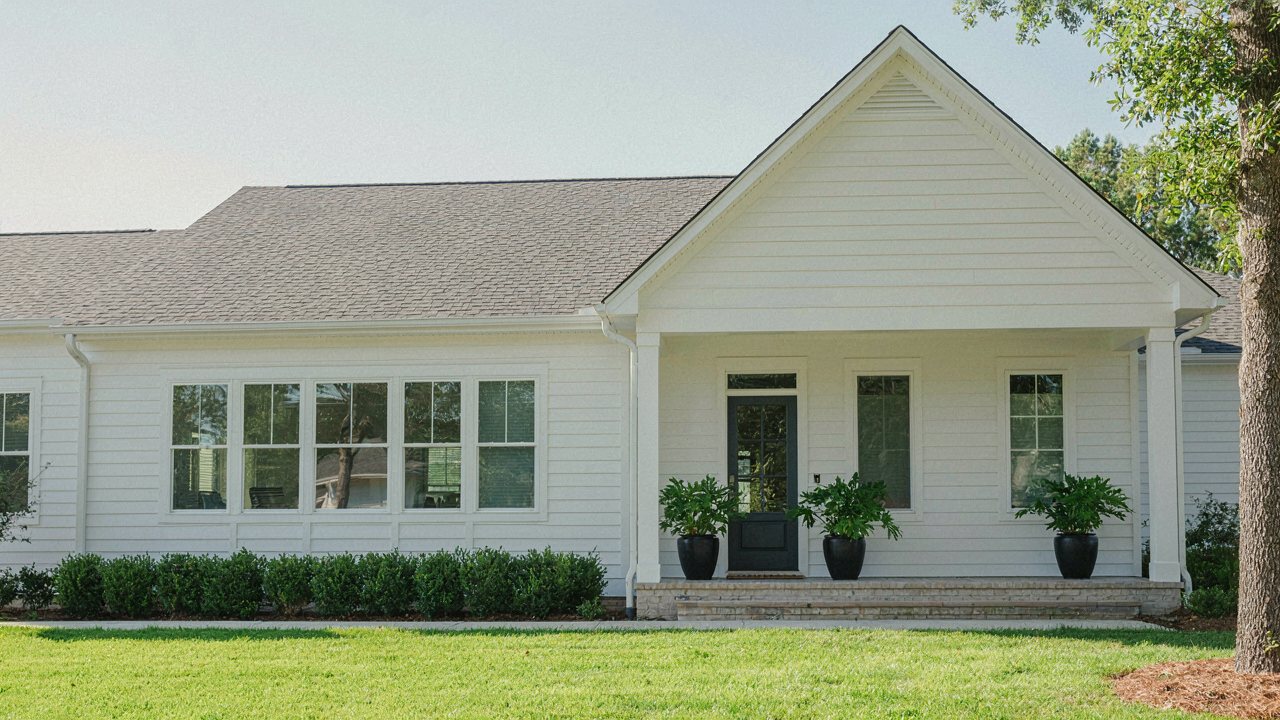
The Illusion Of Effortless Charm: What Most Get Wrong About Joanna Gaines Front Porch

The Strategy Behind The Casualness
You want to believe her porches happen by accident because that makes you feel like you could do it too. Here’s what actually happens: Joanna Gaines applies constraint-based design, the same principle from economics where scarcity creates value. She doesn’t add elements until they earn their spot. Every piece on her porches serves a functional purpose first, aesthetic second. The wicker, the planters, the seating arrangement, the lighting—none of it exists for decoration alone. Each item solves a problem: weathering, foot traffic, sight lines, or seasonal transitions. This is why her porches don’t feel cluttered even when they’re full.
The work happens in subtraction, not addition. Most people reverse this. They buy a porch’s worth of farmhouse decor, arrange it, and hope it coheres. Gaines starts with the bones of the space, identifies what the porch actually needs to do, then selects pieces that align with that function. The visual consistency people mistake for “just her style” is really the result of editing against a clear purpose. A porch that welcomes people differs structurally from a porch that’s purely ornamental, and those differences compound across every detail.
Where Most Replication Fails
The common advice tells you to “embrace neutrals and natural materials,” as if the color palette is the mechanism. It’s not. That’s symptom recognition, not system understanding. People copy the white paint, the shiplap, the wood tones, then wonder why their porch feels generic or, worse, like a display. The actual mistake is treating her porches as style templates instead of functional systems that happen to look cohesive.
The failure point is specificity. Gaines designs for actual use patterns on her properties. Her porches accommodate the climate zones she works in, the foot traffic patterns of families, the sight lines from the road that matter to the house’s curb presence. When you replicate only the surface elements without auditing your own porch’s actual purpose and constraints, you get decoration masquerading as design. Start by defining what your porch needs to accomplish before you select a single piece.
Deconstructing Magnolia Homes Exterior Doors: The Unseen Psychology Of Entryways

The Threshold Effect
You care about this because you sense that a door signals whether you belong inside. The door is the first commitment decision your brain makes before crossing it. In neuroscience, this is called the “decision gate”—a moment where the visitor’s subconscious evaluates safety, status, and permission. Joanna Gaines understood this mechanism early: her doors don’t welcome everyone the same way. A heavy black front door with brass hardware tells a different story than a white farmhouse door with a simple latch. The material, color, and hardware function as a filter that either accelerates or delays the visitor’s entry decision.

The Magnolia aesthetic weaponizes this gate strategically. Most design advice says “make your door inviting,” which is too vague to be useful. What actually works is this: the door must look intentional, not trendy. Gaines uses reclaimed materials, symmetrical placement, and hardware that feels earned rather than purchased. This specificity removes ambiguity from the visitor’s mind. They see a door that has weight, history, and purpose—not a decoration someone added to match a Pinterest board. The door stops being a barrier and becomes an invitation.
Door Color As Permission Structure
Color choice determines what the visitor permits themselves to feel before entering. In design psychology, colors function like social permission slips. A bright white door signals casualness and openness. A black door signals formality and gatekeeping. Joanna Gaines rotates between these two poles depending on the home’s narrative, but she rarely uses colors in between. The commitment to extremes removes cognitive friction. The visitor knows exactly what tone to adopt.
Magnolia homes rarely feature red, blue, or green doors—choices that would force visitors to interpret ambiguous meaning. Black and white doors have centuries of architectural precedent. They feel like decisions made by someone who knows the rules, not someone breaking them for aesthetic points. The door color becomes part of the home’s operating system, not its decoration. When a visitor approaches, their brain has already been programmed by the color choice about what behavior the space expects from them. Install the door color that matches your home’s actual social function, not the one that photographs best.
The Joanna Gaines Front Door Protocol: More Than Just A Pretty Paint Color

What Actually Stops People At Your Door
You want people to notice your front door because you’re worried yours doesn’t signal competence and care. Here’s the mechanism: a front door works like a threshold in psychology—it’s the moment someone decides whether they’re entering a space managed by someone with standards. Joanna Gaines front doors succeed because they compress three signals into one artifact: intentionality, maintenance, and belonging to a specific tribe.

The door itself is secondary to the frame around it. Most homeowners paint the door and stop. The real work happens in the architectural grammar surrounding it: trim proportions, the relationship between door width and porch depth, whether hardware reads as deliberate or afterthought. A Joanna Gaines front door isn’t pretty—it’s precise. The door color matters only because it’s calibrated to everything touching it.
How Materials Speak Before You Do
Material choice operates like semiotics in marketing—each substance communicates status and narrative without words. Wood signals permanence and craft. Fiber cement signals low maintenance disguised as thoughtfulness. Steel signals industrial honesty. The mistake everyone makes is treating material as decoration rather than communication.
- Solid wood doors: Communicate investment and willingness to maintain. Real wood requires care, which signals the owner values the home enough to perform that work consistently.
- Fiber cement trim: Performs like wood but won’t rot or warp. Joanna uses this to guarantee the frame stays true for decades without the maintenance theater.
- Stainless or matte black hardware: Reads as intentional selection, not builder-grade default. The finish choice tells visitors someone made specific decisions here.
- Black or dark green paint: Reflects established farmhouse convention but works because contrast against light trim creates visual hierarchy visitors process instantly.
- Reclaimed or distressed wood accents: Signals authenticity through age markers. Newer homes use distressing to anchor themselves in narrative rather than novelty.
Pick materials that require no apology. If you choose something, commit to it visibly. The door and frame should look like someone designed them together, not assembled them from separate catalog pages. This coherence is what Joanna’s front doors accomplish: materials aligned to a single decision-making logic that viewers feel before they see it.
Beyond The Buzzwords: True Modern Farmhouse Front Porch Principles

Restraint Over Decoration
You want people to think your porch is effortless. That’s the real motive here. The mechanism is constraint. Joanna Gaines designs operate on subtraction, not addition. Every element earns its place or it gets removed. Most people do the opposite. They layer textures, colors, and accessories until the porch becomes noise instead of a statement. The farmhouse aesthetic people actually respond to isn’t busy. It’s edited.

Start by identifying what your porch actually does. It transitions people from street to door. It creates first impression. Everything on it should support those functions or disappear. A rocking chair works. Three rocking chairs work only if you’re running a bed and breakfast. Matchy decor sets don’t work. One statement piece does. The minimalist approach isn’t about emptiness. It’s about removing competition so the real architecture breathes.
Utility Determines Everything
Function isn’t decorative window dressing in Joanna Gaines porches. It’s the skeleton. Too many people treat aesthetics and usability as separate problems. They’re not. A front porch that doesn’t protect from weather fails. Seating that doesn’t actually get used is clutter disguised as design. Lighting that doesn’t illuminate defeats the purpose.
Start with weather protection first. An overhang matters more than any color choice. Add seating only if people will sit there. Include lighting that serves the transition from dusk to entry. Then layer materials that handle foot traffic and weather exposure without deteriorating in six months. The porch becomes naturally beautiful because it’s solving real problems instead of performing prettiness. That integrity shows.
Chip And Joanna Gaines Exterior Homes: The Rule Of Asymmetric Balance
Visual Weight Distribution
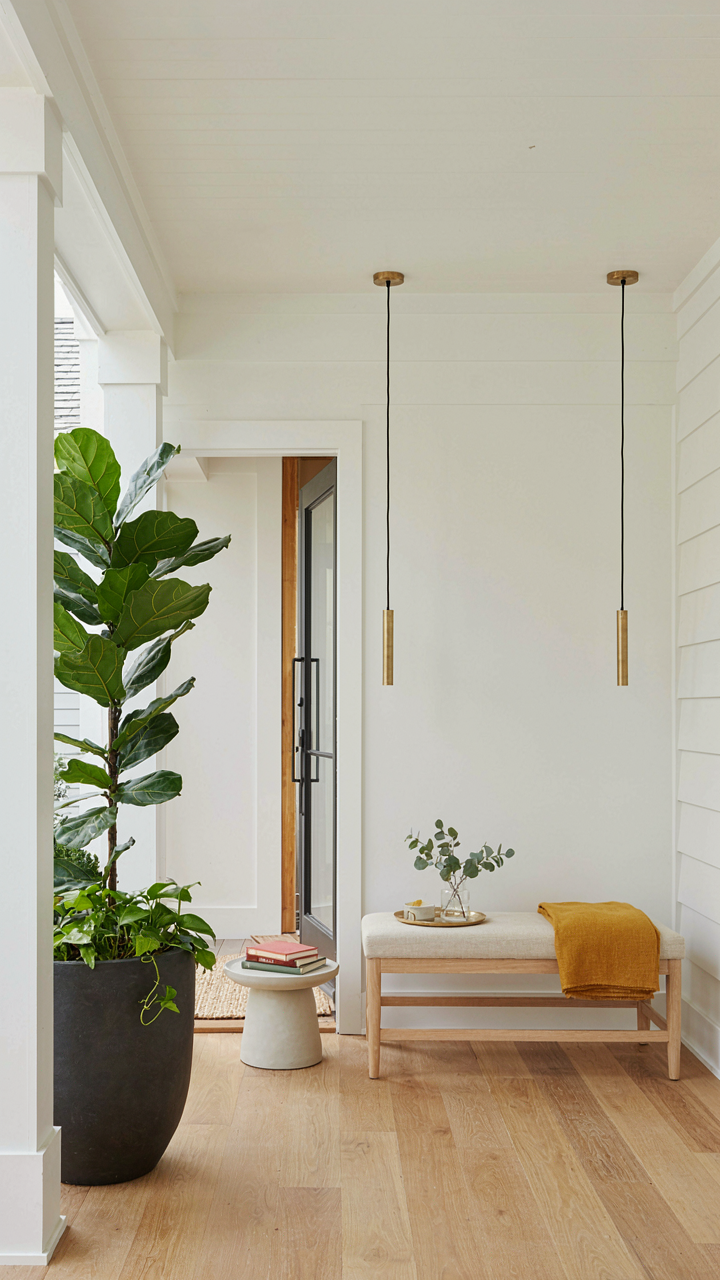
You want your porch to look intentional, not accidental. That’s the real driver here. Most people think balance means matching columns on both sides, but Joanna Gaines front porches work because they apply physics: visual weight distributes based on mass, color intensity, and distance from center. A dark swing on the left requires something equally heavy on the right, but it doesn’t have to be identical. The mechanism is optical tension, not symmetry.

Gaines uses asymmetry deliberately across her portfolio. A substantial planter grouping on one side pulls the eye as powerfully as a bench on the other. The porch doesn’t collapse visually because she controls density, not duplication. Dark elements advance toward the viewer; light elements recede. Place a deep charcoal front door with a heavy wreath on one side, then balance it with a light-colored console table and airy seating on the other. The weights register as equal without mirroring.
Dynamic Equilibrium In Porch Positioning
Military strategy teaches force distribution: don’t place your strength where your opponent expects it. Gaines applies this to porch layout by anchoring heavy visual elements off-center and supporting them with distributed light accents. A substantial stone column or dark beam on one side doesn’t need a matching column opposite. Instead, layered plants, lighter furniture, and open space on the other side create counter-balance through complexity rather than replication.
Equilibrium holds when you stop thinking about sides and start thinking about zones. Anchor weight at corners and edges, leaving the center porch face open and breathable. A weathered barn door or large mirror planted asymmetrically will stabilize the entire composition if the opposing zone contains multiple smaller elements with combined visual mass. The porch holds together not because both sides match, but because total visual weight is distributed so no single area dominates. Establish anchor points first, then fill remaining space with graduated density.
Joanna Gaines Farmhouse Front Door: Crafting The Signature Statement

The Door That Signals Competence
You want people to know you have taste without saying it out loud. That’s the real mechanism operating here. Joanna Gaines doors work because they compress a specific design vocabulary into one visible object. Think of it like brand architecture in marketing: the door is your single most legible asset. Her doors telegraph farmhouse without screaming it, which is the hardest position to hold.

Her signature doors share hard constraints rather than decoration. They’re almost always painted a dark, muted tone—black, charcoal, or deep olive—against light exterior walls. The frame sits recessed. Hardware is minimal and functional, never ornamental. The door itself has true vertical proportions, often featuring paneling or board and batten structure. No frosted glass, no arches, no fussy details. The mechanism is subtraction: every element that doesn’t signal “established” gets removed.
Creating Your Version Without Copying
The common advice says “find your color and paint it.” That’s incomplete. Real individuality inside farmhouse style works through constraint specification, not free choice. You pick your single variable and lock everything else down. Choose one element to shift: door color, hardware finish, panel configuration, or surround material. Then standardize the rest against proven farmhouse proportions. This prevents the drift that turns designed spaces into cluttered collections.
If your exterior is light, keep the door dark and simple. If you add hardware detail, remove it from elsewhere. If you go with board and batten paneling, strip the trim. If you change the frame depth, keep the hardware minimal. The door becomes coherent because you’re working within understood boundaries, not ignoring them. This constraint is what separates a deliberate choice from an accident.
Modern Farmhouse Porch: The Strategic Use Of Negative Space

Less Is Truly More In Porch Design
You want people to notice your porch without you having to fill it with stuff. That’s the real move here. Joanna Gaines built her reputation partly on knowing what to leave out. Most homeowners panic at empty space and cram porches with furniture, planters, and decor that fight for attention. The mechanism is contrast: your eye lands on what breaks the pattern, not what fills it. A single statement piece on an empty porch commands more visual weight than three mediocre ones competing for real estate.

Negative space forces intentionality. When you remove clutter, every remaining element has a job. A farmhouse porch needs breathing room between a wooden bench and a side table, between railing and roofline. The emptiness isn’t laziness; it’s clarity. Gaines uses this constantly in her designs—a clean porch with strategic placement of one swing or a pair of chairs arranged to face outward. The absence of stuff becomes the design itself.
Creating Focus Through Intentional Emptiness
Clarity compounds when you remove what doesn’t matter. Think of it using the concept of signal-to-noise ratio from information design: reduce noise, amplify signal. On a farmhouse porch, noise is the decorative overload—too many lanterns, throw pillows stacked high, plants everywhere. Signal is what you actually want people to see: architectural lines, a statement seating piece, texture from siding or railing. By clearing the deck, you force viewers to land on the real focal point.
Gaines rarely designs a porch that reads as “busy.” Instead, she creates zones through emptiness. One side might hold a bench with a small side table. The rest stays open. This spatial discipline makes the porch feel larger and more intentional than it actually is. To apply this: identify your primary focal point first, then remove everything else that doesn’t support it. Build outward from there, not inward from maximum capacity.
Joanna Gaines Home Exterior: The Ecosystem Of The Entryway
Where Your Porch Meets The Rest Of Your House
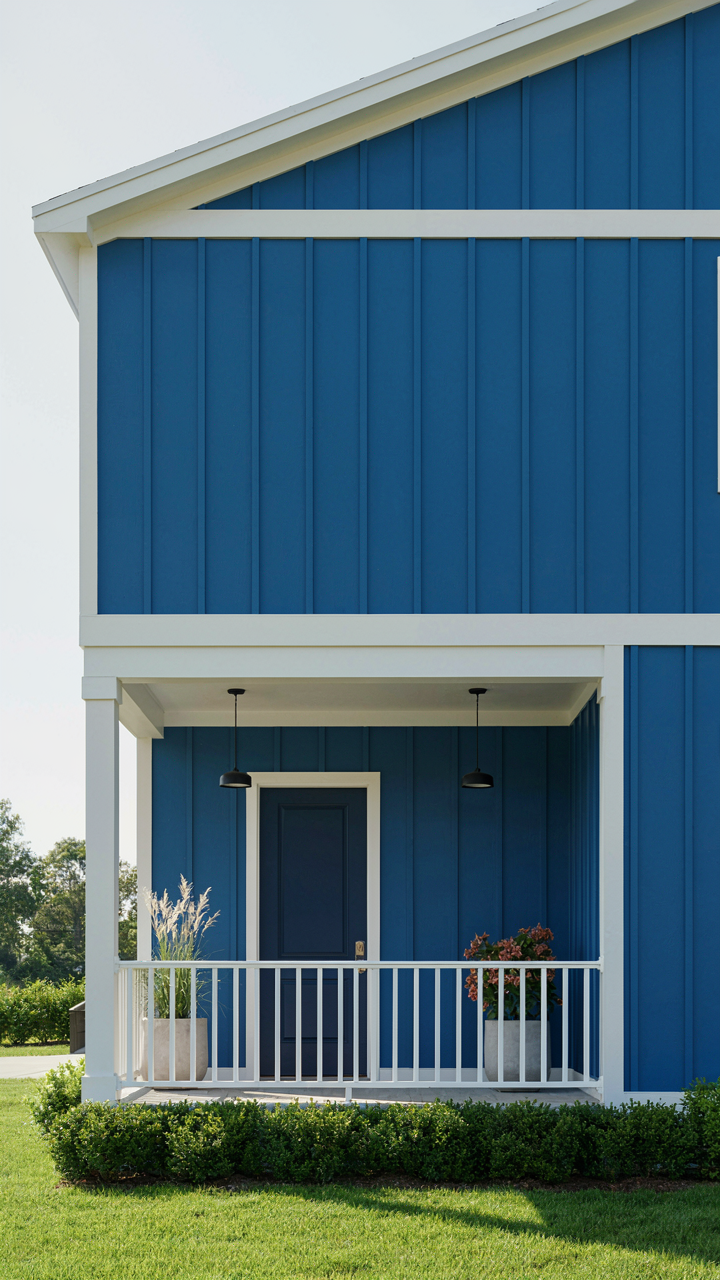
You want your porch to look intentional, not like it was bolted onto a different house. The real mechanism here is visual continuity, borrowed from systems design: every component must reference the whole. Joanna Gaines porches work because they don’t exist in isolation. The materials, colors, and proportions echo what happens at the roofline, the siding, and the foundation. This isn’t decoration. It’s architecture that talks to itself.

The porch anchors the transition between street and interior. If your siding is horizontal board and batten, your porch posts repeat that language. If your roof pitch is steep and your gables are pronounced, your porch ceiling height and beam structure must answer to the same logic. Misalignment signals amateur work. Alignment signals ownership and intention.
Material Hierarchy And Design Repetition
Every farmhouse porch Gaines has designed follows a pattern: establish what the house is made of, then let the porch amplify it rather than contradict it.
- Shiplap And Vertical Boards: The porch ceiling and fascia repeat the siding material or its visual rhythm. This creates depth without adding new textures the eye has to process.
- Post And Column Treatment: Structural elements match the home’s architectural language. Tapered posts, square columns, or turned balusters connect directly to what the main structure declares about itself.
- Foundation Continuity: Porch skirting, stone work, and base details must reference the home’s foundation material and color, not introduce a separate aesthetic.
- Roofline Alignment: The porch roof pitch should parallel the main roof or subordinate itself clearly. Conflicting angles create visual noise and read as indecision.
- Color Palette Constraint: Porch trim, railings, and doors pull from the existing home palette, typically whites, creams, and naturals paired with the dominant siding color.
Gaines doesn’t layer materials randomly. Each addition serves the coherence of the whole structure. Your porch succeeds when it feels like it grew from the house, not when it looks applied. Start by auditing what your home already declares about itself, then build the porch as a statement in that same voice.
Joanna Gaines Front Porch Ideas: Beyond Pinterest, Into Practicality

Start With Your Constraint, Not Your Vision
You want to design a porch that signals taste without admitting you’re afraid of looking like everyone else. Here’s the mechanism: constraint forces decision. Joanna Gaines’ porches work because they operate within hard limits—climate, budget, existing structure, maintenance reality. Most people reverse this. They collect inspiration and try to force it onto a space that has its own physics. Identify your actual constraint first. Is it a two-foot overhang in a hot climate? A crumbling foundation in the Northeast? A HOA that hates wood? That constraint becomes your design parameter, not your enemy.

Once you name the constraint, every other decision narrows. A shallow porch in Arizona doesn’t need deep seating. It needs shade geometry and heat reflection. A covered porch in the Pacific Northwest needs drainage and wind deflection. Joanna’s farmhouse porches look effortless because they’re built around what the space demands, not what Pinterest demanded last month. Stop collecting mood boards. Start measuring your microclimate, your square footage, and your actual maintenance tolerance. Build from there.
The Paralysis Is The Design Itself
The common advice here is garbage: pick a color palette, choose your accent pieces, add lighting. That’s not design. That’s shopping. Real design decides what to remove before it decides what to add. Joanna’s porches don’t overwhelm because they operate on subtraction as a core principle. The paralysis you feel isn’t coming from too few options. It’s coming from too many choices that all feel equally valid.
Use a decision hierarchy instead of a mood board. First: flooring material based on climate and traffic. Second: roof or overhang structure based on weather. Third: railing or boundary based on code and safety. Fourth: seating based on how many people actually use the space. Everything after that is secondary. When you make decisions in this order, later choices become obvious. You’re not paralyzed by unlimited options anymore. You’re constrained by the logic of what came before. This is how Joanna avoids the trap of overstuffed design that looks busy and apologetic.
The Real Obstacle To Your Dream Porch Isn’t Taste, It’s The Fear Of Deviating From Perceived Perfection

You’re waiting for permission to build your Joanna Gaines front porch. You’re not. You’re waiting for certainty that it won’t look wrong. It won’t come. The gap between your current porch and the farmhouse dream in your head exists because you’re still playing it safe, still asking “what if people judge it.” Pick one element today—the railing, the planters, the paint color—and commit to it without consensus. Your porch doesn’t need to be perfect. It needs to be yours.