
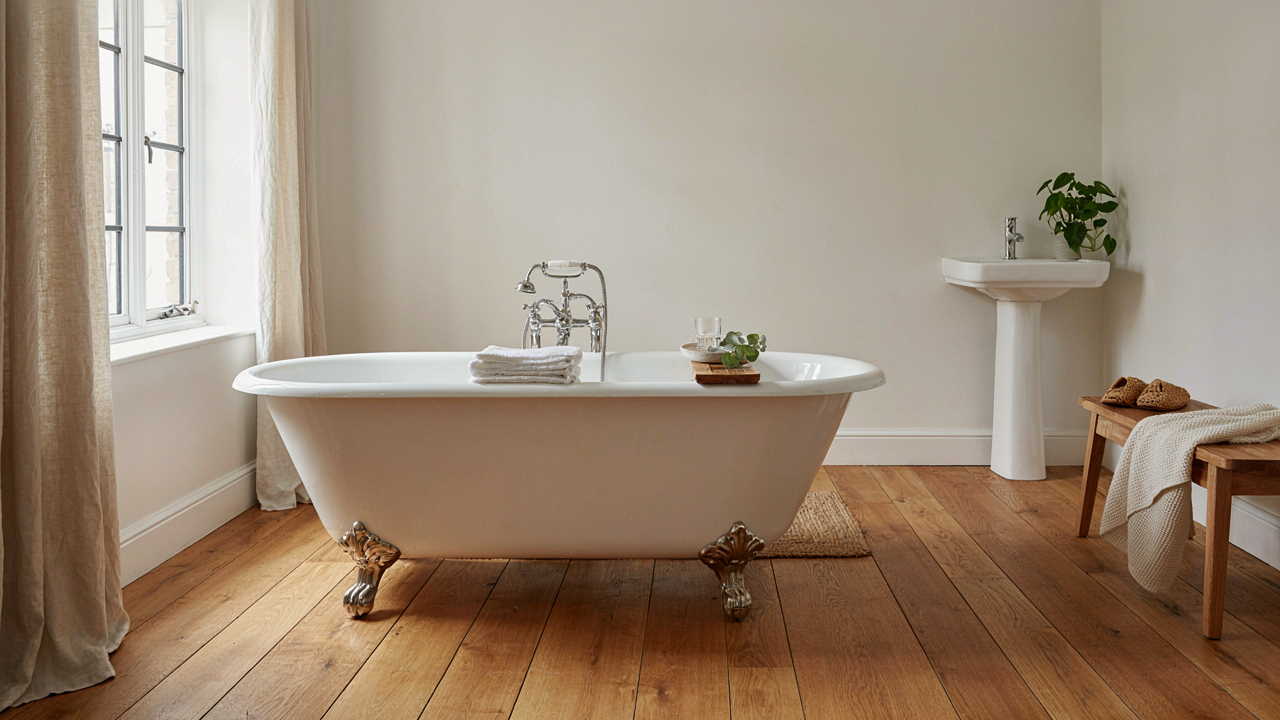
The Authenticity Illusion: Why Your “Country” Bathroom Feels Fake

The Farmhouse Trap Nobody Names
You want people to walk in and think you have taste and history. That’s the real reason you care about authenticity. Here’s the mechanism: farmhouse became a branded aesthetic in the 2010s, sold by big-box retailers as a formula. Shiplap, mason jars, wrought iron—these aren’t country design principles. They’re inventory. Real country bathrooms evolved from constraint, not decoration. Farmers didn’t install vintage fixtures because they looked good. They used what worked and lasted.
The consensus advice says mix old and new. That’s not wrong, but it misses the actual problem. Your bathroom feels fake because you’re selecting items for their visual category instead of their function. A genuine country bathroom contains fixtures chosen for durability and practical necessity, not because they matched a Pinterest board. The gap between authentic and inauthentic isn’t style. It’s whether the object serves a real purpose or exists purely as symbol.
Authentic Vintage Against The Replica Economy
In economics, the term “signaling” means displaying status through visible consumption. Your replica cast iron pedestal sink signals “I understand country design” without requiring you to actually source authentic vintage. Mass-produced replicas dominate because they’re cheaper, safer, and easier to install. Real vintage fixtures carry real problems: plumbing incompatibility, structural damage, unpredictable leaks. Manufacturers solved this by making replicas that look aged without the liability.
The actual difference matters more than the visual one. Authentic vintage fixtures were built heavier and with thicker materials. A real 1920s cast iron tub weighs 300-400 pounds. Modern replicas weigh 150-200. The porcelain enamel coating differs too. Old fixtures used a higher-temperature firing process that created harder, more durable finishes. Today’s replicas use lower-temperature glazing to cut production costs. If you want authenticity, inspect the weight and finish thickness before buying. If you want durability at lower cost, replicas work fine. Stop pretending they’re the same thing.
The “Scarcity Mindset” Method: Curating Real Rustic Bathroom Designs

Hunt For Imperfect Vintage Pieces
You want this to feel authentic without looking like you tried too hard—that’s the real fear underneath the aesthetic choice. Scarcity economics teaches that value increases when supply drops. Apply this to bathroom fixtures: a salvaged cast iron tub from 1920s plumbing stock beats a reproduction because it’s finite. You can’t manufacture the patina, the weight distribution, or the manufacturing tolerances of an original.

Where to source matters more than what you source. Architectural salvage yards, estate sales, and deconstructed barns yield pieces with genuine wear patterns and original hardware. Reproduction vintage fixtures exist for a reason—real originals require hunting, negotiation, and acceptance that nothing arrives perfect. A chipped porcelain sink isn’t a flaw. It’s documentation of actual use. Don’t buy new-old. Buy old.
Fewer Pieces, Better Execution
The consensus play is cramming the space with rustic decor—mason jars, barn wood, galvanized everything. This fails because it signals trying, not living. One statement fixture executed cleanly outperforms five mediocre touches. A single pedestal sink from the 1940s with original hardware and brass fixtures commands more design weight than a curated collection of mass-market farmhouse accessories stacked on floating shelves.
Quality over quantity isn’t motivational nonsense here—it’s structural. Vintage fixtures cost real money upfront. Budget accordingly and eliminate everything else. Bare walls. Minimal decoration. Let the fixtures breathe. The mechanism: constraint forces intentionality. You stop decorating and start designing. When you have three objects in a room instead of twenty, each one carries the design load alone.
Beyond Beige: Mastering Modern Farmhouse Bathroom Color Schemes
The Contrast Trap
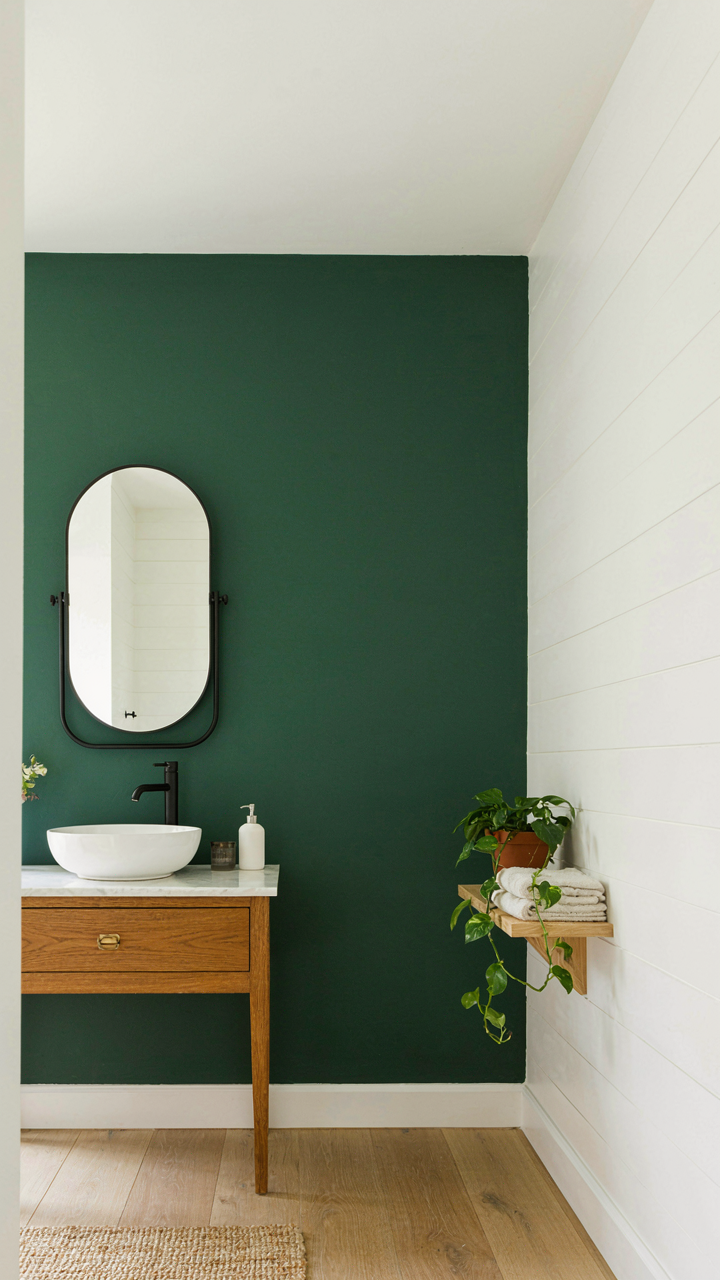
You’re afraid beige reads as boring, so you’re hunting for permission to go bold. Here’s the mechanism: farmhouse bathrooms work because they anchor chaos with restraint, not drown it in trend. Military strategy calls this “concentration of force” – you don’t attack everywhere at once. Apply one unexpected color as the dominant wall, then let white and natural wood absorb the visual weight. Charcoal, deep forest green, or muted terracotta become powerful because they sit against neutral surfaces, not competing colors.

The common advice is to paint all walls a statement color. Don’t. Farmhouse bathrooms fail when every surface fights for attention. Choose one accent wall facing the vanity or entrance. Use flat or matte finishes to kill shine and anchor the rural aesthetic. Your fixtures and hardware stay simple metal or oil-rubbed bronze. The color does the work. Everything else gets out of the way.
The Restraint Method
Light walls don’t mean empty walls. The error most people make is treating light color schemes as permission to add more stuff. Cream, soft gray, and whitewashed wood require discipline, not decoration. One light color dominates. One accent. One fixture that matters. This is how farmhouse bathrooms maintain visual calm while staying interesting.
The application is surgical: light walls, dark grout lines, visible wood beams or shelving in natural tones. Add texture through materials, not paint. Shiplap, stone, or reclaimed wood creates depth without chromatic noise. Your tile work becomes the secondary visual element. Keep fixtures minimal and functional. Introduce light color schemes by committing to walls, then let materials and proportion carry the design from there.
The “Pareto Principle” Of Pretty Farmhouses: 20% Effort, 80% Impact

Which Fixtures Actually Move The Needle
You want your bathroom to feel intentional without looking like you tried too hard. That fear of overcooking it drives most people toward safe mediocrity. In economics, the Pareto Principle states that 80% of outcomes come from 20% of inputs. Your country bathroom works the same way: one vintage clawfoot tub or cast iron pedestal sink does the heavy lifting. Everything else is secondary.

The real mechanism: concentrate your investment on the fixture that dominates the visual space. In a standard bathroom, that’s the tub or vanity. A 1920s clawfoot tub with period-correct claw feet and a rolled rim reads “intentional country” immediately. A reproduction pedestal sink with authentic proportions anchors the room. These pieces trigger recognition because they’re genuinely old or faithfully replicated. The common advice says “layer vintage elements everywhere.” Wrong. That spreads your budget thin and clutters the narrative. Pick one statement fixture, nail its authenticity, then build around it.
Strip Out Everything That Doesn’t Earn Its Space
Most country bathrooms fail because owners confuse “rustic” with “cluttered.” They add wire baskets, mason jar storage, distressed wood shelves, and vintage signs until the room feels like an antique mall aisle. This is denial dressed as design. The mechanism is simple: every object either reinforces the core aesthetic or competes with it.
Start by removing three categories: anything decorative that serves no function, anything reclaimed that shows damage beyond patina, and anything “farmhouse-themed” that mass retailers designed last year. What remains should perform a job. A cast iron towel ring functions and looks period-correct. A decorative ladder propped in the corner does not. A bare wooden shelf with proper bracing holds toiletries. A shelf crammed with vintage bottles and jars says “I’m performing country.” The line between curated and chaotic is function. Everything stays only if it cleans, stores, or fixes something genuinely broken in the room’s operation.
Modern Cottage Inspiration: Small Bathroom Design Farmhouse Optimization
Vintage Fixtures That Actually Fit Small Spaces
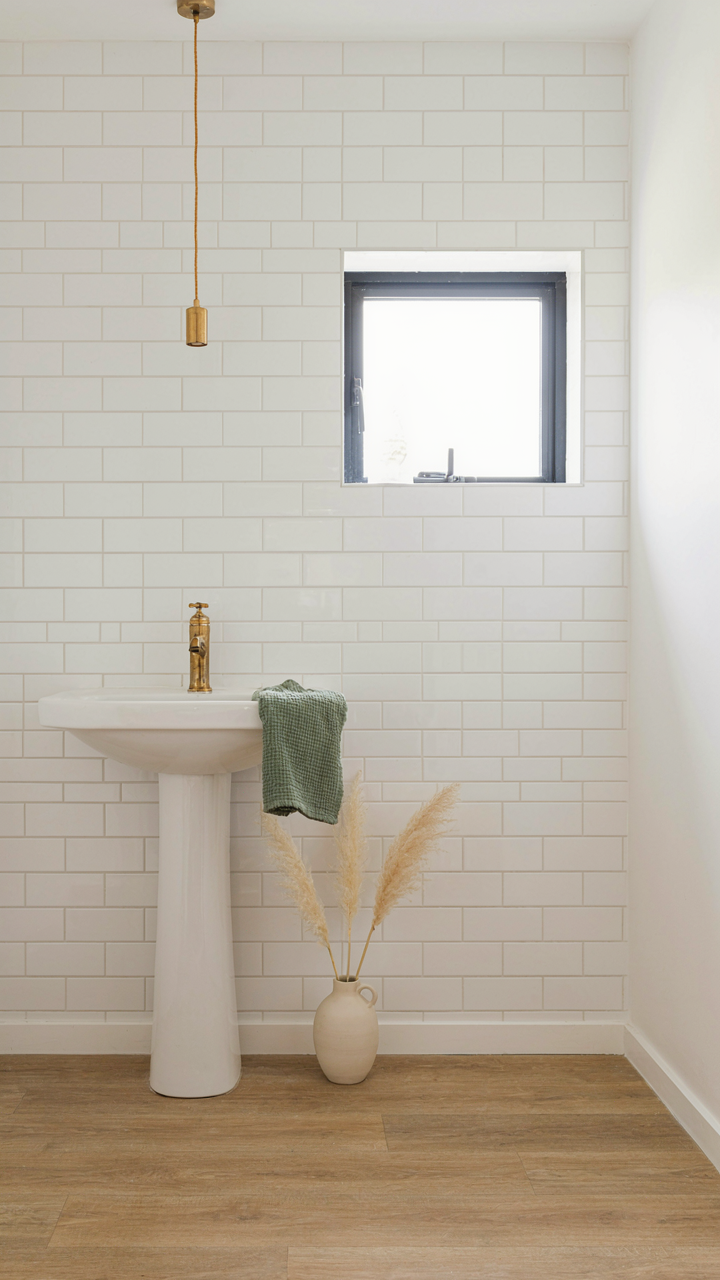
You want to prove you have taste without admitting your bathroom is cramped. Here’s the real mechanism: vintage fixtures shrink the visual weight of a room because they occupy less cubic volume than modern equivalents. A pedestal sink from the 1920s takes up half the floor footprint of a vanity cabinet. An old cast iron clawfoot tub, despite its mass, sits elevated on legs that expose floor below it, creating spatial depth perception where none exists. Victorian-era wall-mounted medicine cabinets were built shallow because storage density wasn’t the goal. The constraint forced design efficiency.

The common advice tells you to embrace the smallness. Wrong. You counteract it by selecting fixtures that create negative space instead of consuming it. A wall-mounted vintage faucet eliminates the countertop plumbing blockage. An antique porcelain soap dish mounted directly to tile removes the need for surface clutter. Recessed vintage mirrors with narrow frames pull the eye upward and outward. The protocol: measure your wall height and fixture depth before purchasing. Prioritize vertical installation over horizontal placement in rooms under 40 square feet.
Dual Purpose Elements That Work Harder
Efficiency thinking borrows from industrial engineering: maximize output per input unit. In country bathrooms, that translates to fixtures serving two functions simultaneously without appearing forced. A vintage washstand with a towel rail underneath the basin does storage and functionality in one footprint. An old wooden ladder leaning against the wall holds both blankets and towels while anchoring farmhouse aesthetic. Recessed shelving carved into wall cavities between studs stores supplies without protruding into usable space. Corner caddies fashioned from salvaged metal corner braces organize bottles and soaps in dead zones.
The mistake people make is adding single-purpose vintage décor items that occupy real estate without return. A decorative pitcher that holds nothing but sits on a shelf costs you floor clarity for visual nostalgia. Instead, install a vintage cast iron soap holder that doubles as a washcloth hook. Mount old wooden pegs that support both a mirror frame and a robe. Choose a freestanding vintage ladder shelf for towels instead of wall-mounted shelving, so it relocates if your layout changes. The mechanism is substrate efficiency: every object touching the bathroom must justify the square inches it consumes by performing a stated task.
The “Entropy Reversal” Protocol For Interior Farmhouse Ideas

Design For Enduring Functionality
You want your country bathroom to look timeless so you don’t face the sunk cost of redoing it in five years. That’s the real fear underneath. Physics teaches entropy: systems naturally decay toward disorder. Apply this backward. Choose fixtures and materials that gain character through use rather than deteriorate. Vintage cast iron clawfoot tubs don’t fail because they’re used. They outlast modern acrylic by decades because thermal mass and material density resist degradation.

Farmhouse bathrooms work because they borrow from utilitarian design, not nostalgia. Salvaged or reproduction vintage fixtures carry weight. They’re overbuilt compared to contemporary equivalents. Subway tile, pedestal sinks, and solid brass hardware perform the same function as modern alternatives but do so with materials that improve under stress. The mechanism is simple: materials that were engineered for commercial or industrial use sustain residential wear patterns without aesthetic compromise.
Cultivate Adaptive Living Spaces
Biology reveals how systems survive: they adapt to their environment rather than resist it. Your farmhouse bathroom should absorb changes in light, humidity, and use without requiring overhaul. Concrete or reclaimed wood surfaces transform over time in ways tile cannot. A vintage mirror with mercury backing fades predictably. A modern reflective surface peels unpredictably. The adaptive principle means designing for the changes that happen, not fighting them.
Vintage brass and copper fixtures oxidize. That oxidation is the adaptation. Instead of painting over it or replacing it, work with the material’s tendency to patina. Shiplap walls in country bathrooms serve this function too. They swell and shrink with humidity cycles without buckling. Install fixtures and finishes that respond to their environment by becoming more distinctive, not less functional. The protocol is straightforward: select materials that improve visibly under the conditions your bathroom will actually experience.
Bathrooms Modern Farmhouse: The Unconventional Fixture Pairing

When Eras Collide On Purpose
You want permission to break the matching set rule without looking like you failed at decorating. The real mechanism here borrows from contrast theory in visual design: tension between opposing elements creates focal points your eye can’t ignore. A polished chrome faucet next to reclaimed wood vanity doesn’t look confused. It looks intentional because the materials fight each other just enough to demand attention. Most people avoid this because they mistake eclecticism for mess.

Deliberate mixing works when you establish a dominant era first, then introduce one contrasting fixture from another period. Vintage clawfoot tubs feel dated when paired with matching vintage everything. They feel curated when you install a modern stainless steel rainfall showerhead above them. The old piece anchors the space. The new piece proves you chose both consciously. Start with your largest fixture—the tub or vanity—as your era anchor, then select one secondary piece from a different period to create tension.
Clean Lines Meet Aged Materials
The conventional advice says “blend everything smoothly.” That’s the weak move. Real impact comes from pairing a statement vintage sink with stark minimalist shelving or a salvaged apothecary cabinet with frameless mirror medicine cabinets. One fixture carries the story. Everything else stays quiet.
- Cast iron pedestal sink with floating steel shelves: The sink becomes sculpture. Steel shelves stay invisible, letting the fixture dominate without visual clutter around it.
- Vintage medicine cabinet with modern faucet: Recessed cabinetry feels current. A new faucet maintains functionality while the cabinet handles all nostalgic weight.
- Reclaimed wood vanity with polished nickel hardware: Wood grain reads as texture, not ornament. Sleek hardware keeps it grounded and prevents the space from feeling staged.
- Enameled vintage tub with minimal tile surround: Subway or large format tile around an old tub keeps the composition balanced. The tub gets focus; walls disappear.
- Antique brass mirror with cement or concrete countertop: Soft metal reflects light while concrete adds weight. Neither element competes; they define different zones.
The protocol: Choose one vintage fixture as your hero piece. Everything paired with it must be either minimalist or transparent in its presence. Select materials that feel like counterweights—soft against hard, shiny against matte, ornate against blank. Don’t add a second statement piece until you see how the first pairing reads in actual light.
Real Cottage House: Forging Character Over Cosmetic Charm

Wood Grain Tells The Story
You want a country bathroom that proves you have taste without trying. Here’s the mechanism nobody admits: real wood ages visibly, and that visibility signals you didn’t cut corners. Borrowing from material science, wood has what engineers call “stress memory”—it holds the marks of time, weather, and use. Reclaimed wood or solid timber vanities, shelving, and trim don’t hide their history. They amplify it. The grain patterns, color variation, and surface marks become evidence that something lasted.

The difference between stained plywood and genuine wood is not aesthetic opinion. It’s structural reality. Plywood delaminates. Real wood develops patina. A reclaimed barn beam or salvaged flooring material carries the actual weight of decades—you can see the nail holes, the weathering, the tool marks from its first life. When you install it in your bathroom, you’re not adding character. You’re preserving it. That distinction matters because it means the bathroom improves with moisture and time instead of deteriorating behind it.
Built To Outlast The Owner
Forget the advice about mixing modern and vintage. That’s what people say when they can’t commit to a direction. The real tension is between maintenance burden and actual durability. Cast iron fixtures, solid brass hardware, and ceramic tile are expensive because they require zero intervention for decades. They’re boring to talk about because they work. A vintage clawfoot tub doesn’t chip after five years. A properly sealed slate floor doesn’t need replacement in a decade.
The mechanism is simple material physics: density resists breakdown. Thick porcelain, cast iron, and natural stone have fewer air pockets for water to exploit. Modern hollow ceramics and composite materials cut manufacturing cost but guarantee a replacement cycle. If you’re building a country bathroom, choose fixtures rated for commercial use, not residential. Commercial-grade means it survives high-traffic abuse. Your bathroom gets one user. It will last forty years without thought. Verify wall thickness on any ceramic or cast iron piece before purchase. That number determines how long you keep it.
The Understated Art Of Patina: Why “New” Is The Enemy

Rust And Time Build Character
You want patina because it signals authenticity and costs nothing to fake. The real mechanism: patina is visual proof of function over time. A fixture that shows wear convinces the eye that something actually works and has proven itself. New fixtures broadcast uncertainty. They say “I just installed this.” Worn fixtures say “this survives.”

Country bathroom design borrowed from industrial preservation the concept of “honest wear.” In structural engineering, load-bearing elements that show stress marks prove they’ve handled real weight without failing. Apply this to fixtures: visible patina on cast iron tub feet, bronze faucet handles with darkened grooves, or copper pipes with green oxidation all signal durability. The patina isn’t decoration. It’s evidence.
Accelerate Age Without Causing Failure
The common advice to “just wait” is incomplete. You can control which surfaces age and which stay functional. Rust on decorative iron hardware is acceptable. Rust inside supply lines is a plumbing failure. The distinction matters because bathroom fixtures must perform while looking established.
Use vinegar and steel wool on brass and copper to deepen oxidation in weeks instead of years. Apply patina solution to new cast iron feet before installation. Wire brush galvanized metal to expose the base layer and let it weather naturally. For authenticity, age visible surfaces only. Keep all moving parts and internal mechanisms in working condition through proper maintenance. Install a fixture, then document its condition baseline so deterioration stays cosmetic, not structural.
Your Pursuit Of ‘country Charm’ Isn’t About Fixtures; It’s About Escaping Manufactured Complexity

Most people bathroom shop when they should be asking why. The vintage fixtures aren’t the point. They’re permission to strip away the noise. Your bathroom doesn’t need smart mirrors or ten product lines. It needs function, texture, and things that age well instead of breaking in three years. Pick one vintage piece today that solves a real problem in your space, not one that looks good in a photo. Everything else follows from that single honest choice.