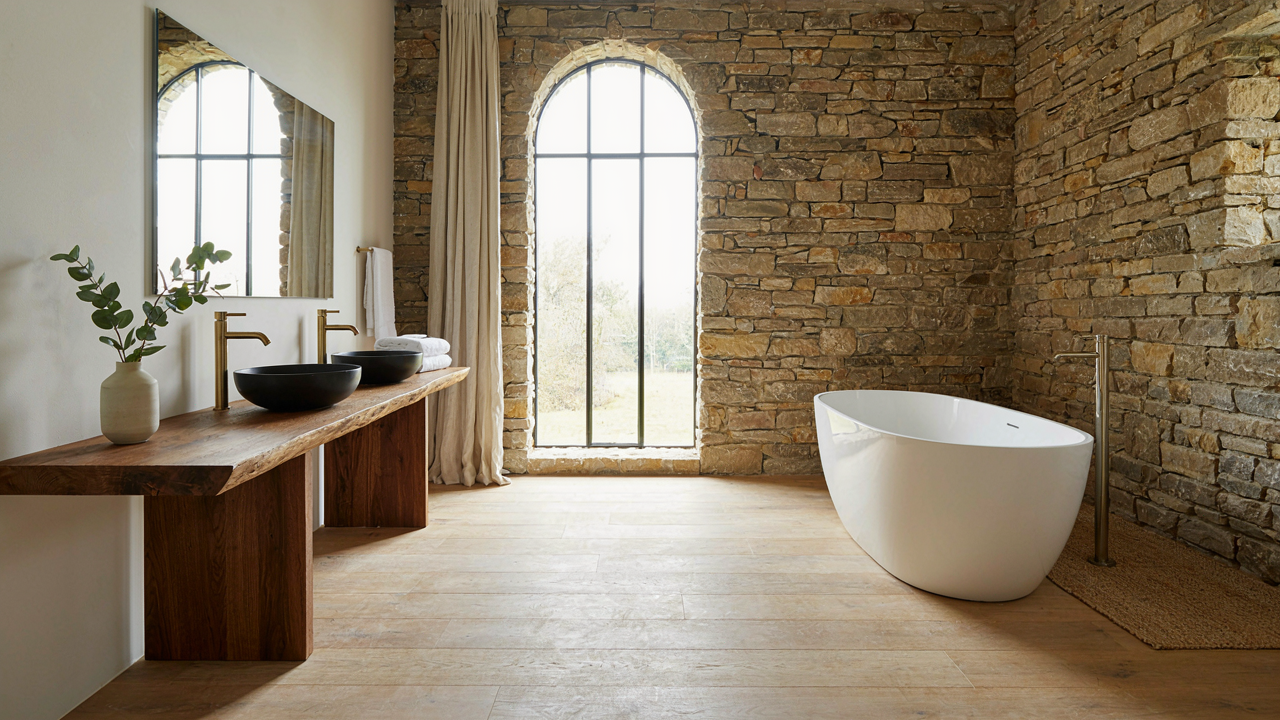
The Rustic Façade: Why Most “Modern Rustic Bathrooms” Fail

Design Clichés That Signal Mediocrity
You’re drawn to this section because you want your barn house bathroom to feel authentic instead of like a hotel lobby someone decorated with a Pinterest board. The mechanism is simple: the market flooded with the same five design moves, so doing them now signals the opposite of taste. You end up looking like everyone else trying to look different.
The clichés are predictable. Shiplap on every wall. Mason jar lighting. A reclaimed wood vanity that came from a warehouse, not an actual barn. Oversized mirrors in black metal frames. Subway tile arranged the exact way it appears in magazine spreads. These elements aren’t wrong in isolation, but deployed together they announce you copied a template. Authenticity dies the moment you follow a checklist designed for scale.
Function Dictates Real Aesthetic
Actual barn spaces weren’t designed for aesthetics—they were designed for work, and that’s where the real visual power comes from. Economics shaped every material choice in working barns: wood that weathered because it was exposed, stone foundations that lasted because they had to, rough textures because refinement was irrelevant. You skip this reasoning and just borrow the surfaces. The gap between copying a look and understanding why it exists is where your barn house bathroom either works or falls flat.
Start here: what does this bathroom actually need to do? A family of four showering daily needs different solutions than a guest bathroom used twice monthly. Moisture management in old timber requires specific ventilation protocols. Heavy use demands durable, easy-to-maintain surfaces. The moment you build the bathroom around real use patterns instead of aesthetic mood boards, the materials and finishes arrange themselves. Function pulls form into alignment, and the result reads as intentional instead of assembled.
Timber’s True Grit: Beyond Reclaimed Wood Vanity Trends

Where Your Wood Actually Comes From
You want reclaimed wood because it signals authenticity. That’s the real driver. But here’s what matters: sourcing determines whether your vanity lasts ten years or becomes a maintenance nightmare. Local timber beats imported reclaimed stock because you control the wood’s history and know exactly how it was dried and stored. Regional species adapt to local humidity swings, which is critical in a bathroom where moisture fluctuates constantly.

Hardwoods from your region outperform exotic imports for barn bathrooms. White oak, hickory, and walnut handle moisture better than tropical species because they evolved in climates with seasonal humidity changes. Buy from mills that mill their own wood rather than brokers who flip inventory. You need documentation of moisture content at purchase, not just a story about barn origin. The wood’s prior use matters less than how it was acclimated.
Finishing Against Time And Water
Everyone treats barn bathroom wood with the same generic sealers. That’s the mistake. Think of wood finishing through material science: you’re not protecting the surface, you’re managing vapor transmission. Moisture moves through wood whether you seal it or not. The finish either slows that movement evenly or creates pressure points where water pools behind a coat that’s too rigid.
Polyurethane and lacquer crack under bathroom humidity because they don’t flex with wood movement. Penetrating oil finishes with matte topcoats work better because they allow the wood to breathe while building patina instead of peeling. Apply thin coats and sand between each one. This takes longer but prevents the thick film that fails after two years. Inspect your vanity every six months for water spots, and reapply finish to problem areas immediately rather than waiting for visible damage.
Stone’s Silent Strength: Integrating Earth’s Imperfections
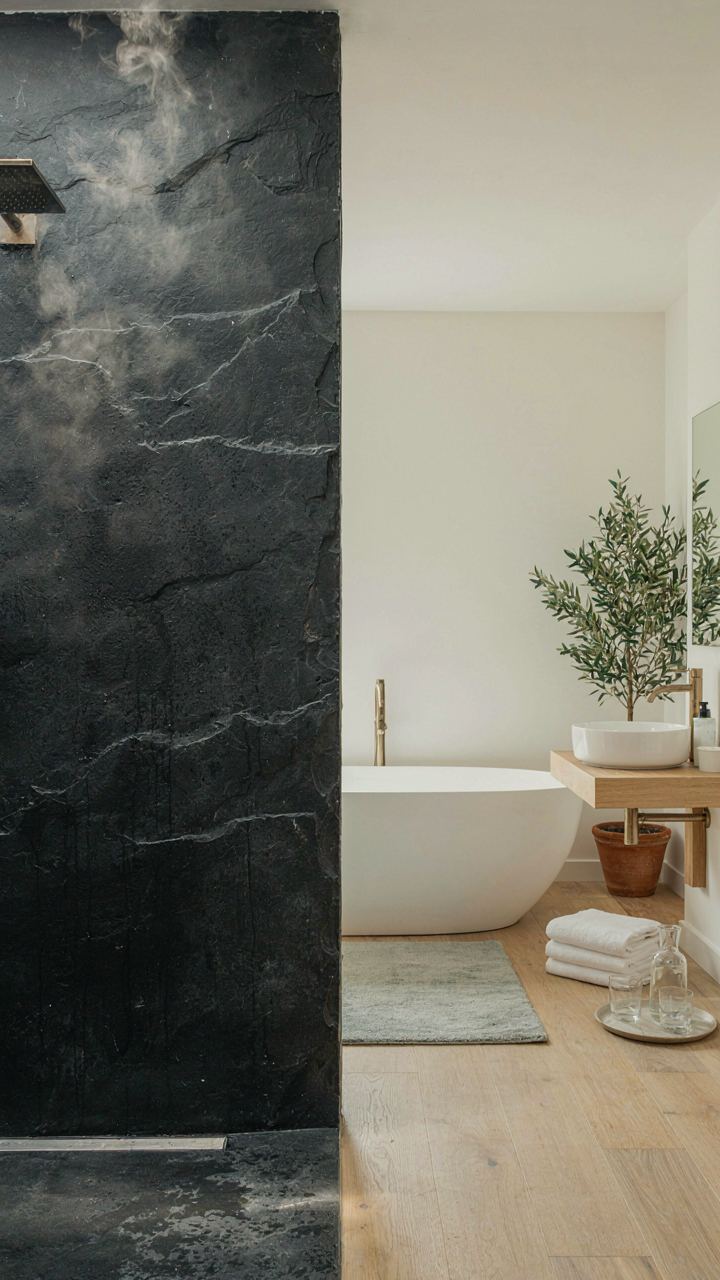
What Stone Actually Does In Your Bathroom
You want stone because it looks expensive and permanent. Here’s what matters: stone selection isn’t about aesthetics first—it’s about performance under moisture and use. Granite, limestone, slate, and marble each behave differently when wet. Granite resists water absorption. Limestone drinks it. Marble etches under acid. You pick stone based on where it lives in the bathroom, not because a designer showed you a picture you liked.

The rule is simple: high-traffic, high-moisture zones get non-porous stone. Granite or sealed slate for shower walls and vanity tops. Limestone works for visual interest on lower-traffic walls where water contact is infrequent. Color and texture follow use, not the other way around. Veining hides mineral deposits and water stains better than solid color does. Rough textures mask soap buildup and fingerprints longer than polished finishes.
The Thermal Battery Effect
Physics teaches heat capacity: the ability of a material to absorb and release thermal energy. Stone in a barn house bathroom functions as a thermal battery. It absorbs humidity and temperature swings, then releases them slowly, which prevents condensation spikes that crack grout and rot wood framing behind tile.
This matters because barn conversions often lack proper ventilation infrastructure. Stone moderates the environment mechanically, not through fans or dehumidifiers. Install stone on the largest wall surfaces, particularly those facing exterior walls where temperature differentials are highest. The thickness of the stone directly correlates to its thermal mass—thicker slate or stone slabs outperform thin veneers. A quarter-inch veneer performs like drywall. A full two-inch stone slab actually regulates the space.
The “Modern Cabin Bathroom” Deception: Authenticity Vs. Aspiration
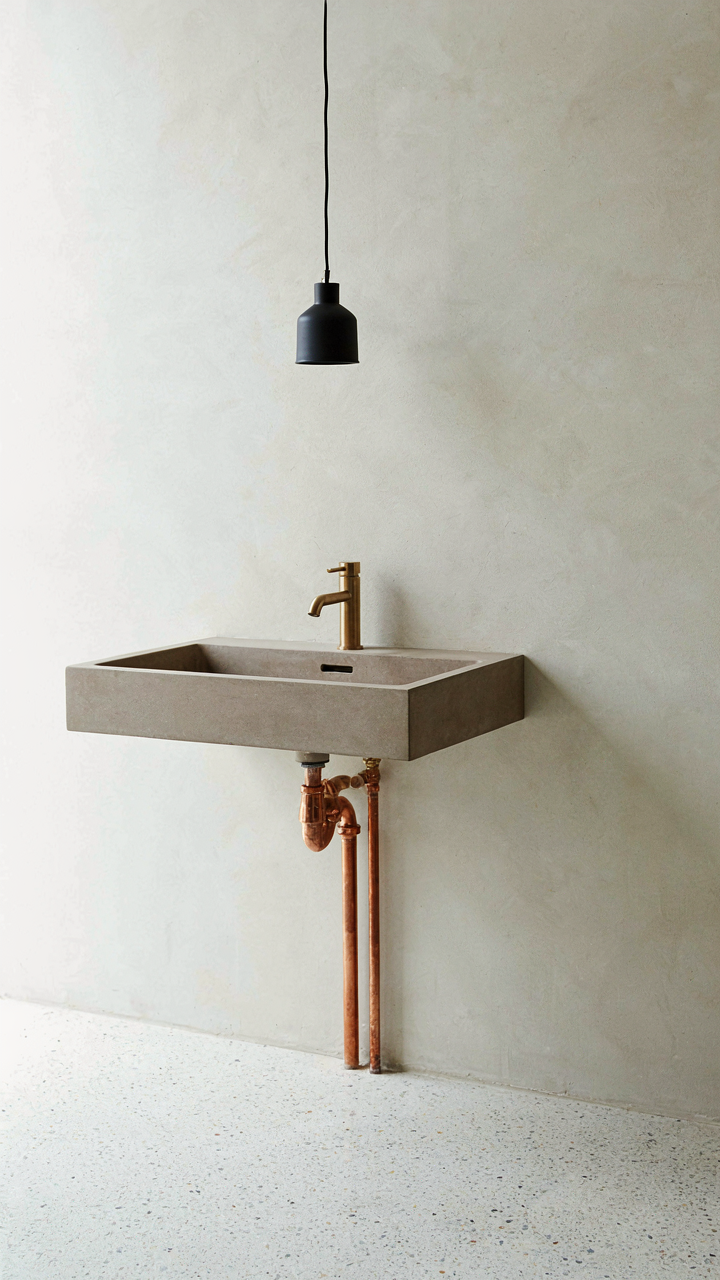
Stripping Away The Noise
You want people to think you’re the type of person who chose simplicity over status. That’s the real pull here. But simplicity isn’t about removing things randomly. It’s about removing everything that doesn’t serve a function, then stopping. Most barn house bathrooms fail because owners confuse “rustic” with “unfinished.” They leave exposed beams but add marble countertops. They install reclaimed wood but pair it with chrome fixtures. The contradiction screams louder than either choice alone.

True simplicity in a barn house bathroom means every material, every fixture, every surface exists because it solves a problem. Stone handles moisture and age better than drywall. Timber absorbs humidity and develops character under use. Hand-forged hardware lasts generations without replacement. The aesthetic follows from honest material selection, not from pretending poverty is a design philosophy. When you remove the ornamental instinct, what remains is coherent.
Function First, Beauty Follows
The principle here isn’t new. Industrial design borrowed it from engineering: eliminate all variables except the ones that matter. A barn house bathroom should work the same way. Every element earns its place through utility before appearance.
Start with water management. Stone floors and walls resist moisture damage that destroys most bathrooms. Timber that works in barns typically has tighter grain and lower resin content than decorative wood, meaning it doesn’t swell unpredictably. Ventilation matters more than any material choice. A poorly vented barn bathroom with premium tile fails faster than a simple one with adequate airflow. The fixture selection follows the same rule: choose based on reliability, not trend. Stainless steel hardware corrodes less than brass. Lever handles outlast knobs when your hands are wet. Solid concrete or stone sinks resist chipping better than ceramic.
The bathroom shouldn’t apologize for its purpose. The moment you start hiding plumbing or disguising function, you’ve abandoned the barn house principle entirely. Exposed pipes that work are more honest than concealed ones that cause problems later. Install them with intention, and they become part of the design rather than a compromise you’re hiding from guests.
The Biomimicry Protocol For Rustic Walk In Shower Designs
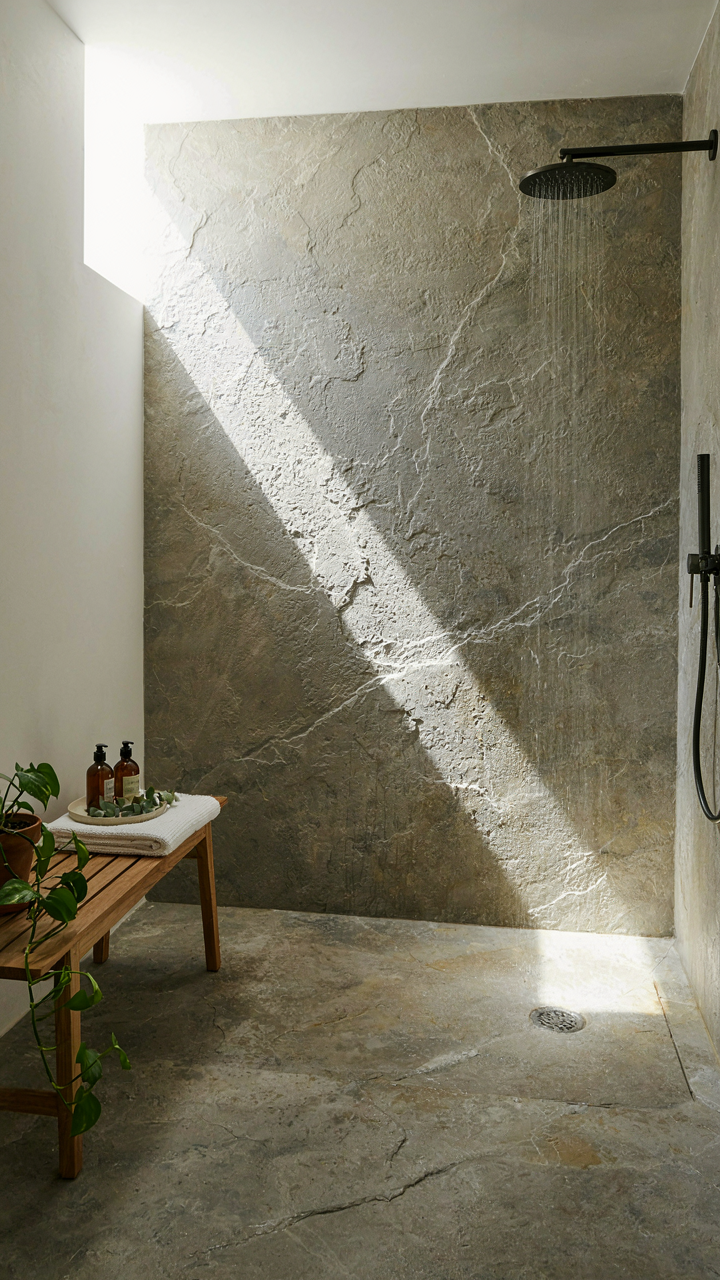
How Water Actually Moves Through Space
You want this section to feel sophisticated, like you’re applying cutting-edge science to your bathroom. The real mechanism is simpler: fluid mechanics teaches that water follows the path of least resistance, and your shower design either fights this or works with it. A walk-in shower in a barn house bathroom fails when it ignores gradient and pooling zones.

Water doesn’t flow uniformly across a flat surface. It accelerates toward low points, creates eddies around obstacles, and stagnates in dead zones. In a rustic walk-in shower, unglazed stone or timber absorbs water unevenly, which means you need a floor slope between 1.5 and 2 percent toward a drain positioned off-center. This isn’t aesthetic preference. This is physics. Without it, you get standing water that rots wood and degrades stone within months.
The drain placement in a barn house bathroom changes everything about how you can arrange timber beams or stone features. Position your drain in a corner rather than dead center, which lets you run timber framing perpendicular to water flow instead of trapping it. Stack stone in ascending height away from the drain, so water cascades across surfaces rather than pooling behind them. The shower enclosure itself should slope the threshold inward, forcing water entry rather than exit. This isn’t tradition. This is flow dynamics applied to timber and stone.
The Bathroom As A Contained Ecosystem
A barn house bathroom functions as a closed biological system, and it either reaches equilibrium or it decays. The constant presence of moisture creates conditions for mold, fungal growth, and wood rot. These aren’t failures to fix after they happen. They’re ecosystem imbalances to prevent through design.
Ventilation is your primary control lever. You need continuous air movement that removes moisture before it reaches saturation in wood grain or stone pores. A standard exhaust fan running 20 minutes post-shower doesn’t cut it in a walk-in shower with exposed timber. You require either a through-wall exhaust that runs during and 30 minutes after shower use, or a humidity sensor that triggers ventilation automatically when moisture hits 60 percent relative humidity. Timber in a barn house bathroom starts absorbing water damage at 55-60 percent humidity. Timing matters.
Material selection determines whether your bathroom resists decay or invites it. Untreated reclaimed wood looks authentic but traps water like a sponge. Sealed timber with a vapor-permeable finish lets the wood breathe while blocking moisture penetration. Porous stone like sandstone deteriorates faster than dense granite or slate in wet environments. The ecosystem of your bathroom won’t stabilize until the materials themselves are chosen for their moisture tolerance, not their appearance. Start with vapor control in your subfloor, add continuous air exchange, then select materials rated for wet environments. That order is non-negotiable.

Lighting: Unveiling Raw Beauty, Not Hiding It
Windows Positioned For Maximum Natural Light
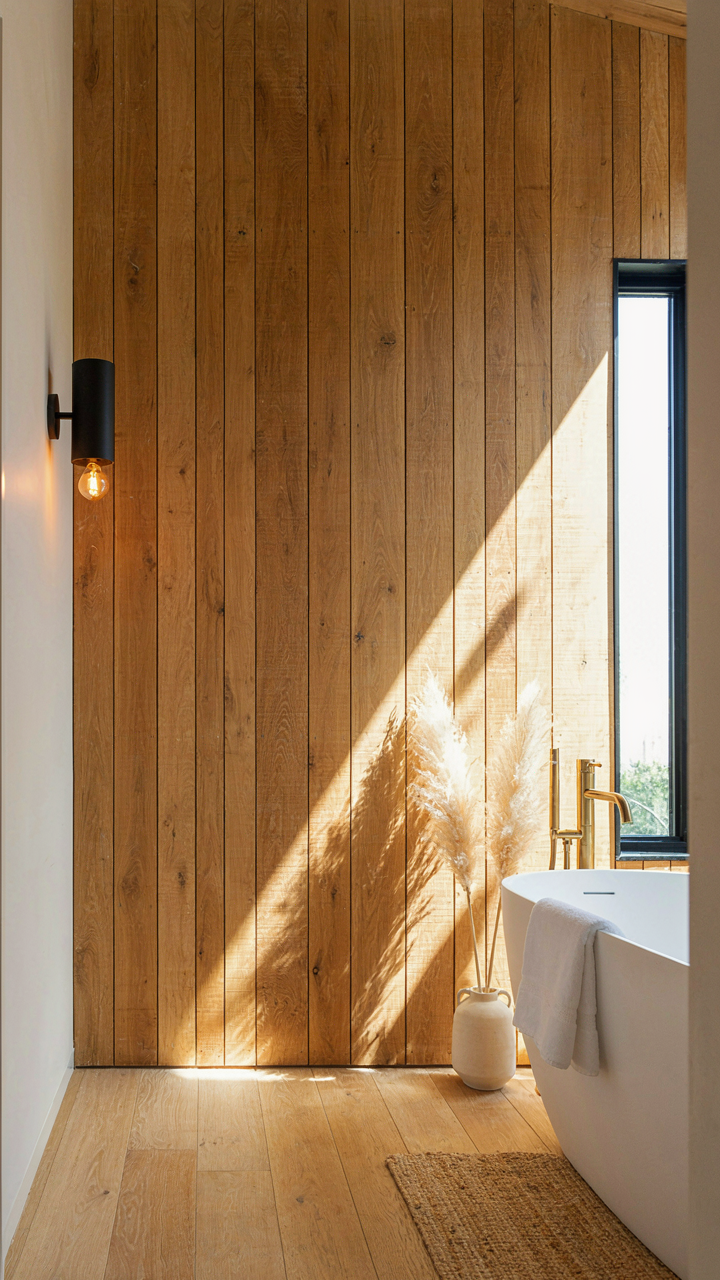
You want this space to feel expensive without trying. The real mechanism is simple: raw materials only look intentional under actual sunlight. Barn house bathrooms use stone and timber as the design statement, but those materials stay dead without natural light hitting them at the right angle. Window placement isn’t decorative. It’s structural to the entire aesthetic working or failing.
South and east-facing windows deliver consistent light throughout the day in most climates. Position them to hit your stone or timber wall directly, not reflected off the mirror or shower surround where it scatters uselessly. If privacy blocks direct placement, high transom windows above eye level solve this without sacrificing the light path. The goal is illumination that reveals texture and grain, not ambient wash that flattens everything into beige sameness.
Task Lighting That Serves Function, Not Instagram
Most bathroom lighting advice is wrong. Designers talk about “layering” light and “ambient atmosphere” when what actually matters is: can you see your face clearly to shave or apply anything? Task lighting means focused beams where you need them. Over-the-mirror fixtures, vanity sconces flanking the mirror, or recessed lights above the toilet handle specific jobs. Everything else is decoration pretending to be utility.
Barn house bathrooms work best with sconces mounted at eye level flanking the mirror rather than a single overhead bar. This eliminates shadows on your face and keeps the industrial aesthetic intact. Recessed or track fixtures elsewhere in the space should be dimmable and positioned to wash walls rather than create pools on the floor. Light the material, not the air around it.

Hardware: The Unsung Heroes Of Bathroom Ideas Country Farmhouse
Weight Over Aesthetics
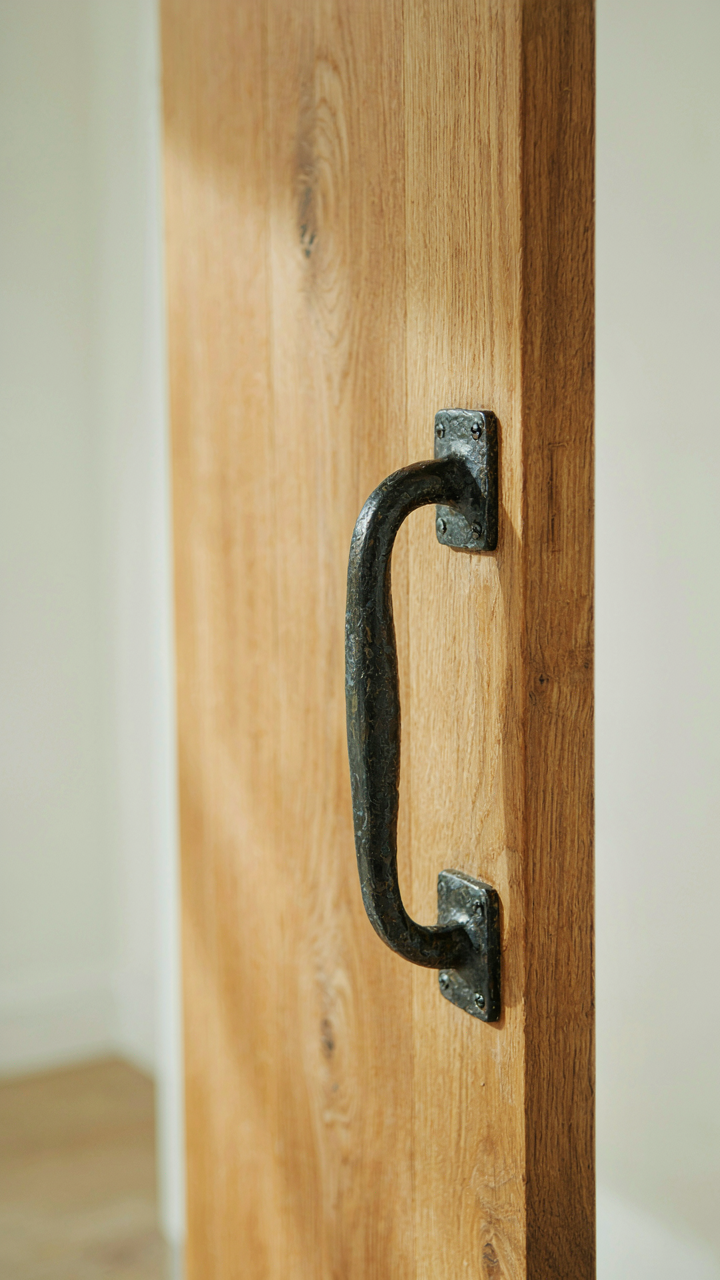
You care about this section because you want permission to skip the polished chrome finishes without feeling like you’re settling. Here’s the mechanism: barn house bathrooms work because hardware carries load—literal and visual. Heavy brass, wrought iron, and cast bronze don’t just look appropriate. They perform under humidity, temperature swings, and daily use. This is industrial design applied to residential space. Cheap hardware fails. Good hardware ages and tells a story of actual use.
Material selection determines longevity in bathrooms more than anywhere else. Moisture attacks finishes constantly. Brass naturally oxidizes and develops a darker patina that protects the underlying metal. Wrought iron rusts if unfinished, but sealed wrought iron resists corrosion better than painted alternatives. Cast bronze handles the wet environment without degrading. Stainless steel works but reads too modern for barn aesthetics. The real play is matching the hardware’s material degradation timeline to your design intent.
Wear Becomes The Design Statement
- Brass Fixtures: Develop a greenish or brownish patina over years. This oxidation layer protects deeper metal. Do not strip or polish continuously. The aged look signals authenticity and removes maintenance burden.
- Wrought Iron Pulls: Show surface rust and darkening naturally. Seal with matte lacquer or wax to control the pace of aging. Unsealed iron oxidizes fast but unevenly, creating visual noise.
- Cast Bronze Hardware: Patinas slowly and evenly. The color deepens from reddish-brown to nearly black over a decade. This material reads expensive because it genuinely lasts.
- Reclaimed Hardware: Pulls and hinges salvaged from period barns carry existing patina. This accelerates authenticity but requires inspection for structural integrity before installation.
- Oil-Rubbed Finishes: Applied to new hardware to simulate aged appearance. Start darker but lack the depth of genuine patina. Use only on non-load-bearing decorative pieces.
The consensus says to “embrace imperfection” as if wear is accidental. It’s not. Patina proves the hardware functions under real conditions. A barn house bathroom with pristine, polished fixtures looks like someone afraid of using the space. Hardware that shows age signals confidence in material choice and removes the psychological pressure to maintain perfection. Specify materials rated for high-humidity environments, then stop fighting their natural oxidation process.
Beyond Instagram: Cultivating “Pretty Farmhouses” That Last
Materials That Age Instead Of Deteriorate
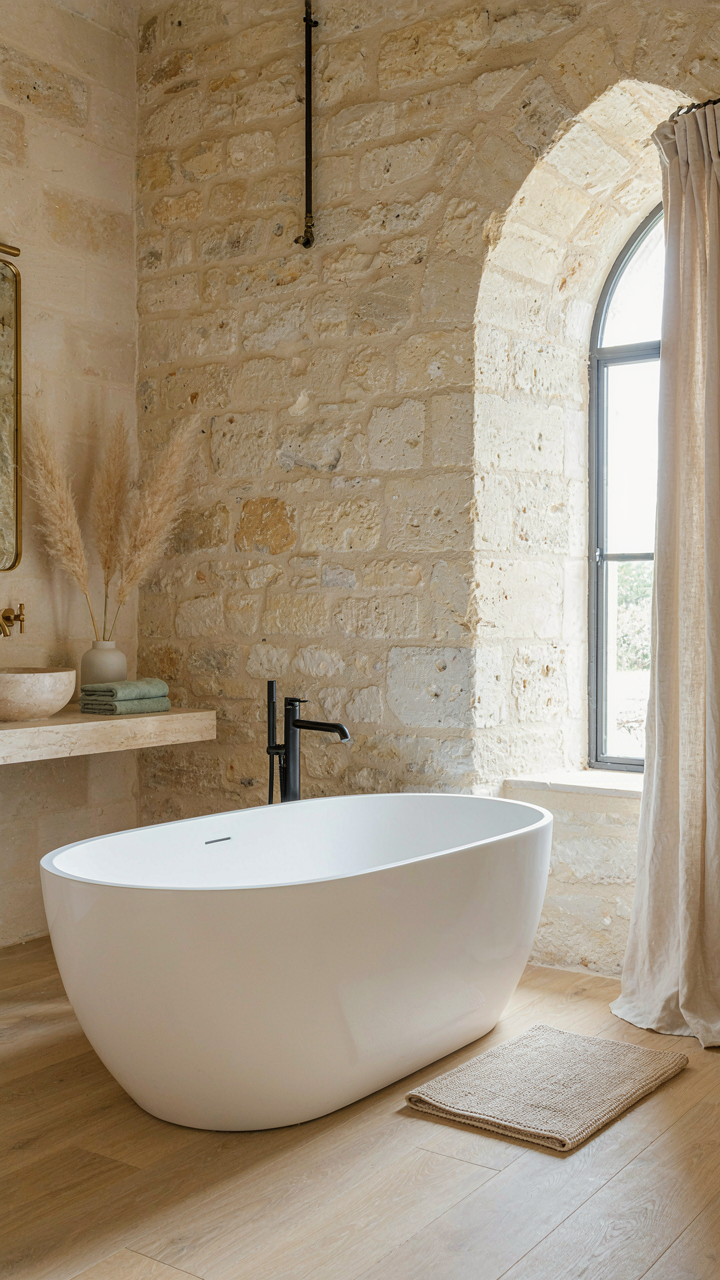
You want your barn house bathroom to look timeless because you’re afraid it’ll look dated in five years and you’ll have wasted money. That’s the real fear. So understand material durability the way engineers understand load-bearing capacity: some materials gain character under stress, others just fail. Stone and timber don’t trend because they’re beautiful. They trend because they actually improve with age while drywall and laminate just degrade.

Stone develops patina. Timber weathers into deeper color. Neither requires replacement to stay relevant. When you choose materials that shift gradually over decades rather than materials designed for a ten-year lifespan, you eliminate the cycle of renovation. Your barn house bathroom becomes cheaper to maintain long-term, not more expensive. Start by specifying materials you’d keep even if they looked “dated” by magazine standards.
The History You Can Actually Prove
Most farmhouse bathrooms copy the aesthetic of barns they’ve never entered, swinging toward imitation the moment they lack real context. Stop. Your barn house bathroom should reflect the actual structure it occupies, not a Pinterest fantasy of someone else’s property. If your barn is 1920s stone construction, your material palette and fixture scale must match that era’s proportions and what was actually available then.
Research what your specific barn would have contained. Check building records. Talk to previous owners. The details that read as authentic aren’t the ones you guessed at. They’re the ones you verified. A timber-framed ceiling means nothing if the timber species doesn’t match what grew locally or was economically viable to ship during construction. Specificity is what stops your bathroom from looking like a costume.
The Real Obstacle Isn’t Finding The Right Timber; It’s Escaping The Herd Mentality Of Curated Comfort
Most people design a barn house bathroom by copying what they see on Instagram. They pick the safe materials, follow the formula, and end up with a space that looks like everyone else’s. The real move is building something that actually fits your life instead of your aesthetic feed. Stop scrolling inspiration boards and walk through your space today. Notice what bothers you. That friction point is your design starting point. Your bathroom doesn’t need to look like a farmhouse fantasy. It needs to work like you actually live there.