

The Authenticity Illusion: Why Most “Farmhouse” Bathrooms Fail
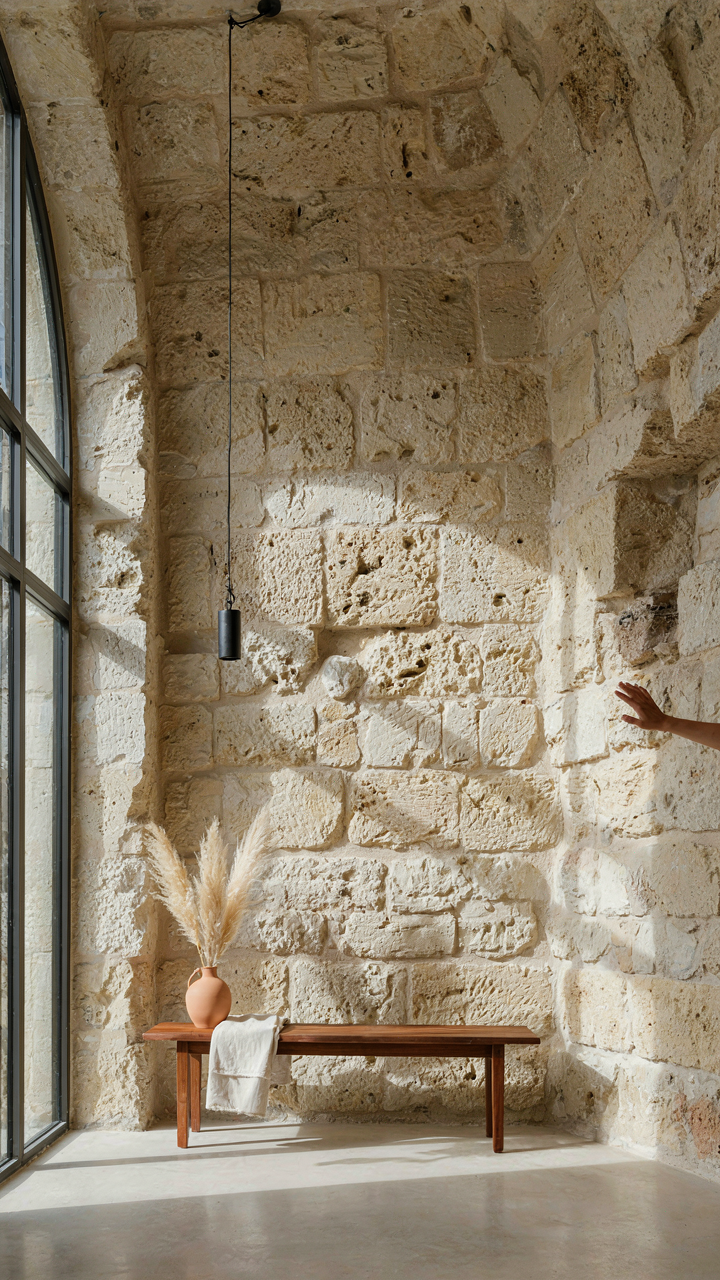
Aesthetic Trends Masquerading As Timeless Design
You want farmhouse because it signals taste without the pretense of high design, but that exact motivation is why your bathroom will look dated in five years. Farmhouse design borrowed from architecture, and architecture has a first law: form follows function. Most farmhouse bathrooms reverse this. They slap shiplap and black hex tile onto spaces built for modern plumbing and expect the result to read as authentic. It doesn’t. Authentic farmhouse emerged from constraints: limited material availability, regional clay sources, labor patterns. Modern interpretation ignores all three and treats farmhouse as a visual filter instead of a building logic.
The consensus advice pushes distressed finishes, vintage-inspired fixtures, and “character” as the goal. That’s lazy. Actual farmhouse bathrooms worked because materials matched what the land offered and what hands could build. A Pennsylvania farmhouse used local limestone. A Texas one used clay tile fired regionally. This wasn’t aesthetic choice. It was economy. When you copy the look without understanding the principle, you build something that screams “I bought a trend,” not “this room serves its purpose honestly.”
Material Honesty Over Decorative Superficiality
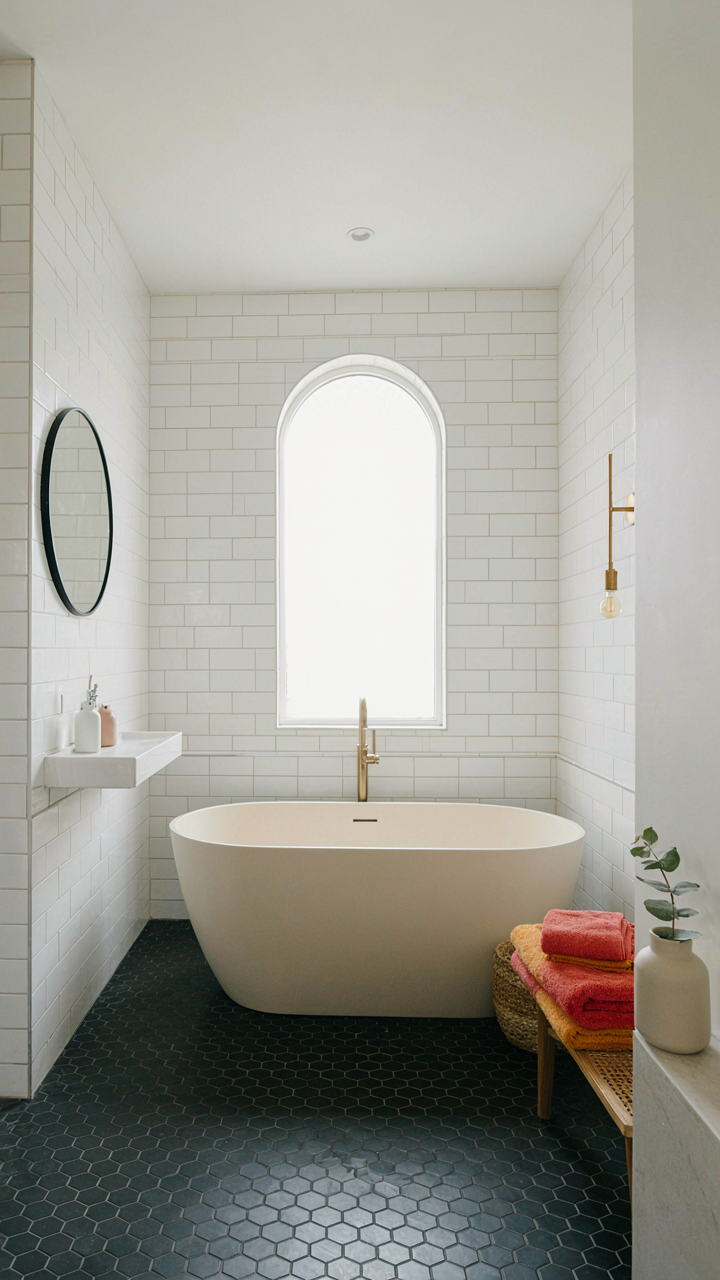
Real farmhouse tile reads as practical first, beautiful second. That inversion matters. Black hex tile works in farmhouse spaces not because it looks vintage, but because hex geometry maximizes grout lines for drainage and the dark color hides water spots and mineral deposits that plague bathrooms in hard water regions. This is why it endured. Farmhouse bathrooms in working structures used dark grout, sealed stone, and glazed ceramics because maintenance had to be simple and rare. White subway tile pairs with black grout for the same reason: visibility of mold or scale means you see problems before they compound.
Pick tile based on what your water quality demands, not what Instagram demands. If you have hard water, glossy finishes and dark grout reduce visible buildup. If your bathroom lacks ventilation, choose tile with minimal texture where humidity settles. If you’re installing in a bathroom that will handle real use, prioritize grout joint spacing that sheds water fast and tile that doesn’t require sealing every season. Material honesty means acknowledging what your bathroom actually is: a wet utility space first, a visual statement second. Let that hierarchy guide every choice you make.
Black Hex Tile: The Understated Power Of Contrast In Modern Farmhouse Bathroom Tile

How Dark Tones Create Spatial Dimension
You want black hex tile because you’re afraid your bathroom will feel generic and forgettable, the same beige box as every other farmhouse project. Here’s the mechanism: dark surfaces recede visually, which creates the illusion of depth in enclosed spaces. In design, this is called figure-ground separation—borrowed from visual perception theory. Black hex tiles function as the ground. They push the perimeter back, making a small bathroom feel larger while simultaneously grounding the space with authority.

Most bathrooms default to light palettes because designers assume bright equals bigger. Wrong. A dark hex tile floor with white or cream walls creates a psychological anchor that prevents the eye from feeling trapped. The contrast does the work. Install black hex on the floor, keep walls neutral, and the floor becomes a deliberate choice rather than a background. This is why farmhouse bathrooms with dark hex rarely feel claustrophobic—the geometry and tone work together to establish spatial hierarchy.
Geometric Disruption Against Flat Surfaces
Hexagon patterns break monotony through shape alone, not through color tricks or surface texture. The six-sided form creates visual rhythm that solid rectangular tiles cannot match. In architecture, this repeating pattern is called tessellation—shapes that lock together without gaps. Hex tiles do this naturally, which means your eye tracks the seams as movement. Black hex against grout lines generates enough contrast that the floor becomes a visual anchor rather than dead space.
The real power of hex geometry in a farmhouse bathroom is that it justifies the darkness. A dark floor in matte rectangular tiles reads as heavy and dated. A dark hex floor reads as intentional and modern within a farmhouse framework. The geometry does the justification work for you. Pair black hex with simple white subway tile on walls or a single shiplap accent wall, and the bathroom gains dimension because the floor is now a designed element, not just a surface you walk on. Order extra tiles at install time—hex patterns are easier to replace individually when damage occurs.
Classic White: The Enduring Authority Of Simplicity In Farmhouse Bathroom Tile Ideas
Texture Becomes The Real Material
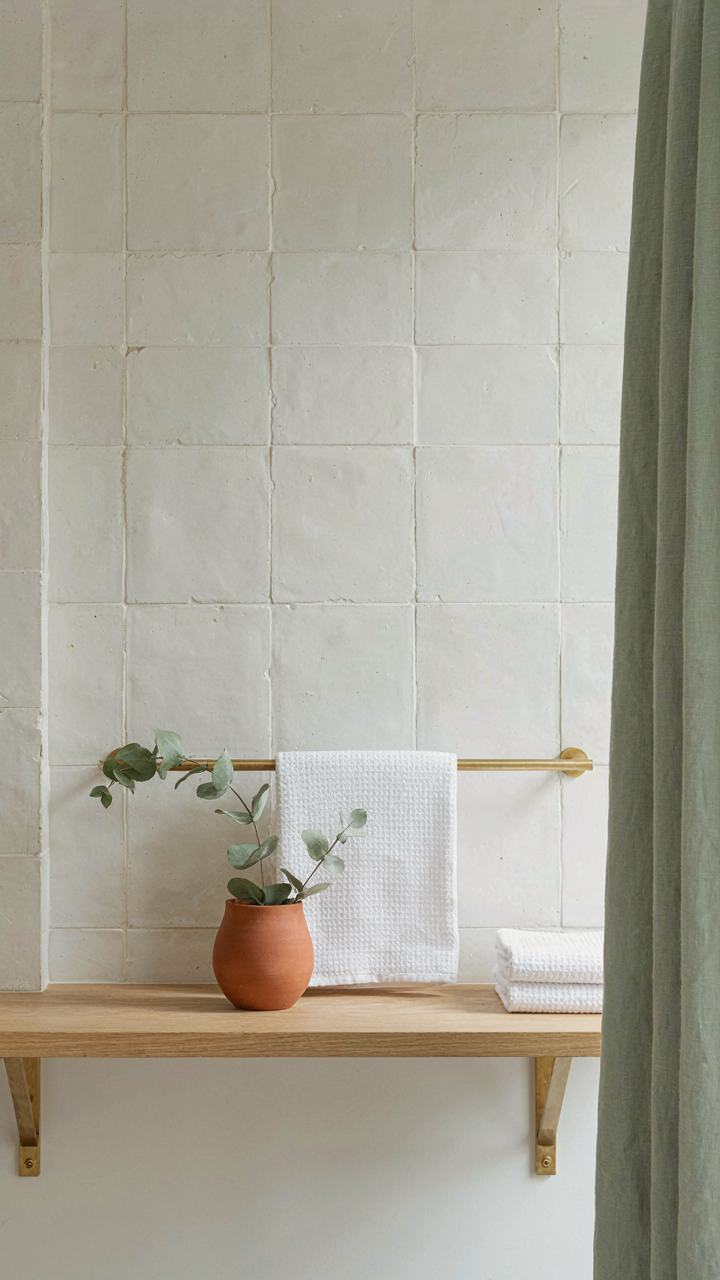
You want white tile because you think it signals clarity and restraint, but what you’re actually after is permission to stop deciding. White tile works in farmhouse bathrooms because texture substitutes for color—the visual weight shifts from hue to surface form. This is basic figure-ground theory from perception: remove the color variable and the viewer’s eye locks onto what remains. A smooth white subway tile reads as blank. A tumbled marble or hand-finished ceramic in white reads as intentional craft. The farmhouse aesthetic demands this distinction because it rejects both polished minimalism and generic builder-grade flatness.

The mechanism is straightforward: texture creates depth without adding complexity. Glazed ceramic with irregular edges, natural stone with variable surface planes, or matte finishes that catch light inconsistently all signal authenticity where pure white gloss would signal institutional sterility. This texture hierarchy works in tight spaces because it holds visual interest without cramping the room. Install white tile with surface variation, not uniformity, and the bathroom gains presence instead of feeling like a waiting room.
Space, Cleanliness, And Cognitive Load
The common advice says white makes rooms feel bigger. That’s true but incomplete—it’s really about what white does to your brain’s threat detection system. Brightness, in evolutionary terms, signals safety and visibility; bathrooms benefit from this response because cleanliness anxiety is real and tile material triggers it constantly. White tile removes the cognitive cost of questioning whether you’re looking at stains, mold, or shadow.
This doesn’t mean white tile is actually more hygienic—grout lines are grout lines regardless of color. What matters is the psychological permission structure white creates for the user. A farmhouse bathroom white tile installation signals that the space is maintained, visible, and worth inhabiting. The perceived spaciousness follows as a secondary effect. To activate this mechanism: use white grout on white tile to minimize visual interruption, and keep grout sealed on schedule to prevent the one failure point where white tile’s hygiene signal collapses.
The “Entropy Control” Protocol: Maintaining Your Farmhouse Shower Tile

Water Infiltration Stops Before It Starts
You care about this because tile failure looks like negligence. Here’s what actually happens: grout and sealant fail from capillary action, the same mechanism that pulls water up through soil. Water doesn’t just sit on the surface—it migrates into porous material and stays there. Farmhouse tile, especially natural stone variants like slate or limestone, absorbs moisture readily. The degradation begins invisibly, months before you see discoloration or soft spots. Prevent infiltration at the substrate level, not the surface.

The correct sequence runs backwards from what most people do. Install a waterproofing membrane behind tile before you lay grout, not after. Use a product rated for wet areas—typically a polymer-modified cement or sheet membrane. Grout itself is not waterproof, it’s porous. Sealant on top of grout buys you time, but the real protection happens at the layer between tile and wall framing. This stops moisture from reaching drywall and studs, where rot compounds the damage exponentially.
Cleaning Frequency As Design Friction
The common advice is backward: people assume more cleaning prevents damage. Aggressive cleaning actually accelerates grout deterioration through mechanical abrasion and chemical stress. Every time you scrub, you’re eroding the surface layer. Vinegar and bleach weaken grout chemically over months. The real strategy treats cleaning frequency as a design variable you control upfront, not a behavior you optimize later.
Choose tile and grout finishes that require less intervention. Honed or matte farmhouse tile hides water spots and mineral deposits better than glossy finishes, cutting your actual cleaning need by half. Epoxy-based grouts resist staining and require only neutral pH cleaners, versus traditional cement grout that demands acidic solutions. Map out your cleaning schedule before installation: if you can’t commit to weekly maintenance, select materials that tolerate monthly cleaning. The tile that demands constant attention is the tile that fails fastest.
Beyond The Floor: Farmhouse Bathroom Flooring Ideas For Walls And Accents
How Walls Change Everything
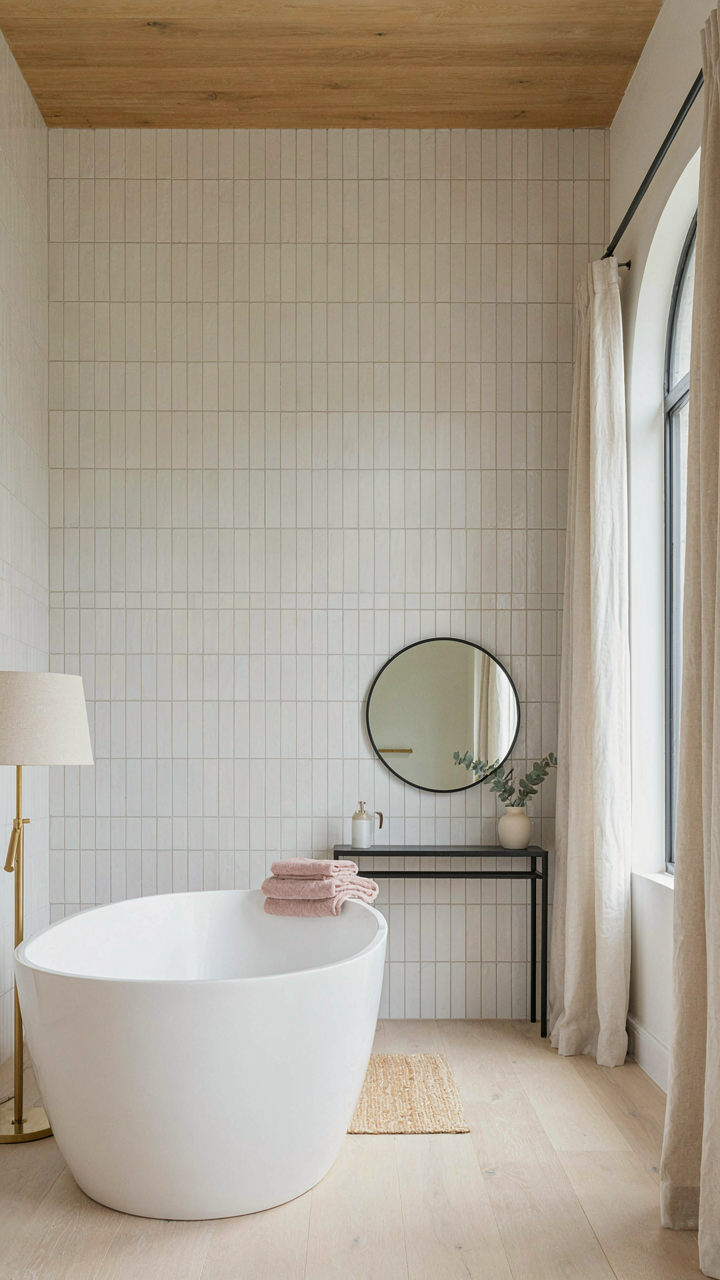
You want wall tile because you think it makes the room feel bigger. That’s not wrong, but it’s not the real mechanism either. Physics calls it “visual weight distribution.” Tile on walls lightens the perceived mass of the space by moving your eye upward and outward instead of anchoring it to the floor. A farmhouse bathroom with wall tile reads as taller, airier, and deliberately curated instead of default.

The mistake most people make is treating wall tile as a scaled-up version of floor tile. It’s not. Wall tile bears no load, requires no slip resistance, and can be thinner and more delicate. Subway tile on walls creates clean sightlines that make small bathrooms function larger. Vertical grout lines elongate the space; horizontal lines ground it. Choose your orientation first, then pick your material.
Shiplap Tile And Board And Batten Applications
Here’s what designers won’t tell you plainly: shiplap is fragile in bathrooms, but shiplap-textured tile solves that problem without compromise. Shiplap-look porcelain tiles stack vertically like actual boards, giving you the farmhouse aesthetic with waterproof durability. The same logic applies to board and batten patterns executed in tile. These aren’t trendy workarounds. They’re the mechanism that lets you have the look without the maintenance nightmare.
- Vertical Shiplap Tile: Porcelain tiles with shiplap profiles create authentic farmhouse texture on walls. Stack them floor-to-ceiling for maximum visual height and period accuracy without wood rot risk.
- Board And Batten Tile Accent Walls: Combine larger tiles as “boards” with thinner accent strips as “battens” for dimensional depth. Works especially well above wainscot height or as a shower surround focal point.
- Hexagonal Tile In Shiplap Style: Some manufacturers produce hex tiles with shiplap edges, merging two farmhouse trends. Creates unexpected visual interest while maintaining the traditional aesthetic.
- Matte Finish Shiplap Alternatives: Matte or natural finish tiles mimic aged wood more convincingly than glossy surfaces. The subdued light reflection reads as authentic farmhouse rather than contemporary.
- Oversized Subway Tile Stacked Pattern: Use 3×12 or 4×12 subway tiles oriented vertically to mimic board widths. The stacked bond layout reinforces the structural board appearance without texture complexity.
The installation detail matters more than the tile itself. Shiplap-textured tile requires proper setting compound and grout color selection to avoid flattening the dimensional effect. Use unsanded grout in white or cream to keep the pattern readable. This approach delivers authentic farmhouse character while eliminating wood maintenance entirely.
The Modern Farmhouse Bathroom Tile Code: Decoding Durability
Ceramic Versus Porcelain: The Overlooked Distinctions
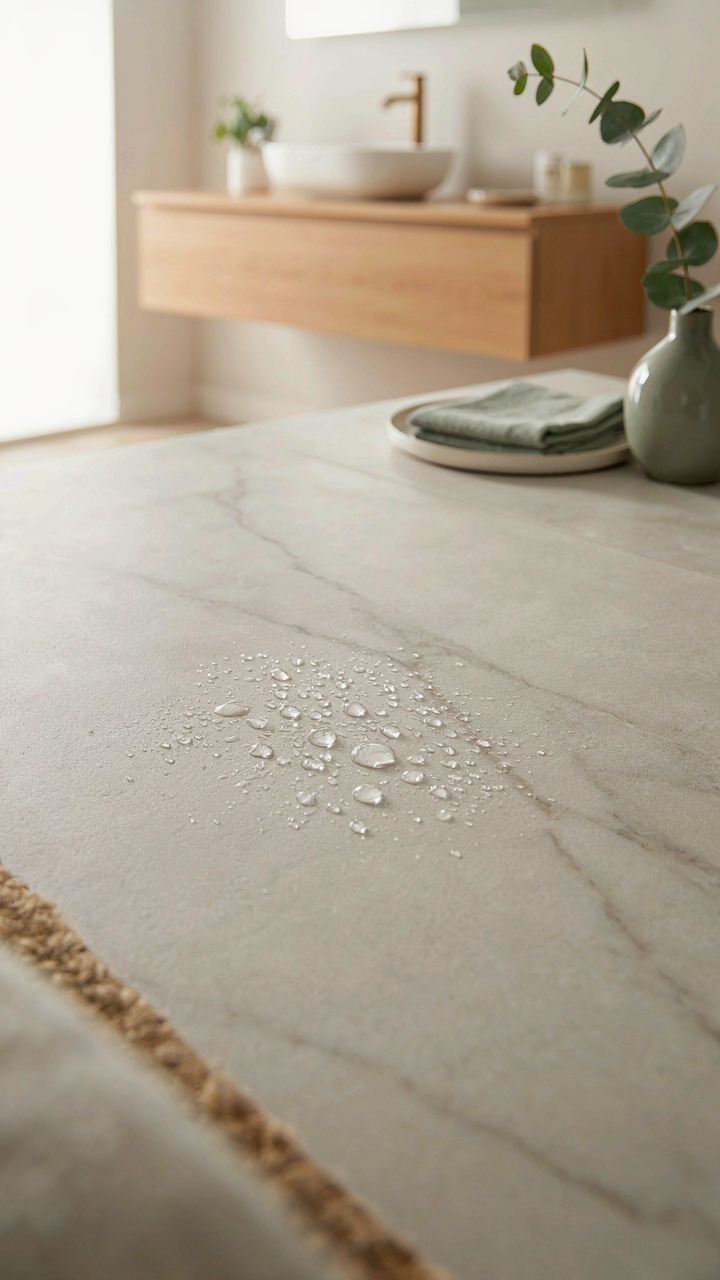
You care about this because you’re afraid of picking wrong and watching your bathroom deteriorate in five years. Here’s what matters: porcelain is fired at higher temperatures than ceramic, which changes the material’s density at a molecular level. That density difference determines water absorption rate, and water absorption determines how long your tile actually lasts in a wet environment.

Ceramic tiles absorb up to ten percent of their weight in water. Porcelain absorbs less than half a percent. In a farmhouse bathroom with high humidity, ceramic fails faster because water migrates into the body of the tile, freezes in winter climates, and causes spalling and cracking. Porcelain’s lower porosity makes it the technical choice for longevity, not aesthetics. Buy ceramic only if you’re willing to replace it sooner.
The Grout That Actually Holds
Grout is the load-bearing system of your tile installation. Most people pick grout by color alone and wonder why their tiles crack within a year.
- Unsanded grout: Used for grout lines under one-eighth inch wide. It lacks aggregate and shrinks significantly, making it prone to cracking in farmhouse bathrooms where temperature swings occur.
- Sanded grout: Contains fine sand particles that reduce shrinkage and resist cracking better. Standard choice for lines wider than one-eighth inch and most farmhouse tile layouts.
- Epoxy grout: Superior chemical resistance and zero water absorption. Costs triple the price of cement-based grout but survives in high-moisture environments without degradation.
- Urethane grout: Flexible formula that resists cracking from tile movement. Better for farmhouse bathrooms built on uneven subfloors or older structures with settling issues.
- Grout sealer application: Cement-based grout requires sealing after curing. Sealer fills micro-pores and stops moisture penetration. Skip this step and your grout becomes a water highway into the substrate.
The mechanism is straightforward: grout holds your tiles in position and prevents water from reaching the substrate behind them. Cheap grout cracks, water gets through, drywall rots, mold grows. Epoxy or urethane grout costs more upfront but eliminates this failure chain entirely. Apply grout sealer forty-eight hours after installation for cement-based formulas, then reapply every two years in high-moisture zones.
Farmhouse Style Tile Bathroom: The Understated Role Of Texture

What Your Hands Actually Register
You want texture in farmhouse tile because it signals authenticity, not because it’s pretty. That’s the real driver. Texture works through tactile feedback and visual depth cues. Your nervous system reads surface variation as evidence of age, craftsmanship, and material honesty. Farmhouse design trades on this signal. When tile feels irregular under your fingertips, your brain categorizes it as genuine. Smooth, perfect surfaces trigger the opposite response: factory, plastic, fake.

The psychological mechanism runs deeper than aesthetics. Farmhouse bathrooms tap into a preference for environments that suggest effort and imperfection. Textured tile accomplishes this without requiring actual age or damage. You get the sensory confirmation of authenticity in a new installation. This matters because people spend time in bathrooms daily. Their hands touch walls, their eyes track surfaces during routine moments. Texture creates micro-interactions that reinforce the design narrative you’ve chosen.
Surface Structure Shapes Nerve Response
Material science calls this haptic perception. Rough tile generates stronger neural signals than smooth tile because the surface breaks light and creates friction against skin. Farmhouse bathrooms exploit this principle deliberately. A matte, hand-scraped tile engages more sensory receptors than polished subway tile. The difference isn’t subjective or cultural. It’s physiological. Your fingertips literally detect more information from textured surfaces.
But most design advice gets this backwards. It treats texture as decoration rather than a sensory input device. Wrong. Texture functions as active feedback in the space. Rough surfaces demand attention from your nervous system. Smooth surfaces recede. In farmhouse bathrooms, you want textured walls and accents because they keep the environment perceptually engaging during ordinary moments. Choose hand-finished or tumbled tile for shower surround and floor transitions. Reserve smooth tile for accent pieces or borders. This creates hierarchy through sensory weight, not just visual composition.
The Future Proof Farmhouse: Investing In Timeless Farmhouse Bathroom Tile
Resale Value Isn’t About Beauty
You’re really asking whether this tile choice will tank your home’s value or float it. That’s the real question beneath the design talk. Resale value functions like a filter: it reveals which choices compound over time and which ones expire. White subway tile, black hexagon, and classic white subway maintain neutral territory because they don’t scream a specific moment in design culture. A buyer in 2035 won’t walk into your bathroom and think the tile looks dated because these materials never committed to any trend.

The mechanism is simple. Tiles that reference current design moments like millennial pink or ultra-matte finishes in unusual colors create a ceiling on perceived value. Neutral farmhouse tile—white, cream, soft gray, classic black hexagon—performs because it recedes. Buyers see “clean bathroom with good bones” instead of “designed in 2024.” Stick to materials that were acceptable ten years ago and remain acceptable now. That’s your baseline.
What Actually Dies In Design
Everyone warns against trends, but they’re vague about which ones actually poison resale. The real trap isn’t avoiding trends entirely. It’s confusing trendy execution with timeless material. Shiplap walls trend and fade. Farmhouse bathroom tile doesn’t trend because the tiles themselves are material facts, not stylistic choices. White hexagon tile was used in 1950s bathrooms and works today because geometry doesn’t age.
Where people lose money is pairing timeless tile with trendy everything else—too-dark grout, ultra-modern fixtures that clash, or specific layout choices tied to Instagram aesthetics. The tile survives. The execution around it doesn’t. Your job is choosing tile that works with multiple design directions. Classic white subway accommodates both minimalist and traditional aesthetics. That flexibility is what preserves value. Buyers can retrofit the fixtures, paint, and accessories. They can’t easily replace installed tile without losing money.
The Real Obstacle To Timeless Design Isn’t Budget; It’s Your Need For External Validation

You already know what farmhouse bathroom tile speaks to you. Black hex, white subway, terracotta—you felt it before you opened this article. The problem isn’t choosing the tile. The problem is you’re waiting for permission to choose it. Stop scrolling designer accounts looking for proof your taste is acceptable. Pick the tile that makes you want to spend time in that bathroom. Trust that instinct or don’t, but stop pretending indecision is thoughtfulness.