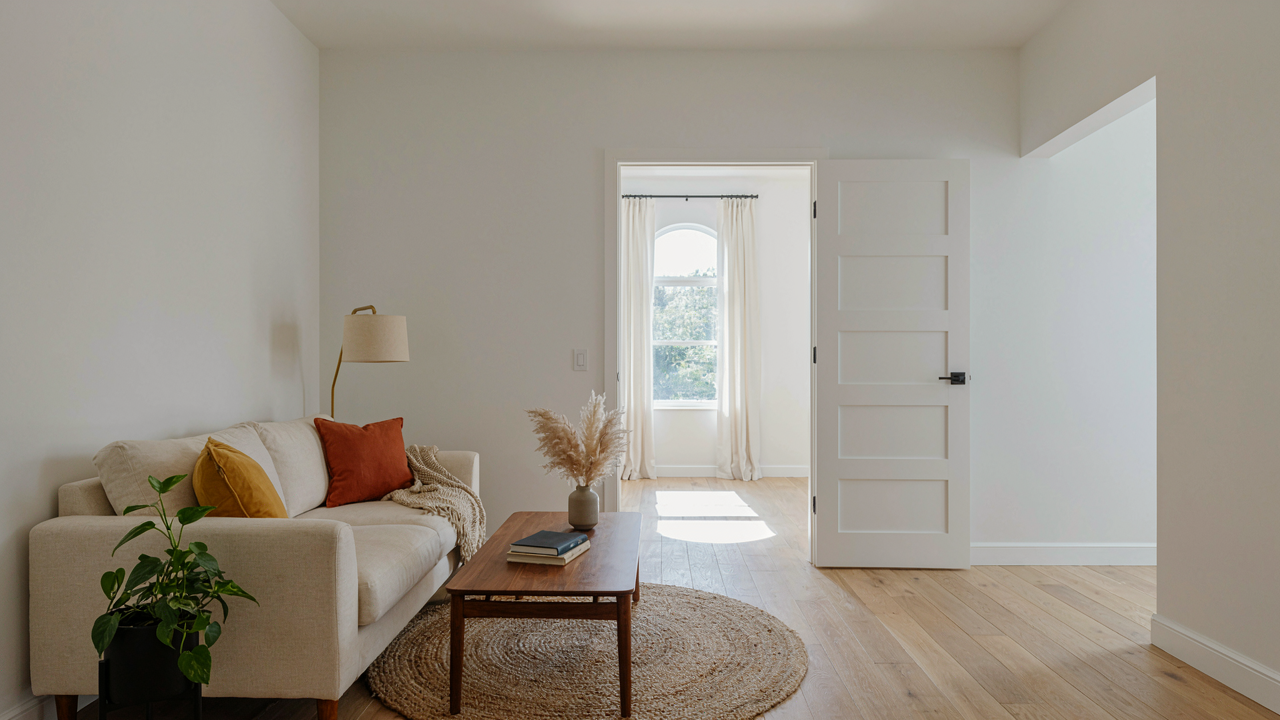
The Black Hardware Fallacy: Beyond Surface Level Aesthetic

When Aesthetics Become Avoidance
You want black hardware to solve a design problem you can’t articulate. Here’s what’s actually happening: you’re treating a door’s hardware like jewelry when it functions as a mechanical system. The mechanism is simple. Hardware on a farmhouse interior door does three jobs—it operates the latch, it carries load, and it signals the door’s era. Black finish accomplishes none of those jobs better than other finishes. It just looks different.
The mistake most people make is buying hardware based on photos, then discovering the weight distribution is wrong for their door slab, or the strike plate doesn’t align with the frame, or the hinges flex under an older door’s mass. Black finish hides wear faster, which creates the illusion of durability. It doesn’t add durability. You’re paying for visual camouflage, not engineering.
Contrast Works Because It Breaks Pattern
In design systems, contrast is the tool that forces the eye to register change. Black hardware on light wood (or light-painted) farmhouse doors creates visual weight in a specific zone—the handle, hinges, and latch area. This works. What people misunderstand is why it works: not because black is trendy, but because it interrupts the visual field at the exact point where function lives.
A farmhouse interior door with cream or white painted wood and brass hardware creates no interruption. Your eye doesn’t register the mechanism at all. Switch to black, and suddenly the operational elements announce themselves. The door stops being invisible architectural filler and becomes a designed object. This matters only if the door’s position and use case justify that attention. A closet door hidden in a hall doesn’t need contrast. A primary bedroom door that anchors a wall does. Match the mechanism—the placement and visibility function—before choosing hardware finish.
Deconstructing The Farmhouse Interior Doors Myth: Rustic Is Over

The Aesthetic That Got Commodified
You want farmhouse doors because they signal authenticity without the maintenance burden of actual farming. Here’s what nobody says: the farmhouse style peaked as a design movement around 2015, then got flattened into mass-market wallpaper and big-box hardware. The current shift away from heavy distressing and obvious “rustic” markers isn’t a rejection of farmhouse doors themselves—it’s a rejection of the low-resolution version that filled every suburban kitchen. Real farmhouse construction prioritized function and material honesty. Modern farmhouse doors still do this, but they’ve shed the performative roughness that screamed “I bought this intentionally.”

The doors that hold value now are the ones that don’t announce themselves. A six-panel door in soft white or warm gray with clean black hardware reads as timeless because it actually is. The mechanism: specificity beats category. You’re not buying “farmhouse style” anymore. You’re buying proportion, material quality, and hardware that doesn’t corrode in five years. Black hardware amplifies this shift because it forces the door to compete on form, not on applied distressing. The door has to earn its presence in the room.
Where Modern Materials Meet Farmhouse Logic
Farmhouse doors don’t require reclaimed wood or hand-planed surfaces to function as farmhouse doors. In systems thinking, we call this “substrate independence”—the function survives a change in material. A solid-core door with a real wood veneer or quality MDF frame performs the same way as a solid wood door: it dampens sound, holds its geometry, and accepts hardware without stripping. What changed is permission. Ten years ago, saying “I used engineered wood” would get you design credibility deductions. Now it’s a neutral fact. The black hardware doesn’t care what’s under the paint.
The integration happens at the detail level, not the material level. A modern farmhouse interior door stays true to proportion and silhouette while using contemporary manufacturing. Shaker-profile or five-panel doors in off-white with matte black hinges and handles work in a 2024 home because they don’t pretend to be something they’re not. Install them with stainless steel frame anchors instead of wrought iron. Use modern weatherstripping under the door. The farmhouse logic—solid construction, honest materials, practical hardware—remains intact while the execution reflects what we actually know about durability now.
The Hardwood Doors Leverage Protocol: Strategic Material Selection
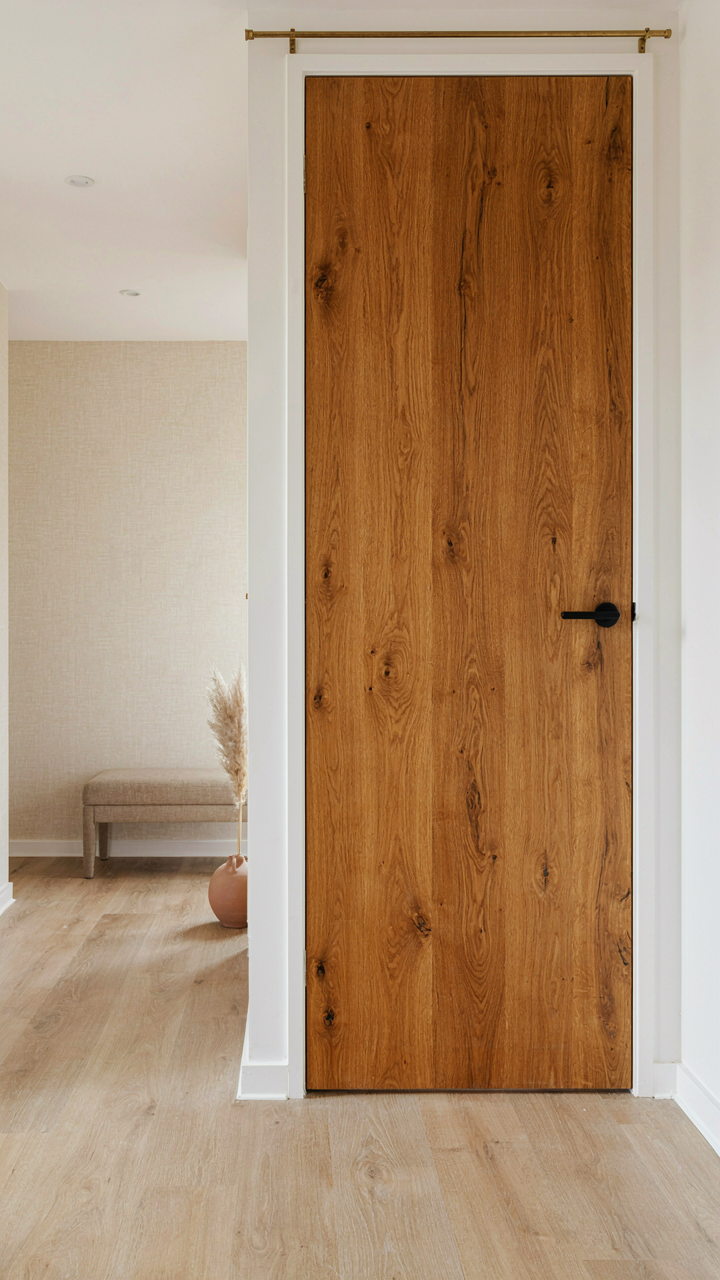
Wood Species As Economic Decision
You’re not actually choosing a door material. You’re choosing whether your money leaves your house or stays in it. Economics borrowed the concept of asset depreciation from accounting, and your door wood species works the same way: some materials hold value, others evaporate it.

Knotty pine and poplar are cheap at purchase and cheap at resale. Solid oak and cherry cost more upfront but maintain structural integrity and aesthetic relevance over decades. The farmhouse trend hasn’t faded in fifteen years because it’s built on real materials, not trend scaffolding. When you sell, buyers recognize quality wood. They don’t recognize budget substitutes no matter how well you finish them.
Door Material For Longevity And Resale
The common advice says “pick what you like.” That’s incomplete. You need doors that don’t warp, swell, or fail under temperature swings and humidity changes—especially in rural or older homes where climate control is inconsistent. Solid hardwood handles these cycles. Veneer and engineered doors don’t.
Knotty alder and reclaimed barn wood align with farmhouse aesthetics while delivering durability. They resist seasonal movement better than softwoods and develop character rather than damage over time. Pair these with black hardware to create contrast that photographs well for resale listings. When you install doors that last twenty years without warping or refinishing, you’ve moved the financial equation. The door becomes invisible to future buyers because it works.
Stained Doors: The Unconventional Path To Depth And Character

Wood Grain Visibility Changes Everything
You want stained doors because you think they look expensive, but the real reason staining works is optical. Stain doesn’t color wood the way paint does. It penetrates the grain and lets light refract through the wood fibers themselves, revealing depth that flat paint cannot touch. This is basic light physics applied to surfaces: transparency beats opacity for perceived dimension. The grain becomes the visual anchor. Without grain visibility, a farmhouse door reads as flat and cheap, regardless of hardware quality.

Choosing the right stain means matching the wood species to the grain pattern you want exposed. Oak, hickory, and pine show dramatic grain patterns under medium to dark stains. Cherry and maple display finer grain lines that work better with lighter stains that don’t obscure the subtle figuring. The stain color should enhance the natural wood tone, not fight it. Apply stain in thin coats and let it sit for five to ten minutes before wiping. Over-saturating kills the grain visibility you paid for. Test on scrap wood from the same batch first. The difference between a two-minute wipe and a ten-minute wipe fundamentally changes how the grain reads.
The Real Mistakes Nobody Mentions
Most people ruin stained doors by sanding with too high a grit before staining. Everyone says sand to 120 or 150 grit, but that closes the wood pores and creates uneven stain absorption. Sand to 100 to 120 grit maximum. Higher grits create blotchy, mottled finishes that look amateurish and defeat the purpose of staining. Blotching is the enemy. It makes grain look patchy instead of unified. The wood won’t accept stain evenly on closed pores.
The second mistake is applying stain over dust. After sanding, you must tack off every surface with a cloth dampened in mineral spirits, not just a dry rag. Dust particles embedded in stain create visible specs and interrupt grain patterns. After tacking, let the door dry completely. This takes thirty minutes minimum. Rush this step and you trap dust particles that ruin the finish. The stain application itself demands consistency: use a brush or rag and move in the direction of the grain, never against it. One coat is rarely enough for farmhouse doors with black hardware. Two or three coats, with drying time between each, build the depth and color saturation that reads as intentional rather than accidental.
Barn Door Designs Ideas: The Art Of Space Optimization
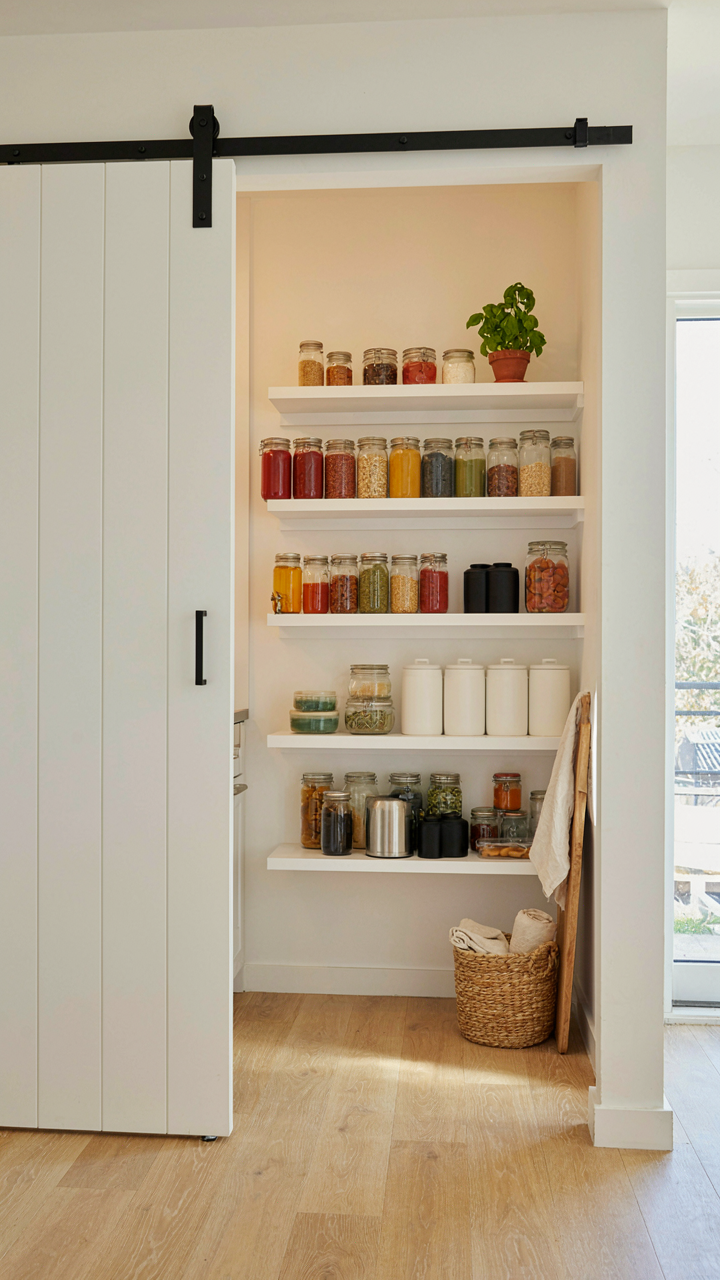
Where Barn Doors Actually Work
You want barn doors because they look intentional and expensive without requiring renovation. Here’s what people miss: barn doors solve a specific mechanical problem, not an aesthetic one. They slide on overhead track instead of swinging into floor space. This matters when your room layout doesn’t accommodate a traditional door swing. The mechanism borrows from logistics: barn doors operate on the principle of horizontal displacement rather than rotational displacement, meaning they consume zero floor clearance in a radial pattern. This isn’t about style. It’s about reclaiming usable square footage while maintaining the farmhouse aesthetic.

The installation location determines whether a barn door functions or becomes expensive decoration. Bedrooms, bathrooms, and closets benefit most because swing space conflicts with furniture placement or traffic flow. Kitchens and living areas rarely need them unless you’re creating a pantry pocket or separating zones in an open plan. The real constraint isn’t the door itself, it’s the wall structure. You need solid framing on the side where the door rests when fully open. Measure your available wall width before committing. A 36-inch door needs at least 38 inches of unobstructed wall to the side of the opening.
Hardware That Doesn’t Fail After Two Years
The common advice about barn door hardware is incomplete: most guides focus on track quality and ignore the roller mechanism entirely. Your experience hinges on the ball-bearing system inside those rollers, not the track finish. Heavy-duty farmhouse barn door hardware uses sealed ball bearings rated for 200+ pound load capacity. Black powder-coated steel hardware resists rust better than painted alternatives because the coating bonds to bare metal instead of sitting on top. The finish matters less than the bearing grade. Cheap rollers bind after six months. Quality rollers stay silent for years.
- Sealed Ball Bearing Rollers: Prevents dust and debris from jamming the mechanism. Look for rollers rated for at least 200 pounds each to handle panel weight safely.
- Soft Close Mechanisms: Hydraulic dampers slow the door’s final inches of travel. This stops slamming and reduces wear on track endpoints and wall stops.
- Adjustable Track Alignment: Hardware with vertical and horizontal adjustment points lets you correct installation errors without removing the entire system from the wall.
- Heavy Duty Guide Rollers: Bottom guide wheels keep the door from swinging away from the wall. Dual guides outperform single guides on doors wider than 40 inches.
- Black Matte Hardware Coating: Resists fingerprints and shows wear less than glossy finishes. The matte powder coat won’t chip like painted hardware when hardware contacts the track repeatedly.
Select hardware based on door weight and usage frequency, not visual preference. A 40-pound solid wood door needs different hardware than a 25-pound hollow core panel. If the door operates multiple times daily, invest in soft-close dampers. They cost 40 to 80 dollars extra but extend hardware life by eliminating impact stress. Check the manufacturer’s weight rating before purchase, then verify your door meets that spec with an actual scale. Installation failure stems from undersized hardware carrying oversized doors.
Door Design Interior: Creating Intentional Flow And Zones

Where Doors Live Shapes Everything
You want doors to disappear into the background so your rooms feel bigger. That’s not how this works. Door placement is architectural real estate—it controls traffic patterns, sightlines, and whether a room feels like a dead end or a through-space. Placement either compounds or corrects the existing floor plan. Most people install doors where they inherit them from the builder, then wonder why rooms feel cramped or disconnected. Strategic placement means doors land where natural movement already wants to go, not where convention demands them.

In farmhouse layouts, doors function like nodes in a circulation network. Opposite walls create flow; doors on the same wall create clusters. A door centered on a wall reads formal and intentional. A door near a corner creates usable wall space and lets furniture anchor rooms naturally. The hardware color becomes secondary until the door sits in its zone. Poor placement wastes every other decision you make about the door itself.
How Door Style Shifts Perceived Space
Frameless and glass-panel doors read as permeable—they let light and sight lines travel through walls without breaking rhythm. This is pure physics: uninterrupted light and sightlines reduce the cognitive load of enclosed space. Panel doors with frame reveal create visual weight and stop the eye, which makes tight rooms feel tighter. Farmhouse interiors typically favor 6-panel or shaker-style doors because the recessed geometry absorbs light and reads less imposing than solid slab doors, but this trades some visual spaciousness for textural interest.
Door height matters more than people admit. Standard 80-inch doors in farmhouse homes built before the 1970s often sit lower than modern construction, which affects how the eye measures ceiling height. A black-hardware door frame emphasizes the perimeter edge, so wider stiles and rails add visual mass. Narrower frames with black hardware actually feel more contemporary and recessive. If your ceilings run eight feet or lower, thinner frame profiles and vertical orientation of panels create the illusion of height more efficiently than any paint color can.
The Understated Power Of Wooden Interior Doors: Texture And Warmth

Real Wood Beats The Imitation Game
You want real wood because you know the difference matters, even if you can’t articulate why—and that gap between perception and material reality is exactly where you lose money on a renovation. Real wood doors operate on the principle of hygroscopic response: the wood absorbs and releases moisture based on ambient humidity, which means the door physically adapts to your environment rather than fighting it. Veneer and MDF do not. They swell unevenly, warp unpredictably, and fail faster because they cannot breathe.

Solid wood construction delivers tactile feedback your hand recognizes before your conscious mind does. The grain structure creates micro-variations in surface texture that catch light differently than smooth, uniform finishes. When you run your palm across real wood, you feel the cellular structure. That sensation is not luxury marketing—it’s physical evidence of material integrity. Paint or stain adheres better to genuine wood because the surface has actual porosity. A wooden door with black hardware demonstrates this principle immediately: the hardware fastens into wood that holds its grip, not composite material that slowly releases fasteners over five years.
Protecting Wood Against Time And Use
Most maintenance advice tells you to wax doors quarterly and worry about humidity. That’s incomplete. The real threat to wooden doors comes from uneven moisture exposure and thermal cycling at the frame connection point, where the door jamb meets the wall. This is where wood deteriorates first, not on the face. Seal the top, bottom, and sides before you ever think about the visible surfaces—these edges absorb moisture fastest and cause frame rot, warping, and hardware misalignment.
Paint or stain serves as a moisture barrier, not a decorative choice. You need one or the other, applied to all six sides of the door before installation, to create a uniform protective layer. With farmhouse doors in kitchens or bathrooms, this step prevents the wood from absorbing steam and swelling at the edges. Hardware maintenance requires periodic tightening every six to twelve months as wood naturally shifts with seasonal humidity changes, which loosens screws incrementally. Check hinges and latch mechanisms by hand quarterly—you will catch problems before they cost you a door replacement.
The Black Hardware Blueprint: A System For Cohesion

When Hardware Finishes Actually Match
You want every door to look intentional, not like you grabbed whatever was in stock. Here’s what people miss: matching hardware isn’t about aesthetics—it’s about eliminating visual friction that reads as poor execution. Think of it like signal-to-noise ratio in engineering. Noise is every mismatched knob, hinge, and strike plate screaming for attention. Signal is the farmhouse door system that recedes and lets the architecture speak.

Black hardware works across farmhouse doors because it doesn’t compete with wood grain or paint color. Matte black stays consistent whether you’re finishing a solid core interior door or a barn-style sliding door. The mistake most people make is treating hinges and knobs as separate decisions. They’re not. Specify the same black finish family—whether matte, semi-gloss, or textured—across every door in a connected space. Buy all hardware from the same manufacturer line when possible. Slight variations in black between brands create visual discord that sabotages the entire effect.
Installation Precision Determines Longevity
Sloppy installation kills hardware faster than poor material choice. Doors shift over time from humidity, temperature swings, and foot traffic. Hinges absorb that movement. If you install them crooked or with loose fasteners, the hinge leaves bend slightly, creating binding and wear that accelerates failure. The hinge isn’t defective—the installation was.
Use shims during installation to ensure the door frame is plumb and level before you mount anything. Install hinges with all fasteners fully seated—don’t skip the bottom screw to save five minutes. Black hardware shows screw slots and gaps more than lighter finishes, so poor installation becomes visually obvious immediately. Tighten hinges after the door hangs for a week, when the structure settles. This single step extends the functional life of farmhouse interior doors by years.
The Real Obstacle Isn’t Finding The Right Door; It’s Your Fear Of Committing To A Bold Aesthetic
Most people don’t fail at farmhouse design because they picked the wrong door. They fail because they picked it, then second-guessed themselves into beige mediocrity. Black hardware on natural wood doors signals a decision. It says you’re not hedging your bets. Stop scrolling Pinterest and buy one door today. Live with it for a week. You’ll either know it works or you’ll know it doesn’t, and that certainty beats the paralysis of infinite options. The homes that stick are the ones built by people willing to be wrong.