

The Illusion Of Farmhouse: Why Most Lighting Fails

What Farmhouse Actually Meant
You want farmhouse lighting because it signals authenticity, but you’re shopping from a catalog where authenticity died three clicks ago. Farmhouse wasn’t a design trend in 1890—it was a constraint. Farmers used what worked. Oil lamps, candles, and later kerosene hung where they did their work: barns, kitchens, milking stations. No aesthetic committee approved the placement. Necessity dictated form, and form dictated placement.
Real farmhouse lighting solved a specific problem: visibility without electricity. Early barns used hanging oil lanterns because they needed to move light where tasks happened and because they could be removed and relocated cheaply. The barn pendant came from this same logic—a single fixture that threw light downward with minimal waste. When farmers electrified, they kept the shapes because they already worked. That continuity is what you’re actually buying, not a style.
Catalog Replication Is Not Design
The common advice says: buy reclaimed barn doors and vintage lanterns for authenticity. That’s wrong. Reclaimed materials mean nothing if the fixture is bolted to drywall in a suburban kitchen island that looks nothing like where it came from. Design magazines sold you the object, not the principle. Farmhouse lighting fails when people copy the thing instead of understanding what the thing solved.
Study how the fixture actually hung in its original context: height above work surface, distance from walls, whether it swung or stayed fixed, what kind of bulb power farmers eventually adopted. A barn pendant works because it concentrates light where animals need feeding or hay gets sorted. Hang the same fixture over a dining table in a mansion and it becomes costume. The mechanism is context, not aesthetics. Before you buy any fixture, ask where it actually worked and why.
Deconstructing “Lantern”: Function Precedes Form
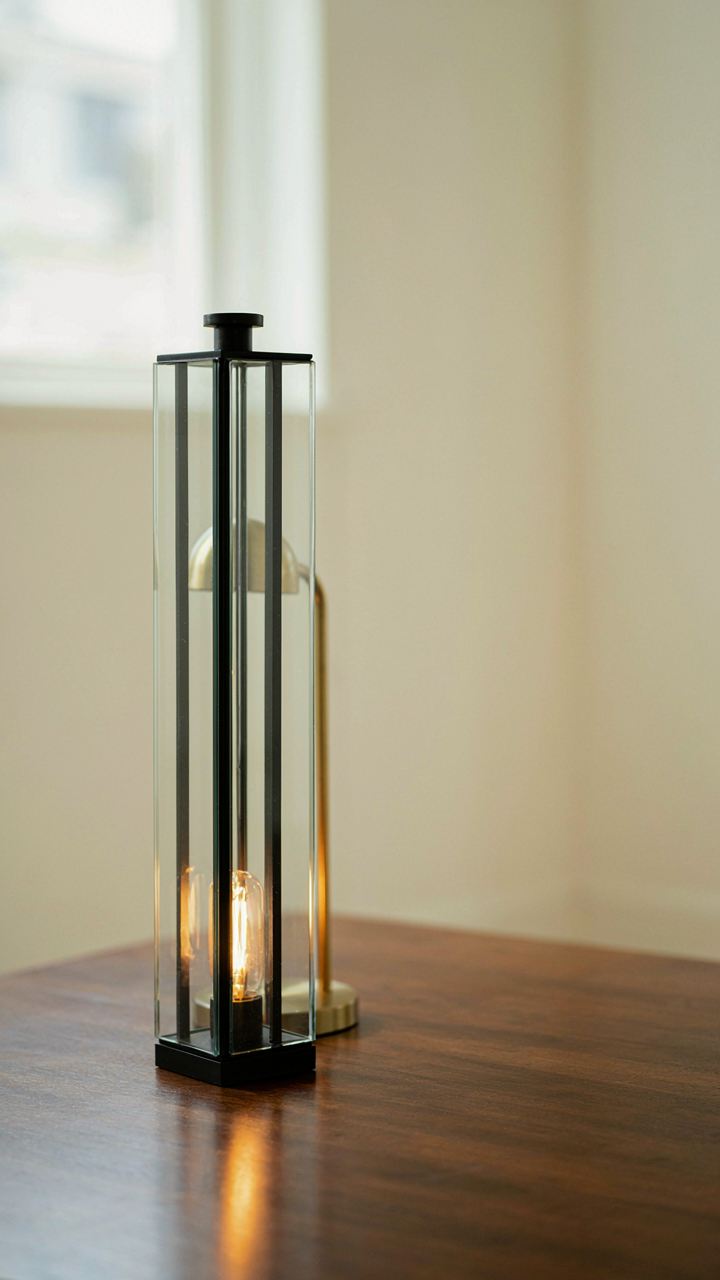
Why Lanterns Actually Worked
You want lanterns because they look intentional. But the real reason they dominated farmhouse design is mechanical: a lantern contains flame and concentrates light outward instead of losing it to air movement. Before electricity, this wasn’t aesthetic preference. It was survival engineering. The glass or horn panes shielded fire from wind, extended usable light radius, and made the light predictable enough to work by after dark. Form followed physics, not Instagram.

That same mechanical principle matters now, even with electric bulbs. A modern lantern with proper enclosure directs light where you need it instead of scattering it. The design constraint that once solved a problem—protecting an open flame—now solves a different one: preventing glare and light spillage in open spaces. You’re not buying history. You’re buying a geometry that works.
Utility Beats The Lantern Aesthetic
Most advice says pick lanterns that “match your style.” Wrong. Start by asking what space you’re lighting and from what distance. A small tabletop lantern throws light three to four feet effectively. A barn pendant or hanging lantern reaches eight to twelve feet depending on wattage and reflector design. The enclosure material matters mechanically: solid metal backing reflects light forward; clear glass on all sides diffuses it. Pick the wrong one and you’re lighting the wrong zone entirely.
Check the bulb base type and wattage capacity before buying the fixture. Farmhouse lanterns come in E26 (standard) and sometimes candelabra bases, and many builders undersized them for 40-watt equivalents when they needed 60 or 75. Verify the fixture accepts what you actually need to install. Mount height, proximity to seating areas, and whether you need task light or ambient light determine whether a lantern works or becomes expensive decoration that casts useless shadows.
The Barn Pendant Fallacy: More Than Just Metal
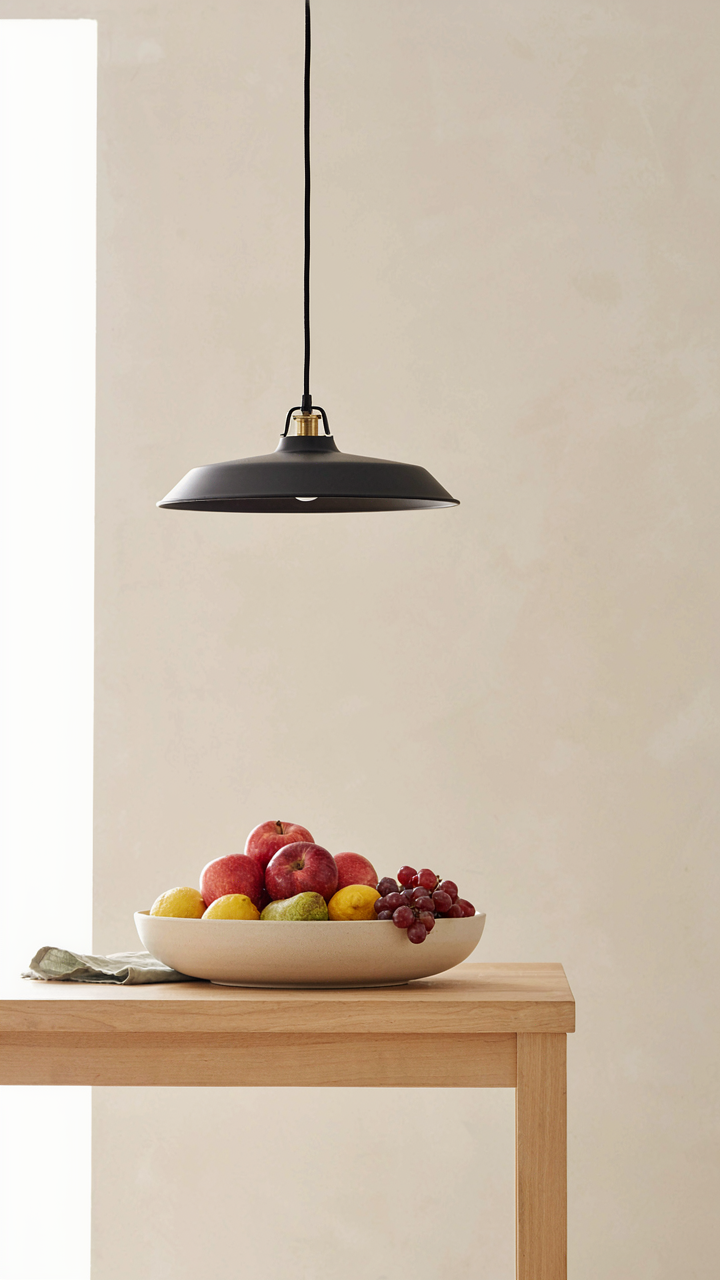
Where Industrial Efficiency Meets Design Choice
You want barn pendants because they look intentional. That’s the real reason. The mechanism nobody states is this: barn pendants emerged from industrial warehouses and factories where metal shades directed light downward to maximize task visibility while minimizing waste. Efficiency was survival, not aesthetics. The design won because it worked. When you hang a barn pendant in your kitchen, you’re inheriting that functional lineage whether you acknowledge it or not.

The shape matters because form followed function. The sloped metal sides concentrate light where you need it most, not scattered everywhere. Early factory versions used galvanized steel and simple pulleys because these materials resisted heat and handled daily abuse. Farmhouse design borrowed this vocabulary because rural buildings faced the same constraints: make light go where work happens, use materials that last, keep costs low. The aesthetic appeal came second, as an accidental byproduct of solving a real problem.
Kitchen Lighting Demands Specificity
Most advice tells you to choose barn pendants because they look good over islands. That’s incomplete. What you actually need is task lighting that handles food prep without casting shadows, plus ambient light that doesn’t create glare on surfaces. Barn pendants solve the first problem through their geometry, not their appearance. The metal shade angling at 45 to 60 degrees directs light onto countertops while the open bottom allows some upward scatter to brighten the ceiling plane.
Placement and wattage matter more than style. Mount pendants 30 to 36 inches above the work surface so the shade sits at roughly eye level when standing. Use warm-temperature bulbs between 2700K and 3000K to avoid the clinical feel of cooler lights. The real protocol is this: measure your counter depth and island dimensions first, then choose pendant width at one third of that distance, then spec the height. Your eye approves of barn pendants in farmhouse kitchens because they actually illuminate the work, not because the trend feels right.
The Contrast Principle: Integrating Modern Farmhouse Lighting Ideas
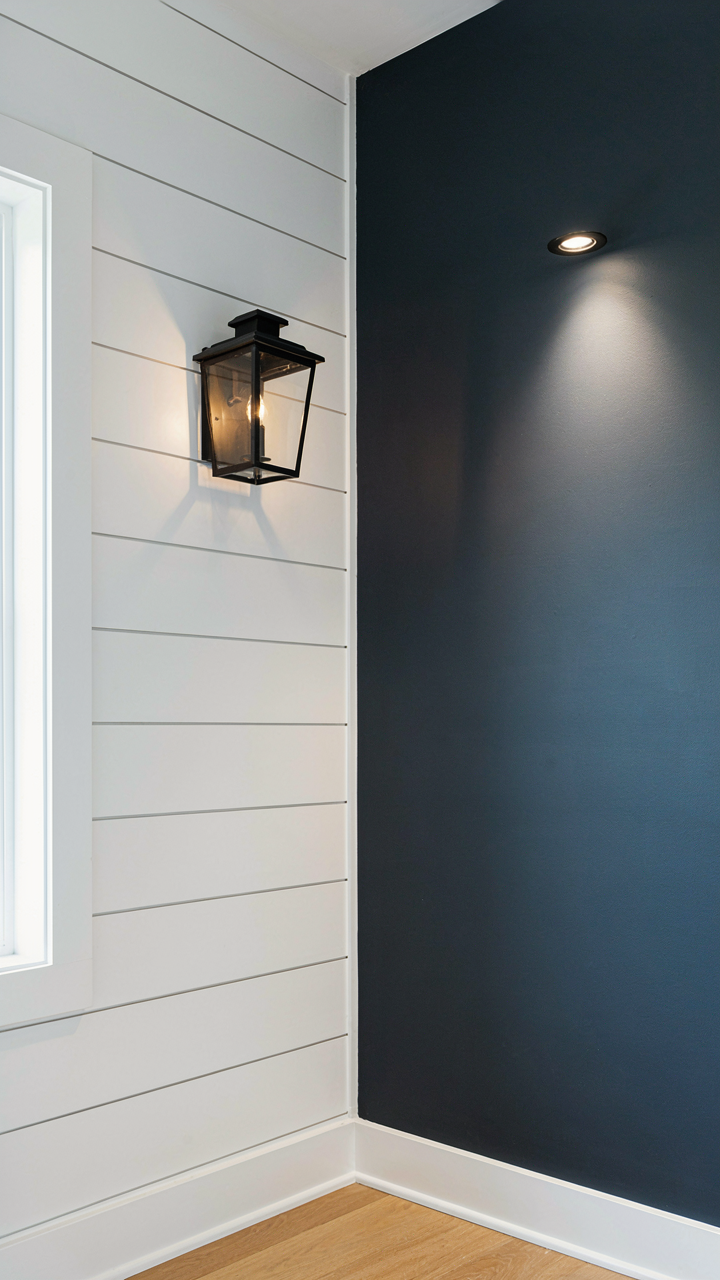
Old Materials, New Function
You want permission to spend money on something that looks expensive without actually being expensive. Here’s the mechanism: contrast creates perceived value. In visual design, contrast is borrowed from signal processing—the principle that a signal stands out only when surrounded by noise or opposing information. A blackened steel barn pendant reads as intentional and premium when hung against white shiplap, but blends into nothing against exposed brick alone.

The real work isn’t finding old fixtures. It’s pairing them with their opposite. A vintage Edison bulb lantern next to a recessed LED spotlight creates tension that makes both elements more noticeable. The old fixture gains credibility from the modern tech around it. The new fixture gains character from the historical reference beside it. This pairing works because your eye needs contrast to register importance. Without it, everything competes equally and nothing wins.
Placement That Forces Contrast
Where you mount a fixture determines whether it reads as contradiction or coincidence. The common advice says to “layer your lighting” without explaining why placement matters more than the fixture itself. Layers fail when fixtures occupy the same visual plane. A barn pendant and a modern track light both on the ceiling at equal height just look confused.
Strategic placement means positioning old and new on different vertical planes. Mount a wrought iron lantern on the wall at eye level while your modern pendant hangs center ceiling. Hang Edison bulb fixtures in a period-appropriate corner while recessed LED edges frame the room. This vertical separation lets each fixture occupy its own visual territory. The contrast reads as intention, not accident. Place your modern farmhouse fixtures first on a ceiling plan, leaving two to three feet between them and any vintage wall-mounted pieces.
Farmhouse Lighting: Beyond The Kitchen And Entryway
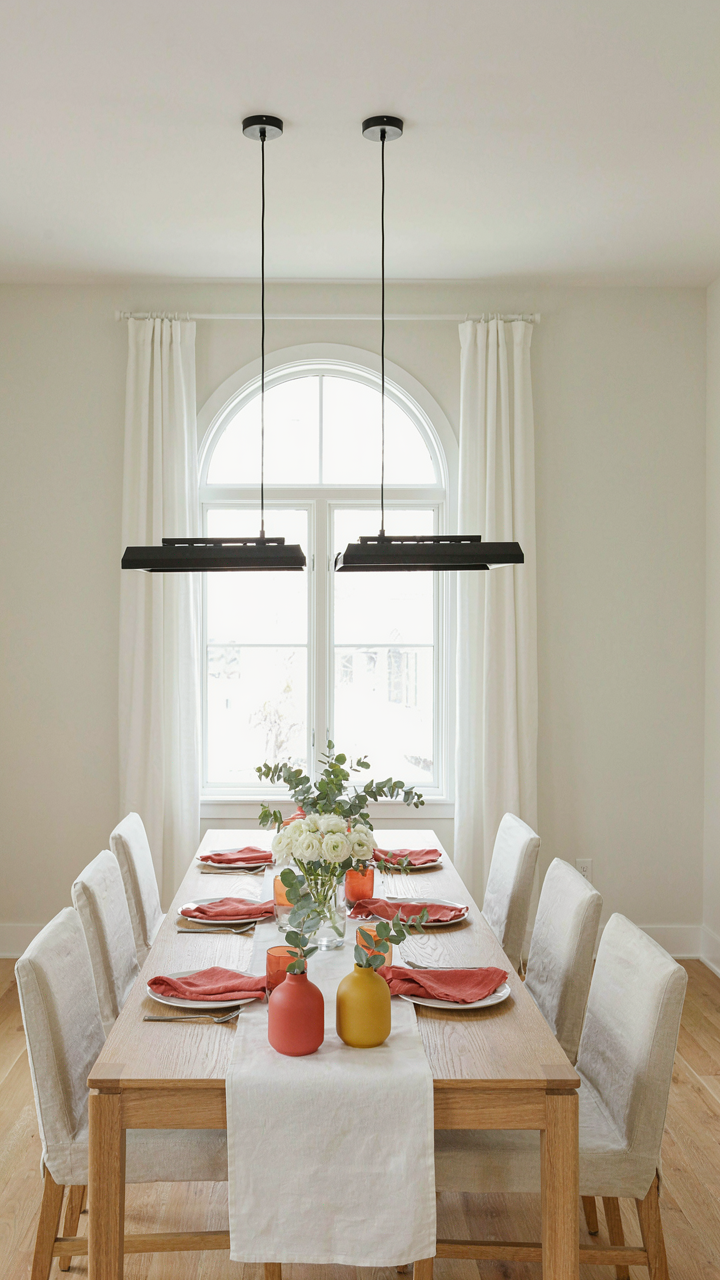
Dining Areas Deserve Better Than Pendants
You want farmhouse lighting to feel authentic without looking like you tried too hard. The mechanism is simple: dining areas expose poor fixture choices because people actually see them during use. A standard pendant hangs alone, creating a single bright spot. Farmhouse dining demands either a linear cluster of smaller fixtures or a statement piece with genuine proportional weight. Barn pendants work here because they mimic how rural structures used multiple light sources along load-bearing beams. The scale matters more than the material.

Most designers default to one large fixture centered above the table. That’s backwards. Farmhouse dining rooms in actual farmhouses used what light was available, which was rarely centered or singular. Use two smaller barn pendants spaced roughly 4 to 5 feet apart above a standard dining table, or a 3-light linear fixture that echoes the room’s longest dimension. This distributes light like a working space, not a gallery display. Mount the fixture 30 to 36 inches above the table surface for functional illumination without glare across dishes or faces.
Hallways And Stairwells Need Function First
The common advice treats hallways as decorative afterthoughts. They’re actually the connective tissue that determines whether your farmhouse scheme reads as intentional or scattered. A hallway’s lighting sets the visual rhythm between rooms. Farmhouse lighting in transition spaces works best with wall-mounted fixtures rather than ceiling pendants, because walls anchor the eye and create directional flow. Sconces spaced 6 to 8 feet apart down a hallway mimic how barns used simple fixtures along walls to navigate work areas.
Stairwells require different thinking entirely. Pendant fixtures above stairs create shadows on treads, a safety issue. Install recessed downlighting at the ceiling line or use barn-style sconces on the wall alongside the handrail instead. This keeps light direct and functional without the theatrical silhouette a traditional pendant creates. The fixture you choose matters less than its position relative to human movement through that space.
The Scarcity Method: Less Is More In Farmhouse Style Lighting
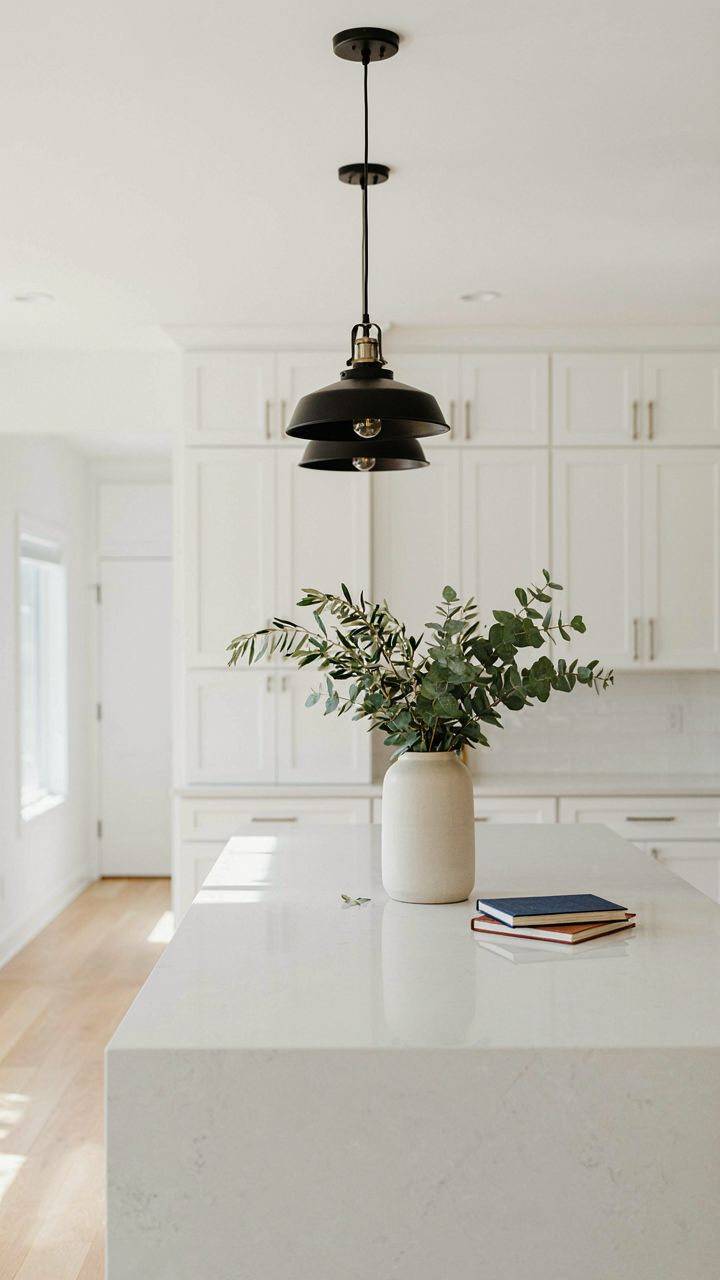
Restraint In Fixture Selection
You want permission to buy less because you’re afraid overspending on lighting will wreck your budget or make the space feel cluttered. Here’s the mechanism: farmhouse design derives its power from restraint, not abundance. The style emerged from functional rural spaces where lighting served a purpose, not decoration. Every fixture you add competes for visual attention. In economics, this is called diminishing marginal utility. Each additional light source adds less impact than the one before it. Remove fixtures instead, and each remaining one gains weight.

The common advice says “layer your lighting” without explaining when layers become noise. Start by identifying which fixtures serve actual function versus pure aesthetics. Eliminate the second category entirely. A single barn pendant over a kitchen island does more work than three decorative sconces flanking it. Farmhouse spaces breathe because they respect negative space. Choose fixtures that justify their existence through either task lighting or architectural presence, then stop.
Strategic Placement Over Quantity
Fewer fixtures force you to position them for maximum impact, which transforms placement from an afterthought into the core decision. This is constraint-based design. You cannot hide a mistake when you only have two light sources in a room. A lantern pendant centered over a dining table commands attention because nothing competes with it. Multiple fixtures split focus and dilute that command. Position your primary fixture where it solves the hardest lighting problem first, then add secondary fixtures only if that solution fails.
The spacing matters more when you use fewer pieces. A single barn pendant in a farmhouse kitchen should hang 30 to 36 inches above the counter surface for proper task illumination without glare. Lanterns work best in pairs flanking an entryway, spaced 4 to 6 feet apart depending on ceiling height. These distances follow practical optics, not aesthetic preference. Measure twice before installation. Once you commit to scarcity, every measurement compounds your results because there’s nowhere to hide poor placement.
Architectural Empathy: Lighting For Your Home’s Blueprint

When Structure Dictates Fixture Choice
You want your lighting to look intentional, not like you guessed. Here’s what nobody says plainly: your building’s structural bones already decided what fixtures will work—you’re just reading the code it wrote decades ago. In evolutionary biology, organisms develop traits that match their environment; farmhouse architecture works the same way. The fixture types that survived and got repeated weren’t chosen for beauty—they were chosen because they solved real problems within those structures.

A timber-frame barn with exposed beams needs different light distribution than a brick saltbox farmhouse with low ceilings. Pendant lights hang from beams because beams exist to support weight and draw the eye upward. Lantern sconces on posts work because posts create natural mounting points. The architecture isn’t a blank canvas you decorate—it’s a constraint that eliminates bad options and reveals good ones.
Matching Form To Foundation
Don’t match lighting style to farmhouse aesthetic vaguely and hope it works. Match it to the actual structural language your building speaks. A home with vaulted ceilings and high attachment points demands overhead pendants or chandeliers that use that vertical space. A ranch-style farmhouse with eight-foot ceilings needs wall-mounted or low-profile fixtures that don’t waste clearance. A wraparound porch with evenly spaced posts needs lanterns at consistent intervals—the posts dictate the rhythm, not your preference.
The common mistake is buying fixtures that look farmhouse, then forcing them into spaces where they create shadows, glare, or wasted volume. Work backward. Identify load-bearing elements, ceiling heights, wall positions, and entry points. These determine where light sources can actually mount and how they’ll distribute. Then select fixtures that exploit those positions, not despite them. A barn pendant works because the barn structure gave it a place to belong.
The Unspoken Rule Of Scale: Kitchen Lighting And Pendant Power

Proportional Harmony With Kitchen Lighting
You want your kitchen to look intentional, not like you grabbed whatever was on sale. The real mechanism here is load distribution from electrical engineering: you’re spreading visual weight across the space so no single fixture dominates. This prevents the dead-center pendant trap where one oversized light makes everything else disappear.

Kitchen scale works backward from most people’s instinct. Your pendants should occupy roughly 1/3 the width of your island or counter section they’re above. A 36-inch island calls for pendants with 12-inch diameters maximum, spaced 24-30 inches apart. Too many people install one 20-inch statement pendant over an 8-foot island and wonder why the space feels off. The fixture should recede into function, not announce itself.
Size And Placement Over An Island
Distance matters more than most lighting guides admit. Pendants hung 30-36 inches above countertop surface create usable task light without casting shadows on work zones. This is the standard farmhouse kitchens actually follow, not the vague “18 inches” you’ll read elsewhere.
- Pendant diameter to island ratio: Measure your island width, divide by three. That’s your maximum pendant diameter. A 48-inch island takes 16-inch pendants maximum.
- Center spacing on three-pendant layout: Place the center pendant directly above midpoint. Space flanking pendants 24 inches on either side for visual rhythm without cramping.
- Barn pendant clearance for seating: Keep bottoms at least 36 inches above barstool height. This prevents head contact and maintains sightlines across the kitchen.
- Cord length and visual weight: Shorter chains read heavier and more grounded. Longer cords on smaller pendants create lift. Match chain length to pendant material—metal pendants handle length better than glass.
- Asymmetrical layouts for non-centered islands: If your island is offset, place the larger pendant toward the walkway side to balance visual pull toward the room’s main traffic pattern.
Farmhouse kitchens that work follow one protocol: measure twice, hang at 33 inches, space fixtures at 24-inch intervals minimum. Tighten the spacing and you crowd the sight line. Loosen it and the light fragments into dead zones.
Avoiding The “Themed” Trap: True Farmhouse Integration

Blending Modern Farmhouse Entryway Lighting Seamlessly
You want people to know you chose this on purpose, not that you bought a costume and hung it in your foyer. The real mechanism is friction: most farmhouse lighting fails because it exists in isolation from the rest of your space’s material language. A barn pendant over a marble console and brass fixtures reads as decoration, not design. Integration means your entryway lighting shares material, scale, or finish logic with adjacent surfaces and fixtures already in the room.

Start by auditing what’s already there before selecting a single fixture. If your entryway has warm wood tones and matte metals elsewhere, a polished brass lantern introduces a foreign finish that demands explanation. Steel or blackened iron integrates because it echoes existing hardware. The fixture’s scale matters equally: an oversized pendant above a narrow console creates visual weight that fights the space’s geometry. True farmhouse lighting borrows proportion from the architecture itself, not from trend boards.
Creating Function Over Aesthetic Capture
Common advice tells you to “let the style speak for itself.” That’s incomplete. The trap tightens when you prioritize how the light looks over what it actually does. A decorative lantern with inadequate lumens creates dark corners you’ll fill with lamps later, defeating the entire integration you attempted. Function determines whether a fixture stays or becomes visible waste.
Measure your entryway’s square footage and foot-candles needed for safe navigation and task visibility. Farmhouse fixtures often use exposed bulbs or translucent shades that diffuse light inefficiently, so you need higher wattage or multiple units than enclosed fixtures require. Before installation, verify the fixture’s lumen output matches your space’s actual demand. Integration succeeds when the lighting solves a problem first, and happens to look correct second. Test the fixture with power before mounting to confirm the light distribution matches your layout, not just your aesthetic preference.
The Investment Mindset: Durability Over Disposable Decor

Fixtures Built To Last, Not Trends
You want to believe a 40-dollar fixture from a big box store will look good in five years. It won’t. The real mechanism here is material degradation: farmhouse lanterns and barn pendants made from cheap steel oxidize, coatings peel, and sockets fail when exposed to moisture and temperature swings that barns and porches experience constantly. Cast iron, forged steel, and solid brass slow this process dramatically because they don’t rely on thin finishes that chip away.
Farmhouse lighting fixtures from the mid-20th century still function because builders used materials that responded to environmental stress instead of collapsing under it. A lantern with a welded frame and threaded brass socket accepts movement and corrosion as inevitable, then resists it through mass and density. Cheap fixtures treat durability as optional. When you buy a barn pendant, you’re buying the frame’s ability to survive rust, not its current appearance.
Real Returns From Solid Choices
The common advice is that durability costs more upfront but saves money later. That’s incomplete. Economics calls this amortization: spreading cost across actual use cycles. A 300-dollar lantern used for ten years costs 30 dollars annually. A 40-dollar fixture replaced every two years costs 20 dollars annually and generates waste, inconsistency, and maintenance hassle that no spreadsheet captures.
- Solid brass hardware: Resists corrosion without plating failure, maintains thread integrity in salt air or high humidity, costs 15 to 40 percent more but lasts decades without replacement.
- Welded steel frames: Distribute stress across joints rather than concentrating it at fasteners, eliminate wobble and rattle that loosens connections, heavier but structurally sound indefinitely.
- Glass enclosures on lanterns: Borosilicate glass handles thermal shock better than standard glass, doesn’t cloud from condensation cycling, replacement panes cost less than replacing entire fixtures.
- Stainless steel fasteners: Eliminate rust staining on finishes below, prevent seizure when you need to service sockets or replace bulbs, matter most in coastal or wet climates.
- Gaskets and weathersealing: Separate fixtures that fail in three years from ones that fail in fifteen, prevent moisture from reaching electrical components, must be silicone not foam rubber.
The decision point isn’t about aesthetics or brand loyalty. It’s whether you want to replace fixtures on a schedule or replace them when they fail. Buying durable farmhouse lighting means choosing materials that answer the environment, not deny it, then installing them and leaving them alone.
The Real Problem Isn’t Your Lighting Choices, It’s Your Inability To Trust Your Own Aesthetic Judgment
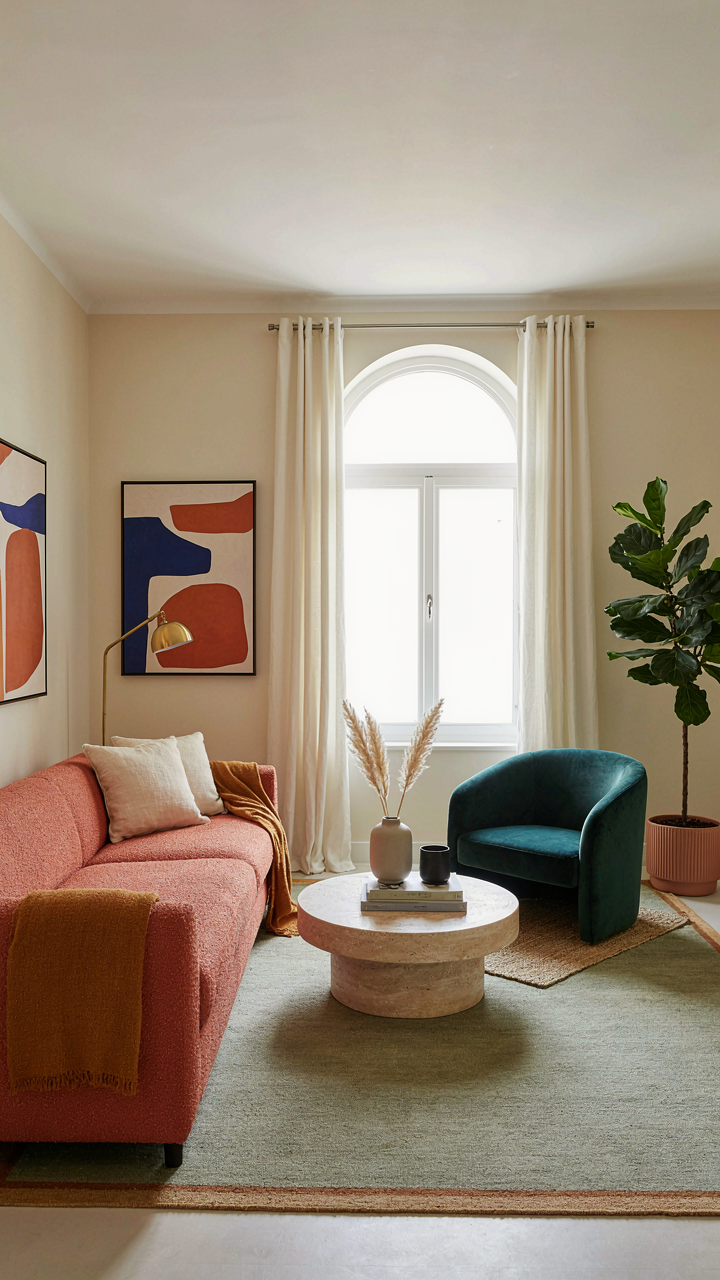
You scroll through farmhouse lighting galleries because you’re scared your taste is wrong. It isn’t. Pull down one lantern or barn pendant you actually want in your space today. Not next month. Not after more research. Today. Live with it for a week. Your gut reaction matters more than any design rule ever will. Stop waiting for permission to build the home you already know you want.



