
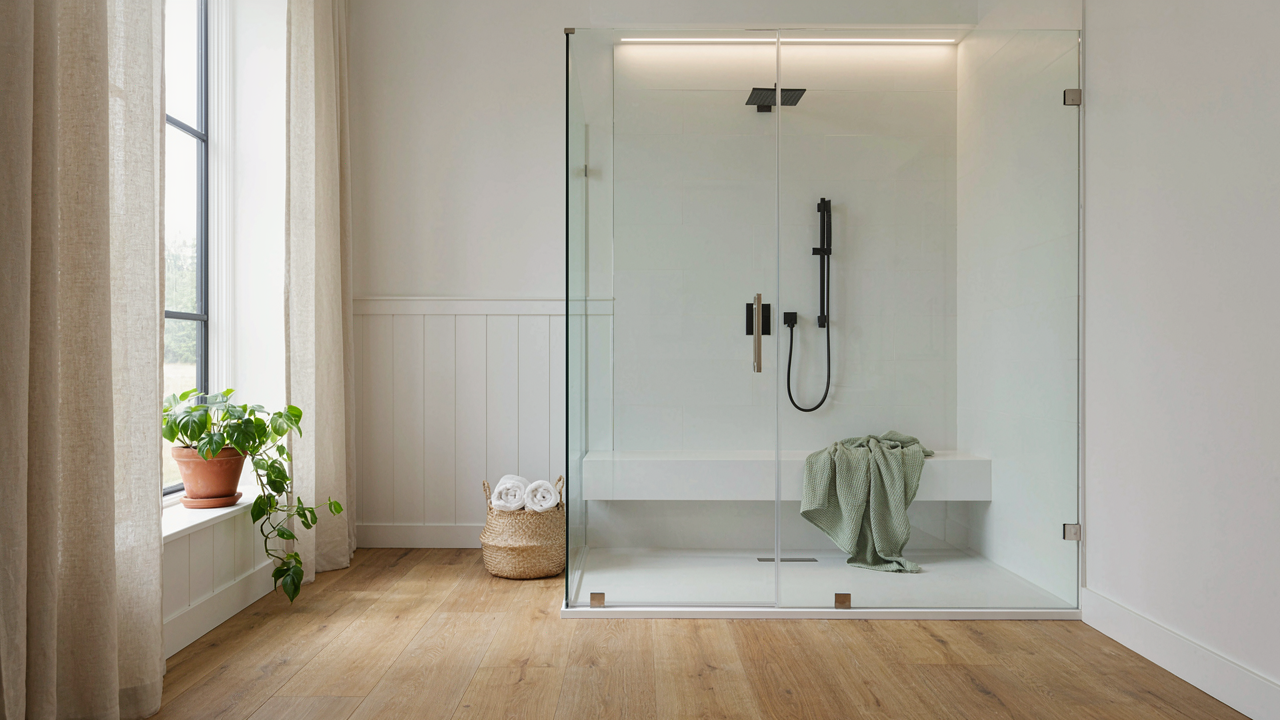
The Enduring Myth Of The Farmhouse Aesthetic

Decor Masquerading As Design
You want permission to buy stuff that signals you have taste without actually understanding what makes a space work. That’s the real play here. Most farmhouse design stops at surface decoration: shiplap, barn doors, vintage signs, reclaimed wood floating shelves. These are cosmetics applied to rooms with no structural logic. Real farmhouse design emerged from constraint and function, not Pinterest mood boards. Farmers built what they needed with materials on hand. There was no aesthetic—there was efficiency. Modern farmhouse skips that part entirely.
The problem is most designers treat farmhouse like an appliqué you stick onto any bathroom. Slap up some rustic wood, add metal fixtures, call it done. But farmhouse works only when the bones of the room support it. A narrow bathroom with poor ventilation can’t carry authentic farmhouse design because the practical problems come first. You’re decorating to hide dysfunction, which means the whole thing collapses the moment someone uses the shower. The tile, glass, and wood accents only matter if they solve real problems: water management, durability, maintenance, and thermal regulation.
Function Over Visual Status
Authentic farmhouse design borrows from industrial engineering: form follows failure points. A farmhouse shower doesn’t prioritize aesthetics at the expense of longevity. The materials you choose must address water damage, mold growth, and daily wear. Reclaimed wood in a farmhouse shower looks great for six months, then warps or rots because it wasn’t sealed properly. Farmers didn’t use unseasoned or untreated materials in wet spaces. They used what survived. Stone, properly sealed tile, and pressure-treated or naturally rot-resistant wood do the work. Everything else is decoration.
Your actual move is this: before you pick a single material, map out where water goes in that shower. Where does it pool? Where does it dry slowly? Which corners trap humidity? Those answers dictate whether you use ceramic tile, porcelain, natural stone, or a hybrid. The wood accents work only where they dry quickly or get sealed ruthlessly. Glass panels need proper framing and caulking or they become failure points. Commit to maintenance protocols before committing to materials, not after.
The Biomimicry Of The Rustic Shower Learning From Nature’s Durability

Materials That Outlast Trends
You want a farmhouse shower that won’t demand renovation in five years, and that requires stealing from biology. In biomimicry, we call this “adaptation through constraint”—the mechanism where organisms survive harsh conditions by becoming structurally efficient. Farmhouse showers borrowed this logic centuries before the term existed. Stone, wood, and reclaimed tile survive because they were never optimized for fashion. They were optimized for function in wet, high-stress environments.

The reason tile, glass, and wood work in farmhouse showers isn’t aesthetics. It’s material hierarchy. Stone and properly sealed tile resist water damage because their failure points are predictable and repairable. Wood in farmhouse showers functions as an accent, never as the primary moisture barrier. When you follow this rule, the shower doesn’t degrade into a maintenance nightmare. The materials age visibly but stay structurally sound.
Design Systems That Require Less Work
Most design advice treats low-maintenance spaces as a side benefit of good aesthetics. That’s backward. Self-organizing systems, borrowed from complexity science, shows us that spaces requiring fewer interventions have fewer decision points built in. A farmhouse shower with proper slope, sealed grout lines, and strategic material placement doesn’t need daily management. The system corrects itself.
Recessed shelving, open wood beams without crevices, and tile layouts that shed water eliminate the accumulation points where mold and soap scum breed. You’re not fighting nature here. You’re designing with it. The shower organizes around water flow instead of fighting it, which means maintenance becomes inspection and occasional resealing rather than constant remediation.
Tile Walk In Shower: The Unseen Imperatives Of Material Selection
Tile Performance And Longevity Beyond Aesthetics
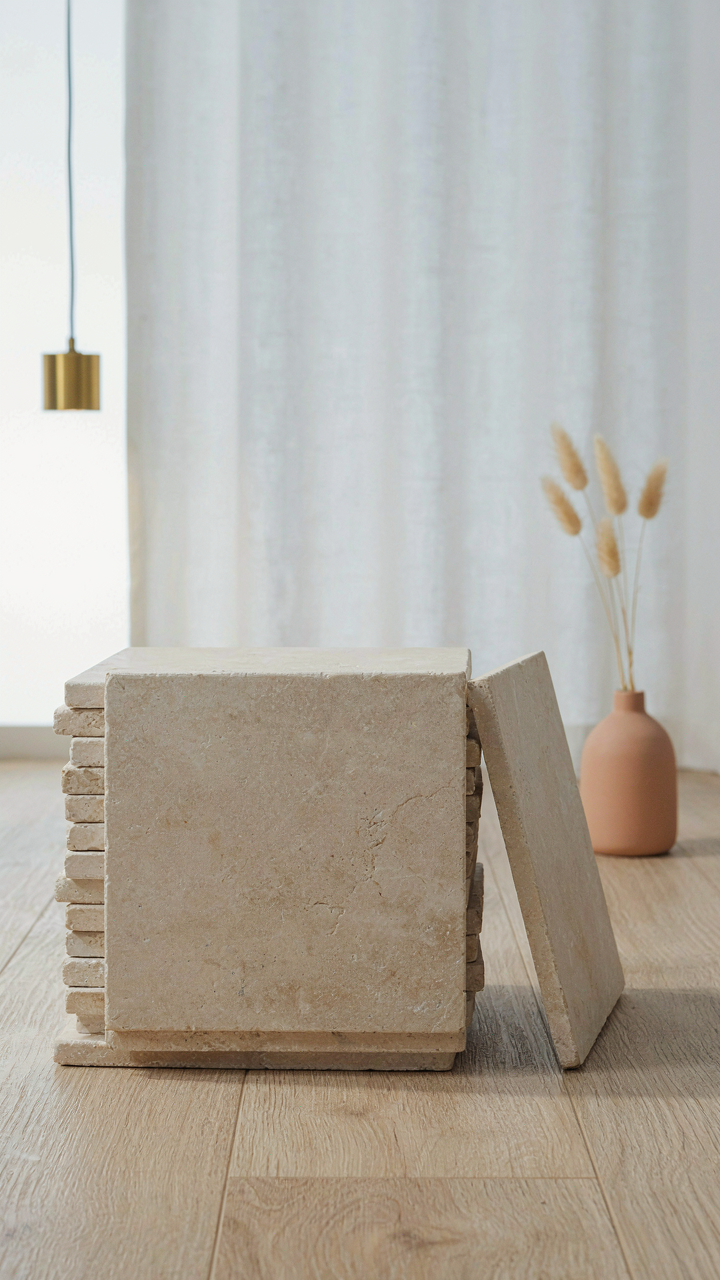
You want a farmhouse shower that looks like it was built in 1890 but won’t crumble in five years. That’s the real tension, and most designers sidestep it entirely by talking about “character” and “charm.” Here’s the mechanism: tile durability depends on porosity, which is a material science variable, not an opinion. Porcelain holds water at 0.5 percent absorption. Natural stone like limestone absorbs 3 to 20 percent depending on the cut. Higher absorption means water infiltrates the substrate, freezes in winter, expands, and fractures from the inside out. Farmhouse aesthetics often favor rustic stone or handmade-look ceramic, but those categories sit where the risk lives.

The performance gap matters because you don’t retrofit a shower wall. Select glazed porcelain that mimics aged materials rather than actual aged materials. The farmhouse look survives through color, texture, and grout pattern. A matte-finish porcelain tile in cream or soft gray with a rustic surface treatment gives you the visual. The structural integrity stays intact because the material resists water penetration at the tile level. Your substrate stays dry. Your wall doesn’t fail. Install a mortar bed with slope toward the drain, not a flat mud base, and the system survives seasonal stress.
Grout As A System: Where Failure Actually Starts
Everyone talks about grout color. Nobody talks about grout as a load-bearing joint system with engineered failure points. Think of grout like a supply chain in logistics: one weak node breaks the entire distribution. A single crack in grout becomes a water conduit straight to the substrate. From there, moisture migrates behind tile, under the waterproofing membrane, and into the structure. In farmhouse showers with wide tile formats or natural stone, grout joints must handle micro-movement from substrate settling and thermal expansion. Standard sanded grout cracks under this stress. Epoxy grout doesn’t. But the industry defaults to sanded because it’s cheaper and easier to clean during installation.
The real protocol: specify epoxy grout for all shower applications, especially walk-ins where water pressure concentrates on vertical runs. Use a waterproofing membrane behind all tile, not just at the pan. Tape all seams in the membrane with compatible tape. Seal grout after full cure with a penetrating sealer designed for that grout type. This isn’t optional complexity. This is the difference between a shower that performs and one that becomes expensive to repair. Most contractors skip these steps because they add time and material cost. You skip them at the cost of structural failure.
Farmhouse Walk In Shower: Glass Enclosures For Strategic Openness

The Illusion Of Space: Functional Transparency
You want glass because you think it looks expensive and makes your bathroom feel bigger. That’s the real reason. Here’s what actually happens: glass functions as a visual anchor. In perceptual psychology, the eye tracks boundaries. Solid shower walls create hard stops that shrink perceived volume. Transparent enclosures dissolve those stops. Your brain processes the shower as continuous with the surrounding bathroom, extending the spatial math without adding square footage. The mechanism is elimination of visual compartmentalization.
Frameless glass performs this work better than framed alternatives because frame lines recreate the boundary problem you’re trying to avoid. Farmhouse bathrooms pair this transparency with natural materials like wood beams or stone to anchor the visual field. The contradiction matters: glass opens space while wood grounds it. This prevents the enclosure from feeling sterile or hotel-like. You install clear or lightly frosted glass, never opaque panels, to preserve the spatial expansion that justifies the expense.
Clear Glass Demands Relentless Maintenance
Everyone skips over what glass actually costs to own. Water spots, mineral deposits, and soap scum accumulate faster on glass than any other shower surface because you can see every molecule. Hard water regions make this worse within months. The maintenance burden isn’t cosmetic vanity, it’s an operational reality that determines whether your design choice becomes a liability or stays functional.
Frameless glass typically uses either tempered glass with a standard seal or tempered glass with a hydrophobic coating applied at installation. Coated glass repels water and mineral deposits, extending the interval between cleanings from weekly to roughly three weeks depending on water hardness. The coating degrades over three to five years. Uncoated glass requires weekly cleaning to prevent permanent etching from mineral buildup. Know your water hardness before selecting glass type, then budget coating reapplication into your maintenance schedule like you would HVAC service.
Rustic Walk In Shower Designs: The Wood Accents Protocol
Which Woods Survive Water
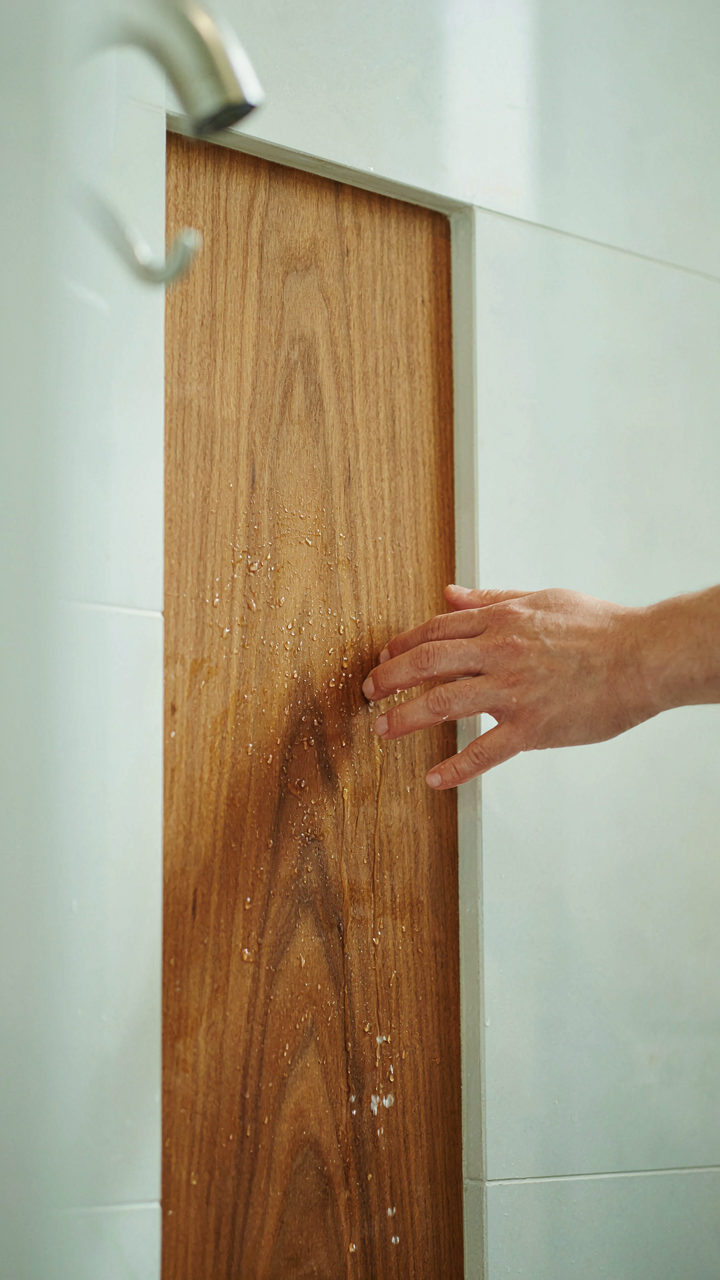
You want the visual payoff of exposed wood without watching it rot in five years. The mechanism here borrows from material science: wood selection is about capillary action and cellular density. High-density woods resist water penetration better because they have fewer air pockets for moisture to travel through. Common farmhouse designs use low-density softwoods like pine for aesthetics, then wonder why they fail.
- Teak: Naturally oily composition repels water. Used in boat interiors for centuries. Expensive but requires minimal maintenance in wet zones.
- Cedar: Lower density than teak but contains natural oils that slow rot. Must be sealed regularly. Common choice for farmhouse budgets.
- Engineered bamboo: Higher density than most hardwoods. Takes stain well. More stable in humidity swings than solid wood species.
- Reclaimed barn wood: Density varies wildly. Use only for non-structural accents above water splash zone. Aesthetic appeal, functional liability if overused.
- Pressure-treated lumber: Chemically resistant to rot and insects. Farmhouse designs often hide this beneath stain, but it works in shower frames.

Paint the picture of quality wood in a wet environment clearly: sealed and positioned correctly, it lasts decades. Unsealed pine in a shower stall becomes soft and discolored within 18 months. Material selection determines whether you’re making a fixture or a timer on failure.
The Sealing And Framing Reality
Sealing wood only works if you address the actual water path: the joints, not the face. Most farmhouse designs apply finish to visible surfaces while leaving fastener holes, end grain, and frame connections exposed. Water moves laterally and vertically through wood grain with no resistance at those points. The structural failure starts where water enters the wood frame behind tile, not where you can see it.
Install wood accents only as non-load-bearing trim above the shower pan or in fully tiled recessed niches. Run a continuous waterproofing membrane behind any wood that sits near grout lines. Fasten with stainless steel hardware to prevent rust bleeding through finish. The protocol: water barrier first, frame second, finish third. Skip one step and you’re betting against physics.
The Farmhouse Bathroom: Beyond The Shower, A Coherent System
Materials That Work Together, Not Against Each Other
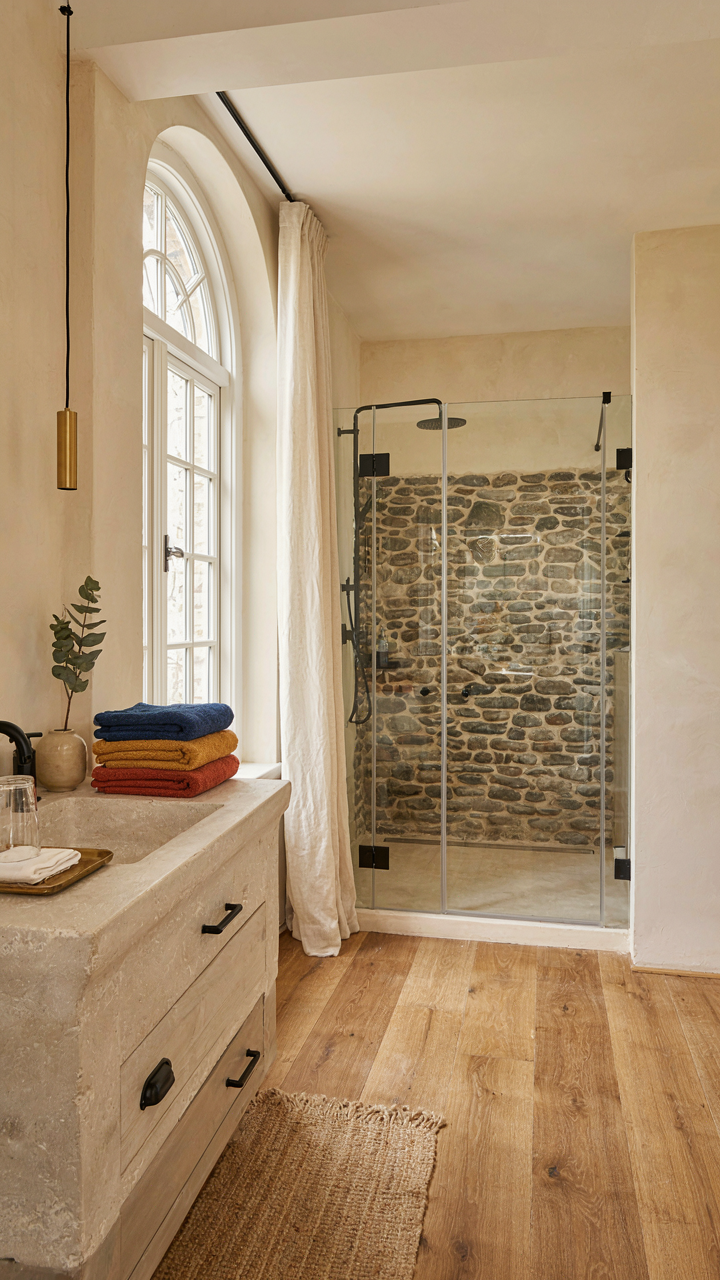
You want the shower to look intentional, not like you assembled random rustic pieces and hoped they’d photograph well. The mechanism is material compatibility: farmhouse design works because its core materials—reclaimed wood, natural stone, wrought iron, and ceramic tile—age at similar rates and tell a consistent story. Wood grays predictably. Stone develops patina. Iron rusts in patterns. Tile holds its surface. They don’t fight each other visually or functionally when the entire bathroom uses the same material language that the shower establishes.

The vanity should mirror the shower’s material hierarchy. If your shower features a natural stone surround with wood accents and iron fixtures, your vanity needs the same priority order: stone or wood as the base, iron hardware, minimal ceramic elements. This isn’t decoration. This is visual consistency that makes a small bathroom feel planned instead of cluttered. When materials conflict—glossy marble against matte wood, shiny chrome against blackened iron—the eye catches the discord and the space feels cheap, even if everything cost money.
The Fixture Density Problem
Most bathroom layouts fail because they treat fixtures as independent elements instead of a system with throughput constraints. Think of it like circuit capacity: water volume, drainage speed, and usable counter space all compete for the same physical footprint. A farmhouse shower often demands larger tile, which shrinks the wall space available for the vanity without careful planning. The toilet placement changes fixture distances and creates dead zones. Storage either competes with movement or gets ignored entirely.
The real move is mapping your actual bathroom workflow before choosing fixtures. Where does water travel? How many people use this simultaneously? What do they need at the vanity? A pedestal sink looks farmhouse-authentic but offers zero counter space. A console sink splits the difference. A traditional vanity with drawers solves storage but demands more wall real estate. Measure the distance from shower to toilet. If it’s under 18 inches, poor airflow and humidity will damage wood accents faster. Position exhaust ventilation directly above or near the shower, not centered on the ceiling where it’s decorative theater.
Rustic Shower Ideas: Debunking “Charming Flaws” For Real Character

Patina Versus Damage: What Actually Signals Age
You want people to know your shower cost money and took thought, not that you inherited neglect. Here’s the distinction: patina is the controlled oxidation or weathering of materials over time, while damage is material failure. In materials science, we’d call this the difference between uniform surface change and structural degradation. Real patina on wood shows consistent color shift across grain patterns. Real patina on metal develops an even coating that protects the base layer. Damage shows loss of material integrity, soft spots, active corrosion, or inconsistent deterioration that spreads.
Reclaimed wood in a farmhouse shower shouldn’t flake or crumble when you run your hand across it. Aged tile shouldn’t have active cracks that spread monthly. If you’re sourcing authentic reclaimed materials, inspect them for functionality first. A beam that looks 150 years old but still holds structural load is patina. A beam that looks 150 years old and harbors rot is a liability wearing a costume. Check for solid material density, stable finishes, and sealed edges before installation.
Craftsmanship Details That People Actually Notice
Most farmhouse advice focuses on what you see at scale and misses what your eye registers without conscious awareness. Handmade tile has irregular edges and slight thickness variation. Machine-cut tile has uniform bevels and perfect symmetry. In a farmhouse shower, visible grout lines between handmade tiles run uneven because the tiles themselves aren’t uniform. This isn’t a flaw to hide. It’s the evidence of production method.
The real signal of quality appears in joints and transitions. Wood trim that meets tile at corners either wraps properly or leaves gaps. Shower niches either have supportive framing behind the tile or feel hollow when touched. Hardware mounts into solid backing, not drywall. These details demand planning during framing, not aesthetic decisions during finish selection. When you run your fingers across a properly installed farmhouse shower, you feel continuity, not surprises. That continuity is what makes people register quality before they can name why.
Farmhouse Shower Ideas: The Investment Vs. Expense Framework

Materials That Hold Their Value
You’re really asking whether you’ll regret this decision in five years. The mechanism here borrowed from economics: a farmhouse shower follows the depreciation curve of capital goods. Tile, wood, and glass don’t age the way drywall and vinyl do. Ceramic tile resists water damage and staining better than acrylic enclosures. Real wood trim, when sealed properly, develops character instead of deteriorating. These materials cost more upfront because they degrade slower.

The common advice says budget more money. That’s incomplete. You need to measure cost per year of functional life, not just the invoice. A budget subway tile shower might cost four thousand dollars and need cosmetic work within eight years. A quality farmhouse build with durable tile and wood accents might cost eight thousand but remains functionally and aesthetically sound for fifteen to twenty years. That’s the real math nobody states plainly.
Market Advantage Through Durability
Resale value favors homes where nothing needs replacing immediately. A farmhouse shower signals to buyers that systems were built to last, not just to look good on listing photos. Tile and wood are what appraisers recognize as quality finishes because they’re expensive to swap out and they hold up under inspection. Buyers factor in the cost of renovation. If your shower doesn’t require work, you capture that value directly.
The mechanism is simple: buyers subtract expected repairs from their offer price. Install materials that don’t need replacing and you eliminate that deduction. Real wood beams, sealed properly, and quality tile installation cost more now but reduce the discount buyers apply. When you eventually sell, that premium survives the negotiation.
Your Fear Of Inadequacy Drives Decorative Impulse. Design For Permanence, Or Settle For Predictable Obsolescence

Most people stack farmhouse shower elements like they’re collecting proof of good taste. Tile, glass, wood, more tile. You’re filling a void, not building a space. Stop. Choose one material you genuinely love and let it breathe. Tomorrow, photograph your shower and ask yourself if you’d still want it in five years. If the answer hesitates, you’ve already lost. Design what lasts, not what impresses.