
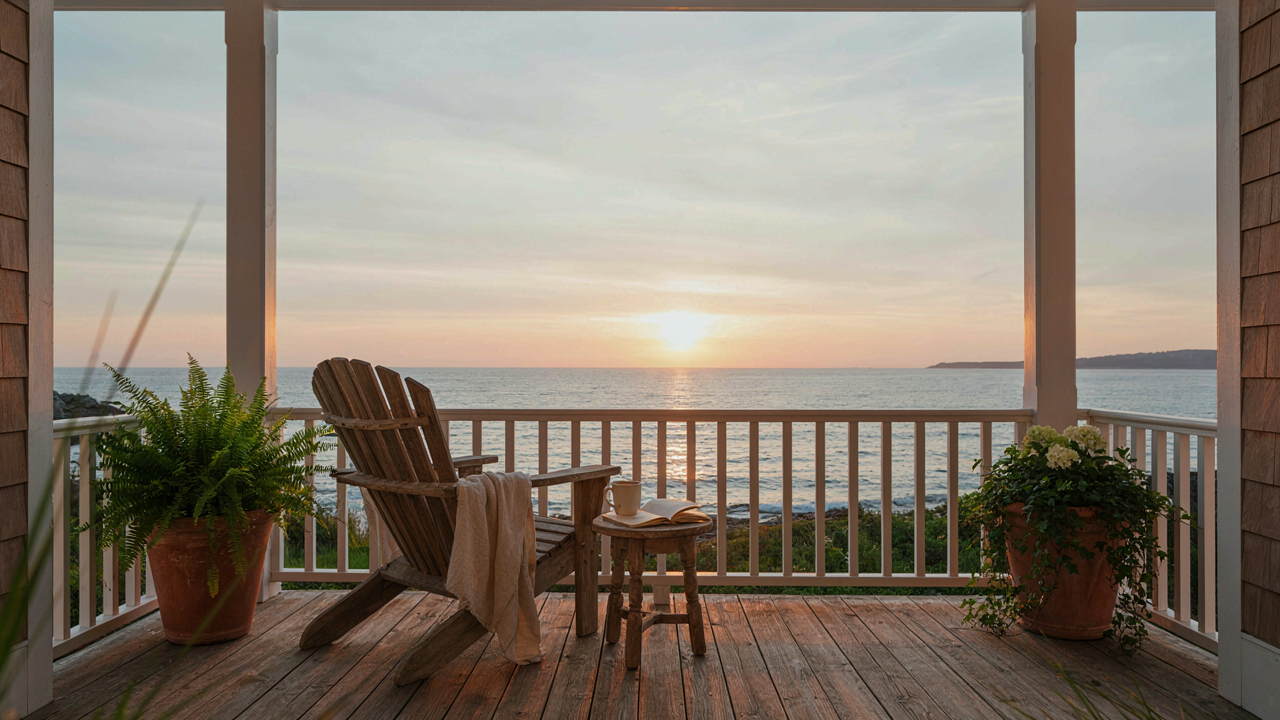
The Corrosive Truth: Why Your Current Coastal Porch Is Failing
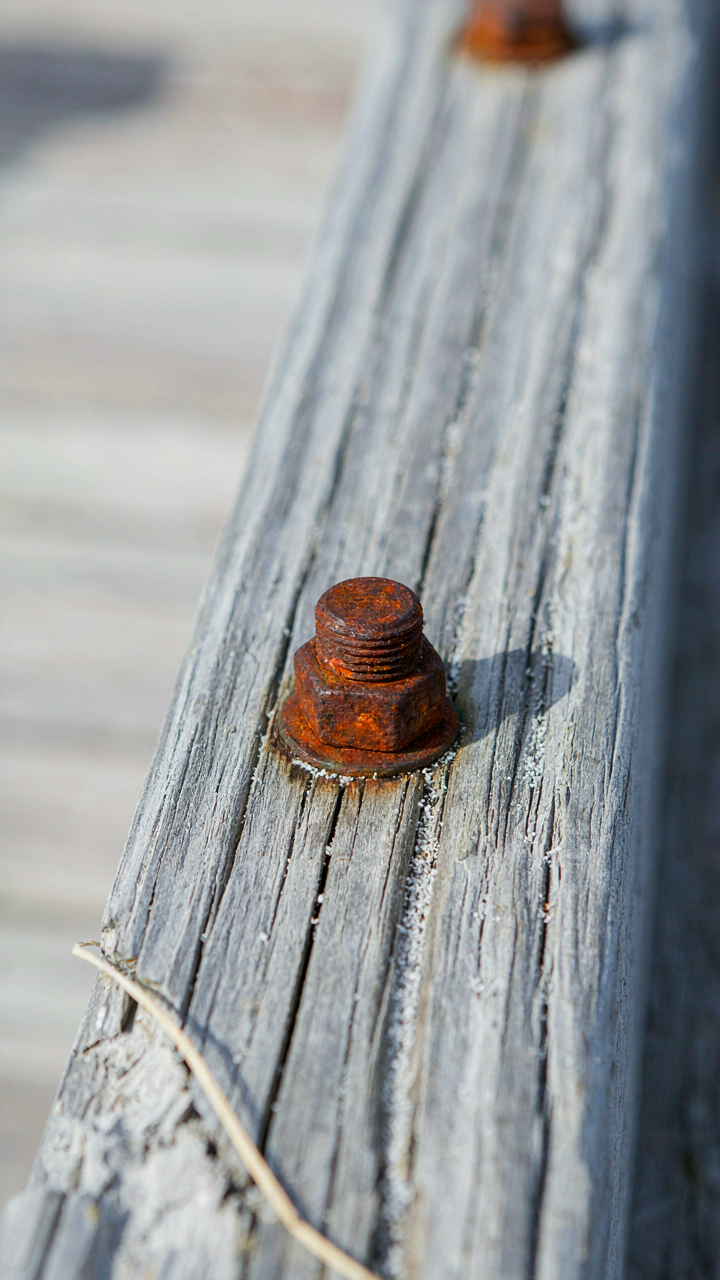
Salt Air Attacks Materials At The Molecular Level
You’re worried your porch will look worn in five years instead of ten. Here’s what actually happens: salt air doesn’t just sit on surfaces. It corrodes them. Chemistry runs this show, not aesthetics. Salt particles in coastal air carry sodium chloride that dissolves into a conductive electrolyte when moisture lands on metal or porous materials. This triggers electrochemical reactions that break molecular bonds. Steel oxidizes faster. Concrete weakens from subsurface salt penetration. Wood grain separates as salt crystallizes inside the fiber structure.
The corrosion doesn’t announce itself upfront. It works subsurface first, which means visible damage arrives late. By the time rust bleeds through paint or wood splits visibly, structural compromise has already progressed months or years into the material. Most coastal homeowners treat this as a maintenance problem when it’s actually a material selection problem. You need to understand what salt air does to each material class before you build the porch, not after.
Wood And Metal Fail In Predictable Sequences
Everyone knows salt air is hard on wood and metal. They’re wrong about why and how fast. Standard pressure-treated lumber contains copper-based preservatives that corrode differently than untreated wood when exposed to salt spray. The preservative creates its own electrochemical cell with the wood fibers, accelerating deterioration rather than slowing it. Galvanized steel has a similar flaw: the zinc coating protects the base steel for a few years, then fails suddenly instead of gradually, leaving exposed iron to rust aggressively.
The real vulnerability isn’t the material itself but the interface where different materials meet. A steel bolt through wood creates a galvanic couple. Moisture collects in the joint. Corrosion accelerates at exponential rates compared to either material alone. This is why cottage porches fail at fasteners, connection points, and rail bases first. You prevent this by using stainless steel hardware exclusively and designing drainage that prevents water pooling at material joints. One material choice at the connection point determines whether your porch lasts eight years or eighteen.
Beyond “Coastal Style”: The Indestructible Material Protocol
What “Marine Grade” Actually Means
You want to buy something labeled marine-grade because it sounds protective, like you’re making the smart choice. The real mechanism is this: marine-grade isn’t a legal standard. It’s a marketing term that manufacturers use to signal corrosion resistance, but the actual metallurgical rigor varies wildly. What matters is the material’s galvanic compatibility with salt air. Stainless steel grades 316 and 316L contain molybdenum, which resists chloride attack. Grade 304 does not. This distinction separates a porch that lasts fifteen years from one that rusts within five.

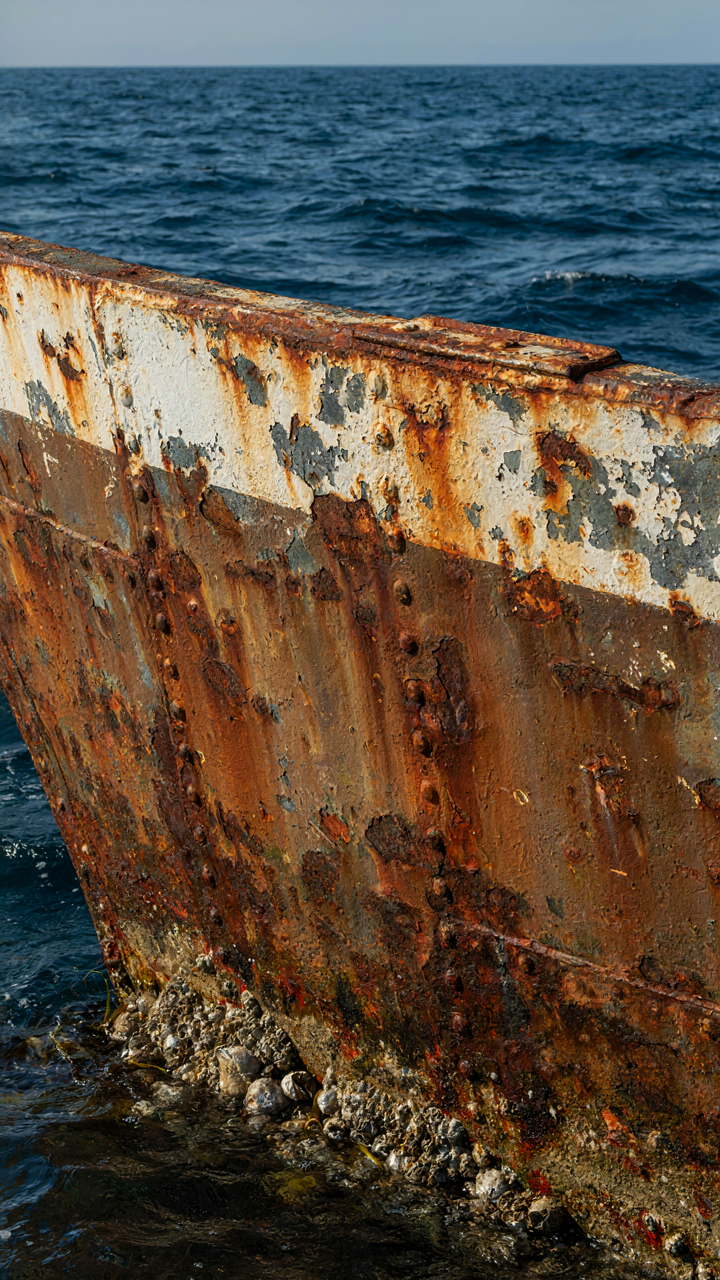
Salt air accelerates oxidation through electrochemical corrosion, the same mechanism that degrades ship hulls. Your porch sits in a low-grade version of that environment. The fasteners, hinges, and metal railings corrode fastest because they’re the weakest link in the galvanic chain. Spec 316 stainless for any exposed hardware. Paint coatings fail on schedule regardless of quality, but bare metal either resists or surrenders based on composition alone. Check the mill certificate if you’re ordering railings or fixtures. Don’t accept “marine-grade” without knowing the stainless steel grade.
Fiberglass And Composite Decking Over Wood
The common advice says composite decking is “low maintenance.” That’s incomplete. Composite doesn’t rot, but it still absorbs moisture, expands and contracts seasonally, and degrades under UV exposure faster than marketed. Fiberglass-reinforced polymer (FRP) decking performs better because the resin matrix resists moisture penetration more effectively than wood-plastic composites. Porches in coastal zones experience temperature swings and salt-laden humidity that stress material joints constantly.
Real durability on a coastal cottage porch comes from how the deck sheds water, not from material marketing claims. Install composite or FRP with proper slope toward drainage. Ensure adequate ventilation underneath. Use stainless steel fasteners spaced to accommodate expansion. Seal all cut edges immediately after installation. The protocol is mechanical, not magical. When salt spray hits compromised edges or puddled water, decay accelerates regardless of the composite grade you selected.
The “Sacrificial Layer” Strategy For Coastal Porch Longevity

Nature Designs For Replacement, Not Permanence
You want to believe your porch will last forever if you just pick the right materials. It won’t. Salt air corrodes everything at predictable rates, and the real move is designing so the cheap parts fail first, not the structure. Biology calls this “shedding.” Trees drop bark. Crustaceans molt. Your porch should operate the same way. The mechanism: you create layers of protection where the outermost layer takes the salt damage while the structural bones stay protected underneath. This isn’t about fighting nature. It’s about surrendering to it strategically.

The outer layer absorbs salt spray, UV, and moisture. You replace it on a schedule. The middle layers—railings, trim, balusters—go next. The structural frame comes last. Galvanized steel hardware corrodes faster than pressure-treated framing. That’s not a flaw. That’s the system working. Paint on cedar railings peels before the cedar rots. Good. You sand and repaint the railing. The post stays sound for another decade. This is why expensive, “permanent” materials like stainless steel railings on cheaper framing fails—you’ve inverted the hierarchy and now your structure dies protecting your hardware.
Built To Swap, Not To Endure
Every component should be accessible and replaceable without scaffolding, cutting into the house, or removing the entire porch. The common advice says to use the best materials everywhere. That’s how you end up tearing out a good beam to replace one corroded bolt. Better approach: standardize connections so parts come out and go back in within an hour. Your balusters slot into a top and bottom rail with simple fasteners. Your railings bolt to posts rather than lag screw into them. Your deck boards sit on carriages rather than being screwed through to the frame.
Design the replacement timeline into the original build. Cedar boards on a coastal porch last 7-10 years before significant weathering. Galvanized bolts last 15-20. Pressure-treated posts last 20-30 in salt air if properly detailed at the base. If you know this upfront, you price the replacement into maintenance and you never get surprised. The protocol: when building, document every fastener size, board dimension, and connection detail so someone rebuilds the same way in five years. Photograph the assembly before weather takes the image. Store a spare set of balusters in your garage. Make replacement frictionless, and you’ll actually do it.
The Unseen War: Airflow Dynamics And Your Cottage Porch
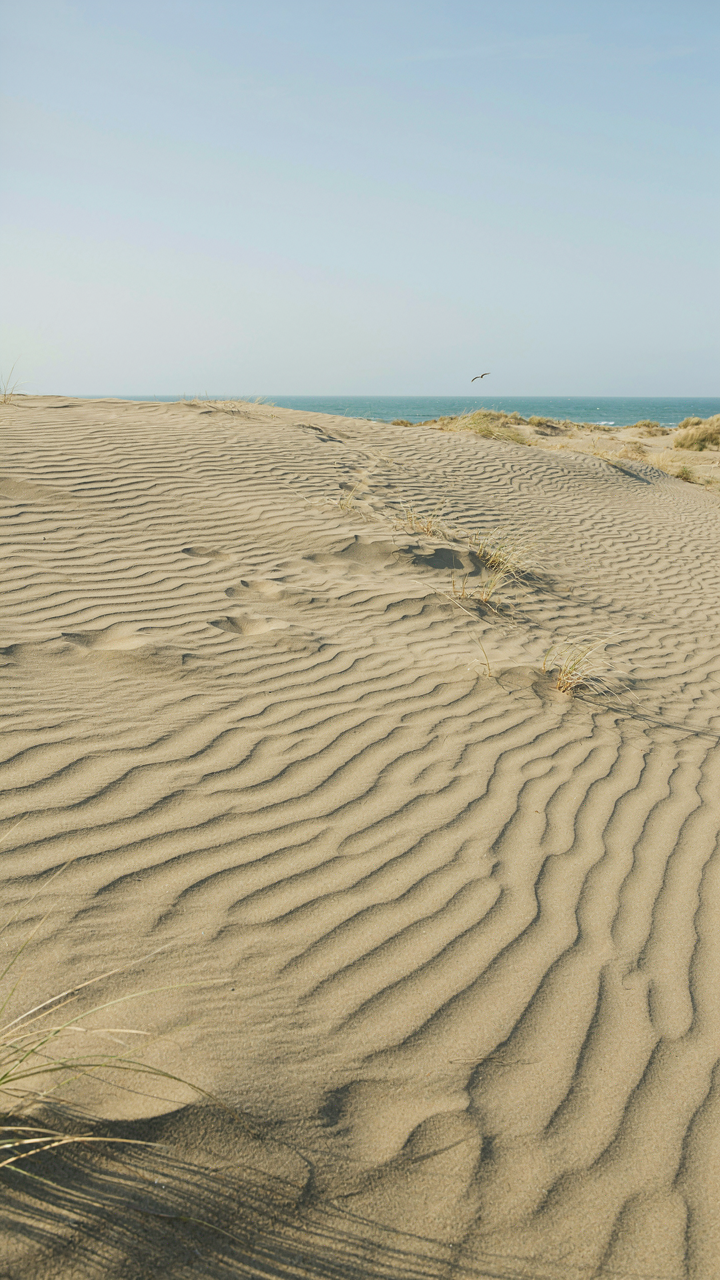
How Salt Air Actually Moves Through Space
You care about this because you don’t want your porch to rot in five years while you’re telling guests it’s “seasoned.” Here’s what matters: airflow is a physics problem, not decoration. Wind doesn’t move randomly around your cottage. It follows pressure gradients. On coastal sites, salt-laden air moves from ocean to land during the day, reverses at night. Your porch either channels this flow or traps it. Most people ignore this entirely and wonder why their railings corrode faster on one side.

Salt air moves through your porch the same way water moves through a pipe: it takes the path of least resistance. If your porch lacks strategic openings, air stagnates. Stagnant air holds salt particles, moisture, and corrosive compounds against wood and metal longer. You need cross-ventilation that forces air to move through, not around, your porch structure. The goal isn’t airflow for comfort. It’s airflow for preservation. Position your openings to catch prevailing winds and funnel them through the space. This is basic fluid dynamics applied to a cottage.
Strategic Gaps That Actually Work
Your porch needs intentional gaps, not accidental cracks. Most coastal cottage designs fail here because builders treat porches as enclosed spaces, when they should treat them as transition zones between protected and exposed air. Install slatted screens or lattice panels on the windward side. These create micro-channels that break up salt-laden gusts instead of letting them slam directly onto surfaces. On the leeward side, open your structure wider. Air enters one side, moves across your porch, and exits the other. This single pattern cuts moisture retention by forcing constant exchange.
The classic mistake: solid walls everywhere. This traps dead air pockets where salt crystallizes and accelerates decay. Replace any solid panels facing the ocean with breathable barriers. Horizontal slats work better than vertical ones because they interrupt horizontal wind patterns more effectively. Space them two to three inches apart minimum. Beneath your porch, ensure water and air drain freely. Blocked undersides create ideal conditions for salt accumulation and wood rot. The mechanism is simple: moving air doesn’t corrode wood. Stationary air with salt residue does.
The Minimalist Coastal Porch: Less Maintenance, More Living
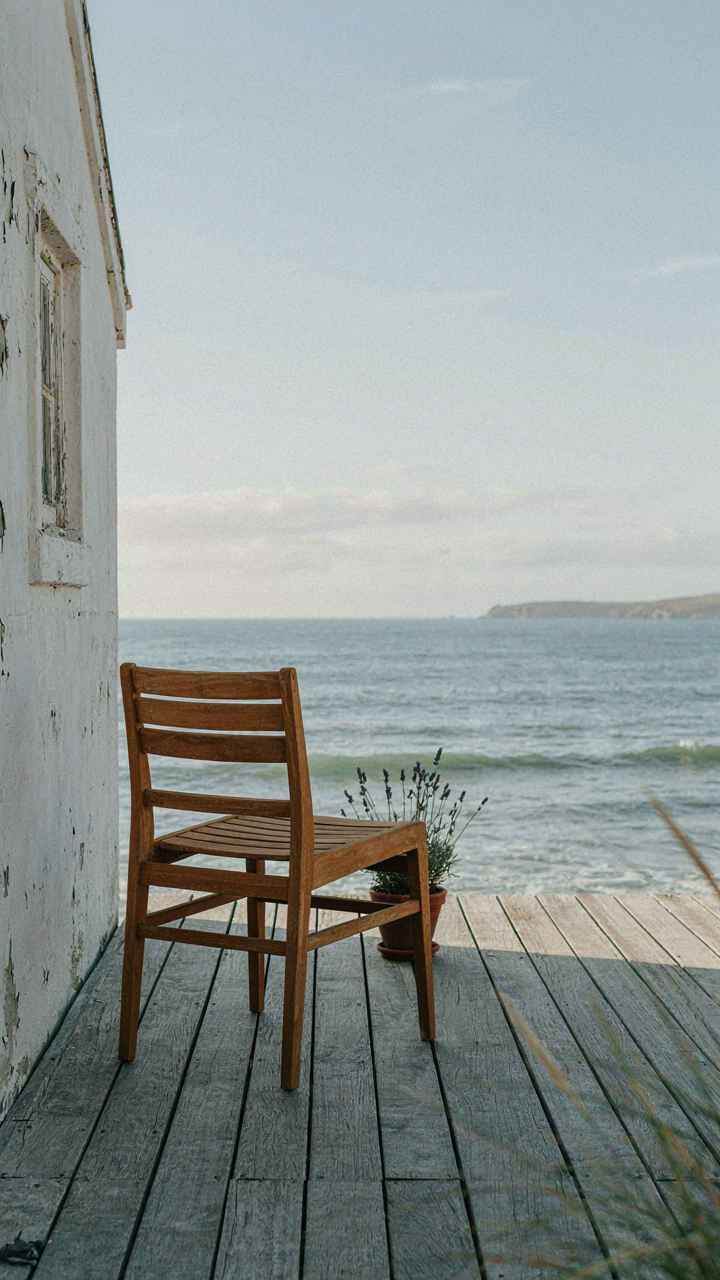
Remove What Doesn’t Earn Its Space
You want a porch that feels curated, not cluttered, because clutter signals you don’t have your life together. The real mechanism is this: every object on a coastal porch becomes a salt magnet and maintenance liability. Salt corrodes, oxidizes, and degrades. Each item you keep demands cleaning cycles. Remove anything decorative that doesn’t perform a function or withstand corrosion without intervention.

Start by auditing what’s actually there. Most coastal porches inherit pieces from indoors that have no business facing salt air. Wicker, untreated wood, fabric cushions, metal accents without protective coating. These deteriorate faster than you can replace them. Keep only what you’d replace without hesitation when it fails. This isn’t minimalism for aesthetic points. It’s the operational reality of salt environments.
Furniture That Works Against The Elements
Maritime engineering teaches us about load distribution and material endurance. Apply this logic to your porch: choose materials with high salt tolerance and low maintenance demand. Teak, powder-coated aluminum, marine-grade stainless steel, and sealed concrete handle salt air without requiring constant intervention. Furniture that fights the environment costs you time and money monthly.
The common advice says wicker and rattan work in coastal spaces if sealed properly. That’s incomplete. Sealing extends their life maybe two seasons before salt penetration resumes. Better move: aluminum frames with performance fabric or solid teak pieces sealed once at purchase. Pair them with side tables made from materials that oxidize predictably and visibly, like raw steel. You stop fighting the corrosion and start working with it as visual feedback that maintenance is needed.
Illumination That Lasts: Lighting For Salt Air Evenings
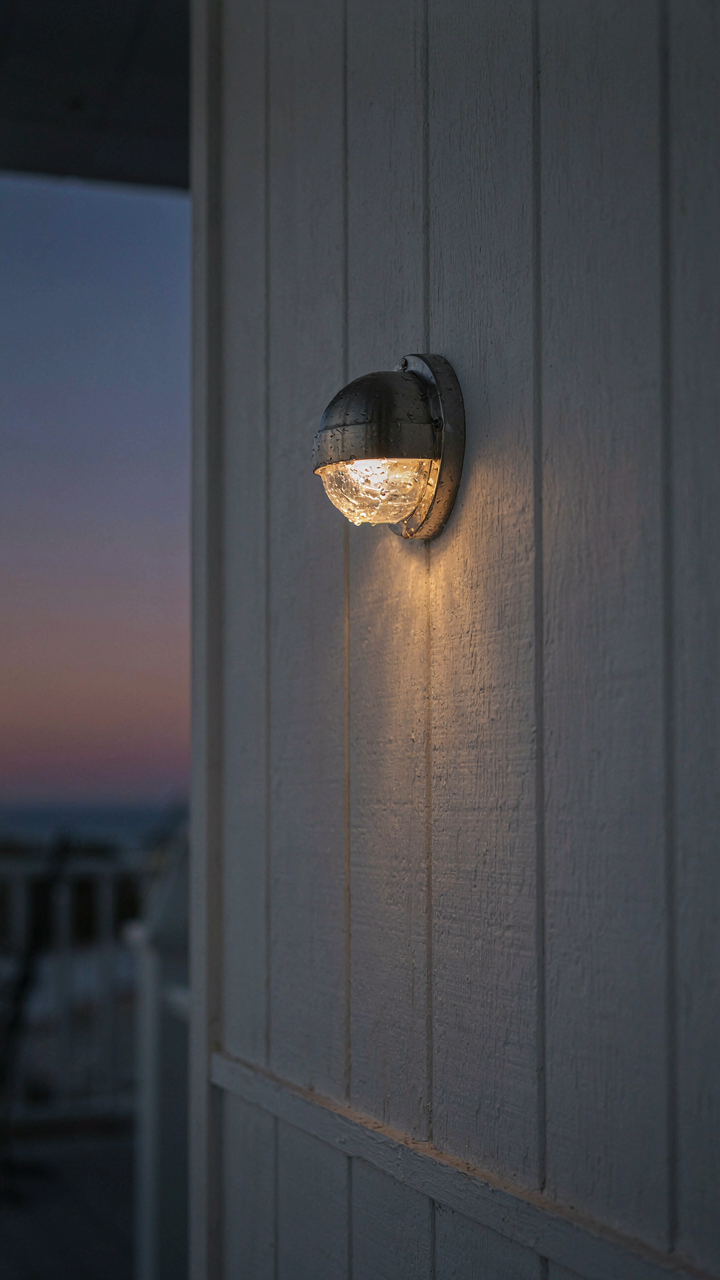
Why Sealed Fixtures Matter
You want your porch to look good at night without replacing fixtures every two years. That’s the real problem you’re solving. Salt air corrodes unsealed metal and degrades conventional fixtures at triple the rate of inland climates. Think of corrosion like a structural weak point in fortifications—once it breaches the surface, the damage spreads inward fast and irreversibly. A sealed fixture keeps salt spray from reaching the internal components where oxidation starts.

Sealed fixtures use gaskets, conformal coatings, and stainless steel hardware to create a moisture barrier. The difference isn’t cosmetic. A $40 sealed fixture lasts eight years. An unsealed fixture lasts two. Most porch lighting advice ignores this entirely because it’s written by people who don’t live near salt water. Buy fixtures rated for marine environments or coastal applications, not generic outdoor fixtures.
Low Voltage Systems Win Here
Everyone assumes brighter means better. They’re wrong. Low-voltage LED systems deliver superior performance in salt air because they eliminate the power surge stress that accelerates corrosion in standard 120V wiring. This applies the durability principle from electrical engineering: lower voltage means lower stress on connections and insulators.
LED low-voltage strips and landscape lights use 12V transformer systems that are easier to seal and maintain than line-voltage circuits. The fixture connections degrade slower because the electrical load is gentler. Install the transformer in a protected location—under an eave or inside a weather-sealed box—and run the cable through rigid conduit to your porch fixtures. This setup costs more upfront but eliminates the seasonal maintenance cycle you’ll face with traditional systems.
Designing For Retreat: Privacy Without Permanent Barriers

Living Screens That Actually Work
You want privacy without looking like you’re hiding from neighbors. That’s the real tension here. The mechanism is simple: plants don’t read as defensive the way walls do, but they only work if you choose species that tolerate salt spray and actually grow dense enough to block sight lines.

Salt air kills most ornamentals. Privet, photinia, and typical hedging material brown out within seasons. Beach plum, bayberry, and rugosa rose survive coastal conditions because they evolved with salt exposure. These species grow thick enough to stop sightlines by year three or four. Dense branching matters more than height.
Flexible Barriers You Control
This is where most porch design advice fails. People install permanent structures and resent them within a year. The real move borrows from theater production: you stage only what you need, when you need it.
- Roll-up outdoor curtains: Heavy solution-dyed fabric on corded pulleys lets you open the porch for morning light and close it for evening wind. Withstands salt spray better than typical canvas.
- Sliding barn doors: Mount lightweight panels on overhead track. Shift them to block wind or seal off sightlines without anchoring them permanently to posts or framing.
- Hinged panel screens: Teak or cedar frames with slatted infill rotate on porch edge hinges. Fold flat against the wall when you want full openness or full wind blocking.
- Freestanding lattice with vines: Weighted base, no anchoring required. Move them seasonally or when entertaining changes your privacy needs.
- Retractable pergola shade panels: Canvas panels slide on fixed overhead rails. Control both sun and sightline exposure independently based on time of day.
Deploy screens before guests arrive or when wind shifts direction. Remove them after the season ends or when you want unobstructed views back. The porch works harder when you treat barriers as tools you activate, not permanent fixtures you live inside.
Your Cottage Porch As A Strategic Outpost: The Defense Protocol
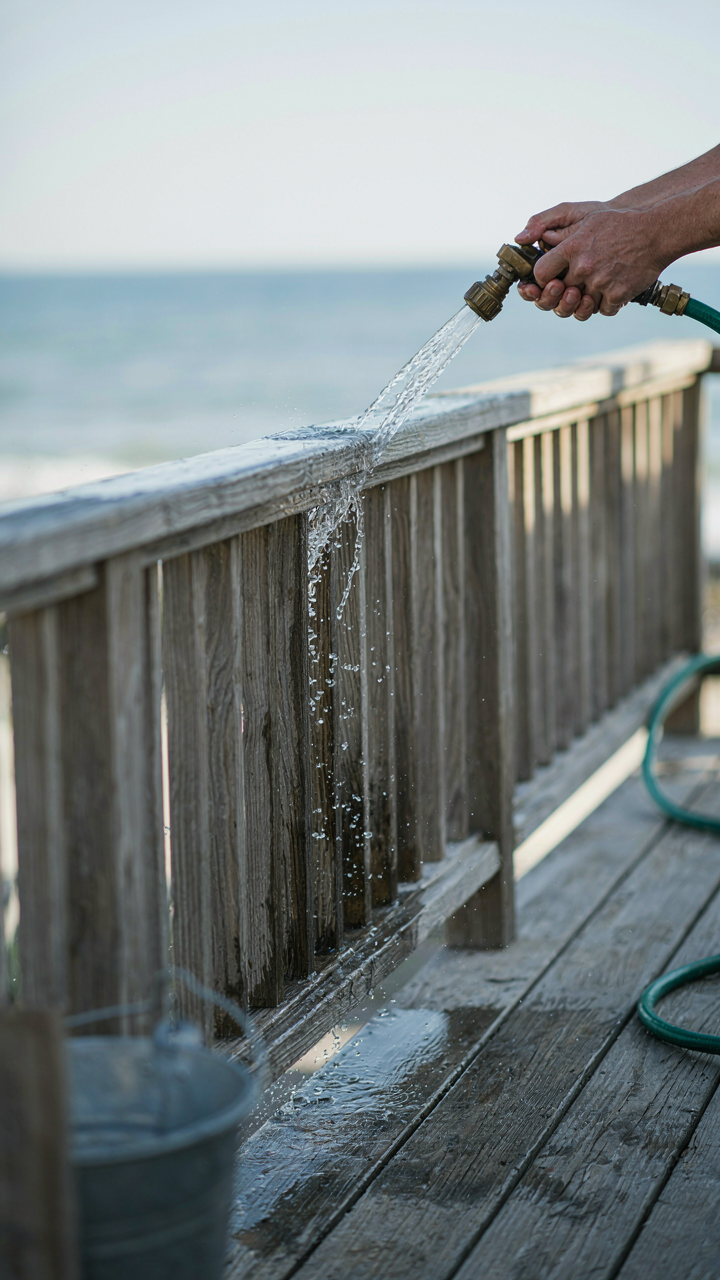
Cleaning Discipline Against Salt Damage
You care about this because you don’t want your porch to deteriorate into something that screams neglect. Salt air corrodes metal and degrades wood faster than inland climates, and most people catch it only after damage becomes irreversible. Adopt a military mindset here: prevention beats repair every time.

Salt crystals accumulate on surfaces whether you see them or not. They pull moisture into wood grain and accelerate oxidation on metal fasteners, railings, and fixtures. A biweekly rinse with fresh water removes salt buildup before it embeds itself. For wood surfaces, use a soft brush and mild detergent solution, then rinse thoroughly. For metal, a dedicated metal cleaner prevents rust from establishing. The mechanism is simple: remove the corrosive agent before it bonds to the substrate.
Salt damage doesn’t announce itself until structure fails. Schedule cleaning after heavy rain or coastal wind events when salt deposit peaks. Wire brush any emerging rust spots immediately. Repaint metal railings annually in coastal zones, not every three years like standard guidance suggests. Your porch sits in an accelerated decay environment, so maintenance cycles compress accordingly.
Seasonal Protection Through Strategic Shuttering
Winter doesn’t kill coastal porches; salt spray during freeze cycles does. Winterization here means physical barriers, not just covering furniture or applying sealant. The real defense is reducing exposure to salt-laden air during months when wind patterns intensify coastal spray.
Install removable panels or temporary screens on the porch perimeter facing prevailing winds. This isn’t decorative it’s structural insurance. Seal any gaps where wind-driven spray penetrates. Check caulking around columns, railings, and deck boards annually and re-caulk where gaps appear. For wood decking, apply a marine-grade sealant before autumn storms arrive. Wood left unsealed absorbs salt-infused moisture and swells unevenly, creating structural stress. The protocol is straightforward: identify your porch’s wind exposure direction, block it during high-risk months, maintain all seals, and reseal decking before seasonal pressure increases.
The Coastal Porch Audit: Identifying And Eliminating Weak Links
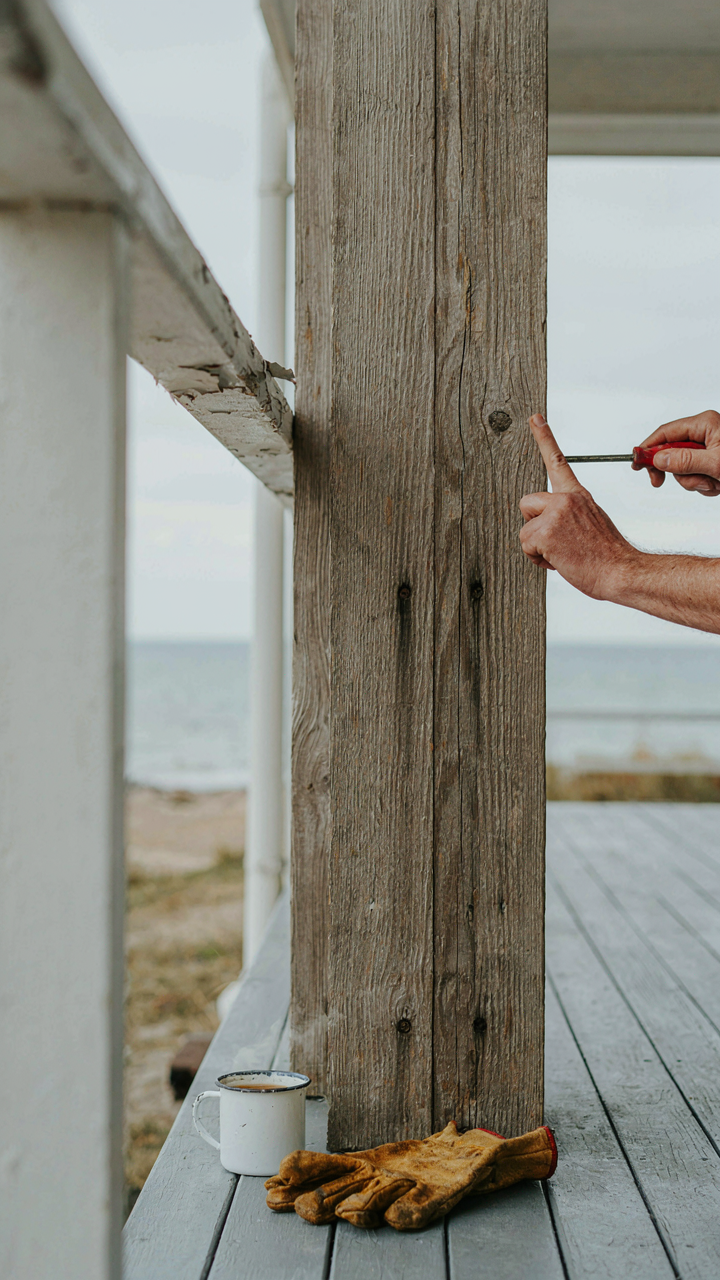
Spot Corrosion Before It Spreads
You want to believe your porch will last without constant attention. It won’t. The mechanism that destroys coastal porches isn’t dramatic—it’s electrolytic degradation. Salt air accelerates oxidation on metal. Wood absorbs moisture and swells unevenly. Concrete spalls when water freezes inside micro-cracks. You catch this early or you replace entire sections. Weekly visual inspection beats monthly repairs. Look at fasteners first. Rust bloom on screws and bolts signals deeper corrosion inside the wood.

Examine wood grain for soft spots. Press a flathead screwdriver into structural members at random points every thirty days. If it sinks past the surface, decay has started. Check railings where vertical posts meet horizontal caps—water pools there. Look under floorboards for mold and discoloration. Document findings with photos and dates. This builds a baseline. Patterns emerge. You see which areas fail first and which materials hold. That data drives your maintenance schedule forward.
Repair Windows Close Fast In Salt Zones
Coastal environments compress timelines. A small paint failure that would take two years to rot through in inland areas takes six months here. Think of salt corrosion like compound interest in reverse—decay accelerates at a faster rate the longer you wait. The first visible sign of failure isn’t your last warning. It’s your first. Once wood shows surface checking or paint blistering, subsurface damage has already progressed for weeks.
Set quarterly inspections as mandatory, not optional. Spring, early summer, fall, and winter. Each season brings different moisture and temperature stress. After storms or extended humidity periods, do unscheduled sweeps. Replace caulk and sealants before they crack completely. Refinish railings and trim every two to three years, not five. Reset or replace any fastener showing rust discoloration. The cost of prevention is a fraction of structural replacement. Stop waiting for problems to announce themselves.
The Real Obstacle Isn’t The Salt Air; It’s Your Expectation Of Permanence In A Transient World
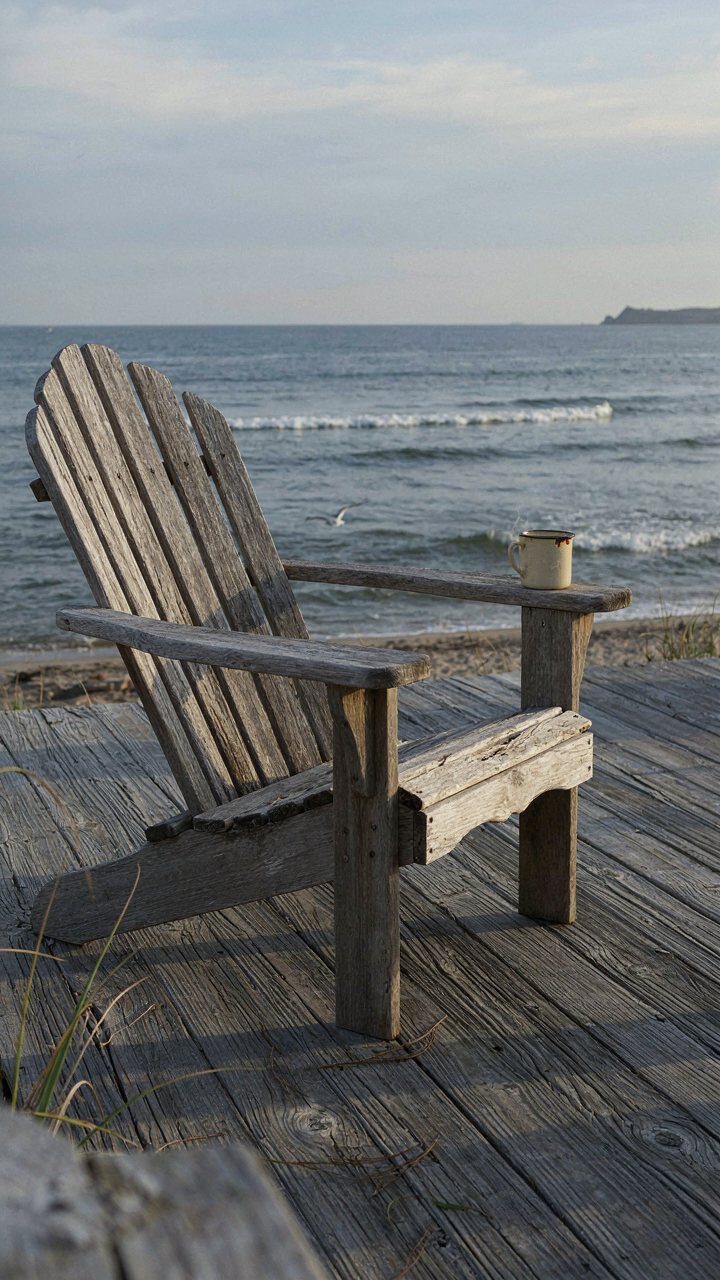
Your coastal cottage porch won’t last forever. The salt corrodes everything. The sun fades the best finishes. You can fight this or accept it. Acceptance means you stop buying expensive furniture meant to stay pristine and start choosing pieces that look better weathered. Pick one item today—a chair, a table, anything—and commit to letting it age visibly. The porch you build isn’t a monument. It’s a stage for the next ten years of your life. Let it crumble beautifully.