
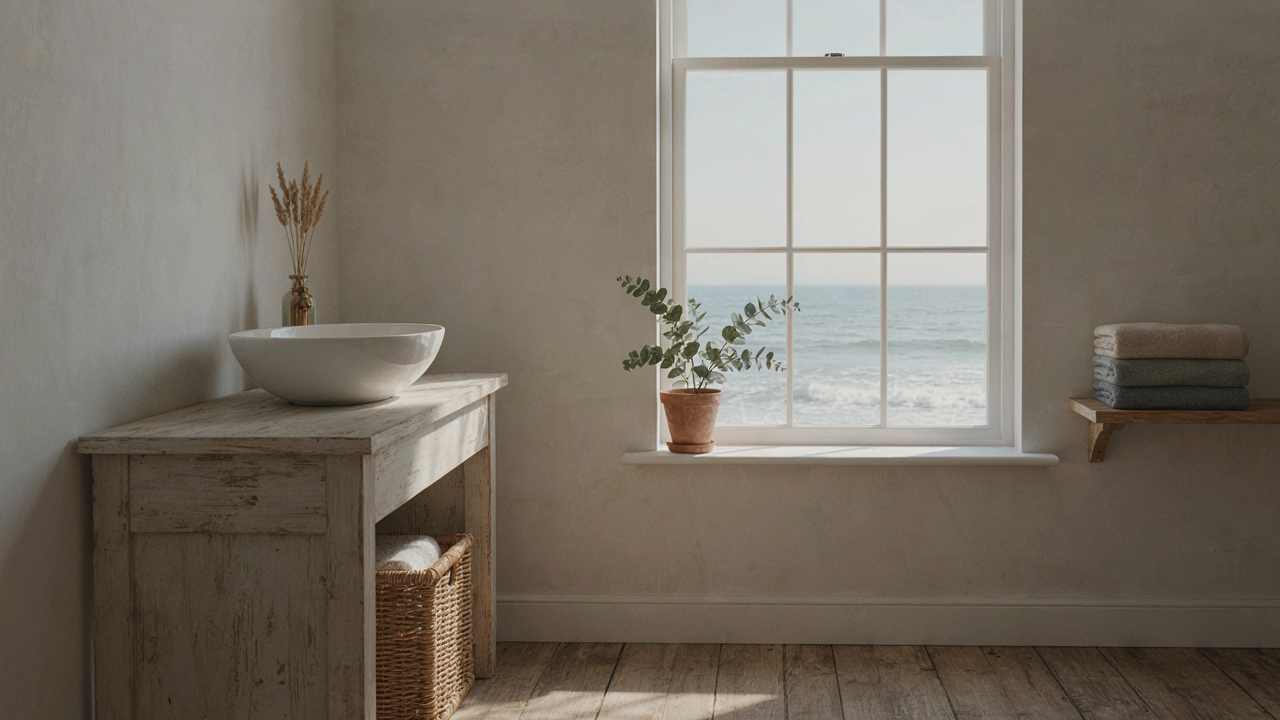
Beyond Beige: The Coastal Farmhouse Bathroom Deconstruction
Where Farmhouse And Coastal Actually Collide
You want this style because it signals taste without trying too hard. But farmhouse and coastal operate on opposing design logic, and most bathrooms split the difference instead of choosing. Farmhouse design emerged from rural necessity: heavy wood, enclosed spaces, materials that age visibly. Coastal design comes from beach economies: weathering as aesthetic choice, open sight lines, salt-faded surfaces. One builds weight. One dissolves it. They don’t synthesize cleanly.
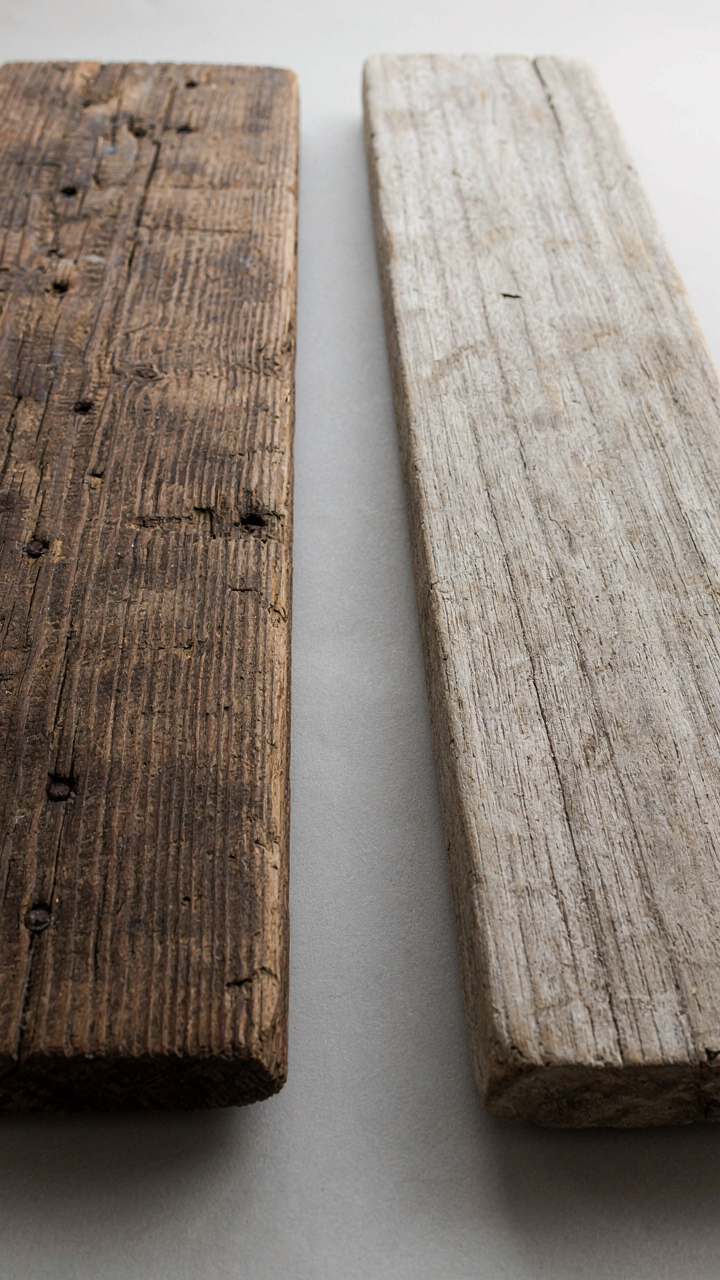
The tension shows up in material selection first. Farmhouse uses reclaimed wood for permanence and patina earned through labor. Coastal uses weathered wood as visual texture that mimics salt air exposure without the function. When you layer both into one bathroom, the wood becomes confused about its job. It’s either a structural element that grounds the space or a decorative surface playing a role. This split personality is why most coastal farmhouse bathrooms feel staged rather than coherent.
The Compromise That Kills Clarity
Everyone advises you to “blend” these styles, which is how you end up with a bathroom that belongs nowhere. Blending is the design equivalent of economic tariffs: you lose the competitive advantage of both sides. A true coastal bathroom leverages minimalism and reflection. A true farmhouse bathroom leans into texture and layering. When you soften farmhouse with coastal lightness, you get beige restraint. When you add farmhouse warmth to coastal simplicity, you get cluttered beach house.
The mechanism is dilution through fear of commitment. You keep options open instead of building a system. Your fixture choices become generic brass, your tile becomes warm gray, your wood becomes medium-stain oak. These are safety plays that execute nothing. The bathroom works only when you choose which logic dominates and let the other amplify specific elements. Decide if this space breathes or holds. Everything follows from that.
Weathered Wood: Not Just Aged, But Artfully Neglected
Find Real Weathered Wood, Not Fake Patina
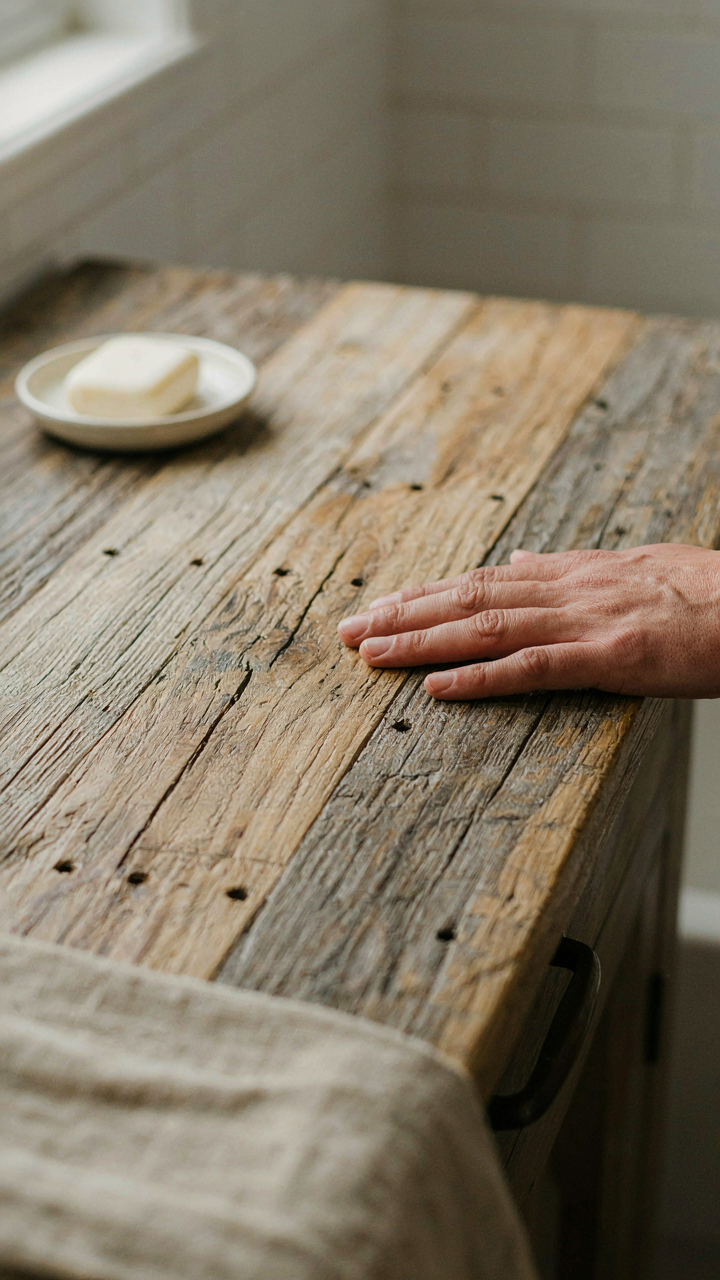
You want the authenticity without the work, and that’s exactly why you’ll end up with plastic-looking finishes that read as cheap. Real weathered wood in coastal farmhouse bathrooms follows a supply chain principle: scarcity commands premium, so faux finishes exist to fill the gap at lower cost. But they fail because the mechanisms of actual weathering are invisible to most eyes, and manufacturers only copy the surface.

Genuine weathered wood comes from reclaimed sources or slow-growth timber exposed to salt air and UV. Reclaimed barn wood, salvaged flooring, and architectural remnants from coastal structures show real patina: uneven color shifts, grain that’s been softened by time, and weathering that penetrates deeper than surface scratches. You find these through salvage yards, architectural salvage networks, and specialized lumber dealers who verify origin. Faux finishes use stains and mechanical distressing to mimic the look, but they lack dimensional depth and stop at the skin.
Strategic Placement Maximizes Visual Weight
The real mechanism here is visual hierarchy, borrowed directly from graphic design. In coastal farmhouse bathrooms, you don’t install weathered wood everywhere because saturation kills impact. Weathered wood works as an anchor in spaces where water exposure, light patterns, and sight lines converge. A weathered wood vanity, for example, becomes the focal point because people’s eyes land on it first when entering, and it handles moisture better than lighter woods. Weathered wood shelving above the toilet or along a single accent wall creates depth without overwhelming the room.
Placement follows a simple protocol: identify the zone people see immediately, then decide if weathered wood solves a functional problem there or just adds texture. Bathroom mirrors, lighting, and cabinetry steal attention faster than wall paneling. Run weathered wood where storage meets visibility, not where it competes with fixtures that already demand focus. This keeps the material doing work instead of decorating.
The “Tide & Timber” Protocol For Beachy Bathroom Authenticity
Reclaimed Wood As The Structural Truth
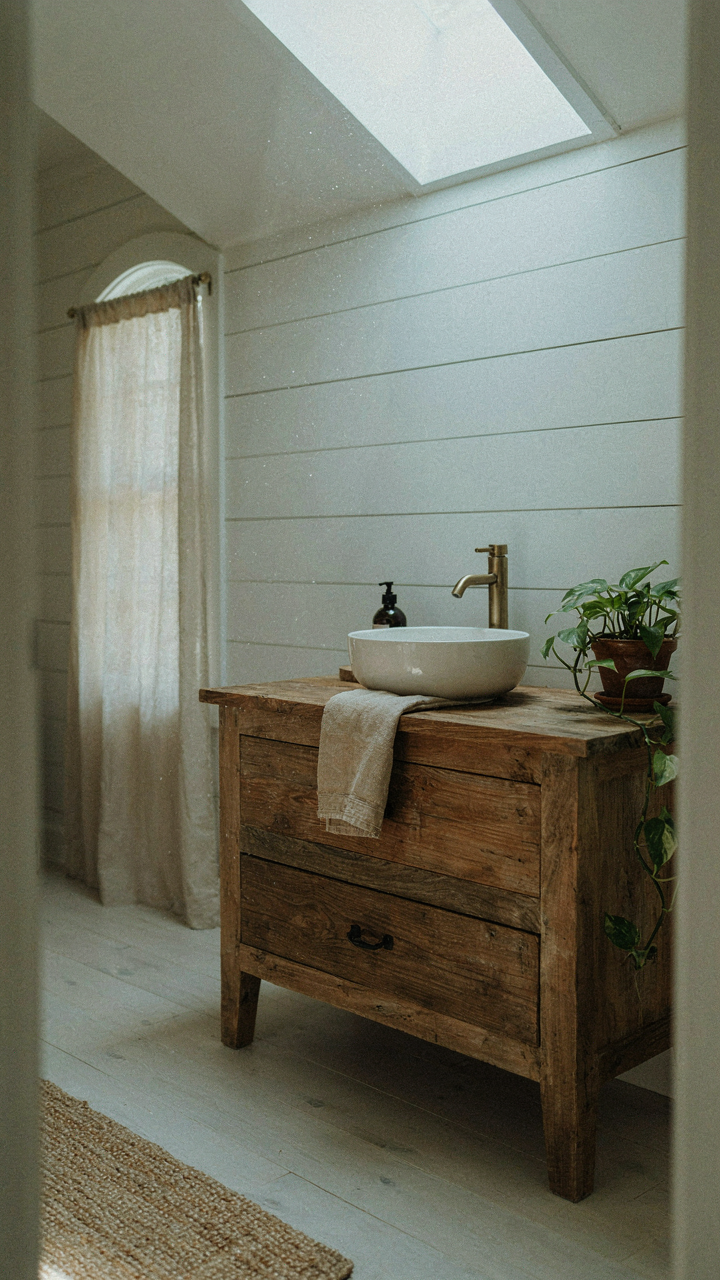
You want people to see your bathroom and think you have taste, not just money. The real mechanism is this: raw, unfinished materials signal authenticity because they refuse to hide their age. Reclaimed wood from barns or old coastal structures carries visible evidence of time—nail holes, weathering patterns, color variation—that no new material can fake convincingly.

The mistake most people make is treating reclaimed wood like decoration. It’s not. In architecture, reclaimed materials function as load-bearing anchors for the entire visual hierarchy. Use weathered wood for vanity frames, mirror surrounds, or floating shelves. The wood absorbs light differently than finished surfaces, creating depth without requiring extra fixtures. Authenticity compounds when the material shows real use, not manufactured distressing.
Natural Light As The Dominant Variable
Light transforms coastal farmhouse bathrooms from nice to inevitable. The physics term is luminance contrast, and in bathroom design, it determines how viewers perceive material texture and age. High natural light exposure makes weathered wood read as “storied,” while dim conditions make it read as “neglected.”
Position your vanity perpendicular to windows, not facing them directly. This angle lets diffused daylight hit the wood grain without creating harsh shadows that flatten the space. If your bathroom lacks adequate windows, frosted glass skylights or transom windows solve the problem without sacrificing privacy. The wood’s patina becomes visible only when light strikes it at angles—this is non-negotiable for coastal farmhouse credibility.
Coastal Bathroom Aesthetic: The Unseen Force Of Texture
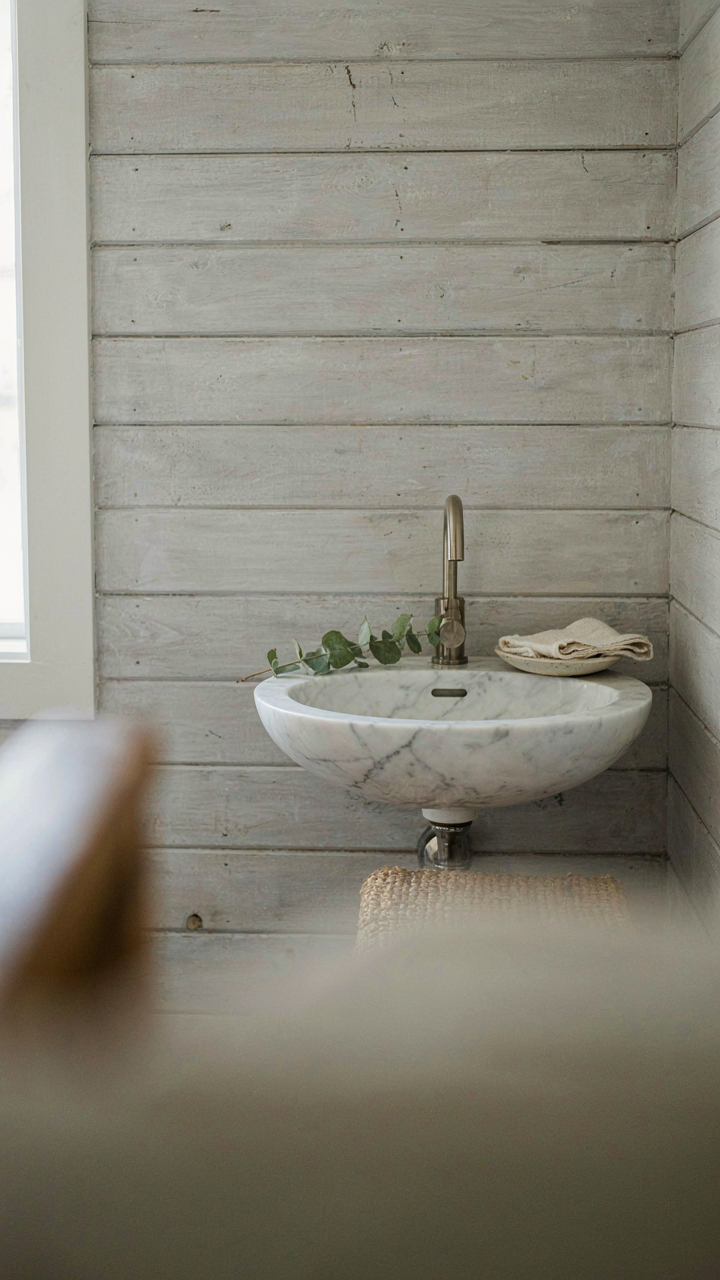
Layering Rough And Smooth For Sensory Depth
You want this bathroom to feel intentional, not like you grabbed whatever was on sale. Texture does the work that color alone cannot. Borrow from acoustics: contrast operates as the principle that makes difference perceptible. A smooth marble sink against rough shiplap walls doesn’t clash. It compels attention through opposition. Your brain registers the shift between surfaces before it registers anything else.

Coastal farmhouse design works because it stacks texture layers. Start with reclaimed wood beams or shiplap as your base. Layer in smooth surfaces like polished concrete, honed limestone, or glazed tile. Add one rough textile element: a jute mat, linen towels, or an unfinished wood shelf. The friction between these materials creates depth that flat, uniform surfaces cannot generate. This layering strategy prevents the room from feeling thin or decorative.
When Uniformity Kills The Space
The common advice to pick one material and repeat it throughout is incomplete. Uniformity feels safe. It also deadens coastal farmhouse bathrooms by removing the sensory information that makes the style work. A bathroom clad entirely in smooth tile reads as sterile. A bathroom clad entirely in rough wood reads as unfinished. The coastal farmhouse aesthetic requires both operating in tension.
Introduce smooth surfaces strategically where hands make contact. Countertops, sink surrounds, and mirror frames benefit from polish. Reserve rough textures for visual zones: shiplap walls, open shelving, exposed beams. This protocol solves the functional problem while maintaining design integrity. Smooth where friction matters. Rough where the eye travels.
Farmhouse Bathroom Inspiration: The Paradox Of Practicality & Charm
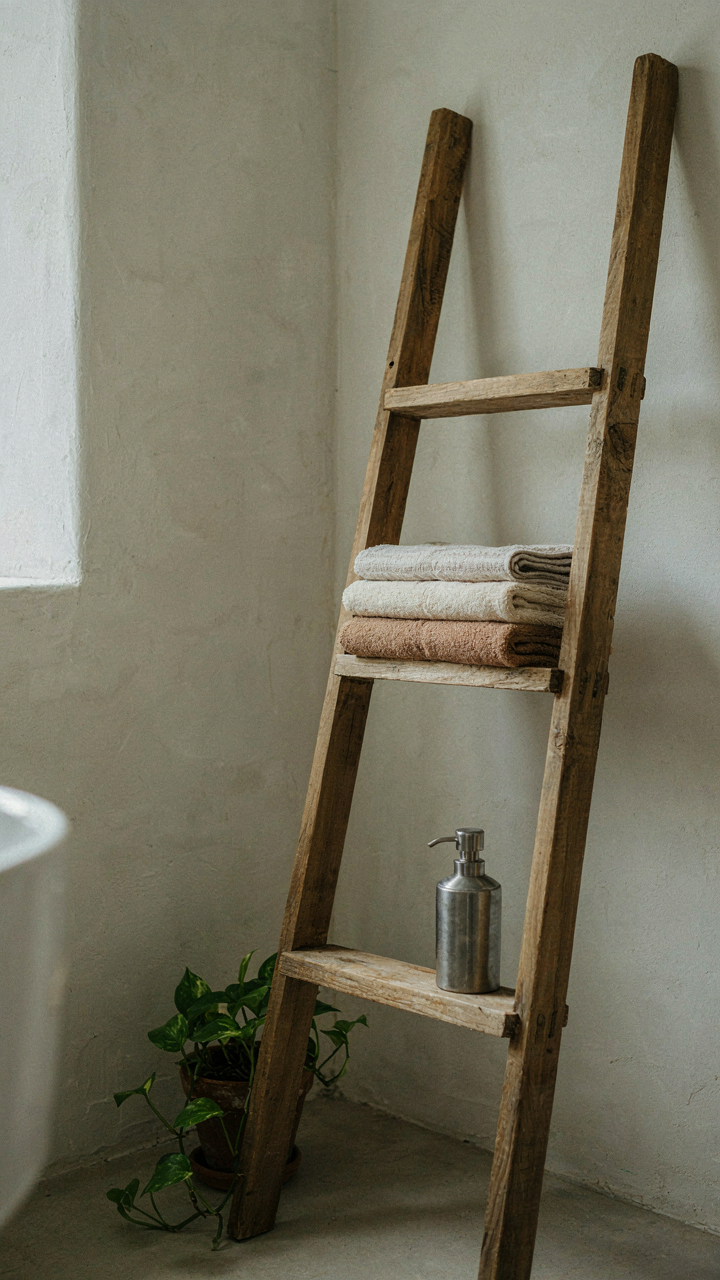
Utility Objects That Command Attention
You want permission to buy expensive bathroom things and call it design. Here’s the mechanism: farmhouse design works because it collapses the distance between function and form. A reclaimed wood ladder rack isn’t decoration pretending to be practical. It’s practical first, which makes the aesthetics feel earned rather than imposed.

Coastal farmhouse bathrooms treat storage and fixtures as visual anchors, not afterthoughts hidden behind cabinet doors. An open shelf holding folded linen, a vintage metal soap dispenser, a ceramic toothbrush holder, a brass towel bar—each serves daily use while anchoring the room’s visual weight. The rule is simple: if an object doesn’t work, it kills the entire aesthetic.
Reimagining Elements Beyond The Obvious
Most advice treats farmhouse as a fixed checklist: shiplap, barn doors, mason jars. That’s lazy. Coastal farmhouse actually blends two opposing design traditions. Farmhouse values durability and honest materials. Coastal design responds to salt air and moisture by favoring weathered finishes and marine-grade practicality. The tension between these creates actual character.
Weathered wood in a coastal bathroom isn’t nostalgia. It’s material adaptation. Salt and humidity break down finishes faster than inland weather, so pale, worn wood tones become logical rather than decorative. Reclaimed wood sourced from actual coastal structures—dock pilings, beach cottages, old maritime buildings—carries the patina that new wood stained to look old can never replicate. The mechanism: authenticity compounds the visual story because the material’s wear pattern matches its environment’s demands.
The Focal Point Friction Method For Coastal Beach House Bathroom
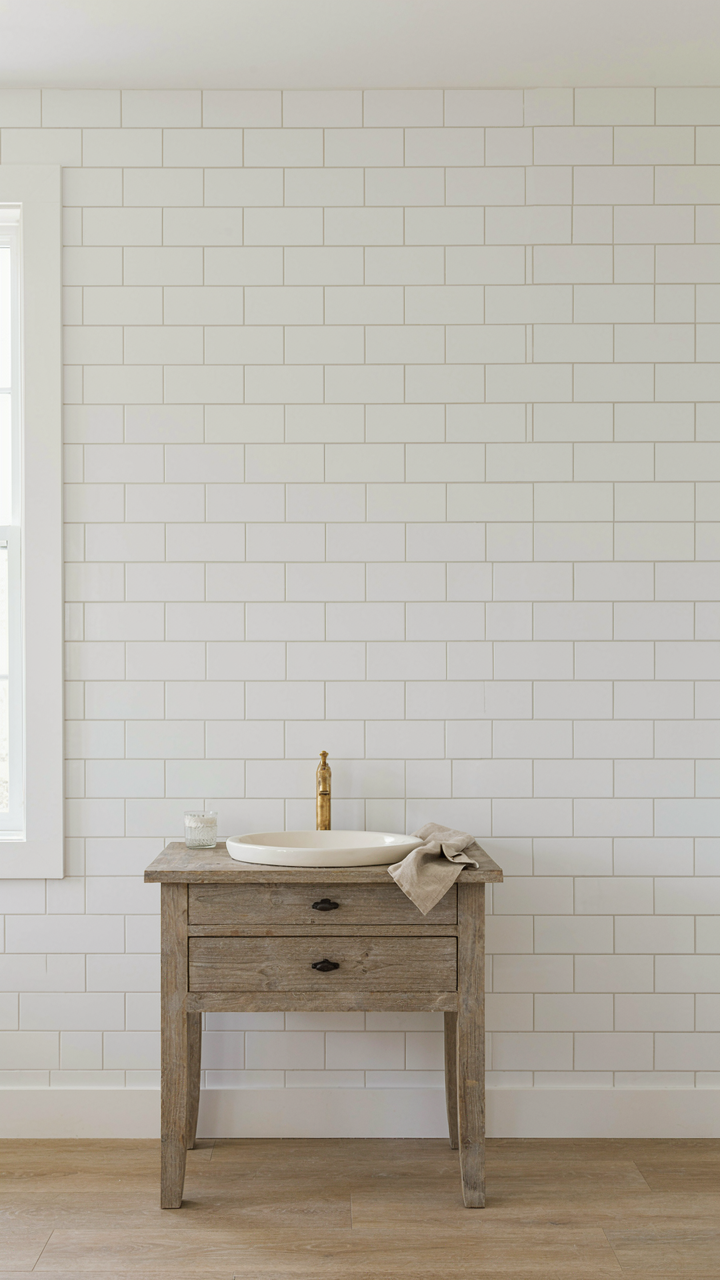
When Your Bathroom Needs A Reason To Exist
You want your bathroom to feel intentional, not decorated. The real motive is avoiding the trap of coherence so perfect it becomes forgettable. Here’s the mechanism: coastal farmhouse design borrows from architecture’s principle of “figure-ground relationship”—the idea that contrast creates meaning. Instead of matching everything, you deliberately place one dominant element that contradicts the room’s visual direction. A weathered wood vanity becomes the figure. Everything else recedes into ground. The tension between old wood and clean tile or between rough beams and smooth plaster makes the room legible.

Most advice tells you to “tie elements together” or “create flow.” That’s wrong. Flow is passive. It puts the viewer to sleep. What you actually want is a single focal point so visually distinct it stops the eye, then holds it. The weathered wood in a coastal farmhouse bathroom isn’t there to match the walls or mirror the aesthetic of the bedroom. It’s there to say: “This is where your attention goes.” That specificity is what makes the room feel designed rather than assembled.
The Math Of Visual Interruption
Orchestrating tension doesn’t mean chaos. It means calculating where the viewer’s eye lands first and why. In a coastal farmhouse bathroom, light plays the supporting role. You need weathered wood—your focal point—positioned where it catches light differently than surrounding surfaces. If your vanity is recessed in shadow, it disappears. If it’s backlit or sidelit by a window, it becomes three-dimensional. The wood grain, the patina, the color variation all read as intentional only when light reveals them.
The second layer is material contrast. Weathered wood reads as “old, organic, lived-in.” Pair it against crisp white subway tile, smooth concrete, or polished brass hardware. The friction between rough and refined is what your brain registers as design. A shiplap wall behind the vanity doesn’t heighten this effect. It dilutes it. The vanity needs isolation, not company. Position secondary weathered elements—a reclaimed shelf, a barn door medicine cabinet—three to four feet away from the main focal point, never adjacent. This distance forces the eye to work, which means it remembers what it saw.
Beyond Clichés: Real Coastal Bathrooms, Real Impact

Design For Environmental Fitness
You want this room to feel effortless and authentic so people assume you have good taste without trying. That’s the real game. Here’s what actually works: evolutionary biology calls this “fitness to environment”—the idea that organisms survive by matching their context. A coastal farmhouse bathroom does the same. It succeeds when every material choice reflects the specific climate it occupies, not a generic Pinterest board. Salt air, humidity, and temperature swings are the selection pressure. Weathered wood doesn’t just look right here—it’s proven durable under those conditions.

The mistake most people make is treating coastal farmhouse like a visual style you apply. It’s not. It’s a functional response to a damp, corrosive environment. Reclaimed or aged wood works because it’s already weathered the worst. It won’t warp further. Stone, concrete, and sealed finishes survive salt spray because they don’t absorb moisture. Your material choices should feel inevitable, not decorative. Pick materials that solve the actual problem first, then notice they look good because they’re solving the problem.
Timeless Through Material Honesty
The advice you’ve heard is that coastal farmhouse is “timeless.” That’s lazy. Trends die because they’re built on visual tricks. Timelessness comes from using materials correctly so they improve with age instead of degrading. Weathered wood doesn’t trend—it just gets better when salt and sun mark it naturally. A sealed concrete floor doesn’t trend—it stays functional for thirty years. These materials aren’t fighting their environment. They’re accepting it.
The protocol is simple: choose materials that age visibly but don’t require replacement. Weathered wood shows grain and patina. Sealed concrete develops a lived-in sheen. Stone fixtures hold water stains that read as character, not neglect. Avoid anything that demands looking “fresh” or “new” to work. Your coastal farmhouse bathroom survives trends because it’s built on materials that improve through honest exposure to the conditions they face.
Beachy Bathroom Ideas: The Subtlety Of Sand & Sky
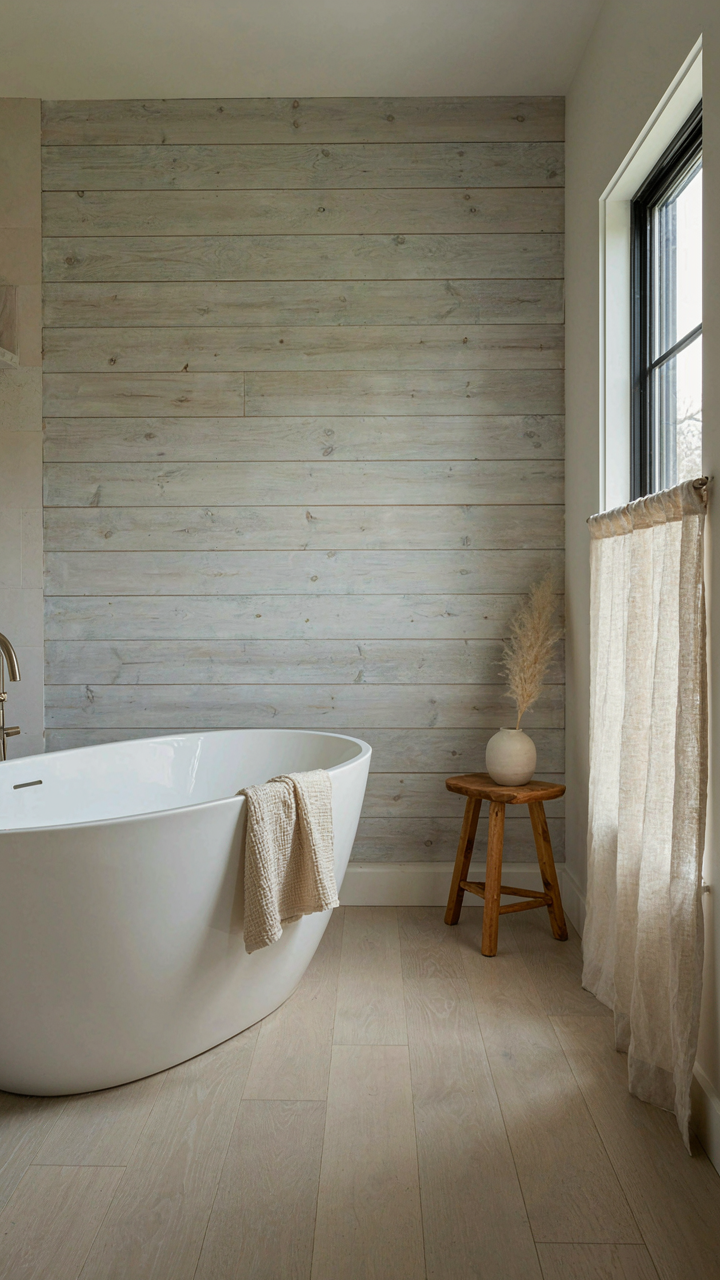
When Restraint Beats Instagram
You want people to feel the coast without seeing a nautical throw pillow. That’s the real mechanism at play: constraint creates the impression of taste. The color palette in a coastal farmhouse bathroom works like signal-to-noise ratio in audio engineering. Too many competing colors muddy the message. You need dominant tones that recede into the background so the space feels expansive, not decorated.

Start with a base of warm white or off-white on walls and large surfaces. Layer in soft greiges, pale grays, and muted sand tones through textiles and smaller fixtures. A single accent wall in weathered shiplap or soft sage pulls focus without screaming. The goal is chromatic restraint that makes the eye travel, not stop.
When Less Means More Than Expected
Most coastal bathroom advice tells you to pile on blues and boat hardware until it reads like a theme park. That’s lazy. The real work is removing what doesn’t belong. A coastal farmhouse bathroom doesn’t need rope trim, starfish decals, or anchor motifs to communicate its geography. Those elements signal fear that the design won’t work without literal symbols.
Strip it down instead: white subway tile, natural wood elements, simple fixtures in brushed nickel or matte black. Let the raw weathered wood and natural light do the communication. A single statement piece—a reclaimed barn door vanity surround or driftwood mirror frame—functions harder than twelve decorative accessories. You’re building spatial clarity, not a collection.
Coastal House Bathroom: Rethinking Function And Form
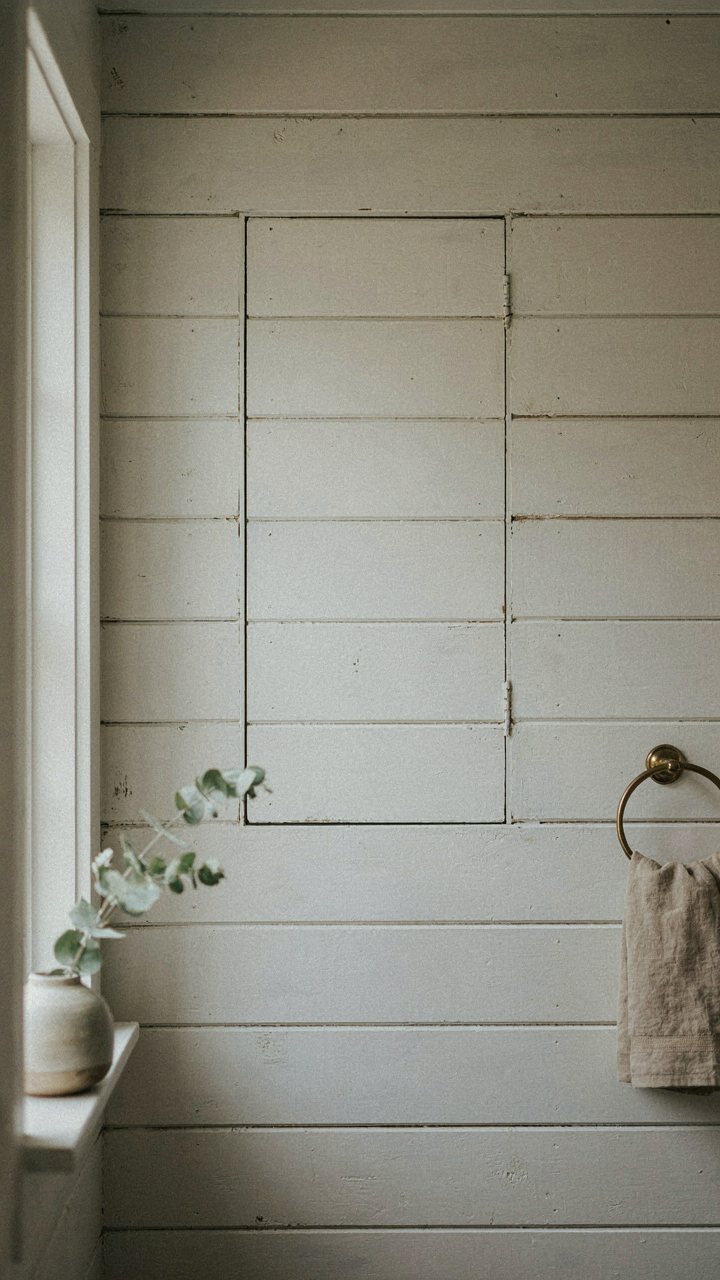
Hidden Storage Behind Weathered Shiplap
You want storage that doesn’t scream “storage” because visible clutter kills the aesthetic you’re paying for. The mechanism is simple: coastal farmhouse design trades closed cabinets for open shelving, but that only works if utility items disappear. Weathered shiplap walls create the perfect camouflage. Install recessed medicine cabinets behind a shiplap facade, or build shallow shelving units that blend into the wall plane rather than projecting into the room.

The trick farmhouse designers won’t admit is that “open and airy” only functions when you’ve already solved the clutter problem elsewhere. Towel rolls, cleaning supplies, and toiletries need a home that isn’t visible from the toilet. Use the 18-24 inch gap between wall studs for recessed storage. Paint cabinet doors to match your shiplap. The visual result stays calm while every functional demand gets met behind the scenes.
Open Floor Plan Breathing Room
Openness in bathroom design borrows from real estate economics: square footage perception multiplies when sight lines extend unbroken. A coastal farmhouse bathroom with no visual barriers reads larger than its actual dimensions. Remove the shower door entirely and use a frameless glass panel or open-concept wet room layout. Floating vanities instead of pedestal sinks expose floor space. Every inch of visible flooring counts as perceived square footage.
The list below shows how spatial decisions compound:
- Frameless shower enclosures: Eliminate the visual weight of framing and doors, creating continuous sight lines from entrance to far wall without obstruction.
- Floating vanity cabinets: Expose 12-18 inches of floor beneath the sink, making the room feel taller and reducing the furniture footprint’s dominance.
- Corner-mounted fixtures: Move toilet and bidet away from walls when possible, centering them to activate unused corners as negative space.
- Weathered wood open shelving: Replace enclosed linen closets with 8-10 inch deep shelves along walls, using vertical lines to draw eyes upward and expand perception.
- Minimal door swing radius: Slide pocket doors or barn doors instead of traditional hinged doors to eliminate the volume that swinging doors occupy.
Open layouts demand discipline. Every item on a shelf becomes part of the visual field. Matched towel sets, labeled glass containers, and consistent finishes prevent the space from reading as chaotic. The actual mechanism is constraint, not freedom: openness works only when you’ve eliminated everything unnecessary beforehand.
Bathroom Ideas Beach: The Art Of Imperfection
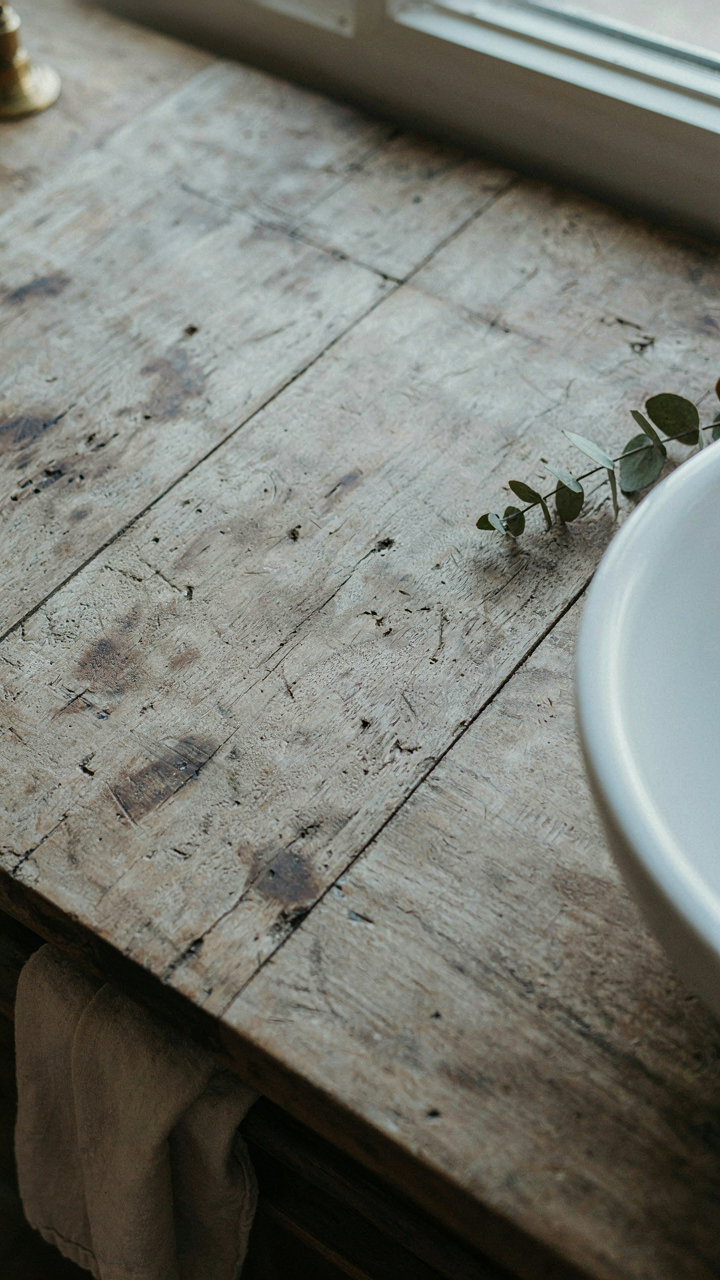
Wear And Patina As Design Language
You want permission to stop chasing flawlessness because imperfection signals authenticity and costs less to maintain. The mechanism is simple: patina functions like scar tissue in design. It proves the material survived use rather than sitting in a showroom. Coastal farmhouse bathrooms exploit this directly. Wood that shows weathering, water stains, and surface checking reads as honest. Homeowners recognize this as the opposite of staged interiors, which triggers trust at a subconscious level.
Natural wear on wood surfaces in a coastal bathroom tells a specific story about time and exposure. Salt air, humidity cycles, and deliberate water contact create visible changes in grain and finish. These aren’t flaws to hide. Reclaimed timber with existing patina accelerates this effect without waiting years. The bathroom becomes a space where visible age and degradation are the entire point of the design choice.
Abandoning The Showroom Standard
Most design advice tells you to “embrace imperfection,” which is meaningless. What matters is understanding that sterile perfection requires constant maintenance and screams expense in a way that actually depletes your status rather than building it. Coastal farmhouse rejects this framework entirely. A bathroom doesn’t need pristine grout lines, unblemished vanities, or flawless paint. Raw wood grain, uneven surfaces, and visible joinery become the dominant visual elements. This shift moves the design from “trying to look expensive” to “too established to care.” Perfection is tired. Damage is honest.
The practical shift means tolerating surface variation you’d normally sand away or refinish. Knots, cracks, and color inconsistencies stay visible in wood elements. Imperfect symmetry in tile layout or shelving placement reinforces that nothing was factory-assembled. This isn’t laziness masquerading as style. It’s a deliberate rejection of the systems that make bathrooms feel corporate and temporary. Choose materials that improve with visible use, not materials that demand pristine conditions to justify their cost.
The Real Obstacle Isn’t Design Choice; It’s Your Inability To Embrace Deliberate Tension
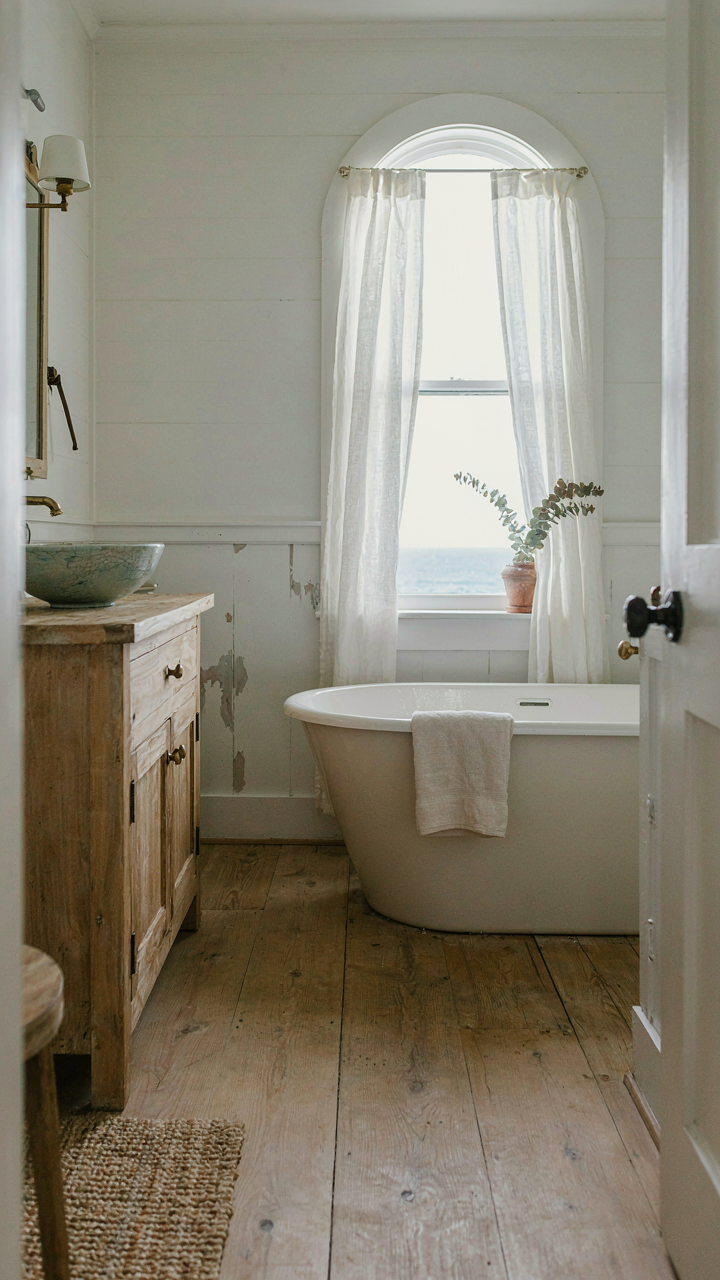
Most people kill their coastal farmhouse bathroom by playing it safe. They strip away character because imperfection feels wrong. But weathered wood doesn’t apologize. It contradicts. It mixes rough with refined, old with new, decay with intention. Stop treating your bathroom like a showroom and start treating it like a home. Pick one element today that makes you slightly uncomfortable, commit to it, and watch how everything else finds its place. The difference between a bathroom people photograph and one people forget is the courage to leave something unfinished.