
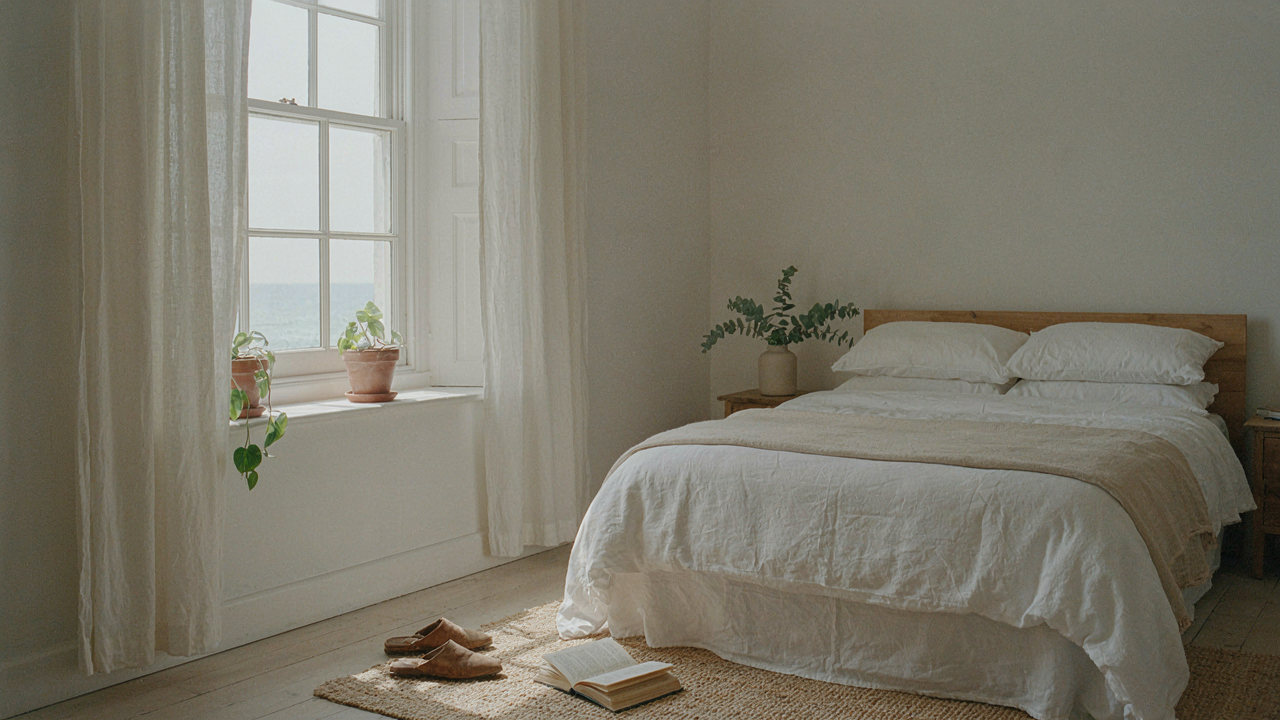
The “Coastal Calm” Delusion: Why Your Bedroom Feels Off
Trend Chasing Won’t Fix Your Sleep
You want to believe that buying the right aesthetic will solve your anxiety about rest. It won’t. The real problem is that most coastal farmhouse bedrooms are designed for Instagram, not for the nervous system. People slap whitewashed wood, linen, and nautical accents on a room and expect it to function like a sensory retreat. The psychology here is simple: your brain doesn’t care about visual consistency. It cares about stimulation load.
Coastal farmhouse as a trend relies on perceived simplicity, but the execution often backfires. Rooms get cluttered with decorative objects, textile patterns compete for attention, and lighting stays poorly controlled. You end up with visual noise masquerading as calm. The disconnect between what the room looks like and how it makes you feel happens because trend-based design skips the actual work of understanding what quiets a nervous system down.
Reverse Engineer The Stimulus
Apply signal-to-noise principles from information theory: your bedroom operates like a communication channel, and clutter is interference. Your nervous system processes every visual input, every texture variation, every light flicker. A coastal farmhouse bedroom that actually works treats stimulus as a finite budget you’re spending, not an infinite resource you can waste.
Natural materials themselves don’t create calm. Linen, jute, and reclaimed wood are tools, not solutions. The mechanism that matters is sensory consistency. Repeating textures, unified color bandwidth, and controlled light sources train your parasympathetic nervous system to downshift. When your eyes don’t have to process conflicting signals, your body stops preparing for threat. The action step is ruthless: audit every surface in your room and remove anything that creates visual contrast without functional purpose.
Unlocking “Cozy Coastal Bedroom Ideas” Through Sensory Integration
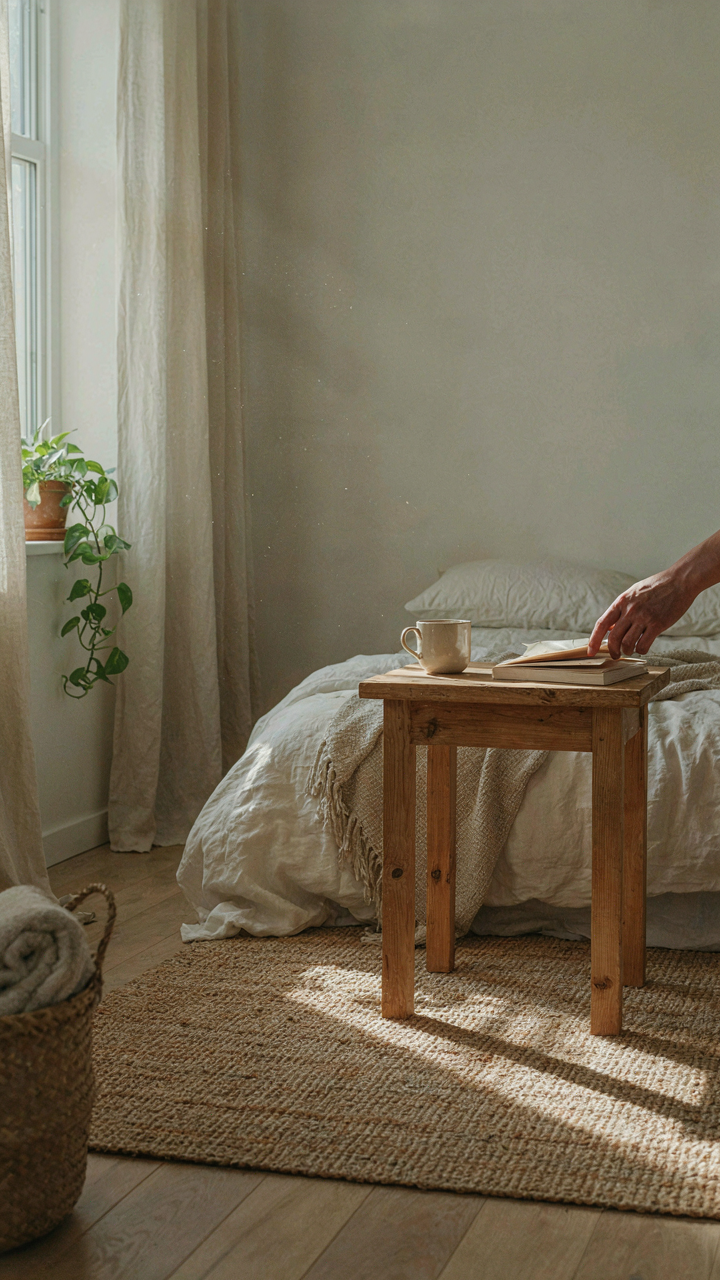
When Sound, Scent, And Touch Matter More Than Color
You want a coastal farmhouse bedroom that feels “restful” because you’re spending eight hours a night there and can’t afford for it to feel cheap or temporary. The real mechanism is sensory gating: your brain stops processing repeated stimuli, so a room that looks good but sounds wrong, smells stale, or feels rough against skin will exhaust you without you naming why. A coastal farmhouse bedroom works because it layers sensory input that reinforces calm instead of contradicting it.

Sound infiltration kills coastal bedrooms faster than bad paint. Coastal properties near water or roads need acoustic absorption that doesn’t scream “soundproofing.” Linen curtains, jute rugs, and unfinished wood surfaces absorb mid-range frequencies without the industrial look of foam panels. Scent compounds this: salt air is real, but stale indoor air negates it instantly. Crack windows at night, use beeswax candles over synthetic fragrance, and let raw wood off-gas naturally. Touch texture determines if you’ll actually want to be in the room: linen bedding, natural fiber throws, and untreated wood furniture create tactile feedback that matches the visual promise.
Living Systems, Not Decoration Schemes
Biophilic design borrows from ecology: the principle of environmental heterogeneity states that diverse, layered ecosystems are more stable and resilient than monocultures. Your coastal farmhouse bedroom needs the same logic. One fiddle leaf fig in a corner is visual clutter. Five different plants at different heights, with varied leaf textures and growth patterns, creates the sensory richness your nervous system recognizes as “safe.”
The distinction that matters: biophilic design isn’t about adding plants. It’s about mimicking the visual and spatial patterns of natural systems. Weathered wood beams, stone textures, and layered lighting (not uniform overhead) trigger the same recognition response as a forest canopy. Raw materials like stone accents, untreated wood, and natural fibers create micro-variations your eye processes as alive rather than static. The final mechanic is negative space: a coastal farmhouse bedroom needs breathing room between objects, mimicking the open sightlines of a natural landscape. Clutter blocks the biophilic response entirely.
The “Classy Coastal Bedroom” Material Protocol

Natural Fibers That Actually Work
You want people to walk in and know you spent money without seeing a price tag. That’s the real game here. The mechanism is tactile authority: materials that feel expensive because they are expensive to source and maintain, and natural fibers signal this instantly.

Coastal farmhouse bedrooms demand fibers that breathe in humidity and age visibly without degrading. Linen, cotton, jute, and sisal don’t just look the part—they perform under the specific conditions of coastal air and salt exposure. These materials develop patina. They don’t fight it.
- Linen: The premium choice for sheets and bedding. Linen softens with washing, improves over years, and resists mildew better than cotton. Cost reflects quality immediately.
- Cotton: Foundation fiber for pillows, mattress ticking, and layered textiles. High thread count cotton (400+) reads as intentional. Lower counts telegraph compromise.
- Jute: Rope, runners, and area rug material. Jute holds its structure in moisture and adds visible texture without requiring maintenance rituals.
- Sisal: Durable alternative to jute for larger rugs. Resists coastal dampness better than synthetic fibers and won’t off-gas in humid bedrooms.
- Wool blends: Throws and accent textiles. Wool regulates temperature and resists dust mites—functional benefits that justify its presence in a coastal space.
The layering protocol matters more than individual pieces. Start with linen base layers, add cotton mid-tones, then introduce jute and sisal as grounding elements in rugs and wall accents. This sequence creates depth that reads as intentional curation, not random assembly.
Wood, Metal, And Stone As The Structural Language
The structural language here borrows from architecture: load-bearing versus decorative. Raw wood functions as load-bearing aesthetic—it carries visual weight. Weathered metal and stone are decorative load-bearing: they look functional but primarily signal authenticity.
Raw wood in coastal farmhouse bedrooms should show grain and variation. Reclaimed or salvaged wood reads as deliberate sourcing. Weathered metal—cast iron bed frames, wrought iron accents—develops patina that proves age or mimics it convincingly. Stone, whether in nightstands or accent walls, provides thermal mass that moderates temperature swings in coastal climates and ages without visible deterioration.
The coordination protocol: one dominant wood tone (light driftwood or medium barn wood, not mixed), one metal finish (matte black or weathered bronze, not chrome or polished), and one stone palette (limestone, slate, or unfinished concrete). Mixing more than one of each category breaks the coherence. Select your load-bearing element first—typically the bed frame or a stone feature wall—then build secondary materials around it to support, not compete.

Beyond Beige: The Subtle Art Of Coastal Cottage Bedroom Colors

Water And Sky Define The Space First
You want permission to use color without looking like you’re trying too hard. The real mechanism is constraint: coastal farmhouse bedrooms work because the ocean and sky set the boundaries. You’re not choosing colors freely. You’re borrowing them from something already there. Deep blues pull from open water on overcast days. Pale greens come from salt marsh vegetation at low tide. These aren’t aesthetic choices. They’re observations translated into paint.
The reason these colors work isn’t because they’re trendy or calming. It’s because they already exist in the environment where coastal farmhouse design originated. Fisherman’s cottages in Maine and the UK didn’t use these palettes for mood. They used what was visible from the porch. Modern applications miss this. You select colors based on what dominates your actual view, then choose a shade one or two steps deeper or lighter to create contrast without shock. The color becomes part of the room’s structure, not decoration on top of it.
Soil, Rock, And Weathered Materials Over Time
The common advice says to use “warm neutrals” and calls it done. Wrong. Earth tones in coastal farmhouse bedrooms aren’t about warmth. They’re about the visual weight of materials that have aged in salt air. Sand isn’t one color. Driftwood ranges from silver-gray to charcoal depending on how long it’s been exposed. Stone changes shade based on moisture and lichen growth. These materials earn their colors through time, not production.
Your bedroom walls and textiles should reference the specific tones of these weathered materials as they appear after years outside, not their fresh versions. A driftwood gray with slight purple undertones beats generic greige because it reflects actual exposure patterns. Source paint samples from coastal areas where the design originated. Hold them against real driftwood or aged stone from that region if possible. The mechanism is accuracy: when your colors match what genuinely weathers in coastal conditions, the room feels inhabited rather than decorated.

Coastal Farmhouse Bedding: The Tactile Illusion
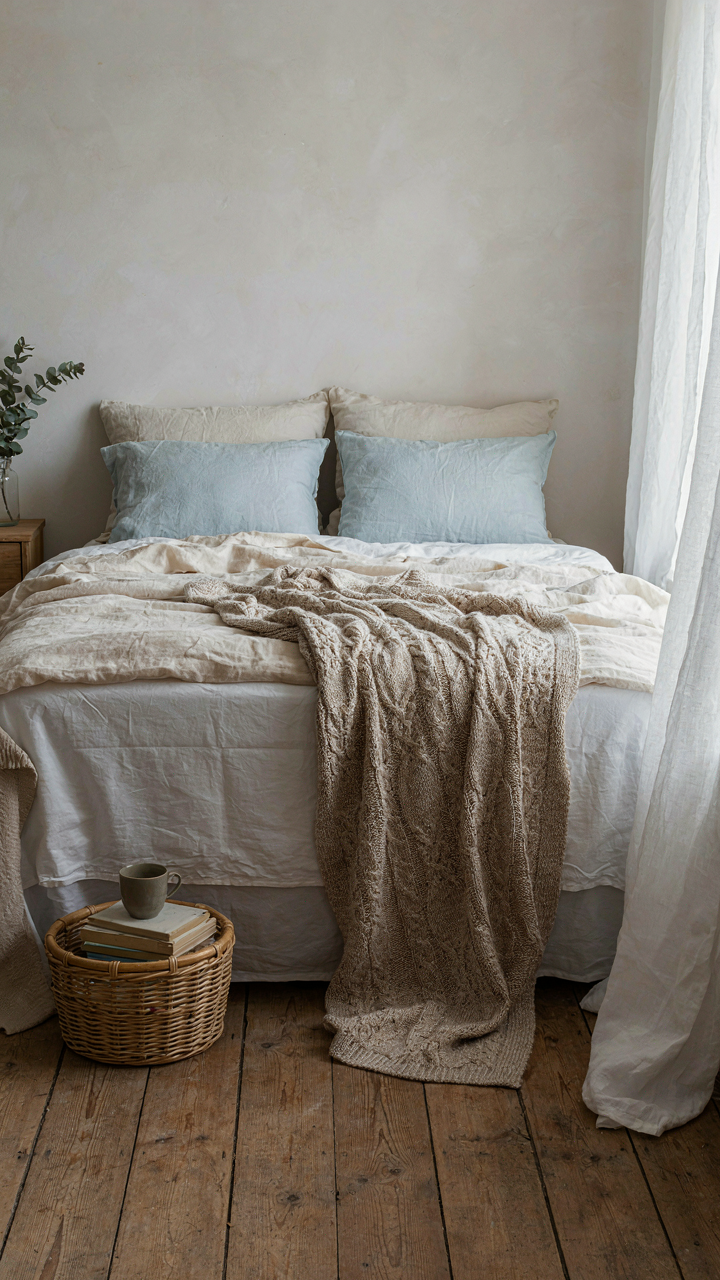
Layering For Depth And Sensory Comfort
You care about this because you want your bedroom to feel intentional without looking staged. The real mechanism is contrast: your nervous system doesn’t register comfort from uniformity. It registers it from variation. Layering in coastal farmhouse bedding works because each layer creates a tactile break. Linen over cotton. Wool throw over linen. Each transition signals safety to your sensory cortex, which interprets variety as abundance.
Most people layer randomly and call it done. That misses the point. The order matters. Start with a fitted cotton sheet in natural ecru or warm white. Add a linen top sheet in a slightly heavier weave. Top with a cotton duvet cover. Then introduce texture: a chunky knit throw across the foot rail, a lightweight linen coverlet. Your brain processes each material differently. Linen feels substantial but breathable. Cotton feels familiar but flat without layering. The combination creates the actual sensation people chase when they say coastal farmhouse feels “restful.”
Weight And Drape: The Forgotten Elements
Textile physics governs how fabric makes you feel, not aesthetics. In material science, drape and weight determine how cloth interacts with your body and the bed frame. Heavy fabric that pools creates visual softness and psychological grounding. Lightweight fabric that moves creates visual flow and spatial openness. Most coastal farmhouse advice ignores this entirely and focuses on color. That’s backward.
A linen duvet at 5.5 ounces per square yard drapes differently than one at 7 ounces. The heavier version settles around your body like it’s protecting you. The lighter one floats above you, which creates a different psychological signal entirely. Coastal farmhouse bedding should drape enough to break hard lines but weighted enough to feel intentional. Choose a duvet insert rated between 10.5 and 12 tog. Pair it with sheets that fall slightly away from the mattress corner rather than pulling tight. This single decision transforms how your body experiences the bed when you actually lie in it.

Modern Beach House Decor Coastal Style Bedroom: The Entropy Principle
Imperfection As A Design Tool
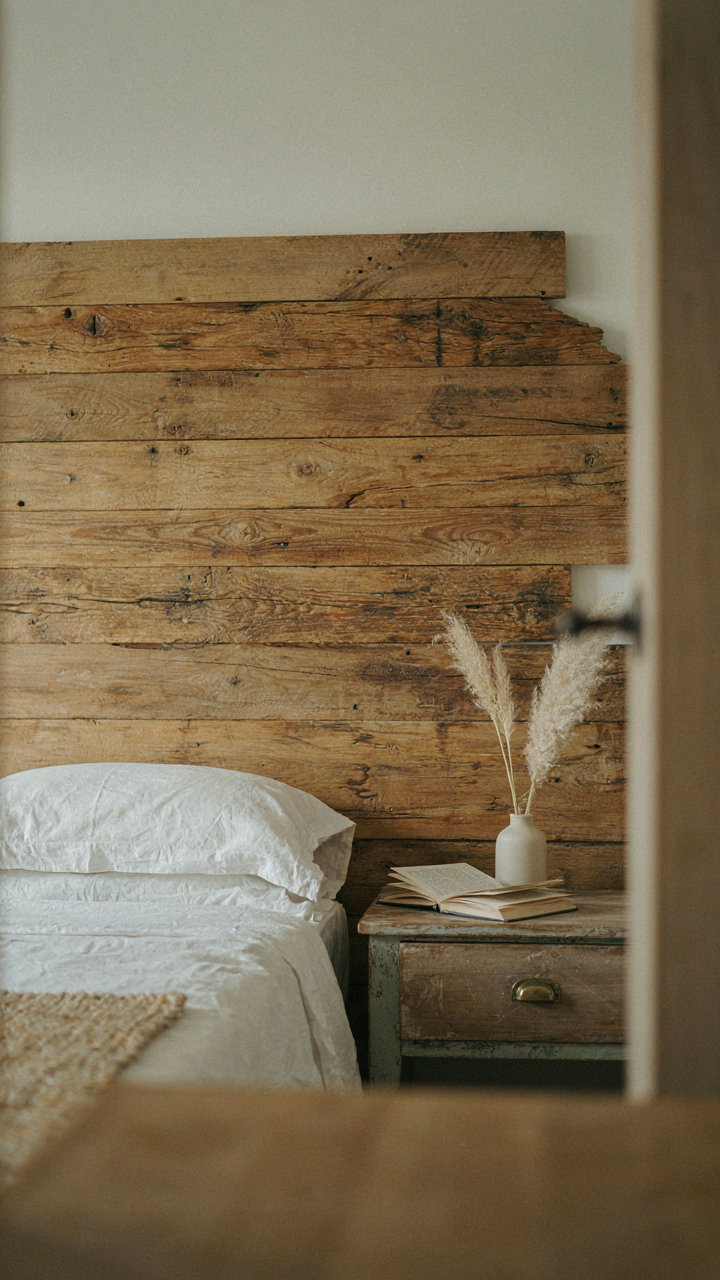
You want permission to stop trying so hard. That’s what draws you to coastal farmhouse design—the promise that roughness counts as intentional. Thermodynamics teaches us that entropy, the measure of disorder in a system, always increases. In a coastal farmhouse bedroom, entropy becomes the asset. Weathered wood, peeling paint, exposed grain, and visible wear aren’t failures to hide. They’re the room’s actual structure showing through.
The mechanism works because imperfection signals authenticity to your brain faster than perfection ever could. A bedroom with intentional distressing, authentic salt-worn surfaces, and honest material degradation reads as trustworthy. Farmhouse design borrowed this from rural spaces where decay happened by necessity, not choice. You’re importing that visual language deliberately. Select one primary surface—headboard, accent wall, or dresser—and leave its imperfections exposed rather than sanding them smooth.
Effortless Decay Requires Ruthless Curation
The common advice says aged finishes just happen naturally over time. That’s incomplete. Real effortless decay in a coastal farmhouse bedroom requires you to stage entropy with precision. You choose which textures show, which surfaces crack, which materials fade. Nothing ages evenly without intention guiding the process.
The illusion works because you’re controlling variables most people think are random. Use reclaimed or intentionally distressed wood with genuine history rather than new wood treated to look old. Pair aged textiles—linen, cotton, wool—with clean modern lines to create contrast that reads as curated rather than cluttered. The protocol is simple: identify what should decay, source materials that already have that story, and resist the urge to add more. Restraint is the actual tool.

The Coastal House Bedroom Lighting Matrix
Maximize And Diffuse Natural Light
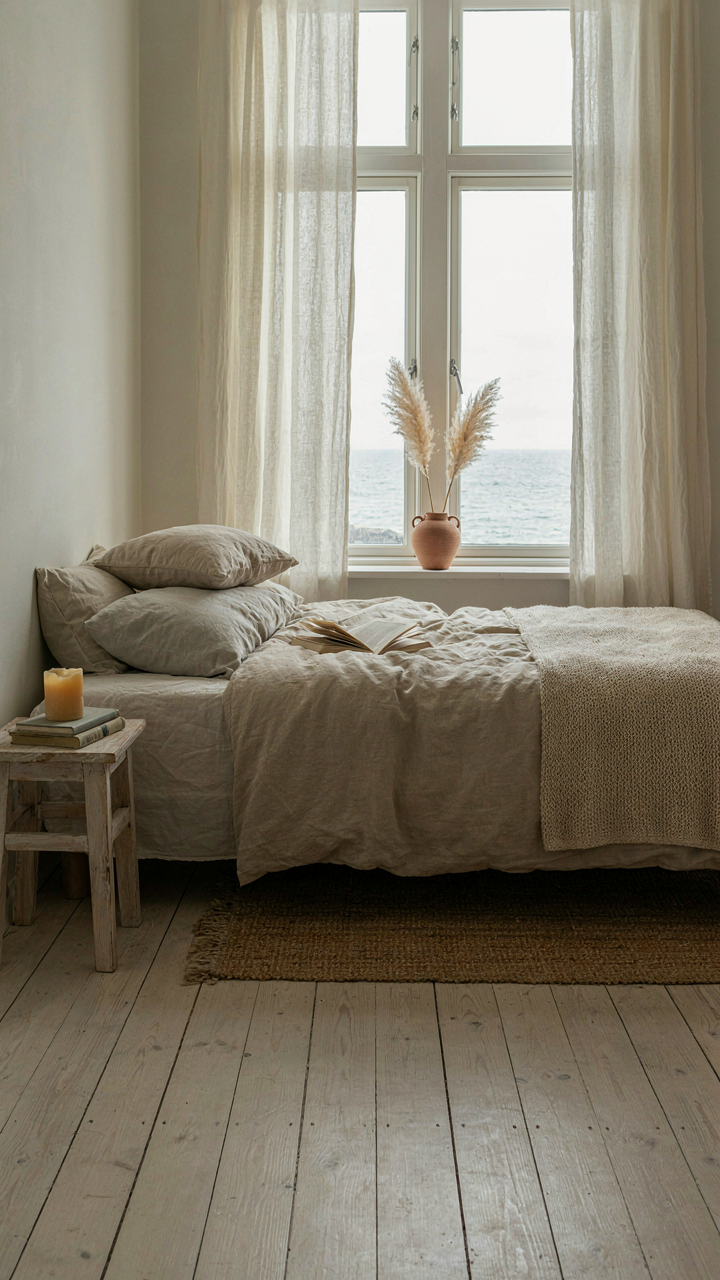
You want the room to feel bigger and less expensive to maintain, which is why natural light matters to you. The mechanism is simple: direct sunlight creates harsh shadows and fades fabric, while diffused light does neither. East or north-facing windows work best in coastal farmhouses because morning sun arrives soft and doesn’t intensify through the day. Install sheer linen curtains or cotton voile to filter light without blocking it entirely.
The goal isn’t brightness for its own sake. You’re solving for consistency and flatness of light across the room. Sheer fabrics scatter rays instead of letting them concentrate on one wall or piece of wood. Position your bed perpendicular to windows rather than directly in front of them. This placement keeps morning light from waking you while still benefiting from the ambient glow that makes the room feel open and calm.
Artificial Light That Mirrors Natural Cycles
Most people install overhead fixtures and wonder why the room feels off at night. The real problem is color temperature drift and one-directional glare, both the opposite of what sunlight does. Coastal farmhouse bedrooms need layered lighting: a warm-toned dimmer (2700K or lower) on wall sconces flanking the bed, and a separate control for bedside task light that reaches 3000K maximum. The sconces do the heavy lifting for ambient mood. The task light handles reading without casting your shadow on the wall.
Moonlight travels differently than sunlight, entering at lower angles and illuminating surfaces indirectly. Mimic this by placing accent lighting low and aiming it toward walls rather than the ceiling. A single 40-watt equivalent bulb in a brass or iron fixture creates the exact shadow pattern you’d see from moonlight filtering through coastal fog. Set dimmer switches to lowest comfortable level around 8 PM. This trains your nervous system to wind down before bed, not after the lights go out.

Curation, Not Accumulation: The “Coastal Cottage Bedroom Ideas” Method
Every Piece Earns Its Place
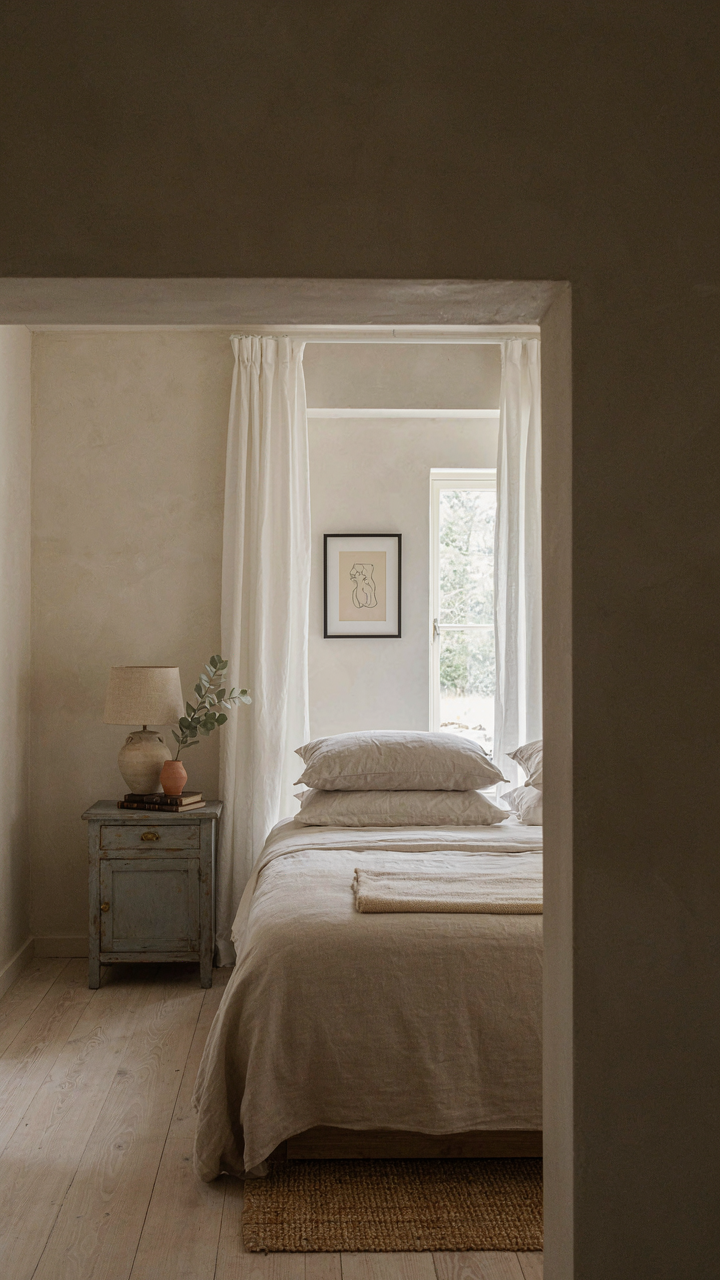
You want permission to keep things. That’s the real ask here. The mechanism is simple: coastal farmhouse design uses scarcity as its primary tool, not abundance. Empty wall space and sparse furniture aren’t accidents or signs of incompleteness. They’re the actual structure. When you curate instead of accumulate, every object becomes a decision, not a default. A weathered nightstand doesn’t sit there because you ran out of budget. It sits there because it’s the only nightstand the room needs.
This flips how most people approach bedroom design. Common advice says “layer your pieces” or “mix textures to add depth.” Wrong framing. Coastal farmhouse demands you identify what serves function first, then aesthetics second. A linen-upholstered bed frame isn’t chosen for its texture. It’s chosen because it handles humidity without degrading, cleans easily, and doesn’t compete visually with the room. A single wooden ladder leaning against the wall holds blankets and creates visual rhythm. A ceramic pitcher on the dresser holds flowers or serves as a watering vessel. Remove the object, and the room loses something operational, not just decorative.
Restraint Creates Breathing Room
Clutter destroys coastal farmhouse faster than wrong color choices. The issue most people miss is that negative space isn’t empty space waiting to be filled. It’s active. It’s what makes your eyes rest and your nervous system settle. In composition terms borrowed from visual art, the ratio of filled to unfilled area determines whether a room feels calm or chaotic. Coastal farmhouse typically runs 40 percent objects, 60 percent breathing room. That’s not arbitrary.
Start by removing everything that doesn’t answer one of three questions: Does it function? Do I use it? Is it repairable if damaged? If the answer to all three is no, it leaves the room. Then measure your actual negative space. If 50 percent of wall is covered or 70 percent of floor is occupied, reduce until you hit closer to the 40-60 split. This isn’t minimalism where empty looks intentional. This is restraint where every open surface says something works here, nothing wastes oxygen.

Your ‘Coastal Farmhouse’ Isn’t Failing; Your Fundamental Understanding Of Environmental Psychology Is

Most people furnish a coastal farmhouse bedroom by copying aesthetics. They buy the weathered wood, slap on some linen, call it done. But a room that calms your nervous system works backwards. Start by auditing what actually stresses you in your current space. Is it too many competing textures? Visual clutter? Hard surfaces that echo? Fix the friction first, then layer in the coastal farmhouse elements. The style serves the psychology, not the other way around. Your bedroom doesn’t need to look calm—it needs to make you feel it.