

The Cottage Laundry Room Illusion: Escaping Pinterest Paralysis

What Pinterest Didn’t Tell You
You’re scrolling because you want permission to care about a laundry room without feeling shallow. The real mechanism is simpler: curated cottagecore imagery strips away the actual constraints you face, then sells you a fantasy as a blueprint. Those photos show surfaces, not plumbing runs. They show styling, not the socket placement that costs eight hundred dollars to move. The cottage laundry room aesthetic exists in a constraint-free zone that your actual room doesn’t inhabit.
The fantasy works because it abstracts away friction. Every image you see has been shot at golden hour, styled with fresh linens, and edited to remove clutter, wear, and the corner where your water heater actually sits. What you’re seeing isn’t a laundry room. It’s a stage set designed to make you feel something. That feeling is not a design strategy. It’s a trap that delays your actual decisions.
Function Before Everything Else
The operating principle here comes from systems engineering: constraint optimization beats aesthetic optimization every time. Your cottage laundry room solves a problem first, looks like something second. The constraints are not optional. You have a specific square footage. You have existing plumbing, electrical runs, and ventilation requirements. You have a budget. You have the clothes and detergent and machines that actually need to move through the space. Design that ignores these doesn’t produce charm. It produces regret.
The mistake most people make is reversing the priority. They find a look they love, then try to retrofit it into their space like a costume that doesn’t fit. That creates waste, cost overruns, and a room that looks strained because it is strained. Start with what the room needs to do. What loads run weekly? Where does moisture go? How do you move materials in and out? Answer those first. The aesthetic choices that serve those functions will feel natural, not forced.
The Inconvenience Protocol: Redefining Cottagecore Laundry

Stop Optimizing For Speed
You want a cottage laundry room because you think it proves you’ve transcended the rat race. That’s the real pitch underneath. Here’s the mechanism: friction isn’t the enemy of charm. Friction is what makes the space feel intentional instead of industrial. When you remove all resistance from a task, you remove the signal that you chose it. A cottage laundry room works because it reintroduces deliberate steps. You hang clothes on a rack instead of stuffing them in a dryer. You fold on a wooden table instead of pulling from a basket. The task takes longer, but that length becomes the feature, not the bug. Cottage living trades speed for presence.

The common advice says to minimize steps and automate everything. That’s backward for this context. Your goal isn’t efficiency. Your goal is to make laundry feel like a chosen activity, not a chore you’re escaping. The mechanism is simple: when you slow down the process, you control the narrative. You’re not rushing through laundry. You’re tending to it. That shift in framing changes how your brain categorizes the entire experience. Build your cottage laundry room around this inversion. Make the process longer, not shorter.
Line Drying, Wringer, And The Superiority Clause
Manual drying methods produce measurably better fabric longevity than heat-based systems. Heat breaks down fibers over time. Air doesn’t. A clothesline or wooden drying rack preserves elasticity, color, and structural integrity for years longer than electric dryers. This isn’t aesthetic preference. This is material science. Wringer washers and manual wringing remove water without the friction and heat that damage fibers. Cottage laundry rooms leverage these methods not because they’re nostalgic, but because they’re functionally superior for garment preservation. Most people don’t state this plainly because it contradicts the convenience narrative.
The second mechanism is control. Manual methods force you to inspect each piece. You notice stains before they set. You catch loose seams. You catch color bleeding. Electric automation removes this quality gate. A cottage laundry room workflow puts your hands in the process, which means your eyes stay on the fabric. You catch problems before they become permanent. This is why commercial laundries that care about garment life still use manual finishing. Set up a wringer if you wash by hand, or at minimum, establish a manual wringing step before anything touches heat. This single protocol extends garment life by a measurable margin.
Beyond Shabby Chic: Authentic Cottage Laundry Room Storage
The Clutter That Works
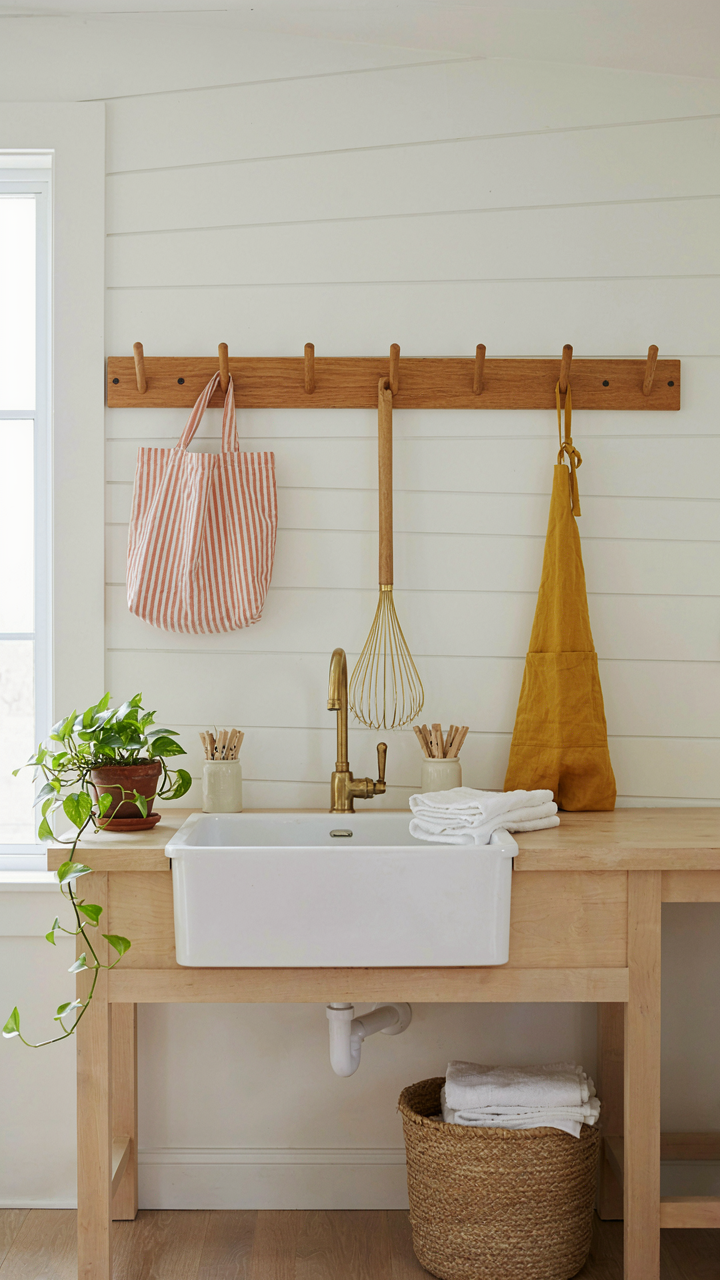
You want permission to keep things visible without looking like you’ve failed at organization. The real mechanism is constraint. Cottage storage works because it operates under scarcity economics: when space is finite, every object must earn its place through use or structure. A basket of folded linens isn’t clutter if it sits where you fold them. A shelf of glass jars holding detergent isn’t messy if it reflects the actual workflow of the room.

The difference between strategic clutter and chaos is intention. In a cottage laundry room, you’re not hiding function for appearances. You’re displaying function because it’s efficient. A wooden drying rack angled near the window, a metal cart holding current loads, a hook rail with damp aprons and cloths: these occupy space because they serve daily operations. The aesthetic emerges from honest utility, not from curating a vision. When storage directly supports the work happening in that room, visual noise becomes readable information.
The Visible Systems That Hide Mess
Hidden utility in a cottage laundry room means disguising the infrastructure, not the tools. Most advice tells you to “embrace open shelving” or “display your supplies.” That’s incomplete. Real hidden utility means routing pipes, concealing electrical, and boxing out mechanical systems so the room feels calmer even when it’s functionally dense. Then you display only what performs work or marks rhythm.
Install open shelving for active supplies: soaps, stain treatments, measuring cups. Box in or drape the water heater. Use a closed cabinet or screen for cleaning chemicals and maintenance stock. Run conduit along the wall edge instead of loose across studs. The room reads as composed because systems operate behind scenes. What remains visible tells a story of work in progress: fresh folded items in baskets, clotheslines with drying pieces, a chair holding today’s sorting. This is how a cottage laundry room avoids looking like a supply depot while holding twice the inventory.
The Un Glamorous Essentials Of A Functional Laundry Cottage

Tools That Earn Their Space
You want your cottage laundry room to look intentional, but you’re really afraid it’ll look like a storage closet. Here’s the mechanism: the moment you choose decorative over functional, your tools stop working when you need them. In economics, this is called opportunity cost. Every inch of shelf space has a competing use. Treat your laundry room like a production facility, not a gallery, and the aesthetic follows naturally from what actually works.
- Heavy-duty washer and dryer: Cast-iron or stainless steel frames withstand temperature swings and humidity. Cottage environments demand machines rated for variable water quality and power fluctuations.
- Utility sink with deep basin: A 24-inch or larger sink handles pre-soaking, hand-washing delicates, and overflow. Standard bathroom sinks fail this task repeatedly.
- Stainless steel drying rack: Expandable designs fold flat when unused. Rust-prone materials degrade fast in damp environments; stainless lasts decades without maintenance.
- Industrial-grade hamper: Wire or metal construction prevents fabric rot from trapped moisture. Woven baskets absorb humidity and harbor odor even after washing.
- Pull-down drying rods: Mounted hardware that retracts into ceiling joists saves floor space and handles wet loads without sagging under weight.

The cottage laundry room fails when tools are chosen for appearance first. Your washer, dryer, sink, drying racks, and hampers must solve the actual problem: processing fabric in a space where moisture never fully disappears and power may fluctuate. Forget coordinating colors. Buy what stays functional after two years of daily use.
Materials That Don’t Require You To Babysit Them
Cottage humidity is relentless. Standard drywall absorbs moisture, swells, and creates mold colonies inside walls. The real mechanism at work here is vapor transmission. Cottages lack the climate control systems that homes maintain constantly. This means your material choice determines whether your laundry room becomes a self-correcting system or a rotting cavity.
Use cement board or moisture-resistant panels on walls and ceilings instead of standard drywall. Pair these with concrete, sealed concrete, or polished concrete flooring. These materials shed moisture rather than store it. Wooden trim and shelving must be treated cedar, oak, or properly sealed pine. Avoid MDF and particleboard entirely. A cottage laundry room’s lifespan depends on materials that actively reject water, not materials that tolerate it temporarily. This is the single choice that separates laundry rooms that function for a decade from ones that deteriorate in three years.
Cultivating A Cottage Core Laundry Room: The Ecology Of Efficiency
When Systems Arrange Themselves
You want this space to feel effortless because effortless spaces signal you have your life together. The real mechanism is borrowed from biology: a cottage laundry room works best when every item occupies its functional niche without requiring willpower to maintain. Nothing gets reorganized. Everything gets used.

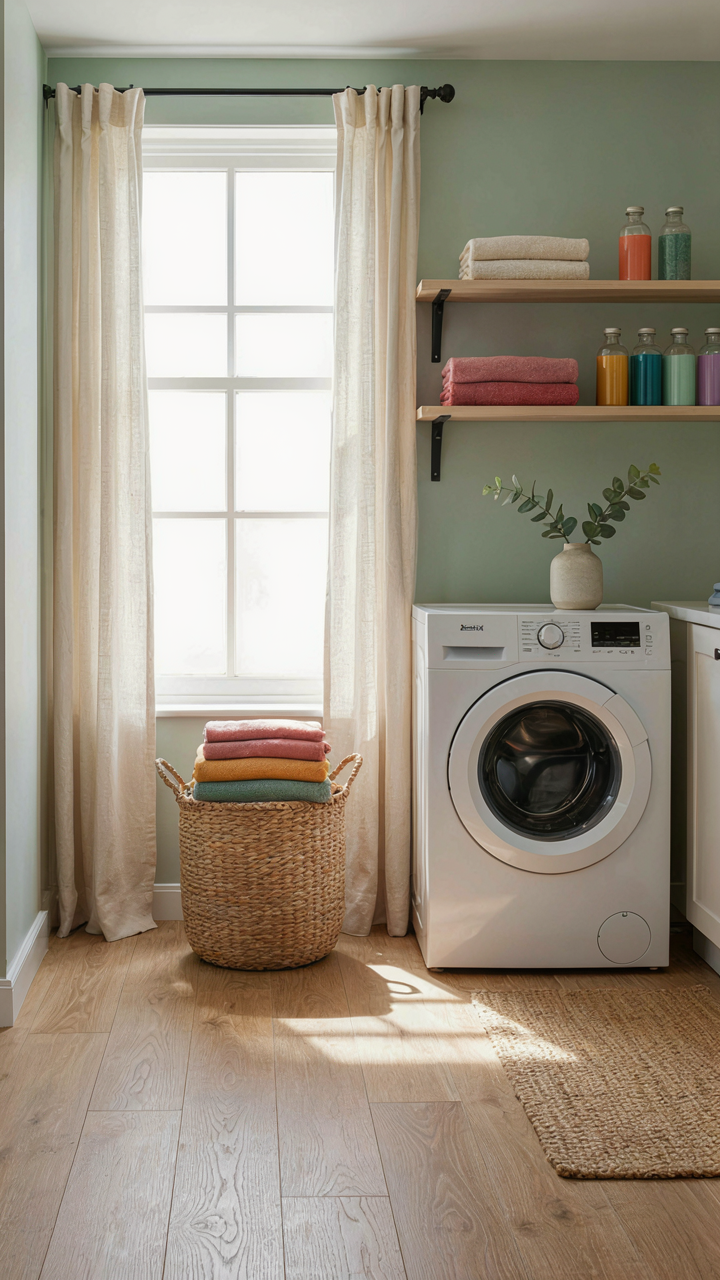
Most design advice treats organization like decoration. Wrong. Organization is a filtration system. You stock only what the space demands. Detergent bottles, lint traps, fabric softener, stain removers—each occupies a zone based on frequency of use and sequence of tasks. Hampers sit near entry points. Drying racks position themselves where air moves. Folding surfaces land where light concentrates. The room self-corrects because the layout makes the wrong choice impossible.
Tools That Live Where They’re Used
Placement isn’t aesthetic. Placement is economics. Group items by the moment they enter your workflow, not by product category. A stain stick belongs inches from the hamper, not grouped with other cleaning products. Dryer lint traps sit on top of the dryer, not in a drawer three feet away. Hangers hang from hooks mounted at folding station height. Iron boards stay deployed, not collapsed. The spatial relationship between tool and task determines whether you’ll actually use the system or abandon it after two weeks.
Symbiosis means two organisms that need each other. In a cottage laundry room, detergent needs proximity to the washer, baskets need access to the dryer, and the folding surface needs light and table height. When these relationships fail, the room becomes friction. When they align, the chore becomes mechanical—your hands know where everything is before your brain engages. That’s when it stops feeling like work.
The Country Style Laundry Room: Aesthetics Of Necessity

Worn Textures That Tell The Truth
You want permission to stop pretending your laundry room has to look new. That’s the real ask here. The mechanism is simple: worn surfaces communicate honesty, and honesty reduces the cognitive load of maintaining a facade. A cottage laundry room built on worn textures doesn’t demand perfection because the design already accounts for use and time.

Reclaimed wood, whitewashed beams, and aged metal fixtures work because they’re designed to show wear without looking broken. Floorboards with visible grain patterns and slight surface damage prove the space functions. Vintage enamel basins and cast iron hardware gain visual weight precisely because they’ve been used. The design absorbs imperfection into its operating system, which means you stop fighting the room’s nature and start working with it.
Patina As A Design Decision, Not An Accident
Most advice treats patina like damage you tolerate. Wrong. Patina is calcified time, and it reduces maintenance friction to nearly zero. In material science, patina is a protective oxidation layer. In cottage laundry design, it’s the exact same function: it’s a surface that proves durability while eliminating the need for constant restoration.
Choosing materials that patina gracefully means you’re selecting for reduced decision fatigue. Copper hardware develops green oxidation that prevents further corrosion. Galvanized metal develops gray rust that stabilizes. Linen and canvas fabrics fade predictably and remain functional. You stop shopping for replacements because the room gets better with age. The mechanism is direct: build with materials whose failure state is their final state.
The Anti Trend: Building A Timeless Cottage Farmhouse Laundry Room

Why Trends Betray Your Investment
You want to feel current. That’s the real reason you’re tempted by whatever design trend hits Instagram this month. But trends operate on replacement cycles, not durability. The mechanism is simple: trend-driven purchases force you to refresh every 18 to 36 months, which means constant spending and constant waste. A cottage laundry room built on trend velocity becomes expensive and disposable, not charming and functional. Build instead on what actually works across decades.

The cottage farmhouse aesthetic didn’t emerge from trend forecasting. It developed from rural necessity and material availability across generations. Shaker pegs, open shelving, and simple wood finishes lasted because they solved real problems, not because they looked good in a photo. When you anchor your laundry room in these proven solutions, you stop chasing approval and start building equity in your space. That shift changes everything about how you interact with the room.
Materials That Survive Use
Durability isn’t romantic. It’s economic. Buy solid wood cabinetry, heavy-gauge stainless steel hardware, and ceramic or concrete surfaces. These materials cost more upfront because they absorb wear without degrading visually or functionally. A painted MDF cabinet fails after five years of humidity and detergent spray. A solid pine or oak cabinet ages into character. Painted MDF forces replacement. Solid wood forces only refinishing.
Your laundry room experiences temperature swings, moisture exposure, and physical stress daily. Cheap materials surrender to these conditions fast. Invest in vanity surfaces made from soapstone, concrete, or sealed wood that withstand water damage and staining without replacement. Hardware like cast iron hooks and solid brass hinges costs two to three times more than plated alternatives but functions identically after twenty years. The real cost lives in replacement frequency, not purchase price.
Beyond The Dryer: The Hidden Power Of Natural Drying Methods
Air Movement Matters More Than Temperature
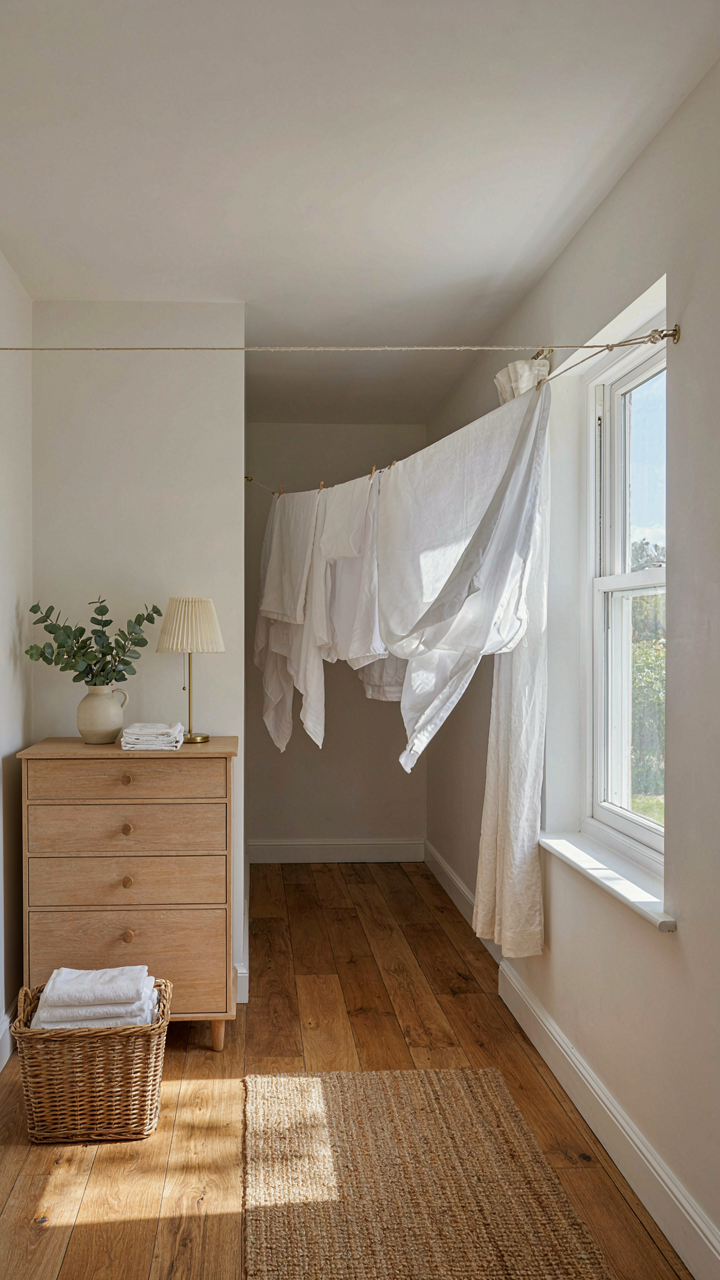
You want a cottage laundry room because it signals you’ve escaped the machine-dependent life. The truth is simpler: airflow is what actually dries clothes, not heat. Temperature accelerates moisture evaporation, but moving air removes vapor from fabric surfaces faster than stationary warm air ever will. This is basic physics applied to textiles. A cool room with strong cross-ventilation dries faster than a hot, stagnant one. Most people reverse this, which wastes energy and extends dry time by hours.

Position your drying area perpendicular to your room’s dominant air current. Open windows on opposite walls to establish through-draft. Hang clothes on a clothesline or drying rack in the path of that flow, not tucked in a corner. Install a small oscillating fan if natural ventilation is weak, pointing it toward hanging fabric. The mechanism is simple: moving air strips moisture from the outer layer of fabric, then pulls moisture from deeper fibers outward. This cycle repeats until clothes are dry.
Direct Sunlight Kills Bacteria And Brightens Whites
Sunlight doesn’t just feel nice on damp fabric. UV radiation actually damages bacterial cell walls, which is why Victorian laundresses dried clothes in direct sun on purpose, not by accident. Modern laundry science confirms this: ultraviolet exposure reduces microbial load significantly. Whites bleach naturally through this process. Delicate colors fade, so reserve direct sun exposure for sturdy cottons, linens, and whites only.
Position your clothesline or drying rack where sunlight hits for at least four to six hours during midday hours. Morning and late-afternoon rays are weaker and take longer. Rotate garments halfway through the day if you’re drying thick items like towels or bedding. The combination of UV exposure and air movement creates the fastest, cheapest drying method available. Direct sunlight plus airflow beats every alternative except a modern dryer, and costs nothing.
Your Personal Laundry Cottage: Designing For Deep Work, Not Distraction

Clear Surfaces Win Every Time
You want this room to feel intentional because it proves you have your life together. The mechanism is simple: your brain treats visual clutter as unfinished tasks. Each visible item demands a tiny amount of cognitive energy, even if you ignore it. Remove that demand, and you reclaim focus for the actual work.

Cottage laundry rooms benefit from the same principle as monastery cells. Keep countertops bare except for what you use daily. Store detergent, fabric softener, and stain removers in matching opaque containers or behind closed cabinet doors. A single decorative element on a shelf works. Ten scattered items paralyze you. The goal is zero decisions about what you’re looking at while you fold.
The Right Layout Kills Wasted Motion
Most people design laundry rooms around aesthetics first. This is backwards. Design around the physical sequence of tasks: wash to dry to fold to store. Position your folding surface directly between the dryer and the storage cabinet. Eliminate steps. A three-foot walk becomes five minutes lost across a week of laundry cycles. Efficiency here isn’t about rushing. It’s about removing friction so you actually finish instead of abandoning half-folded loads on a chair for three days.
Install a rod or shelf at elbow height near your folding area for immediate hanging. Hooks on the wall near the dryer hold items waiting to be processed. Stack storage bins in order of use. When the physical path matches the work sequence, your brain stops generating resistance to the task itself.
The Real Obstacle Isn’t Your Laundry Room, It’s Your Permission To Be Truly Inconvenient
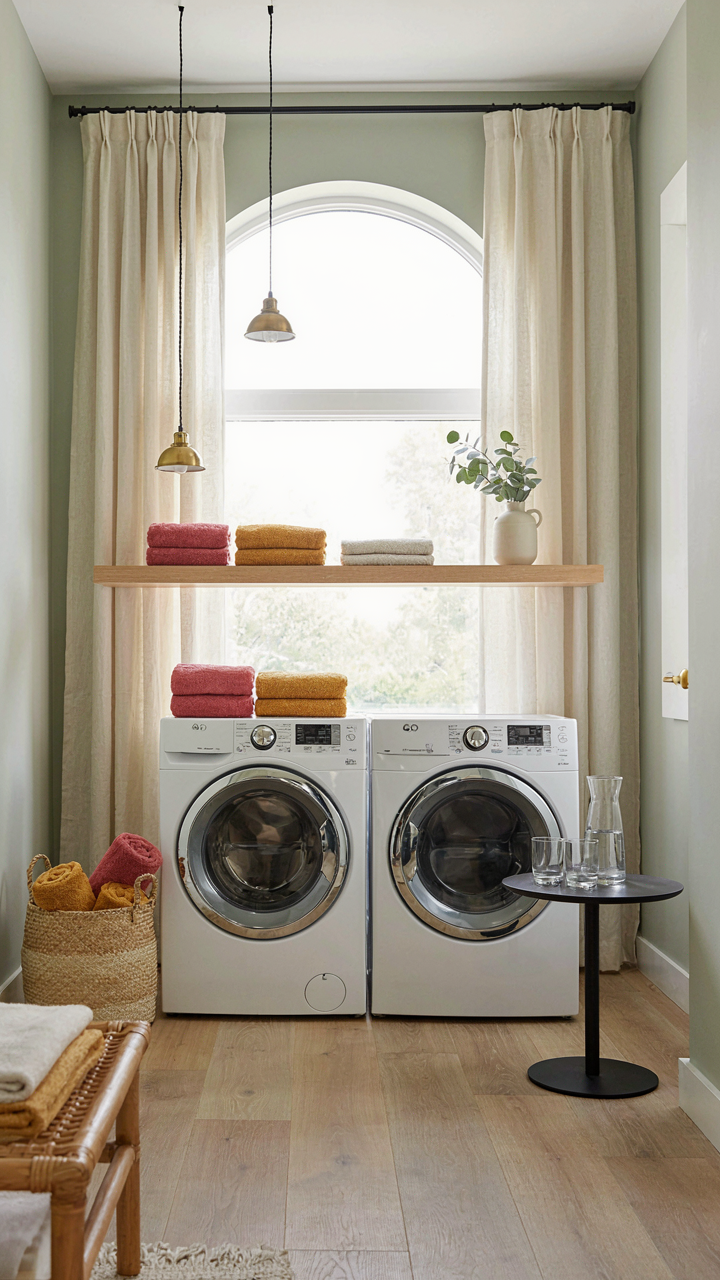
You don’t need a Pinterest-perfect cottage laundry room. You need to stop apologizing for having one that works. The shift happens when you stop designing for guests and start designing for yourself. Pick one thing today. Paint the walls. Install real lighting. Add a single wooden shelf. Not because it looks good. Because you’ll actually want to spend time there. That’s the only metric that matters. A beautiful laundry room isn’t a luxury you earn after everything else. It’s the permission slip you give yourself first.



