
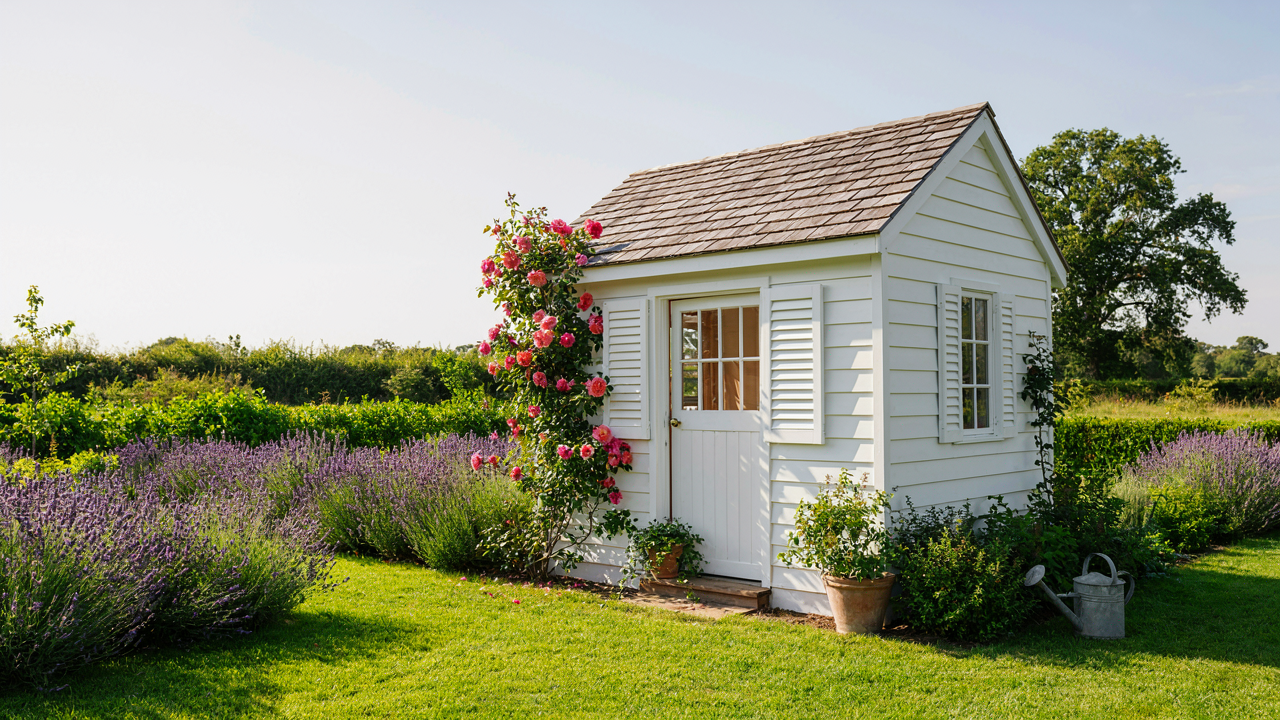
The Illusion Of Idyllic: Why Most Cottage Sheds Fail

Aesthetics Without Storage Architecture
You want the shed to say something about you. That’s the real reason you’re reading this. The problem isn’t the painted shutters or the weathered wood. It’s that most people design cottage sheds as photographs first and functional spaces second. They optimize for what visitors see in a five-second glance instead of what they actually need to store and access daily.
Storage architecture—borrowed from warehouse logistics—teaches that placement determines workflow efficiency. In a cottage shed, this means organizing by retrieval frequency, not by what looks balanced visually. Your tools should cluster near the door you use most. Your seasonal items should occupy vertical dead space, not prime real estate. The painted shutters distract from the fundamental design failure: the shed gets prettier while remaining harder to use.
Weatherproofing Beats Character Moments
Common advice says to prioritize charm. That’s incomplete and costly. A cottage shed that looks charming but leaks onto your equipment is just an expensive decoration. The reality is blunt: wood rot, moisture damage, and rusted tools happen faster than you expect. Painted shutters, while visually on-brand, do nothing to seal gaps where water enters. They’re facade work on a building that needs infrastructure work first.
Functional design means ventilation slots placed strategically to manage humidity without compromising insulation. It means flashing installed correctly above the window frames. It means your door seals tightly and your roof pitch sheds water fast enough to prevent pooling. Build the shed to last twenty years through weather cycles. Then add the aesthetic details. The order matters more than the details themselves.
The Strategic Siting Protocol: Location As Leverage
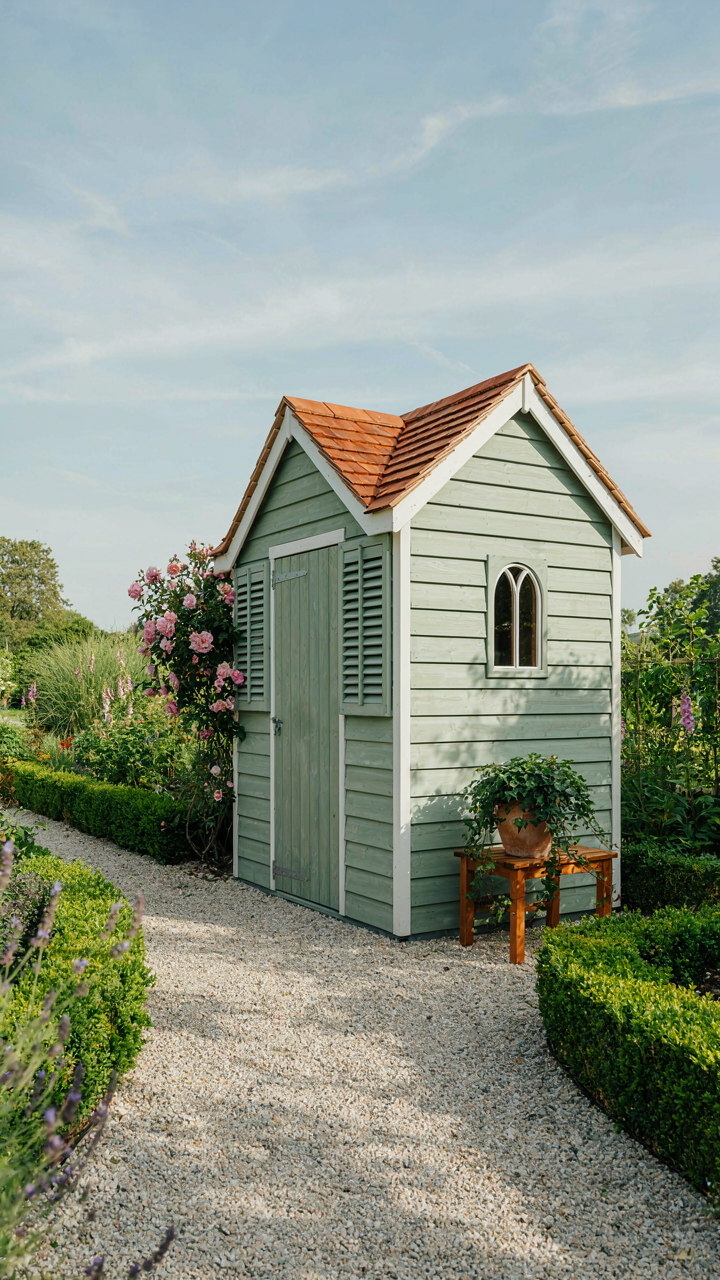
Where Your Shed Catches Light And Wind
You want your cottage style garden shed to look effortlessly charming, but what you really care about is avoiding the shed that becomes a maintenance nightmare. Here’s what actually matters: sun exposure and wind patterns work like vectors in physics. Your shed’s orientation isn’t decoration—it’s a performance variable. East-facing placement catches morning light without afternoon heat buildup, which matters for both the painted shutters (they fade faster in direct western sun) and the interior climate. North-facing positions protect against UV degradation but create damp conditions in humid climates.

Wind patterns determine whether your shed survives storms or becomes a restructuring project. Cottage sheds typically feature pitched roofs and board-and-batten siding, both of which catch wind like a sail. Position your shed perpendicular to prevailing winds rather than aligned with them. If your property sits on a slope, place the shed mid-slope, not at the summit where wind velocity peaks. The real mechanism: a protected microclimate reduces wood deterioration by 30-40% over a decade. Survey your property at different times of day. Mark where sun shadows fall at spring equinox, summer solstice, and winter solstice. This tells you exactly what you’re working with.
How You Move Through Your Garden Matters
People skip this and regret it immediately. Access patterns determine whether your shed becomes part of your gardening workflow or a storage box you avoid. Map the shortest routes from your house to your vegetable beds, flower borders, and compost area. Your shed should sit on or near this route—not as a detour, but as a natural stopping point. Cottage gardens are dense by design, which means tight spaces. Ensure at least a 3-foot clearance on the side you’ll use most for opening doors and moving tools in and out.
The secondary access point matters more than people think. If your shed has a back door or window, face it toward a less-trafficked area to avoid visual clutter from the house. Ground surface around your shed should be level and well-draining. Gravel or permeable paving prevents mud accumulation and keeps the foundation dry. The mechanism is simple: a shed positioned on your actual workflow route gets used consistently, which means better maintenance, faster repairs, and a structure that functions rather than just decorates.
Deconstructing “Cottage Style”: Authenticity Vs. Imitation
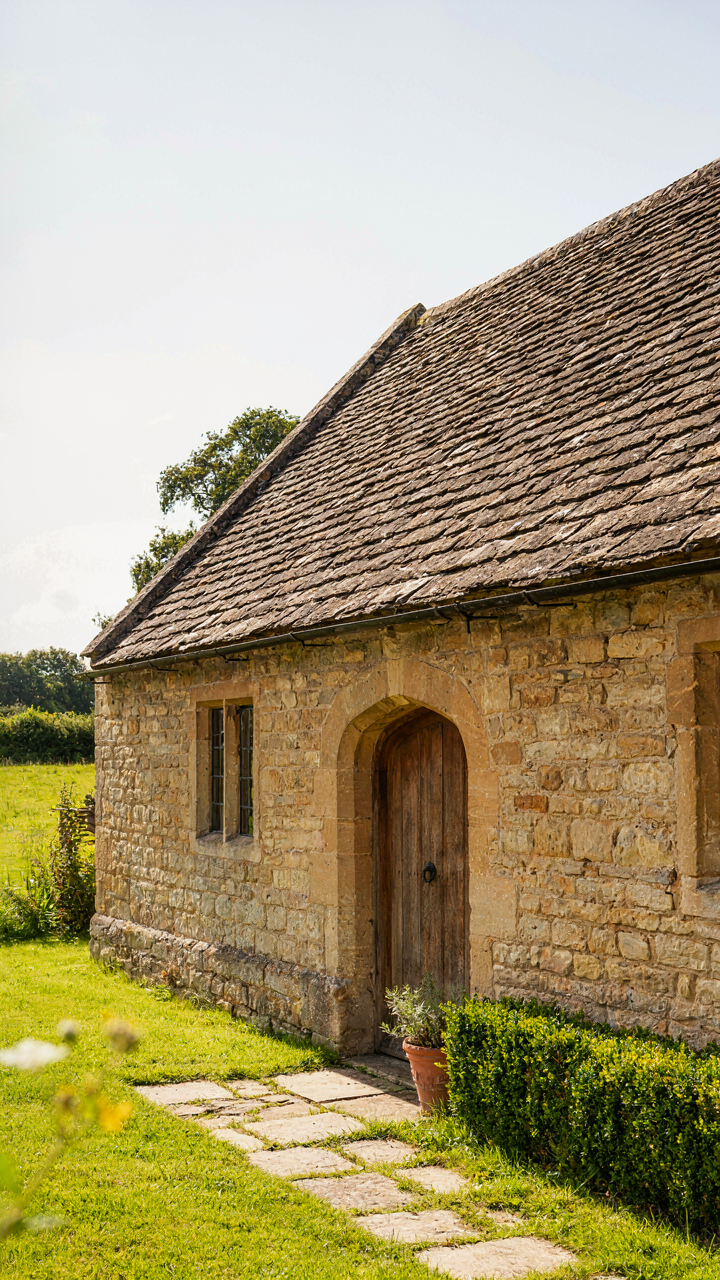
What Actually Came Before The Aesthetic
You want permission to build something that looks intentional without the guilt of it being new. That’s the real question. Cottage sheds weren’t designed by interior decorators. They were built from what was available, in the place where they stood, by people solving a specific problem: storing tools and keeping animals dry. English and European cottage sheds from the 18th and 19th centuries used local timber frames, thatch or slate roofing, and whatever infill materials the region produced. Stone in the Cotswolds. Brick in East Anglia. Cob in Devon. The form followed material scarcity and regional building codes, not aesthetic preference.

The painted shutters now associated with cottage sheds came later, not from rural function but from 19th-century cottage ornamentation trends among the landed gentry who romanticized rural life. Shutters on a working shed served a purpose: pest control, weather protection, light management. Painted shutters were a signal of maintained property and modest prosperity. You’re not building authentic. You’re building a descendant of authenticity, which is a different project entirely and requires honesty about that fact.
The Trap Of Themed Decoration
Everyone says to add character through details. What they mean is: buy vintage-looking items and arrange them to read as “old.” This is interior design language applied to a storage building, and it produces the opposite result. Real cottage sheds have character because they accumulated function, not because someone selected quaint items. A tool worn smooth from use looks different than a reproduction tool aged with chemical stain. The mechanism here is specificity. Authentic character emerges from constraint and repetition of actual use, not from curation.
Avoid the common move of treating shutters, weathered wood finishes, and mismatched hardware as a decorating toolkit. Instead, commit to one material story: if you paint shutters, use a color that exists in local building tradition where you live, not what Pinterest shows from Devon farmhouses. If you build with reclaimed timber, source it from regional barns or mills. The shed should reflect what makes sense to build and maintain in your climate and location, not what looked good in a photo.
The Biomimicry Blueprint For Shed Exteriors

How Trees Weather Storms Without Maintenance
You want a cottage style garden shed that looks charming in year five without becoming a maintenance trap. That’s the real ask. Biology solves this through redundancy and flex, not rigidity. A tree doesn’t resist the wind; it bends. Its bark doesn’t fight moisture; it sheds it. Shed exteriors fail because they’re designed like fortresses instead of organisms.

Apply the biological principle of adaptive surfaces to your shed skin. Overlapping board-and-batten siding mimics bark layering. Each board moves independently with moisture and temperature swings, so stress concentrates nowhere. Paint shutters serve the same function as tree leaves: they shed water downward and create air gaps that prevent rot at the attachment points. The mechanism is motion, not seal.
Self Organization Through Material Layers
The common advice treats shed design as a problem to solve top-down: pick one material, seal it tight, hope nothing fails. Wrong. Self-organizing systems in nature don’t depend on a single point of control. They work through layered redundancy where failure in one component doesn’t cascade through the whole structure.
A cottage style garden shed exterior works the same way. Start with a breathable base layer (untreated wood or lime mortar if you’re using cob), add a moisture-buffering middle layer (traditional lime-based paint or clay paint that absorbs and releases humidity), then finish with your painted shutters as the outermost sacrificial layer. Each layer handles its own job independently. When the top paint fails, the layer below doesn’t fail with it. You maintain the surface, not the structure. The system regenerates itself through staged replacement rather than catastrophic overhaul.
Painted Shutters: Not Just Pretty, But Purposeful
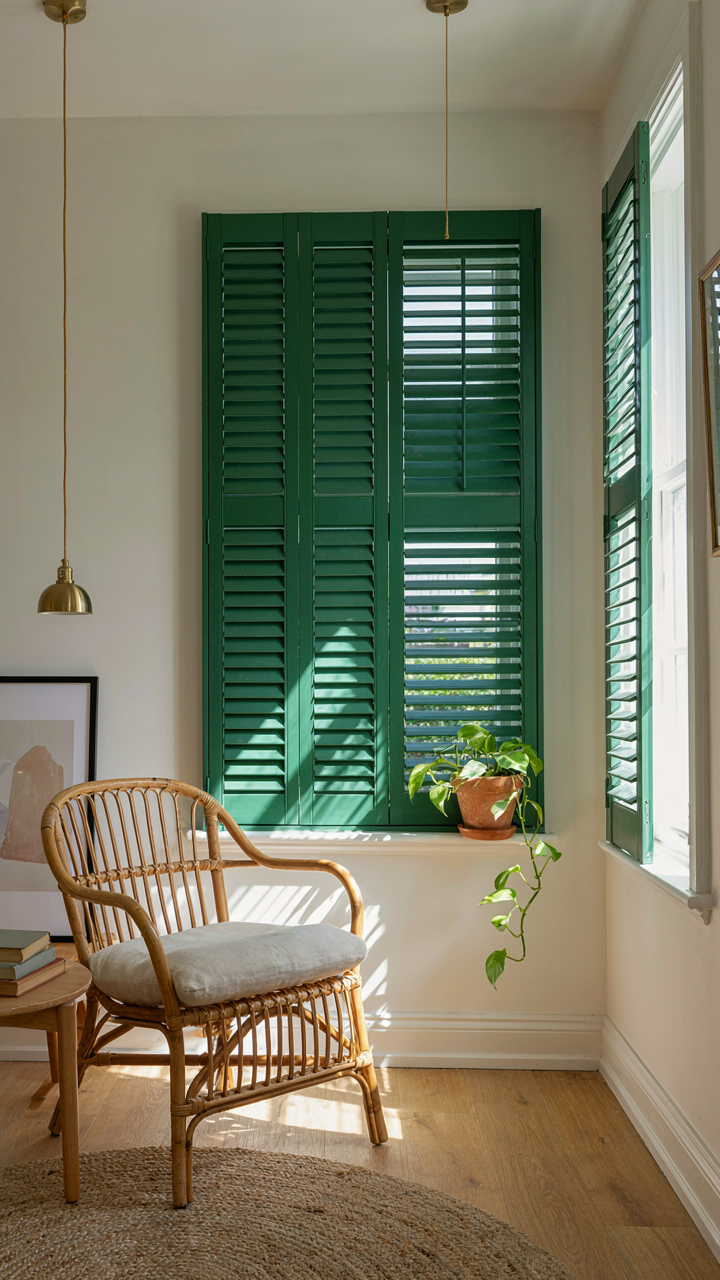
When Shutters Actually Block Light
You want shutters because they look right, not because you understand what they do. Here’s the mechanism: shutters function as thermal mass regulators and light control barriers, borrowed from passive architecture principles where orientation and closure timing manage internal conditions without active systems. Cottage sheds with working shutters reduce interior temperature swings by 8 to 12 degrees Fahrenheit on hot days. This matters because stored tools, seeds, and materials degrade faster in temperature flux. Functional shutters aren’t decorative additions—they’re deliberate infrastructure that extend the usable life of what you keep inside.

Most people mount shutters then never close them. The real win emerges when you actually operate them: close shutters during peak sun hours in summer, open them at dawn and dusk to release accumulated heat. This daily protocol prevents moisture buildup and keeps metal implements from rust acceleration. Paint quality directly affects how long shutters maintain their weatherproof seal. Poor-quality exterior paint cracks within two seasons and allows water infiltration into the wood frame. Invest in marine-grade or exterior-specific paint applied in two coats minimum, then establish a five-year repainting schedule before failure becomes visible.
How Color Shifts Your Garden Perception
The psychology framework here is about contrast ratio and cognitive load—how much mental effort your eye spends processing what it sees before your brain assigns meaning. A painted shutter operates as a focal point anchor that either reduces visual chaos or amplifies it depending on hue selection. Dark green or charcoal shutters recede visually and let plantings command attention. Bright white or cream shutters advance and can overwhelm a small garden footprint. Your color choice determines whether the shed becomes background infrastructure or competes with the landscape you’re trying to feature.
Cohesion emerges from repetition, not matching. If your house trim is white and your fence is natural wood, white shutters don’t automatically harmonize—they create three competing whites at different scales. Paint shutters the color that appears on a secondary element: your planter boxes, a garden gate, or weathered wood tones from existing structures. This ties the shed into the existing visual hierarchy without demanding it matches anything exactly. Apply the same paint color to both shutter faces and the frame edges so the system reads as one unified object rather than a poorly coordinated afterthought.
Beyond Storage: She Shed Exterior As A Command Center
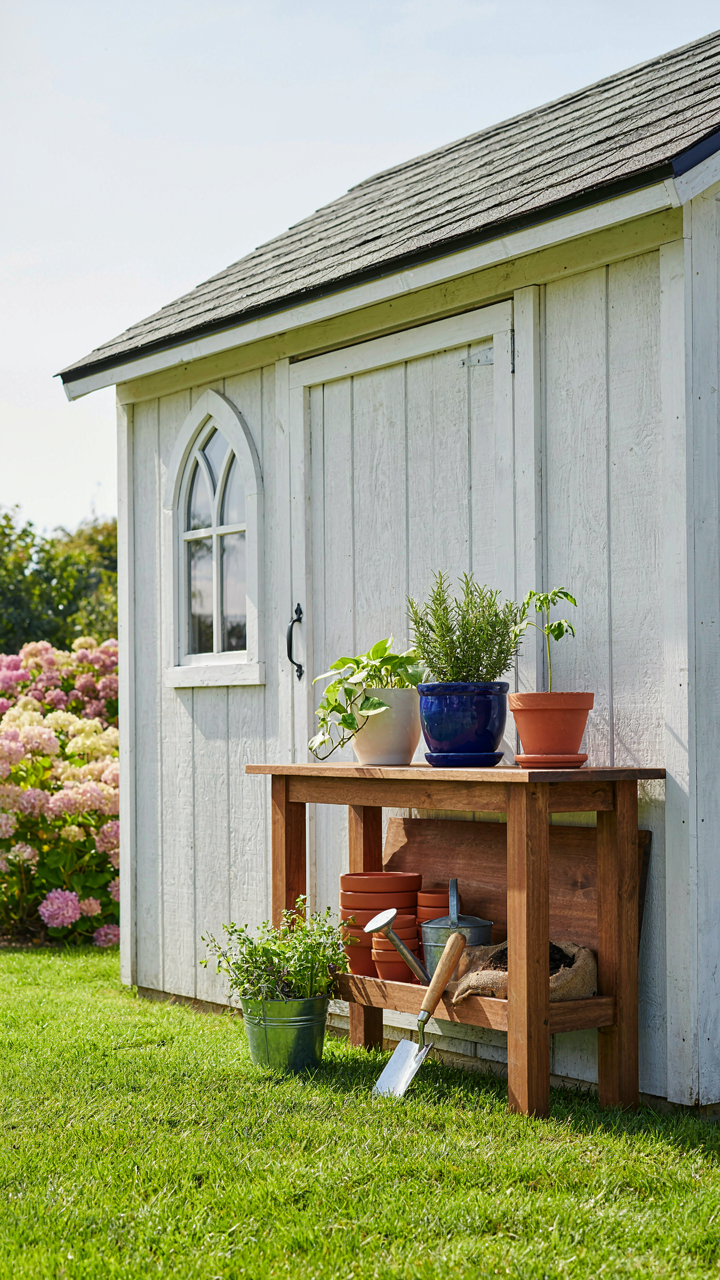
Built In Potting Bench Integration
You want to feel productive without leaving your property, which is why you’re fantasizing about a potting bench attached to your shed. The mechanism is simple: a dedicated work surface anchored to the shed exterior collapses decision fatigue. You stop asking where to pot plants and start doing it. Cottage sheds traditionally housed this exact function, with benches positioned on the south or east side to capture morning light without afternoon scorch. The bench secures to the shed wall using lag bolts through framing, typically at 16 inch intervals where studs exist.

The potting bench surface should sit 30 to 36 inches high, matching standard work counter height. Pressure treated wood or composite materials survive weather rotation without warping. Position it where runoff drains away from the shed foundation, not toward it. A hinged storage compartment underneath holds soil, pots, and fertilizer within arm’s reach. This eliminates the friction of walking back inside to fetch supplies, which destroys workflow momentum faster than anything else.
Vertical Space As Load Bearing Real Estate
The common mistake is treating wall space and floor space as equal, when they are not. Industrial storage thinking applies here: vertical organization follows the principle of density per square foot. A cottage shed with 8 foot walls can stack 15 to 20 percent more inventory than the floor alone allows if you treat walls as load bearing real estate. Painted shutters frame the visual perimeter while pegboard and wall mounted racks occupy the functional interior behind them.
Mount tool pegboard at 48 inches high so tools sit at wrist height without bending. Use French cleats for heavy racks to distribute weight across studs. Hanging rods for stakes, hoses, and cords eliminate floor clutter entirely. The rule: anything that hangs frees up floor space for the work you actually do. Position frequently used items at the 36 to 60 inch band, with seasonal gear higher or lower. This vertical protocol transforms a 6 by 8 foot shed into a workspace that functions like 120 square feet of usable surface.
The Unseen Infrastructure: Foundation And Drainage
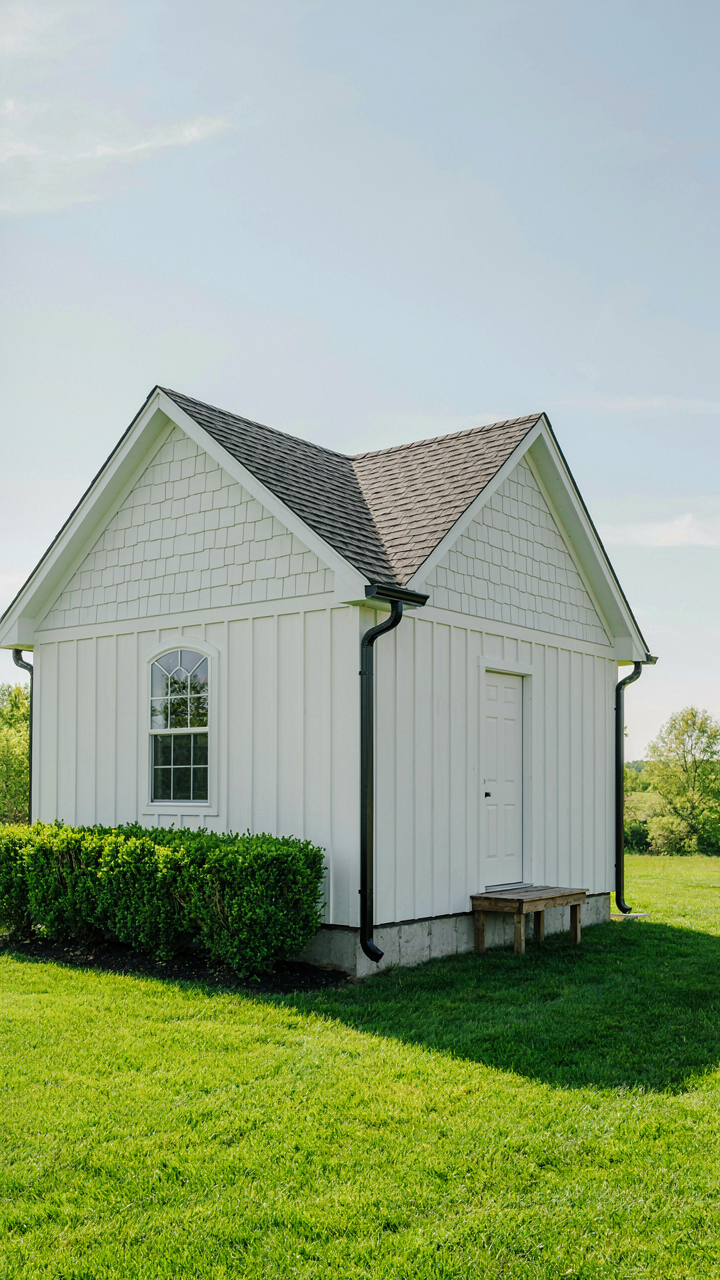
Why Your Foundation Fails Before Your Walls Do
You care about this section because you’re terrified of dropping money on a cottage style garden shed only to watch it rot from underneath within a decade. The real mechanism is simple: wood doesn’t fail from above. It fails from moisture traveling upward through the foundation into the sill plate—capillary action works like a hydraulic pump, pulling water directly into the grain. Stop the water at the ground level and you stop 80 percent of structural decay before it starts.

A proper foundation isolates the shed’s wooden frame from soil contact and the moisture it carries. Concrete piers, concrete slab, or rubble trench methods all work, but they serve one function: they create a moisture barrier. The common advice about “good ventilation” is incomplete. Ventilation helps, but it can’t outrun capillary action. You need both elevation and a physical break between earth and wood. Set your shed on concrete at minimum 4 inches above grade—this simple protocol prevents most rot problems.
Water Never Stops Looking For Cracks
Water management isn’t about stopping rain. It’s about redirecting it before it pools against your foundation and finds its way into seams. Gutters are mandatory on cottage style garden sheds because they move water away from the perimeter. Without them, rain sheds off the roof and collects in a moat around your structure. That concentration of water seeks the lowest point—usually where your foundation meets the soil.
Install gutters on all roof planes and route downspouts at least 4 to 6 feet away from the shed. Grade the ground around your foundation so water slopes away from the walls, not toward them. French drains work if your site has poor natural drainage, but they’re reactive. The protocol is simpler: gutters first, grading second, monitoring third. Check after heavy rain to confirm water isn’t pooling near your base—this one habit catches problems early.
Material Science Of Garden Shed Exterior Ideas
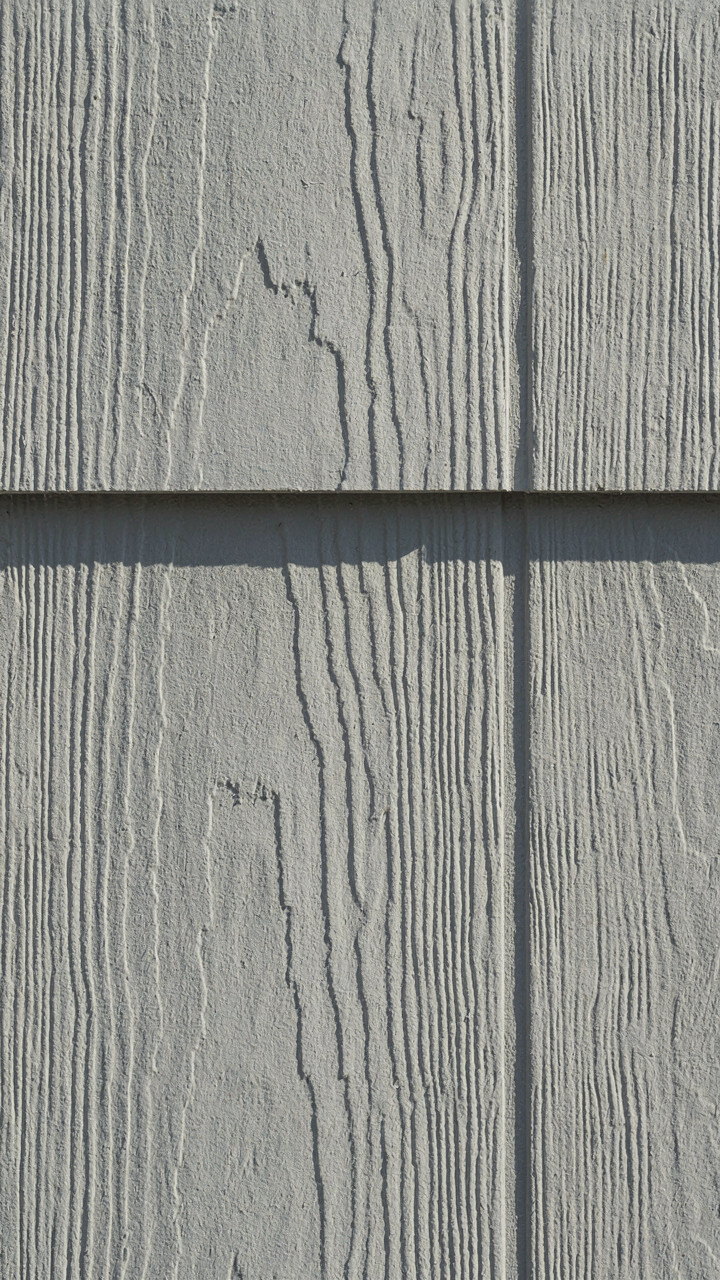
Durability Versus Aesthetics In Smart Material Selection
You want your shed to look like it walked out of a 1920s English countryside without collapsing in ten years. That tension is the real problem nobody addresses. Material selection in cottage style garden sheds operates like supply chain economics: you’re choosing between upfront cost, replacement frequency, and visual authenticity. Pick wrong and you’ll either repaint every 18 months or sacrifice the aesthetic entirely.

Wood remains the dominant material for authentic cottage sheds because it photographs well and ages visibly. The trade-off: untreated softwood rots, hardwood costs 3x more and splits in dry climates, and painted finishes fail predictably on south-facing walls. Engineered materials like fiber cement boards mimic wood’s appearance for 40+ years with minimal maintenance, but they lack the detail work that reads as “cottage.” Your choice depends on whether you’re willing to maintain wood’s illusion or accept a material that actually performs.
- Cedar or Douglas Fir: High rot resistance without chemical treatment, but costly and requires regular sealing every 2-3 years to prevent graying.
- Pressure-Treated Softwood: Budget option that extends life to 15-20 years, though the greenish cast requires paint to achieve cottage aesthetics.
- Fiber Cement Panels: Factory-finished, 40-year durability, mimics wood grain convincingly, but installation requires precision and specialty fasteners.
- Metal Siding With Wood Trim: Steel core resists weather indefinitely, wood trim provides cottage character, though thermal expansion creates maintenance at panel seams.
- Reclaimed Wood Cladding: Delivers authentic patina instantly, but wood quality varies wildly and hidden decay creates repair surprises within years.
Painted shutters work specifically because they sit on top of the structural material, solving a mechanics problem: you can refresh the visual layer without replacing the shed’s skeleton. Your exterior strategy should separate the load-bearing layer from the aesthetic layer, which is how cottage sheds actually survived into preservation status.
Maintenance Demands And Long Term Implications
Paint fails on garden sheds faster than most homeowners predict because moisture moves bidirectionally through wood and uncontrolled humidity triggers adhesion loss under the paint film. The common advice says “use quality exterior paint,” but that ignores the real variable: substrate preparation determines whether paint lasts five years or fifteen. A shed with poor ground drainage and no air gap between wood and soil will destroy any paint job within seasons.
Shutters specifically demand maintenance because they’re moving parts exposed to sun, rain, and seasonal wood movement. Hinges corrode from salt spray or humidity trapped behind paint. The painted surface cracks where wood expands and contracts at fastener holes. Cottage-style shutters with batten patterns collect water in recesses that never fully dry. Budget for repainting every 4-6 years on shutters, versus 7-10 years on flat wall panels. If you’re unwilling to repaint or re-seal components on this schedule, choose engineered materials that eliminate the painted surface requirement entirely and apply solid stain instead, which penetrates rather than films over the substrate.
Integrating English Cottage Shed With The Landscape
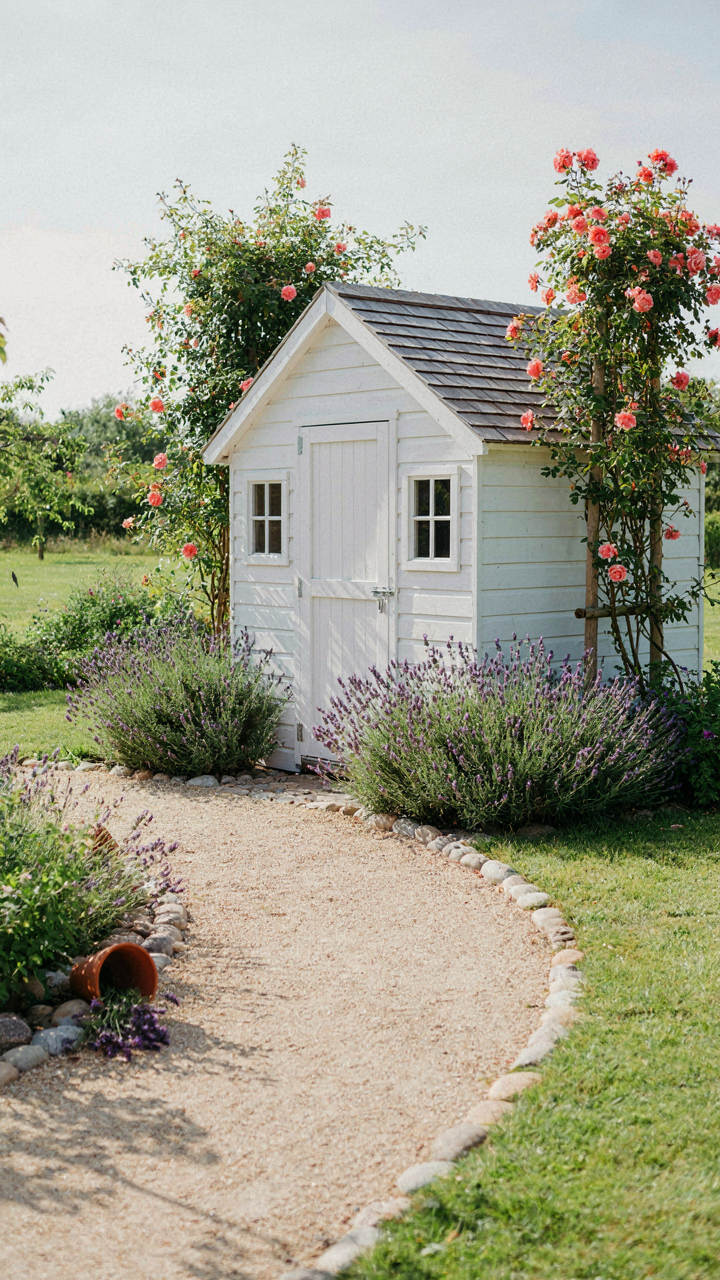
Blurring Boundaries Through Strategic Planting
You want the shed to look like it belongs there, not dropped in. That’s vanity dressed as design, but here’s what actually matters: a cottage shed sits in a landscape because the plants around it repeat the same visual language as the structure itself. Think of it as visual ecology, borrowing from landscape ecology’s principle of edge transition. A hard boundary between building and garden creates visual tension. A soft one dissolves it.

Plant scale matters more than plant choice. Small shrubs and perennials close to the shed’s foundation break up the structure’s footprint. Roses, lavender, and catmint work because they’re period-appropriate to cottage gardens and they soften angles without obscuring the painted shutters. Position taller plantings behind and to the sides so they frame rather than bury the shed. The planting density increases as you move away from the shed, creating a gradient that moves your eye from structure to garden naturally.
Pathways And Hardscaping Connect Structure To Purpose
Most people treat pathways as decoration. They’re infrastructure. A cottage shed needs a route to it that feels intentional, not like you’re cutting through weeds to reach it. Gravel works better than mulch here because it’s durable under foot traffic and reads as finished. Stepping stones or a defined border keep the pathway from expanding into the surrounding beds.
The path should approach the shed at an angle or curve slightly rather than dead-center, which reads as formal and breaks cottage character. Width matters: two feet minimum for comfortable passage, wide enough that two people can walk it without one stepping into beds. Terminate the path at a logical stopping point, usually where the shed door faces the garden or where the sightline from the house frames the structure best. This creates a reason for the path to exist beyond pure function.
The Unforgiving Truth About Your “Dream” Garden Shed

Status Disguised As Aesthetics
You want people to see it and think you’re the type of person who has taste. The cottage style garden shed—with its painted shutters and weathered charm—signals something to your neighbors. But here’s the mechanism: you’ve confused ownership with identity. You’re buying a feeling, not a functional structure. The shed becomes performance art, and performance art requires constant upkeep to maintain the story you’re telling.
The real problem emerges when that story stops paying dividends. Painted shutters fade. Wood cracks. The Instagram moment fades into a maintenance burden you didn’t budget for, either financially or psychologically. At that point, the shed stops being about utility and starts being about sunk cost. You keep investing because abandoning it means admitting the original motive was hollow.
Neglect Compounds Faster Than You Think
This isn’t about procrastination—it’s about decay mechanics. Wood absorbs moisture. Paint peels. Once the exterior fails, rot penetrates the frame. A cottage style garden shed with compromised shutters and siding deteriorates exponentially, not linearly. What costs $500 to fix in year two costs $3,000 in year five because the damage has spread internally where you can’t see it until structural failure forces your hand.
Most people underestimate the labor required to maintain the aesthetic. Painted shutters need repainting every three to five years depending on climate. Cottage style designs often feature decorative elements—trim, gaps, exposed joints—that trap water and debris. These aren’t flaws in the design; they’re maintenance time bombs. You either commit to a seasonal cleaning and touch-up schedule, or you watch your investment deteriorate into a liability that no amount of cosmetic repair can salvage.
The Real Obstacle Isn’t Your Aesthetic Taste; It’s Your Refusal To Treat Beauty As A Function

Most people treat a cottage style garden shed like decoration. Wrong. It’s a tool for how you live. Paint those shutters because weathered wood rots faster. Choose soft colors because they make you actually use the space instead of avoiding it. The shed you build isn’t prettier because it looks good. It’s prettier because it works. Stop waiting for the perfect design. Pick one element today—shutters, door color, window style—and commit. Your future self will stop making excuses and start making memories in a space that functions as beautifully as it looks.