
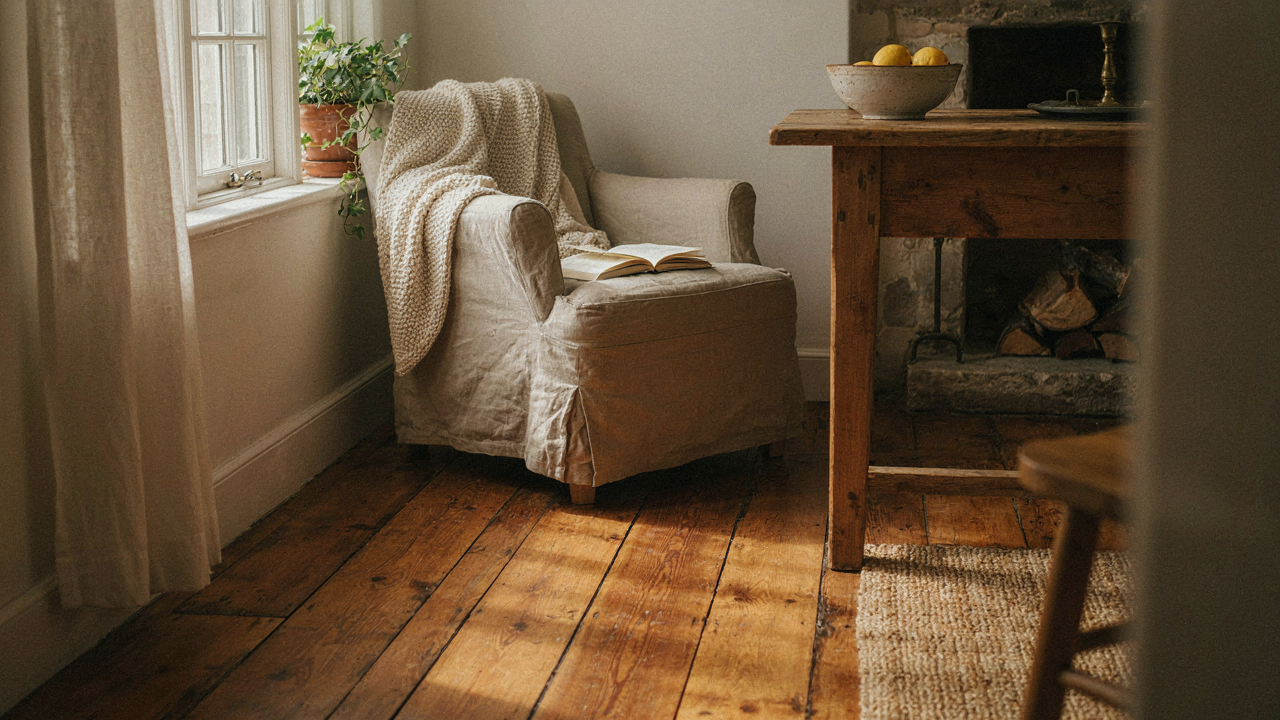
The Warmth Delusion: Why Your “Cozy” Interior Falls Flat

Superficial Warmth Never Reads As Character
You want people to walk in and feel like they’re inside something real, not decorated. The mechanism is simple: warmth in country interiors comes from material authenticity and use evidence, not color palette or furniture arrangement. A room filled with warm tones but pristine finishes reads as staged. A room with worn wood, visible patina, and actual living evidence reads as genuine. The gap between these two is the gap between decorating and inhabiting.
Country design that works doesn’t announce itself. It accumulates. Real country interiors show tool marks, fading from sun exposure, scratches from daily life. These details cost nothing but time and acceptance. A new barn beam stained dark brown is decoration. A beam that shows weather damage, nail holes from previous use, and uneven graying is character. The room temperature doesn’t change, but the perception of authenticity does.
The Hidden Cost Of Store Bought Comfort
Artificial coziness has a tax. Every mass produced “rustic” piece you buy is one more item competing for attention instead of supporting a narrative. You end up with a catalog room that requires constant attention to maintain the illusion. Real country homes don’t maintain illusions because they’re not performing. They’re just what happens when people live there for decades with quality materials. The cost isn’t money. The cost is the friction of fighting against what actually works.
When you lean on purchased warmth, you’re betting that styling beats substance. It doesn’t. A room full of distressed furniture, Edison bulbs, and gallery walls of farmhouse art will age into visual noise within three years. A room with real wood that’s been lived in, actual built-in storage from 1960, and walls that show the history of the house will deepen in character. Choose one: the temporary comfort of looking like you tried, or the permanent satisfaction of living like it’s yours.
The Wood Whisperer’s Protocol: Selecting Timber That Speaks Volumes
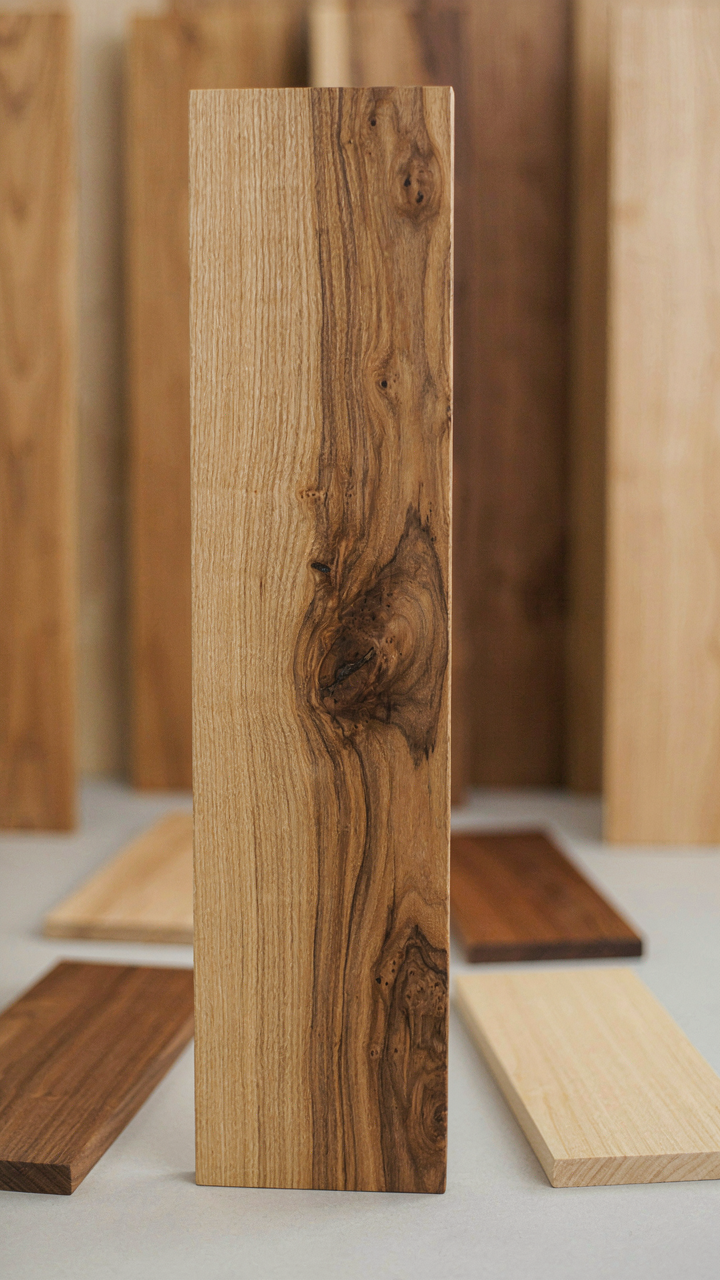
Beyond Oak: Uncommon Wood Choices For Unique Character
You want your space to look intentional instead of like you ordered from a catalog. The mechanism is simple: everyone defaults to oak because it’s available and forgiving. Your real leverage lives in the woods nobody thinks to use. Walnut, cherry, and hickory each carry distinct grain patterns and color trajectories. They age differently under light, tell different stories in the same room, and signal you actually made a choice rather than settling.

Hickory holds variation like no other domestic hardwood. Its grain swings between tight and wild within single boards, which means your walls never flatten into visual monotony. Cherry deepens with UV exposure, shifting from pale amber to cognac over years. Walnut stays dark and consistent but demands light-colored surroundings to breathe. Each wood has a work schedule and a payoff. Pick the one that matches your room’s natural light and your tolerance for change.
Source, Age, And Grain: Wood’s Hidden Language
Wood carries geological and temporal information the way sediment carries history. Your selection process should mirror how a geologist reads strata: source matters, age matters, grain pattern tells you everything. Reclaimed timber came from somewhere specific, sat for decades in a particular climate, and carries ring patterns that reveal its growing conditions. Machine-milled new wood compresses all that complexity into uniformity. One speaks loudly; the other whispers the same generic truth everywhere.
Grain direction and width reveal growth rate and regional water availability during the tree’s life. Tight grain means slow growth in consistent conditions. Wide grain means rapid growth or drought stress. A wood’s cellular structure already decided how it will move, check, and age before you ever installed it. Source your reclaimed pieces from barns in your own region when possible; the wood already adapted to your climate once. New wood from local mills carries the same advantage. This isn’t romantic nostalgia. It’s applied material science.
Inside Of House Ideas: The Authenticity Audit

What Country Actually Means
You want country interiors to signal taste and restraint, not decorating budget. The mechanism at work is this: mass production killed authenticity by making farmhouse aesthetics available at Target, so now everyone confuses the aesthetic with the substance. Real country homes evolved from constraint, not from a mood board. Shiplap, exposed beams, and mason jars aren’t country design—they’re the visual language of poverty and utility that manufacturers repackaged as lifestyle.

The difference between authentic and performed matters because one survives time and the other dates immediately. A 1890s farmhouse kitchen had open shelving because closed cabinets were expensive or didn’t exist yet. The family cooked with what was at hand and visible by necessity. When you install open shelving in 2024 to “feel” country, you’re copying the constraint, not understanding it. That gap between aesthetics and origin is where bad country design lives.
Strip Away Everything That Doesn’t Work
Function first is not sentimental advice—it’s the actual design principle that built country homes. Remove any object that serves only decoration. A cast iron skillet hanging on a wall works if someone uses it; if it’s never cooked in, it’s a costume piece. The same applies to vintage farming tools, old milk cans, or weathered ladders propped in corners. Country homes accumulated objects because they were useful, worn, and earned their space through repeated use.
Keep only what has history in your specific life or what performs a genuine task. A hand-hewn beam carries weight and tells time; a fake beam bolted to drywall carries nothing but doubt. Keep wood that shows wear from actual weather or work. Keep furniture that functions daily or serves a clear purpose. Everything else is friction. The protocol is simple: if you can remove it and the room still works better, it was never necessary.
The Entropy Of “Cottage Style House Interior”
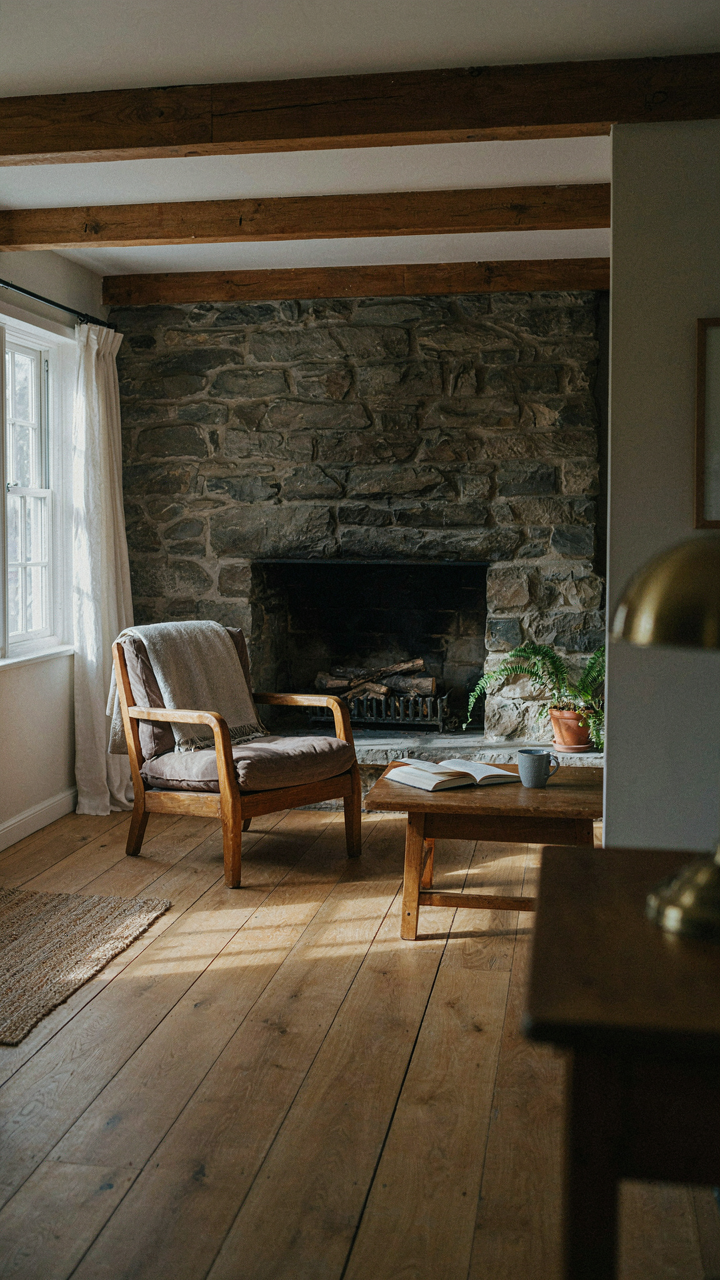
Why Warmth Actually Works
You want this space to feel warm because you’re tired of cold, sterile rooms that drain you. Thermodynamics calls this entropy, and it applies directly to how energy moves through a room. In a truly warm space, energy doesn’t leak away or stagnate in dead zones. Cottage interiors work because they force heat and light to circulate intentionally through material choices and spatial layout. The mechanism is simple: dense materials absorb thermal energy, low ceilings contain it, and strategic furniture placement prevents it from pooling uselessly in corners.

Wood does the heavy lifting here, not because it looks good, but because it has high thermal mass and moderate conductivity. A solid wood beam absorbs warmth during the day and releases it slowly at night. This isn’t mystical. It’s physics. Most modern homes use drywall and open layouts that let heat dissipate rapidly and unevenly. Cottage design compresses the space and loads it with materials that hold energy in place, creating the sensation of actual warmth rather than just higher thermostat settings.
How Material Density Controls Your Comfort
The real problem with modern “cozy” advice is that it confuses decoration with thermodynamic reality. You can’t fake warmth with candles and throw blankets. Material density determines how fast a room temperature actually stabilizes. Plaster walls, stone fireplaces, and solid wood floors retain heat longer than gypsum board and tile. This is measurable. A cottage interior packed with dense materials creates thermal inertia, meaning the room resists temperature swings and maintains equilibrium faster than you’d expect.
Airflow patterns matter equally. Low ceilings and smaller room volumes reduce the cubic space that needs to be heated, but they also limit convection currents that push warm air away from living zones. Strategically placed furniture and architectural elements break up these currents and hold warm air in the breathing zone where you sit and move. Install a wood ceiling at seven and a half feet instead of nine, add a fireplace mass wall, and furniture that floats in the center of the room rather than against perimeter walls. The room becomes thermally efficient by design, not by accident.
Cottage Kitchen: Function Over Faux Farmhouse Aesthetics
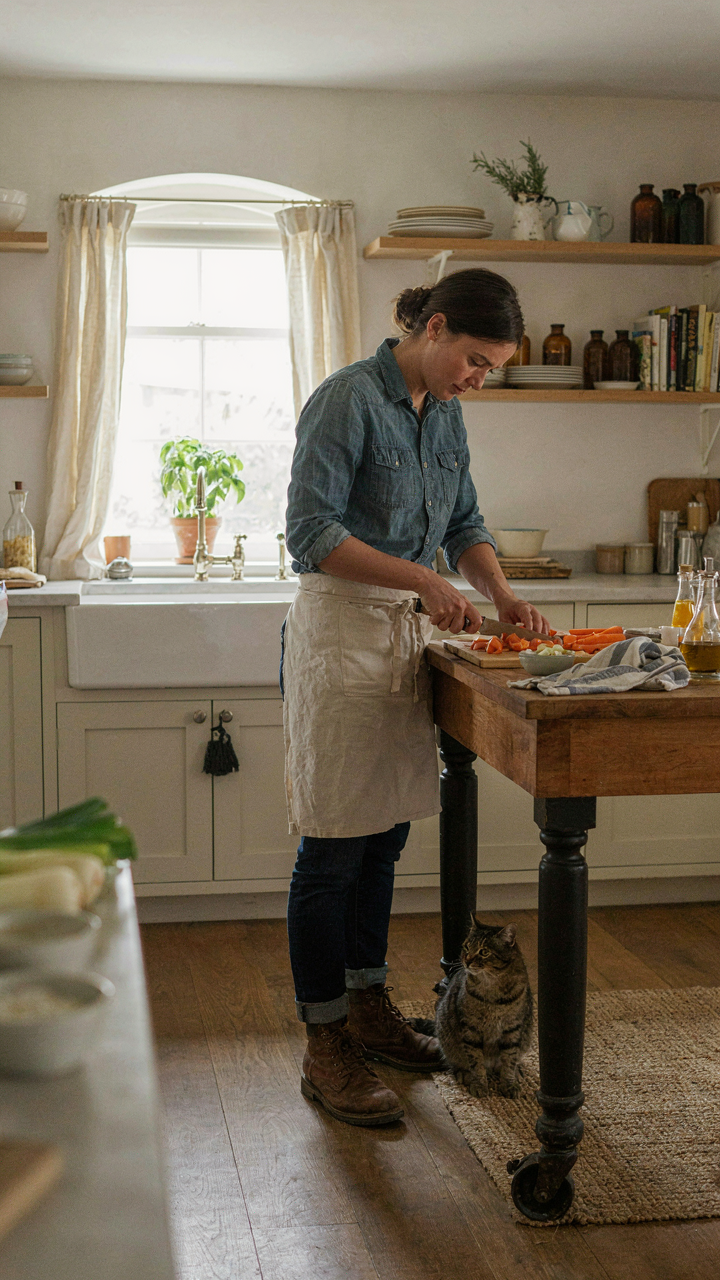
Small Space Kitchen Layout
You want the kitchen to feel intentional, not cramped, because a cramped kitchen broadcasts poverty. The real mechanism is workflow efficiency, not decoration. In small country kitchens, every inch either enables movement or wastes it. Position your stove, sink, and prep counter in a triangle. This isn’t aesthetic advice, it’s industrial kitchen design applied to residential space. Eliminate dead zones where appliances sit unused.

Cabinetry eats space faster than anything else. Open shelving above waist height keeps sightlines clear and makes the room feel larger. Wall-mounted pot racks replace cabinet real estate. A single quality butcher block island on wheels beats three fixed storage units because it adapts to your actual workflow instead of forcing you into someone else’s plan.
Materials Built To Outlast Trends
Wood outlasts painted drywall and laminate because it hardens with age instead of degrading. That’s not sentiment, that’s material science. Reclaimed beams and posts in country kitchens are structurally superior to new lumber because they’ve already stabilized. Tongue-and-groove flooring handles moisture and foot traffic better than plywood subfloors because its interlocking joinery distributes load more effectively. Real tile counters survive heat and impact that butcher block cannot. The common advice says choose wood for warmth. That’s wrong. Choose it because it performs.
- Reclaimed Timber Beams: Existing structural wood adds authentic patina while delivering proven durability. Salvage from barns or warehouses gives character that new milling cannot replicate.
- Slate or Quarry Tile: Fired clay tile withstands daily kitchen abuse better than synthetic materials. Sourcing from regional suppliers connects to regional aesthetics while ensuring availability.
- Cast Iron Hardware: Weight and corrosion resistance make cast iron functional for decades. Wrought iron hinges and handles age visibly but don’t fail structurally.
- Natural Stone Counters: Granite or soapstone require sealing but resist heat and knife marks. Soapstone darkens over time but requires no chemical maintenance.
- Solid Wood Cabinetry: Hardwoods like oak, hickory, or walnut accept refinishing and repair. Plywood boxes with veneer fail when moisture reaches the core.
Kitchens fail when form overrides function. Build for use first, then let the material show its honest wear. When you need new hardware in five years, you’ll replace it. When your cabinet structure fails, you’ll replace the entire cabinet. Choose the system that fails last.
Warm Farmhouse: The Rustic Paradox
When Distressed Becomes Just Cheap
You want people to think your kitchen has history without the actual cost or effort of owning something old. That’s the real play here. The mechanism is simple: distressing is a finishing technique that mimics wear patterns, but most people apply it to new wood or particle board and call it farmhouse design. It reads as fake because it follows no logic.

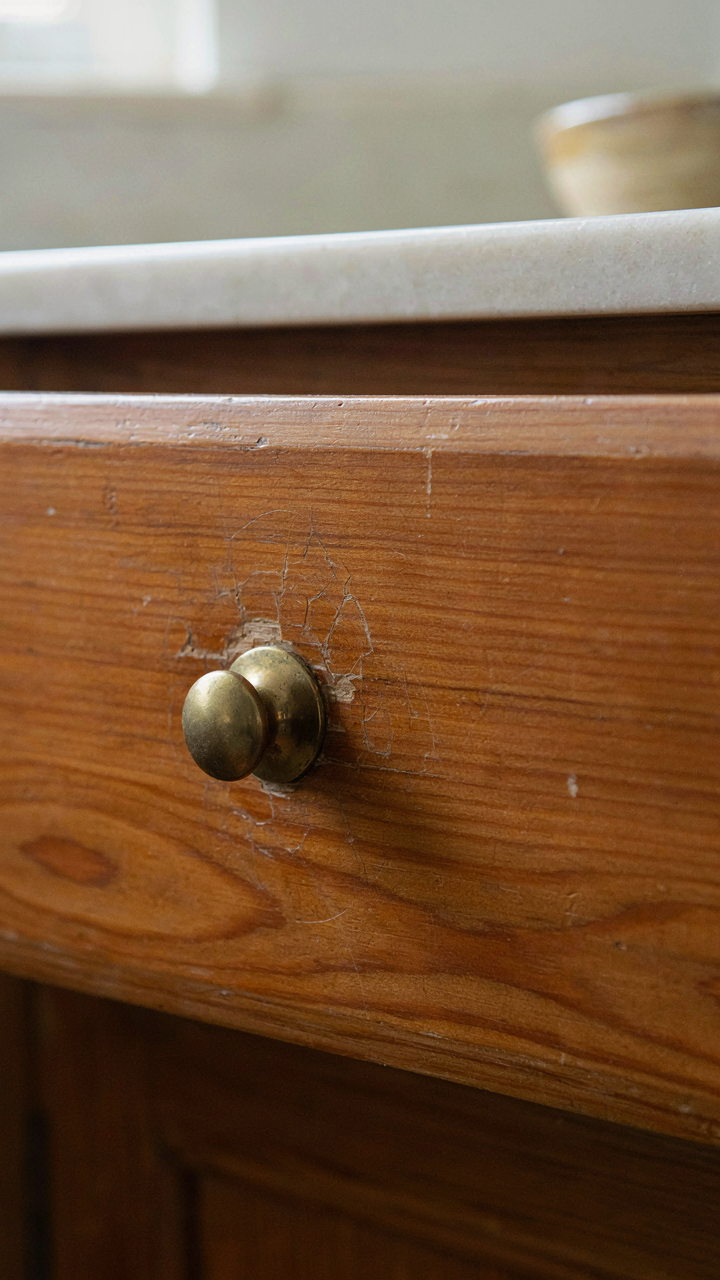
Real distressing requires understanding how wood actually fails. Edges wear first. Drawers show friction marks where hands grip. Finish cracks near stress points, not randomly. Cheap distressed pieces spray dark stain into crevices and call it done. The pattern looks theatrical because nothing caused it. Genuine wear follows physics. Manufactured wear follows a template.
Authentic Patina Versus The Distress Paint Kit
This isn’t just aesthetics versus authenticity. Use the economics lens here: distressed finishes depreciate because they signal low investment, while genuine aged pieces hold or gain value. A 1920s farmhouse table shows wear in specific zones. A reproduction table shows wear everywhere equally, which signals it was artificially treated rather than actually used.
The critical difference comes down to causation. Genuine wear happens unevenly because use is uneven. A cabinet door takes more impact than a shelf. Wood grain splits along the grain, not across it. When you source actual vintage pieces or allow new wood to develop real patina over years, the wear pattern becomes a record of function. That record is what reads as warm rather than staged. Buy used or build slowly instead of buying the distressed kit.
Beyond Pinterest: Cultivating Genuine Comfort

Touch Before You Look
You want this room to feel authentic so people think you’re grounded and real. Here’s what actually matters: neuroscience proves tactile input reaches your brain faster than visual input. Your hand on linen registers before your eye processes color. Country homes work because they’re built on this hierarchy. The best rooms don’t photograph well first. They feel right first.

Most design advice inverts this. It starts with mood boards and color schemes, then hopes texture follows. That’s backward. When you enter a country home that works, your body relaxes before you consciously notice anything. The worn wooden banister under your palm. The rough linen curtain against your arm. The cold stone floor on bare feet. These micro-interactions bypass aesthetic judgment entirely and trigger a genuine nervous system response.
Natural Fibers Over Everything Else
Texture isn’t decoration. It’s the actual material. Cotton, linen, wool, leather, wood, and stone have molecular structures that your skin recognizes as real. Synthetics don’t trigger the same response because they’re chemically different. Country interiors use natural fibers not for style points but because they’re tactilely distinct from the plastic-dominant world outside.
Layering these materials creates friction and variation. A linen throw on a leather chair. Jute under a wooden table. Rough wool rugs against smooth floorboards. These combinations work because they give your hands and feet different sensations in sequence. The nervous system stays engaged instead of going numb. This is why a country room with five natural textures feels richer than a minimalist room with three perfect materials. Variety in tactile input keeps the space neurologically alive.
The Impermanence Of “Cozy Kitchen”: Why Trends Betray You
Spotting The Fleeting: How To Avoid Stylistic Dead Ends
You care about this because you don’t want to feel foolish in five years. Here’s the mechanism: trends in country home interiors move through adoption curves just like any consumer product. What reads as “authentic farmhouse” today often signals a specific mass-market moment, not timelessness. Shiplap walls, distressed finishes, and coordinated “rustic” collections all came and went because they were marketed as solutions, not evolved from actual necessity or regional building traditions.

The tell is always speed of saturation. When a style floods Instagram, Pinterest, and big-box retailers within eighteen months, it’s already past its peak utility. Real country design—the kind that lasted—emerged slowly from climate needs, available materials, and local craft traditions. Reclaimed barn wood didn’t become trendy; it was always there. Shiplap became trendy. Learn to distinguish between what solves a problem and what solves a marketing problem. Your kitchen won’t feel dated if its bones serve function first and aesthetics second.
Investing In Permanence: Heirloom Quality Over Fast Décor
Heirloom-quality doesn’t mean expensive. It means made to absorb use without degrading—cast iron instead of nonstick cookware, solid hardwood tables instead of veneered particleboard, handmade pottery instead of ceramic decals. This is an economics problem: fast décor optimizes for initial impact and low cost, heirloom quality optimizes for amortized cost over decades.
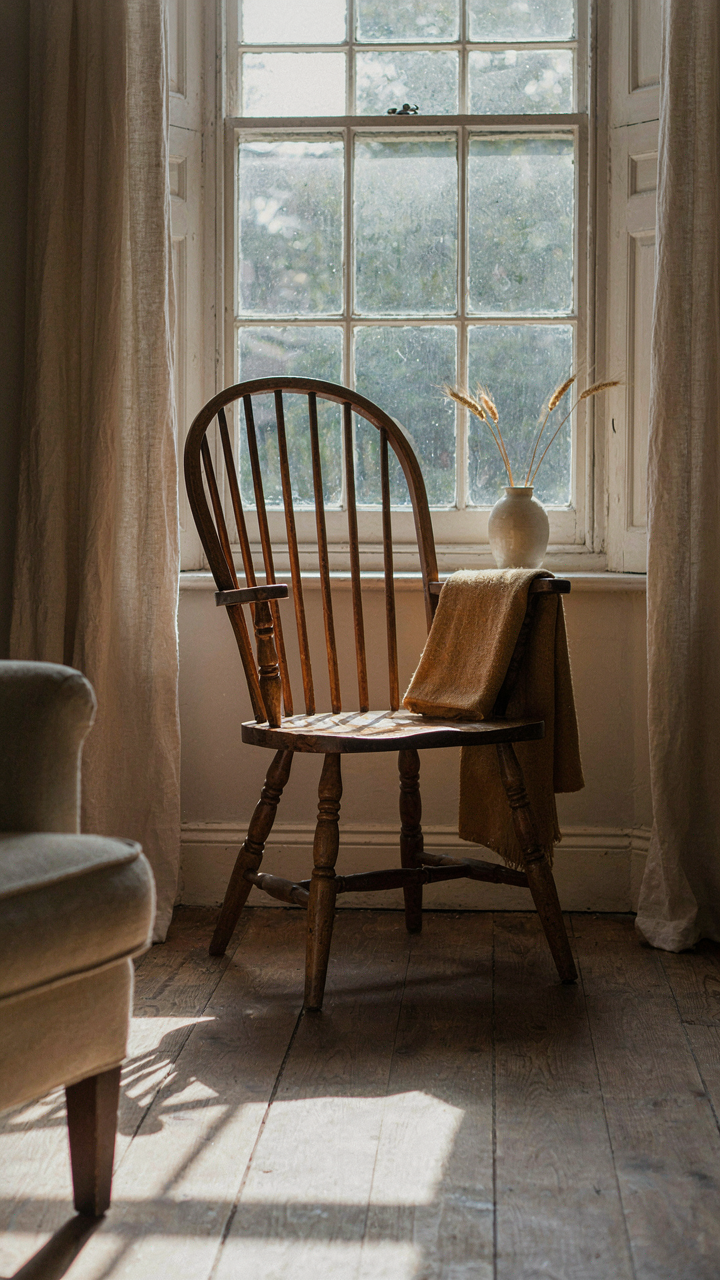
A forty-year-old Windsor chair costs more upfront than a reproduction, but you’ll keep it. You’ll refinish it. Your children might use it. The reproduction yellows and wobbles after eight years. Country home interiors survive because they contain objects that actually improve with age—patina that reads as integrity, not decay. Build around purchases you’d keep even if they fell out of favor. That’s the only real hedge against trends.
Your Home, Not A Showroom: The Anti Stylist Manifesto
Stop Performing For Instagram
You care about this section because you’re afraid your home doesn’t communicate the right thing about you to visitors who barely notice it anyway. The real mechanism is simple: aspirational design moves you further from function. You buy pieces because they photograph well, not because you use them. A country home interior works when it solves problems you actually have, not problems a stylist invented. The gap between styled homes and lived-in homes is the difference between a set and a workspace.

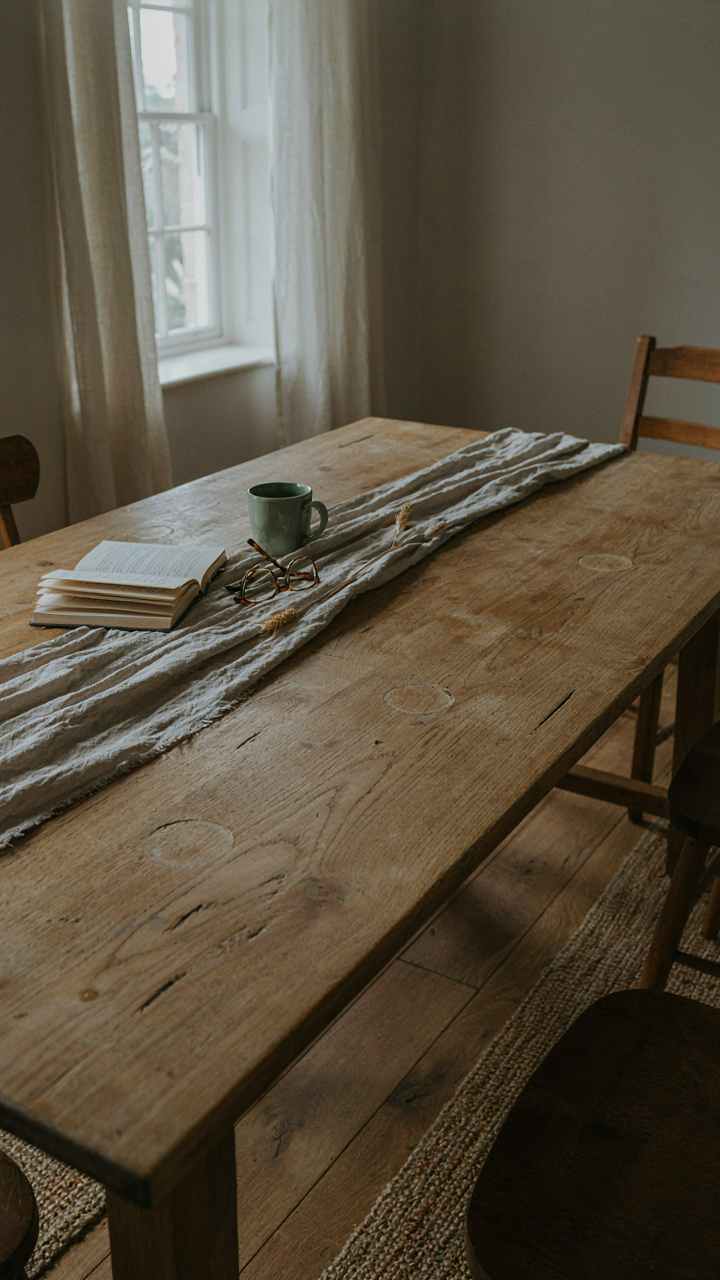
Most advice tells you to “find your style” first, then build around it. That’s backwards. Your style emerges from what you touch daily, what holds your coffee, what surface you set things on without thinking. A reclaimed wood table becomes part of your home’s story because you eat at it for years, not because it fits an aesthetic mood board. Country interiors that endure are built on friction between intention and use.
What You Actually Want To Say
Personal expression in home design requires economics: you have limited space, time, and money, so every choice carries opportunity cost. Spending three hundred dollars on a decorative ladder means not spending that on better kitchen lighting or cabinet hardware you touch daily. The uncomfortable truth is this: most people don’t want to express themselves through their homes. They want permission to stop trying. A weathered barn door, a stone fireplace, worn wood floors, these read as “timeless” because they require no curation. They just exist.
Country interiors work because they allow imperfection as the design language itself. A stain on wood is patina. A crooked shelf is character. Dust on beam work is evidence of time passing. You don’t curate this. You maintain it. Stop asking what your home says about you and start asking what you’re willing to maintain without resentment. That answer defines everything that goes inside.
Your Comfort Isn’t A Design Choice; It’s A Consequence Of Your Design Choices

Most people buy furniture and call it done. They’re backwards. Country home interiors work because they start with how you actually live, then build around it. Walk into one room today and write down what makes you feel settled. Is it the wood grain? The worn leather? The light? Start there, not with Pinterest. Your space won’t feel warm because it looks like a catalog. It’ll feel warm because every material you chose has a reason tied to your life. Design doesn’t create comfort. Your honest choices do.



