

The Sensory Decompression Chamber: Beyond Farmhouse Front Porch Ideas

Light That Doesn’t Announce Itself
You want a porch that signals you’ve arrived somewhere meaningful without the effort of getting anywhere. That’s what draws you here. The mechanism is contrast: your nervous system needs darkness to read light as valuable. Bright porches kill decompression because they trigger alertness instead of rest. The goal isn’t visibility. It’s signal.
Incandescent or warm LED bulbs in the 2700K range work because they mimic fire, not electricity. Wrap them in frosted glass or place them behind railings so you see the glow, not the source. Historic porches used oil lamps and later bare bulbs on chains—not for aesthetics, but because dusk required minimal light to read a newspaper. Position fixtures to cast pools of amber on seating areas while leaving edges in shadow. This creates psychological containment: you’re held in a space, not exposed under a stage light.
Nature’s Frequency Versus Frequency Stress
Street noise and porch noise are inverse problems, and treating them the same fails. From acoustics: ambient sound below 45 decibels becomes white noise—your brain stops processing it as threat. Above that, spikes register as intrusion. If your porch fronts a road, you’re fighting the mechanical hum that never stops. If it’s rural, you’re working with what already exists.
Install a water feature—even a small recirculating fountain—to mask traffic hum with variable frequency. The human ear registers flowing water as safe. Add vegetation density on the porch perimeter: climbing vines on trellises, thick shrubs behind railings. They absorb high-frequency traffic sound without looking like a barrier. If your porch is genuinely quiet, don’t add artificial sound. Crickets, wind, distant cattle work. Your job becomes removing interruptions, not creating them. Test silence for three evenings before adding anything else.
The Stoic Porch: Minimalism For Maximum Presence
Remove What Doesn’t Earn Its Place
You want a porch that feels intentional because you’re tired of spaces that feel like storage units masquerading as retreats. Visual noise doesn’t just clutter a porch—it fractures attention. Your brain processes every object in your field of view, even subconsciously. A cluttered porch demands cognitive load you don’t want to spend on a place meant for rest.

Start by removing anything that serves no function and triggers no genuine feeling. Old planters with dead soil. Decorative items you bought because they “looked country.” Furniture pieces that don’t support sitting, sleeping, or eating. Empty hooks. Broken weathervanes. The rule is brutally simple: if you wouldn’t actively choose to look at it right now, it goes. One pass removes 60 percent of what most porches carry.
The Necessities, Nothing Else
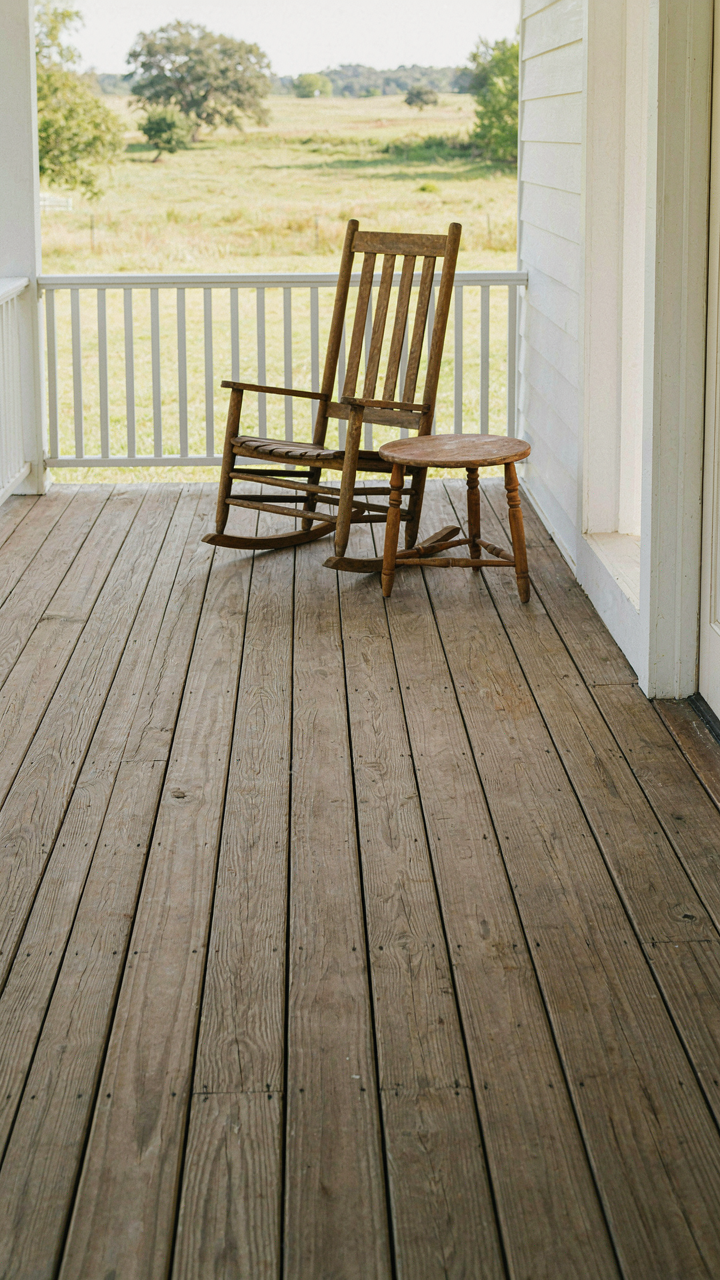
Function-first design isn’t trendy advice—it’s how rural porches worked before Instagram invented nostalgia. A rocker. A small table for drinks or a book. Shade from sun or rain. Shelter from wind. Lighting that works after dark. These aren’t suggestions. They’re the structural demands of a porch that people actually use instead of photograph.
Everything else is negotiable. Railings, flooring, and roof structure are fixed by building code, not aesthetics. Beyond that, add only what extends one of those five functions. A second rocker if two people sit together regularly. A lantern if you use the porch at night. A small shelf if books stay out there. Each addition should answer one question: does this enable a specific behavior I actually do? If not, the porch doesn’t need it.
The Biophilic Blueprint: Connecting To The Primal Calm

Plants As Acoustic Dampeners
You want plants on your porch because you think they look nice. The real mechanism is sensory load reduction. Biophily—the field studying human preference for natural systems—maps directly onto porch design through one principle: soft surfaces interrupt noise reflection. Dense foliage absorbs sound waves that hard materials bounce back at you.

Place climbing vines or tall potted plants at porch edges, especially near roads or neighboring properties. Position leafy plants to surround seating areas rather than scatter them decoratively. This creates an acoustic buffer that your nervous system registers as safety. A rocking chair becomes restorative when the environment stops demanding your attention to filter noise.
Raw Materials Build Neural Trust
People say natural materials feel better. That’s imprecise. Your brain processes wood grain and stone texture as signals of biological authenticity—the porch isn’t masking its structure, which signals the space won’t hide threats. This is evolutionary pattern recognition, not aesthetic preference.
Use reclaimed wood for railings, flooring, or beam work where structural integrity allows it. Incorporate local stone in foundation work, accent walls, or stepping surfaces. These materials age visibly, which your nervous system interprets as permanence and trustworthiness. The mechanism isn’t beauty—it’s the absence of deception. Your body settles when surfaces tell the truth about their age and origin.
The Rocking Chair Revelation: Engineering Deep Relaxation

Ergonomics Of Stillness: Ideal Chair Angles
You want permission to sit on a porch without feeling like you’re wasting time. The real mechanism is biomechanics, the study of how bodies move through space. A rocking chair works because the angle of the seat back and the curve of the rockers create what biomechanics calls a “closed kinetic chain”—your body stays connected to the chair through continuous contact, which signals safety to your nervous system.

Most porch advice gets this wrong. People talk about comfort like it’s subjective. It’s not. A proper country porch rocker needs a seat back angled between 100 and 110 degrees from horizontal. This angle keeps your spine in neutral position without forcing you to engage your stabilizer muscles. The seat itself should slope slightly forward, about 5 degrees, which prevents you from sliding backward and reduces pressure on your hamstrings. Get the angle wrong and you’re fighting physics for two hours. Get it right and your body stops resisting.
Rhythm And Movement: The Brain’s Lullaby
The rocking motion isn’t decoration. It’s a neurological input that downregulates your central nervous system through vestibular stimulation. The inner ear detects rhythm and communicates it to your brain’s reticular activating system, which controls arousal levels. A consistent rocking pace of 40 to 60 rocks per minute matches the human resting heart rate and triggers the parasympathetic nervous system to activate. Slower rocks work too, but you need consistency.
This is why sitting still doesn’t create the same effect. The movement matters. A rocking chair on a country porch creates what researchers call “rhythmic proprioceptive input”—your muscles and joints sense the predictable motion and your brain interprets it as safe, lowering cortisol. Rock for 20 minutes at a steady pace and your body reaches a state similar to light meditation without the discipline required. The mechanism is automatic. Your only job is to show up and maintain the rhythm.
The “Cabin Porch Decor” Illusion: Why Authenticity Trumps Trends

Reject Mass Market Rural Aesthetics
You want your porch to look authentic because you fear it will broadcast that you’re faking it. Here’s the mechanism: mass-produced “rustic” decor works like camouflage in reverse. It makes every porch look identical because manufacturers design for the broadest possible buyer. Reclaimed wood signs, galvanized metal buckets, rope accents—these items signal rural life without requiring any actual connection to it. The market has weaponized nostalgic imagery into a commodity that erases individuality.

Real country porches evolved from function, not aesthetic theory. A farmer’s porch had a specific chair because it weathered storms and didn’t rot. Railings existed because they prevented falls. The decor you see in farmhouse magazines is often the opposite: intentional staging of objects that serve no purpose beyond looking the part. When you buy the curated set, you’re buying the lie that authenticity can be purchased as a bundle.
Anchor Choices In Your Actual Life
What you actually do on the porch determines what belongs there. If you read there, you need proper light and a table. If you watch storms, you need an unobstructed view. If you work with your hands, you need storage for tools. The porch becomes a reflection of your routine, not a reflection of someone else’s Instagram feed. This is the only mechanism that produces a porch people recognize as genuinely lived-in.
Start by documenting three weeks of porch activity. What time do you spend there? What do you reach for? What frustrates you about the current setup? Build your decor list from these observations, not from design trends. A single item you actually use beats ten decorative pieces you don’t. The porch that matters is the one that solves your problems, not the one that solves the designer’s aesthetic problem.
The “Country Porches Farmhouse” Filter: Curating Your View

Framing The Natural Landscape
You want people to notice your porch matters. Here’s what actually matters: what you choose to see from it. Your view is real estate for your attention. The mechanism is simple—your sightline determines whether your porch feels like an escape or a waiting room.

Country porches work because they frame something worth looking at. This comes from landscape architecture’s concept of “borrowed scenery,” where you compose your view like a painter composes a canvas. Position your seating to face trees, water, or open acreage instead of the driveway or neighbor’s fence. Angle matters. A rocking chair pointed at a treeline works. Pointed at a utility pole doesn’t. Your porch doesn’t create the view—it curates it.
Blocking Out What Doesn’t Belong
Most porch advice skips this: what you hide matters more than what you show. A beautiful porch facing a highway loses its entire function. Blocking visual noise is defensive design, borrowed from military strategy’s concept of “terrain denial”—you control what the eye can reach.
Plant dense hedgerows, privacy screens, or lattice structures between your porch and streets, neighboring properties, or structures that contradict the rural feeling you’re building. Hemlock, arborvitae, and boxwood grow tall without looking manicured. Install these on your property line, not at the porch edge. The goal is making unwanted sightlines physically impossible before someone sits down. This shifts your mental state before you even settle into the chair.
The Atmospheric Pressure System: Sculpting The Microclimate
Wind Breaks And Airflow Control
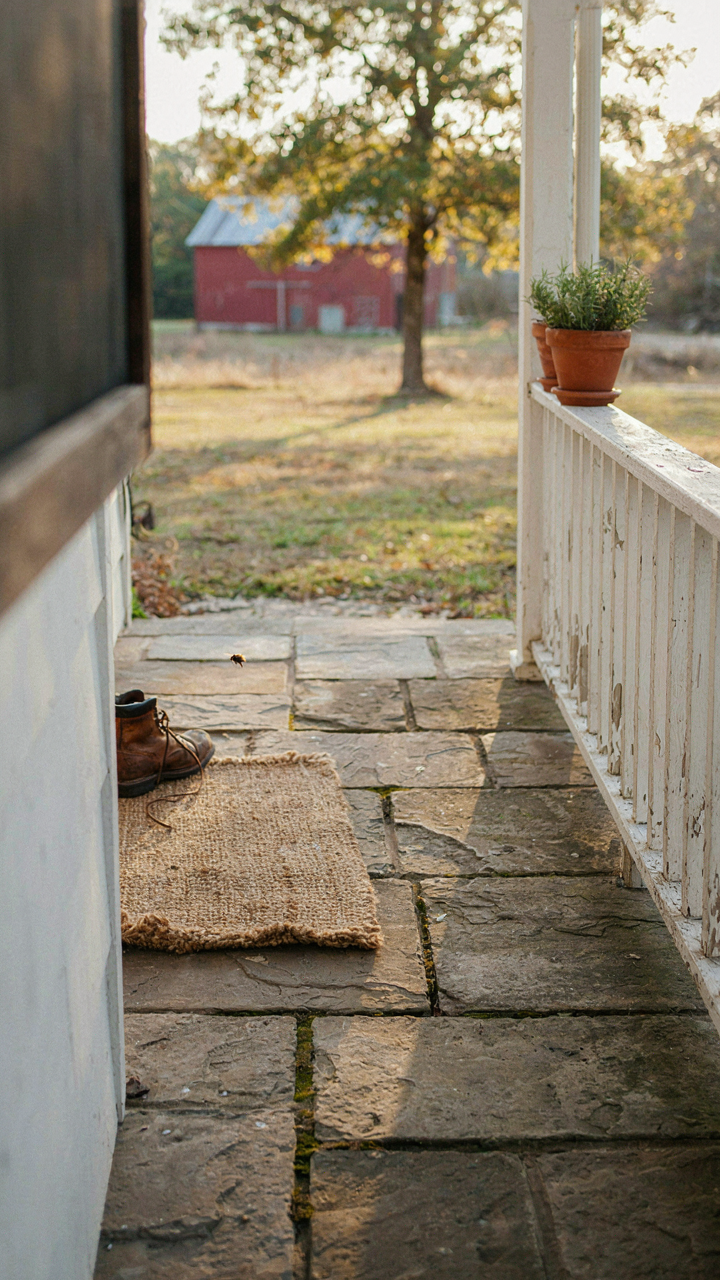
You want your porch to feel intentional, not like you got lucky with the breeze. Here’s the mechanism: wind moves in predictable patterns based on obstacles. Buildings, trees, and terrain redirect air flow. On a country porch, you’re competing with open land that wants wind to move freely across your space.

Strategically placed structures kill lateral wind without trapping stale air. A fence on the windward side breaks gust velocity. Trees planted upwind act as buffers. The goal isn’t zero air movement—dead air gets hot and stagnant in summer. You want diffused, slowed air. Position solid barriers perpendicular to prevailing wind direction, then allow air to flow around the porch’s perimeter in gentler waves. This is how vernacular porches in windy regions stay usable year-round.
Thermal Mass For Evening Temperature Stability
Physics calls it heat capacity: the ability of a material to store thermal energy and release it slowly. A country porch’s thermal mass works like a battery for evening warmth. Concrete, brick, and stone absorb heat during the day, then radiate it back after sunset as ambient temperature drops.
Porch flooring material matters more than most people realize. A concrete slab heats during daylight and warms the air above it into evening. Wood decking offers minimal thermal storage. Brick or stone pavers placed in direct sun create a heat reservoir that extends comfortable sitting time by one to three hours after sunset, depending on season and latitude. The thicker the thermal mass, the longer the delayed heat release. Position this mass where afternoon sun hits it longest, and your rocking chair stays warm when it matters most.
The Cognitive Reset Protocol: Beyond “Rustic Front Porch” Charm
The Single Task That Breaks Your Pattern
You want the porch to fix what your phone broke. That’s the real reason you’re here. The mechanism is simple: your brain defaults to pattern-matching whatever environment you’re in. A porch filled with competing stimuli (decorations, tchotchkes, multiple focal points) keeps you scanning. You need constraint, not abundance.

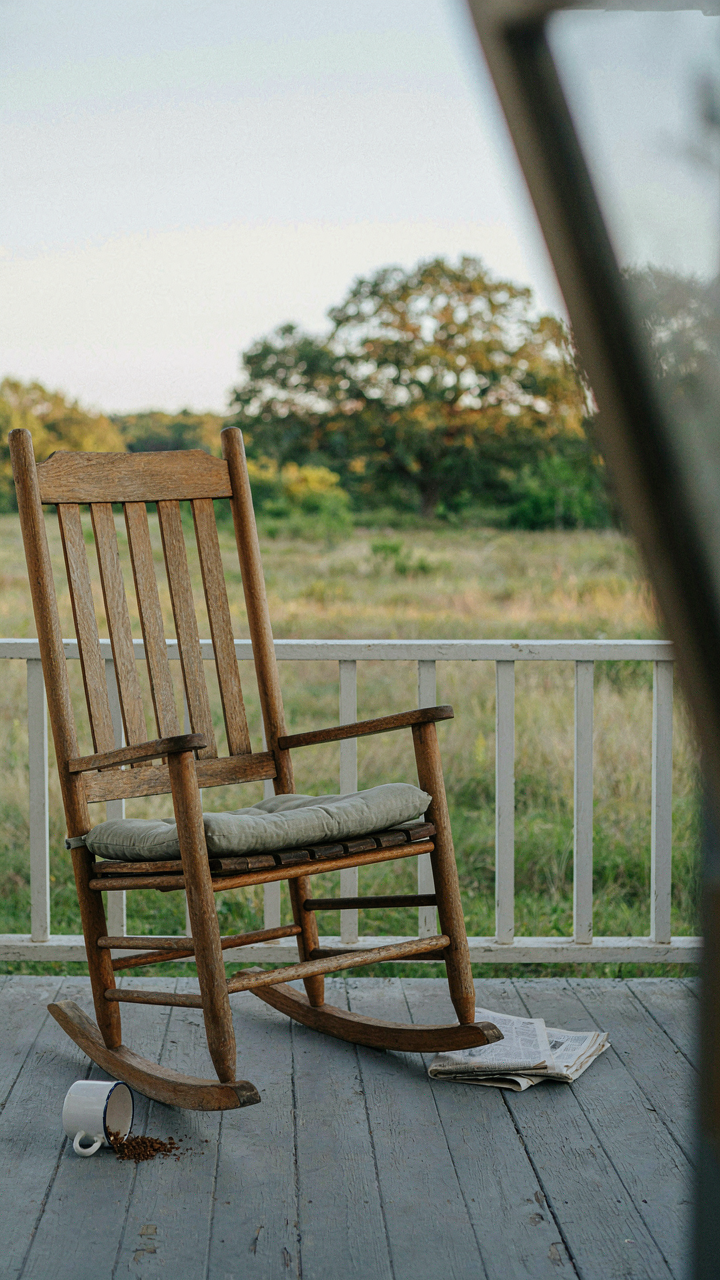
A country porch works because it enforces monotasking through design. One rocking chair. One view. One surface without clutter. The neuroscience is clear: your prefrontal cortex can’t toggle between tasks efficiently. When your porch eliminates choices, your nervous system stops the constant cost of decision-making. That’s the reset. You sit in a rocking chair without reaching for anything else because there’s nothing else to reach for.
The Digital Detachment Threshold
Most advice says “put your phone away” and leaves it there. That misses the actual problem. Your phone isn’t the issue. The habit loop is. You need a physical boundary that makes the loop impossible, not just inconvenient.
The country porch works here because distance creates friction. Leave your phone inside the house. Make it a rule that’s structural, not willpower-based. The porch itself becomes a phone-free zone not through discipline but through geography. After three weeks of this, your body stops expecting the device when you sit down. The ritual isn’t “being present.” The ritual is placing your phone on a specific table inside before you step outside, every single time.
The Unseen Elements: Crafting A “Country Front Porches” Vibe With Scent & Texture

The Smell That Signals Home
You want people to feel like they belong here the moment they step outside, and scent is the fastest neural shortcut to that feeling. Most porch advice skips smell entirely, which is a mistake. Neuroscience calls this olfactory memory: a smell triggers emotional recall faster than any visual. Woodsmoke, rain-dampened earth, and crushed herbs activate the parasympathetic nervous system, the biological state where people actually relax.

The mechanism is simple. Burn cedar or oak in a fire pit or fireplace insert, not for heat but for territorial signal. Grow mint, rosemary, or lavender in planters near seating. After rain, the petrichor from gravel or soil does the work for free. These aren’t decorations. They’re environmental anchors that tell your nervous system: this is a place where time moves differently.
Surfaces That Make You Stay
The mistake people make is treating texture like decoration instead of what it actually is: friction against your skin that keeps you present. A rough-hewn wood beam, a weathered blanket, a chunky cotton cushion. These create micro-sensations that interrupt phone scrolling and shallow breathing. Your hands need something to do besides thumb through feeds.
Use untreated or lightly finished wood for railings and frames. Linen and cotton blankets in neutral tones, not synthetic blends. Pillows with visible weave, not smooth. Touch matters because it forces embodiment. When your fingers trace rough wood grain or pull a textured blanket over your lap, you stop performing relaxation and actually experience it. The rocking motion of a chair on wooden planks compounds this effect by creating rhythmic repetition your body expects.
The Cabin Front Porch Ideas Playbook: Durability Over Delicacy
Materials That Age Instead Of Deteriorate
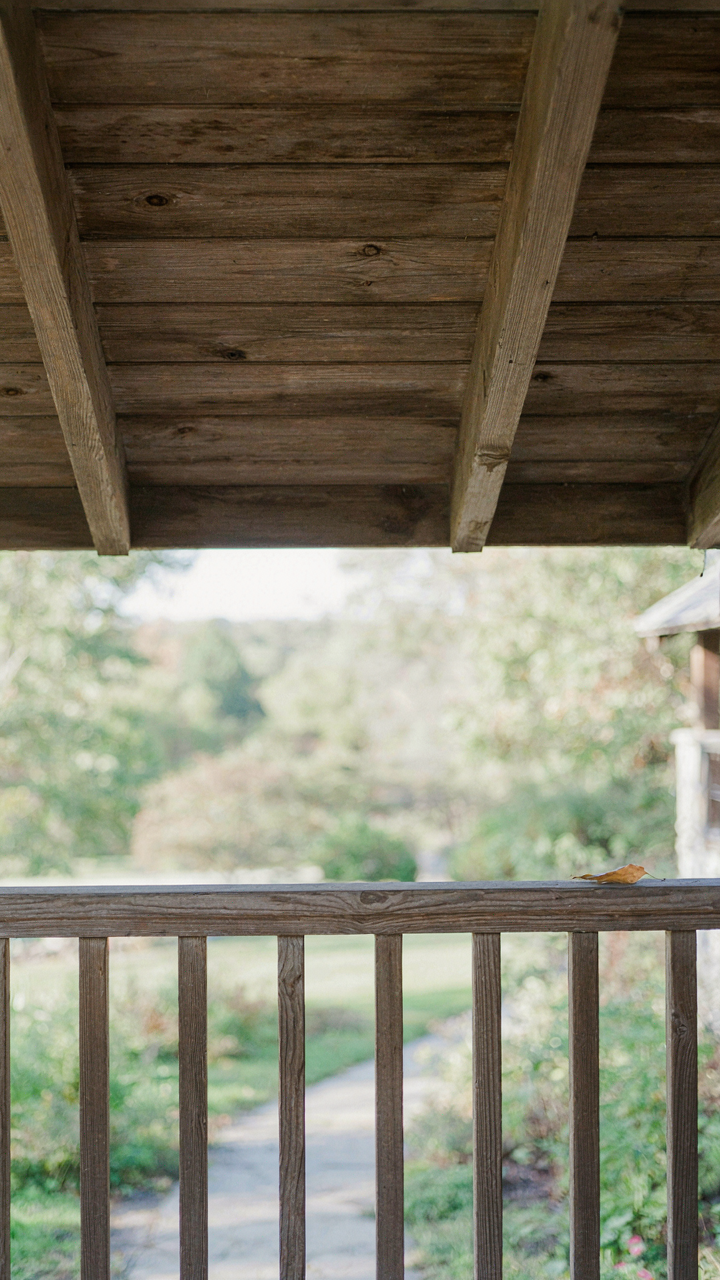
You want your porch to look intentional, not neglected, five years from now. The real mechanism at work here is material entropy: cheaper materials fail catastrophically while quality materials fail gracefully. Cedar and pressure-treated lumber don’t just last longer than pine or composite alternatives—they develop character as they weather, which masks maintenance gaps. The grain becomes more pronounced, the color deepens. A railing that’s aging well looks like a choice, not a mistake.
Steel cable railings outlast wood balusters by decades because they don’t absorb moisture or rot from the inside out. Galvanized metal hardware resists rust through zinc plating, a process that creates a sacrificial layer between the base metal and the environment. Stone or concrete floors won’t splinter, cup, or need refinishing. The porch doesn’t fight the elements; it surrenders to them on favorable terms. Choose materials where degradation becomes part of the aesthetic, not a problem to solve every other season.
Design That Requires Nothing From You
Most porch advice tells you to add features. The actual constraint is maintenance time, and everyone pretends they’ll have more of it later. Low-maintenance design means removing decision points—the places where you have to choose between effort and decay. Open railings need less cleaning than lattice. Sealed wood beats stained wood. Concrete beats composite decking that traps moisture in seams.
- Open flooring layouts: Fewer crevices trap dirt and standing water. Air circulates underneath, preventing rot before it starts.
- Minimal trim and soffits: Exposed beams and posts age visibly but require no caulking. Sealed ends prevent rot at the most vulnerable points.
- Built-in seating with drainage: Benches angled slightly forward shed water instead of pooling it. No cushions means no mildew breeding ground.
- Metal roof overhangs: Extends 3 to 4 feet minimum to keep rain off walls and flooring. Gutterless designs let water fall clear rather than channeling debris.
- Single-material approach: Stick to one or two materials throughout. Mixing wood types, metals, and stone creates incompatible maintenance schedules.
The porch that demands nothing is the one you’ll actually use for rocking chair evenings instead of guilt-spiraling over peeling paint. Lock the design down at the beginning, then let time do its work without your intervention.
The Real Obstacle Isn’t Your Decor Budget; It’s Your Inability To Disconnect
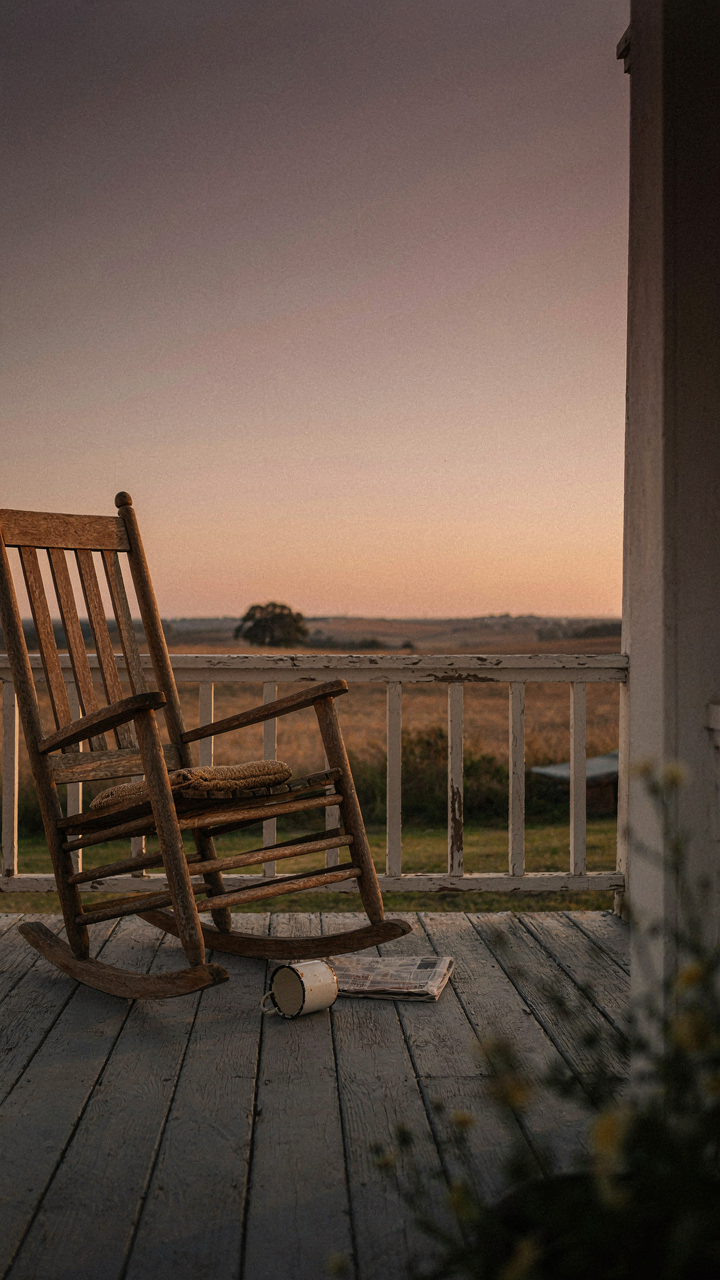
You don’t need a perfect country porch. You need permission to sit on it without your phone. The rope lights, the weathered wood, the rocking chair—these aren’t luxuries. They’re tools that force you to do nothing, and that terrifies you. Today, set a rule: no screens after sunset on your porch. One week. Watch what happens when boredom becomes acceptable. The porch doesn’t transform you. Sitting still does.



