The Sensory Scarcity Protocol For Cozy Cabin Bedroom

What Actually Anchors A Room
You want your bedroom to feel intentional instead of like you decorated by committee. A cozy cabin bedroom works because it compresses sensory input instead of multiplying it. In neuroscience, signal-to-noise ratio describes how clearly a target stimulus registers against background interference. Your bedroom has visual noise, tactile noise, and auditory noise competing for attention. Strip the noise and three primary anchors emerge: what you see when you enter, what your skin touches, and what you hear in stillness.
Most people reverse-engineer this wrong. They start by buying texture and layering it everywhere, which creates confusion, not comfort. The real mechanism is constraint. You identify which sensory channel matters most to you, amplify that channel until it dominates the room, then let everything else support it. If sight matters most, one strong visual anchor (exposed wood beams, a stone fireplace, a dominant wall color) becomes the gravitational center. Texture and sound arrange themselves around it. If touch matters most, you build the textile layer first and design the visual field to not compete.
Visual Monotony Beats Stimulation
The advice to “add visual interest” is backward for cozy spaces. Visual interest means complexity. Complexity means decision fatigue. A cozy cabin bedroom uses visual monotony as a feature, not a limitation. Hold your wall colors, beam tones, and floor materials to two to three earthy values maximum. Warm grays, browns, and cream tones work because they don’t demand interpretation. Your eyes land and rest instead of scanning.
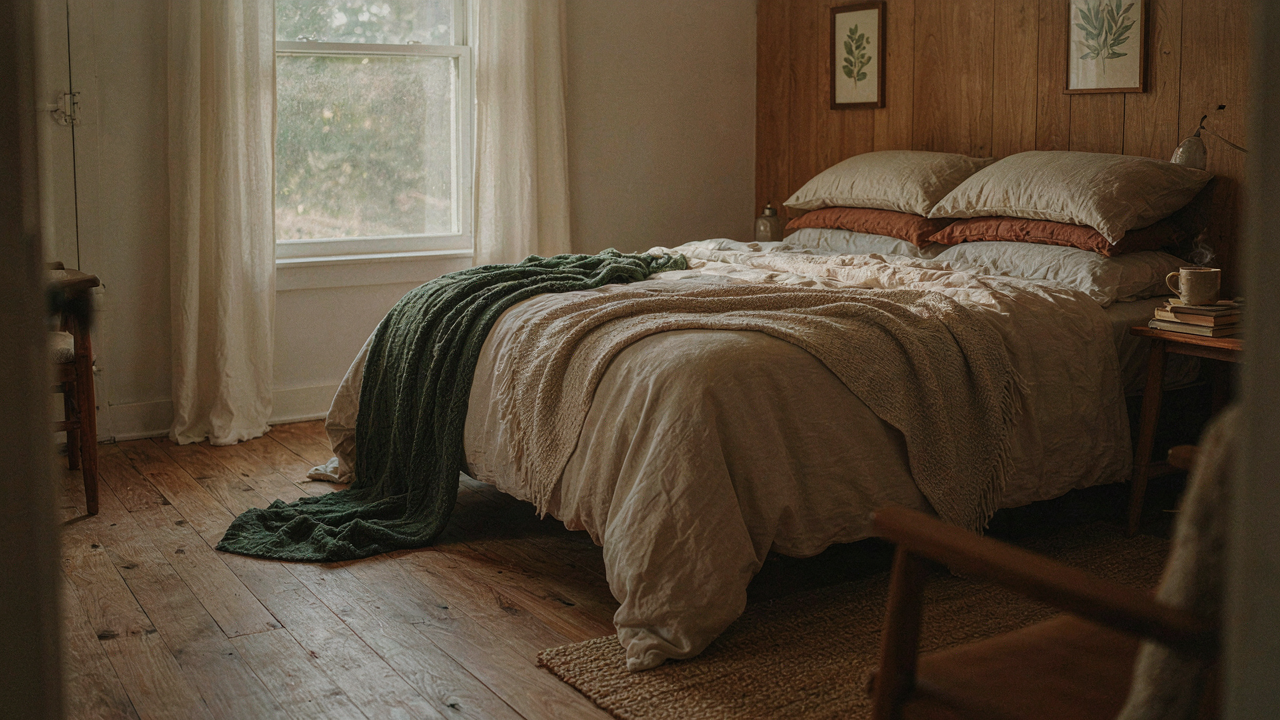
The bed becomes your visual break point, not your visual accent. Layered textiles on the bed (quilts, wool blankets, linen sheets) create depth and surface variation without adding color chaos. Everything else recedes into the background. This is the opposite of maximalist interior design, where visual weight distributes across the room. Here, you concentrate visual interest into a single focal zone and let the walls, ceiling, and floor become visual silence. That contrast is what makes the room feel intentional.
Textile Layers As Acoustic Dampening
Sound control in a cabin bedroom isn’t about soundproofing. It’s about frequency absorption. Heavy textiles (wool, linen, cotton canvas) absorb mid and high frequencies, which makes the room feel enclosed and quiet. This is basic material science: denser fabrics trap air pockets that dissipate sound energy instead of reflecting it back. Thin textiles don’t work. You need weight and mass.

Stack textiles deliberately. A wool duvet under a quilted coverlet, linen sheets under flannel, throw blankets folded across the foot rail. Each layer adds mass and surface area for sound absorption. The room becomes acoustically dead in a way that feels protective instead of cold. Add a wool area rug to the floor near the bed, and you’ve now dampened sound from three angles: overhead from the bed assembly, vertically from the wall textiles, and laterally from the floor. This creates the sensation of acoustic containment that distinguishes a cozy room from a merely decorated one.
Beyond Soft: The Psychology Of Layered Textiles In Cabin Interiors

Touch Before Sight
You want people to feel something the moment they enter your cabin bedroom, not just admire it from the doorway. That’s the real driver here. Texture operates as a neurological input that bypasses judgment. Your brain processes tactile information faster than visual information. When you layer different fabric weights and weaves, you’re creating a decision tree for the nervous system. Linen, wool, cotton, and leather all send different signals to touch receptors. Each one triggers distinct comfort responses before conscious thought arrives.
The mistake most people make is treating texture as decoration. They add a throw blanket and call it done. But fabric choice matters because it changes how your body interprets the space. A scratchy wool blanket over a smooth cotton sheet creates contrast. Contrast prevents monotony in the nervous system. Your brain stays engaged instead of tuning out. This is why cabin bedrooms feel more alive than hotel rooms with uniform bedding.
Weight Determines How Warm You Feel
Physics teaches us about thermal mass. In textile terms, thermal mass is simply how much heat fabric can hold and transfer. A heavy linen duvet doesn’t warm you faster than a light cotton one, but it signals warmth through pressure. Weight creates a perception of insulation. Your body confuses heaviness with heat retention. This is mechanical, not psychological. A 15-pound weighted blanket produces the same thermal effect as a 5-pound one, but the heavier version feels warmer because pressure receptors activate differently.

Cabin bedrooms benefit from this stacking approach. Start with a lightweight cotton base layer. Add a medium-weight wool blanket. Top with a heavyweight linen or canvas duvet cover. Each layer serves a function beyond aesthetics. The thin layer wicks moisture. The middle layer traps air. The heavy layer creates downward pressure that your nervous system interprets as security and warmth. This is how you build perceived comfort without overheating. Your layer stack should progress from thin to thick, always.
The Biomimicry Of Warmth: Mastering Wood Cabin Bedroom Ambiance

How Animals Build Insulation Layers
You want this space to feel like protection, not decoration. That’s the real driver here. Biomimicry borrows from biology: animals don’t build one thick wall, they layer thin barriers with air gaps between them. Your cabin bedroom works the same way. Wood alone holds warmth poorly. But wood plus textiles plus air pockets creates the same insulation strategy a beaver uses to survive winter. The mechanism is radiant heat retention through stratified materials, not the myth of “cozy vibes.”
Start with the foundation layer: the bed itself. Solid wood frames conduct temperature differently than metal, holding residual warmth longer. Add a thermal base layer underneath the mattress, then your primary textiles above. Each layer traps air microscopically. The spacing and material selection matter more than thread count or synthetic padding. Don’t layer randomly. Stack materials in order of thermal conductivity, slowest first against the body, faster materials outward to disperse heat gradually.
Raw Materials Earn Their Space
The common advice says add natural elements because they look good. That’s backwards. Natural materials function differently at the molecular level, and that’s why they belong in a cabin bedroom. Stone, untreated wood, wool, and linen regulate humidity actively, not passively. When moisture builds in a sealed room, synthetic textiles trap it. Natural fibers absorb and release it. This prevents the damp, stale feeling that kills the entire aesthetic no matter how many pillows you stack.

Integrate raw wood deliberately at eye level and contact points. Exposed beams contribute thermal mass. A wooden headboard or rough-hewn nightstand becomes a heat moderator. Wool blankets and linen sheets perform work, not just sit there. Wool manages temperature swings. Linen breathes during warm nights and holds warmth during cold ones. Select untreated materials when possible. Finishes seal surfaces and block the natural regulation process. The bed becomes a functional system that maintains microclimate, not just a place to sleep.
The “Chalet Room” Effect: Engineered Imperfection
Worn Pieces Signal Authenticity
You want people to believe you didn’t try too hard. That’s the real reason this matters. Perfection reads as purchased. Wear reads as lived.
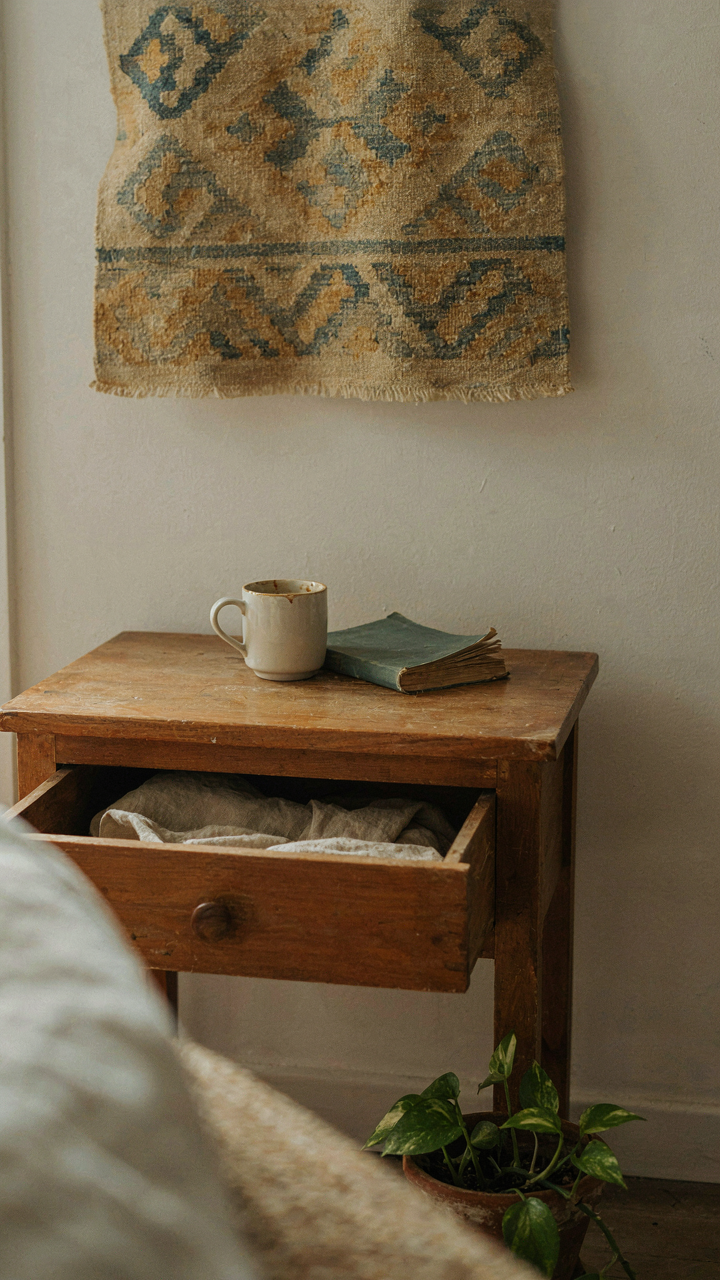
Interior design borrows from archaeology here: context dating. In a cozy cabin bedroom, a genuinely aged piece doesn’t just occupy space—it anchors a timeline. A scratched wooden nightstand from the 1970s, a frayed wool blanket from actual use, a mirror with spotting on its backing—these objects carry evidence of duration. They can’t be faked with new things made to look old.
Place worn items in functional positions, not decorative ones. A leather suitcase beside the bed that actually holds extra blankets. A rope-handled side table that shows hand oils in the wood. The placement matters more than the object. Guests register use patterns, not just aesthetics. This is how a room stops feeling staged.
Asymmetrical Arrangement Breaks Recognition
Most bedroom advice says balance everything. That’s wrong. Perfect symmetry is the fastest way to signal “decorator picked this out.” Asymmetry forces the eye to work, which makes the brain register authenticity.

Stack pillows unevenly. Two on one side of the headboard, one on the other. Hang a single textile on one wall, leave the adjacent wall bare. Place a side table only on one nightstand position. One tall lamp and one low one. The pattern interruption prevents the room from reading as a catalog spread. Asymmetrical layouts also feel more human because humans don’t naturally balance things when living in a space—they layer what they need where they need it.
Asymmetry creates the texture of decision-making over time.
Light As A Layer: Illuminating Your Cozy Cabin Bedroom
Ambient Versus Task Lighting For Mood Control
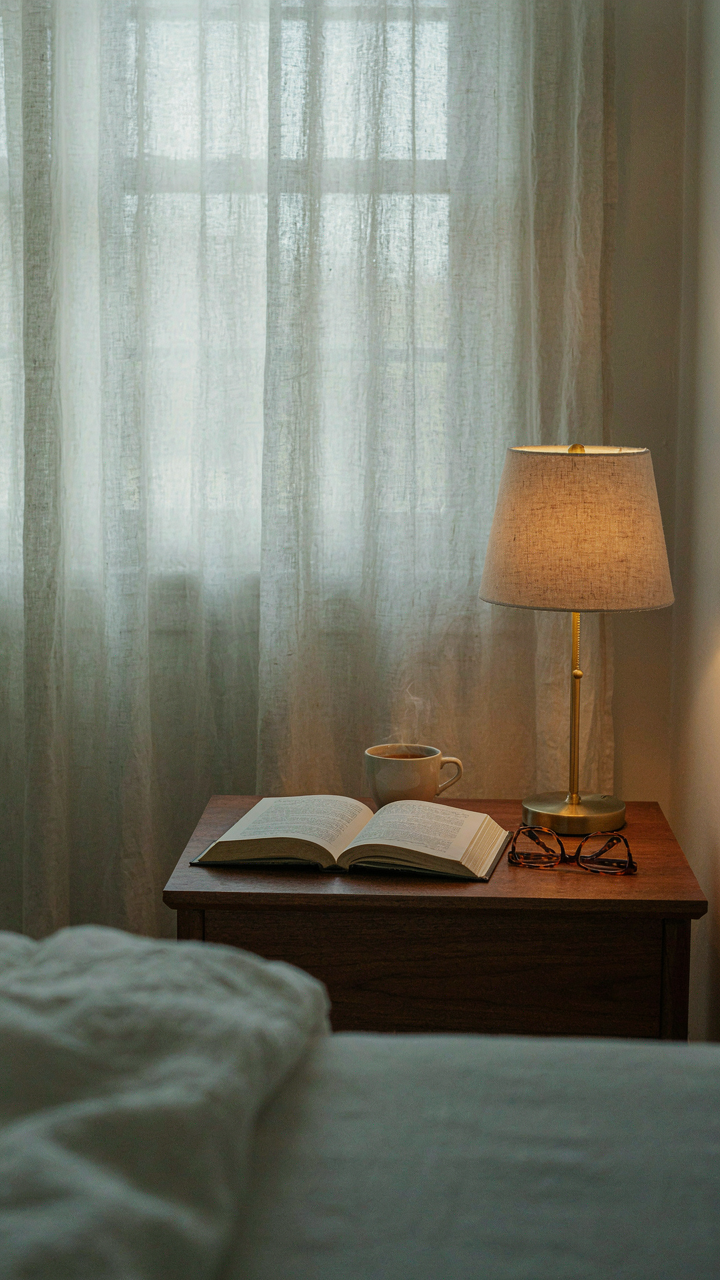
You want lighting that makes you feel less alone in an isolated space. Here’s the mechanism: ambient and task lighting serve opposite neurological functions. Ambient light (ceiling fixtures, wall sconces) triggers your parasympathetic nervous system and signals safety. Task lighting (bedside lamps, reading lights) activates focus and keeps you engaged. A cozy cabin bedroom needs both, but in inverse ratios to what most people install.
Most bedrooms default to one overhead fixture that’s either too bright or functionally useless. The real move is running ambient light at 40-50% capacity as your baseline, then layering task lighting where you actually need it. This prevents the cave-like darkness that reads as abandonment and the clinical brightness that kills relaxation. A dimmer switch on ambient fixtures gives you control without rewiring. Task lights stay independent so you can read or work without flooding the room.
Capturing Natural Light Across Day Cycles
Morning and afternoon light hit a cabin bedroom at different angles and intensities. Harness this instead of fighting it. East-facing windows give you sharp, energizing light in the morning that naturally supports your wake cycle. West-facing windows deliver softer, warmer light in late afternoon that already matches your circadian dip. The angle of cabin construction often means windows are positioned for these exact shifts.

The mistake people make is over-installing blackout curtains and losing the seasonal and daily rhythm that actually induces calm. You need control, not obliteration. Install sheer layers that filter harsh midday glare while preserving the directional quality of morning and evening light. This requires a two-tier curtain system: a sheer inner layer on a separate rod from your heavier outer layer. Pull the sheer closed during peak sun, leave it open otherwise, and let the room’s light profile shift naturally through the day.
The Inverse Proportionality Of Clutter And Cozy Cabin Bedroom Ideas
Adding More Stuff Stops Working
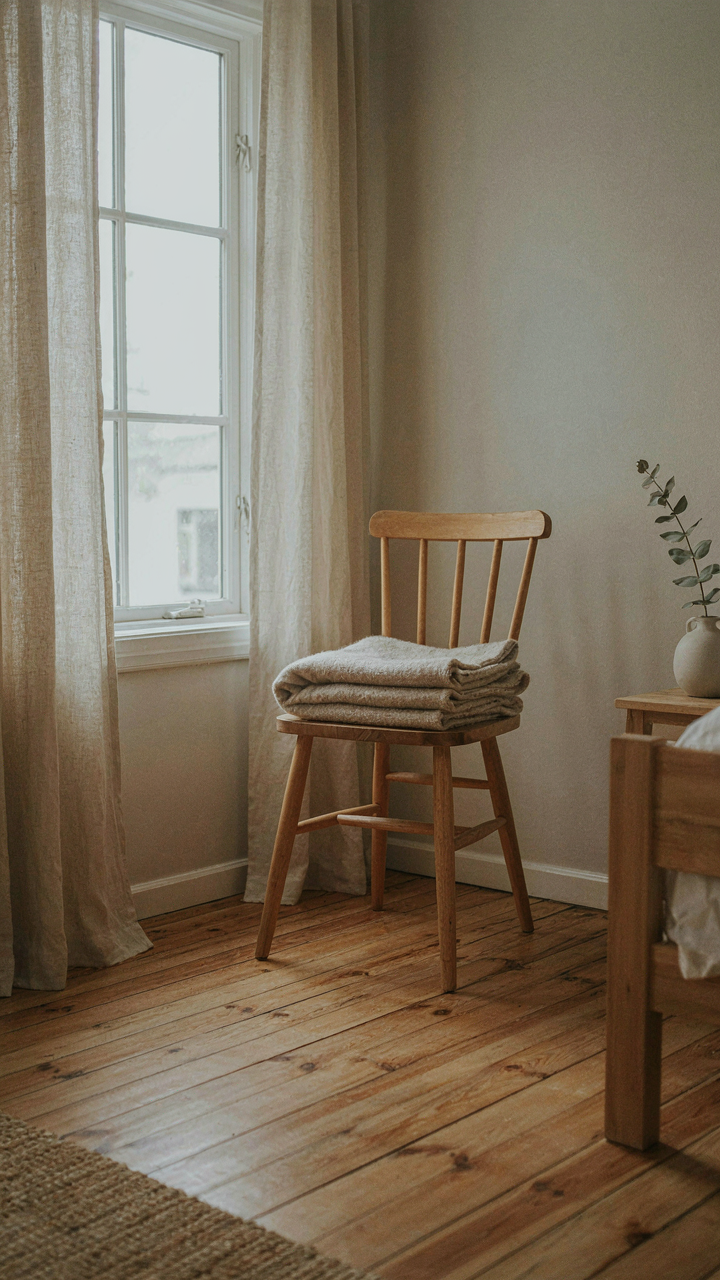
You want permission to buy another pillow, another throw, another lantern. Here’s the truth: you’re hoping objects solve a feeling problem, and they won’t past a threshold. Economics calls this diminishing returns, and it applies directly to cabin bedroom layering. The first textured blanket moves the needle. The fourth one fights for attention against the third one. Each added piece now competes for visual weight instead of contributing to it.
The mistake isn’t layering itself. Layering is the mechanism that works. The mistake is confusing quantity with depth. A room layered with purpose—linen under wool under cotton, each visible and textured—reads as intentional. A room where you’ve added items until the bed resembles a department store display reads as indecision. You cross from cozy into chaotic somewhere around piece seven or eight, depending on scale. Stop before you hit that wall.
Visual Noise Costs More Than You Realize
When your eye lands on a cabin bedroom, it processes everything at once: the color, the pattern, the texture, the material. This is opportunity cost from economics applied to space. Every item you add uses up some of your viewer’s cognitive budget. The moment that budget exhausts, cozy flips to overwhelming. A layered textile approach works because it gives the eye a clear hierarchy. The eye lands on the dominant blanket first, then discovers the supporting textures beneath.

Most advice tells you to layer more thoughtfully. That’s incomplete. The real mechanism is removal before addition. Edit the existing palette down to three core textiles—one statement piece, two supporting ones. Only then assess if the room needs another layer. This forces you to justify each piece’s presence. A bedroom with five intentional layers reads infinitely cozier than one with twelve items you grabbed on impulse. The constraint is what makes the composition work.
The Functional Art Of Storage In A Cabin Room
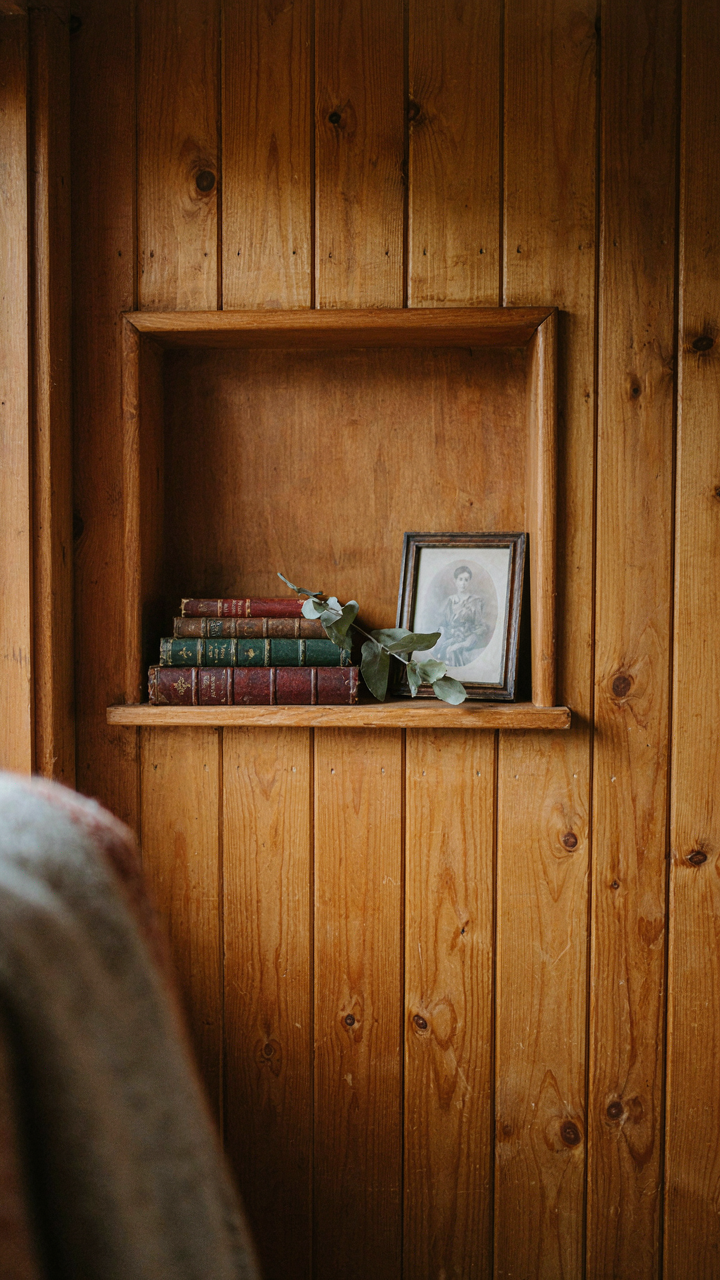
Built Ins Hide The Mess
You want storage that doesn’t broadcast clutter because clutter signals you can’t control your own space. The mechanism is simple: what you see determines what you think about, and what you think about drains your mental energy. Built-in storage works because it forces intention. You can’t shove things into a built-in cabinet without deciding where they belong. Custom shelving, under-bed drawers, and wall-mounted cabinetry don’t eliminate stuff—they make stuff behave. The cabin bedroom that works uses the walls themselves as the storage system, not the floor.
Built-ins also solve the problem that freestanding furniture creates: dead air and visual noise. A nightstand next to your bed is something you see. A recessed shelf carved into the wall is something you don’t. The difference is the difference between a room that feels tight and one that breathes. When you build storage into the structure instead of layering it on top, the room geometry stays simple. Concealment isn’t about deception. It’s about controlling what competes for your attention while you sleep.
Objects You Actually Keep Matter
The common advice here is garbage: “only display things that bring you joy.” That’s vague and relies on a feeling that changes depending on your mood. The real mechanism comes from scarcity economics. When something is rare or difficult to replace, you notice it more and it anchors the room’s narrative. A cozy cabin bedroom displays objects that required effort to obtain or that mark a specific time in your life, not generic decor bought online.

Curated objects work because they answer a question visitors ask without speaking: “Who lives here?” A leather-bound journal from your grandfather means something. A mass-produced decorative box means nothing. The objects you keep should either have utility or history. If they have neither, they’re just furniture. A small stack of books, a framed photograph, a tool with a hand-worn handle—these anchor the space because they’re specific to you. Everything else goes behind closed storage. The gap between too much display and too little is where a cabin bedroom becomes a room instead of a showroom.
Color Palette Deception: True Warmth In Cabin Style Bedroom
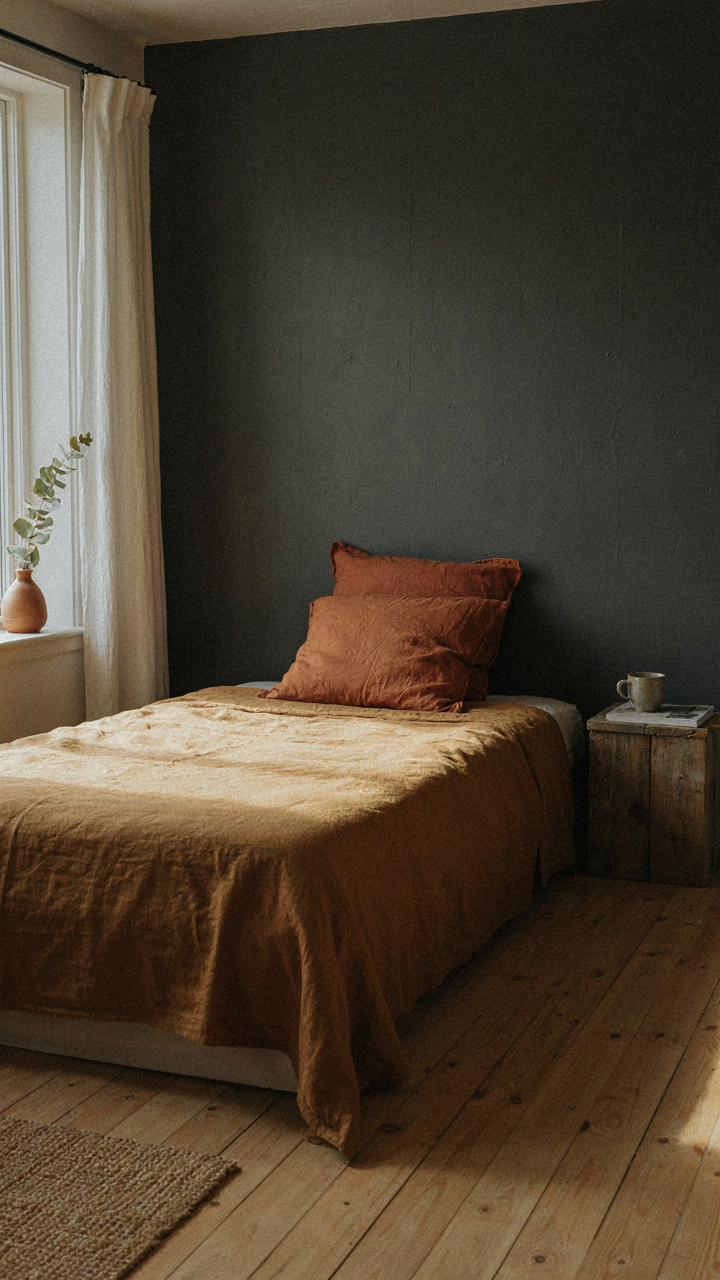
Beyond Beige: The Unexpected Earthy Tones
You want people to walk into your bedroom and feel like you understand something they don’t. That’s the real reason you’re reading this. The mechanism is contrast disguised as restraint. Most cabin bedrooms fail because they treat “earthy” as one monolithic brown. Real depth comes from stacking tones that shouldn’t work together but do. Charcoal, ochre, rust, and deep sage create visual tension that reads as intentional, not accidental. The eye moves. It doesn’t settle into beige numbness.
Historical log cabin interiors used these combinations out of necessity, not aesthetics. They layered whatever pigments were available from local minerals and plants. The result was complexity. Modern cabin design abandoned this when beige became the safe choice. Restore the logic: pair a charcoal accent wall with rust-toned textiles and let ochre bedding create the focal point. The room absorbs light differently at each hour because the palette actually works with your bedroom’s specific light source instead of against it.
Small Accents For Focal Points, Not Overwhelm
The advice that color should be “balanced” is half-true and dangerously vague. What matters is saturation hierarchy. One piece carries the visual weight. Everything else recedes. A deep burgundy throw pillow becomes the anchor. Rust-colored linen curtains provide secondary support. Charcoal bedding holds neutral ground. This is restraint with purpose, not timidity.

Place your saturated accent where your eye lands first when entering the room. If the bed faces the door, the throw or accent headboard takes the strong color. If a chair sits by the window, let that textile own the saturation. Distribute muted supporting tones across larger surfaces like walls and bedding. This prevents the room from feeling chaotic while maintaining the tonal depth that makes a cozy cabin bedroom feel designed rather than decorated.
The Evergreen Principle: Evolving Your Modern Cabin Home Decor
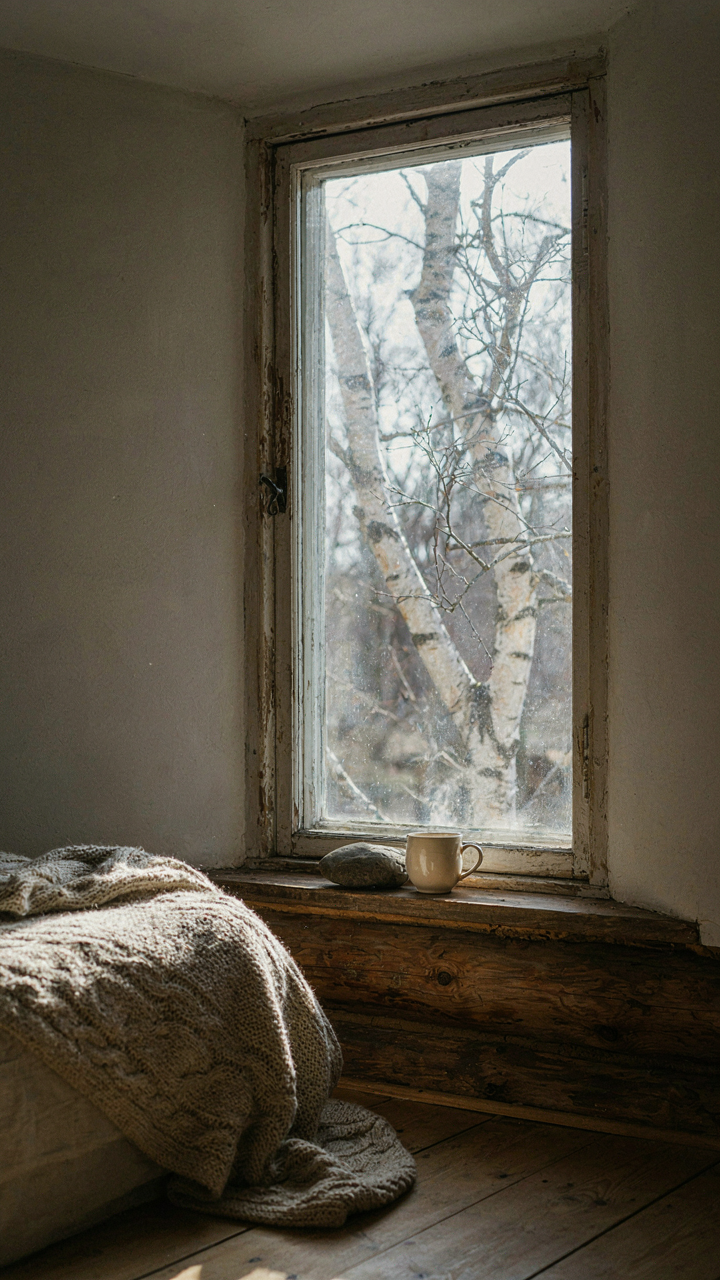
Rotate Textiles With The Seasons
You want your cabin bedroom to feel intentional year-round without buying new furniture. The mechanism is simple: textiles are the only layer you can swap without touching structure, and seasonal rotation forces you to edit what actually works instead of accumulating dead weight.
- Winter weight blankets: Use wool or down-filled quilts from November through March. These materials trap heat efficiently and signal visual weight that matches cold months.
- Summer linens: Swap to cotton or linen sheets and throws in May. These breathe and dry faster, critical in humid cabin environments where moisture lingers.
- Spring throws: Lightweight cotton knits work as transition pieces in April and October. They layer without overheating and bridge the gap between seasonal extremes.
- Fall layering: Introduce heavier cotton blends and wool wraps in September. These handle temperature swings common in fall without requiring full winter bedding.
- Pillow covers: Rotate between flannel, cotton canvas, and linen. Flannel adds warmth in winter, while canvas and linen keep the bed feeling fresh in warmer months.
The discipline here matters more than the details. Store off-season textiles in cedar or vacuum bags to prevent mildew, a real threat in enclosed cabin spaces. Rotation also extends fiber life by preventing constant friction from body weight on the same layers year-round.
Natural Elements That Shift With Time
Seasonal material integration works like ecological succession: pioneer species establish first, then shift as conditions change. A cabin bedroom uses this principle through rotating natural materials that respond to moisture and temperature without maintenance.
Fresh-cut branches, dried grasses, and woven natural fibers all change appearance as humidity and temperature fluctuate. In winter, birch branches hold frost visually; in spring, moss-covered stones gain prominence near windows where moisture condenses. Stone bedside pieces, untreated wood nightstands, and raw linen all age visibly, creating a record of actual time passing rather than static decoration. This shift is not decay; it’s evidence of use. The goal is working with material behavior, not against it. Source new natural pieces quarterly from your immediate landscape, not boutique suppliers.
The Air You Breathe: Unseen Layers Of Comfort In Cabin Bedroom
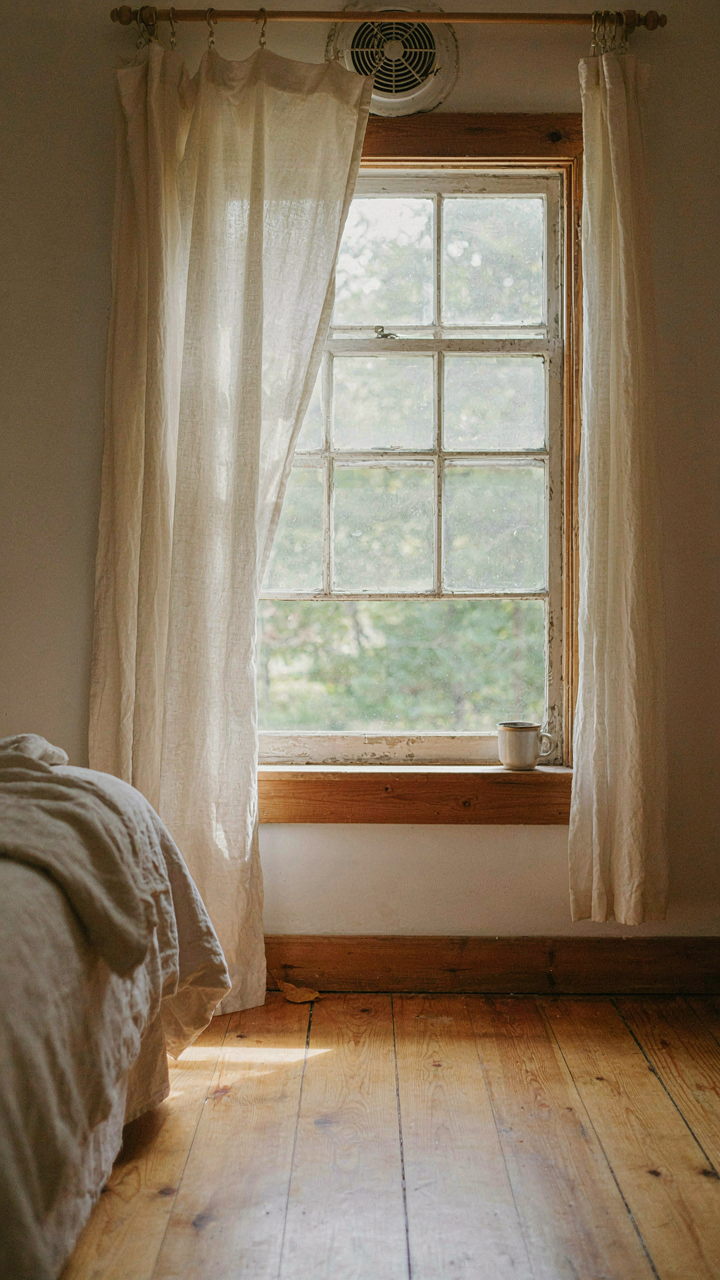
Why Stale Air Kills The Entire Setup
You want the room to feel expensive without spending more money. That’s the real problem. But a cozy cabin bedroom becomes claustrophobic fast without proper air movement, and no textile layering fixes suffocation. Ventilation operates like load balancing in systems engineering: you need intake, circulation, and exhaust working together or the whole structure collapses under its own weight. Most cabin bedrooms fail because people seal them tight for warmth, then ignore airflow entirely.
Install operable windows on opposing walls to create cross-ventilation. Crack them during the day or mild weather, even in winter. If your cabin lacks opposing windows, add a simple exhaust fan on one wall and position the bed away from direct draft. Humidity from body moisture and bedding accumulates fast in tight spaces. Stale air doesn’t just feel bad; it accelerates textile degradation and mold growth on layered fabrics. The mechanism is mechanical, not aesthetic: moving air removes moisture and CO2.
Forest Floor And Smoke, Not Perfume
The common advice says burn candles or use diffusers. That’s lazy. Artificial scent creates cognitive noise and masks the real problem of air quality. Real cabin bedrooms use scent the way natural environments do: sparse, tied to actual materials, not chemical cocktails. Cedarwood, smoke from a fireplace one room over, or the smell of wool and linen aging naturally creates baseline calm because your brain recognizes these as environmental anchors, not alerts.
Source raw materials for their scent profile, not despite it. Keep cedar blocks in a drawer or on a shelf, not everywhere. Crack the fireplace door slightly during cold months so trace smoke enters the bedroom without filling it. If you have a chimney nearby, that background smoke becomes part of the room’s scent architecture. Rotate out cedar blocks quarterly to prevent olfactory habituation. The goal isn’t strong fragrance; it’s consistency that tells your nervous system nothing is wrong.
The Real Obstacle To A Cozy Cabin Bedroom Is Your Unconscious Drive For Aesthetic Validation

You don’t need permission to make your bedroom feel good. You’ve been waiting for the perfect setup, the right layers, the Instagram-worthy moment. Stop. Pull one blanket from your closet right now. Throw it on your bed. Sit on it. Notice how your body responds. That’s the only validation that matters. Your comfort doesn’t need an audience to count.