
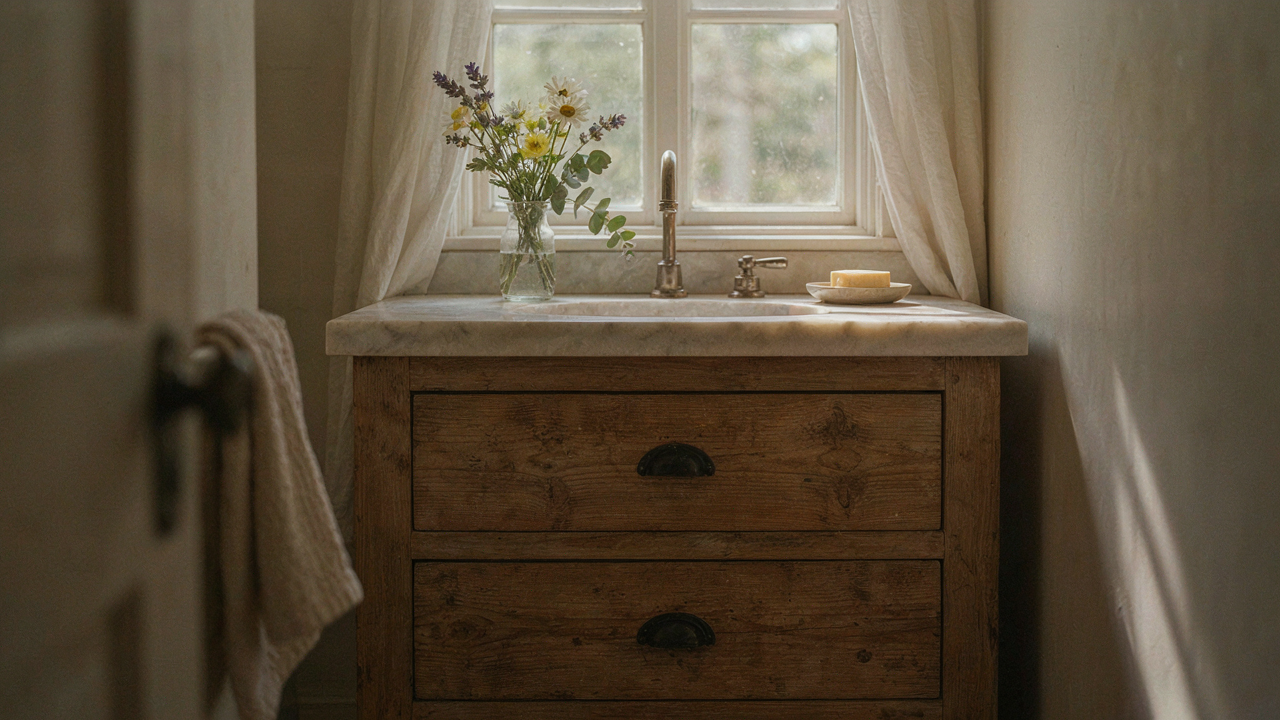
Farmhouse Vanity: Beyond The Shiplap Illusion

Real Versus Replica
You want to believe your bathroom vanity is authentic farmhouse because authenticity signals you have taste, money, and didn’t just buy whatever was on sale. Here’s the mechanism: modern farmhouse isn’t a revival of actual farm design, it’s a commercialized aesthetic built on cherry-picked elements from rural American homes between 1880 and 1920. Those original vanities weren’t chosen for their looks. They were chosen because they were cheap, durable, and available. A farmer’s bathroom vanity was whatever worked, not whatever matched a mood board.
The gap between authentic and mimicked farmhouse lies in constraint versus choice. Real farmhouse design emerged from material scarcity and functional necessity. Original vanities used locally sourced wood, simple joinery, minimal ornamentation. They showed wear because they got used. Modern farmhouse vanities mimic that wear through distressing techniques, sell reclaimed wood at premium prices, and apply finishes that look aged but resist actual aging. The distinction matters because understanding what drove the original design lets you make smarter material and finish choices instead of chasing a surface-level visual.
The Commercialization Pattern
Marketing took a genuine design tradition and stripped out every constraint that made it meaningful, then sold the shell back to you at triple the price. The farmhouse bathroom vanity you see in catalogs isn’t descended from working rural design. It’s a product category invented by furniture manufacturers and home decor retailers around 2010 to differentiate from modern minimalism and industrial aesthetics. They identified what people responded to visually: distressed wood, open shelving, minimal hardware, neutral tones. Then they engineered those traits into new products designed to look old.
The real mechanism is standardization disguised as character. Mass-produced farmhouse vanities all follow identical proportions, identical distressing patterns, identical hardware placements because they’re made the same way at scale. An actual 1890s farmstead vanity varied wildly depending on the carpenter, available materials, and individual need. When every farmhouse vanity in production follows the same template, you’re not buying authenticity. You’re buying membership in an aesthetic tribe. The move is to source vanities from salvage yards or commission custom builds from regional woodworkers, where material and labor constraints naturally produce actual variation.
The Raw Truth About Wooden Bathroom Vanity Durability
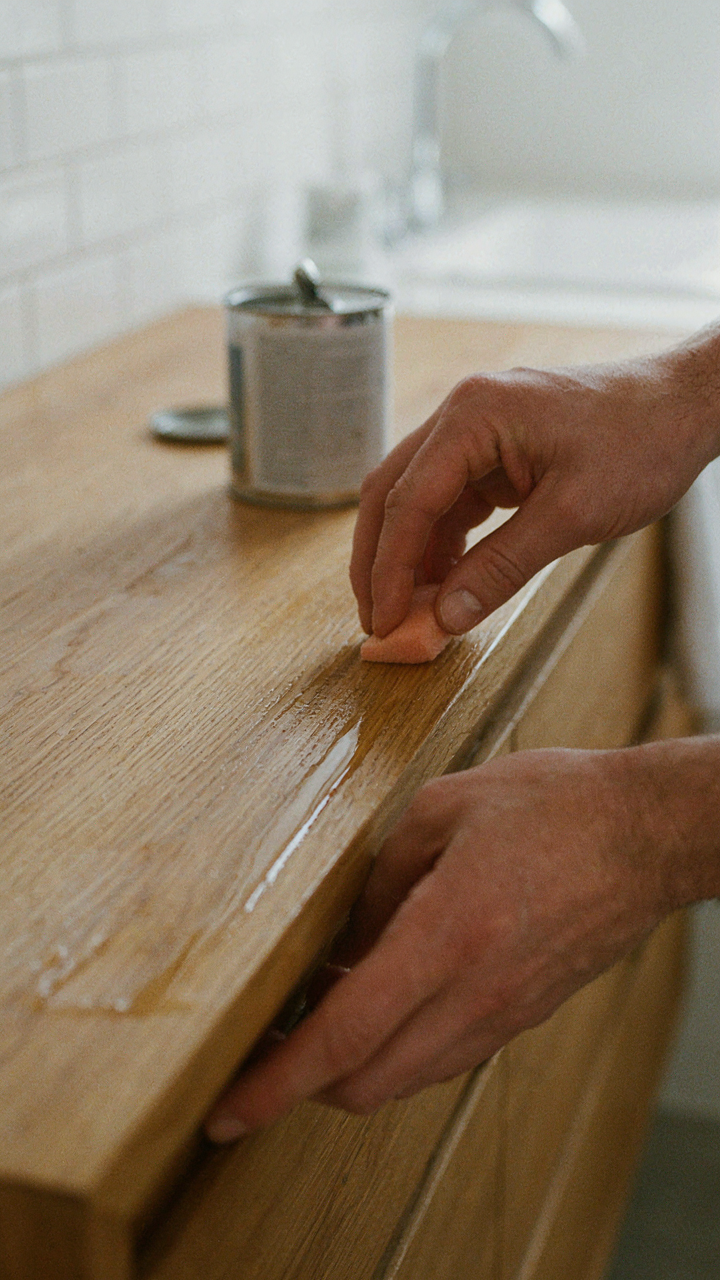
Which Woods Actually Survive Bathroom Conditions
You want the farmhouse look without replacing your vanity in five years. Here’s what nobody tells you: wood in bathrooms fails not because it gets wet, but because moisture penetrates the finish and stays there. Think of a bathroom vanity like a defensive fortification in military strategy—the perimeter matters more than the material inside it. Once water breaches the seal, the wood’s natural resistance becomes irrelevant.

Teak and cedar naturally repel water better than pine or oak because of their oil content and grain density. Teak resists rot for decades even without finish. Hickory and walnut sit in the middle. Pine, the cheapest farmhouse option, absorbs water like a sponge and fails fastest. The species you choose determines how aggressively you must seal it, not whether you can skip sealing altogether.
Sealing Matters More Than You Think
Everyone says “just use polyurethane,” which is incomplete advice that leads to failure. Polyurethane alone is not enough—it cracks under bathroom humidity cycles and eventually peels. Two coats fails. Four coats works better. The real mechanism: each coat of water-based or oil-based polyurethane prevents moisture from entering the wood grain, but bathroom vanities experience constant thermal and humidity flux that stresses the finish. You need overlap protection.
Apply water-based polyurethane in four thin coats, sanding between each one. Skip this step and you’ve wasted money on wood. For the sink cutout and edges where water pools, add a sixth coat. Recoat annually if the vanity sees daily shower steam. The protocol is specific: thin coats dry properly, thick coats crack and bubble. Most people spray one thick coat and wonder why it fails within eighteen months.
Rustic Bathrooms: The Echo Of Genuine Wear
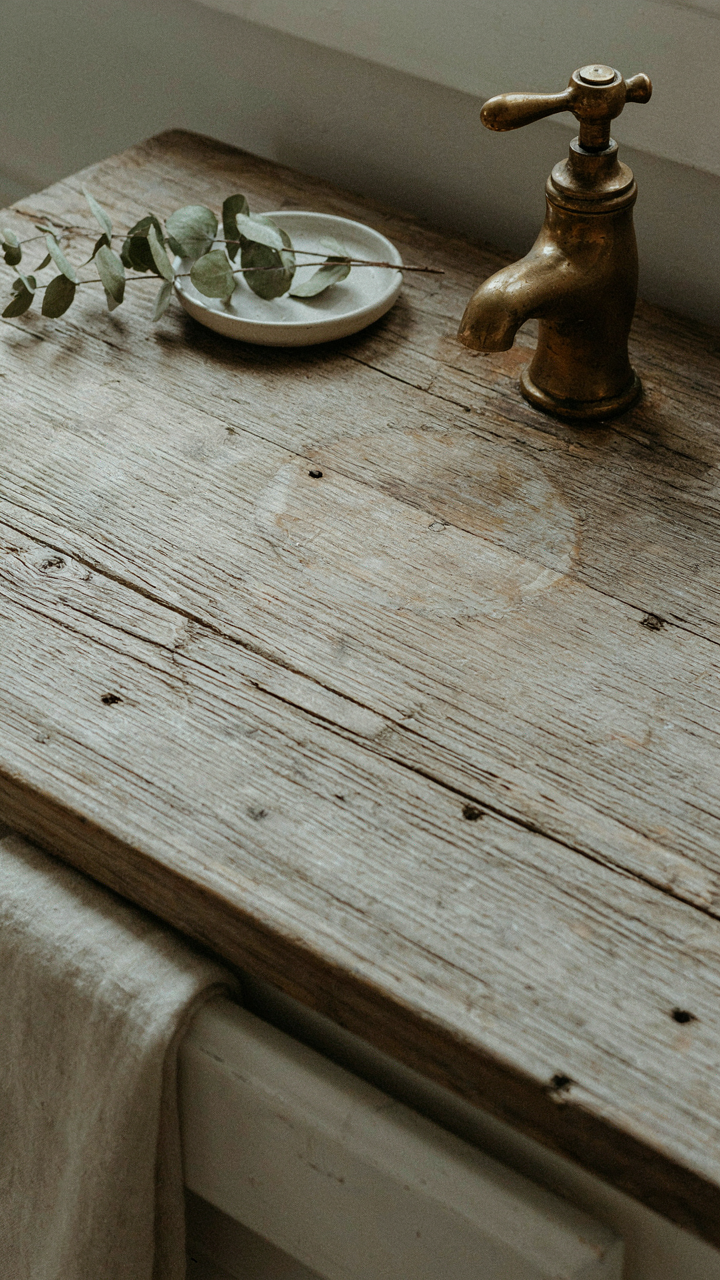
Patina Builds Through Time, Not Paint
You want the aesthetic without the years of actual use behind it. Here’s the mechanism: genuine patina is oxidation and micro-erosion that compounds over decades. A farmhouse bathroom vanity develops character the same way a bronze sculpture does—through exposure. Paint flaking off a 1920s medicine cabinet happened because humidity cycles expanded and contracted the wood grain repeatedly. That weathering is not decorative. It’s physical evidence.

Most designers fake this with distressing techniques, which reads as costume. The real move is sourcing actual aged materials and letting their existing wear patterns stay visible. A salvaged barn wood vanity top has legitimate checking and color variation because it endured actual seasons. You’re not paying for crafted imperfection. You’re paying for time that already happened. The vanity doesn’t need to look old. It needs to be old.
Reclaimed Materials Signal Authenticity Or Waste
Skip the language about “bringing history into your home.” That’s marketing speak. The actual reason reclaimed materials work in farmhouse design is scarcity and material honesty. When you pull a vanity base from a 1940s factory renovation, you’re using wood that builders chose for density and stability, not novelty. That wood has already proven it won’t warp or split under bathroom humidity. That’s not nostalgia. That’s specification.
The wrong approach is mixing reclaimed wood with brand-new hardware and expecting the vanity to feel cohesive. The mechanism that makes reclaimed materials work is consistency of age markers. If your vanity base is salvaged but your faucet is polished chrome from 2024, the visual noise defeats the purpose. Source hardware from the same decade or earlier, or commit fully to a new aesthetic. Pretend-old bathrooms fail because they hedge. Decide if the vanity is honest reclamation or styled reproduction, then execute that choice completely.
Rustic Bathroom Vanities: Function Over Faux Distress
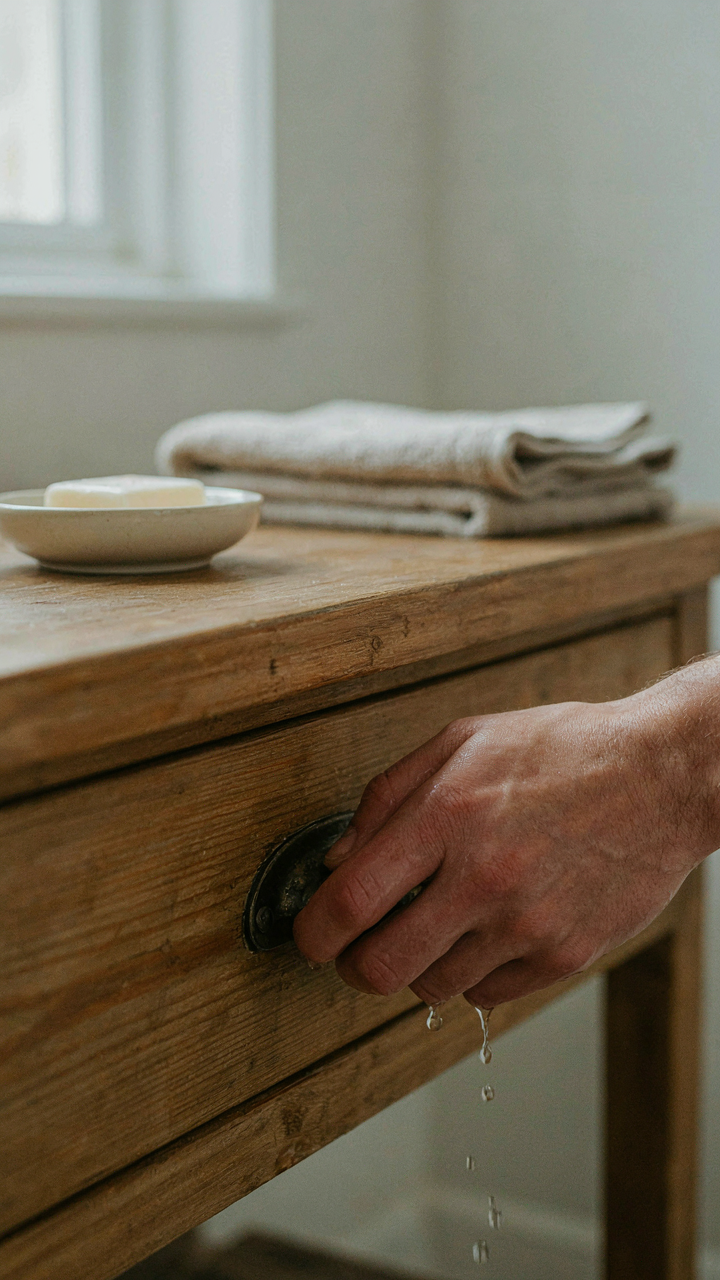
Where Storage Actually Lives
You want a farmhouse vanity because it signals you’ve escaped corporate minimalism, but storage is what determines whether you regret the purchase in six months. Farmhouse design borrows from naval architecture the principle of vertical displacement: every cubic inch counts because space is finite. Most rustic vanities fail storage tests because they prioritize visual texture over drawer depth and cabinet accessibility.

Real farmhouse vanities emerged from necessity, not Instagram aesthetics. Homesteads had limited materials and built what worked first, then made it last. Modern reproductions copy the surface while ignoring the interior logic. Measure your actual bathroom counter depth, your medicine cabinet reach, your daily-use items before selecting a vanity. A 24-inch deep sink cabinet with shallow drawers forces you to store toothbrushes and skincare in wall cabinets or drawers elsewhere. That friction compounds daily.
Hardware That Earns Its Placement
Hardware choice reveals whether a vanity solves problems or creates them. Cast iron handles corrode in humid bathrooms unless sealed. Brass oxidizes and requires maintenance or patina acceptance. Stainless steel resists corrosion but contradicts farmhouse visual language. Wrought iron with proper finishing works because it handles moisture stress without degradation, and its weight prevents drawer sag over time.
Function dictates hardware placement, not symmetry. Vanities used on actual farms positioned handles where users could grip them while wet or wearing gloves. Off-center placement, staggered heights, and varied handle sizes across drawers solve real problems. Test handle angles on display models. Gripping a handle angled downward 15 degrees requires different hand mechanics than a horizontal pull. Small difference, massive impact over five years of daily use.
Modern Farmhouse Vanity: The Timelessness Protocol
Design Principles For Enduring Appeal
You want this vanity to still look intentional in ten years, not dated. That’s the real fear here. Most people confuse farmhouse style with trend-following because they’re copying Pinterest boards instead of understanding the underlying structure. Think of farmhouse design like evolutionary biology: it survives because it solves actual problems, not because it’s fashionable. The vanity that endures uses proportion and material hierarchy, not decorative noise.

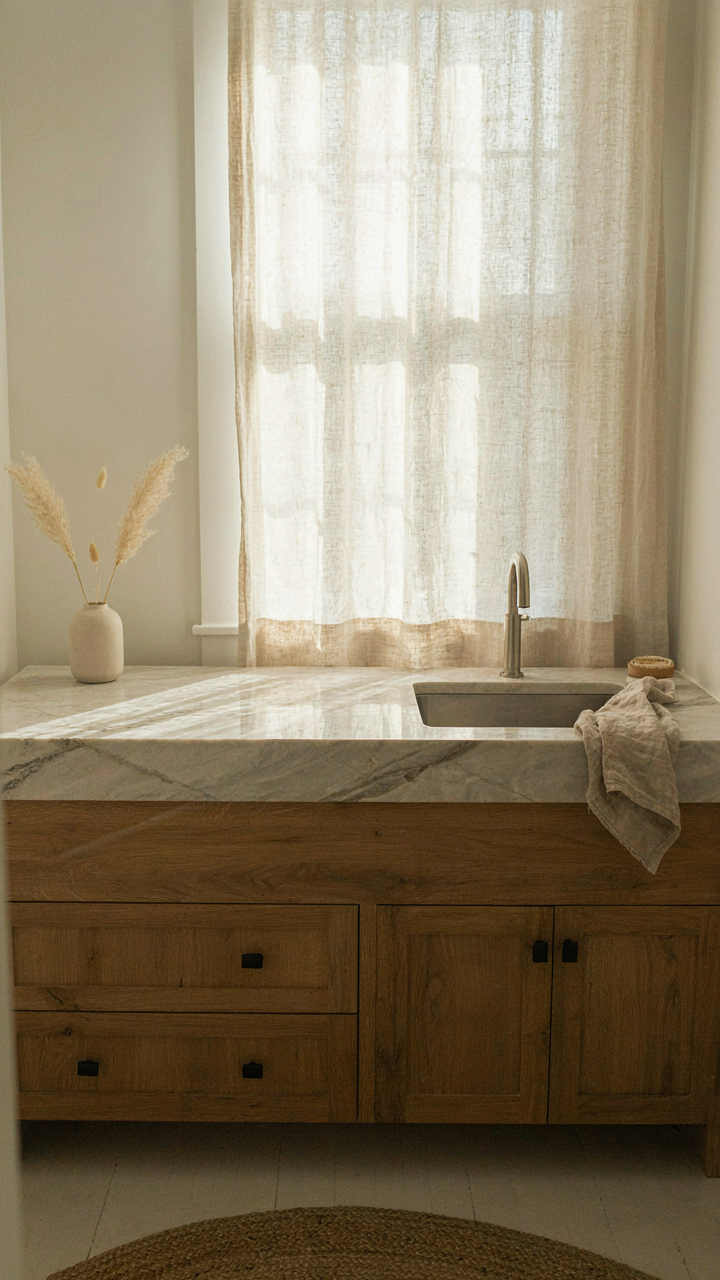
Farmhouse vanities work across decades because they anchor to functional geometry and honest construction. Clean lines with visible joinery, recessed panels, and substantial legs create visual weight that doesn’t depend on color cycles or ornamental trends. The style emerged from rural necessity, not aesthetic whim, which is why it doesn’t collapse when Instagram moves on. A vanity built on these principles reads as intentional whether you’re in 2015 or 2025.
Material Selection Based On Long Term Performance
Wood species matter more than finish trends. The wrong wood fails structurally and cosmetically within five years. Reclaimed barn wood and vintage-inspired pine look farmhouse-authentic, but they absorb moisture differently than kiln-dried material, which causes warping and joint separation near bathroom humidity. Modern farmhouse vanities use kiln-dried reclaimed-look materials or solid hardwoods like oak, hickory, or walnut because they handle moisture stress without cupping or splitting.
Stone and ceramic countertops outlast everything else in a bathroom because they’re chemically stable and don’t absorb water into fiber structure like wood does. Engineered stone (quartz composite) resists staining better than natural marble or granite in this application, though marble fits farmhouse aesthetics more precisely. The trade-off is intentional: accept the maintenance requirement of natural stone or choose engineered alternatives that preserve the look while protecting your investment through actual use.
The Unspoken Cost Of A Farmhouse Bathroom Vanity
What You Actually Pay Upfront
You’re hoping a farmhouse vanity costs less than modern alternatives, so you can feel smart about your choice. That’s not how this works. A real farmhouse vanity built from reclaimed wood or solid materials runs $800 to $2500 installed. That’s not budget territory. Most people either buy a reproduction for $300 to $600 that falls apart in five years, or spend real money on authentic pieces that require maintenance nobody budgets for.

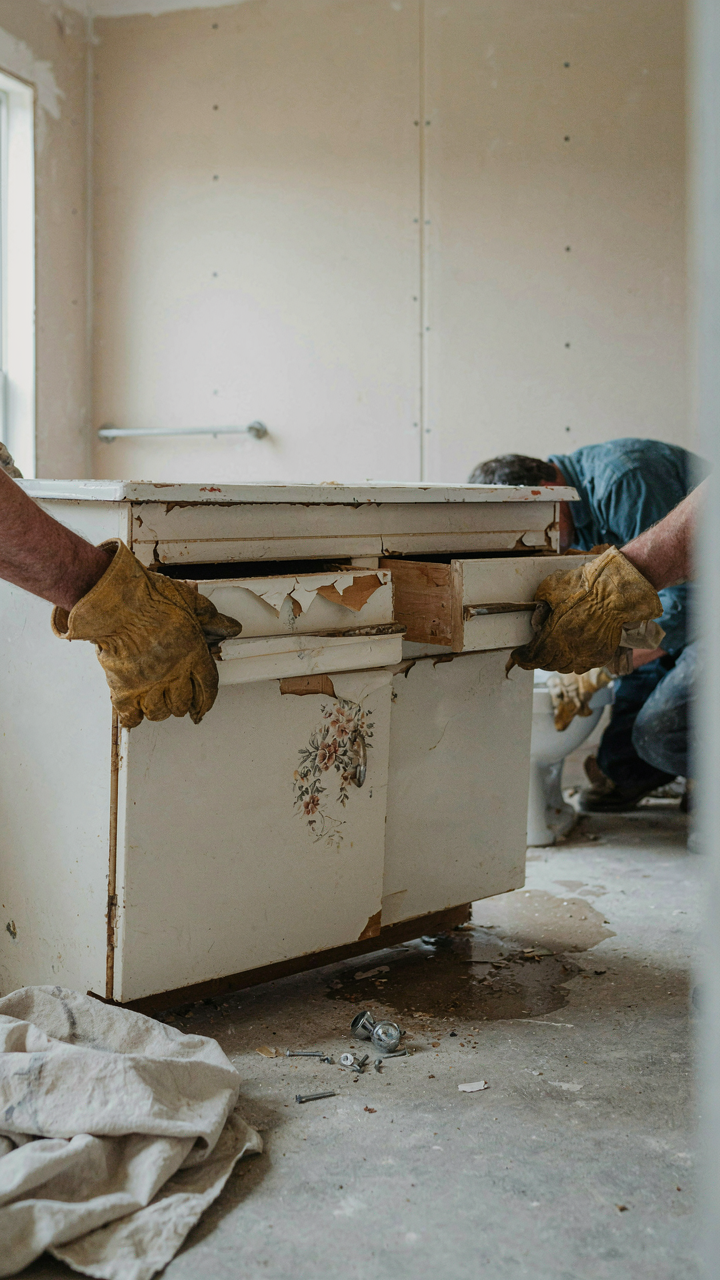
The replacement cost math is brutal. A cheap vanity fails. You remove it, patch the wall, buy another one. A quality farmhouse vanity lasts 15 to 20 years but demands upkeep: finish restoration, hardware replacement, plumbing repairs specific to older construction. You’re locked into either constant repair cycles or a single large expense every decade and a half. Neither feels good when you’re comparing total cost of ownership against a standard builder-grade vanity that costs half as much upfront and replaces on a seven-year cycle.
Betting Against Your Own Taste Changing
Economics calls this the “opportunity cost of capital.” You’re spending resources on something today that locks you out of spending differently tomorrow. A farmhouse vanity is a bet that your design preference stays static for a decade or longer, and that bet almost never pays off.
The real problem: farmhouse design dominance peaked around 2018. You see it everywhere now, which means it’s already moving backward through the attention cycle. That doesn’t make it ugly or unusable, but it does mean the design choice you’re making today will feel less intentional in seven years. Meanwhile, you’ve committed money and wall space to a specific aesthetic that’s harder to adapt than, say, a neutral vanity with interchangeable finishes. If you change course, you either live with it or absorb a replacement cost. The mechanism is simple: lock in a trend-adjacent choice now and pay twice to fix it later.
Modern Farmhouse Bathroom: Beyond Instagram Filters
When Design Stops Being A Decision
You want to know what actually works because you’re tired of trends that age in six months. The real mechanism here comes from systems thinking: farmhouse vanities fail when you treat them as static objects instead of systems that respond to how you live. Cynefin separates problems into domains. Simple problems repeat. Complicated ones need expertise. Complex ones emerge from interaction. Your vanity is complex—it’s not about picking the right wood stain. It’s about how lighting hits it, how moisture moves through the room, how your morning routine actually uses the space.

Most design advice skips this layer and goes straight to “distressed finishes” and “barn doors.” That’s the simple domain—copy what worked elsewhere. But your bathroom is its own context. A reclaimed wood vanity that thrives in Colorado’s dry air becomes a swollen, peeling disaster in Florida humidity. The mechanism that matters: stop asking what farmhouse vanities should look like, and start mapping which variables your specific bathroom actually controls.
What Use Teaches You That Pinterest Doesn’t
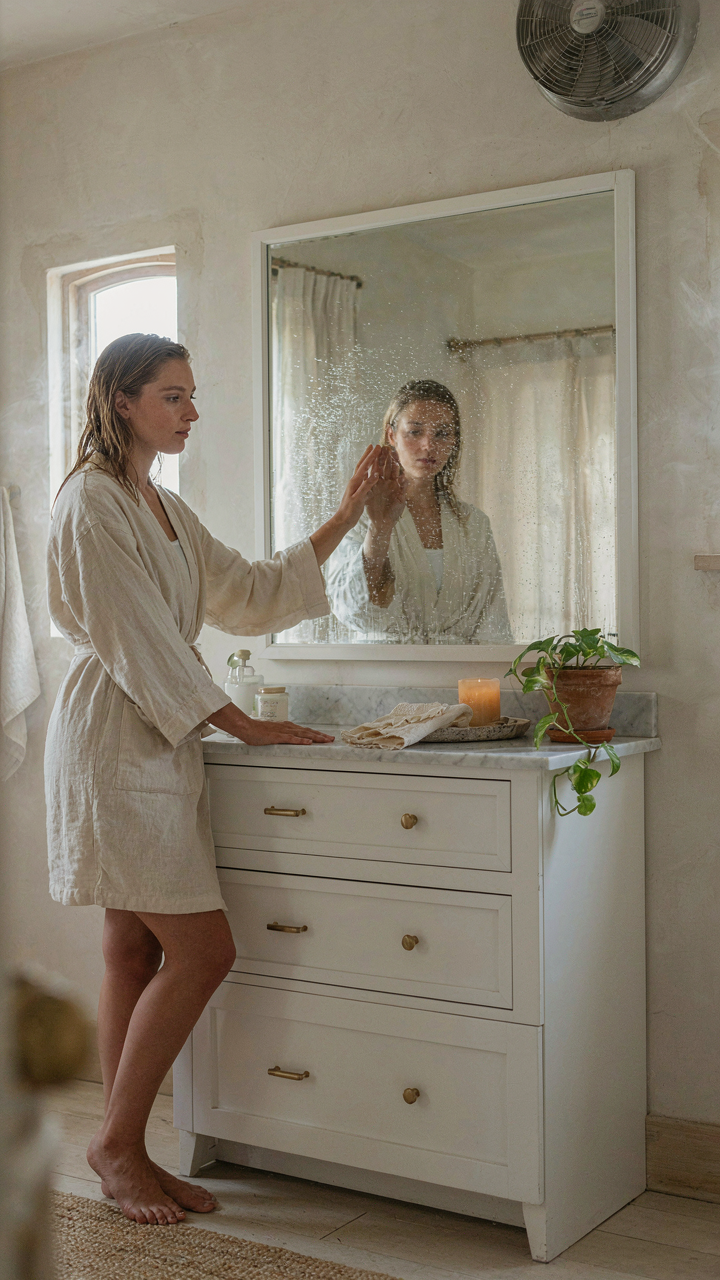
Design doesn’t precede use—use reveals design. Watch how your vanity actually functions for two weeks, not how you imagined it would function. You’ll notice water pools in certain corners. Drawers stick when humidity spikes. Towels hang awkwardly. Lighting casts shadows where you need clarity. None of this appears in mood boards. The emergent properties of a space only show up through living in it, not planning for it.
A farmhouse vanity that looked perfect in the showroom reveals its flaws when you’re rushing before work and the drawer pulls are in the wrong position, or when the countertop height forces you into posture that kills your back. The real work is noticing these friction points, then redesigning around them. Adjust the placement of the faucet. Change the depth. Swap the drawer configuration. Let function write the design brief—not Pinterest. When you stop fighting the space and start letting the space dictate its own solution, the vanity becomes something you don’t think about.
Rustic Bathroom Decor: The Art Of Deliberate Imperfection
Real Vintage Beats Fake Distressing
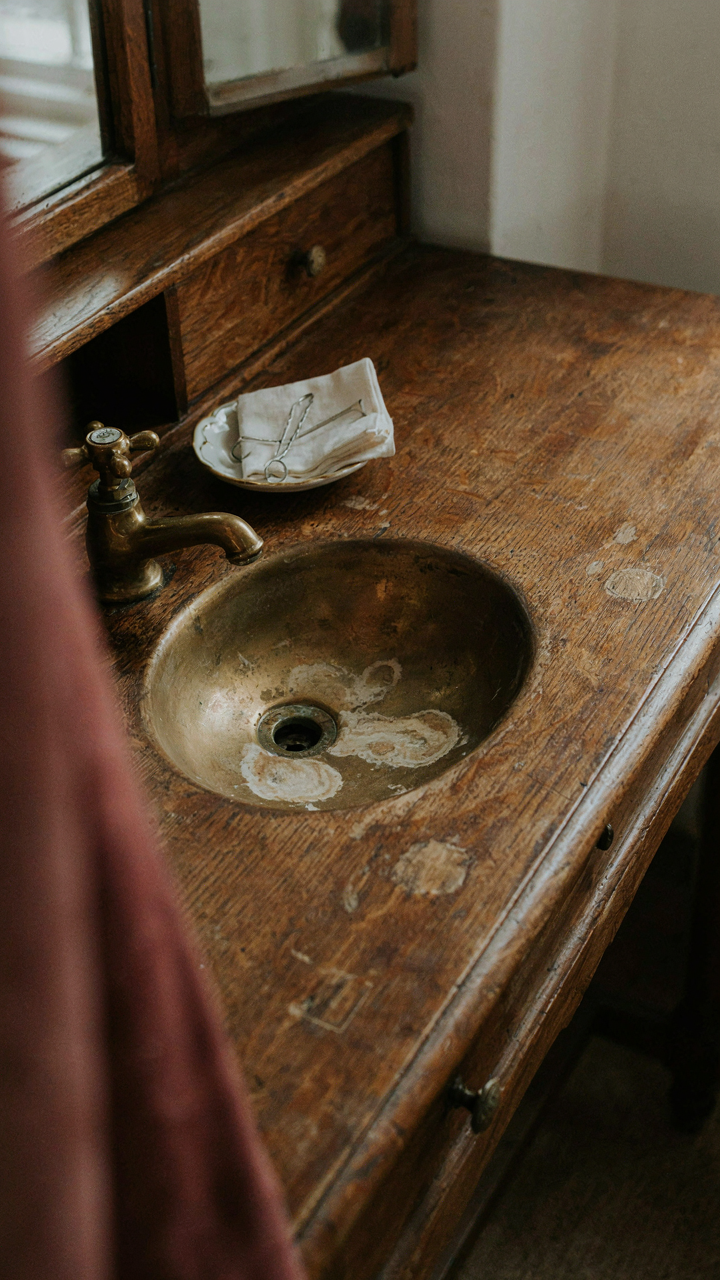
You want the credibility that comes with authentic age without admitting you can’t afford or find the real thing. Here’s the mechanism: genuine patina signals time and survival. A vanity with actual wear patterns tells a specific story because the damage follows physics, not a designer’s spray gun. Water stains cluster near the sink drain. Wood grain raises where softer growth rings eroded first. Hardware leaves ghost marks after decades of use. Manufactured distressing copies the visual outcome but skips the causal logic.

Source antique and salvage vanities through architectural salvage yards, estate sales, and dealers who specialize in bathroom fixtures from the 1920s through 1980s. Verify authenticity by checking joinery methods, finish layering, and hardware style against period references. Inspection matters more than provenance paperwork. A real vintage vanity costs more upfront but eliminates the visual friction that comes from looking too perfect.
Spotting The Mass Produced Fake
Common advice says embrace the weathered look wherever you find it. That’s lazy. Most production “rustic” vanities use kraft paper under stain, then sand it strategically to reveal the paper texture. The damage pattern repeats identically on every unit. Real wear is asymmetrical. One side of a sink cabinet always shows more damage than the other because people approach from a dominant side. Manufactured distressing follows a template.
Examine the underside and interior of any vanity before buying. Machine-made fake distressing avoids hidden surfaces because cost demands efficiency. Authentic vintage construction shows consistent wear throughout, including areas nobody sees. Check for tool marks that match era-specific equipment, not modern random orbital sanders. The gap between real and fake narrows when you know what actually causes the difference.
Wood Bathroom Vanity: The Silent Killer Of Longevity
Where Water Goes, Wood Dies
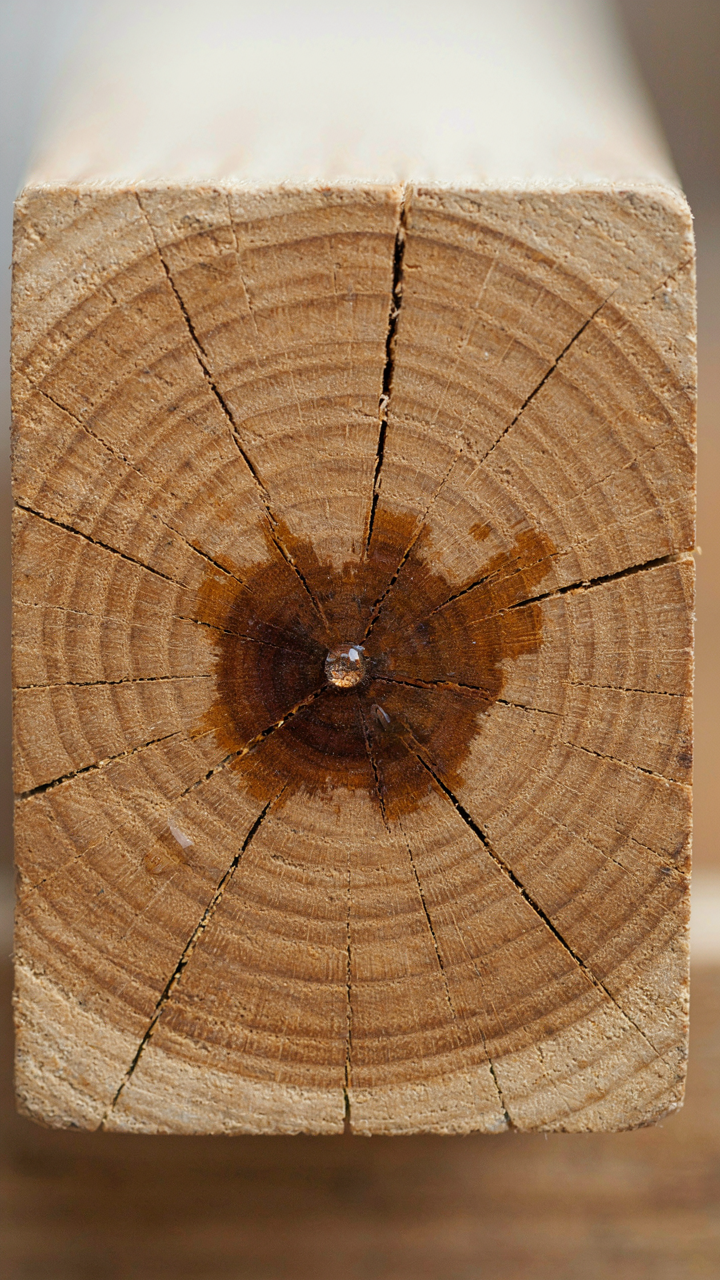
You want a wood vanity because it looks expensive and permanent. It’s neither if water gets behind the finish. Wood doesn’t fail from use—it fails from moisture that seeps past sealed edges and into end grain where you can’t see it happening. By the time the damage shows as swelling or soft spots, the structural integrity is already compromised.
- End grain sealing: Wood’s end grain absorbs water like a sponge. Most vanities ship with finish only on faces, leaving ends vulnerable. A secondary sealant layer on all cut edges prevents capillary water absorption before installation.
- Sink mounting gaps: The joint between sink and vanity top is where water pools and penetrates. Silicone caulk fails faster than polyurethane. Movement from humidity cycles creates micro-fractures that let water migrate into the cabinet substrate.
- Cabinet base exposure: The vanity bottom sits inches from the floor where splashing, leaks, and floor cleaning water accumulate. Wood touching tile or concrete wicks moisture upward without you noticing until rot is deep.
- Plumbing penetrations: Holes drilled for drain and supply lines break the seal. Water pools around fittings and follows the path of least resistance into the cabinet. Flashing tape alone won’t stop water if gaps exist around the pipes.
- Finish failure at edges: Paint and stain crack at corners and edges from seasonal wood movement. These hairline breaks are entry points for moisture that travels along the wood grain toward the interior structure.

The real problem isn’t that wood vanities are fragile. It’s that builders treat sealing as cosmetic rather than structural. Every wood vanity needs three sealed boundaries: the perimeter, the underside, and every penetration. Skip one and you’re running on borrowed time.
Humidity Control Is The Operating System
Moisture preservation isn’t about aesthetics—it’s about controlling the environment where the vanity lives. Think of it in thermodynamic terms: wood seeks equilibrium with its surroundings. A wood vanity in a 65 percent humidity bathroom will expand and contract constantly, while one in a 45 percent humidity space stays stable. Movement causes finish checking, joint separation, and the micro-failures that invite water inside.
Ventilation matters more than most people admit. Running the exhaust fan during and for 30 minutes after showers prevents humidity from settling into the wood grain. A passive vent won’t work—you need active mechanical extraction that moves moisture outside, not into the attic. If your bathroom has no exhaust duct to the exterior, a wood vanity will fail regardless of how well it was sealed. Install a dehumidifier if bathroom humidity stays above 55 percent, especially in winter when exterior ventilation is ineffective. Check vanity surfaces weekly for water droplets or dampness—early detection stops damage before it compounds into structural failure.
The Anti Farmhouse Manifesto For Your Bathroom

Stop Performing Farmhouse For Instagram
You’re worried that if your vanity doesn’t look like it belongs in a design magazine, you’ve failed somehow. Here’s the mechanism: farmhouse bathroom design became a status signal, so the industry packaged it into a checklist. You buy reclaimed wood, ship lap, and vintage hardware not because they solve a problem but because they signal taste to an invisible audience. The real move is inverting this. Your vanity exists to hold your toothbrush and store your medications, not to validate your interior design credentials. Everything else is theater.
When you stop performing, you can actually evaluate what materials and layouts work in your specific bathroom. Humidity matters more than authenticity. Storage capacity matters more than period accuracy. Light quality matters more than whether your mirror frame came from an antique market. Most people skip this step entirely because they’re too busy comparing their bathroom to Pinterest boards. That’s the trap.
What Actually Serves You, Not Trends
Functional design is about constraints, not aesthetic freedom. Your farmhouse vanity must manage humidity without warping, provide adequate mirror space without creating shadows, and offer real storage without fake drawers. The common advice says “mix vintage with modern” but that’s lazy. What you actually need is honest material selection. Solid wood requires sealing in bathrooms. Engineered materials resist moisture better. Marble stains. Quartz doesn’t. Your choice should track which materials perform under your specific humidity and usage patterns, not which look better in photos.
The second layer is behavioral. Track how you actually use your bathroom for two weeks before you design anything. How many people use this vanity simultaneously? What items stay on the counter versus inside? Do you need task lighting or ambient lighting? Do you have kids who break things? A farmhouse vanity that doesn’t match your actual routine becomes clutter with wooden legs. Build the vanity around what you do daily, then apply texture and finish as a layer on top.
The Real Problem Isn’t Finding The Right Vanity; It’s Your Unexamined Need For Superficial Authenticity

You’re scrolling farmhouse vanity photos because you think the aesthetic will fix something. It won’t. The vanity you pick matters far less than whether you actually use the space you’re building. Stop chasing texture and start asking what you need from your bathroom daily. Pick a vanity that works, not one that photographs well. Everything else is just noise you’re paying for.



