
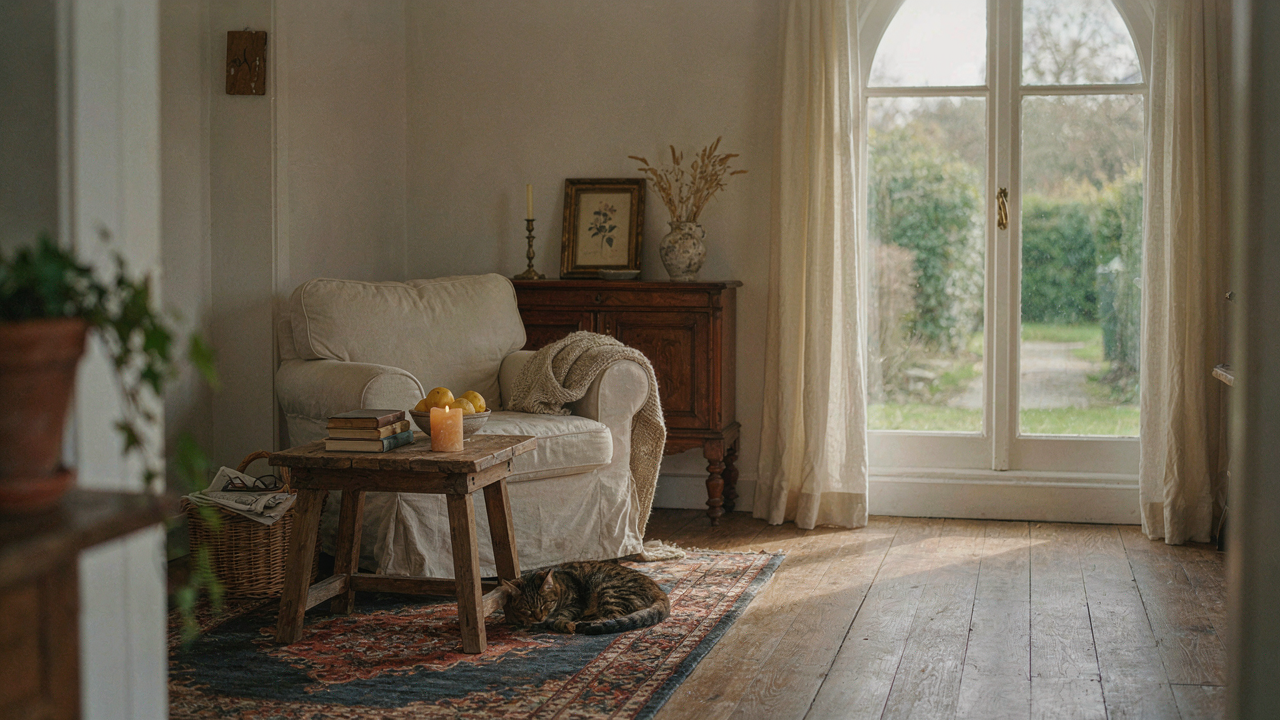
The “Collected Room” Deception: Why Your Pinterest Board Lies
Social Media Has Weaponized Curation Against You
You want to believe a room can look effortlessly assembled. That’s the trap. Instagram and design blogs show you eighteen-month timelines compressed into a single image, with professional lighting, strategic angles, and items specifically purchased to photograph well together. The mechanism is simple: platforms reward visual consensus, so designers stage rooms that read as “collected” without showing you the actual work of collecting, the failed purchases, the pieces that didn’t work, or the three years of estate sales it took to find one authentic Louis XVI chair. A real collected room is an active process that resists perfection.
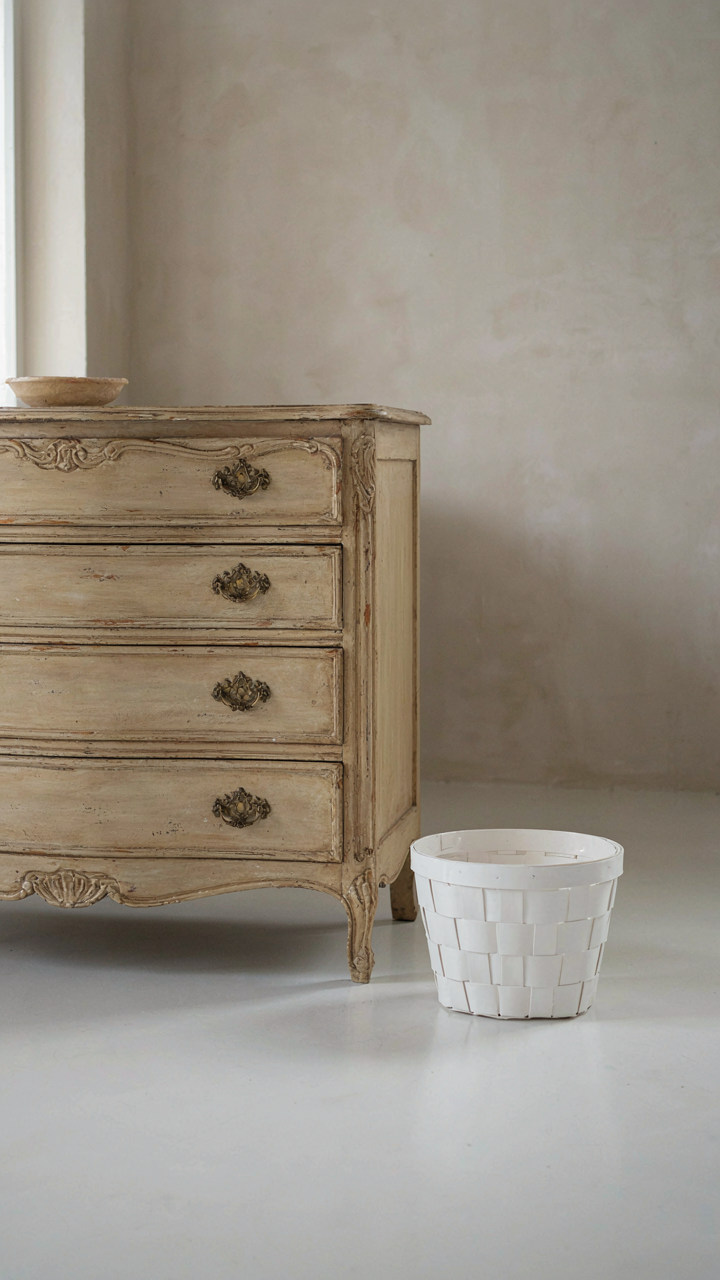
French country furniture on social media gets hit hardest by this distortion. You see a room with a painted dresser, three woven baskets, a linen chair, and fresh lavender, and you assume you can replicate it by ordering those exact items from a home goods retailer. What the image doesn’t show is that the dresser came from a 1970s French auction house with original hardware, the baskets are regional variations from different decades, and the chair is an authentic period piece, not a reproduction. The visual consistency you’re seeing is curated selectivity, not a design system you can outsource to Amazon.
The Authenticity Trap Runs Deeper Than Matching
Real collected rooms don’t aim for aesthetic uniformity, they reflect actual acquisition and use. You don’t start with a mood board and buy toward it. You start with one piece you genuinely need or want, then you let future pieces respond to what’s already there. This is the opposite of what decorating blogs teach. The advice says choose a color palette, define a style, then fill the room. That produces rooms that look decorated, not collected.
French country furniture works against the “match everything” instinct because the tradition itself never had one aesthetic moment. A farmhouse in Provence in the 1800s accumulated pieces across generations, each responding to function and what the family could afford at that moment. A rush-seated chair from 1820 sat next to an oak table from 1890 next to a later painted armoire. The rooms cohered not through deliberate style matching but through shared material logic, regional woodworking traditions, and the fact that people kept things that worked. If you want a collected room, stop shopping for pieces that coordinate and start acquiring pieces that have structural or material integrity, then let them settle together over time.
Vintage French Style: The Accumulation Principle
Time As A Design Tool
You want permission to keep things because throwing them away feels wasteful, and you’re hoping this aesthetic validates that impulse. Here’s the mechanism: French country furniture works through temporal layering, not curation. Think of it like geological strata in archaeology—each layer represents a different period, and the visible boundaries between them create the visual interest. A farmhouse room from 1800s Provence didn’t look collected because the owner shopped intentionally. It looked that way because objects accumulated functionally over decades.

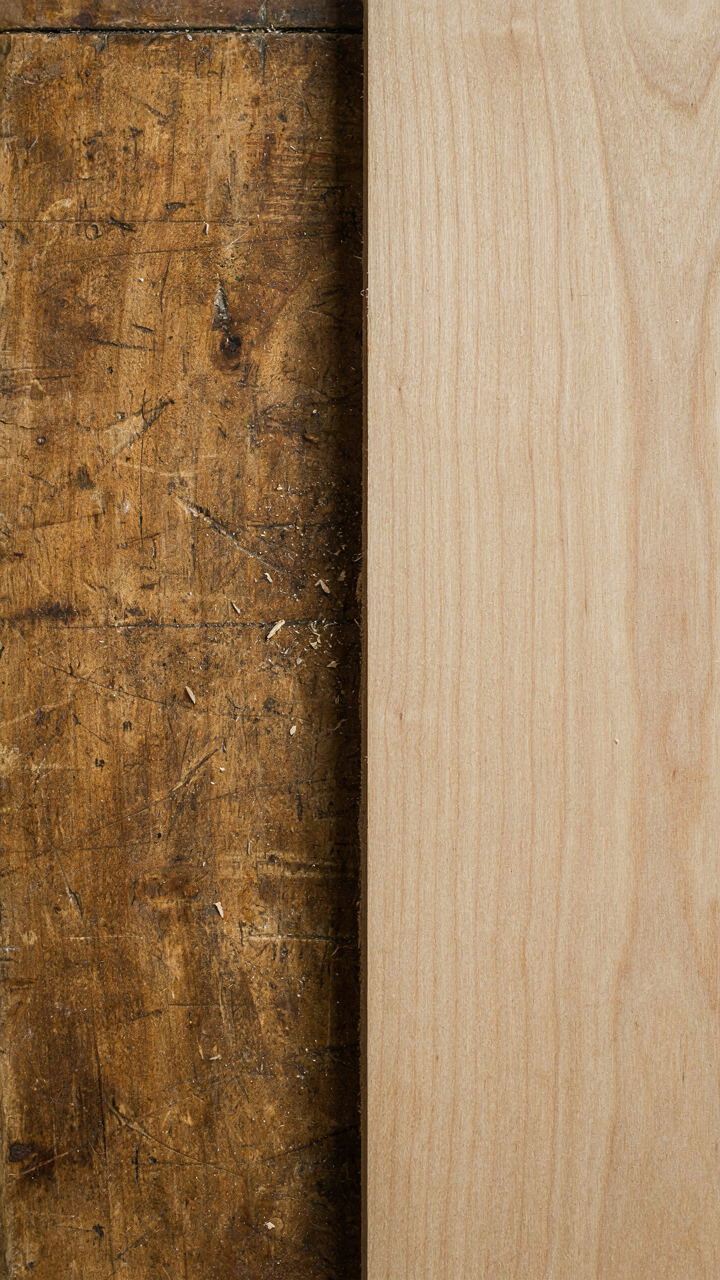
The common advice tells you to “mix periods.” That’s incomplete. What actually matters is that pieces show visible wear corresponding to their age. A Louis XVI chair from 1780 sitting next to a Directoire table from 1795 reads as cohesive because both carry appropriate patina. The wood color, the depth of scratches, the nail patterns—these are the real data points your eye processes. When a new reproduction sits between them, it breaks the timeline. Collected rooms work because the timeline is honest.
Imperfection As Provenance Record
Every scratch, water ring, and paint layer on authentic French country pieces tells when and how the object was used. This isn’t aesthetic preference—it’s historical documentation. Reproduction furniture with artificially distressed finishes fails because the distressing doesn’t follow actual wear patterns. Genuine pieces show concentrated wear on chair seats where bodies sat, fading on surfaces facing south-facing windows, and specific damage consistent with specific decades of use.
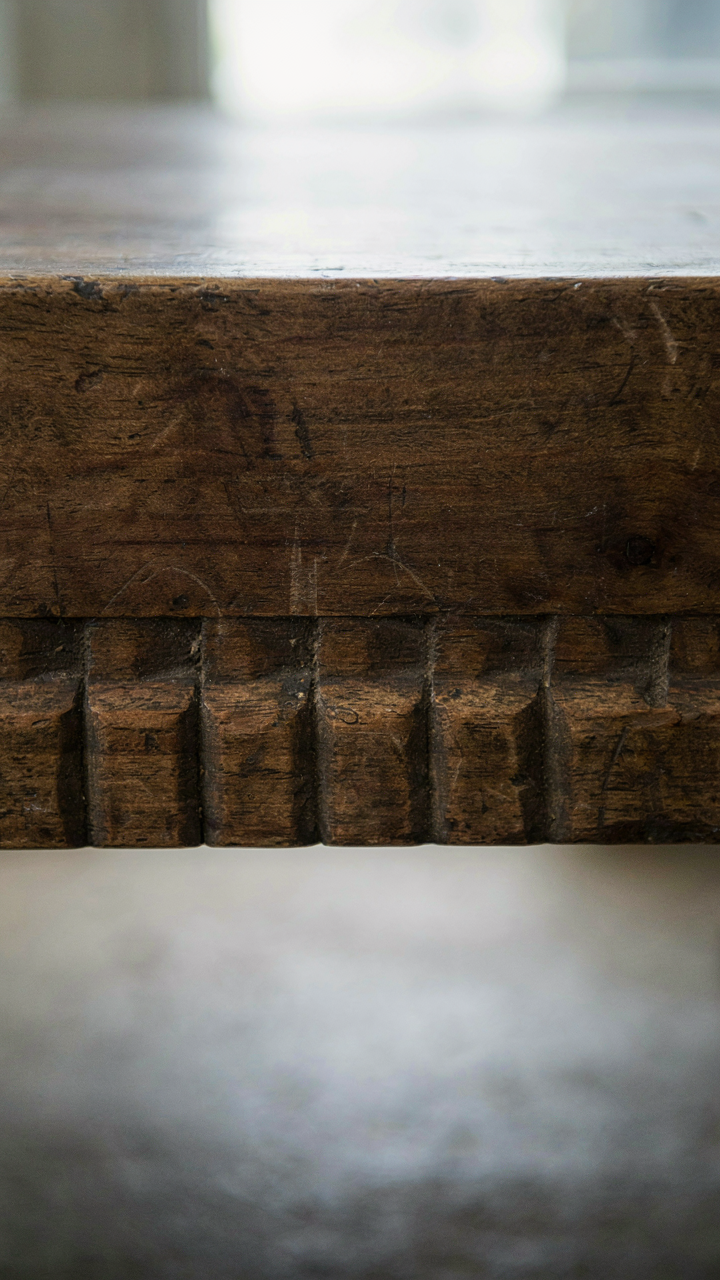
The reason to seek pieces with provenance isn’t snobbery. It’s because provenance determines whether the visual language reads as accumulated or as assembled. A table with tool marks from a specific regional craftsman’s chisel technique, combined with documented ownership history, carries information that guides where similar pieces should sit in the room. You’re not decorating. You’re reconstructing a plausible timeline through object selection and placement.
The Heritage Harvest Protocol For French Country Furniture Ideas
Spotting What’s Actually Old
You want to feel like you own something real, not a reproduction mass-produced in Vietnam last year. Here’s the mechanism: French country furniture from the 18th and 19th centuries shows wear patterns that fake aging cannot replicate. Wood shrinks unevenly over decades. Hand-planed surfaces leave tool marks that differ from machine planing. Nails in authentic pieces vary in size and placement because craftsmen didn’t have standardized fasteners. Check the underside of drawers and the back panels first—these are where makers used inferior wood and never expected buyers to look.

Construction methods reveal everything. Mortise and tenon joints in original pieces fit without glue alone in period examples. Dovetail joints on drawers from the 1800s show hand-cut irregularity. Stain and finish sit in grain patterns that modern reproduction makers rush through. Provenance matters less than physical evidence. A table from Lyon or Provence will have local wood species: oak, walnut, or cherry dominate certain regions. Learn the wood. Learn the joints. Learn what hand tools actually leave behind.
Building Inventory Without Building Debt
The common advice says hunt estate sales and auctions. That’s incomplete. You end up competing with dealers who know the market and buy faster. Instead, reverse the acquisition funnel: establish relationships with local restoration craftspeople, antique conservators, and estate liquidators. They see pieces before public sale. They know which furniture moves slow in their workflow because buyers undervalue it. A provincial dining table that needs refinishing sits in a workshop longer than a perfect Parisian chair—and costs half as much.
This is economics applied to furniture: you capture asymmetric value by buying during the liquidation phase, not the retail phase. Build a rotation system. Document what you acquire with photos, measurements, and wood type. Track spending per piece. When you hit saturation in one room, stop buying that category. The moment you understand you’re collecting a room, not just finding deals, your decision-making hardens. You eliminate 70 percent of impulse purchases because they don’t serve the room’s architecture.
French Chairs Living Room: Beyond The Visual Hierarchy

The Physics Of Comfort In Old Frames
You want French country chairs because they look collected. That’s the real reason. But here’s the mechanism nobody states: authentic French seating uses load distribution, a principle from structural engineering where weight spreads across multiple contact points rather than concentrating on one zone. Medieval and provincial French chairs distribute your body weight across the seat, backrest, and legs simultaneously. Modern furniture concentrates pressure on foam cushioning, which collapses over time. French country pieces force your skeleton to do the work instead.

The curve of a Louis XV fauteuil’s backrest isn’t decorative. It’s geometrically calculated to support the natural curve of your spine without pushing you forward. The seat height on provincial French chairs typically sits at fourteen to sixteen inches, which aligns with human proportions across most body types. Cheap reproductions flatten this curve or raise the seat too high. When you sit in an actual eighteenth-century French chair, your feet touch the ground and your weight settles into the frame instantly. This is why old pieces hold their value while new knockoffs feel wrong after thirty minutes.
Materials That Survive Actual Use
Everyone says French country furniture is durable because it’s old. Wrong. It survives because builders used wood species with specific properties and construction methods that don’t exist in modern reproductions. Beech and walnut, the primary woods in provincial French seating, have grain density that resists splitting and warping across temperature swings. The mortise and tenon joinery creates mechanical strength that doesn’t depend on glue holding forever. Factory glue joints fail after fifteen years. Hand-cut joints last generations.
The upholstery tells you everything. Authentic pieces use horsehair or cotton batting over webbing stretched tight across the frame. This system allows air circulation and prevents moisture accumulation that rots foam. The covering fabric on museum-quality pieces is linen or wool, not synthetic. These fibers age gracefully and can be reupholstered without damaging the underlying structure. When you inspect a French country chair, press the seat. If it bottoms out immediately or feels plasticky, the frame isn’t the issue. The construction method failed decades ago. Check the underside for hand-tied springs or webbing patterns that show individual craftsmanship, not automated repetition.
French Country Coffee Table: The Functional Anchor
Stop Treating It Like Decoration
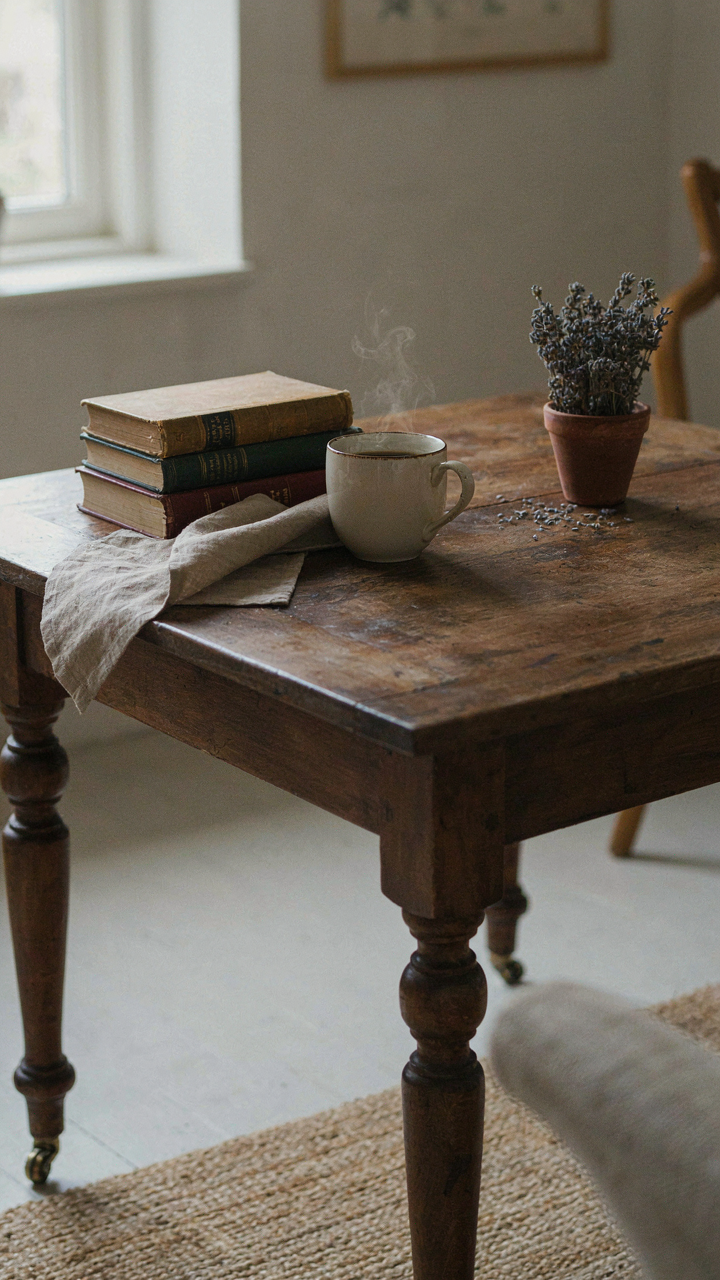
You want the coffee table to make your room look intentional without admitting you need somewhere to set your drink. The mechanism is simple: a French country coffee table works as a spatial anchor because it solves a real problem first, then happens to look collected. The common mistake is buying based on surface appearance instead of footprint and load capacity. A table that can’t handle actual use becomes visual clutter masquerading as design.

French country tables derive their staying power from farm and manor house logic, not Instagram aesthetics. These pieces were built for function in rooms that served multiple purposes simultaneously. A solid wood table with a lower shelf or drawer solved the problem of storage and surface area in spaces that couldn’t afford dedicated furniture for each task. That practical DNA is what makes them work in modern rooms where you’re layering collections.
The Worn Surfaces Nobody Wants To Talk About
Design advice pretends distressing is purely aesthetic. It’s not. Economics explains this better than art criticism does: scarcity drives perceived value. A coffee table showing legitimate wear from actual use signals that piece survived long enough to matter, which makes it trustworthy in a collected space. Fake distressing reads as desperate. Real patina reads as earned.
The distinction matters because your brain processes authentic wear differently than applied damage. Genuine French country tables often show water rings, small gouges, and color variation because wood expands and contracts, people live on them, and time changes how finishes behave. These aren’t flaws to hide. They’re proof the table has structural integrity and aesthetic honesty. When selecting a table, look for wear patterns consistent with actual use: concentrated damage on the top surface, natural darkening in crevices, consistent wood grain color underneath. That’s your signal you’re buying something that already earned its place in a room.
The Biomimicry Of French Country House Design
Patterns That Arrange Themselves
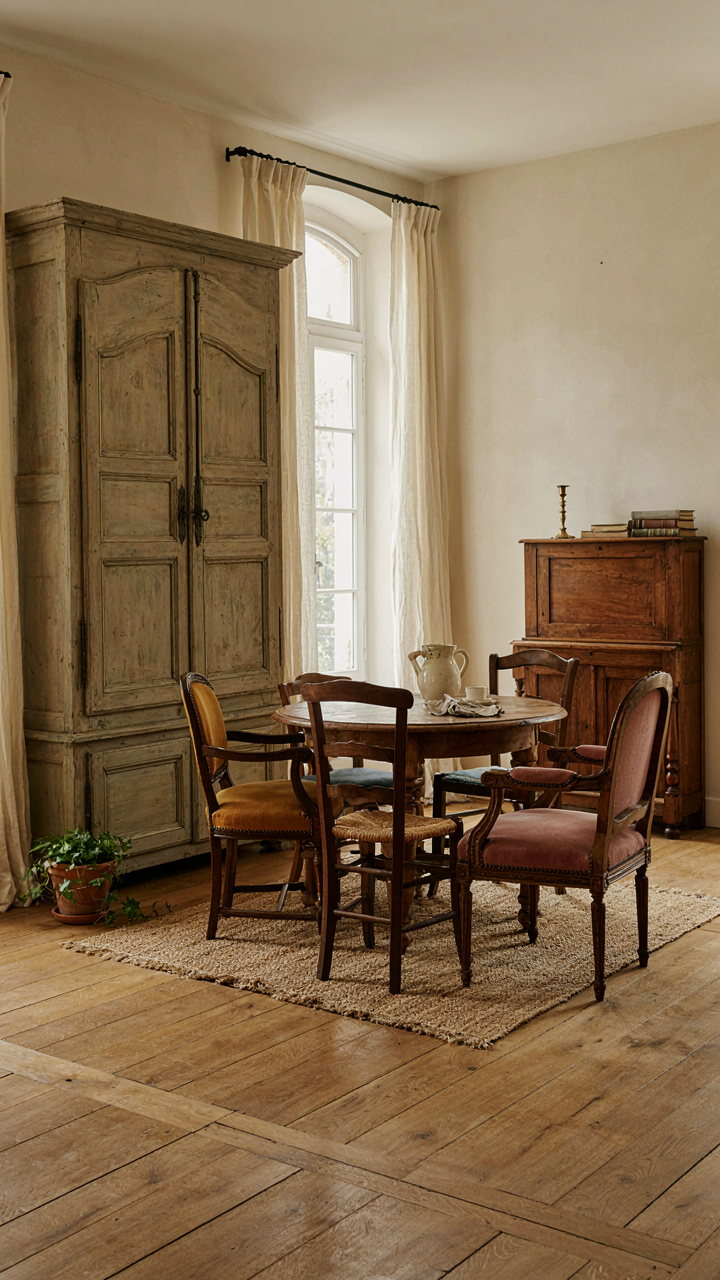
You want this section to justify spending money on old furniture without admitting you’re buying status. Here’s the real mechanism: French country rooms work because they copy how natural systems organize without forcing alignment. Biomimicry borrows from ecology, and in furniture placement, the principle is emergent pattern. Instead of symmetrical grids, things cluster around function like trees around water. A worn farm table becomes the nucleus. Chairs face inward. Cabinets land where light hits them. Nothing matches perfectly, but nothing clashes either.

The rooms that feel collected instead of cluttered follow ecological density rules. Trees don’t space themselves evenly across a forest. They grow dense near resources, sparse elsewhere. French country interiors do the same. Group your heaviest pieces where you live most. Let negative space breathe where nobody stands. The gaps between furniture matter more than the furniture itself. Peasants didn’t arrange rooms by design theory. They positioned objects by use, and use created invisible geometry that scale still follows.
When Disorder Becomes Order
Biological systems don’t move toward chaos, they move toward efficiency. French country design captures this because it evolved from working farmhouses where every object earned its placement through necessity, not aesthetics. The common advice says “let it grow organically,” which is lazy instruction that produces rooms that look abandoned instead of inhabited. Real organic flow requires you to understand the traffic patterns in your space. People move in curves, not straight lines. They pause at certain sightlines. They reach for things at arm’s height.
Map your room like a hydrologist maps a watershed. Water flows to low points and channels through existing paths. In your room, attention flows the same way. A tall armoire breaks visual current at a corner. Open shelving invites people to slow and scan. A low bench under a window creates a stopping point. Each piece of furniture either channels movement or interrupts it. Arrange your collected pieces so movement feels necessary, not awkward. This is why inherited mismatched furniture in a French country room reads as intentional instead of accidental.
French Country Dining: The Table As A Nexus
Where People Actually Gather
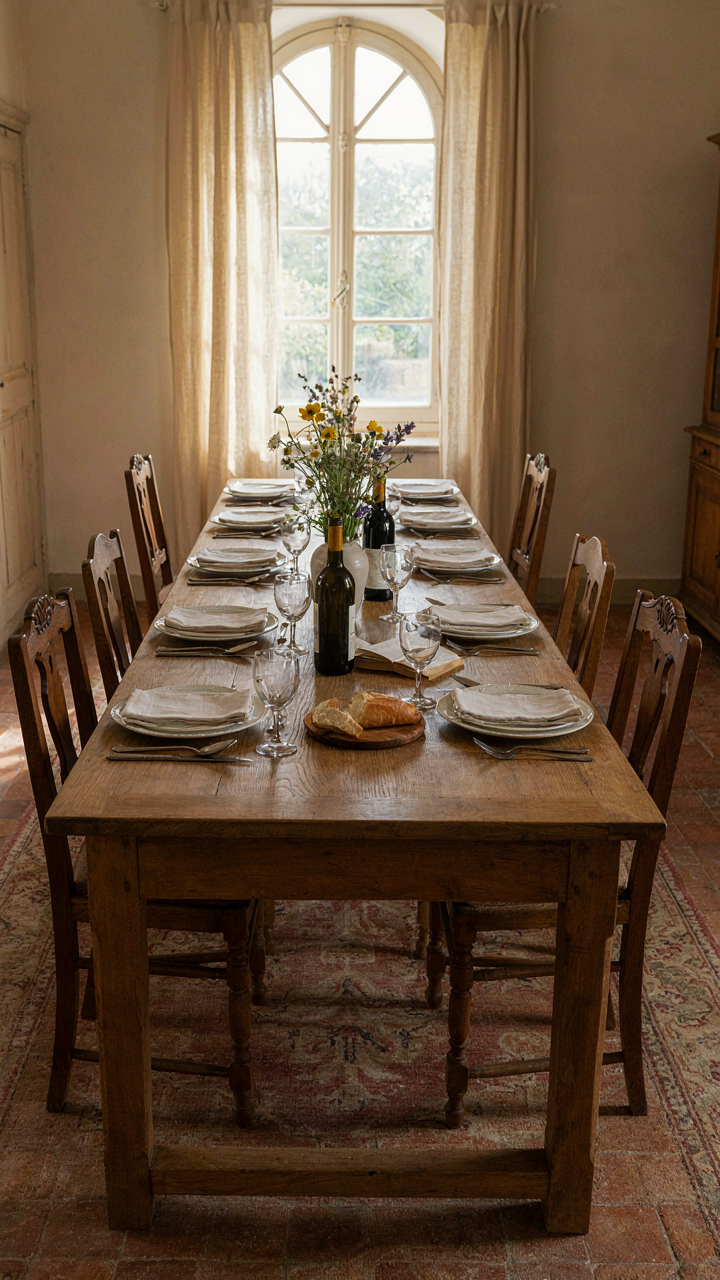
You want a dining table that signals you understand legacy and permanence. But the real mechanism is simpler: French country tables work because they’re designed around how humans actually behave at meals, not how Instagram suggests they should. The French dining table emerged from rural farmhouses where families ate together for hours. The furniture adapted to this reality, not the other way around.

A French country table functions as a social anchor because its proportions and materials force deliberate use. The weight of solid wood, the size of the apron, the height relative to chairs all communicate that this is infrastructure, not decoration. You sit there to stay there. This distinction matters. A table designed for lingering develops different joinery, different wood selection, and different proportions than a table designed for quick meals. French country makers understood the economics of time spent at the table.
Wood That Survives Actual Life
The common advice says to pick French country furniture because it’s “timeless.” That’s incomplete. What actually happens is that French country tables survive multiple generations because they’re built with wood movement as the primary design problem, not an afterthought. This comes from biology: wood expands and contracts with humidity. French craftsmen solved this through joinery, not material selection.
Tables from the 18th and 19th centuries used mortise and tenon joints with deliberate gaps. The top floated on the base using buttons or figure-eight fasteners that allowed wood to move without splitting. Pine, oak, and walnut were chosen because they’re stable woods with forgiving grain patterns. The construction assumes the table will move. When you inherit or purchase a French country table, it can take seasonal shifts without catastrophic failure. Build a replacement table the same way: prioritize mechanical resilience over tight tolerances, because wood moves regardless of your intentions.
French Decor: Eliminating The Superficial
Objects Worth Keeping
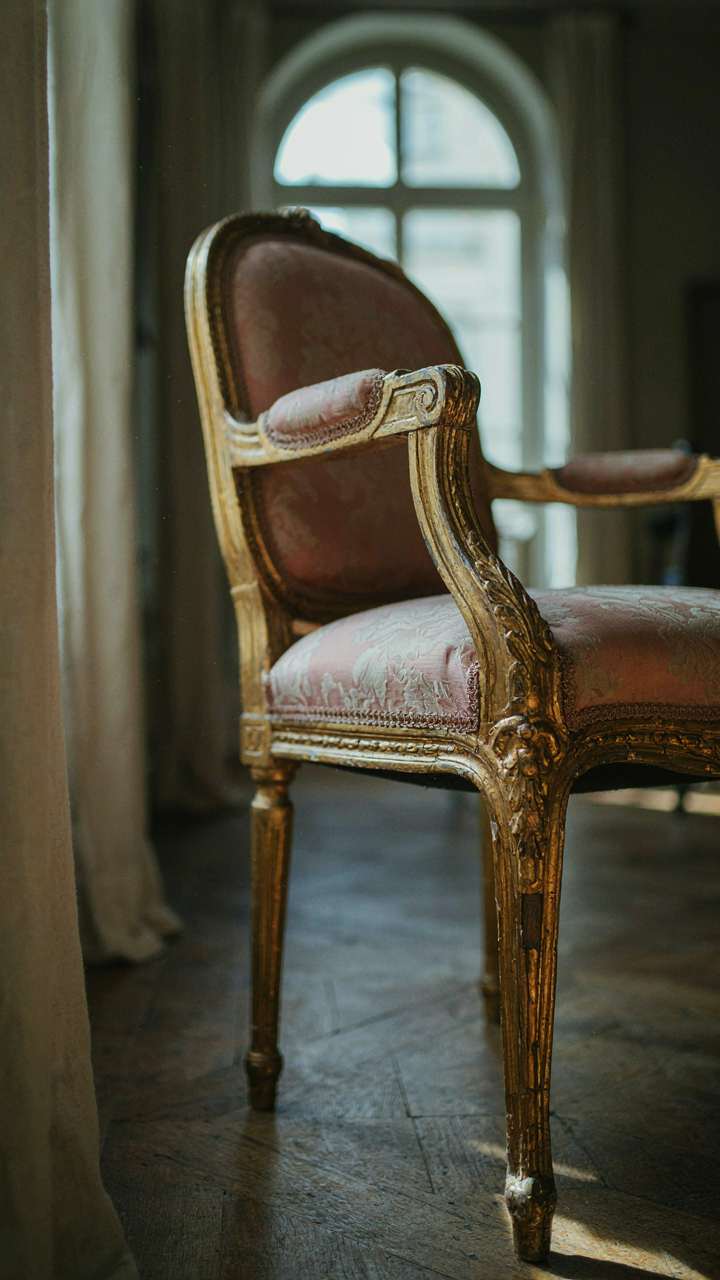
You want permission to stop feeling like your room looks unfinished. That’s the real question here. The mechanism is simple: French country interiors work because objects in them have friction. They resist your impulse to replace them. A worn Louis XVI chair doesn’t disappear into the background like mass-produced furniture. It stays visible because it carries weight—literal history, repair marks, the specific wear pattern of actual use.

Meaningful objects force you to edit everything around them. You can’t add freely. This constraint is what makes collected rooms feel intentional instead of accumulated.
- Pieces with documented provenance: Know the region and era. A Norman rush-seat chair differs structurally from a Provençal variant. Provenance anchors the object and prevents treating it as generic “French-looking.”
- Evidence of repair and patina: Original finish cracks, replacement stretchers, re-glued joints. These scars prove function. They also prevent you from fetishizing the piece as decoration alone.
- Objects that solve a real problem: A French farmhouse buffet stores. A bergère chair supports your back. Purpose precedes aesthetics. Without it, you’re buying sculpture and calling it furniture.
- Textiles with wear patterns: Linen curtains fade unevenly. Wool throws pill in high-traffic areas. The deterioration maps actual life. This is opposite of the pristine showroom object.
- Pieces from a single maker or workshop: Regional makers had consistent joinery, wood selection, and proportions. Grouping work from one source creates visual coherence without relying on matching sets.
The second step is brutal honesty about why you own each piece. If the answer is “it looks like something French,” remove it. If the answer is “I use it three times a week and it fits the space,” keep it. Collected rooms don’t happen by aesthetic accumulation. They happen by saying no to everything except what earns its place through friction or function.
The Tyranny Of Matching Sets
The consensus about French country furniture is wrong. You’ve been told that cohesion comes from matching sets: a chair, side table, and cabinet all from the same era and region, creating visual harmony. This is the fast-food version of collecting. It removes all decision-making. It also produces rooms that feel curated by algorithm, not by taste.
Real French country rooms—the ones that still exist in farmhouses and estates—contain pieces from different periods and origins. A Directoire chair sits next to a Louis XV table. A Norman piece neighbors a Provençal one. What ties them together isn’t matching. It’s constraint. The wood palette stays tight. The proportions align. The scale of ornamentation follows unspoken rules. These rooms work because they operate under material and formal limits, not under the rule of “everything must be from the same collection.”
Matching sets tell you to stop thinking. The moment you buy set number one, you’re locked into buying sets that coordinate with it. You’re not editing anymore. You’re completing collections someone else designed. The real mechanism is this: constraint forces you to understand proportion, material, and function deeply enough to make pieces from different sources work together. Collected rooms are harder because they demand actual judgment. They also become rooms you built, not rooms you purchased.

The Country Coffee Table: Unseen Forces Shaping Style
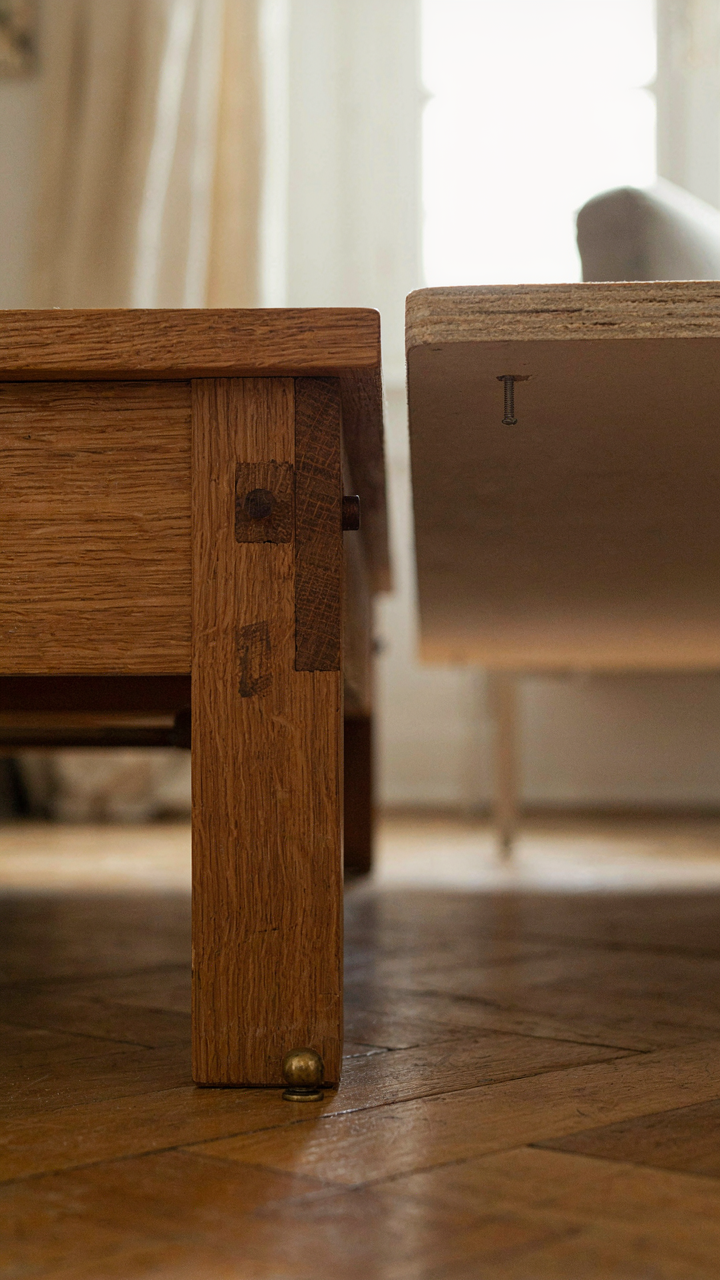
Why Wood Type Matters More Than Style
You want your coffee table to look intentional, not like you grabbed whatever was on sale. The real mechanism driving French country coffee tables is constraint, not choice. Regional wood availability determined what craftsmen could build, and that constraint created the aesthetic you’re now trying to buy back.
Oak and walnut dominated French rural furniture because they grew locally and seasoned predictably. Walnut from the Périgord and Quercy regions became the marker of quality country pieces, while oak served everyday tables in Norman and Breton homes. Cherry and chestnut filled regional gaps. Wood type wasn’t decorative preference; it was economics. The wood that grew nearby was the wood you used, and that regional specificity is what reads as authentic now.
Joinery Reveals The Real Cost
The mechanism here is durability as a business model. A French country coffee table built before 1900 used mortise and tenon joinery because screws didn’t exist at scale and nails failed under the weight of daily use. This wasn’t artisanal nostalgia; this was the only engineering that worked.
Modern reproductions often cut corners with dowels or pocket-hole construction because it’s faster. Those tables fail differently: the joints loosen within years because the system wasn’t designed for seasonal wood movement. A proper country table accommodates wood shrinkage through its joinery design. If you’re buying or building one, examine how the top connects to the base. Breadboard ends or floating panels signal someone understood the mechanism. Screwed-on tops signal someone didn’t.
The Real Obstacle Isn’t Finding The Right Furniture; It’s Your Impatience With Authenticity
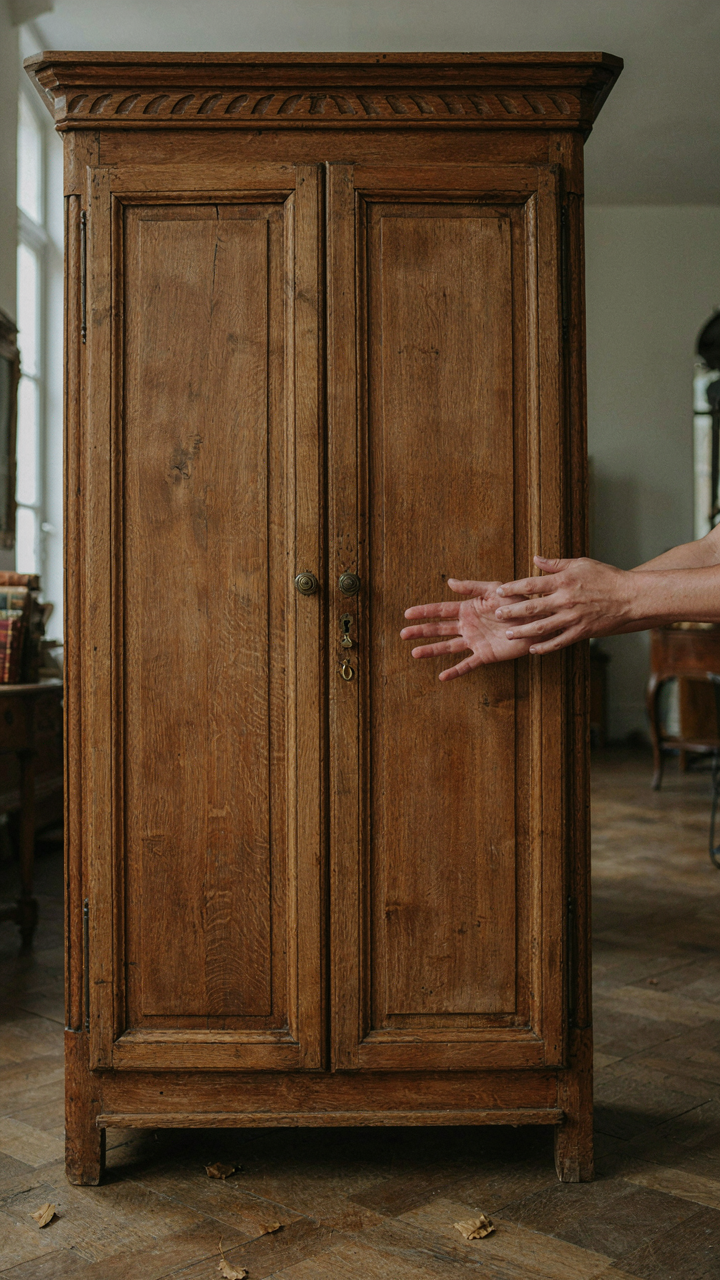
Most people sabotage their rooms by rushing. They buy matching sets, force a vision, then wonder why it feels sterile. French country furniture demands you slow down. Hunt for one authentic piece this week. Not online. Local auctions, estate sales, antique shops. Feel the wood. Notice the wear. This single act rewires how you think about collecting. You stop decorating and start discovering. Authenticity isn’t something you purchase all at once; it’s something you earn through restraint.



