
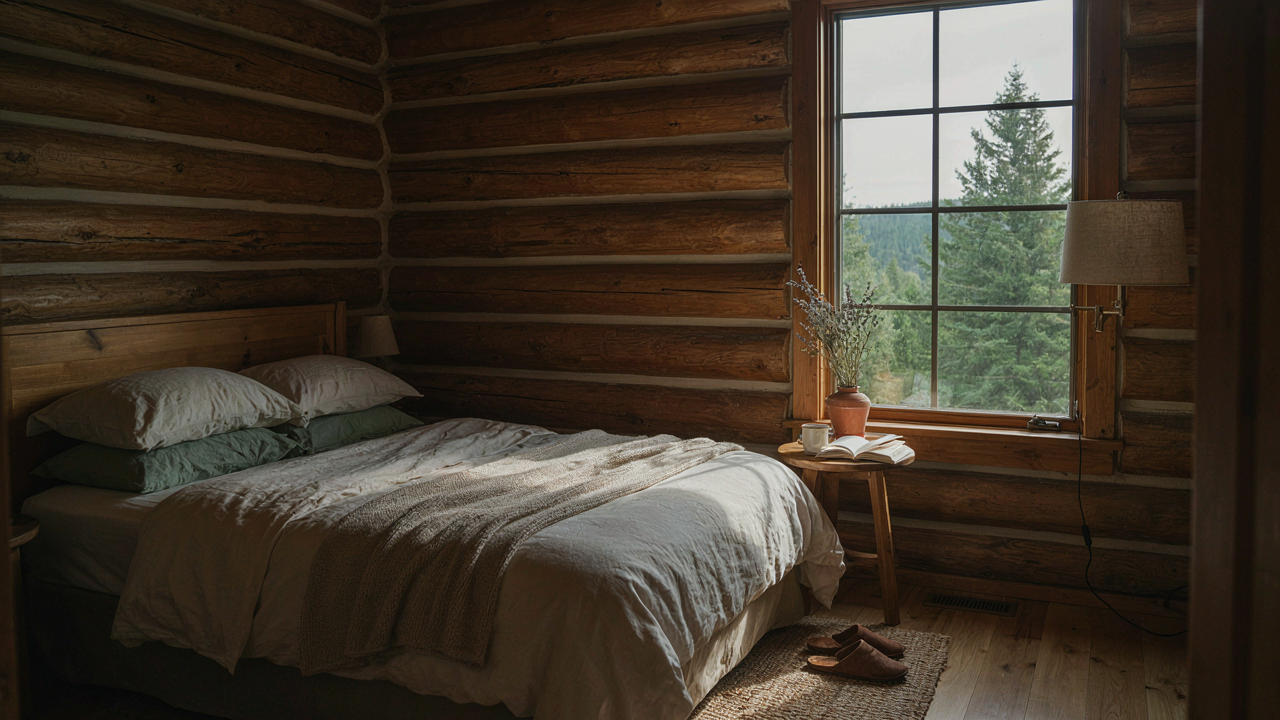
Beyond Rustic: The Log Cabin Bedroom Decompression Protocol
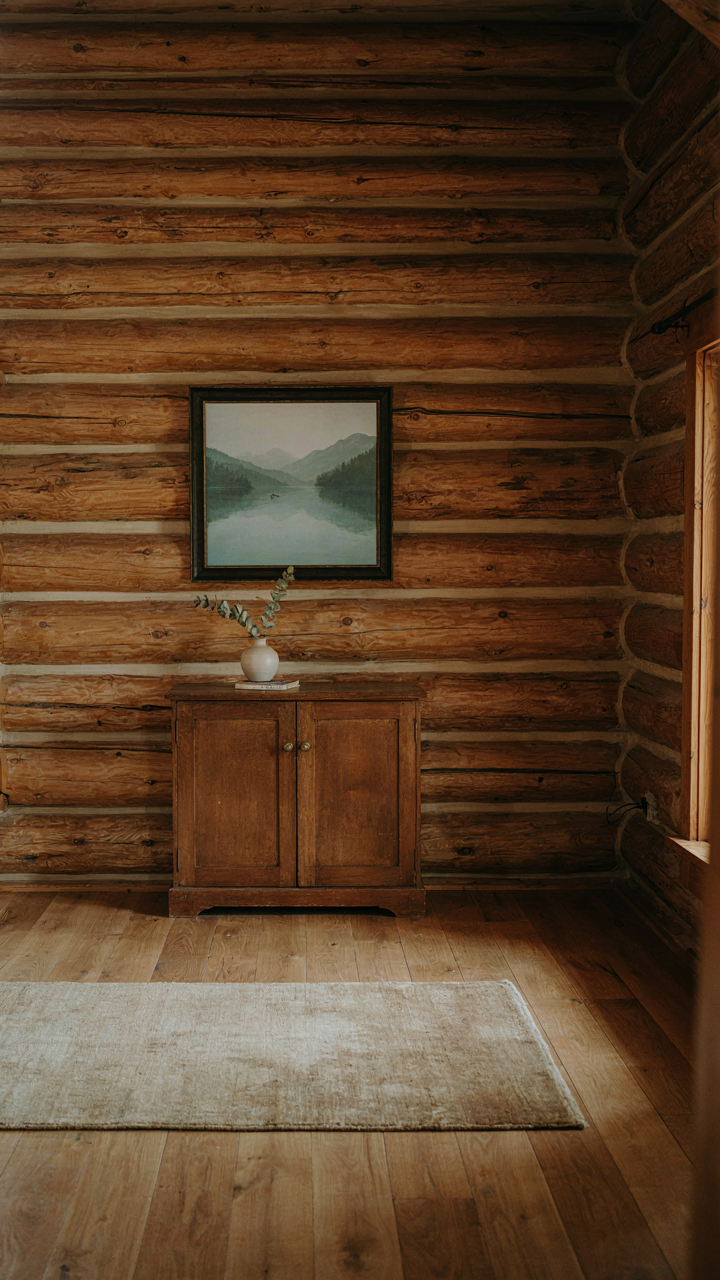
Sound Frequency And Temperature Control
You want a log cabin bedroom because you think it signals you’ve escaped the chaos. The real mechanism is sensory dominance: your nervous system doesn’t care about your intentions, only about what it receives. In neurobiology, signal-to-noise ratio determines whether your brain stays in sympathetic activation or shifts to parasympathetic rest. A log cabin bedroom either amplifies or dampens incoming signals. Temperature stability matters first. Logs moderate internal temperature swings because wood has high thermal mass and naturally regulates humidity. Aim for 65 to 68 degrees Fahrenheit at night, which aligns with circadian sleep science, not preference.
Sound frequency is the second control. Logs absorb mid-range frequencies naturally, which is why a cabin feels quieter than a drywall room at identical decibel levels. External noise above 40 decibels triggers wakefulness. Most people ignore this and focus on aesthetics instead. Weatherstripping around windows and doors costs less than redecorating and directly prevents sound infiltration. Add heavy curtains on interior walls facing potential noise sources. This isn’t decoration. It’s acoustic load management.
Visual Stillness Over Decoration
The consensus says fill your log cabin bedroom with character and charm. That’s the wrong instruction. Visual complexity keeps your prefrontal cortex engaged when it should be powering down. Every object in your field of view costs cognitive processing. Horizontal lines and repetitive textures in log walls actually work against you if you add competing visual elements. The logs themselves provide sufficient visual information. Stop there.
Eliminate variation in wall color, eliminate mirrors, eliminate patterned textiles, eliminate items on shelves. A bare nightstand is better than a decorated one. Keep flooring monochromatic: either natural wood tones or muted carpet, not both. Storage hides clutter but also hides what you need to see. Use simple closed cabinets or a cedar chest rather than open shelving. The mechanism is reduction. Your eye should find a resting point, not a new stimulus every two seconds. One framed image or none beats a gallery wall.
The Chalet Room Lighting Deception: More Than Just Lamps
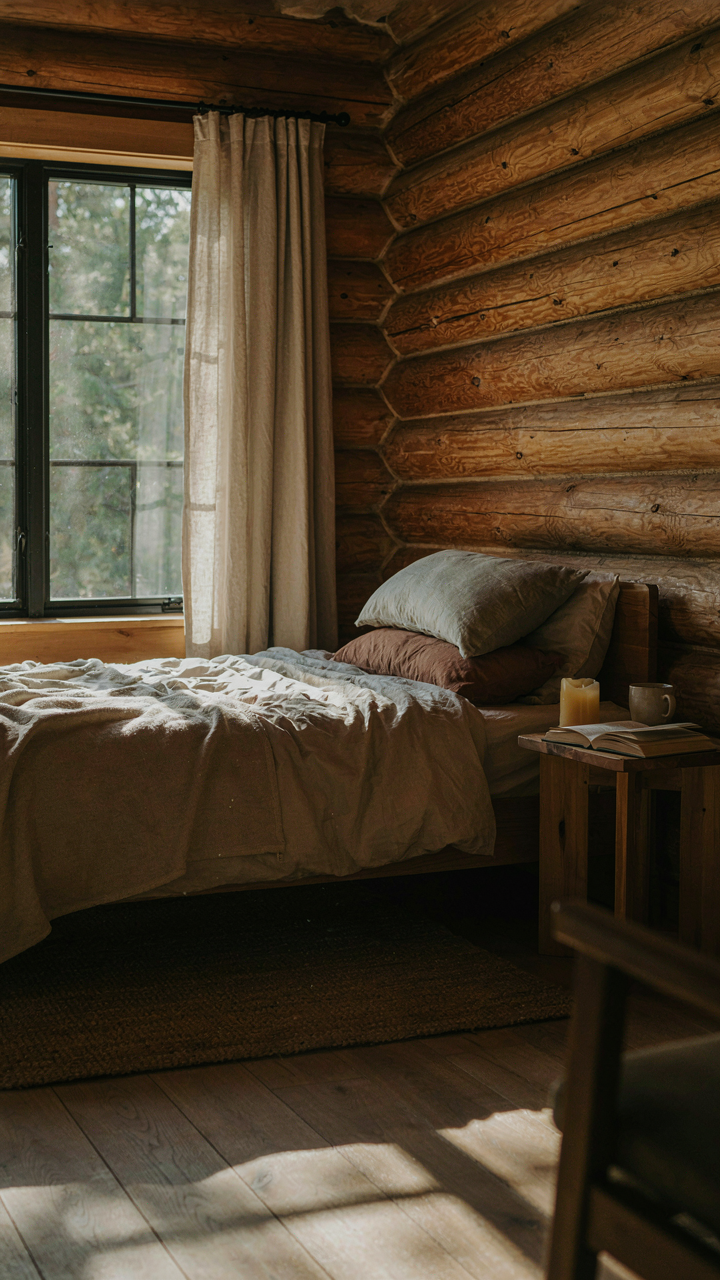
Window Placement Controls Your Sleep Schedule
You want the cabin bedroom to feel “cozy” because admitting you’re actually trying to hack your own biology feels too clinical. Here’s the mechanism: chronobiology, the study of biological time, proves light exposure regulates your circadian rhythm through your eyes’ photoreceptive cells, not through your skin. East-facing windows deliver morning light that sets your clock forward. This matters because it anchors your melatonin production for the entire day. A bedroom without strategic morning light exposure fights your natural sleep onset at night, no matter what you do with lamps later.

Positioning the bed perpendicular to windows rather than parallel lets you catch dawn light without glare on your face while sleeping. The mechanism is simple: morning cortisol spike from light exposure suppresses melatonin production early, creating clean sleep pressure by nightfall. Skylights or clerestory windows above the bed line work in mountain cabins where wall positioning is constrained. The goal isn’t aesthetics. It’s timing your hormone release to match darkness and wakefulness patterns your nervous system expects. Install blackout shades that operate on a track system, allowing full control when light becomes a liability during afternoon naps or late sleep.
Amber Light After Sunset Replicates Dusk
Everyone says “avoid blue light at night” as if that’s the strategy. It’s not. The real mechanism is light color temperature in relation to your pupil response and melatonin suppression. Artificial light above 3000K (warmer, more orange) tells your eyes you’re in twilight, preserving melatonin production as evening deepens. Below that threshold, your body doesn’t recognize the signal to transition into sleep mode. Standard LED bulbs marketed for cabins run 4000K or higher, actively working against sleep.
Layered artificial lighting means three separate light sources in a log cabin bedroom, each on independent controls: overhead ambient at 2700K on a dimmer, task lighting at bedside using Edison-style filament bulbs around 2200K, and accent lighting in wall sconces positioned low and angled toward the ceiling rather than into the room. This architecture lets you dial down color temperature and intensity simultaneously as evening progresses. At 9 PM, you’re at full brightness and 2700K. By 10:30 PM, you’ve dimmed to 50% and everything’s 2200K amber. Your pupils constrict, melatonin begins, and your nervous system recognizes the descent into sleep as intentional, not accidental.
Tactile Engineering: Crafting A Cabin Bedroom Sensory Oasis
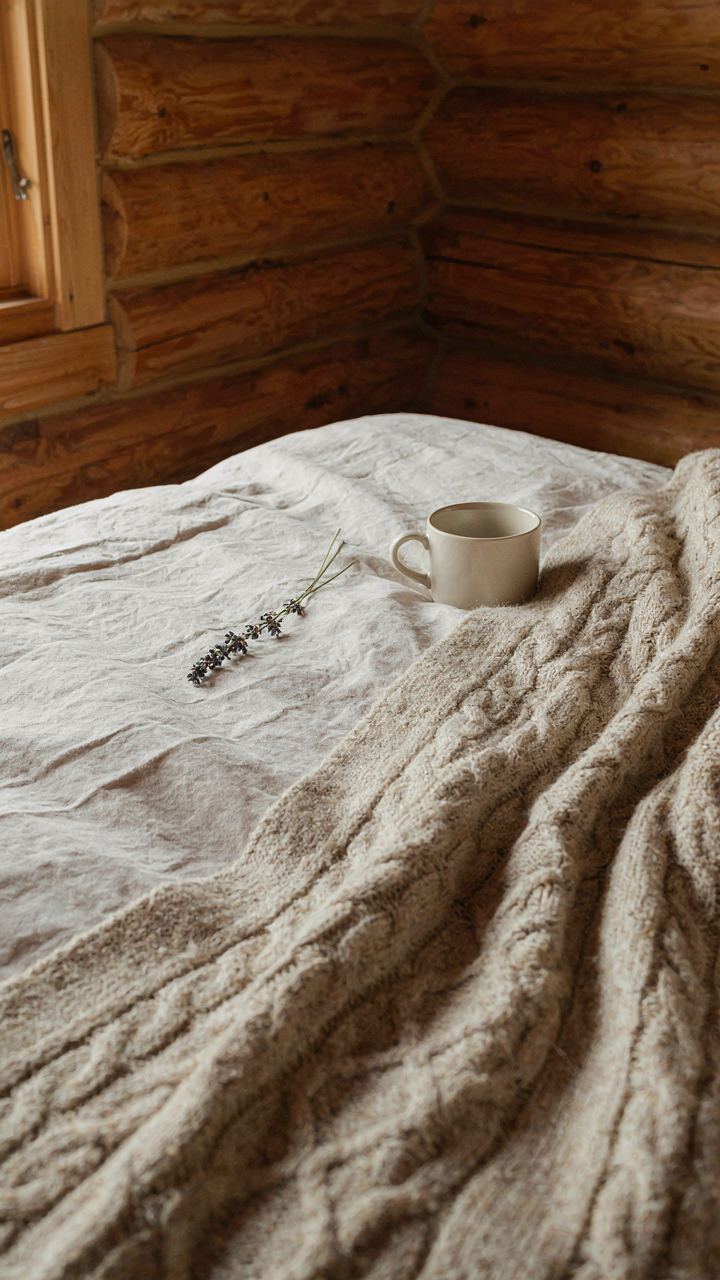
Wood, Wool, Linen Balance
You want your cabin bedroom to feel “authentic” because authenticity signals you’re above the mass-market trap. But the real mechanism is sensory contrast: your nervous system calibrates to materials, and mixed textures force micro-adjustments that create perceived depth and comfort. Think of it like acoustic layering in audio engineering, where different frequencies coexist without competing.

Wood dominates the visual plane in a log cabin, so it shouldn’t dominate tactile input. Layer wool blankets and linen bedding on top to create friction variance. Your skin reads these shifts. The wood stays structural. Wool and linen handle temperature regulation and comfort. This hierarchy prevents sensory monotony, which is what actually makes cabins feel restful instead of austere.
Natural Fibers Only
The advice to “avoid synthetics” misses the actual problem. Synthetic fabrics don’t fail because they’re fake. They fail because they don’t breathe consistently and they trap static charge, which your body registers as irritation even if you can’t name it. Natural fibers have capillary action built in by cellular structure.
Linen wicks moisture fastest. Wool regulates temperature through air pockets in its fiber structure. Cotton sits in the middle. Pick one primary fiber for bedding, one secondary for blankets. Don’t rotate them for “variety.” Consistency trains your nervous system to drop into rest faster. Your body needs predictable tactile input to enter deep sleep, not novelty.
Color Psychology: The Modern Cabin Home Decor Palette Playbook
Cool Tones For Mental Clarity
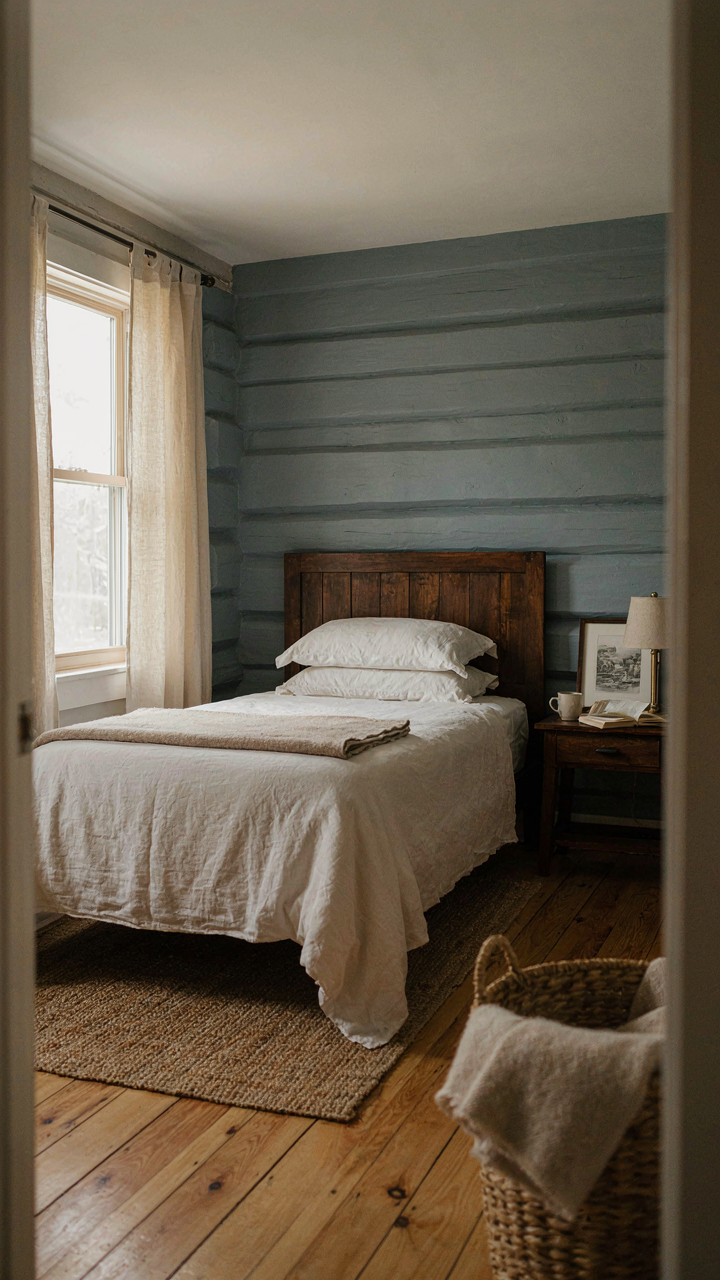
You want this section to validate that your bedroom choices are sophisticated. Here’s the mechanism: cool tones suppress cortisol response by triggering the parasympathetic nervous system, the same biological circuit that manages your rest state. Think of cool colors as a dimmer switch for activation. Most cabin design advice defaults to warm oranges and reds because wood dominates the space. That’s backwards. The wood already anchors warmth. You need the opposing force.
Slate blue, soft sage, and pale gray work in log cabins because they counterbalance wood’s inherent temperature without fighting it. These tones recede visually, making wood grain the focal point while keeping your nervous system in recovery mode. The trick is saturation control. A muted blue calms. A bright blue stimulates. In a bedroom, you’re after the first one. Apply cool tones to walls or large textile surfaces—bedding, curtains, area rugs. Keep saturation below 50 percent on the color wheel and your space becomes a rest environment instead of a decoration.
Dark Accents For Grounding Effect
The common advice says log cabins need brightness to avoid feeling cave-like. Ignore that. Psychology borrows from architecture here, and in architecture, contrast creates perceived space, not uniformity. Dark accents establish visual weight and tell your brain the room has structure. Without structure, your mind stays searching.
Deep charcoal, dark walnut trim, or black metal fixtures anchor the eye and reduce decision fatigue in your visual field. Your brain interprets grounded spaces as safe spaces. Place dark accents strategically: headboard backing, window frames, or furniture legs. One dark wall works if it’s behind the bed. The pattern matters less than the placement. Dark accents should occupy roughly 15 to 25 percent of the room’s visible surface. Anything more triggers heaviness and suppresses the calming effect you’re after.
The Log Cabin Interior Minimalism Manifesto: Less Is Not Lazy
Curated Essentials Over Decorative Noise
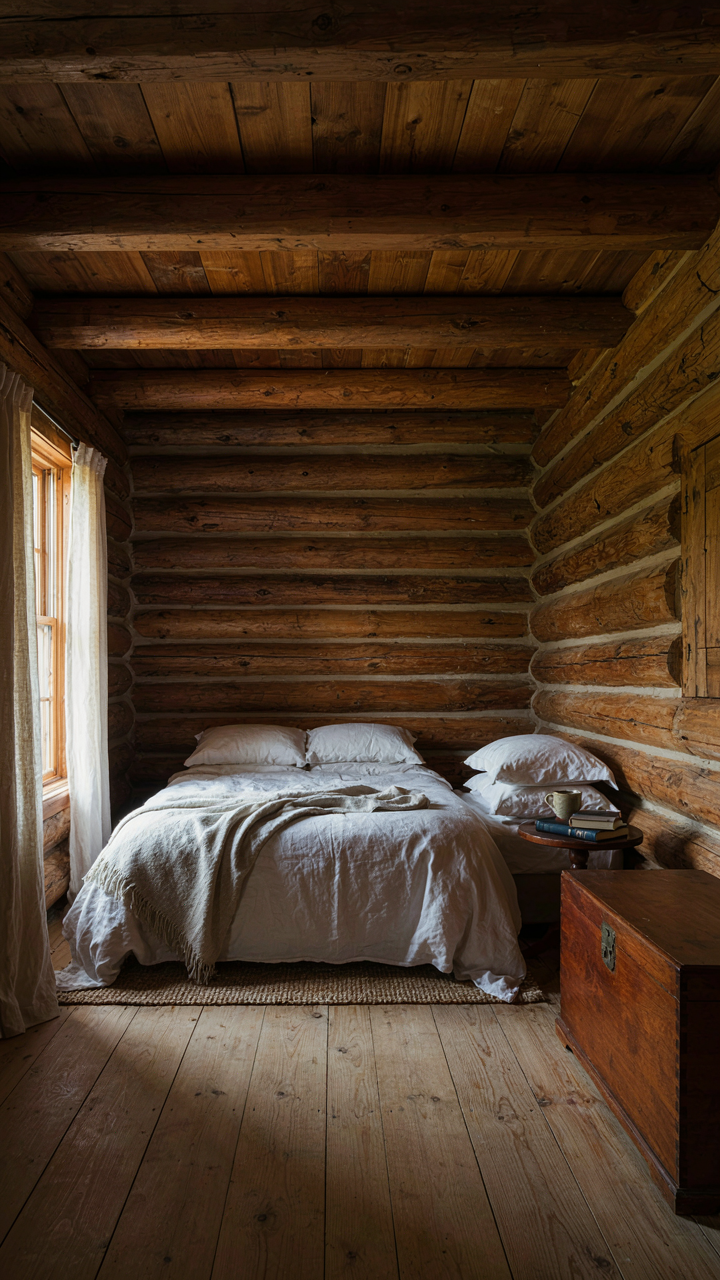
You want to feel like you’re living intentionally, not like you’re just broke and calling it a lifestyle. The real mechanism here is scarcity: log cabins force you to choose. A 12×14 bedroom doesn’t tolerate clutter the way a suburban master suite does. Every object either serves function or occupies oxygen. The best log cabin bedrooms apply the economics principle of opportunity cost—each item you add eliminates the possibility of adding something else. So the bed, the nightstand, the lamp, the chair. That’s the operating set. Everything else is negotiable and usually wrong.
Most design advice tells you to “add personality with thoughtful pieces.” That’s backwards. You add personality by removing what doesn’t belong and letting the cabin’s structure speak. Exposed beams, wood grain, joinery—these are the room’s actual character. A log cabin bedroom that works strips down to the essential dozen objects, then stops. The moment you reach for decorative items, you’ve already lost the plot and the space.
Storage That Hides Itself
Built-in storage is not an afterthought in a log cabin bedroom—it’s structural strategy. The constraint of tight square footage means you can’t afford dead space under the bed or wasted wall real estate. A platform bed with integrated drawers beneath eliminates the need for a separate dresser. Wall-mounted shelving tucked above the door frame holds off-season items without eating floor area. Horizontal shelves built into the log wall itself become invisible because they’re part of the architecture, not layered on top of it.
The real play here is integration. Cabinetry that matches the wood tone of the logs doesn’t read as storage—it reads as intentional design. A cedar-lined closet built into the corner doesn’t require a separate armoire. Storm windows stored vertically in a custom cabinet behind the bedroom door stay out of sight until November. The protocol: map your storage needs before you build or renovate, then embed them into the walls and frames themselves. Nothing sits in the room screaming “storage solution.”
Acoustic Architectures: Soundproofing Your Cabin Interior Design
Density Beats Thickness Every Time
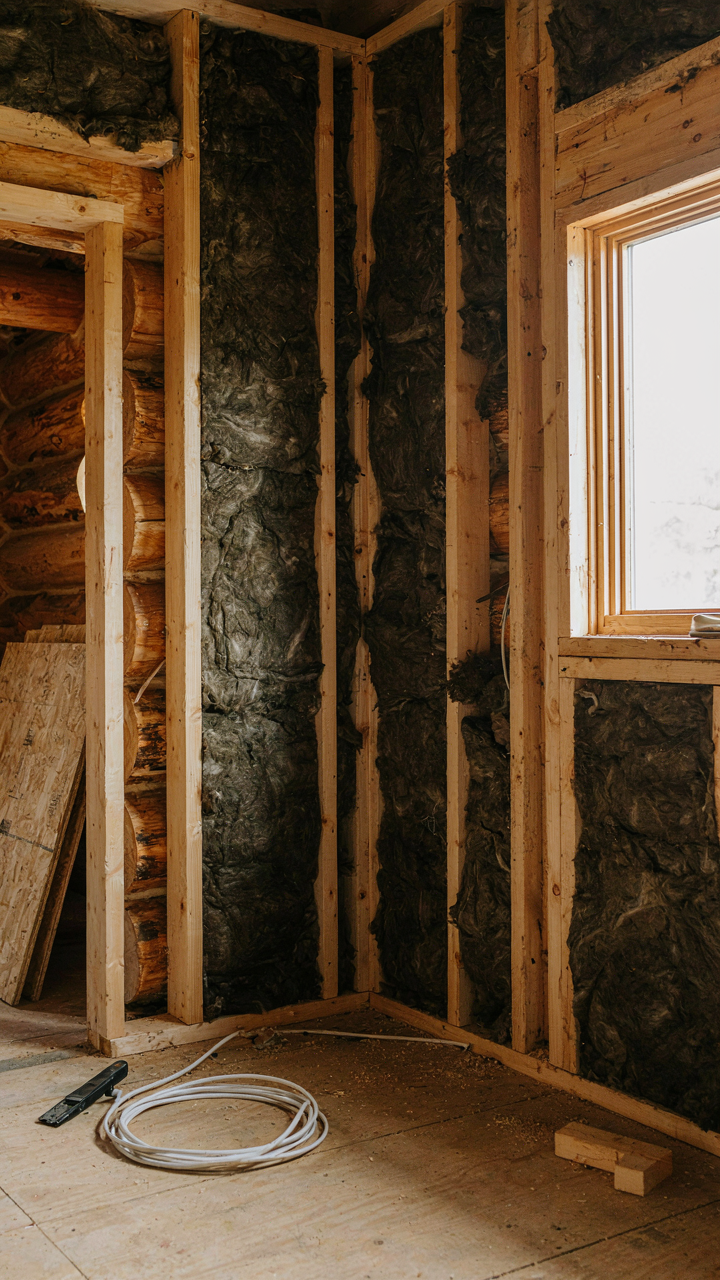
You want soundproofing because silence signals control, and log cabins fail at this by default. Here’s what physics tells us: sound waves die when they hit mass. The denser the material, the more energy it absorbs before vibrating through to the other side. Log cabin bedrooms have a structural problem—logs transmit noise laterally through wood grain better than most building materials. Density compounds this advantage.

Fiberglass batts and standard rockwool are low-density traps. They work only if you layer them thick enough to waste space, or they don’t work at all. Mineral wool runs denser and kills sound faster at thinner depths. Cork boards, at roughly twelve pounds per cubic foot, outperform both in real cabins because density means the material itself resists vibration, not just traps air inside it. Install mineral wool or cork between wall cavities before drywall, or behind existing walls if you’re retrofitting.
Soft Surfaces Stop Reflections, Not Just Absorption
The generic advice treats all soft furnishings as acoustic equals. They’re not. A single heavy curtain absorbs high frequencies but lets low frequencies pass straight through. Layered textiles with air gaps between them work because sound bounces between layers and loses energy each time. Your log cabin bedroom reflects sound off hard wood surfaces constantly, turning every noise into reverberation that makes the room feel smaller and louder than it is.
Install curtains with at least three inches of air gap from the wall, and layer them—a thermal blackout curtain behind a fabric-front option works. Thick area rugs trap mid-range frequencies where most annoying sounds live: conversation, traffic, equipment hum. A rug plus carpet padding underneath creates the air gap principle again. Mount upholstered panels on walls parallel to the bed where sound bounces hardest. Each soft layer compounds the dampening effect by forcing sound waves to lose momentum progressively rather than bounce clean back into the room.
The Biophilic Integration: Bringing Nature Into Your Cabin Bedroom
Plants As Functional Objects, Not Instagram Props
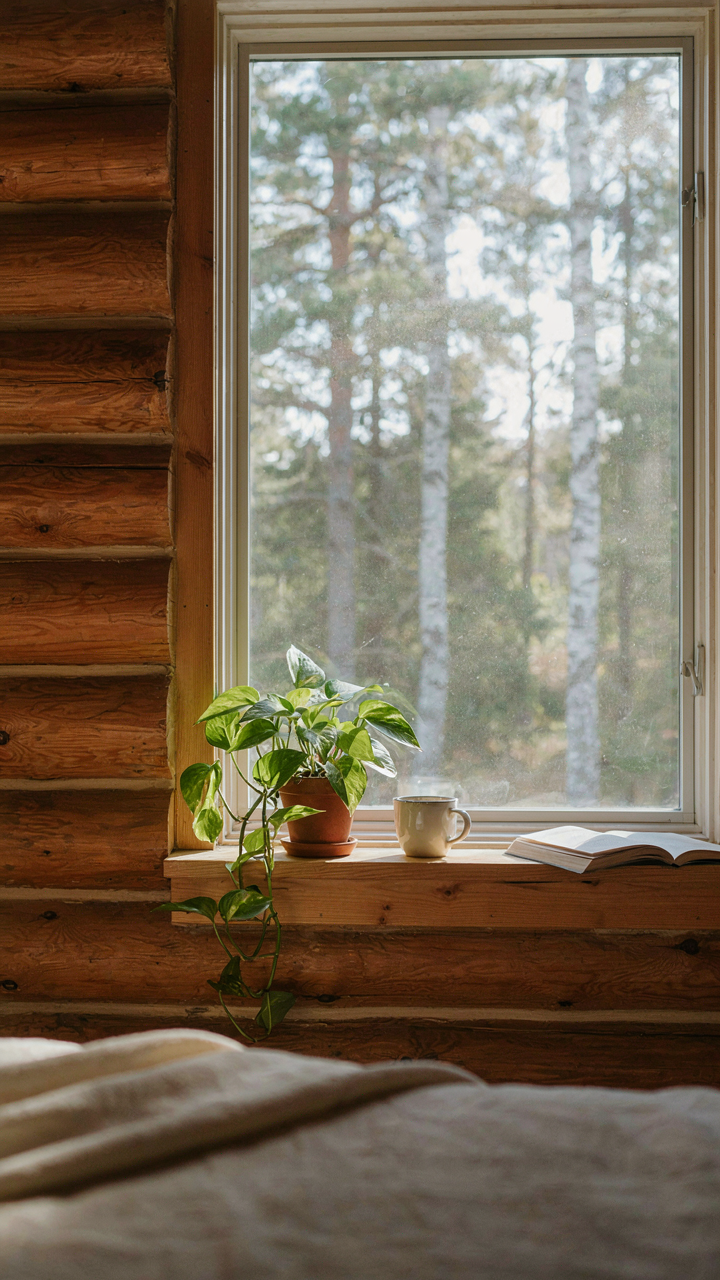
You want plants in your bedroom because you think they look intentional. The real mechanism: biophilia—the documented human preference for natural elements—reduces cortisol and lowers blood pressure. This isn’t decoration. This is biology working on your nervous system. Placement matters more than variety. A single pothos or snake plant positioned where you see it from bed creates sustained visual access to something living. Proximity trumps abundance.

The common advice tells you to fill shelves with plants. Wrong approach. Your cabin bedroom isn’t a nursery. Pick one or two species that tolerate low light and irregular watering. Position them at eye level from where you sleep or sit. This creates what environmental psychologists call a “restorative view”—your brain registers the plant’s presence without cognitive load. The plant doesn’t need to be thriving. It needs to be alive and visible.
Frame The Window, Don’t Just Open It
Windows in cabin bedrooms serve one purpose: they’re the fastest path to natural input. Framing decides whether that input registers or gets ignored. Poor framing means you see glass reflection, interior clutter, and sky in equal measure. Strategic framing means you see only what matters: tree line, water feature, or open space. This is composition, not decoration. Use minimal window treatments that clear completely. Heavy curtains or valances create visual noise that cancels the entire benefit of having a view.
Position your bed or seating to face the best sight line. If your window shows woods, angle your position to make that the dominant visual field. If it shows a meadow or water, same principle. The mechanism is called “prospect and refuge” in environmental design: humans calm down when they can see outward without feeling exposed. Your window frame becomes a framed view, not just an opening. Install the bed so the view is your last thing before sleep and first thing upon waking. That’s where the sleep architecture shifts.
Furniture As Function: Log Cabin Bedroom Ideas For Purpose
The Bed Frame That Earns Its Weight
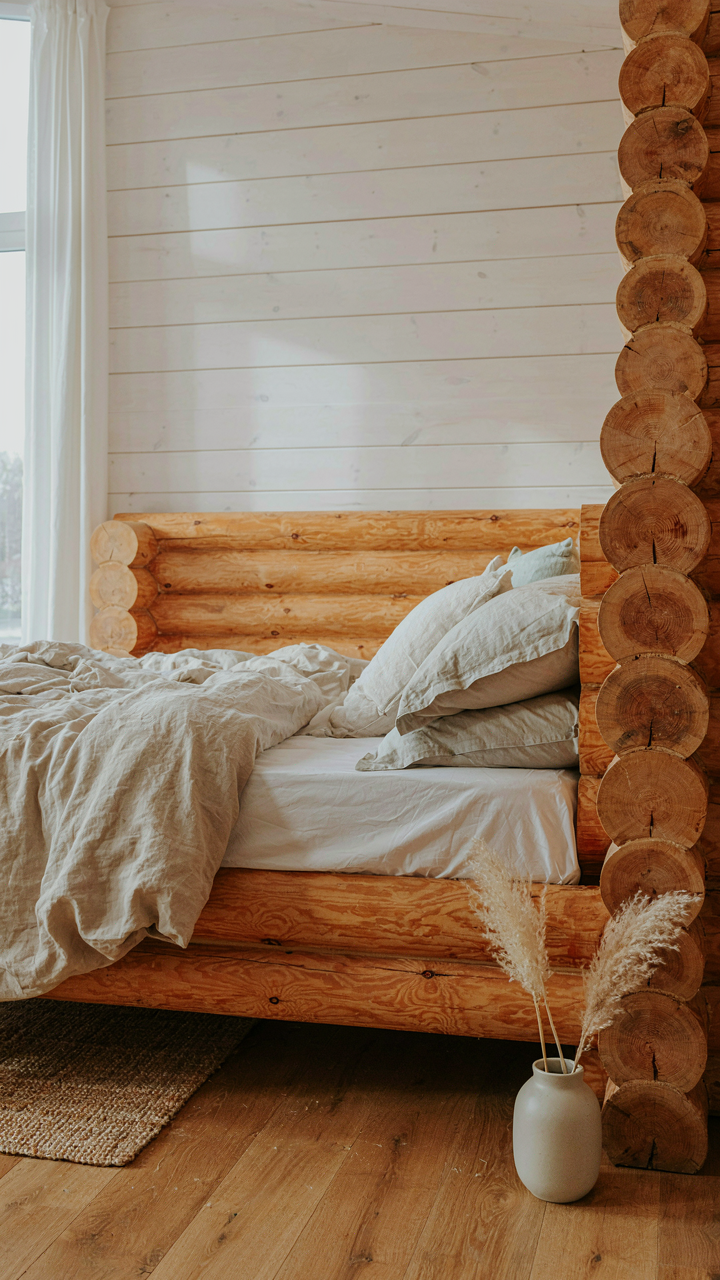
You want a bedroom that looks like it belongs in a magazine spread, but what you actually need is a bed that doesn’t collapse at 2 AM. That’s the real tension. In ergonomics, load distribution determines whether a structure fails or lasts. A log cabin bed frame distributes your body weight across solid wood joinery, not particleboard and dowels. Mortise and tenon joints or lag bolts through logs handle stress better than anything assembled with an Allen wrench. The frame becomes invisible because it simply works.

The bed’s height matters more than aesthetics. Standard height ranges from 24 to 28 inches off the ground. Measure your kneecap height while standing, then aim for the frame to align with that point when you sit on the edge. This eliminates the muscle strain of climbing into a loft-style bed or straining to stand from something too low. Your back won’t know why you sleep better, but your spine will. Build or source a frame with solid support slats spaced 3 to 4 inches apart to prevent mattress sag and ensure even weight distribution across the entire sleeping surface.
Materials That Support Rest, Not Romance
The conventional advice says rough-hewn wood is authentic. It’s also often uncomfortable to sleep next to and collects dust in every crevice. Real rest requires a finish that doesn’t telegraph splinters to your skin. Interior log surfaces in cabins receive sanding and a matte or semi-gloss topcoat to stay functional. Nightstands built from logs should follow the same logic: smooth enough to place a water glass without it tipping, sealed enough that humidity doesn’t warp the wood. Drawers need proper slides rated for the load you’ll actually place inside, not the weight they theoretically support.
Textile pairings matter because they affect temperature regulation during sleep. Log wood absorbs and releases moisture slowly, which stabilizes bedroom humidity. Pair this with linen or cotton bedding rather than synthetics that trap heat. A wool blanket across the foot of the bed manages temperature shifts without the bulk of down. All these elements create an environment where your nervous system relaxes because the room itself is stable, not temperamental. This consistency is what separates sleep from just lying down.
The Scent Profile: Cabin Bedroom Inspo Beyond Pine
Essential Oils For Sleep And Recovery
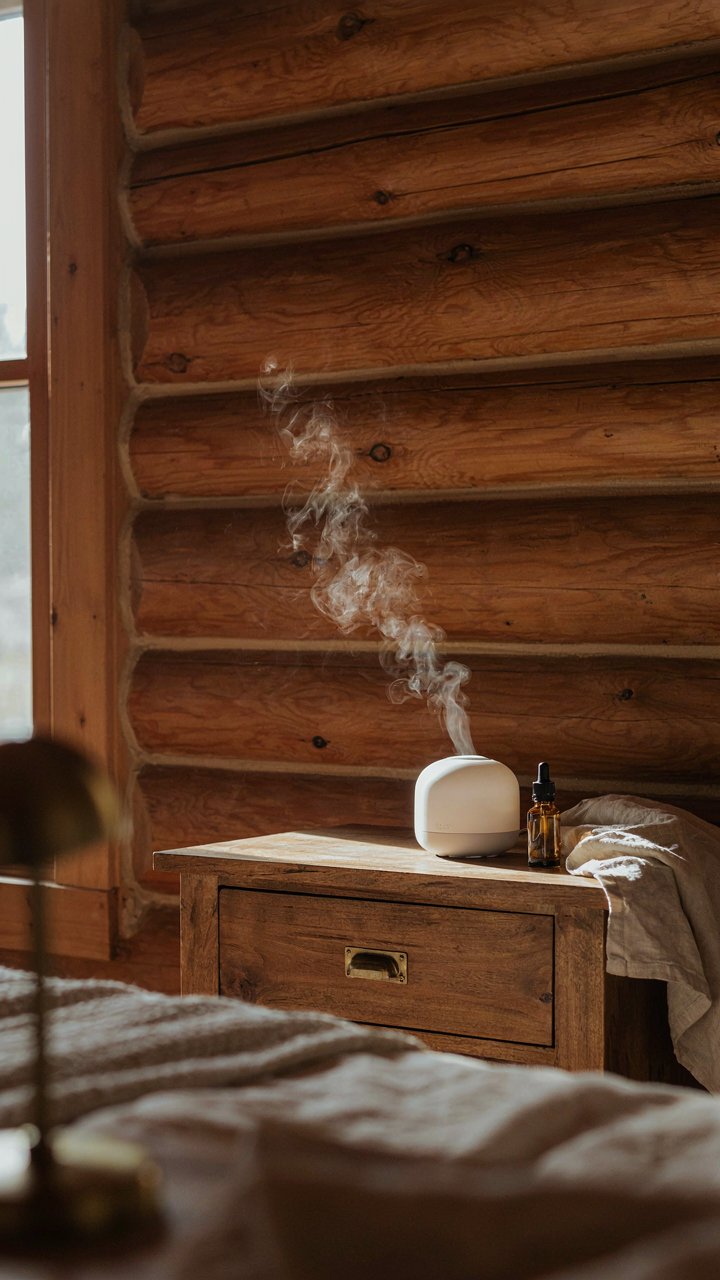
You want scent to do the psychological work you’re too tired to do yourself. Aromatherapy operates on the same principle as Pavlovian conditioning: repeated sensory input triggers a predictable neurological response. Your nose doesn’t just smell—it bypasses the thalamus and hits the limbic system directly, which controls sleep onset and emotional state.
- Lavender: Linalool and linalyl acetate compounds lower cortisol and heart rate. Most studied for sleep initiation. Use 3-4 drops in a diffuser 30 minutes before bed.
- Cedarwood: Contains cedrol, which activates parasympathetic nervous system. Stronger than lavender but less cloying. Supports deep sleep phases rather than just falling asleep.
- Frankincense: Boswellic acids reduce inflammation and mental chatter. Pairs well with cedarwood in cabin settings. Subtler than lavender, won’t dominate the room.
- Vetiver: Grounding earthiness, not floral. Stabilizes nervous system without sedation. Works best for people who find typical sleep oils too sweet or artificial.
- Spruce or Douglas Fir: Authentic to log cabin environment. Alpha-pinene provides mild alertness during day, subtle calming at low concentrations. Reinforces the physical space psychologically.

Don’t rotate oils constantly—your nervous system adapts and the effect flattens. Pick one and use it for 3-4 weeks before switching. Consistency creates the conditioning. Diffuse only, never apply directly to skin in a bedroom context where you’re breathing it for hours.
Air Movement Without The Noise
The common advice is to crack a window. That’s incomplete. Ventilation strategy in a log cabin bedroom isn’t about fresh air quantity—it’s about air exchange rate without disrupting sleep architecture. You need movement, not temperature shock.
Install a quiet wall-mounted exhaust fan on a timer set to run 20 minutes before sleep and 30 minutes after waking. This removes CO2 buildup and moisture without waking you at 3 AM. Pair it with a single operable window on the opposite wall, cracked just enough to create passive cross-ventilation during waking hours. The goal is stale air out, fresh air in, zero draft across your bed. Ceiling fans on lowest speed work if positioned away from direct air flow over the sleeping surface.
Common Cabin Bedroom Mistakes: What Not To Do
When Rustic Becomes A Costume
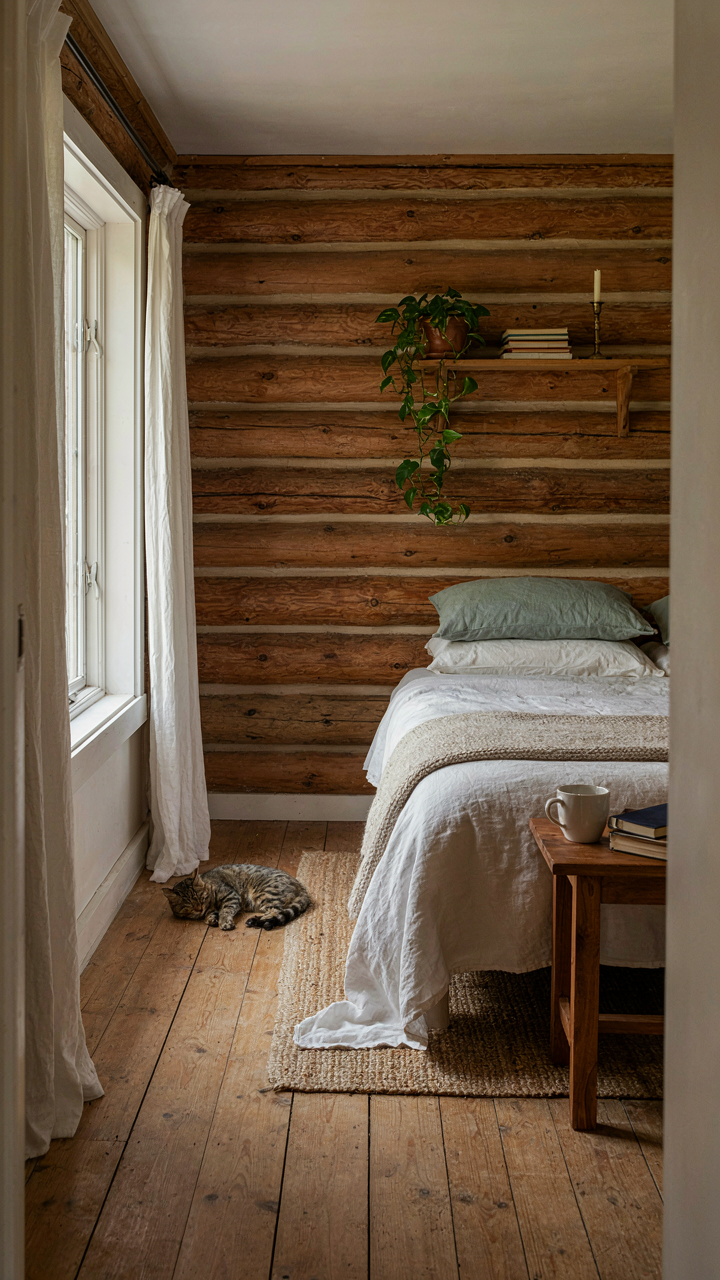
You want people to know you made the right choice. That’s why you’re drawn to heavy timber, mounted antlers, and leather everything. The mechanism is status signaling masquerading as authenticity. Real log cabins weren’t designed around aesthetic performance. They solved for insulation, durability, and function in remote terrain. The moment you curate decor to broadcast “I’m in a cabin,” you’ve abandoned the actual comfort the space offers.
The problem with cliché cabin decor is simpler than you think: it dates fast and reads as theme park aesthetics. Faux fur throws, mass-produced “vintage” signs, and coordinated cabin collections from retail chains all age into parody within five years. Instead, bring in objects you actually use and materials that weather naturally over time. A worn wool blanket, unfinished wood shelves holding real books, and genuine tools hung on walls tell the truth. Your bedroom should look lived in, not styled.
Space Physics In Tight Quarters
Cabin bedrooms typically run small. Most people ignore this constraint and furnish them like suburban master bedrooms, which creates a claustrophobic pressure that sabotages sleep. This is a density problem. In physics, you can’t add more mass to the same volume without consequence. The same principle applies here: oversized furniture in cramped bedrooms creates cognitive load even when you’re sleeping.
Measure your space and buy furniture proportional to it. A full-size bed might be the practical limit in a 12×14 room. Wall-mounted shelving replaces bulky dressers. A single nightstand instead of two. Keep floor-to-furniture ratios generous so your eye can travel without stopping at obstacles. The goal is spatial clarity, not maximum storage. When you can move freely without planning your route, your nervous system stops working and you actually rest.
The Ultimate Obstacle: Your Own Unexamined Design Biases
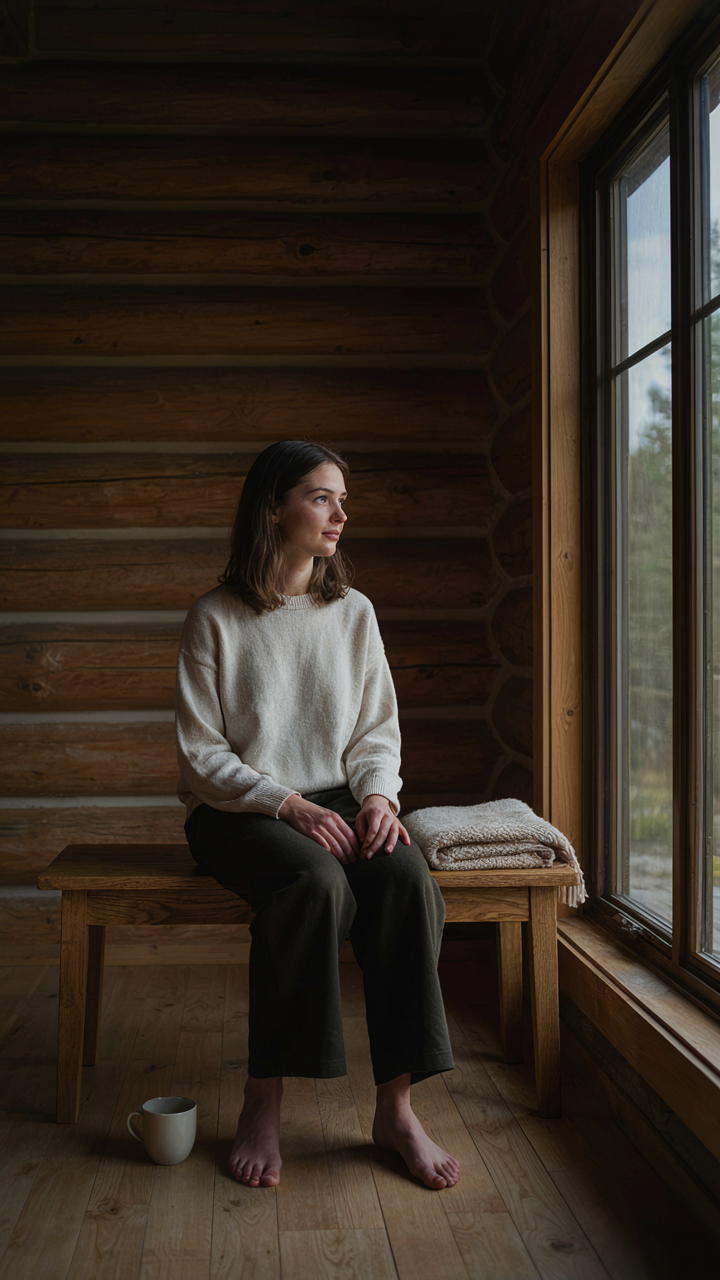
You think you want a log cabin bedroom. What you actually want is permission to stop performing for people who don’t live in your space. The rustic aesthetic wins not because reclaimed wood looks good, but because it signals you’ve stopped chasing trends. Your real obstacle isn’t finding the right furniture. It’s admitting that everything you’ve decorated before was someone else’s idea of acceptable. Open your phone right now and delete one design inspiration that makes you feel like you’re imitating instead of inhabiting. The moment you stop designing for approval, your bedroom becomes a retreat.



