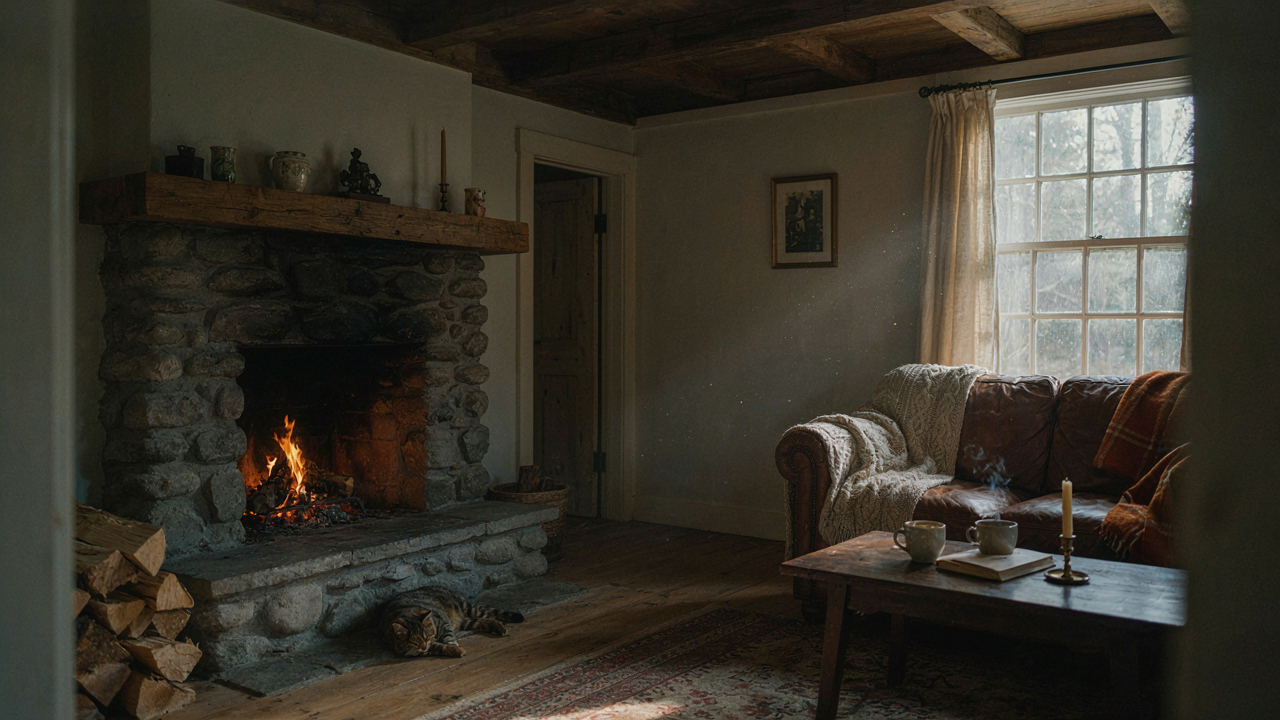
The “Rustic Authenticity” Fallacy: Beyond Fake Antlers
Build What You’ve Actually Used
You want rustic authenticity because it signals you have a life outside your primary residence. The mechanism is simple: objects worn by actual use read as authentic. A chair with visible wood grain variation and honest wear patterns says “I sit here” more than any reproduction does. Real log cabin design prioritizes evidence of function over image of rusticity.
The difference between authentic and manufactured decay is traceable. Hand-hewn beams show tool marks specific to period techniques. Reclaimed wood carries nail holes, bark remnants, and color variation from actual weather exposure. When you source genuinely old materials, you skip the status anxiety entirely because the object proves itself through material fact, not through your purchasing taste.
Stories Over Inventory Lists
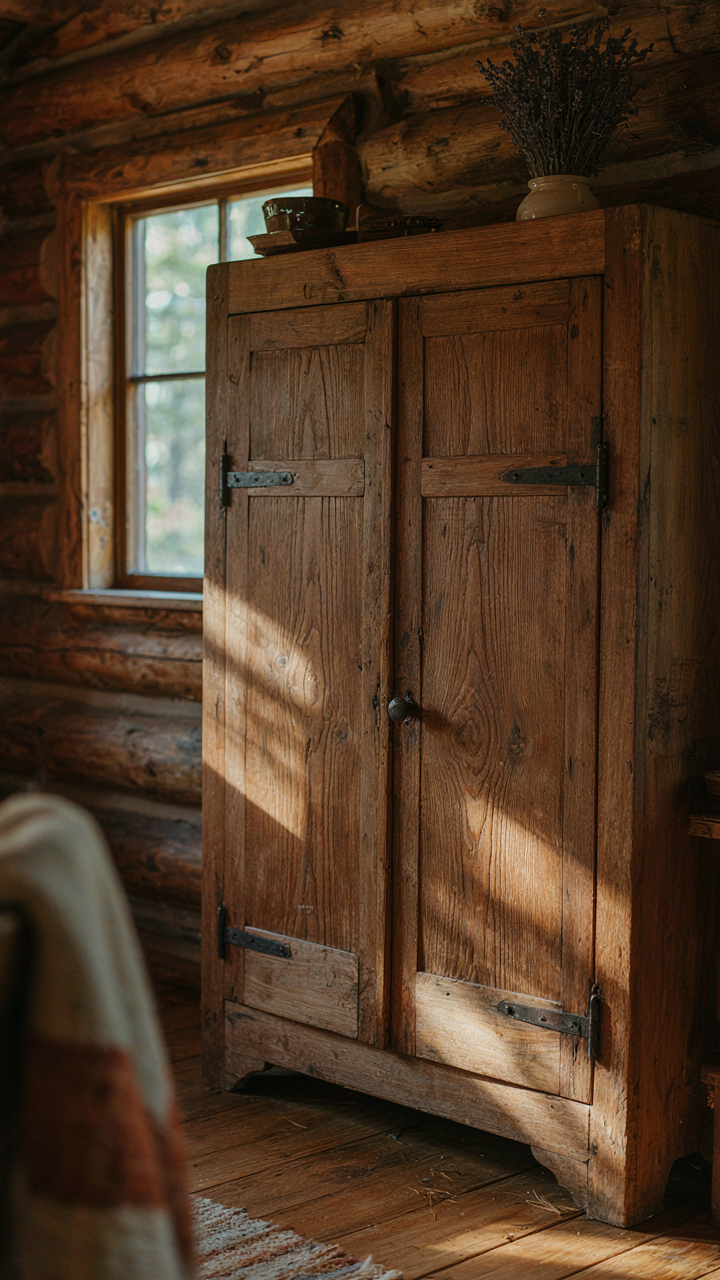
Generic rustic advice tells you to buy distressed furniture sets, then arrange them like a catalog shoot. Wrong framing. What you actually need is one credible anchor piece with a traceable origin story, then build around it. A family chest from your great-grandfather’s homestead carries more visual weight than six new pieces from a mass-market catalog, even if those pieces cost more.
This works because human brains detect authenticity through specificity. A single hutch with a documented history of use in an actual cabin creates a gravitational center that makes everything around it read as intentional rather than decorated. Start with the storied object first. Choose secondary pieces based on material coherence and function, not on whether they match a design mood board.
The “Cozy Hunting Cabin” Illusion: Function Dictates Form
Tools As Decor, Not Decoration
You want log cabin decor to feel authentic without admitting you’ve never actually worked with your hands. Here’s the mechanism: function creates legitimacy. Objects that solve problems look intentional. Objects chosen purely for appearance look fragile.

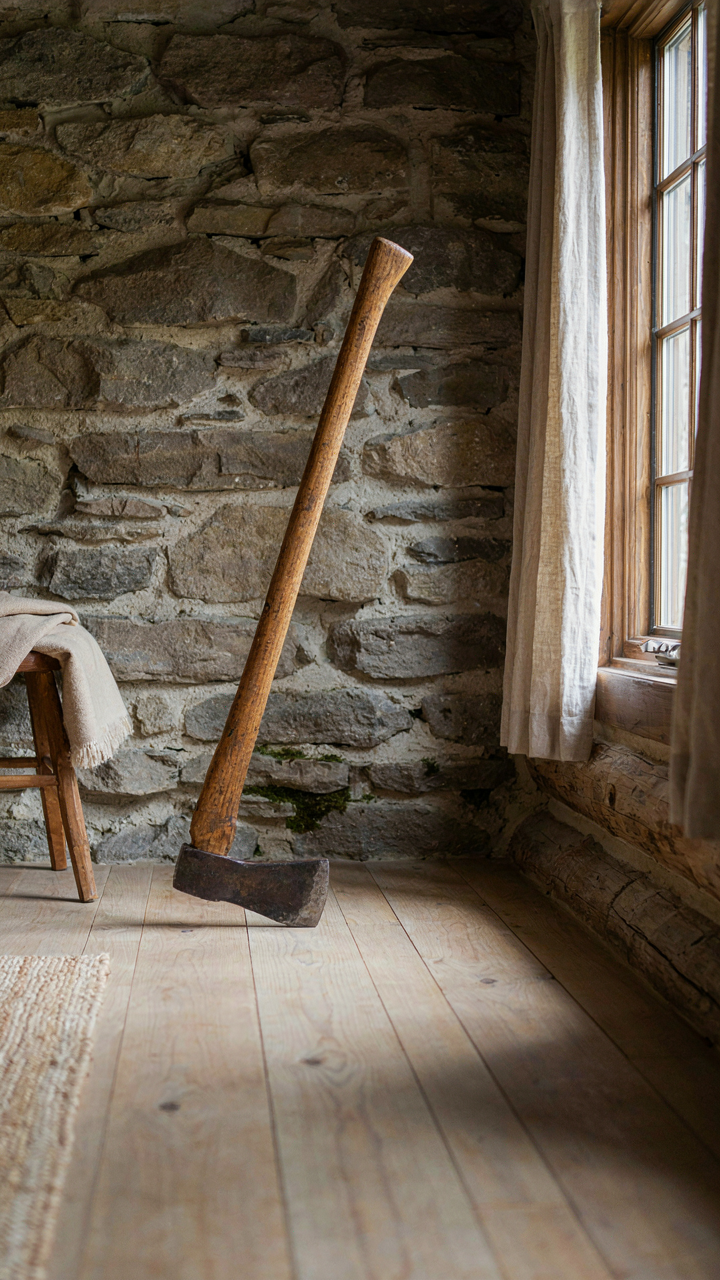
A vintage ax leaning in the corner works because someone actually used it. A wrought iron fireplace poker isn’t decor—it’s equipment that happens to occupy visual space. Rope, leather work gloves, cast iron cookware, wooden tool handles. These items signal competence, not consumption. The cabin aesthetic fails the moment you treat utility as a design category instead of the foundation.
Maximize Light, Eliminate Surfaces
Natural light in log cabins operates like supply and demand in economics. Scarcity drives value. Low light makes a cabin feel cramped regardless of square footage. High light transforms the same space into functional living area.
The common mistake is cluttering windowsills and shelves to create “layers.” That backfills shadow and negates the light you’re trying to capture. Prioritize clear sight lines to windows. Position heavier furniture pieces away from natural light sources. Strip unnecessary objects from surfaces near glass. This single protocol—ruthless decluttering near windows—changes how sunlight actually reaches the interior, making the entire space read as intentional rather than accumulated.
The Mountain Cabin Inside Protocol: Layering For Survival (Not Just Looks)
How Heat Actually Stays Inside
You want your cabin to feel intentional and built right. The real reason you care is that cheap layering exposes you as someone who doesn’t understand how spaces work. Physics governs this: thermal stratification is the principle that warm air rises and cold air sinks, creating distinct temperature zones. In log cabin design, you exploit stratification by anchoring heavy textiles and furniture low to trap heated air near living zones while allowing cold to rise toward vaulted ceilings where it matters less.

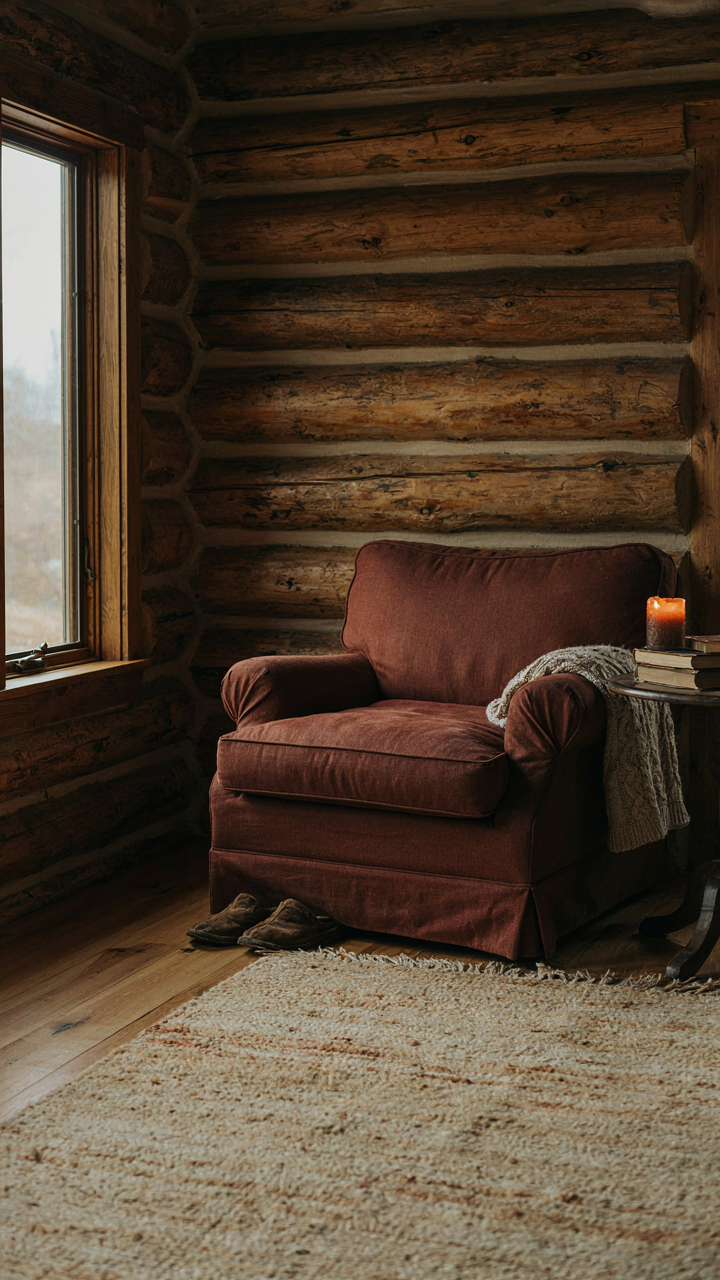
The log walls themselves do half the work. Wood has higher thermal mass than drywall, meaning it absorbs and releases heat gradually. Layer wool rugs over the floor first, then anchor heavy upholstery pieces to create a physical barrier between you and the cold radiating up from the foundation. Dark colors absorb more radiant heat than light ones. Position your primary seating and sleeping areas along interior walls rather than exterior ones, and you’ve just engineered a microclimate that costs almost nothing to maintain.
Textiles As Strategic Barriers
Most people treat blankets and rugs like decoration that happens to provide warmth. That’s backwards. Textiles function as your active insulation system. Wool is non-negotiable here because it regulates moisture and retains heat even when damp, unlike synthetic fibers. Layer wool blankets on seating, drape them over bedroom furniture, and use wool rugs at least 8 by 10 feet in your main living space to establish an insulated floor zone.
Position linen and canvas panels on interior walls opposite windows to create dead air space that insulates without looking like you’re winterizing. Hang heavy tapestries or quilts on the wall behind your seating area. These aren’t accessories. They’re load-bearing components of your thermal envelope. Swap them seasonally if needed, but never leave large wall surfaces exposed to air circulation in winter months. The textile you place first determines what stays warm and what doesn’t.
Elegant Cabin Decor: The Subtraction Principle
Curated Focal Points Over Clutter
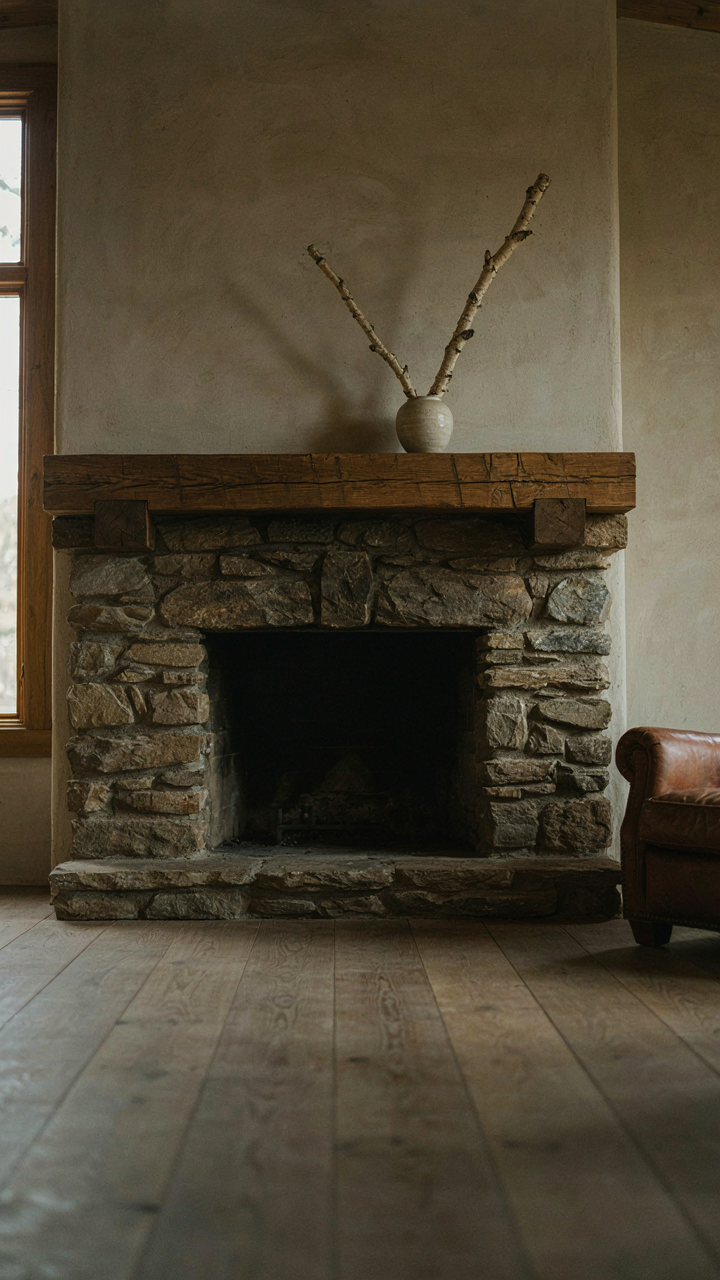
You want your cabin to feel “intentional” because you’re worried it looks like you raided a lodge gift shop. Here’s the mechanism: your brain processes visual weight, not just objects. In architecture, load-bearing refers to structural support. In cabin decor, a single statement piece bears the visual load of an entire room. A hand-hewn timber mantel or a stone fireplace doesn’t need companion clutter. One strong anchor eliminates the need for ten weaker distractions.
The common advice says “add meaningful pieces.” That’s backwards. Start by removing everything that doesn’t have a specific reason to exist. A cabin room with one excellent wooden beam detail and bare walls outperforms a room filled with decorative snowshoes and antique lanterns fighting for attention. Identify what naturally commands the eye, then build negative space around it. The focal point works because nothing else competes with it.
Substance Over Accumulation
Quality outlasts trends because materials don’t lie about their origins. A single piece of reclaimed wood furniture tells a story through its grain and patina. Ten new pieces designed to look “rustic” tell a story about your decorating budget and restraint issues. The difference between elegant and cluttered isn’t how much you own. It’s how long each object stays relevant and how hard it works in the space.
When selecting pieces, apply this filter: would I remove this if I moved tomorrow? If the answer is no, it stays. If it’s maybe, it goes. A cabin’s value increases when every visible object has functional or historical weight. This isn’t minimalism. It’s the discipline to choose depth over breadth, and it’s what separates a decorated cabin from a lived-in home.
Log Cabin Interior Design Ideas: The “One Room Cabin” Economy
Every Inch Earns Its Keep
You want to know how to make a small space feel intentional instead of cramped, because that gap between the two is where either comfort or resentment lives. The mechanism is constraint design: treating limited square footage like an economic system where nothing sits idle. A one-room cabin forces this. You eliminate decorative dead weight fast.

The math is simple. A 400-square-foot cabin with poor layout wastes 80 square feet on traffic patterns and visual clutter. A 400-square-foot cabin designed with purpose reclaims that space through layering and positioning. Vertical storage through timber shelving, corner nooks that anchor a seating area, and wall-mounted elements replace floor clutter. The log walls themselves become storage assets when you hang iron hooks, shelves, or textile displays. Every surface competes for function.
Multi Functional Furniture That Actually Works
Most advice on multipurpose furniture misses the point. People think it means cramming ten features into one piece and ending up with something mediocre at everything. Real multipurpose cabin furniture solves stacking problems: one piece removes the need for three.
- Storage benches at the foot of the bed: Contain linens, seasonal gear, or firewood while providing seating or a work surface without claiming extra footprint.
- Reclaimed wood dining tables with drawers: Function as both meal prep and supply storage, eliminating the need for a separate dresser or cabinet.
- Built in window seats with lift top storage: Capture unused wall space while storing blankets, books, or tools directly beneath where people naturally sit.
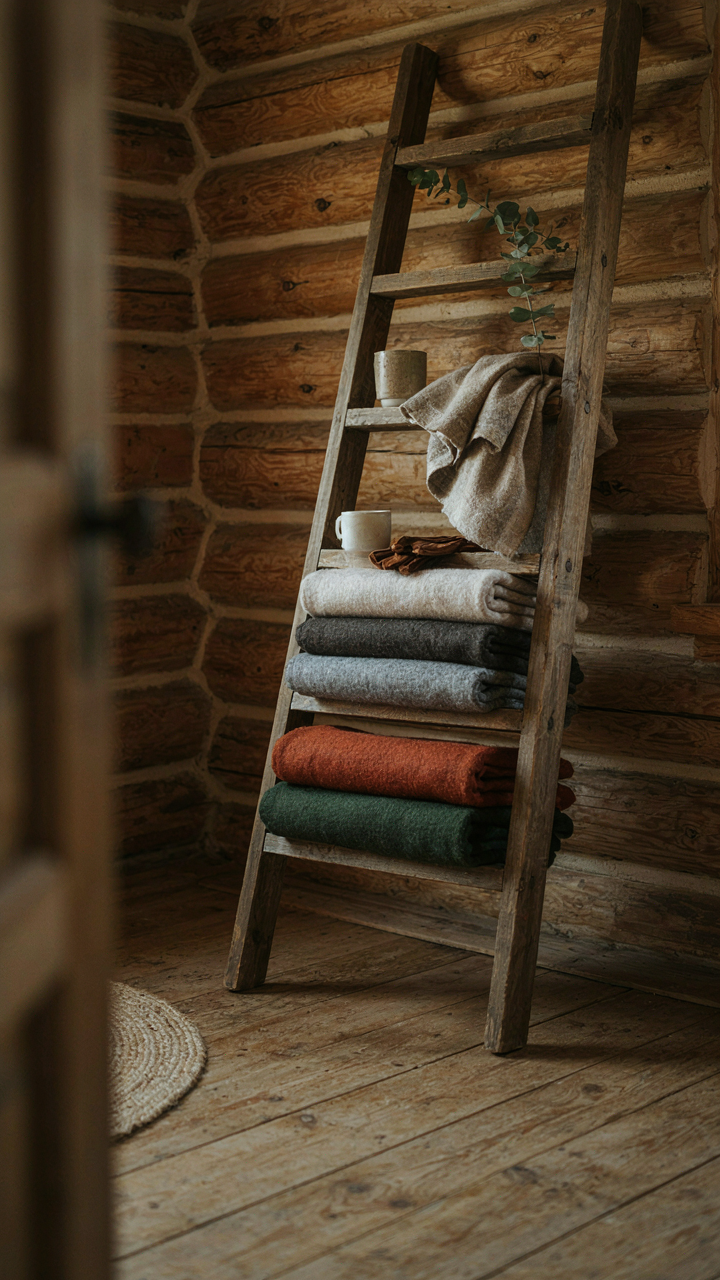
- Ladder shelving that doubles as towel racks: Vertical organization that hangs textiles in plain view while freeing cabinet space below.
- Trunks and steamer chests as side tables: Authentic to cabin aesthetic while storing bulk items; place a lamp on top and you’ve replaced a nightstand.
Position each piece against the longest wall to create flow paths, not obstacles. A one-room cabin succeeds when every furniture placement serves two problems at once. Move nothing that doesn’t pull double duty.
Log Cabin Chic Decor: The Anti Trend Imperative

Permanence Over Novelty
You’re worried your cabin will look dated in five years. That fear drives you toward whatever design magazine calls “trending” this season, which guarantees it’ll feel wrong by next season. The mechanism is simple: trends move fast because they’re built to move fast. They’re designed obsolescence. Log cabin decor works the opposite direction. Real log cabin design pulled from the 1800s frontier tradition and rural Appalachian vernacular uses materials and proportions that don’t expire. Stone fireplaces, hand forged hardware, solid wood furniture, and wool textiles have held their weight for over a century.

The distinction matters because you’re not buying decor you’ll swap out in three years. You’re building an environment. Invest in materials that actually age better than they arrive: leather darkens and softens, wood deepens in color, wool felts tighter. Avoid anything labeled “cabin aesthetic” that comes from a mass manufacturer. Those pieces exist to capture the cabin trend wave before it breaks. Purchase vintage or reclaimed whenever possible. A genuine 1920s cabin-made chair or period-correct rope bed frame will outlast its novelty value because it was never novel to begin with.
Your Space, Not A Showroom
Generic design advice says fill your cabin with “authentic touches” and “personal character,” which tells you nothing about how to actually build it. What this really means: your cabin should reflect decisions you made, not decisions a designer made for you that happened to work in a magazine photo. The difference is measurable. A showroom cabin has every element curated for visual harmony. Your cabin should have friction, weight, intention behind why that particular thing sits there. An inherited dresser that belonged to your grandmother functions differently than a reproduction dresser you bought because it fit the aesthetic. One has a narrative. One has a price tag.
Start by identifying what actually matters to you about being in that space. Are you there for quiet mornings, hosting, work, hunting season, or just escape. That answer determines everything: the seating layout, lighting proximity, whether you need substantial counter space or not. Then add objects that connect to activities and people, not to design themes. A stack of field guides you actually read beats a stack of decorative leather books. Photographs of people who’ve been in that cabin hold more weight than professional landscape prints. Arrange your space around what you do there, and the “character” appears automatically.
Rustic Cabin Ideas Interiors: Embracing Imperfection (The Wabi Sabi Method)

The Beauty In What Breaks Down
You want permission to stop fighting decay. That’s the real reason this matters. Wabi-sabi is a Japanese design philosophy that treats aging and weathering as aesthetic gains, not failures. A log cabin naturally accumulates patina. Bark peels. Wood grays. Metal rusts. Most people sand it away, treating it like a problem. Wabi-sabi reframes it as the point. The mechanism is simple: accepting imperfection removes the need for constant maintenance theater.

Patina tells a story that new materials cannot. A log with decades of sun damage has visual information that paint covers up. A stone fireplace with uneven mortar shows how it was built. Hairline cracks in wood, silvered surfaces, and oxidized metal all communicate age and authenticity. This is not about neglect. It’s about choosing materials and finishes that improve with use instead of fighting against time. When you stop treating wear as damage, your cabin becomes easier to live in.
Unfinished Materials That Prove Their Worth
Raw materials do one job: they show what they actually are. Common advice says “use reclaimed wood and stone for authenticity.” Wrong. Using reclaimed materials just for visual effect is cosplay. The real mechanism is selecting materials in their most honest state and letting their actual properties dictate the aesthetic. Unfinished wood, exposed stone, and bare metal aren’t chosen for looks. They’re chosen because they don’t require a performance layer.
Raw wood grain differs depending on species, growth rings, and cut angle. A white oak beam shows its cellular structure. Rough-hewn stone reveals the mason’s technique and the stone’s actual fracture patterns. Bare metal oxidizes predictably based on alloy composition and humidity. These materials communicate function first. A heavy timber ceiling isn’t decorative. It’s structural, and you see the structure. When you expose honest materials, the cabin maintains itself visually because degradation is part of the intended aesthetic. The protocol: use materials in their most raw state, apply minimal finish, and let environmental exposure create the final surface over time.
Log Cabin Interior Ideas Living Room: The Sensory Feedback Loop
Touch Grounds You To The Space
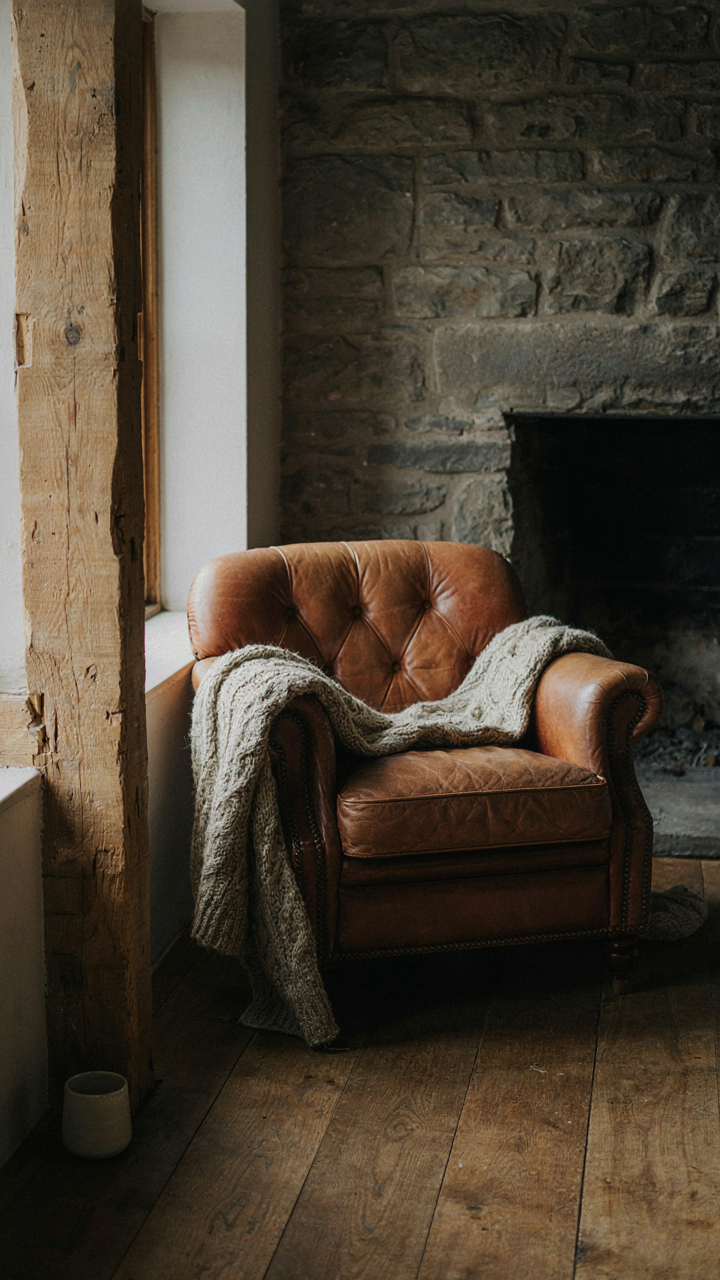
You want this room to feel expensive without looking like you’re trying. That’s the real motive. Here’s what actually works: texture is the mechanism that makes a room feel lived-in versus staged. Your nervous system registers roughness, weight, and temperature before your brain registers color. Wool blankets, leather seating, and hand-hewn timber beams aren’t decoration—they’re sensory anchors that make your body recognize the space as safe and permanent. This is tactile feedback. When you touch something rough and substantial, your nervous system downshifts.

The common advice is to “layer textures.” That’s incomplete. You need opposition. Smooth leather against rough-sawn posts. Cold stone around a fireplace against warm wool. Tight grain in flooring against loose fibers in a throw rug. The contrast is what your skin actually responds to. Place a leather wingback chair directly beside a chunky knit ottoman. Drape raw wool over the arm of a smooth-finished side table. The living room becomes a space your body wants to inhabit, not just view.
Silence Has Architecture
Sound absorbs into a cabin or it bounces around like you live in a gymnasium. Proper acoustic design means selecting materials that kill echo, not materials that look vintage. This is physics. A hard-surfaced log cabin reflects sound waves. Soft materials like wool, heavy curtains, and upholstered furniture absorb those waves, creating what’s called acoustic damping. The difference between a hollow-sounding room and an intimate one is absorption, not ambiance.
Most people throw up heavy curtains and call it done. They miss the real layers. Use area rugs on wood flooring to break up reflection. Position upholstered seating to interrupt sound travel. Hang tapestries or quilts on walls—not as decor but as functional absorption. Add bookshelves with actual books, not display items. A living room with proper acoustic treatment feels smaller, warmer, and quieter. The protocol is simple: identify every hard surface, then cover roughly 40 percent of it with soft material. That’s the threshold where a room stops echoing back at you.
The Only Real Obstacle To True Cabin Coziness Is Your Own Lazy Assumptions
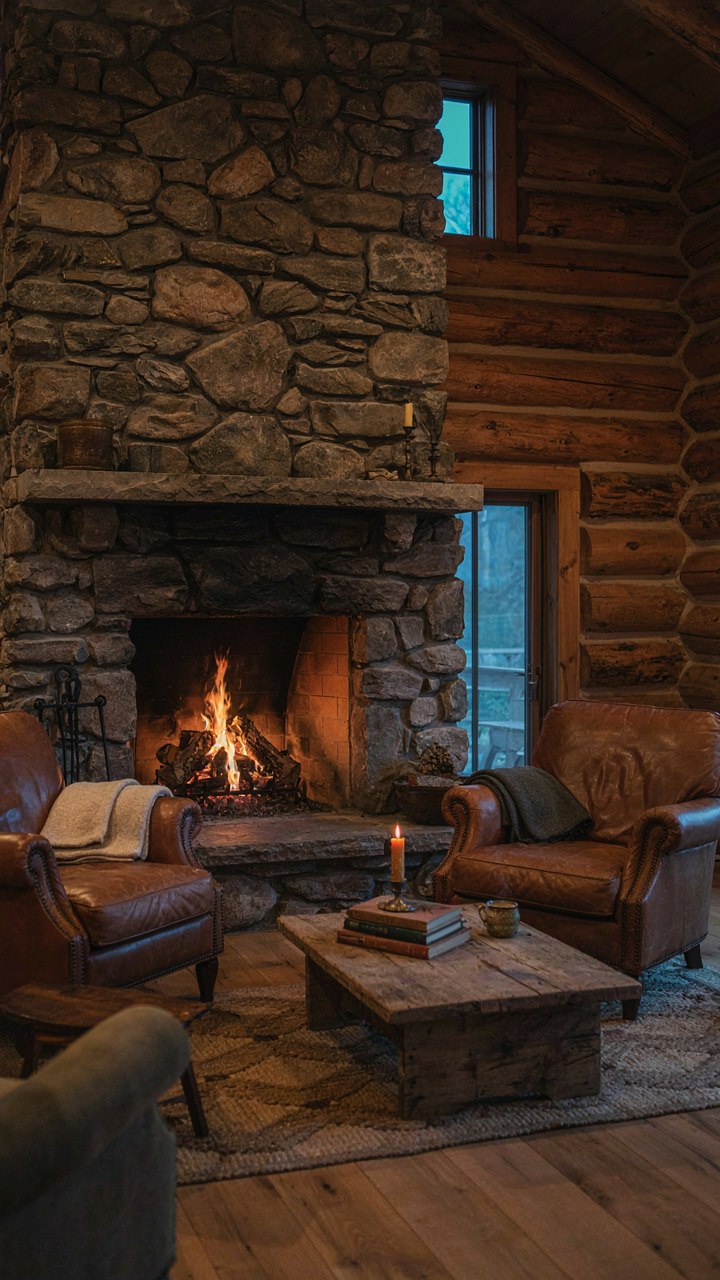
Most people treat log cabin decor like a Pinterest board instead of a design system. They stack random rustic objects and call it cozy. Real cabin coziness demands intention. Pick one focal point in your main room today. Build the entire aesthetic around it. A stone fireplace, exposed beams, whatever grounds your space. Everything else follows that anchor. Stop decorating to impress people online. Decorate to actually live better inside your own walls.