
The Unseen Leverage: Why Water Front Homes Aren’t Just Pretty

White Noise That Works
You want a riverside cottage because you think it looks good on Instagram. The real reason is neurological: flowing water masks irregular noise patterns that trigger your stress response. This is acoustic masking, borrowed from audio engineering. A river running past your porch creates consistent, predictable sound that your brain stops processing as a threat after minutes, unlike traffic noise or neighbor conversations that demand constant attention.
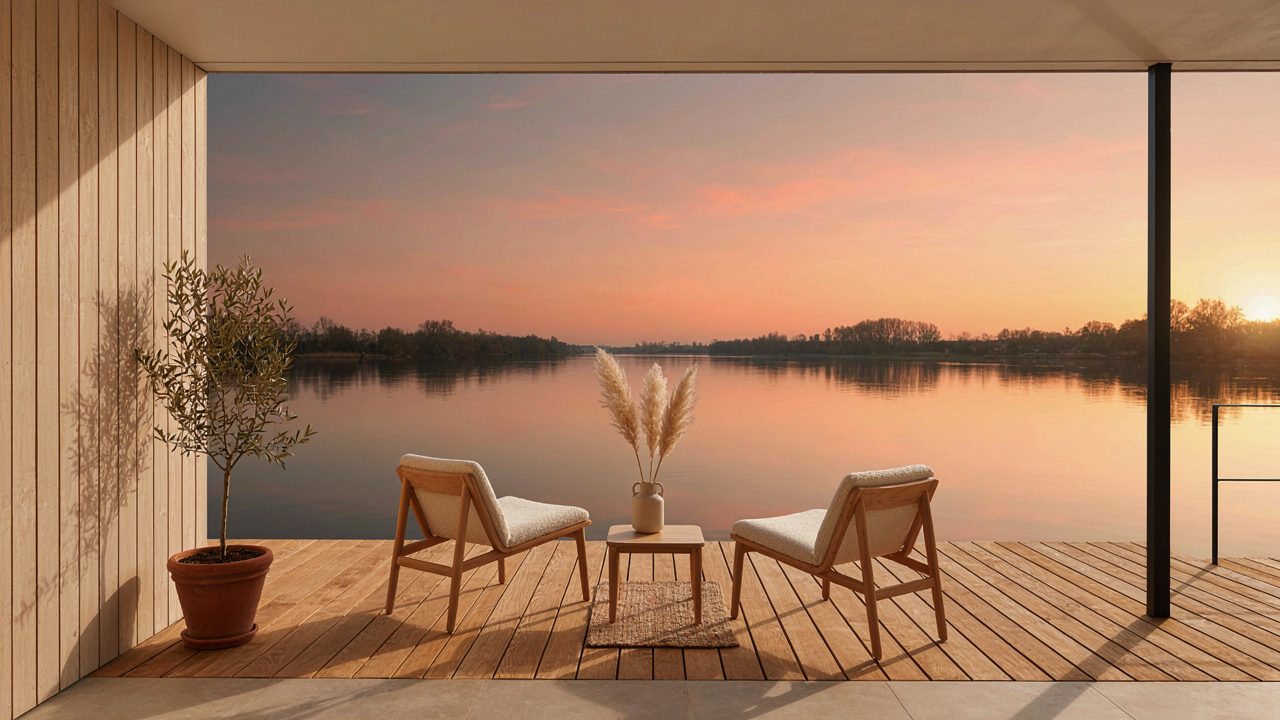
The porch facing the water matters here. Distance amplifies the effect. Twenty feet from the water’s edge, you get the masking benefit without the moisture damage that comes from being too close. A river’s sound signature remains constant enough to train your nervous system into baseline calm, which directly improves focus and sleep depth. This isn’t ambient music pumped through speakers. It’s a physical phenomenon that doesn’t require you to think about it.
Thermal Regulation Through Water’s Heat Capacity
Water moderates temperature swings that make inland homes exhausting to maintain. Physics calls it thermal mass: water absorbs and releases heat slowly, stabilizing the air around it. A riverside cottage experiences smaller daily temperature fluctuations than a property fifty yards back from the bank, which cuts HVAC runtime and keeps interior comfort stable without constant adjustment.
Rivers also create localized air circulation patterns. Cool air over moving water flows toward warmer land during the day, then reverses at night. A porch oriented toward this flow intercepts these natural air movements, reducing the cooling load on the structure itself. You’re not fighting the environment; you’re positioning the building to use it. The effect compounds across seasons. Spring and fall become genuinely pleasant because the river delays temperature extremes that would otherwise force you indoors.
Porch As Command Center: Optimizing Your Riverside Cottage View

Work Surface Height And Sight Lines
You want the porch to feel productive because you’re terrified of admitting you’re just escaping the office. Here’s the mechanism: sight lines trump comfort. Optics, borrowed from military strategy, demands positioning that gives you control of the territory. A work surface set 28 to 30 inches high keeps your eyes at the horizon when seated, not dropped to your lap. This isn’t ergonomic theater. The water view only works if your gaze naturally travels across it while you work.

The common advice is to sprawl a chaise and call it done. Wrong. Riverside cottages fail as work environments because people treat them like vacation props instead of functional spaces. Your porch needs a desk or table positioned perpendicular to the railing, not facing inward toward the cottage. This forces peripheral engagement with the water. You’ll work longer, stay focused, and the view becomes a reward for progress, not a distraction that pulls you away from the task.
How Light Moves Across Your Workspace
The water reflects and amplifies light in ways most cottage owners never account for. Early morning sun bounces off the surface at a sharp angle and hits your work surface directly, creating glare that destroys visibility for three hours. By afternoon, that same reflection shifts. The quality of work you can do changes by season and time of day because the river’s angle relative to the sun isn’t fixed. You need to know this schedule before you place furniture.
Position your primary work zone where afternoon shade from trees or the cottage structure falls naturally. If your cottage faces east or south, the morning work window is short. West-facing porches get afternoon hammering around 2 to 4 PM from the reflection alone. Test the actual light patterns across two full days before committing to a layout. This determines whether your porch functions four hours daily or eight. The wrong positioning costs you one to two productive hours every single day you’re there.
The Cottage Core House Paradox: Function Over Fleeting Trend
Build For Decades, Not Instagram
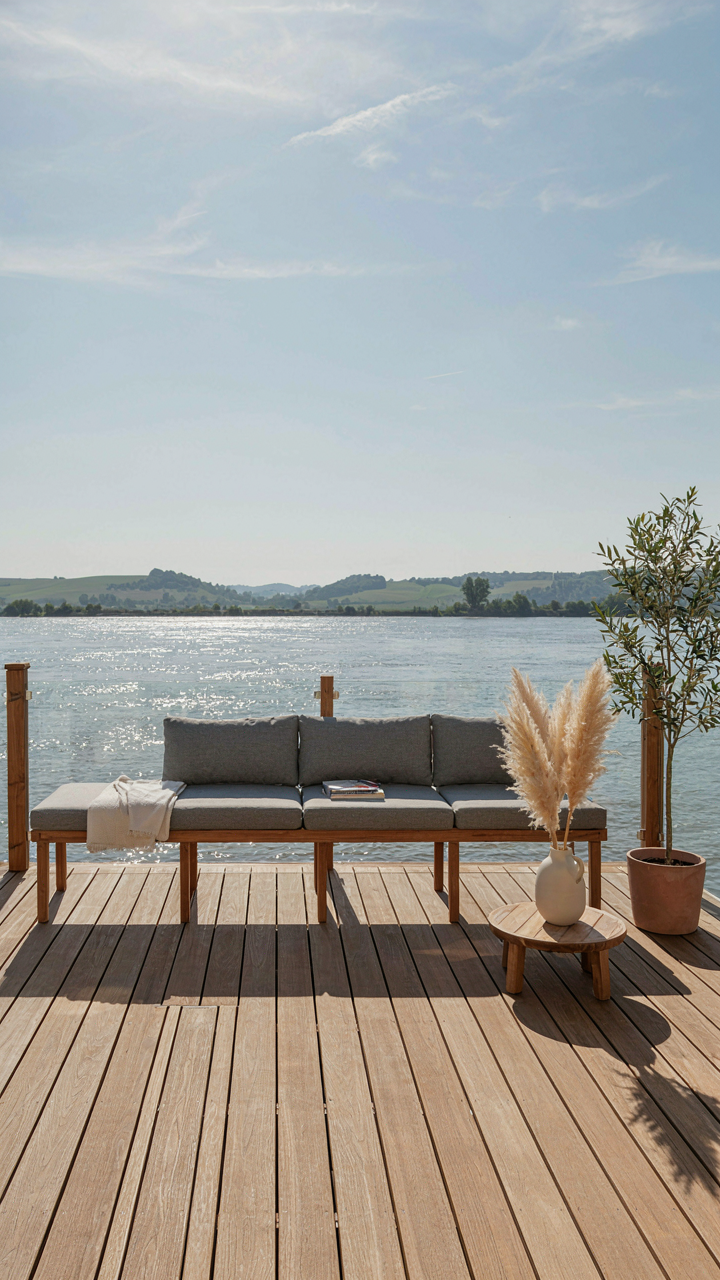
You want your riverside cottage to feel timeless because you’re afraid spending money on something that looks dated in five years is wasting both cash and identity. Here’s the mechanism: trending aesthetics age fast because they’re signal, not shelter. Materials that perform—cedar siding, standing seam metal, slate—outlast the design movements attached to them. A porch facing water endures brutal exposure. Salt spray, freeze-thaw cycles, and UV radiation don’t care about cottage core aesthetics. They eliminate weak choices first.

Durable materials that work against transient aesthetics aren’t premium extras. They’re the baseline for riverside property. Pressure-treated lumber fails faster than naturally rot-resistant species like cedar or larch. Composite decking resists water damage better than stained wood that requires maintenance every two years. Stone, copper, and metal hardware age gracefully because their patina tells the story of exposure rather than signaling decline. The porch becomes more authentic after a decade, not less.
Constraint Creates Better Space
Most cottage design advice says add more square footage. That’s wrong. Tight footprints force intentional layouts. Riverside cottages work best when rooms perform multiple functions because water views and proximity to outside living already handle the spatial burden. A porch isn’t decoration. It’s usable square footage that extends the interior without building more.
Design the porch as an extension of the primary living zone, not an afterthought. Furniture placement matters more in smaller cottages. A porch facing water should support lounging, eating, or working without clutter. Built-in benches, storage under seating, and overhead structures that manage sun and wind eliminate the need for moveable pieces. When you design for constraint, every element earns its place. The result feels intentional rather than crammed.
Lush Green Systems: Applying Ecological Principles To Your Riverside Garden
Permaculture Zones For Low Maintenance Bounty
You want a garden that doesn’t demand constant labor while making you look competent to visitors. The mechanism is permaculture zoning, borrowed from ecological design: you organize plant placement by how often you interact with it, the same way military strategy organizes supply lines by distance from the front.

Zone 0 sits at your porch. Zone 1 extends roughly 30 feet from your door. Zone 2 stretches to about 100 feet. Zone 3 moves into managed forest or pasture. Zone 4 is wild buffer. Rivers demand a fifth layer: the riparian zone itself, which you manage for erosion and habitat, not harvest.
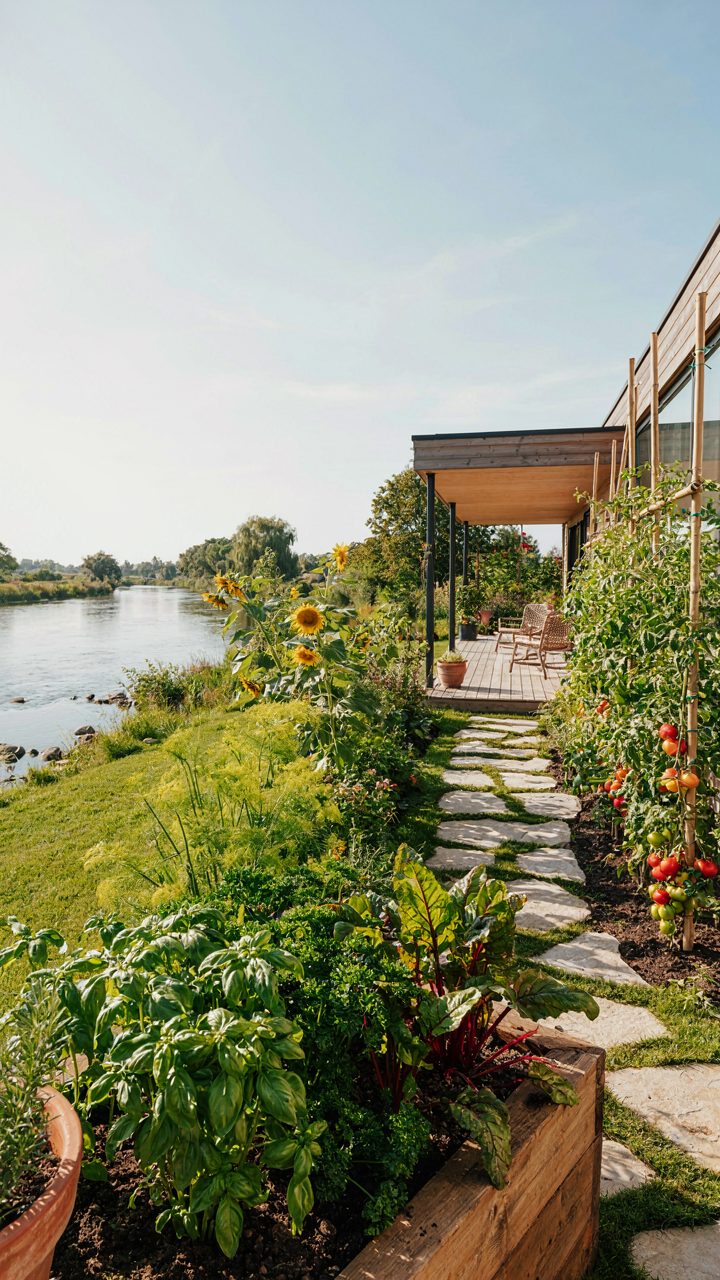
- Zone 0 (Porch and Entry): Herbs, vegetables you pick daily. Place these where you pass them constantly. Foot traffic keeps weeds down. Immediate visibility means pests get noticed fast.
- Zone 1 (Near House): Soft fruits, perennial greens, chickens. You visit here weekly. Less maintenance than Zone 0, but still active. Nitrogen from animal manure feeds perennials naturally.
- Zone 2 (Mid-Range Garden): Nut trees, berry bushes, perennial root crops. Monthly attention. Spacing reduces pest pressure. Mature trees create their own microclimate and suppress weeds.
- Zone 3 (Outer Managed Area): Coppiced trees, bamboo, timber. You visit seasonally. These plants serve practical needs: fuel, materials, structure. They require almost no input once established.
- Zone 4 (Riparian Buffer): Native trees and shrubs between your land and water. These prevent erosion, filter runoff, and establish legal setbacks. No harvest zone, pure function.
Most riverside cottage owners plant everything evenly across their property and wonder why maintenance explodes. Zoning concentrates effort where it matters. A riverside cottage with proper zones generates food and function with minimal time investment because energy flows from close to far, high maintenance to low maintenance, exactly how ecology actually works.
Water Management: River Fed Irrigation And Erosion Control
Riverside property means water access that non-riverside properties pay thousands to engineer. Don’t waste it. The real problem isn’t getting water to plants. The problem is that rivers move soil and that moving soil erodes your property, destabilizes foundations, and kills your riparian buffer in a single flood event.
Gravity-fed systems work best: place a settling pond or filter box above your garden at a slight elevation, run intake pipes from the river into it, then gravity feeds lines to lower plantings. This beats pumps because you eliminate mechanical failure and electricity costs. The settling pond also acts as a silt trap, protecting your irrigation lines and reducing sediment that damages spray nozzles. During heavy flow, the pond overflows back to the river without pressure issues.
Erosion control operates on a different mechanism entirely. Banks fail because water moves laterally against soil, scouring it. You stop this with physical barriers and vegetation. Live stakes (willow or alder cuttings pushed into the bank) root quickly, knit soil together, and add structural integrity faster than mature trees. Coir logs (coconut fiber bound in netting) provide immediate stability while vegetation establishes behind them. Native riparian species like river birch, sycamore, and elderberry should form your first line of defense, positioned in a staggered pattern on the bank itself. Your porch-facing views stay intact because you’re protecting the bank behind your primary landscaping. Install these barriers before the wet season arrives, not after damage occurs. The installation window closes fast once soil moisture peaks.

Beyond The Small House Villa: Scaling Impact, Not Square Footage
Going Vertical Instead Of Sprawling
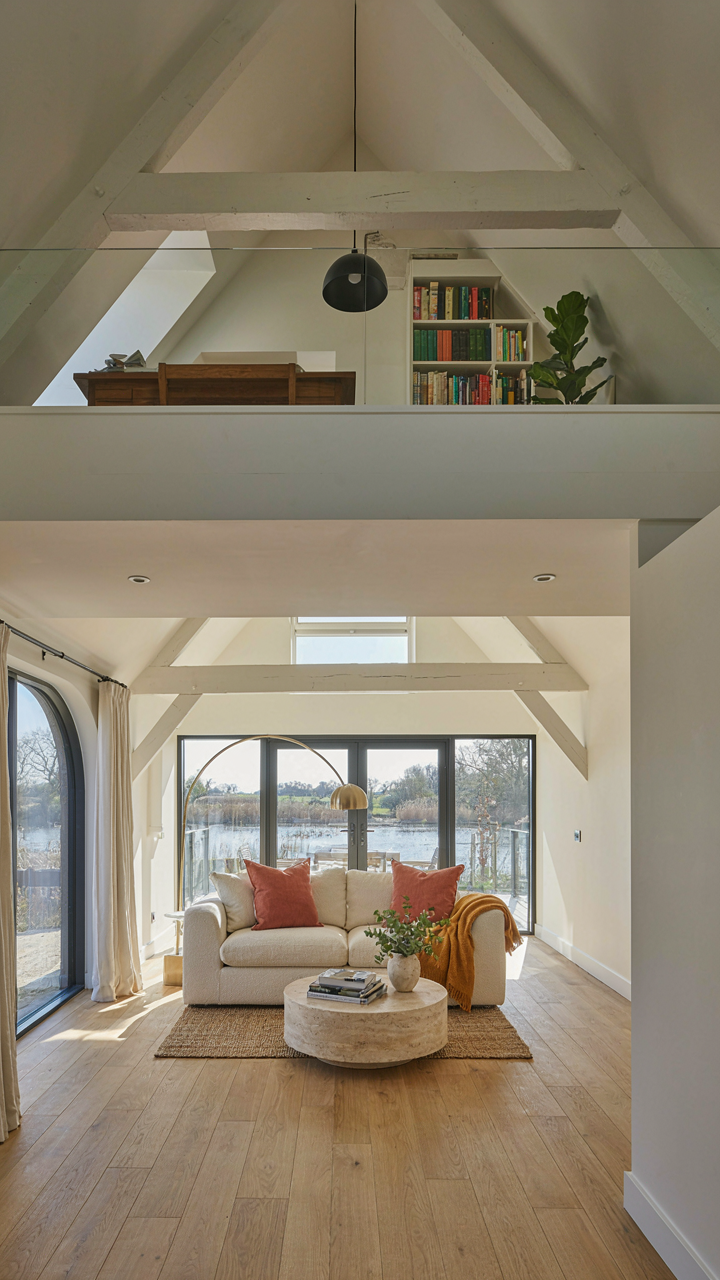
You want to feel like your riverside cottage matters—like it’s not just a retreat, but a real asset. Here’s what nobody admits: adding square footage on a small footprint doesn’t scale impact. It scales maintenance and cost. The mechanism is load-bearing walls and ceiling height. A riverside cottage gains functional density by treating vertical space as inventory. A second story or vaulted ceiling over the main room reframes the entire structure’s capacity without requiring more land or foundation work.
When you go vertical, you change the constraint from land to structural engineering. A porch facing the water doesn’t need to be wider—it needs to connect to multiple levels. Adding a sleeping loft above the kitchen or a second-floor study that overlooks the porch compounds how many activities the building can host. Vertical expansion works because you’re not fighting the waterfront setback regulations. You’re using the air rights you already own.
Outbuildings As Functional Satellites
Most advice on expanding a riverside cottage suggests adding rooms to the main structure. That’s backwards. External functional units solve zoning limits and preserve the main building’s coherence. A guest studio, workshop, or sauna positioned ten to twenty feet from the cottage operates as a separate taxable unit in many jurisdictions, avoiding size caps that constrain the primary residence. This is leverage from real estate law, not design whimsy.
The porch facing water becomes a circulation hub instead of trying to pack everything into four walls. A detached storage pavilion pulls equipment out of sight. A separate guest shelter lets you serve the waterfront experience without licensing requirements that trigger for larger additions. Position these outbuildings to frame views or create intentional sight lines from the main porch rather than cluttering the landscape. The cottage stays compact and functional. The property gains adaptability without major renovation risk or regulatory friction.

The Riverside Flow Protocol: Maximizing Natural Energy
Capturing Sun Without Burning The Interior
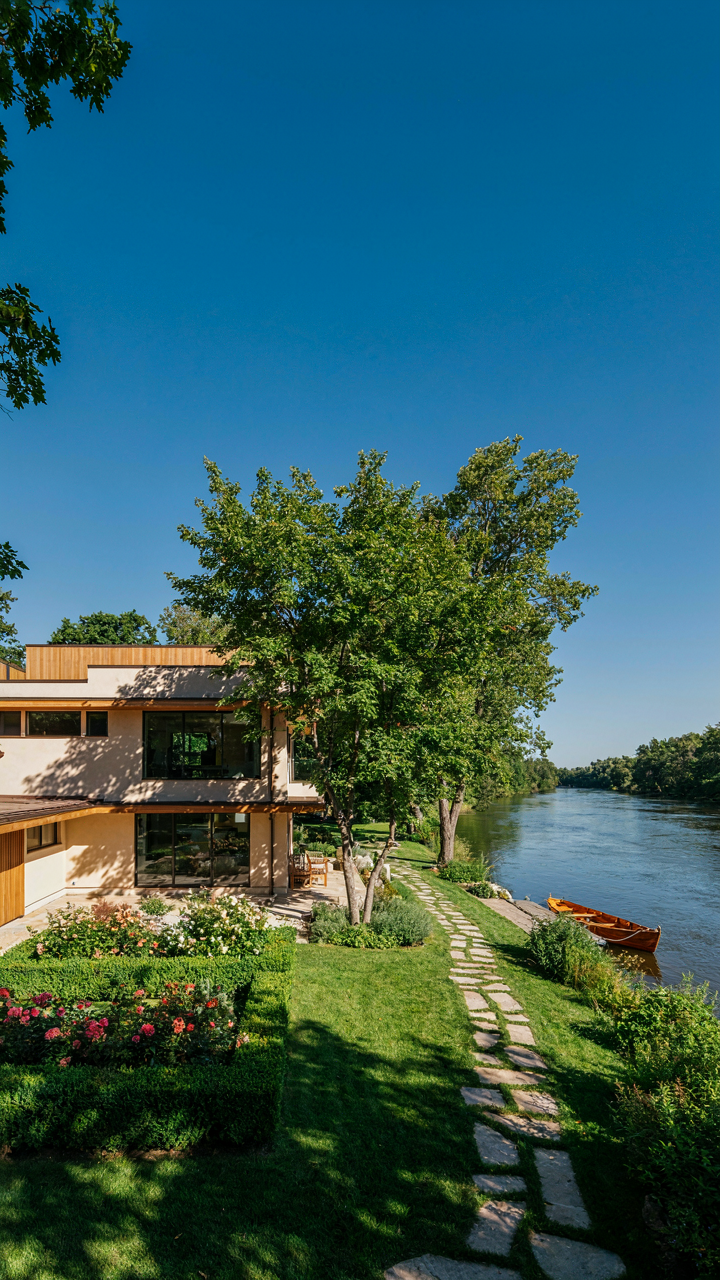
You want passive heating and cooling because you’re afraid your heating bills will eat your margin on the whole property. Here’s the real mechanism: a riverside cottage’s orientation relative to water creates a thermal mirror effect. Water reflects 10 to 15 percent of solar radiation back onto south and west-facing walls. This amplifies heat gain in winter but becomes a liability in summer without strategic placement of shade.
Position major glazing on the south side to capture reflected warmth November through March. Place deciduous trees or exterior shade structures on the west side to block the same reflection in June through August. The trees drop leaves when you need the heat; the structure stays fixed. Overhang depth matters here—a simple calculation: your latitude divided by two, in feet, gives you the eave depth needed to block high summer sun while allowing low winter sun underneath. Test your specific latitude angle before framing.
Reading Water Like An Air Current Map
Wind patterns aren’t poetic observations. They’re pressure systems following predictable paths, and geography bends them hard. Treat your riverside location like meteorology treats terrain: wind accelerates and funnels through valleys, then separates and stalls on leeward sides. A cottage positioned on a river bend experiences wind shear—the air moves faster at height than at ground level.
Open your porch to prevailing winds, not against them. If your river runs north-south in a valley, wind typically follows that channel. Position window and door openings to create cross-ventilation: inlet on the windward long side, outlet on the lee. This setup forces air through living spaces at 1.5 to 2 times ambient windspeed, dropping interior temperature 3 to 5 degrees without mechanical cooling. Place your porch entry perpendicular to prevailing flow and you amplify the stack effect—warm air rising and escaping through upper vents while cool air enters low.

The Dream Life House Algorithm: Engineering Serenity
Water Views Demand Active Management
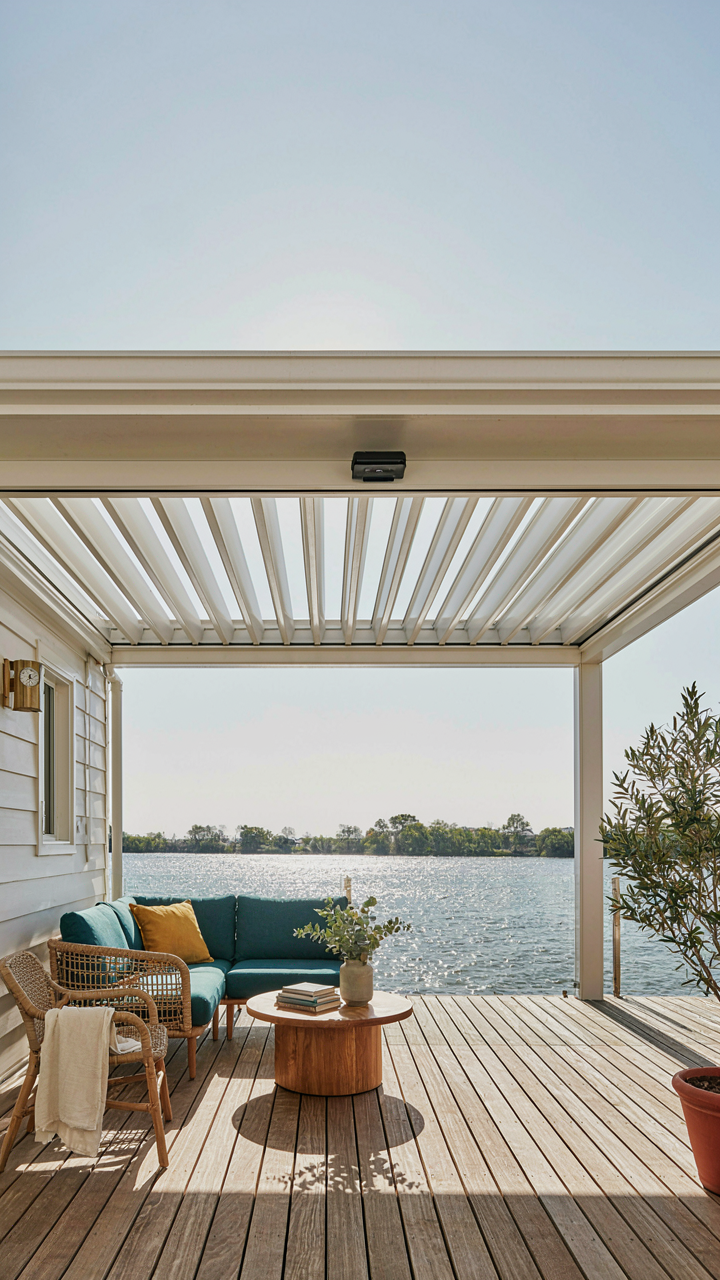
You want the porch to feel effortless. That’s the real reason you’re reading this. But effortless riverside living is the opposite of what actually works. Cybernetics teaches us that stable systems require constant feedback loops, and a riverside cottage porch is no different. The water creates variables you can’t ignore: humidity swings, temperature gradients, reflection glare, and seasonal water level changes. Your porch doesn’t passively sit facing the water. It actively responds to what the water throws at it, or it deteriorates.
Install operable louvers or motorized shading on south and west exposures. These adjust throughout the day, not just seasonally. Monitor humidity levels with simple hygrometers and ventilate accordingly, especially in spring when melt accelerates moisture. Establish a quarterly inspection routine: check flashing after freeze thaw cycles, examine decking for soft spots, test drainage pathways. The porch thrives because you’ve built a feedback system that catches problems before they compound. Without this protocol, you’re just watching deterioration happen in slow motion.
Perimeter Defense Against Water Intrusion
The standard advice says “build it elevated and move on.” That’s incomplete. Military strategy applies here: defensive layering stops threats at multiple points, not just one. A riverside cottage porch without layered defenses fails from water intrusion, not dramatic flooding. The real threat is capillary action, wind-driven rain, and persistent moisture that enters quietly through seams and material transitions.
Your first line of defense is the roof overhang itself, pitched to shed water quickly away from the building face. Your second is flashing that overlaps in sequences, never butt-jointed. Your third is a capillary break between the deck framing and any masonry or concrete below, using membrane or air space. Your fourth is adequate drainage beneath the porch floor, sloped away from the structure at one percent minimum. Each layer assumes the one above it will fail eventually. Stack them correctly, and failure takes years instead of seasons. Install perforated drain tile around the porch perimeter foundation, backfilled with gravel, directing water downslope away from the cottage.

House By A River: A Strategic Asset, Not Just A Residence
River Frontage Compounds Your Net Worth
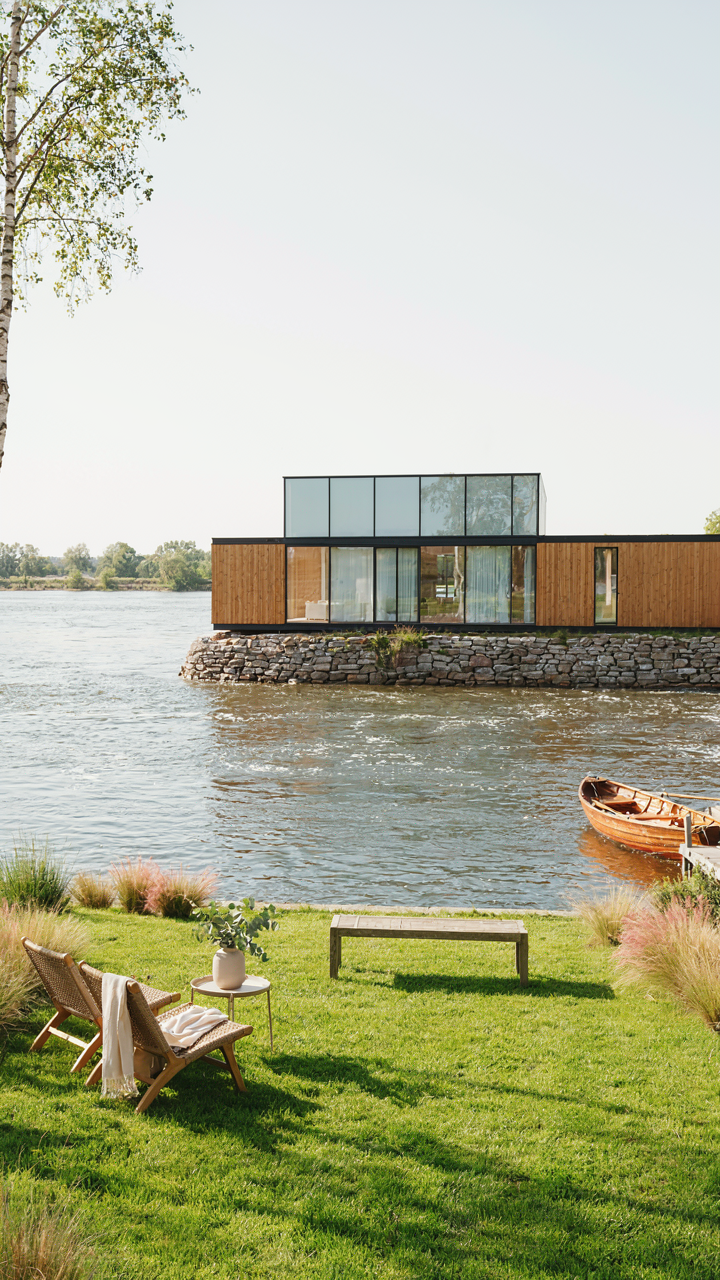
You want this because riverside property holds value differently than inland lots. In real estate economics, scarcity creates the multiplier effect. River frontage is fixed supply. You cannot manufacture more waterfront. A riverside cottage appreciates faster than comparable inland homes because demand outpaces availability. Buyers will always pay premium prices for direct water access, and that premium widens as urban populations grow.
The mechanics are straightforward: riverside cottages in established areas appreciate 1.5 to 2 times faster than nearby non-waterfront properties. This compounds over decades. Your porch facing the water isn’t decoration. It’s the primary driver of resale value. When you sell, that view commands real dollars. Banks and appraisers price water access into the valuation explicitly.
When Nature Moves, Your Cottage Moves With It
Most riverside property advice ignores the actual risk: flooding and erosion are not abstract future concerns. They are predictable patterns based on historical data. Build on a floodplain, and you will flood. The question is not if, but when and how often. Insurance costs reflect this. Your premiums encode the risk the market has already priced in.
Resilience requires knowing your specific site’s history. Request 50-year flood data from the Army Corps of Engineers and local watershed authorities. Elevation matters more than distance from water. A cottage 300 feet from the river at lower elevation floods. One 100 feet away at higher elevation stays dry. Build or buy on elevated terrain, set the foundation above the 100-year flood line with verified documentation, and carry flood insurance regardless. This is not optional.

Your Real Obstacle Isn’t Design, It’s Distraction. Command Your Environment, Or It Will Command You

Most people never build their riverside cottage because they optimize the wrong thing. They obsess over porch angles and railing styles while their actual life happens in chaos. Stop researching. Pick one element of your porch facing the water and commit to it this week. Order the materials. Make the call. Your environment shapes your thinking, and thinking shapes nothing. The person who acts builds the cottage. The person who plans builds excuses.



