
The Authenticity Illusion: Beyond Generic Victorian Ceiling Medallions

What Period Appropriate Actually Means
You want to feel like you nailed the historical accuracy so nobody questions your taste. Here’s the mechanism: “period-appropriate” is a marketing term, not a design standard. Victorians didn’t design medallions to fit a single aesthetic across 64 years of rapid industrial and stylistic change. They made what their clients could afford and what their local suppliers stocked. A plaster medallion from 1875 London looks nothing like one from 1895 Pittsburgh. You’re not matching an era, you’re matching a specific place, material availability, and wealth bracket during a specific five-year window.
The common advice says pick “Victorian style” and call it done. That’s lazy. Real period work requires you to identify which Victorian subset you’re actually restoring or building toward. The Early Victorian period emphasized classical revival and symmetry. The High Victorian phase introduced eclecticism, heavier ornamentation, and industrial production methods. Late Victorian work got busier and cheaper because machines could cut detail faster than humans. Each shift changed what medallions looked like, how deep the carving went, and what materials makers used.
The Real Evolution Nobody Names
Apply evolutionary biology here: Victorian ceiling medallions didn’t emerge fully formed. They mutated. What started as classical plasterwork inherited from Regency design got pressure-tested by new manufacturing, changing wealth patterns, and architectural fashion shifts. The dominant species won based on cost, not purity. Early Victorians imported or hand-cast medallions. By the 1880s, standardized catalog pieces from manufacturers like Decorators Supply Corporation dominated middle-class homes. That’s not degradation, that’s adaptation. Your historical accuracy depends on which adaptation layer you’re actually working within.
Ignoring this evolution kills credibility. If you install a machine-cut, stock catalog medallion in a room you’re claiming is 1860s, the proportions and depth will be wrong. Hand-cast pieces have irregular surfaces and organic undulation. Industrial pieces have uniform detail and sharper edges. The material matters too: chalk plaster versus gypsum versus plaster of Paris have different working properties and aged differently. Pick the wrong combination and you’ve built a costume, not a restoration. Your installation protocol must match the actual production method of the period and place you’re targeting, or stop pretending it’s authentic.
The Visual Gravity Protocol For Ceiling Design
Scale Medallion To Room Proportion, Not Whim
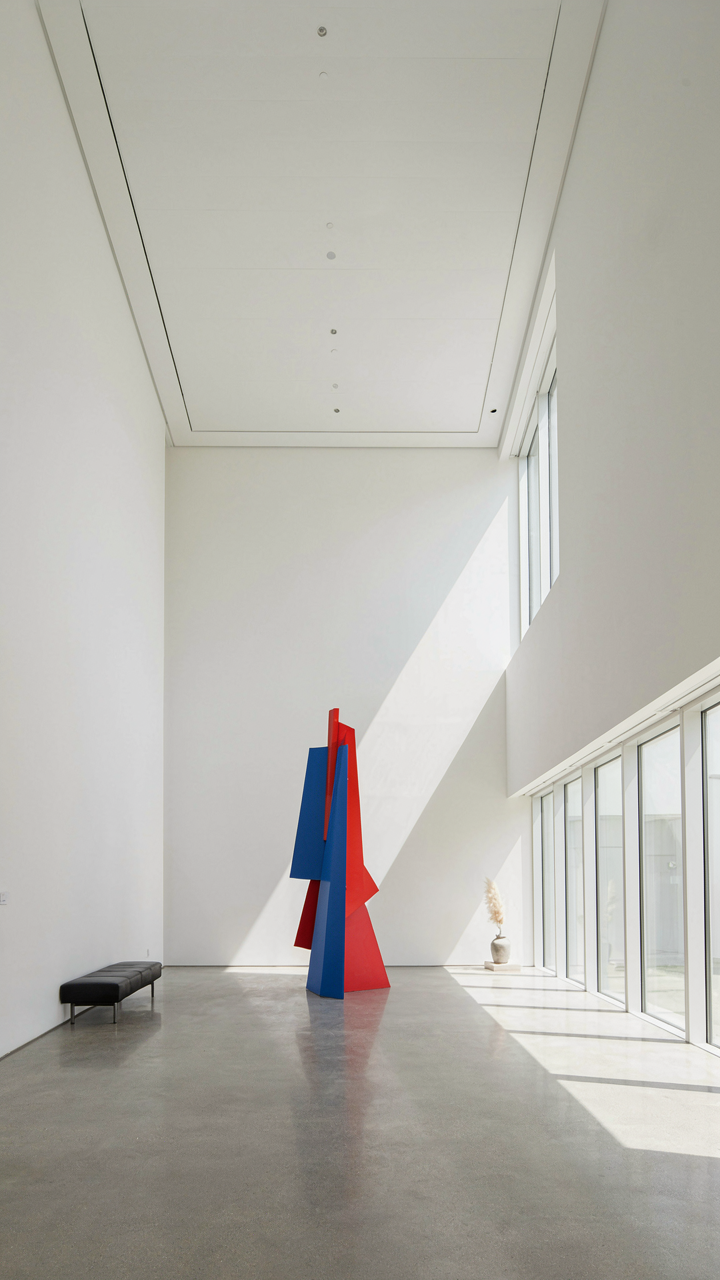
You want a medallion that signals you know what you’re doing without screaming for attention. Here’s the mechanism: visual gravity in design works like actual gravity in physics. Mass pulls the eye. A medallion that’s too small disappears into ceiling plane noise. Too large and it dominates the room like a failed joke. Victorian medallions ranged from twelve inches to five feet in diameter depending on ceiling height and room volume. The ratio that worked then still works now.

A nine-foot ceiling demands a medallion no smaller than eighteen inches across and rarely larger than thirty-six inches. Twelve-foot ceilings tolerate forty-eight to sixty inches. The medallion must compete with furniture scale below it, not with the room’s perimeter. If your largest furniture piece is a sectional or dining table, your medallion should read as a comparable visual weight from across the room. Measure first. Choose scale second. Install third.
Restraint Wins Against Ornament Clutter
The common advice says “more detail means more authentic.” That’s incomplete. Victorian designers understood that ornate elements work precisely because they sit beside plain surfaces. Applying dense ornamentation to every architectural feature creates visual static, not elegance. The real move is contrast through strategic placement.
A heavily detailed medallion performs best when the surrounding ceiling remains simple. If your plasterwork, cornicing, or wall treatments already carry ornamental load, scale the medallion’s detail down. A composition plaster medallion with moderate relief sits well in rooms with elaborate cornices. A deep-carved medallion in wood or plaster works in rooms with flat ceilings and minimal trim. The visual hierarchy breaks when you treat the ceiling as a single dense surface. Identify your room’s existing ornamental density, then choose medallion complexity in opposition to it.
Plaster Ceiling Perfection: More Than Just An Ornament
Know When To Restore, Not Replace
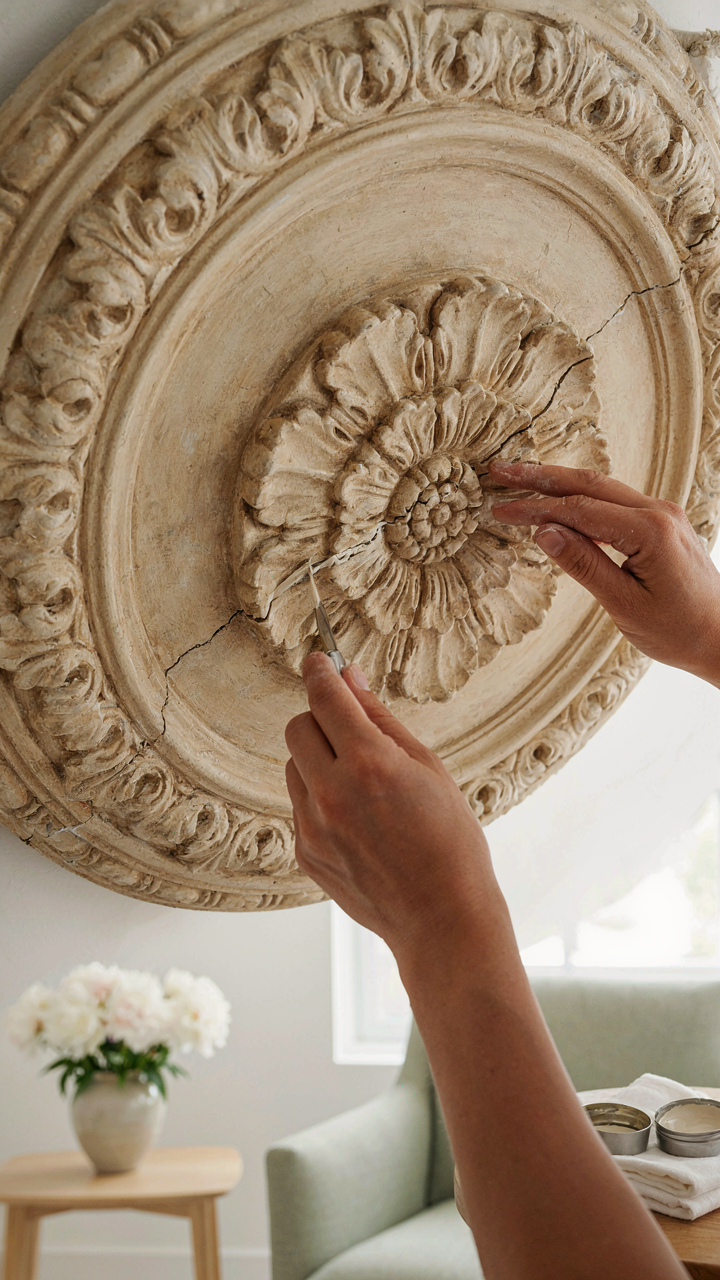
You’re afraid of making the wrong call and wasting money on a dead medallion. Here’s the mechanism: restoration decisions follow an economic principle called sunk cost analysis. A Victorian plaster medallion represents labor already embedded in your ceiling. Replacement erases that value permanently. Restoration preserves it. The choice hinges on whether the existing plaster retains structural integrity and historical accuracy worth saving.

Inspect the medallion’s plaster bond first. Press gently around edges with a wooden dowel. Sound plaster rings hollow. Soft or crumbling plaster means interior deterioration has progressed too far. If cracks radiate from the center or plaster separates from the substrate, replacement makes sense. If the medallion holds firm and damage is cosmetic only, restoration costs less and maintains authentic material.
Modern Materials That Actually Work
The common advice says use modern plaster substitutes as a straight swap. Wrong. Polyurethane and resin castings don’t perform like historical gypsum plaster. They’re lighter, which creates installation problems with old lath systems designed for plaster’s weight. Use modern materials only when original plaster is genuinely gone and you need filler or repair compound. Period-appropriate gypsum plaster remains the only material that matches Victorian ceiling medallions functionally and visually.
When you do use modern materials, restrict them to repairs, not replacement. Use conservation-grade gypsum compound for cracks and missing edges. It sets slower than modern joint compound, allowing proper adhesion to aged plaster. For casting new medallions, specify gypsum-based plaster from specialty suppliers, not standard drywall joint compound. Ensure any filler material breathes at the same rate as the original plaster to prevent future separation.
Victorian Chandelier Integration: The Unseen Power Dynamics
When Weight Becomes Structure
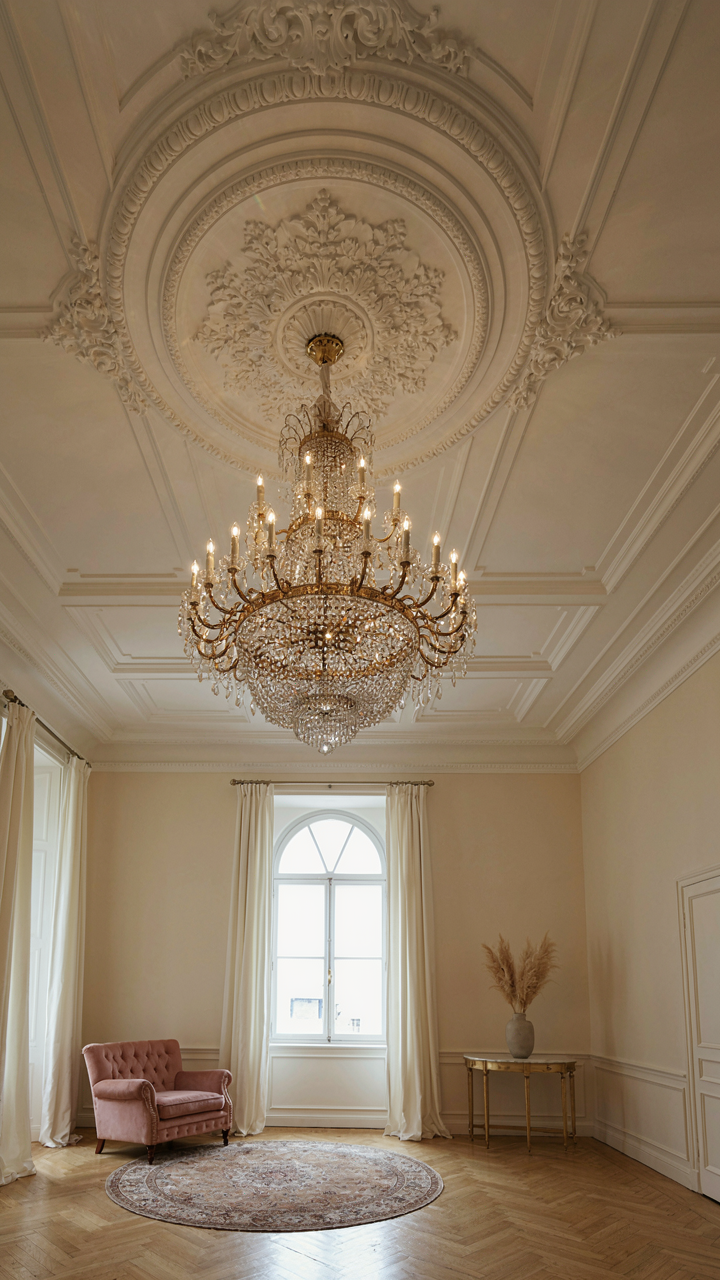
You want the chandelier to look intentional, like it was always meant to hang there. That’s the real concern here, buried under talk of “aesthetics.” But here’s the mechanism: a Victorian ceiling medallion functions as a load-bearing signal, not decoration. Think of it in structural terms—the medallion is the visual anchor point where stress concentrates. A five-pound chandelier needs different medallion geometry than a forty-pound one, and most people ignore this entirely.

Victorian medallions came cast in plaster, composition material, or carved wood. Their depth and base diameter determined how much distributed weight they could frame without cracking. A shallow medallion (under three inches deep) signals light fixtures only. Deeper medallions (four to eight inches) were engineered for heavier gas fixtures converted to electric. If your chandelier weighs more than fifteen pounds, you need a medallion diameter of at least twenty inches and proper interior bracing behind the plaster. Install a reinforced metal ring between the ceiling joist and medallion back before mounting anything that pulls downward.
Light Reveals What Bad Installation Hides
Most people think lighting just makes the medallion visible. Wrong. Light source position determines whether your installation flaws become obvious or stay hidden. A chandelier aimed upward into a medallion exposes every gap, every uneven plaster line, every spot where the medallion pulls away from the ceiling. Downward-facing light forgives installation mistakes and makes poor medallion-to-ceiling transitions disappear.
The real leverage is this: choose your chandelier orientation before you install the medallion. If you want uplight (which reads more formal and Victorian), your medallion needs factory-perfect seams and a ceiling surface that’s flat within a quarter inch. If you’re mounting a downlight fixture, a slightly warped or aged medallion becomes part of the patina. Victorian homes used gas then early electric fixtures that hung down and cast light outward and down, which means historical accuracy actually works in your favor when you’re hiding mediocre installation work.
Beyond The Medallion: Strategic Ceiling Ornaments

Where The Cornice Earns Its Weight
You want the room to feel intentional, not like you grabbed whatever was cheapest at the supply house. That’s the real reason you’re reading this section. The mechanism: a cornice acts as a load-bearing visual anchor that stops the eye from floating past the ceiling into nothingness.

Cornices developed as both structural and decorative elements in Georgian and Victorian homes. They sit at the junction where wall meets ceiling, typically 4 to 12 inches deep, and their profile breaks the monotony of flat surfaces. The historical versions came in plaster, wood, or composition materials. A cornice works because it creates shadow depth and proportion. Without it, the ceiling reads as disconnected from the wall. Install cornice at consistent height throughout the room for visual coherence.
How Friezes Compress Or Expand Your Space
The psychology here is spatial compression. A frieze positioned between cornice and wall operates like an acoustic baffle operates in sound design: it breaks continuity and creates perceived distance shifts. A deep or dark frieze lowers the apparent ceiling height. A shallow or light frieze raises it.
Victorian friezes ran roughly 12 to 18 inches tall and sat directly below the cornice, often featuring repeating patterns in relief. They weren’t filler. They solved a real problem: blank wall-to-ceiling transitions made rooms feel either cavernous or boxy. Position your frieze to manipulate room proportions rather than decorate a space that needs no help. Measure your wall height first, then choose frieze depth based on whether you need the room to feel taller or more intimate.
The “Opportunity Cost” Of Ceiling Design Bedroom Choices
Return On Investment In Vertical Space
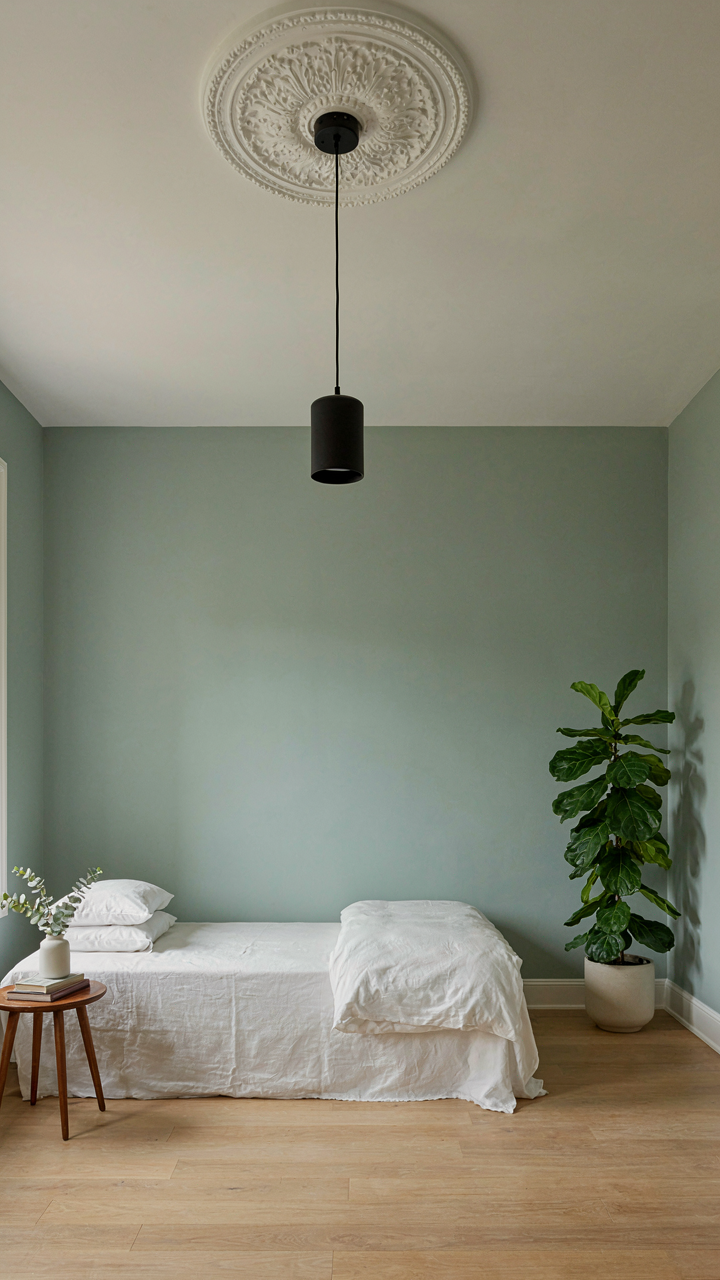
You’re really asking whether a ceiling medallion is worth the money, because you’re afraid you’ll waste it on something invisible. Here’s the mechanism: economics treats investment returns by comparing what you spend against what you gain. A Victorian ceiling medallion operates like capital deployed in vertical real estate. The bedroom ceiling occupies roughly 25 percent of total wall and ceiling surface area, yet most people ignore it entirely. A medallion reverses that equation.

The return isn’t aesthetic fluff. A period-accurate plaster or resin medallion costs between 40 and 300 dollars installed, depending on diameter and material quality. That single element telegraphs intentionality to anyone entering the room. It signals the difference between a bedroom and a considered space. More importantly, it anchors any fixture you suspend from it, whether a chandelier, pendant, or simple ceiling rose. Without it, a fixture looks bolted to drywall. With it, the fixture becomes part of a visual hierarchy that reads as designed, not assembled.
Design Coherence As Compounding Returns
Coherence is the physics principle applied to interior design: systems with aligned vectors generate exponential force. A single Victorian ceiling medallion generates mild visual interest. That medallion paired with cornicing, a fireplace mantelpiece, crown molding, and period-appropriate light fixtures generates something different entirely. Each element reinforces the others. They don’t add value linearly. They multiply it.
A bedroom with only a ceiling medallion feels incomplete because the signal is isolated. Add authentic baseboard profiles and window casings, and suddenly the medallion registers as part of an intentional system. The eye stops searching for coherence and finds it instead. This is why Victorian homes with original plasterwork feel expensive even when unfurnished. The architectural language is consistent. Your task becomes identifying which three to five elements your bedroom can accommodate without crowding the space, then committing fully to those. The medallion becomes the anchor. Everything else orbits it.
Victorian Rooms: The Unspoken Rules Of Medallion Placement

The Centered Medallion Problem
You want the room to look intentional and expensive, so you’re thinking center. That instinct is half right and half the reason mediocre Victorian restorations exist. The mechanism is simple: a ceiling medallion at dead center creates visual weight that demands the rest of the room justify it. Most rooms aren’t built to justify it.

Centering works when the medallion anchors an architectural hierarchy below it. A chandelier must hang from it. The furniture arrangement must radiate outward from that point. The room’s focal point lives there naturally, not by accident. Without this structure, a centered medallion looks like a hole you’re trying to fill. Measure twice. Commit once.
Breaking Symmetry With Intention
Asymmetry isn’t rebellion in Victorian design, it’s problem-solving with an educated eye. When a room’s geometry refuses to cooperate with center placement, offset medallions create visual balance instead of dead weight. The real rule nobody states: asymmetry requires more precision than symmetry, not less.
An offset medallion works because it pulls the eye toward an existing architectural feature or responds to the room’s actual traffic pattern and light source. Place it where the room naturally draws attention first. Measure from load-bearing walls and structural beams, not from drywall edges. The medallion position must feel inevitable when someone enters the space, not accidental or corrective.
Victorian Ceiling: Stop Decorating, Start Designing

The Real Cost Of Collecting Ideas
You want to feel like you’ve solved the problem without actually committing to a direction. That’s why you’re scrolling through “Victorian ceiling medallion ideas” instead of building a system. The mechanism at work here is constraint avoidance. Each idea you collect feels like progress, but it’s just friction masquerading as research. You’re trading clarity for optionality, and optionality is the enemy of coherence in period design.

Victorian ceiling medallions didn’t succeed because homeowners gathered inspiration. They succeeded because architects and craftsmen operated within strict material and stylistic constraints. Plaster composition limited ornamental complexity. Ceiling height dictated medallion scale. Room function determined pattern density. These weren’t restrictions to overcome—they were the framework that made medallions work as design elements instead of decorative clutter. When you treat a medallion as an isolated aesthetic choice, you’ve already lost.
Anchoring Your Ceiling To Reality
Design isn’t decoration with better intentions. Design is the systematic alignment of form to function within defined constraints. Your Victorian ceiling medallion must serve three mechanisms simultaneously: structural integrity through proper installation, visual proportion to the room’s dimensions, and stylistic coherence with existing architectural elements. Most people reverse-engineer from “I like this medallion” instead of forward-engineering from “This room needs X to function visually.”
Start by auditing what’s already there. Measure ceiling height, cornice molding profile, existing frieze patterns, paint color depth, and natural light intensity at different times of day. A 36-inch medallion reads differently in an 10-foot versus 14-foot ceiling. A medallion with deep undercut ornamentation creates shadow play that demands warm lighting to register. The medallion doesn’t determine the room’s aesthetic—the room’s proportions and light determine which medallion can actually work there.
Your Fear Of Commitment, Not Your Ceiling, Is The True Barrier To Timeless Design

Most people don’t fail at victorian ceiling medallions because they picked wrong. They fail because they never pick at all. You scroll, compare, hesitate, and convince yourself you need more information before deciding. That’s the trap. Victorian medallions demand conviction. Pick one today. Order it. Install it. You’ll either love it or learn what you actually want. The only real mistake is the one you never make.